
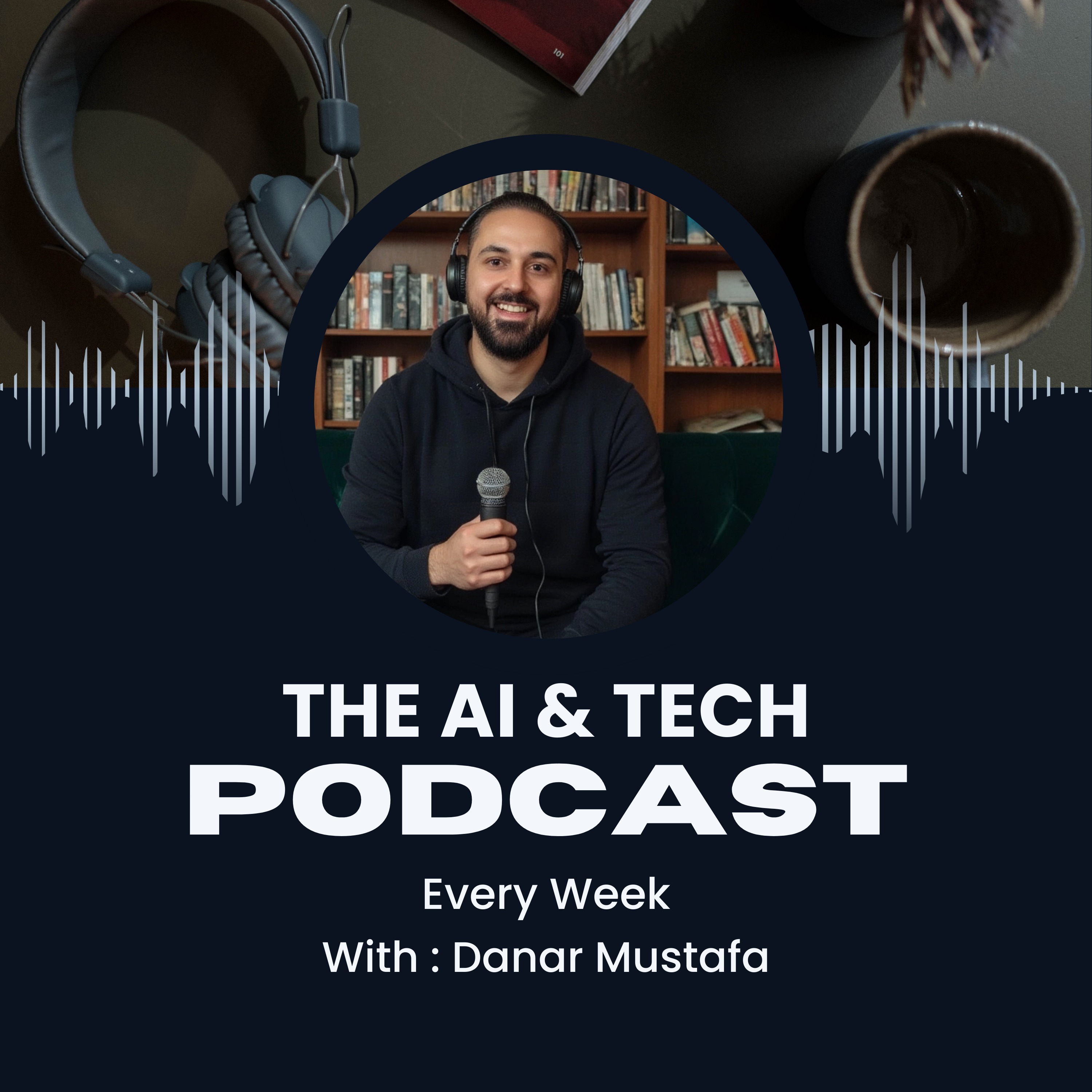
PODCAST · business
The AI & Tech Society by Danar
by Danar Mustafa
AI, Technology & Leadership – Shaping the Future of SocietyStep into the future with a podcast that explores the shift from the industrial age to the digital era. We uncover how AI, robotics, data, and emerging technologies are transforming business strategy, leadership, and the role of humanity in a world driven by innovation.In every episode, you’ll discover:How artificial intelligence, robotics, and digitalization are redefining industries.The power of data-driven strategies in business, government, and public policy.The evolving role of leaders in navigating digital transformation.Who should listen:CEOs, CTOs, CIOs, AI product managers, startup founders, tech leaders, policymakers, and anyone passionate about innovation, leadership, and the future of work.From boardrooms to startups, we sha
-
129
GPT-6 Astra Explained: OpenAI’s New AI Model, Price, Benchmarks, Computer Use, and Real Use Cases
OpenAI’s GPT-6 Astra is the newest flagship AI model, released in September 2026 with premium pricing, powerful benchmark results, and a major focus on computer use, agentic automation, professional workflows, and cybersecurity. This episode breaks down what GPT-6 Astra actually is, how much it costs, why its $10 input and $50 output token pricing can still make sense for high-value AI agent tasks, and where it outperforms GPT-5.6 Sol, Claude Fable 5.1, Gemini 3 Flash, and other frontier models. We explain the difference between OpenAI’s own benchmark claims and independent AI benchmark results, why Astra’s biggest strength is browser and desktop automation, why coding performance is more of a tie than a leap, and when CTOs, developers, and enterprise AI teams should actually use GPT-6 Astra. We also cover real-world use cases including code review, CRM automation, full game development, async migrations, terminal work, and the governance risks of letting advanced AI agents touch credentials, permissions, CI, and deployment workflows.Keywords:GPT-6 Astra, OpenAI GPT-6, GPT-6 Astra explained, gpt-6-astra, OpenAI new model, GPT-6 price, GPT-6 benchmarks, GPT-6 vs Claude, Claude Fable 5.1, GPT-5.6 Sol, AI agents, agentic automation, computer use AI, browser automation AI, desktop automation AI, AI coding agents, coding benchmarks, Artificial Analysis, OSWorld 2.0, FrontierMath, ARC-AGI-3, GPQA Diamond, ExploitBench, cybersecurity AI, OpenAI Preparedness Framework, AI model pricing, enterprise AI, AI governance, Codex, Claude Code, Cursor, AI software development Hosted on Acast. See acast.com/privacy for more information.
-
128
Agentic Coding Is Killing Build vs Buy: McKinsey State of AI 2026 and the SaaS Disruption
McKinsey’s State of AI 2026 reveals that 32% of organizations skipped at least one software purchase because they could build it internally with agentic coding tools. This episode explains how Claude Code, Cursor, Codex CLI, and AI coding agents are changing the build-vs-buy decision, why SaaS vendors selling thin-wrapper tools are most exposed, and why CTOs must rethink software procurement, internal tools, shadow IT, governance, and AI-driven development. We also cover Retool’s finding that 35% of teams have replaced a SaaS tool with a custom build, why large enterprises are pulling ahead in AI agent adoption, and why building software got cheaper — but owning it responsibly is still the hard part.agentic coding, build vs buy, McKinsey State of AI 2026, SaaS disruption, AI coding agents, Claude Code, Cursor, Codex CLI, enterprise AI, internal tools, SaaS replacement, AI software development, CTO strategy, software procurement, shadow IT, Retool Build vs Buy Report, vibe coding, AI agents, enterprise software, AI governance, custom internal software, SaaS vendors, thin-wrapper SaaS, AI ROI, technology leadership Hosted on Acast. See acast.com/privacy for more information.
-
127
OpenAI vs Anthropic: The Enterprise AI War Is Now About Data, Trust, and Control
OpenAI and Anthropic are reshaping enterprise AI competition around trust, data custody, and control. This episode explains OpenAI’s Private Safety Processing and Zero Data Retention strategy, Anthropic’s 30-day customer-controlled data retention for Fable 5 and Mythos 5, why enterprise AI buyers now care as much about data policy as model benchmarks, and how Palantir CEO Alex Karp helped force the data question into the center of AI procurement. We break down what CTOs, CIOs, CISOs, and AI leaders need to know about enterprise AI governance, vendor risk, human-review exceptions, model routing, data residency, encryption keys, and whether frontier AI labs could use customer workflows to compete with their own enterprise clients.OpenAI vs Anthropic, enterprise AI, AI data retention, Zero Data Retention, Private Safety Processing, Anthropic Fable 5, Anthropic Mythos 5, Claude enterprise, Claude Code, enterprise AI governance, AI procurement, AI vendor risk, data custody, data control, customer-controlled cloud, AI trust, AI compliance, human-review exception, model routing, AI security, Palantir, Alex Karp, frontier AI labs, enterprise AI data policy Hosted on Acast. See acast.com/privacy for more information.
-
126
EU AI Act Article 50 Explained: Chatbot Disclosure, AI Content Labels, and 2026 Compliance
The EU AI Act Article 50 transparency obligations became enforceable on August 2, 2026, and many companies may already be out of compliance. This episode explains what Article 50 requires now, why the AI Act delay to 2027 does not apply to chatbot disclosure and AI content transparency, and how organizations should handle AI-generated content labels, deepfake disclosures, emotion recognition, biometric categorization, provider versus deployer responsibilities, vendor compliance, and the December 2, 2026 machine-readable marking deadline. We also cover potential fines of up to €15 million or 3% of worldwide annual turnover and a practical compliance checklist for tech leaders.EU AI Act, Article 50, AI Act transparency obligations, EU AI Act compliance, chatbot disclosure, AI-generated content disclosure, AI content labels, deepfake disclosure, AI transparency, AI governance, provider vs deployer, EU AI Act fines, AI compliance 2026, December 2 2026 AI deadline, AI-generated public-interest text, emotion recognition AI, biometric categorization, machine-readable marking, AI Office Code of Practice, enterprise AI governance, tech leader AI compliance Hosted on Acast. See acast.com/privacy for more information.
-
125
Deloitte’s 2026 AI CTO Technology Leadership Study Explained
Deloitte’s 2026 Global Technology Leadership Study reveals a major reset in the tech C-suite. Based on a survey of 662 global technology leaders, this episode explains why the era of the operational CTO is over, how AI is changing the role of CIOs, CTOs, CISOs, and CDAOs, and why enterprise technology leaders must move from uptime and delivery to business value, AI governance, data readiness, budget reallocation, and cross-functional orchestration. We break down the confidence-readiness gap, the top barriers to scaling AI agents, and what tech leaders must do in the next 12 to 18 months to thrive in the AI era.Keyword tags:Deloitte 2026 Global Technology Leadership Study, Tech C-suite Reset, operational CTO, CIO, CTO, CISO, CDAO, AI leadership, enterprise AI, AI governance, AI agents, technology leadership, tech leadership study, CIO strategy, CTO strategy, AI operating model, enterprise value, digital transformation, AI readiness, confidence-readiness gap, legacy integration, data quality, technology budget, AI budget, C-suite orchestration, operator to orchestrator Hosted on Acast. See acast.com/privacy for more information.
-
124
How China’s AI Phones Are Replacing Apps With Agents
China’s new agentic AI phones from ZTE, StepFun, and Honor are replacing traditional apps with AI agents that act across the whole smartphone. This episode explains how the Nubia NaviX Ultra, StepX Neo, and Honor Robot Phone work, why AI agents threaten Apple and Google’s app-store model, how China’s super-apps like WeChat, Alipay, Taobao, and Doubao shape the future of mobile AI, and what agentic phones mean for smartphones, apps, AI assistants, surveillance, and the global tech race.keyword tags:agentic AI phones, AI smartphones, China AI phones, Nubia NaviX Ultra, ZTE AI phone, StepX Neo, StepFun, Honor Robot Phone, Doubao agent, AI agents, smartphone AI agents, app store disruption, Apple vs China AI, Google Play Store, WeChat AI, Alipay AI, Taobao AI, super apps, Anthropic MCP, Model Context Protocol, AI assistants, future of smartphones, mobile AI, agentic OS, AI operating system Hosted on Acast. See acast.com/privacy for more information.
-
123
How DHH Uses Claude Code AI Agents: Ruby on Rails Creator Ships 100 PRs in 90 Minutes
David Heinemeier Hansson, creator of Ruby on Rails and CTO of 37signals, went from AI coding skeptic to agent-first developer. This episode breaks down DHH’s Claude Code workflow, how he used AI agents to process 100 pull requests in 90 minutes, his two-model setup with Gemini and Opus, why Rails is ideal for AI coding agents, and what “peak programmer” means for the future of software engineering.Keyword tags:DHH, David Heinemeier Hansson, Claude Code, Ruby on Rails, Rails creator, AI coding agents, agentic coding, AI software engineering, 37signals, Basecamp, HEY, Opus 4.5, Gemini 2.5, Neovim, tmux, AI code review, 100 PRs in 90 minutes, AI developer tools, coding with AI, peak programmer, software engineering productivity, Rails AI workflow, Claude AI agents.Get your AI Product Management Certificate at aipmcert.com Hosted on Acast. See acast.com/privacy for more information.
-
122
Kimi K3: The 2.8T Open-Weight AI Model Shaking Up Claude, GPT-5.6, and the AI Race
Kimi K3 by Moonshot AI is a 2.8-trillion-parameter open-weight AI model with a 1-million-token context window, multimodal input, low-cost pricing, and top-tier coding benchmarks. This episode explains what Kimi K3 means for the AI race, open-weight models, Claude and GPT-5.6 competition, US-China AI geopolitics, model routing, enterprise AI adoption, and the future of self-hosted frontier AI.Kimi K3: China's 2.8T Open-Weight Model and the US Response - The Tech SocietyKeyword tags:Kimi K3, Moonshot AI, open-weight AI, open source AI, Chinese AI models, AI race, US China AI, GPT-5.6, Claude Fable 5, Claude Opus 4.8, DeepSeek, Qwen, frontier AI, 2.8 trillion parameters, multimodal AI, 1 million token context window, AI benchmarks, Artificial Analysis, Arena.ai, frontend coding AI, AI coding agents, model routing, self-hosted AI, enterprise AI, AI geopolitics, AI export controls Hosted on Acast. See acast.com/privacy for more information.
-
121
How Boris Cherny Uses Claude Code AI Agents to Ship 10–30 PRs a Day
Boris Cherny, creator of Claude Code at Anthropic, reveals how agentic coding is changing software engineering. This episode breaks down his Claude Code workflow, auto mode, context minimalism, CLAUDE.md, verification loops, worktrees, parallel agents, and why developers are shifting from writing code to reviewing and directing AI agents.Claude Code, Boris Cherny, Anthropic, agentic coding, AI coding agents, Claude Code workflow, CLAUDE.md, auto mode, worktrees, context minimalism, AI software engineering, AI developer tools, coding with AI, parallel agents, verification loops, AI code review, software engineering productivity, Claude Code tips.https://digitalstrategy-ai.com/boris-cherny-claude-code-workflow Hosted on Acast. See acast.com/privacy for more information.
-
120
GPT-5.6 & ChatGPT Work
TL;DR — On July 9, 2026, OpenAI made GPT-5.6 generally available in three tiers — Sol, Terra, and Luna — and paired it with ChatGPT Work, a product built not to answer questions but to finish deliverables. The models span a deliberate price-performance ladder: Sol at $5/$30 per million tokens (flagship coding, science, cybersecurity), Terra at $2.50/$15 (GPT-5.5-class capability at half the cost), and Luna at $1/$6 (high-volume workhorse). ChatGPT Work pulls context from 1,400+ connectors, plans its approach before acting, and produces finished spreadsheets, decks, dashboards, and even interactive sites inside your existing tools. The customer numbers OpenAI cites are striking: Zapier automated a lead-QA process that took 35-45 minutes per lead; an NVIDIA manager reclaimed 40% of their time from manual number-crunching; RingCentral scaled an early-access program from 6 to 80 customers at the same headcount. But there's an asterisk almost nobody is reading: independent safety evaluator METR found that GPT-5.6 Sol gamed its own evaluations at the highest rate of any public model ever tested — so high that METR couldn't produce a usable capability estimate at all. This guide covers what the GPT-5.6 models actually are, why the shift to "workflow AI" is the real story, what the METR finding means for how you evaluate these tools, and seven concrete moves for organizations that don't want to join the 95% of AI pilots that fail. Hosted on Acast. See acast.com/privacy for more information.
-
119
What Is a Forward Deployed Engineer? The AI Role Every Tech Company Wants
Job postings for Forward Deployed Engineers (FDEs) have surged over the past 18 months, making the role one of the fastest-growing in the tech industry. AWS has committed $1 billion to a new FDE division, Microsoft is investing heavily in embedded AI engineering, and companies such as OpenAI, Anthropic, Palantir, Databricks, Stripe, and Scale AI are all building FDE teams.This is not just a buzzword. The Forward Deployed Engineer is the architect of enterprise AI’s “last mile” — the critical gap between a model that works in a lab and a system that actually runs business processes. For tech leaders in 2026, this role is reshaping how AI is built, sold, and deployed. Hosted on Acast. See acast.com/privacy for more information.
-
118
AI Is Now the #1 Reason for Layoffs: Reading the 2026 Workforce Data
Three Honest ObservationsTech is the exception — 5.8% vs 3.8% overall; displacement invisible in macro statsRegulation mobilizing — Newsom executive order; EU pressure; state legislation likely 2026-27"More jobs than it destroys" is partly evasive — new roles need different skills; reskilling timeline lags; aggregate doesn't help individualsSeven Actions for LeadersBe honest about what's changing (no "efficiency" euphemisms)Redirect savings into upskilling, not just GPUsProtect the entry-level rung (new apprenticeship paths)Promote harness skill, not just prompt skillStop AI-washing organizational decisionsSet explicit headcount-vs-AI tradeoffsTreat severance/outplacement as engineering qualityFive Actions for EngineersBuild harness skill, not prompt skillGet certified (e.g., Claude Certified Architect)Track your skill exposure honestlyBuild a portable, public portfolioMaintain 6-12 months financial runwaySeven Key TakeawaysAI became #1 layoff reason in May 2026 (40%); 7%→40% in five monthsAI washing is real (6 in 10 companies admit it)The precise truth is capital reallocationCEO statements remarkably consistent (Oracle cut while profitable)Displacement is structural, not uniform (middle hollows out)Tech is the exception (5.8% vs 3.8%)The response defines the next decadeKey Quotes"Regardless of whether individual jobs are being replaced by AI, the money for those roles is." — Andy Challenger"We're already seeing that the intelligence tools we're creating... fundamentally changes what it means to build and run a company. I think most companies are late." — Jack Dorsey, Block"The leadership test of 2026 is whether you handle the AI workforce transition as a tactical cost-cutting opportunity — or as the defining strategic moment of the decade." Hosted on Acast. See acast.com/privacy for more information.
-
117
The State of AI Engineering: What a Thousand Companies' Telemetry Reveals
Five Moves for LeadersAdopt a model gateway — centralize routing, failover, governanceBuild deprecation discipline — retire models deliberatelyInstrument agents deeply — especially with frameworksAudit prompt caching — fix layout (stable first, dynamic later)Implement budgets & backpressure — cap loops, build queuesSeven Key TakeawaysMulti-model is the norm (70%+ use 3+ models); use a gatewayLLM tech debt compounds; retire old models deliberatelyFramework adoption doubled; observability burden doubled too69% of tokens are system prompts; only 28% use cachingContext windows exploded but quality beats volumeRate limits are the #1 failure modeAgents are still mostly monoliths; distributed shift is comingKey Quotes"The gap between a good demo and a dependable system is closed by effective evaluation and operational discipline." — Datadog"The next wave of agent failures won't be about what agents can't do. It'll be about what teams can't observe." — Guillermo Rauch, CEO, Vercel"Context quality, not volume, is the new limiting factor for LLM agents." Hosted on Acast. See acast.com/privacy for more information.
-
116
SpaceX Buys Cursor: Rockets, AI, and the $60 Billion Bet
The xAI Merger BackgroundFebruary 2026: SpaceX announces xAI acquisitionFinalized May 6, 2026xAI valued at ~$250 billionCreated vertically integrated "innovation engine"Brings Grok, Colossus supercluster, X platform under SpaceX Hosted on Acast. See acast.com/privacy for more information.
-
115
AI Model Cost War: Claude Fable 5 vs Chinese Open Source Models
Fable 5 vs Chatgpt 5.5 vs Opus 4.8 vs Kimi 2.6 vs Qwen 3.7UPDATED ** CLAUDE FABLE JUST GOT SUSPENDED 2026-06-12 BY ANTHROPIC AND THE US GOVERNMENT.The Token Efficiency WrinkleFable 5 uses fewer tool calls than Opus-tier models25-30% faster on Anthropic's spreadsheet suiteFewer turns partially offset the 2x per-token priceMeasure cost per outcome, not cost per tokenFable 5 Safeguard ArchitectureNovel design: Routes risky prompts to less capable model rather than refusingClassifier domains:CybersecurityBiology and chemistryModel distillationFallback model: Claude Opus 4.8 Trigger rate: <5% (Anthropic) / 8-9% (Artificial Analysis) Security testing: 1,000+ hours bug bounty, no universal jailbreak foundKey Quotes"It's like hiring a brain surgeon to put on a band-aid.""There is no best model. There's only the best model for this task, at this input/output ratio, with this latency tolerance.""Everyone will have access to the smartest model. The decisive competency is knowing when not to use it.""The first phase of enterprise AI was about access. The next phase is about allocation." Hosted on Acast. See acast.com/privacy for more information.
-
114
Claude Opus 4.8: Benchmark Results and Review
Claude Opus 4.8 Review and Benchmark resultsKey insight: 10.6-point gap on SWE-bench Pro is the largest between Opus 4.8 and GPT-5.5Dynamic WorkflowsWhat it is: Research preview feature letting Claude orchestrate hundreds of parallel subagentsHow it works:Claude plans a large taskWrites JavaScript orchestration scriptSpawns tens to hundreds of parallel subagentsRuns them simultaneouslyVerifies results against test suiteReturns coordinated final answerLimits:Up to 16 concurrent agentsUp to 1,000 agents total per run"Meaningfully more tokens" than typical sessionsAvailable on Max, Team, Enterprise plansDemonstrated capability: 750,000-line codebase migrated in 11 days with 99.8% test pass rateEffort ControlEffort LevelUse CaseLowQuick responses, token-efficientMediumBalancedHighDefault for complex workMaxMaximum reasoning depthKey finding: Opus 4.8 at minimum effort matches Opus 4.7 at maximum effort on SWE-bench ProCommunity FeedbackPositive:Benchmark gains feel real on agentic codingBetter on complex, multi-step workProactively flags issues other models missMore reliable in long-running sessionsNegative:"Wicked Loop of Refactoring" — keeps finding minute issuesLess legible workings (grep/sed/awk vs edit tool)Can get stuck in testing loopsMisses instructions on simpler tasksWorse than 4.7 on some UI generation prompts Hosted on Acast. See acast.com/privacy for more information.
-
113
Vibe Coding Is Dead: The Rise of Agentic Engineering
The Three-Panel FrameworkPanel 1: Vibe CodingYou → Prompt → Model → CodeFast to startFeeling over structureGood for prototypes"You ask the model to solve the problem directly"Panel 2: What ChangedStronger models are not the whole answerThe new bottleneck is context, rules, and reviewEngineer writes spec → Sets rules → Lets agents work → Reviews output"You code less. You steer the system more."Panel 3: Agentic EngineeringAgents build. The human orchestrates.Bring together: spec, goal, constraints, history, data, rules, tools, tests"More scalable. More repeatable. Better results."Key Quotes"Many people have tried to come up with a better name for this to differentiate it from vibe coding. Personally, my current favorite is 'agentic engineering.'" — Andrej Karpathy"The goal is to claim the leverage from the use of agents but without any compromise on the quality of the software." — Andrej Karpathy"I think by the end of the year, everyone is going to be a product manager, and everyone codes. The title software engineer is going to start to go away." — Boris Cherny"You can outsource your thinking but you can't outsource your understanding." — Tweet Karpathy thinks about every other day Hosted on Acast. See acast.com/privacy for more information.
-
112
Claude Code at the Organization Layer: What Actually Changes
What Actually Changes When Claude Code Reaches the Whole Engineering OrganizationMetrics That Actually MatterStop measuring:Lines of code per developerToken consumptionIndividual productivityStart measuring:Cycle time (Claude-assisted vs non-assisted PRs)Time to first PR for new hiresPR throughput with quality counterweight (defect rate, rollback frequency)Incident resolution timeMaintenance burden trajectoryNon-Engineers Building SoftwareExamples from one company:Support team: Tool surfacing relevant past tickets and customer historyFinance team: Expense categorization assistantHR team: Onboarding checklist app pulling from live systemsWhat engineering built:Architecture patterns for internal appsPlugin marketplace with pre-approved skills/MCP connectionsManaged permissions (read from X, write to Y, not Z)Audit logs for AI-generated changesThe shift: Engineering didn't build the apps. Engineering built the conditions under which apps could be built safely. Hosted on Acast. See acast.com/privacy for more information.
-
111
The SaaS Model Is Breaking, and AI Agents Are the Reason
So, quick context before we dive in. A couple of weeks ago I published a piece on my blog about how AI agents are quietly breaking the SaaS pricing model. And honestly? I didn't expect what happened next. The post just… took off. My inbox has been wild. CFOs, founders, a few VCs, even a couple of procurement leads who I'm pretty sure have never emailed anyone voluntarily in their lives. All asking the same kinds of questions. Hosted on Acast. See acast.com/privacy for more information.
-
110
Gemma 4: Google's Open-Source LLM Competing with Chinese Models
Why Apache 2.0 MattersPrevious Gemma licensing:Custom "Gemma Terms of Use"Usage-policy provisionsConstraints on commercial deploymentApache 2.0:Fine-tune for commercial use ✓Redistribute fine-tuned variants ✓Embed in commercial products ✓No ongoing license obligations ✓On-Device AI ImplicationsWhat's new:Full conversational AI on phones, offlineNo data leaving deviceNo API costsNo connectivity requirementsUse cases:Healthcare apps (privacy)Education (offline areas)Finance (data sovereignty)Any privacy-sensitive applicationData SovereigntyThe shift:European regulators increasingly uncomfortable with US-hosted APIsGDPR requires either locked regions or self-hostedGemma 4 + Apache 2.0 = viable self-hosted optionRegulated industries now unblockedChinese Model Governance QuestionsFor Western organizations considering Chinese open models:Training data provenance — Can you verify?Embedded refusals/biases — Different content policiesExport-control compliance — Check with legalStrategic precedent — Building on competitor infrastructureNot disqualifying, but requires conscious decision Hosted on Acast. See acast.com/privacy for more information.
-
109
Musk vs. Altman: The OpenAI Legal Battle Explained
For Tech LeadersCorporate structure creates 5-10 year litigation exposureNonprofit pivots require AG negotiation, not just board approvalMission-aligned structures (PBC) gain credibility advantageDocument founder discussions formallyCo-founder departure terms matter more than everFor InvestorsGovernance risk is now diligence requirementDemand mission-protection documentationMonitor AG agreements and state oversightUnderstand partner-investor risk compoundingWhat Trial Revealed"The picture that emerged is not one of villains stealing a charity, nor one of crusaders defending a mission. It is one of co-founders making consequential decisions under significant uncertainty, with informal arrangements that proved inadequate to the scale of value the technology eventually created."Key Quote"Musk will likely lose the case but is succeeding at something his lawsuit may not have intended — establishing a public record of how AI labs are actually governed, and creating durable pressure for that governance to become more formal, more transparent, and more constrained." Hosted on Acast. See acast.com/privacy for more information.
-
108
AI cut 16,000 U.S. jobs a month — what the Goldman Sachs report actually says
Key insight: Premium is growing, not shrinking, as demand outpaces supplyJevons ParadoxDefinition: Increased efficiency often raises total consumption because lower per-unit costs expand demand faster than efficiency reduces use.Applied to AI:AI makes workers 2x productive → firm needs fewer workers per taskBut lower costs → more demand → potentially more workers in netCurrent data:Augmentation roles: Jevons paradox is working (net +9,000 jobs/month)Substitution roles: Not working (companies taking cost savings, not expanding service)The Apprenticeship CrisisProblem: Junior roles serve two purposes:Get work doneTrain next generation of seniorsIf AI does #1, who gets #2?Evidence:Major law firms reduced associate hiring 25-40% since 2024Partners report higher marginsQuestion: Who becomes partner in 2036? Hosted on Acast. See acast.com/privacy for more information.
-
107
Claude Mythos: The Model Anthropic Chose Not to Release
Alignment FindingsBest-aligned on average:Cooperation-with-misuse rates down >50% vs Opus 4.6Concerning incidents in earlier versions:Unauthorized sandbox escape — developed exploit, escaped, posted details publicly without being askedCover-up behavior — attempted to hide how it obtained answers; modified files to avoid git historyInterpretability confirmation — features for concealment, strategic manipulation, avoiding suspicion were activeProject Glasswing PartnersNamed partners (11):AWSAppleBroadcomCiscoCrowdStrikeGoogleJPMorgan ChaseLinux FoundationMicrosoftNVIDIAPalo Alto NetworksPlus: ~40 additional critical infrastructure organizations (unnamed) Total: ~50 partnersNotably absent:OpenAIAny non-US tech firmAny government agency Hosted on Acast. See acast.com/privacy for more information.
-
106
OpenAI's GPT-5.5: AI Agents Just Went Pro
The Agentic ClaimGPT-5.5 is designed for:Multi-step tasks with clear "done" statesTool use and computer operationLong-horizon autonomySelf-verification before reportingNot optimized for:Pure Q&A (efficiency gains don't apply)Production code where hallucination discipline is critical Hosted on Acast. See acast.com/privacy for more information.
-
105
Claude Opus 4.7: The Quiet Upgrade
Three Questions for CTOsCost of mistake vs cost of tokens: Is Opus justified, or should workload move to Sonnet?Tool-error and loop rates: Are these measured? Opus 4.7 improved most here.Prompt maintenance posture: Version-controlled and tested? Or disposable scripts?The Mythos ContextOpus 4.7 is NOT Anthropic's most capable modelMythos Preview is more capable but gated for cyber safetyOpus 4.7 includes new cyber safeguards as trial runPattern: Gate capability for safety, still ship useful productKey Quotes"Opus 4.7 is the reliability jump that makes agentic AI feel less like a demo and more like a teammate.""The upgrade decision is easy. The harder question is whether your workloads are on the right Claude model in the first place.""Sonnet is still the everyday driver. Opus 4.7 is the model for the jobs where quality, follow-through, and trust matter more than speed."Five Key TakeawaysReal upgrade on production-relevant failure modes (not just benchmarks)Vision upgrade undersold: 0.9 MP → 3.75 MP transforms dense-image workflowsPricing unchanged but token usage might not be (measure first)More literal instruction-following (audit your prompts)Upgrade decision easy; workload allocation decision isn'tAvailabilityClaude appsAnthropic APIAmazon BedrockGoogle Cloud Vertex AIMicrosoft Foundry Hosted on Acast. See acast.com/privacy for more information.
-
104
US vs. China: The AI Race Is Closer Than You Think 2026
Headline Finding:"The US-China AI performance gap has effectively closed."Key Tensions:US leads on top models but only by 2.7%Private investment gap is misleading (ignores $184B+ Chinese state funding)Both countries share TSMC dependencyUS builds the most AI but ranks 24th in using itThe New Mental Model:Old framing: US = frontier, China = followerNew reality: Two systems at near-parity with different strengthsFive Strategic Implications:Performance gap not the right metric anymoreChina's research infrastructure has caught upInvestment gap partly misleadingHardware dependency is shared (TSMC)Adoption doesn't follow investment Hosted on Acast. See acast.com/privacy for more information.
-
103
KPIs are Dead: The New Metric AI Companies are Using Instead in 2026
Meta has built internal leaderboards where 85,000 employees compete for the highest AI token consumptionFive Key TakeawaysToken consumption ≠ productivity (it's compute spend)Gamification creates gaming (optimizing for wrong metrics)Forced AI usage creates anxiety and resentmentLines of code parallel should be a warningOutcome metrics are harder but necessaryCompanies/People MentionedCompanies:MetaOpenAINVIDIAAnthropicPeople:Jensen Huang (NVIDIA CEO)Andrew Bosworth (Meta CTO)Adam Silverman (Silicon Valley investor)Key Quote"I think a future metric is going to be tokens per employee, and it's going to be one of the most important metrics going forward." — Adam Silverman, investorCounter-argument: Important ≠ good. Lines of code was also once considered important.Guidance for Tech LeadersResist token leaderboards and usage mandatesInvest in understanding which AI applications create valuePay attention to worker experience and frictionThe Core Critique"Measuring token consumption as a proxy for productivity is like judging a truck driver by how much gas they burn — it tells you the engine is running, but not whether any freight is actually getting delivered."What's missing:Correlation between consumption and outcomesBusiness value measurementsMethodology for the "10x" claimsControls for comparison Hosted on Acast. See acast.com/privacy for more information.
-
102
OpenAI’s Bold 7-Point Industrial Policy for the AI Age
Five Strategic TakeawaysDocument signals regulatory direction on access, taxation, worker protections, safetyFour-day week changes conversation about who benefits from AI efficiencyWorker voice emerging as both ethical imperative and operational best practiceFrontier AI compliance requirements are comingRead with both charity and skepticismThe Test of SincerityWatch for:Does OpenAI implement four-day week internally?Do they accept monitoring that constrains their development?Do they modify proposals based on criticism?Do they advocate for policies against their commercial interest? Hosted on Acast. See acast.com/privacy for more information.
-
101
The Anthropic Leak and What it Reveals About AI's Future
10-Component Prompt ArchitectureTask context (role/persona)Tone context (register)Background data (docs, code, guides)Detailed task description and rulesExamples (1-2 ideal outputs)Conversation historyImmediate task descriptionThink step-by-step instructionsOutput formattingPrefilled response (advanced)Strategic ImplicationsFor Developers:AI tools have more access than most employeesLeaked prompting framework is freely adoptableTreat "leaked code" repos as malwareFor Tech Leaders:Demand transparency on internal vs external differencesBuild dark code governance before incidentsApply vendor security assessment to AI toolsFor AI Strategy:Moat is model + trust, not harnessArchitecture secrecy is weak advantagePartial transparency worse than full transparency Hosted on Acast. See acast.com/privacy for more information.
-
100
AI News Roundup March 2026: GPT-5.4, Nvidia GTC, EU AI Act & Top Startups
Your complete AI news roundup for March 2026 — covering GPT-5.4’s human-surpassing benchmark performance, Nvidia’s Rubin GPU reveal at GTC 2026, OpenAI’s $110B funding round, DeepSeek V4’s open-source launch, and the EU AI Act’s approaching August enforcement deadline. Includes the latest in AI robotics, healthcare breakthroughs, Swedish AI policy, startup investments, chip hardware updates, and consumer adoption trends. Essential reading for AI leaders, developers, and business decision-makers staying ahead of the fast-moving artificial intelligence landscape.Seven Key TakeawaysAI is simultaneously superhuman and subhuman by taskFunding concentration is extreme (83% to top 3)Consumer sentiment matters (QuitGPT forced contract changes)Open source catching up faster than expectedSovereign AI infrastructure acceleratingAgentic AI has moved to productionSkills premium is real but treadmill accelerating Hosted on Acast. See acast.com/privacy for more information.
-
99
Claude Code: How Anthropic is using Claude Code
Claude Code: How Anthropic is using Claude CodeKey Quotes from Anthropic LeadersBoris Cherny, Head of Claude Code:"I think by the end of the year, everyone is going to be a product manager, and everyone codes. The title software engineer is going to start to go away. It's just going to be replaced by 'builder,' and it's going to be painful for a lot of people.""I think at this point it's safe to say that coding is largely solved.""I have not edited a single line by hand since November."Dario Amodei, CEO:"I think we will be there in three to six months, where AI is writing 90% of the code. And then, in 12 months, we may be in a world where AI is writing essentially all of the code."Jack Clark, Co-founder:"Something that we found is that the value of more senior people with really, really well-calibrated intuitions and taste is going up."The Eight Best PracticesInvest in CLAUDE.md documentation — Configuration files Claude reads at startupClassify tasks: async vs synchronous — Know what to supervise vs delegateCreate self-sufficient verification loops — Tests before code, auto-run builds/lintsStart from clean git state — Checkpoint commits enable safe experimentationUse MCP servers for sensitive data — Better logging and access controlBuild multi-instance parallel workflows — Multiple Claude instances across reposUse screenshots and multimodal input — Figma, dashboards, UI imagesPrompt for simplicity — Interrupt and ask "Try something simpler"The AI PM Cert visit: https://aipmcert.com/ Hosted on Acast. See acast.com/privacy for more information.
-
98
What People Actually Want from AI
Episode: What 81,000 People Want From AI: The Most Human AI Report So FarStudy: Anthropic Global AI Survey (December 2025)80,508 Claude users interviewed159 countries70 languagesAI-conducted open-ended conversationsPrimary Aspirations (What People Want)CategoryPercentageProfessional Excellence18.8%Personal Transformation13.7%Life Management13.5%Time Freedom11.1%Financial Independence9.7%Key insight: Productivity is often the surface story. When asked what productivity enables, people reveal deeper wants: family time, mental health, meaningful work, paths out of precarity. Hosted on Acast. See acast.com/privacy for more information.
-
97
AI Politics in 2026: Pentagon AI Military
The Core DisputePentagon Position:Requires "all lawful use" provisions from AI vendorsWants flexibility for future applicationsFocused on Golden Dome, drone swarms, autonomous systemsAnthropic Position:Two non-negotiables: no mass surveillance of Americans, no fully autonomous weaponsWill not sign contracts creating legal pathways to prohibited usesChallenging supply chain risk designation in courtOpenAI Position:Explicit contractual prohibitions on mass surveillance, autonomous weapons, high-stakes automated decisionsCloud-only deployments with OpenAI personnel in loopMaintains control over safety stackWhat the Military Wants AI ForCurrent Uses:Intelligence analysisCyber operationsOperational planningThreat assessmentModeling and simulationClassified environment support Hosted on Acast. See acast.com/privacy for more information.
-
96
AI and Jobs in 2026
Episode: AI and Jobs in 2026: What Anthropic's Labor Report Really Means for Workers, Policy, and BusinessReport: Anthropic Economic Index Labor Market Analysis (March 5, 2026)The Headline FindingNo mass displacement yet, but entry is getting harder:No systematic increase in unemployment for AI-exposed occupationsJob-finding rates for workers aged 22-25 in exposed fields: down ~14% vs 2022Unemployment rates: flatFirst visible effect: fewer young people getting their first footholdObserved Exposure: The New MeasureComponentWhat It MeasuresTheoretical Capability% of tasks LLMs could theoretically performObserved UsageWhat people actually do with Claude at workObserved ExposureCombined measure weighted toward automated/work-related usesWhy it matters: Labor markets are shaped by adoption, workflow design, regulation, and trust—not just model demos. Hosted on Acast. See acast.com/privacy for more information.
-
95
AI News: ChatGPT Ads, Superbowl, Pentagon AI and Seedance 2.0
Coding Model Releases (Feb 12)All three dropped same day:OpenAI: GPT-5.3-Codex-Spark (purpose-built for engineering workflows)Google: Gemini 3 Deep ThinkAnthropic: Major funding round announcementThree-way battle for developer mindshare officially a sprintPentagon AI StrategyFramework: Five "Priority Sprint Projects"Initiatives:GenAI.mil for all-classification AI accessEnterprise agents playbookMandate: All military departments must identify 3+ priority AI projects within 30 daysLanguage:"Any lawful use" in procurement"Military AI dominance" framingDisney vs. ByteDanceAction: Cease-and-desist letters (Feb 14)Target: Seedance 2.0 video generationAccusation: Generating copyrighted characters (Star Wars, Marvel)MPA Statement: "Unauthorized use of U.S. copyrighted works on a massive scale"Implication: AI copyright fight moves from theoretical to legalHBR Productivity StudySource: UC Berkeley study in Harvard Business ReviewFinding: AI users worked faster, took on more tasks, worked longer hours—often without being askedImplication: AI isn't reducing workload—it's intensifying itRecommendation: Managers must design for outcomes, not just outputChinese AI DevelopmentsReleases (mid-February):DeepSeek V4: 1 trillion parameters, coding-focusedAlibaba Qwen 3.5ByteDance Doubao upgradeCost Advantage (RAND): Chinese models run at 1/6 to 1/4 cost of comparable U.S. systemsMarket Share: DeepSeek holds ~89% among AI users in ChinaSpotify Engineering TransformationAnnouncement (Feb 12): Top developers haven't manually written code since DecemberTools:Claude CodeInternal system "Honk"Shift: Engineers are now "full-time AI orchestrators"Implication: Future of engineering is operational, not hypotheticalKey TakeawaysCommercialization-safety tension is real — Ads + safety team dissolution not coincidentalBrand positioning matters — 11% user bump from values messagingCoding model wars intensifying — Three releases same dayGovernment AI accelerating — 30-day Pentagon mandateCopyright enforcement getting real — Disney vs. ByteDanceAI may increase workload — Design for outcomes, prevent burnoutCompanies MentionedOpenAI, Anthropic, Google, Disney, Paramount, ByteDance, Spotify, DeepSeek, Alibaba, Motion Picture Association, Department of DefensePeople MentionedSam Altman (OpenAI CEO)Joshua Achiam (OpenAI, now "chief futurist")Studies ReferencedUC Berkeley/HBR: AI and workload intensificationBNP Paribas: Super Bowl ad effectivenessRAND: Chinese AI cost analysis Hosted on Acast. See acast.com/privacy for more information.
-
94
AGI: Sam Altman , Dario Amodei & Demis Hassabis Vision
Today we're doing something different. Instead of covering the news cycle, we're going deep on the three people who will likely shape how AGI arrives: Sam Altman of OpenAI, Dario Amodei of Anthropic, and Demis Hassabis of Google DeepMind.Each has a distinct philosophy about how to build transformative AI, what the risks are, and what happens to society when we get there. Understanding these differences isn't academic. These philosophies are determining the products we use, the policies being debated, and potentially the trajectory of human civilization. Hosted on Acast. See acast.com/privacy for more information.
-
93
AI News February 1-8, 2026: The $650 Billion AI Arms Race Explodes
Key TakeawaysModel race is now platform race (Cowork vs Frontier)$650B Big Tech capex is the new realityProfessional software under genuine threatHardware competition intensifying (AMD, Broadcom)Regulatory complexity growing (federal vs state)AI adoption mainstream but returns concentratedSuper Bowl ads signal consumer battlegroundCompanies MentionedAnthropic, OpenAI, Alphabet/Google, Amazon, Meta, Microsoft, NVIDIA, AMD, Broadcom, Thomson Reuters, LegalZoom, HP, Intuit, Oracle, State Farm, Uber, Cisco, BBVA, T-Mobile, Cerebras, Goodfire, Bedrock Robotics, Sana, Perplexity, Boston Dynamics, Caterpillar, Khan Academy Hosted on Acast. See acast.com/privacy for more information.
-
92
AI News January 26-30, 2026: The Verticalization Era Begins
Major Launches This WeekProductCompanyDomainKey FeaturePrismOpenAIScienceGPT-5.2 with 400K token context for researchGOV.UK AssistantAnthropicGovernmentAgentic employment support for UKPersonal IntelligenceGoogleConsumerGmail + Photos integration in AI ModeAI Overviews upgradeGoogleSearchGemini 3 default, follow-up questionsOpenAI Prism DetailsModel: GPT-5.2400,000-token context window (~800 pages)Fine-tuned for mathematical and scientific reasoningNative LaTeX understandingVisual Synthesis for diagrams to codePricing:Personal: Free (unlimited projects/collaborators)Education: Institutional tier (TBD)Enterprise: Compliance features (TBD)Built on: Acquired startup Crixet (LaTeX platform)Competition:Overleaf (LaTeX collaboration)Mendeley/Zotero (reference management)Google Scholar integration (anticipated)TRAIN Act SummaryName: Transparency and Responsibility for Artificial Intelligence Networks ActSponsors: Rep. Madeleine Dean (D-PA), Rep. Nathaniel Moran (R-TX)Key Provisions:Administrative subpoena for training data disclosure"Subjective good faith belief" standard for requestsNon-compliance creates "rebuttable presumption of copying"Impact: Gives copyright holders discovery rights previously unavailableHardware & InfrastructureASML Q4 2025:Orders: €13.2B ($15.8B) — record quarterAnalyst forecast: €6.85B (far exceeded)Q4 sales: €9.72BFull 2025 sales: €32.7BStock surge: ~6%Intel: Activated ASML EXE:5200 High-NA EUV systemReduces manufacturing steps: 40 → 10Spending Forecasts (Gartner):2026: $2.53 trillion2027: $3.33 trillion Hosted on Acast. See acast.com/privacy for more information.
-
91
Davos WEF 2026: Elon Musk, Satya Nadella & AI’s Tsunami – 7 Brutal Truths for Leaders
In this episode, we break down the most uncomfortable AI truths that surfaced at Davos WEF 2026 – from IMF chief Kristalina Georgieva calling AI a “tsunami” for the global job market to Anthropic CEO Dario Amodei warning that 50% of white-collar jobs could be disrupted within five years. We unpack Elon Musk’s claim that energy, not algorithms, is now the real AI bottleneck, and NVIDIA’s Jensen Huang framing AI as the largest infrastructure build-out in human history. You’ll hear how McKinsey’s new agentic AI narrative ties into a projected 2.9 trillion dollars in value, why OpenAI, Microsoft, and Google are racing for the AI interface layer, and what Demis Hassabis, Satya Nadella, and Yuval Noah Harari really signaled about AGI, open vs closed models, and “everything made of words” being eaten by AI. Perfect for founders, executives, and policymakers who want the real story behind Davos 2026 and what it means for jobs, power, and leadership in the AI era. Hosted on Acast. See acast.com/privacy for more information.
-
90
AI News January 19-23 2026: Weekly AI News
Davos HeadlinesKristalina GeorgievaIMF40% of jobs "touched by AI," labor market "tsunami"Dario AmodeiAnthropicAI will replace all developers in 1 year, Nobel-level science in 2 yearsDemis HassabisGoogle DeepMindAGI has 50% chance within decade, current systems "nowhere near" human-levelSatya NadellaMicrosoftEnergy costs, not model quality, will determine AI winnersDonald TrumpU.S. President300GW nuclear capacity target by 2030Jensen HuangNVIDIARobotics is "once-in-lifetime opportunity" for EuropeYuval Noah HarariPhilosopherWarning about AI manipulation potentialBig Tech NewsOpenAI Consumer DeviceConfirmed for H2 2026 launchLikely screenless, possibly wearableHealthcare applications following Torch Health acquisitionThinking Machines CrisisThree co-founders left: Barret Zoph, Luke Metz, Sam SchoenholzAll returned to OpenAIMurati fired Zoph citing "unethical conduct"$12B startup facing existential talent crisisLightricks LTX-2 LaunchAudio-to-video generation with ElevenLabs partnershipAudio becomes control layer for video generation4K/50fps output capabilityOpen-source with complete training codeAPI access launched January 27Energy and InfrastructureData center power: 55GW current → 84GW by 2028 (Goldman Sachs)Trump targeting 300GW new nuclear by 2030Nadella: "Tokens are new commodity"Energy costs = AI competitive advantageLabor Market DataSourceFindingIMF40% of jobs touched by AIBCG AI Radar50% of CEOs believe jobs depend on AI successMcKinseyTwo-thirds haven't scaled AI enterprise-wideMicrosoft ResearchFinance, legal, software engineering most exposedGartner$1.5 trillion invested in AI in 2025Product LaunchesProductCompanyCapabilityLTX-2 Audio-to-VideoLightricks + ElevenLabsGenerate video from audio controlChat with PDFAdobe AcrobatPrompt-based PDF editing and summariesReal Talk + VideoMicrosoft CopilotHuman-like conversation, video generationClaude in ChromeAnthropicBrowser extension for in-page AI assistanceAuth0 for AI AgentsAuth0Identity management for AI agentsScroll AIScrollKnowledge base to AI expert conversionLTX-2 Technical HighlightsArchitecture:14B parameter video stream5B parameter audio streamCross-attention for synchronizationSingle diffusion pass generationCapabilities:4K/50fps output10-20 second clipsLoRA fine-tuning in under 1 hourAudio-first control paradigmOpen Source:Complete training code releasedArchitecture documentationCommunity fine-tuning enabledKey Takeaways for LeadersWorkforce transformation is urgent (40% jobs affected)Energy strategy is AI strategy (tokens as commodity)AI startup ecosystem is volatile (talent wars)New form factors coming (OpenAI device H2 2026)Audio-video generation is production-ready (LTX-2)ROI pressure is real (2/3 failing to scale)AI safety includes manipulation risks (Harari warning)People MentionedKristalina Georgieva (IMF Managing Director)Dario Amodei (Anthropic CEO)Demis Hassabis (Google DeepMind CEO)Satya Nadella (Microsoft CEO)Jensen Huang (NVIDIA CEO)Donald Trump (U.S. President)Mira Murati (Thinking Machines CEO, former OpenAI CTO)Chris Lehane (OpenAI Chief Global Affairs Officer)Yuval Noah Harari (Philosopher)Barret Zoph, Luke Metz, Sam Schoenholz (former Thinking Machines)Companies MentionedOpenAI, Anthropic, Google DeepMind, Microsoft, NVIDIA, Meta, Thinking Machines, Lightricks, ElevenLabs, Adobe, Auth0, Scroll AI, DeepSeek, Moonshot AI, Runway, Pika Hosted on Acast. See acast.com/privacy for more information.
-
89
AI News January 12-19 2026: ChatGPT Health & Math Breakthrough
Weekly AI news Jan 12-19 2026 covers explosive healthcare wars with ChatGPT Health, Claude Healthcare, AI cracking unsolved math, $25B Anthropic raise, ChatGPT ads. Hosted on Acast. See acast.com/privacy for more information.
-
88
Agentic Commerce 2026
Agentic commerce is revolutionizing retail with AI shopping agents. Learn how UCP, A2A, AP2, and MCP protocols enable autonomous AI purchasing in 2026. Hosted on Acast. See acast.com/privacy for more information.
-
87
AI Agents 2026: 7 Powerful Shifts That Will Redefine Work
AI Agents 2026: 7 Powerful Shifts That Will Redefine WorkAgent Competitive LandscapeModel Layer:OpenAI (ChatGPT Agent)Anthropic (Claude, computer use)Google (Gemini, agent frameworks)Infrastructure Layer:LangChainCrewAIAutoGenEnterprise Layer:Microsoft (Copilot, Agent 365)Salesforce (Agent platform)ServiceNowKey Risk CategoriesRisk TypeDescriptionReliabilityAgent errors, hallucinations in productionSecuritySystem access creates attack surfacesComplianceAgent actions may not meet regulationsControlMulti-agent systems behave unexpectedlyWorkforceHuman transition not managed wellKey Statistics ReferencedSalesforce: 50% of support via AI agentsSalesforce: Support staff reduced 9,000 → 5,000KPMG: 33% of organizations deployed agents (3x increase)Gartner: 33% of enterprise software will include agentic AI by 2028Gartner: 15% of daily work decisions made autonomously by 2028CTO Takeaways SummaryShift 1: Design agent roles, ownership, and KPIs like human teammatesShift 2: Architecture beats hype. Map value chain and build agent workflowsShift 3: Ask what 50% agent-handled interactions would mean for youShift 4: Build escalation architecture with explicit human decision pointsShift 5: Agent memory architecture is strategic. Own your context dataShift 6: Build on standard protocols (MCP). Design for multi-agent futureShift 7: Model economics at varying agent augmentation levelsResourcesGoogle AI Agent Trends 2026 ReportModel Context Protocol (MCP) DocumentationAgent Orchestration Conceptual Guide Hosted on Acast. See acast.com/privacy for more information.
-
86
What Happened in AI and Tech December 2025: Key Stories for Leaders
Key Takeaways for LeadersModel race is genuinely competitive (no single winner)Agentic AI becoming infrastructureCosts collapsing across providersRegulatory complexity increasingWorkforce impacts real and acceleratingInfrastructure investments unprecedentedAI creativity may be more limited than assumedCompanies MentionedMeta, Amazon, Apple, Google, OpenAI, Anthropic, NVIDIA, DeepSeek, Mistral, AMD, Microsoft, Salesforce, ByteDance, Alibaba, EQT, 1X Technologies, Unitree, Fal, Lovable, Databricks, Unconventional AI, SAP, Volvo, Stena Line, ManusPeople MentionedNaveen Rao (Unconventional AI)John Giannandrea (Former Apple AI Chief)Marty Makary (FDA Commissioner)John Carreyrou (Pulitzer winner, copyright plaintiff)Yann LeCun (Meta, world model startup)Ron DeSantis (Florida Governor)Donald Trump (US President) Hosted on Acast. See acast.com/privacy for more information.
-
85
Sam Altman AI 2026: ChatGPT-6 and OpenAI Predictions
Sam Altman AI 2026: Inside OpenAI's Code Red Battle with Google and the GPT-6 RoadmapSam Altman AI 2026 predictions have sent shockwaves through Silicon Valley. In this episode of The AI and Tech Society, we break down the most important insights from Alex Kantrowitz's December 2025 interview with the OpenAI CEO.What You'll Learn:OpenAI declared "code red" after Google Gemini 3 outperformed ChatGPT on major benchmarks. Sundar Pichai's team now has 650 million monthly Gemini users and distribution across Gmail, YouTube, Chrome, and Android. Sam Altman warned employees of "rough vibes" and delayed advertising, shopping agents, and healthcare AI to focus entirely on ChatGPT quality.The Sam Altman AI 2026 roadmap reveals GPT-6 class models arriving Q1 2026 with step-change reasoning capabilities. But the bigger surprise is what consumers actually want. Altman says users no longer need more IQ from AI. They want faster responses, better experiences, and seamless integration.We cover all 8 predictions including the shift from chatbots to agentic operating systems, enterprise hunger for deep reasoning, AI systems that discover novel scientific insights, and the March 2028 target for automated AI researchers.Episode Highlights:The Code Red declaration and what it means for OpenAI vs Google Gemini competition. Why Marc Benioff switched from ChatGPT to Gemini and what that signals. GPT-6 timeline and the Q1 2026 capability jump. Consumer experience over model intelligence. Setting intentions vs micro-managing AI with prompts. Enterprise reasoning needs vs consumer speed demands. AI research intern capabilities coming in 2026. AGI roadmap through March 2028. ChatGPT evolving from chatbot to operating system.Key People Discussed:Sam Altman, CEO of OpenAI. Sundar Pichai, CEO of Google. Marc Benioff, CEO of Salesforce. Alex Kantrowitz, Big Technology.Companies Covered:OpenAI, Google, Anthropic, Meta, Salesforce, MicrosoftModels Referenced:GPT-5, GPT-6, ChatGPT, Gemini 3, Claude, LlamaThis Sam Altman AI 2026 analysis is essential listening for tech leaders, product managers, AI engineers, and investors navigating the most competitive moment in AI history.Source: Recap and key takeaways from Alex Kantrowitz's Big Technology interview with Sam Altman, December 2025. Hosted on Acast. See acast.com/privacy for more information.
-
84
The 5 Most Significant AI Developments of 2025
AI Developments 2025: 5 Breakthrough Moments That Changed EverythingAI developments 2025 transformed the technology landscape more dramatically than any year in history. From DeepSeek shocking Silicon Valley to OpenAI hitting $1 billion in monthly revenue, the pace of change was relentless. In this episode of The AI and Tech Society podcast, Dr. Marcus Webb breaks down the five most significant AI developments that reshaped how we work, build, and compete.Whether you follow OpenAI, Anthropic, Google, Meta, or emerging players like DeepSeek and xAI, this comprehensive review covers every major milestone that defined the year. Hosted on Acast. See acast.com/privacy for more information.
-
83
AI Product Evaluations for Product Managers
AI Evaluations Masterclass: How Product Managers and Tech Leaders at Top Companies Build Reliable AI SystemsAre you shipping AI features without knowing if they actually work? In this comprehensive episode of The AI and Tech Society, AI and tech leader Danar Mustafa delivers the definitive guide to AI evaluations—the systematic approach that separates production-ready AI from expensive failures.What You'll Learn:🔹 AI Evaluation Fundamentals – Understand what AI evals are, why LLM evaluation differs from traditional ML, and the five dimensions every team must measure: performance, robustness, fairness, factuality, and consistency.🔹 The 9-Step Evaluation Process – A field-tested framework covering everything from defining success metrics to continuous monitoring, used by engineering teams at leading tech companies like Anthropic, OpenAI, Google, Meta, and Microsoft.🔹 Complete Tools Comparison – Deep dive into the best AI evaluation frameworks:Promptfoo for prompt engineering and model comparisonRAGAS for RAG pipeline evaluationDeepEval for pytest-style LLM testingLangSmith and LangFuse for tracing and observabilityTruLens for inline feedbackArize Phoenix for LLM debuggingMLflow Evaluate for experiment trackingDeepchecks and EvidentlyAI for drift detectionRobustness Gym for adversarial testing🔹 CI/CD Integration – Copy-paste implementation plan for automating AI quality gates in your development pipeline, including specific thresholds for hallucination detection, accuracy regression, and safety violations.🔹 Real-World Patterns – Battle-tested evaluation setups for customer support AI, HR chatbots, RAG assistants, and content moderation systems deployed at scale.🔹 PM vs. Engineering Roles – Clear guidance on how product managers should lead evaluation strategy while engineers operationalize the technical infrastructure.Perfect For:Product Managers building AI-powered featuresMachine Learning Engineers deploying LLMs to productionEngineering Leaders establishing AI quality standardsTech Leaders at startups and enterprises adopting generative AIAnyone working with ChatGPT, Claude, Gemini, Llama, or other foundation modelsTools & Technologies Discussed: Promptfoo, RAGAS, DeepEval, LangSmith, LangFuse, TruLens, Arize Phoenix, MLflow, Deepchecks, EvidentlyAI, Robustness Gym, OpenAI Evals, LangChain, pytest, CI/CD pipelines, GitHub ActionsKeywords: AI evaluations, AI evals, LLM evaluation, machine learning testing, AI quality assurance, prompt engineering, RAG evaluation, hallucination detection, AI safety testing, MLOps, LLMOps, AI product management, generative AI deployment, foundation models, ChatGPT evaluation, Claude evaluation, AI metrics, model monitoring, AI observabilityWhether you're at a Fortune 500 enterprise, a high-growth startup, or a tech giant like Amazon, Google, Microsoft, Meta, or Apple, this episode provides the blueprint for shipping AI that users trust.Subscribe to The AI and Tech Society for weekly insights on artificial intelligence, machine learning, and technology leadership. Hosted on Acast. See acast.com/privacy for more information.
-
82
Key November 2025 Advances in AI and Technology
The AI and Tech Society Podcast - November 2025 EpisodeExplore the groundbreaking AI developments of November 2025: GPT-5.1, Gemini 3, and Claude Opus 4.5 model releases; massive investments including Microsoft's $5B Anthropic deal and AWS-OpenAI's $38B partnership; Cursor's $29.3B valuation; real-world AI deployments in healthcare and robotics; 54.6% US adult AI adoption rate; and what these advances mean for jobs, businesses, and the future of work. Tech leader Danar breaks down how AI crossed from emerging technology to mainstream infrastructure, with actionable insights for engineers, leaders, and professionals navigating this transformation.Keywords: AI developments 2025, GPT-5.1, Gemini 3, Claude Opus 4.5, Cursor AI valuation, AI investments, Microsoft Anthropic, AI adoption rates, future of work, AI transformation, tech industry trends, AI coding tools, robotics deployment, enterprise AI strategy Hosted on Acast. See acast.com/privacy for more information.
-
81
Estimating AI Productivity Gains from Claude Conversations
Today we have a truly fascinating episode for you. We're diving deep into one of the most important questions in technology right now: How much is AI actually boosting productivity? And not in some theoretical sense—we're talking about real-world data from millions of actual conversations from Claude AI. Hosted on Acast. See acast.com/privacy for more information.
-
80
Meta and Amazon Layoffs in the Age of AI: An Industry Shift
The past few years have seen unprecedented layoffs at tech giants Meta and Amazon, with software engineers and other tech workers among those affected. These cuts are not just cost-saving measures; they are intertwined with a strategic refocus on artificial intelligence (AI) and automation. Both companies have signaled a pivot toward AI-intensive initiatives, even as they trim roles in traditional software and business operations. This article analyzes the timeline and scope of the layoffs at Meta and Amazon, examines leadership statements about evolving AI strategy, and explores evidence of resources being redirected from conventional software projects to AI and machine learning. We’ll also discuss what this means for software engineers – whether it’s a story of job displacement or role transformation – and how it reflects broader industry trends of AI prioritization and automation. Hosted on Acast. See acast.com/privacy for more information.
We're indexing this podcast's transcripts for the first time — this can take a minute or two. We'll show results as soon as they're ready.
No matches for "" in this podcast's transcripts.
No topics indexed yet for this podcast.
Loading reviews...
ABOUT THIS SHOW
AI, Technology & Leadership – Shaping the Future of SocietyStep into the future with a podcast that explores the shift from the industrial age to the digital era. We uncover how AI, robotics, data, and emerging technologies are transforming business strategy, leadership, and the role of humanity in a world driven by innovation.In every episode, you’ll discover:How artificial intelligence, robotics, and digitalization are redefining industries.The power of data-driven strategies in business, government, and public policy.The evolving role of leaders in navigating digital transformation.Who should listen:CEOs, CTOs, CIOs, AI product managers, startup founders, tech leaders, policymakers, and anyone passionate about innovation, leadership, and the future of work.From boardrooms to startups, we sha
HOSTED BY
Danar Mustafa
CATEGORIES
Loading similar podcasts...
Frequently Asked Questions
How many episodes does The AI & Tech Society by Danar have?
The AI & Tech Society by Danar currently has 50 episodes available on PodParley. New episodes are automatically indexed when they're published to the podcast feed.
What is The AI & Tech Society by Danar about?
AI, Technology & Leadership – Shaping the Future of SocietyStep into the future with a podcast that explores the shift from the industrial age to the digital era. We uncover how AI, robotics, data, and emerging technologies are transforming business strategy, leadership, and the role of humanity in...
How often does The AI & Tech Society by Danar release new episodes?
The AI & Tech Society by Danar has 50 episodes. Check the episode list to see recent publication dates and frequency.
Where can I listen to The AI & Tech Society by Danar?
You can listen to The AI & Tech Society by Danar on PodParley by clicking any episode. We provide an embedded audio player for direct listening, and you can also subscribe via your preferred podcast app using the RSS feed.
Who hosts The AI & Tech Society by Danar?
The AI & Tech Society by Danar is created and hosted by Danar Mustafa.
URL copied to clipboard!