
PODCAST · health
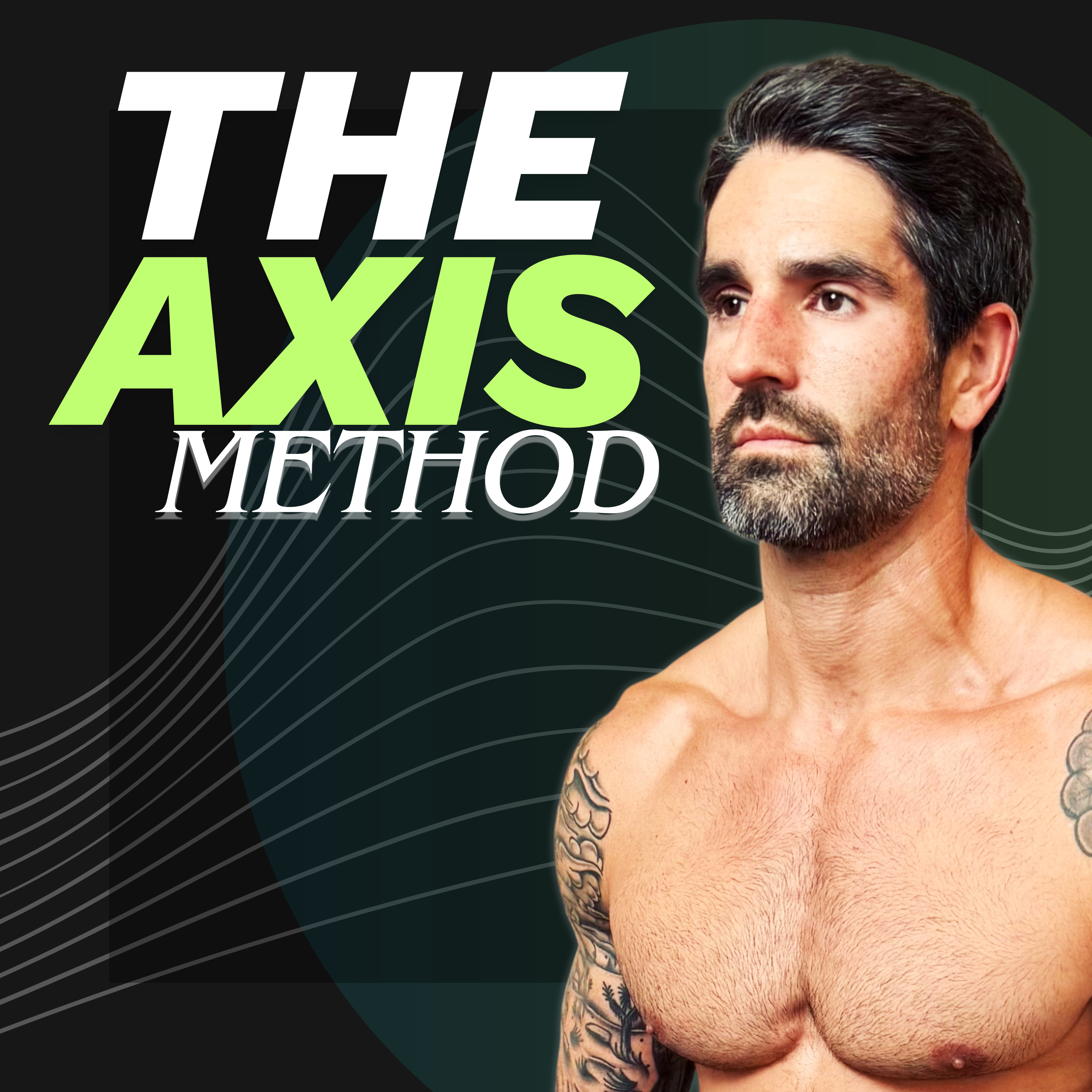
The Axis Method
by John Parker
The Axis Method Podcast explores intelligent strength training, functional health, and performance-based lifestyle design. Hosted by strength coach John Parker, the show focuses on building real-world strength through the Minimum Effective Dose (MED) philosophy. Episodes cover kettlebells, band training, rucking, recovery, supplementation, mindset, and integrating fitness into everyday life. Proudly supported by its first sponsor, Harambe System. Train with intention. Build strength for life.
-
9
EP. 08 - Advanced Lifters - The Art of Precision
Advanced training isn’t about doing more — it’s about knowing what actually matters, and having the discipline to ignore everything else.Most people think advanced lifters train harder.In reality, they train smarter - because progress gets expensiveThis podcast is proudly sponsored by Harambe System - a variable resistance platform that’s become the foundation of my own training over the past two years.It bridges the gap between bands and weights, giving you smooth, consistent tension through a full range of motion - without the joint stress of traditional loading.If your goal is to build real strength while staying pain-free and training for the long game, it’s one of the best tools I’ve used.Why progress slows (and why that’s normal)The real game: tradeoffsThe misunderstood power of maintenanceHow to choose goals without wasting monthsAuto-regulation and “train by feel”Training around injuries and constraintsWhy plateaus aren’t randomThe identity shift from chasing → sustainingAt different stages of lifting:Beginner: everything worksIntermediate: many things workAdvanced: very few things workAt this level:Adaptation slowsProgress becomes subtle+5 lbs is real progressMaintaining strength while improving another quality = a win“At this level, progress isn’t obvious — it’s negotiated.”You cannot maximize everything at once.Every goal has a cost.Push strength → fatigue increasesPush endurance (MTB, hiking) → strength may plateauCut body fat → performance and energy may dropIn real life, this looks like:TravelVan lifeOutdoor goalsLimited timeAdvanced lifters don’t chase everything — they choose.This is where most people get it wrong.Maintenance ≠ lazinessMaintenance = ownershipIf you can maintain something, you own it.If you can’t… you just visited it.1–2 heavy exposures per weekRotating emphasis (not abandoning qualities)Keeping intensity, reducing volumeHeavy push + pull once or twice per weekOTM (on-the-minute) work to “touch” conditioning or powerKettlebell AXE or explosive work to maintain sharpnessThis is where Minimum Effective Dose (MED) becomes critical.Do only what is needed — and do it well.At the advanced level:The wrong goal = wasted months (or injury).You need:1 primary driver1–2 secondary supportsPrimary: Strength (pressing, deadlifting)Secondary: Conditioning (MTB, hiking)Winter → build (strength, mass)Spring → solidifySummer → perform (outdoors, leaner)Fall → rebuildClarity beats intensity.Programs are frameworks — not rules.Adjust based on:Energy (6/10 vs 9/10 days)Joint feedbackBar speedLifestyle stressSwap exercises if something feels offKeep load high, reduce volumeMaintain structure, adjust executionAdvanced lifters don’t guess — they adjust.You’re rarely 100%.Something always talks:Low backShouldersKneesElbowsThe key:Train around - not into - pain.One bad decision can cost weeks.This is where maturity shows up:Modify the movementChange the patternKeep training, but intelligentlyPlateaus aren’t random.They usually come from:Poor goal clarityToo much fatigueNot enough recoveryLack of variation (or wrong variation)Or…You’re simply near a ceiling for that phase.Sometimes the goal isn’t to break through — it’s to hold steady while life demands more.Chase numbersAdd morePush harderConsistencyAdaptabilityLongevityThe goal isn’t just to get strong — it’s to stay strong while living a full life.At a certain point, training stops being the main event.It becomes the foundation for:HikingMountain bikingTravelRelationshipsLongevityYou’re not training instead of life anymore.You’re training for it.Advanced training isn’t about doing more — it’s about knowing what actually matters, and having the discipline to ignore everything else.If you want help applying this:StrengthAxis Program Design (Substack)Elite Coaching + Performance PanelHarambe System training ecosystem
-
8
EP. 07 - The Future of Variable Resistance: Minimalism, Tension, & Longevity with Khalid Bou-Rabee
Most people start training with one goal:Look better - More muscle. Less fat. Bigger numbers.But if you stay in the game long enough, something shifts.You stop chasing exhaustion…and start chasing sustainability.In this episode, I sat down with Khalid Bou Rabee - founder of the Harambe System—to break down what actually works in strength training when the goal isn’t just performance……but longevity.Subscribe nowThis podcast is proudly sponsored by Harambe System - a variable resistance platform that’s become the foundation of my own training over the past two years.It bridges the gap between bands and weights, giving you smooth, consistent tension through a full range of motion - without the joint stress of traditional loading.If your goal is to build real strength while staying pain-free and training for the long game, it’s one of the best tools I’ve used.Childhood experience with weight / identityMother’s cancer → catalyst for fitnessEntry point through yoga, not liftingAcademic background (math professor)Lack of practical fitness knowledge early onKhalid does not have a typical “fitness guy” origin story.Instead, he was:driven by his mother’s cancer scaredetermined to restore hers/his healthdriven by necessityMost people don’t enter training through optimization.They enter through a problem.CrossFit phaseLack of guidance → injuriesChasing intensity without understandingThe “405lb deadlift claim” storyEffort ≠ progressIntensity without structure leads to setbacks“You don’t get strong by doing more.You get strong by doing the right things - consistently.”Khalid had no clear progression in early trainingRandom workouts vs structured progressionShock loading from free weightsDifficulty managing force + techniqueControlled progression > chaotic effortDiscovery and experimentation with bandsDifferences vs traditional lifting:No shock loadingTension through rangeJoint-friendlyEarly equipment limitations → innovationVariable resistance isn’t “easier”It is:more controlledmore repeatablemore sustainable“The goal isn’t to survive training.The goal is to be able to train again tomorrow.”Consistent tension → hypertrophyReference to 2025 study (tension across ROM)Real-world results (muscle gain without joint pain)Training frequency increases when recovery improvesRight loadRight volumeRight executionKhalid’s bodybuilding phaseConstant fatigueOvertraining signalsLife conflict (business, kids, recovery)High volume works……but at a cost.And most people:don’t have the recoverydon’t have the lifestyledon’t need it“If your training takes more from your life than it gives…it’s not the right program.”Reduced volumeWeekly structure restoredFocus on key movementsBetter recovery + consistencyMinimum Effective Dose =enough stimuluswithout unnecessary fatigueTraining doesn’t need to be complicated - it needs to be focused on mind-muscle connection in the:main liftsoptional accessoriesauto-regulationreadiness-based loadingBands adjust to outputDaily readiness mattersNo forced progressionAI tracking (Harambe.Fit) supporting decision-making“Your body doesn’t care what’s written on paper.It responds to what you’re capable of today.”Leaving bodybuildingNot aligned with healthSustainability > aesthetics extremesBeing present (family, life)“You can look strong without destroying your body to get there.”Integration of:hardware (tools)software (tracking, AI)community (Harambe Fit)Shift toward:efficiencysustainabilitypersonalizationIf you’re chasing strength, aesthetics, and longevity…You don’t need a more complicated plan.You need a more intentional one.🎧 Listen to the full episode of The Axis Method with Khalid Bou Rabee to go deeper into the evolution of training, variable resistance, and building a body that lasts.John ParkerStrengthAxis
-
7
EP. 06 - The Intermediate Trap: Why You’re Stuck (And How to Break Through)
Most lifters don’t fail because they’re doing too little.They fail because they’re doing too much of the wrong things once they leave the beginner phase.And that’s where the intermediate trap lives.This episode is sponsored by Harambe System — the platform that’s fundamentally changed how I train.It bridges the gap between bands and weights, giving you:Smooth resistanceJoint-friendly loadingReal strength progressionI’ve personally used it for the past two years and it’s allowed me to:Build muscleMaintain strengthTrain explosivelyStay pain-freeHarambe SystemHarambeSystem.com/JOHNPARKERBALLISTICWhat Defines an Intermediate Lifter?You’re no longer a beginner if:You hit plateaus.The “just add 5 lbs every week” phase is over.Newbie gains are gone.Now:Progress slowsAdaptation requires strategyExecution matters more than effortYou can lift.But:You don’t always follow your programLife “gets in the way”Consistency breaks downSleep. Stress. Lifestyle.You can’t out-train bad recovery anymore.This is where most people stall.You keep changing direction.New program → new excitement → no long-term progress.You think:“More must be better.”It’s not.You’re chasing:SweatSorenessExhaustionInstead of:AdaptationPerformanceSkillYou’re trying to feel the workout…Instead of building something.HRV drops.Sleep sucks.Bar speed slows.You still push.This is the turning point.Stop doing more.Start doing better.Leave the gym feeling:BetterSharperMore capableNot destroyed.You don’t need novelty.You need:RepetitionSkill refinementMeasurable progress(ADD LINK: StrengthAxis Program Design / Performance Tracks)This is one of the most important concepts I teach.Train around ~70% effortMove weights fast and cleanAvoid grinding repsThese are real-world numbers I use:20–30 total repsBest structure: 2-3-5 ladders15–25 repsManage eccentric load carefully10–15 repsCNS-heavy → respect itDo less perfectly. Not more imperfectly.Strength is a skill.Better execution = more progress.Weeks → Months → YearsNot random bursts of motivation.You don’t just train muscles.You train:CNS readinessRecovery capacityAdaptation abilitySleep, stress, lifestyle.These are not “extras.”They are inputs.Here’s how I program most clients:A1 / A2 superset4 setsDone fresh3 setsModerate loadControlled tempoArms, delts, core2–3 setsPushPullHingeSquatSimple. Effective. Repeatable.Forget random burnout sessions.Instead:WalkingRuckingKettlebell ballisticsOn-the-minute work(ADD LINK: Kettlebell AXE / conditioning article)Not every day is a PR day.You’re not “working out.”You’re training.That means:Adjusting loadsManaging energyRespecting recovery(ADD LINK: Auto-Regulation article)Discipline isn’t forcing it.It’s knowing when to pivot.If you’re stuck as an intermediate lifter:The answer isn’t more.It’s better.Better repsBetter structureBetter decisionsIf you want help applying this:Performance Tracks → Structured trainingProgram Design → Monthly systemsHarambe System → Joint-friendly strength platformMost people never leave the intermediate phase.Not because they can’t.But because they refuse to change how they train.If this helped, drop a comment or share it with someone stuck in the middle.John ParkerStrengthAxis
-
6
EP. 05 - How Beginners Should Actually Start Strength Training (Step-by-Step Framework)
Most Beginners Don’t Need More Effort - They Need Better DirectionIf you’re new to training - or you’ve been spinning your wheels for years - the problem probably isn’t your effort.It’s your approach.After 17+ years as a strength coach, I’ve seen the same pattern over and over again:People do too much, too soonThey skip the fundamentalsThey train through painThey jump from program to programAnd they never build real consistencySo today, I’m going to walk you through how I actually take someone from pain and dysfunction → strength → real performance.This is the framework.Subscribe nowThis podcast is proudly sponsored by Harambe System - a variable resistance platform that’s become the foundation of my own training over the past two years.It bridges the gap between bands and weights, giving you smooth, consistent tension through a full range of motion - without the joint stress of traditional loading.If your goal is to build real strength while staying pain-free and training for the long game, it’s one of the best tools I’ve used.Most people don’t fail because they’re lazy.They fail because they chase intensity before they build function.They want:Hard workoutsSweatExhaustion“Feeling like they did something”But they skip the foundation that actually produces results.“If you don’t give a program at least 4–6 weeks, you’ll never know if it works.”Consistency beats everything.Before we talk about strength…We fix the machine.This is where most people need to spend their first 4–6 weeks.Joint mobility (shoulders, hips, ankles)Muscle length & balanceStability and controlPain reductionHanging from a barPVC shoulder workIndian clubsKnees-over-toes progressionsBasic core work (dead bugs, bracing)You’re not chasing fatigue here.You’re restoring function.“Pain-free movement is non-negotiable.”If something hurts sharply → stop.If it’s discomfort → assess and adjust.Now we build.But we don’t jump straight into heavy lifting.We earn it.Gradual load progressionClean techniqueSubmaximal trainingConsistency over intensity3–5 core exercisesFull-body structureAdd reps → then load → then complexityExample:Week 1: 8 repsWeek 2: 9 repsWeek 3: 10 repsWeek 4: 11 repsPick a program.Run it for 4–8 weeks.Track progress.Then adjust.Once your foundation is solid, now we layer in conditioning.But not randomly.Daily walking (7–10k steps)Basic activity consistencyThen progress to:Kettlebell ballistics (anti-glycolytic)Light circuitsSports / hobbiesI’m not a fan of crushing yourself with HIIT.I’d rather see:Better recoveryBetter movementBetter consistency“Your hobbies are your best conditioning.”Hike. Bike. Surf. Play.That’s real fitness.This is where most people overcomplicate things.You don’t need:20 exercisesFancy equipmentConstant variationYou need:StructureRepetitionIntent“The magic is in the repetition.”Track these:Pain ↓Range of motion ↑Control ↑Strength ↑Not everything needs to be complicated metrics.Here’s the part most people miss.Training isn’t just about your body.It’s about your life.“Training builds the discipline that carries into everything else.”When you:Show up consistentlyTrack your progressExecute with intentThat spills into:NutritionSleepWorkRelationshipsTraining becomes the glue.Minimum: 2 days/week (full body)Ideal: 3–4 days/weekAdd: walking + hobbiesThat’s it.You don’t need more.You need better.If you’re starting (or restarting), do this:Fix pain firstBuild consistencyProgress slowlyStay in one programGet 1% better each session“Most beginners don’t need more effort. They need better direction.”Diana and I just released a Dumbbell Performance Track for those training at home.One pair of dumbbellsSimple progressionBuilt for real-world consistency👉 You can find it inside StrengthAxis (BASE & Elite members)If you want the full breakdown, including coaching examples and deeper explanations:John ParkerStrengthAxis
-
5
EP. 04 - Functional Medicine Meets Performance With Westley Spiro, MD
Functional Medicine Meets Performance With Westley Spiro, MD“It is not about doing more.It is about doing what actually moves the needle.”In this episode of The Axis Method, I sat down with Westley Spiro MD—functional medicine physician and founder of Catalyst Precision.What made this conversation different is that Dr. Spiro doesn’t just talk about health—he lives it. His training, nutrition, supplementation, and clinical practice all align around one principle:Optimization through intelligent consistency.This conversation bridges two worlds:Performance trainingFunctional medicineAnd shows how they should never be separated.Dr. Spiro’s current structure is simple—and that’s the point.Push / Pull split (4 days/week)Sprint-based conditioning (2–3 days/week)Focus on explosive movement over maximal loadingKey takeaways:Sprinting may be one of the most underutilized tools for mitochondrial health and hormone responseYou don’t need high volume—you need high intentJoint longevity > ego liftingWe aligned heavily here:The Minimum Effective Dose is not about doing less—it’s about doing what matters most.Some of his current staples:Romanian DeadliftsBulgarian Split SquatsDumbbell PressingWeighted Pull-Ups & DipsRear Delt / Scapular WorkWhy it matters:Less axial load → more longevityUnilateral work → better structural balanceDumbbells → joint-friendly strengthThis mirrors what I’ve seen for years:Most lifters don’t need more load—they need better positioning and control.Key concept:Multivitamins = convenience, not optimizationBlood work should guide supplementationThis aligns directly with how I structure DRESS protocols for clients.This was one of the strongest sections of the episode.Key principles:Deep sleep = growth hormone + testosterone releaseCircadian rhythm drives everythingConsistency > total hoursHis non-negotiables:Same sleep/wake timeNo screens before bedMorning sunlight immediately upon wakingI’ll echo this:If your sleep is off, everything else is just noise.We broke down the current landscape:BPC-157 / TB-500 → recovery (limited human data)Growth hormone peptides → performance + body compositionGLP-1s → metabolic control, not just fat lossBig takeaway:The peptide conversation isn’t about shortcuts—it’s about regulation catching up to reality.The future likely looks like:Physician-guided useBetter quality controlMore personalized dosingThis was one of the most valuable parts for listeners.Dr. Spiro emphasized:Testosterone is a health marker, not just a performance toolOptimization ≠ abuseMany men are suboptimal, not deficientKey option discussed:Stimulates natural testosterone productionPreserves fertilityAvoids shutdown seen with TRTWhat stood out most:When testosterone improves, energy, mood, and consistency improve first—physique follows.We built out a real-world avatar:Male, mid-40sHigh stressTrains inconsistentlySlight fat gainEnergy fluctuationsFirst steps in care:Comprehensive blood workLifestyle audit (sleep, diet, stress)Training frequency correctionHormone evaluationNotably:Most people don’t need more complexity—they need better execution of fundamentals.From Dr. Spiro’s perspective:Scale weightComplex protocolsOver-tracking everythingStrength trainingMeal timingSleep consistencyBlood glucose control (A1C)Most overrated supplement: CalciumMost underrated habit: Meal timingOne marker to track: A1CLongevity driver: Strength trainingRecovery tool: Sauna > cold plungeMorning essential: Sunlight immediatelyDr. Spiro operates the same way I coach.Start simpleMeasure what mattersBuild consistencyLayer in precision over timeThis is the intersection of:Performance × Longevity × RealityCatalyst PrecisionInstagram: @catalystprecisionhealthSubstack: Beyond Normal ScienceYouTube: West Spiro MD
-
4
EP. 03 - The Evolution of Minimalist Strength Training
Minimalist strength training has shaped my entire career.Long before I became a private strength coach, I trained the way many young lifters do - chasing volume, fatigue, and believing that more work automatically meant more results. Over time, through coaching thousands of athletes and managing my own performance goals, I came to understand a different truth.Strength is not built through exhaustion. It is built through intelligent practice.Much of this realization came from exposure to the work of Pavel Tsatsouline and the systems that later became the foundation of the StrongFirst methodology. These programs influenced not only my own development as an athlete, but the structure of training I have used with clients for over 17 years.In this podcast and show notes, I want to explore what these minimalist systems get right - and how my philosophy has evolved from them.Minimalist training is often misunderstood.It is not about doing less.It is about doing what matters most.Programs such as Power to the People! demonstrated that significant strength gains could be made using extremely low training volume. A deadlift variation and a press variation, performed frequently with sub-maximal loads, could drive powerful neural adaptations.The key principle was simple:Practice strength often, but avoid fatigue.Athletes accumulate high-quality repetitions, maintain perfect form, and gradually build structural integrity. Over time, this creates a nervous system that is prepared for heavier efforts without the need for constant maximal training.As a younger lifter, I struggled to believe that such minimal work could be effective. Now, with decades of coaching experience behind me, I see how powerful this approach truly is — especially for busy adults balancing training with real life.One of the most influential programming tools introduced in early kettlebell literature was the ladder system.Instead of performing large sets that degrade technique, ladders distribute volume across smaller efforts. A structure such as 2-3-5 allows athletes to build momentum through manageable sets before confronting a more demanding final effort.Athletes often end up performing more total volume while maintaining better technique. For this reason, ladder structures remain a cornerstone of my programming today.More recent minimalist frameworks introduced explosive ballistic training with structured rest intervals. These systems aim to improve power endurance while minimizing metabolic fatigue.Heavy kettlebell swings, snatches, and short power chains allow athletes to train explosively while maintaining aerobic recovery between efforts. Over time, this style of training can improve mitochondrial efficiency, heart-rate recovery, and overall work capacity.Athletes train movements frequently, refine technique, and accumulate strength gradually. This produces durable performance — the kind that lasts decades rather than months.When applied intelligently, minimalist training can build elite fitness using surprisingly small amounts of work.The movements themselves may be simple.The results are anything but.If you are interested in applying these principles, I publish structured training programs each month through StrengthAxis.Base members receive full access to all programming tracks. Elite members receive additional coaching support, performance analysis, and individualized guidance.Strength is a lifelong practice. Train with intention.John ParkerStrengthAxis
-
3
EP. 02 - Why Variable Resistance Became My Primary System
Strength isn’t just about lifting heavier weights. It’s about building a body that performs, adapts, and lasts for decades.In this episode of The Axis Method, I break down why variable resistance training - and specifically Harambe System - went from being a simple experiment to becoming the foundation of my own training.I’ve spent most of my life around traditional strength training. Barbells, kettlebells, sprint work, heavy lifting, explosive lifting - that world shaped me as an athlete and as a coach. But over time, I started asking a different question:What style of training allows me to stay strong, powerful, and muscular without constantly beating up my joints?That question led me deeper into variable resistance training.This podcast is proudly sponsored by the Harambe System.Harambe System is a compact variable resistance training platform built around two core components:The CyberBarThe CyberPlateThe system uses precision rollers and a patented pulley mechanism to allow resistance bands to move smoothly and consistently throughout a lift.Unlike traditional band setups that create friction and uneven loading, Harambe System’s design helps maintain tension through the full range of motion.And that matters.Recent research confirms that muscle growth depends primarily on tension across the full range of motion, regardless of where peak resistance occurs.Over the past two years, Harambe System has become the foundation of my own strength training, allowing me to build strength, maintain power, and reduce joint irritation compared to heavy barbell training.If you’d like to learn more:Code: JohnParkerBallistic for 10% offIf you train long enough, your elbows and wrists will eventually start talking to you.In this episode, I talk about:how I first became interested in variable resistance through Westside Barbell and Louie Simmonswhy bands and accommodating resistance are not new ideashow I connected with Khalid and eventually decided to invest in Harambe Systemwhat my first impressions were of the CyberPlate, CyberBar, handles, and accessorieswhy the resistance curve feels so different from traditional free weightshow Harambe helped me maintain strength and muscle while reducing joint irritationwhy explosive lifting fits my body better than grinding repshow I use slower tempo work for arm training, tendon health, and joint resiliencehow I program Harambe sessions for myself, beginners, aging lifters, and athleteswhy portability, convenience, and home gym usability matter so muchwhere I believe variable resistance training is headed in the futureOne of the biggest takeaways from this entire journey is that variable resistance did not replace the fundamentals for me - it refined them.I still care about tension. I still care about form. I still care about power, muscle, and performance.At 40, I’m not interested in grinding myself into the floor just to prove I can still suffer through ugly reps. I want to train hard, move explosively, protect my joints, and stay capable for the long haul - both in the gym and outside of it.That’s a big reason why Harambe System became my primary training system.This episode is for:lifters curious about variable resistance trainingcoaches looking for another useful toolexperienced trainees trying to maintain muscle and strength with less wear and tearathletes and outdoor-minded people who want performance without unnecessary punishmentanyone interested in building a body that lastsIf that sounds like you, I think you’ll enjoy this one.Listen to Episode 2 below.If you’re interested in variable resistance training, you can also check out my free VRT ebook on Substack, where I break down foundational concepts and applications in more detail.In my 16 years as a professional strength coach, I’ve been obsessed with one question:My practice is my art.And variable resistance has become one of my main brushes.John ParkerStrengthAxis
-
2
EP. 01 - My StrongFirst Journey
Strength isn’t just about lifting heavier weights. It’s about building a body that performs, adapts, and lasts for decades.That idea has shaped my entire coaching career.After more than 17 years working as a private strength coach in San Diego, I’ve come to believe that the most powerful training systems share three qualities:SimplicityConsistencyRespect for the bodyThat philosophy is the foundation of StrengthAxis, and it’s the reason I’m launching The Axis Method.This podcast will explore the science, philosophy, and practice of strength training -from barbells and kettlebells to metabolic health, longevity, and intelligent program design.For the first episode, I wanted to start with the system that shaped a huge portion of my development as a coach:My StrongFirst JourneyIn this episode I share:How I first discovered kettlebellsMy experience earning the SFG Level 1 certification in 2014Returning to pursue additional certifications in 2019Becoming a StrongFirst EliteThe journey toward achieving the Beast TamerWhat StrongFirst taught me about strength, discipline, and program designAnd a few honest reflections about what I liked - and what I didn’t (or don’t).This podcast is proudly sponsored by the Harambe System.Harambe System is a compact variable resistance training platform built around two core components:The CyberBarThe CyberPlateThe system uses precision rollers and a patented pulley mechanism to allow resistance bands to move smoothly and consistently throughout a lift.Unlike traditional band setups that create friction and uneven loading, Harambe System’s design helps maintain tension through the full range of motion.And that matters.Recent research confirms that muscle growth depends primarily on tension across the full range of motion, regardless of where peak resistance occurs.That’s exactly what this system is built to deliver.Over the past two years, Harambe System has become the foundation of my own strength training, allowing me to build strength, maintain power, and reduce joint irritation compared to heavy barbell training.If you’d like to learn more:When I look back at my career, StrongFirst wasn’t about earning certifications.It was a turning point.Before that time, my coaching was still shaped by the traditional fitness culture: More volume, more exhaustion, more intensity.What StrongFirst introduced me to was something very different:Precision.Instead of chasing fatigue, the focus shifted to:Technical masteryStrategic programmingHigh-quality repetitionsLong-term progressionOver time, those principles became the backbone of my own coaching philosophy.One of the most memorable milestones in my StrongFirst journey was achieving the Beast Tamer.The challenge requires three feats of strength using a 48kg kettlebell:• A strict military press• A strict weighted pull-up• A strict pistol squatFor many coaches in the StrongFirst community, the Beast Tamer represents the pinnacle of kettlebell strength.After months of focused training and careful programming, I was able to complete the challenge while assisting a certification in San Diego.It remains one of the most satisfying accomplishments of my training career.Even after achieving StrongFirst Elite, my education hasn’t stopped.Recently I attended an Olympic lifting seminar with Jeremy Layport, and later this year I’ll be attending additional StrongFirst workshops - Enter the Dumbbell, Resilient with Pavel Macek.Future episodes of The Axis Method will explore topics like:Minimum Effective Dose trainingVariable resistance and Harambe SystemBlood chemistry and metabolic healthThe philosophy of strengthWith professional guests from these fields and more…If there’s a topic you’d like me to cover, feel free to leave a comment.—John ParkerStrengthAxis
No matches for "" in this podcast's transcripts.
No topics indexed yet for this podcast.
Loading reviews...
ABOUT THIS SHOW
The Axis Method Podcast explores intelligent strength training, functional health, and performance-based lifestyle design. Hosted by strength coach John Parker, the show focuses on building real-world strength through the Minimum Effective Dose (MED) philosophy. Episodes cover kettlebells, band training, rucking, recovery, supplementation, mindset, and integrating fitness into everyday life. Proudly supported by its first sponsor, Harambe System. Train with intention. Build strength for life.
HOSTED BY
John Parker
Loading similar podcasts...
URL copied to clipboard!