
PODCAST · education
The Clean Operating System
by Adam Baron
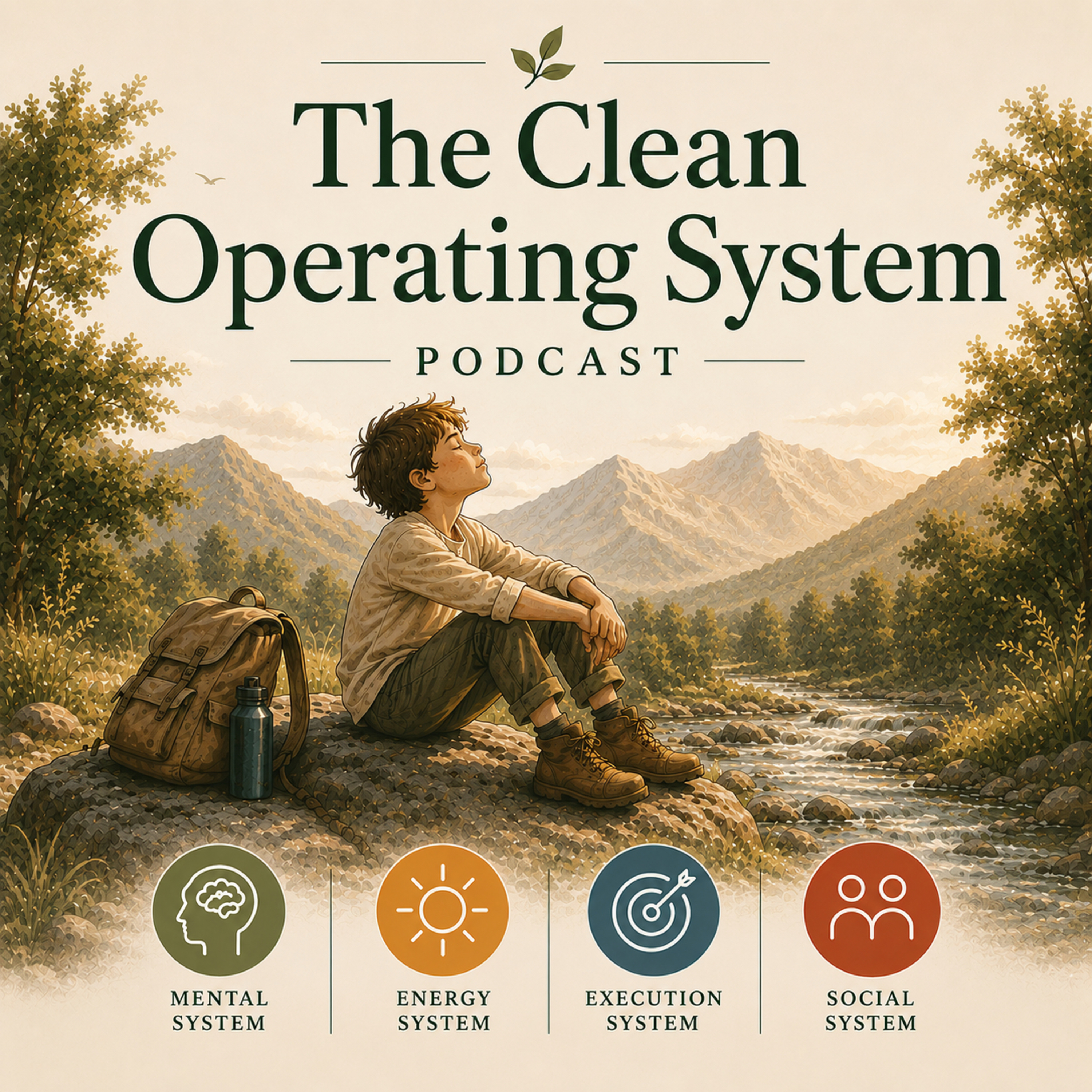
What if the most powerful lessons about leadership, performance, focus, energy, and relationships aren’t new?What if they are things we once knew naturally - and simply forgot?The Clean Operating System is a podcast about sustainable performance, clearer thinking, and building a life that works.Through lessons inspired by children, leadership, psychology, and everyday life, Adam Baron explores four interconnected systems: how we think, how we manage energy, how we execute, and how we build stronger relationships.Re-learning the obvious. One episode at a time.
-
19
The Executive Reset Matrix: Stop Fixing Everything at Once
When performance starts slipping, most people try to fix everything at the same time. The result is usually more overwhelm, not less.In this episode, Adam Baron introduces the Executive Reset Matrix—a practical framework for identifying the highest-leverage improvements in your personal and professional systems. Learn how to focus on what matters most instead of spreading your energy across too many priorities.In this episode: Why trying to fix everything often fails How to identify the biggest performance bottlenecks The difference between urgent and important improvements Why leverage matters more than effort How leaders prioritize effectively under pressure A framework for resetting with clarityBecause real transformation rarely comes from doing more. It comes from focusing better.Take the Clean Operating System Assessment and discover which part of your system may need the most attention:https://cleanoperatingsystem.com/assessment
-
18
The Clean System vs. The Noisy System
What separates sustainable performers from people who constantly feel overwhelmed?In the opening episode of Season Two, Adam Baron introduces one of the most important distinctions in the entire Clean Operating System: the difference between clean systems and noisy systems. A clean system creates clarity, energy, focus, and progress. A noisy system creates friction, confusion, and unnecessary effort.Discover how noise accumulates in our thinking, schedules, habits, and organizations—and learn how simplifying the system often creates bigger improvements than working harder.In this episode: What defines a clean operating system How noise quietly undermines performance The signs your system is becoming overloaded Why complexity often masquerades as sophistication The connection between clarity and execution Practical ways to reduce noise immediatelyBecause sustainable performance begins when complexity gives way to clarity.Take the Clean Operating System Assessment and discover which part of your system may need the most attention:https://cleanoperatingsystem.com/assessment
-
17
Connection Before Strategy: Why Trust Accelerates Everything
Before strategy works, trust must exist.In this episode, Adam Baron explores why relationships are often the hidden variable behind performance, leadership, and execution. While organizations frequently focus on processes, plans, and systems, the quality of human connection often determines whether those systems succeed.Learn why children build trust naturally, why psychological safety accelerates learning, and how strong relationships create faster decisions, better collaboration, and healthier cultures.In this episode: Why trust is a performance multiplier The connection between psychological safety and learning How strong relationships improve execution Why communication problems are often trust problems Leadership behaviors that strengthen connection Practical ways to build trust consistentlyBecause people rarely perform at their best when trust is missing.Explore the Clean Operating System and access additional materials and tools you may find useful: https://cleanoperatingsystem.com
-
16
Fast Recovery Beats Positivity: The Skill Kids Master Early
Resilient people are not those who never struggle. They are the people who recover quickly.In this episode of The Clean Operating System, Adam Baron explores one of the most important capabilities children demonstrate naturally: the ability to move on. Children experience disappointment, frustration, mistakes, and failure every day—but they rarely stay stuck for long.Discover why recovery matters more than positivity, why emotional resilience is a learnable skill, and how leaders can build systems that help them bounce back faster from setbacks and challenges.In this episode: Why resilience is about recovery, not optimism How children process setbacks differently than adults The hidden cost of staying stuck in failure Why emotional flexibility improves performance Leadership lessons from fast recovery Practical techniques for building resilienceBecause sustainable performance is not about avoiding setbacks. It’s about shortening recovery time.Explore the Clean Operating System and access additional materials and tools you may find useful: https://cleanoperatingsystem.com
-
15
Focus as a Discipline: What Screen Limits Really Teach Us
Attention has become one of the scarcest resources in modern life. Every notification, message, email, and update competes for a piece of your focus. Yet the ability to concentrate deeply remains one of the most valuable skills in leadership and performance.In this episode, Adam Baron examines what children can teach us about attention, presence, and focus. Discover why screen limits are not really about technology—they are about protecting cognitive capacity and creating space for meaningful work.In this episode: Why attention is the foundation of performance The hidden costs of constant digital distraction How fragmented focus weakens decision-making Why presence improves relationships and leadership The connection between screen habits and mental clarity Practical ways to reclaim your attentionBecause the people who control their attention often control their outcomes.Explore the Clean Operating System and access additional materials and tools you may find useful: https://cleanoperatingsystem.com
-
14
The Power of Shutdown: Ending the Day to Win the Next
Most professionals know how to start their day. Far fewer know how to end it.In this episode, Adam Baron explores why sustainable performance depends not only on how we work, but on how we stop working. Children naturally transition between activities. Adults often carry unfinished tasks, unresolved decisions, and mental clutter long into the evening.Discover why intentional shutdown rituals improve recovery, reduce stress, and create better focus the following day. Learn how a simple end-of-day routine can help your brain let go, recover, and prepare for tomorrow’s challenges.In this episode: Why unfinished work creates mental noise The hidden cost of always being “on” How shutdown rituals improve recovery and focus The importance of creating psychological closure Why recovery begins before sleep A simple framework for ending the day intentionallyBecause tomorrow’s performance often depends on how well you finish today.Explore the Clean Operating System and access additional materials and tools you may find useful: https://cleanoperatingsystem.com
-
13
Move to Think: Why Daily Motion Sharpens the Mind
Movement is one of the most underestimated performance tools available to modern professionals. While adults often view exercise as something separate from work, children understand a different truth: movement is not a fitness activity—it is a natural part of how human beings learn, think, and function.In this episode of The Clean Operating System, Adam Baron explores the powerful connection between movement and cognitive performance. Discover why some of your best ideas arrive during a walk, why prolonged sitting drains mental energy, and how daily motion improves focus, creativity, resilience, and decision-making.In this episode: • Why children move constantly and think more clearly because of it • The relationship between movement and cognitive performance • How sitting affects energy, focus, and problem-solving • Why many breakthrough ideas happen away from the desk • The leadership benefits of movement and recovery • Practical ways to build motion into a busy scheduleBecause sometimes the fastest way to solve a problem is to stop staring at it and start moving.
-
12
Fueling the Machine: Eating for Focus, Not Convenience
What if nutrition is one of the most overlooked performance tools in modern work?In this episode, Adam Baron examines how food influences focus, energy, decision-making, and emotional resilience. While many professionals eat around their schedules, children naturally follow routines that support consistent energy throughout the day.Learn why fueling your brain matters as much as fueling your body—and how simple habits can dramatically improve your performance.In this episode: Why nutrition is a performance topic The connection between food and mental clarity How convenience can undermine energy Why stable energy improves leadership The value of protecting lunch and reducing decision fatigue Practical ways to build sustainable fueling habitsBecause your brain is your most important professional asset—and every asset performs better when it’s properly maintained. Explore the Clean Operating System and access additional materials and tools you may find useful: https://cleanoperatingsystem.com
-
11
Sleep Is Not Optional: Why Rest Is a Leadership Decision
Sleep is not a luxury. It’s infrastructure.In this episode, Adam Baron explores one of the most overlooked drivers of leadership, decision-making, and sustainable performance: sleep. While modern culture often celebrates busyness and exhaustion, science and experience tell a different story.Discover why sleep affects everything from judgment and emotional regulation to creativity and strategic thinking—and why leaders who protect recovery make better decisions over the long term.In this episode: Why sleep is cognitive infrastructure The hidden costs of sleep deprivation How exhaustion changes leadership behavior Why recovery is part of performance The importance of a shutdown ritual How better sleep becomes a long-term competitive advantageBecause the quality of your decisions depends on the quality of your recovery.Explore the Clean Operating System and access additional materials and tools you may find useful: https://cleanoperatingsystem.com
-
10
Performance Runs on Rhythm, Not Willpower
Most professionals don’t have a knowledge problem. They have an energy problem.In this episode, Adam Baron begins exploring the Energy System and explains why sustainable performance depends far more on rhythm than motivation or willpower. Children naturally operate within rhythms that support energy, recovery, and focus. Adults often replace those rhythms with constant pressure and endless decisions.Learn why predictable routines create extraordinary performance and how small daily anchors can transform your energy.In this episode: Why willpower is a limited resource The difference between rhythm and motivation How decision fatigue drains energy The importance of daily anchors and routines Why burnout often comes from inconsistency, not effort Practical ways to build sustainable performanceBecause performance isn’t built through heroic effort. It’s built through reliable systems.Explore the Clean Operating System and access additional materials and tools you may find useful: https://cleanoperatingsystem.com
-
9
Play Before Perfection: Why Experimentation Beats Overthinking
Children learn through play. Adults often wait for perfect.In this episode, Adam Baron explores why experimentation is one of the fastest paths to learning, innovation, and personal growth. While many professionals seek certainty before taking action, the most effective learners understand that progress comes from testing ideas in the real world.Discover why perfection can become a hidden form of procrastination and how small experiments create the feedback needed for improvement.In this episode: Why children learn faster through experimentation The hidden cost of perfectionism How overthinking delays growth Why action creates clarity The power of low-stakes repetitions How leaders can build cultures of experimentationThe goal isn’t to lower standards. The goal is to learn faster.Explore the Clean Operating System and access additional materials and tools you may find useful: https://cleanoperatingsystem.com
-
8
Belief Precedes Capability: The Compounding Effect of “I Can”
What if the biggest obstacle to growth isn’t a lack of talent—but a lack of belief?In this episode of The Clean Operating System, Adam Baron explores why belief often comes before capability. Children naturally assume they can learn, improve, and grow. Adults, on the other hand, often collect limiting labels that quietly shape their future.Discover why the stories we tell ourselves influence effort, learning, and results - and how one simple word, yet, can transform the way we approach challenges.In this episode: Why children assume improvement is possible How limiting identities hold adults back The connection between belief, effort, and performance Why capability is built through repetition, not talent How leaders help others unlock potential A practical exercise to rewrite your self-limiting storiesBecause growth rarely begins with certainty. It begins with possibility.Explore the Clean Operating System and access additional materials and tools you may find useful: https://cleanoperatingsystem.com
-
7
The Playground Principle: Learning Through Safe Risk
Children don’t become confident before they try.They become confident because they try.In this episode, Adam Baron explores why growth rarely happens inside our comfort zone and how children naturally understand a principle many adults forget: progress requires safe risk.Through stories, observations, and practical insights, you’ll discover why overprotecting ourselves can limit learning, why small experiments create growth, and how courage develops through action—not certainty.You’ll learn: Why growth and discomfort are inseparable How children use play to develop confidence and resilience The difference between reckless risk and safe risk Why experimentation is essential for learning and performanceThe goal isn’t to avoid mistakes.The goal is to learn faster than your fears.Growth begins at the edge of comfort.Explore the Clean Operating System and access additional materials and tools you may find useful: https://cleanoperatingsystem.com
-
6
Courage Before Experience: Acting Before Fear Moves In
Most people believe confidence comes first.Children know something different.They try before they feel ready.In this episode, Adam Baron explores why courage often comes before experience, why waiting for confidence can quietly delay growth, and how small acts of action create the confidence we are looking for.You’ll learn: Why confidence is usually the result of action, not the cause of it How fear grows when we wait too long The difference between dramatic courage and everyday courage Why small attempts compound into extraordinary growthYou don’t need more certainty.You don’t need more experience.You only need the next step.Move first. Confidence will catch up.Explore the Clean Operating System and access additional materials and tools you may find useful: https://cleanoperatingsystem.com
-
5
Questioning the Status Quo Without Needing to Rebel
Most systems begin as solutions.Over time, many become habits. Then assumptions. Then invisible rules.In this episode, Adam Baron explores how high performers improve systems without creating unnecessary conflict. Inspired by the way children naturally experiment, you’ll learn how to challenge assumptions, improve processes, and create change through curiosity rather than confrontation.Topics include:Why adults stop questioning systemsThe hidden cost of “we’ve always done it this way”How small experiments outperform big change programsWhy effective leaders act more like explorers than rebelsThe goal is not disruption.The goal is improvement.One experiment at a time.Explore the Clean Operating System and access additional materials and tools you may find useful: https://cleanoperatingsystem.com
-
4
Curiosity as the Default: Why Asking Why Still Works
Children ask questions because they want to understand the world.Adults often stop asking questions because they want to appear competent.In this episode, Adam Baron explores why curiosity is one of the most valuable capabilities in leadership, learning, and decision-making—and why many professionals gradually lose it.You’ll learn:Why expertise can become a hidden trapHow assumptions limit growthWhy great leaders ask better questions instead of giving better answersHow curiosity improves both performance and relationshipsSometimes one powerful question creates more value than ten opinions.Explore the Clean Operating System and access additional materials and tools you may find useful: https://cleanoperatingsystem.com
-
3
Why Kids Run a Cleaner Operating System
What if some of the most important lessons about leadership, performance, learning, and relationships don’t come from business schools—but from children?In this opening episode of The Clean Operating System, Adam Baron introduces the core idea behind the series: high performance is not about working harder. It’s about operating with a cleaner system.You’ll discover why children naturally embody qualities that many successful adults spend years trying to relearn—curiosity, resilience, experimentation, trust, recovery, and presence.This episode introduces the four pillars of the Clean Operating System:Mental SystemEnergy SystemExecution SystemSocial SystemLet us re-learn the obvious.Explore the Clean Operating System and access additional materials and tools you may find useful: https://cleanoperatingsystem.com
We're indexing this podcast's transcripts for the first time — this can take a minute or two. We'll show results as soon as they're ready.
No matches for "" in this podcast's transcripts.
No topics indexed yet for this podcast.
Loading reviews...
ABOUT THIS SHOW
What if the most powerful lessons about leadership, performance, focus, energy, and relationships aren’t new?What if they are things we once knew naturally - and simply forgot?The Clean Operating System is a podcast about sustainable performance, clearer thinking, and building a life that works.Through lessons inspired by children, leadership, psychology, and everyday life, Adam Baron explores four interconnected systems: how we think, how we manage energy, how we execute, and how we build stronger relationships.Re-learning the obvious. One episode at a time.
HOSTED BY
Adam Baron
CATEGORIES
Loading similar podcasts...
Frequently Asked Questions
How many episodes does The Clean Operating System have?
The Clean Operating System currently has 17 episodes available on PodParley. New episodes are automatically indexed when they're published to the podcast feed.
What is The Clean Operating System about?
What if the most powerful lessons about leadership, performance, focus, energy, and relationships aren’t new?What if they are things we once knew naturally - and simply forgot?The Clean Operating System is a podcast about sustainable performance, clearer thinking, and building a life that...
How often does The Clean Operating System release new episodes?
The Clean Operating System has 17 episodes. Check the episode list to see recent publication dates and frequency.
Where can I listen to The Clean Operating System?
You can listen to The Clean Operating System on PodParley by clicking any episode. We provide an embedded audio player for direct listening, and you can also subscribe via your preferred podcast app using the RSS feed.
Who hosts The Clean Operating System?
The Clean Operating System is created and hosted by Adam Baron.
URL copied to clipboard!