
PODCAST · true crime
The Comm Center with Drew Breasy
by The Comm Center
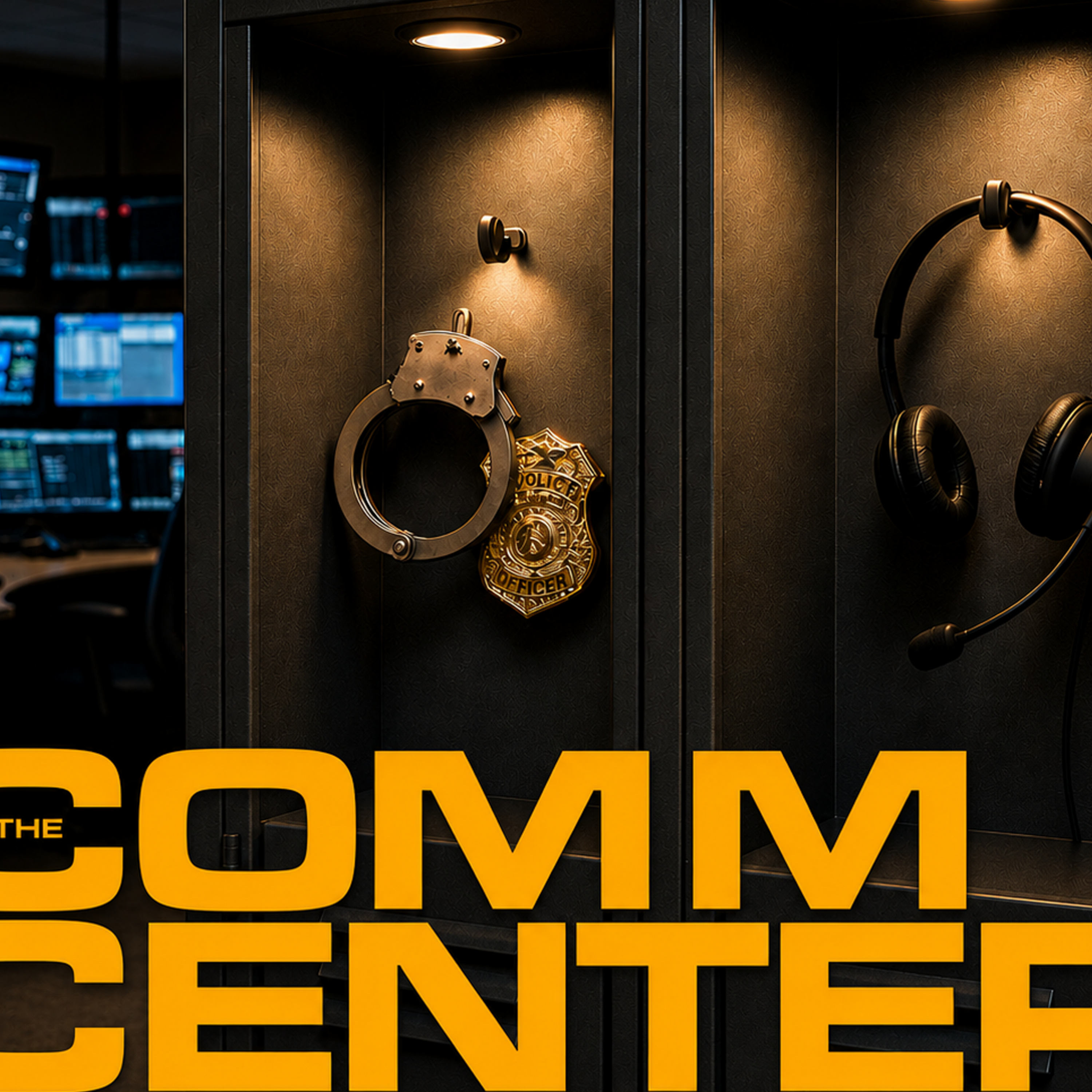
Every good true crime story starts with a 911 call. Step into The Comm Center where experienced emergency responders take you from the actual 911 call audio and bodycam to the trial and verdict.
-
162
'Not Human': Bizarre 911 Call For Close Encounter
In 2021 in Currie North Carolina, a man was driving his pickup when he came across two strange things-- first a man suffering from terrible injuries walking in the dark. Then something else which defies explanation. The driver dialed 911 and for 11 minutes his close encounter with something unexplainable was documented in real time. Then, the call disappeared for four years. In 2025, renewed interest in the case has drawn the caller out of obscurity to say what he saw that night.
-
161
LIVE: Drew and Jon: Lindsay Clancy, Andrew Baxter, and Jon
Jon and Drew go live and talk Lindsay Clancy; the latest successes and changes to the show, and take live comments.
-
160
Amy Eskridge: "I Did Not Kill Myself"
Retired Air Force General Neil McCasland is still missing—but his case led us to an even stranger mystery. We investigate Amy Eskridge, the anti-gravity researcher who reported stalking, death threats and directed-energy attacks before sending an eerie warning: “If you see any report that I killed myself, I most definitely did not.” Now her 2022 death has resurfaced amid questions about a growing list of missing and deceased American scientists—and even Congress and the FBI are paying attention.
-
159
Karen Solomon Case: The First 5 Hours
On the morning of August 18th, three systems collided in Worcester, Massachusetts: a 911 center, a police department that had to investigate one of its own.Officers were called to Wildwood Avenue on a report of a person down. They found Kurt Solomon — 57 years old, a former military police officer, a 31-year veteran of the Worcester Police Department. Six days later, his wife Karen Solomon, co-founder of Blue H.E.L.P., was found dead in the woods off May Street.Worcester Police Chief Paul Saucier has said investigators believe this was a murder-suicide. The Office of the Chief Medical Examiner has not issued a ruling. Nobody has been tried, and nobody ever will be.
-
158
Lindsay Clancy Didn't Love Her Kids
I tried to understand Lindsay Clancy without condemning—or excusing—what she did. Since then, something changed my mind: the people determined to make her a tragic hero. When compassion becomes exoneration, when responsibility is blamed on everyone except the person who killed three children, true crime has lost the plot. Time to take down the self-important Lindsay Clancy cult, and the true crime community which has allowed emotions to hijack the higher reasoning.
-
157
Hannah Payne: New Trial Denied | What They Got Wrong
A Georgia judge just denied Hannah Payne's motion for a new trial — and for the first time in this entire appeal, he actually explained why. This is the “clean order” the Georgia Supreme Court demanded after the last one was thrown out for citing cases that don't exist. A retired police lieutenant breaks down what the judge ruled, whether his reasoning holds up, and the two-word detail from a 911 call transcript that could decide what happens next.I'm not an attorney. This isn't legal advice. This is an operational read — command-level analysis of a case that started with a 911 call and is now on its second trip toward the Georgia Supreme Court.🔴Want Comm Center Merch? https://comm-center-shop.fourthwall.com/
-
156
Twin Falls Fights Back: Chad Williams, Active Shooter
Two 911 dispatchers. 85 calls. One active shooter moving through a Twin Falls, Idaho In-N-Out — and every call had to be sorted, triaged, and turned into a picture the responding officers could actually use.Drew, a police commander with 29 years of law enforcement experience, and Jon, an active 911 dispatcher and certified crisis negotiator, break down what it actually takes to run a comm center through an incident like this — how two people split the work when the phones won't stop, how a description gets built out of panicked, conflicting 911 calls, how a "second shooter" report gets born from nothing but fear and bad information, and how one dispatcher has to keep listening while the other starts talking units through a scene that's still moving.
-
155
Grant Solomon: Part 2 | Hiring A Hitman
The 911 call was only the beginning.Angelia Solomon--- a mother suddenly in media limelight seeks validation and vindication for failed custody accusations by setting up her daughter as a proxy to further excoriate Aaron Solomon-- at the cost of her Gracie's wellbeing. As emotional appeals fall short, Angelia takes matters into her own hands revealing at last the hypocrisy of her own character as the destruction of the Solomon family is finally complete.
-
154
Grant Solomon: Part 1 | The 911 Call
18-year-old Grant Solomon was crushed beneath his own pickup truck while his father, Aaron Solomon, called 911 for help. It appeared to be a horrific accident. Then came the questions: a bitter family history, allegations Grant was preparing to expose his father—and three mysterious men Aaron said were at the scene who seemingly vanished from the story.An actual 911 dispatcher breaks down the call that started the Grant Solomon mystery
-
153
Perez Hilton: Why Police Waited 4 Hours Outside His Door
Miami-Dade deputies staged outside Perez Hilton's home for nearly four hours before making entry — and the Sheriff's Office called it "tactically disengaging." A retired police commander and an active 911 dispatcher break down what that phrase actually means operationally, why agencies are increasingly choosing not to force entry on self-harm-only calls, and what it signals about how 911 response is changing nationwide.
-
152
Bryan Kohberger Wants His Guilty Plea Back
Bryan Kohberger is back in the headlines, asking to withdraw the guilty plea that spared him from the death penalty. But can he actually do it?In this episode of The Comm Center, 911 dispatcher Jon and 29-year police commander Drew Breasy break down what Kohberger is arguing, what the law says about withdrawing guilty pleas, and why the odds are stacked against him.We also discuss what may really be motivating him. Is this about innocence... or notoriety? Is prison pushing him toward another legal battle? Does he simply have nothing left to lose? We also examine how conspiracy theories have become an increasingly common feature of high-profile criminal cases — from Karen Read to Tyler Robinson — and why nearly every major case now develops an online alternative narrative.
-
151
The Weepy-Voiced Killer: The Serial Killer Who Kept Calling 911
Most serial killers avoid the police. This one couldn't stop calling them.Between 1980 and 1982, the man known as the Weepy-Voiced Killer terrorized St. Paul, Minnesota, then repeatedly called police to confess in chilling, emotional phone calls. As an actual 911 dispatcher, I break down the recordings, the investigation, and the bizarre psychology of the serial killer who seemed desperate to be caught—but never surrendered.What drove him to pick up the phone after each attack? And how did one surviving victim finally bring his reign of terror to an end?
-
150
Nolan Wells: The Call Nobody's Released.
Nolan Wells disappeared during a Fourth of July boat trip to Horn Island, Mississippi. His body was found two days later. The internet has decided it already knows what happened — but the audio everyone's heard isn't what they think it is, and the call that actually matters has never been released.Drew spent 29 years in law enforcement, including command-level oversight of a 911 center. Jon is an active 911 dispatcher and certified crisis negotiator working calls like this one this week. Together they walk through what's actually on the record in the Nolan Wells case — not what's circulating.Excerpts from @TheOfficerTatum were used in this episode.
-
149
Lindsay Clancy: The Truth About Postpartum Psychosis
Ahead of Lindsay Clancy’s murder trial, Jonathan is joined by TrueCrimeDoula to examine one of the biggest questions at the heart of the case: what was happening in Lindsay’s mind?We break down the myths surrounding postpartum psychosis, what severe postpartum mood disorders can actually look like, and how the same evidence may be interpreted very differently by prosecutors and the defense. What can Lindsay’s behavior tell us—and what can’t it tell us—as her trial approaches?Check out TrueCrimeDoula on Youtube
-
148
Lindsay Clancy Trial: The Three Things You Need to Know
Lindsay Clancy's murder trial begins with jury selection on Monday, July 20 — nearly three and a half years after the deaths of her three children in Duxbury, Massachusetts. Prosecutors just dropped the strangulation charges (July 9), narrowing the case to three counts of first-degree murder, and Clancy's defense has confirmed she'll argue lack of criminal responsibility — what's commonly called an insanity defense.But Massachusetts runs this defense backwards from almost every other state. Jon — an active 911 dispatcher with 11+ years of experience — breaks down what a call like Patrick Clancy's actually does to the person taking it, and why the 911 call itself may become one of the most important pieces of evidence at trial. Drew — a 29-year law enforcement veteran — walks through the legal mechanics: why the burden of proof in this case falls on the state, not the defense, and what that means for how this trial will actually be decided.
-
147
The True Crime Killer: The Levi Carte Case
Thirteen-year-old Levi Carte was convicted of murdering his neighbor, Denise Tenpenny, after investigators uncovered a notebook containing what prosecutors described as a handwritten murder plan. We examine the 911 call, the evidence presented at trial, the role of true crime in the case, and how Ohio law handled one of the most disturbing juvenile murder prosecutions in recent years.
-
146
The Charlie Kirk Case: What the Evidence Actually Showed
A full breakdown of the Tyler Robinson preliminary hearing in the Charlie Kirk case — what the State's evidence showed, what the defense challenged, and why the case wasn't ruled on.This isn't a tribute video, and it isn't a conspiracy video. Charlie Kirk was a homicide victim with a family living with that loss. This is operational analysis — a plain-English breakdown of five days of testimony in the preliminary hearing for Tyler Robinson, built from the full court record, not headlines.I'm Drew Breasy — retired police commander, 29 years in law enforcement. I walk through what the State's case actually was, what the defense landed under cross-examination, and why Judge Tony Graf continued the case to September 1st instead of ruling from the bench.
-
145
Karmelo Comments, Jon and Drew Answers
You left the comments. Drew (retired Police Commander) and Jon (active 911 dispatcher) read them live — and some of the internet's theories about the Karmelo Anthony case needed a legal reality check.Was it a knife or a "utility tool"? Does epilepsy justify deadly force? When do Miranda rights actually apply? We go comment by comment with the operational experience to separate what's legally relevant from what just feels satisfying to believe.
-
144
Shannan Gilbert: The Murder You Never Heard About
Shannan Gilbert vanished after a terrifying 23-minute 911 call in 2010. Her disappearance led police to the Gilgo Beach murder victims and ultimately to alleged serial killer Rex Heuermann. But the mystery of Shannan's own death remains unsolved.Revisit Shannan's strange final moments, break down the evidence surrounding her disappearance, and reveal the heartbreaking story that unfolded after her body was found—a haunting crime involving her own family that may change how you view her final 911 call. Could it offer a new explanation for the bizarre decisions she made before disappearing into the darkness?
-
143
Moriah Wilson's Killer Almost Got Away-- Twice
Kaitlin Armstrong walked out of an interrogation room a free woman — a wrong birthday on her arrest warrant forced police to let her go, right in the middle of the Moriah Wilson murder investigation. Then, 19 days before her murder trial, she tried to disappear again.Retired Police Commander Drew Breasy (29 years, narcotics, criminal intelligence, 911 center administration) and active 911 Dispatcher Jon (11+ years, certified crisis negotiator) break down the case operationally: the 911 call, the 90-minute investigative window, the pretext arrest that nearly fell apart, the ballistics match, the international manhunt to Costa Rica, and the jailbreak attempt weeks before trial.
-
142
I Killed My Family: The Chilling 9-1-1 Call of Jake Evans
A calm 17-year-old calls 9-1-1 and admits he murdered his mother and sister. In one of the most disturbing emergency calls ever recorded, a dispatcher must suppress every instinct to judge him, keep him talking, and uncover the truth while officers race to the scene. Veteran 9-1-1 dispatcher Jon breaks down the Jake Evans case, the psychology behind the call, and the remarkable professionalism that helped bring a killer to justice.
-
141
Karmelo Anthony: "I Did It" Bodycam & 911 Calls
Most people can feel how disturbing this evidence is. We can tell you what it means.Jon (Active 911 Dispatcher) and Drew (Retired Police Commander) break down the newly released 911 calls and bodycam footage from the Karmelo Anthony case — the same evidence played in front of the jury that convicted him of first-degree murder and sentenced him to 35 years.Jon analyzes the calls from the dispatcher's chair: what the callers gave, what they missed, and how that information moved through the system. Drew breaks down the bodycam: what Anthony's behavior tells you, what officers did right, and what "I did it" means from a law enforcement perspective.This is operational true crime. Every good true crime story starts with a 9-1-1 call.
-
140
One of Our Generals Is Missing: Neil McCasland Case
Retired Air Force General William Neil McCasland vanished from New Mexico in February 2026, leaving behind his phone, glasses, and wearable devices—but taking his hiking boots, wallet, and firearm. As investigators search for answers, the case has ignited intense speculation online. Was this a medical emergency, a voluntary disappearance, or something more mysterious?The biggest clues so far are in the 9-1-1 call from his wife Susan, but so far there's no trace of him. From classified military programs to the "missing scientists" theory, we'll separate what is known from what is merely suspected—and explore why even false stories can reveal something important about how people make sense of uncertainty.
-
139
One of Our Generals Is Missing: Neil McCasland Case
Retired Air Force General William Neil McCasland vanished from New Mexico in February 2026, leaving behind his phone, glasses, and wearable devices—but taking his hiking boots, wallet, and firearm. As investigators search for answers, the case has ignited intense speculation online. Was this a medical emergency, a voluntary disappearance, or something more mysterious?The biggest clues so far are in the 9-1-1 call from his wife Susan, but so far there's no trace of him. From classified military programs to the "missing scientists" theory, we'll separate what is known from what is merely suspected—and explore why even false stories can reveal something important about how people make sense of uncertainty.
-
138
The Karmelo Anthony 911 Call
A teenager lies dying after a stabbing at a high school track meet. In the moments that follow, a frantic witness calls 9-1-1 and begs for help.In this episode of Comm Center, veteran 9-1-1 dispatcher Jon breaks down the Karmelo Anthony case from an emergency communications perspective. What was most important in those critical first minutes of the case-- how does a dispatcher balance first aid while also gathering critical suspect information for the police charging to the scene at full speed?
-
137
Taylor Parker Interrogation Analysis
Taylor Parker spent hours speaking with investigators from a hospital bed after the disappearance and murder of baby Reagan Hancock. Her story changed repeatedly, details shifted, and detectives carefully worked through contradiction after contradiction.In this episode of Comm Center, former law enforcement investigator Drew Breasy breaks down the interrogation techniques, psychological strategies, deception indicators, and investigative decisions that shaped one of the most disturbing true crime cases in recent memory. Rather than focusing solely on the crime itself, we examine how investigators separate fact from fiction when a suspect continues to alter their account.If you've watched the Netflix documentary Maternal Instinct and wondered what detectives were seeing during Taylor Parker's interviews, this episode provides professional insight into the questioning, the changing narratives, and the moments that mattered most.Hosted by veteran 911 dispatcher Jon and authentic detective Drew Breasy.
-
136
A Murder Without a Motive | The Alex Crain Case
A 14-year-old boy calls 911 and admits his parents are dead. The evidence quickly identifies the killer, but one question remains unanswered more than a decade later: why? A real 911 dispatcher breaks down the Alex Crain call, investigation, and conviction.
-
135
63 Hours At Gunpoint: Out Of Control
Tony Kiritsis has already taken a hostage. Now, incredibly, he's allowed to leave the scene.With Richard Hall still attached to the Dead Man's Wire, Kiritsis relocates to his apartment, claims it has been rigged with explosives, and turns a hostage crisis into a 63-hour national spectacle. As police struggle to contain the situation, negotiators search for leverage, reporters become part of the story, and authorities make concessions that would be nearly unthinkable today.In a desperate attempt to keep the hostage alive, police turn to Indianapolis radio personality Fred Heckman as an intermediary. But the final demand may be the most shocking of all: a live press conference with a shotgun pointed at a hostage's head.The nation watches. The hostage taker has a microphone. And everyone wonders whether they're about to witness a murder on live television.
-
134
63 Hours At Gun Point: Decoding A Hostage Taker
This 9-1-1 caller wasn't asking for help.In this episode, a trained hostage negotiator breaks down that call to identify the demands, deadlines, threats and deeply seated emotional problems that drive hostage situations. What can negotiators learn in the first few minutes from demands deadlines and threats, and how can those clues be used to build toward a peaceful surrender?
-
133
Mickey Stines: His Family, Under Oath
Mickey Stines spent the night before the shooting at his aunt's house. He hadn't slept in seven days. He took a fistful of Benadryl and melatonin and none of it touched him. He sat up all night watching security cameras, terrified for his wife and daughter. And minutes before he killed his friend, he called his aunt from inside that courthouse — and asked to speak to his grandmother. She had been dead for two and a half years. His aunt said that under oath.That was one of three fights inside a single pretrial hearing. This is the full breakdown — the venue fight, the bond hearing, and the battle over how many times the state gets to put Mickey Stines' mind under a microscope. Retired Police Commander Drew Breasy breaks it down from the inside.We are not attorneys. This is not legal advice. Operational true crime — from the 911 call to the courtroom.
-
132
Butch Knight: Wanted for Murder
Eleven years ago, Butch Knight made a 911 call confessing his own murder—and then disappeared. Listen to the shockingly callous call, reconstruct Knight's deliberate movements before and after the homicide, and examine how one of Michigan's most arrogant and most wanted fugitives has managed to evade capture for more than a decade. The case remains open, and justice is still waiting.
-
131
Ellen Greenberg: Why No One Has Charged Sam Goldberg
Ellen Greenberg was found dead in her locked Philadelphia apartment in 2011. The medical examiner first ruled it a homicide — then reversed the finding, and the case has been argued ever since. Most of that argument rests on four claims that don't survive scrutiny. A retired police commander and an active 911 dispatcher work the record, not the rumor.In this finale, Drew and Jon break down the four myths driving the Ellen Greenberg case: that no real investigation ever happened, that there was a cover-up, the most uncomfortable myth about motivation, and the claim that the 911 call "sounds fake." Then we do something we rarely do — we make the case for the other side, and the questions that genuinely remain. We are not attorneys, and we don't render verdicts. We analyze how investigations, 911 calls, and forensic rulings actually work — and we let you decide.Support Hope For The Day. https://www.hftd.org/
-
130
The 911 Call That Started a 37-Year Mystery | Jamie Santos
It sounded like a routine medical emergency for an unsuspecting 911 dispatcher. The caller reported that a woman was turning blue-- she was at death's door. But was the caller her killer? In this episode of The Comm Center, we break down the original 911 call, unpack the bizarre emergency call that gave a voice to a suspect and examine the 37-year mystery that transformed a seemingly ordinary emergency call into a haunting murder investigation.
-
129
Where Are You, Anthonette?
A terrified little girl calls for help. A man shouts. She screams, and the line goes dead.In this episode, a veteran 911 dispatcher breaks down the chilling call believed to be from missing child Anthonette Cayedito, examining the words, emotions, and unanswered questions that have haunted investigators for decades. Was it really Anthonette reaching out after her abduction? We explore the disappearance, the mysterious phone call, reported sightings, and the heartbreaking reality that thousands of children remain missing across the United States. One of the most disturbing missing-person cases in American history—and a mystery that refuses to be forgotten.
-
128
New Content For Subscribers!
Here to bring you the best 911 True Crime content-- I hope you'll consider supporting my work with these Spotify-only deep dives of intriguing cases, 911 in the news and all your questions and answers.
-
127
Darlie Routier & The 911 Call That Ruined Everything
A frantic late-night 911 call reports a brutal attack. The Dispatcher believes they’re hearing a terrified victim begging for help. Later, Investigators begin uncovering evidence that completely reshapes the story. From the infamous Darlie Routier case to a new Texas homicide, we break down the chilling moment when the caller becomes the suspect.
-
126
Ellen Greenberg 911 Call: What the First Call Set in Motion
A real 911 dispatcher breaks down the controversial call made by Sam Goldberg upon discovering the body of his fiancé Ellen Greenberg in one of the internet’s most debated true crime cases.Dissect the emotional 911 call, highlighting key moments, language choices, and behavioral cues that may have influenced dispatcher decisions and police perception and helped establish the initial 'self-inflicted' narrative of the crime scene-- before investigators even arrived.
-
125
Nicole Brown Simpson’s Forgotten 911 Call
Months before her murder, Nicole Brown Simpson called 911 begging for help as O.J. Simpson screamed in the background. The warning signs were all there — escalating domestic violence, repeated police calls, and a terrified victim trapped in a cycle the system ultimately failed to stop.But after the murders, Johnnie Cochran transformed the case from a prosecution of O.J. Simpson into a trial of the LAPD itself, weaponizing the racism and credibility collapse of detective Mark Fuhrman in the shadow of Rodney King and the LA riots. In this episode, a real 911 dispatcher breaks down the infamous tapes, the psychology behind them, and how the strategy used in the OJ trial still shapes defense tactics in America today.
-
124
Miami Zombie Attack: The Mystery Still Unsolved
In 2012, a horrifying attack on a Miami highway shocked the world when a man brutally chewed another man’s face in broad daylight. More than a decade later, the true cause of the attack is still a mystery. In this episode, Jon — a real 911 dispatcher — breaks down the infamous “Miami Zombie” case, the disturbing details behind the attack, and the unanswered questions that continue to haunt it. We’ll also listen to the original zombie attack 911 calls from 2012 and analyze the emergency response in real time.
-
123
The Terrifying Ruth Price 911 Call: Is It A Hoax?
The Ruth Price 911 call became one of the most terrifying emergency calls ever recorded. In this episode, we listen to the chilling audio and break down the moments that still haunt the internet decades later. But is the call fake? Jon — a real 911 dispatcher — will find clues for the truth, tell you what the other podcasts said, and give you the final word: fact or fiction?
-
122
New Episodes Every Day
Check out what's coming up for our Spotify Subscribers-- this week there's a new episode of Comm Center EVERY DAY THIS WEEK. Perfect for the road trip, the day at the beach or hiding from your creepy uncle who's visiting, COMM CENTER TRUE CRIME takes you to a new 911 True Crime case every day this week. Listen while you can-- June 1, it becomes subscriber only content. Hope to see you then!
-
121
Ellen Greenberg 911 Call: What They Missed
In January 2011, the Philadelphia medical examiner performed an autopsy on Ellen Greenberg and ruled her death a homicide. Ten weeks later, after a meeting with police and a prosecutor, he changed it to suicide. No new physical evidence was introduced. A retired police commander and an active 911 dispatcher break down the 911 call, the scene, and the institutional process that changed everything. This is Part 1 of 3.We asked people who have followed this case for years what three questions they most needed answered. The same ones kept coming back. Today we answer every one of them — starting with the phone call that put this entire investigation in motion.Jon is an active 911 dispatcher and certified crisis negotiator. Drew is a retired police commander with 29 years in law enforcement, including criminal investigations, command administration, and 911 center oversight. Neither is an attorney.
-
120
The Gilgo Beach 911 Call That Still Haunts Dispatchers
In 2010, Shannan Gilbert made a frantic 911 call that became one of the most haunting pieces of audio tied to the Gilgo Beach murders.Moments later, she vanished.More than a decade later, the call still raises disturbing questions. Retired police commander Drew and active 911 dispatcher Jon break it down from an operational perspective—examining panic indicators, dispatcher decisions, behavioral red flags, and the critical moments most people miss.What did dispatch hear in real time?Were the warning signs already there?And why does this call still haunt emergency professionals today?
-
119
The Oaklynn Alexander Abduction
An Ohio Amber Alert turns into a terrifying hostage standoff when Charles Alexander abducts 7-year-old Oaklynn Alexander, leads police on a high-speed chase across Ohio, and barricades himself with the child while calling 911 and threatening murder-suicide.In this episode of The Comm Center, Drew Breasy — a veteran police officer — and Jon — a real 911 dispatcher and trained hostage negotiator — break down the pursuit, the dispatch audio, the negotiation tactics, the police response, and the deadly final confrontation that ended with Oaklynn rescued alive.From the Amber Alert and interstate chase to the chilling 911 calls heard around the country, this is a full breakdown of one of the most intense child-abduction standoffs in recent memory.
-
118
Carlee Russell: $40K Hoax On Lifetime Layaway
UPDATE — April 2026: As of March 2026, Carlee Russell has paid approximately $1,154 of the nearly $18,000 she owes to the Hoover Police Department — roughly 6.4% of her total restitution, with $16,820.88 still unpaid. She has been on a $50/month payment plan since October 2024. A court review is scheduled for April 23, 2026. Former Hoover Police Chief Nick Derzis — now the city's mayor — previously called the pace of repayment a slap at the department and the community.Carlee Russell's case didn't fall apart in court — it started breaking in the 911 call. What dispatchers heard in real time shows why a $40,000 hoax ending in $50-a-month restitution feels so disconnected from the response it triggered.Active 911 dispatcher Jon and retired Police Commander Drew Breasy break down what the original 911 call actually tells you — including the single-caller anomaly that stood out from the first transmission, the cell data that contradicted the kidnapping claim, and the phone search history investigators found on her device. Then they go deep on what the restitution outcome means for the next person who thinks about pulling the same thing.Jon is the only active working 911 dispatcher providing real-time operational analysis on a true crime channel. Drew spent 29 years with the Hillsborough County Sheriff's Office, including time as a Commander overseeing criminal investigations and 911 center administration. This is the case from the inside.
-
117
Exiled: What Happens After an Officer Uses Deadly Force?
Most police officers will never have to pull the trigger.This one did—and it didn’t end there.Hear his story in his own words as we break down the call, the split-second decision, and what comes after: the investigation, the silence, and the months of uncertainty that follow—even when you’re cleared.
-
116
LIVE REACTION: What Happens To an Officer Who Uses Deadly Force?
Watch the previous episode in which Jon interviews a real police officer who took a life in the line of duty-- and the massive fallout after the shot was taken. THEN watch this reaction as Jon and Drew give their thoughts, questions from the live chat, and talk other things COMM CENTER.
-
115
Sandra Birchmore: What Investigators Missed Before Clearing Matthew Farwell
A year ago, our Sandra Birchmore episode aired. A lot has changed. The charges changed. The evidence changed. And one thing we reported in that episode was wrong — we correct it on camera.Matthew Farwell, a former Stoughton Police detective in Massachusetts, is now facing federal trial on October 5, 2026 for the death of Sandra Birchmore, a 23-year-old police explorer who was found dead in her Canton apartment in February 2021. The official cause of death remains suicide. The federal government disagrees.In this update, Drew and Jon break down everything that has changed since the original episode — including newly disclosed DNA evidence, Apple Health data that establishes a precise digital timeline, three independent premeditation witnesses, and the detail that may be the most damning piece of evidence in the entire case: what Matthew Farwell allegedly demonstrated at a work party months before the arrest.We also cover the Canton audit conducted by Five Stones Intelligence, the four law enforcement officers who have been decertified by the POST Commission, and what both sides are bringing into federal court in October.Drew Breasy is a retired police commander with 29 years of experience in criminal investigations, narcotics, wiretap and warrant construction, and interview and interrogation. Jon is an active 911 dispatcher and certified crisis negotiator with 11 years of frontline experience. Neither of us is an attorney.Sandra Birchmore wanted to be a police officer her whole life. She trusted people who wore the badge with her safety. We will hold them accountable just the same.Trial date: October 5, 2026 | US v. Farwell | District of Massachusetts
-
114
Sheriff Mickey Stines: What The Courthouse Knew Before The Shooting
A sitting sheriff was diagnosed with an acute psychological breakdown by his own doctor — 24 hours before he walked into a courthouse and shot a judge nine times on camera. The doctor documented it. The people closest to him had already warned the Kentucky Bar Association. The system had every piece of information it needed to act. And it had no mechanism to do anything with it.This is the complete story of Mickey Stines — from the sextortion ring that started it all, to the 12 minutes inside Judge Kevin Mullins's chambers, to the two hours of body cam footage that sounds like a man who genuinely believed he was being driven to his execution. Active 911 Dispatcher Jon and retired Police Commander Drew Breasy break it down from the inside.
-
113
American Idol Caleb Flynn's 911 Call Didn't Match The Crime Scene
Something in this 911 call didn’t line up—and it started almost immediately. This case involves Caleb Flynn, a former American Idol contestant, who called 911 reporting a home invasion before being charged in his wife’s murder.At 2:31 AM, a husband calls 911 claiming someone broke into his home and shot his wife. But from the very first moments of the call, details begin to conflict with what responders expect—and what officers later find at the scene.In this breakdown, an active 911 dispatcher and a retired police commander walk through the call, the bodycam footage, and the crime scene inconsistencies that led investigators to question the story within hours.This is how real responders evaluate calls in real time—and how small details can shape an entire investigation.
We're indexing this podcast's transcripts for the first time — this can take a minute or two. We'll show results as soon as they're ready.
No matches for "" in this podcast's transcripts.
No topics indexed yet for this podcast.
Loading reviews...
ABOUT THIS SHOW
Every good true crime story starts with a 911 call. Step into The Comm Center where experienced emergency responders take you from the actual 911 call audio and bodycam to the trial and verdict.
HOSTED BY
The Comm Center
CATEGORIES
Loading similar podcasts...
Frequently Asked Questions
How many episodes does The Comm Center with Drew Breasy have?
The Comm Center with Drew Breasy currently has 50 episodes available on PodParley. New episodes are automatically indexed when they're published to the podcast feed.
What is The Comm Center with Drew Breasy about?
Every good true crime story starts with a 911 call. Step into The Comm Center where experienced emergency responders take you from the actual 911 call audio and bodycam to the trial and verdict.
How often does The Comm Center with Drew Breasy release new episodes?
The Comm Center with Drew Breasy has 50 episodes. Check the episode list to see recent publication dates and frequency.
Where can I listen to The Comm Center with Drew Breasy?
You can listen to The Comm Center with Drew Breasy on PodParley by clicking any episode. We provide an embedded audio player for direct listening, and you can also subscribe via your preferred podcast app using the RSS feed.
Who hosts The Comm Center with Drew Breasy?
The Comm Center with Drew Breasy is created and hosted by The Comm Center.
URL copied to clipboard!