
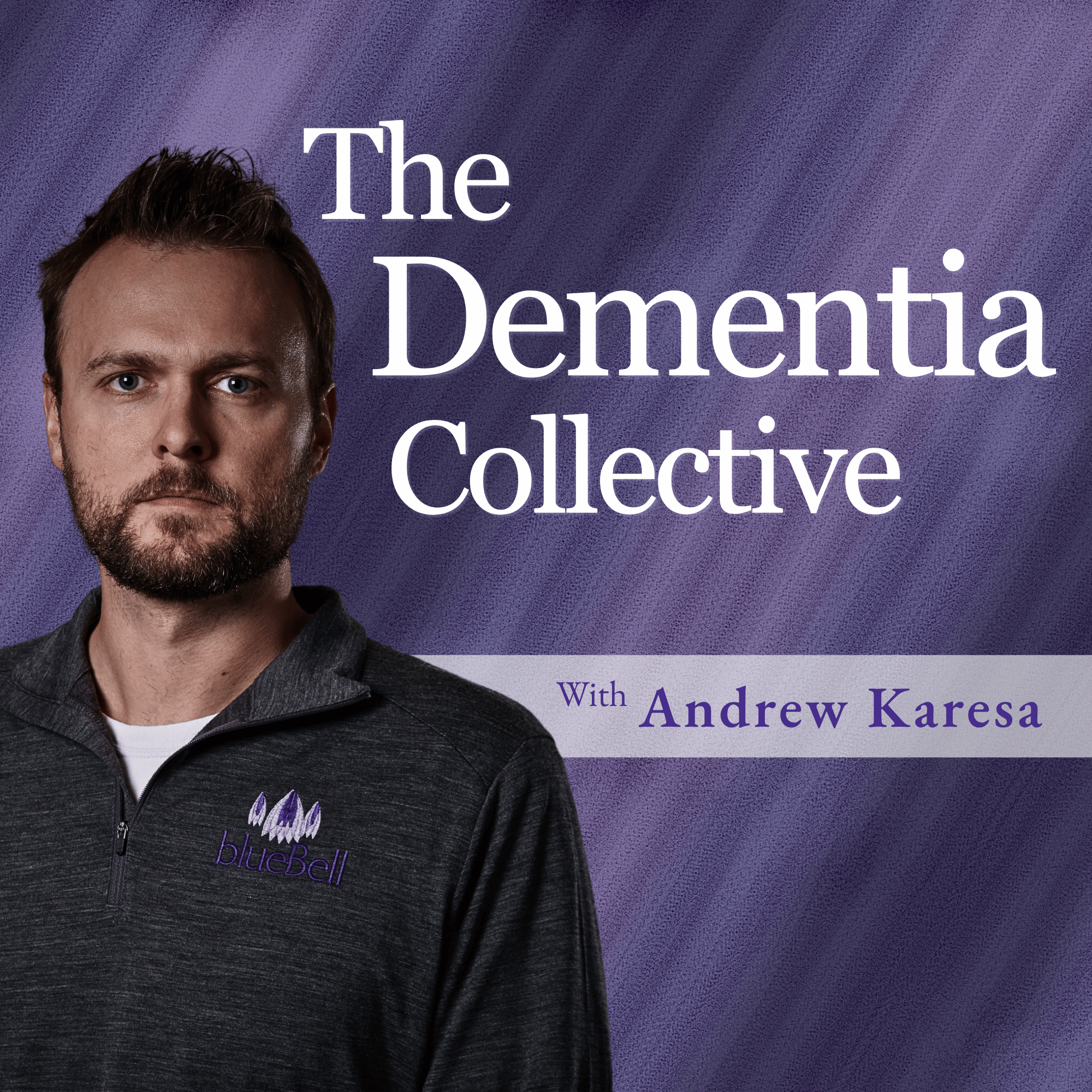
PODCAST · health
The Dementia Collective
by blueBell Village
Caring for someone with dementia can feel overwhelming but you don’t have to do it alone. The Dementia Collective is a podcast for caregivers seeking real support and fresh ideas. Hosted by Andrew Karesa, founder of blueBell Village, each episode features conversations with caregivers, clinicians, and innovators who bring practical insights, lived experience, and unexpected resources to light. Whether it’s navigating daily challenges, learning about emerging supports, or hearing stories from others on the journey, this podcast is here to help. We’re here to walk alongside you
-
45
Ask the Experts: What Comes After a Dementia Diagnosis?
People sometimes describe receiving a dementia diagnosis as something that feels like it will shatter their life.In this Ask the Experts conversation, Andrew Karesa asks Michael Booth, Samuel Simon, Phyllis Fehr and Jim Mann:“As someone who has been through this journey, what is the first step that you would have to support someone in moving past the initial fear and reclaiming control over their future?”Speaking from lived experience, they discuss what helped them move forward after diagnosis, including accepting support, talking openly with others, seeking professional and peer support, allowing space for grief without remaining trapped in it, and learning to live more fully in the present.They also reflect on making practical changes, planning for the future, protecting personhood, challenging stigma, finding purpose, and adapting to life in ways that still allow for choice, connection, and meaning.This is not a conversation about giving up on the future. It is about recognizing that a diagnosis does not erase the person, and that reclaiming control can begin with one honest conversation, one decision to accept support, and one step toward living in the present.If this conversation resonates with you, please like, comment, and subscribe. On podcast platforms, follow the show so you do not miss future conversations.Consider becoming a member of the village on Patreon, it will go a long way in helping break dementia stigma. For only the price of a Starbucks coffee per month, you can help support conversations like this and submit questions for future guests: https://www.patreon.com/cw/blueBellVillage———Disclaimer: The information shared in this podcast is for general informational purposes only and is not intended as medical advice. It should not be used to diagnose, treat, or prevent any medical condition. Always consult your physician or another qualified healthcare provider regarding any questions you may have about a medical condition or treatment. The views and opinions expressed by guests are their own and do not necessarily reflect those of Andrew Karesa, blueBell Village Ltd., or any of its employees, contractors, or team members.
-
44
Caregivers Are Not a Given: Why the System Is Breaking (with Stephanie Muskat)
What happens when the people holding the care system together start to break?In this episode, Andrew Karesa sits down with Stephanie Muskat, an award-winning registered clinical social worker, psychotherapist, caregiver advocate, and founder of Compassion in Caregiving, to explore the emotional, practical, and systemic realities of caregiving.Stephanie shares her story of becoming a caregiver at 19, when her mother began showing signs of what was later diagnosed as frontotemporal dementia. As an only child, she was suddenly navigating doctors, specialists, hospitals, discharge planning, and family dynamics while trying to build her own life.Together, Andrew and Stephanie discuss what caregivers carry that often goes unseen: guilt, anger, burnout, resentment, grief, and the pain of family members who do not show up. They also explore why caregivers are often treated as a “given” in the healthcare system, despite holding so much of it together.Stephanie challenges the label of the “difficult caregiver” and explains why advocacy is often misunderstood when families are trying to protect someone they know best. She also reflects on young caregiving, children and dementia, cultural expectations, caregiver mental health, and why dementia should not be hidden from family life.This is a conversation about caregiving, family, burnout, advocacy, guilt, grief, and the urgent need to stop treating caregivers as invisible background support.In this episode:• Becoming a caregiver at 19• Why frontotemporal dementia can be hard to recognize• When family members do not show up• The harm of calling someone a “difficult caregiver”• How unpaid caregivers hold the system together• Why anger can be a sign of burnout• The guilt of choosing between caregiving and your own life• Why children should not automatically be hidden from dementia• How culture and family expectations shape caregiving• Why caregivers need more than awareness and good intentionsWhether you are caring for a parent, spouse, grandparent, friend, neighbour, or loved one living with dementia, this conversation is a reminder that caregivers are people too. They are not a given. And they should not have to break before anyone notices they need help.Learn more at:https://www.bluebellvillage.cahttps://compassionincaregiving.com/———Join The Village and help shape conversations like this by submitting questions to our guests: https://www.patreon.com/cw/blueBellVillage———Disclaimer: The information shared in this podcast is for general informational purposes only and is not intended as medical advice. It should not be used to diagnose, treat, or prevent any medical condition. Always consult your physician or another qualified healthcare provider regarding any questions you may have about a medical condition or treatment. The views and opinions expressed by guests are their own and do not necessarily reflect those of Andrew Karesa, blueBell Village Ltd., or any of its employees, contractors, or team members.
-
43
Dementia Before 30: When FTD Changes Everything (with Katie Brandt)
What happens when dementia enters your family before you even know how to name it?In this episode, Andrew Karesa sits down with Katie Brandt, global advocate, national dementia care expert, and Director of Caregiver Support Services at the Massachusetts General Hospital Frontotemporal Disorders Unit, to talk about young caregiving, frontotemporal dementia, Alzheimer’s disease, grief, advocacy, and what it means to keep showing up when life changes all at once.Katie shares the story of her husband, Mike, who was diagnosed with behavioral variant frontotemporal dementia at only 29 years old. At the time, their son Noah was not yet one. Just weeks later, Katie’s father was diagnosed with young-onset Alzheimer’s disease. Suddenly, Katie found herself caring for two adult men living with progressive neurodegenerative diseases while also raising her young child.Together, Andrew and Katie discuss the early signs of FTD, why the symptoms are so often misunderstood, and how families can mistake changes in behaviour, personality, judgment, and impulse control for something other than dementia. This is a conversation about FTD, young-onset dementia, caregiving, grief, love, advocacy, and the systems that too often leave families to figure everything out on their own.In this episode:• Katie’s journey as a young caregiver, wife, mother, and daughter• How Mike was diagnosed with behavioral variant FTD at 29• Why FTD is often mistaken for depression, a midlife crisis, or relationship problems• How Katie’s father’s young-onset Alzheimer’s diagnosis changed her caregiving role• The guilt and grief of moving a loved one into care• How diagnosis gave Katie back her love story with Mike• How young caregivers are often misunderstood• The role of advocacy, policy, research, and community in changing dementia care• Why support should not disappear after the person living with dementia diesWhether you are caring for someone with FTD, Alzheimer’s disease, young-onset dementia, or another diagnosis, this conversation is a reminder that dementia does not only affect the person living with it. It changes families, relationships, futures, and identities. But it also shows why community, support, and honest conversations matter so deeply.Learn more at:https://www.bluebellvillage.cahttps://www.katiebrandt.orghttps://www.ftdboston.org———Join The Village and help shape conversations like this by submitting questions to our guests: https://www.patreon.com/cw/blueBellVillage———Disclaimer: The information shared in this podcast is for general informational purposes only and is not intended as medical advice. It should not be used to diagnose, treat, or prevent any medical condition. Always consult your physician or another qualified healthcare provider regarding any questions you may have about a medical condition or treatment. The views and opinions expressed by guests are their own and do not necessarily reflect those of Andrew Karesa, blueBell Village Ltd., or any of its employees, contractors, or team members.
-
42
What a Dementia Village Actually Looks Like (And Why We Don't Have More)
In this bonus episode of The Dementia Collective, Andrew Karesa takes a close look at what a dementia village actually is — and why, despite decades of evidence that they work, Canada has yet to build one at scale.The video begins with a simple number: more than 400 Canadians are diagnosed with dementia every day. By 2050, that number is projected to reach 1.7 million. Andrew uses that as a starting point to ask a harder question — not just how we will care for people, but whether the systems we are building are actually designed for living.Drawing on the story of the Hogeweyk in Weesp, Netherlands — a secure neighbourhood for 188 residents with advanced dementia, operating since 2008 — Andrew walks through what person-centred design actually looks like in practice. He examines the research outcomes, the global spread of the model, and the alternative approach taken by the Restaurant of Mistaken Orders in Japan.He also doesn't sidestep the critiques. The constructed reality argument, the cost and equity problem, and the question of whether a better institution is still just an institution — all of it gets examined.The episode closes with a look at what is keeping this model from scaling in Canada: funding structures built around clinical interventions, building codes designed for acute care, and a workforce crisis that is already here. Drawing on data from the Alzheimer Society of Canada's Landmark Study, Andrew makes the case that the blueprint exists — and that what is missing is not knowledge. It is the belief that the final years of life deserve the same investment as any other.This episode is part of the ongoing blueBell Village conversation about person-centred care, caregiver support, and what it means to actually live well with dementia.—0:00 Understanding Dementia: A Growing Concern in Canada 3:43 Design Principles of a Dementia Village 7:14 The Dementia Village Model: A New Approach 8:18 Ethical Considerations and Critiques 12:28 The Future of Dementia Care: A Call to Action 13:59 Implementation Challenges—Consider becoming a member of the village on Patreon — it will go a long way in helping break dementia stigma. For only the price of a Starbucks coffee per month: https://www.patreon.com/cw/blueBellVillage—Disclaimer: The information shared in this podcast is for general informational purposes only and is not intended as medical advice. It should not be used to diagnose, treat, or prevent any medical condition. Always consult your physician or another qualified healthcare provider regarding any questions you may have about a medical condition or treatment. The views and opinions expressed by guests are their own and do not necessarily reflect those of Andrew Karesa, blueBell Village Ltd., or any of its employees, contractors, or team members.
-
41
Inside the Broken System Destroying Elderly Lives (with Susie Singer Carter)
What if Hollywood’s dementia problem is not just what it shows, but what it leaves out?In this episode, Andrew Karesa sits down with filmmaker, writer, director, producer, and caregiver advocate Susie Singer Carter to explore dementia, storytelling, long-term care, and the responsibility that comes with representing people who are too often misunderstood.Susie shares the story of caring for her mother, Norma, how her experience shaped the Oscar-qualified short film My Mom and the Girl. The film was inspired by one extraordinary night in her mother’s life, a night filled with confusion, music, humour, tenderness, and unexpected connection.The conversation also moves into Susie’s documentary series No Country for Old People, which was born from her mother’s final months in long-term care. After her mother suffered neglect in a highly rated facility, Susie began uncovering a much larger crisis around staffing, accountability, ageism, and the way vulnerable residents can disappear inside broken systems.Andrew and Susie also examine dementia representation in Hollywood. They discuss why some portrayals feel authentic, why others can mislead, and how aging is too often turned into a caricature. Susie challenges the entertainment industry to tell better stories, not just more dramatic ones.This is a conversation about caregiving, advocacy, stigma, film, and the fight to keep people with dementia visible, valued, and human.In this episode:• How Susie’s caregiving journey shaped My Mom and the Girl• Why ethical storytelling matters in dementia representation• The line between honesty and exploitation• What Hollywood gets wrong about aging and dementia• Why some dementia stories can reinforce stigma• The long-term care crisis behind No Country for Old People• How neglect, understaffing, and ageism shape care• Why caregivers need better information before crisis moments• How storytelling can expose harm, preserve dignity, and push for reformWhether you are a caregiver, advocate, filmmaker, healthcare worker, or someone trying to understand dementia beyond stereotypes, this conversation asks us to look more carefully at the stories we tell, the people we overlook, and the systems we allow to continue.Learn more at:https://www.bluebellvillage.cahttps://www.gogirlmedia.com/My Mom and The Girl: https://vimeo.com/266772460———Join The Village and help shape conversations like this by submitting questions to our guests: https://www.patreon.com/cw/blueBellVillage———Disclaimer: The information shared in this podcast is for general informational purposes only and is not intended as medical advice. It should not be used to diagnose, treat, or prevent any medical condition. Always consult your physician or another qualified healthcare provider regarding any questions you may have about a medical condition or treatment. The views and opinions expressed by guests are their own and do not necessarily reflect those of Andrew Karesa, blueBell Village Ltd., or any of its employees, contractors, or team members.
-
40
The Growing Pressure on Working Caregivers (with Cindy Diogo)
In this episode, Andrew Karesa sits down with Cindy Diogo, CEO and Co-Founder of ConSoul, to explore what it means to support employees who are caring for a loved one living with dementia. Drawing on her background in HR and People & Culture, as well as her own family caregiving journey, Cindy reflects on the growing reality that more families are trying to navigate dementia care while still holding down a job. Together, Andrew and Cindy talk about the specific pressures dementia creates for working caregivers. They discuss the long arc of increasing care needs, the challenge of coordinating appointments and support, the emotional strain of watching a loved one decline, and the reality that many people are trying to manage all of it quietly while remaining “productive” at work. Cindy also shares how her own family experiences, including her grandmother’s advanced vascular dementia, shaped her understanding of care and helped lead her to build ConSoul. The conversation explores what employers often miss about dementia caregiving, why flexibility matters, and how current systems still leave too many families feeling unsupported and alone. This is a conversation about dementia, work, and the invisible weight so many caregivers carry every day.In this episode:• What makes dementia caregiving different in the workplace• Why increasing care needs create growing pressure on families• How Cindy’s family experience with dementia shaped her work• What employers often misunderstand about dementia caregivers• Why flexibility matters for families navigating appointments and care• What resources caregivers may already have access to• Why many caregivers still hide their reality at work• What needs to change as more families face dementia at homeWhether you are supporting someone living with dementia, trying to balance care with work, or wanting to build better systems around families, this episode offers an honest look at what caregivers are carrying and what real support can look like.Learn more at:https://www.bluebellvillage.cahttps://www.consoulapp.com———Join The Village and help shape conversations like this by submitting questions to our guests: https://www.patreon.com/cw/blueBellVillage———Disclaimer: The information shared in this podcast is for general informational purposes only and is not intended as medical advice. It should not be used to diagnose, treat, or prevent any medical condition. Always consult your physician or another qualified healthcare provider regarding any questions you may have about a medical condition or treatment. The views and opinions expressed by guests are their own and do not necessarily reflect those of Andrew Karesa, blueBell Village Ltd., or any of its employees, contractors, or team members.
-
39
What a Year of Dementia Advocacy Taught Me (with Anoushka Fernandes)
What can one year of dementia conversations teach us about care, stigma, grief, advocacy, and hope?In this special one-year anniversary episode of The Dementia Collective, Andrew Karesa steps out of the interviewer’s chair and becomes the guest. Joined by guest host Anoushka Fernandes, Andrew reflects on how the show began almost by accident, what it has grown into, and what a year of conversations with caregivers, people living with dementia, researchers, advocates, clinicians, authors, and public voices has taught him.Together, Andrew and Anoushka look back on the moments that shaped the show, from the first caregiver support webinar to the powerful stories that changed how Andrew thinks about dementia, personhood, stigma, family, grief, regret, and hope.They also go behind the scenes of The Dementia Collective, including the emotional weight of listening to deeply personal caregiving stories, the work that goes into producing the show, and where Andrew hopes to take it in year two.In this episode:• How The Dementia Collective began by accident• What Andrew has learned from caregivers, experts, and people living with dementia• The stories and guests that stayed with him most• Why dementia stigma remains so harmful• The emotional weight of hearing caregiving stories• What goes into producing the show behind the scenes• Where Andrew hopes to take The Dementia Collective in year two• A special lightning round with Anoushka• Details on the one-year birthday giveawayWhether you have followed from the beginning or this is your first episode, this conversation is a reflection on why these stories matter and why no caregiver, family, or person living with dementia should feel alone.Birthday Giveaway:To celebrate one year of The Dementia Collective, we’re giving away a special prize to one member of our community.To enter:• Subscribe to The Dementia Collective wherever you watch or listen to the show• Like this episode• Comment with the phrase “Remember the Person”• Share one episode, moment, guest, or topic from TDC that stayed with youContest closes July 8, 2026 at 11:59 PM MST. The winner will be contacted by the official blueBell Village account.Learn more at:https://www.bluebellvillage.ca———Join The Village and help shape conversations like this by submitting questions to our guests: https://www.patreon.com/cw/blueBellVillage———Disclaimer: The information shared in this podcast is for general informational purposes only and is not intended as medical advice. It should not be used to diagnose, treat, or prevent any medical condition. Always consult your physician or another qualified healthcare provider regarding any questions you may have about a medical condition or treatment. The views and opinions expressed by guests are their own and do not necessarily reflect those of Andrew Karesa, blueBell Village Ltd., or any of its employees, contractors, or team members.
-
38
Why 30 Years of Dementia Caregiving Broke Every Assumption She Had (with Lori La Bey)
What happens when a family is left to navigate dementia without clear guidance or support?In this episode, Andrew Karesa sits down with Lori La Bey, founder of Alzheimer’s Speaks, to explore what a decades-long caregiving journey reveals about the realities of dementia care.Lori supported her mother through a 30-year experience with dementia. What began as confusion and uncertainty became a lifelong commitment to understanding care, building community, and creating space for voices that were often missing from the conversation.She shares what those early years looked like, what families are often not prepared for, and why so much of caregiving happens outside of formal systems. Lori reflects on the gap between diagnosis and real support, the role of community in navigating that gap, and how her work has helped reshape how caregivers connect, learn, and support one another.This conversation moves beyond theory. It focuses on what caregiving actually looks like over time, and what it takes to support someone while adapting to constant change.In this episode:• What a 30-year dementia journey reveals about caregiving• The gap between diagnosis and meaningful support• Why families often feel like they are figuring it out on their own• How community-based models like memory cafés are changing care• The role of lived experience in shaping better support systems• How dementia conversations have evolved over time• Why connection matters as much as clinical careWhether you are caring for a loved one, supporting someone through a diagnosis, or working in the dementia space, this episode offers a grounded look at what long-term caregiving really requires.Care doesn’t begin with a system. It begins with people finding their way forward, often before anyone shows them how.Learn more at:https://www.bluebellvillage.cahttps://alzheimersspeaks.comhttps://dementiamap.com———Join The Village and help shape conversations like this by submitting questions to our guests: https://www.patreon.com/cw/blueBellVillage———Disclaimer: The information shared in this podcast is for general informational purposes only and is not intended as medical advice. It should not be used to diagnose, treat, or prevent any medical condition. Always consult your physician or another qualified healthcare provider regarding any questions you may have about a medical condition or treatment. The views and opinions expressed by guests are their own and do not necessarily reflect those of Andrew Karesa, blueBell Village Ltd., or any of its employees, contractors, or team members.
-
37
Anosognosia: Why They Don't Believe Anything's Wrong (with Karen Tyrell)
What happens when correcting someone you love no longer brings clarity, and may actually increase distress?In this episode, Andrew Karesa sits down with Karen Tyrell, founder and CEO of Personalized Dementia Solutions, to explore one of the most common and misunderstood challenges in dementia care: the instinct to correct.With more than 30 years of experience supporting families and frontline care teams, Karen explains why arguing often backfires, what anosognosia really means, and why some individuals genuinely do not believe anything is wrong. She unpacks how dementia changes insight, reasoning, and perception, and why logic alone is rarely enough.Karen introduces the concept of therapeutic reasoning and walks through practical steps caregivers can use to reduce escalation while preserving dignity. She shares how small shifts in language can prevent repeated emotional harm, how to navigate difficult moments like repeated questions about a deceased spouse, and why medications should not be the first response to agitation.The conversation moves beyond tactics. Karen reflects on stigma over the decades, how dementia care has evolved, and why families should build support early rather than waiting for crisis. She also speaks about her work developing dementia designation programs and creating accessible education that empowers both professionals and unpaid caregivers.In this episode:• Why correcting someone living with dementia often increases distress• What anosognosia is and how it changes conversations• The difference between honesty and therapeutic reasoning• How to respond when someone repeatedly asks about a deceased loved one• Why agitation is communication, not defiance• When medications should and should not be considered• How to build support before burnout sets in• What preserving dignity looks like in real timeWhether you are caring for a parent, supporting a spouse, working in long-term care, or trying to understand a recent diagnosis, this episode offers grounded guidance for navigating one of dementia care’s most difficult realities.You cannot win an argument with dementia. But you can change how you respond.Learn more at:https://www.bluebellvillage.cahttps://dementiasolutions.ca———Join The Village and help shape conversations like this by submitting questions to our guests: https://www.patreon.com/cw/blueBellVillage———Disclaimer: The information shared in this podcast is for general informational purposes only and is not intended as medical advice. It should not be used to diagnose, treat, or prevent any medical condition. Always consult your physician or another qualified healthcare provider regarding any questions you may have about a medical condition or treatment. The views and opinions expressed by guests are their own and do not necessarily reflect those of Andrew Karesa, blueBell Village Ltd., or any of its employees, contractors, or team members.
-
36
What Happens When Dementia Takes You Back in Time (with Glenna Hecht)
How do you stay connected to someone when dementia seems to be pulling them further away?In this episode of The Dementia Collective, Andrew Karesa sits down with Glenna Hecht, author, speaker, and former HR executive, to explore the unexpected game that transformed her nine year journey caring for her mother living with dementia.Glenna shares the moment everything shifted. After watching her mother move in and out of different ages and memories, she stopped trying to correct the confusion and started asking a different question: “How old are you today?” What began as instinct became a framework. A way to travel with her mother instead of fighting against where she was.Throughout the conversation, Glenna describes what it meant to “be quiet, watch, listen, travel.” By observing her mother’s eyes, body language, and stories, she learned how to enter the world her mother was experiencing in that moment. The goal was not orientation. It was connection.Glenna also reflects on the hardest moments of caregiving, including walking away from her mother behind a locked metal door in a psychiatric ward while scrambling to secure power of attorney and legal authority. She speaks candidly about guilt, distance, and the realization that she had not fully understood what was happening sooner.As a longtime HR leader and consultant, Glenna brings a second lens to the discussion. She explains why most workplaces are not prepared for the growing number of employees who are quietly caregiving. Managers often see performance changes without recognizing the hidden burden at home. Dementia caregiving is not just a family issue. It is a workforce issue.In this episode:• The origin of the “How Old Are You Today?” game• Why observing and listening matters more than fixing• What the psych ward experience taught Glenna about preparation and advocacy• The workplace blind spot around caregiving employees• Why the myth that “there is nobody in there” is harmful• How time travel can become a pathway to connection• What dementia taught Glenna that decades in business never couldWhether you are caring for a parent with dementia, supporting a partner living with Alzheimer’s disease, or trying to understand how to stay connected as memory shifts, this episode offers a grounded and deeply human perspective on what is possible when we stop arguing with reality and start entering it.Learn more at:https://www.bluebellvillage.cahttps://www.howoldareyoutoday.com————Join The Village and help shape conversations like this by submitting questions to our guests:https://www.patreon.com/cw/blueBellVillage————Disclaimer: The information shared in this podcast is for general informational purposes only and is not intended as medical advice. It should not be used to diagnose, treat, or prevent any medical condition. Always consult your physician or another qualified healthcare provider regarding any questions you may have about a medical condition or treatment. The views and opinions expressed by guests are their own and do not necessarily reflect those of Andrew Karesa, blueBell Village Ltd., or any of its employees, contractors, or team members.
-
35
Why Men Struggle to Ask for Help in Dementia Care (with Ron Beleno)
Why do so many men struggle to ask for help when caring for someone living with dementia?In this episode of The Dementia Collective, Andrew Karesa sits down with Ron Beleno, caregiver advocate and leader in the aging and dementia space, to explore the role men play in dementia caregiving and why many feel pressure to handle the responsibility alone.Ron begins by sharing his own caregiving journey after his father was diagnosed with dementia in 2007. Over more than a decade of supporting his father, Ron experienced firsthand the emotional and practical realities of caring for a parent with dementia, and how that experience shaped the work he does today supporting caregivers across Canada.Much of the conversation centers on the expectations many men carry when they step into caregiving roles. Ron reflects on the pressure to remain strong for the family, to manage dementia care independently, and how those expectations can make it difficult for male caregivers to ask for help or build support networks early in the journey.Andrew and Ron also explore the idea of the care team and why dementia caregiving becomes far more sustainable when responsibility is shared. Rather than trying to manage everything alone, Ron speaks about the importance of inviting others into the journey, whether family members, friends, community supports, or what he describes as “caring community members.”In this episode:• Why men are often underrepresented in dementia caregiving conversations• The pressure many male caregivers feel to manage dementia care alone• Why asking for help can feel difficult for men caring for a parent with dementia• The importance of building a care team early in the caregiving journey• How caregiver mindset shapes the dementia caregiving experience• The role of caring community members in dementia support networks• Why sharing responsibility can make caregiving more sustainableLearn more at:https://www.bluebellvillage.cahttps://www.ronbeleno.comhttps://wecanbe.ca———Join The Village and help shape conversations like this by submitting questions to our guests: https://www.patreon.com/cw/blueBellVillage———Disclaimer: The information shared in this podcast is for general informational purposes only and is not intended as medical advice. It should not be used to diagnose, treat, or prevent any medical condition. Always consult your physician or another qualified healthcare provider regarding any questions you may have about a medical condition or treatment. The views and opinions expressed by guests are their own and do not necessarily reflect those of Andrew Karesa, blueBell Village Ltd., or any of its employees, contractors, or team members.
-
34
She’s Still There: Separating Alzheimer’s from the Person You Love (with Erin Chalmers)
What does it mean to love someone whose personality is changing and to slowly realize it is not them?In this episode, Andrew Karesa sits down with Erin Chalmers, co-anchor of Global Edmonton Morning News, daughter, caregiver, and Board Member of the Alzheimer Society of Alberta and Northwest Territories, to talk about her mother’s Alzheimer’s diagnosis and the quiet shift from confusion to clarity that many families experience.Erin shares what the first signs looked like in 2022, the moment her family realized something deeper was happening, and the decision to be proactive instead of reactive. She opens up about sitting down with her mom early to talk through care preferences, navigating a system that can feel fragmented, and learning to separate the disease from the person she loves.The conversation moves beyond logistics. Erin reflects on how caregiving reshaped her identity, how she learned not to take certain behaviours personally, and why the phrase “that’s the disease” became a turning point in her understanding. She speaks candidly about advocating during a hospital stay, the emotional weight of watching cognition fluctuate, and the importance of day programs and structured support for caregivers.Together, Andrew and Erin explore what meaningful caregiver support actually looks like in Alberta, why the system often relies heavily on families to coordinate care, and what she hopes changes for the next generation. They also discuss what initially drew her to blueBell Connect, the importance of centralized communication within family care teams, and the kind of families who would benefit most from a personalized coordination tool.In this episode:• The early signs families often question or dismiss• Why being proactive after diagnosis matters• How to separate the disease from the person• What hospital experiences reveal about gaps in dementia care• The emotional cost of caregiving and how to avoid losing yourself• Why day programs can be a lifeline for families• What meaningful caregiver support in Alberta should look like• How centralized communication tools can reduce stress and confusionWhether you are walking through a new diagnosis, supporting a parent from a distance, or working within the healthcare system, Erin’s story is a reminder that even as memory changes, identity and dignity remain.Learn more at:https://www.bluebellvillage.caDisclaimer: The information shared in this podcast is for general informational purposes only and is not intended as medical advice. It should not be used to diagnose, treat, or prevent any medical condition. Always consult your physician or another qualified healthcare provider regarding any questions you may have about a medical condition or treatment. The views and opinions expressed by guests are their own and do not necessarily reflect those of Andrew Karesa, blueBell Village Ltd., or any of its employees, contractors, or team members.
We're indexing this podcast's transcripts for the first time — this can take a minute or two. We'll show results as soon as they're ready.
No matches for "" in this podcast's transcripts.
No topics indexed yet for this podcast.
Loading reviews...
ABOUT THIS SHOW
Caring for someone with dementia can feel overwhelming but you don’t have to do it alone. The Dementia Collective is a podcast for caregivers seeking real support and fresh ideas. Hosted by Andrew Karesa, founder of blueBell Village, each episode features conversations with caregivers, clinicians, and innovators who bring practical insights, lived experience, and unexpected resources to light. Whether it’s navigating daily challenges, learning about emerging supports, or hearing stories from others on the journey, this podcast is here to help. We’re here to walk alongside you
HOSTED BY
blueBell Village
Loading similar podcasts...
Frequently Asked Questions
How many episodes does The Dementia Collective have?
The Dementia Collective currently has 12 episodes available on PodParley. New episodes are automatically indexed when they're published to the podcast feed.
What is The Dementia Collective about?
Caring for someone with dementia can feel overwhelming but you don’t have to do it alone. The Dementia Collective is a podcast for caregivers seeking real support and fresh ideas. Hosted by Andrew Karesa, founder of blueBell Village, each episode features conversations with caregivers, clinicians,...
How often does The Dementia Collective release new episodes?
The Dementia Collective has 12 episodes. Check the episode list to see recent publication dates and frequency.
Where can I listen to The Dementia Collective?
You can listen to The Dementia Collective on PodParley by clicking any episode. We provide an embedded audio player for direct listening, and you can also subscribe via your preferred podcast app using the RSS feed.
Who hosts The Dementia Collective?
The Dementia Collective is created and hosted by blueBell Village.
URL copied to clipboard!