
PODCAST · society
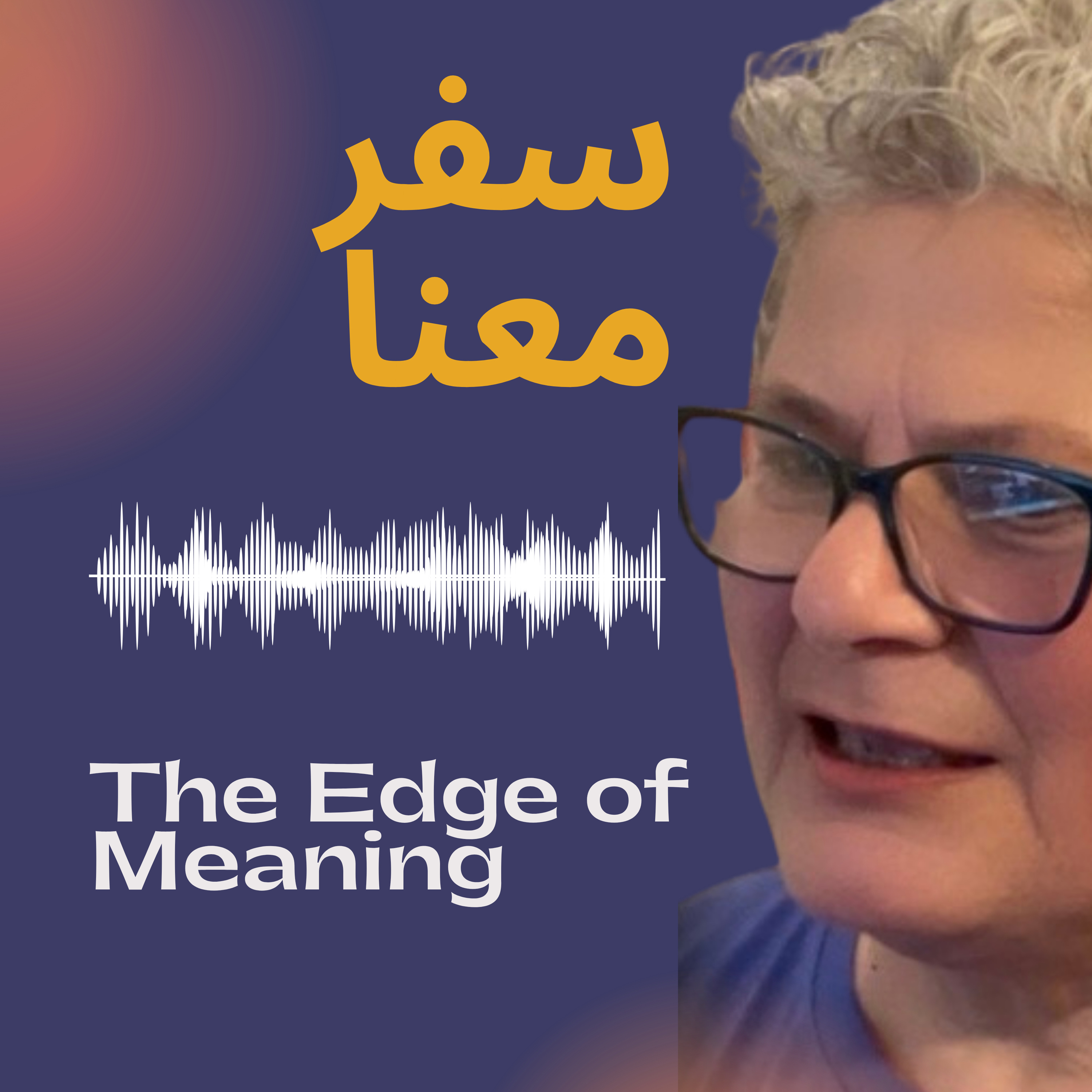
The Edge of Meaning |سفر معنا|
by Mahboubeh Abbasgholizadeh
Safar-e Ma’na | سفر معناThe Edge of Meaning is a bilingual long-form podcast hosted by Mahboubeh Abbasgholizadeh محبوبه عباسقلی زاده, a narrative journalist, dialogue facilitator, and director of Inner Rain Academy whose work explores meaning-making, lived experience, embodiment, and ethical complexity in times of crisis. Produced by Inner Rain Academy and Zanan TV, the podcast features reflective conversations with artists, thinkers, and cultural voices from Iran and the diaspora. Video versions of the conversations are available on the Zanan TV YouTube channel.
-
4
کنشگری مدنی در روزگار جنگ
In this episode of Safar-e Ma’na | The Edge of Meaning, Iranian-American journalist, dialogue facilitator, and founder of Inner Rain Academy, خMahboubeh Abbasgholizadeh, speaks with Iranian women’s movement activist and researcher Mansoureh Shojaee about War in Iran, civil society, women’s movements, collective grief, democratic struggle, and the fragile work of sustaining hope in times of violence.This long-form conversation explores the history of the Iranian women’s movement, civic organizing, and the evolving role of civil society in the aftermath of political upheaval, repression, and war. Through personal memories and political reflection, Mansoureh Shojaee traces her journey from student activism and feminist organizing to decades of engagement with women’s rights, cultural institutions, and grassroots movements in Iran.The discussion then moves into the present: the Woman, Life, Freedom movement, the December uprising, media responsibility, populism, war, and the future of Iranian civil society. Mansoureh Shojaee reflects on mutual aid, care, community support, and the need to strengthen civic networks in times of repression, economic hardship, uncertainty, and collective trauma.At the center of the conversation is a simple but urgent question:How can a society continue to imagine freedom, justice, dignity, and repair when war, repression, poverty, and exile have exhausted its body?Mansoureh argues that hope is not optimism. Hope is effort. Hope emerges through action, participation, solidarity, and the continued willingness to work toward freedom even when outcomes remain uncertain.Mahboubeh Abbasgholizadeh is a narrative journalist, dialogue facilitator, and founder of Inner Rain Academy. She is also a researcher and analyst of gender issues, as well as a mentor and mindfulness educator for communities affected by crisis.She is the creator and host of Safar-e Ma’na (The Edge of Meaning), a bilingual platform for contemplative conversations on lived experience, social transformation, and the search for meaning in times of crisis, exile, war, and change.Through in-depth dialogue and reflective storytelling, her work explores memory, embodiment, ethics, resilience, and the human dimensions of social and political life.محبوبه عباسقلیزاده، اکو فمنیست معنا گرا، روزنامهنگار روایی، و بنیانگذار آکادمی باران است. او همچنین پژوهشگر، تحلیلگر و آموزشگر مسائل جنسیت برای جوامع درگیر بحران استاو پدیدآورنده و میزبان برنامه پژوهشی «سفر معنا» است؛ بستری دوزبانه برای گفتوگوهای تأملی درباره تجربه زیسته، دگرگونی اجتماعی و جستوجوی معنا در روزگار بحران، تبعید، جنگ و تغییرکار او از طریق گفتوگوهای عمیق و روایتگری تأملی، به کاوش در حافظه، بدن، اخلاق، تابآوری و ابعاد انسانی زندگی اجتماعی و سیاسی است.
-
3
تعلق و جنگ; روایت پرستو فروهر
این قسمت از پادکست «سفر معنا | The Edge of Meaning» گفتگویی است با پرستو فروهر؛ هنرمند تجسمی و کنشگر دادخواهی، درباره تجربه زیسته جنگ، مهاجرت، سوگ، مسئولیت، و معنای ایرانی بودن در زمانهای پر از خشونت و دوپارگی.این گفتگو فراتر از تحلیل سیاسی، تلاشی است برای تأمل بر نسبت انسان، حافظه، زیبایی، رنج، و امکان مراقبت و گفتوگو در دل بحران.محبوبه عباسقلیزاده و پرستو فروهر در این اپیزود از هویت، دادخواهی، زنزندگیآزادی، اخلاقِ شاهد بودن، و حفظ انسانیت در زمانه ویرانی سخن میگویندRecorded during the escalating war tensions between Iran, Israel, and the United States, this episode of Safar-e Ma’na | The Journey of Meaning brings together Iranian–German internationally acclaimed visual artist, artist-practitioner, and justice-seeking activist Parastou Forouhar with Iranian–American journalist and meaning-oriented dialogue facilitator Mahboubeh Abbasgholizadeh.This is not a conversation about geopolitical analysis alone. It is a reflective dialogue on belonging, war, memory, responsibility, migration, grief, justice-seeking, and the fragile possibility of care and beauty in catastrophic times.Drawing from decades of artistic practice, political engagement, and personal loss following the political assassination of her parents in Iran, Forouhar reflects on multiple and intertwined identities: artist, migrant, mother, activist, witness, and Iranian woman.Together, the conversation explores:— Iranian identity and belonging during war— the ethics of witnessing and survivor’s responsibility— protest and care— beauty and violence— grief, shame, and political narration— migration and in-betweenness— authoritarianism and eliminationist politics— Woman, Life, Freedom— dialogue in polarized times— and the responsibility of preserving humanity amid destructionRather than reproducing simplified binaries, this episode opens a space for complexity, contradiction, reflection, and human vulnerability.Safar-e Ma’na | The Journey of Meaning is a bilingual long-form podcast exploring meaning-making across embodiment, memory, ethics, art, crisis, and lived experience.Guest: Parastou ForouharHost: Mahboubeh AbbasgholizadehMahboubeh Abbasgholizadeh is an Iranian–American journalist, ecofeminist thinker, mindfulness mentor, meaning-oriented researcher, and facilitator of reflective dialogue. She is the founder of Inner Rain Academy, a platform exploring meaning-making across embodiment, memory, ethics, women’s lived experience, and social transformation.Her work brings together contemplative inquiry, public dialogue, long-form conversation, and reflective media to explore human experience in contexts of crisis, exile, war, grief, and transformation.#ParastouForouhar #SafareMana #MahboubehAbbasgholizadeh #WomanLifeFreedom #Iran #Podcast #WarAndBelonging #JusticeSeeking #Diaspora #MeaningMaking #Embodiment #PoliticalArt #IranianWomen #ReflectiveDialogue #WarAndMemory
-
2
اخلاق وظیفه گرا در سیاست جنگ؛ درنگ های مهدیه گلرو
این اپیزود از پادکست «سفر معنا»، محبوبه عباسقلیزاده در همراهی با مهدیه گلرو، کنشگر سیاسی مقیم سوئد، و علاقه مند به مکتب کانتی «اخلاق وظیفه گرا» ؛ بر تنش میان اخلاق و سیاست؛ درنگ میکند. همچنین، نقد «آرزوفروشی» و «انسانزدایی» در فرهنگ پوپولیسم جنگ طلب، از محورهای دیگر این بحث است.
-
1
چگونه سوگ انقلابی به رقص سوماتیک بدل شد
Mahboubeh Abbasgholizadeh discusses the emergence of a somatic dance of grief among Iranian mothers after the January 2026 protests.محبوبه عباسقلی زاده در پادکست سفر معنا شرح می دهد که چگونه سوگ انقلابی به رقص سوماتیک بدل شدMahboubeh Abbasgholizadeh is an ecofeminist writer, journalist, soul coach, and somatic mindfulness meditation teacher. She is the founder of Inner Rain Academy, a space for embodied learning, mindfulness, and collective healing.https://www.innerrain....The reflection takes place within the historical context of the January 2026 Iranian protests, one of the most dramatic and violent periods in contemporary Iranian history. On January 7 and 8, 2026, widespread protests erupted across many cities in Iran. Demonstrations were met with an extremely violent crackdown by security forces of the Islamic Republic. Reports from activists, journalists, and human rights observers described mass shootings, large-scale arrests, and widespread repression of protesters.In many accounts circulating among Iranian civil society and diaspora communities, the death toll from the crackdown was described as reaching tens of thousands. The events of those days became a defining moment in the long history of protest movements in Iran, where mourning and remembrance have often become powerful forms of political expression.Shortly after these events, the regional situation escalated further. In February 2026, tensions between the Islamic Republic of Iran, the United States, and Israel escalated into direct military confrontation widely described in international media as the 2026 Iran War. The conflict began with coordinated strikes on Iranian targets and quickly developed into a broader regional crisis involving missile exchanges, military escalation, and rising geopolitical tensions across the Middle East.Against this dramatic historical backdrop of repression, war, and uncertainty, Mahboubeh Abbasgholizadeh reflects on a phenomenon that began to emerge among the families of victims—particularly among mothers who lost their children during protests. In cemeteries, memorial gatherings, and public spaces, mourning began to take on new embodied forms. Through what can be understood as a somatic dance of grief, these mothers transformed mourning into a powerful collective language of resistance.The body, in this context, becomes more than a site of pain. Movement, gesture, and collective presence create a space in which grief is expressed not only emotionally but physically. Mahboubeh Abbasgholizadeh explores how grief can move beyond private sorrow and become a shared, embodied expression of protest.The talk also situates these emerging practices within a broader cultural and historical tradition in Iranian society. Mourning rituals have long played an important role in collective memory—from religious commemorations such as Ashura to modern memorial gatherings for victims of political violence. Iranian women, in particular, have repeatedly transformed mourning into acts of resistance, remembrance, and solidarity.Mahboubeh Abbasgholizadeh examines how the body carries memory, trauma, and political meaning. The phenomenon of mourning through movement reveals how collective grief can become a language through which communities confront violence and reclaim dignity.The somatic dance of grief performed by Iranian mothers is therefore not only an expression of loss. It is also an act of remembrance, a gesture of solidarity, and a form of embodied testimony against repression. In moments when speech becomes dangerous or silence is imposed, the body itself can become a site of memory and resistance.Mahboubeh Abbasgholizadeh invites viewers to reflect on the relationship between grief, embodiment, and political transformation. The ritual gestures of mourning carried by these mothers illuminate how collective trauma can give rise to new forms of feminist resistance and embodied protest.
We're indexing this podcast's transcripts for the first time — this can take a minute or two. We'll show results as soon as they're ready.
No matches for "" in this podcast's transcripts.
No topics indexed yet for this podcast.
Loading reviews...
ABOUT THIS SHOW
Safar-e Ma’na | سفر معناThe Edge of Meaning is a bilingual long-form podcast hosted by Mahboubeh Abbasgholizadeh محبوبه عباسقلی زاده, a narrative journalist, dialogue facilitator, and director of Inner Rain Academy whose work explores meaning-making, lived experience, embodiment, and ethical complexity in times of crisis. Produced by Inner Rain Academy and Zanan TV, the podcast features reflective conversations with artists, thinkers, and cultural voices from Iran and the diaspora. Video versions of the conversations are available on the Zanan TV YouTube channel.
HOSTED BY
Mahboubeh Abbasgholizadeh
CATEGORIES
Loading similar podcasts...
Frequently Asked Questions
How many episodes does The Edge of Meaning |سفر معنا| have?
The Edge of Meaning |سفر معنا| currently has 4 episodes available on PodParley. New episodes are automatically indexed when they're published to the podcast feed.
What is The Edge of Meaning |سفر معنا| about?
Safar-e Ma’na | سفر معناThe Edge of Meaning is a bilingual long-form podcast hosted by Mahboubeh Abbasgholizadeh محبوبه عباسقلی زاده, a narrative journalist, dialogue facilitator, and director of Inner Rain Academy whose work explores meaning-making, lived experience, embodiment, and ethical...
How often does The Edge of Meaning |سفر معنا| release new episodes?
The Edge of Meaning |سفر معنا| has 4 episodes. Check the episode list to see recent publication dates and frequency.
Where can I listen to The Edge of Meaning |سفر معنا|?
You can listen to The Edge of Meaning |سفر معنا| on PodParley by clicking any episode. We provide an embedded audio player for direct listening, and you can also subscribe via your preferred podcast app using the RSS feed.
Who hosts The Edge of Meaning |سفر معنا|?
The Edge of Meaning |سفر معنا| is created and hosted by Mahboubeh Abbasgholizadeh.
URL copied to clipboard!