
PODCAST · religion
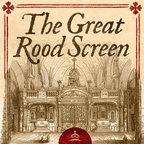
The Great Rood Screen
by Dcn. Seraphim Richard Rohlin, and Ancient Faith Ministries
So begins the story that unfolds across a thousand years and more, a story of blood and thorn, of exile and return, of men and women who sought the kingdom of heaven in the mists of the British Isles.
-
29
The Psalter of the Quatrains - Out of Egypt
A baby floats down the Nile in a basket of reeds, and a king's daughter kneels to lift him out. Eighty years later, Moses raises a bronze serpent on a pole, splits the sea, and carries down from Sinai the ten words that outlast every empire on earth. Dcn. Seraphim reads the whole life of Moses from the tenth-century Saltair na Rann: the burning bush, the plagues, the Paschal lamb and the blood on the doorposts, Miriam's song, manna in the wilderness, water from the rock, the golden calf, and the hidden grave on Nebo. Woven through the story is the Irish poet's boldest turn: as Pharaoh's host drowns, Gaídel Glas and Scotta put out to sea, beginning the long wandering that will end on Ireland's green shore. At the center stands the serpent lifted on a tree — a figure of Christ raised upon the wood of grace... Music used: "Across The Fields Of Gold" Yagull Music - Sasha Branislav Markovic, Mayu Saeki
-
28
The Blackbird's Nest - St. Kevin of Glendalough
It is Lent in a steep valley of the Wicklow Mountains, and a man has stood at prayer so long that a blackbird mistakes him for a tree. She builds her nest in his outstretched hand, lays her eggs, and broods there — and Kevin of Glendalough does not move until the last fledgling flies. Dcn. Seraphim tells the story of the hermit who came to the valley of the two lakes to be alone with God and found the whole creation gathering around him: the cow that reveals his solitude, the doe that nurses an orphan, the wolf sentenced to a penance of mercy, and the otter that lifts his lost psalter from the lake unharmed... Music used: "Across The Fields Of Gold" Yagull Music - Sasha Branislav Markovic, Mayu Saeki
-
27
The Voyage - St. Brendan the Navigator
It is Easter morning somewhere in the cold gray Atlantic fifteen hundred years ago, and fourteen monks light a fire to boil their Paschal kettle — and the island moves. It is not an island; it is Jasconius, the great leviathan of the deep, the first-made of the creatures of the sea, who labors night and day to put his tail in his mouth and cannot — and every Easter for seven years he will come back, gentle as a lamb, to serve as the nave of their church. Dcn. Seraphim turns the boat of our podcast west, back across the Irish Sea and back a full century to the springtime of the Irish church, to tell the most famous traveler's tale of the Middle Ages: the Navigatio Sancti Brendani, the ocean-quest of St. Brendan of Clonfert for the Land of Promise of the Saints. Music used: "Across The Fields Of Gold" Yagull Music - Sasha Branislav Markovic, Mayu Saeki
-
26
The Psalter of the Quatrains - The Patriarchs
Dcn. Seraphim continues the read-through of the Saltair na Rann through the three great patriarchs — Isaac, Jacob, and Joseph — finding there the most sustained foreshadowing of Christ in the whole poem so far. We follow the binding of Isaac, the stolen blessing, Jacob's long service for Rachel and his wrestling at the ford, and the twelve sons who become the tribes; and then Joseph, sold by his brothers for thirty pieces of silver, falsely accused and bound, raised at last to the right hand of the king — and the two prisoners of the dungeon become two condemned men, of whom one is crucified and the other lifted up. Music used: "Across The Fields Of Gold" Yagull Music - Sasha Branislav Markovic, Mayu Saeki
-
25
The Candle of the Church - The Venerable Bede
The plague of 686 has emptied the new monastery at Jarrow, and when all the dead are buried only two voices are left who can sing the full daily office — the abbot Ceolfrith, and one small boy of about thirteen whom he had reared in the house. For a week they try the psalms without the antiphons, and they cannot bear the praise of God going up maimed; so the old man and the child sing the whole liturgy of the hours alone, day after day. This boy was none other than the Venerable Bede, whose voice has guided us on our path for the last 22 episodes. Now Dcn. Seraphim turns to tell the story of the teller: the man whose whole joy was prayer and study and the praise of the Most High God. Music used: "Across The Fields Of Gold" Yagull Music - Sasha Branislav Markovic, Mayu Saeki
-
24
The Tree Speaks - The Dream of the Rood
In a small parish church in the Scottish lowlands stands a stone cross eighteen feet high, carved around the year 700, and up its sides, among the vine-scrolls and birds, someone has cut runes runes that hearken back to one of the oldest surviving English poems. This podcast is called The Great Rood Screen — rood is the old English word for the Cross — and in this episode, at last, Dcn. Seraphim reads the Old English poem "The Dream of the Rood" and comments on both its uniqueness, and its beautiful continuity with the Orthodox faith.
-
23
The Philosopher of Canterbury - St. Theodore of Tarsus
Rome, 667, and the plague is burying the dead again: among them the Englishman sent from Canterbury to be made archbishop, dead within days of arriving. The Pope, with the letters of the English kings in his hand and the candidate in the ground, must find someone to send to that island at the end of the world. The man he finds is a sixty-six-year-old Greek monk, a refugee from the eastern edge of Christendom, born under the walls of St. Paul's Tarsus, so learned that men called him "the Philosopher." Dcn. Seraphim tells the story of St. Theodore of Tarsus, who came to Canterbury at sixty-seven and spent twenty-one years building, organizing, teaching, and healing until the quarrelsome missionary churches of the English were truly one Church. Music used: "Across The Fields Of Gold" Yagull Music - Sasha Branislav Markovic, Mayu Saeki
-
22
The Psalter of the Quatrains - From the Flood to the Friend of God
Dcn. Seraphim continues his reading of the Saltair na Rann from the Flood to Abraham, the friend of God. Somewhere in the middle of all of this, the poet pauses to recount the years up to his own time, fixing his own year to A.D. 988. Around that window into the poet's own day runs the great chronology of the ages of the world, and then Noah and the ark and the dove, the division of the earth among the nations, Nimrod the hunter and the tower of Babel, and at last the call of Abraham and the three mysterious visitors at the oak of Mamre. Music used: "Across The Fields Of Gold" Yagull Music - Sasha Branislav Markovic, Mayu Saeki
-
21
A Light in Kent - St. Augustine of Canterbury
In a Roman slave market around the year 575, a monk stops before a stall of fair-haired boys from a far northern island and asks where they are from. Told they are Angles, and pagans, he answers that they have the faces of angels and ought to be coheirs with the angels in heaven — and he never forgets them. His name is Gregory, and when he becomes Pope he sends a reluctant monk named Augustine with forty companions to the edge of the world. Dcn. Seraphim turns the map around — away from the Celtic north and west the podcast has lived in for eighteen episodes — to tell the story of the Roman mission to the English: the frightened brothers who nearly turned back, the Christian queen Bertha and her pagan husband King Æthelberht of Kent, the open-air meeting where the king would only receive them under the sky, and the fraught encounter at Augustine's Oak with the bishops of the older British Church. Music used: "Across The Fields Of Gold" Yagull Music - Sasha Branislav Markovic, Mayu Saeki
-
20
Caedmon's Call
Imagine a hall in Northumbria, thirteen hundred years ago, and the harp going round the benches after supper — and one man rising in dread and slipping out into the dark, because in his whole long life he has never been able to sing. His name is Caedmon, and tonight, in a cattle-shed, God will give him the gift he has run from his entire life. In a deliberately quieter and more intimate episode, Dcn. Seraphim reads and talks through Bede's account of the first Christian poet of the English language, movement by movement — the herdsman who became a monk of Hilda's Whitby, and whose first sacred song, like the Irish Saltair we have been reading, opens at the beginning of created things. The episode closes with a full reading of Caedmon's Hymn in the original Old English and in translation: the headwaters of every English hymn and carol that ever lifted a heart to heaven. Music used: "Across The Fields Of Gold" Yagull Music - Sasha Branislav Markovic, Mayu Saeki
-
19
The Psalter of the Quatrains, Cantos VIII-XII - The Tree and the Cross
Dcn. Seraphim reads cantos eight through twelve of the Saltair na Rann in a single great sweep: the whole story of Adam and Eve, from the serpent in the garden to the skull beneath the Cross. The Devil, envious that this creature of clay is bound for the heaven he has lost, works the Fall; Adam and Eve do penance standing in the cold rivers; and the Devil comes a second time, disguised as an angel of light, to deceive them again — and then turns and laments what he has done in the haunting cry, "Dost thou remember, O Adam." We follow Cain and Abel and the gift of Seth, and the death of Adam, down to the moment the first man's skull is buried at Golgotha, where one day the Cross will stand in his very grave.
-
18
The Shepherd who Saw a Saint
A shepherd boy on a Northumbrian hillside looked up one night and saw the heavens open, and angels carrying a soul of fire into the light. The next morning he learns that Bishop Aidan died in that very hour, and from that moment the boy called Cuthbert gives his whole life to the God who took Aidan home. This is the story of the boy who became a monk at Melrose became the hermit who sailed to the demon-haunted rock of the Inner Farne to be alone with God. Dragged twice from his solitude to serve, he dies a bishop on his island of stones, arms stretched toward heaven. But the story doesn't end in the grave: eleven years later his coffin is opened, and his body is found incorrupt, and for eight hundred and fifty years, through Viking raids and the long medieval centuries, the body of Cuthbert does not decay. And then one day King Henry's men climb to his shrine with a sledgehammer... Music used: "Across The Fields Of Gold" Yagull Music - Sasha Branislav Markovic, Mayu Saeki
-
17
Mother of the English - St. Hilda of Whitby
Dcn. Seraphim tells the story of St. Hilda of Whitby: born into the royal house of Northumbria, baptized at Easter beside King Edwin by a missionary from Rome, called back from the very ship that would have carried her to a monastery in Gaul, and formed in the Irish discipline of Aidan. Hilda's own life is the meeting of two streams — Roman water at her baptism, Irish discipline in her vocation — and her great double monastery at Whitby becomes a school that sends five bishops out into a unified English Church. When the most famous synod in English history gathers in her house in 664, the popular story says it was the moment a free Celtic Christianity was crushed beneath the heel of Rome. Drawing on Bede, Dcn. Seraphim tells what actually happened: not a rupture, but the slow beginning of a reconciliation that would take a hundred and fifty years...
-
16
The Psalter of the Quatrains, Cantos IV-VII - Between the Devil and Paradise
Dcn. Seraphim reads us cantos 4-7 of the Psalter of the Quatrains, and we learn the strange and wonderful Irish version (by way of Syria) of the creation of man, the fall of the Devil when he refuses to venerate him, and the nature and secret meaning of the earthly paradise. Music used: "Across The Fields Of Gold" Yagull Music - Sasha Branislav Markovic, Mayu Saeki
-
15
The Raven-King - St. Oswald of Northumbria
You met Oswald in the Aidan episode — the king who knelt in the dirt and translated the gospel for his people, who broke a silver dish on Easter and gave the pieces to the poor. Now we tell the story from his side: Exile on Iona. The Battle of Heavenfield. A death on a battlefield with a prayer on his lips. But this episode goes somewhere no one expects: after Oswald dies, his story keeps going — across the sea to Luxembourg, into Bavaria, and all the way to the German-speaking Alps, where a thousand years later, farmers were still processing to his chapel and a hilariously temperamental talking raven was the star of a medieval romance. Music used: "Across The Fields Of Gold" Yagull Music - Sasha Branislav Markovic, Mayu Saeki
-
14
Orthodox Christianity in Wales - Then and Now | Interview with Fr. Jacob Siemens
Dcn. Seraphim is joined by Fr. Jacob Siemens, a priest in Cardiff, Wales under the Archdiocese of Orthodox Churches of Russian Tradition in Western Europe (MP). Fr. Jacob, an expert on the early Welsh church as well as the life and ministry of St. Theodore of Tarsus, talks to us about the Celtic Church, its myths and misconceptions, and tells us about the important missionary work going on there today. Find Fr. Jacob's channel: https://www.youtube.com/@orthodoxexchange Music used: "Across The Fields Of Gold" Yagull Music - Sasha Branislav Markovic, Mayu Saeki
-
13
The Apostle to the North - St. Aidan of Lindisfarne
The Venerable Bede knew Aidan's disciples personally — and he wrote about Aidan with a warmth he showed almost no one else, even though they disagreed on the Easter question. In this episode, Dcn. Seraphim tells the story of the monk from Iona who became the Apostle of Northumbria, not through force or spectacle, but through a gentle, walking, giving-everything-away kind of holiness. Link to The Orthodox Pilgrim: https://www.youtube.com/@TheOrthodoxPilgrim
-
12
The Psalter of the Quatrains, Canto III - The Angels
Dcn. Seraphim reads us the third Canto of the Saltair na Rann, which describes the heavenly orders -- the nine ranks of the angels and the tenth rank as redeemed humanity takes their place in the cosmic dance. Watch the first episode on the Psalter to learn the history of these psalms and why they are important to ancient Celtic Christianity: https://www.youtube.com/watch?v=zRR4m9Zh4cY&t=32s Music used: "Across The Fields Of Gold" Yagull Music - Sasha Branislav Markovic, Mayu Saeki
-
11
The White House - St. Ninian of Whithorn
Dcn. Seraphim tells us the story of St. Ninian, Apostle to the Picts, Scotland's first recorded saint and a great healer and wonderworker. In doing so, he draws on an epic poem written about the saint's life and miracles which has never before been translated into English. Walk with Dcn. Seraphim to Ninian's "wondrous cave of darkness," where he sought solitude amid his episcopal labors, and experience the wonders of his many miracles, especially to lepers and those struggling with mysterious skin conditions. After all, St. Ninian's suppliants include none other than Robert the Bruce himself! Music used: "Across The Fields Of Gold" Yagull Music - Sasha Branislav Markovic, Mayu Saeki Licensed through Envato
-
10
St. Columba, the Dove of the Church
Dcn. Seraphim tells us the story of Saint Columba of Iona — the aristocrat-monk whose name means "dove" but whose life was shaped as much by penance as by prayer. Born of royal blood in Donegal, foretold by saints from the age of Patrick onward, Columba trains under Finnian at Clonard before a catastrophic quarrel over a copied psalter leads to the Battle of Cooldrevny and his exile from Ireland. Drawing on Adomnán's Vita Columbae, Dcn. Seraphim follows Columba from the green shores of Ireland across the sea to the windswept island of Iona, where the Dove of the Church founds the monastery that will become the spiritual heart of Scotland, faces down the beast of Loch Ness, and spends thirty-four years in unceasing prayer. The Life of St. Oran, and Poem Reading: https://www.youtube.com/watch?v=a0o3O4Kgylk Music Used: Across the Fields of Gold - Yagull Music Licensed through Storyblocks
-
9
The Psalter of the Quatrains, Canto II
Dcn. Seraphim reads us the second Canto of the Saltair na Rann, which describes the glories of heaven, melding Celtic otherworld traditions with a vision of Paradise straight out of the Apocalypse of St. John.
-
8
St. Brigid, Mary of the Gaels
Dcn. Seraphim tells us the life and miracles of Saint Brigid of Kildare — the only woman among Ireland's three patron saints, and perhaps the most beloved and mysterious of the three. Born around 451 to a pagan chieftain and a Christian bondwoman, Brigid enters the world between two religions and two social classes, marked from birth by a pillar of fire. Drawing on the earliest Latin Lives and the Old Irish Bethu Brigte, Dcn. Seraphim follows Brigid from her childhood of reckless generosity through her founding of the great monastery at Kildare, her miracles of abundance and healing, and her place in the hearts of the Irish as the Mary of the Gael.
-
7
The Rock of St. Michael — A St. Patrick's Day Episode
For St. Patrick's Day, Dcn. Seraphim presents his own translation of a remarkable and little-known medieval Latin text: the Skellig Michael legend from the Regensburg Schottenlegende. In it, the saints of Ireland come to Patrick with a plea — the forests and caves and solitudes where they long to pray are crawling with venomous creatures and demons, and they cannot find peace. What follows is an account of spiritual warfare on an epic scale: Patrick summons a universal council of the saints, who march forth in ecclesiastical battle array against the hosts of evil, driving them step by step toward the western sea. At the climax, Patrick raises his hands like Moses against Amalek, his fingers burning like the unconsumed bush, and from a rock in the farthest ocean the Archangel Michael appears with companies of angels.
-
6
The Psalter of the Quatrains, Canto I
Dcn. Seraphim introduces us to the Saltair na Rann, the great tenth-century Old Irish poem that retells the whole of salvation history — from the first day of creation to the last judgment — in 150 cantos mirroring the 150 Psalms. Deacon Seraphim reads his own translation of Canto I, the magnificent canticle of creation, in which an anonymous Irish poet synthesizes the Genesis account with the cosmological learning of the early medieval world to sing the making of heaven and earth, the separation of the elements, and the glory of the God who fashioned all things from nothing.
-
5
The Teacher and the Twelve
Today, Dcn. Seraphim tells the story of Saint Finnian of Clonard — the "Teacher of the Saints of Ireland" — who traveled to Wales to study under the heirs of the British monastic tradition, then returns to found the great school at Clonard on the River Boyne. His students, known as the Twelve Apostles of Ireland, spread across the island founding monasteries: Ciaran at Clonmacnoise, Brendan the Navigator at Clonfert, Columba at Iona, and others who transformed Ireland from a mission field into the Isle of Saints.
-
4
The Apostle of Ireland
Dcn. Seraphim tells us the story of Saint Patrick in his own words: a Romano-British boy is seized by Irish raiders and sold into slavery, where he discovers God on the cold hills of Ulster. After his escape, he hears the voice of the Irish calling him back to the land of his captivity. Drawing on Patrick's Confessio and Letter to Coroticus, Dcn. Seraphim explores the mystery of his return and the Trinitarian faith he planted in Irish soil.
-
3
The Dawn of the Age of Saints
After Rome's withdrawal from Britain, the faith survives and flourishes in Wales. Dcn. Seraphim tells the stories of Saint Dyfrig (Dubricius), the wonder-working bishop of Ergyng; Saint Illtyd, the soldier-turned-monk who founded the great school at Llantwit Major; and Saint Samson of Dol, the restless pilgrim who carried British Christianity from Wales through Cornwall to Brittany — the first great peregrinus of the Celtic tradition.
-
2
Blood and Thorn
Dcn. Seraphim begins The Great Rood Screen Podcast with the legend of Joseph of Arimathea's arrival at Glastonbury, the miraculous Holy Thorn, and the founding of the first Christian church in Britain. He then discusses the podcast's mission and its name, drawn from Tolkien's vision of medieval literature as a "great rood screen" revealing the Holy of Holies. Finally, Dcn. Seraphim concludes with the story of Saint Alban, Protomartyr of Britain, and the earliest historical evidence for Christianity in the British Isles.
We're indexing this podcast's transcripts for the first time — this can take a minute or two. We'll show results as soon as they're ready.
No matches for "" in this podcast's transcripts.
No topics indexed yet for this podcast.
Loading reviews...
ABOUT THIS SHOW
So begins the story that unfolds across a thousand years and more, a story of blood and thorn, of exile and return, of men and women who sought the kingdom of heaven in the mists of the British Isles.
HOSTED BY
Dcn. Seraphim Richard Rohlin, and Ancient Faith Ministries
CATEGORIES
Loading similar podcasts...
Frequently Asked Questions
How many episodes does The Great Rood Screen have?
The Great Rood Screen currently has 28 episodes available on PodParley. New episodes are automatically indexed when they're published to the podcast feed.
What is The Great Rood Screen about?
So begins the story that unfolds across a thousand years and more, a story of blood and thorn, of exile and return, of men and women who sought the kingdom of heaven in the mists of the British Isles.
How often does The Great Rood Screen release new episodes?
The Great Rood Screen has 28 episodes. Check the episode list to see recent publication dates and frequency.
Where can I listen to The Great Rood Screen?
You can listen to The Great Rood Screen on PodParley by clicking any episode. We provide an embedded audio player for direct listening, and you can also subscribe via your preferred podcast app using the RSS feed.
Who hosts The Great Rood Screen?
The Great Rood Screen is created and hosted by Dcn. Seraphim Richard Rohlin, and Ancient Faith Ministries.
URL copied to clipboard!