
PODCAST · society
The Greatness Together Podcast
by Sarah McVanel
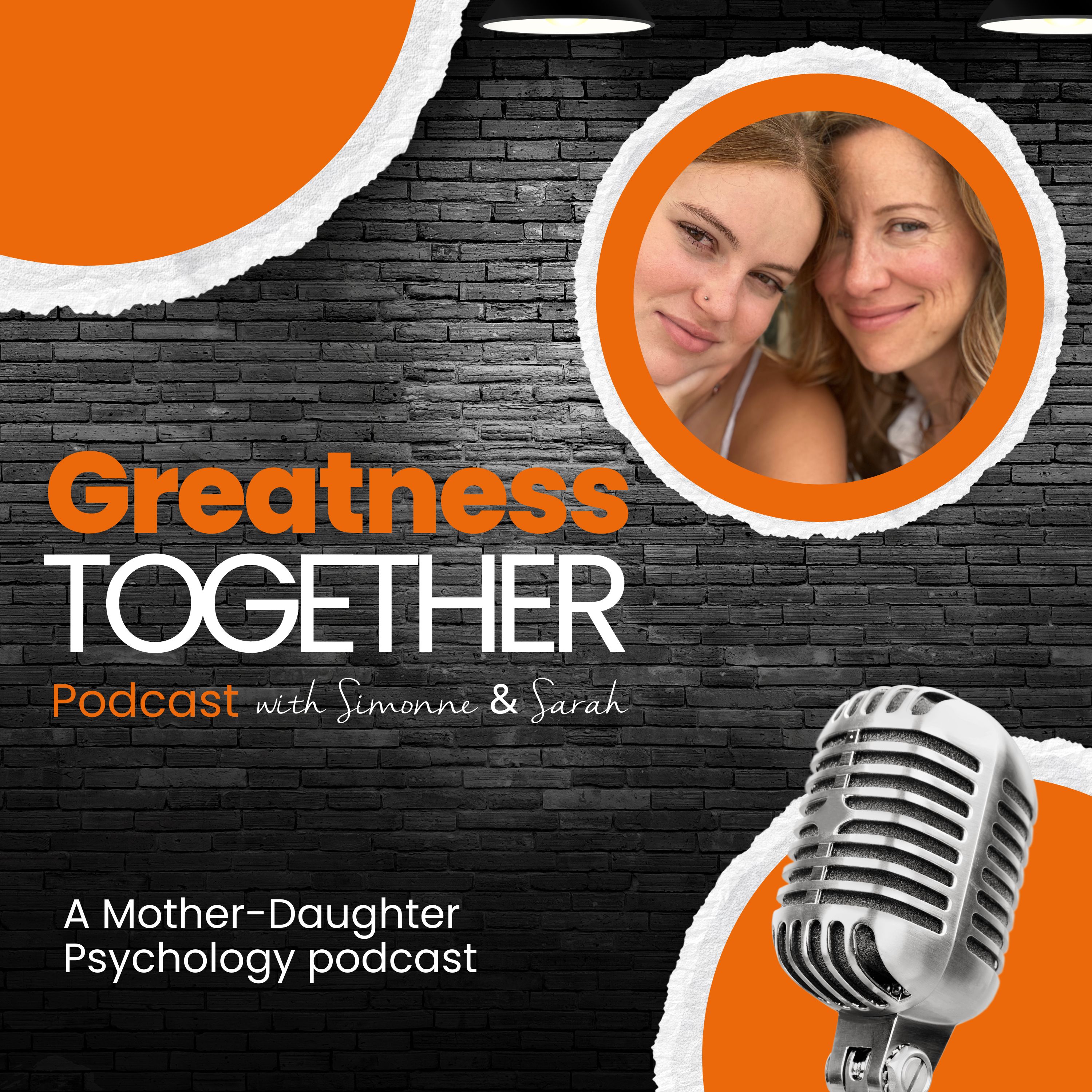
The Greatness Together Podcast has Sarah and Simonne McVanel embark on their journey of creating Mother-Daughter Conversations that Delve into the Heart of Psychology!
-
54
Do You Practice Self-Care in Your Routine?
What happens when you suddenly become the "sole architect" of your space? Simonne knows. In this episode, she gets vulnerable and shares the honest reality of living alone for the first time. Did we mention it’s an ocean away?We’re diving deep into her personal journey, navigating "the independence curve" and the unexpected lessons she learned as she figured out how to manage her entire world solo. We’re leaving the “have a bubble bath” clichés of self-care behind in favour of an honest look at the importance of mental clarity through intentional routines, task anagement, and good planning, creating the foundation for true well-being that enables sustained independence. Quote of the Week: "Daily routines have become my favourite self-care practice." Simonne McVanel Greatness Together Podcast Highlights:Do you practice self-care in your routine? 0:00Navigating Independence: A New Chapter 1:00The Importance of Organization and Self-Care 3:00Completing Tasks for Mental Clarity 6:00Daily Care: A Path to Easier Living 9:00See you next time 12:54 We dive deep into how tiny, seemingly insignificant everyday decisions can help us live with empowered independence. Simonne walks us through her recently curated how-tos of organization, connecting the dots between tackling small tasks and crushing daily decision fatigue. Living on her own with no roommate, an ocean away, provided a crash course where crashing and burning wasn’t an option. So, in this episode, the strategies we discuss aren’t just theory. They are reframing daily care as a fundamental form of self-respect. We look at simple habits, like prepping for tomorrow tonight to banish that frantic morning chaos, and how they fundamentally shift your energy.You'll get clear, practical steps for setting up routines that truly streamline your day, making your independent life less stressful and much more intentional. As you know, in our intergenerational podcast, we compare and contrast our lived experiences, and in this episode, we’re figuring out how to best unlock the often-overlooked power of completing tasks for mental clarity and how it leads to a smoother, more productive, and calmer life.Did you like this episode?Then you’ll probably also like this one, “Is Your Self-Care Non-Negotiable?”Consider reflecting on your own self-care practices or sharing your experiences with us to build a supportive community around personal growth and independence. Greatness Together Podcast Links:Do you show yourself love? Do you need Mental Beauty?Greatness MagnifiedSubscribe to The Greatness Together Podcast
-
53
The Happiness Factor: What Makes Finland So Happy?
Get ready to be inspired by Simonne’s incredible journey as an international student in Finland, a place where happiness isn’t just a buzzword—it’s woven into the very fabric of society! We’re diving into the heart of Finnish culture, where a simple "hello" has its own regional flair and even the bus drivers share a friendly wave, reminding us that everyone’s contribution is deeply valued. From a work culture rooted in true equality to a lifestyle that honours movement through biking, walking, and the sacred "Right to Roam" in nature, there is so much we can learn about putting people first. Simonne highlights how accessible resources and a deep respect for the environment create a life of balance, proving that when we step into a new culture, we don’t just learn about them, we gain a profound sense of gratitude and a fresh perspective on our own lives. Quote of the Week: Equality is such a deep social norm in Finland that you see it everywhere you look. Simonne McVanel Greatness Together Podcast Highlights:00:00 What makes Finland so happy?01:00 Introduction and Finnish Greetings06:01 Work Culture and Equality in Finland11:45 Social Norms and Community Connection18:07 Health and Lifestyle in Finland23:58 Nature and Accessibility in Finnish Society30:00 Reflections on Cultural Differences33:50 See you next time Join Sarah and Simonne to hear them talk about how:In this heart-centred conversation, Simonne and Sarah dive deep into the beautiful cultural tapestry of Finland, from the way the Finns greet one another to the secret sauce behind their world-renowned societal happiness. Simonne, living and going to school in Finland this semester, shares interesting observations she’s had and how, upon investigation, inquiry, and her courses on Finnish society, she's learned about the deep social norms that form the foundation for happiness. In their conversational, informal way, Simonne and Sarah explore a variety of aspects of Finnish life, from seamless transportation to greetings to a nature-friendly lifestyle to a work culture, and how all of these and more illuminate the widespread values of respect that elevate shared humanity.Simonne gets real about what she wants to bring back with her to North America, and what is uniquely Nordic and why. If you’re curious about what makes some countries deeply happy and others with as much wealth yet are less so, you will love this episode.Did you like this episode? Then you’ll probably also like this one that asks the question… Should All Young People Travel? Greatness Together Podcast Links:Could Discomfort be Your Biggest Teacher?Greatness MagnifiedSubscribe to The Greatness Together Podcast
-
52
Do You Need Mental Beauty?
In this engaging conversation, Sarah and Simonne invite a special guest, Salima Jadavji, to share and explore her concept of 'mental beauty,' emphasizing the interconnectedness of mental, emotional, and physical well-being. They discuss cultural differences in attitudes towards self-care, the generational shift in perspectives on work and mental health, and the significance of language in shaping our understanding of these concepts. If you are curious about how to cultivate more compassion and acceptance, and how to create safe spaces for open conversations about mental health, you will love this episode. Quote of the Week: “Mental beauty isn’t about becoming a better version of yourself. It’s about embracing wholeness.” Salima Jadavji Greatness Together Podcast Highlights:0:00 Do you need mental beauty?01:48 Understanding Mental Beauty05:28 Cultural Context and Mental Beauty10:06 Generational Perspectives on Mental Health15:34 The Shift Towards Self-Compassion19:56 Creating Safe Spaces for Conversations24:08 Integrating Mind, Body, and Emotions30:25 Redefining Work and Self-Care35:30 The Importance of Language in Mental Beauty40:13 Key Takeaways and Reflections47:47 See you next time Join Sarah, Simonne & Salima to hear them talk about how:Mental beauty is an invitation to explore one's inner world with curiosity and compassion, and to realize how aligned and intertwined it is with our physical, spiritual, and a more ‘whole-self’ perspective. Like most conversations, Sarah and Simonne are curious about the generational component and build on past episodes that show how intergenerational integration is possible through embracing mental beauty. With Simonne still studying overseas, currently in Finland, of course, the conversation with Salima naturally navigated to cultural differences and similarities in how mental beauty is perceived and practiced, too. If you are curious about a fresh perspective on how mental beauty offers an enlightened view of well-being, self-care, and mental health, and how it provides a guilt-free lens for living a fulfilling life, you will love this episode.If you would like to learn about this live and in person with Salima and Sarah, join them at Salima’s inaugural “Dare To Re-Treat” event on May 31, 2026, just outside Toronto, Ontario, Canada. Did you like this episode? Then you’ll likely also like this one, which asks the question… Is Your Self-Care Non-Negotiable? Listen to learn how integrating your mind, body, and emotions leads to holistic well-being. Greatness Together Podcast Links:Do You Show Yourself Love?Greatness MagnifiedSubscribe to The Greatness Together Podcast
-
51
Can Communication Help Build a Stronger Marriage?
Can we just take a minute to celebrate that this is our 50th podcast? In the 50th episode of the Greatness Together podcast, Sarah and her husband Mark discuss the secrets to a joyful marriage, sharing insights on humour, teamwork, communication, and the importance of maintaining a healthy relationship - with themselves and each other. They reflect on their experiences as parents and partners, emphasizing the need for open dialogue and shared responsibilities. With a lot of wacky and a bit of wisdom, they highlight the significance of self-love and understanding in fostering a strong bond. Their marriage is not perfect, they're quick to point out, but that's actually what they feel all the more proud of. Quote of the Week: "We work well as a team, and it cannot be lopsided; it has to be 50/50. And you have to give it your all…all the time" Mark McVanel Greatness Together Podcast Highlights: Can Communication Help Build a Stronger Marriage? 0:00 The Secrets of Marriage Podcast Recap: 2:00 Humour in Marriage and Parenting: 5:00 The Importance of Teamwork in Marriage: 10:00 Practices for Maintaining a Healthy Marriage: 15:00 Communication and Planning in Relationships: 20:00 What We Love About Each Other: 25:00 See you next time: 34:22 Join Sarah & Mark to hear them talk about how: Teamwork is essential for a successful relationship, and that humour is a must-have in marriage and parenting. They discuss how open communication helps resolve conflicts and that practicing self-love is crucial to loving others. They remind us that regular check-ins can strengthen relationships and that shared responsibilities create balance in marriage. They talk about how it's okay to fight and reveal their favourite book about this - "The Principles Secrets for Making Marriage Work" - because healthy conflict is a sign of a sustainable marriage. Add in a little laughter to diffuse tense situations, and decades can fly by, still best friends as well as spouses. Did you like this episode? Then you'll probably also like this one, from the last time Mark was a guest: "How Do You Make a Marriage Last?" Sarah & Mark together are sweet, poignant and funny! This is definitely one you won't want to miss! Greatness Together Podcast Links: Growing Together Without Losing Yourself Greatness Magnified Subscribe to The Greatness Together Podcast
-
50
Can We Master the Art of Slowing Down?
In this heart-to-heart chat, Simonne and Sarah dive deep into the fascinating (and sometimes frustrating!) cultural cadence of how we do life. We're talking about the huge gap between the non-stop, hustle-hard North American pace and the soul-soothing, savour-the-moment Mediterranean flow. They're peeling back the layers on the true cost of speed, specifically how that relentless 'go-go-go' stress taxes our health, our joy, and our sustainable well-being. It's not just about getting things done; it's about whether we're burning out while doing it! Quote of the Week: "Pace is something you choose. That means you can slow it down." Simonne McVanel Greatness Together Podcast Highlights: 00:00 Cultural Differences in Lifestyle and Pace 04:57 Pros and Cons of Fast vs. Slow Living 10:00 The Impact of Lifestyle on Health 15:18 Mindfulness and Slowing Down 20:06 Stress and Its Effects on the Body 24:36 Strategies for a Slower, Healthier Life 29:50 Embracing Gratitude and Intentional Living 38.18 See you next time! Living Intentionally: Slowing Down for Sustainable Success This conversation is a powerful invitation to embrace intentionality and presence. It emphasizes the vital need to tap the brakes, bring mindfulness to our daily rituals, and really show up for the moments that matter. They share tangible, recognition-infused strategies for crafting a slower, healthier, and more gratitude-rich life—one where we deliberately choose well-being over the mindless pursuit of efficiency. It's a rallying cry for making every day count, not by packing more in, but by being present for the blessings that are already there. While studying in Europe in a program filled with students from around the world, Simonne's seeing the cultural influence on pace: our beliefs about goals, schedules, and priorities vary by country, and she's realized that North Americans might have an overly intense, not always fast-paced cadence. As she's tried on different 'paces' for size, she's realizing that slower isn't just better; for her, it's safer, happier, and satisfying. Did you like this episode? Then you'll probably also like this one on Can SLOWER Help You Unlock a Healthier Life? Greatness Together Podcast Links: The Problem with BusyGreatness Magnified Subscribe to The Greatness Together Podcast
-
49
How Can I Conquer My Fear of Public Speaking?
On this episode of The Greatness Together Podcast, Sarah & Simonne take a look at the critical role of public speaking across various careers, highlighting that even those who may not think they need it will find it essential in certain roles. It discusses how public speaking skills are necessary for effective communication and leadership, regardless of the profession. In this dynamic conversation, they dive deep into the critical, non-negotiable role that public speaking plays across all professional domains. Forget those old excuses like, "I'm just an engineer," or "I only work with data." We're here to tell you that the microphone is always on! Quote of the Week: "Never underestimate how confident you can be by simply being prepared." Simonne McVanel Greatness Together Podcast Highlights: How Can I Conquer My Fear of Public Speaking? 0:00 Why do we fear public speaking? 0:30 Label yourself with positivity: 3:00 Ditch the negativity bias. 6:30 When public speaking might be necessary: 9:00 The importance of preparation: 11:30 Mindset and self-perception: 16:00 Next time: How Can We Slow Down?: 18:16 Join Sarah & Simonne to hear them talk about how: We explore why everyone—yes, everyone—will encounter a moment where these skills aren't just nice to have, but absolutely essential. Whether you're pitching an idea to your boss, leading a critical team meeting, facilitating a difficult conversation, or stepping up into a genuine leadership role, your ability to communicate clearly, confidently, and compellingly is the difference between being heard and being ignored. This episode is a powerful reminder that public speaking is, in essence, elevated communication and the foundation of effective leadership. Tune in to discover why mastering this skill is the ultimate way to own your impact and unlock your true professional greatness, no matter your title! Greatness Together Podcast Links: EP1: Should we become procrastinators? EP9: Is it better to be introverted or extroverted? Greatness Magnified Subscribe to The Greatness Together Podcast
-
48
Can SLOWER help you unlock a healthier life?
On this episode of the Greatness Together Podcast, Sarah is diving headfirst into an acronym that's a total game-changer for your well-being. It's time to talk about the power of going a little SLOWER! This isn't just a catchy word, friends; it's a luscious roadmap to a healthier, happier you. We're dissecting the six core ingredients you absolutely need to fuel your greatness—and they spell out SLOWER. Massive appreciation to speaker colleague Barry Green for this delicious acronym that will benefit us all for life! Quote of the Week: "Sometimes we need to slow down to handle the pace of work and modern life." Sarah McVanel Greatness Together Podcast Highlights: 00:00 Can SLOWER help you unlock a healthier life? 01:00 Introduction to SLOWER: A New Perspective 02:20 The Importance of Sleep 03:42 Laughter: The Essential Ingredient 04:11 Oxygen: Breathing Life into Your Day 06:01 Hydration: The Power of Water 07:57 Exercise: Finding Your Joy in Movement 10:17 Real Food: Nourishing Your Body 14:14 See you next time… Join Sarah to hear her talk about how: I'm peeling back the curtain on my own messy, imperfect journey with these elements—sharing some personal anecdotes and the little, practical tips you can use today to start integrating SLOWER into your daily rhythm. It's all about making your well-being non-negotiable and finding the sheer, simple joy in prioritizing yourself. Because you can't pour from an empty cup, and your greatness deserves to be full! Ready to slow down to speed up your health? Let's dive in! Did you like this episode? You'll probably also like this one on: Is Sleep the Missing Ingredient to Your Greatness? Greatness Together Podcast Links: EP 22: Is Your People Pleasing a Problem? EP 45: Could Discomfort Be Your Biggest Teacher? Greatness Magnified Subscribe to The Greatness Together Podcast
-
47
Is Sleep the Missing Ingredient to Your Greatness?
In this conversation, Sarah and Simonne discuss the critical role of sleep in productivity, mental health, and overall well-being. They explore the consequences of sleep deprivation, the importance of understanding individual sleep patterns, and strategies for better sleep management. The discussion emphasizes the importance of prioritizing sleep for students and young adults, as it has a profound impact on both academic performance and emotional well-being. Quote of the Week: "You can't outthink a tired brain." Sarah McVanel Greatness Together Podcast Highlights: 00:00 The Importance of Sleep 02:45 Understanding Sleep Quality 06:25 Circadian Rhythms and Productivity 08:51 The Impact of Sleep on Health 11:49 Sleep and Academic Performance 14:28 Managing Sleep Anxiety 17:35 Building a Sleep Bank 20:15 Should you Sacrifice Sleep for Work? 22:54 …see you next time Join Sarah & Simonne to hear about how: Many people sacrifice sleep for productivity, but it's detrimental. Sleep deprivation can lead to serious health issues. Quality of sleep is as important as quantity. Different individuals have unique circadian rhythms. Sleep is essential for memory retention and cognitive function. Students often underestimate the importance of sleep for exams. Sleep deprivation can mimic the effects of intoxication. Managing sleep can improve overall well-being and mood. Understanding sleep patterns can help in scheduling tasks. Prioritizing sleep can lead to better academic and social outcomes. Did you like this episode? You'll probably also like this one on: Is Your Self-Care Non-Negotiable? Greatness Together Podcast Links: EP11: The Problem with BusyEP 25: Do You Show Yourself Love? Greatness Magnified Subscribe to The Greatness Together Podcast
-
46
Could Discomfort Be Your Biggest Teacher?
In this episode of the Greatness Together Podcast, Sarah and Simonne explore the theme of stepping outside one's comfort zone, discussing the importance of new experiences, the role of support systems, and the psychological aspects of change. They delve into the benefits of discomfort, the concept of sunk cost, and how personal growth often requires taking risks. The discussion highlights that while change can be daunting, it also presents an opportunity for growth and learning. Quote of the Week: "What do you want? What if you weren't doubtful? What if what you want is worth the discomfort to get there?" Sarah McVanel Greatness Together Podcast Highlights: 00:00 Stepping Outside Comfort Zones 02:38 The Importance of Change and Novelty 06:14 Understanding Neurotransmitters and Neuromodulators 09:16 Learning and Growth Through Experience 12:17 The Role of Commitment in Managing Discomfort 15:55 Reflections on Regret and Life Choices 17:33 Building Resilience Through Discomfort 21:16 The Power of Support Networks 23:25 Embracing Change and Reversibility 26:34 See you next time… Join Sarah & Simonne to hear about how: · Stepping outside your comfort zone is essential for growth. · New experiences can be overwhelming, but are often rewarding. · Support systems play a crucial role in taking risks. · Understanding neurotransmitters can enhance learning experiences. · Sunk cost theory explains why we stick with commitments. · You don't have to compare your journey to others. · Embracing discomfort can lead to personal development. · Change is a necessary part of life and learning. · You can always change your mind if something doesn't work out. · Finding joy in discomfort can lead to unexpected rewards. Did you like this episode? You'll probably also like this one on "Why Is It So Hard to Accept a Compliment?" Greatness Together Podcast Links: Why Is It So Hard to Accept a Compliment? Greatness Magnified Subscribe to The Greatness Together Podcast
-
45
Is Your Self-Care Non-Negotiable?
We've all heard the phrase "Put your own oxygen mask on first"—but do we actually live it? In this solo episode, Sarah reflects on launching Simonne (again!) into another international adventure—the Netherlands this semester, Finland next semester—and how the experience revealed some hard truths about caregiving, independence, and the habit of putting ourselves last. As a psychology-at-heart person, Sarah never stops analyzing (especially herself), and this trip surfaced fascinating insights: why self-care is often conditional, why compliments are so hard to accept, and why the oxygen mask rule must be full stop, non-negotiable. Quote of the Week "You must put your own oxygen mask on first. Full stop. Non-negotiable." – Sarah McVanel In this episode, Sarah opens up about how easily we slide into supporting everyone else—kids, partners, colleagues, even strangers halfway around the world—while leaving little space for our own restoration. She shares a story about complimenting long-term care staff, hospital healthcare providers, and hospitality professionals in the Netherlands, where even the most dedicated staff struggled to accept recognition. It's a mirror many of us hold up: we're quick to give but hesitant to receive, quick to care for others but reluctant to prioritize ourselves. Launching Simonne (Again) This isn't the first time Sarah and Mark have launched Simonne into the world—Argentina, Australia, Italy came before—but this one felt different. The stakes are higher with full-time psychology courses abroad, and the parental caregiving instinct came rushing back, even for their fiercely independent daughter. From filling the fridge to thrift-store runs, the impulse to smooth the path for Simonne was irresistible, and that's not necessarily a bad thing. Interestingly, it wasn't until Sarah returned home, both she and Mark jetlagged and exhausted, that they realized that between launching Simonne, working, and the thousands of kilometres travelling, they didn't spend sufficient time filling their energetic gas tank. They squeezed it in, but perhaps they could have built in more time. Habits are hard to break, or even catch, while you're in a behavioural habit loop reinforced with a strong value system. Humility as a Virtue Upon reflection, it made Sarah think about how healthcare providers, in the business of caring for others, give, give, give and sometimes forget to ensure their wellbeing is sufficiently reinforced. How many go from getting kids off to school to working their shift to caring for aging parents to the kids' sports tournament, and around and around, the weeks go by. This isn't unique to North Americans; she heard this with Dutch care providers, too. In fact, when offering compliments to some, the response was: "Oh, I'm just doing my job." So she and her co-lead in the Netherlands, Paul ter Wal, distributed more of the compliment cards, "Please be as kind to yourself as you are to the people you care for," than any other they had printed, especially for this ThankFULL experience. You'll be glad to know that more are being printed and distributed to healthcare providers back here in North America. The Oxygen Mask Rule: Full Stop The big insight? The oxygen mask metaphor only works if we actually live it. No more "I'll rest once things calm down." No more "after I take care of everyone else." It's non-negotiable. This episode is for you if… You put everyone else at the top of your list You struggle to receive recognition or compliments You want to build recovery time into your life without guilt You need a reminder that your well-being fuels your impact What would change if your self-care came first instead of last? Greatness Together Podcast Links 50 Ways to Practice Self-Care Ep 6: Are You a Perfectionist? Ep 27: Is Your Role Leading to Burnout? Ep 34: What If 80% Was Actually A+? Greatness Magnified Subscribe to The Greatness Together Podcast
-
44
Is That Your Path—or Just the Expected One?
In this episode of The Greatness Together podcast, we're exploring something we all wrestle with, especially in times of uncertainty: how do we know if we're making decisions that are truly ours? With constant signals from social media, experts, and societal norms, it's hard to tell where influence ends and authenticity begins. But what if the path that fits you best looks nothing like the one you're being shown? Quote of the Week: "It's hard to trust your own path when you've never walked on it before." Simonne McVanel Greatness Together Podcast Highlights: Is That Your Path—or Just the Expected One?. 0:00 Learning the ropes. 1:30 Finding your own way. 4:00 Being yourself. 6:00 Trust your instincts. 9:00 Standing up for others. 11:00 Social trends and influence. 13:30 Fitting in can be hard. 16:30 There is no template for life. 20:00 We're taking a look at… When we're uncertain—starting a relationship, ending one, choosing a career, deciding what kind of life we want—we tend to look around for cues. It's human. We lean on normative social influence (what society expects) and informative social influence (what the experts say). But in a world full of curated content and crisis-level uncertainty, how do we avoid losing ourselves in other people's opinions? You're Not a Template—So Why Follow One? We're constantly told we're unique… and yet, we're subtly pushed to fit a mould. Family, culture, education, and even algorithms shape what we believe is "normal" or "right." But our experiences, preferences, and capabilities are deeply individual. Just because someone else's relationship, career path, or lifestyle looks ideal doesn't mean it's right for you. So how do you begin to notice when you're following a script versus following your own truth? Social Media Is a Loud Mirror—But Not an Honest One Whether it's influencers promoting the "best" European city or viral videos about the "right" way to be in a relationship, the content we consume is often designed to manipulate, sell, or persuade. That doesn't make it evil—but it does mean we need to consume consciously. Are you watching because it inspires you? Or because you're waiting for someone to tell you what to do next? Did you like this episode? You'll probably also like this one, titled Abilities vs. Identity: Who Are You Really? This episode is your permission slip to pause and ask: Is this what I want—or what I've been told to want? Finding your own path takes patience, discernment, and courage—but it's the only way to a life that truly suits you. Greatness Together Podcast Links: Who Told You That Wasn't Enough? Greatness Magnified Subscribe to The Greatness Together Podcast
-
43
Has Feminism Flipped the Script Too Far?
In this episode of The Greatness Together podcast, we're exploring the new wave of empowered femininity—and asking whether the pendulum has swung too far. Simonne reflects on a social shift she's witnessing firsthand: women are no longer just asking for equality; they're boldly rejecting traditional roles and sometimes outright dismissing men. Through TikTok trends, social dynamics, and personal experiences, we unpack the tension between independence and intimacy, strength and softness. Quote of the Week: "Empowerment isn't about bringing others down. It's about meeting in the middle." —Simonne McVanel Greatness Together Podcast Highlights: Has Feminism Flipped the Script Too Far? 0:00 The new TikTok trend. 1:30 Have gender stereotypes taken a turn? 3:00 Do we have biases against men? 5:00 Are men being scared away by the strength of women? 7:00 We need to find a balance. 10:00 Do we still appreciate men being "gallant"? 12:00 Everyone needs to be valued and respected. 14:00 Next time: Is That "Your" Path—or Just the Expected One? 18:00 We're taking a look at… There's a growing movement where women aren't just claiming space—they're calling men out. From tongue-in-cheek social media trends to viral moments of mockery, there's a new vibe that feels less like balance and more like backlash. But in this brave new world, are we leaving room for softness? For connection? And what happens when feminism becomes a weapon instead of a bridge? From Empowered to "I Don't Need You": A Cultural Shift Simonne shares her reflections on the "Hi, I'm Greg" TikTok trend—where men list their contributions ("I take out the trash"), while women simply state their name, as if to say, my presence is enough. While this trend may feel like poetic justice after generations of inequality, it also raises questions. Is this the empowerment we were striving for? Or are we unintentionally reinforcing a new form of superiority masked as liberation? Strong, Soft, or Both? The Tension Inside Us All As women take up space in powerful new ways, many are also navigating internal contradictions. Simonne appreciates it when her boyfriend opens the door for her. Sarah is grateful when her husband mows the lawn. These aren't signs of dependence—they're gestures of partnership. But in a culture that sometimes mocks these moments as outdated, it can feel confusing. Are we allowed to want help? To receive care? To be strong and supported? This episode isn't a takedown or a retreat from feminism—it's a deeper reflection on how to evolve it. How do we stay assertive without becoming hardened? How do we uplift women without pushing down men? And how do we raise a generation of humans—regardless of gender—who know that true strength includes grace? Did you like this episode? Then you'll probably also like this one on "Is it possible that we're bad feminists?" Greatness Together Podcast Links: Is Your People Pleasing a Problem? Do You Own Who You Are? Greatness Magnified Subscribe to The Greatness Together Podcast
-
42
Part II: Growing Together Without Losing Yourself
In Part 2 of this anniversary episode, Sarah continues the conversation with Simonne—this time one-on-one. Hubby Mark had to step out, but the questions kept coming, and Sarah didn't hold back. If you missed Part 1, you can check it out here They delve into the concept of emotional independence, exploring how not to lose yourself in a relationship, and why the phrase "two halves make a whole" might be the worst relationship advice ever. If you've ever wondered how to grow alongside someone while staying rooted in who you are, this episode will resonate. Quote of the Week: "You can't outsource your happiness. Not to a partner, not to a job, not to anyone." — Sarah McVanel Greatness Together Podcast Highlights: EP41: Growing Together Without Losing Yourself 0:00 What does emotional independence really look like? 2:00 Why your partner shouldn't regulate your emotions. 4:30 Growing together while evolving separately. 7:00 What to do when one of you is struggling? 10:00 Simonne's observations on 27 years of love. 14:00 Lessons from Maslow's hierarchy and marriage. 18:00 Sarah's final reflection on love, life, and self-worth. 20:00 Next time: Has Feminism Flipped the Script Too Far? 21:39 Two People, Not Two Halves to Make One Sarah challenges the idea that couples become one. Instead, she offers a model of being two whole people growing side by side. This was a plot twist; she grew up with two happily married parents who professed that two halves become one. It just never suited her, and it didn't fit Mark either. Sarah shares how early on, she made it clear to Mark: "I can't work harder on your life than you will." And because he was willing to grow, their relationship could grow too. He took that seriously and taught her how to take herself a little less seriously along the way, too. The episode explores emotional co-regulation, boundary-setting, therapy, and how to stay connected without collapsing into each other. It's an honest blueprint for sustainable love in the real world. Simonne's Front Row Seat As the daughter of this 27-year-long experiment in marriage, Simonne reflects on what she's witnessed—from the dinner table to family walks to late-night laughs. She discusses the playfulness and emotional intelligence, and how their relationship has helped shape her own understanding of love and partnership. It's not perfection—it's presence. And it's a beautiful reminder that sometimes, the best relationship role models are the ones right in front of you. If you liked this episode, revisit: EP5: Do You Have High Expectations? — an early episode on self-worth, perfectionism, and finding balance in relationships and life. Greatness Together Podcast Links: Part I: How Do You Make a Marriage Last? Greatness Magnified Subscribe to The Greatness Together Podcast
-
41
How Do You Make a Marriage Last?
What makes a marriage last almost three decades? In the first part of a special two-episode anniversary series, Simonne interviews her co-host parents, Sarah & Mark, about their 27-year marriage. What begins with playful banter turns into an honest, laughter-filled, insightful and intimate exploration of partnership, identity, growth, and what keeps two people drawn to each other again and again. From how they met (spoiler: one of them forgot!) to how they've supported each other through school, career changes, depression, and parenting—it's a raw and real peek into what lasting love looks like. 📌 Come back next time for Part 2, where Sarah continues the conversation with Simonne—this time one-on-one. Mark had to head out, but Simonne wasn't done asking the big questions. 💬 Quote of the Week "You have to choose yourself every day. If you don't, how can your partner choose you?" — Sarah McVanel 🎧 Greatness Together Podcast Highlights (Part 1) How Do You Make a Marriage Last? 0:00 When your memory fails on how you met… 4:00 "I just knew" — gut instinct or something more? 7:00 Fixer-uppers and growing up together 10:00 What each partner brings to the relationship 14:00 The hardest times: postpartum, caregiving, no money 17:30 Holding faith for each other through depression 21:00 Next time: Growing Together Without Losing Yourself 23:52 What 27 Years of Marriage Actually Looks Like Simonne gets right to it: how do you really know someone's "the one"? Sarah and Mark look back at their beginnings—awkward job interviews, long summers working side-by-side, and that gut instinct that maybe, just maybe, this was it. Simonne wasn't so sure about 'love at first sight', nor were her parents, for that matter. However, in their case, they knew pretty early; you'll want to tune into this episode for an insight into the 'drama' that ensued when they found out early, which proved to be quite tricky. Besides, knowing is just the beginning. What follows is the building. They talk about what it took to navigate being broke, juggling grad school, new careers, kids, and family loss. Throughout it all, they continued to prioritize their relationship and themselves. 🧰 What We Each Brought (And Had to Learn) From day one, Sarah knew she couldn't do the work for Mark. And Mark was willing to grow. He returned to school, began therapy, and built a life that made him proud. Sarah, in turn, brought belief, loyalty, structure, and just a touch of "emotional barometer" energy. Don't think that she rescued him, though! His easygoing attitude to life has been a saviour to her throughout their marriage (if you've tuned in for a while, you'll know what we mean by her intense vibe!) They openly name their strengths and struggles. Mark jokes that he was a fixer-upper. Sarah confesses she might be "a bit extra." But what's clear is that they've learned to make space for each other's evolution. 🔗 Greatness Together Podcast Links Greatness Magnified Subscribe to The Greatness Together Podcast Episode #41 Sneak Peek: Next Time on Greatness Together: Sarah and Simonne continue the conversation without Mark—diving into emotional independence, not outsourcing your happiness, and how to grow together without losing your sense of self. Don't miss this raw, insightful Part 2.
-
40
Who Told You That Wasn't Enough?
Who told you that you weren't enough? And why did you believe them? That's the question Sarah and Simonne ask this week—and once you start unpacking it, things get personal fast, because most of us carry stories, assumptions, and expectations that were never ours to begin with. Quote of the Week: "I've realized comparison isn't just about wishing I had more—it's about believing I am less." Simonne McVanel Greatness Together Podcast Highlights: Who Told You That Wasn't Enough? 0:00 Is social media the root of all evil? 0:30 Imposter Syndrome…not Stockholm ;) 2:00 Everyone feels self-doubt at some time. 5:00 Let's not fake it. 7:00 Don't bully yourself. 9:00 Appreciate your achievements. 12:00 Homework: Make a list of your strengths. 14:00 Find your person. 16:00 Next time: Marriage...with a very special guest! 19:30 In this episode, they dig deep into the experience of not feeling like we're "doing enough," "being enough," or "achieving enough"—even when all signs say we are. With psychological grounding in the Impostor Phenomenon and Social Comparison Theory, they explore how this belief system forms, gets reinforced, and keeps us trapped in cycles of overwork, guilt, and burnout. Why We Don't Trust Our Own Enoughness Simonne shares how even in environments that celebrate growth and self-compassion, there's an undercurrent of achievement pressure—especially for Gen Z navigating identity, success, and social comparison in real time. Sarah opens up about how she realized she was chasing praise from old authority figures who weren't even part of her life anymore. She reflects on how certain career moments that should have felt like victories were overshadowed by "But what's next?" thinking. They both highlight how this drive to be "more" is so often a disguise for a deep-seated fear of not being valued, recognized, or safe unless we're constantly proving ourselves. How Impostor Thoughts Keep You Small Anchored in the Clance & Imes model of the Impostor Phenomenon, the episode reveals how smart, capable people often believe they're faking it. You'll hear how this shows up across ages and identities—from the fresh graduate in her first job to the seasoned leader still doubting her legitimacy at the boardroom table. Sarah talks about moments she saw women self-sabotage their own brilliance because they were worried about "taking up too much space." Simonne reflects on how overachievement can become a coping mechanism for the fear of being unworthy. The Danger of Comparison as a Metric They also delve into Social Comparison Theory—how we construct our identities by comparing ourselves to others—and how this often leads to misplaced feelings of failure. Especially in the age of Instagram, LinkedIn, and curated personas, it's easier than ever to feel like you're falling short. But falling short of what, exactly? That's what they challenge you to reflect on. You Already Are This isn't a fluffy, motivational episode. It's an honest reckoning with how and why we forget our inherent worth—and how we can slowly reclaim it. You'll walk away with tangible practices: Tracking internal validation vs. external Naming who you're trying to impress—and whether they still matter Building new metrics for "enough" rooted in you, not the feed This episode is for you if... You chronically second-guess your success or self-worth You compare your effort or outcomes with others You want to feel like what you do—and who you are—is enough, even when no one's watching What story have you outgrown about your worth? Share with us and tag someone who might need to hear: "You already are enough." Greatness Together Podcast Links: Ep 6: Are You a Perfectionist? Ep 27: Is Your Role Leading to Burnout? Ep 34: What If 80% Was Actually A+? Greatness Magnified Subscribe to The Greatness Together Podcast
-
39
If Work Were a Friend, Would You Stay?
In this episode of The Greatness Together podcast, we shine a light on something we rarely question: the treatment we tolerate at work. Most of us would never accept being ghosted, gaslit, or constantly criticized in our personal lives (we hope you don't!). So why do we allow it professionally, especially from employers, supervisors, or "mentors"? We explore the systems that normalize this behaviour and the quiet cost of staying silent. Quote of the Week: "Just because someone signs your paycheck doesn't mean they should be allowed to sign off on your self-worth." —Sarah McVanel Greatness Together Podcast Highlights: If Work Were a Friend, Would You Stay? 0:00 I was ghosted! 1:00 Why do we take it at work? 3:00 There seems to be a double standard. 7:00 What can we do? 10:00 Let's be part of the solution. 12:00 What is okay for you? 15:00 Next time: Has Feminism Flipped the Script Too Far? 18:00 We're taking a look at… It starts with little things. A job offer that never gets confirmed. A manager who micromanages your day-to-day. A leader who expects instant replies—but never returns your messages. These may seem like small slights, but over time, they accumulate to form a culture of control. Especially in today's "frozen" job market, many feel stuck. In this conversation, we explore how to notice the signs, protect your emotional boundaries, and reclaim your power—even if you can't walk away yet. We Expect Basic Respect From Friends… So Why Not Employers? You wouldn't tolerate being ghosted for days in a friendship—or at least, we hope you wouldn't. So why is it normal in the workplace? We've been conditioned to see employers as the ones holding all the cards, and that power dynamic can keep people—especially young professionals and the underemployed—trapped in silence. When you depend on the job to pay rent or stay in your community, your options feel limited. That's when "just put up with it" becomes the toxic standard. Red Flags at Work Are Just as Real as in Dating Sarah shares stories from her experience coaching teams in high-pressure environments—places where sleep deprivation, verbal abuse, and public criticism were normalized. In one case, medical students were unable to question the toxic behaviour of senior doctors when writing their evaluations. This kind of coercion trains people to ignore their gut. But what if we paid attention to those first uneasy feelings? That offhand comment. The dismissive interview tone. The unreturned message. Those are red flags, too—and they don't disappear after you sign the offer letter. Toxicity doesn't need to be explosive to be harmful. This episode is about building awareness, choosing how to respond, and remembering that you deserve dignity, both at work and at home. Did you like this episode? Then you'll probably also like this one on "Is Burnout Inevitable, or a Cultural Choice?" Greatness Together Podcast Links: The Problem With Busy Greatness Magnified Subscribe to The Greatness Together Podcast
-
38
Do We Dismiss Kids' Emotions Too Easily?
In this episode of The Greatness Together podcast, we're unpacking a difficult truth: we often take children's emotional outbursts less seriously than those of teens or adults. But what if their tears, tantrums, and silences are trying to tell us something deeper? Through Simonne's work at a women's shelter, we explore how children's emotional lives are more complex—and more important—than we give them credit for. Quote of the Week: "When a child cries, we ask them to be quiet. But maybe we should ask ourselves to listen." Simonne McVanel Greatness Together Podcast Highlights: Do we dismiss kids' emotions too easily? 0:00 Labelling psychological disorders. 2:00 Kids don't only cry for attention. 3:30 What are we missing? 6:00 Are we intolerant of emotions? 8:00 Being emotional isn't a weakness. 10:00 Teach your kids to lean into their feelings. 13:00 Next time: If work were a friend, would you stay? 16:24 How often do we write off a child's emotional expression as dramatic or attention-seeking? In this conversation, we question that instinct. Why do we minimize children's emotions when, in truth, they might be holding trauma, fear, or unmet needs they don't yet have words for? What if kids are more emotionally aware than we are—and we're just not listening? We assume children's emotions are surface-level. What if they're not? When Simonne witnessed a young girl silently crying during a disagreement at the shelter, it wasn't the loud sobbing we often associate with children—it was quiet, restrained, and raw. That moment sparked a deeper reflection: Are we overlooking real pain because it's wrapped in the smallness of a child? Mental health research underrepresents children, and most therapeutic systems aren't designed with them in mind. Yet the emotional complexity is there. We just have to stop dismissing it. We shut kids down—because we shut ourselves down. Most of us were taught to "suck it up," "don't cry," or "be brave." So, when kids express big feelings, it makes us uncomfortable. Instead of responding with curiosity, we label them as overreacting. But this discomfort says more about us than about them. Could our own emotional illiteracy be blocking our ability to support the next generation? Brene Brown has helped normalize emotional conversations, but what if we started these conversations when we were still kids? If you've ever told a child to "calm down" or felt unsure how to handle their emotions, this episode invites a reset. Let's relearn what we've forgotten—and recognize the wisdom children carry. Did you like this episode? Then you'll probably also like this one on "Understanding the Generations: Are We More Alike Than Different?": Greatness Together Podcast Links: How Do We Build Courage Curiosity? Greatness Magnified Subscribe to The Greatness Together Podcast
-
37
Understanding the Generations: Are We More Alike Than Different?
Chances are you've witnessed—and perhaps even felt—the cultural gap between generations. From the rapid evolution of technology and changes in workplace dynamics to shifting social norms and parenting styles, each generation has shaped society in vastly different ways. These shifts have influenced everything from how we learn and work to how we connect with one another. But as these differences grow more visible, so does the underlying question: Which generation got it right? Or is there even a "right" way at all? Quote of the Week: "Every single person on the planet is way more similar than they are different." Sarah McVanel Greatness Together Podcast Highlights: Understanding the Generations: Are We More Alike Than Different? 0:00 We're way more alike than we think. 3:00 Was it harder then, or is it easier now? 6:00 Same course, different experiences…30 years later. 11:00 The impact of when you're born. 14:00 The technology effect. 16:00 Are labels detrimental? 19:00 Finding middle ground and support. 21:00 Next time: Do we dismiss kids too easily? 24.37 In this week's thought-provoking episode, co-hosts Simonne and Sarah discuss the perceived cultural divide between generations through their lived experiences. Simonne brings her perspective as a member of Gen Z, and Sarah offers insights from her Gen X background. With warmth, honesty, and a touch of humour, they examine how society has changed over the decades and what these changes say about us as individuals and as a culture. Is tough love or compassion more effective? They explore the advantages and drawbacks of these generational shifts, particularly in high-stakes environments like the workplace and academic institutions. For instance, Sarah reflects on the intense pressure and high expectations placed on students during her youth, where success often came at the cost of personal well-being. In contrast, Simonne describes a present-day culture that values mental health and accommodations, providing young people with a more supportive—but perhaps less demanding—environment. Are today's youth "coddled" or raised in a more emotionally intelligent and inclusive world? Is previous generations' "tough love" more effective, or does the future lie in compassion and flexibility? And are these questions helpful or hurtful? Does speaking of differences help understanding, or do they encourage divisiveness? Can we find a middle ground? This episode isn't just about comparing generations—it's about understanding them. It's about examining how our upbringing shapes our values, how society adapts over time, and what we can learn from each other. Whether you're a parent trying to connect with your kids, a student frustrated with "old-school" expectations, or simply curious about how these cultural dynamics affect your daily life, there's something in this conversation for you. So, is the past generation's "harder life" the better path, or does today's more adaptive and open-minded world offer the key to a better future? Can we find a middle ground that respects the strengths across generations? If you've noticed these generational changes and are curious about the deeper layers behind them, tune in to this week's episode. Simonne and Sarah offer insight, laughter, and meaningful conversation that might change how you see your generation—and others. Did you like this episode? Then you'll probably like this one: Is the New Work Culture Better? Greatness Together Podcast Links: Is the New Work Culture Better? Greatness Magnified Subscribe to The Greatness Together Podcast
-
36
What If 80% Was Actually A+?
What if we've been doing too much for too long? In this episode, Sarah and Simonne unpack one of the most liberating (and controversial) productivity ideas out there: that 80% effort might be your sweet spot. Anchored in the Law of Diminishing Returns, they explore how going all in can sometimes give you less, not more, and why that last 20% is often where burnout, anxiety, and resentment live. This conversation is for anyone who has ever triple-checked a presentation, answered emails at midnight, or obsessed over things no one else noticed. (We see you hardcore overachievers!) But this isn't about lowering standards—it's about choosing peace over pressure. Sustainability over sacrifice. And trusting that enough can be more than... enough. Quote of the Week: "What if the smartest thing you could do was stop sooner?" — Simonne McVanel Greatness Together Podcast Highlights: What If 80% Was Actually A+? 0:00 The law of diminishing returns. 1:00 Finding your "enough". 3:00 Do we need perfect? 6:30 The challenge of comparison. 9:00 Why keep pushing? 12:00 Finding a middle ground. 14:30 Next time: Generational Differences or Similarities? 17:21 Sarah reflects on her journey from corporate overfunctioning to aligned entrepreneurship, and the long road in between (that still requires vigilance!) Simonne shares the pressures of being a high-performing Gen Z woman navigating post-secondary education and prepping to enter the workforce. They explore what it might look like to reclaim energy, time, and joy, not just for yourself but also for the people you love who rarely see the "rested you." And if you're a parent, people leader, or someone navigating generational expectations, this one's especially for you. Generational Reflections on Enoughness In the conversation, Sarah reflects on growing up with "good, better, best" drilled into her, and how corporate culture rewarded 120% effort, even when it wasn't healthy. Simonne brings a different lens—acknowledging that while her generation is praised for boundary-setting, the pressure to constantly "optimize" everything still runs deep. Together, they explore how these generational norms intersect, diverge, and occasionally clash... especially when you're a high-functioning family of achievers! What Happens When We Choose 80%? Turns out, a lot. Better sleep. Deeper relationships. More time to create. Fewer mistakes (how ironic). Lower stress. In short: space. Simonne reminds us that our best thinking, connecting, and healing happen in space—not in the 2 a.m. grind. Whether you're a recovering perfectionist or just curious about doing life a little differently, this episode invites you to explore what it would feel like to stop at 80%—and be proud of it. Did you like this episode? Then you'll probably also like the episode that inspired it, Is the New Work Culture Better? Greatness Together Podcast Links: Is the New Work Culture Better? Why Do We Compare? Do You Have High Expectations? Greatness Magnified Subscribe to The Greatness Together Podcast
-
35
Abilities vs. Identity: Who Are You Really?
Do you define yourself by what you do? Many of us struggle with separating our abilities from our identity. In this episode of The Greatness Together Podcast, we delve into how self-worth extends beyond accomplishments. What happens when you can't meet your own high standards? And how do you redefine success beyond productivity? Quote of the Week: "You are not just what you do—you are who you are." Sarah McVanel Greatness Together Podcast Highlights: Abilities vs Identity: Who are you really? 0:00 Feeling the pressure to produce. 1:00 Self-doubt creeps in. 5:00 Self-Determination Theory: Autonomy, Competence, and Relatedness. 9:00 Feeling seen makes all the difference. 12:00 Separating Identity from Abilities. 14:00 Redefining Success Beyond Productivity. 17:00 Your identity can shift. 21:00 Next time: What If 80% Was Actually A+? 24:37 Self-Determination Theory: Autonomy, Competence, and Relatedness According to Self-Determination Theory (Deci & Ryan, 1985), humans have three core psychological needs: autonomy (control over our choices), competence (feeling capable), and relatedness (feeling connected to others). When we tie our identity solely to what we do, we risk losing fulfillment in all three areas. Understanding that we are more than our accomplishments helps us create a well-rounded sense of self. How to See Yourself Beyond Your Skills Your abilities matter, but they don't define you. Whether you're a high achiever struggling with burnout or someone reassessing their path, this episode is for you. We explore how to shift from a doing mindset to a being mindset—where self-worth isn't conditional. If you've ever felt lost when stepping away from a role, listen in for strategies on how to reclaim your identity beyond your resume. Did you like this episode? Then you'll probably also like: "The Problem with Busy." Greatness Together Podcast Links: Do You Own Who You Are? Is Your Role Leading to Burnout? Greatness Magnified Subscribe to The Greatness Together Podcast
-
34
Is the New Work Culture Better?
From raising a daughter to navigating New Brunswick through the challenges of COVID-19 as the Provincial Chief Medical Officer, Dr. Jennifer Russell has faced her fair share of burnout, defeat, and moments of overwhelming pressure. Simonne and Sarah had the privilege of joining Jennifer and her daughter Olivia, a psychology student at the University of New Brunswick, for insightful conversations about burnout and generational differences. Quote of the Week: "Your wellbeing is a priority, and what you do is less important than who you are." Dr. Jennifer Russell Greatness Together Podcast Highlights: Is the New Work Culture Better? 0:00 Meet Jennifer and Olivia. 1:30 Learning a good work/life balance. 6:00 Changes in generational pressure & choices. 9:00 Finding gifts in crisis. 13:00 Allow yourself to press pause. 18:00 Advice for starting a new chapter. 20:00 We're human beings, not human doings. 30:00 Next time: Are You More Than What You Do? 38:23 Following Gen Xers Follow Their Dreams Having made the bold leap to follow their dreams—Sarah quitting her job to start her own business and Jennifer stepping into her dream role—the moms in this episode had achieved a great deal in their careers by all accounts. Today's successes were on the heels of leaving prominent roles they had aspired to and strove for. Ironically, they had to leave all of that behind because the price they had paid for success, it turned out, was too high. Simonne and Olivia interviewed their moms about finding the strength to change what isn't working in their lives. Generational Perspectives on Burnout The conversation delved into how to recognize and manage overwork. With extensive experience in demanding leadership roles, Sarah and Jennifer shared how cognitive, physical, and relational pain can be signs of burnout and why these symptoms shouldn't be ignored. Interestingly, you will hear how Simonne and Olivia likely won't have to learn these lessons the hard way like their moms did. Sarah and Jennifer both had proud mom moments and were humbled that it took them some heavy burnouts to figure out what their psychology-minded daughters already understood! Debunking Generational Differences If you're a parent or teacher, you may have noticed the shift in "work ethic" between your generation and today's. Sarah and Jennifer reflect on the strict expectations they grew up with, while Olivia and Simonne discuss how those standards have shifted in today's world and explore the factors that have contributed to this. Learning From Your Children What was also clear was that you can be high-performing and not need to put your needs aside. Jennifer and Sarah have embraced this and can lean on their daughters to remember how to stay grounded and reiterate they deserve to be. Who were the teachers in this episode: the moms for their daughters or the daughters for their moms? You might have to tune in to find out! Did you like this episode? Then you'll probably also like this one that asks, "Is Your Role Leading to Burnout?" Greatness Together Podcast Links: Are You a Recovering Perfectionist?Greatness Magnified Subscribe to The Greatness Together Podcast
-
33
How Can Compliments Create a Chain Reaction?
What if every compliment you received became an opportunity to lift someone else up? In this episode of The Greatness Together Podcast, we explore how recognizing strengths in others creates a ripple effect of positivity. Compliments aren't just nice words—they shape self-perception and reinforce greatness. Quote of the Week: "The best way to accept a compliment? Pass one on." Simonne McVanel Greatness Together Podcast Highlights: How can compliments create a chain reaction? 0:00 Let's get comfortable accepting compliments. 0:30 The many layers of compliments. 6:00 Hesitating to accept compliments. 8:30 Don't mistake the intention. 10:30 Pointing out a positive impact. 15:00 Your complimenting homework. 17:45 Friends who F.R.O.G. 20:30 Next time: A dual mother-daughter interview! 24:46 Humans are wired to reciprocate kindness. According to Robert Cialdini's Reciprocity Principle, we naturally want to return the favour or share a kind word when someone does something nice for us. Compliments create a positive feedback loop—when we recognize others, they are more likely to acknowledge our strengths. This builds a culture of trust, appreciation, and motivation. To be clear, we're not talking about "faking it". Meaningful reciprocity is built on what is authentic, genuine and values-aligned. Making Praise a Daily Practice Recognition shouldn't be reserved for only special occasions. The more we integrate acknowledgment into daily interactions, the more we cultivate confidence in ourselves and others. We believe that all gain when we embrace complimenting as part of our daily communication, positively impacting how we lead people with kindness, nurture friendships, and support healthy family dynamics. Want to start a compliment chain? Tune in and discover how small moments of recognition can create a lasting impact. Did you like this episode? Then you'll probably also like: Why Is It So Hard to Accept a Compliment? Greatness Together Podcast Links: Are you playing to your target audience? Greatness Magnified Subscribe to The Greatness Together Podcast
-
32
Are You Playing to Your Target Audience?
One could argue that what we worry about most as humans is whether others are judging us. These patterns of overthinking often lead to distress and uncertainty, holding us back from pursuing our goals. But what if I told you these worries could actually have benefits? In this week's episode, Simonne and Sarah explore the advantages of being yourself. Quote of the Week: "It comes down to…you don't want to change yourself for someone who isn't in your target audience." Simonne McVanel Greatness Together Podcast Highlights: Are you playing to your target audience? 0:00 If they're judging me anyway… 1:00 Narrowing your options. 5:00 Let it happen naturally. 7:00 Just be yourself. 10:00 A bit of homework. 12:00 Don't feel obligated to hold on. 14:00 Next time: The Compliment Pay-it-Forward Effect. 16:28 Just Be Yourself Think about a time when you were worried about being judged. Who did you fear would judge you the most? And were they what Simonne calls your "target audience"? How vital was this person's opinion to you? In other words, it's not about the opinion; it's about if the person's opinion is one that you should prioritize. If they weren't your target audience, maybe their opinion - good or otherwise - is not that important. Simonne and Sarah discuss how ignoring worries about what others think and embracing your true self can lead to genuine connections. When we are ourselves, it gives people a pallet of what to work with. Are you intrigued by their actions, or are you turned away? When we show people our true colours, that is when we find our target audience, knowing that people are accepting us for who we truly are. Be True to Yourself Simonne wanted to record this episode because she noticed how some people shift shapes to please others, and some expect this. Why should we be something we're not? Where do we draw the line? When we reveal our true selves, and others are not satisfied, it's actually a benefit to us. Such actions turn them away, leaving only your strongest connections to remain. They tell us that our real us is not for them. Good! Making Connections Knowing who is into the real you and who would be as long as you were different is helpful. You get to decide if you want to conform. Sometimes, we have to for a while, such as to get along with a colleague for a shift. But in the long term, it can be soul-stifling. It certainly is relationship-deflating. The difference between shallow and deep connections often comes down to how much of ourselves people are willing to accept. To build these deeper connections, we must show our true colours and see who sticks around. Consider how it might positively impact you the next time you second-guess taking a risk because of judgment; maybe you want people to opt out of the real you so that you are left with those who get you. Not everyone has earned you. Tune in to this episode to dive deeper. And if you liked this episode, you'll probably also like this one on "Owning Who You Are." Greatness Together Podcast Links: Why Do We Compare? Do You Compare Yourself to Others? EP 22: Is Your People Pleasing a Problem? Greatness Magnified Subscribe to The Greatness Together Podcast
-
31
Why Is It So Hard to Accept a Compliment?
In this episode of The Greatness Together podcast, we dive into why so many of us struggle to accept compliments. Have you ever brushed off a kind word, feeling like you didn't really deserve it? You're not alone. But what if accepting recognition wasn't about ego—but about reinforcing what makes you great? Quote of the Week: "Acknowledging your abilities isn't arrogance—it's accepting the truth." Sarah McVanel Greatness Together Podcast Highlights: Why is it so hard to accept a compliment? 0:00 Why we shrink from praise. 2:00 The psychology of Impostor Syndrome. 4:00 Compliments as a mirror: what others see in you. 7:30 How to accept recognition without feeling uncomfortable. 9:00 The 'Thank You' Habit: A simple shift that changes everything. 11:30 Next: Target Audience. 17:30 The Psychology of Impostor Syndrome Many people struggle with impostor syndrome, which is the belief that they don't deserve success or recognition. Studies by Dr. Pauline Clance and Dr. Suzanne Imes show that high achievers often feel like frauds, attributing their success to luck rather than skill. When we reject compliments, we might actually be reinforcing these self-doubts. The Science Behind Giving and Receiving Recognition Accepting a compliment isn't just polite—it's psychologically powerful. Research in positive psychology suggests that recognition strengthens neural pathways related to confidence and self-esteem. When someone acknowledges something great about you, it's not just words—it's a reflection of how your actions positively impact others. When was the last time you fully accepted a compliment? Listen in and learn why doing so can be a game-changer for your personal and professional life. Did you like this episode? Then you'll probably also like: "Is Your People-Pleasing a Problem?" Greatness Together Podcast Links: Embracing Your Greatness: Strategies for Recognizing Our Unique Abilities Greatness Magnified Subscribe to The Greatness Together Podcast: https://greatnessmagnified.activehosted.com/f/82 https://greatnessmagnified.com/podcast/
-
30
How Do We Build Courage Curiosity?
What keeps us from taking bold steps in our careers, relationships, and lives? In this special episode of The Greatness Together Podcast, Sarah and Simonne sit down with Margie Warrell, a bestselling author and one of Sarah's most influential role models. Margie's latest book, The Courage Gap, explores how fear keeps us from stepping into our potential—and what we can do to change that. This conversation is not just for young people like Simonne—it's for anyone who wants to lean into courage, embrace uncertainty, and stop playing small. It's never too late to rewrite your story and move forward with more bravery and less fear. Sarah shares how Margie's book Stop Playing Safe helped her take the leap to start her own business, and Margie offers insights on how we can all close the gap between fear and action, no matter where we are in life. Quote of the Week: "Courage isn't the absence of fear—it's choosing to act despite it." – Margie Warrell Greatness Together Podcast Highlights: How do we build courage curiosity? 0:00 How Fear Holds Us Back – The real reason we hesitate to take risks. 3:00 Going against the grain. 8:00 The Courage Gap – What keeps us stuck and how to push through it. 12:00 Anxiety is higher today than ever before. 16:00 Lessons from Margie's Book – Practical strategies for everyday courage. 21:00 Never Too Late – How people of all ages can step into their power. 25:00 Never Too Late – How people of all ages can step into their power. 29:00 Next time: Why is it so hard to accept a compliment? 29.34 The Psychology of Fear and Courage Margie discusses the brain's built-in negativity bias—our natural tendency to overestimate threats and underestimate our ability to handle them. Drawing from Cognitive Behavioral Theory, she explains how challenging negative thoughts and taking small, courageous steps can rewire our brains for confidence. Many of us let fear shape our decisions, believing we must be fully ready before taking action. The truth is that courage is built in action—not in waiting. Margie shares powerful insights into how we can retrain our minds to see fear not as a stop sign but as a signal that we are growing. She explains how self-doubt is a universal experience, not something we must overcome before moving forward. Instead of seeing fear as a weakness, we can view it as proof that we are stretching into new territory. Breaking Through Fear in Everyday Life Many believe courage is only required in extreme situations—leaving a toxic job, making a significant life change, or standing up for yourself in difficult moments. But Margie emphasizes that courage is needed in everyday life. It's in the small moments—speaking up in a meeting, setting boundaries, taking that first step toward a dream—where we can practice courage regularly. The more we act bravely daily, the more confident we become when more high-stakes challenges arise. She also shares a powerful mindset shift: Instead of waiting for fear to disappear, ask yourself, What would I do if I trusted myself more? This question helps us break the cycle of hesitation and step into action despite uncertainty. Stepping into Courage: A Challenge for You Margie challenges listeners to identify one fear holding them back and take a single step toward overcoming it. It doesn't have to be a big leap—sometimes, the smallest steps lead to the biggest transformations. Whether you are considering a career change, want to build deeper relationships, or are simply looking to stop overthinking and start doing, this episode will inspire you to take action. This episode is an inspiring reminder that the most immense opportunities often lie just beyond our comfort zones. It's never too late to show up for yourself with more courage and less fear. Did you love this episode as much as we did? We know you did! Why not grab her books, visit her at margiewarrell.com, and tune into her podcast "Live Brave." If you liked this episode of ours, we know you'll also dig: Greatness Together Podcast Links: EP 7: Do You Compare Yourself to Others?Greatness Magnified Subscribe to The Greatness Together Podcast
-
29
How Do You Handle Disappointment?
Disappointment is a feeling we all experience. Whether it is being disappointed that your boss made you work late or if you were disappointed that the coffee shop was out of your favourite pastry. Sometimes, the disappointment is turned inward; you feel you could have done a better job, be more supportive, and "should" have more restraint when it comes to said pastry (when they are in stock)! We've all experienced disappointment, and as benign as it seems, it can sting for us high achievers. Want to explore disappointment with us? It might not seem like "fun" stuff, but we'll try to make it so! Quote of the Week: Maybe we have to ask, "How is it serving you to be holding on to the disappointment?" Sarah McVanel Greatness Together Podcast Highlights: How do you handle disappointment? 0:00 Why we're talking about disappointment? 2:00 Do high expectations result in disappointment? 5:00 How long should disappointment last? 7:00 Keep on keeping on… 14:00 How much energy should you give it? 18:00 Don't wallow too long. 22:00 Next time: Dr. Margie Warrell – The Courage Gap. 29.34 Disappointment Happens In this heartfelt episode, Simonne and Sarah deconstruct the foundation of disappointment and how much we should let it affect us. Simonne covers a conversation about allowing disappointment to have its time and day. She speaks about how important it is for our well-being to process our disappointments and move on rather than letting the melancholic emotions take us over for unsubstantial amounts of time. For example, what feels better, finding out you didn't get the promotion and letting the disappointment take over your every waking thought? Or, when you did not get said promotion, do you reflect on how you could do better in the future and how you will have a higher chance of succeeding, letting those feelings drive you to improve? It is very easy to let go of ourselves in times of disappointment and grieve a little, though you do not have to let it take over your life. Moving Through Disappointment We cannot add days to our lives, but we can add a life to our days. Forgiving yourself, others, situations, and even things beyond our control can be liberating (and essential!) Acknowledging disappointment and then moving through and beyond it is a form of taking care of yourself; it is crucial not to stay stuck or dissatisfied. Tune into this episode of the Greatness Together podcast to learn how to wrestle your way through the inevitability of disappointments so that you come out stronger than ever! Build your self-awareness and self-compassion muscles in the process! Greatness Together Podcast Links: EP 18: Why Do We Compare? EP10: Coping with Disappointment EP 7: Do You Compare Yourself to Others? EP 5: Do you have high expectations? EP 26: Does Smiling Do a Body Good? Greatness Magnified Subscribe to The Greatness Together Podcast
-
28
Is Your Role Leading to Burnout?
Have you ever felt pressure to act in a way that wasn't true to how you were feeling? In this episode, we explore the impact of societal role expectations in our lives and what happens when we don't always meet them. We discuss the consequences for mental health and relationships when we can't keep up with the demands placed on us, how to cope with and embrace imperfection and how burnout and stress affect individuals who are trying to meet these expectations. Quote of the Week: "We are not our role. We are human beings. We are wired for connection." Sarah McVanel Greatness Together Podcast Highlights: Are There Consequences of Not Always Acting in Your Role? 0:00 Unrealistic expectations. 1:00 Challenges can create burnout. 5:00 Finding balance is essential. 8:00 You have to ask for what you need. 11:00 Depend on your support team. 13:00 You deserve your downtime. 16:00 You can't be your role all of the time. 19:30 Next time…Disappointment. 21:53 Creating Balance Listen in as we discuss constructing a sustainable balance between our many life roles and the need to relax. Notice we didn't say balance! We don't believe that's a realistic goal. Nor is burning the candle at both ends. Upon Simonne's prompting, Sarah shares her experience of expecting herself to be a motivational speaker and engaged mother all the time. The result? She is left burnt out and frustrated when she feels she's falling short, and, as a result, can judge herself harshly as 'inauthentic.' Perhaps ridiculously high expectations are at play. Do our roles define us? Whether you're a parent, motivational speaker, doctor, actor, psychologist, or any other person with a defined role, society places certain expectations on you. Yes, we put it on ourselves, but society sends us signals of what performance looks like. Anything less, and we know it. So what happens when you, as an individual, fall short of these expectations? For example, mothers are expected to be loving, happy, and nurturing all the time, but what about those moments when they're tired, frustrated, or just 'done'? Do these conflicting expectations cause harm? Should society continue to place these demands on individuals? What are the potential internal and external consequences of failing to live up to these ideals? Protecting Our Self-Concept When we feel we are supposed to live up to our roles, the damage is caused to our self-identity when we do not feel good enough. Damage is additionally caused to others when we get angry at them for expecting us to behave so highly all the time. Sometimes, we must reflect on what is possible, reasonable, and enough. It might align, and it might not, with what external expectations are. And it might be different than what we're used to expecting of ourselves. Sometimes, that is the essential journey we must be on: rediscovering and defining 'reasonable' expectations and letting this shape who we see and know ourselves to be. Join us as we dive into the psychological, social, and emotional ramifications of not always fulfilling the roles society expects of us and explore how breaking free from rigid role expectations might lead to a healthier, more authentic you. Links: EP13: What is Role Conflict? EP: 26: Does Smiling Do a Body Good? EP 5: Do you have high expectations?
-
27
Does Smiling Do a Body Good?
In this episode of The Greatness Together podcast, we explore a simple yet profound act: smiling. Can smiling for just five seconds really make you feel happier? Spoiler alert: science says yes! Let's dive into how this small action can have a big impact on your mood and the people around you. Quote of the Week: "When people smile, they create a shared experience and a moment of connection with others." Sarah McVanel Greatness Together Podcast Highlights: Does smiling do a body good? 0:00 A quick experiment: smile for five seconds and see how you feel. 1:00 The cause and effect of smiling. 5:00 The many benefits of smiling. 11:00 The ripple effect of smiling. 16:00 Your health is affected, too. 18:00 Nervous smiling and the inappropriate effect. 24:30 Smile during physical activity. 27:00 A smile creates a mind shift. 31:00 Next time: Societal Roles. 36:04 Simonne was riveted this semester by how much evidence kept popping up in her textbooks about smiling, so she suggested we need an entire episode. We hope you agree. The Science of Smiling Have you ever smiled and instantly felt a little lighter? That's not just in your head—smiling activates neurotransmitters like dopamine and serotonin, giving you a mood boost. This isn't just an individual benefit; when we smile, we influence others. Mirror neurons in the brain encourage people to mimic the smiles they see, spreading positivity like wildfire (the good kind). Smiling is contagious and a catalyst for connection. It improves our well-being and makes those around us feel better, too. It's a simple, effective way to foster a happier environment...immediately! Why a Smile Matters Did you know smiling can lead to pro-social behaviour? Research shows that smiling people are likelier to be kind, cooperative, and approachable. It's a chain reaction—one smile can inspire a whole room. In fact, Sarah has found that one of the best qualities of being a successful entrepreneur is being likeable; Simonne has seen the same in making friends and in her travels, adjusting to the culture as an outsider. In this episode, we'll invite you to perform our five-second experiment and see how a smile transforms your mood and interactions (listen to the first minute to get the goods on it). You might be surprised by how much happiness you can create with this small act. Essentially, a smile is contagious—when you smile, you not only feel better but can also uplift those around you. Smiling's Ripple Effect Smiling can create a ripple effect, especially in caregiving environments. Caregivers, who often carry heavy emotional burdens, may benefit from the simple act of smiling, which can reduce their stress and improve their emotional health. Additionally, residents in care who smile are more likely to thrive, creating a positive cycle for both caregivers and families. A smile may be small, but its effects can be profound. Listen and learn how smiling can improve your mood, health, and the environment around you. You'll learn how this small action can release neurotransmitters in the brain that make you feel better and make those around you feel better. Links: Greatness Magnified Subscribe to The Greatness Together Podcast
-
26
Do You Show Yourself Love?
Self-love is more than pampering or indulgence—it's about cultivating kindness toward yourself. Inspired by Sarah's recent yoga practice, this episode dives into what self-love truly means. During a yoga class focused on self-love, Sarah was guided to breathe in compliments and exhale criticisms. This intentional focus revealed a surprising truth: while compliments from others are frequent, truly accepting them is rare. So, what does self-love look like, and how can we practice it daily? Quote of the Week: "If you have a poor model of what a relationship should look like, you're just going to mimic that in your own relationship." Simonne McVanel Greatness Together Podcast Highlights: Self-Love Uncovered: Are You Your Own Best Friend? 0:00 The triangle of love. 2:30 Self-love isn't our focus. 5:00 The seven different types of love. 8:00 Channeling self-love. 13:00 Take the compliment. 20:00 The research is positive. 25:00 It's just a scratch… 28:00 Next time: Does smiling do a body good? 33:01 Why Is Self-Love So Important? Intentionally cultivating a mindset and practice of loving yourself isn't trite, nor is it just a feel-good exercise; it has profound psychological and physical benefits. Positive psychology research shows that self-compassion can build resilience, improve mental health, and strengthen relationships. During Sarah's recent yoga practice, her teacher directed the class to focus on self-love. Not only did it help her endure 104-degree heat, but it also helped her balance and maintain her energy. Every breath - with deep meditative yoga breathing of in for four, out for five - Sarah would breathe in a compliment and out a criticism. She realized that kind words are always shared - after a keynote, from a friend, or even walking through the market ("That's a nice colour on you") - yet how often do they land? She thought she had made progress because she used to respond with a joke or disagree because accepting compliments was uncomfortable. (Sarah finds many audience members share this.) This mindful practice of taking in past compliments was transformative. What Are the Benefits of Practicing Self-Love? Self-love offers a range of benefits, from increased resilience to greater happiness. When we treat ourselves with compassion, we unlock new levels of energy, focus, and well-being. Sarah and Simonne discuss how embracing self-love can enhance your personal and professional life. Drawing on insights from positive psychology, this episode highlights why investing in self-love is one of the best gifts you can give yourself. Can Self-Love Make You Physically Healthier? Self-love is good for your mind and body. Studies have found that self-compassion can reduce stress hormones and improve overall health. This can lower the risk of heart disease and improve long-term physical well-being. By prioritizing self-care, we create a positive ripple effect on our mental and physical health. How Can You Start Practicing Self-Love Today? Cultivating self-love doesn't require a yoga mat or a 75-minute practice. In this episode, we share practical techniques to incorporate into your daily life, like reframing negative self-talk, practicing gratitude, and allowing compliments to land. With intentionality and mindfulness, you can transform how you treat yourself—and see the ripple effects in all areas of your life. These insights stemmed from Sarah's yoga class. If you're unfamiliar with yoga, you might be interested in knowing that class is referred to as a "practice" because it emphasizes continuous learning and growth. This philosophy aligns perfectly with self-love, which is also a journey, not a destination. As you'll hear in this episode, Simonne is NOT keen on yoga; however, for Sarah, it's become a non-negotiable aspect of her physical and mental fitness. Wherever yoga is, self-love can be more easily found. Whenever she needs to get grounded and wrestle her high-expectations inner critic to the ground, she goes to the mat. Hopefully, you'll find your self-love true north in this episode. Are you ready to consider how loving yourself might be nonnegotiable for you, too? Greatness Together Podcast Links: Do you have high expectations? Curiosity Unleashed Google Scholar Greatness Magnified Subscribe to The Greatness Together Podcast
-
25
What is Relational Poverty?
Have you ever been surrounded by people yet still felt deeply lonely? In this episode of The Greatness Together podcast, we delve into relational poverty—how our workplaces and social environments can leave us starved for meaningful connection. Join us as we explore the critical importance of human connection and the consequences of its absence, particularly in professional and academic settings. Quote of the Week: "Every person needs - from the start of life to the end - is to know that they matter to someone else and can depend on each other for support." Sarah McVanel Greatness Together Podcast Highlights: Relational Poverty: 0:00 A complaint is a poorly worded request. 4:00 Everyone needs connection. 8:00 Coming together in times of crisis. 12:00 Realizing who your people really are. 16:30 Tell them… 18:30 Thank them! 21:00 Next time: Do You Show Yourself Love? 23:20 If Sarah has ever asked you after a keynote or book signing, "Is it okay if I hug you?" you know she is trying to respect your boundaries and that you got her in the feels! As we discuss in this episode, for most, the answer is "yes, please," and for a few, if she hugged them, it would be the equivalent of nails on a chalkboard if she did. So, where's the line? How do we navigate it? Why do we need to ask these questions? So we aren't at risk of relational poverty. A lack of meaningful connection, whether through touch, talk, or other forms of connection, can lead to feelings of emptiness and disengagement. It impacts mental health, satisfaction, and productivity in all our lives. Understanding Relational Poverty Relational poverty refers to the lack of meaningful connections and relationships in someone's life, leading to feelings of isolation and emotional neglect. We discuss how this lack of deep connection can lead to feelings of isolation, even when surrounded by colleagues, friends and fellow students. The episode highlights the parallels between emotional and physical neglect, emphasizing how critical individuals need to feel seen and valued. Recognition as Relational Currency Recognition is vital for fostering meaningful connections in the workplace. Of course, Sarah would bring it back to recognition! Specifically, Sarah explains how recognition serves as relational currency, while rewards offer transactional currency; if you're wondering why giving gift cards falls short in creating lasting engagement and yet a simple thank you yields vast results, you'll understand the importance of relational currency. Authentic acknowledgment fosters a sense of belonging and community, which is essential for a thriving workplace culture. The Importance of Touch Research shows that physical touch is vital for development and emotional well-being. We've all heard of the effects on the babies in Romania who were in orphanages and were left in cribs most of the day; their cognition, social and emotional development suffered. Could adults also suffer, even if it's not a developmental issue? Of course. We touch on the effects of societal norms that restrict touch in professional settings, particularly in roles like teaching. We should have boundaries; we just need meaningful verbal and visual cues for connection (look for more in an upcoming episode on mimicking, where we dive into the psychology behind mirroring). We want you to listen because understanding relational poverty can transform how you engage with others at work and in your personal life. Discover strategies with us in this episode on how to build deeper connections and enhance your overall sense of fulfillment. Greatness Together Podcast Links: You Are Already Greatness: A Thank You Book Greatness Magnified Subscribe to The Greatness Together Podcast
-
24
Curiosity Unleashed
In this episode of The Greatness Together podcast, we explore the fascinating world of curiosity and its delicious impact on learning. Who doesn't like to dish on the virtues of growth and how to enable it?! Did you know that curiosity motivates us to seek new experiences and enhances our memory retention? Join us as we delve into the science behind curiosity and how it can unlock your potential. Quote of the Week: "Curiosity is a door anyone can open to learn, grow and expand to realize their potential." Simonne McVanel Greatness Together Podcast Highlights: Curiosity Unleashed. 0:00 Simonne's curiosity fulfillment. 0:30 The brain loves curiosity. 2:30 TikTok is captivating. 6:30 Creating curiosity can be challenging. 9:00 Curiosity gives purpose. 12:00 Curiosity drives us. 15:00 Does your environment create curiosity? 22:00 Next time: Relational Poverty. 26:24 In this episode, we're exploring the power of curiosity and discussing its role in enhancing our learning experiences. Perhaps this won't surprise you, listeners, as Simonne is knee-deep into her second year of psychology, rocking it out with her textbooks about human behaviour in its many wild and wonderful forms, while Sarah travels back and forth across Canada, chatting with motivated and curious humans about how they can influence people processes and change in their organizations. We share personal insights and ground them in theory and data. There is a fascinating link between neuroscience and the study of curiosity. So, how do we prime our brains for deep engagement and activation through curiosity? We're glad you asked. We chat about that from a personal, academic and workplace lens. Curiosity and Learning Curiosity is not just a fleeting interest for us; it's a powerful learning driver we know you lean into. Research shows that when individuals are curious, they are more likely to engage with new information and retain it effectively. We'll discuss how curiosity fuels motivation and exploration, making learning not just an obligation but a delightful adventure. The Neuroscience of Curiosity Curiosity activates specific areas of the brain, particularly the hippocampus, which is crucial for memory formation. You don't just have to believe us, though. We touch on a 2014 study proving individuals retain information better when presented in a context that sparks their curiosity. We'll dive into the findings of this study and discuss how understanding the neuroscience of curiosity can help educators and learners alike. You probably tuned in because you're curious about how to nurture curiosity (or because you adore us…maybe both…we hope) and how curiosity can transform your approach to learning and life. Greatness Together Podcast Links: Are Your "What Ifs" Holding You Back? Greatness Magnified Subscribe to The Greatness Together Podcast
-
23
Is Your People Pleasing a Problem?
In our last podcast episode, we promised to explore the idea of living for ourselves rather than living for others. As we prepared for this episode, we realized that, at its core, this is about deconstructing people pleasing. Coming from a long line of kind and accommodating people, we've often noticed how easy it is to prioritize harmony by setting aside our own needs. But is there a point where this habit of compromise crosses into unhealthy territory? Quote of the Week: "We don't do others a favour when we fail to support ourselves." Sarah McVanel Greatness Together Podcast Highlights: Deconstructing People Pleasing. 0:00 Noticing the concept. 1:00 Prioritizing others vs. ourselves. 5:00 Finding a balance. 8:30 Does society or gender play a role? 10:00 Is it selfish to put yourself first? 13:00 When it's good to be selfish. 15:30 Next time…Curiosity Unleashed. 22:08 Conflict theorists, such as Ken Thomas and Ralph Kilmann, say compromise often leaves no one truly satisfied. If you're not so sure, research their model. It's fascinating. Sarah grew up thinking that compromise was the healthiest form of navigating conflict. Imagine her surprise when she learned it's not always, and in some contexts, it does more harm than good. It was a window into the default setting of a card-carrying People Pleaser. And it was a gateway to seeing how it wasn't always serving her. As she shared in last week's episode: People pleasing is a way to be invisible to yourself. When People Pleasing Becomes Problematic In this episode, we delve into the moments where people pleasing is not just about being kind but becomes problematic. We discuss how to recognize these moments and what we can do to stop the cycle. Whether in personal relationships, academic contexts, or professional settings, understanding when to draw the line is crucial to maintaining a healthy balance between caring for our needs and prioritizing what others and the group need. As the saying goes, "Pick your battles." The key here is "pick." Others' needs being the default is not intentional. Those of us set to people pleasing as our default mode may not notice we abdicate (yep, clock the fancy word…we're serious about this) our needs. The Roots of People Pleasing Where does this tendency come from? We explore our personal narratives and societal influences. Sarah has found that professional caregivers often have to battle this, and women (including our lived experience) might be socialized and more likely to internalize this. By examining these influences, we can better understand why many of us fall into people pleasing habits. When we are more aware, we can leverage that awareness for intentional reflection and action rather than automatic response and reaction. When Is It Useful, and When Should People Pleasing Be Evicted? While people pleasing can be harmful, there are times when it can serve a purpose. In certain situations, prioritizing others may be beneficial. For example, is something not that important to you, and it's apparent that it is to someone else? In this case, you might intentionally prioritize their needs as an act of love, acknowledgement, or support. (Sarah covers this in an article she released recently on the 26 secrets of marriage.) The key is knowing when it's functional and when it's detrimental. We're curious about how to keep the best parts of this tendency while breaking unhealthy patterns, and we bet you are, too. Owning Who You Are Our previous episode discussed the importance of owning who you are. We hope this episode helps you further that journey—standing for your values, needs, and opinions while being an outstanding contributor to your family, friends, community, and workplace. Can we serve both ourselves and others? Absolutely! It requires vigilance, confidence, and a willingness to break free from long-standing habits of people pleasing. After all, those who genuinely care about us will appreciate it when we express and stand for our own needs. Greatness Together Podcast Links: Revealed: 26 Insider Secrets to a Successful and Healthy Marriage Do You Own Who You Are Greatness Magnified Subscribe to The Greatness Together Podcast
-
22
Do you own who you are?
In this episode of The Greatness Together podcast, we dive into the heart of individuality and the pursuit of authentic self-acceptance. We find ourselves talking a lot on this podcast about comparison, and here we are again, deepening that exploration and getting curious as to why we so often question why our traits and achievements don't quite measure up to others. What if the secret to happiness lies in embracing our unique greatness? What if we spent less time doubting and more time growing who we are? Quote of the Week: "Comparison is the thief of joy. Owning your greatness is a gateway to happiness." – Simonne McVanel Greatness Together Podcast Highlights: Do you own who you are? 0:00 Comparing characteristics. 1:00 Experiences make you, you. 3:00 Recognize your individuality. 5:00 Look inward to accept who you are. 8:00 Work on living for yourself. 11:00 Self-awareness is key. 13:00 Next time: Deconstructing people pleasing. 16:09 We're exploring how individual experiences shape uniqueness and why embodying your true self is essential rather than comparing yourself to others. We can unlock a more profound sense of happiness and fulfillment by appreciating what makes us original. Being "one of a kind" isn't just a cheesy tagline or branding concept; it's literally the truth. There is only one you, so why do so many of us have difficulty accepting ourselves and how incredible our multifaceted journey has been to get exactly where we are? (We are speaking to ourselves about this as we don't have this locked down either. We're trying!) Embracing Individual Uniqueness Everyone's journey is unique, shaped by personal experiences that no one else can replicate. The traits and characteristics you admire in others are reflections of their own past experiences, not something you can simply adopt for yourself. By acknowledging and valuing your unique qualities, you can cultivate a stronger sense of self-worth and purpose. After all, how do you recognize the greatness in others if you cannot clearly articulate your own? The Role of Comparison in Our Lives Comparison is a natural part of human behaviour, but it often leads to feelings of inadequacy and dissatisfaction. Understanding that most people are too preoccupied with their own lives to scrutinize yours can help you shift focus away from comparison and towards self-acceptance. Not only does this make us more likable by refraining from competing with others, but we can also get ourselves out of the perfectionism spin of trying to fit in and stand out (a battle no one can win). The reward? A more positive and fulfilling outlook - about ourselves and others! We'd bet money that by focusing on what you already bring to the table and recognizing your greatness, you'll find greater satisfaction - personally, academically and professionally. What have you got to lose? Fight for your joy. It's worth the work. Did you like this episode? Then you'll probably also like this one on "Why do we compare?" Greatness Together Podcast Links: Do you compare yourself to others? Are you a recovering perfectionist? Why do we compare? Greatness Magnified Subscribe to The Greatness Together Podcast
-
21
Are Your "What Ifs" Holding You Back?
As we celebrate episode 20, we thought it was about time to honour one of our earliest listener's requests: "Can you please cover the topic of 'What Ifs" and why they hold you back?" It's a great topic, and one everyone can relate to. How often do you stop yourself from doing something because of those little "what if" worries? In this episode, we're talking about how those sneaky doubts can stop us in our tracks—and how to push past them. If you've ever been caught up in the "what ifs," this one's for you. Quote of the Week: "I worried about the "what ifs" before I went away because I literally had no plans. Even though I had zero plans, everything worked out." — Simonne McVanel Greatness Together Podcast Highlights: Are Your "What Ifs" Holding You Back? 0:00 Taking requests. 1:00 Making a leap of faith. 4:00 Just go for it. 6:30 #NoRegrets. 9:00 Gaining confidence for new possibilities. 12:00 Thank you, Kelly! 14:30 Next time… Do you own who you are? 16:41 In this episode, Simonne and Sarah explore the world of "what ifs" and how they can prevent us from achieving our goals. Learn how to silence those doubts, embrace the unknown, and move forward with confidence. Why "What If" Thoughts Hold Us Back It's easy to get stuck in the "what ifs." What if it doesn't work out? What if I fail? We all do it. But the truth is, those thoughts often keep us from taking the steps that could lead to something amazing. This episode is all about getting out of your own head and pushing through the doubt. Turning "What If" Into "Why Not?" We'll share personal stories of times we've all been held back by doubts and how we pushed through. It's time to rethink your mindset, silence those fears, and ask yourself, "Why not?" You'll hear how freeing it can be when you stop letting fear run the show. If you're feeling stuck or unsure because of the "what ifs" swirling in your head, this episode will help you break free and take that leap. Greatness Together Podcast Links: Should all young people travel? Greatness MagnifiedSubscribe to The Greatness Together Podcast Flip Side of Failing book Flip Side of Failing cards Redefining Success through Disappointment and How Recognition Can Help
-
20
Why Is Stepping Back So Hard?
Ever feel like you're failing when you need to take a step back? You're not alone. In this episode, we dive into why stepping back feels so tough—whether it's switching degrees, leaving a management role, or losing progress on personal goals. Let's get real about why we struggle with this and how it might not be as bad as we think. Quote of the Week: "Failure isn't stepping back. It's often an act of courage and bravery." —Sarah McVanel Greatness Together Podcast Highlights: Why is stepping back so hard? 00:00 Life can be like a maze. 2:00 Loss aversion. 4:00 When is the cost too much? 6:00 The impact of not taking a step back. 10:00 Maybe I'll just walk. 13:00 The step-back solution. 16:00 Next time…Are your "what ifs" holding you back? 18:43 In this episode, Simonne and Sarah talk about how we often feel like failures when we need to step back. We will unpack this mindset and explore how hitting pause or changing direction might be the best thing you can do for yourself. Why We Hate Stepping Back Let's be honest: we all love progress. Moving forward feels good. It feels right! When we need to backtrack, it can feel like we're losing, not measuring up, or doing something wrong. This episode explores why our brains are wired this way and how we can challenge that thinking. And, practically speaking, Sarah shares how her clients are literally afraid to step back, and Simonne concurs with why it's a trap of forward-focused momentum in academics, too. The Power of Pausing We talk a lot about how stepping back can lead to growth and "the power of the pause," yet when we have a meeting with ourselves, in reality, we don't want to do it. So, how do we turn that around? How do we give ourselves and each other permission for "getting it wrong" (or, more likely, "not getting it right out of the starting gate")? How can we let the wisdom of a shift be a beacon of insight? How can we officially write a permission slip for the next time our inner knowing says, "Are you sure?" we can listen to it without judgment and reflect. Whether quitting a job, switching your major, or needing a reset on your fitness journey, sometimes a "step back" is just what you need to move forward even stronger. So, if you're feeling stuck or wondering if taking a step back is the right move, this episode is for you. It's time to rethink what it means to hit pause and see the bigger picture. If you found this episode interesting, check out this previous conversation on coping with disappointment. Greatness Together Podcast Links: The Terry Fox Organization Coping with Disappointment Greatness Magnified Subscribe to The Greatness Together Podcast
-
19
Why Do We Compare?
In this episode of The Greatness Together podcast, we build on a previous conversation about comparison. Did you know that there is a difference between upward and downward comparison? You may be wondering, why does it even matter? Well, we're glad you asked. Quote of the Week: "I really think that our psychological state or standpoint depends on what we're comparing to." Simonne McVanel Greatness Together Podcast Highlights: Why do we compare? 0:00 Upward vs downward comparison. 1:00 Set specific goals. 3:00 Why goals matter. 5:30 Use comparison intentionally. 8:30 Find good role models. 9:30 It's all about FROG. 10:00 See you next time…11:26 The Different Types of Comparison Downward comparison is when you compare your situation to others who are not as successful, and upward comparison is when you compare yourself to people you believe are more accomplished. On the one hand, it can help with goal setting, but on the downside, it can spur negative thoughts and beliefs. The "Wow, I don't have that!" and "I'll never be as good as…" variety. Keep it Under Control As we discussed before, comparison can get out of hand, yet it's a byproduct of being human. So, how do we be more aware, intentional, and kind to ourselves and others? It's inevitable. That's our focus; we cannot wait to dive into it with you. Greatness Together Podcast Links: Do You Compare Yourself to Others? https://greatnessmagnified.com/podcast/ep-7-do-you-compare-yourself-to-others/ Are We Bad Feminists? https://greatnessmagnified.com/podcast/ep4-are-we-bad-feminists-2/ Greatness Magnified: https://greatnessmagnified.com/ Subscribe to The Greatness Together Podcast: https://greatnessmagnified.activehosted.com/f/82
-
18
How to Attract Friends
Think the concept of "friendship" is soft? Not very professional? Maybe a nice to have, not a need to have? Think again. Quote: "When I travel and stay in hostels, I notice how interested everyone is in each other's histories, each other's culture, each other's perspectives. This fuels friendships." Simonne McVanel Greatness Together Podcast Highlights: How to attract friends. 0:00 Similar circumstances bond us. 1:00 Does it get harder as we get older? 4:30 The four factors of creating deep connections. 7:00 It's okay to be vulnerable. 9:00 A conversation is a two-way street. 12:30 The foundation of a happy, healthy life. 15:00 Next time: Why Do We Compare? 21:23 In this episode, we examine the power of friendship, inspired by Simonne's insights into how friendships are formed differently when she travels versus at home. Sarah also shares the power of friendships in the context of work satisfaction. Join us as we have this convo 15,000km away across two continents. The Power of Friendships: Two Social Psychology Studies Reflect on the best friendship you have made. Where did you meet them? When did they form? Were you both put in a similar situation? Were you both new to something and needed each other for aid or support? If you answered yes to these last two questions, you experienced a very common type of connection-making that has proven to form some of the strongest, longest-lasting connections. Simonne recalls from her first-year psychology class (in her text by Coon, Mitterer & Martini) a study about how students who had met in their first-year seminar[i] had the most long-standing connections, while many other connections of theirs had dissolved throughout their college years. These early friendships locked in because when they formed, it was when they were in the same boat and needed to rely on each other; even having a different major, other friendships they had already committed to, and new interests that emerged over time, their early days of leaning on each other for support created a genuine friendship to bloom. And this isn't just for students. Have you ever deeply connected with someone because you were both new to something: starting a new job, moving into the neighbourhood, becoming a brand-new parent, or moving to a new country? Let's nerd it out on another piece of social psychology research. Researchers studied how friendships were formed at a boy's camp. The boys were split into two groups: Each group slept in different rooms, performed different tasks, battled against each other in games, and only spent social time with their designated group. The result? The boys learned to hold a grudge against the other group and even refused the friendships of the others. It was only when both groups were put in similar circumstances that friendships started to form. When the boys were about to leave, though the bus was intentionally stuck, they had to work together to pull out the bus through communication and teamwork. Out of this, friendships grew. As you read this, did you think, "Wow, they could have been talking about my workplace?" Wherever humans are—work, church, hobbies, school, home—friendships can be fuelled and fostered, and they can also be sabotaged and stifled. 4 Ways Deep Connection and Friendships Are Formed In this episode, we explore through Simonne's fascinating experience of friendship-making while travelling. If you caught our last episode, you will know she's been travelling this summer throughout Australia; in a new hostel every few days, Simonne has been a keen observer and recipient of the friendship phenomenon. Join us as we explore the four major reasons deep connections are built, taken from the work of social psychology and specifically in research on attraction: 1. Proximity 2. Similarity 3. Familiarity 4. Reciprocity In the situation of the first-year students, their deep connections were built when they were in similar circumstances, so they reciprocally agreed that they would support each other through it. How have you found your deepest connections have been fueled or failed due to having (or lacking) these key elements? Curious to learn more? Tune into this episode to understand the root of some of your friendships or why you sometimes struggle to build deep connections with others. Greatness Together Podcast Links: Should All Young People Travel Greatness Magnified Subscribe to The Greatness Together Podcast [i] Author: Enke, Kathryn Source: Journal of The First-Year Experience & Students in Transition, Volume 23, Number 1, 1 January 2011, pp. 75-102(28) Publisher: National Resource Center for The First-Year Experience & Students in Transition
-
17
Should All Young People Travel?
This episode comes with a warning: listening to it will lead to cravings for travel and culture. Get ready to start saving! Quote: "I went to a Rotary Camp where a bunch of people who were doing their exchange all came together with their partners. I met so many people through that and I now have a house in so many countries. " Simonne McVanel Greatness Together Podcast Highlights: Should all young people travel? 0:00 Where in the world is Simonne? 1:00 Leaving home at 16… 5:00 Learning to travel alone. 11:00 Getting out of your comfort zone. 18:00 Making friends all around the world. 22:00 Experiences abroad. 26:30 The value of travelling young. 30:00 Next time: How to Attract Friends. 40:45 Coming to you from 15,000km away, with Sarah in Canada and Simonne in Australia, they dive into the value of travel while Simonne is on a work term in beautiful Byron Bay, Australia. Let's turn the show notes over to Simonne: Join us as we explore the many benefits of travel through my eyes. Over the last few years, I have independently traveled to three countries on three different continents. Travel has allowed me to gain perspective on things like world issues, independence, and saving money. I have made so many new friends, and don't we all need more friends? It is much easier to spark new friendships while travelling, and now I have global connections (we will dive into this more next episode). Travelling often revolves around lots of socializing, which I experienced in a big way when I went on my first student exchange when I was 16 in Argentina in 2021; I left being a more introverted, shy girl to a talkative, confident and expressive woman. I highly encourage all young people to take any opportunity they have to go on an exchange with open arms and curiosity. Encourage your kids to consider it, and maybe, like my mom, push a little so we get out of our comfort zone and quickly gain a lot of maturity. Whether you're a student or not, this episode is for you; it's a reminder that travelling allows you to see your circumstances with new eyes, consider different views, deepen wisdom and fuel your thirst for understanding. It's incredible how a flight across an ocean can open doors you never knew existed and improve your way of living; you probably don't even need to go that far to experience this benefit. Take a step out of your comfort zone and travel somewhere totally new; learn about culture, traditions, languages, and more from people there. I have never regretted anything to do with travel, even being a bit broke (which I definitely am now…learn all about my adventures in this episode)! I hope you enjoy this special episode of our podcast, where we give you a window into our lives and philosophy. Links: Rotary International: https://www.rotary.org/en Student Exchange: https://www.rotary.org/en/our-programs/youth-exchanges Duolingo: https://www.duolingo.com/ Greatness Magnified: https://greatnessmagnified.com/ Subscribe to The Greatness Together Podcast: https://greatnessmagnified.activehosted.com/f/82
-
16
Why Cancer's No Match for Kindness
Can you take the most painful times in your life and use them as fuel for kindness? That is exactly what our first guest on the Greatness Together Podcast did. Quote of the Week: "It doesn't have to be perfect. You just say, "I'm thankful because…" or "I want to recognize your greatness." You just say it, and then you do it again and again and again." Sonja Regier Greatness Together Podcast Highlights: Why cancer's no match for kindness. 0:00 The ripple effect. 1:00 Compass Eurest. 2:45 The power of feeling seen. 7:30 Why don't we connect more? 14:00 Genuine appreciation goals. 19:00 The obligatory appreciation, yay or nay? 22:30 Connection before correction. 31:00 Recognize the unsung heroes. 35:00 This week, over an hour of laughs, strategies, and inspiration—the first half of which we shared in the last episode—you'll hear how Sonja unleashed the power of appreciation and gratitude to fuel her physical and emotional recovery from breast cancer. What you look for, you find. Sitting in the chemo chair, unable to have visitors, family, or even volunteers by her side, Sonja had a lot of time she needed to pass on her own. It wasn't long before she noticed the greatness all around her. Tune in to Sonja's story to hear how writing little kudos for staff, as well as thinking of positive acknowledgements to give to people when the opportunity arose, was how she passed the hours in the chemo chair during COVID. When you listen to the funny and touching ways that Sonja sees the world, you too will begin to notice greatness all around you. You'll hear about the painful and heart-aching moments in her journey, and you'll also hear how leaning on her kindness muscles was essential to rebuilding her mental strength and resilience to keep fighting. And we have good news in this episode. Spoiler alert: Sonja's well! And thank goodness. The world needs her greatness for a good long while yet! To all the cancer survivors out there, all the people who love you, and all of our healthcare providers, we on the Greatness Together podcast - Sarah, Simonne and now Sonja - want to say we see, believe in and honour your greatness. Additional Greatness Together Links: Sonja's Part 1Kudos CardsSquishy FrogsFrog CharmsGreatness MagnifiedSubscribe to The Greatness Together Podcast
-
15
Can Appreciation Heal?
On this episode of The Greatness Together Podcast, we're talking about recognition, healing, and helping. If you or someone you know has ever had cancer, this episode will touch your heart. Quote: "If one idea isn't so great, that's okay because the one that sparked the next idea, to the next idea, to the final output. So everything counts, everything matters." Sonja Regier Greatness Together Podcast Highlights: Can appreciation heal? 0:00 Finding your people. 2:00 N.E.D. 5:00 Get out of the loop. 8:00 Finding gratitude in terrifying times. 11:00 Surprising them with appreciation. 17:30 No one is "just". 24:30 Appreciation ripples. 30:00 Compass Eurest…an example of a great company culture. 33:30 Next episode: Why Cancer is No Match for Kindness. 37:30 We have a very special edition of the Greatness Together podcast for you. This month, we're talking about the power of healing mental and physical health through appreciation. In the podcast studio, while Simonne is on a work visa term in Australia, Sarah had the joy of being back together again with one of her longest and dearest friends, Sonja. If you've been in one of Sarah's audiences, you have undoubtedly heard Sonja's story. In 2020, she was given devastating news: she had breast cancer. And she, along with her two young girls and hubby, had to fight it at the beginning of the pandemic. Can you even imagine? Sonja so generously shares her story. What it was like getting that news. What she could see it was like for the caregivers by her bedside during COVID. Sonja is brimming with gratitude, appreciation and awe, and you will be too when you hear how she paid it forward to healthcare professionals, nonclinical staff, essential services workers and her family. By the way, if we've given you the impression that this will be a "heavy" episode, oh, let us dispel that right now. Although Sonja's story is painful, her retelling of it and the verbal shenanigans of this episode will make you laugh out loud, smile, and get a whole bunch of goosebumps (which we like to call "soul whispers"). Tune in for part I of this delicious conversation. This is our first time inviting guests into the studio, and we know you'll be glad we did. Be sure to tune in again next time for part II. Links: Kudos CardsSquishy FrogsFrog CharmsGreatness MagnifiedSubscribe to The Greatness Together Podcast
-
14
What is Role Conflict?
In this episode of The Greatness Together podcast, we explore when the different roles society has assigned to us create dissonance. Quote of the Week: "The conflict can be the lack of boundary setting. We are allowed to shift roles, turning off one role and turning on another." Sarah McVanel Greatness Together Podcast Highlights: What is role conflict? 0:00 It's a trade-off. 1:00 It is all about priorities. 3:00 The load can be challenging. 5:00 Setting schedules. 8:00 Separate spaces help. 10:00 It takes a village. 15:00 Next time: Can appreciation heal? 18:00 Role conflict arises when what is required and expected of one role in your life clashes with another. Have you ever felt conflicted? You'll so get what we're talking about in this episode. You may have tuned into an earlier episode on guilt, and so often, the guilt stems from role conflicts. Guilt is "I did something wrong," but usually, role conflict isn't avoidable. Guilt isn't helping, so what does? We explore how to be cautious about how roles clash and explore strategies to minimize the leakage between roles that can accentuate the conflict between roles. We also talk about how your life phases might lead to great conflict and how compassion for yourself and your circumstances can be helpful as a way to cope with the certainty that life isn't so clean that one role never conflicts with the demands of another. If you want to feel less frustrated and clearer on how to find joy in your various roles, we think you'll enjoy this episode. Links: Guilt episode Self-Care Blogs: Self-Care: Challenging the Self(ishness) of Putting Yourself at the TOP of The List I Don't Have Time: You Are Either Engaging in Self-Care or Self-Neglect Greatness Magnified Subscribe to The Greatness Together Podcast
-
13
Should We Get Bored?
In this episode of The Greatness Together podcast, we build on the last episode, which focused on busyness and how to avoid its unhealthy and stressful aspects. This organically led to a question of what benefits boredom might play. Could it help combat busyness? Is being bored a good thing? Quote: "During times of boredom, it's more valuable just to be bored because your brain will process things that it hasn't had time to think about and come up with new ideas." Simonne McVanel Greatness Together Podcast Highlights: Should we get bored? 0:00 Goals of boredom. 1:00 There's an upside and a downside. 2:00 Healthy boredom. 6:00 Downtime is necessary. 9:30 Busy relaxation. 11:30 The complexities of boredom. 15:00 Counterbalance. 18:30 Next episode: What is Role Conflict? 20:40 When we are constantly stimulated by technology, music, entertainment sources, conversations, tasks, and more, we don't give our brain the space to reflect or process; when we have found pockets of time to be bored, we have found that our creative ideas, sleep, and clarity of decisions have resulted. Maybe there's a benefit of being bored. So why does it have a bad rap? Some research that took place during the pandemic points to the fact that there is a difference between undirected boredom, a lack of meaningful directional activity, and having space to create. One has negative mental health implications; the other is beneficial. If you struggle with giving yourself permission not always to be producing, you are frustrated that your life is too full, or you are simply curious about the value of being bored occasionally, you'll love this episode. Links: Is it Better to be Introverted or Extroverted? Greatness MagnifiedSubscribe to The Greatness Together Podcast (1) Creativity, Boredom Proneness and Well-Being in the Pandemic from MDPI, Behavioural Sciences Journal
-
12
The Problem with Busy
On this episode of the Greatness Together Podcast, we're tackling the B-word. Busy. Quote: "If we are so busy and fixate on our value being output, then we miss the opportunities to experience our life." Sarah McVanel Greatness Together Podcast Highlights: The problem with busy. 0:00 We've been busy! 1:00 Thank you for the suggestion, Josee. 3:00 The cycle of busy. 5:00 It's a delicate balance. 8:00 The importance of boredom. 10:00 Does busyness heal boredom? 15:00 A self-care challenge. 19:30 Avoid the burnout & notice the Joy. 22:00 Next episode: Should We Get Bored? 25:45 When someone asks you how you are doing, how often do you say, "Oh, I'm busy." This isn't connection! And the more we say this, the less connection we have to ourselves and others. This builds on a previous episode in which we discussed guilt. One of our listeners asked us to cover this: Is it okay to slow down and not feel guilty? We resonated with this; we sometimes feel guilty for taking our foot off the gas. Should we need to wait until a vacation to take some downtime unapologetically? According to Sarah's therapist, no. Do we feel guilty when we're not busy? You'll like this episode if the answer is on the 'sometimes' to 'heck yes' sides of the scale. Like you, we lead very busy lives. When is it okay to stop and smell the roses? Well, Sarah is learning from Simonne, yet again, as Simonne is off on her fourth international adventure this s,ummer doing a work exchange in Australia. So far, a month into her time there, Simonne is prioritizing experience over work; when she looks back on her life, she likely won't say, "You know, I should have made that extra thousand dollars and not hiked so much." We explore what we mean by busy, the concept of "busyness" in Western society, and how we can evict the unhealthy parts of it through an intergenerational lens. Links: Guilt episode Duolingo Procrastination episode Greatness Magnified Subscribe to The Greatness Together Podcast
-
11
Coping with Disappointment
In this episode of the Greatness Together podcast, Simonne shares some great ideas about how she copes with stress. Too often, we think that we need to teach and mentor our kids (young and adult) what our life strategies are. They have so much to teach us if we're ready to receive it. Quote of the Week: "I love how you found so many coping strategies that work. The key is to keep persisting." Sarah McVanel Greatness Together Podcast Highlights: Coping strategies with Simonne. 0:00 The 3 coping strategies. 1:00 An alternative journaling solution. 2:00 Flipping disappointment. 5:00 Managing anxiety. 8:00 Emotional intelligence. 10:00 We learn from each other. 13:00 Simonne was reflecting on some of the most helpful coping strategies that she leans on. If you have a hectic mind, or on those days when you do, you'll love these strategies. Here they are in a nutshell. Tune in to listen for how to leverage them optimally. 1. Journaling verbally 2. Alternative "scenarioing" 3. Reality checking worry If you're keen to build your emotional intelligence in practical and grounded ways, you'll love this episode. Links: Expectations episode: https://greatnessmagnified.com/podcast/ep-5-do-you-have-high-expectations/ Greatness Magnified: https://greatnessmagnified.com/ Subscribe to The Greatness Together Podcast: https://greatnessmagnified.activehosted.com/f/82 Critical Thinking Skills Microlearning Course
-
10
Is it Better to be Introverted or Extroverted?
In this episode of the Greatness Together Podcast, we explore the introversion-extroversion continuum. Is one better than the other? What are the differences, and which one are you? Quote: "I like meeting people. Being more introverted, I'd be satisfied if I met three people. My goal is not to connect with every single human at the function." Simonne McVanel Greatness Moments: Is it better to be introverted or extroverted? 0:00 Simonne is definitely more introverted. 0:30 The introversion-extroversion continuum. 6:00 We're all both at times. 10:00 Biases and expectations. 14:00 Creating a productive environment. 19:00 Introversion and extroversion is a trait. 22:00 Sarah's lightbulb moment. 23:00 Next episode: Coping Mechanisms. 25:00 One of the most pervasive and commonly known personality concepts in the public consciousness is introversion and extroversion. However, we often get it wrong. In this podcast, we'll talk about the stigma and biases we have of introverts and extroverts and how we can have perceived behaviours that are aligned with these traits. Get ready to confront some inconvenient insights about how we disproportionately value one trait over the other, and therefore, in our social, academic and work environments, we need to recognize how we make it easier for one over the other to be successful. We will also explore how these traits are a continuum. A misnomer is that you are either one or the other. Like many of the complexities of human behaviour, we are not one-dimensional beings unable to adapt or change over time. We'll also introduce you to "actor-observer bias," which creates stories about why other people do things for internal reasons, yet when we take that same action, we know it's for external reasons. This insight will not only help you understand the introversion-extroversion continuum, it also helps us all to learn how to combat comparison, as we explore in episode seven. You'll see how Simonne and Sarah are at different tails of the E-I continuum, and that's great! You'll no doubt value the diversity of your fellow E-I-inclined friends, family, and colleagues. Links: Blog Post: Do You Have an Introverted Preference? https://greatnessmagnified.com/do-you-have-an-introverted-preference-your-guide-to-recognition-superstardom/ Comparison episode: https://greatnessmagnified.com/podcast/ep-7-do-you-compare-yourself-to-others/ Greatness Magnified: https://greatnessmagnified.com/ Subscribe to The Greatness Together Podcast: https://greatnessmagnified.activehosted.com/f/82
-
9
Do You Feel Guilty?
In this episode of the Greatness Together Podcast, we discuss guilt. What is guilt? Why do we feel guilt? What can we do to feel less guilty? How can young women learn from their moms, leaders, and others who have gone before them to evict unnecessary guilt from their mental landscape before it becomes normalized? Table Of Contents: Do You Feel Guilty? Quote of the Week Greatness Together Podcast Highlights What is Guilt? Additional Greatness Together Links Quote of the Week "I wish I could grab back all of the emotional energy and cognitive bandwidth that I wasted on feeling guilty." Sarah McVanel Greatness Together Podcast Highlights Do you feel guilty? 0:00 What is guilt? 1:00 Sarah's intense guilt. 3:00 The five love languages. 7:00 Guilt and comparison don't mix. 9:00 The difference between shame and guilt. 11:30 Unmanaged guilt. 13:30 Next episode…Introversion vs extroversion. 16:00 What is Guilt? We're on a roll covering seemingly unhelpful, automatic, and unresourceful conundrums. Recently, we've covered perfectionism, comparison, and high expectations, to name a few. Now, we're taking on guilt. Guilt, in a nutshell, is "I did something bad." But how many times do we feel guilty when, in fact, we didn't do anything wrong?! In this episode, we will explore how unhealthy guilt is. We contrast this to where guilt might be helpful; when is guilt an inner guide to realign us back to our core values (which are nestled deep, deep, deep within us, so much so we sometimes need assistance to access them!) If you're into this podcast, no doubt you've watched one of Brené Brown's TED Talks, read one of her books, or caught a Netflix or Apple special, so you won't be surprised that a contrasting concept to guilt is "shame." Her definition, in its most basic form, is "I am bad." The difference between "I did something" and "I am" is light years apart. In our episode, we'll help you to notice, call out, and leverage guilt to your advantage rather than let it run the show. We cannot promise you'll never feel guilty again, but we can promise that you'll have a better understanding of when emotions related to guilt pop up, that they track back to thoughts, and how to understand how to question their truth and what might be the reasons driving them. Additional Greatness Together Links Comparison episode: https://greatnessmagnified.com/podcast/ep-7-do-you-compare-yourself-to-others/ Greatness Magnified: https://greatnessmagnified.com/ Subscribe to The Greatness Together Podcast: https://greatnessmagnified.activehosted.com/f/82
-
8
Do You Compare Yourself to Others?
In this episode of the Greatness Together Podcast, we discuss why we compare ourselves to others and what we should consider to ensure we're not being unrealistic in our expectations. Quote: "I feel like we really make up stories of people in our head when it could be completely wrong. Just because that's how we want ourselves to be…we see ourselves in other people." Simonne McVanel Greatness Moments: Do you compare yourself to others? 0:00 Why do we compare? 1:00 How others see you. 5:00 Comparison projecting. 8:00 It's all a story. 10:00 What is it we want? 12:00 Comparing is human. 14:00 3 questions to ask yourself. 17:30 Next episode…Guilt. 18:45 Have you ever found yourself in the midst of an unhealthy comparison - "That person is so fit," "They look so much more put together," "They have a great job," "How do they have such a strong relationship?" Maybe you didn't even know you were comparing until you were in the thick of it! Even if you see yourself as pretty confident and even in situations where you feel pretty good about yourself, you can always find a person, situation, or opportunity you desire. Your brain immediately narrows in on that, and there you go again, in a comparison loop where you're not the winner! And how could it be? Brené Brown's research has shown that comparison is "the crush of conformity from one side and competition from the other—it's trying to simultaneously fit in and stand out." (See this quote and many juicy insights about comparison in her books, including Atlas of the Heart.) When you look at this definition, it seems like a human behaviour puzzle, doesn't it? How is it even possible? How can something seemingly so impossible also be so automatic? How does it happen so easily? How does it pop up so frequently? Explore this and scrumptious psychology insights in our episode. Please comment and share! Join us as we explore common sources of comparison in our generations and ideas we have about when we get caught in loops. We may not be able to stop comparison completely, but we don't need to feel we're victims of it. Links: Luck & Fortune episode Greatness Magnified Subscribe to The Greatness Together Podcast
-
7
Are You a Perfectionist?
In this episode of the Greatness Together Podcast, we're talking about how being a perfectionist can have detrimental effects and some ways that you can combat the never-ending battle between being perfect and feeling like a failure if you're not. Quote: "I like to say that I am a recovering perfectionist because I work, really, really hard at not being a perfectionist." Sarah McVanel Greatness Moments: Are you a perfectionist? 0:00 Realizing that you might be. 1:00 When does it begin? 2:30 Is perfectionism a detriment? 4:30 Sometimes it's exhausting. 6:30 Perspective helps. 8:00 Beware of perfectionism vampires. 10:30 Support perfectionists! 12:00 Next episode…Comparison. 13:00 Is kindergarten boot camp? Simonne shares some possibly strange, definitely interesting, and always thought-provoking ideas from her sociology class about how external validation from our first forays into school can have a long-term impact on perceptions of worthiness. Are we creating single-digit perfectionists? Do we hardwire expectations of performance based on externally validated reinforcements? Do we adopt unhealthy belief systems before we even realize who we are? Okay, so maybe the metaphor is a little too extreme (although we bet you're picturing these super cute little five-year-olds running around in camouflage); however, it's worth a look at how much of our self-worth we align to earned approval and acceptance from others. Is that why so many of us find ourselves doing battle with perfectionism throughout our lives in our school, work and personal lives? Is there a difference between perfectionism, mastery and excellence? If you liked our last episode, and of course you did, you will love another look at expectations, this time from how they're socially constructed and then internalized. Just like too much ice cream can make you sick, so can performing for others and having externalized indicators of worth. Can having overly high expectations rob you of the very joy and satisfaction they are designed to secure? Let's aim for excellence rather than perfection. Links: Greatness Magnified: https://greatnessmagnified.com/ Subscribe to The Greatness Together Podcast: https://greatnessmagnified.activehosted.com/f/82
-
6
Do You Have High Expectations?
In this episode of the Greatness Together Podcast, we have a delicious conversation about how high expectations can affect you and those around you, and we're serving up a side order of coping mechanisms! Quote: "So much in life does not go according to plan!" Sarah McVanel Greatness Moments: High Expectations. 0:00 A family of high achievers. 2:30 It's a Clark W. Griswold thing. 5:00 Nature and nurture. 8:00 High expectations are rarely met. 10:30 Are your expectations too high? 15:00 You can only control so much. 19:00 Let's look from a student's perspective. 23:30 Sometimes you just have to laugh. 27:00 Next episode…Perfectionism. 30:15 Over lunch one Saturday, Simonne was giving Sarah some 'therapy.' High expectations are not, perhaps to you listeners, a surprising characteristic of both Sarah and Simonne and, in fact, their whole family. Unfortunately, however, those high expectations can permeate our worldview, and before you know it, you have an entire story in your mind that's not helpful or realistic. In her insightful and direct way, Simonne provides a helpful strategy for Sarah and you, dear listener, the next time high expectations rob you of happiness, balance, fulfillment and connection. Check that strategy at 17 minutes in. Our conversation emphasizes the importance of Social Learning Theory, which adds to our understanding of behavioural psychology. Here are three key concepts: Psychological situation - how you interpret or define a situation which isn't objective but a perception. Expectancy - what you imagine the effects of something to be. Reinforcement value - attributing value to what you get from something; we may praise or criticize ourselves. If you've ever felt disappointed but someone cannot understand why, it seems to be out of proportion to the situation, or a response that's extreme, given the context, you may find this podcast insightful. Here's one more definition to keep in your back pocket. Brene Brown's book, Atlas of the Heart, defines disappointment as unmet expectations and notes that the more significant the expectations, the more significant the disappointment will likely be. The next time the stakes are high, be more prepared with Simonne's juicy strategy. Dive in with us…now. Links: Clark W. GriswoldAtlas of the Heart by Brene BrownGreatness Magnified Subscribe to The Greatness Together Podcast
-
5
Are we bad feminists?
In this episode of the Greatness Together Podcast. We ask the question, "Is it possible we are bad feminists?" When Simonne came home from a Sociology lecture earlier this month talking about third-wave feminism, it was like a record scratch. Wait, hold up, what?! Yep, turns out there are three waves. Quote: "Educate yourself and look at the world from a new perspective…you will be baffled!" Simonne McVanel Greatness Moments: Are we bad feminists? 0:00 The different waves of feminism. 1:00 Many are still under-represented. 5:00 A salad bowl. 7:30 We have to keep moving forward. 9:30 Acceptance for all! 15:00 Educate yourself. 19:00 We need a 4th wave. 22:00 Let's be part of the solution. 25:00 Next episode…High Expectations. 27.00 The concept of the waves of feminism brings our current focus on DEI (Diversity Equity Inclusion) in organizations into focus. In this episode, not only do we dive into the three waves of feminism and why EVERYBODY needs to understand them, but it helps give context to DEI in organizations beyond them being a token "program" such as a short-lived "training day" or a reaction to trending "social movements." In fact, Sarah was recalling how, in the same Psychology program at the same school as Simonne almost 30 years ago, she worked in the Gender Studies office, and it might have been her first glimmer of the emergence of this third wave. Get educated with us, have some fun as we dive into a serious topic with a little mother-daughter banter, and join us as we boldly hypothesize what the fourth wave may look like. We are not experts; however, we are feminists. We hope this makes you curious enough to learn more from the true movement makers in the feminist and related movements. Links: Three Waves of Feminism Cis Gender Two Spirit Intersex bell hooks Did you know that Sarah touches on the new science of stress in her motivational keynote "Unleash Your Inner Superhero". This is like an exploding head emoji as it makes so much sense! We know so much more about new stress responses once we finally studied women's stress responses. (Feminist note: did you know so much of medical science and early psychology was based on studies of undergrads and guess who the subjects were women before entering higher education on mass…you guessed it…males. Doesn't sound very evidence-based now, does it?) Think your audience - of any gender - might benefit from a healthier and more grounded perspective on stress and how it fuels self-recognition? Let's talk!
We're indexing this podcast's transcripts for the first time — this can take a minute or two. We'll show results as soon as they're ready.
No matches for "" in this podcast's transcripts.
No topics indexed yet for this podcast.
Loading reviews...
ABOUT THIS SHOW
The Greatness Together Podcast has Sarah and Simonne McVanel embark on their journey of creating Mother-Daughter Conversations that Delve into the Heart of Psychology!
HOSTED BY
Sarah McVanel
CATEGORIES
Loading similar podcasts...
Frequently Asked Questions
How many episodes does The Greatness Together Podcast have?
The Greatness Together Podcast currently has 50 episodes available on PodParley. New episodes are automatically indexed when they're published to the podcast feed.
What is The Greatness Together Podcast about?
The Greatness Together Podcast has Sarah and Simonne McVanel embark on their journey of creating Mother-Daughter Conversations that Delve into the Heart of Psychology!
How often does The Greatness Together Podcast release new episodes?
The Greatness Together Podcast has 50 episodes. Check the episode list to see recent publication dates and frequency.
Where can I listen to The Greatness Together Podcast?
You can listen to The Greatness Together Podcast on PodParley by clicking any episode. We provide an embedded audio player for direct listening, and you can also subscribe via your preferred podcast app using the RSS feed.
Who hosts The Greatness Together Podcast?
The Greatness Together Podcast is created and hosted by Sarah McVanel.
URL copied to clipboard!