
PODCAST · news
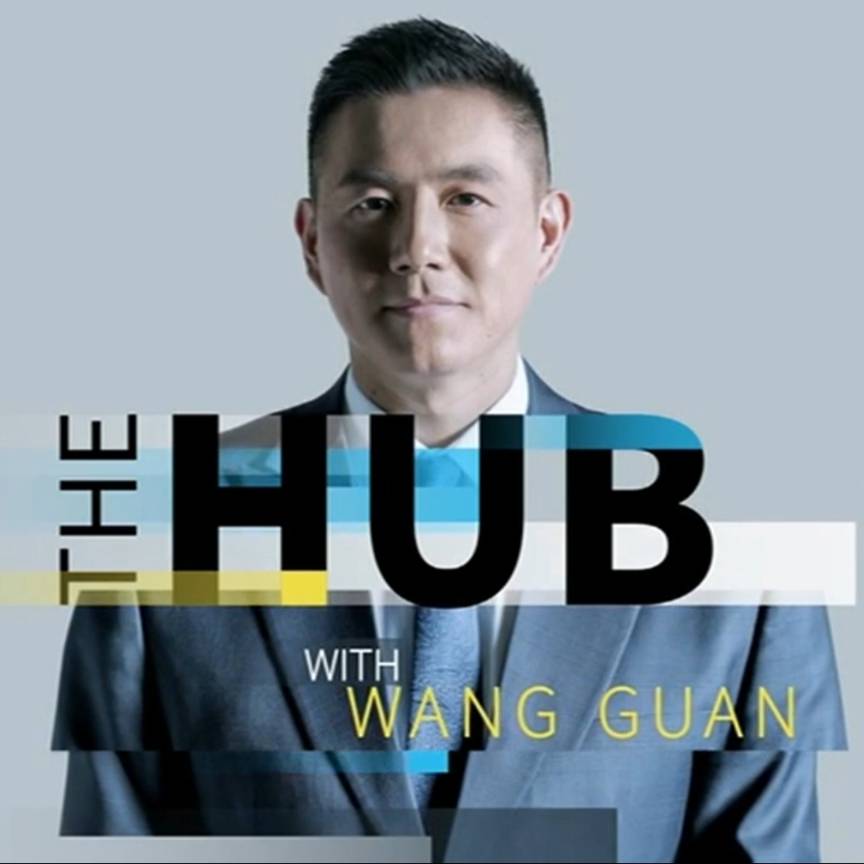
The Hub with Wang Guan
by China Plus
The Hub covers hot-button geopolitical and economic issues, as well as interesting stories and trends in culture, education, technology and lifestyle. It aims to connect people, cultures and societies across the East and the West.
-
100
BRICS enters its third decade: Exclusive with fmr. advisor to NDB president
BRICS enters its third decade with a larger membership, a broader agenda, and a growing role for the Global South. Can its expansion strengthen cooperation without creating fragmentation? How can BRICS help shape the global economic order? On The Hub, Wang Guan speaks with Alessandro Golombiewski Teixeira, distinguished visiting professor at Tsinghua University and former senior advisor to the president of the New Development Bank. They explore institutional evolution in the BRICS group, local-currency trade and payments, and the future role of the NDB.
-
99
BRICS at 20: A new era of Global South cooperation
BRICS marks its 20th anniversary as the grouping enters a new phase of cooperation. What can BRICS deliver as global economic and political dynamics continue to shift? And how can the expanded bloc turn closer cooperation into greater opportunities for the wider Global South?
-
98
Building a smarter energy future: What can APEC help?
As the 16th APEC Energy Ministers' Meeting takes place in Beijing, how can economies across the Asia-Pacific keep energy affordable, reliable and sustainable? Can renewables and AI help build a cleaner and more resilient energy future? On The Hub, Wang Guan discusses these questions with John Pang, senior fellow at the Belt and Road Initiative Caucus for Asia Pacific; Steivan Defilla, assistant president of the APEC Sustainable Energy Center; and John Grimes, CEO of the Renewable Energy Council Asia-Pacific. They examine the challenges of ensuring energy for all, the pace of the green transition, and China's rapidly expanding renewable energy capacity.
-
97
The SCO at 25: Decoding major breakthroughs at Bishkek 2026
The 2026 Bishkek SCO Summit in Kyrgyzstan put the future of the Shanghai Cooperation Organisation and the role of Central Asia in the spotlight. What will shape the SCO's next phase?
-
96
2026 Bishkek SCO Summit: Deepening cooperation and bringing people closer
The Shanghai Cooperation Organisation (SCO) is marking its 25th anniversary as leaders gather for the 2026 SCO Bishkek Summit. Chinese President Xi Jinping is attending the summit and paying a state visit to Kyrgyzstan. In this special edition of The Hub from Bishkek, Wang Guan sits down with Sohail Khan, deputy secretary general of the Shanghai Cooperation Organisation, to discuss the SCO's achievements, its future development strategy and its evolving role in global governance. They explore how SCO members have built trust and understanding, and look into its vision for deeper cooperation among its members and partners.
-
95
The Shanghai Cooperation Organisation at 25: Young voices, new opportunities
As the Shanghai Cooperation Organisation marks its 25th anniversary, young people are helping shape its next chapter. What does the SCO mean to a new generation? And how can youth exchanges, entrepreneurship and cultural cooperation strengthen ties across member states?
-
94
How China's GGI and GDI are shaping global development and cooperation
Global governance and development are evolving as countries across the Global South seek greater representation, cooperation and shared progress. As China's Global Governance Initiative (GGI) turns one and China's Global Development Initiative (GDI) turns five, what have been their achievements so far? How are they contributing to a more inclusive and effective approach to international cooperation?
-
93
Six years on: How the Yangtze River Delta rose as China's growth engine
Six years ago, Chinese President Xi Jinping chaired a landmark symposium in Hefei, the capital city of China's Anhui Province, setting out a bold blueprint for the Yangtze River Delta centered on integration and high-quality development. How has this strategy transformed the region into one of China's most dynamic economic engines? And as China enters its 15th Five-Year Plan, can the Yangtze River Delta turn its technological and industrial strengths into a new phase of high-quality growth?
-
92
China-Africa relations at 70: Exclusive with AU Permanent Representative to China
This year marks the 70th anniversary of diplomatic relations between China and Africa. How has China-Africa cooperation evolved over the past seven decades, and what role can the partnership play in advancing Africa's development priorities? Looking ahead, how can China and Africa deepen cooperation in technology, renewable energy, climate change and debt management?
-
91
China's Economy: Resilience, Innovation and Opportunities
China's economy is showing resilience as innovation and consumption reshape its next stage of growth. What's driving China's economy in 2026, and what could it mean for the rest of the world?
-
90
A Chinese solution for global development: Five years of GDI - from concept to practice
Five years after its launch, how has China's Global Development Initiative evolved from a proposal into a platform for international cooperation? What impact has it had on advancing sustainable development and addressing the priorities of the Global South?
-
89
How do humans shape the future of AI governance?
Artificial intelligence is moving faster than the rules meant to govern it. How should society shape the rules to govern this transformative technology?
-
88
Japan's intelligence overhaul: What does it mean for regional security?
Japan is launching its biggest intelligence reform since World War II, marking a major shift in how the country coordinates national security. What is driving this overhaul? Could it reshape Japan's security policy and influence the strategic balance in East Asia?
-
87
Are refugees a burden? UNHCR says no
How can refugees become an untapped source of growth? In this edition of The Hub, Wang Guan sits down with UNHCR Assistant High Commissioner for Operations Raouf Mazou to discuss the global displacement crisis, why peace is the only lasting solution, and how giving refugees access to jobs can benefit host communities as a whole. They also explore how AI is reshaping humanitarian work, China's contributions to global development, and what it takes to close the widening humanitarian funding gap.
-
86
South China Sea tensions: What lies behind latest confrontations?
The South China Sea remains a focal point of regional security concerns, with rising tensions, competing narratives, and shifting alliances shaping the future of the region. Is the latest confrontation another isolated maritime incident, or part of a wider geopolitical contest? Can diplomacy still help manage differences and preserve regional stability?
-
85
"Don't fear China's rise": Ex-Pakistani FM on the world order
As the global balance of power shifts away from the West, where does the rest of the world stand? And how can dialogue still bridge growing geopolitical divides? In this episode of The Hub, Wang Guan sits down with Hina Rabbani Khar, former foreign minister of Pakistan, to discuss the changing international landscape and Pakistan's place within it. The conversation also explores the 75-year evolution of China-Pakistan diplomatic relations, and looks at opportunities for expanded bilateral cooperation.
-
84
AI's next frontier at WAIC 2026: Innovation, governance & race to shape the future
Artificial intelligence is reshaping industries, societies and the way the world approaches innovation and governance. As AI capabilities advance rapidly, how can we ensure that technology develops responsibly? What role can global cooperation play in building a safer and more inclusive AI future?
-
83
Top 10 emerging technologies of 2026: AI, innovation and China's growing global role
The next generation of emerging technologies is reshaping science, industry, and the global economy. Which innovations are most likely to transform our lives over the next five years? How can countries harness AI and innovation at scale while strengthening international cooperation?
-
82
America at the crossroads
Once hailed as a "city upon a hill" and a "beacon of democracy," the United States has long been a nation admired, followed, and questioned. The "kill line," the ICE, and the Epstein scandal are three distinct shadows that have clouded the collective American memory in 2026. As the country marks its 250th anniversary, the world's leading power finds itself at a defining crossroads. From economic anxiety and deep identity rifts at home, to fraying alliances and eroding trust abroad, where is the country headed? And how is the world reassessing a changing America?
-
81
China's 15th Five-Year Plan unpacked: Growth, innovation and the global economy
China's 15th Five-Year Plan sets the course for the country's next stage of economic development, with a stronger focus on domestic demand, innovation, green transition, and high-quality growth. What are China's top priorities over the next five years? How will the new plan shape China's economy and influence the global economic landscape amid rising geopolitical and geoeconomic uncertainty?
-
80
The Ascent: How the Qinghai-Xizang Railway transformed the Roof of the World
The builders of the Qinghai-Xizang Railway endured extreme cold, high altitudes, and immense hardship to complete what is now the world's highest-altitude railway. Two decades later, this engineering landmark has brought communities closer together, expanded access to travel, and reshaped life across Xizang. In this special episode of The Hub, Wang Guan and South African influencer Lara Netherlands travel from Xining to Lhasa aboard the iconic railway as it marks 20 years of operation.
-
79
The CPC at 105: How the Party responds to social, economic, and institutional challenges
What enables a large organization to remain resilient, adaptable, and effective over the long term? As societies face rapid technological change, economic transformation, and rising governance challenges, what institutional capacities matter most? And can long-term planning and continuous innovation go hand in hand?
-
78
The CPC at 105: Leading through change
What enables a political organization to maintain continuity, adapt to change, and pursue long-term goals across generations? Can long-term planning and leadership development help institutions navigate uncertainty more effectively? What lessons can other organizations draw from China's experience?
-
77
China's economic outlook 2026: Growth, innovation, supply chains and consumer trends
China's economy remains a key force in global growth, innovation, and trade. What role will China play in the next phase of the global recovery? How are technological innovation and evolving consumer trends reshaping the world's second-largest economy?
-
76
G7 after the Evian Summit
As global power becomes more diffuse and economic growth shifts toward emerging economies, the G7 faces growing questions about its role and relevance. Does this year's summit highlight the resilience of the G7, or expose the limits of its influence? Can the G7 still shape the global agenda in an increasingly multipolar world? Are its members united by a common vision, or simply managing their differences?
-
75
Unit 731 and the fight for historical truth
More than 80 years after World War II, why did the crimes of Unit 731 remain largely absent from global public awareness for so long? What does preserving historical truth mean for future generations and the international order? In this edition of The Hub, Wang Guan speaks with Emanuel Pastreich, president of The Asia Institute; Alexis Dudden, professor of History at the University of Connecticut, who was interviewed in the documentary; and Liu Baocheng, dean of the Center for International Business Ethics at the University of International Business and Economics. Together, they examine the renewed attention generated by the documentary "Inside Unit 731" and explore why this history continues to resonate today.
-
74
2026 Forum on Global Human Rights Governance
As the world confronts inequality, conflict, technological disruption and sustainable development challenges, the relationship between development and human rights is drawing renewed global attention. What does the right to development mean 40 years after the adoption of the UN Declaration on the Right to Development? Can development provide a stronger foundation for advancing human rights in an increasingly complex world?
-
73
Asia-Pacific security at a crossroads?
The latest Shangri-La Dialogue has reignited debate over the future of Asia-Pacific security. Is the region moving toward greater cooperation, or are competing security visions driving deeper divisions? How should countries balance stability, strategic autonomy, and growing geopolitical competition? And what's China's vision for a security framework based on common security rather than alliance blocs?
-
72
Ironclad friendship: President Vucic's state visit boosts China-Serbia ties
Chinese President Xi Jinping and Serbian President Aleksandar Vucic hailed the ironclad friendship between the two countries during the Serbian president's first state visit to China, pledging to deepen cooperation in emerging sectors, transportation, and people-to-people exchanges. How will this visit inject new vitality into the China-Serbia Comprehensive Strategic Partnership?
-
71
Is Japan on a path toward remilitarization?
Philippines President Ferdinand Marcos Jr. is set to meet Japan's Prime Minister Sanae Takaichi on Thursday as the two sides look to increase defense cooperation during Marcos' four-day state visit. How will this trip impact Japan-Philippines relations? Is Japan on a path toward remilitarization? In this episode of The Hub, Wang Guan asks whether Tokyo is abandoning its post-war commitments and how a remilitarized Japan could impact the region's stability. To unpack this and more, Wang Guan is joined by Jeff Kingston, professor of Asian Studies at Temple University, Tai Wei Lim, professor of Economics at Soka University, and Yang Chan, tenured associate professor at Shanghai Jiao Tong University.
-
70
What China and Russia's new stage of ties means for Global South and world
Chinese President Xi Jinping and Russian President Vladimir Putin hail a new stage in bilateral ties as they agree to further extend a China-Russia friendship treaty and pledge to work together for a more just and equitable world order. In this episode of The Hub, Wang Guan unpacks the biggest developments from President Putin's two-day state visit to China. What does this "new stage" of relations mean for China-Russia ties? What could it mean for the Global South? How will these developments impact the broader international landscape?
-
69
Putin in Beijing: What's next for China-Russia ties?
Russian President Vladimir Putin's state visit to China comes as the two countries mark major milestones in bilateral relations: 30 years since the establishment of the China-Russia strategic partnership of coordination, and 25 years since the signing of the Treaty of Good-Neighborliness and Friendly Cooperation. As the 10th China-Russia Expo gets underway in Harbin, the visit highlights not only expanding trade and economic ties, but also deeper cooperation in education, culture, global governance, and regional stability. In this episode of The Hub, Wang Guan speaks with experts from China, Russia and the United States on the priorities of Putin's visit, the resilience of China-Russia relations, and what this partnership means for a rapidly changing world order.
-
68
A constructive China-US relationship of strategic stability
Chinese President Xi Jinping welcomed US President Donald Trump to Beijing on Thursday as the American leader began his state visit to China. Meeting his counterpart at the Great Hall of the People, President Xi said he expects 2026 to be a "historic, landmark year" that opens up a new chapter in China-US relations. Meanwhile, President Trump said the relationship between China and the United States will be "better than ever before." Both leaders have agreed on a new vision of building a constructive China-US relationship of strategic stability. What can we expect from Trump's visit? How can the heads-of-state meeting help steer China-US relations steadily forward?
-
67
China-US cooperation beyond the headlines
When China-US relations make headlines, the focus is often on rivalry, confrontation, and strategic differences. But beyond that, cooperation is still taking place in more practical ways. In this segment of The Hub, Wang Guan speaks with Zhao Xiuye, a PhD candidate at Tsinghua University's School of Public Policy and Management and a participant of a youth program between China and the US, about the role of people-to-people exchanges, and the growing importance of sub-national cooperation between Chinese provinces and US states. From AI, climate change and clean energy to education and local-level dialogue, the discussion explores where cooperation remains possible, even when national politics get complicated.
-
66
Japan's recent security shift puts Asia-Pacific stability at risk
Japan is expanding its security role across the Asia-Pacific, raising new questions about regional stability and strategic balance. Is this a natural response to changing conditions, or a deliberate effort to reshape the regional order? What risks could this shift bring for neighboring countries? In this edition of The Hub, experts explore Japan's recent diplomatic and defense outreach, discuss changes to arms export policies, and examine how regional partners are responding. They delve into the historical context behind today's security dynamics, look into domestic political drivers in Japan, and assess the broader implications for China-Japan relations and the future of peace and stability in the Asia-Pacific.
-
65
China-Africa ties at 70: A new zero-tariff era starts on May 1
China and Africa mark 70 years of diplomatic ties with a major step toward deeper trade integration. Starting May 1, China will grant tariff-free access to all 53 African countries with diplomatic ties, alongside faster "green lanes" for exports. What does this new policy mean for African exporters? With protectionism on the rise, can the China-Africa partnership help shape a more open and balanced global trading system? On The Hub, Wang Guan brings together He Wenping, professor and senior research fellow at the Institute of West Asian and African Studies at the Chinese Academy of Social Sciences, and Lara Netherlands from South Africa, founder and CEO of Tilapia Solutions, a company based in Hainan, China. They explore the shift from scale to quality in China-Africa bilateral trade, discuss the impact of expanded market access, and examine the practical challenges facing exporters on the ground.
-
64
Why should we be alarmed at Japan's decision to export lethal weapons?
Japan's recent policy moves are drawing global concern and raising complex questions about security, history, and regional stability. Is Japan reshaping its strategic identity? What do these developments mean for the balance of power in East Asia and beyond? In this episode of The Hub, host Wang Guan and guests explore Japan's decision to allow the export of lethal weapons for the first time in decades. The discussion examines Japan's logic behind this shift and how it aligns with Tokyo's expanding security objectives. They also explores the political and historical symbolism of Japan's Prime Minister Sanae Takaichi's offering to Yasukuni Shrine, and how these parallel moves may signal deeper ideological drift toward neo-militarism.
-
63
Global security at a crossroads: How China's Global Security Initiative delivers stability
Global security is undergoing profound change as new risks and shifting power dynamics reshape the international order. As China's Global Security Initiative marks its fourth anniversary, what role has it played so far? Can cooperation replace confrontation in today's world, and can new ideas deliver real stability on the ground? In this edition of The Hub, Wang Guan speaks with Xia Lu, research fellow at the National Academy of Development and Strategies at Renmin University of China, and Einar Tangen, senior fellow at the Center for International Governance Innovation. Together, they explore how the global security landscape is evolving and assess whether the current international system is weakening. They discuss China's approach to mediation and its role in easing regional tensions, including recent efforts in the Middle East. The panel also looks at what middle power countries can do to chart a principled and pragmatic path to address global and regional security concerns.
-
62
China's economy under the lens: Resilience in a shifting global landscape
As global uncertainty rises, how is China sustaining growth and shaping new opportunities? What does deeper international cooperation with China mean for the world economy? In this episode of The Hub, Wang Guan talks to guests to explore IMF's latest outlook for the world economy, China's recent economic data and the drivers behind its strong trade performance, expanding domestic demand, and the rise of high-tech industries. Their conversation examines how new growth engines such as AI, advanced manufacturing, and digital services are shaping China's next phase of development. The discussion also delves into China's green transition and its implications for global energy security, and looks at why more countries are deepening cooperation with China amid global uncertainty.
-
61
What Sanchez's fourth visit signals for Europe and global cooperation
China–Spain relations are entering a new phase of high-frequency engagement and strategic depth. What does this consistent diplomatic rhythm reveal about the future of global partnerships? How could Spain serve as a potential bridge between China and the wider European market? In this edition of the Hub, CGTN host Wang Guan is joined by Humberto Alvarez, vice president of the Spanish Chamber of Commerce in South China; Song Xin, founder of Sinnvoll Consulting and former European Parliament policy advisor; and Andy Mok, senior research fellow at the Center for China and Globalization. Together, they explore Spanish Prime Minister Pedro Sanchez's fourth visit to China in four years and examine what this pattern reveals about the stability and maturity of bilateral ties. The conversation also looks into Spain's role as a bridge in China–Europe relations, assessing whether its approach can serve as a model for broader regional cooperation.
-
60
Middle East conflict: Talks ahead – real diplomacy or tactical pause?
A fragile ceasefire between the United States and Iran has raised urgent questions about diplomacy and the US-Israel alliance. As the truce appears to be unraveling, is this the start of real de-escalation, or simply a pause before renewed confrontation? And how might this moment reshape the global order? In this edition of The Hub, Wang Guan speaks to Anton Fedyashin, associate professor at the American University, and John Gong, professor of Economics at the University of International Business and Economics, to explore what drove the sudden shift from escalation to ceasefire and whether upcoming talks in Islamabad can produce lasting results, as Israel just launched its largest coordinated strikes on Lebanon since the war began.
-
59
Humanitarian crisis deepens in Iran and the Middle East
Escalating conflicts across the Middle East are driving mass displacement and straining already fragile humanitarian systems. What happens when millions are forced from their homes faster than aid can reach them? And how can global institutions respond when crises spread across borders and resources fall short? In this edition of The Hub, Wang Guan speaks with Karolina Lindholm Billing, representative of the UN Refugee Agency in Lebanon, and Salvador Gutierrez, representative of the International Organization for Migration in Iran, to explore the growing scale of displacement across Iran, Lebanon, and the wider region, and examine how humanitarian agencies are adapting to meet urgent needs amid ongoing conflict.
-
58
US-Israel war on Iran: Trump declares victory amid ongoing conflict
As tensions rise and costs mount, questions are growing over whether the US can truly claim victory in its conflict with Iran. Can a war be ended by declaration alone? Are Americans beginning to feel the real price of prolonged conflict at home? In this edition of The Hub, host Wang Guan speaks with guests to explore what US President Trump implies in his Wednesday night's primetime address on the war with Iran. They discuss rising energy prices, shifting public opinion, and the strategic uncertainty surrounding the Strait of Hormuz.
-
57
Echoes of History: Combing through global trends
Is the world entering a new era of great power rivalry that echoes the years before World War I? What lessons from history can help today's leaders avoid a larger global conflict? In this episode of The Hub, Wang Guan speaks with renowned historian, Professor Odd Arne Westad, Elihu Professor of History and Global Affairs at Yale University. They explore how today's geopolitical tensions compare with the unstable decades before World War I. The conversation examines the risks posed by unresolved regional conflicts, rising great power competition, and a weakening role for international institutions. They discuss the importance of the United Nations, the growing complexity of nuclear deterrence, and why arms control remains essential in a multipolar world.
-
56
China's Development Opportunities for the World
China's new development roadmap is shaping global opportunities in a time of uncertainty. What does China's next phase of growth mean for the world economy? And how can international partners engage in these emerging opportunities? In "China's Development Opportunities for the World," the special roundtable of The Hub, CGTN host Wang Guan sits down with Zhou Xing, head of Public Affairs at PwC China; Zhou Mi, senior research fellow at the Chinese Academy of International Trade and Economic Cooperation; Zha Daojiong, professor at Institute of South-South Cooperation and Development, at Peking University's School of International Studies; and John Milligan-Whyte, chairman of the America-China Partnership Foundation, to examine the global economic landscape as China advances its 15th Five-Year Plan, focusing on high-quality growth, stronger domestic demand, and the rise of new quality productive forces.
-
55
Hormuz Crisis at a crossroads
Tensions in the Strait of Hormuz are rising fast as ultimatums, counter-threats, and military moves reshape the global energy and security landscape. Is this a calculated show of strength or a sign of strategic strain? And can escalation still be controlled before it spirals further?
-
54
Iran conflict: Strait of Hormuz crisis and strains in US alliances
Tensions in the Strait of Hormuz are testing global stability and the strength of US alliances. Are we witnessing the early stages of a broader geopolitical realignment? How will key allies respond as the conflict escalates? In this episode of The Hub, Wang Guan brings together leading experts to examine the rapidly evolving crisis. The panel explores the risks of a wider regional conflict following US and Israeli strikes on Iran and the closure of the Strait of Hormuz. They discuss the growing strain between Washington and its allies, and examine the potential impact on global energy markets and security dynamics. The conversation also looks into Japan's strategic dilemma as Prime Minister Sanae Takaichi prepares for talks in Washington, balancing domestic pressure, economic vulnerability, and alliance commitments.
-
53
China-US trade talks in Paris: Can dialogue stabilize a fragile global economy?
China and the United States have just wrapped up trade consultations in Paris at a time of global economic uncertainty. Can renewed dialogue help stabilize one of the world's most important economic relationships? And how much does the global economy depend on steady engagement between these two major powers?
-
52
China's Two Sessions 2026: Key issues shaping the nation's future
China's Two Sessions spotlight the policies and priorities shaping the country's future. How will China build a greener society while supporting a rapidly aging population? And how can the country ensure food security for 1.4 billion people in the years ahead? In this edition of The Hub, our Gen-Z reporters Wang Naiqian and Liu Mengling were at the scene, exploring several major issues discussed during the 2026 Two Sessions. As China pushes for greener development and examines how legislative efforts are strengthening the country's environmental commitments, it also looks at the rise of the silver economy and discusses how longer life expectancy is transforming lifestyles, opportunities, and services for older adults. Regarding agriculture and food security, they also see how China continues to feed its large population while expanding the diversity and quality of food choices.
-
51
Why do we care about China's Two Sessions 2026?
China's Two Sessions are outlining the country's economic priorities for the year ahead and offering signals about the next phase of development. What does the 2026 Government Work Report reveal about China's growth strategy? And how might these policy directions shape China's role in the global economy? In this episode of The Hub, Wang Guan talks to experts to explore China's 2026 GDP growth target, the role of innovation-driven growth as China increases investment in R&D and accelerates the development of new quality productive forces, and discuss how policymakers are balancing stability with high-quality development.
We're indexing this podcast's transcripts for the first time — this can take a minute or two. We'll show results as soon as they're ready.
No matches for "" in this podcast's transcripts.
No topics indexed yet for this podcast.
Loading reviews...
ABOUT THIS SHOW
The Hub covers hot-button geopolitical and economic issues, as well as interesting stories and trends in culture, education, technology and lifestyle. It aims to connect people, cultures and societies across the East and the West.
HOSTED BY
China Plus
CATEGORIES
Loading similar podcasts...
Frequently Asked Questions
How many episodes does The Hub with Wang Guan have?
The Hub with Wang Guan currently has 50 episodes available on PodParley. New episodes are automatically indexed when they're published to the podcast feed.
What is The Hub with Wang Guan about?
The Hub covers hot-button geopolitical and economic issues, as well as interesting stories and trends in culture, education, technology and lifestyle. It aims to connect people, cultures and societies across the East and the West.
How often does The Hub with Wang Guan release new episodes?
The Hub with Wang Guan has 50 episodes. Check the episode list to see recent publication dates and frequency.
Where can I listen to The Hub with Wang Guan?
You can listen to The Hub with Wang Guan on PodParley by clicking any episode. We provide an embedded audio player for direct listening, and you can also subscribe via your preferred podcast app using the RSS feed.
Who hosts The Hub with Wang Guan?
The Hub with Wang Guan is created and hosted by China Plus.
URL copied to clipboard!