
PODCAST · business
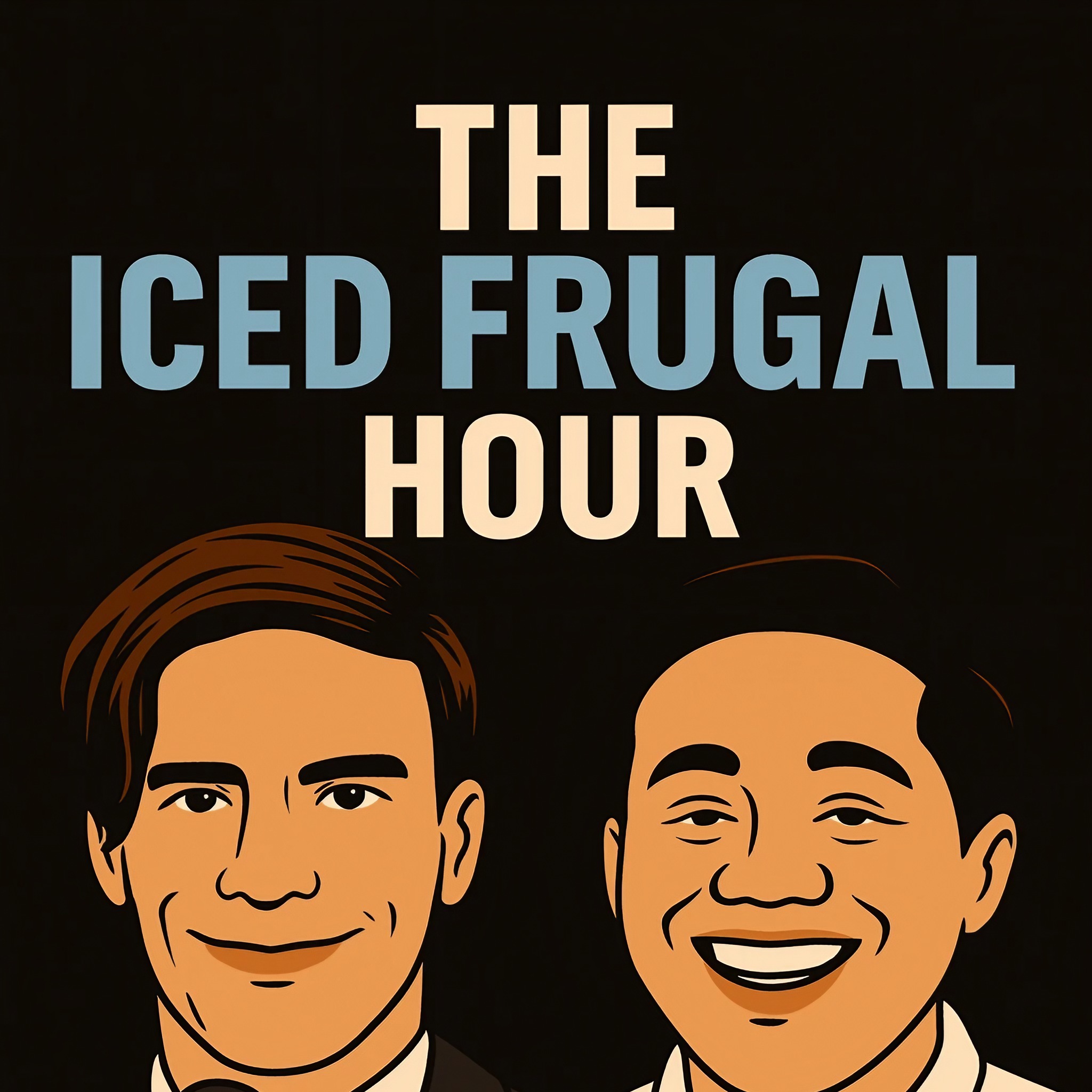
The Iced Frugal Hour
by Jackie Thai and Ricky Hirschi
The Iced Frugal Hour is a personal finance podcast were we talk how to be smarter with your money.
-
6
Behind the Scenes of The Iced Frugal Hour: Goals and Money
Join Ricky and Jackie as they peel back the curtain on their podcast journey, setting goals, tackling monetization, and sharing humorous insights about social media and branding. This episode offers a candid look at the behind-the-scenes life of small content creators, blending humor with strategy.Key TopicsSetting SMART goals for podcast growth and impactStrategies for monetizing a small podcast, including ads, ebooks, and affiliate marketingThe challenges of revenue streams like sponsorships and product recommendationsInsights into how bots spam comments and the quirky side of internet culturePersonal milestones, including new credentials (FCA) and creative ideas (one-sentence books)The humorous side of LinkedIn bios and the trend of inflated corporate speakFuture plans for audience interaction and content developmentTimestamps00:00 - Introduction: Behind the scenes of The Iced Frugal Hour02:24 - Discussing medium-term goals and listener engagement03:56 - Goals for podcast revenue and financial milestones05:39 - Current earnings and monetization challenges08:08 - Deep dive into social media spam and bot comments11:27 - How podcast ads work and additional revenue strategies14:34 - Possible affiliate marketing ideas and product suggestions17:50 - Ricky shares new professional credentials (FCA)21:01 - The humorous take on inflated LinkedIn bios and online branding24:35 - Parting words and upcoming content plansAdvertising Inquiries: https://redcircle.com/brandsPrivacy & Opt-Out: https://redcircle.com/privacy
-
5
Bezos’s Tax Plan for Americans Earning Under $75K
# The Future of Tax Policy and Government Efficiency with Jeff Bezos' IdeasIn this episode, we explore the implications of Jeff Bezos' proposal to eliminate income taxes for Americans earning less than $75,000, and how it ties into broader discussions about government efficiency, wealth inequality, and societal impact. We also delve into comparisons between government and business operations, and the role of competition in public services.Key topicsJeff Bezos' proposal to eliminate federal income tax for under $75,000 earnersHow government efficiency compares to private sector practicesThe impact of tax policies on individual savings and economic mobilityVariations in cost of living and tax implications across statesCritique of government-run institutions like the DMV and public school systemsThe psychological and economic effects of work and escapism, illustrated through humorRuminations on societal admiration for successful entrepreneurs like Jeff BezosThe influence of competition on organizational behavior and public servicesTimestamps00:00 - Introduction to the episode and guest in-studio banter00:08 - Reflection on in-person vs. virtual episodes00:17 - Speculation about future live recordings00:27 - Preview of upcoming episode and main topics00:43 - Introduction to Jeff Bezos’ tax proposal and key details01:12 - The framing of wealth inequality and government efficiency01:55 - Anecdote from family vacation, lesson on adventure02:27 - Insights on the impact of eliminating taxes on individual finances03:04 - How a $7,000+ annual tax savings could affect households04:16 - The influence of state cost of living on tax impact05:21 - Variations in income and savings depending on location06:27 - Discussion on savings rates and societal financial health06:42 - Will tax reduction shift savings behavior?07:01 - Societal consumption culture versus savings07:39 - Stimulus checks as an analogy for spending habits08:01 - The importance of financial behavior in economic health08:49 - Wealth and savings patterns between high and low earners09:01 - The minimal contribution of lower income earners to federal revenue10:01 - Government inefficiency as a business problem, example of NYC schools11:19 - Comparing government spending to private sector efficiency12:26 - The inefficiency of government agencies like the DMV13:14 - The irony of public vs. private efficiency in service provision14:08 - The importance of competition and market dynamics in public services15:37 - Reflection on how competition influences spending in education16:58 - Summing up the pros and cons of organizational competition17:00 - Brief overview of Bezos’ tax plan and article analysis17:55 - How article explanations of tax calculations serve credibility18:07 - The relevance of background info on wealthy figures in articles19:13 - Noticing filler content and ad placements in financial articles20:05 - The irony of Bezos’ wealth and Amazon’s market cap details21:12 - The significance of Jeff Bezos’ ownership stake in Amazon21:54 - Bezos’ role as Amazon’s executive chairman, not CEO22:25 - The contrast of Bezos’ tax stance versus Amazon’s tax strategies23:16 - The cultural admiration for Bezos’ entrepreneurial success24:41 - Humor from Bo Burnham’s quote about societal progress25:27 - Discussion on hero worship and chance in success stories26:27 - The importance of recognizing failures behind success27:07 - Lighthearted reflection on work and economic grind28:49 - Mention of scalping and overwork culture, and work ethic29:15 - Sharing thoughts on Caleb Hammer’s content and influence30:04 - Episode closing remarks and call for listener engagement30:46 - Final words and encouragement to stay frugalAdvertising Inquiries: https://redcircle.com/brandsPrivacy & Opt-Out: https://redcircle.com/privacy
-
4
From Rockets to Revenue: Why SpaceX’s Starlink Might Not Dominate the Market
SpaceX IPO: Opportunities, Challenges, and the Future of Space CommerceIn this episode, we delve into the anticipated SpaceX IPO, exploring its market implications, valuation, and long-term vision. We also discuss alternative planet colonization ideas and the broader impact of space ventures on Earth.Key Topics:What is an IPO and how SpaceX’s listing on NASDAQ might occur unexpectedly due to regulatory and strategic maneuversThe influence of Elon Musk's decisions on SpaceX's public status and long-term goals of Mars colonizationThe potential market size for Starlink and misconceptions around its revenue and user base, including growth potential in rural and mobile marketsThe debate on colonizing Venus versus Mars: atmospheric conditions, gravity, and feasibility for human lifeChallenges of terraforming and planetary modification, focusing on CO2 removal and climate adjustment techniquesThe strategic reasons why SpaceX remains private, including avoiding shareholder pressures to focus on ambitious space goals without market short-term focusBroader implications of AI advancements, market dominance of chipmakers like Nvidia, and the commoditization of AI technologyTimestamps:00:00 - Introduction to the SpaceX IPO discussion00:58 - What is an IPO and the significance of NASDAQ listing processes01:44 - Elon Musk's influence on SpaceX’s market listing and regulatory shortcuts03:11 - How index fund buying impacts SpaceX’s stock and market implications04:23 - The partial nature of SpaceX’s public offering and implications for investors05:38 - Analysis of SpaceX’s profitability metrics including EBITDA and depreciation concerns07:39 - Revenue streams for SpaceX: Launch, Starlink, and AI compute segments08:15 - Starlink’s current market size, growth, and limitations for global reach09:32 - Estimations of total addressable market for Starlink and internet penetration challenges11:52 - The niche focus of Starlink on rural and mobile markets13:41 - Realistic applications of Starlink, latency issues, and gaming experiences15:14 - Elon Musk’s stance on not going public and long-term space ambitions16:11 - How private ownership allows risk-taking and long-term exploration goals17:00 - The potential for colonizing Venus as an alternative to Mars18:20 - Technological and environmental challenges of Venus colonization21:06 - Comparing planetary gravity and implications for human health and development22:47 - Strategies for altering Venus’ atmosphere and the difficulty of terraforming24:34 - Earth’s climate issues and the parallels in planetary engineering challenges25:15 - SpaceX’s actual business fundamentals and the viability of its long-term vision27:24 - The AI race, market leaders like Nvidia, and the commoditization of AI technology29:32 - Wrap-up: summarizing SpaceX’s strategies and broader space exploration themesAdvertising Inquiries: https://redcircle.com/brandsPrivacy & Opt-Out: https://redcircle.com/privacy
-
3
The Religion of George Kamel and Dave Ramsey
In this episode, Jackie and Ricky explore a wide range of personal finance topics, from the principles of Dave Ramsey’s debt philosophy to the nuances of debt strategies like covered calls. They also dive into the cultural normalization of debt, the concept of financial independence, and practical advice for young people striving to build wealth.Main topics covered:The philosophy behind avoiding debt and the implications of credit card usageThe pros and cons of debt consolidation and debt snowball versus debt avalanche methodsThe controversial nature of the "religion" around Dave Ramsey’s financial principlesCritical insights on bankruptcy, including Ramsey's stance and the irony of Dave Ramsey's personal historyThe importance of tangible experience in finance and entrepreneurship for long-term successThe financing habits of society—pay later, buy now overpaying, and the normalization of borrowingStrategies for young adults to achieve a million-dollar net worth by leveraging unglamorous business ideasHow covered calls work as a conservative income-generating option in investingCultural and societal observations on high living costs, especially in California, and the pitfalls of excessive spendingThe significance of aligning work with passion through early financial independence and retirement strategies like FIREDiscussions of low-income challenges, including unconventional paths such as becoming an AI consultantThe impact of societal norms on debt, spending habits, and financial literacyTimestamps:00:00 - Intro & recent episode recap featuring George Camel’s personal finance approach02:24 - The debate on using credit cards when debt-free04:07 - Does debt always lead to downfall? George's extreme stance07:40 - The rarity and practicality of the $1 billion borrowing hypothetical11:00 - Critique of the "religious" adherence to Ramsey principles13:39 - When and if to consider bankruptcy, Ramsey and personal insights16:19 - Debt consolidation, debt snowball, and debt avalanche explained18:58 - The surprising statistic on low-income callers and societal debt normalization20:45 - Creative ways young adults can make and save money through unglamorous work23:00 - Strategies to reach a million dollars by 25 through small business ventures27:15 - The humorous Bitcoin giveaway and asset liquidation advice28:17 - The controversial advice on selling luxury assets like horses during debt struggles30:45 - Society's normalization of debt, pay later culture, and high-cost habits34:26 - Behind-the-scenes discussion on Ramsey employee standards and company culture36:51 - Cover calls as a conservative income strategy & technical breakdown38:44 - Myths of sports betting vs. real risks in covered call strategies39:31 - Comparing risk and return: sports betting versus options trading41:01 - Closing notes, shoutouts, and reflections on recent events and societal trendsAdvertising Inquiries: https://redcircle.com/brandsPrivacy & Opt-Out: https://redcircle.com/privacy
-
2
Understanding Prediction Markets, Frugal Living Tips, and Unique Hacks
join us for a lively discussion covering prediction markets like Kalshi, practical frugal hacks, and ways to optimize everyday living costs. Discover insights into the risks and rewards of prediction markets, DIY dishwashing tricks, and how community resources can aid those in tough spots.Main Topics:What are prediction markets like Kalshi and their implicationsThe nuances between gambling and hedging in financial marketsThe importance of reputable advice and awareness of pump-and-dump schemesFrugal living tips: collecting supplies, avoiding waste, and community resourcesInnovative household hacks: DIY dishwashers and meal prep ideasThe social and economic aspects of food scarcity, college food programs, and second-hand resourcesTimestamps:(00:00) - Introduction to prediction markets like Kalshi(01:14) - Are prediction markets gambling? Overview and debate(02:24) - How odds change over time in prediction markets(03:41) - Risks: small victories, large losses, and house edge(04:58) - Legal and regulatory concerns with prediction markets(09:29) - Hedging vs. gambling: when futures contracts make sense(11:37) - Pump and dump risks in unregulated markets(12:32) - Market manipulation and influence of social media in trading(13:49) - Gambling addiction and promoting passive investing(15:17) - DIY household hacks: water dispersers and washing dishes(17:40) - Frugal tips from YouTube content creators like Bradley on a Budget(19:03) - The importance of hygiene with household items and reuse(20:24) - Collecting toiletries and conserving household supplies(21:10) - College students sharing resources and community-based food solutions(23:36) - The impact of community programs and food availability(25:32) - Closing thoughts and community support for those in needAdvertising Inquiries: https://redcircle.com/brandsPrivacy & Opt-Out: https://redcircle.com/privacy
-
1
The Hidden Truths Behind Inflation, AI, and Consumer Privacy
In this episode of The Iced Frugal Hour, Ricky and Jackie explore the often overlooked realities of inflation rates, the rapid rise of AI and its implications for society, and the questionable use of emerging technology in everyday life. Tune in for a spirited discussion that breaks down complex topics into relatable insights, with practical takeaways on how these trends affect you.Key Topics Covered:The real story behind inflation: debunking the 2-3% myth with actual examples, like the "chicken quesadilla inflation index"How the food industry reflects inflation trends and the impact on fast food pricesThe growing influence of AI in consumer products, from smart speakers to robotic hotel staffThe phenomenon of companies jumping on the AI bandwagon for hype rather than substanceThe controversial use of conversation-recording devices in homes and dining settingsThe long con of tech companies leveraging user data via apps like Pokémon Go and other AR toolsThe story of the “Long Island Tea blockchain” company as a cautionary tale of hype-driven stock movementsTimestamps:00:00 - Introduction to inflation myths and real-world examples00:57 - The "inflation index" meme and its message02:11 - The impact of inflation on fast food prices and wages in California03:13 - Clarifying the percentage increase in the chicken quesadilla meme04:33 - Fast food prices and the rise of fast casual dining options05:29 - AI's potential effect on fast food jobs and automation trends06:41 - Robotic hotel concierges and AI in service industries08:23 - The AI conversation-recording device and consumer privacy concerns09:42 - Companies hype AI for marketing, even if unnecessary10:43 - The "Long Island Tea blockchain" stock story11:18 - Why some companies pursue AI branding without substance12:20 - The real function of AI recorders and concerns around surveillance13:09 - The hidden data collection in AR apps like Pokémon Go13:40 - Final thoughts and call for listener questionsAdvertising Inquiries: https://redcircle.com/brandsPrivacy & Opt-Out: https://redcircle.com/privacy
-
0
Budget Shopping, Virtual Realities, and Future Trends
Budget Shopping, Virtual Realities, and Future TrendsDiscover practical tips on budget shopping, insights into the rise and fall of Meta’s metaverse ambitions, and thought-provoking views on work-life balance throughout history. This episode offers a deep dive into frugal living, tech’s impact on society, and how to navigate financial and technological choices wisely.In this episode:Tips on cheap and effective grocery shopping at Aldi, WinCo, Trader Joe’s, and WinkoThe longevity and value of batteries and bulk buying strategiesThe surprising history of medieval and hunter-gatherer work hoursMeta’s virtual reality investments and the future of augmented and virtual realityThe risks and benefits of credit card hacking and reward maximizationDebates on college investment, trade skills, and the value of debtReflections on the balance of work, exploration, and leisure across erasTimestamps:00:00 - Introduction: Episode overview and personal frugal tips00:45 - Budget shopping insights: Aldi, WinCo, Trader Joe’s, and bulk buying batteries02:23 - Battery longevity and storage strategies03:48 - Favorite low-cost grocery sources for cheese and meat05:50 - The impact of COVID on social platforms and Meta’s metaverse experiment07:11 - Meta’s shutdown and virtual reality’s future prospects08:47 - The success of Meta’s stock over five years and personal investment reflections09:59 - The $80 billion Meta investment and its questionable ROI11:13 - Potential and pitfalls of AR/VR in daily life and work12:34 - Leadership opinions and concerns about tech’s impact on youth13:46 - The dangers and benefits of online disembodied interactions vs. the metaverse15:20 - Meme discussion: historical perspectives on work and exploration17:07 - Medieval peasants vs. modern workers' free time and work-life balance18:55 - Hunter-gatherer work hours vs. agricultural labor and the effects of wheat cultivation20:12 - Credit card sign-up offers, reward hacking, and debt philosophy22:05 - The debate on credit card profitability, George’s stance, and personal strategies24:45 - The importance of responsible college debt and alternative paths like trade skills29:09 - The value of vocational training and the role of trade professions30:31 - Technology’s limits and future automation in manual labor31:01 - Episode wrap-up and sign-offAdvertising Inquiries: https://redcircle.com/brandsPrivacy & Opt-Out: https://redcircle.com/privacy
-
-1
What Does Rising Gas Prices Mean for Your Budget?
What Does Rising Gas Prices Mean for Your Budget? - Frugal Hour Episode BreakdownIn this episode of Frugal Hour, Ricky and Jackie discuss the impact of soaring gas prices on personal budgets, inflation, and everyday decision-making, all wrapped in a lighthearted, humorous tone. They explore how rising fuel costs influence transportation choices, inflation trends, and the importance of mindful spending.Key Topics:The current spike in gas prices, reaching up to $8 per gallon in California, and its implications.How to adjust your budget for higher transportation costs without overspending.The relationship between gas prices and inflation, and what it means for future prices.Insights into market behavior: leakages, anticipations, and insider trading misconceptions.The role of misinformation in social media posts about finance, tips, and economic decisions.A humorous take on AI-generated content and rage bait online, especially relating to finance topics.The influence of social narratives like 'finance bros' and gender norms in financial discussions.The concept of mutual funds management—passive versus active.The importance of financial education and transparency in relationships.The impact of social media framing on perceptions of independence and patriarchy.Timestamps:00:00 - Introduction to gas prices' effect on personal frugality02:14 - How to incorporate rising gas costs into budgeting strategies03:14 - Inflation trends linked to higher gasoline prices03:46 - Market reactions before official information release04:13 - Clarifying insider trading misconceptions in the context of oil markets05:30 - The ethics and definitions of insider trading and how it differs from political trading07:19 - Market leakages and anticipation before earnings reports08:29 - Funny social media post about a fake Dave Ramsey consulting story09:23 - The prevalence of AI-generated content and misinformation online10:45 - Fake social media posts about tipping culture and the role of engagement bait12:01 - The evolution of tipping norms and social media influence12:46 - The challenge of sharing factual information in a content-saturated environment14:09 - Introducing Tory Dunlap, her views, and provocative social media presence16:26 - Are mutual funds actively managed or passive? Clarifying misconceptions18:01 - The importance of low-cost index funds and being a 'finance bro' advocate19:40 - Gender norms and the 'patriarchy' in financial discourse21:34 - Relationship dynamics, financial openness, and gender norms22:33 - Social media's role in framing women’s independence and financial narratives23:46 - Lighter laugh about 'buy the dip' memes and financial humor24:52 - Reminder to research before making investment moves, even with snacks25:34 - Wrap-up: covering diverse topics from economics to social media influence26:14 - Closing thoughts and sign-off about staying frugalAdvertising Inquiries: https://redcircle.com/brandsPrivacy & Opt-Out: https://redcircle.com/privacy
-
-2
Welcome to the Show
The Iced Frugal Hour: Launching a Financial Advice ShowKick off your podcast journey with this episode where hosts Ricky and Jackie lay out their vision for "The Iced Frugal Hour." Discover their ideas on show format, guest selection, episode length, and upcoming plans—perfect for anyone starting a financial advice podcast.Key TopicsInspiration behind the show and homage to Graham Stephan's The Ice Coffee HourShow format ideas: solo, guests, or mix of both, including expert and audience-driven segmentsEpisode length preferences and naming considerations, clarifying that "hour" is symbolicGuest sourcing strategies: audience outreach, professional contacts, and a Google form for submissionsLogistical planning: recording frequency, editing process, and hosting platform (Red Circle)Episode content style: informal, unscripted, live-to-tape format with spontaneous discussionsCreative parodies for show intros, adding humor with "frugal" themesFuture episode plans, including guest appearances, topics, and potential collaborations like mergersSurprising elements like surprise questions and humorous media referencesTimestamps00:00 - Introduction to The Iced Frugal Hour and inspiration sources01:06 - Show format options: solo versus guest episodes02:02 - Incorporating experts and the audience for diverse content03:03 - Episode duration and branding considerations04:05 - Audience feedback: episode frequency and platform preferences05:28 - Recording logistics: editing style and live-to-tape approach07:11 - Finding and inviting guests: outreach methods and process08:36 - Managing episode logistics and planning ahead09:11 - Creative ideas: parody intros and humor in branding10:25 - Clarifying the show's concept and future episode length expectations11:44 - The episode merger discussion and closing remarksAdvertising Inquiries: https://redcircle.com/brandsPrivacy & Opt-Out: https://redcircle.com/privacy
We're indexing this podcast's transcripts for the first time — this can take a minute or two. We'll show results as soon as they're ready.
No matches for "" in this podcast's transcripts.
No topics indexed yet for this podcast.
Loading reviews...
Loading similar podcasts...
Frequently Asked Questions
How many episodes does The Iced Frugal Hour have?
The Iced Frugal Hour currently has 9 episodes available on PodParley. New episodes are automatically indexed when they're published to the podcast feed.
What is The Iced Frugal Hour about?
The Iced Frugal Hour is a personal finance podcast were we talk how to be smarter with your money.
How often does The Iced Frugal Hour release new episodes?
The Iced Frugal Hour has 9 episodes. Check the episode list to see recent publication dates and frequency.
Where can I listen to The Iced Frugal Hour?
You can listen to The Iced Frugal Hour on PodParley by clicking any episode. We provide an embedded audio player for direct listening, and you can also subscribe via your preferred podcast app using the RSS feed.
Who hosts The Iced Frugal Hour?
The Iced Frugal Hour is created and hosted by Jackie Thai and Ricky Hirschi.
URL copied to clipboard!