
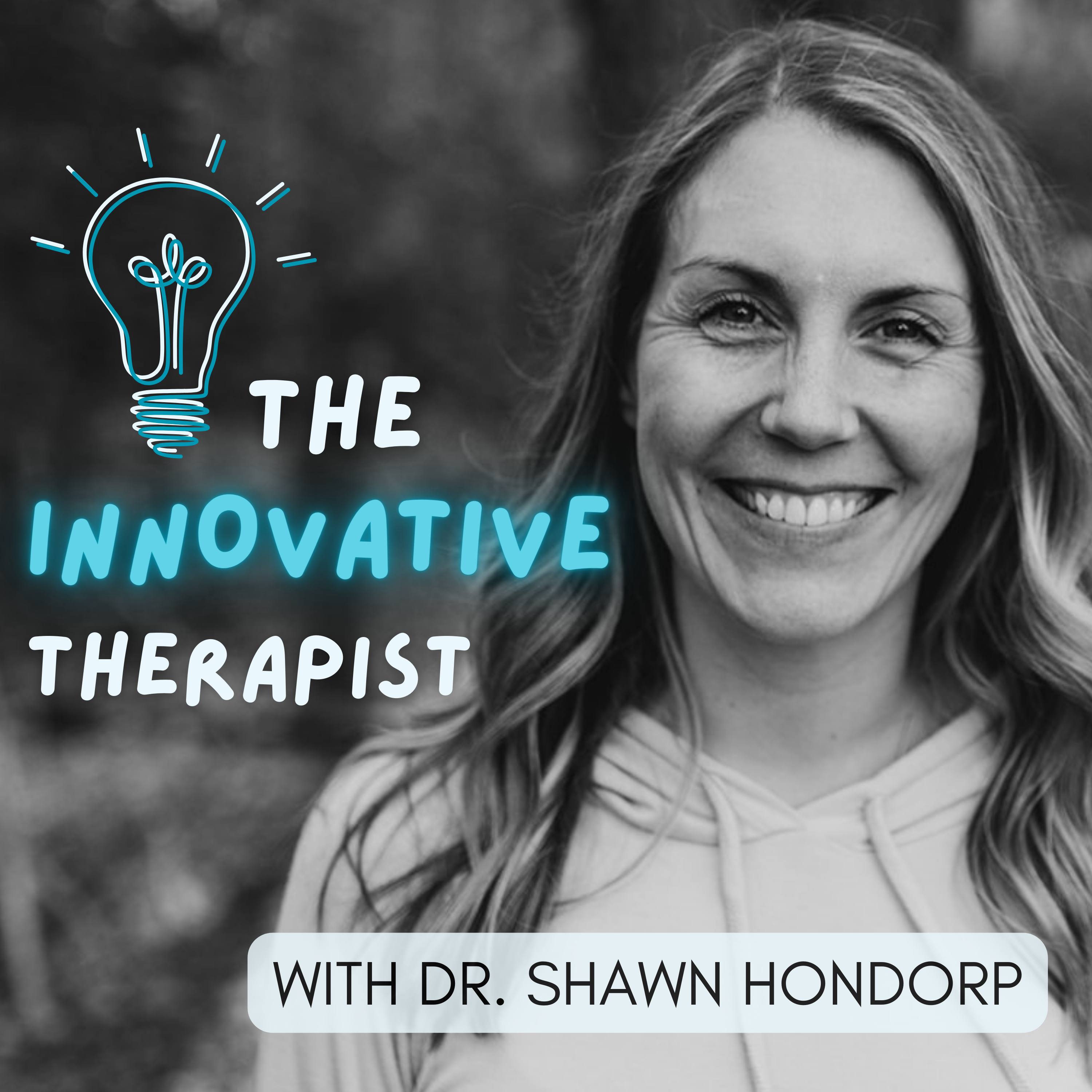
PODCAST · health
The Innovative Therapist
by Dr. Shawn Hondorp, PhD, ABPP
Are you a therapist or a space holder that likes to think deeply and creatively about bringing healing to more people? Do you want to build trust with your body so that you can live a life that feels aligned and amazing, and help inspire others to do the same? Do you hate small talk - your idea of fun is deep and meaningful talks about living more courageous and connected lives? If so, then welcome to the Innovative Therapy podcast where we cover topics like psychology, innovative methods for building body trust and healing, Internal Family Systems, weight inclusive approaches, and unlearning the many messages from oppressive systems that lead us away from body trust.I’m Dr. Shawn Hondorp, clinical psychologist. My goal is to create safe learning environments for those who want to explore innovative approaches to healing, one authentic conversation at a time. 🌈✌🏻✌🏽✌🏿🌳 Hit subscribe and tune in each week for deep talks, inspiration, and get ready f
-
159
Mother’s Day & Becoming Braver Together
There’s a picture from last weekend that I can’t stop thinking about. It’s a snapshot of me performing a dance I choreographed while my 8-year-old daughter watched from the front row. The dance was about finding spaces where we can be fully ourselves instead of shrinking to fit expectations. Creating it required me to face parts of myself I’ve spent years trying to hide: the parts that are bold, emotional, expressive, and deeply longing to be seen. But what moved me most wasn’t the performance itself. It was hearing from friends afterward about the look on my daughter’s face while she watched me. Not because I was “impressive,” but because she was watching her mom come alive. This bonus Mother’s Day episode is a reflection on fear, visibility, creativity, nervous system protection, and what becomes possible when we stop letting fear make all of our decisions. Because I’m realizing more and more that this work isn’t really about the thing we create. It’s about what happens when one person gives themselves permission to become more fully themselves and how that permission ripples outward into families, communities, friendships, and the people quietly watching us. 🎧 In this short bonus episode, I share: The story behind the dance and the photo Why being seen can feel so terrifying The protective parts that still show up for me What my daughter taught me without saying a word Why creating “alongside fear” matters so much right now If you’ve been feeling the pull toward something more alive, more honest, or more creative in your own life, I hope this episode reminds you that you don’t have to wait until you feel fearless to begin. Sometimes bravery looks like simply letting yourself be seen. 🎧 Listen wherever you get podcasts. ✨ Want support reconnecting with your creativity, courage, and Zone of Genius?Download the free guide here:Uncover Your Zone of Genius 💌 Join the newsletter + community updates:The Innovative Therapist Email List Disclaimer:This blog and podcast are for informational and educational purposes only. They do not constitute medical or mental health advice and are not a substitute for professional consultation or treatment.
-
158
Why I’m Changing My Business (When Nothing Was Broken)
Episode 159: Why I’m Changing My Business (When Nothing Was Broken) Following the Pull Toward More Aliveness, Creativity, and Impact A Question I Couldn’t Shake It started with a simple but uncomfortable question: Why am I changing something that’s working? On paper, everything looked good.A solid therapy practice. Meaningful client work. Flexibility. Stability. No crisis. No burnout spiral. No dramatic breaking point. And yet… something in me kept tugging. Not loudly. Not urgently.But persistently. Like a quiet voice sitting in the corner of the room saying:“Not like this. There’s more you can do here.” When “Good” Isn’t the Same as “Aligned” If you’ve ever stayed in something because it was good enough or “fine”… you may relate. I spent years training and working as a clinical health psychologist. I genuinely loved so much of that work. And even now, I still love many parts of therapy. But over time, something became clearer: 👉 I wasn’t able to use my full range of gifts👉 I felt constrained by the container of therapy👉 I kept thinking… if I could design this from scratch, it would look different Not because therapy is bad.But because it wasn’t the whole picture of what I’m here to do. The Moment That Shifted Everything (the First Time) This isn’t my first pivot. Years ago, I left my hospital role after realizing I was spending more and more time doing work that drained me (bariatric evaluations) and less of what energized me. Nothing was “wrong”… until suddenly it was. And that’s often how change works: We tolerate We rationalize We adjust …until something finally pushes us. This time, though? There’s no push. Just a pull. And that’s a different kind of courage. Why I’m Moving Toward Coaching, Community, and Retreats This shift isn’t about leaving something behind. It’s about moving toward something I can’t ignore anymore. 1. I want to connect people, not just work with them individually One of my biggest Zone of Genius gifts is bringing incredible humans together. And in therapy? That’s not really allowed. But I’ve seen what happens when people are in the right room together: ✨ Insight deepens✨ Courage grows✨ Change accelerates There’s a kind of magic in community that I can’t replicate one-on-one. 2. I want to create experiences, not just conversations In therapy, we talk. In my community and retreats, we: write move create reflect experiment witness each other It’s not just insight. It’s embodied change. And honestly? That’s where I see the most lasting transformation happen. 3. I want to work in a way that energizes me (not just serves others) There’s this quiet belief many therapists carry: “If I’m helping, I should be tired.” But what if that’s not actually true? What if the most sustainable, impactful work is mutually energizing? The more I’ve leaned into creativity and Zone of Genius work, the more I’ve experienced: ✨ Sessions that light me up✨ Ideas that flow naturally✨ Work that gives back instead of just taking That’s the kind of work I want to build around. The Deeper Why (The One That Brings Tears) When I really sit with it… this isn’t about business at all. It’s about this: I want to raise humans who feel deeply worthy. Humans who: trust themselves feel agency in their lives know they are held (not alone in everything) can create, play, and express freely And here’s the truth I can’t get around: 👉 I can’t teach that if I’m not living it. This work… this pivot… this discomfort… It’s me practicing that. The Trap of “Waiting Until It Makes Sense” One of the biggest things I see (and have lived): We wait for clarity. We wait for certainty. We wait for the perfect plan. But this kind of change? It rarely makes logical sense at first. It’s more like: a nudge a curiosity a quiet “what if…” And if we ignore it long enough? It usually gets louder. The Shift from Reactive → Proactive Living Lately, I’ve been thinking a lot about this: We are living in a world with constant uncertainty. And when that happens, our nervous system wants to: 🛑 Pull back🛑 Play it safe🛑 Just “get through” But staying in that mode long-term? It keeps us stuck. Thriving requires something different: 👉 Intentional choices👉 Creative risk👉 Investing in ourselves (time, energy, resources) Not recklessly. But on purpose. If You’re Feeling the Pull Too… Maybe your version isn’t a business pivot. Maybe it’s: a creative project a new way of working a different rhythm of life a conversation you’ve been avoiding a part of yourself you’ve been ignoring Whatever it is… You don’t have to have it all figured out. But you do have to start listening. The Truth Most People Skip You can’t think your way into alignment. You have to feel your way there. That might look like: moving your body for 3 minutes putting on a song and letting yourself feel something writing without editing sitting in quiet and actually listening inward Your next step? It’s not in your head. It’s in your body. Want Support Exploring This? If this episode is hitting something in you… You don’t have to do it alone. Inside my world, I support therapists, helpers, and creative humans in: ✨ Reconnecting with their Zone of Genius✨ Building work that feels aligned and alive✨ Moving beyond overthinking into action You can explore current offerings here:👉 https://drshawnhondorp.com/offers Or just reach out (my direct email is info@[email protected]) and tell me what’s been on your mind. No pressure. Just a conversation. A Closing Reflection There’s a version of you that already knows. Not the strategic one.Not the analyzing one. The quieter one. The one that lights up when you imagine something different. You don’t have to burn your life down to follow it. But you do have to stop ignoring it. 🎁 A Gift for You Uncover Your Zone of GeniusA free guide to help you identify the work and life that actually energizes you: 👉 https://pages.drshawnhondorp.com/zone 💌 Stay Connected Join my Insider’s community for reflections, resources, and invitations to upcoming experiences:👉 https://drshawnhondorp.com/contact/ Disclaimer Disclaimer:This blog and podcast are for informational and educational purposes only. They do not constitute medical or mental health advice and are not a substitute for professional consultation or treatment.
-
157
Why Therapists and Helpers Must Reclaim Personal Power with Sarah Buino
Episode 158: Why Therapists and Helpers Must Reclaim Personal Power with Sarah Buino ✨ Free resource: Uncover Your Zone of Geniushttps://pages.drshawnhondorp.com/zone You can have all the clinical skills in the world, but if you feel disconnected from your own personal power, your work (and your life) will start to shrink. Hey friends. Welcome back to the Innovative Therapist Podcast. I’m so excited about today’s episode because Sarah Buino is back with me for round two. We recorded yesterday for her podcast, and now we get to keep the conversation going here. Also, we have to start where all meaningful professional relationships begin: unhinged laughter at a conference. We met at the Next Level Summit back in September, and I happened to be sitting right next to Sarah during the “humor as healing” portion. It was late. We were tired. We’d come back from dinner. There may have been drinks. And then we did this exercise where you’re instructed to laugh as hard as you possibly can. Sarah absolutely stole the show. Her laugh was so contagious that my mild headache disappeared afterward. Like… fully gone. So yes, this episode may include an unofficial headache cure, but also it includes something I think is even more important: A conversation about personal power, why therapists often lose touch with it, and why reclaiming it is essential if we want to evolve this field without burning ourselves (and each other) to the ground. What we get into in this conversation This episode is for therapists and helpers who feel any of the following: a little numb or constricted lately tired of the drama and harm happening in our professional spaces ready to do “inner work” in a way that actually changes something curious about how power, shame, and agency show up in therapy rooms and workplaces Here are some of the big themes we explored: Sarah’s shift from heavy clinical work to coaching, consulting, speaking, and leadership Why therapists often misunderstand power and accidentally recreate “power over” dynamics The Right Use of Power framework and why it matters so much right now Agency and shame through the lens of NARM (NeuroAffective Relational Model) Why your own healing is not optional if you want to do ethical, embodied work How to build workplaces (and communities) that feel more like power with, not “who’s winning?” Sarah’s work right now (and why it matters) One of the most interesting parts of this conversation was hearing how Sarah’s work has evolved. She shared that she only has three clinical clients left, and they’re all healers/helpers. Her primary modality is NARM, which she described as the approach that truly helped her “crack the code” of her own healing. She’s also: Podcasting (a lot) Doing consulting/speaking Serving as Board President of the Right Use of Power Institute Building a platform to help therapists and group practice systems evolve through power-conscious leadership And what I loved most is that she’s not just talking about power as an intellectual concept. She’s talking about it as a lived, nervous-system-level experience. What does “Right Use of Power” actually mean? Sarah broke down a framework that I think every therapist should understand, because it gives language for dynamics we often feel but don’t know how to name. She describes six types of power (and if you’ve ever been confused by power in therapy, leadership, or relationships, this framework is clarifying): 1) Personal Power The power that belongs to you. Everyone has it. We can’t lose it, but we can feel disconnected from it. 2) Role Power Power that comes from your role: therapist, boss, doctor, parent, supervisor. 3) Status Power Power tied to social location: race, gender, age, ability, class, body size, etc. (and how those are valued by culture). 4) Collective Power Power that comes from people organizing together for a shared mission (can be used for harm or good). 5) Systemic Power When power becomes embedded in laws, policies, institutions, and societal norms. 6) Universal Power A sense that something larger holds us: nature, God, spirit, the universe, meaning, life force, whatever resonates. One of my biggest takeaways was how she framed universal power as a necessary anchor in chaotic times:When systems feel enormous and crushing, remembering there’s something larger can restore hope, orientation, and possibility. Why therapists get stuck (and why shame is often the mechanism) We talked about why so many therapists aren’t doing their own work, and Sarah named something that felt really important: Often, it’s fear.Fear of what they’ll find.Fear of what others will think.Fear of losing the pedestal. And then there was this thread that I think matters deeply for helpers: If your identity is fused with being “the strong one,” “the healer,” “the one who has it together,” you might unconsciously use helping as a way to avoid your own pain. Sarah named pathological empathy, and how even therapists who have done a lot of boundary work can still have a deeper layer of: trying to fix taking on others’ pain over-identifying with responsibility staying in outcome-driven helping This is where personal power becomes everything. Not power over others.But power in yourself.The ability to stay present without rescuing. A big invitation from this episode Sarah said something I want to echo here: Your own work is the most powerful healing tool you have. Not your training.Not your next certification.Not the perfect intervention. Your ability to be a clear, grounded, honest channel… is the gift. And that’s not about being perfect.It’s about being willing.It’s about being real. A gift for you If this episode sparks something in you and you’re like, “Okay… but how do I reconnect with myself and what lights me up?” start here: ✨ Uncover Your Zone of Geniushttps://pages.drshawnhondorp.com/zone It’s a free reflection guide that helps you reconnect with: what energizes you your strengths and gifts the work and creativity that actually makes you feel alive When you download it, you’ll also join my email list, where I share: reflections like this upcoming workshops + gatherings resources on creativity, autonomy, leadership, and healing community invitations Where to find Sarah (and what she shared) Sarah’s main hub: Head Heart Biz TherapyWebsite: (as shared in the episode) headheartbiztherapy.com If you’re in group practice as an owner or employee: Group Practice RevolutionWebsite: (as shared in the episode) grouppracticerevolution.com And her podcast: Conversations with a Wounded Healer(If you search that, you’ll find the embedded Group Practice Revolution episodes too.) 🎁 Also: Sarah mentioned she’s going to create a training code/discount for listeners. For listeners of the podcast: INNOVATE will give 20% off of any Basics training. To redeem the coupon codes: Visit: https://rightuseofpower.org/events/ and select the Basics training you’d like to attend. Choose the REDUCED RATE ticket and enter the code at checkout. I already attended this and it was excellent. Your listeners can also get a copy of Dr. Amanda’s new book Shaping Power For Good at this link: https://rightuseofpower.org/product/shaping-power-for-good-wayfinding-to-right-relationship-pre-sale/ Before you go If you’ve felt yourself shrinking lately, second-guessing yourself, or getting pulled into professional dynamics that feel reactive, rigid, or dehumanizing… This is your reminder: You don’t need more self-improvement.You need reconnection.You need agency.You need your power back. And it doesn’t have to look flashy.It can start with one honest moment of noticing what’s happening inside you, and choosing differently. Disclaimer:This blog and podcast content are for educational and informational purposes only and do not constitute medical or mental health advice.
-
156
Creativity, Fear, & Agency for Therapists and Helpers in Uncertain Times
Episode 157: Creativity, Fear, & Agency in Uncertain Times (from Conversations with a Wounded Healer with Sarah Buino) ✨ Free resource: Uncover Your Zone of Geniushttps://pages.drshawnhondorp.com/zone You don’t need to be fearless to live creatively — you just need agency, permission, and space to choose. Hey friends. Welcome back to the Innovative Therapist Podcast. This episode is a little different than usual — it’s a conversation I had as a guest on Conversations with a Wounded Healer, hosted by the brilliant Sarah Buino — and I wanted to share it here because it speaks so directly to what so many therapists and helpers are wrestling with right now. This conversation felt spacious, honest, and deeply human. We talked about healing, creativity, fear, therapy culture, and what it actually means to feel free — not in a performative or Instagrammable way, but in the quiet, embodied, real-life sense. If you’ve been feeling unsettled, reflective, or quietly hungry for something more aligned lately, I think this one will land. A therapist’s origin story (and what we don’t talk about enough) Sarah asked me about my path into psychology — research, grad school, eating disorder work, and eventually private practice — and what emerged was something I think many of us know but don’t always name: A lot of us came into this field while trying to heal ourselves. We talked about: The shame many therapists carry about their own histories Why self-disclosure is still so taboo in some therapy spaces How different fields (like addiction work) normalize lived experience in ways eating disorder and academic spaces often don’t I shared how long it took me to feel less ashamed of my own healing journey — and how naming it publicly became healing in a new way. Not because it was strategic. But because it helped someone feel less alone. Creativity isn’t “being artistic” — it’s being alive One of the biggest themes of this conversation was creativity, and how misunderstood it is — especially among therapists. So many people tell me: “I’m not creative — I just wanted to hang out with cool people in person.” But creativity isn’t about painting, writing, or performing. It’s about authentic expression. It’s about: Listening to the parts of you that want to move, explore, rest, or try something new Reconnecting with desires that were once shut down for safety or approval Letting play exist without needing to turn it into productivity or impact For me, dance has been a powerful entry point — not because it leads to anything impressive, but because it brings me back into my body, my intuition, and my aliveness. Sometimes I dance for no reason at all.And that, in itself, changes everything. Fear, agency, and the difference between pushing and choosing We spent a lot of time talking about fear — and how different people relate to it. Some of us interpret fear as: “Stop. Don’t do this.” Others are wired to: Push straight through it, no matter the cost What I’m learning (and practicing) is something else entirely: fear doesn’t get to decide — but it does get to be acknowledged. Agency isn’t about being fearless.It’s about knowing you have choice. Choice to pause.Choice to move forward.Choice to change your mind. And in a world that feels increasingly uncertain, cultivating that internal sense of agency matters more than ever. Why this matters right now We also talked about the bigger picture — systems, social media, therapy culture, and why everything feels so polarized and intense. Online, it can feel like everyone is angry, rigid, and divided.Offline, when we actually talk to one another, the nuance returns. I shared how getting back into real, in-person spaces — meetups, conversations, movement, community — reminded me that most people want similar things: safety dignity autonomy belonging And that creativity, play, and embodied practices may be one of the ways we reconnect — with ourselves and with each other. What it means to be a “wounded healer” Sarah asked me how I relate to the term wounded healer, and my answer surprised even me. I do believe we are wounded — things happen to us, and they matter.But I don’t believe those wounds define us forever. I think of healing as ongoing, layered, and alive. I’m not someone who heals others.I’m someone who continues healing myself — and shows up in ways that help create the conditions for others to do the same. A gift for you If this conversation stirred something — a curiosity, a longing, a quiet nudge — I want to offer you a place to start. ✨ Uncover Your Zone of Geniushttps://pages.drshawnhondorp.com/zone This free guide helps you: Identify what lights you up Clarify your natural strengths Reconnect with the kind of work and creativity that feels life-giving It’s gentle, reflective, and designed to support agency over pressure. When you download it, you’ll also join my email list, where I share: reflections like this upcoming workshops and gatherings grounded approaches to creativity, goals, and aligned work community invitations Before you go If you’re feeling afraid, uncertain, or overwhelmed right now — you’re not broken.You’re human, living in a complex moment. But you still have agency.You still have choice.And you still have access to creativity — even if it looks quieter or simpler than you expected. Sometimes the most radical thing we can do is listen inward…and move from there. Disclaimer:This blog and podcast content are for educational and informational purposes only and do not constitute medical or mental health advice.
-
155
Goals, Alignment and Mapping Your Magic in Uncertain Times
Episode 156: Goals, Alignment and Mapping Your Magic in Uncertain Times You don’t have to abandon goals to live with more joy and purpose — you just need a different way of relating to them. Hey friends. Welcome back to the Innovative Therapist Podcast. I’m so glad you’re here for this one — it’s our first episode of 2026! Today’s episode came from a place of reflection, space, and intention. I recorded this on the Friday before it drops on Monday, January 5th, curled up in sweats with still-wet hair after a long winter walk in the snow — so if you can feel the cozy in this episode, that’s exactly where I was. I just finished mapping out my goals and intentions for 2026, and I also finished designing a brand new workshop I’ve been working on for several weeks: Mapping Your Magic. In today’s episode, I talk about both of those things — not just to promote the workshop, but to share why this work matters so much. Whether or not you join us live on Wednesday, January 14th from 1–2pm Eastern, there are important ideas here about how to move toward what you want without burning out, overthinking, or defaulting to fear-driven striving. A new relationship with goals I’ve spent the last few years unwinding the ways I chase achievement. I’m in what feels like a three-year cycle of slowing down, healing, and relearning how to pursue goals that feel energizing, aligned, and meaningful, rather than fear-based or perfectionistic. I still care about outcomes — I still set goals and move toward things I want — but the why behind them looks very different now. Instead of pushing, proving, or hustling harder, I ask: What feeling states am I trying to create? What values do these goals serve? Who am I becoming in the process? This isn’t about lowering the bar. It’s about pursuing goals in a way that feels fierce and resilient — on your terms. Why this matters right now We live in a world of growing uncertainty — and as things feel less certain, it’s normal to jump straight to strategy: How do I pivot? How do I diversify my income? What’s the next “right move”? Early in my entrepreneurship journey, that’s exactly what I did. The strategy always came before the self-clarity — and it led to exhaustion. What I’m learning now is this: clarity precedes strategy. Before you ask what you should do — ask who you are and what lights you up. When you pursue goals from alignment instead of scarcity, your body, nervous system, creativity, and energy all follow. Introducing: Mapping Your Magic If you need a space to pause before planning, I designed a workshop for that. Mapping Your Magic is happening live on Wednesday, January 14 from 1–2pm Eastern inside our Inspired Innovators community. In this workshop, I walk you through a creative process I’ve been using privately for years to clarify: What you love What you’re uniquely good at What the world needs from you What you can get paid for This is inspired by the ikigai framework, but expanded into something interactive, visual, and personalized. We’ll slow down before we speed up. You’ll receive:✔ A Canva template to visually map your gifts✔ A workbook with reflection prompts✔ The live workshop + replay✔ Tools you can revisit year after year This isn’t a lecture. It’s experiential, interactive, and designed to help you explore your unique zone of genius — not just your marketable skills. 👉 Learn more and register here (full link: https://pages.drshawnhondorp.com/products/mapping-your-magic-workshop) What you’ll walk away with This workshop gives you three ways to access your gifts: Reflective questions you can sit with on your own Prompts you can ask trusted people in your life An optional Human Design-informed list of gifts (if that resonates for you) You’ll walk away with clarity, visuals, and a process you can return to again and again — not just a list of to-dos. And if you love a small, intimate container for work that feels alive and generative, this will feel like home. At the end of the workshop, I’ll also share how you can explore our community more deeply — including a discount on your first month if you choose to join us. What goals are really about In the podcast episode I shared a quote that has changed how I think about goals: “Your purpose is not what you do, it’s what happens to people when you do what you do.”— Viola Davis This shift has been profound for me. Goals aren’t just about outcomes. They’re about:✨ autonomy✨ courage✨ agency✨ becoming more of who you truly are When goals are in service of this kind of growth, they don’t deplete you — they enliven you. A gift for you If you want to explore your strengths and creativity further but can’t make the workshop (or want to do both!), I’ve created a free resource called: ✨ Uncover Your Zone of Genius It’s a reflection guide designed to help you begin mapping your gifts and strengths in a grounded, soulful way. 👉 Download it here:https://pages.drshawnhondorp.com/zone This also signs you up for my email list, where I share:✔ reflections like this✔ upcoming workshops✔ grounded approaches to goals, creativity, and entrepreneurship✔ community news and invitations Before you go If you’re feeling that familiar urgency to “figure it out now,” I hear you. That’s the part of you seeking agency, control, safety — and there’s nothing wrong with that. But what if the first step isn’t doing more —but knowing yourself better? Pause. Clarify. Align. Then move. If this resonates, I’d love to see you at Mapping Your Magic on January 14. And if you can’t make it live, you’ll still receive the replay and all workshop materials. Here’s to a year of goals that feel aligned, grounded, and deeply invigorating. Disclaimer:This blog and podcast content are for educational and informational purposes only and do not constitute medical or mental health advice.
-
154
Listen to this Before You Pivot Your Career or Diversify Your Income
Therapists, helpers, and creatives — you weren’t made to burn out. You were made to create from your Zone of Genius.💛 Grab the free guide and start crafting work that energizes (not drains) you.👉 https://pages.drshawnhondorp.com/zone Episode 155: Listen to This Before You Pivot Your Career or Diversify Your Income If you’re a therapist or helper feeling the pressure to pivot, niche down, diversify your income, or “future-proof” your career, this episode is an invitation to pause before jumping to strategy. AI is evolving everything rapidly. The field of therapy is shifting fast. Economic uncertainty is real. And it makes total sense that many of us feel a sense of urgency to figure out what’s next. But in this impromptu solo episode, I want to offer a gentle counterbalance: Before you pivot, diversify, or commit to a new strategy — listen to this. Because when uncertainty rises, it’s incredibly easy to skip the most important step: Asking yourself what actually feels alive, aligned, and right for you. Why This Conversation Matters Right Now Recently, I read a Substack article by Dr. Chris Hoff (host of The Radical Therapist Podcast) outlining predictions about the field of therapy in 2026. I’ll link it here because it sparked a lot of reflection and conversation for me, my friends, and members of our online community. There were so many interesting ideas — therapists as consultants, architects, innovators, leaders outside the traditional therapy room. And while those ideas are exciting, they also highlight something I see over and over: When the world feels uncertain, we rush to pushing, doing, and strategy. We jump to questions like: How do I diversify my income? Should I raise my rates or niche down? Do I need to consult, teach, create a course, or pivot entirely? Those are smart questions. But if we skip over desire, creativity, and embodied knowing, we risk building something that looks good on paper and feels deeply wrong in our bodies. The Step We’re Rarely Taught to Take Most of our systems don’t encourage us to ask: What do I want? They encourage us to: push through sacrifice now for later prioritize productivity over aliveness disconnect from our bodies and intuition So when we start tapping into creativity, play, and desire, it can feel… unsettling. Even threatening. But in my experience, that discomfort is often a sign that something real is waking up. What Play, Creativity, and Joy Actually Do Creativity isn’t just a “nice extra.” It’s how we: tolerate uncertainty build resilience adapt to change strengthen intuition stay connected to ourselves in a rapidly shifting world I see this every day with kids. When they play, they’re not “wasting time.” They’re honing skills — conflict resolution, storytelling, problem-solving, frustration tolerance — because play is engaging enough to keep them trying. As adults, play works the same way. Why Pivoting Too Fast Can Backfire Here’s what I’ve learned personally and through years of working with therapists and helpers: When we pivot from fear, we often recreate the same burnout in a new form. When we pivot from creativity and clarity, we’re far more likely to build something sustainable. This doesn’t mean you quit your stable income overnight. In fact, I’ve intentionally kept my one-on-one therapy work as a grounding foundation while exploring podcasting, community, retreats, writing, and collaborations. And I know that this creative work has made me a better therapist — more present, more energized, more engaged. Mapping Your Magic (The Workshop I’m Teaching in January) Inside the Inspired Innovators Community, I teach a workshop every other month. That rhythm works well for me — I love teaching on topics like these. In January, I’m leading a workshop called: Mapping Your Magic (Wednesday, January 14th 1-2pm EST) This workshop walks you through a process I did for myself: Creating a visual map of your unique gifts and strengths. Not just what you can do — but: what actually brings you alive what feels natural and energizing what the world consistently reflects back to you Including… what parts of you tend to block those gifts Some of this process was inspired by Human Design — not because you need to “believe” in it, I’m still not 100% sure I do, but because it helped me put language to my lived experience in a surprisingly accurate way. And if Human Design isn’t your thing, there are many other ways we’ll explore this: Reflection prompts, feedback from trusted people, and pattern-spotting from your own history. A Gift I Used to Try to Hide One of my gifts is being deeply moved by life and art. I can tear up listening to the same song over and over. That sensitivity didn’t feel like a gift for most of my life — it felt like something to suppress. But naming it changed everything. Because that sensitivity helps me: connect deeply with people create emotionally resonant spaces lead small groups with authenticity create work that actually lands And so often, the very things we’ve tried to quiet are the exact gifts the world needs from us. Before You Pivot, Ask Yourself This Before you jump to strategy, try sitting with these questions: ✨ What actually makes me come alive?✨ What creative impulses keep returning?✨ What am I curious about, even if it “doesn’t make sense”?✨ What parts of me show up when I imagine changing directions?✨ What would it look like to build from clarity instead of fear? Because when you come alive, that is part of your contribution. Main Takeaways from Episode 154 🧭 Uncertainty makes us want quick answers — but clarity takes listening.🧠 Strategy without desire often leads to misalignment and burnout.🎭 Play and creativity help us tolerate uncertainty and change.🔥 Your gifts aren’t random — they’re clues.🌿 You don’t need to rush a pivot to be evolving responsibly.💛 Before diversifying your income, reconnect with what actually energizes you. Final Reflection I don’t know exactly what I’m building — and I’m more comfortable with that than I used to be. What I do know is what I love:deep conversations, podcasting, small-group community, creativity, play, retreats, and helping therapists and helpers reconnect with what makes them feel alive. And I trust that continuing to follow those breadcrumbs will keep revealing the next right step. If you’re feeling pressure to pivot, maybe your first move isn’t a strategy shift. Maybe it’s simply listening — to yourself. Want to explore this more deeply? The Inspired Innovators Community is a small, intentionally intimate space for therapists and helpers exploring creativity, aligned work, and courageous next steps — together. I’m also considering opening Mapping Your Magic as a one-time, low-cost workshop option for those who want to experience this work before joining the community. 📩 Email me: [email protected](or reply to any email you receive — it comes straight to me) Disclaimer This blog and podcast are for informational and educational purposes only. They do not constitute medical or mental health advice and are not a substitute for professional consultation or treatment. ✨ Want to explore your own breadcrumbs?Download my free guide: Uncover Your Zone of Genius👉 https://pages.drshawnhondorp.com/zoneJoin my newsletter: https://drshawnhondorp.com/contact/
-
153
When Play Feels Scary — What Guilt, Grief, and the Fear of Being Lazy Are Really Trying to Tell You
Therapists, helpers, and creatives — you weren’t made to burn out. You were made to create from your Zone of Genius.💛 Grab the free guide and start crafting work that energizes (not drains) you.👉 https://pages.drshawnhondorp.com/zone Episode 154: When Play Feels Scary — What Guilt, Grief, and the Fear of Being Lazy Are Really Trying to Tell You If you’ve ever felt pulled toward creativity or play — and immediately felt guilt, fear, or the worry you’re being “lazy” — this episode is for you. Following joy should feel simple… but most of us quickly discover it’s incredibly vulnerable.Because reconnecting with play doesn’t just open the door to joy — it also awakens grief, old protective parts, and long-buried fears about productivity, worth, and being “too much.” In this solo episode, I’m sharing what I’ve been exploring inside the Inspired Innovators online community, in recent talks with psychology interns, and in my own journey with creativity and dance. This one is tender, honest, and very real. Why Play Feels Scary (Even When We Want It) Play looks lighthearted on the outside…but internally, it stirs everything. When we try on a new color, order something different for dinner, sign up for a dance class, or say yes to a creative urge, we bump into old beliefs: “People will judge me.” “This is silly.” “We don’t have time for this.” “You’re being unproductive.” “Remember when you slacked off as a kid and it cost you?” These messages come from protector parts — loyal, hardworking, and terrified of vulnerability. Play isn’t just fun.It’s revealing. Where Grief Shows Up No one talks about the grief that surfaces when we start playing again. The sadness of: realizing how long it’s been noticing what we lost touch with seeing our younger parts resurface feeling regret for the years we muted this part of ourselves remembering the joy we denied or postponed Grief doesn’t mean you’re doing it wrong.It means the joy is real. As Brené Brown teaches, we can’t selectively numb.When joy returns, grief is often sitting right beside it. For me, returning to dance brought both: pure aliveness and deep tenderness for the years I didn’t let myself have it. The Fear of Being “Lazy” This came up inside our community and in conversations with clients: “What if I start following my joy and I can’t stop?”“What if I lose all structure?”“What if play makes me irresponsible?” These fears make total sense. When you’ve been starved of play, rest, or joy, it’s normal for the playful parts to want freedom. They’re not trying to derail your life — they’re trying to catch up. You’re not lazy.You’re under-nourished. And the only way to build trust with your playful parts is by actually letting them out — in small, safe doses. Creativity Isn’t Optional — It’s Survival Creative practice is how we: build resilience enhance problem-solving reconnect with embodiment tolerate frustration navigate change stay mentally alive Especially in a world where AI is shifting the landscape of therapy and helping professions, our uniquely human capacities — empathy, intuition, creativity, storytelling — matter more than ever. Lessons from Watching My Kids Play Watching my kids play recently reminded me: Play is not just fun — it’s how we learn. Kids problem-solve, negotiate, switch roles, and move through discomfort because the play matters enough to keep going. As adults, we need that space too: non-performative messy intuitive embodied alive It strengthens courage, presence, clarity, and connection — all things our field desperately needs. What to Ask Yourself When Play Feels Scary Try these as gentle starting points: ✨ How did I love to play as a kid?✨ What tiny “joy breadcrumb” is calling to me right now?✨ Which protector shows up when I consider doing it?✨ What grief does this joy uncover?✨ Who are the people who can hold this with me? Because play requires safety — and community is where that safety grows. Main Takeaways from This Episode 🎭 Play feels vulnerable because it reconnects us with long-silenced parts.🌧️ Grief naturally arises when joy returns — it’s part of the healing.🧠 Fear of being “lazy” is a protector trying to keep you safe, not a truth.🌿 Creativity strengthens your resilience, intuition, and capacity to adapt.🧩 You don’t have to choose between productivity and joy — both matter.🔥 Play helps you tolerate the hard things, just like it does for kids.💛 You’re not behind. You’re awakening. Final Reflection If play feels scary, that’s not a sign to stop. It’s a sign something alive inside you is waking up. This is the work:Following tiny breadcrumbs, saying yes to what lights you up, holding the parts who feel afraid, and letting yourself feel joy and grief without making either wrong. That’s how we return to ourselves.And that’s the journey we’re on together. Want to explore this more deeply? The Inspired Innovators Community is a small, intimate group of therapists and helpers co-creating joyful, courageous, aligned lives — together. We gather on Voxer, meet on Zoom, and will come together in person at the next Innovative Therapist Retreat along Lake Michigan in October 2026. If you want to join us or get more info: 📩 Email me: [email protected](or just reply to any email — it goes straight to me) Disclaimer This blog and podcast are for informational and educational purposes only. They do not constitute medical or mental health advice and are not a substitute for professional consultation or treatment. ✨ Want to explore your own breadcrumbs?Download my free guide: Uncover Your Zone of GeniusJoin my newsletter: https://drshawnhondorp.com/contact/
-
152
Dancing Myself Back to Life: What a Solo Taught Me About Healing and Aliveness
Therapists, helpers, and creatives — you weren’t made to burn out.You were made to create from your Zone of Genius.💛 Grab the free guide and start crafting work that energizes (not drains) you. Episode 153. Dancing Myself Back to Life: What a Solo Taught Me About Healing and Aliveness It’s not every day that you feel yourself come fully alive on stage. This past Sunday at ArtPrize, I had the chance to perform a solo I choreographed — and it turned out to be one of the most healing, transformative experiences of my life. For 3 minutes and 41 seconds, I told my story through movement. I wasn’t muted, apologetic, or self-conscious. I was calm, confident, strong, and excited. Most of all, I felt so incredibly alive. Following the Breadcrumbs This moment didn’t come out of nowhere. Four years ago, I followed a tiny nudge and signed up for a beginner tap class. After nearly two decades away from dance, I quickly noticed how self-consciousness and perfectionism crept in on stage. My body felt stiff, my anxiety was high, and though the stage was exciting, true playfulness felt distant. But I kept following the breadcrumbs. I said yes to more classes, even when they scared me. I performed in shows even when I worried about looking awkward. I danced with friends and noticed my confidence slowly growing. I began experimenting with choreography, movement, and self-expression in ways that felt both terrifying and exhilarating. And step by step, those breadcrumbs led me here: creating a solo to a song by my middle school friend, Courtney Gayle, the incredible voice of the band Gritty Sunset. The Surprise of Calm Confidence Here’s what I told myself while preparing for ArtPrize: Even if I get on stage and feel nervous and stiff, it’s okay. The healing has already come from creating the dance and sharing it with my friends. But then something unexpected happened. When it was time to perform, the nerves I’d been bracing for never came. I didn’t need my grounding notes. I didn’t need the paper I had tucked into my pocket. Instead, I felt calm. Confident. Excited. It was as if a fierce young part of me — a protector who had been muted early in life — finally had permission to come back out and shine. The True Gift The video of my actual performance wasn’t captured — but it doesn’t matter. Because I know what happened. I know how I felt. And most importantly: I believe myself above all else. That, my friends, is the true gift. This experience reminded me that aliveness doesn’t come from waiting for external validation, or perfect conditions, or even a flawless recording. It comes from listening to our inner breadcrumbs, saying yes to what lights us up, and allowing ourselves to be seen. Watch & Support I was honored to be part of a lineup of nine incredible pieces my teacher Amber put together. You can watch them all here:👉 Watch the performances Follow Gritty Sunset I can’t close without pointing you to the voice that carried me through this piece: my friend Courtney Gayle of @iamcourtneygayle and @grittysunset. She is living proof of what it looks like to follow your dreams and share your unique gifts with the world. Main Takeaways from this Convo with Randi Rubenstein This conversation with Randi Rubenstein, parent coach and dear friend, was part reflection, part Internal Family Systems parts processing, and part celebration. Randi has been on the podcast several times before—talking about Pack Leadership and play—and in this episode, we explored what it looks like to bring that same grounded, confident leadership into creative expression and business. Main Takeaways 🎭 Creativity and play are pathways to reclaiming confidence and self-trust. 🌿 Our protector parts can soften when they sense safety, allowing joy to surface. 💫 Embodiment—feeling fully alive in our bodies—is not frivolous; it’s sacred. 🧭 True leadership (in parenting, work, or art) begins with self-connection and curiosity. 🔥 Aliveness is contagious—when we allow ourselves to shine, we invite others to do the same. Final Reflection Whether through dance, writing, therapy, or entrepreneurship — we all have breadcrumbs to follow. They might feel small, awkward, or even scary. But when we keep saying yes, step by step, they can lead us back to aliveness. And that’s the work I want for myself, for my clients, and for you. Disclaimer:This blog and podcast are for informational and educational purposes only. They do not constitute medical or mental health advice and are not a substitute for professional consultation or treatment. ✨ Want to explore your own breadcrumbs?Download my free guide: Uncover Your Zone of GeniusOr join my newsletter to stay connected: Sign up here
-
151
Therapists & Creatives: Why Creativity Is a Burnout Antidote (+ Life Updates)
Therapists, helpers, and creatives — you weren’t made to burn out.You were made to create from your Zone of Genius.💛 Grab the free guide and start crafting work that energizes (not drains) you. Episode 152: Therapists & Creatives: Why Creativity Is a Burnout Antidote (+ Life Updates) If you’ve felt the tug between meaningful work and your own wellbeing, you’re not alone. After a slow summer and a lot of reflection, I’m more grounded and aligned than I’ve ever been—and I want that for you, too. This post shares what shifted: embracing seasons, following creative breadcrumbs, rethinking the limits of 1:1 therapy, and intentionally building community that restores rather than depletes. Seasons matter (a.k.a. the “goo stage”) I talk often about the butterfly life cycle: we all move through catalyst → cocoon (a.k.a. the goo stage) → emergence. This summer was goo season for me. I pared back, tended to what needed tending, and trusted that momentum would return—and it did. If you’re in a cocoon right now, you’re not broken. You’re becoming. What’s lighting me up this fall Speaking at the Next Level Summit on building income streams that energize, not drain. Developing a talk on Creativity as a Burnout Antidote—how play, humor, and creative practice restore energy and spark innovation. Dancing and choreographing (including my first solo!) and letting that embodied confidence spill into my work and leadership. Following the breadcrumbs (the dance story) I didn’t plan a solo. Life nudged me, I asked a musician friend for a track, and everything clicked. That “yes” led to one of the most healing experiences of my year and reminded me: creativity isn’t extra—it’s a way back to aliveness and clarity in every other part of life. Rethinking therapy’s limits (and why community matters) I’m grateful for therapy—and I’m also honest about its limits inside traditional containers. Some of my deepest healing has come outside the therapy room: through movement, story, laughter, friendship, and small groups that hold me while I build a life that fits. That’s part of why I’m building spaces for therapists and creatives to do this work together. A frame I love: Daniel Pink’s A Whole New Mind Pink argues we’re moving from the Information Age into the Conceptual Age—where six “senses” become indispensable: Design – make things useful and beautiful. Story – weave meaning; don’t just stack facts. Symphony – see patterns and connect the dots. Empathy – understand and be with human experience. Play – use humor and joy to fuel creativity and resilience. Meaning – pursue purpose and connection, not just performance. If you’re a therapist or helper, you’re already fluent in many of these. The invitation is to bring them to the center of your work—not just the edges. Contribution + Fulfillment = An Aligned Life We crave contribution—to help, teach, build, and heal. But contribution alone leads to self-sacrifice and burnout. We also need fulfillment—creative passion, joy, and work that feels like us. Fulfillment alone can veer into emptiness. The sweet spot? Both. Introducing: the Inspired Innovators Mastermind I’ve launched a small, co-creative, online community for therapists, helpers, and creative entrepreneurs who want to build work that feels alive, sustainable, and aligned—and do it together. What’s inside (founding version): Weekly Monday grounding & body-doubling (9:00–9:45 AM): arrive, settle, and get the next right thing done. Twice-monthly creative-flow sessions (writing, movement, music, embodiment). Monthly workshop (I teach every other month; we bring in aligned guest teachers, too). Retreat priority: first dibs on our Lake Michigan creative retreat (Oct 2026), limited spots. Founding rate: $297/month starting Mon, Nov 11 (limited founding seats). If you’re craving a small, brave community to explore your Zone of Genius and build energizing income streams without burning out, send me a note at [email protected] or hop on Voxer (linked in my emails) to feel into whether it fits. P.S. Not ready for a group? Start with the Zone of Genius Guide—it’s free and it’ll get you moving: pages.drshawnhondorp.com/zoneWant updates on meetups, workshops, and retreats? Join the list: drshawnhondorp.com/contact/ Resources Mentioned Daniel Pink, A Whole New Mind (the 6 senses: design, story, symphony, empathy, play, meaning). Dr. Todd Rose’s work on private opinion data and meaningful lives. The article article about how Brene Brown has re branded herself and what it tells us about the field of therapy. Disclaimer This blog and podcast are for informational and educational purposes only. They do not constitute medical or mental health advice and are not a substitute for professional consultation or treatment. Stay connected Download the Zone of Genius Guide: pages.drshawnhondorp.com/zone Join the email list for early invites: drshawnhondorp.com/contact/
-
150
Why Creativity Isn’t Optional Anymore for Therapists and Helpers (Season 5 Finale)
Episode 151: Why Creativity Isn’t Optional Anymore for Therapists and Helpers (Season 5 Finale) ✨ Free Resource: Uncover Your Zone of GeniusFeeling stuck or burned out? Consider this your permission slip to come alive again.Grab my free Zone of Genius guide here: https://pages.drshawnhondorp.com/zone What if your burnout is actually a signal that it’s time to shift?What if the path back to fulfillment isn’t more certifications or better time management—but more creativity, play, and aligned living? If you’re a therapist, helping professional, or creative entrepreneur feeling burned out, stuck, or unsure how to keep showing up in this field you used to love… this episode is for you. In this solo season finale of The Innovative Therapist Podcast, I share what I’ve learned in Season 5—and in my own life—about why creativity isn’t optional anymore. Not just as a bonus. But as a necessary part of sustainable, meaningful work. A Season of Alignment, Creativity, and Courage This season has been the most “me” the podcast has ever felt. We talked about creative living, storytelling, nervous system regulation, entrepreneurship, embodiment, and how to do more of the work that lights us up. And behind the scenes? I turned 40.I danced in a contemporary show.I choreographed a duet with my friend Allie about perfectionism and authenticity.I celebrated, rested, cried, and reimagined what I want to build. And most importantly—I listened.To my body. To my joy. And to the parts of me that still get scared when I try something new. If You’re Asking “What Else Can I Do With My Therapy Skills?”… You’re Not Alone. Many of us became therapists or helpers because we’re deeply empathetic and want to create change. But somewhere along the way, you might find yourself asking: How do I keep going when I’m burned out? What other career paths exist for therapists like me? How can I use my gifts without sacrificing my well-being? Is it okay to want something different—even if I’ve invested so much into this path? I hear these questions all the time from folks in my community. And I’ve asked them myself. Which is why this episode is about offering both reflection and direction. Because creativity, when we make space for it, helps us unlock new answers to these questions. Why Creativity Matters—Especially Now Here’s what I believe:Creativity and joy aren’t frivolous. They’re essential. They help us connect with our own aliveness. They open up possibilities. They offer healing not only for ourselves, but for our clients and communities. And they are especially important for therapists and helping professionals navigating: Burnout and compassion fatigue A changing mental health landscape Systems that reward overworking and self-sacrifice The desire for more flexibility, freedom, and fulfillment In short? Creativity is your asset.Not a distraction. Not a hobby. But a path to deeper alignment and more sustainable impact. Tools + Resources for Burned Out Therapists & Creative Helpers If you’re feeling stuck, uninspired, or unsure how to move forward, here are two simple ways to begin reconnecting with your Zone of Genius: 🔍 Free Resource: Uncover Your Zone of Genius GuideA short, powerful reflection tool to help you identify the work that brings you joy and flow. It’s helped dozens of therapists and creative entrepreneurs start imagining new ways to use their skills—with more ease and purpose.➡️ Download it here 🌿 New Offering: The Intentional CollectiveA virtual, low-pressure weekly gathering for therapists and helpers who want to make space for creativity, rest, or aligned work.We meet for 45 minutes on Monday mornings to ground, reflect, and set intentions for the week.This isn’t a course. It’s a container for support, accountability, and space to explore your next right step. Get more details and join here. ✨ You don’t need to have it all figured out to join—just a desire to reconnect with what matters most. A Look Back at Season 5 (and What’s Next) This season featured some incredible guests—all modeling how to integrate creativity, embodiment, and alignment into their work: Randi Rubenstein on Pack Leadership and parenting with play and presence Rachel Bentley on self-led leadership and curating a community summit Adeshola Nnamdi on creativity, reclaiming identity, and artistry as activism Melvin Varghese on designing a business around intentional, sustainable routines Elisa Pérez-Arellano on blending food, mental health, and cultural healing Michelle Ringle & Alyssa Jewell on creative writing as a tool for healing and connection Each of them is doing work that aligns with their unique gifts. Each one offers a different version of what’s possible when we give ourselves permission to come alive. Looking Ahead: Season 6 & More Opportunities to Connect I’ll be taking a summer pause from the podcast to rest, reflect, and create behind the scenes.Here’s what’s in the works: 🌀 The Inspired Innovators Circle – A 3-part in-person Grand Rapids series integrating yoga, creativity, and the book Big Magic by Liz Gilbert.📬 The Intentional Collective – Weekly virtual gatherings + Voxer accountability for ongoing creative support.📖 Future Retreats + Workshops – Stay tuned for a potential 3-night creative retreat, and new writing and movement workshops. ➡️ See all upcoming offerings here: drshawnhondorp.com/events Final Thoughts: Follow What Makes You Come Alive I’ll leave you with a quote I’ve loved for years, from Howard Thurman: “Don’t ask what the world needs. Ask what makes you come alive and go do it. Because what the world needs is people who have come alive.” So if you’re asking yourself:“What do I do now?”“How else can I use my skills as a therapist?”“What if I want something more?” Start here: Rest. Reflect. Reconnect with what makes you feel most alive. You don’t need to burn everything down. You just need to start listening again. 🎧 Listen to Episode 151: Why Creativity Isn’t Optional Anymore for Therapists and Helpers📬 Join the email list for updates + resources: drshawnhondorp.com/contact🌀 Grab your free Zone of Genius guide: pages.drshawnhondorp.com/zone Disclaimer:This blog and podcast are for informational and educational purposes only. They do not constitute medical or mental health advice and are not a substitute for professional consultation or treatment.
-
149
Finding Community, Healing Together, and Living in Alignment
Episode 150: Finding Community, Healing Together, and Living in Alignment with Randi Rubenstein What does it mean to find real community in a world that often feels disconnected? In this episode of The Innovative Therapist Podcast, I sat down with Randi Rubenstein for the final conversation in our three-part series on Creativity, Entrepreneurship, and Living an Aligned Life. This time, we explored the transformative role of community in healing, leadership, and building a more connected and joyful life. From the mastermind group Randi accidentally created years ago to the healing communities I’ve found through dance, parenting circles, and entrepreneur spaces, we both reflect on the power of being seen, held, and co-creating with others. But we also don’t shy away from the complexity—how community can also bring up fear, past wounding, and the need for strong Pack Leadership (Randi’s term for grounded, non-reactive leadership rooted in care). Here’s what we explore in this deep and energizing conversation: ✨ What makes a community feel safe, healing, and energizing (vs. performative or depleting)✨ How strong Pack Leadership creates safety and builds trust✨ Why we often carry wounds from early communities and how to find spaces that help us heal✨ The connection between novelty, leadership style, and nervous system regulation✨ Why co-creating (vs. top-down leading) is the secret to sustainable group work✨ How our own zones of genius show up in leadership roles✨ Navigating sensitivity and overwhelm when leading or participating in group spaces The Truth About Healing in Community One of the biggest takeaways? While we are wounded in community, we are also healed in community. The difference lies in the presence of safe, emotionally regulated leadership. Randi shares how the community she built within Mastermind Parenting grew out of a simple parenting course—and how the women in that group didn’t want to leave because they finally felt held. That accidental community is now a co-created space that has helped women start businesses, change their lives, and feel a sense of deep belonging. Pack Leadership and Co-Creation: The Container Matters We unpack how Pack Leadership (a grounded, non-reactive presence that models calm confidence and sets clear boundaries) is essential for a safe group space. But not the “dominate or control” kind of leadership—this is about responding from our Self energy and encouraging everyone to bring their voice and genius to the table. Co-creation is the heart of it all. Whether it’s a mastermind group, a dance retreat, or a kitchen-table podcast, there is power in shared ownership. That’s what turns a program or group into a community. Feeling Too Much? You’re Not Alone. As two sensitive leaders, Randi and I also talk about how it can be hard to feel the pain of others so deeply—and how to stay grounded and effective as a community builder. Whether you’re leading a large group or building small, intentional spaces, trusting your energy, pace, and personal capacity is vital. Aligned Leadership Means Trusting Yourself We also explore how our nervous systems guide us toward the right communities. Randi shares her “straightjacket or skinny dipping” metaphor for gauging how a space feels in your body. Does it feel constrictive or expansive? Energizing or draining? That intuitive guidance is part of aligned leadership. Where Community Shows Up From mastermind groups to dance studios, local creative meetups, and therapist circles, we reflect on where we’ve found aligned, life-giving community. It takes courage to find your people—and to walk away from spaces that don’t feel right. But it’s worth it. Loved this Convo? Don’t Miss the Other 3 Convos with Randi This Season: Pack Leadership: The Most Life Changing Concept I’ve Learned Since Intuitive Eating Creativity, Play, and Getting More of What You Want Want to Keep the Conversation Going? If you’re a therapist or creative entrepreneur in the Grand Rapids area, make sure you’re on my email list to hear about upcoming events, including my next in-person collaboration with yoga teacher and therapist Jen Bullen. We’ll be launching a local group experience that blends yoga, creativity, and community care. 🌐 Learn more about Randi’s work: https://mastermindparenting.com/📩 Join the community: https://drshawnhondorp.com/contact/ Disclaimer:This blog and podcast are for informational and educational purposes only. They do not constitute medical or mental health advice and are not a substitute for professional consultation or treatment.
-
148
Creative Writing as Healing, Play, and Power with Michelle Ringle and Alyssa Jewell
Episode 150: Writing, Play, and the Power of Creative Connection with Michelle Ringle & Alyssa Jewell Have you ever felt the quiet nudge to write something down, even if just for yourself? In this heartwarming and deeply thoughtful episode, I sit down with two gifted educators and writers, Michelle Ringle and Alyssa Jewell, to explore the transformative power of creative writing. This conversation was one I truly looked forward to—and it didn’t disappoint. Michelle and Alyssa bring so much depth, honesty, and encouragement to the question so many of us carry: What might open up if we let ourselves write? We cover so much ground: how writing can be a form of self-connection and healing, how creative practice doesn’t have to look like rigid daily routines, and how society’s productivity obsession often blocks our creative energy before we even begin. Whether you’ve been writing for years or feel creatively stuck, this one’s for you. In this episode, we explore: ✨ Why writing is for everyone—not just “writers”✨ How creative writing can help us heal grief, rage, and burnout✨ What happens when we write with no agenda (and why that’s powerful)✨ Why play is essential for adult women—and how Michelle created a whole Secret Society around it✨ Bridging the gap between language learning and creative expression✨ The real reasons many of us feel creatively blocked—and how to unblock✨ The power of story to reconnect us with ourselves and others Meet the Guests: Writers, Educators, & Creative Facilitators Michelle Ringle is a mother, educator, adventure facilitator, and poet currently pursuing her MFA in Poetry at Western Michigan University. With over two decades of teaching experience, Michelle brings her trauma-informed, feminist lens to creative and educational spaces. She’s also the founder of the Secret Society of Ladies Uniquely Trying Stuff—a playful initiative encouraging women, especially mothers, to re-engage with physical play and joy. Alyssa Jewell holds a Ph.D. in Creative Writing and Poetry, and her work explores the connection between creative writing and English as a Second Language (ESL) education. She teaches college-level ESL, English composition, and creative writing in Grand Rapids, MI. Alyssa’s poetry has appeared in Cherry Tree, Poetry Daily, Virginia Quarterly Review, and more, and she’s passionate about using writing to heal and connect across differences. Writing as a Life-Giving Practice For both Michelle and Alyssa, writing is less about producing something for others—and more about tuning into their own inner worlds. Michelle shares how morning pages and nature walks help her process emotions and stay grounded, while Alyssa opens up about writing her grandfather’s eulogy and the healing power of naming truth through story. Writing doesn’t need to look like publishing a novel. It can be 10 minutes in the morning. It can be one sentence you write down while walking in the woods. It can be a eulogy, a journal entry, or a line of poetry that cracks you open. “Our bodies often know before we do,” Michelle reflects. “Writing gives those feelings space to live.” From Burnout to Creativity: Permission to Choose What’s Life-Giving Michelle shared how pursuing an MFA while raising three children was a radical act of reclaiming joy. After years of teaching others how to write, she realized she wasn’t making space for her own creative voice—and that needed to change. Alyssa describes the journey of bridging her two worlds—ESL education and poetry—and why giving ESL students space to tell their stories is not just powerful, but essential. “I think we’re meant to create,” Alyssa says. “We heal through it. We grow through it. And sometimes, we even find our people through it.” A favorite quote from this episode: “We are in a culture that values logic—and I believe that’s a patriarchal ideal. Emotional knowing is just as important, but it takes practice. Creativity helps us build that muscle.” — Michelle Ringle First Steps for New Writers (and Curious Non-Writers) Both Michelle and Alyssa encourage anyone curious about writing to start small. Try a few minutes of free writing. Notice your senses while sitting in nature. Jot down lines you overhear in a coffee shop. There’s no right or wrong way to begin. Recommended resources from this episode: 🖋️ The Artist’s Way by Julia Cameron🖋️ Poetry Unbound podcast by Pádraig Ó Tuama🖋️ The Cure for Chronic Pain podcast with Nicole Sachs (featuring expressive writing for healing chronic pain) → Listen here Future Collabs & Events Coming Soon! We’re actively dreaming up some creative gatherings with Michelle and Alyssa—think writing, nature, yoga, and soul-nourishing community. If this episode sparked something in you, make sure you’re on my email list so you’re the first to hear when new offerings launch. 💌 Join the community here Connect with Michelle & Alyssa 🌐 Learn more about Alyssa’s work and writing: alyssajewell.org Stay tuned for more from these two incredible humans—I have no doubt we’ll be hearing more from them soon. Disclaimer: This blog and podcast are for informational and educational purposes only. They do not constitute medical or mental health advice and are not a substitute for professional consultation or treatment.
-
147
Recipes That Heal—Creativity, Courage, & Community Care with Elisa Pérez-Arellano, LMSW
Episode 148: Recipes That Heal—Creativity, Courage, & Community Care with Elisa Pérez-Arellano, LMSW What does it take to turn pain into purpose—and how can creativity, food, and cultural traditions transform how we approach mental health? In this episode of The Innovative Therapist Podcast, I had the absolute pleasure of talking with Elisa Pérez-Arellano, LMSW—founder of Inclusive Empowerment Services and the visionary behind Recetas que Sanan (Recipes That Heal), a wellness initiative that reduces stigma and improves access to healing resources. Elisa’s story is one of incredible resilience, innovation, and heart. From her lived experiences as an immigrant and survivor of teen dating violence to creating a therapeutic cooking show with her husband, she’s inspiring new ways to connect, heal, and build community through authenticity and cultural wisdom. Here’s what we cover in this deep, powerful, and inspiring conversation: ✨ Elisa’s journey immigrating from Mexico to the U.S. at age 16✨ The trauma and resilience that shaped her as a therapist✨ Why she left traditional systems to build her own bilingual practice✨ The creation of Recetas que Sanan—a cooking show that opens mental health conversations through food✨ How creative expression, storytelling, and joy support healing✨ Why therapists need their own therapy (and how healing enables deeper impact)✨ The importance of speaking out about collective pain and the current political climate A Therapist, Creator, & Courageous Leader After years of working in traditional clinical settings and feeling deeply unfulfilled, Elisa decided to start her own private practice in 2020—right as the pandemic hit. With clarity about her gifts and a drive to create meaningful, culturally responsive care, she launched Inclusive Empowerment Services, LLC. But Elisa’s work goes far beyond therapy sessions. As a bilingual public speaker, trainer, and educator, she’s passionate about bringing stories, lived experience, and emotional wisdom into schools, businesses, and community organizations. “I knew I had gifts I wasn’t using—and I had to do something about it.” Recetas Que Sanan: Recipes That Heal What happens when you combine traditional cooking, storytelling, and emotional education? You get something completely magical—and that’s exactly what Elisa created with Recetas que Sanan. This bilingual wellness initiative uses food as a gateway into deeper conversations about mental health and emotional well-being—particularly in Latinx and Spanish-speaking communities where stigma remains high. Cooking intuitively and sharing her personal stories while preparing traditional meals, Elisa helps viewers feel seen, nourished, and safe to explore emotions in a way that feels natural and culturally resonant. “Cooking is my magic. It’s where my feelings live—and where connection begins.” From Surviving to Leading with Love Elisa generously shares about her early years in the U.S.—navigating family reunification, language barriers, and role reversal as a teen helping her parents navigate systems. She also opens up about surviving teen dating violence, and how that lived experience fuels her trainings and outreach today. Her commitment to authenticity is woven throughout her work. Whether she’s leading a community workshop or filming an episode of Recetas que Sanan, she brings her full, human self—breaking the mold of what a therapist “should” be. “I’m cool. I’m human. I show up as myself—and I want others to feel safe doing the same.” Want to Sponsor Recetas que Sanan? Elisa is currently seeking sponsors to grow her bilingual show and expand access to culturally-grounded mental health conversations. Your support helps cover kitchen rental, ingredients, and tech equipment.🌐 Learn more and connect: https://www.facebook.com/IESMichigan/🔗 Elisa Pérez-Arellano on LinkedIn Looking for Culturally Responsive Therapy or Training? Elisa offers individual therapy, consulting, and dynamic trainings on inclusive practices, mental health, and trauma-informed care.🌐 Visit her website: www.616ies.com Want More Support & Creative Inspiration? 💌 Join my email list for therapist resources, creative community, and upcoming events! [Sign up here] Disclaimer:This blog and podcast are for informational and educational purposes only. They do not constitute medical or mental health advice and are not a substitute for professional consultation or treatment.
-
146
Redefining Success, Healing Through Business, and Sustainable Online Growth with Melvin Varghese, PhD
Episode 147: Redefining Success, Healing Through Business, and Sustainable Online Growth with Melvin Varghese, PhD What if your business could be a source of healing—not just hustle? In this episode of The Innovative Therapist Podcast, I had the joy of talking with Dr. Melvin Varghese—licensed psychologist, host of the Selling the Couch podcast, and founder of one of the most thoughtful, heart-centered online business communities for therapists. Melvin is someone I deeply admire—not only because he’s built a wildly successful podcast and sustainable business—but because he’s done it with integrity, intention, and a whole lot of wisdom. We went deep in this honest, funny, and eye-opening conversation about what it really takes to build a business that supports your life (and doesn’t deplete it). We talked about so much, including: Melvin’s journey from group practice to online entrepreneur The 4:30 AM recordings that started his podcasting journey Burnout, hair loss (!), and what it taught him about sustainability The internal work required to charge what you’re worth How podcasting helped him reconnect with younger parts of himself How he built a business that fits around family, health, and deep work AI, creativity, and the future of online business for therapists The courage it takes to slow down and trust your own pace From Private Practice to Podcasting Pioneer Melvin didn’t jump into online business overnight. After years of juggling group practice, community mental health, and part-time clinical work, a snowstorm in Philly changed everything—he lost 21 client hours in one week and began wondering: Is there another way? Inspired by mentors like Pat Flynn and driven by a desire for more time freedom, Melvin launched Selling the Couch in 2015 – using an ironing board in his home for some of the early interview episodes. His early episodes were recorded before sunrise and edited by hand between client sessions. Slowly and strategically, he built a podcast that now reaches listeners in over 120 countries and has surpassed 1.8 million downloads. “I wanted to design a career around my family and health instead of fitting my family and health around a career.” What Made His Business Work Unlike many therapists who try to leap into online business and end up burned out (🙋♀️), Melvin took a long-game approach. He shares how: He gradually reduced clinical hours over 5+ years He built trust through consistent content before ever selling He picked a course topic that had real demand He iterated slowly, letting his offers evolve He prioritized heart and community over flashy marketing Healing Old Messages About Worth We also explored the deeper internal work of entrepreneurship—especially for those of us raised in systems or cultures where “working harder” was equated with worth. As the child of Indian immigrants, Melvin shares how he had to unlearn deeply held messages about laziness, productivity, and success. “If I wasn’t grinding myself to the bone, I felt like I was dishonoring my parents’ sacrifices.” Through years of personal therapy, brainspotting, and reflection, he’s found a new rhythm—one grounded in self-trust, presence, and purpose. Designing a Life Around What Matters Most Today, Melvin works a Monday–Thursday schedule filled with focused deep work, daily hikes, learning blocks, and time with his daughter. Fridays are for rest, restoration, and a weekly trip to the wellness spa. It didn’t happen overnight—but it did happen by design. “Most people are trying to build their lives around their careers. I wanted to build my career around my life.” For Therapists Ready to Do Business Differently If you’ve ever felt like online business wasn’t for you—or that it had to mean compromise, hustle, or slick marketing—you’ll want to listen to this one. Melvin’s story is proof that you can build a business with heart, rest, integrity, and purpose—and that it’s never too late to redefine what success means to you. 🌐 Learn more about Melvin’s work: sellingthecouch.com💼 Connect with Melvin on LinkedIn Want More Support & Connection?💡 Join my email list for therapist resources, creative community, and upcoming retreats! [Sign up here] Disclaimer:This blog and podcast are for informational and educational purposes only. They do not constitute medical or mental health advice and are not a substitute for professional consultation or treatment.
-
145
From Actor to Therapist—Reclaiming Identity & Embracing Self-Energy with Adeshola Nnamdi, LMFT
Episode 146: From Actor to Therapist—Reclaiming Identity & Embracing Self-Energy with Adeshola Nnamdi, LMFT What does it look like to live with deep intention—and how can our past lives, creativity, and cultural roots shape the therapists we become? In this episode of The Innovative Therapist Podcast, I had the absolute pleasure of talking with Adeshola Nnamdi, MA, LMFT—an actor who made a pivot into clinical psychology and psychotherapy, is IFS-trained, and deeply passionate about storytelling, healing, and identity. Shola is the first male guest on the podcast—and the first to serenade us too! We covered so much in this heartfelt, funny, and powerful conversation: Shola’s journey from acting to therapy Why he changed his name to honor his Nigerian roots What creativity and presence really look like in therapy His experience with Internal Family Systems (IFS) and Emotion Focused Therapy (EFT) How therapists can reclaim joy, connection, and authenticity in their work From the Stage to the Therapy Room Before becoming a therapist, Shola had a rich acting career—appearing in many films and on television, including on a hit NBC sitcom called The Single Guy that aired between Seinfeld and Friends, working with Spike Lee (check out the video just below this paragraph!), and even hanging out at Saturday Night Live. But despite his outward success, he found himself burnt out, disconnected, and chasing applause rather than purpose. Eventually, through sobriety and soul-searching, he found a new path: one rooted in service, meaning, and connection. “What would my life look like if I stopped seeking validation and just trusted?” Therapy as Art: The Performance of Presence Shola’s artistic background deeply informs his work as a therapist. He describes therapy as a kind of performance art—not because we’re faking it, but because we’re bringing our full selves into the room and responding in real time. “Bad acting is pushing… having an agenda. That can happen in therapy too.” IFS, in particular, allowed him to slow down, be present, and trust in both his clients and himself. Instead of working from parts that strive or fix, he now leans into the power of Self-energy—and it’s transformed his clinical work. Why He Changed His Name—and What It Means Shola also shares the powerful story of changing his name from Shawn Michael Howard to Adeshola Nnamdi, a decision rooted in personal healing and cultural reclamation. After George Floyd’s murder and years of reflection, he realized he no longer wanted to carry a name passed down from a history of enslavement. “I didn’t want to die with a slaveholder’s name on my tombstone.” The name Adeshola means “he brings prosperity” and Nnamdi means “my father lives.” It’s a name he carries with honor, intention, and power. Creativity, Joy, & the Therapist’s Zone of Genius We also explored how creativity plays a crucial role in the therapist’s life—not just through hobbies, but through presence, flexibility, and flow. “We’re creating in there. It’s art.” Shola’s Zone of Genius is connection. Whether on stage or in the therapy room, he brings joy, attunement, and aliveness to the people around him. He’s passionate about helping others do the same—both professionally and personally. Want to Feel More Alive in Your Work? If you’ve ever questioned your career path, felt boxed in by your therapist role, or longed to bring more you into your work—this episode is for you. Looking for a Therapist in California or Arizona? Shola offers individual, couples, and group therapy and brings warmth, wisdom, and a strong grounding in both EFT and IFS.🌐 Learn more: idigtherapy.com Want More Support & Connection? 💡 Join my email list for therapist resources, creative community, and upcoming retreats! [Sign up here] Disclaimer: This blog and podcast are for informational and educational purposes only. They do not constitute medical or mental health advice and are not a substitute for professional consultation or treatment.
-
144
Why Creativity Isn’t Optional Anymore—for Therapists, Helpers, and Healers
Episode 145: Why Creativity Isn’t Optional Anymore—for Therapists, Helpers, and Healers Have you ever felt stuck in your work? Like you’re helping others but losing connection with yourself? You’re not alone. Many therapists, psychologists, and helpers reach a point where something feels off. You love helping people. But deep down, you want something more. You know you’re wired to help in ways you can’t within the current models of what a therapist does. You want to write. Build something. Start a podcast. Host a retreat. Lead in a new way. But the voice in your head says: “You don’t have time for that.”“You’re not creative enough.”“What do you really have to contribute?” Here’s the truth: Creativity isn’t a luxury. It’s not a bonus. ✨ It’s essential. ✨ And science backs this up. 🎖️ The Nobel Prize Study: Why Creativity Makes You Better at Your Job Researchers (Root-Bernstein & Root-Bernstein, 2019) studied Nobel Prize-winning scientists from 1901 to 2005. What made them different from their peers? It wasn’t intelligence.It wasn’t work ethic.It was creativity. These world-changers were way more likely to play music, dance, write poetry, paint, or build things with their hands. Here’s what the study found: Artistic Hobby How Much More Likely Nobel Prize Winners Did This Playing music (instrument, composing, conducting) 2x more likely Visual arts (drawing, painting, sculpting) 7x more likely Crafts (woodworking, electronics, glassblowing) 7.5x more likely Writing (poetry, plays, novels, essays) 12x more likely Performing arts (acting, dance, magic) 22x more likely Another study showed that entrepreneurs and inventors were more likely to have arts-based hobbies too (Woronkowicz & Noonan, 2019). 💡 That means the most innovative people aren’t just working harder.They’re making space for creativity. Why This Matters for You As a therapist or helper, you’re already doing deep work.But if you’re feeling disconnected or stuck—it might be time to reconnect with your spark. ✨ Creativity fuels new ideas.✨ Creativity builds resilience.✨ Creativity helps you process emotion, grief, and burnout. For me, dance became a lifeline. After nearly 20 years away, I stepped into a beginner tap class. I was a true beginner at tap—but also quickly noticed I felt more alive. That class led to more dance, deeper healing, and a business that now feels deeply aligned. And guess what hobby had the strongest connection to creative breakthroughs in the Nobel study? 🎭 Performing arts—dance, acting, and even magic.22 times more likely. Just sayin’. 😉 What Keeps Us Stuck? We wait until we’re “good” at something.We worry what others will think.We think creativity is selfish or unproductive. But here’s the truth: ✨ You don’t need permission.✨ You don’t need to be the best.✨ You just need to begin. 🔑 How to Start Unlocking Creativity (Without Overwhelm) ✨ Reframe it — Creativity is professional development.✨ Start small — Write a haiku. Join a beginner dance class.✨ Join others — Try a body doubling or creative co-working session.✨ Let it be messy — That’s where growth happens.✨ Stay nervous system-safe — Gentle creative play can help us reconnect with our bodies and emotions without pushing too far too fast. Upcoming Events & Workshops Looking to start (or restart) your creative journey? I’m hosting events designed for therapists, helpers, and creative entrepreneurs—including dance-based workshops, writing circles, and virtual co-working groups. Be sure you’re on my email list to get updates! 🔗 Join the list here Final Thought: Your Work Needs You—Not Just Your Knowledge You’ve already helped so many people.But your next big idea won’t come from grinding harder.It will come when you give yourself permission to play. So what will you create next? References Root-Bernstein, R., & Root-Bernstein, M. (2019). Polymathy among Nobel laureates as a creative strategy. Creativity Research Journal, 31(4), 400–407. Woronkowicz, J., & Noonan, D. S. (2019). Arts majors as entrepreneurs and innovators. Small Business Economics, 52(3), 743–755. Disclaimer:This blog and podcast are for informational and educational purposes only. They do not constitute medical or mental health advice and are not a substitute for professional consultation or treatment.
-
143
Finding Your Zone of Genius Through Culturally Immersive Travel with Kelsey Wilson & Amanda Cisneros
Episode 144: Finding Your Zone of Genius Through Culturally Immersive Travel with Kelsey Wilson & Amanda Cisneros Have you ever dreamed of experiencing travel in a way that fully immerses you in another culture—where you’re not just a visitor, but an active participant in the local community? That’s exactly what Kelsey Wilson and Amanda Cisneros have built with Travec Travel, a company specializing in culturally immersive travel for families and individuals. But beyond that, their journey is an inspiring look at how leaning into your Zone of Genius can create a career and life that feel deeply fulfilling. In this episode of The Innovative Therapist Podcast, we explore how Kelsey and Amanda discovered their unique strengths and built a business that aligns with their passions. We’ll also discuss how immersive travel experiences can be life-changing—not just for their clients, but for them as entrepreneurs. How Travec Travel Began: A Business Built on Zone of Genius Kelsey and Amanda’s partnership was almost serendipitous—what they call an “arranged marriage” of entrepreneurship. Though they didn’t know each other long before starting the company, their shared passion for travel, language, and culture quickly solidified their vision. Amanda, a seasoned Spanish teacher, had extensive experience leading student trips abroad, but she always dreamed of expanding that model to families. Her Zone of Genius is in crafting detailed itineraries, logistics, and building deep connections between travelers and local cultures. Meanwhile, Kelsey had worked in global travel sales and had the entrepreneurial spirit to bring that vision to life. Her Zone of Genius lies in helping potential clients find the right travel experience for them, empowering them to believe in themselves and take the leap. Together, they launched Travec Travel just two and a half years ago, and since then, they’ve built a company that fosters meaningful, intentional travel experiences. What Makes Travec Travel Unique? Unlike traditional travel companies that often cater to tourists without deep cultural immersion, Travec Travel offers: Culturally immersive experiences where travelers live like locals, stay in apartments rather than hotels, and engage in daily life activities like grocery shopping and cooking. City Friends & Hosts, ensuring travelers are connected with local families who introduce them to the authentic culture. Opportunities for language immersion, including Spanish classes and homestays where kids and adults alike can practice their skills in real-world settings. Family-friendly itineraries, designed for parents traveling with children, making cultural immersion accessible without the stress of planning every detail. The Evolution of Their Business Travec Travel has evolved significantly since its launch. Initially, the founders thought they would primarily work with families looking to live abroad long-term. However, they found that their real niche was in planning short-term, intentional family travel. Through collaboration with schools, Travec Travel now organizes capstone trips for students in Spanish immersion programs, as well as customized experiences for individuals and families looking for meaningful, connected travel. Their signature destinations include: Merida, Mexico Quepos, Costa Rica Trujillo, Peru Medellin, Colombia Madrid, Spain San Juan, Puerto Rico And they’re in the process of expanding to Puerto Rico and Chile! Travel as a Creative and Transformational Experience One of the themes we explored in this episode is how travel—and learning a new language—can be a deeply creative process. It activates different parts of the brain, challenges perfectionism, and pushes us out of our comfort zones in the best possible way. For Amanda, the creativity comes in designing seamless, enriching itineraries that allow travelers to fully experience a new culture. For Kelsey, creativity shows up in how she connects with prospective travelers, helping them navigate their fears and embrace adventure. They shared how seeing their clients—especially single moms—gain confidence and independence through travel has been one of the most rewarding parts of their work. They also reflected on how entrepreneurship has given them the freedom to do work that lights them up while balancing motherhood and creativity. Key Takeaways from This Episode: Discovering and Leaning into Your Zone of Genius Culturally immersive travel is transformative—it allows families to connect deeply with new cultures, rather than just observing them from the outside. Entrepreneurship is a journey of evolution—pivoting based on what clients actually need (rather than what you initially envisioned) is key to growth. Creativity isn’t just about art—it’s about thinking differently, taking risks, and stepping outside your comfort zone. Learning a language or immersing yourself in a new environment is a powerful way to cultivate creativity. Giving yourself permission to prioritize what lights you up is essential—whether in work, travel, or personal passions. Your Zone of Genius is where you thrive and make the biggest impact. Final Thoughts This conversation reminded me of the importance of leaning into what excites us, whether that’s through entrepreneurship, creative projects, or travel. Amanda and Kelsey are proof that when you align your work with your Zone of Genius, not only does it feel fulfilling, but it also creates meaningful impact for others. I’d love to hear from you—have you ever had a transformational travel experience? Or have you discovered your Zone of Genius? Send me a message and let me know how this conversation impacted you! Want More Support & Connection? 💡 Join my email list for exclusive resources, therapist community meetups, and upcoming retreats! Sign up here!💡 If you’re intrigued by the idea of immersive travel experiences for you or your family, check out Travec Travel’s upcoming trips at www.traveltravec.com and follow them on social media on Instagram or Facebook! Disclaimer: This blog and podcast are for informational and educational purposes only. They do not constitute medical or mental health advice and are not a substitute for professional consultation or treatment.
-
142
Embodiment, Healing, and Community with Jen Bullen
Episode 143: Embodiment, Healing, and Community with Jen Bullen IntroductionWelcome back to The Innovative Therapist Podcast! In this episode, I’m thrilled to welcome Jen Bullen, an embodiment and somatic healing coach, body image whisperer, and diet culture rebel. Jen and I met in a truly serendipitous way—at my first retreat in October, when I needed a last-minute yoga instructor. The class she led was one of the most moving experiences of my life, and I knew then that I had to have her on the podcast to share her wisdom. Jen’s journey into this work is deeply personal and filled with moments of transformation. From her background in healthcare to her pivot into embodiment coaching, she brings a unique perspective on healing, presence, and the importance of community support. In our conversation, we explore her path, the role of creativity in healing, and the profound impact of nurturing relationships. From Healthcare to Embodiment Coaching Like many healers, Jen’s journey into her current work wasn’t linear. She spent 18 years in healthcare as a first responder and nurse before realizing the toll it was taking on her mental and emotional well-being. Seeking relief, she turned to yoga—not initially as a formal practice, but simply as a space where she could breathe and exist. Over time, yoga became a bridge to deeper embodiment and self-understanding. Jen shares how she first approached yoga as something to “do” rather than to be with, but as she continued her practice, she began to understand its power. Her curiosity led her to study trauma, movement, and somatic healing, eventually integrating these into her work. Embodying Presence: The Path to Authentic Connection One of the most striking things about Jen is the grounded presence she brings into a room. But as she shares, this wasn’t always the case. Ten years ago, her energy was scattered, pulled in different directions. Through deep self-work, understanding her own nervous system, and aligning her life with natural cycles, she found her way to greater embodiment. Jen talks about the Ayurvedic principles that guide her work and how she helps clients reconnect with their bodies in personalized ways—whether through movement, breathwork, creative practices, or even gardening. The key, she emphasizes, is allowing space for clients to step into what feels right for them, rather than prescribing a rigid method. Creativity as a Gateway to Healing In our conversation, we explore the idea that creativity is an essential part of healing. Jen reflects on how creativity shows up in her life—not just in art or movement, but in the way she holds space for people. She also shares an insight from a friend who is a professional artist—how scheduling dedicated creative time was a game-changer for her. Instead of waiting for inspiration to strike, she made space for it. Jen applies this concept to her own life, recognizing that creativity isn’t a luxury; it’s a necessity for staying connected to herself and her work. Reclaiming Community: A New Approach to Motherhood Support One of the most powerful stories Jen shares is about how she and her extended family came together to support her stepson’s wife after childbirth. In a culture that often leaves new mothers isolated, they created a circle of care—cooking, holding the baby, and offering emotional support. Jen describes the moment when her husband’s ex-wife handed him their grandchild—a silent, yet deeply healing exchange that spoke to the power of community and shared history. This experience reinforced for me something that my parent coach has often said – that the nuclear family is a failed experiment; we are meant to raise children and support each other in community. The Importance of Small Acts of Care As therapists and healers, we often think big—how can we change the world? But Jen reminds us that sometimes, the most powerful work happens in the smallest, most personal moments. Whether it’s delivering soup to a sick neighbor or simply making space for someone to be seen and heard, these small acts ripple outward in ways we can’t always measure. Honoring Cycles and Slowing Down We also touch on the importance of honoring cycles—whether it’s the natural rhythms of the seasons or the energetic shifts in our own bodies. Jen shares how she aligns her business with these cycles, recognizing that creativity and productivity ebb and flow. Pushing through exhaustion doesn’t serve anyone; sometimes, the most powerful thing we can do is pause, breathe, and wait for the right moment to act. Final Thoughts: The Power of Showing Up As we wrap up, Jen leaves us with this reflection: true healing happens when we show up for ourselves and each other—not with an agenda, but with presence and willingness. Whether we are supporting new mothers, leading groups, or simply deepening our own creative practices, we can all embrace the role of midwife—not just for others, but for ourselves. Join the ConversationI’d love to hear your thoughts on this episode! Do you resonate with Jen’s approach to healing, community, and creativity? Share your reflections in the comments or send me a DM on Instagram. And if you’re local to Grand Rapids, keep an eye out—Jen and I might just be planning something special in the future! Thanks for tuning in, and until next time, stay curious and keep creating. Want More Conversations Like This? Join my email list to stay updated on community events, workshops, and future podcast episodes. If you’re a therapist or helping professional looking for ways to build a meaningful, sustainable practice, I’d love to connect. Join my email list to be the first to know about local and online community events designed to foster connection and creativity. To learn more about Jen’s work and how you can connect with her, check out her website here. Disclaimers: This blog and podcast are for informational and educational purposes only. They do not constitute medical or mental health advice and are not a substitute for professional consultation or treatment.
-
141
Empowering Your Financial Future: A Conversation with Laura Corbiani
Episode 142. Empowering Your Financial Future: A Conversation with Laura Corbiani Welcome back to The Innovative Therapist Podcast! Today, we’re diving into part two of my conversation with financial expert Laura Corbiani. If you missed part one, be sure to check it out, as we covered essential topics like money, power, and common mindset blocks around finances. This episode is all about tangible actions to become more financially empowered—because who doesn’t need that? We’ll discuss key topics like: Why and when you might want to hire a financial advisor Financial wellness basics How to build an emergency fund How to optimize your money to create more financial freedom Let’s dive in! Overcoming Financial Anxiety Talking about money can be overwhelming. Many people feel like they need to know everything before they even start, leading to avoidance and anxiety. If you’ve ever felt this way, you’re not alone. Financial concerns can exist even when someone is in a good financial position. The key is shifting from judgment to curiosity about your financial health. The Importance of an Emergency Fund One of the most crucial building blocks of financial wellness is an emergency fund. This is a cash cushion set aside in a savings account, separate from investments, to cover unexpected expenses. Here’s a general guideline: Single-income households: Aim for six months of living expenses. Dual-income households: Aim for three months of living expenses. Keeping this money in a separate savings account (instead of a checking account) can help prevent accidental spending. Automating a small amount to transfer weekly or monthly can make building this fund easier. Maximizing Employer Benefits If you have access to employer benefits, it’s important to take full advantage of them. Some key areas to explore include: Retirement Plans: Many employers offer 401(k) matching—be sure to contribute enough to get the full match! Disability and Life Insurance: These benefits are often overlooked but can provide essential financial security. Health Savings Accounts (HSA): If you’re on a high-deductible health plan, contributing to an HSA is a great way to save for medical expenses tax-free. Unlike Flexible Spending Accounts (FSA), HSAs don’t have a “use it or lose it” policy, allowing you to save for future healthcare costs—even in retirement. The Power of Investing Investing can feel intimidating, but it doesn’t have to be complicated. Target-date funds are a great place to start—they adjust risk levels based on your projected retirement year. Investing consistently, even in small amounts, can lead to long-term financial security. The Gender Pay Gap & Negotiation One of the biggest financial challenges women face is negotiating for higher pay. Research shows that women tend to apply for jobs only when they meet 100% of the qualifications, whereas men apply when they meet about 60%. Additionally, women negotiate their salaries less frequently, which can lead to earning significantly less over their careers. A few key takeaways: Ask for what you’re worth: Negotiating your salary can add up to over $1 million in additional lifetime earnings. Be creative: If salary negotiations are limited, consider negotiating for more time off, professional development funding, or other benefits. When to Hire a Financial Advisor Not everyone needs a financial advisor, but here are some situations where hiring one might be beneficial: You’re juggling multiple income sources or investments. You’re going through a major life transition (inheritance, job change, starting a business, etc.). You want expert guidance on optimizing your financial strategy. When choosing an advisor, ask if they are a fiduciary, meaning they are legally required to act in your best interest. You can also ask, “How do you get paid?” to understand whether they work on commission, a flat fee, or a percentage of assets managed. Building a Financially Empowered Life Financial satisfaction isn’t just about the numbers—it’s about feeling in control of your financial decisions. A great exercise is to reflect on when you’ve felt financially stable and what factors contributed to that sense of security. If you’re an entrepreneur or therapist looking to create more financial freedom, consider: Raising your rates to reflect the value you provide. Diversifying income streams in a way that aligns with your strengths and passions. Ensuring your money is working for you through investments rather than sitting stagnant in cash. Final Takeaways Start small: Financial empowerment happens through small, consistent steps. Knowledge is power: The more you learn, the more confident you’ll feel in making financial decisions. Seek support: Whether through an advisor, a financial accountability partner, or a community like Laura’s Finances & Feelings group, talking about money with trusted individuals can be incredibly empowering. Financial freedom isn’t just about wealth—it’s about having choices, security, and the ability to live a life that aligns with your values. Take the next small step today, and future-you will thank you! Resources Mentioned in This Episode Want to explore new income streams that align with your values? Download my free guide: pages.drshawnhondorp.com/income Creative ideas for income for Therapists and Helpers Free Guide: Grab it for free here. Financial Satisfaction Surveys: The Financial Satisfaction Survey is a self-assessment of how you feel about various aspects of your current financial life. The Personal Insights Survey delves into your past financial experiences and explores how they’ve influenced your perspectives and preferences. These materials help people reflect on their financial history and current financial feelings. This understanding can lead to setting more meaningful financial goals and identifying any underlying money stories that may impact your financial satisfaction. With these insights, you can make more informed decisions about investing and managing your finances. Financial Satisfaction Survey (working) Financial Satisfaction Survey (retired) Personal Insights about Change Personal Insights about Money Personal Insights about Goal Setting and Planning Investing your time and energy To learn more about Laura’s work and how you can connect with her, check out her website here. Disclaimers: This blog and podcast are for informational and educational purposes only. They do not constitute medical or mental health advice and are not a substitute for professional consultation or treatment. This podcast is for general purposes only and not legal, financial or tax advice. For individual advice, consult your financial advisor, accountant, and/or legal counsel. Investment advisory services offered through Equita Financial Network, Inc. an investment adviser with the U.S. Securities and Exchange Commission. Registration does not imply a certain level of skill or training. Equita Financial Network also markets investment advisory services under the name, Astraea Wealth Management LLC.
-
140
Money, Power & The Stories We Tell Ourselves with Laura Corbiani
Episode 141: Money, Power & The Stories We Tell Ourselves with Laura Corbiani Money. Power. Self-worth. For so many of us—especially women—these words feel loaded. We’ve absorbed messages about money from a young age, often without realizing it. Some of us were taught that talking about money is rude or greedy. Others internalized the belief that wanting more meant taking from someone else. But what if talking about money openly could actually be empowering? In this week’s episode of The Innovative Therapist Podcast, I sat down with Certified Financial Planner Laura Corbiani to dive deep into the mindset blocks, money scripts, and hidden narratives that keep so many of us stuck. Money, Power, and the Stories We Carry Laura and I have been talking for a while about having this conversation because, let’s be real—money stress feels higher than ever. This episode is the first in a two-part series where we focus on:💰 Why talking about money is so hard (especially for women)💰 The connection between money mindset and self-worth💰 How childhood messages about money shape our adult behaviors💰 Why money is power—and why that’s not a bad thing One of the most fascinating parts of our conversation was Laura’s unexpected journey into financial planning. Believe it or not, her background is in ceramic art and engineering. And yet, that artistic training helped her become an incredible listener—someone who understands that when people talk about money, they’re actually talking about fear, safety, identity, and what they value most. Why We Need to Talk About Money Laura shared that many women, in particular, have an instinct to “put their heads in the sand” when it comes to money. We tell ourselves things like: 🚫 “I’m just not good at this.”🚫 “It’s too complicated.”🚫 “I should be grateful for what I have—I shouldn’t ask for more.” Sound familiar? These beliefs don’t just affect our bank accounts—they shape our entire lives. They impact how we negotiate salaries, whether we invest, and whether we allow ourselves to build the life we truly want. We also talked about:🔹 The wage gap and why women statistically wait until they’re overqualified to ask for a promotion🔹 Loss aversion and why women tend to be more financially conservative (and how that might be holding us back)🔹 How the “money mindset” work overlaps with therapy, creativity, and stepping into our power Let’s Start Having These Conversations Laura and I both believe that de-stigmatizing money talk is a game-changer. We need spaces where we can have real, open conversations about finances—without shame, guilt, or judgment. That’s why Laura has created Finances & Feelings groups, both online and in person, where people can discuss money in a supportive, pressure-free environment. If you’ve ever wanted to get more comfortable talking about money—or just feel less alone in your financial journey—these groups are a great place to start. Listen to Episode 141 This is a conversation about power, permission, and possibility. If you’ve ever felt conflicted about money—whether it’s earning it, saving it, spending it, or talking about it—this episode is for you. And be sure to tune in next time for Part Two, where we’ll dive into tangible strategies to start building financial confidence today. Want More Conversations Like This? Join my email list to stay updated on community events, workshops, and future podcast episodes. If you’re a therapist or helping professional looking for ways to build a meaningful, sustainable practice, I’d love to connect. Join my email list to be the first to know about local and online community events designed to foster connection and creativity. Resources Mentioned in This Episode 📺 Dick Van Dyke at 99 – Still Dancing & InspiringWatch the video here. 📚 Book: You Are a Badass at Making Money by Jen SinceroCheck it out here. To learn more about Laura’s work and how you can connect with her, check out her website here. Disclaimers: This blog and podcast are for informational and educational purposes only. They do not constitute medical or mental health advice and are not a substitute for professional consultation or treatment. This podcast is for general purposes only and not legal, financial or tax advice. For individual advice, consult your financial advisor, accountant, and/or legal counsel. Investment advisory services offered through Equita Financial Network, Inc. an investment adviser with the U.S. Securities and Exchange Commission. Registration does not imply a certain level of skill or training. Equita Financial Network also markets investment advisory services under the name, Astraea Wealth Management LLC.
-
139
Leadership, Self Energy, & the Internal Family Systems Model with Rachel Bentley
Episode 140: Leadership, Self Energy, & the Internal Family Systems Model with Rachel Bentley As therapists, business owners, and leaders, we often feel pressure to have all the answers. But what if the most impactful leadership doesn’t come from perfection—but from embracing our humanity and ongoing growth? That’s exactly what I explored in my conversation with Rachel Bentley on The Innovative Therapist Podcast (Episode 140). Rachel is an Internal Family Systems (IFS) Level 2 trained therapist, group practice owner, and business consultant. She leads a 40-clinician practice with locations in Michigan and helps therapists navigate leadership, self-energy, and sustainable business growth. In this episode, we dive into: How Internal Family Systems (IFS) can transform therapist leadership The role of self-energy in decision-making and leadership Overcoming imposter syndrome & self-doubt Why creativity and the Zone of Genius matter for therapists How to build a leadership team without burning out The Power of IFS in Therapist Leadership Rachel shared how IFS has revolutionized her leadership as a group practice owner. Instead of leading from a place of control or fear, she now understands how her internal parts—the ones managing decision-making, leadership stress, and self-doubt—can work together. Why Self-Energy is the Key to Effective Leadership IFS isn’t just a clinical tool—it’s a leadership framework. Rachel discussed how recognizing and working with her own parts has helped her: ✅ Lead with more confidence and clarity ✅ Trust her intuition in making business decisions ✅ Navigate the challenges of growing a large team ✅ Avoid burnout by recognizing protective parts before they take over Many therapists struggle with imposter syndrome, especially when running a business. Rachel’s insights show that leading with self-energy—rather than fear-based parts—creates a more sustainable and authentic business. Creativity & the Zone of Genius for Therapists One of the most exciting parts of our conversation was Rachel’s journey with creativity. Like many therapists, she didn’t initially consider herself creative. However, she’s discovered that creativity isn’t just about art or music—it’s about problem-solving, visioning, and innovation. What is the Zone of Genius? The Zone of Genius is the space where your natural talents and passions intersect. It’s where work feels energizing instead of draining. Rachel and I explored how therapists can identify their Zone of Genius and lean into work that truly excites them. Ask Yourself: What part of your work lights you up the most? Where do you feel the most “flow” and self-energy? Creating Spaces Where We Don’t Have to Prove Ourselves Therapists often feel pressure to appear “perfect”—as if we should always have it all together. But true leadership comes from embracing vulnerability and authenticity. Rachel and I discussed the importance of creating spaces where therapists can show up without unrealistic expectations. Whether it’s within group practices, consulting, or therapist communities, we need places where: ✔️ We can ask questions without judgment ✔️ We don’t have to prove our worth ✔️ We can be real about struggles and challenges Thinking About Starting a Group Practice? Read This First. A key topic we covered was how therapists can decide whether group practice ownership is right for them. Rachel often works with therapists navigating the solo-to-group transition, helping them consider: ❓ What is your why for starting a group practice? (Curiosity vs. Judgmental Why) ❓ Are you comfortable with leadership & delegation? ❓ Do you understand the realities of scaling a business? ❓ Are you willing to work through your own parts and fears? Join the Conversation & Build a Meaningful Practice This episode is packed with insights for therapists looking to lead with self-energy, creativity, and confidence. Whether you’re exploring IFS, leading a group practice, or simply wanting to step into work that excites you, this episode is for you. Want More Support & Connection? 💡 Join my email list for exclusive resources, therapist community meetups, and upcoming retreats! Sign up here!💡 Learn more about Rachel Bentley’s consulting & leadership coaching at Next Level Private Practice. Disclaimer: This blog and podcast are for informational and educational purposes only. They do not constitute medical or mental health advice and are not a substitute for professional consultation or treatment.
-
138
Creativity, Play, and Getting More of What You Want
Episode 139: Creativity, Play, and Getting More of What You Want In this episode of The Innovative Therapist Podcast, Randi Rubenstein returns to dive deeper into the concept of Pack Leadership while exploring how creativity and play can transform our lives. We discuss the importance of leaning into your Zone of Genius, fostering meaningful connections through creativity, and how play has reshaped my approach to parenting and work. We’ll cover how humans are naturally wired to be generous, curious, and connected, and how we can cultivate environments that bring out these qualities in ourselves and those around us. Whether you’re a therapist, parent, or simply someone striving to align more deeply with your purpose, this episode offers practical strategies to help you thrive. Why Creativity and Play Matter For a long time, I struggled with bringing play into my parenting in a way that felt meaningful and connecting—not boring or forced. Then, I stumbled across a podcast episode that gave me hope I could shift this narrative. (Here’s the podcast episode that inspired me.) I realized that play isn’t about perfection; it’s about showing up with curiosity and an open heart. Creativity and play have also deeply impacted my work. Leaning into my Zone of Genius has allowed me to focus on what I’m best at while creating space for joy and innovation. For more about the Zone of Genius concept, check out my earlier episode: Episode 129: Embracing Your Zone of Genius. What You’ll Learn in This Episode Stories of Transformation: Hear how embracing creativity and play has changed my approach to parenting, making it more enjoyable and meaningful for both me and my kids. Practical Strategies: We’ll discuss actionable tips for incorporating creativity and play into your daily life, whether at home or work. The Counter-Cultural Nature of Zone of Genius: Learn why focusing on what lights you up is not only generous to others but also incredibly challenging in a culture that often rewards overworking and self-sacrifice. Highlights from the Episode Pack Leadership and Creativity: Building on Episode 138, we explore how Pack Leadership intersects with creativity and play to foster environments of trust and connection. Playful Parenting: Inspired by recent research and podcasts like 10% Happier and How I Built This, I’ve learned how to make play enjoyable and connecting—not a chore. These insights have transformed my relationship with my kids and made parenting feel more aligned. Intrinsic Motivation and Generosity: Humans love to learn and give back. We discuss how to create family and work environments that naturally bring out these qualities. Creativity at Work: Discover how focusing on your Zone of Genius can make your work feel more vibrant and aligned, leading to deeper connections and greater impact. Episode 138: Pack Leadership Recap If you missed our last episode, Randi Rubenstein introduced the life-changing concept of Pack Leadership. This approach prioritizes calm, confident leadership while rejecting shame and perfectionism. For a deeper dive, listen to Episode 138: Pack Leadership: The Most Life-Changing Concept I’ve Learned Since Intuitive Eating. Practical Strategies to Embrace Creativity and Play Start Small: Begin with a short, playful activity you genuinely enjoy. It could be a game, drawing, or storytelling. Prioritize Joy: Make space for activities that bring you and your family joy. It’s not about quantity but quality. Align with Your Zone of Genius: Reflect on what you’re naturally good at and passionate about, then find ways to incorporate it into your parenting, work, and daily life. Create Supportive Environments: Foster spaces where curiosity and generosity can thrive. This might mean setting boundaries, asking for help, or simply modeling playful behavior. Want More? If you’re inspired by this episode and want to dive deeper into creativity, play, and meaningful connection, here are some ways to connect: Therapy Clients: If you live in one of these 42 states in the US, I’m currently accepting new clients. My rate is $225 for an intake session and $200 for follow-ups. Contact me at [email protected] or call 616-227-0001 for more information. Therapists & Helping Professionals: Join my email list here or email me at [email protected] to introduce yourself. Let’s explore creative methods for healing and leadership together. Podcast Inspiration: Explore podcasts about becoming a more playful parent like this one. Together, we can create more aligned, vibrant lives filled with joy, connection, and creativity. Disclaimer This blog and podcast are for informational and educational purposes only. They are not a substitute for professional advice or treatment, including medical or mental health advice, and do not constitute a provider-patient relationship.
-
137
Pack Leadership: The Most Life-Changing Concept I’ve Learned Since Intuitive Eating
Episode 138: Pack Leadership: The Most Life-Changing Concept I’ve Learned Since Intuitive Eating As women, as leaders, as humans striving for connection and authenticity, we often find ourselves navigating the delicate balance of strength and vulnerability. Our energy is fierce yet compassionate, loving yet boundaried. We do things differently, and our leadership should reflect that. This concept of Pack Leadership, which I explored in my conversation with Randi Rubenstein on The Innovative Therapist Podcast (Episode 138: Pack Leadership: The Most Life-Changing Concept I’ve Learned Since Intuitive Eating), has completely transformed how I approach not just parenting, but every aspect of my life. If you’re familiar with intuitive eating and its empowering framework for building trust with your body, think of Pack Leadership as its counterpart in relationships. It’s about cultivating connection, safety, and a deep sense of belonging in your “pack”—be it your family, your team, or your community. Let’s dive into why this concept is so powerful, how it connects to the bigger picture of empowerment, and why I’m so passionate about sharing it with you. What Is Pack Leadership? At its core, Pack Leadership is about creating an environment where everyone feels safe, valued, and like they belong. It rejects shame, blame, and perfectionism, replacing them with love, understanding, and calm, confident leadership. Here’s how Randi Rubenstein beautifully breaks down the key elements: Calm, Confident Leadership The leader sets the tone for the group. Think of a steady pilot during turbulence or a coach who believes in the team no matter the odds. This grounded energy instills safety and trust, helping the group face challenges together. Self-ish Leadership In a world that glorifies selflessness, Pack Leadership asks us to prioritize our own needs and well-being. True leadership comes from a place of fullness, where we can give generously because we’re not running on empty. It’s about rejecting the idea that martyrdom equals strength and instead embracing the idea that we lead best when we’re well-rested, supported, and nourished. Receiving Support Gone is the lone wolf mentality. Instead, Pack Leadership encourages us to embrace help, evolving family and group dynamics to better suit everyone’s needs. It’s about letting go of the societal expectations that demand constant self-sufficiency and perfection. Messy Humaning Leadership isn’t about being perfect. It’s about showing up authentically, owning mistakes, and laughing along the way. This “messy humaning” fosters connection and growth, creating a safe space for everyone to be imperfectly human. Why Pack Leadership Matters Addressing Loneliness and Unworthiness We live in an era where many people feel disconnected, lonely, and unworthy. Pack Leadership shifts this narrative by fostering a sense of belonging, giving each member of the pack a secure base from which they can grow, explore, and thrive. Parallel Lessons with Intuitive Eating Just as intuitive eating helps us navigate extremes—like rigid diet culture and chaotic eating—Pack Leadership helps us find balance between authoritarian and overly permissive approaches in parenting and leadership. Both frameworks center trust: trusting yourself, trusting your group, and cultivating mutual respect. Empowerment Across All Areas Pack Leadership isn’t just about parenting. It’s about showing up in all areas of life—business, relationships, and self-care—in a way that’s rooted in self-trust, love, and empowerment. When you lead your pack with calm confidence, you create a ripple effect that touches everything you do. What You’ll Hear in Episode 138 In my conversation with Randi, we explore: • How to get what you truly want: deeply connected relationships with your kids and the other humans you care about most. • My own shifts in Pack Leadership: what helped me get there and the impact it’s had on my family and work. • The parallels between Pack Leadership and Internal Family Systems (IFS): how understanding your “parts” can deepen your leadership. • How Pack Leadership applies to women in business: showing up in a way that’s rooted in self-trust and empowerment. • Pack Leadership and food empowerment: how this mindset helps us navigate the extremes of diet culture and intuitive eating. Why This Episode Matters This conversation is for anyone who wants to lead with love, courage, and authenticity. Whether you’re a parent, a therapist, or simply someone looking to create more meaningful connections in your life, Pack Leadership offers a roadmap for building a safe and grounded environment for your pack. If this resonates with you, I invite you to listen to Episode 138. It’s a conversation that’s as empowering as it is practical, filled with many stories so that you can begin to explore what stepping into more Pack Leadership might look like for you. Want More Support? If you’re a therapist or helping professional, I’m passionate about helping people like you navigate nuance, develop deep trust with their bodies, and create meaningful, aligned work. Here’s how we can connect: • Therapy Clients: If you live in one of these 42 states in the US, I’m currently accepting new clients. My rate is $225 for an intake session and $200 for follow-ups. Contact me at [email protected] or call 616-227-0001 for more information. • Therapists & Helping Professionals: Join my email list here or email me at [email protected] to introduce yourself. Let’s explore creative methods for healing and leadership together. Together, we can build stronger packs, more connected communities, and a kinder world. Let’s start today. Disclaimer: This blog and podcast is for informational and educational purposes only. It is not a substitute for individual professional advice or treatment, including medical or mental health advice. It does not constitute a provider-patient relationship.
-
136
Creativity, Entrepreneurship, & Living an Aligned Life (Season 5)
Episode 137: Creativity, Entrepreneurship, & Living an Aligned Life (Season 5) Welcome to Season 5! I’m so excited to kick off this season of The Innovative Therapist Podcast with a fresh approach: a seasonal model. In Episode 137, I share why I made this shift and how this season’s theme, Creativity, Entrepreneurship, & Living an Aligned Life, will guide us through meaningful and inspiring conversations. Taking extended breaks between seasons has been an intentional choice to allow time for rest, creativity, and alignment with what feels most life-giving—and I’m thrilled to bring this energy into Season 5. To start off this episode and season, I’ll share about a song I’ve been obsessed with every since I heard it. Actually, a YouTube video. I’ve probably listened and/or watched this video 200x, maybe more. I just watched it before I recorded this episode. I didn’t really know why I liked it, but over time I think I’m understanding. I’ll share this story as an example of how we can get curious about why we love what we love, even if on the surface it doesn’t “make sense” right away… What to Expect This Season This season, we’ll dive deep into the stories of therapists and professionals who have carved out lives and careers they truly love. Through honest conversations, we’ll explore the messy, beautiful process of paving a path that aligns with our values, embracing creativity and play along the way. My hope is that these stories inspire you to reflect on your own path and find ways to live more fully in alignment. You’re also going to see my true Zone of Genius in action, which is essentially, having deep honest talks with super cool people. We’ll explore questions like: How do we bring more creativity and play into our work and personal lives? What does it really mean to live in alignment with our values and strengths? How can we reimagine traditional models of therapy and leadership? Each episode is designed to highlight different facets of creativity, play, and alignment through storytelling and practical strategies. Episodes 138 & 139: The Foundation for This Season Episode 138: Pack Leadership: The Most Life-Changing Concept I’ve Learned Since Intuitive EatingIn this conversation with Randi Rubenstein, we explore the transformative concept of Pack Leadership and its parallels to intuitive eating. It’s all about creating safety, connection, and belonging within our “pack,” whether that’s our family, team, or community. Randi shares practical strategies to embody calm, confident leadership in all areas of life. Episode 139: Creativity, Play, and Getting More of What You WantRandi returns to talk about how creativity and play have transformed both my parenting and professional life. We discuss how working in your Zone of Genius is not only fulfilling but also deeply generous to those around you—even though it’s a countercultural idea. We also explore practical strategies for fostering creativity and play with our kids, at work, and in our daily lives. Additional Guest Lineup for This Season I’m beyond excited to share the lineup of incredible guests joining us this season. Each brings a unique perspective on creativity, play, and living an aligned life: Melvin Varghese, PhD — Creator of Selling the Couch podcast with 1.8+ million downloads, Melvin has so much insight into doing work as a therapist beyond 1 on 1 work. We’ll discuss the pros and cons of doing work outside of one-on-one therapy and what it means to follow your creative instincts in new directions. Elisa Pérez-Arellano, LMSW — Elisa shares her journey of blending creativity and connection into her work and how it’s shaped her aligned life. Adeshola Nnamdi, LMFT — Adeshola explores the intersection of cultural identity, creativity, and mental health, offering insights on how to honor your roots while forging your unique path. Rachel Bentley, LPC — Rachel’s story is a testament to the power of play and how reconnecting with her Parts via the Internal Family Systems model transformed her personal and professional life. Laura Corbiani, CFP – Financial advisor, feminist, and founder of Astrea Wealth Management, Laura and I have an honest conversation about money, entrepreneurship, women’s empowerment, and mindset related blocks many of us face when it comes to all of the above. Each of these conversations is packed with insights, inspiration, and practical takeaways to help you integrate creativity and play into your own aligned life. Why This Season Matters This season isn’t just about learning from others—it’s about creating space to reflect on what alignment looks like for you. Living an aligned life is deeply personal and dynamic. It requires us to pause, reassess, and embrace the things that bring us joy and meaning. By taking extended breaks between seasons, I’ve had time to recharge and connect with what’s truly important. I hope this season inspires you to do the same: to embrace rest, lean into creativity, and find playfulness in your work and relationships. Let’s Get Started! I’m so glad you’re here to join me on this journey. Tune in to Episode 137 to hear more about the shift to a seasonal model, why I chose this theme, and what’s ahead. Then get excited to dive into Episodes 138 and 139 for the foundational conversations that set the tone for the season. Thank you for being part of this community. Let’s explore creativity, play, and alignment together—one inspiring story at a time. Want More? If you’re inspired by this episode and want to dive deeper into creativity, play, and meaningful connection, here are some ways to connect: Therapy Clients: If you live in one of these 42 states in the US, I’m currently accepting new clients. My rate is $225 for an intake session and $200 for follow-ups. Contact me at [email protected] or call 616-227-0001 for more information. Therapists & Helping Professionals: Join my email list here or email me at [email protected] to introduce yourself. Let’s explore creative methods for healing and leadership together. Podcast Inspiration: Explore podcasts about becoming a more playful parent like this one. Together, we can create more aligned, vibrant lives filled with joy, connection, and creativity. Disclaimer This blog and podcast are for informational and educational purposes only. They are not a substitute for professional advice or treatment, including medical or mental health advice, and do not constitute a provider-patient relationship.
-
135
Joy, Rest, and Showing Up in Your Zone of Genius (Innovative Therapist Update)
Episode 136: Joy, Rest, and Showing Up in Your Zone of Genius Welcome back to The Innovative Therapist Podcast! This episode marks a small milestone for the show—I’ve officially upgraded my mic setup! After 137 episodes of recording with a free noise-canceling headset (and occasionally in my car on my phone), I finally invested in a proper mic and pop filter. Let’s just say my tech journey involved a bit of user error, but here we are, and I hope the sound quality is noticeably better for you! But that’s not the heart of today’s episode. Instead, we’re diving into a topic that’s been front and center in my mind lately: the delicate balance between joy, rest, and purpose in the work we do as therapists and healers. What You’ll Hear in This Episode: A Business and Life Update: I’ll share a transparent look at where I am professionally and personally as 2024 comes to a close. Reflecting on the past year helps me process lessons learned and set intentions for the future. The Challenge of Balancing Rest and Passion: When you truly love your work, carving out time for rest can feel tricky (or even counterintuitive). I’ll talk about my ongoing journey with this balance and what’s worked (and hasn’t). The Zone of Genius Concept in Action: I’ll discuss how I’m applying the idea of working in your Zone of Genius—not just professionally, but in everyday life—and what it’s teaching me about alignment and joy. Money and Meaningful Work: Money is a theme that keeps popping up in my reflections and conversations. While I’m not diving deeply into it in this episode, I’m previewing plans for upcoming episodes in 2025 that will explore the relationship between money, worth, and sustainable joy in our work. A Look Ahead: I’ll share my plans for taking a rest period as we pause the podcast over the holidays, what rest looks like for me right now, and some ideas for upcoming episodes when we return. Living a Big Life: You’ll hear a bit about this Marvelous Mrs. Maisel clip and what I love so much about it. And what a big life looks like to me. Why This Episode Matters This episode is a chance for us to take a pause together, reflect on the intersection of healing work, creativity, and rest, and celebrate the progress we’ve made. If you’ve ever felt torn between your love for your work and your need for downtime—or wondered how to tap more deeply into your gifts—this one’s for you. Resources Mentioned: Free PDF with ideas for Creative Ways to Make Money as a Therapist Tune In Grab a cup of coffee (or your beverage of choice) and join me for this honest, reflective, and slightly vulnerable episode. Let’s explore how we can continue to show up in the work we were called to do—joyfully, meaningfully, and with plenty of room for rest. Listen to the episode now, and let me know your thoughts! What does rest look like for you at this stage in your journey? How are you leaning into your Zone of Genius? Drop me a message or share your reflections—I’d love to hear from you. Here’s to a restorative end to 2024 and an inspired start to 2025! Wanting more support beyond these podcasts? I help therapists, helpers, and other humans navigate the nuance and develop deep trust with their bodies, so they can go live the life of their dreams. I am currently accepting new therapy clients if you live in one of these 42 states in the US. My rate for an intake session is $220 and for a 45 minute follow up is $195. If interested in learning more, including my availability and details about my practice, email me at [email protected] or call 616-227-0001. Or if you are a therapist of helping professional looking to connect in community and explore creative methods for healing, get on my email list here and/or email me at [email protected] to introduce yourself! Disclaimer: This blog and podcast is for informational and educational purposes only. It is not a substitute for individual professional advice or treatment, including medical or mental health advice. It does not constitute a provider-patient relationship. Disclosure: Using the Bookshop.org links in this post means that I would get an affiliate fee if you purchase from the online bookshop (this supports my business, and local bookstores too!).
-
134
What I did with my Halloween Candy How this Relates to Food Addiction
Episode 136. I’m feeling more called to share things about the food relationship again lately, which has been kind of fun. I talk about this stuff all day every day with many of my 1 on 1 clients, and sometimes I forget that it isn’t second nature to people, since I’ve spent many a year focusing on improving my relationship to food and body for myself. Today’s episode walks you through what I did with my Halloween candy recently and why. It was also an opportunity to reflect on my business and the Body Respect Program I ran a few years ago. What to Expect in this Episode I cover the following: Why I felt compelled to share this episode today What I did with my Halloween candy this year and why My FB live about this same topic November 2020! It’s cringey! I was super nervous Reflecting on the Body Respect Program and my thoughts about updating it with IFS Some of the small ways my opinions have changed about food addiction and how I might tweak my prior statement from my FB live, “food addiction is a real thing” The extreme polarization on food addiction What I think is behind my desire for food (Check out the “I want a big life” clip here) How to navigate the nuance with eating decisions and be honest with yourself And more! Wanting more support beyond these podcasts? I help therapists, helpers, and other humans navigate the nuance and develop deep trust with their bodies, so they can go live the life of their dreams. I am currently accepting new therapy clients if you live in one of these 42 states in the US My rate for an intake session is $220 and for a 45 minute follow up is $195 If interested in learning more, including my availability and details about my practice, email me at [email protected] or call 616-227-0001 Or if you are a therapist of helping professional looking to connect in community and explore creative methods for healing, get on my email list here and/or email me at [email protected] to introduce yourself! Disclaimer: This blog and podcast is for informational and educational purposes only. It is not a substitute for individual professional advice or treatment, including medical or mental health advice. It does not constitute a provider-patient relationship. Disclosure: Using the Bookshop.org links in this post means that I would get an affiliate fee if you purchase from the online bookshop (this supports my business, and local bookstores too!).
-
133
Unmasking AuDHD: Becca Gibson on Autism, ADHD, & Embracing Joy (Part 2)
Episode 134. Today’s episode is Part 2 of 2 of my conversation with Becca Gibson. Please make sure to go back and listen to Part 1 first. In this part of the conversation we dive into the good stuff. The ways that therapists and other helpers accidentally cause harm, how to avoid this, and some of the things Becca really wishes people knew about people who have diagnoses of ADHD and Autism. Becca is a therapist who works primarily with high masking, late identified and late diagnosed autistic and ADHD people. Let’s dive in! What to Expect in This Episode We cover the following: Some of the many ways that therapists and others can cause harm for people with ADHD and Autism Becca’s thoughts on the requirement of a formal diagnosis to confirm ADHD or Autism What therapists can to do avoid this harm What psychodrama is and how it can be therapeutic, particularly for experiences with trauma (including how it brings a somatic component that can be unique compared to other somatic therapies) What psychodrama can look like and how it can be used in individual and group settings Becca’s insights into community building, group work and how it can do things that individual work simply cannot Becca’s process with openly sharing her ADHD and Autism diagnoses and what went into that decision And so much more! Who is Becca Gibson Becca Gibson, LCSW-C, LICSW, is an Autistic and ADHD independent clinical social worker, as well as the founder and owner of Wired Differently Therapy, a private practice serving clients in the states of Maryland and Massachusetts. After spending years supporting disabled students in public school classrooms, Becca began a career in social work with a specialization helping neurodiverse couples, families, and neurodivergent individuals through a neurodiversity affirming lens. Becca’s clinical work focuses on Autistics and ADHDers – especially those who are considered “gifted”, or “twice-exceptional” –  and the intersection of LGBTQIA+ identities and neurodivergence. In addition to their work as a therapist, Becca provides professional development training, clinical consultation, and clinical supervision. Definition of Neurodivergent Neurodivergent is an umbrella term. According to Nick Walker, neurodivergent refers to “having a mind that functions in ways which diverge significantly from the dominant societal standards of ‘normal.’”  Resources Mentioned YouTube ADHD training delivered by Becca Gibson: https://youtu.be/IcWMwK1aSvg?si=kaRlsD1Ysp8mAXnQ Matt Lowry’s information about how he has reframed the DSM diagnostic criteria for autism to be more strengths-based Information on Autistic-Centered Therapy from KindTherapyandWellness.com Autistics are more likely to experience complex trauma, and to identify as alexithymic. Alexithymia doesn’t mean you don’t feel things, it just means you have trouble identifying how to label these feelings AASPIRE – https://autismandhealth.org/ Information about Psychodrama The Obsessive Joy of Autism book Wanting more support beyond these podcasts? I am currently accepting new therapy clients if you live in one of these 40 states in the US If interested in learning more, including my availability and details about my practice, email me at [email protected] or call 616-227-0001 Or if you are a therapist of helping professional looking to connect in community and learn more about or experience the IFS model, get on my email list here and/or email me at [email protected] to introduce yourself! Disclaimer: This blog and podcast is for informational and educational purposes only. It is not a substitute for individual professional advice or treatment, including medical or mental health advice. It does not constitute a provider-patient relationship. Disclosure: Using the Bookshop.org links in this post means that I would get an affiliate fee if you purchase from the online bookshop (this supports my business, and local bookstores too!).
-
132
Unmasking AuDHD: Becca Gibson on Autism, ADHD, & Embracing Joy (Part 1)
Episode 133. I am so incredibly grateful for this conversation. I’m especially grateful for Becca’s knowledge and openness about their personal and professional experiences in this realm. I’m also so glad I live in a time when therapists can come on a podcast and be open about their personal experiences. What a freaking gift. Becca is a therapist who works primarily with high masking, late identified and late diagnosed autistic and ADHD people. This conversation is a 2-parter, filled with information, resources and interwoven with Becca’s story of becoming a therapist and late diagnosis of ADHD and autism. You’re going to love it. What to Expect in this Episode We cover the following: The work Becca does with clients, professional trainings and continuing education and how their non-linear path here The ways autism and ADHD are understood now, and how Becca has seen these understanding shift over the past few decades The true definition of neurodivergence What it means that autism is a dynamic disability Why we don’t use the term Asperger’s syndrome anymore And so much more! (Be sure to tune in next week for Part 2 where we dive into the harm that can be caused by therapists and others to those with Autism and ADHD, and how to avoid this, psychodrama, Becca’s other creative joys, and so much more) Who is Becca Gibson Becca Gibson, LCSW-C, LICSW, is an Autistic and ADHD independent clinical social worker, as well as the founder and owner of Wired Differently Therapy, a private practice serving clients in the states of Maryland and Massachusetts. After spending years supporting disabled students in public school classrooms, Becca began a career in social work with a specialization helping neurodiverse couples, families, and neurodivergent individuals through a neurodiversity affirming lens. Becca’s clinical work focuses on Autistics and ADHDers – especially those who are considered “gifted”, or “twice-exceptional” –  and the intersection of LGBTQIA+ identities and neurodivergence. In addition to their work as a therapist, Becca provides professional development training, clinical consultation, and clinical supervision. Definition of Neurodivergent Neurodivergent is an umbrella term. According to Nick Walker, neurodivergent refers to “having a mind that functions in ways which diverge significantly from the dominant societal standards of ‘normal.’”  Resources Mentioned YouTube ADHD training delivered by Becca Gibson: https://youtu.be/IcWMwK1aSvg?si=kaRlsD1Ysp8mAXnQ Matt Lowry’s information about how he has reframed the DSM diagnostic criteria for autism to be more strengths-based Information on Autistic-Centered Therapy from KindTherapyandWellness.com Autistics are more likely to experience complex trauma, and to identify as alexithymic. Alexithymia doesn’t mean you don’t feel things, it just means you have trouble identifying how to label these feelings AASPIRE – https://autismandhealth.org/ Information about Psychodrama The Obsessive Joy of Autism book Wanting more support beyond these podcasts? I am currently accepting new therapy clients if you live in one of these 40 states in the US If interested in learning more, including my availability and details about my practice, email me at [email protected] or call 616-227-0001 Or if you are a therapist of helping professional looking to connect in community and learn more about or experience the IFS model, get on my email list here and/or email me at [email protected] to introduce yourself! Disclaimer: This blog and podcast is for informational and educational purposes only. It is not a substitute for individual professional advice or treatment, including medical or mental health advice. It does not constitute a provider-patient relationship. Disclosure: Using the Bookshop.org links in this post means that I would get an affiliate fee if you purchase from the online bookshop (this supports my business, and local bookstores too!).
-
131
How to Fall In Love With Yourself with Elise Kutt of ModBettie Photography
Episode 132: Creativity, Healing & Building Empowering Communities with Elise Kutt of Mod Bettie “I knew I wanted to do something creative every day for the rest of my life.” – Elise Kutt Some conversations hit you right in the heart—and this one with Elise Kutt is exactly that kind of conversation. I’ve been looking forward to this interview for a while, and it was so worth the wait. Elise is one of the most creative, generous, and insightful entrepreneurs I’ve met. She’s the founder of Mod Bettie, an empowerment portrait studio, and Naughty Bettie, a Grand Rapids-based lingerie boutique. She’s also a speaker, educator, and retreat leader—and in everything she does, she brings authenticity, vulnerability, and the kind of courage that inspires others to show up more fully as themselves. We first met at a retreat in 2023, and I immediately knew she was someone I wanted to learn more from and share with my community. Her story touches on so many themes I care deeply about: the power of listening to our bodies, how creativity can transform pain into purpose, and what it really takes to build something that serves others and honors ourselves. 🎧 What to Expect in This Episode: In this deep and wide-ranging conversation, Elise and I talk about: ✨ How an early “failure” led her to photography and the creative life✨ Falling in love with herself through self-portrait work✨ The evolution of Mod Bettie from a niche pin-up brand to an inclusive empowerment studio✨ Why she opened a lingerie boutique—and the problem it solved for her clients✨ The ways photography can support (and sometimes harm) the self-love journey✨ Her pivot into retreat work and what creative flow has taught her about healing✨ Letting go of a thriving studio after 10 years—and how she knew it was time✨ Listening to her body’s “no” and following her intuition toward freedom✨ A spontaneous creative idea during the episode you won’t want to miss! From Self-Portraits to Self-Love When Elise first picked up a camera, she didn’t know it would change her life—but she did know she wanted every day to feel creative. Starting with self-portraits in art school, she discovered that the act of photographing herself helped her see and love herself in a new way. And that became the foundation of her work. Her studio, Mod Bettie, grew into an empowerment portrait experience like no other—one focused on authenticity, inclusivity, and helping women feel seen and celebrated. Over the past decade, Elise built a thriving business and vibrant community, including #SquadBettie, one of the most supportive online spaces I’ve encountered. “I Show Up As Myself—And I Want Others to Feel Safe Doing the Same” Elise doesn’t just take photos—she co-creates transformation. In this episode, she talks honestly about what it takes to truly empower someone through photography. That means slowing down. Creating safety. And even turning away clients when she senses they’re not quite ready for the process. She’s also deeply thoughtful about harm reduction, especially in the boudoir photography space, where things like weight bias and trauma insensitivity can cause unintended damage. She’s currently developing training materials for trauma-informed photography, in collaboration with mental health professionals. This level of integrity and intention is just one reason Elise’s work is so powerful. Listening to Her Body—And Making the Brave Call to Let Go One of the most powerful moments in our conversation came when Elise talked about letting go of her beloved studio space. After years of building something beautiful and successful, her body started sending clear messages: it was time to slow down, take a sabbatical, and make space for personal healing and creative projects. With the support of her mentor Kate Block, Elise did something many entrepreneurs are terrified to do—she chose to pause. And that pause is already leading to new offerings: a self-portrait curriculum, deeper retreat experiences, and her dream of returning to gallery work after a decade of building for others. Healing Through Creativity, Curiosity, and Play Elise’s story is a powerful reminder that creativity isn’t just about making beautiful things—it’s about healing, self-discovery, and reclaiming the joy of play. Whether she’s photographing women, dancing around a camera in a Scottish field, or designing her next retreat offering, Elise models what it means to live a life filled with meaning, magic, and heart. Who is Elise Kutt? Multi-passionate entrepreneur, speaker, educator, photographer, boutique owner Founder of Mod Bettie, an empowerment portrait studio Founder of Naughty Bettie, a Grand Rapids-based lingerie boutique Retreat co-host with Wandering Roots (over 20 hosted!) Named West Michigan’s Remarkable Woman of the Year in 2023 Currently on a sabbatical year focused on personal projects, healing, and creative exploration Connect with Elise: 📸 Website: modbettie.com👯♀️ Facebook Group: #SquadBettie📬 Substack: modbettie.substack.com💌 Instagram: @modbettie Want More Inspiration Like This? 💌 Join my email list here to get access to free therapist resources, creative community, podcast updates, and upcoming retreats and events. I’d love to connect with you. Disclaimer:This blog and podcast are for informational and educational purposes only. They do not constitute medical or mental health advice and are not a substitute for professional consultation or treatment.
-
130
The Story of the Inaugural Innovative Therapist Retreat!
Episode 131. The 1st Annual Innovative Therapist Retreat is in the books! It’s been almost 3 weeks, and it’s time to share how it went. This episode is more about my experience hosting and some early reflections. More later on the healing power of community, and other’s experiences. If you are thinking of creating something innovative, this episode is for you! What to Expect in this Episode I cover: The report on the Inaugural Innovative Therapist Retreat! (please listen to this previous episode about Creating Something Useful for the full retreat creation backstory) My intention with this event and what it involved What I witnessed in the participants Guidance on how to decide what to create outside of the 1 on 1 model of therapy practice (including how Human Design can inform how each of us may be different in this) Why I think I got super sick after the retreat What I’ve learned about myself in the 3 weeks since it’s been done The pros and cons of hosting a retreat from a business perspective (and the answer to the question, “Did it feel like a paid vacation for me?”) And so much more! Wanting more support beyond these podcasts? I am currently accepting new therapy clients if you live in one of these 40 states in the US My rate for an intake session is $220 and for a 45 minute follow up is $195 If interested in learning more, including my availability and details about my practice, email me at [email protected] or call 616-227-0001 Or if you are a therapist of helping professional looking to connect in community and learn more about or experience the IFS model, get on my email list here and/or email me at [email protected] to introduce yourself! Disclaimer: This blog and podcast is for informational and educational purposes only. It is not a substitute for individual professional advice or treatment, including medical or mental health advice. It does not constitute a provider-patient relationship. Disclosure: Using the Bookshop.org links in this post means that I would get an affiliate fee if you purchase from the online bookshop (this supports my business, and local bookstores too!).
-
129
How Thinking About Calories Negatively Impacts Our Health
Episode 130. This episode is the first I’ve talked about my relationship to food in a while, but I woke up feeling compelled to share on this topic, so I went with it. I cover how our relationship with food can have parallels to our relationship to money and how all of this can impact our ability to trust ourselves and pursue work that feels aligned and good to us. I hope you find it helpful! Without further ado, let’s dive in! What to Expect in this Episode I cover: What I had for breakfast that morning (and why) – I promise there’s a point to this share How my mindset has shifted around food (in the past, and how this continues to impact me now) Parallels between our relationship to food and our relationship with money How the definition of autonomous motivation applies to food, money, and other things and how pursuing “freedom of choice, without excessive pressure” can impact us positively when it comes to lasting motivation The impact of focusing on calories in versus out How working on gut health can help with symptoms like headaches, skin health, etc. in surprising ways And other musings! Wanting more support beyond these podcasts? I am currently accepting new therapy clients if you live in one of these 40 states in the US My rate for an intake session is $220 and for a 45 minute follow up is $195 If interested in learning more, including my availability and details about my practice, email me at [email protected] or call 616-227-0001 Or if you are a therapist of helping professional looking to connect in community and learn more about or experience the IFS model, get on my email list here and/or email me at [email protected] to introduce yourself! Disclaimer: This blog and podcast is for informational and educational purposes only. It is not a substitute for individual professional advice or treatment, including medical or mental health advice. It does not constitute a provider-patient relationship. Disclosure: Using the Bookshop.org links in this post means that I would get an affiliate fee if you purchase from the online bookshop (this supports my business, and local bookstores too!).
-
128
How to Find Your Zone of Genius
Episode 129. I have loved this quote from Howard Thurman for years: “Don’t ask yourself what the world needs. Ask yourself what makes you come alive, and go do that, because what the world needs is people who have come alive.” The concept of Zone of Genius was introduced to me 2 years ago and I find it so incredibly helpful. So today, I’ll be sharing it with you. Without further ado, let’s dive in! What to Expect in this Episode I cover: What is Zone of Genius and why should you care about it? Where I initially learned about it What are the 4 Zones to understand, and what does it mean if you are stuck in your Zone of Competence or Excellence What are some questions to ask yourself to help figure out your Zone of Genius How can you move towards working more in your Zone of Genius? Wanting more support beyond these podcasts? I am currently accepting new therapy clients if you live in one of these 40 states in the US My rate for an intake session is $220 and for a 45 minute follow up is $195 If interested in learning more, including my availability and details about my practice, email me at [email protected] or call 616-227-0001 Or if you are a therapist of helping professional looking to connect in community and learn more about or experience the IFS model, get on my email list here and/or email me at [email protected] to introduce yourself! Disclaimer: This blog and podcast is for informational and educational purposes only. It is not a substitute for individual professional advice or treatment, including medical or mental health advice. It does not constitute a provider-patient relationship. Disclosure: Using the Bookshop.org links in this post means that I would get an affiliate fee if you purchase from the online bookshop (this supports my business, and local bookstores too!).
-
127
The Incredible Power of Creativity (Music, Dance) for Therapists and Helpers
Episode 128. I’ve never been more convinced of the power of creativity in creating amazing things in the world, in our bodies, and in our businesses. Today’s episode is a solo episode where I dive into my thoughts on this based on my conversation last episode with Marlys Woods, LMFT. Check out that conversation here. Without further ado, let’s dive in! What to Expect in this Episode I cover the following: How we, and I, have de-valued music and the arts as a form of healing in the past Why I think it’s essential now more than ever that we re-connect with it as we explore innovative approaches to the many problems of the world Collective healing with music and missed opportunities with a life devoid of arts and music How connecting with creativity through music and dance has been incredibly healing to me in a very short time My reflections on the healing that occurred in simply discussing my emotional experience with a song with Marlys (Including discussion about the song I talked to Marlys about which can be found here) (includes an example of a protector part of me, and an exiled one who has held a burden) Using music and dance and other creative expression to connect with pre-verbal parts The importance of getting the emotion out of you, versus isolating in it The impact of creativity in creating sustainable businesses that work around your life (with Marlys Woods and Megan Gunnell as really fascinating examples of this) How you can be sure to hear if Marlys and I do a collaborative experiential event for therapists to experience the healing power of music (we are already brainstorming on this) And so much more! Wanting more support beyond these podcasts? I am currently accepting new therapy clients if you live in one of these 40 states in the US My rate for an intake session is $220 and for a 45 minute follow up is $195 If interested in learning more, including my availability and details about my practice, email me at [email protected] or call 616-227-0001 Or if you are a therapist of helping professional looking to connect in community and learn more about or experience the IFS model, get on my email list here and/or email me at [email protected] to introduce yourself! Disclaimer: This blog and podcast is for informational and educational purposes only. It is not a substitute for individual professional advice or treatment, including medical or mental health advice. It does not constitute a provider-patient relationship. Disclosure: Using the Bookshop.org links in this post means that I would get an affiliate fee if you purchase from the online bookshop (this supports my business, and local bookstores too!).
-
126
How To Use Music to Heal & Not Harm with Marlys Woods, LMFT
Episode 127. Saddle up and get ready listeners! We are talking about music and healing today. Yes! I hope you are as excited as I am. I’ve been searching for the perfect guest to come on and talk about this, and let me tell you, I found her. How Music Can Heal Us (But Also Can Cause Harm) Marlys Woods of Get In Tune Music Therapy is a board certified music therapist and also a licensed marriage and family therapist. Without further ado, let’s dive in! What to Expect in this Episode We cover the following: How Marlys came to doing this work and the role music and singing have played in her life How this specific way of using music in the mental health world is actually a very small movement, and what that’s been like for Marlys (and the opportunity it could provide for those who are interested) How Marlys has to be innovative with her work and business (and how she didn’t actually want to do this at first) What a music therapy session might look like, including a specific song from my life (can be found here if you want to listen to it and follow along!) – this was a huge aha for me and opened up a new level of healing that I will share about in this episode and the one that follows How music can be harmful How to use it in a helpful way Common fears for therapists and clients about connecting with creativity Should therapists dabble with using music in sessions without training in music therapy How you can be sure to hear if Marlys and I do a collaborative experiential event for therapists and helpers to experience the healing power of music (we are already brainstorming on this) And so much more! Who is Marlys Woods Board-Certified Music Therapist and Licensed Marriage and Family Therapist Provides a specialized approach to using music in mental health recovery settings including addiction, eating disorder, anxiety and depression Passionate about using her knowledge of relationships, people, and music to help those struggling with mental health Believes music therapy is an integral part of mental health recovery Services include therapist and facility trainings, direct therapy services, and self-study programs Serves treatment sites in Southern California and the Greater Denver Area, and offers virtual services worldwide Watch Marlys’s video about how music can harm here. Wanting more support beyond these podcasts? I am currently accepting new therapy clients if you live in one of these 40 states in the US My rate for an intake session is $220 and for a 45 minute follow up is $195 If interested in learning more, including my availability and details about my practice, email me at [email protected] or call 616-227-0001 Or if you are a therapist of helping professional looking to connect in community and learn more about or experience the IFS model, get on my email list here and/or email me at [email protected] to introduce yourself! Disclaimer: This blog and podcast is for informational and educational purposes only. It is not a substitute for individual professional advice or treatment, including medical or mental health advice. It does not constitute a provider-patient relationship. Disclosure: Using the Bookshop.org links in this post means that I would get an affiliate fee if you purchase from the online bookshop (this supports my business, and local bookstores too!).
-
125
How to Create Something Truly Aligned That Helps People (My Personal Experience Building a Retreat)
Episode 126. Welcome to the first solo episode of an experiment I’m really excited about! I’ve done around 60 podcast interviews now (!!) and I LOVE it. So freaking much. I want them to last forever and I have so much to say, but also I learn so much during and after the interviews. So my new experiment, starting now is I will do a solo episode where I dive in to the topics that arose for me during the previous interview episode, where I can reflect on it, what I learned, and share more of my experiences related to the topic in a way that we didn’t have time for (without a 2 hour episode)!. For today’s episode, I expand on my talk with Megan Gunnell. To here the initial interview, go here. I am setting these episodes up so that you don’t have to listen to the interview episode first, but you may want to go back to it after you listen to this episode. What to Expect In This Episode Topics and questions covered: Does psychotherapy training strip us our our creativity and self trust? Should we as therapists pursue other ways of making money outside of 1 on 1 therapy? How did I end up deciding to create a retreat for therapists? How am I feeling about it? My journey and process with creating a retreat for the fall of October 2024 What did I/we learn from talking to Megan Gunnell about her process with creating so many amazing offerings outside of traditional 1 to 1 therapy How has human design impacted me over the past few months? What is a Zone of Genius and how can it help us work smarter, not harder? And much more… To listen to my interview with Megan Gunnell, go here. To get on the waitlist for the next retreat, sign up here! Are you a therapist or helping looking to get connected with The Innovative Therapist Community? To sign up for online events for therapists, go here to sign up for our next virtual event. Even if you can’t make the date, you will be the first to know about future free or paid community virtual events. If you are local to Michigan sign up here for details about local events! Wanting more support beyond these podcasts? I am currently accepting new therapy clients if you live in one of these 40 states in the US My rate for an intake session is $220 and for a 45 minute follow up is $195 If interested in learning more, including my availability and details about my practice, email me at [email protected] or call 616-227-0001 Or if you are a therapist of helping professional looking to connect in community and learn more about or experience the IFS model, get on my email list here and/or email me at [email protected] to introduce yourself! Disclaimer: This blog and podcast is for informational and educational purposes only. It is not a substitute for individual professional advice or treatment, including medical or mental health advice. It does not constitute a provider-patient relationship. Disclosure: Using the Bookshop.org links in this post means that I would get an affiliate fee if you purchase from the online bookshop (this supports my business, and local bookstores too!).
-
124
How to Thrive as a Therapist (and maybe host a Retreat!) with Megan Gunnell, LMSW
Episode 125. This week’s podcast episode was so good. I had been following Megan Gunnell’s work for a while. And then unexpectedly, she reached out to me. (!!) This sort of feels like what it might feel like for a celeb to reach out and ask to hang out. She asked if I might want to meet up and talk about the potential for collaboration. Umm… yes please! We talked about potential for collaboration sometime next year (yay), but first, we decided to record this podcast. A wealth of experience with THRIVING Megan really is a representation of how I want to feel about my business and frankly, she’s doing a lot of things that look amazing, like hosting retreats in Costa Rica and Italy. She’s such a model of what creative thinking can do for you, and how it can help you develop more healing modalities as a therapist in and out of the therapy room. I think this is a model any human can follow. And we cover the simple, but not easy steps to tapping into her intuition and having the courage to follow her path. Without further ado, let’s dive in! What to Expect in this Episode We cover the following: How Megan came to doing the amazing work she does today, including a story about the time she hosted something that totally flopped The role creativity has played in her career journey, the times she was disconnected from creativity and how this impacted her How she incorporated playing the harp into her 1 on 1 therapy sessions and the impact it had for her clients Guidance for how to determine what work “sets your soul on fire” and the difference between fear because you aren’t ready, and fear because you really are Her journey with 25 years of hosting retreats and some of the many lessons she’s learned The book that lead her to realize that holding a retreat is a calling for her How to determine if holding retreats is right for you and how to explore this question in a low risk way (including several great questions to reflect on for yourself) Her specific process the month before holding a large retreat or event Upcoming offerings including her Costa Rica Summit and a Retreat Intensive Program, see her many offerings for therapists here And so much more! Who is Megan Gunnell? Megan Gunnell, LMSW is Founder & Director of the Thriving Well Institute, psychotherapist, group practice owner, speaker, #1 bestselling author of “Thriving as a Therapist” and international retreat leader with over 25 years experience. She provides coaching, online courses, retreats and summits to therapists who want to learn how to build and scale their business. She’s the admin of the Thriving Therapists® FB group with over 20,000 members. Megan received the Meta Community Accelerator Award for 2022-2023 for having one of the highest engaged facebook communities in all of North America. She has presented and facilitated workshops and retreats globally and nationwide. A recovering perfectionist and recklessly brave, she’s not afraid of most challenges. You can find out more at: www.thrivingwellinstitute.com Wanting more support beyond these podcasts? I am currently accepting new therapy clients if you live in one of these 40 states in the US My rate for an intake session is $220 and for a 45 minute follow up is $195 If interested in learning more, including my availability and details about my practice, email me at [email protected] or call 616-227-0001 Or if you are a therapist of helping professional looking to connect in community and learn more about or experience the IFS model, get on my email list here and/or email me at [email protected] to introduce yourself! Disclaimer: This blog and podcast is for informational and educational purposes only. It is not a substitute for individual professional advice or treatment, including medical or mental health advice. It does not constitute a provider-patient relationship. Disclosure: Using the Bookshop.org links in this post means that I would get an affiliate fee if you purchase from the online bookshop (this supports my business, and local bookstores too!).
-
123
LGBTQ+ Mental Health: Growing Up In a Queer Household in the 80s with Ann Russo
Episode 124. I get a lot of podcast pitches. Many of them, it’s clear they’ve never listened to my podcast and have zero idea about my audience. Others are pitching people that have truly nothing to do with what a do (men’s hair removal expert, anyone? Just why?). Someone reached out to me to introduce Ann though and I was intrigued (I mean, read the bullets below, wouldn’t you be?). I did my due diligence and listened to another podcast interview she did. And I immediately knew I had to have her on. Her willingness to be open about her unique experiences growing up with her dad, his partner, and her mom all the in same house in the 80s is really fascinating. And her compassionate take on the evangelical conservative Christian approach to LGBTQ+ is really quite inspiring. Without further ado, let’s dive in! What to Expect in this Episode We cover the following: How Ann came to doing the work she does today What she learned from growing up in a queer household in the 80s What she learned from attending a religious conversion conference as a queer female How she is able to cultivate so much compassion for others who believe anything outside of heterosexuality is a sin The most common issues LGBTQ+ members face and where she sees therapists miss the mark and cause harm Ways she’s engaged in healing that is outside of traditional talk therapy (I loved her answer on this!) Her main takeaway she wants people to know when it comes to LGBTQ+ emotional well-being and mental health And so much more! Who is Ann Russo? Ann Russo, is a business founder, psychotherapist, author, and mental health advocate with an MA in Theology from Loyola Marymount and an MSW from Long Beach State. In 2018, she founded AMR Therapy to provide culturally sensitive mental health services to queer communities and other underserved populations. Under her leadership, AMR Therapy has served over 1500 clients with a dedicated team of just 15 therapists and administrators. Ann is a trained domestic violence and sexual assault advocate, specializing in trauma-informed care and first responder crisis management. She is currently developing specialized Continuing Education Units (CEUs) for therapists, focusing on critical topics such as ethical non-monogamy, sexual empowerment, religious trauma, and queerness. These CEUs are essential for professionals seeking to enhance their skills and better serve diverse populations. Ann also offers consulting services to mental health providers on these topics. Her upcoming book, “Her Own Terms,” delves into modern female sexuality using cognitive behavioral therapy, sex-positive perspectives, and psychodynamic insights. Raised in a queer, non-monogamous household, Ann’s personal and professional experiences enrich her approach, making her a relatable and insightful figure in the mental health field. Ann is a prominent advocate for mental health and sexual positivity, frequently featured in articles, podcasts, and interviews. You can work with a therapist at AMR Therapy or connect with Ann directly by visiting the websites below. You can connect with Ann by joining her email list here. Website for Ann’s group practice is: https://www.amrtherapy.com/ Ann’s website: https://www.annrusso.org To work with Ann or a member of her team, email her at [email protected] and mention “Body” in the email to let her know how you heard about her work. For 20% off CEU coursework, sign up here. Wanting more support beyond these podcasts? I am currently accepting new therapy clients if you live in one of these 40 states in the US My rate for an intake session is $220 and for a 45 minute follow up is $195 If interested in learning more, including my availability and details about my practice, email me at [email protected] or call 616-227-0001 Or if you are a therapist of helping professional looking to connect in community and learn more about or experience the IFS model, get on my email list here and/or email me at [email protected] to introduce yourself! Disclaimer: This blog and podcast is for informational and educational purposes only. It is not a substitute for individual professional advice or treatment, including medical or mental health advice. It does not constitute a provider-patient relationship. Disclosure: Using the Bookshop.org links in this post means that I would get an affiliate fee if you purchase from the online bookshop (this supports my business, and local bookstores too!).
-
122
Harnessing the Power of Creativity In and Out of the Therapy Room
Episode 123. Today’s solo episode is all about my thoughts about Creativity. I’ve been thinking about this topic a LOT lately. And it’s been incredibly fun. I read this book recently and already am re-listening to it. It’s Big Magic: Creative Living Beyond Fear by Elizabeth Gilbert and I’ve found it really inspiring. I have really been slowing down to think about how I can add creativity into my personal and professional life and how others can do the same. So this podcast episode is all about my thoughts on creativity, including how I’ve evolved to use creativity as a psychologist and also in my personal life. I can’t wait to share it with you! Words of Wisdom Quote from Elizabeth Gilbert: “You’re not required to save the world with your creativity. Your art not only doesn’t have to be original, in other words, it also doesn’t have to be important. For example, whenever anyone tells me that they want to write a book in order to help other people I always think ‘Oh, please don’t.” Do it for Yourself? That quote actually really makes me laugh out loud. So much of what I’ve learned in the online marketing world is about knowing your audience and speaking to their pain points. In my training as a psychologist, I was taught to always focus on the other person and their needs, helping them to conceptualize their struggles, and from there, give suggestions to help. None of these suggestions are bad, and yet, none of them teach us how to listen to our own bodies as we are marketing or delivering therapy. And the more I do both of those things, the more I think that’s actually the most essential skill to learn… “I’m not a creative person.” I’ve said this so many times. I still sometimes say it. But now at least I’m catching myself. We all have creativity in us. It maybe got shoved down, but it’s there. And re-engaging with it can be deeply healing. In IFS it is said that when we can notice and get space and separation from our Parts, the 8 C qualities of self emerge: Creativity, Curiosity, Connection, Courage, Calm, Clarity, Compassion, and Confidence. There are also 5 P words that can emerge, including, Presence, Persistence, Perspective, Playfulness, Patience. Play and creativity are essential for how kids learn and I for one am excited to continue to rediscover this as an adult. Why We Should Care About Creativity “A creative life is an amplified life. It’s a bigger life, a happier life, an expanded life, and a hell of a lot more interesting life. Living in this manner – continually and stubbornly bringing forth the jewels that are hidden within you – is a fine art, in and of itself.” -Elizabeth Gilbert I’ll be perfectly honest, I want to convince you that creativity is important. I went online and started searching in Google Scholar. There are definitely some articles to support this. Liz Gilbert’s book has more ideas on this. I come from a heavily science and math focused background. My dad was an engineer, and my mom taught math, and later computers, and then taught technology to other teachers. I can’t say that I grew up truly understanding the immense value of creative works. When I did art at school, perfectionism was majorly on the scene. If it wasn’t perfect, I’d freak out (internally or externally, depending on my age). Dancing as Creativity My main exposure to the arts and creative expression was the fact that I danced from age 8 to 18, and the again for a few years in college on a college Pompon team. I witnessed creativity, but I never felt creative. I struggled with choreography. I would just put together tricks I already knew, do a double turn into an axel jump, then jump forward and do a kick and a leap. Ways I Engage in Creativity Today Podcasting Blogging Thinking of new ways to engage clients and therapists in innovative ways to heal themselves (while, creatively, healing myself too – see what I did there?) Tap dancing (started as an adult 3 years ago) Dance parties with my kids Neighborhood book club where I read books I wouldn’t normally read and discuss them as a group Ways to Engage Creativity In Psychotherapy (as a therapist or a client) Learn a new modality (e.g., really into ACT? Try IFS! Or other somatic based approaches) Find a few person who teaches the same modality differently. Example, I found CBT pretty bland and non-relatable in grad school, but when my parent coach teaches CBT type skills, it clicks and I see more of the value. Ask around to friends on who they learn about a certain topic from and explore this. Dive into a new topic area. Always wanted to learn about neurodivergence and how to make therapy more effective for various types of brains? What about sexual health and therapy (listen to my convo with Sharon Depcinski on this topic here), how do your incorporate that? How about exploring a deeply important (though admittedly intense) topic like decolonizing of therapy learning and how that’s impacted you (and how you might want to think differently now. Incorporate art, music, or movement into the therapy room. I’ve been seeing more and more therapists do this. Obviously be aware of what training you need for this, but I definitely could see this be incredibly healing. Note: If you are like me, you might have a Part of you that gets overwhelmed by all of this, especially if you have a part of you that wants to be the perfect and best therapist for everyone all the time. That part of you means well. And also, you bring tremendous healing and value already. So maybe we can appreciate that part for what it’s trying to do for you, and just know that you can choose 1 small area and that’s great. Or skip this whole section and just explore creativity outside of the therapy room! Ways to Engage Creativity Outside of the Therapy Room Learn a new skill (especially one that has no secondary gain or value). I struggle with this! I have many creative hobbies I’ve explored where there’s a secondary gain (I can show off my tap dancing skills, I can speak Spanish while traveling, I can sell these painted sports logos on Etsy! lol). And that’s fine, but what about things you can do just for yourself. I read the book 4000 Weeks and the author talked to someone who had a hobby of creating a world with model trains. He couldn’t be “good” at it, he just did it for the love of it. For those of us who notice we are doing everything for secondary gain and/or accolades, this is something to consider for sure. Find a community where they are doing creative things and join in on what sounds fun. I love Meetup.com and have been using it for many years. Take a dance class. Take an art class (in person or online) Do a music challenge with a friend! (here is one example of some prompts, but they are everywhere on the internet, just search Music Challenge). My good friend Darius Randall and I are currently doing this for a second round as I record this, and I can’t tell you how much more creative at work I’ve felt because I don’t necessarily pause and listen to music on a regular basis otherwise. As a side note, Darius went into private practice recently and is an excellent therapist, would be a good fit for professionals, especially healthcare workers. If you are in the state of Michigan, check out his website at FreshSands.com here. This is actually part of the reason I’ve re-focused on offerings I want to create that harness the power of nature, movement, and/or music. I am most likely going to create some experiences locally in Michigan (Pickerel Lake half day retreat anyone?) and then also online in a way that helps us connect with our bodies, slow down, and engage in creativity and healing. Wanting more support beyond these podcasts? I am currently accepting new therapy clients if you live in one of these 40 states in the US My rate for an intake session is $220 and for a 45 minute follow up is $195 If interested in learning more, including my availability and details about my practice, email me at [email protected] or call 616-227-0001 Or if you are a therapist of helping professional looking to connect in community and learn more about or experience the IFS model, get on my email list here and/or email me at [email protected] to introduce yourself! Disclaimer: This blog and podcast is for informational and educational purposes only. It is not a substitute for individual professional advice or treatment, including medical or mental health advice. It does not constitute a provider-patient relationship. Disclosure: Using the Bookshop.org links in this post means that I would get an affiliate fee if you purchase from the online bookshop (this supports my business, and local bookstores too!).
-
121
ENCORE: How To Develop Unconditional Self-Worth with Dr. Adia Gooden, PhD
Episode 122. In deciding which episodes were worth replaying for you this summer, this one immediately came to mind for a few reasons. First of all, I’ve referenced this conversation many times since I had it in July 2021 (3 years ago!!). I’ve talked about it on the podcast, and I’ve referenced it in my head. To share how it’s impacted me, we have to review one of my favorite Maya Angelou quotes: “I’ve learned that people will forget what you said, people will forget what you did, but people will never forget how you made them feel.” – Dr. Maya Angelou I’ll be honest, it’s been 3 years and my memory is not great. So I don’t remember exactly all the things Adia and I talked about (although I reviewed some of the topics in the lists below). But I remember exactly how I felt when she was modeling how you might talk to yourself when you were feeling shame. It felt like a gut punch. A big puzzle piece clue. Saying, “Hey Shawn, if you were wondering where else you need to look to take your next step in healing, it’s here!” Overall message: “You still have some shame to unpack and work out!” What To Expect in This Interview: Dr. Gooden opens up about how struggles with self-worth manifested in her life growing up.  How she learned the hard way that external validation of worth – be it a doctoral degree or losing 50 lbs – are common motivators, but don’t work long-term. Her thoughts on the field of psychology and our training to not self-disclose, and how she’s shifted this and why Common barriers to unconditional self-worth Incredibly valuable language for shifting towards true self-compassion And so much more! Top Things to Remember While Cultivating Unconditional Self-Worth You are under-utilizing the skill of self-compassion. I can almost 100% guarantee it. Instead of beating yourself up, or just taking a practical approach (“you messed up, don’t dwell on it, move on.”) you can name and make space for your pain, while still holding yourself accountable. You can talk to yourself as you would a small child who is in pain. “I see you, you’re okay. I got you.” This shift alone, when mastered, can change everything. Many of the ways we think about mental and emotional well-being are incredibly outdated. And often harmful when they further stigmatize struggle and have groups of us pretending that we don’t struggle, while our clients do. In the field of psychology, the precedent is not to share, to be a blank slate, to be objective and a suggestion or advice dispensary. And yet, when we question that, not only can we help people more effectively, we as professionals can also be more free to bring our full selves to work. This relates to our discussion in Episode 27 about 4 Reasons you should share your story (and why I shared mine). The reality is, we aren’t going to fall into categories or checkboxes. This person has depression and self-worth issues, this one does not. This one has developed self-compassion, this one hasn’t. It’s a journey that we are all on and we ALL have shame and self-doubt. We can all work on and benefit from the skills mentioned here. The more you work on your relationship with yourself, the more you will be able to do vulnerable things, and pick yourself up when you inevitably fall. It does not need to be, “develop self-worth first, then do uncomfortable things,” OR “fake it until you make it, just do the hard thing no matter how you feel.” Your life is yours and yours alone. Don’t avoid things you value or get stuck in perfectionism, but don’t feel like you HAVE TO do something just because someone says so. You get to choose. External boundaries can help behaviors with delayed gratification to become more intrinsically motivating, under the right conditions. Dr. Gooden talks about her initial resistance to meditation, and how being forced to teach it and practice it allowed her to gradually see the benefits. This relates to how we can sometimes guide ourselves to an exercise routine or an eating pattern we might feel really good doing eventually, but in the short term might be super uncomfortable (e.g., if you are learning a new cooking or meal prep skill, or if you are working new parts of your brain or muscles). Setting up external boundaries sometimes can help create space to explore if the behavior truly fits in our life (e.g., do I feel good on a plant-based eating plan? What about partially plant-based?), particularly when we explore it without all the shame, blame, and guilt. Just truly an experiment. Wanting more support beyond these podcasts? I am currently accepting new therapy clients if you live in one of these 40 states in the US My rate for an intake session is $220 and for a 45 minute follow up is $195 If interested in learning more, including my availability and details about my practice, email me at [email protected] or call 616-227-0001 Or if you are a therapist of helping professional looking to connect in community and learn more about or experience the IFS model, get on my email list here and/or email me at [email protected] to introduce yourself! Disclaimer: This blog and podcast is for informational and educational purposes only. It is not a substitute for individual professional advice or treatment, including medical or mental health advice. It does not constitute a provider patient relationship. Disclosure: Using the Bookshop.org links in this post means that I would get an affiliate fee if you purchase from the online bookshop (this supports my business, and local bookstores too!).
-
120
ENCORE: The Science Behind Intuitive Eating & Weight Inclusive Care
Episode 121. One of the questions I get most often from people when they learn that I’m aligned with the Health at Every Size® movement is some version of this: “But I’ve worked for many years in XX setting and I’ve seen how people suffer when they have excess weight on their bodies. How can we really say that people can be healthy at every size?” Today’s encore episode is a replay of my conversation with Dr. Jillian Murphy that answers this question incredibly well. I can’t wait to share it with you! What To Expect in This Interview: We cover the following topics: Why Health at Every Size® is not just a social movement, but an evidence-based movement rooted heavily in science. She breaks this down in a way that I truly haven’t heard before, so make sure you stay tuned to really understand why and how this isn’t just a “don’t judge people for their body size” movement (though that’s of course very important, too!) We talk about her training as a Doctor of Naturopathic Medicine and where her focus is, as well as the ways that her training, just like pretty much all standard training programs, were steeped in diet culture beliefs. Her experience with orthorexia and how she finally fully cut the diet culture cord. We talk about her work learning about competent eating through the Ellyn Satter Institute and the power of this approach for kids and adults. I’m SO excited for this part of this conversation, because we talk about a nuanced approach to moving towards a flexible, healthy, sustainable relationship with food called Competent Eating that can be really helpful for people who want more structure than Intuitive Eating provides. Super cool. What You Need to Know About Weight Inclusivity, Health at Every Size®, and How You can Immediately Start Improving Your Health The weight-inclusive Health at Every Size® movement is social. All bodies deserve dignity and respect and we don’t current provide that. This is well documented and incredibly harmful. The weight-inclusive Health at Every Size® movement is scientific. Not that social and science are separate per se, but there is immense amounts of evidence that the link between weight and health cannot be fully causal, for many of the reasons that Dr. Murphy outlines so well. She talks about the fact that thinner people have all the conditions we blame on weight (heart disease, diabetes, cancer, PCOS) so for that reason alone we know it can’t only be weight that is the problem. We cannot establish a causal relationship with weight causing the health problems it’s blamed on (e.g., heart disease, diabetes, PCOS, cancer, etc). This doesn’t mean there aren’t co-relations, but we know it isn’t as simple as “fat causes X” as so often is the assumption. There could also be underlying genetic causal relationships that are causing the weight gain and the disease process. We don’t currently have consistently effective ways to lose weight long-term without sacrificing well-being. We don’t cover bariatric surgery at all in this interview, although frankly I’d love to hear Dr. Murphy’s thoughts on that, but when talking about long-term significant weight loss (more than just a handful of pounds, although this depends on current body size), without surgery or medications, the odds of that happens without collateral damage is quite low. So, even if we could establish a causal relationship (e.g., excess weight causes disease), we don’t currently have effective ways to help people lose weight and keep it off, without a sacrifice to well-being, physically and emotionally. There is a much wider arrange of body diversity than the medical community currently allows for. Body diversity is a fact. This results in significant problems including lower quality of care, weight stigma, bad advice, and leaves most people increasingly losing faith in themselves, versus recognizing that the system fails to improve health in the vast majority of folks with these struggles. You deserve to have full autonomy over your body. One of the reasons the anti-diet movement can feel so loud, is the attempt to try to counteract the loudness of the diet culture and weight centric BS. But it’s normal and understandable to still desire weight loss and smaller bodies because there are social privileges that you will get, including more acceptance, belonging, and even better health care with less judgment and bias. But once you know the data, you can be empowered to make the choice that’s best for you. Competent Eating is another way to re-learn to trust yourself and build a flexible healthy relationship with food and your body. By providing some structure, we can actually achieve more freedom. Have you noticed this in other areas of your life? The trick is, depending on how entrenched your body image and eating struggles are, you must be truly honest with yourself about this throughout the process. I was thinking after this interview that this really is an example of how we often work with binge eating disorder in cognitive behavioral therapy too, typically focusing on providing structure, but the fact that Intuitive Eating works for some, and a model of competent eating works for others, means that we need to attend to each individual person and how the approach feels for them. Tying back to motivation theory, if it’s increasing autonomy it will likely lead to feelings of improving flexible control and positive self-care and health outcomes. If it feels controlling, like diet mentality or like rigid rules, it’s unlikely to work. We can take a set yourself up for success mindset. I specifically talk about this in my free 3 day Hunger and Satisfaction Journal, “if eating without structure freaks you out,” and give some suggestions for what to do about this. You can grab that here. Wanting more support beyond these podcasts? I am currently accepting new therapy clients if you live in one of these 40 states in the US My rate for an intake session is $220 and for a 45 minute follow up is $195 If interested in learning more, including my availability and details about my practice, email me at [email protected] or call 616-227-0001 Or if you are a therapist of helping professional looking to connect in community and learn more about or experience the IFS model, get on my email list here and/or email me at [email protected] to introduce yourself! Disclaimer: This blog and podcast is for informational and educational purposes only. It is not a substitute for individual professional advice or treatment, including medical or mental health advice. It does not constitute a provider patient relationship. Disclosure: Using the Bookshop.org links in this post means that I would get an affiliate fee if you purchase from the online bookshop (this supports my business, and local bookstores too!).
-
119
ENCORE: Body Liberation & Wellness for All with Dalia Kinsey, RD, LD
Episode 120. I’ve said it before and I will say it again, I am often profoundly changed by the impact of the conversations I have on this podcast. I still remember quotes and concepts from people I interviewed a year ago, and I still sometimes re-listen to the conversations to remind myself of the lessons I learned from them. This conversation with Dalia Kinsey, RD, LD, from May 2022 was extra special though. And I’m actually having a hard time putting into words why exactly that is. I think part of it is Dalia’s presence, and the generosity and vulnerability that is shared, including the process from behind the scenes of this week’s. Beyond that, however, Dalia’s compassion for others, myself included, who have very much missed the mark with wellness, health, and lack of diversity in related fields, made this conversation all the more meaningful. Inviting Dalia on the podcast was important to me because I truly believe that moving towards true wellness and health means we must un-learn a lot of what we have been taught. Not only about what is healthy from a weight-centric model, but so much of what we have been taught about race, sexuality, and generally how so many of our systems, educational models, and structures are set up to serve white people, not persons of marginalized backgrounds. I’ll admit: I have total imposter syndrome when I talk about or write about topics related to diversity. I’m afraid I’ll mess things up, like say the wrong things or offending someone (my deepest fear). But I know deep down it’s a privilege to be able to choose to learn about and talk about these topics or not, and I am working on continuing to choose the (typically mild) discomfort, so I can continue to learn and grow. I hope you will listen in on this conversation and hear the incredible gift that Dalia has given to the world by sharing this book with the world. I truly believe what I said, that I think this book truly benefits anyone who wants to learn about wellness and inclusion as an individual or as a healthcare provider. I hope wherever you are in your journey of learning about diversity and where we in the US and other countries have greatly missed the mark, that you will remain open, curious, and humble and continue to be open to learning more. And remember that (as I often have to remind myself) you don’t need to know it all, you just need to ask question and listen. There’s so much value to be gained from learning about the amazingly diverse experiences of humans and I’m incredibly grateful that Dalia shared with us via Decolonizing Wellness, but also that I was able to have this incredible conversation as well. What To Expect in This Interview: We cover the following topics: How Dalia came to doing this work, and the courage it took for Dalia to write Decolonizing Wellness, and the incredibly vulnerable process of doing so Some examples of the many ways that health and wellness spaces miss the mark when it comes to persons of diverse and/or marginalized identities What Dalia means by “When you queer anything it becomes more inclusive” (and why I’ve never been more convinced of this after talking to Dalia and reading Decolonizing Wellness) What Dalia wishes more people understood about these topics And much more! Who is Dalia Kinsey, RD, LD? Dalia Kinsey is a queer Black Registered Dietitian, keynote speaker, the creator of the Body Liberation for All podcast, and author of Decolonizing Wellness: A QTBIPOC-Centered Guide to Escape the Diet Trap, Heal Your Self-Image, and Achieve Body Liberation. On a mission to spread joy, reduce suffering, and eliminate health disparities in the LGBTQIA+ and BIPOC community, Dalia rejects diet culture and teaches people to use nutrition as a self-care and personal empowerment tool to counter the damage of systemic oppression. Dalia works at the intersection of holistic wellness and social justice, continually creating wellness tools and resources that center the most vulnerable — individuals that hold multiple marginalized identities. Dalia’s work can be found at https://www.daliakinsey.com/ or on YouTube, Substack, LinkedIn, or Facebook. Wanting more support beyond these podcasts? I am currently accepting new therapy clients if you live in one of these 40 states in the US My rate for an intake session is $220 and for a 45 minute follow up is $195 If interested in learning more, including my availability and details about my practice, email me at [email protected] or call 616-227-0001 Or if you are a therapist of helping professional looking to connect in community and learn more about or experience the IFS model, get on my email list here and/or email me at [email protected] to introduce yourself! Disclaimer: This blog and podcast is for informational and educational purposes only. It is not a substitute for individual professional advice or treatment, including medical or mental health advice. It does not constitute a provider patient relationship. Disclosure: Using the Bookshop.org links in this post means that I would get an affiliate fee if you purchase from the online bookshop (this supports my business, and local bookstores too!).
-
118
How To Stop Overworking (Or Doing Other Things You You Wish You Didn’t Do)
Episode 119. In today’s solo episode, I’m going to share some of what I’ve learned about IFS and how it works based on both my personal and professional experiences thus far. I’m also going to talk about learning to slow down, how it’s a journey I’m still on, and how IFS helps me actually do it, specifically focusing on my example of my Overworking Part, which I learned as I talked through this episode is very linked with my “Optimizing my Experience” Part (also described in my episode with Randi Rubenstein). In this episode I share my process of recognizing my Overworking/Optimizing Parts, appreciating them, and helping to do things (like record this episode for you!) from a more embodied and grounded place. In the middle of the episode, I lead you through an IFS based meditation to get to know a Protector Part of yours, Overworking Part or otherwise. Then I cover 3 of the main lessons I’ve learned from experiencing IFS. Without further ado, let’s dive in! But First, Words of Wisdom “Compassion as a spontaneous aspect of Self blew my mind, because I’d always assumed and learned that compassion was something you had to develop. There’s this idea—especially in some spiritual circles—that you have to build up the muscle of compassion over time, because it’s not inherent. Again, that’s the negative view on human nature at play. To be clear, what I mean by compassion is the ability to be in Self with somebody when they’re really hurting and feel for them, but not be overwhelmed by their pain. You can only do that if you’ve done it within yourself. That is, if you can be with your own exiles without blending and being overwhelmed by them and instead show them compassion and help them, then you can do the same for someone in pain who’s sitting across from you.”― Richard C. Schwartz, No Bad Parts: Healing Trauma and Restoring Wholeness with the Internal Family Systems Model The Top 3 Lessons I Have Learned Through Experiencing IFS Cognitive Self-Compassion is Very Different Than Heart Self Compassion. It’s totally different. And I was definitely always practicing the cognitive type. This really came to light for me when I talked with Dr. Allyn Richards in episode 108 (you can listen here). We both experienced compassion for ourselves by practicing IFS in a way that was totally different than anything we’ve tried to do in the past. You Have to Life it to Give It. Hearing this always felt annoying to me. But also so true. I always heard that you shouldn’t teach meditation if you don’t have a meditation practice. Well, I occasionally taught it, but I definitely didn’t have a practice. Talking About Parts is Very Different than Talking to and Building a Relationship with Parts. One of my trainers in my Level 1 mentioned that she often sees therapists saying they are doing IFS, when really they are talking about parts with clients, which can be helpful. Many of us, therapists especially, have developing amazing conceptualization and analyzing parts that helped us a TON. And also, they are still parts. When you truly build a relationship with and honor these parts, new levels of healing and embodiment open up, likely that you didn’t believe were truly possible. Wanting more support beyond these podcasts? I am currently accepting new therapy clients if you live in one of these 40 states in the US My rate for an intake session is $220 and for a 45 minute follow up is $195 If interested in learning more, including my availability and details about my practice, email me at [email protected] or call 616-227-0001 Or if you are a therapist of helping professional looking to connect in community and learn more about or experience the IFS model, get on my email list here and/or email me at [email protected] to introduce yourself! We may be starting another IFS based community group soon. “I know I shouldn’t focus on weight loss, but…” (Polarized Parts Alert!) Are you feeling unsure how to guide a client who wants to improve their relationship with food, but also wants to lose weight? We offer this super cool transformational exercise that can help your clients work to understand their polarized parts, build self-trust and listen to their intuition! This free PDF gives step-by-step instructions for doing one of my all-time favorite exercises (based on Internal Family Systems theory) to explore polarized parts. It will help clients get to know the parts of themselves without judgment, understand their intention, and create empowerment and harmony in their bodies. This is hands-down one of the best ways I’ve found to help support client autonomy and build self-trust at the same time. I can’t wait to share it with you! Sign up today to use this innovative tool! Disclaimer: This blog and podcast is for informational and educational purposes only. It is not a substitute for individual professional advice or treatment, including medical or mental health advice. It does not constitute a provider-patient relationship.
-
117
Writing a Children’s Book While Working Full Time as a Psychologist with Dr. Amy Neeren
Episode 118. Today’s episode is a special conversation with Dr. Amy Neeren who has shown amazing resilience in terms of finding a career in psychology that felt right for her, and a big piece of that has been pursuing a career outside of her full-time work as a psychologist in writing fiction. She has published two children’s books in the traditional publishing world (NO SMALL FEAT, as we learn in this conversation) and is working on a novel now. All of these writings have a tie to mental health, and to her story to some degree. We talk about how writing can be so healing, and so hard, why she does it, why she chose traditional publishing route, and what keeps her going. I really enjoyed this conversation and I’m sure you will too. What to Expect in this Episode We cover the following: Amy’s journey to getting a PhD in Clinical Psychology and how stuck she felt after getting her degree and not finding private practice to be right for her How Amy got into writing (including whether she always wanted to be a writer or not) Why she chose traditional publishing over self-publishing How long it took Amy to publish her first and second books (these answers shocked me) The new project she’s working on now How she feels about and deals with rejection (and how often she gets to practice this!) A discussion on how to incorporate creativity in our lives as therapists Why she wrote her children’s book series Nellie in Knots (Book 1 in the series here, Book 2 here) (and how much my daughter and I LOVE this series!) What the two types of writers are (Plotters and Pantsers) and which one Amy is And so much more! Join the Innovative Therapist Book Club Today! Want to learn about the Top 4 books I wish I had read many years ago that have shifted my view of healing and human relationships? Download the free guide today to find out – I bet some of them will surprise you! You can grab it at DrHondorp.com/Books Disclaimer: This blog and podcast is for informational and educational purposes only. It is not a substitute for individual professional advice or treatment, including medical or mental health advice. It does not constitute a provider-patient relationship.
-
116
3 Truths That Shifted Everything When it Comes to Binge Eating (and How Internal Family Systems Helped Me)
Episode 117. In today’s solo episode, I’m going to share some of my healing journey and a bit of an update about where I’m a today. This will include reflecting back on what really helped me heal from binge eating disorder and the chronic dieting cycle, as well as what continues to help me build trust with myself today as I work to build a life that’s aligned, joyful, and helps me avoid feelings of regret (as much as possible, since regret is a valuable teacher!). I’ll cover how Internal Family Systems has factored into this for me over the past 2 years, and how this model really helps me understand healing on a whole other level, even before I learned it. I’ve gotten a few questions lately basically asking me, “Given our culture, what’s truly possible when it comes to trusting myself with eating decisions?” I also have been reflecting on how overall I feel more self trust than I ever have in various decisions, so I’d like to walk through some of the steps that helped me get there, with examples of how I shifted my relationship to food in the past and how I’m now learning to apply it to my podcast and other aspects of my business. Without further ado, let’s dive in! But First, Words of Wisdom “I’ve learned that whenever I decide something with an open heart, I usually make the right decision.” – Maya Angelou 3 Truths That Shifted Everything When It Comes to Binge Eating & Self Trust Truly Understanding What Restriction is and How to Stop It. I’ve been reflecting lately on what helped me heal from binge eating disorder. For the part of me that restricted (and for those who don’t know my story it wasn’t extreme restriction in any way, basically I was just following advice I’d get from plans like WW), it really took around 13 years of trying before that part finally realized it’s well-intentioned efforts were not working at all. Things to note: I had a lot of factors that made this healing journey easier for me, and still do to this day, most notably size privilege among many others. Continuing Until You Get to the Root Cause. I actually didn’t really do this, well not until many years later when becoming a mom pushed me to do more healing. It’s so common to exchange one protective part for another. No longer restricting or binge eating, but maybe occasionally using food to cope (without guilt, but still avoiding the underlying feeling), or overworking, or finding ways to avoid triggers (e.g., sometimes people will develop parts of them that really just compartmentalize, and bring all of their emotions and shame to therapy, which is great, but they are still disconnecting from the pain outside of the one hour a week which doesn’t feel great to them). Knowing that Deeper Healing and Releasing Beliefs is Actually Possible (Even Though the World Ain’t Changing Anytime Soon). This is the part that IFS really helped with for me. I think for so many of us, we just deeply believe that we will always have parts of us that hold shame and beliefs like “I’m not enough” that get triggered by various things, anything from glancing in a mirror to making a mistake in a meeting. It’s important to note here, that there are many different ways to heal parts of ourselves outside of therapy too. Sometimes being in certain social groups, participating in certain group or solo activities, or other environments can heal parts of us in ways we don’t even know we needed or maybe even understand at the time. For example, maybe finding a great therapist is your next step in pursing healing, but maybe it’s finding an amazing local community of artists and taking up painting, or maybe finding a group that likes bird watching, or maybe it’s taking an online class about writing a fiction book. I have no idea what it is, but there are many paths to healing. Listen to yourself about what you truly yearn for, and see if you can trust yourself to make the investment in yourself that feels right for you. Wanting more support beyond these podcasts? I am currently accepting new therapy clients if you live in one of these 40 states in the US My rate for an intake session is $220 and for a 45 minute follow up is $195 If interested in learning more, including my availability and details about my practice, email me at [email protected] or call 616-227-0001 Or if you are a therapist of helping professional looking to connect in community and learn more about or experience the IFS model, get on my email list here and/or email me at [email protected] to introduce yourself! “I know I shouldn’t focus on weight loss, but…” (Polarized Parts Alert!) Are you feeling unsure how to guide a client who wants to improve their relationship with food, but also wants to lose weight? We offer this super cool transformational exercise that can help your clients work to understand their polarized parts, build self-trust and listen to their intuition! This free PDF gives step-by-step instructions for doing one of my all-time favorite exercises (based on Internal Family Systems theory) to explore polarized parts. It will help clients get to know the parts of themselves without judgment, understand their intention, and create empowerment and harmony in their bodies. This is hands-down one of the best ways I’ve found to help support client autonomy and build self-trust at the same time. I can’t wait to share it with you! Sign up today to use this innovative tool! Disclaimer: This blog and podcast is for informational and educational purposes only. It is not a substitute for individual professional advice or treatment, including medical or mental health advice. It does not constitute a provider-patient relationship.
-
115
Sex therapy, Neurodivergence, & Innovative Trauma Therapy with Sharon Depcinski, LMSW, CST
Episode 116. Today’s episode was a super interesting conversation with Sharon Depcinski, LMSW. Sharon is a Certified Sex Therapist and wonderful human being (that I actually got to meet in person a few hours after our conversation at a local therapist meetup!). Sharon reached out to me to share a newer therapy modality she was learning called TRIP, Trauma Regulation and Integration Processing which is a modality developed by Monique Hoving-Smeets. From there, we chatted about the fact that she’s a certified sex therapist and the important of this topic (which we have never discussed on the podcast yet!), and her personal and professional interest in exploring neurodivergence and how crucial this can be for people to experience true healing. To be honest, I’m still processing all the information in this conversation and I believe it’s incredibly important in many, many ways. What to Expect in this Episode Sharon shares her journey to doing the work she does today, which includes taking a human sexuality class at Central Michigan University but soon realizing that West Michigan wasn’t quite ready for her to do sex therapy in those early years… What is sex therapy? Why should we care about it? (and everyone should!) What is desire differential in couples and is it normal? Her winding path as an LMSW for 25 years, and how only in recent 1-2 years has she discovered that both she and her partner are neurodivergent Sharon’s diagnosis with ADHD at age 49 and how that’s impacted her as a therapist and otherwise Sharon’s partner’s diagnosis of autism, and how she felt shame that she “should have known” and why she chooses to share their story The role of neurodivergence and Sharon’s hunch about how common it is The role of understanding perimenopause and menopause in understanding our physical and psychological symptoms Why swearing makes Sharon a better therapist and the sign she has about swearing in her office (that I totally want now!) Why Sharon pursued Trauma Regulation and Integration Process (TRIP) training and her experience with beginning to learn this modality And so much more! Seriously, y’all. If this conversation doesn’t get you thinking differently about a few things, I don’t know what will. Can’t wait for you to check it out! Resources Mentioned Trauma Regulation and Integration Process (TRIP) training: https://relationshipworx.newzenler.com/professional-home Neurodivergent Conversations podcast: https://www.divergentpod.com/ Emily Nagoski’s website Join the Innovative Therapist Book Club Today! Want to learn about the Top 4 books I wish I had read many years ago that have shifted my view of healing and human relationships? Download the free guide today to find out – I bet some of them will surprise you! You can grab it at DrHondorp.com/Books Disclaimer: This blog and podcast is for informational and educational purposes only. It is not a substitute for individual professional advice or treatment, including medical or mental health advice. It does not constitute a provider-patient relationship.
-
114
Thoughts on The Weight Loss Revolution Oprah Special with Dr. Kim Daniels
Episode 115. Today’s episode was another “this sounds like a fun idea” that quickly came to fruition. I logged into the YouTube TV app on my phone and saw that the Oprah Special on the weight loss GLP-1 meds was being recorded. The show was titled: An Oprah Special: Shame, Blame and the Weight Loss Revolution I watched a little bit of it, but then decided to come back and watch the recording the next day. I quickly sent a Voxer text to Dr. Kim Daniels to ask if she was watching and if so, if she wanted to record a podcast episode about it. Mainly, I noticed quickly in the part that I watched that very little focus was put on the potential root causes of the food noise. I thought, “this would be fun to review with Kim” and so here we are. What to Expect in this Episode Kim and I have a conversation about our general impressions of the TV special including some of the many things we believe they failed to address In the episode we try to be as un-biased as possible, but we recognize we have major biases and a lot of privilege that impacts how we approach this situation We talk about some of the aspects we wish were discussed and how we had hoped for a more balanced conversation We talk about the concept of obesity as a disease and also the statements like “release the shame” and our thoughts on these nuanced topics We also talk about how Internal Family Systems theory can help us understand the many strong opinions as it relates to these topics, and how an IFS approach could really be useful as we are trying to truly examine root causes We talk a bit about the concept of food noise and early relationships with food and how they might contribute to symptoms as an adult My hope and belief is that this conversation is not pro or anti medication, but simply an expansion on the aspects of weight loss and these controversial medications coming from two psychologists Join the Innovative Therapist Book Club Today! Want to learn about the Top 4 books I wish I had read many years ago that have shifted my view of healing and human relationships? Download the free guide today to find out – I bet some of them will surprise you! You can grab it at DrHondorp.com/Books Disclaimer: This blog and podcast is for informational and educational purposes only. It is not a substitute for individual professional advice or treatment, including medical or mental health advice. It does not constitute a provider-patient relationship.
-
113
My Story of Becoming an Innovative Therapist (Interview with Randi Rubenstein!)
Episode 114. This week’s episode is special. I was on the Mastermind Parenting podcast with Randi Rubenstein, my beloved parent coach recently. And the convo was so good, that we are replaying it here. So if you want to learn a little more about my story and how I got here, and hear me chat about it with one of the people who have been most influential in getting me here, this episode is for you! What to Expect in this Episode What to Expect in this episode: Some of my training and background and what I thought I was going to do for a career When I learned about IFS and what continues to keep me aligned and pursuing training in it How Randi has used it and is still using it, and a discussion about our understanding of it How our relationship is very “power with” dynamic and how parenting, and therapy can often be a “power over” model and how that can be less helpful and even harmful at times How watching Randi coach has shifted my view of how healing happens and my role as a therapist A story about shifting my relationship with one of my protector parts recently (I got teary sharing this one!) And more! Disclaimer: This blog and podcast is for informational and educational purposes only. It is not a substitute for individual professional advice or treatment, including medical or mental health advice. It does not constitute a provider-patient relationship.
-
112
What is an Internal Family Systems Level 1 Training Like? My personal experience of the first 4 days
Episode 113. This week’s episode is all about my first 4 days of my Internal Family Systems Level 1 training! So if you’re curious about what this IFS thing is, what the training is like, if it’s worth the wait and the money, and what I’m learning, this episode is for you! What to Expect in this episode: My process with finding IFS and the long process of finally getting into a Level 1 training! The roller coaster that took me and on how I felt when I got it, versus how I feel now What the schedule of the training looked like The overall impact for me so far Main takeaways and lessons An example of one of my protector parts and how a 10 minute exercise with a new therapist learning IFS shifted things dramatically for me How you can begin to explore IFS and my recommendations after exploring it for almost 2 years And more! Other Mentors & Resources Mentioned Internal Family Systems (IFS) Institute Online Learning Options My very candid conversation called “What your therapist really thinks…” with Randi Rubenstein on the Mastermind Parenting podcast “I know I shouldn’t focus on weight loss, but…” (Polarized Parts Alert!) Are you feeling unsure how to guide a client who wants to improve their relationship with food, but also wants to lose weight? We offer this super cool transformational exercise that can help your clients work to understand their polarized parts, build self-trust and listen to their intuition! This free PDF gives step-by-step instructions for doing one of my all-time favorite exercises (based on Internal Family Systems theory) to explore polarized parts. It will help clients get to know the parts of themselves without judgment, understand their intention, and create empowerment and harmony in their bodies. This is hands-down one of the best ways I’ve found to help support client autonomy and build self-trust at the same time. I can’t wait to share it with you! Sign up today to use this innovative tool! Disclaimer: This blog and podcast is for informational and educational purposes only. It is not a substitute for individual professional advice or treatment, including medical or mental health advice. It does not constitute a provider-patient relationship.
-
111
Introducing the Innovative Therapist Podcast!
Episode 112. It’s official. It is here. This week’s episode is all about the new podcast, The Innovative Therapist Podcast. This name and shifting of the podcast reflects my internal shifts, and who I am becoming and permission for all of us to think more creatively with regards to how we think about healing. In this episode, I will tell you what to expect in the new podcast. What will be different and what will be the same. I will also share how I am different, and some of the experiences and people that led to those shifts. I cannot wait to share it with you! What to Expect in this episode: My reason for changing the name of the podcast to The Innovative Therapist Podcast Who it is geared towards (FYI: it isn’t just for therapists, but for anyone interested in thinking deeply and creatively about innovative approaches to healing) Why I am probably not going to be recording in the same space anymore, and why How the shifts you see in this podcast and other aspects of my business reflect internal shifts happening in me, and me learning to listen to and trust my body more and more (aka “walking the walk,” if you will) What to expect in the future (e.g., more interviews with therapists who have paved their way and began doing meaningful work outside of the traditional 1 on 1 client work, among other creative guests and solo topics), more interviews with therapists and other professionals willing to challenge the status quo and question our traditional way of doing things (e.g., like my conversation with Dr. Adia Gooden a long time ago where we talked about sharing about ourselves as psychologists and how it’s so different than what we learned to do in training) The book I’m reading right now, Decolonizing Therapy by Dr. Jennifer Mullan, and what I’m learning from it so far and how it’s helping me think creatively about our role as helping professionals and some of the reasons the traditional therapy model never felt quite right to me (and how this book is adding to the learning I got from reading Decolonizing Wellness by Dalia Kinsey, Check out my conversation with Dalia Kinsey to explore this) How and why I’ll be continuing to explore evidence-based approaches as well as other “alternative” healing modalities (with less official research backing, but equally as important explore with an open mind) What I’m thinking in terms of the motivation questions at the end, and the music for the podcast, and how I’m letting a lot of this evolve naturally (and how incredibly different that is from my prior approaches) Things coming up in my world that I’m excited about! The Innovative Therapist Retreat Oct 7-10th in Norton Shores, Michigan, Local Outdoor Therapist Meetups in West Michigan, sign up for updates here! DrHondorp.com/Meetups, and other community building online offerings coming soon! Other Mentors & Resources Mentioned Natalie Miller and The Mind Witchery podcast Randi Rubenstein and Mastermind Parenting What is The Innovative Therapist Podcast All About? The Innovative Therapist podcast is for you if you want honest conversations about what works and what doesn’t for learning to trust our bodies and doing deeply healing work (for our clients and ourselves) It’s about having honest conversations with therapists and other professionals about their journeys and how they learned to listen to themselves and pursue work that felt deeply meaningful and energizing to them “I know I shouldn’t focus on weight loss, but…” (Polarized Parts Alert!) Are you feeling unsure how to guide a client who wants to improve their relationship with food, but also wants to lose weight? We offer this super cool transformational exercise that can help your clients work to understand their polarized parts, build self-trust and listen to their intuition! This free PDF gives step-by-step instructions for doing one of my all-time favorite exercises (based on Internal Family Systems theory) to explore polarized parts. It will help clients get to know the parts of themselves without judgment, understand their intention, and create empowerment and harmony in their bodies. This is hands-down one of the best ways I’ve found to help support client autonomy and build self-trust at the same time. I can’t wait to share it with you! Sign up today to use this innovative tool! Disclaimer: This blog and podcast is for informational and educational purposes only. It is not a substitute for individual professional advice or treatment, including medical or mental health advice. It does not constitute a provider-patient relationship.
-
110
How to Use Meditation and Movement to Connect with Parts of You with Natalie Deering, MS LPP
Episode 111. I just loved this conversation with Natalie Deering. Natalie is the host of the podcast That Wellness Podcast which is a podcast she started in February 2023 and she’s already had some incredible guests including Dr. Richards Schwartz, Dr. Frank Anderson, and many others. We had a great conversation about many things, but Natalie really does a great job breaking down 3 different ways to connect with Parts of you, and how to do it, with some tangible next steps and resources. I also found it fascinating the ways she’s decided what to focus on in her business, so make sure you listen closely to that part. In this episode, we cover: Natalie’s journey as a therapist, how she came to IFS, and her process with deciding to start her amazing podcast, That Wellness Podcast where she’s invited guests like Dr. Richard Schwartz, Dr. Frank Anderson and many more! What she loves most about her podcast How she decided to have a podcast first, versus focusing on some of the other ideas she had for work outside of 1 to 1 therapy (e.g., retreats, workshops, ketamine-assisted psychotherapy) 3 different ways to connect with Parts with different types of meditation (including Natalie’s free walking path meditation linked here) How she helped shift her therapy note writing from a should to a choose to “I know I shouldn’t focus on weight loss, but…” (Polarized Parts Alert!) Are you feeling unsure how to guide a client who wants to improve their relationship with food, but also wants to lose weight? We offer this super cool transformational exercise that can help your clients work to understand their polarized parts, build self-trust and listen to their intuition! This free PDF gives step-by-step instructions for doing one of my all-time favorite exercises (based on Internal Family Systems theory) to explore polarized parts. It will help clients get to know the parts of themselves without judgment, understand their intention, and create empowerment and harmony in their bodies. This is hands-down one of the best ways I’ve found to help support client autonomy and build self-trust at the same time. I can’t wait to share it with you! Sign up today to use this innovative tool! Who Is Natalie Deering? Natalie Deering is a licensed mental health provider at her private practice, ND Wellness Psychological Services in Fort Thomas KY. She specializes in working with people who have complex trauma, anxiety, and stress using internal family systems therapy (IFS). Natalie is the host of the IFS informed wellness podcast, That Wellness Podcast with Natalie Deering: Internal Family Systems with a Twist, where she interviews amazing people within the wellness field, IFS, and everything in between. Natalie helps clients build resilience by gaining access to their inner healing potential. She incorporates internal family systems therapy with meditation, skills building, and movement. Natalie also provides wellness workshops for businesses and their employees, guided meditations, and restorative yoga sessions. Disclaimer: This blog and podcast is for informational and educational purposes only. It is not a substitute for individual professional advice or treatment, including medical or mental health advice. It does not constitute a provider-patient relationship.
No matches for "" in this podcast's transcripts.
No topics indexed yet for this podcast.
Loading reviews...
ABOUT THIS SHOW
Are you a therapist or a space holder that likes to think deeply and creatively about bringing healing to more people? Do you want to build trust with your body so that you can live a life that feels aligned and amazing, and help inspire others to do the same? Do you hate small talk - your idea of fun is deep and meaningful talks about living more courageous and connected lives? If so, then welcome to the Innovative Therapy podcast where we cover topics like psychology, innovative methods for building body trust and healing, Internal Family Systems, weight inclusive approaches, and unlearning the many messages from oppressive systems that lead us away from body trust.I’m Dr. Shawn Hondorp, clinical psychologist. My goal is to create safe learning environments for those who want to explore innovative approaches to healing, one authentic conversation at a time. 🌈✌🏻✌🏽✌🏿🌳 Hit subscribe and tune in each week for deep talks, inspiration, and get ready f
HOSTED BY
Dr. Shawn Hondorp, PhD, ABPP
Loading similar podcasts...
URL copied to clipboard!