
PODCAST · news
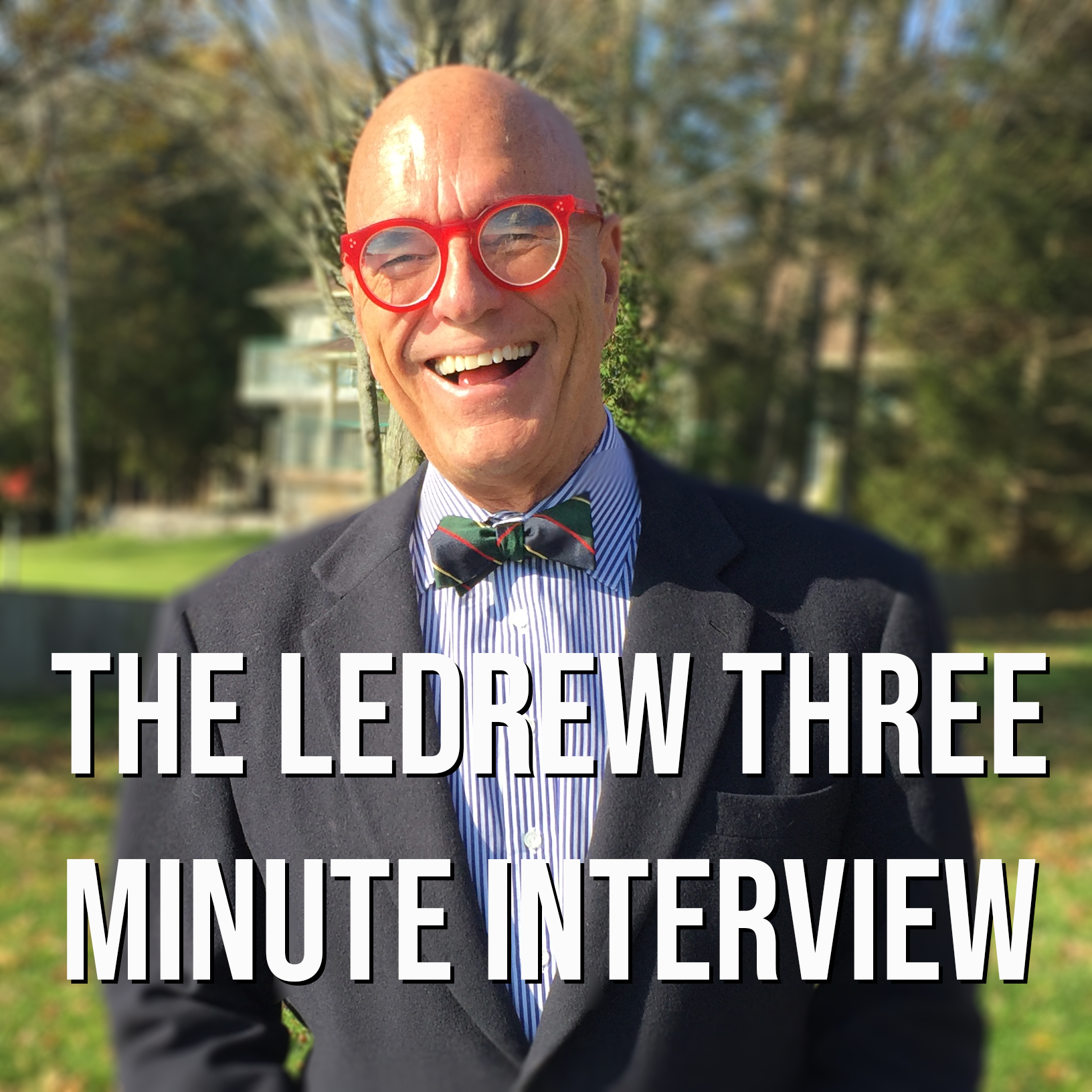
The LeDrew Three Minute Interview
by Stephen LeDrew
The LeDrew Three Minute Interview is a daily podcast featuring insight on the news that matters to you, with views you won't hear anywhere else. Stephen LeDrew is a lawyer, broadcaster, responsible father, and a believer in fairness and good manners and liberalism(in the best sense of the word), and good government and civic responsibility.Stephen LeDrew is an enemy of bureaucratic busybodies, know-it-all “idealogues”, pontificating politicians who tell everyone else how to run their lives, woke idiots, and politically correct, milquetoast, sanitized media outlets. Hosted on Acast. See acast.com/privacy for more information.
-
739
Alexander Brown: Doug Ford and the Ontario Conservatives Need To Do Better
Alexander Brown of Without Diminishment joins Stephen LeDrew to discuss Project Ontario, Doug Ford, conservative politics, and whether Ontario’s Progressive Conservative Government is living up to conservative principles.In this episode, Brown explains why Project Ontario is bringing together conservative groups, communicators, and organizations to push for better from the Ford government. While he credits Doug Ford for standing up for Canada on tariffs and supporting major projects like pipelines, Brown argues that Ontario conservatives still need to answer serious questions about government spending, education, crime, diploma mills, and cultural issues.LeDrew and Brown also discuss Sir John A. Macdonald, Canadian history, conservative criticism, and why holding your own side accountable can make a government stronger — not weaker.This is a conversation about Ontario politics, conservative values, government spending, and whether Doug Ford’s government needs to reconnect with its base.Topics covered in this episode:Project Ontario and conservative organizingDoug Ford’s record in governmentOntario government spendingPipelines and national unityEducation reform and diploma millsCrime and public safetySir John A. Macdonald and Canadian historyConservative principles versus party politicsWhy governments need criticismKeeping the conservative base engaged Hosted on Acast. See acast.com/privacy for more information.
-
738
Has Canada Lost Its Moral Compass?
Kate Marland, deputy editor at Without Diminishment, joins Stephen LeDrew to discuss morality, leadership, community, and whether society has lost the ability to tell right from wrong.In this episode, Marland argues that modern culture has become detached from reality, tradition, history, and objective truth. She says that when people are encouraged to define morality only for themselves, it becomes harder for society to defend shared standards of right and wrong.LeDrew and Marland also discuss political leadership, law and order, the decline of institutions, market-driven thinking, family, community, and why money alone cannot provide meaning or happiness.This is a conversation about moral clarity, responsibility, and rebuilding a society rooted in something deeper than self-interest.Topics covered in this episode:The decline of moral clarityLeadership and moral courageTruth, reality and traditionThe limits of “leave me alone” politicsLaw and order in societyThe role of institutionsMoney, happiness and meaningCommunity over self-optimizationConservative politics and valuesRebuilding shared standards Hosted on Acast. See acast.com/privacy for more information.
-
737
The Residential School Debate Gets Even More Controversial
Jerry Amernic, author of Sleepwoking, joins Stephen LeDrew to discuss the controversy surrounding residential schools, the Kamloops announcement and calls to criminalize residential school “denialism.”Amernic argues that Canadians must be allowed to question historical claims and examine the evidence without fear of criminal punishment. He and LeDrew acknowledge that residential schools existed, that children died from illness and that incidents of abuse occurred, while challenging claims about undiscovered mass graves and deliberate killing fields.They also discuss the federal funding provided to investigate possible burial sites, questions about financial accountability and why many educated Canadians remain uncertain about what is fact, allegation or political messaging.This is a provocative conversation about history, evidence, free expression and whether Canadians are still permitted to challenge the country’s dominant political narratives.Topics covered in this episode:Calls to criminalize residential school denialismThe evidence surrounding the Kamloops announcementResidential schools and historical contextAbuse, disease and deaths at the schoolsFederal funding for burial-site investigationsFinancial transparency and accountabilityWhy Canadians remain confused about the evidencePolitical messaging versus established factsFree speech and historical debateJerry Amernic’s book SleepwokingYou can buy Sleepwoking here - https://www.amazon.ca/dp/1775239942 Hosted on Acast. See acast.com/privacy for more information.
-
736
Government-Run Grocery Stores? Canada Has Lost The Plot
Peter Shurman joins Stephen LeDrew to discuss why Canadians increasingly expect government to solve every problem — and why both men believe government should be doing far less.Shurman argues for a more minimalist approach: government should focus on core responsibilities like defence, immigration, transportation, health and education, while leaving businesses and individuals free to build, invest and create.LeDrew and Shurman also discuss how Canada was built by entrepreneurs and small businesses, the expansion of government programs, taxpayer-funded media and proposals for municipally- operated grocery stores.Their message is simple: government should handle the things only government can do — and stay out of everything else.Topics covered in this episode:What government should actually be responsible forThe case for smaller governmentImmigration and national prioritiesHealth, education and provincial responsibilityHow entrepreneurs built CanadaGovernment replacing private initiativeTaxpayer-funded programs and mediaMunicipal governments entering retailWhy bureaucracy keeps expandingLetting business do what government cannot📌 Subscribe to Peter Shurman’s Substack here: https://substack.com/@shurmanator Hosted on Acast. See acast.com/privacy for more information.
-
735
LeDrew Rant - Canadians Have Failed An Entire Generation
In this LeDrew rant, Stephen LeDrew asks how Canada allowed a generation of young people to leave school without mastering basic skills like handwriting, spelling, reading and writing.LeDrew argues that schools, education experts, unions and governments abandoned fundamentals in favour of digital learning — while many parents had no idea what their children were no longer being taught.But his bigger target is Canadians themselves. From education and municipal spending to deteriorating infrastructure, questionable priorities and political leadership, LeDrew says too many Canadians have stopped challenging “experts” and have stopped demanding accountability from their elected officials.His message is simple: Canada’s problems will not fix themselves. Canadians need to pay attention, ask harder questions and start demanding better.Topics covered in this episode:The decline of handwriting and basic literacyWhat schools stopped teachingParents being left in the darkHolding education experts accountableCanadians’ reluctance to challenge authorityPotholes versus municipal prioritiesWasteful spending and political distractionsTrudeau’s post-national vision of CanadaFailing the next generationWhy Canadians need to push back Hosted on Acast. See acast.com/privacy for more information.
-
734
Nutrien’s U.S. Move Is A Warning For Canada
John Turley-Ewart, contributing columnist with The Globe and Mail, joins Stephen LeDrew to discuss Nutrien’s decision to invest roughly $1 billion in export infrastructure at Longview, Washington, rather than expanding through the Port of Vancouver.Nutrien is a major Canadian potash producer, but Turley-Ewart explains that railway bottlenecks, labour disruptions and concerns about reliability made Washington State the more practical choice for its exports. The company can now move more of its product to international markets while reducing its dependence on a single Canadian port.LeDrew and Turley-Ewart also discuss warnings Nutrien reportedly gave Carney Ministers, the government’s lack of urgency, and what this decision says about Canada’s ability to attract investment, build infrastructure and move its own resources to market.It is a smart decision for Nutrien — but a troubling story for Canada.Topics covered in this episode:Nutrien’s billion-dollar U.S. investmentWhy Longview beat the Port of VancouverRailway and shipping bottlenecksLabour disruptions at Canadian portsOttawa’s response to Nutrien’s warningThe cost of unreliable infrastructurePotash exports and Canadian tradeLosing investment and jobs to the U.S.The risks of relying on American portsWhat Carney must fix Hosted on Acast. See acast.com/privacy for more information.
-
733
Is Mark Carney Too Arrogant To Be Transparent?
Brian Lilley, columnist with the Toronto Sun, joins Stephen LeDrew to discuss Mark Carney’s secretive approach to government, including international agreements,the China Agreement, the Gordie Howe deal, and why Canadians are still giving the Prime Minister the benefit of the doubt. In this episode, Lilley argues that all politicians prefer secrecy, but that Carney has taken it further by keeping major agreements and government decisions away from public scrutiny. LeDrew and Lilley also discuss Carney’s confidence, arrogance, judgment, and whether his popularity with Canadians is beginning to fade. They also look at Pierre Poilievre’s struggles, Conservative infighting, Donald Trump’s role in Canadian politics, and why Carney continues to benefit from the “elbows up” effect. This is a sharp conversation about secrecy, transparency, political judgment, and whether Canadians will eventually turn on Mark Carney’s government. Topics covered in this episode:Carney’s secretive approach to governmentChina agreements and unanswered questionsThe Gordie Howe bridge deal controversyTransparency versus political controlCarney’s confidence, arrogance and judgmentWhy Canadians still trust CarneyThe long political honeymoonPoilievre and Conservative infightingTrump as Carney’s political shieldWhen voters may turn on the government Hosted on Acast. See acast.com/privacy for more information.
-
732
LeDrew Rant - Not Even Chaplains Can Utter “God” In The Canadian Armed Forces Now
In this LeDrew rant, Stephen LeDrew takes aim at what he calls the latest “Carney Caper” — a Canadian Armed Forces directive that forbids the use of the word “God,” including during services led by military chaplains. LeDrew argues that this is another example of government creep and a broader unwillingness to defend Canada’s own history, traditions and institutions. He contrasts the treatment of Christian language with the accommodation of other religious and cultural practices, asking why Canadian leaders seem so afraid that someone might be offended. He also revisits proposed federal workplace language rules, the decline of once-traditional institutions and similar controversies overseas involving national flags and cultural identity. This is a rant about free expression, religion, national confidence and whether Canada has become too frightened to stand up for its own traditions. Topics covered in this episode:The latest “Carney Capers”Government creep in private workplacesReligious language in the Armed ForcesThe role of military chaplainsAccommodation and double standardsCanada’s declining national confidenceThe fear of causing offenceProtecting cultural traditionsNational flags and public identityWhat it means to embrace Canada Hosted on Acast. See acast.com/privacy for more information.
-
731
Is Pierre Poilievre Too Divisive To Win?
Former Conservative MP Michelle Ferreri joins Stephen LeDrew for a spirited debate about Pierre Poilievre, Mark Carney and the future of the Conservative Party. In this free Three-Minute preview, LeDrew asks whether Poilievre’s blunt political style is dividing Conservatives and making it harder for the party to present itself as a government-in-waiting. Ferreri pushes back, arguing that voters should care more about substance and results than tone. The conversation continues well beyond three minutes, covering Carney’s record, Conservative messaging, media bias, government accountability and why Canadians still aren’t embracing the Conservatives as the clear alternative. Become a member to watch the full interview. Topics covered in this preview:Whether Poilievre is too divisiveTone versus political substanceTension within the Conservative PartyWhy Carney still appeals to votersThe challenge of winning moderate CanadiansWhy independent political media matters Hosted on Acast. See acast.com/privacy for more information.
-
730
Sex Toy Shows, Monuments To Dead Raccoons, And Government Waste
Franco Terrazzano, head of the Canadian Taxpayers Federation, joins Stephen LeDrew to talk about government waste, taxpayer money, and the staggering cost of Canada’s growing debt.In this episode, Terrazzano points to examples of public money being spent on projects he says taxpayers should never have been forced to fund — from Global Affairs Canada spending on international events, to municipal spending on a raccoon plaque, to costly political PR stunts.But the biggest issue, Terrazzano argues, is the interest on Canada’s debt. He says federal debt interest charges are now costing taxpayers more than $1 billion every week — money that could otherwise go toward hospitals, services, or tax relief.This is a blunt conversation about wasteful spending, government debt, taxpayer accountability, and why Canadians should be demanding better from their politicians.Topics covered in this episode:Government waste in CanadaGlobal Affairs Canada spendingTaxpayer-funded projectsConrad the raccoon plaquePolitical PR spendingCanada’s federal debtDebt interest chargesTaxpayer accountabilityFederal sales tax and debt paymentsWhy government spending matters Hosted on Acast. See acast.com/privacy for more information.
-
729
Alexander Brown: What Happens To Canada After Trump?
Alexander Brown, managing editor of Without Diminishment, joins Stephen LeDrew to discuss what Canada looks like after Trump — and whether the country can turn a moment of anti-Trump unity into something more serious.In this episode, LeDrew and Brown talk about Canadian patriotism, east-west trade, pipelines, populism, interprovincial barriers, supply management, and whether Canada can build a stronger economy once Trump is no longer the central political excuse.Brown argues that Trump may have unintentionally united Canadians, but the real question is what comes next. Will Canada use this moment to rebuild, trade more freely within its own borders, and get major projects done — or simply fall back into the same old failing habits?This is a conversation about Canada’s future, national unity, economic independence, and whether our country can finally start to move forward.Topics covered in this episode:Trump’s impact on Canadian unityAnti-Trump politics and Canadian patriotismA possible conservative resetPipelines and east-west tradeCanada’s internal trade barriersPopulism and political messagingSupply management and economic reformCanada’s dependence on the U.S.Getting major projects builtBuilding a more self-reliant economy Hosted on Acast. See acast.com/privacy for more information.
-
728
Corrupt Policy? Catherine Swift Doesn’t Hold Back On Carney
Catherine Swift, President of the Coalition of Concerned Manufacturers & Businesses of Canada, joins Stephen LeDrew to discuss Canada’s struggling economy, business closures, job losses, taxes, red tape, and Mark Carney’s approach to government.In this episode, Swift argues that the solutions are not complicated: shrink government, lower taxes, reduce red tape, and create a more competitive business climate. Instead, she says Ottawa is creating new departments, expanding bureaucracy, and replacing the consumer carbon tax with a hidden industrial carbon tax.LeDrew and Swift also discuss Carney’s net-zero agenda, major project delays, government secrecy, conflicts of interest, Brookfield, the Vancouver condo deal, and whether Canada’s economic policy is becoming too cozy with well-connected insiders.This is a blunt conversation about Canada’s economy, business confidence, government waste, and whether Ottawa is helping the private sector — or suffocating it.Topics covered in this episode:Canada’s worsening business climateFactory closures and job lossesShrinking government versus growing bureaucracyTaxes, red tape and competitivenessThe hidden industrial carbon taxCarney’s net-zero agendaMajor projects and government delaysGovernment secrecy and accountabilityConflicts of interest and Brookfield questionsCrony capitalism and insider politics Hosted on Acast. See acast.com/privacy for more information.
-
727
LeDrew Rant - Canada’s Government Has Lost The Plot - It Should Serve Its Citizens
In this LeDrew rant, Stephen LeDrew argues that Ottawa is ignoring the problems Canadians care about most — crime, lawlessness, economic decline, antisemitism and the weakening of social cohesion.Instead, LeDrew says the federal government is expanding into areas where it does not belong. He takes aim at proposed French-language workplace requirements, plans to give the CBC a larger role in determining truth, the government’s position on transgender athletes and calls for additional federal support for the Toronto Star.LeDrew calls it “government creep”: politicians and bureaucrats inserting themselves into more areas of Canadian life while failing to address public safety, affordability and economic growth.With a recent rant reaching more than 150,000 viewers, LeDrew says Canadians are beginning to demand better decisions from government — and from the media meant to hold it accountable.Topics covered in this episode:Crime, lawlessness and public safetyCanada’s economic and social declineRising antisemitismGovernment creep and overreachFrench-language workplace rulesThe CBC and government-approved truthTransgender athletes in women’s sportsFederal funding for Canadian mediaGovernment priorities and accountabilityWhy Canadians must demand better Hosted on Acast. See acast.com/privacy for more information.
-
726
Mark Carney Lied To Canadians About The Gordie Howe Bridge - Why?
Michelle Ferreri joins Stephen LeDrew to discuss the Gordie Howe International Bridge agreement, Mark Carney’s credibility and Canada’s struggling relationship with the United States.Ferreri argues that the newly released bridge agreement contradicts what Carney previously told Canadians about recovering construction costs and paying down the project’s debt. She says the controversy raises serious questions about political honesty, media accountability and why Canadians appear willing to overlook broken promises.LeDrew and Ferreri also discuss stalled trade negotiations with Washington, Mexico’s ability to keep working with Donald Trump and the risks facing Canadian manufacturing. They argue that Canadian politicians must stop using Trump as an excuse and focus on protecting Canadian jobs, trade and economic interests.Topics covered in this episode:The Gordie Howe Bridge agreementCarney’s claims versus the released documentPolitical honesty and accountabilityCanada’s stalled U.S. trade talksMexico’s approach to TrumpManufacturing jobs leaving CanadaMedia coverage of government claimsCanada’s relationship with ChinaUsing Trump as a political distractionProtecting Canadian jobs and trade Hosted on Acast. See acast.com/privacy for more information.
-
725
Why Are Some People So Afraid Of AI?
Arnie Guha joins Stephen LeDrew for a follow-up conversation about artificial intelligence — and why so many people are afraid of it.In this episode, Guha explains that AI can take over many routine tasks, from writing emails to summarizing documents, but that does not mean humans should disappear from the process. He argues that the key idea is “human in the loop”: AI can assist, but people still need to apply judgment, strategy, and common sense.LeDrew and Guha also discuss legal mistakes involving AI, the danger of relying on tools without checking their work, and the concept of AI alignment — whether artificial intelligence is actually doing what it was designed to do.This is a practical conversation about AI, fear, work, mistakes, and why educated human judgment still matters.Topics covered in this episode:Why people are afraid of AIAI and job replacementHuman in the loopAI mistakes and fake legal casesWhy human judgment still mattersAI as a tool, not a replacementAI alignmentAlgorithmic trading and riskThe limits of artificial intelligenceHow people should use AI responsibly Hosted on Acast. See acast.com/privacy for more information.
-
724
Socialism Has Failed Everywhere — So Why Is It Popular?
Alexander Brown, managing editor of Without Diminishment, joins Stephen LeDrew to discuss why socialist ideas are gaining traction again in North America.In this episode, LeDrew and Brown look at why young voters are being drawn to politicians who promise more government control, more benefits, and more “free” programs. Brown argues that the appeal of socialism is being driven by scarcity — especially housing costs, wage pressure, and a growing sense that upward mobility is slipping away.They also discuss education, social media, political propaganda, and why many young people may not understand the historical failures of socialism. Brown argues that bad ideas gain ground when people are desperate, poorly taught, and constantly fed simplistic answers to complex problems.This is a sharp conversation about economics, culture, education, and why North America needs to remember the real cost of socialism.Topics covered in this episode:Why socialist ideas are becoming attractive again to younger votersHow housing costs and wage pressure are creating political frustrationWhy promises of “free” programs can appeal to people who feel stuckThe difference between fixing capitalism’s problems and embracing socialismHow weak history and civics education leave people vulnerable to bad ideasThe role social media plays in spreading political propagandaWhy historical figures like Marx and Mao are being sanitized onlineHow scarcity, resentment, and desperation can reshape politicsWhy conservatives also need to guard young people against extreme ideasThe importance of making a stronger case for freedom, prosperity, and upward mobility Hosted on Acast. See acast.com/privacy for more information.
-
723
Government Creep Is Taking Over Everything In Canada
Franco Terrazzano, head of the Canadian Taxpayers Federation, joins Stephen LeDrew to discuss what LeDrew calls “government creep” — the steady expansion of government into more and more areas of Canadian life.In this episode, LeDrew and Terrazzano argue that governments are trying to fix problems created by bureaucracy with even more bureaucracy. From major projects and pipelines to housing, regulations, carbon taxes, federal debt, and government spending, they say Canada is making it harder for the private sector to build, invest, and grow.They also discuss Mark Carney’s government, the growth of the public sector, Canada’s rising debt, and why taxpayers are being forced to pay for an ever- expanding bureaucracy.This is a blunt conversation about big government, taxpayer money, debt, and why Canada needs less red tape — not more.Topics covered in this episode:Government creepMark Carney and big governmentFederal bureaucracyMajor projects and pipelinesNatural resource developmentCarbon taxes and regulationGovernment debt and deficitsPublic sector growthTaxpayers and federal spendingWhy Canada struggles to build Hosted on Acast. See acast.com/privacy for more information.
-
722
Brian Lilley: We Still Need Evidence On Carney’s Corruption
Brian Lilley, columnist with the Toronto Sun, joins Stephen LeDrew to discuss Mark Carney, the Vancouver condo bailout controversy, government secrecy, trade talks with the United States, and whether the Prime Minister is running the government he promised Canadians.In this episode, LeDrew presses Lilley on the question of corruption, especially around the Vancouver bailout. Lilley pushes back, arguing that he does not like using the word “corruption” without clear evidence — but says the Carney government has not been transparent enough with Canadians.They also discuss Carney’s political instincts, the appointment of Tom Pitfield to the Senate, the Chicoutimi by-election, trade negotiations with Donald Trump, and whether Canadian politicians are using Trump as a political excuse for problems that existed long before the latest tariff fights.This is a sharp conversation about politics, accountability, secrecy, and whether Carney is better at playing the political game than delivering results for Canadians.Topics covered in this episode:The Vancouver bailout controversyWhy Brian Lilley pushes back on “corruption”Carney’s lack of transparencyTrade talks with the United StatesTrump as political coverCarney’s PMO and political strategyThe Tom Pitfield Senate appointmentThe Chicoutimi by-election calculationCanada’s weak business climatePolitics versus governing Hosted on Acast. See acast.com/privacy for more information.
-
721
LeDrew Rant - Is Prime Minister Carney a WEENIE, lacking CHARACTER?
Prime Minister Mark Carney lied to Canadians about the Gordie Howe International Bridge agreement - and why did he walk away when a reporter asked him directly about that?In today’s rant, Stephen LeDrew examines Carney’s refusal to answer difficult questions, previous lies surrounding his financial assets, Canada’s struggling economy, manufacturing job losses and whether a career bureaucrat has the political instincts and character required to lead the country.LeDrew argues that speeches and polished language are not enough. Leaders should have CHARACTER. Canadians need accountability, economic action and a Prime Minister willing to answer questions when the pressure is on. Hosted on Acast. See acast.com/privacy for more information.
-
720
Why Are Young Women Being Turned Against Motherhood?
Kate Marland, deputy editor at Without Diminishment, joins Stephen LeDrew to discuss motherhood, family, feminism, popular culture, and whether modern society has discouraged young women from seeing motherhood as a source of fulfillment.In this episode, Marland argues that popular culture has too often portrayed motherhood as a burden or obstacle, rather than a meaningful part of life. She and LeDrew discuss career ambition, the pursuit of happiness, the role of family, and why so many young people feel disconnected or without purpose.They also discuss whether society needs to restore the family as a central institution — and what that means for marriage, divorce, children, and personal responsibility.This is a conversation about motherhood, meaning, culture, and the future of the family.Topics covered in this episode:Motherhood and modern cultureFeminism and fulfillmentCareer ambition and family lifePopular culture’s view of motherhoodYoung people and lack of purposeFamily as a core social valueMarriage, divorce and childrenSelf-fulfillment versus responsibilityRebuilding community through familyThe future of family life Hosted on Acast. See acast.com/privacy for more information.
-
719
Everyone Is Talking About AI — But Do They Know What It Really Is?
Arnie Guha joins Stephen LeDrew to answer a question many people are asking: what is AI, really?In this episode, Guha explains artificial intelligence in plain language — from algorithms on Netflix and Amazon to modern tools like ChatGPT and large language models. He argues that the key difference is decision-making: machines are no longer just following instructions, they are learning patterns, making recommendations, and helping humans make better choices.LeDrew and Guha also discuss why AI matters, how it can reduce drudgery, and where it may have real value in fields like finance and healthcare.This is a clear, practical conversation about artificial intelligence, automation, human work, and why the AI debate is more than just hype.Topics covered in this episode:What is AI?Artificial intelligence explainedChatGPT and large language modelsAlgorithms on Netflix and AmazonMachine learning and decision-makingAI and human productivityUsing AI to reduce drudgeryAI in financeAI in healthcareThe future of work Hosted on Acast. See acast.com/privacy for more information.
-
718
Why The “Decolonize Everything” Movement Is A Lie
Alexander Brown, managing editor of Without Diminishment, joins Stephen LeDrew to discuss Western civilization, cultural confidence, the “new right,” and the growing pushback against the decolonization movement.In this episode, LeDrew and Brown talk about why so many people are afraid to defend Western civilization, why common sense is often labelled “right-wing,” and how new networks of thinkers and organizers are trying to rebuild confidence in the West.Brown also discusses a recent conference in London that he describes as a kind of “counter-Davos” — a gathering focused not on taking from society, but on giving back, strengthening culture, and defending the good, the true, and the beautiful.This is a conversation about civilization, culture, history, politics, and why the West needs to stop apologizing for itself.Topics covered in this episode:Western civilizationThe new rightCommon sense conservatismCounter-Davos movementDecolonization and post-colonial politicsCanadian identity and cultureJustin Trudeau and national guiltClassical liberalism and conservatismDefending the WestThe future of civilization Hosted on Acast. See acast.com/privacy for more information.
-
717
The Fight To Learn Where Indian Bands Spend Their Tens Of Millions
Franco Terrazzano, head of the Canadian Taxpayers Federation, joins Stephen LeDrew to discuss financial transparency, taxpayer accountability, and a court fight involving Frog Lake First Nation in Alberta.In this episode, LeDrew and Terrazzano discuss the case of Hans McCarthy, a band member seeking access to records showing where Band money disappeared. Terrazzano argues that Indigenous Canadians should have the same ability to know how their governments spend their cash, just as any other Canadian.They also discuss the First Nations Financial Transparency Act, how the Trudeau government erased accountability, the Carney government’s position, and why accountability matters whenever public money is involved.This is a conversation about transparency, taxpayers, government records, and why every Canadian community deserves to know how money is being spent.Topics covered in this episode:Franco TerrazzanoCanadian Taxpayers FederationFrog Lake First Nation financesHans McCarthy court caseFirst Nations financial transparencyTaxpayer accountabilityGovernment records and auditsTrudeau government accountability changesCarney government and transparencyPublic money and financial oversight Hosted on Acast. See acast.com/privacy for more information.
-
716
LeDrew Rant - Carney Is Compounding Trudeau’s Mess
In today’s rant, Stephen LeDrew takes aim at Justin Trudeau’s legacy, Mark Carney’s government, Liberal Party policies, and the growing evidence that Canada is falling behind.LeDrew argues that Trudeau’s poor judgment, failed policies, and lack of accountability left Canada with serious economic and social problems. While Carney may be trying to move away from parts of that legacy, LeDrew says the current government is still filled with Trudeau-era ministers and policies that continue to hold Canada back.He also raises concerns about the Vancouver condo bailout, government favours, media silence, corruption questions, overregulation, and Canada’s declining competitiveness. Comparing Canada to South Korea, LeDrew asks why a country devastated by war 75 years ago has surged ahead in technology and prosperity while Canada has become weighed down by bureaucracy and big government.This is a rant about political judgment, economic decline, government overreach, and why Canadians should start demanding better of their politicians.Topics covered in this episode:Trudeau’s legacy in Canadian politicsCarney’s struggle with Trudeau-era policiesLiberal ministers and accountabilityThe Vancouver condo bailout controversyQuestions around government favours and corruptionCanada’s weakening economySouth Korea’s rise compared to Canada’s declineBig government and overregulationWhy Canadian industry needs to take more chancesThe need for Canadians to demand more from politicians Hosted on Acast. See acast.com/privacy for more information.
-
715
Catherine Swift: Canada Is Falling Behind On AI
Catherine Swift joins Stephen LeDrew to discuss Canada’s struggle to compete in the global race for artificial intelligence, data centres, energy, and major investment.As AI data centres are being built around the world, Swift argues that Canada is falling behind because of bureaucracy, environmental delays, political dithering, and an anti-business mindset. She says Canada has the resources — including electricity, water, land, and strong potential locations like Alberta — but too often refuses to allow major projects to move forward. Swift and LeDrew also discuss Canada’s plan to spend billions on AI, whether the country can realistically build its own AI industry, and why Canada should be working more closely with the United States instead of trying to compete alone.Topics covered in this episode:Artificial intelligence in CanadaAI data centres and electricity demandWhy Canada struggles to build major projectsManitoba and Hamilton rejecting AI data centresAlberta’s potential role in AI developmentCanada’s relationship with the U.S.China, the U.S., and the global AI raceGovernment bureaucracy and business investmentCanada’s economic competitivenessWhy Canada is falling behind Hosted on Acast. See acast.com/privacy for more information.
-
714
George Burger: Canada’s Education System Has Been Radicalized
George Burger joins Stephen LeDrew to discuss education, socialism, media, history, and what he sees as the growing influence of destructive progressive ideology in Canada.In this episode, Burger argues that many of Canada’s cultural and political problems begin in the classroom. He says history, civics, and politics have been replaced by vague “social studies,” leaving generations of Canadians without the knowledge needed to understand their own country or challenge political narratives.LeDrew and Burger also discuss the rise of socialist ideas, the renaming of Canadian streets and institutions, media groupthink, institutional capture, and why more Canadians need to question what they are being told.This is a sharp conversation about education, history, media, and the battle over truth in Canada.Topics covered in this episode:Education in CanadaThe decline of history and civicsSocialism and young peopleProgressive ideology in schoolsCanadian history and public memoryDundas Street and renaming debatesMedia groupthink in CanadaInstitutional captureJordan Peterson and free speechThe future of Western values Hosted on Acast. See acast.com/privacy for more information.
-
713
How Legacy Media Missed Canada’s Biggest Issues
Does Canada need more independent journalism? In this episode of The LeDrew Three Minute Interview, Stephen LeDrew speaks with Arshy Mann, co-founder and host of The Hatchet, about legacy media, government funding, independent journalism, and the growing need for voices outside the traditional Ottawa and Toronto media consensus. LeDrew argues that too much of Canada’s legacy media relies on government support, creating a culture where certain stories, perspectives, and criticisms are softened or ignored. Mann agrees that Canada needs more independent outlets across the political spectrum — publications and shows that answer directly to their readers, listeners, and viewers rather than to institutions or bureaucratic funding systems. The conversation explores:Why independent media matters in CanadaThe problem with government-funded journalismWhether legacy media has become too uniform in tone and perspectiveThe role of subscriptions in keeping outlets accountable to audiencesHow ethnic and community media flagged immigration concerns earlier than many mainstream outletsWhy Canada needs more reporting outside the Laurentian consensusAnd whether independent journalism could have helped Canadians see major policy failures soonerLeDrew and Mann also discuss how major issues — including immigration, the economy, and the Trudeau government’s policy decisions — may have been better understood earlier if more Canadians had access to independent news and analysis. As legacy outlets cut jobs and public trust continues to shift, this interview asks whether the future of journalism in Canada will belong to independent voices. Learn more about The Hatchet here: https://hatchetmedia.substack.com/ Hosted on Acast. See acast.com/privacy for more information.
-
712
The Vancouver Condo Bailout Taxpayers Should Be Furious About
Franco Terrazzano, head of the Canadian Taxpayers Federation, joins Stephen LeDrew to discuss Ottawa’s plan to buy unsold condos from Vancouver developers — and why taxpayers should be concerned.In this episode, LeDrew and Terrazzano question why the federal government would use taxpayer money to help condo developers during a market downturn. They argue that if condo prices are too high, the market should be allowed to bring prices down instead of having government step in with a taxpayer-funded bailout.They also discuss former Mayor Gregor Robertson, Vancouver’s condo market, affordable housing claims, political connections, and the dangerous precedent this could set for Canadian Taxpayers in other cities across Canada.This is a blunt conversation about housing, taxpayer money, bailouts, and whether Ottawa is helping Canadians — or helping well-connected developers.Topics covered in this episode:Vancouver condo marketTaxpayer-funded bailoutsUnsold condos and developersGregor Robertson and housing policyAffordable housing claimsFree enterprise and market pricesFederal government spendingThe cost to Canadian taxpayers Hosted on Acast. See acast.com/privacy for more information.
-
711
LeDrew Rant - Carney’s Condo Deal Sure Does Smell Like Corruption
In today’s Rant, Stephen LeDrew takes aim at the federal government’s Vancouver condo bailout and asks the question many Canadians are already thinking: does this pass the smell test?The deal involves billions in taxpayer money, politically connected rich developers, pricey fundraisers, Housing Minister Gregor Robertson, Prime Minister Mark Carney, and questions about Brookfield’s connections to Vancouver real estate. LeDrew argues that if there are innocent explanations, Canadians deserve to know them, and not accept flimsy denials.If the government has nothing to hide, why did it use its majority to shut down investigations in committee hearings? Why not call witnesses, release the details, and let taxpayers see exactly how this deal came together?This rant is about political accountability, taxpayer money, and why Canadians deserve answers when billions of public dollars are given to rich private developers.Topics covered:The Vancouver condo bailoutGregor Robertson and developer connectionsPolitical fundraisers and conflicts of interestMark Carney, Brookfield, and real estate questionsBillions in taxpayer money for private developersWhy Conservatives want committee hearingsLiberal shutdown of committee investigationTransparency, corruption, and accountability Hosted on Acast. See acast.com/privacy for more information.
-
710
Why Is Government Making It Harder To Run A Business?
Small business owner Jim Doan joins Stephen LeDrew to talk about the growing burden of government bureaucracy, taxes, red tape, financing challenges, and the rising cost of doing business in Canada.In this episode, LeDrew and Doan discuss how small businesses are being forced to spend more time and money dealing with forms, remittances, questionnaires, regulations, and multiple levels of government — while still trying to serve customers and keep prices reasonable.They also discuss the pressure small business owners face from banks, property taxes, municipal taxes, and an overbearing government that continues to grow while small businesses are expected to balance their books.This is a blunt conversation about what it really takes to run a business in Canada today — and why big government is making life harder for the people who create jobs and keep communities moving.Topics covered in this episode:Small business in CanadaGovernment bureaucracyRed tape and regulationTaxes and rising costsBusiness financing challengesProperty and municipal taxesThe cost of big governmentRunning a family businessIndependent media and government fundingWhy small businesses are under pressure Hosted on Acast. See acast.com/privacy for more information.
-
709
Why Are Canadians Ashamed Of Their Own Country?
George Burger, founder of the 'The Honour Sir John Project', joins Stephen LeDrew to discuss the growing concern that Canada’s history is being erased, rewritten, or reduced to one-sided political narratives.In this episode, LeDrew and Burger talk about Sir John A. Macdonald, the push to remove names and statues, the controversy at Queen’s University Law School, and why so many Canadians no longer understand the history of their own country.Burger argues that the problem starts with education. Instead of learning history and civics, he says generations of Canadians have been given a shallow version of the past — leaving them unable to push back when important national figures are attacked or removed from public life.This is a conversation about Canadian history, national identity, education, and why remembering the full story still matters.Topics covered in this episode:Sir John A. MacdonaldCanadian history and national identityQueen’s University Law SchoolKingston and Picton historyDecolonization and historical revisionismStatues, street names, and public memoryCivics and history education in CanadaResidential schools and historical contextWhy Canadians need to know their history Hosted on Acast. See acast.com/privacy for more information.
-
708
LeDrew Rant - Canada Day, National Pride, and Common Sense
In today’s LeDrew Rant, Stephen argues that Canadians should stop apologizing for their country and start celebrating what generations built, defended, and sacrificed for. Canada has made mistakes, but it should not be defined only by them.LeDrew says the country needs to reject national self-loathing, rebuild common purpose, and believe in Canada’s future again.Topics covered:Canada Day and National PrideWhy Canadians should wave the flagCanada’s post-war growth and sacrificeAttacks on Canadian history and symbolsStatue removals and historical revisionismPolitical correctness and “decolonization” rhetoricCanada’s economic challengesThe need for unity, confidence, and common sense Hosted on Acast. See acast.com/privacy for more information.
-
707
Canada’s Economy Is Not Growing On Carney’s Speeches & Hot Air.
Is Canada building its economy — or just listening to more speeches?In this episode of The LeDrew Three Minute Interview, Stephen LeDrew speaks with Dan McTeague, former Liberal MP and energy analyst, about Mark Carney’s economic promises, Canada’s missed opportunities, and why major private-sector projects remain trapped in political delay.McTeague argues that despite months of speeches, announcements, and promises to get Canada moving again, very little has actually come to fruition. He says the country faces a growing gap between government rhetoric and real economic action.The conversation focuses on Bay du Nord, a major offshore oil project near Newfoundland that McTeague says could bring billions of dollars in investment and major economic benefits to both Newfoundland and Canada. Instead of rolling out the red carpet for private-sector investment, he argues, Ottawa continues to delay, regulate, and talk.The discussion covers:Mark Carney’s economic promises versus actual resultsWhy Canadians are losing patience with government announcementsBay du Nord and Canada’s missed energy opportunityThe role of Equinor and BP in offshore Newfoundland oil developmentWhy private-sector investment matters more than government programsCanada’s failure to move quickly on major projectsThe need to create an environment for investment, innovation, and productionWhy independent media matters when major opportunities are being missedLeDrew and McTeague argue that Canada does not need more government speeches or committees — it needs real projects, real investment, real jobs, and a government willing to get out of the way.As the economy weakens and confidence falls, this interview asks whether Canada can still build prosperity through enterprise — or whether Ottawa will continue managing decline. Hosted on Acast. See acast.com/privacy for more information.
-
706
Catherine Swift Warns That Canada Is In Serious Trouble
Catherine Swift of the Coalition of Concerned Manufacturers and Businesses of Canada joins Stephen LeDrew for a blunt conversation about government, bureaucracy, business, and the future of the Canadian economy.In this 3-minute preview, Swift argues that Canada has become increasingly hostile to business, with too much red tape, too much government, and too little focus on productivity, growth, and getting major projects built.The full interview is available exclusively to members, where LeDrew and Swift go deeper on pipelines, AI data centres, subsidies, trade with the United States, inflation, government waste, and what Canada must do to turn things around.Become a member to watch the full conversation.Topics covered in this preview:Catherine Swift on Canada’s economyGovernment bureaucracy and red tapeWhy Canada struggles to get projects builtBusiness confidence in CanadaProductivity and economic growthThe cost of big governmentCanadian politics and the private sectorWhy the full interview is members-only Hosted on Acast. See acast.com/privacy for more information.
-
705
Mark Johnson: Canada Is Erasing Its Own History
Is Canada erasing its own history in the name of “decolonization”?In this episode of The LeDrew Three Minute Interview, Stephen LeDrew speaks with Mark Johnson, lawyer, columnist, conservative commentator, and founder of Save Our History, about Canadian history, statue removals, public renaming campaigns, and the growing debate over decolonization.The conversation looks at how cities and institutions across Canada have removed statues, renamed public spaces, and reconsidered historical figures such as Sir John A. Macdonald and Henry Dundas. Toronto City Council voted in 2023 to rename Yonge-Dundas Square to a foreign word from the increasingly racist and sexist country of Ghana.Johnson argues that Canada should not deny or erase its past, even when that history is complicated. He says historical figures should be judged in full — not reduced to one issue or one modern political narrative.The discussion explores:Decolonization and Canadian public institutionsThe renaming of Dundas-related landmarks in TorontoSir John A. Macdonald and his role in Canadian historyResidential schools and historical responsibilityWhy Johnson believes history should be understood, not erasedThe difference between learning from history and hiding itAnd what Canada loses when it rejects its founders and national storyLeDrew and Johnson argue that history is often messy, but that a country without memory, heroes, or shared reference points will lose its identity.Learn more about Save Our History: saveourhistory.ca Hosted on Acast. See acast.com/privacy for more information.
-
704
Dan McTeague: Canada Allowed a $14 BILLION Oil Project To Slip Away
Why is Canada so slow to approve major energy projects?In this episode of The LeDrew Three Minute Interview, Stephen LeDrew speaks with Dan McTeague, former Liberal MP and energy analyst, about Bay du Nord — a major offshore oil project near Newfoundland that could have brought billions in investment, jobs, and economic activity to Canada.McTeague explains that the Bay du Nord project, located hundreds of kilometres off the coast of Newfoundland and Labrador, has been discussed for years and could produce hundreds of thousands of barrels of oil per day. Backed by major international players including Norway’s Equinor, the project represents exactly the kind of private-sector investment Canada says it wants.So why has it taken so long?The conversation explores:What Bay du Nord is and why it mattersNewfoundland’s potential offshore oil opportunityNorway’s role through EquinorWhy major energy projects face long delays in CanadaOttawa’s approach to resource developmentThe difference between Canada and Norway’s use of oil wealthWhy Dan McTeague says Newfoundlanders and All Canadians should be furiousAnd whether Mark Carney is serious about getting government out of the wayLeDrew and McTeague argue that Canada needs to stop delaying private-sector investment and start approving projects that create jobs, strengthen the economy, and bring Canadian resources to global markets.As Canada faces weak growth and economic uncertainty, Bay du Nord raises a bigger question: why does Canada keep making it so hard to build the projects that could make the country richer? Hosted on Acast. See acast.com/privacy for more information.
-
703
Frank Stronach’s Advice to Fix Canada’s Economy
Could Frank Stronach build Magna in Canada today?In this episode of The LeDrew Three Minute Interview, Stephen LeDrew speaks with Frank Stronach, the founder of Magna International, about Canada’s struggling economy, small business, red tape, and the growing burden of bureaucracy.Stronach came to Canada in 1954 with $200 in his wallet and went on to build one of the country’s most successful companies. But he says the Canada that allowed entrepreneurs to build, grow, and create jobs has changed dramatically.In this conversation, Stronach argues that small business has always been the backbone of the economy — but today, entrepreneurs are tied up in permits, regulations, delays, and bureaucracy. He says that if he were starting now, he could not build Magna under today’s conditions.The discussion covers:Why small business matters to Canada’s economyHow red tape is slowing growth and job creationWhy entrepreneurs struggle to get permits and approvalsThe difference between building a business decades ago and building one todayWhy politicians keep creating programs and bureaucraciesHow government expansion affects productivityAnd what Canada must do if it wants entrepreneurs to succeed againStronach argues that Canada needs fewer bureaucratic obstacles, more common sense, and a political system that forces leaders to live with the consequences of the rules they create.As Canadians face economic uncertainty, falling confidence, and growing frustration with government, this interview asks whether Canada can still be a country where someone with ambition, work ethic, and a good idea can build something great. Hosted on Acast. See acast.com/privacy for more information.
-
702
Why Is Carney Still So Popular? And Will It Crater?
Why is Mark Carney still popular when so many Canadians know the economy is getting worse?In this episode of The LeDrew Three Minute Interview, Stephen LeDrew enjoys an animated conversation with Arshy Mann, co-founder and host of The Hatchet, about the disconnect between Canada’s struggling economy and Carney’s continued political strength.Canadians are facing rising costs, job losses, housing pressure, and economic uncertainty. Yet despite those problems, Mann argues that many voters still see Carney as credible on the two issues they say matter most: the economy and the cost of living.The conversation explores:Why Canadians still trust Mark Carney on economic issuesHow Carney benefits from the contrast with Justin TrudeauWhether Carney is governing more like Stephen Harper than TrudeauWhy Pierre Poilievre has struggled to capitalize on economic frustrationThe role of media narratives in shaping public opinionTrump, tariffs, oil prices, and global economic instabilityHousing affordability and the pressure facing younger CanadiansWhether Carney’s popularity will last if results don’t followLeDrew and Mann debate whether Carney’s image as an experienced economic manager is enough — or whether Canadians will eventually judge him by results on housing, affordability, jobs, and growth. Hosted on Acast. See acast.com/privacy for more information.
-
701
The Diversity Debate Canada Wants To, But Cannot, Ignore
As Canada Day approaches, Stephen LeDrew takes a hard look at the State of the Country - celebrating what still makes Canada great, while asking whether Canada has lost sight of what holds it together.In this rant, LeDrew tackles government bureaucracy, over-regulation, DEI, multiculturalism, immigration, and integration. He argues that Canada has become too focused on diversity as a political slogan, while forgetting one crucial idea: becoming Canadian still has to mean something.From Pierre Trudeau’s multiculturalism to Justin Trudeau’s “post-national” Canada, LeDrew says the pendulum has swung too far. Canada can welcome people from around the world - but it must also expect shared values, respect for the law, and a commitment to the country itself.This is not an argument against Canada. It is an argument for a stronger, more united Canada.Happy Canada Day - and now, for the rant.Topics covered in this episode:Canada Day and Canadian identityDEI and diversity in CanadaMulticulturalism and integrationImmigration and shared valuesPierre Trudeau and Justin TrudeauGovernment bureaucracy and over-regulationWhat it means to become Canadian Hosted on Acast. See acast.com/privacy for more information.
-
700
The Glue That Holds Canada Together Is Breaking
Has Canada lost its social contract?In this episode of The LeDrew Three Minute Interview, Stephen LeDrew speaks with Dr. Michael Bonner about social decomposition, loneliness, crime, freedom, and the future of community in Canada.Bonner is the author of The Crisis of Liberalism: The Origin and Destiny of Freedom, a book that examines the philosophical and theological foundations of modern freedom and the challenges facing liberal democracy today. The book argues that a renewed understanding of freedom can help address the deeper problems facing liberal societies.LeDrew begins with the visible signs many Canadians are talking about at kitchen tables and restaurants: theft, disorder, violence, declining trust, and the feeling that society is coming apart. Bonner widens the discussion, arguing that the crisis is not only about crime, but also loneliness, isolation, and a form of freedom that leaves people atomized rather than connected.The conversation explores:Whether Canada’s social contract is breaking downCrime, disorder, and declining public trustLoneliness and isolation in modern societyThe difference between freedom and atomizationWhy communities and voluntary associations matterWhether government can fix social breakdownAnd how Canadians might begin rebuilding shared civic lifeBonner argues that people naturally want to form the kinds of associations that hold society together — families, communities, churches, clubs, neighbourhoods, and civic institutions — but that elites and governments often need to get out of the way and let those bonds reform.As Canada faces rising disorder and declining trust, this interview asks whether Canadians can rebuild community before government resorts to more surveillance, control, and intervention. Hosted on Acast. See acast.com/privacy for more information.
-
699
Why Is Ottawa Giving Away BILLIONS on AI?
Does Canada really need to spend billions of taxpayer dollars on artificial intelligence?In this episode of The LeDrew Three Minute Interview, Stephen LeDrew speaks with journalist Arshy Mann of the Hatchet about the Carney Liberal Government’s major investment in AI, the creation of a dedicated AI ministry, and the growing questions Canadians have about how this technology will actually affect their lives.AI is already showing up everywhere — in Google searches, workplaces, Microsoft Copilot, online images, news, and everyday digital tools. But many Canadians remain skeptical. Is AI making life easier, or is it being pushed onto people before they have asked for it, understood it, or trusted it?The conversation explores:Why the federal government is spending billions on AIWhether AI will actually improve productivityThe growing public distrust around AI-generated contentHow AI is changing workplaces and white-collar jobsConcerns about hydro use, data centres, and infrastructureWhether government is once again picking winners and losersComparisons to electric vehicle subsidies and green industrial policyWhy many Canadians are not convinced AI will help them personallyLeDrew and Mann question whether AI is truly the economic miracle governments claim it will be — or another expensive experiment backed by public money while ordinary Canadians are left wondering what they are paying for.As Ottawa bets big on artificial intelligence, the question remains: is this the future of Canada’s economy, or just another taxpayer-funded gamble?You can subscribe to the hatchet here - https://hatchetmedia.substack.com/ Hosted on Acast. See acast.com/privacy for more information.
-
698
Alberta Was Dumped On — Now Ottawa Is Shocked !!!!!!
Why is Alberta talking about sovereignty — and how much of the blame belongs to Ottawa?In today’s LeDrew Three Minute Interview, Stephen LeDrew speaks with Tony Keller, columnist with The Globe and Mail, about Alberta separatism,Premier Danielle Smith, Canadian unity, and the role Liberal energy policy has played in alienating the province.Keller argues that Alberta has legitimate grievances after years of federal policies that made it almost impossible to develop and export oil and gas. He compares Ottawa’s treatment of Alberta energy to the reaction Quebec would have if the federal government tried to block hydroelectric development — arguing that the backlash should not surprise anyone.The conversation covers:Alberta sovereignty and separatist sentimentDanielle Smith’s strategy on a potential referendumThe role of Trudeau-era energy policy in Alberta alienationEastern Canadian attitudes toward AlbertaWhy Alberta oil and gas remains central to Canada’s economyMark Carney’s shift toward supporting pipeline developmentAnd whether a referendum defeat could weaken the separatist movementPremier Danielle Smith has said she does not support Alberta leaving Canada, while also allowing a citizen-led referendum process amid frustration over federal energy and environmental policy. Recent reporting has also noted that Prime Minister Mark Carney is seeking to advance an Alberta-to-Pacific oil pipeline project — a major shift from the Trudeau-era approach to oil and gas.As national unity tensions rise, this interview asks whether Ottawa and the national media are finally willing to take Alberta’s concerns seriously. Hosted on Acast. See acast.com/privacy for more information.
-
697
Listen To This P.M. Carney! Canada’s Economy Has STALLED
Is Canada in recession — or just stuck?In this episode of The LeDrew Three Minute Interview, Stephen LeDrew speaks with John Turley-Ewart, columnist with The Globe and Mail, about Canada’s slowing economy, rising affordability pressures, and why so many Canadians feel they are falling behind.Turley-Ewart argues that while economists may debate whether Canada is technically in recession, the lived experience for most Canadians is clear: inflation has outpaced household budgets, debt remains high, savings are thin, and the economy has lost momentum.The conversation explores:Why many Canadians feel they have not caught up with inflationWhat “technical recession” means compared with everyday economic painWhy business creation and entrepreneurship are weakening in CanadaThe need for tax reform and regulatory reformWhy Canada needs higher-paying private-sector jobsWhether Mark Carney can deliver on promises to grow the economyAnd why massive deficits cannot continue indefinitelyLeDrew and Turley-Ewart discuss whether Canada is merely stalled — or facing a deeper economic problem that requires urgent action from Ottawa.As households struggle with rising costs, job insecurity, debt, and weak growth, this interview asks whether Canada’s leadership understands the scale of the challenge — and whether the country can get moving again. Hosted on Acast. See acast.com/privacy for more information.
-
696
McTeague EXPOSES the Problem With Heat Pumps
Are heat pumps really the future of home heating in Canada — or just another expensive government-backed experiment?In this episode of The LeDrew Three Minute Interview, Stephen speaks with Dan McTeague, former Liberal MP and president of Canadians for Affordable Energy, about heat pumps, electricity costs, green subsidies, net-zero policy, and the growing burden on taxpayers.McTeague argues that while heat pumps may work in some circumstances, they are being oversold by governments as a simple solution for Canadian homes. He raises concerns about cold-weather performance, installation costs, electricity demand, insurance concerns, and whether taxpayers are being asked to subsidize another green transition program without fully understanding the long-term costs.The conversation explores:Heat pumps and Canadian wintersInstallation costs and payback timelinesHydro prices and grid capacityGovernment subsidies and taxpayer debtComparisons to electric vehicle incentivesNet-zero policy and public spendingWhy McTeague believes governments are “picking favourites” in the energy marketHeat pumps remain a major part of federal and provincial energy-efficiency strategies, and Natural Resources Canada describes them as a proven technology when properly chosen and installed. But McTeague questions whether the policy push is realistic for many Canadians — especially those already struggling with high costs of living.As governments continue promoting net-zero programs, this interview asks whether Canadians are getting practical energy solutions — or another expensive policy experiment doomed to fail. Hosted on Acast. See acast.com/privacy for more information.
-
695
LeDrew + Tony Keller: How Canada Lost Control of Immigration
Canada was once seen as a country that got immigration right. So what changed?In this Three-Minute preview, Stephen LeDrew speaks with Tony Keller, columnist with The Globe and Mail and author of Borderline Chaos: How Canada Got Immigration Right and Then Wrong, about the major shift in Canadian immigration policy after 2015.Keller argues that Canada’s previous immigration model was relatively high-volume, but also controlled, selective, and focused on bringing in skilled, educated economic immigrants. In recent years, he says that focus changed — with far more emphasis on temporary foreign workers, international students, and lower-skilled labour.The conversation explores:How Canada’s immigration system changed after 2015Why “more people” did not automatically create a stronger economyThe rise of temporary immigration streamsPressure on jobs, housing, and public confidenceWhy Keller still describes his book as pro-immigrationAnd why he believes Canada needs to return to a smarter, more selective modelThe full 10-minute interview is available for members, where LeDrew and Keller go deeper into student visas, Roxham Road, Ontario colleges, temporary workers, and how Canada’s immigration system became what Keller calls Borderline Chaos.You can buy Tony Keller’s Book here - https://www.amazon.ca/Borderline-Chao...Contribute To Information and Debate that is NOT Paid For, and Influenced,ByThe Carney Government:https://paypal.me/3minuteinterviewCheques accepted at:Stephen LeDrew303 Bay StreetToronto, OntarioM5H 2R1Follow Stephen on other social media platforms.https://www.stephenledrew.ca / stephen.ledrew / stephenledrew Hosted on Acast. See acast.com/privacy for more information.
-
694
Canada Is Erasing Its Own History
Should Canada be ashamed of its own history — or honest about it?In this episode of The LeDrew Three Minute Interview, Stephen LeDrew speaks with Mark Johnson, lawyer, columnist, and founder of Save Our History, about how the Town Council refuses to restore a Sir John A. Macdonald statue in Picton, Ontario.Johnson explains that the statue was originally installed through local fundraising and private support, without cost to the municipality. It recognized Macdonald’s connection to Picton, where Canada’s first prime minister began his legal career. But in 2021, amid national controversy over residential schools and the Kamloops graves misinformation, the statue was removed and placed in storage.Now, Johnson and Save Our History are pushing for the statue to be returned to public view.The conversation covers:Why the Sir John A. Macdonald statue was removed in PictonThe role of activists and local political pressureWhether Canadian history is being erased instead of debatedThe broader trend of removing statues and renaming public spacesThe controversy over historical figures like Macdonald and ChamplainWhy Johnson believes Canadians should learn from history without hiding itAnd whether local politicians are giving in to pressure instead of public opinionLeDrew and Johnson argue that history should be understood in full — not reduced to present-day political slogans. They acknowledge that historical figures were imperfect, but question whether removing statues helps Canadians understand the country’s past.Learn more about Save Our History:saveourhistory.caContribute To Information and Debate that is NOT Paid For, and Influenced,ByThe Carney Government:https://paypal.me/3minuteinterviewCheques accepted at:Stephen LeDrew303 Bay StreetToronto, OntarioM5H 2R1Follow Stephen on other social media platforms.https://www.stephenledrew.ca / stephen.ledrew / stephenledrew Hosted on Acast. See acast.com/privacy for more information.
-
693
LeDrew Rant - From Churchill to Dundas — Why Are We Erasing History?
Is the West losing confidence in its own ways, learned from costly experience?In this LeDrew Rant, Stephen LeDrew argues that Canada and other Western countries are suffering from the same political problem: leaders and institutions that are more interested in symbolism, slogans, and bureaucracy than common sense, national memory, and action.The rant begins with the Bank of England’s decision to move future banknotes away from historic figures such as Winston Churchill, Jane Austen, Alan Turing, and J.M.W. Turner, and toward wildlife imagery. The Bank says the change follows public consultation that found the Leader of the Allied Forces against Evil to be divisive.LeDrew Note–only if you like evil ! The King will remain on the front of the notes.LeDrew connects that decision to Canadian debates(mainly amongst the uneducated) over history, statues, and renaming — including Toronto’s move to rename Yonge-Dundas Square as Sankofa Square — arguing that public institutions are too often erasing historical figures instead of teaching history honestly and in full. Toronto City Council approved the new Sankofa Square name in 2023 as part of its broader response to the Dundas renaming issue.The rant also takes aim at political language around diversity, artificial intelligence, and government spending. LeDrew argues that Canada should focus less on abstract slogans and more on commonality, shared values, national identity, and real leadership.This episode covers:Churchill being removed from future UK banknotesThe broader debate over historical erasureDundas, Toronto, and Canadian renaming controversiesDiversity versus common national purposeAI funding and bureaucratic languageWhy Western governments seem increasingly disconnectedThe need for action instead of slogansLeDrew’s argument: Canada does not need more consultants, panels, speeches, or bureaucratic “journeys.” It needs leaders willing to make decisions, defend history, and rebuild a common Canadian purpose.Contribute To Information and Debate that is NOT Paid For, and Influenced,ByThe Carney Government:https://paypal.me/3minuteinterviewCheques accepted at:Stephen LeDrew303 Bay StreetToronto, OntarioM5H 2R1Follow Stephen on other social media platforms.https://www.stephenledrew.ca / stephen.ledrew / stephenledrew Hosted on Acast. See acast.com/privacy for more information.
-
692
Dan McTeague EXPOSES Why Canada Is Falling Behind
Why can’t Canada get major projects built anymore?In this episode of The LeDrew Three Minute Interview, Stephen speaks with Dan McTeague, former Liberal MP and president of Canadians for Affordable Energy, about pipelines, regulation, bureaucracy, energy policy, and the media’s relationship with government funding.McTeague argues that Canada has become so over-regulated that major infrastructure projects now take years — even decades — to complete. While the United States can move energy infrastructure ahead far quickly, he says Canada has buried itself under layers of approvals, studies, bureaucracy, and political hesitation.The discussion covers:Why pipelines take so long to build in CanadaThe role of unelected bureaucrats and regulatorsHow red tape affects investment, jobs, and productivityThe connection between energy policy and gas pricesWhy Canada has struggled to develop its natural resourcesRecent job losses in construction and the broader economyGovernment-funded media and questions about transparencyWhy independent commentary matters in Canadian politicsMcTeague also argues that Canada’s energy delays are not just an industry issue — they affect the cost of living, the value of the Canadian dollar, and the country’s ability to compete globally.As debate continues over pipelines and major resource projects, Canada has recently approved Enbridge’s C$4 billion Westcoast natural gas pipeline expansion, while other pipeline proposals still face major political and regulatory uncertainty Hosted on Acast. See acast.com/privacy for more information.
-
691
Canada Is FALLING Apart — Why Isn’t Poilievre Ahead?
Stephen LeDrew sits down with Michelle Ferreri, former MP, for a blunt conversation about why so many Canadians feel disconnected, frustrated, and increasingly hopeless about the direction of the country.Ferreri argues that after years of rising costs, growing bureaucracy, weak leadership, and economic decline, many Canadians have simply “checked out” of politics altogether. Instead of engagement, people are exhausted — struggling with housing costs, healthcare problems, taxes, and affordability while feeling powerless to change anything.LeDrew presses Ferreri on a central question facing Canada’s Conservatives: if conditions are so bad, why didn’t voters reject the Liberals outright?The discussion explores Mark Carney’s popularity, media influence, government dependency, declining trust in institutions, and whether Canadians have become too accepting of political dysfunction and lack of accountability.Ferreri also warns that Canada is developing a culture where leaders avoid responsibility, difficult problems go unresolved, and citizens increasingly disengage from the democratic process altogether.Three Minutes. Direct. Unfiltered.Contribute To Information and Debate that is NOT Paid For, and Influenced,ByThe Carney Government:https://paypal.me/3minuteinterviewCheques accepted at:Stephen LeDrew303 Bay StreetToronto, OntarioM5H 2R1Follow Stephen on other social media platforms.https://www.stephenledrew.ca / stephen.ledrew / stephenledrew Hosted on Acast. See acast.com/privacy for more information.
-
690
Dan McTeague: Pipelines Could Save Canadians Money
Why are gas prices still so high — in a country that is awash in GAS?In this episode of The LeDrew Three Minute Interview, Stephen speaks with Dan McTeague, former Liberal MP and long-time energy analyst, about the forces driving fuel prices in Canada.McTeague explains why recent dips at the pump may be temporary, pointing to global oil supply pressures, the war involving Iran, and uncertainty around the Strait of Hormuz. Recent reporting has tied global fuel volatility to escalating tensions around Iran and threats involving the Strait of Hormuz, a critical oil transit route.But McTeague also argues that Canada’s problem is not only global. He says domestic policy choices — including Trudeau’s woke directives, blocked energy infrastructure, and years of Liberal net-zero politics — have weakened the Canadian dollar and reduced Canada’s ability to benefit from its own resources.The conversation covers:Why gas prices recently droppedWhy McTeague believes prices could stay higher for longerIran, oil shortages, and global supply disruptionsCanada’s missed opportunity on pipelinesThe petro-loonie and the weak Canadian dollarHow government policy affects pump pricesWhether Canada could lower prices by getting energy projects built fasterAs Canadians face escalating costs for gas, groceries, and everyday essentials, this interview asks whether Ottawa is doing enough — or whether Liberal energy policy is making life more expensive Hosted on Acast. See acast.com/privacy for more information.
We're indexing this podcast's transcripts for the first time — this can take a minute or two. We'll show results as soon as they're ready.
No matches for "" in this podcast's transcripts.
No topics indexed yet for this podcast.
Loading reviews...
ABOUT THIS SHOW
The LeDrew Three Minute Interview is a daily podcast featuring insight on the news that matters to you, with views you won't hear anywhere else. Stephen LeDrew is a lawyer, broadcaster, responsible father, and a believer in fairness and good manners and liberalism(in the best sense of the word), and good government and civic responsibility.Stephen LeDrew is an enemy of bureaucratic busybodies, know-it-all “idealogues”, pontificating politicians who tell everyone else how to run their lives, woke idiots, and politically correct, milquetoast, sanitized media outlets. Hosted on Acast. See acast.com/privacy for more information.
HOSTED BY
Stephen LeDrew
CATEGORIES
Loading similar podcasts...
Frequently Asked Questions
How many episodes does The LeDrew Three Minute Interview have?
The LeDrew Three Minute Interview currently has 50 episodes available on PodParley. New episodes are automatically indexed when they're published to the podcast feed.
What is The LeDrew Three Minute Interview about?
The LeDrew Three Minute Interview is a daily podcast featuring insight on the news that matters to you, with views you won't hear anywhere else. Stephen LeDrew is a lawyer, broadcaster, responsible father, and a believer in fairness and good manners and liberalism(in the best sense of the word),...
How often does The LeDrew Three Minute Interview release new episodes?
The LeDrew Three Minute Interview has 50 episodes. Check the episode list to see recent publication dates and frequency.
Where can I listen to The LeDrew Three Minute Interview?
You can listen to The LeDrew Three Minute Interview on PodParley by clicking any episode. We provide an embedded audio player for direct listening, and you can also subscribe via your preferred podcast app using the RSS feed.
Who hosts The LeDrew Three Minute Interview?
The LeDrew Three Minute Interview is created and hosted by Stephen LeDrew.
URL copied to clipboard!