
PODCAST · business
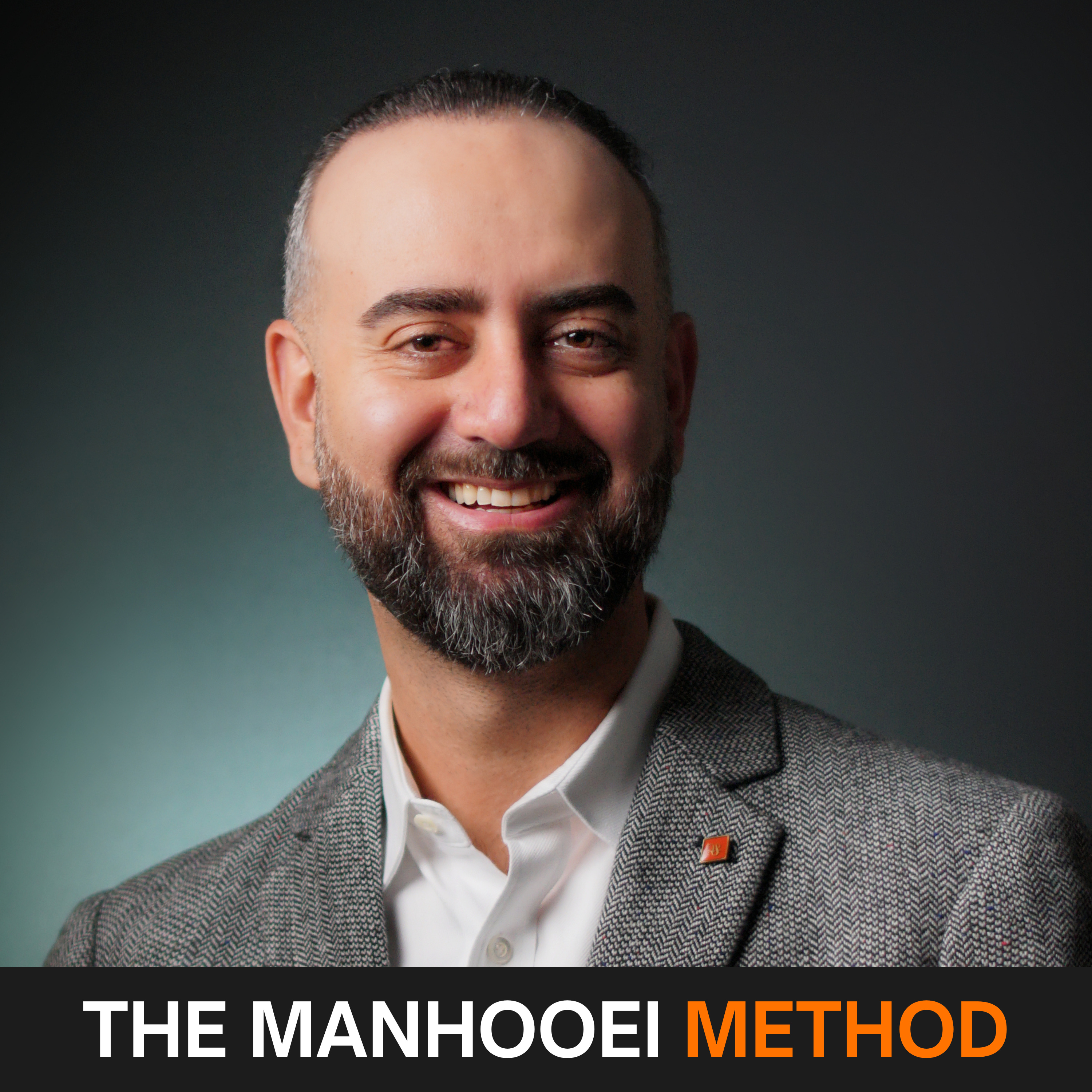
The Manhooei Method
by Saeid Manhooei
Here’s the reality nobody wants to admit: AI is eating everyone’s lunch, but it still can’t run your Tuesday morning meeting when Sarah from marketing is passive-aggressive and your dev team says the timeline is unrealistic. I’m Saeid Manhooei, host of The Manhooei Method, where we keep it brutally real about what moves your career forward. Each week I share unfiltered stories from my journey and the frameworks that saved me. No hustle theater. No 5 a.m. lectures. Just the playbook for getting things done through humans in an automated world.
-
19
The Rule You're Scared to Break Is Safe
Senior engineers who ship clean code, hit every deadline, and follow every process keep getting passed over for the staff promotion, and this episode explains the organizational mechanic behind it. Saeid Manhooei breaks down who actually writes a company's unwritten rules, why faithful rule-following produces average outcomes by design, and the difference between rules that protect the system and rules that only protect the status quo. He walks through what a VP is really screening for in the calibration room, and why it almost never comes down to who executed most reliably. For any technical professional who suspects that playing it safe carries a cost they haven't fully calculated.If the version of this you're living right now is one you can't say out loud at work, that's exactly the kind of thing I want. There's a link below. No name, no company, nothing that points back to you. Tell me what's actually happening, and it might turn into an episode with every trace of you scrubbed out. Or check the private box and it just comes to me https://TheManhooeiMethod.com/contactBook: https://www.amazon.com/Last-Human-Software-Engineer-Relevant/dp/B0FHHLD22JNewsletter: https://TheManhooeiMethod.comYoutube: https://www.youtube.com/@TheManhooeiMethod
-
18
Why you need a Sponsor than a Mentor at Work
If you've done everything right at work and still watched someone else get the promotion, this episode explains the layer of advancement most people never discover. Saeid breaks down how promotion decisions in large organizations are often made before any formal process begins, why sponsorship works on a transactional basis that nobody likes to admit out loud, and how to find a sponsor not by impressing people but by solving something they actually need solved. He also covers how roles get created for specific people at senior levels, and what it took for that to happen to him personally. For anyone who has hit a ceiling they couldn't explain and suspects the answer isn't more hard work.If the version of this you're living right now is one you can't say out loud at work, that's exactly the kind of thing I want. There's a link below. No name, no company, nothing that points back to you. Tell me what's actually happening, and it might turn into an episode with every trace of you scrubbed out. Or check the private box and it just comes to me https://TheManhooeiMethod.com/contactBook: https://www.amazon.com/Last-Human-Software-Engineer-Relevant/dp/B0FHHLD22JYoutube: https://www.youtube.com/@TheManhooeiMethodNewsletter: https://TheManhooeiMethod.com
-
17
Career Advice Industry is Broken, Here's Why
Hard work alone does not get people promoted in most organizations. Research and firsthand experience consistently show that career advancement depends on a combination of performance, visibility, and how you are perceived by decision-makers, not just the quality of your output.This episode addresses why most career advice fails to produce real advancement, and what the mechanics of career progression actually look like inside large organizations.Why doesn't hard work lead to promotion? Because decisions about who moves up are made by people forming a picture of who is ready for the next level. That picture is built from visibility, presence, and perceived readiness, not a spreadsheet of contributions. Execution without visibility is not a career strategy.What is executive presence and why does it matter? Presence is the way you occupy a room, communicate confidence, and signal that you have already thought something through. It acts as a multiplier on the work you deliver. The same output from two different people lands differently depending on who presents it and how.Why do less qualified people sometimes get promoted over stronger performers? Because leadership promotes the person they can already picture in the bigger role, not necessarily the person who has performed best in their current one. Perception and sponsorship shape that picture before any formal process begins.What does self-development content get wrong about career growth? Most career content is optimized for motivation rather than practical mechanics. Advice like "let the results speak for themselves" is structurally designed to be safe and repeatable, not useful. The mechanics of how careers actually move inside organizations are rarely discussed because they are uncomfortable to name out loud.Covered in this episode: why visibility matters more than execution alone, how presence amplifies the perceived value of your work, why confidence precedes the proof rather than following it, and what organizational leaders are actually evaluating when they decide who is ready to move up.If the version of this you're living right now is one you can't say out loud at work, that's exactly the kind of thing I want. There's a link below. No name, no company, nothing that points back to you. Tell me what's actually happening, and it might turn into an episode with every trace of you scrubbed out. Or check the private box and it just comes to me https://TheManhooeiMethod.com/contactBook: https://www.amazon.com/Last-Human-Software-Engineer-Relevant/dp/B0FHHLD22JYoutube: https://www.youtube.com/@TheManhooeiMethodNewsletter: https://TheManhooeiMethod.com
-
16
You're Looking for a Place to Use Your AI Agent
Most teams building with AI today aren't asking the wrong questions on purpose. They just started in the wrong place. In this episode, Saeid breaks down how to decide when agentic AI is actually the right tool for the job and when a traditional programmatic approach will outperform it every time. He covers how to read the shape of a problem before you pick a solution, where judgment needs to live in a system and why that changes everything, and how to think about failure modes before they cost you. For engineers, product managers, and technical leaders who want to build smarter, not just faster.
-
15
Nobody Taught You How to Negotiate
In this episode, I'm expanding on how negotiation actually works in everyday professional situations and teaching practical ways to prepare before the conversation even starts. We talk about understanding leverage, identifying what is and is not negotiable, and structuring your asks so both sides can walk away with a result that lasts. If you work with other people, you are negotiating more often than you think.
-
14
Your Mom Should Have Told You This
In this episode, I share practical career advice most people never hear early enough but wish they had. From why your annual performance review is secretly a resume update opportunity, to why interviewing every couple of years keeps you sharp, this conversation is about understanding your real position in the market while you still have choices.You will hear why staying comfortable is not the same as staying secure, how practicing interviews improves the way you tell your story, and why negotiating from strength changes everything. This episode is a reminder to check your trajectory, stay intentional about the work you choose, and keep your professional momentum moving forward.
-
13
How to Get Your Idea Off the Ground
You had a great idea. You believed in it. And then someone said no. Before you make that rejection about yourself, consider this: most ideas don't fail because they're bad. They fail because of timing, framing, and everything happening in the room that you couldn't see. In this episode, I'll break down why good ideas get shut down, how to repackage and reintroduce them strategically, and why showing less, not more, is often what finally gets something greenlit. From embedding your idea inside an already-approved initiative to finding the pain point that makes your solution impossible to ignore, this episode is for anyone who has ever had something worth fighting for and wasn't sure how to keep fighting.
-
12
Recruitment Fraud and the Hiring Arms Race
Hiring didn’t break overnight. It slowly turned into an arms race.In this episode, we unpack how optimization, AI tools, and hiring pressure changed the way resumes and interviews are interpreted, and why trust has eroded on both sides of the process.This is about understanding the system, not blaming people.
-
11
Your Resume Is a Signal - Not a Story
If your resume is not getting responses, the issue may not be your experience.In this episode, we talk about resume structure, attention control, ATS relevance matching, and why most resumes lose before the first thirty seconds are over.This changes how you approach applications.
-
10
Most Layoff Advice Makes Things Worse
Most people sabotage their job search in the first days after a layoff.In this episode, we explore why announcing weakness publicly lowers perceived value, how to create leverage without lying, and why optionality is the real advantage in a competitive market.This changes how you think about your next move.
-
9
The Musical Chairs of Promotions
Most people think promotions are a reward for performance. That belief quietly holds them back.This episode explores the hidden mechanics of promotions inside large organizations, why the system feels unfair by design, and how to stop tying your growth to someone else’s approval.If this feels uncomfortable, that is the point.
-
8
Companies Don’t Want to Train You Anymore. Here’s Why.
The career contract you were promised no longer exists.In this episode, I explain why companies stopped betting long term on people, how AI changed the math, and why no one is coming to future proof your career for you.Disagree if you want.But don’t ignore it.
-
7
Your Manager's Feedback Series: Turning Confusing Advice into Real Growth
Breaking down how to turn confusing feedback into real progress. Saeid Manhooei guides you through the comments you hear in performance reviews that sound helpful but leave you stuck. You learn why phrases like manage expectations, be more data driven, or show more ownership often hide simple issues that can be fixed with clearer communication and intentional follow up. This episode shows how to ask better questions, make your progress visible, and turn vague advice into measurable growth. If you want clarity at work, this conversation gives you practical tools you can use now.
-
6
Your Manager's Feedback Series: Be More Collaborative
In this episode of The Manhooei Method, I break down what managers really mean when they say things like “be more collaborative,” “improve communication,” or “think at the next level.” You’ll learn how to translate vague feedback into clear, actionable steps that build trust, influence, and confidence at work. If you’ve ever left a performance review unsure what your manager actually wanted, this episode will help you decode the message and turn perception into progress.
-
5
Your Manager's Feedback Series: Why It Sounds Smart but Changes Nothing
Ever walk out of a one-on-one thinking, “What did that even mean?”You’re not alone.In this episode of The Manhooei Method, I break down the vague feedback that sounds impressive but leaves you stuck. “Be more strategic.” “Show leadership.” “Manage up.” They sound actionable, but most of the time they’re just noise, until you learn how to decode them.You’ll learn how to turn abstract feedback into concrete steps you can actually take, and how to ask the right follow-up questions that make your manager clarify what they really want.If you’ve ever felt like you’re doing all the right things but not getting traction, this episode will help you see the hidden meaning behind the feedback loop, and how to finally use it to move forward.
-
4
Becoming the Person Who Delivers Certainty
When pressure hits, everyone looks for the person who stays calm. The one who turns noise into a plan. The one who says, “I’ll handle it,” and actually does.In this episode of The Manhooei Method, we talk about how to become that steady presence people trust when things get chaotic. I share a story from a high-stakes project that went off the rails and how slowing things down, bringing clarity, and communicating with calm turned panic into progress.You will learn how certainty works like gravity in a team. It steadies emotions, restores focus, and makes you indispensable.If you have ever wanted to build real influence without shouting, this episode will show you how.Listen in, take notes, and start practicing certainty in the next storm that hits your team.
-
3
How to Align Across the Org: System Architecture for Humans
In this episode of The Manhooei Method, we talk about what it really takes to get things done in a big organization. It is not just about code or clean architecture. It is about people, alignment, and communication.I share a story about a project that looked perfect on paper but struggled in real life because I forgot the most important dependency: people.You will learn how to think about your company like a living system, how to build real alignment across teams, and how to design your communication so work actually moves.If you have ever felt stuck between great ideas and slow progress, this episode will help you see the system differently.
-
2
Empathy for Your Leader: Seeing What You Can’t See
It’s easy to forget that your leader is human too. You see their title, their calendar, their authority, but you don’t see the weight they carry behind closed doors. The late-night calls, the quiet negotiations, the times they protect their team from things you never hear about.In this episode, I talk about what it really means to have empathy for your leader. I share a personal story about George Hunter, a director who changed how I see leadership and why his influence still shapes how I lead today.If you’ve ever had a leader who looked out for you when they didn’t have to, this one will hit home.Listen in, and when it’s over, take a minute to reach out to that person who believed in you. Tell them what they meant to your journey.
-
1
Never Outshine the Decision Maker
Sometimes your career doesn’t end with a blow-up or a firing. It ends quietly. You correct the wrong person in the wrong room, and suddenly your calendar shrinks, your invites dry up, and you’re no longer in the conversations that matter. In this episode, I share real stories of how smart engineers lost influence by outshining decision makers, and how you can protect relationships, keep your credibility, and still have your voice heard without paying the hidden career tax.
-
0
The Prince of PowerPoints: Winning with Clarity
You ever sit in a meeting and watch someone else take the spotlight for work you basically carried on your back? They show a couple of slides, drop a neat one-liner, and suddenly they’re the hero of the story. Meanwhile, you’re left wondering why nobody seems to remember the late nights you spent fixing the mess. This episode is about that exact moment, and why clarity, not just hard work, is what gets remembered in corporate America. I’ll share stories of times I lost the room, times I won it back, and the simple playbook anyone can use to make their work stick in people’s minds. Because here’s the truth: whoever explains the victory is remembered as the victor. And if you’ve ever felt invisible, if you’ve ever wondered why others keep getting the credit, this one’s going to hit home.
-
-1
Engineering Fallacy: Why Merit Isn’t Enough
Most of us grow up believing the same story: if your work is excellent, people will notice. In school, the rules made sense. You wrote the correct code, the compiler passed, you won. But the moment you step into a real company, everything changes. The smartest idea does not always win, the cleanest code is not always chosen, and the most technically brilliant person is not always the one leadership calls on. Why? Because organizations are not machines. They run on trust, clarity, and human perception.In this episode, I share the hard lesson I learned in a war room, when I had the fix but someone else earned the trust simply by framing the problem and solution with confidence. That was the day I realized technical merit and career visibility do not always travel together. This is the engineering fallacy.We will talk about why correctness is only the entry fee, how trust is built by framing uncertainty, and how you can use clarity, presence, and structure to make your work visible without exaggeration.
-
-2
Quiet Brilliance Won’t Save You, Make It Visible
Ever pull an all-nighter fixing something huge, only to watch someone else get the credit? In this episode I share why quiet brilliance isn’t enough and how to make your wins visible without sounding like you’re bragging.Doing great work isn’t enough if no one sees it. I share the hard lesson I learned about making your impact visible, and how a simple shift in how you tell the story of your work can change your career.
We're indexing this podcast's transcripts for the first time — this can take a minute or two. We'll show results as soon as they're ready.
No matches for "" in this podcast's transcripts.
No topics indexed yet for this podcast.
Loading reviews...
ABOUT THIS SHOW
Here’s the reality nobody wants to admit: AI is eating everyone’s lunch, but it still can’t run your Tuesday morning meeting when Sarah from marketing is passive-aggressive and your dev team says the timeline is unrealistic. I’m Saeid Manhooei, host of The Manhooei Method, where we keep it brutally real about what moves your career forward. Each week I share unfiltered stories from my journey and the frameworks that saved me. No hustle theater. No 5 a.m. lectures. Just the playbook for getting things done through humans in an automated world.
HOSTED BY
Saeid Manhooei
Loading similar podcasts...
Frequently Asked Questions
How many episodes does The Manhooei Method have?
The Manhooei Method currently has 22 episodes available on PodParley. New episodes are automatically indexed when they're published to the podcast feed.
What is The Manhooei Method about?
Here’s the reality nobody wants to admit: AI is eating everyone’s lunch, but it still can’t run your Tuesday morning meeting when Sarah from marketing is passive-aggressive and your dev team says the timeline is unrealistic. I’m Saeid Manhooei, host of The Manhooei Method, where we keep it brutally...
How often does The Manhooei Method release new episodes?
The Manhooei Method has 22 episodes. Check the episode list to see recent publication dates and frequency.
Where can I listen to The Manhooei Method?
You can listen to The Manhooei Method on PodParley by clicking any episode. We provide an embedded audio player for direct listening, and you can also subscribe via your preferred podcast app using the RSS feed.
Who hosts The Manhooei Method?
The Manhooei Method is created and hosted by Saeid Manhooei.
URL copied to clipboard!