
PODCAST · news
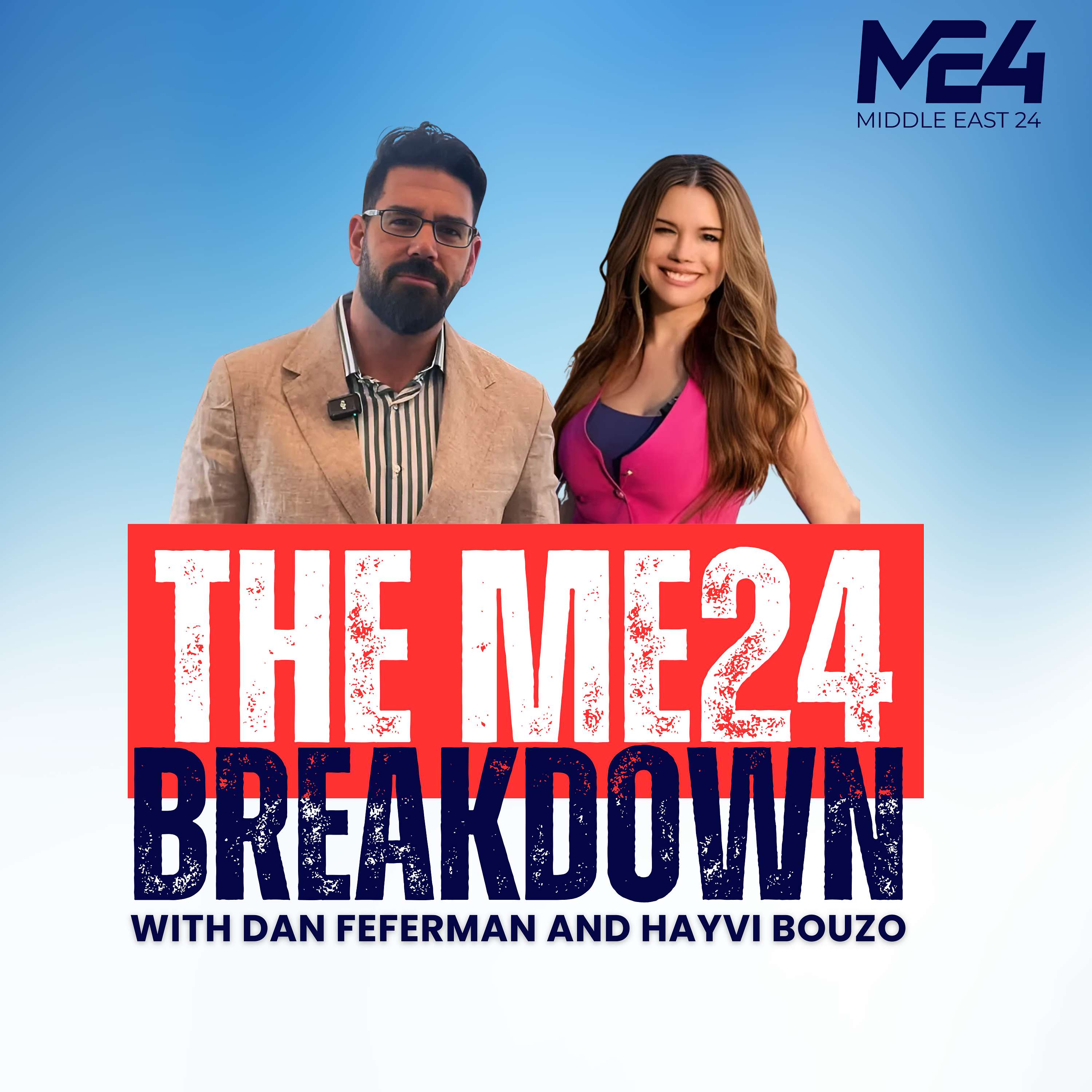
The Middle East Breakdown With Dan and Hayvi
by Middle East 24
The Middle East Breakdown from Middle East 24 delivers clear, in-depth reporting and analysis on the forces shaping the region. Each episode takes a neutral, investigative approach to breaking news, geopolitics, and cultural shifts, with a focus on uncovering cutting-edge trends and long-term dynamics behind the headlines. Listeners get context, evidence, and clarity every time.
-
7
The Economic D-Day Against Iran - What Changes Now?
Iran is entering its most dangerous phase in years - and the next move could determine whether the regime survives, lashes out, or collapses under pressure. Behnam Ben Taleblu breaks down the Trump administration’s new "economic D-Day," the sanctions and blockade campaign aimed at Iran’s money, oil, and survival machinery, and explains why this may be the strongest pressure campaign Washington has ever tried.With Hayvi Bouzo and Dan Feferman, Behnam goes deep on what makes this escalation different from past maximum-pressure efforts, why Treasury’s new designations are only the beginning, and how the regime is likely to respond if it feels cornered. The conversation also gets into the real state of Iran’s nuclear and missile programs, the munitions damage already done, and why the drone threat may still be the hardest to fully contain.You'll discover:Why "economic D-Day" is more than a slogan and how it targets foreign nodes, banks, shipping, crypto, gold, aviation, and other regime lifelines, How the new sanctions campaign pairs with a maritime blockade to squeeze Iran from both sides What the 2025 and 2026 strikes changed in Iran’s nuclear and missile programsWhy negotiations may be running out of road, even as Tehran tries to buy timeHow the regime could escalate asymmetrically through proxies, cyber operations, and attacks on regional infrastructureBehnam also explains why the IRGC, the Supreme Leader’s office, and the Supreme National Security Council still shape the core of the system, why internal fear inside Tehran may be deeper than it looks, and why the Iranian people remain the most important strategic variable in the entire equation. He makes the case that any real endgame has to involve cyber freedom, pressure on the regime’s financial arteries, and a serious strategy for supporting a post-Islamic Republic future.Hayvi and Dan push hard on the big questions: Can sanctions alone break the regime? Is there still a meaningful deal to be made? What does an Iranian backlash look like if the pressure keeps rising? And if the West wants a real outcome, what should it be doing now instead of repeating the same failed assumptions? Essential listening if you want to understand Iran beyond the headlines - and why the next few weeks could be pivotal for the Middle East, global markets, and the future of the regime in Tehran.
-
6
Why the West Misses Jihadism
Jihadism is not a local problem, and this conversation makes that impossible to ignore. Dr. Walid Phares and Dr. Charles Jacobs join Hayvi Bouzo and Dan Feferman to explain why they launched the International Freedom Coalition, a global alliance built around the people, communities, and countries actually living under threat.What starts as a discussion about a new organization quickly becomes a sweeping map of the fight against global jihadism - from Sudan and Darfur to Nigeria, Biafra, Somaliland, Syria, Iraq, Iran, Lebanon, Afghanistan, Israel, Europe, and the United States. The guests trace how decades of work against slavery, persecution, and extremist ideology led them to build an umbrella coalition that unites persecuted groups instead of keeping them isolated.You’ll hear how the coalition plans to work in Congress, with parliaments, and across the policy world - and why both guests believe the real battle is not just military or diplomatic, but a war of ideas. They break down why human rights institutions often fail the very people they claim to protect, why the West keeps misreading the threat, and why the most effective resistance is coming from those who have already paid the highest price.We break down:- Why Charles Jacobs sees the same jihadist pattern in Sudan and in the October 7 attacks- How Walid Phares frames global jihadism as two linked “dragons” - Salafi and Khomeinist- Why Israel is viewed by many of these communities as the model for survival, resistance, and self-defense- How the International Freedom Coalition plans to unify African, Middle Eastern, Jewish, Christian, Druze, Kurdish, Persian, and Arab moderate voices-Why both guests say the West is still dangerously behind the curve on Iran, the Muslim Brotherhood, and extremist infiltrationThis episode is essential listening if you want to understand how anti-jihad coalitions are being built across continents, why so many conflicts are connected, and what it actually takes to turn scattered resistance into a movement with real political weight.Dr. Walid Phares is a longtime Middle East analyst and terrorism expert, known for his work on jihadist ideology, regional strategy, and U.S policy.Dr. Charles Jacobs is a human rights activist and anti-slavery campaigner, known for exposing atrocities in Sudan and fighting persecution through grassroots organizing.If you care about the future of the Middle East, the West, and the global fight against extremism, do not miss this one.For of these content you can follow us on IG - @MiddleEast_24 If you like to dive more deep you can read at our magazine https://www.mideastjournal.org/
-
5
Why the biggest obstacle in Gaza is NOT Hamas
Ahmed Fouad Al-Khatib Explains Why the Biggest Obstacle in Gaza Is No Longer Just HamasGaza is at a hinge moment, and the next moves could determine whether Hamas is finally forced to disarm or finds another way to survive. Ahmed Fouad Al-Khatib breaks down the fragile new architecture on the table, the Israeli line being pushed deeper into Gaza, and why the fight over “heavy” versus “light” weapons may be the most deceptive part of the entire deal.What makes this episode essential is the tension at the center of it: Hamas is signaling flexibility while insisting on face-saving language, Israel is demanding disarmament before withdrawal, and the international stabilization force is arriving into a landscape where the rules, the timelines, and even the mission itself are still unresolved. We unpack the implications of Khalil al-Haya’s rise, the role of clans and militias inside Gaza, and the growing possibility that the agreement is less about a clean handoff than about a slow, coercive collapse of Hamas’ authority.You’ll discover:Why Ahmed believes Hamas may be boxed in with no real exit leftHow the “yellow line” and Israel’s expanding control shape the next phaseWhy tunnels, AK-47s, RPGs, and clan weapons matter as much as rocketsWhat the International Stabilization Force is actually supposed to do on the groundWhy the biggest risk may be months of stagnation that allow Hamas to regroup or splinterAhmed also explains why the real obstacle is not just military, but narrative and political: the absence of imagination from the Israeli, Arab, European, and American actors trying to design Gaza’s future. He argues that without a serious plan for de-radicalization, reconstruction, and a new security framework, the region could waste another historic opening while pretending that delay is strategy.We also get into the broader stakes for Israel’s upcoming elections, the possibility of a narrative shift that could change how Gaza is rebuilt, and the dangerous gap between how the conflict is discussed in the West and what people inside Gaza are actually experiencing. Ahmed makes the case for radical pragmatism, Palestinian agency, and a future that is not defined by Hamas, slogans, or endless stalemate.Essential listening if you want the clearest, most unsparing read on where Gaza stands now, what the disarmament deal could really mean, and why the next few months may decide far more than just Hamas’ fate.Ahmed Fouad Al-Khatib is a fellow at the Atlantic Council, the founder of Realign for Palestine, and the author of Hamas and its two million hostages. He is one of the sharpest voices on Gaza, Palestinian politics, and post-war reconstruction.
-
4
How To fix Israeli Politics? The Middle East Breakdown with Moshe Feiglin
Israeli politics has a deeper problem than left versus right - Moshe Feiglin says it has become a market of people, not a market of ideas. In this sharp, unsparing conversation, he argues that the real crisis is cultural: a democracy where parties blur together, media rewards personal attacks over substance, and voters are no longer treated as the authority.Dan Feferman presses Feiglin on the biggest questions hanging over Israel right now - from October 7 accountability and the collapse of political trust, to the role of the IDF, the media, and the security establishment in shaping the country’s future. Feiglin explains why he believes the current system is structurally broken, why “security” may dominate the next election without solving the real issues, and why the fight over ultra-Orthodox enlistment is being weaponized for political gain.You'll hear Feiglin lay out the case for replacing the current nationwide-list system with a regional model, why he thinks the Oslo mindset still distorts Israeli decision-making, and what he believes should actually be at the center of the national debate. Along the way, he doesn’t hold back on Bennett, Netanyahu, the Supreme Court, or what he sees as a deeply rotten political culture that protects power instead of enforcing responsibility.If you want a candid inside-the-system take on Israeli politics, accountability, and the ideas behind the headlines, this episode delivers a provocative and unfiltered perspective. Essential listening for anyone trying to understand where Israel is headed next - and what has to change first.
-
3
Why Dalia Ziada Had to Flee Egypt After Speaking Out on October 7? The Middle East Breakdown
In this powerful episode of The Middle East Breakdown, Havy Bouzo and Dan Feferman speak with Egyptian writer, political analyst, and human rights activist Dalia Ziada about the personal cost of speaking out after October 7. Dalia shares how condemning Hamas and defending Israel’s right to self-defense led to threats, legal attacks, and ultimately her forced departure from Egypt.The conversation goes deep into the forces shaping the region today: Hamas’s tactics, Egypt’s internal politics, Hezbollah, the Houthis, the Muslim Brotherhood, Qatar, Turkey, and Iran’s regional proxy network. Dalia also explains why media narratives in the Arab world and the West have distorted what really happened on October 7, and why she believes peace and coexistence remain the only way forward.If you care about the future of the Middle East, this is a must-watch conversation.
-
2
Why Iran Chooses Conflict Over Prosperity
In this episode of Middle East Breakdown, Dan Feferman and Hayvi Bouzo speak with former U.S. Treasury sanctions expert Miad Maleki about Iran’s escalating strategy in the Strait of Hormuz, the role of sanctions, and why the Islamic Republic keeps choosing conflict over economic recovery.We unpack how Iran uses pressure, propaganda, and maritime disruption as tools of leverage, why sanctions have mattered, and what this means for the region, the U.S., and global security.If you want sharp independent analysis on Iran, sanctions, and the Middle East, this conversation is for you.#Iran #StraitOfHormuz #MiddleEast #Sanctions #Geopolitics #Podcast
-
1
Why I Refused to Run for PM: Fouad Makhzoumi’s Vision for a Sovereign Lebanon
In this episode, we sit down with Lebanese MP and prominent Sunni leader, Fouad Makhzoumi. In a candid and insightful conversation, Makhzoumi breaks down the political complexities of Lebanon, explaining why he chose not to compete for the Prime Minister position to avoid dividing the forces opposing Hezbollah.We dive into: His vision for a sovereign, independent Lebanon. The historical significance of the current negotiations. His long-standing advocacy for direct peace with Israel and his efforts to unite Sunni leadership toward this goal.This is a must-watch for anyone looking to understand the real political dynamics shifting behind the scenes in Lebanon today
-
0
The Middle East Breakdown: Middle East Negotiations and Regional Power Dynamics: Israel-Lebanon, Iran, and U.S. Strategies
The breakthrough in Lebanon-Israel negotiations signals a rare window for peace in a deeply unstable region, but Hezbollah's opposition exposes a dangerous undercurrent. With the U.S., Lebanon, Iran, and Israel all navigating a complex web of interests, the potential for escalation remains high. Why is this moment different? And what’s the true power behind the scenes that could either derail or deliver peace?In this episode, we dissect the historic talks occurring for the first time in decades, driven by diplomatic shifts and regional reforms. You’ll discover how U.S. brokered negotiations aim to carve out pilot zones, turning conditional peace into a practical reality — an effort backed by the Lebanese government and increasingly challenged from within by Hezbollah’s interference. We break down the emerging consensus among Lebanon, Israel, and the U.S. that represents a potential turning point, but one shadowed by Hezbollah’s threats and Iran’s strategic calculus.We also explore Iran's calculus as it attempts to embed Hezbollah into nuclear negotiations, and the broader struggle for regional dominance. Our analysis covers the implications of the U.S. stance on Iran’s nuclear aspirations, Iran’s asymmetric warfare tactics, and the risks of stoking regional instability ahead of the upcoming U.S. elections and World Cup. Why does this all matter? Because the outcome will shape the security landscape of the Middle East and beyond — and could either prevent a regional conflict or ignite a broader clash.This episode is essential for security professionals, policymakers, and analysts seeking clarity amid the region’s chaos. The stakes are high: missing this window could mean losing years of progress, or worse, triggering a conflict that threatens global stability.Expert insights from Robert Rabil, a leading authority on Lebanese security and Islamist movements, and Hussein Abdel-Hussein, author of The Arab Case for Israel, inform our strategic outlook. Their analyses clarify how internal Lebanese politics, Hezbollah’s infiltrations, and U.S. diplomacy are shaping the regional game.Prepare for a concise, credible briefing on why this moment matters. No fluff, no exaggeration—just the facts that matter for understanding the Middle East’s dangerous crossroads.Want to stay informed on everything happening in our region in real-time? I invite you to follow ME24 on social media and dive deeper into our analysis and reports in the Middle East Journal. It’s your go-to source for accurate, in-depth perspectives on the Middle East—all in English. Join our growing community.
-
-1
The secret that the Muslim Brotherhood doesn't want you to know
Middle East Breakdown with Dan FefermanOur latest episode features special guest Emily Neilson, a Middle East analyst and researcher.In this conversation, we take a deep dive into the structure, history, and influence of the Muslim Brotherhood, examining how the movement operates across different countries and regions throughout the Middle East and North Africa. We explore its organizational methods, political strategy, and the ways its ideology has shaped various movements and actors across the region.We also discuss some of the most important issues shaping the Middle East today, including the wars and political developments involving Hamas, Lebanon, Sudan, and other key regional flashpoints. The episode provides historical context, expert analysis, and a broader look at how these interconnected events influence the region's future.If you enjoy in depth conversations, regional analysis, and expert perspectives that go beyond the headlines, make sure to subscribe and support our work. Your support helps us continue producing more conversations like this and bringing knowledgeable voices from across the Middle East to our audience.
-
-2
Inside the Iran Negotiations
Uncover the hidden dynamics shaping the Iran negotiations and the future of regional security. In this episode, our experts go beyond the headlines to reveal the strategic calculus driving Washington’s approach and Tehran’s true intentions. As talks stall, we analyze the broader implications for Middle Eastern stability from fluctuating oil markets to the web of regional proxies and shifting global alliances.We break down the internal power struggles in Iran, including the critical uncertainty surrounding Khamenei’s role and the rising influence of the IRGC. Are they pursuing nuclear dominance at any cost? Our analysis covers the regime’s propaganda machine, the status of proxies from Hezbollah to the Houthis, and the long-term game of missile threats, covert operations, and asymmetric warfare.Why does the U.S. continue negotiations despite the red flags? We explore the complex interplay of timing, domestic politics, and regional stakes that define this moment. You’ll learn why a 60-day interim deal might be doing more harm than good and what it means for the future of American and Israeli security policies.📢 Want to dive deeper into these critical insights?Visit our website for exclusive reports and in-depth analysis:👉 https://www.mideastjournal.org/In this episode, we cover:The true state of Iran’s internal leadership and the IRGC’s power grab.Why "restraint" might be a strategic miscalculation.The dangerous reality of asymmetric warfare in the Middle East.What policymakers and security analysts need to know now.Turn on notifications to stay ahead of the curve on the most volatile region in the world.
-
-3
Who's Really Running Iran? The War, The Ceasefire & What Happens Next
In this episode of The Middle East Breakdown, hosts Dan Feferman and Hayvi Bouzo sit down with Gregg Roman, Executive Director of the Middle East Forum, for one of the most clear-eyed assessments of the US-Iran war, the fragile ceasefire, and what comes next.Recorded on April 10th, five weeks into the biggest direct military confrontation between the US, Israel, and the Islamic Republic of Iran, the conversation asks the hard questions: Who actually won? What was realistically achieved? And is this ceasefire a genuine opening or just Iran buying time?The panel examines the war as a chapter in 25 years of American foreign policy toward Iran rather than a standalone event, the real state of Iran's nuclear and missile programs after 39 days of strikes, why regime decapitation didn't collapse the Islamic Republic, the IRGC's deep bench and mosaic defense strategy, where US and Israeli war aims overlap and where they diverge, and what the Gulf states, the broader Abrahamic alliance, and the negotiations in Islamabad mean for the future of the region.Watch, listen, and subscribe for full episodes and regional analysis.Website: YouTube: / @middleeast_24 Instagram: / middleast24 X: Spotify:
-
-4
Israel at 78: The Jewish State, the Shifting Middle East, and the Battle for the Western Narrative
In this episode of The Middle East Breakdown, hosts Dan Feferman and Hayvi Bouzo mark Israel's 78th Independence Day with one of the most wide-ranging conversations in the show's history, tracing the full arc of the Jewish story from the Holocaust to the refounding of the modern state, the shifting regional landscape around Israel today, and the deepening disconnect between how the Arab world and the Western world view Israel in 2026. Recorded against the backdrop of Yom HaZikaron transitioning into Yom HaAtzmaut, the episode asks what Israel's existence actually means, what it cost, and where it is heading.Joining the discussion is Stefan Tompson, founder of Visegrad24 one of Europe's most influential news aggregators with over 900,000 followers on X and more than a billion impressions in peak months. A London-born content creator and communications specialist of Polish and South African descent, based in Warsaw, Tompson has built Visegrad24 into a platform dedicated to countering disinformation, uplifting Western values, and challenging the media narratives dominant in mainstream European and American outlets. He is also a co-founder of Middle East 24.The panel examines Hayvi Bouzo's firsthand experience visiting Auschwitz as part of the March of the Living delegation of Arab and Muslim leaders, what it revealed about the scale and machinery of the Holocaust, and why that context is inseparable from understanding Israel's founding. The conversation covers the history of Zionism from Herzl and Jabotinsky through Ben-Gurion and the competing visions of what Israel should be, the demographic and ideological shifts inside Israeli society from its socialist founding through the Oslo failure and October 7, and why Israel is one of the only successful decolonization projects in modern history. The panel addresses the radicalization of second and third generation Muslim communities in Western Europe, the role of Qatar and the Muslim Brotherhood in funding the ideological infrastructure behind anti-Israel narratives in Western academia and media, why Arabs across the Middle East are increasingly warming to Israel while Western institutions move in the opposite direction, and what the Abraham Accords represent as a model for the region's future. The episode closes with a forward look at Israel's internal challenges, including the integration of the ultra-Orthodox and Israeli Arab communities, and what it will take to sustain both a Jewish and democratic state.Watch, listen, and subscribe for full episodes and regional analysis.Website: https://middleeast24.org YouTube: https://www.youtube.com/@MiddleEast_24 Instagram: https://www.instagram.com/middleast24 X: https://x.com/middleeast24 Spotify: https://open.spotify.com/show/3ZJcMz0
-
-5
Can Israel and Lebanon Finally Make Peace? The History, the Obstacles, and the Forces Standing in the Way
In this episode of The Middle East Breakdown, host Dan Feferman examines one of the most consequential diplomatic openings in the modern Middle East: the first publicly announced, state-level talks between Lebanon and Israel in decades, held in Washington under Secretary of State Marco Rubio. With a fragile ceasefire between the United States and Iran still holding, and Hezbollah pushing to link the two tracks together, the question of whether Lebanon can finally chart its own course toward peace with Israel has never been more urgent or more complicated.Joining the discussion is Hussain Abdul-Hussain, research fellow at the Foundation for Defense of Democracies in Washington, D.C., and author of the newly published book The Arab Case for Israel. A Lebanese-Iraqi journalist and analyst who was born and raised in Lebanon, studied at the American University of Beirut, worked as a reporter for the Daily Star, and appears regularly on Lebanese national television, Abdul-Hussain brings a rare insider perspective to the history of Lebanese-Israeli relations, the internal dynamics of Hezbollah, and the evolving public sentiment inside Lebanon's Shia community.The episode examines the full arc of Lebanon's entanglement with armed conflict, from the forced signing of the 1969 Cairo Agreement that allowed Palestinian militias to operate against Israel from Lebanese soil, to the 1983 peace agreement that was killed by Hafez Assad, to Israel's unilateral withdrawal in 2000 and the subsequent failure to disarm Hezbollah under UN Security Council Resolution 1701. The conversation addresses why Hezbollah was not formed as a reaction to Israel but as an extension of the Iranian Islamic Revolution, why a significant portion of Lebanon's Shia community now opposes Hezbollah, and what combination of international pressure, Lebanese consensus, and targeted sanctions could finally force the group to surrender its arms. The panel also explores the ideological and geopolitical role of Qatar in funding the Muslim Brotherhood and shaping the Western media narrative on the region, the myth of ancient Palestinian nationhood as argued in Abdul-Hussain's book, the radicalization of Arab and Muslim American political identity, and why the Abraham Accords model offers a more honest framework for regional progress than the one dominant in Western academic and media circles.Watch, listen, and subscribe for full episodes and regional analysis.Website: YouTube: Instagram: X: Spotify:
-
-6
From Islamabad: Inside the Iran Talks, the Ceasefire, and What Comes Next | Ahmed Quraishi
In this episode of The Middle East Breakdown, hosts Dan Feferman and Hayvi Bouzo sit down with senior Middle East and national security analyst Ahmed Quraishi, reporting live from a locked-down Islamabad as US-Iran negotiations are hours away from beginning.Recorded on April 10th, with the 12-day ceasefire just days old and the Islamabad talks yet to start, the conversation asks the questions the rest of the media is missing: What is actually left of the Iranian regime after 39 days of strikes? Why did it survive? And is Iran capable of delivering real concessions on nuclear, missile, and proxy programs without the regime ceasing to exist?The panel examines why the Basij, not the IRGC, is the force that kept the regime alive, what the repeated strikes on Chabahar and Abadan signal about Iran's minority regions, why Pakistan's credibility is now on the line, what the Gulf states are quietly preparing for, and whether there is a new class inside the IRGC willing to make a deal.Watch, listen, and subscribe for full episodes and regional analysis.Website: mideastjournal.orgYouTube: @middleeast_24Instagram: @middleast24X: @middleeast_24Spotify: The Middle East Breakdown
-
-7
Who's Really Running Iran? The War, The Ceasefire & What Happens Next
In this episode of The Middle East Breakdown, hosts Dan Feferman and Hayvi Bouzo sit down with Gregg Roman, Executive Director of the Middle East Forum, for one of the most clear-eyed assessments of the US-Iran war, the fragile ceasefire, and what comes next.Recorded on April 10th, five weeks into the biggest direct military confrontation between the US, Israel, and the Islamic Republic of Iran, the conversation asks the hard questions: Who actually won? What was realistically achieved? And is this ceasefire a genuine opening or just Iran buying time?The panel examines the war as a chapter in 25 years of American foreign policy toward Iran rather than a standalone event, the real state of Iran's nuclear and missile programs after 39 days of strikes, why regime decapitation didn't collapse the Islamic Republic, the IRGC's deep bench and mosaic defense strategy, where US and Israeli war aims overlap and where they diverge, and what the Gulf states, the broader Abrahamic alliance, and the negotiations in Islamabad mean for the future of the region.Watch, listen, and subscribe for full episodes and regional analysis.Website: YouTube: / @middleeast_24 Instagram: / middleast24 X: Spotify:
-
-8
The Hidden Struggles of Kurds in Iran: A Path to Unity?
In this episode of The Middle East Breakdown, hosts Dan Feferman and Hayvi Bouzo explore the complex and often overlooked struggle of the Kurdish community inside Iran, examining their place within the country's broader ethnic mosaic and what the current regional conflict means for their future. Joining the discussion are Suzan Quitaz, journalist and regional analyst covering Kurdish and Iranian affairs, and Diliman Abdulkader, policy expert specializing in Kurdish self-determination and minority rights across the Middle East.The panel examines the ethnic composition of Iran and the systematic oppression of its minorities, the military capacity and regional influence of Kurdish forces, the fragile but growing push for unity among Iran's non-Persian groups, and what international support or regional alliances would be required for Kurdish self-governance to move from aspiration to reality.Watch, listen, and subscribe for full episodes and regional analysis.Website: https://middleeast24.orgYouTube: / @middleeast_24 Instagram: / middleast24 X: https://x.com/middleeast24Spotify: https://open.spotify.com/show/3ZJcMz0
-
-9
Iran Under Fire: Military Objectives, the Opposition's Moment, and the Future of Lebanon
In this episode of The Middle East Breakdown, hosts Dan Feferman and Hayvi Bouzo examine the ongoing U.S. and Israeli military campaign against the Islamic Republic of Iran, now entering its second week at the time of recording. The discussion covers the strategic objectives driving the strikes, the state of Iran's degraded military capabilities, and the critical question of what comes next for the Iranian people and the broader region.Joining the discussion are Dr. Walid Phares, author of "The Future Jihad," renowned Middle East expert and former Middle East advisor to the first Trump campaign; and Gazelle Sharmahd, human rights activist, spokesperson for the Kingdom Assembly of Iran, and director of the Iran desk at the International Freedom Coalition. Sharmahd brings extraordinary personal testimony as the daughter of Jamshid Sharmahd, a democracy activist abducted, tortured, and executed by the Islamic Republic regime.The panel examines the scope of U.S. and Israeli strikes on Iran's navy, air defenses, ballistic missile infrastructure, and senior IRGC leadership. The conversation addresses the appointment of Mujtaba Khamenei as successor, the organized nature of the liberation movement inside Iran, mass defections from the armed forces, and the transitional leadership framework coalescing around Crown Prince Pahlavi. The panel also assesses the strategic transformation underway in Lebanon, where Hezbollah is at its weakest point in decades and Lebanese voices are speaking with unprecedented openness against the group, and what a post-Hezbollah order could realistically look like.Watch, listen, and subscribe for full episodes and regional analysis.🌐 Website: https://middleeast24.org▶️ YouTube: https://www.youtube.com/@MiddleEast_24📸 Instagram: https://www.instagram.com/middleast24🐦 X: https://x.com/middleeast24🎧 Spotify: https://open.spotify.com/show/3ZJcMz0
-
-10
Gaza After the Ceasefire: Hamas Reassertion, the Board of Peace, and the Case for a New Gaza
In this episode of The Middle East Breakdown, hosts Dan Feferman and Hayvi Bouzo examine the ground reality inside Gaza following the October ceasefire that ended two years of war. Despite the halt in major fighting, Hamas has rapidly moved to reassert control over the 47% of Gaza it still governs, executing perceived opponents, deploying its Ministries of Interior, Commerce, and Finance to extract taxation from a devastated civilian population, and rebuilding its military and administrative infrastructure through what experts describe as a systematic mafia-like operation. The episode interrogates whether the international community's approach to Gaza's post-war transition is fundamentally flawed and what a viable alternative might actually look like.Joining the discussion is Ahmed Fouad Alkhatib, Director and Founder of the Real Line for Palestine initiative at the Atlantic Council and one of the most closely sourced independent analysts on Gaza's internal dynamics. Alkhatib brings firsthand intelligence, field data, and senior-level diplomatic access to his assessment of where Gaza stands today, who Hamas actually is in its current reconstituted form, and whether the transitional structures now being proposed have any realistic chance of success.The panel examines the structural failure of sequencing, specifically the decision to flood Gaza with commercial goods before pursuing Hamas disarmament, and how that mistake has allowed Hamas to collect an estimated $300 million in taxation revenue during the ceasefire period. The conversation probes the shifting Arab regional alignment, the divergence between Emirati and Saudi positioning, and the role Qatar and Turkey are playing in what critics describe as Hamas's attempted rebranding. The hosts and their guest also explore the proposed International Stabilization Force under the Board of Peace framework, its contested mandate, and whether it risks functioning as a buffer that protects rather than constrains Hamas. In a significant moment, Alkhatib publicly outlines for the first time his vision for a model community in Hamas-free northern Gaza, built on three pillars of security, economic opportunity, and cultural transformation, as a potential nucleus for a new Gazan identity rooted in coexistence rather than resistance. The episode closes with a frank assessment of Iran's role as the primary state sponsor sustaining Hamas ideologically and operationally, and what targeted action against the Iranian regime could mean for the broader Israeli-Palestinian dynamic.Watch, listen, and subscribe for full episodes and regional analysis.Website: https://middleeast24.orgYouTube: / @middleeast_24 Instagram: / middleast24 X: https://x.com/middleeast24Spotify: https://open.spotify.com/show/3ZJcMz0
-
-11
Israel After October 7th: Political Fractures, the Iran Threat, and the Road to Elections
In this episode of The Middle East Breakdown, hosts Dan Feferman and Hayvi Bouzo examine the profound political, security, and social transformation Israel has undergone since October 7th exploring how the country's pre-existing fractures shaped its response to the Hamas attack, what the ongoing war has revealed about Israeli strategic doctrine, and where the country is headed as it approaches a pivotal election cycle.Joining the discussion is Yakov Katz, former longtime Editor-in-Chief of The Jerusalem Post, current fellow at the Jewish People Policy Institute, host of the JPPI podcast, and co-author of the national bestselling book "While Israel Slept: How Hamas Surprised the Most Powerful Military in the Middle East." Katz brings decades of experience covering Israeli security, politics, and regional affairs, as well as firsthand insight into Israeli decision-making at the highest levels.The panel examines Israel's failed containment policy toward Hamas and the deeper doctrinal failures that enabled October 7th, drawing parallels to the conceptzia of the 1973 Yom Kippur War. The conversation explores Israel's pre-war political trauma —five elections in three and a half years, the judicial reform crisis, and deep societal polarization and how that instability compounded the national shock of the attack. The discussion addresses the ongoing psychological and physical toll of the war, the rehabilitation of communities in the north and south, and the challenge of national healing following the return of the remaining living hostages. On the political front, the panel analyzes the upcoming Israeli elections, the absence of new political figures, tribal voting patterns, the ultra-Orthodox draft controversy, and the strategic calculations of key figures including Netanyahu, Bennett, Lapid, and potential new entrants. The episode also addresses the Iran nuclear negotiations under the Trump administration, the risk of a repeat of JCPOA-style compromises, and what a military strike or diplomatic deal would mean for Israeli domestic politics and regional security. Finally, the panel reflects on the broader transformation of the Middle East the weakening of Iran's axis, the fall of Assad, Arab world engagement in Gaza's future and what Israel's 80th anniversary in 2028 could look like depending on the choices made in the coming months.Watch, listen, and subscribe for full episodes and regional analysis.Website: https://middleeast24.orgYouTube: / @middleeast_24 Instagram: / middleast24 X: https://x.com/middleeast24Spotify: https://open.spotify.com/show/3ZJcMz0
-
-12
Post War Gaza, What Comes Next, with Ghaith Al Omari and Robert Silverman
ME24 Breakdown digs into the day after in Gaza. We cover what it would take to disarm Hamas, how a multinational authority could work, what role the Palestinian Authority and Arab states can realistically play, and what lessons Iraq, ISIS, Bosnia, and Lebanon offer. Clear analysis, no spin.Guests, Raith Al Omari, senior fellow at The Washington Institute and former adviser to the Palestinian negotiating team. Robert Silverman, editor in chief of the Jerusalem Strategic Tribune, former senior U.S. diplomat and lecturer at Shalem College.Chapters,00:00 Intro and ME24 mission02:25 Where the war stands now09:10 Hamas disarmament, military versus political tracks18:40 Post war models, multinational authority, local governance32:15 The PA, Arab states, and U.S. leadership44:20 Risks of insurgency, lessons from ISIS and Bosnia55:10 Takeaways and next stepsFollow ME24, X, Instagram, YouTube.Rate the podcast on Spotify and Apple Podcasts.🔗 Stay connected with MiddleEast24:🌍 Website: www.middleeast24.org📸 Instagram: instagram.com/middleast24𝕏 Twitter/X: x.com/middleeast_24
-
-13
The Middle East 24 Breakdown
Abraham Accords at 5 Years | Middle East 24 PodcastFive years since the signing of the Abraham Accords, our ME24 team sat down to reflect on what has changed, what has endured, and what still lies ahead. In this episode, Hayvi and Dan welcome Dr. Waleed Phares, Mozah, and Aaesha to share their stories, experiences, and insights.We talk about:The UAE’s vision of peace and modernizationHow the Accords have shaped daily life in Israel and the GulfDr. Waleed Phares’s firsthand perspective on how the Accords were bornWhat October 7th means for the future of normalizationThe challenges and opportunities facing the next chapter of Arab-Israeli cooperationHow younger generations are starting to see each other in new waysIt’s a conversation about resilience, hope, and the hard work of building peace. Join us as we look back on the past five years and ahead to what comes next.Subscribe to Middle East 24 for more thoughtful conversations about the region, its people, and its future.🔗 Stay connected with MiddleEast24:🌍 Website: www.middleeast24.org📸 Instagram: instagram.com/middleast24𝕏 Twitter/X: x.com/middleeast_24
We're indexing this podcast's transcripts for the first time — this can take a minute or two. We'll show results as soon as they're ready.
No matches for "" in this podcast's transcripts.
No topics indexed yet for this podcast.
Loading reviews...
ABOUT THIS SHOW
The Middle East Breakdown from Middle East 24 delivers clear, in-depth reporting and analysis on the forces shaping the region. Each episode takes a neutral, investigative approach to breaking news, geopolitics, and cultural shifts, with a focus on uncovering cutting-edge trends and long-term dynamics behind the headlines. Listeners get context, evidence, and clarity every time.
HOSTED BY
Middle East 24
CATEGORIES
Loading similar podcasts...
Frequently Asked Questions
How many episodes does The Middle East Breakdown With Dan and Hayvi have?
The Middle East Breakdown With Dan and Hayvi currently has 21 episodes available on PodParley. New episodes are automatically indexed when they're published to the podcast feed.
What is The Middle East Breakdown With Dan and Hayvi about?
The Middle East Breakdown from Middle East 24 delivers clear, in-depth reporting and analysis on the forces shaping the region. Each episode takes a neutral, investigative approach to breaking news, geopolitics, and cultural shifts, with a focus on uncovering cutting-edge trends and long-term...
How often does The Middle East Breakdown With Dan and Hayvi release new episodes?
The Middle East Breakdown With Dan and Hayvi has 21 episodes. Check the episode list to see recent publication dates and frequency.
Where can I listen to The Middle East Breakdown With Dan and Hayvi?
You can listen to The Middle East Breakdown With Dan and Hayvi on PodParley by clicking any episode. We provide an embedded audio player for direct listening, and you can also subscribe via your preferred podcast app using the RSS feed.
Who hosts The Middle East Breakdown With Dan and Hayvi?
The Middle East Breakdown With Dan and Hayvi is created and hosted by Middle East 24.
URL copied to clipboard!