
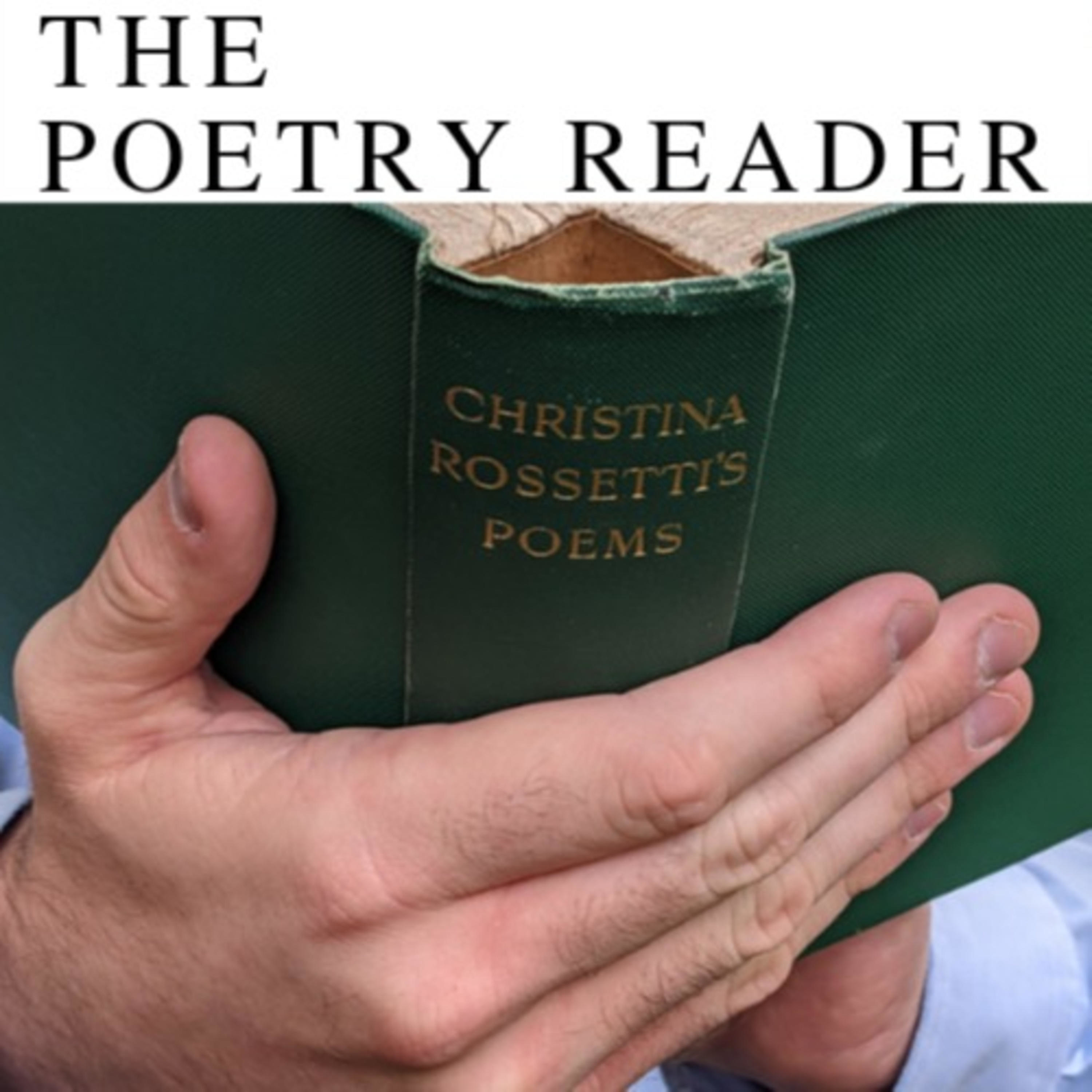
PODCAST · arts
The Poetry Reader
by John Serafini
A daily podcast devoted to sharing the beauty of poetry. Each month I present selected works from a different poet.
Episodes
-
57. William Wordsworth's "Glad sight wherever new with old"
At eight lines, this is one of Wordsworth’s shortest poems.
-
56. William Wordsworth's "Composed at Cora Linn in Sight of Wallace’s Tower"
This poem was likely written in 1814 during Wordsworth’s trip to Scotland with his wife and sister-in-law.
-
55. William Wordsworth's "Ode: Intimations of Immortality"
This irregular Pindaric ode was published in 1807. It employs three movements to consider death, loss of the sense of the divine, and hope that memory of the same will make men more sympathetic.
-
54. William Wordsworth's “To Thomas Clarkson. On the Final Passing of the Bill for the Abolition of the Slave Trade. March, 1807”
The subject of this poem, Thomas Clarkson, devoted his life from 1785 until 1807 and beyond in his quest to abolish slavery in the British Empire and around the world.
-
53. William Wordsworth's “Tribute to the Memory of the Same Dog”
Like “Incident characteristic of a Favourite Dog, which belonged to a Friend of the Author,” this poem was also published in 1807.
-
52. William Wordsworth's “Incident, Characteristic of a favourite Dog, which belonged to a Friend of the Author”
This poem was entitled “Incident characteristic of a Favourite Dog” prior to its publication in 1807, where it received the lengthened title that it maintains today.
-
51. William Wordsworth's “I Wandered Lonely as a Cloud”
Originally composed in 1804, this poem was revised and then finally published in 1815. It ties together themes of memory, imagination, and nature.
-
50. William Wordsworth's "To a Highland Girl"
This poem was composed shortly after William Wordsworth toured Scotland in 1803.
-
49. William Wordsworth's "The Solitary Reaper"
From its ballad form to its focus on closeness with nature and its emphasis on deep human emotion, this 1803 work is a quintessential Romantic era poem.
-
48. William Wordsworth's "Rob Roy’s Grave"
Wordsworth wrote this poem during an 1803 tour of Scotland. It pays homage to Rob Roy, the outlaw and folk hero of Scotland who died in 1734.
-
47. William Wordsworth's "There is a bondage which is worse to bear"
Published in 1807, this poem contrasts outward restrictions on freedom with the self-imposed shackles on liberty and goodness that people so often embrace.
-
46. William Wordsworth's "London, 1802"
In this sonnet, Wordsworth laments the moral state of England and lifts up John Milton, the seventeenth century poet, as a shining exemplar for his countrymen.
-
45. William Wordsworth's "Near Dover, September 1802"
Wordsworth wrote this and a number of other poems in 1802 during the Peace of Amiens. He was able to see his nine-year-old daughter in France for the first time due to the travel allowed by the brief pause in hostilities.
-
44. William Wordsworth's "The World Is Too Much with Us"
This Petrarchan sonnet was published in 1807. It highlights Wordsworth’s concerns regarding humanity cutting itself off from nature and becoming disconnected from itself as well as a result.
-
43. William Wordsworth's ""Beloved Vale!" I said, "when I shall con""
This poem compares the anticipated and the experienced realities of recollecting memories from youth.
-
42. William Wordsworth's "Composed upon Westminster Bridge, Sept. 3, 1802"
While the original manuscript submitted by Wordsworth to his publisher lists the date in the title as “Sept. 3, 1803,” he edited this date of publication in 1838 to the correct year of 1802. The poem is a Petrarchan sonnet written in loose iambic pentameter.
-
41. William Wordsworth's "From the Same. To The Supreme Being."
The “From the Same” in the title of this poem references the name of his earlier poem, “From the Italian of Michel Angelo,” and is one of his miscellaneous sonnets.
-
40. William Wordsworth's "To Sleep"
This work is one of at least three poems by William Wordsworth with this title. It is a part of his miscellaneous sonnets.
-
39. William Wordsworth's "Ode to Duty"
This work speaks to the freedom and peace found in duties freely accepted.
-
38. William Wordsworth's "Character of the Happy Warrior"
This poem was written in 1806 after the death of Lord Nelson, the British hero of the Napoleonic Wars. It is written in English heroic couplets.
-
37. William Wordsworth's "The Sailor's Mother"
“The Sailor’s Mother” was written in March 1802 as a literary response to Robert Southey’s poem of the same name.
-
36. William Wordsworth's "Lucy Gray"
With an emphasis on the connection between nature and innocence, “Lucy Gray” depicts the sorrow felt for a young life cut short. This poem is, interestingly, not typically grouped with his other Lucy poems.
-
35. William Wordsworth's "The Oak and the Broom, a Pastoral"
Published in the second edition of Lyrical Ballads, this poem follows a shepherd’s tale as he personifies the various elements of nature around him.
-
34. William Wordsworth's "Lines written in early Spring"
Published in the 1798 collection Lyrical Ballads, this poem reflects on the harmony of the natural world and the tragedies flowing from human nature.
-
33. William Wordsworth's "The Virgin"
Written about the Blessed Virgin Mary, this poem was published in Wordsworth’s 1822 collection entitled Ecclesiastical Sonnets.
-
32. William Wordsworth's "The Tables Turned; an Evening Scene, on the same subject"
Often referred to as “The Tables Turned,” this poem was published in Wordsworth’s and Coleridge’s 1798 collection Lyrical Ballads. The poem uses Wordsworth’s preferred simple language and presents nature as an alternative teacher to books.
-
31. Reflections on Christina Rossetti's Poetry
In this episode, I share some of my thoughts on Christina Rossetti's poetry generally, delve into some of my favourite works of hers, and provide other musings about life.
-
30. Christina Rossetti's "After Death"
This Petrarchan sonnet was written on April 28, 1849, and it explores themes of love, death, and the afterlife.
-
29. Christina Rossetti's "Goblin Market"
Written on April 27, 1859, “Goblin Market” is one of the most widely commented on poems of the Victorian Era and is Christina Rossetti’s longest and best-known poetic work. This narrative poem, interpreted as widely as being a mere fairy story or as a feminist social critique, has an irregular...
-
28. Christina Rossetti's "An Echo from Willow-Wood"
This poem is similar in theme to the Willowwood poems produced by Christina’s brother, Dante Gabriel Rossetti, and bears a line from one of them at the top of the poem. The longing and separation depicted in the poem are connected to the early death of Dante’s wife, Lizzie Siddal.
-
27. Christina Rossetti's "The Lowest Room"
One of Rossetti’s longest poems, “The Lowest Room” was written on September 30, 1856. In it, she contemplates the lives of characters from Homer’s two epic poems, The Iliad and The Odyssey, and reflects on what makes life truly meaningful.
-
26. Christina Rossetti's "Dedicatory Sonnet"
While first published in an 1881 collection entitled A Pageant and Other Poems, this sonnet was first presented by Christina Rossetti to her mother, Frances Mary Lavinia Polidori Rossetti, on the occasion of her eightieth birthday in 1880.
-
25. Christina Rossetti's "The P.R.B."
The P.R.B. was an acronym for the Pre-Raphaelite Brotherhood, an English group of poets, artists, and critics founded in 1848. Christina Rossetti’s two brothers, Dante and William, were key members of this group.
-
24. Christina Rossetti's "Maude Clare"
Written in the form of a traditional ballad, “Maude Clare” explores and challenges societal expectations of Victorian Era England.
-
23. Christina Rossetti's "A Wish"
This one stanza poem was written by Rossetti in 1853.
-
22. Christina Rossetti's "Behold, I stand at the Door and Knock"
Christina Rossetti wrote extensively on Christian themes, and “Behold, I stand at the Door and Knock” is one of her nearly five hundred works of devotional poetry. The title refers to Revelation 3:20, and the poem presents scenes like those described in Matthew 25:31-46.
-
21. Christina Rossetti's "Who has seen the Wind?"
This short two stanza poem is one of Christina Rossetti’s many works of poetry for children. It was published in 1872 in her illustrated book Sing Song: a Nursery Rhyme Book.
-
20. Christina Rossetti's "In the Lane"
“In the Lane” is a three stanza poem written on May 3, 1856, that paints an intimate picture of lovers’ reconnection.
-
19. Christina Rossetti's "Endurance"
"Endurance" was written around the year 1850.
-
18. Christina Rossetti's "On Keats"
Rossetti’s sonnet about John Keats, the English Romantic poet who lived from 1795 to 1821, was written on January 18, 1849. Keats desired that his sole grave marking be the words “Here lies One Whose Name was writ in Water,” and Rossetti features these words in her poem.
-
17. Christina Rossetti's "Somewhere or Other"
"Somewhere or Other" was written by Rossetti in 1863.
-
16. Christina Rossetti's "A Smile and a Sigh"
This short two stanza poem contemplating love and life was written by Rossetti in February 1866.
-
15. Christina Rossetti's "No, thank you, John"
This dramatic monologue poem was written on March 27, 1860.
-
14. Christina Rossetti's "Winter: My Secret"
Originally titled “Nonsense,” this poem was written on November 23, 1857.
-
13. Christina Rossetti's "L. E. L."
This elegy is titled with the initials of Letitia Elizabeth Landon, an English poet and novelist who lived from 1802-1838. Christina Rossetti wrote this poem as a tribute to her on February 15, 1859, and dedicated it with the words ‘Whose heart was breaking for a little love.’
-
12. Christina Rossetti's "Cousin Kate"
This dramatic monologue poem was written on November 18, 1859. It was composed near the beginning of Rossetti’s 1859-1870 period volunteering at the St. Mary Magdalene Penitentiary in Highgate, a charitable institution that provided assistance to prostitutes and unwed mothers.
-
11. Christina Rossetti's "Dead before Death"
This poem was written on March 9, 1855. It appeared in Rossetti’s first publicly published collection of poetry, Goblin Market and Other Poems, which was published in 1862.
-
10. Christina Rossetti's "Remember"
This poem was written on July 24, 1849, when Rossetti was 18.
-
9. Christina Rossetti's "A Death of a First-born"
This poem was written on January 14, 1892, on the occasion of the sudden and early death of Prince Albert Victor, Duke of Clarence, who was a grandson of Queen Victoria and second in the line of succession to the British throne.
-
8. Christina Rossetti's "A Christmas Carol"
This poem is one of Rossetti’s nearly five hundred works of devotional poetry. It was first published in January 1872, and today it is best known through Gustav Holst’s 1906 musical setting as “Cranham” or “In the Bleak Midwinter.”
We're indexing this podcast's transcripts for the first time — this can take a minute or two. We'll show results as soon as they're ready.
No matches for "" in this podcast's transcripts.
No topics indexed yet for this podcast.
Loading reviews...
Loading similar podcasts...
Frequently Asked Questions
How many episodes does The Poetry Reader have?
The Poetry Reader currently has 50 episodes available on PodParley. New episodes are automatically indexed when they're published to the podcast feed.
What is The Poetry Reader about?
A daily podcast devoted to sharing the beauty of poetry. Each month I present selected works from a different poet.
How often does The Poetry Reader release new episodes?
The Poetry Reader has 50 episodes. Check the episode list to see recent publication dates and frequency.
Where can I listen to The Poetry Reader?
You can listen to The Poetry Reader on PodParley by clicking any episode. We provide an embedded audio player for direct listening, and you can also subscribe via your preferred podcast app using the RSS feed.
Who hosts The Poetry Reader?
The Poetry Reader is created and hosted by John Serafini.
URL copied to clipboard!