
PODCAST · education
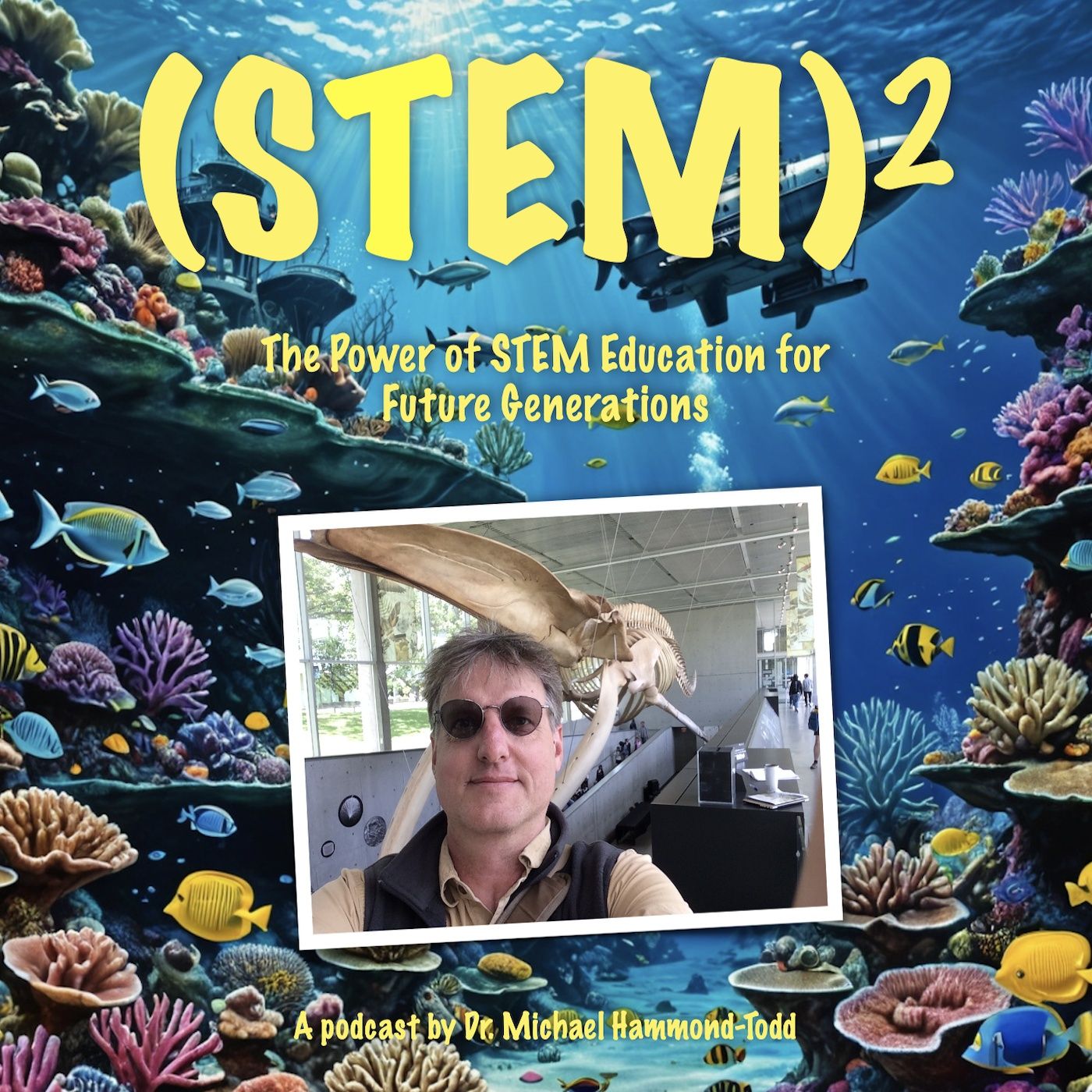
The Power of (STEM)2
by Dr. Michael Hammond-Todd
Join us for a series of (STEM)2 podcasts set to explore the diverse STEM fields of science, technology, engineering and mathematics with education. Each episode we will be discussing STEM as it relates to K-12 and community education projects, ideas and creating a more inclusive and diverse system of STEM education for future generations.
-
55
Series 10 Episode 1: Fall Series - Back to School and Educational Research
Series 10 Episode 1: Fall Series - Back to School and Educational Research — In the first episode of our 10th series we return to school and examine to topics and opportunities in educational research for this year. Key topics graduate and doctoral students might want to explore continue to evolve around how AI is transforming teaching and learning for children including possible negative impacts on student achievements and the environment that data centres may have in many small and rural communities where they are sighted. We also discuss 2026 is proving to be a particularly important year for research related to STEAM education as it relates to changing policies and funding in North America. In the news we look at news related to the new school year. (S10E1) Website Link: Educational Statistics for Canada from Statistics Canada Website Link: Educational Statistics for the United States from NCESEducational Article on AI Effects on Learning: AI Paper on Learning News Article: Smithsonian Article on Data Centres
-
54
(STEM)2 S9E6 Multicultural Inclusion and Decolonizing Island STEAM Education
Series 9 Episode 6 : Multicultural Inclusion and Decolonizing Island STEAM — In the final episode of the summer Island STEAM we are exploring the importance of multicultural inclusion in Island STEAM that also decolonizes teaching and learning processes. More specifically we will be looking at how the sheer cultural and linguistic diversities existing in island communities around the world require educational process that acknowledge the complex educational and colonial histories existing in many of the world’s inhabited worlds today. Like previous episodes in this series, place-based learning that also centres on the cultural practices, perspectives and histories of the world’s diverse communities as it relates to STEAM education requires more collaborative, culturally centred and decolonizing educational practices in teaching and learning that not only benefits our students but the surrounding communities and society as well. In the news we look at island statistics, the impact of colonization on islands and indigenous tourism on Vancouver Island.Math Link: How many islands are there in the world? Education Link: How colonialism still shapes extinctions today, from species losses to disappearing languages. News Link: 5 Indigenous Tours on Vancouver Island
-
53
(STEM)2 S9E5 Bonus Episode - - Who were the ten most influential scientists of the past 250 years?
In this bonus episode we journey through the remarkable history of science by exploring the lives and discoveries of ten of the most influential scientists of the past 250 years. From Albert Einstein's revolutionary theories of relativity and Charles Darwin's explanation of evolution to Marie Curie's pioneering work on radioactivity and Alan Turing's foundations of modern computing, we examine how these extraordinary thinkers transformed our understanding of the natural world and forever changed human society. Along the way, we uncover the stories behind their groundbreaking discoveries, the challenges they overcame, and the lasting impact their work continues to have on medicine, technology, communication, and everyday life. Whether you're a lifelong science enthusiast, an educator, or simply curious about the people who shaped our modern world, this episode offers an inspiring look at the history of scientific discovery and the power of curiosity to change the future.
-
52
Series 9 Episode 4: Island STEAM - Protecting the Past and Fostering the Future in Art and Culture
Series 9 Episode 4: Island STEAM - Protecting the Past and Fostering the Future in Art and Culture — In fourth episode we are examining aesthetics and art-based education in island STEAM. More specifically we will be looking at how the worlds thousands of uninhabited and inhabited islands provide a rich natural and cultural mosaic of curiosity and arts-based inspiration connected to the fields of science, technology, engineering and mathematics. Lessons and activities tied to place-based learning that includes activities, themes, and units connected to the world’s diverse islands enriches learning for all students through the infusion of drawing, journaling, poetry, music and other forms of visual performance. The news in this episode explores how islands around the world are using STEAM to protect and preserve historic and cultural sites from ocean level rise. We also discuss New Zealand’s earth science explorations of how the arts weaves into the sciences and look at the value of nature journaling for students of all ages.
-
51
Series 9 Episode 3: Island STEAM - Engineering & 3D Island Building Activities for Students
Series 9 Episode 3: Island STEAM - Engineering and Ecology that Includes 3D Island Building Activities for Students — In the third episode of our Island STEAM series we explore 3D island modelling and building can enhance students understanding of science and engineers in ways that particularly benefit our visually exceptional learners. Like information presented in previous episodes, the physical construction of islands can be deeply steeped in place-based learning and direct observation of arctic, temperate, tropical, desert and/or volcanic islands as an individual/class based learning activity that can be shared with the rest of your school and families at STEAM nights. In the news we look at the engineering of artificial reef building in Malaysia and geothermal partnerships between Island and Columbia. We have included a link to a middle school island building activity as well for educators wanting to see and example of how 3D island building might be incorporated into the classroom.
-
50
(STEM)2 S9E2 Island STEAM - How Arctic, Desert and Tropical Islands are Utilizing Science and Technology in Schools and Society
In the second episode of our Island STEAM series we explore how science and technology are utilized in helping islands adapt to the technological and environmental challenges posed by climate change explored in our first episode. More specifically we look at how Greenland is using long range drones to document receding ice pack and how small Pacific Island nations and the Canary Islands are integrating renewable energy systems to build more resilient energy and water purification systems. Each of these examples illuminates just one of thousands of ways diverse island communities are adapting in the 21st century that can also be utilized in teaching and learning activities. (Coming Soon)News Link: Windracer Drones in Greenland Climate ResearchNews Link: Pacific Island Nations Invest in Renewable EnergyNews Link: Using Tidal Energy to Desalinate Water in the Canaries
-
49
Series 9 Episode 1: Island STEAM - Why Teachers & Students Should Explore Island Life in Schools
Series 9 Episode 1: Island STEAM - Why Teachers & Students Should Explore Island Life in Schools — In the first episode of our Island STEAM series we explore STEAM education within the context of the world’s diverse islands and communities. There more than 600,000 diverse islands around the world with at least 11,000 of them inhabited by people. More specifically, we explore how large scientific studied phenomenon such as climate change impact Arctic, desert and tropical islands around the Earth. More specifically we look at how teachers can use islands in STEAM as diverse models for scientific research and change as it relates to how diverse communities adapt to significant environmental challenges in the 21st century. In the news we discuss how Pacific Islander secondary students are advocating for increased scientific literacy in schools and communities and the UN’s recent report on how rising sea levels threaten many low lying islands and communities.
-
48
(STEM)2 S8E8 Earthday - Integrating Diverse Questioning in STEAM Lessons & Activities
Series 8 Bonus Episode 8: Integrating Multicultural & Environmental Questioning into Earth Day STEAM Lessons/Activities - In this bonus episode of the 8th series, we explore the importance of integrating critical questioning strategies into STEAM lessons and activities. More specifically, for Earthday lessons, we look at ways to tie inquiry based learning around the value of community-based and multiculturally inclusive approaches to Earthday lessons for teachers and students. Connecting your lessons to diverse communities, cultures, and ecologies is an increasingly essential skill in todays AI and increasingly robotic world. In the news we look at the environmental impact of AI (click here) and seaside robots studying salt water intrusion and climate change (click here) as secondary case studies for school discussions.
-
47
(STEM)2 S8E7 - EarthDay News in STEAM Education
Series 8 Bonus Episode 8: EarthDay News in STEAM Education - In this bonus episode of the 8th series, Michael explores changing seasons and STEAM news related to April’s Earth Day. In world with major events, it is particularly important for primary and secondary teachers to find ways to get learners outside into nature and/or develop lessons showcasing how different societies and local communities are addressing many of the most significant challenges as it relates to climate change and healthy environments both now and into the future. In the news we look at conservation rates in the world’s oceans and partnerships between small island nations and governments and universities on Canada’s West Coast.
-
46
Series 8 Bonus Episode 6: Vygotsky, Piaget, Driver and New Research in Children’s Cognitive Development in the Age of AI
Series 8 Bonus Episode 6: Vygotsky, Piaget, Driver and New Research in Children’s Cognitive Development in the Age of AI - In this bonus episode of the 8th series, the host explores the need to revisit Piaget’s Stage Theories, Vygotsky’s Zone of Proximal Development and Driver’s seminal work on understanding children’s conceptions and misconceptions in science. Revisiting this work is particularly important in AI as a flawed educational technology that hallucinates may impact children’s understanding of science and nature in a wide variety of unknown ways. The episode ends with a call for new educational research that explores children’s cognitive development in science in the Age of AI in order to better understand both the benefits and possible impacts AI and other generative technologies may have on children’s ideas and conceptions of nature and STEAM.
-
45
(STEM)2 S8E5 Series 8 Episode 5: Top 10 Graduate and Doctoral Research Topics in STEM Ed for 2026 (9 & 10)
Series 8 Episode 5: 10 Graduate and Doctoral Research Topics in STEM for 2026 (Topics 9 & 10 key research areas) - In the fifth episode of this series, we continue exploring the most important educational research topics in STEM & STEAM graduate and doctoral students might want to consider in 2026. In this episode we examine educational research needed in the area of STEM/STEAM micro credentials at both the secondary and post secondary levels that analyzes credential effectiveness, professional standards, and academic recognition for more advanced studies in vocational colleges or public universities. This episode also examines the importance of educational research in the value of incorporating the arts into STEAM in an era where AI copies and artistic simulacra is exerting profound changes into teaching and learning. Educational research in the STEAM arts would focus on creative human creative processes of artistic meaning making and the importance of emotion and educational passion within STEAM education. Most educational research in 10th area would be qualitative in nature including the use of research narratives and biographies of creative and artistic processes in STEAM teaching and learning.
-
44
(STEM)2 S8E4 Series 8 Episode 4: Top 10 Graduate and Doctoral Research Topics in STEM Ed for 2026 (7 & 8)
Series 8 Episode 4: 10 Graduate and Doctoral Research Topics in STEM for 2026 (Topics 7 & 8 of 10 key research areas) - In the fourth episode of this series, we continue exploring the most important educational research topics in STEM & STEAM graduate and doctoral students might want to consider in 2026. In this episode we explore educational research topics in STEM related the need to more fully understand how STEM/STEAM educators and educational systems interact and/or collaborate at the international level through meta-analysis, policy/organizational examination or other internationally based case analyses at the macro level of educational research. This episode also examines the importance of localized place-based studies needed in rural, remote and linguistically diverse small communities where the traditional more urban focused STEM or STEAM curriculum needs to be collaboratively and inclusively re-aligned for small and remote communities. Inclusive and collaboratively based site specific case studies are discussed for graduate students interested in rural and remote place-based educational research.
-
43
STEM)2 S8E3 - Series 8 Episode 3: Top 10 Graduate and Doctoral Research Topics in STEM Ed for 2026 (5 & 6)
Series 8 Episode 3: 10 Graduate and Doctoral Research Topics in STEM for 2026 (Topics 5 & 6 of 10 key research areas) - In the third episode of 2026 we continue exploring the most important educational research topics in STEM & STEAM graduate and doctoral students might want to consider in 2026. In this episode we explore educational research topics in STEM related the need to more fully understand the diverse cultural taxonomies for learning and design in STEAM lessons for K-12 students. This includes STEAM studies related to indigenous and linguistically diverse populations. Other case or meta analysis needed in the areas of gender, exceptionality and socioeconomically vulnerable populations of learners. The sixth research topic relates to updating how microbiology and body systems/health education might be taught in STEAM in order to address student/family health gaps and misconceptions that have emerged since the recent global pandemic. The introduction of early microscopes and other body/health information for learners is discussed within the field of educational research in STEAM as well in the United States and Canada where preventable childhood illnesses are on the rise.
-
42
(STEM)2 S8E2 - Series 8 Episode 2: Top 10 Graduate and Doctoral Research Topics in STEM Ed for 2026 (3 & 4)
Series 8 Episode 2: 10 Graduate and Doctoral Research Topics in STEM for 2026 (Topics 3 & 4 of 10 key research areas) - In the second episode of 2026 we continue exploring the most important educational research topics in STEM & STEAM graduate and doctoral students might want to consider in 2026. In the second episode we explore educational research topics in STEM related the need to more fully understand the developmental taxonomy of children’s conceptions and misconceptions of STEAM based on theoretical model analysis and assessment design. The fourth educational research topic relates to how the use of educational AI tools and softwares impacts K-12 learners concepts of STEM and proposes a series of experimental research projects combining the use of educational AI that includes children’s direct observation of natural phenomenon and real world problem solving and engineering design.
-
41
(STEM)2 S8E1 - Series 8 Episode 1: Top 10 Graduate and Doctoral Research Topics in STEM Ed for 2026 (1 & 2)
Series 8 Episode 1: 10 Graduate and Doctoral Research Topics in STEM for 2026 (Topics 1 & 2 of 10 key research areas) - In the first episode of 2026 we explore the most important educational research topics in STEM & STEAM graduate and doctoral students might want to consider in 2026. In the first episode we explore educational research topics in STEM related the need to understand rapidly changing educational policies related to the STEM fields and education in Mexico, the United States and Canada as large scale quantitative educational studies. The second of ten research topics in STEAM education explores the need to better understand how the changing STEM curriculum might be more effectively aligned with diverse communities based on cultural demographics, diverse geographies and economic differences as more localized case studies.
-
40
(STEM)2 S7E5 - Episode 5: The Big News in Science and Education in North America for 2025
Series 7 Episode 5: The Big News in Science and Education in North America for 2025 - In the final episode for Series 7 we focus on the big science and education news in Mexico, the United States and Canada. Canada sees a surge in science research investment while there are significant reversals and funding challenges in the United States and Mexico in a critical time for STEM education and investment. We also explore three major science news topics as it relates to STEM teaching and learning including the possible discovery of fossilized life on Mars, rising cases of Measles in Canada and the United States and, finally, discussing educational challenges and opportunities with extreme weather and climate change in North America. The news links below include articles from NASA, Science, and the World Meteorological Organization. News Link: NASA Rover May Have Discovered Evidence of Possible LifeArticle Link: Canadian Climate Institute - Climate Change & StormsArticle Link: Canada and Americas Lose Measles-Free Status as Disease Spreads
-
39
(STEM)2 S7E4: The Unsung Heroes of Science Education - Elementary School Teachers
Series 7 Episode 4: The Unsung Heroes of Science Education - Elementary School Teachers - In the fourth episode we focus on the unsung heroes of science education - elementary school teachers! As academic generalists, elementary school teachers bring a lot to the table when it comes to teaching and learning in STEM. Educational strengths including their understanding of cross-curricular learning, cognitive development/understanding of children’s science ideas, and deep knowledge of student diversities & how to adapt lessons for diverse learners. We also discuss the most common challenges for elementary school teachers including the lack of professional development opportunities, building educator science knowledge in a post-truth/Bot-AI-infused world, and increased need for real world observations and experimentation by children. The news links below include articles on the importance of nature based learning how how STEM teachers are using 3D printing to improve the lives of their students.
-
38
(STEM)2 S7E3 Understanding the Labour & Environmental Impacts of AI in STEM Education
Series 7 Episode 3: Understanding the Environmental & Labour Costs of AI in STEM Education - In the third episode we explore how the environmental and labour impacts of new AI technologies may be impacting educational systems. Like earlier episodes in this series, we start by exploring how transformational technologies such as refrigeration and lead fuel cars and trucks may have benefitted society but also carried huge environmental issues as it relates to CFCs degrading the Earth’s ozone layer and the public health impacts of leaded gasoline which were generally mitigated through public policy and further technological innovation. In education, the benefits of AI can be significant as it relates to STEM lesson planning, teaching, and helping students with foundational skills development. However, like earlier technologies, it is important for STEM educators to understand current environmental impacts of AL tech/data centres on electrical grids and their heavy reliance on fresh water. This episode also looks at whether or not AI systems should have a labour tax as these technologies will likely impact and/or displace workers including teachers and/or paraprofessionals. The news link below on AI’s impact on the environment and a possible need to implement a labour tax on AI for job re-training and other societal benefits. (S7E3) News Link: AI has an environmental problem - Here’s what the world can do about thatArticle Link: Why we should tax AI
-
37
(STEM)2 S7E2 Future STEM Educational Opportunities in United States & Beyond
Series 7 Episode 2: STEM Education Opportunities in the United States and Beyond - In the second episode we explore how historical failures in STEM education including closing the US Department of Education in the United States as a model includes opportunities to re-imagine STEM education both in the United States and beyond. Like the first episode, we look at the history of public schools and how they were historically expanded due to technological, industrial and economic advancements during the industrial revolution and cold war eras. It is likely that technological innovation, combined with an increasingly complex international economic systems will push countries like the United States and Canada are STEAM to be in educational alignment with many European and Asian nations where post secondary education becomes universal as well expanding the older K-12 model here in North American into K-14 or K-16 educational systems that also include STEM and tech re-training opportunities for every economic sector and class of workers. The news links below explore some of the diverse support for STEM and STEAM programs around the world. (S7E2) Article Link: STEAM Education Policies in Europe ReviewWebsite Link: Latin American FUNDSTEAM ProgramWebsite Link: Community Based STEAM Ed in New ZealandWebsite Link: E-STEAM and Wildlife Education in Africa
-
36
(STEM)2 S7E1 Closing USDOE and its Risks to STEM Education in the United States
Series 7 Episode 1: STEM Education at Risks in the United States and Beyond - In the first episode we explore how the decision to shutter the US Department of Education in the United States will likely negatively impact STEM education at both the state and international levels. Starting with a historical discussion of federal involvement in STEM education since the landmark 1983 A Nation At Risk Report, this episode explores the likely risks and negative impacts to STEM education as it relates to curriculum standards, educational funding, professional development, and supporting STEM education for at risk and underserved schools and communities both in the United States and internationally. The news link below on how the US Department of Education is beginning to transfer programs to the Departments of Labour and Heath.News Link: US Department of Education Program Announcement
-
35
(STEM)2 S6E6: (STEAM)2, Bonus Episode -The Future of Artemis & STEM in 2025
Series 6 Episode 6: (STEAM)2, Bonus Episode -The Future of Artemis & STEM in 2025: In this bonus episode we look at the future of Artemis and biggest challenges in K-12 STEM education in 2025. More specifically, we look at the increasing challenges of science misconceptions and skepticism emerging in three key areas of science including research and education tied to climate science, the human body, and microscopic diseases. Recent elections in the United States and other parts of the world including significant research and policy changes within science, research and educational agencies suggest the need for increase efforts in climate literacy, place-based learning and earlier experiences with microscopes and the study of complex body systems by K-12 students. In the news we look at an article on the future of NASA’s Artemis program in 2025 and look back to a pivotal study on education in the United States. We also discuss the You Belong in STEM resource page for educators and students (S6E6)News links: Here is What Trump’s Win Means for NASA from Time Magazine (Click Here) Educational Website: US Department of Education’s You Belong in STEM (Click Here)Historical Research: A Nation at Risk Educational Study (Click Here)
-
34
(STEM)2 S6E5 - Multicultural STEAM & the Language of Artemis
Series 6 Episode 5: (STEAM)2 - Multicultural STEAM and the Language of NASA's Artemis: This is a special series focused on my work at the national NSTA conference in New Orleans. In the 5th episode we explore mathematics and multicultural inclusion. More specifically we explore the language of NASA’s Artemis program as it relates to multicultural inclusion in STEAM. Like its predecessor Apollo, the reich and complex language associated with Artemis provides a educational matrix for language development and understanding the diversity of cultures and people engaged in in lunar exploration as illuminated in some of the participating nations involved in the design of Artemis vehicles and technologies. Educational resources in this episode include vocabulary lesson plans for students and the diverse biographies of Artemis 2 astronauts flying to the moon in 2025. (S6E5)Educational Links: Artemis in the United States, Artemis in Canada, Artemis in Mexico & Artemis in JapanEducational Link: NASA Website: Meet Our Artemis Crew
-
33
(STEM)2 S6E4 - The Art of Moonbases & Egg-o-nauts!
Series 6 Episode 4: (STEAM)2, The Art of Moonbases and Egg-o-nauts!: In the 4th episode we explore STEAM, Art and Aesthetic Design. In addition to talking about the private and public sectors design and work together in building the complex Artemis rockets, rovers, robots, and habitats together, we explore the creative elements connected to the arts and aesthetic design as it relates to transforming creative curiosity and problem solving into testable concepts in STEAM. More specifically, this episode explores the importance of including and infusing art into Artemis lessons as a way to help students imagine themselves as future participants in lunar or other space exploration. In the news we look at public and private partnerships work together within the Artemis program as it relates to rocket, landing and lunar habitat systems. Educators interested in integrating the arts and aesthetic design as it relates to designing lunar habitats as an educational diorama. (S6E4)Educational Link: European Space Agency Art for ArtemisEducational Link: National Space Centre Make Your Own Moonbase Video
-
32
(STEM)2 S6E3 Robots on the Moon and in Your Schools
Series 6 Episode 3: (STEAM)2 - Robots on the Moon and in Your Schools: In the 3rd episode we explore STEAM and exceptional learning. In addition to exploring robotics we explore the importance of inclusive and exceptionally based STEAM lessons and activities based on a learning model developed in a report called spiceE. We also discussed multi-sensory and team projects that are asset-based that can be connected to NASA’s Artemis program as well. In the news we look at NASA’s Astrobee and LASSIE robotics programs for Artemis 2 and introducing a VEX 123 lunar robotics challenge at the NSTA Conference in New Orleans. Educators interested in special education STEAM programs can access the spicE report as well which provides a very hands-on, tactile and inclusive model of STEAM education for primary and secondary students from a European perspective. (S6E3)Educational Link: SpiceE STEAM Academy Report from EuropeEducational Link: Impact Teachers Strategies for Exceptional STEAMEducational Link: NASA Robotic Astrobee & NPR article on NASA Robotic LASSIE Rover
-
31
(STEM)2 S6E2: (STEAM)2 - NASA Artemis Rockets & Stories
Series 6 Episode 2: (STEAM)2 - NASA Artemis Lunar Robotics Challenge: In the second episode, we explore STEAM and transformative learning. Like its predecessor program Apollo, there is a tremendous amount of innovation in technology evident in NASA’s Artemis program including the infusion of robotics, AI and 3D printing discussed in this episode. Artemis educators are also using media and technologies in novel ways to help students see the connection between these emerging technologies and society. In the news we look at NASA’s main rocket called the Space Launch System and comparing it to the SpaceX system that will be used in Artemis 3. The NASA SLS booklet for elementary students and a paper model students can build is discussed as well. (S6E2)Educational Link: NASA's Artemis Space Launch SystemEducational Link: AXM Paper Space Models - SLSEducational Link: SpaceX Starship SystemEducational Link: NASA SLS Illustrated Book for Children
-
30
(STEM)2 S6E1 (STEAM)2 - NASA and New Orleans NSTA Conference
Series 6 Episode 1: (STEAM)2, NASA and New Orleans NSTA Conference : In the first episode of (STEAM)2 we layout the purpose of this series which is to explore NASA’s Artemis 2 Program within the context of the (STEAM)2 learning model for K-8 educators. Then focus on STEAM and Society as it relates to lessons about Artemis 2. For teachers we explore the Artemis Accords which are an international science and research agreement related to lunar exploration that illuminates how this program may connect with students all around the world. We also discuss place-based learning connected astronaut training in Iceland imagining how humans might live and explore the moon and other off planet environments. Learning resources include links to NSTA, information on the NASA Accords, and an article about NASA astronauts training in Iceland. (S6E1) Educational Link: National Science Teaching Association (NSTA) - New Orleans Educational Link: NASA Artemis Accords of NationsEducational Link: NASA Astronaut Training in Iceland
-
29
(STEM)2 S5E6 Bonus Episode on Cicadas in North America
In this bonus episode, we look at the rare emergence of two broods of cicadas in North America and how this rare double emergence of Broods 13 and 17 has not been seen in over two centuries. As trillions of noisy cicadas complete their life cycle, we discuss the benefits to ecosystems and share articles on how people celebrate cicadas around the world. In the news we share articles on Broods 13 and 17 (click here) and National Geographic resources four kids and schools (click here and click here). (Podcast 5E6).
-
28
(STEM)2 S5E5 Earth Day Episode - How Can AI Protect Wildlife and Teach Families About Nature?
Series 5 Episode 5: Earth Day Episode - How Can AI Protect Wildlife and Teach Families About Nature? Earth Day special education we look at ways AI is being utilized by scientists and wildlife experts to protect rare and endangered species around the world (click here). We also examine how NASA is utilizing AI to better predict extreme weather in order to help local communities (click here). The main part of our show explores a theoretical model of dynamic interpretive software that helps children in the primary grades learn about nature and environmental topics in local and regional contexts. Should AI be utilized in outdoor science and environmental education programs? Let us know by contacting us at [email protected]. (Podcast S5E5)
-
27
(STEM)2 S5E4 Series 5 Episode 4: Thematic Experimentation and Prototyping with 6-8 Grade Students - Using AI for Thematic Problem Solving an
Series 5 Episode 4: Thematic Experimentation and Prototyping with 6-8 Grade Students - Using AI for Thematic Problem Solving and Experimentation in STEM: What role does AI play in early secondary education? In Episode 4, we begin exploring AISE at the secondary levels in Grades 7-9 by introducing a forth class and educational model of science education that includes AI modelling and early prototyping of STEM tech that includes early AI coding and other elements. Secondary AISE also explores how lessons, topics and ideas beyond the local and regional cosmos that is more evident in elementary AISE. Working individually and in teams, students utilize AI in thematic lessons and/or problem-based learning that includes prototyping physical technology and robotics for community sharing at events such as an AI-linked robotics and other technical leagues and challenges (similar to Lego Robotics). In the news, we look at some of the early research into AI (click here), a new AI ethics curriculum for middle schoolers from MIT (click here) and share a website that utilizes Lego Robotics and AI (click here).
-
26
(STEM)2 S5E3 Science Fairs and Experimentation with 3-5 Grade Students - Using AI for Phenomenon-Based Experimentation
Series 5 Episode 3: Science Fairs and Experimentation with 3-5 Grade Students - Using AI for Phenomenon-Based Experimentation That Includes Authentic Testing and Critical Analysis: What role does AI play in the elementary school science fair? In Episode 3, we explore how the science fair might be transformed and enhanced by allowing students to utilize educational AI to explore experimental ideas which are then tested by the students to evaluate, confirm and/or further refine student ideas about the relationship between AI experimentation/modelling and actual physical testing and experimentation. Within this context, 3-6 Grade students participating in science fair might choose to create experiments independent of AI or augment experimentation using educational AI similar to the way scientists utilize both of these methods within science research and tech innovation. Like the previous episode, a model for future development in educational tech for 3-5 Grades is presented. In the news, we will be discussing AI based science experiments elementary students can use for experimentation from Science Buddies (click here) and the value of science fiction as it relates to student understanding (click here).
-
25
(STEM)2 S5E2 Series 5 Episode 2: What role does AI play in K-3 science education?
Series 5 Episode 2: What role might AI play in K-3 science education?: Episode 2 starts by noting the value of science learning for K-2 students on “hands-on” and directly observable phenomenon about the “Local Cosmos” as experienced by children in these grade levels. As a result digital and virtual learning with AI technologies plays a minimal role as the educational focus within these grades is to provide foundational awareness and experiences that encourage children to observe and explore natural phenomenon about their “Cosmic” experiences in nature and 3D tech building that is predominately mechanical rather than digital in nature. Educational AI, when utilized by children (and ideally their families as most observable phenomenon and natural environments are explored outside of school) is utilized as a guide and/or tutor to help children better understand what they arre observing in nature or their “Local Cosmos”. A model for future development in educational tech for these grades is presented. In the news, we will be discussing outdoor field guides (click here) and simple engineering activities children might do with their families together.
-
24
(STEM)2 S5E1 - Series 5 Episode 1: Exploring “The Cosmos” with K-12 Students Augmented by AI - A Developmental Model for Science Educators
Series 5 Episode 1: Exploring “The Cosmos” with K-12 Students Augmented by AI - A Developmental Model for Science Educators: In Episode 1 of our fifth series we start with a discussion on phenomenon-based learning in science education. Starting with real life examples of how science researchers and developers utilize AI in medical research, wildlife conservation, and the development of advanced tech (robotics and rockets), we examine how AI might be used with K-12 students within the context of augmented phenomenon based learning related to a child’s understanding of “The Cosmos”. A brief taxonomy of educational AI tech (some existing - others in development) is also presented. In STEM news we look at two ways scientists are utilizing AI to enhance public health (click here) and the conservation of endangered species (click here) and how NASE is using AI to construct hardware for space exploration (click here).
-
23
(STEM)2 S4E5 Big School Birdwatch in Britain 2024 and Nature Journaling
Series 4 Episode 5 (Bonus Episode): Big School Birdwatch in Britain and Nature Journaling - In the fifth bonus episode of Series 4 we will be exploring a fantastic birding program in Great Britain by the Royal Society for the Protection of Birds. The Big School Birdwatch of 2024 (https://www.rspb.org.uk/whats-happening/get-ready-for-big-schools-birdwatch) is one of the largest school and citizen science projects in Great Britain and serves as an excellent model at school and community partnerships. The Big School Birdwatch also provides teachers and students with the opportunity to combine writing and art together through the use of nature journals. One organization that helps teachers and students journal is John Muir Laws journaling page (https://johnmuirlaws.com/journaling-curriculum/). Educational research supports the use of nature journals to foster increase science writing, observation and creativity when combined with art. In the news we share articles on the last flight of the Mars Ingenuity (https://www.smithsonianmag.com/smart-news/nasa-ingenuity-mars-helicopter-taken-final-flight-180983667/?utm_medium=distribution&utm_source=pushly&utm_campaign=editorial) rover and educational research on the value of writing (https://interestingengineering.com/science/hand-writing-notes-better-brain-connections).
-
22
(STEM)2 S4E4 - STEM 2023 in Review and Plans for 2024
Series 4 Episode 4: STEM 2023 in Review and Plans for 2024 - In the fourth episode of Series 4 we will be looking at the biggest news articles in science (India's Rover) & (NASA's Bennu Program via Smithsonian), Technology (ht(AI Innovation via Smithsonian), and Engineering (Uht(US Fusion Engineering via CNN)lcompleting three summer engineering challenges students can complete and share at home. In the news we will be discussing engineering wonders from the United States.
-
21
(STEM)2 S4E3 - Libraries, Museums, Parks and other STEM Programs
Libraries, Museums, Parks and other STEM Programs - In the third episode we will be discussing free and low cost STEM programs and activities for children. In the news we will be discussing informal science activities for children in Canada (click here). You can find information on Canada's Live-it Program here as well (https://liveit.earth/).
-
20
(STEM)2 S4E2 - Finding STEM in Nature
Series 4 Episode 2: Finding STEM in Nature: In Episode 2 of our fourth series we are going to explore STEM activities students can easily complete in backyards, local parks, and other common outdoor settings. We will be connecting our outdoor adventures in nature to science journals and other writing/drasing activities. In the news we will be talking about Audubon Bird Count (click here) and UK's Big School's Birdwatch 2024 (click here).
-
19
(STEM)2 S4E1 A Summer of STEM Explorations
Series 4 Episode 1: A Summer of STEM Explorations - In the first episode of our fourth series we will be exploring summer STEM activities that teachers and students can complete on their own or with family and friends over the summer. You can download the 2023 Summer STEM bookmark by clicking the link (bookmark) on our homepage. In the news we will be looking at summer gaps and opportunities for student learning (UK Report on Education Recovery): (Podcast S4-E1 Coming Soon)
-
18
(STEM)2 S3E4 - Multicultural STEM with Seeds from All Around the World
Series 3 Episode 4: Multicultural STEM with Seeds from All Around the World - In the fourth episode of Series 3 we will be examining multiculturally inclusive gardens that can be cooperatively designed by diverse students and their families working in partnership with teachers and other garden experts. Our discussion will be based on a recent capstone project by Allegra Watson at the University of California, Davis (click here). In the news we will be discussing indigenous and First Nations garden projects from Canada (click here) and Australia (click here).
-
17
(STEM)2 S3E3 Growing Exceptional Gardeners in STEM Education
In the third episode we will be discussing Exceptional STEM ideas and practices for students in special education as it relates to learning about plants and gardens. In the news we will be discussing a special school garden project from England (click here). The Lane County School Garden Resource (click here) on the benefits and challenges of exceptional gardening will be explored as well.
-
16
(STEM)2 S3E2 The Transformative Nature of School Gardens in STEM
In Episode 2 of our third series we are going to explore common misconceptions 5, 10 and 15 year olds have about plants and food systems. In the news we will be discussing research on protecting agricultural biodiversity (click here) and the use of drones and robotics in agriculture (click here). We will also be discussing the value of school gardens in K-12 education.
-
15
(STEM)2 S3E1 Seeds and STEM in Society with School Gardens
In the first episode of our third series we will be exploring STEM education as it relates to seeds, school/community gardens and partnerships with farms and other food producers in STEM. Starting with simple window seed solariums that are easily constructed (see photo on website for example), we will be discussing some of the diverse school gardens and programs from New Zealand (click here) and the Southwestern United States (click here) in the news.
-
14
(STEM)2 S3B1 Earth Day Special Edition of (STEM)2
Series 3 (Bonus Episode): Earth Day Special Edition of (STEM)2 - What are the Mid Century Challenges and Opportunities in K-12 STEM Education? - In the first bonus episode of Series 3 we will be exploring STEM news and events related to Earth Day celebrated around the world. We will be revisiting a landmark study in education from the United States: A Nation at Risk in environmental contexts and looking at six midcentury challenges in STEM education as listed by AI. You can learn more about Earth Day events and the history of this world wide celebration at www.earthday.org. The article we discuss in this article by Hammond-Todd and Monk can be found at this link: article.
-
13
(STEM)2 S2E6 - Bonus Episode: An Exploration of Teaming With ChatGPT in Science Museums, Nature Centres and other STEM Learning Centres
In the second bonus episode of Series 2 we will be looking at ChatGPT (click here for link to program) and whether or not it is useful in science museums, nature centres, and other informal STEM learning programs. More specifically, we focus how ChatGPT might operate as a digital assistant in teaming and finding important educational linkages between formal and informal science education. In the news we share a recent article on generative AI research by Dr. Grant Cooper (article).
-
12
(STEM)2 S2E5 Bonus Episode: Can ChatGPT Create Inclusive STEM Lessons? - Let's Find Out!
In the first bonus episode of Series 2 we will be looking at ChatGPT (click here for link to program) and whether or not it is useful in creating inclusive STEM lessons for students with exceptionalities or who are learning English. We will be testing the software for STEM lessons in the primary grades using the science curriculum from the Australia, Canada, and the United States. In the news we discuss ways teachers are currently using Chat GPT (article).
-
11
(STEM)2 S2E4 Our Multicultural Star - The Sun
In the fourth episode of Series 2 we will be looking at the sun and constellations through multiculturally inclusive lessons and activities. Starting with an exploration on how individuals and communities view and experience the sun through diverse cultural lenses, we will discuss how educators can work with their students, families, and diverse communities to create science lessons and activities about different cultural perspectives and ceremonies tied to different solar phenomenon such as the summer or winter solstice (click here for events in Canada or Peru). This podcast will also include ideas for solar engineering, design and language support for Multilingual Learners (MLs). In the news we look art large solar plants in India and Saudi Arabia.
-
10
(STEM)2 S2E3 - An Invisible Star
In the third episode we will be exploring ways to learn about the sun and other stars in the constellation for students who see the night sky through exceptional eyes and other senses. Key to exceptional STEM lessons related to the sun revolves around activities that include tactile models and digital augmentation such as the use of solar powered toys, buzzers, and miniature buildings. Audio descriptors and experiencing the sun through sensory-based activities are also discussed. In STEM news we will be looking at the James Webb Telescope which observes the visible and invisible lights in the universe. Teachers can also find a tactile book about the sun published by NASA.
-
9
(STEM)2 S2E2 Young People's (5,10, and 15 year olds) Conceptions of the Sun
In episode 2 of our second series we are going to explore what the sun means for children and the larger communities they live in. More specifically we will be talking about shadow and solar toy experiments with 5 year olds. We will then extend solar learning and energy activities for 10 and 15 year olds with a deeper understanding of sun as a type of star, and the significance of solar energy in our geologic past, present and future. We will be looking at young people's developing ideas of the sun within the context of Dr. Rosalind Driver's ideas of meaning making and alternative conceptions. Solar4STEM has some simple activities for 5 and 10 year olds to explore. NASA's webpage on stars and the James Webb Telescope has some fascinating information for secondary students. Solar Energy International has some excellent information and resources on solar technologies and activities for secondary students as well.
-
8
S2 Episode 1: The Sun - A Child's First Star
In the first episode we will be exploring the brightest light we see, feel or experience as children (the sun) and exploring the nature of stars. As we discover in this episode, the sun is more than the sky's lightbulb for children to learn about. Stars like the sun have provided light (visible and invisible), heat and energy for both living systems and human systems as long as both existed. In STEM news we will be looking at the creation of nuclear fusion by scientists as well (click here for the article and here for educational links).
-
7
Bonus Episode S1E7: Artemis 1 Racing to the Moon - Building Paper Models
In this second bonus episode we check-in on the recent launch of Artemis 1. We will explore what the next few weeks look like and the remarkable engineering related to the Artemis 1 rocket and Orion space capsule as engineering lessons and activities for students. You can see a live recording of the Artemis 1 launch at this link on our website. The history of lunar rockets from the Apollo Era to Artemis can be viewed at this link on our website. Students wanting to build their own paper model of Artemis 1 can do so at this link on our website. We also continue to explore the moon from exceptional hands-on education and multicultural inclusion.
-
6
Bonus Episode: S1E6 Artemis 1, Canada & The Moon Squared
Artemis 1, Canada & The Moon Squared: In this bonus episode we check-in on the new November launch date for Artemis 1. We also check-in on educational programs by the Canadian Space Agency (CSA) which is set to have their first astronaut on the moon in 2024. You can access CSA educational programs at this link (click here). Finally, we look at the Moon's connection to society, common misconceptions children have about the moon, and ideas for exceptional and multicultural inclusion in your lunar lessons. Click on the links if you are interested in learning more about NASA's Artemis lunar lander (click here) or trying a video simulation of the lunar lander (click here). The next bonus episode will come out in November and explore exceptionally and multiculturally inclusive lessons about the moon. Here is the link for this bonus episode.
We're indexing this podcast's transcripts for the first time — this can take a minute or two. We'll show results as soon as they're ready.
No matches for "" in this podcast's transcripts.
No topics indexed yet for this podcast.
Loading reviews...
ABOUT THIS SHOW
Join us for a series of (STEM)2 podcasts set to explore the diverse STEM fields of science, technology, engineering and mathematics with education. Each episode we will be discussing STEM as it relates to K-12 and community education projects, ideas and creating a more inclusive and diverse system of STEM education for future generations.
HOSTED BY
Dr. Michael Hammond-Todd
Loading similar podcasts...
Frequently Asked Questions
How many episodes does The Power of (STEM)2 have?
The Power of (STEM)2 currently has 50 episodes available on PodParley. New episodes are automatically indexed when they're published to the podcast feed.
What is The Power of (STEM)2 about?
Join us for a series of (STEM)2 podcasts set to explore the diverse STEM fields of science, technology, engineering and mathematics with education. Each episode we will be discussing STEM as it relates to K-12 and community education projects, ideas and creating a more inclusive and diverse system...
How often does The Power of (STEM)2 release new episodes?
The Power of (STEM)2 has 50 episodes. Check the episode list to see recent publication dates and frequency.
Where can I listen to The Power of (STEM)2?
You can listen to The Power of (STEM)2 on PodParley by clicking any episode. We provide an embedded audio player for direct listening, and you can also subscribe via your preferred podcast app using the RSS feed.
Who hosts The Power of (STEM)2?
The Power of (STEM)2 is created and hosted by Dr. Michael Hammond-Todd.
URL copied to clipboard!