
PODCAST · technology
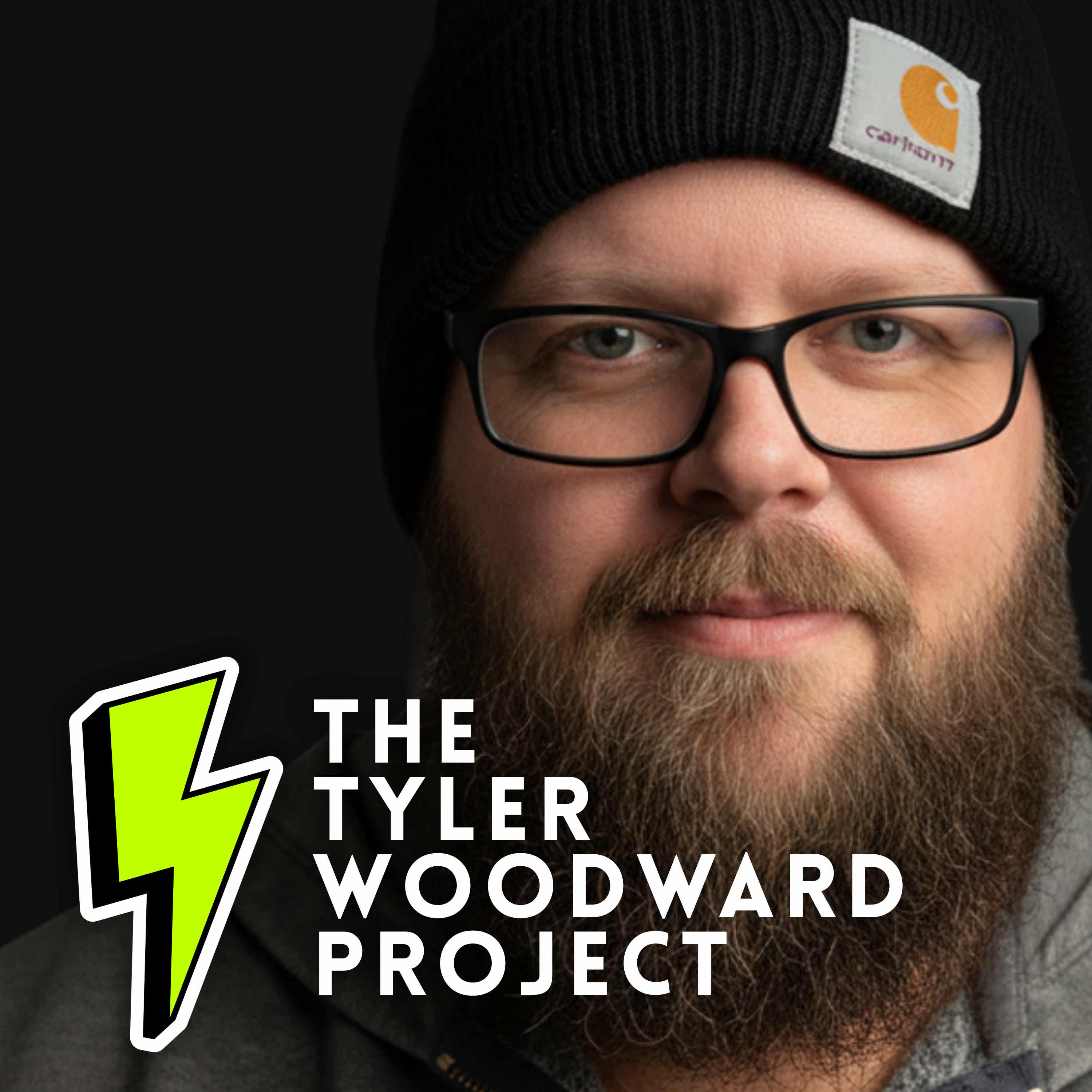
The Tyler Woodward Project | Media & Radio Insights
by Tyler Woodward
The Tyler Woodward Project is a weekly show about how technology, media, and radio infrastructure shape the world around us, told through the lens of a broadcast engineer who grew up with dial-up internet, FM and AM static, and the rise of the algorithm. Each episode unpacks the systems, signals, and corporate decisions behind how we communicate, listen, and connect, cutting through the marketing fluff and tech-industry spin. Expect sharp analysis, grounded storytelling, a touch of broadcast nostalgia, and clear explanations that make the technical human again.
-
28
Fiber powered is a lie: how ISPs sell you coax and call it glass
There's a box on my basement wall where light turns into internet, and most people paying for "fiber" don't have anything close to it. I break down the term "fiber powered," why Spectrum is selling coax as if it's the real thing, and how the FTTH, FTTN, FTTC alphabet soup exists to hide exactly where your fiber connection actually stops.I also get into the AT&T versus Spectrum lawsuit, because AT&T is suing Charter over the fiber powered branding and they're not wrong. But AT&T pulled the same trick with fake 5G labels on 4G phones a few years back, so nobody in this fight is innocent. I explain what HFC networks are, why your upload speed gets choked on shared coax, and what the fine print is actually admitting when you read it closely.This is a consumer rights problem dressed up as a tech story. If you're paying for internet every month, you deserve to know what wire is actually running to your house.Send a voicemail to the show!
-
27
Stop renting your own life back from Google, Apple, and Meta
Everyone repeats the line that the cloud is just someone else's computer, and then keeps handing over their whole life to it anyway. I get into what that actually means once you stop laughing at it: they write the rules, they change them whenever they want, and they can lock you out of your own photos and emails without warning.I walk through what Google, Microsoft, Meta, and Apple actually do with your data versus what people assume, then break down the 2022 LastPass breach as the clearest example of what happens when everyone's information gets piled into one company's server. From there I get into what self hosting actually looks like now, from a box on a shelf in your house to a rented VPS, plus tools like Vaultwarden and Immich ("Image") that let you run your own passwords and photos without handing them over to a corporation.This isn't a burn it all down pitch. I still use iCloud myself and I say so. It's a real look at how much control you're giving away by default and what it would actually take to get some of it back, which is exactly what digital ownership and tech accountability are supposed to be about.Send a voicemail to the show!
-
26
Nobody can actually hear lossless audio, including you
That lossless badge on your music app feels like a promise, until you realize it's probably not reaching your ears at all. I break down what lossless, lossy, and high res audio actually mean, why almost every pair of Bluetooth headphones including AirPods can't deliver a true lossless stream no matter what tier you're paying for, and how a format called MQA got exposed for basically faking the thing it claimed to guarantee.I also get into the actual science on whether any of this is audible in the first place, including a widely cited blind test where trained listeners barely beat a coin flip, and why the streaming service with zero lossless options is somehow crushing everyone else in growth. If you've ever felt smug seeing that little badge pop up on your phone, this one's going to mess with you a bit.This ties straight back into the bigger issue I keep coming back to on this show: companies selling you a feature that sounds great in the app copy but quietly stops being true the second it leaves their servers.Send a voicemail to the show!
-
25
You don't own your movies, your games, or your music
Tyler digs into why phones, earbuds, and even video games are suddenly going backward, dumb phones, wired earbuds, and vinyl are all trending up while smartphones and streaming keep getting more bloated and expensive. He walks through the polling data on Gen Z and millennials wanting simpler tech, then connects it to something bigger: the licensing traps hiding underneath your music, movies, and games, where companies like Sony and Apple have straight up pulled purchased content from people's libraries. It's a personal, sometimes self deprecating look at why owning something physical might be the only real way to actually own it anymore.Send a voicemail to the show!
-
24
Shrinkflation is a lie: how companies used inflation as cover
Ever notice your chip bag feels lighter but somehow still costs the same? Tyler's had it with companies calling that inflation when it's really just shrinking the product, keeping the price, and quietly banking record profits. This episode walks through real examples from Doritos to Gatorade to General Mills, breaks down corporate profit margins and the growing gap between CEO pay and everyone else's paycheck, and looks at the bills in Congress that could have addressed it and died without so much as a hearing. It's less a tidy explainer and more an argument for calling shrinkflation and greedflation what they actually are, and a reminder that your gut feeling about that lighter bag isn't you being petty. It's a straight shot to the heart of consumer rights and who actually gets a say in what you pay for.Send a voicemail to the show!
-
23
What actually killed Blockbuster (it wasn't Netflix)
Tyler takes a trip down memory lane through video rental stores, sparked by a random Nova Scotia reunion and his kid watching a video store simulator game on YouTube. He walks through the whole Friday night rental ritual, the smell, the ps2 sleepovers, the late fee arguments, and then breaks down what actually killed Blockbuster, and it's not what most people think. Turns out the most hated part of the business, those late fees, was quietly propping up a huge chunk of the company's revenue, and pulling that thread unravels a story about corporate infighting, a failed mail order gamble, and a rival chain most people forget existed. If you care about how companies handle customer relationships and what happens when short term decisions wreck something people actually loved, this one's for you.Shout out to Friends Who Pretend, the actual play podcast from Nick and James: https://podcasts.apple.com/us/podcast/friends-who-pretend/id1743693947Send a voicemail to the show!
-
22
Why internet radio got too expensive for regular people
Tyler breaks down why running a small internet radio station went from a fun hobbyist project in 2009 to a legal and financial minefield today. He walks through what changed after the small webcaster provisions expired, why licensing now means dealing with multiple performance rights groups plus SoundExchange, and how the math stopped working for anyone who isn't a billion dollar streaming company. It's a plain look at how a rule meant to make sure artists get paid ended up locking out the little guy while giants like Pandora barely feel it, tying right back into the bigger fight over digital ownership and who actually gets to participate in tech.Send a voicemail to the show!
-
21
The MySpace bug that taught a generation web design
Tyler digs into the one MySpace bug that accidentally taught a whole generation how to code: that infamous About Me box that let you paste raw HTML and CSS to completely override your profile. He walks through how millions of teenagers turned copy-pasted glitter code and stolen snippets into a real (if chaotic) education in web design, and how that kind of hands-on customization quietly disappeared as platforms shifted toward clean, algorithm-friendly templates. It's part nostalgia trip, part case study in how convenience and control replaced ownership, and it ties right back into the bigger question of who actually gets to shape the platforms we use every day.Send a voicemail to the show!
-
20
My hobby became my job, so I'm blowing up the format
Tyler hits pause on the usual format to explain why he's blowing up the show again. He walks through the moment he realized his supposedly personal podcast had quietly turned into a second shift of his day job, and what that means for where the Tyler Woodward Project goes from here.Send a voicemail to the show!
-
19
STL Redundancy: Radio's Forgotten Infrastructure Crisis
The STL, or studio to transmitter link, is the unglamorous connection that keeps a radio station on the air, and when it fails everything goes dead silent even if every other piece of gear is working perfectly. This episode covers why most stations never built backup STL systems, how broadcast consolidation pulled out the engineers who used to catch these failures fast, and what real redundancy looks like using fiber, cellular bonding, and gear like Comrex and Peplink. It's a case study in how cost cutting quietly makes critical infrastructure more fragile, which is basically the whole tech accountability story in miniature.Send a voicemail to the show!
-
18
Spotify Grades Its Own Homework: Streaming Royalty Math
Spotify decides what counts as a stream and there is no outside auditor checking the number that decides how artists get paid, unlike broadcast radio which uses Nielsen ratings and portable people meters. This episode breaks down how a 30 second play counts as a full stream, how one guy ran a years long AI bot fraud scheme that pulled in millions, and how Spotify quietly reclassified its subscription bundle in a way that shrank royalty payouts to songwriters. It is a plain look at what happens when a platform counts its own numbers and grades its own homework, another gap in tech accountability.Send a voicemail to the show!
-
17
How A UK Radio Broadcast Controls Household Heating
For over 40 years, a radio signal in the UK has been quietly switching household heating systems on and off. It's called the Radio Teleswitch Service, and it's one of the best examples of hidden data riding on broadcast signals that most people have never heard of.I explain how RTS works, how the UK approach compares to what we do in the US, and what it means that the whole thing is finally shutting down after four decades of just working.Send a voicemail to the show!
-
16
Why Podcasting Metrics Matter: The RSS Enclosure Tag
The entire podcast industry runs on one tiny XML tag that nobody owns. The enclosure tag is why podcasting stayed open when everything else got platformed, and it's also why measuring an audience is so much messier than anyone admits.I cover where RSS and the enclosure tag came from, how Spotify spent big trying to control the medium anyway, why a download is not a listen, and what Podcasting 2.0 is doing to extend the open standard without breaking it.Send a voicemail to the show!
-
15
What Is RDS? The Data Hiding in FM Radio
There's a tiny data protocol still riding inside FM signals after all these years, and it's the reason your car's dashboard knows what song is playing. RDS and its US cousin RBDS are quietly holding up more than most people realize.I cover where the standard came from, how it actually works at the technical level, and why it still matters for modern radio and modern vehicles.Send a voicemail to the show!
-
14
Why Cable News Audio Doesn't Work as Radio
Cable news channels have the staff, the brand recognition, and news gathering operations most radio stations can only dream of. Instead of building real audio products, they route the 24/7 TV feed to a streaming platform and call it done. CNN on TuneIn, Fox on SiriusXM, MSNBC's linear feed. You can technically listen. That doesn't make it radio.Real audio assumes you can't see anything. The writing accounts for it, the pacing accounts for it, and when something visual happens, someone describes it. TV assumes you're watching, so when the anchor says "as you can see here" and a map fills the screen, audio listeners get silence. That's not a small problem. That's the whole product.The proof it can be done is right there. WTOP in DC has run commercial all-news radio since 1969 and consistently ranks as the highest-rated station in the market, period. The BBC and CBC built radio as its own discipline. MSNBC's podcast operation shows they know how to produce for ears when they choose to. What's missing isn't talent or content. It's the decision to treat the live feed as something other than a TV byproduct.Send a voicemail to the show!
We're indexing this podcast's transcripts for the first time — this can take a minute or two. We'll show results as soon as they're ready.
No matches for "" in this podcast's transcripts.
No topics indexed yet for this podcast.
Loading reviews...
ABOUT THIS SHOW
The Tyler Woodward Project is a weekly show about how technology, media, and radio infrastructure shape the world around us, told through the lens of a broadcast engineer who grew up with dial-up internet, FM and AM static, and the rise of the algorithm. Each episode unpacks the systems, signals, and corporate decisions behind how we communicate, listen, and connect, cutting through the marketing fluff and tech-industry spin. Expect sharp analysis, grounded storytelling, a touch of broadcast nostalgia, and clear explanations that make the technical human again.
HOSTED BY
Tyler Woodward
CATEGORIES
Loading similar podcasts...
Frequently Asked Questions
How many episodes does The Tyler Woodward Project | Media & Radio Insights have?
The Tyler Woodward Project | Media & Radio Insights currently has 15 episodes available on PodParley. New episodes are automatically indexed when they're published to the podcast feed.
What is The Tyler Woodward Project | Media & Radio Insights about?
The Tyler Woodward Project is a weekly show about how technology, media, and radio infrastructure shape the world around us, told through the lens of a broadcast engineer who grew up with dial-up internet, FM and AM static, and the rise of the algorithm. Each episode unpacks the systems, signals,...
How often does The Tyler Woodward Project | Media & Radio Insights release new episodes?
The Tyler Woodward Project | Media & Radio Insights has 15 episodes. Check the episode list to see recent publication dates and frequency.
Where can I listen to The Tyler Woodward Project | Media & Radio Insights?
You can listen to The Tyler Woodward Project | Media & Radio Insights on PodParley by clicking any episode. We provide an embedded audio player for direct listening, and you can also subscribe via your preferred podcast app using the RSS feed.
Who hosts The Tyler Woodward Project | Media & Radio Insights?
The Tyler Woodward Project | Media & Radio Insights is created and hosted by Tyler Woodward.
URL copied to clipboard!