
PODCAST · history
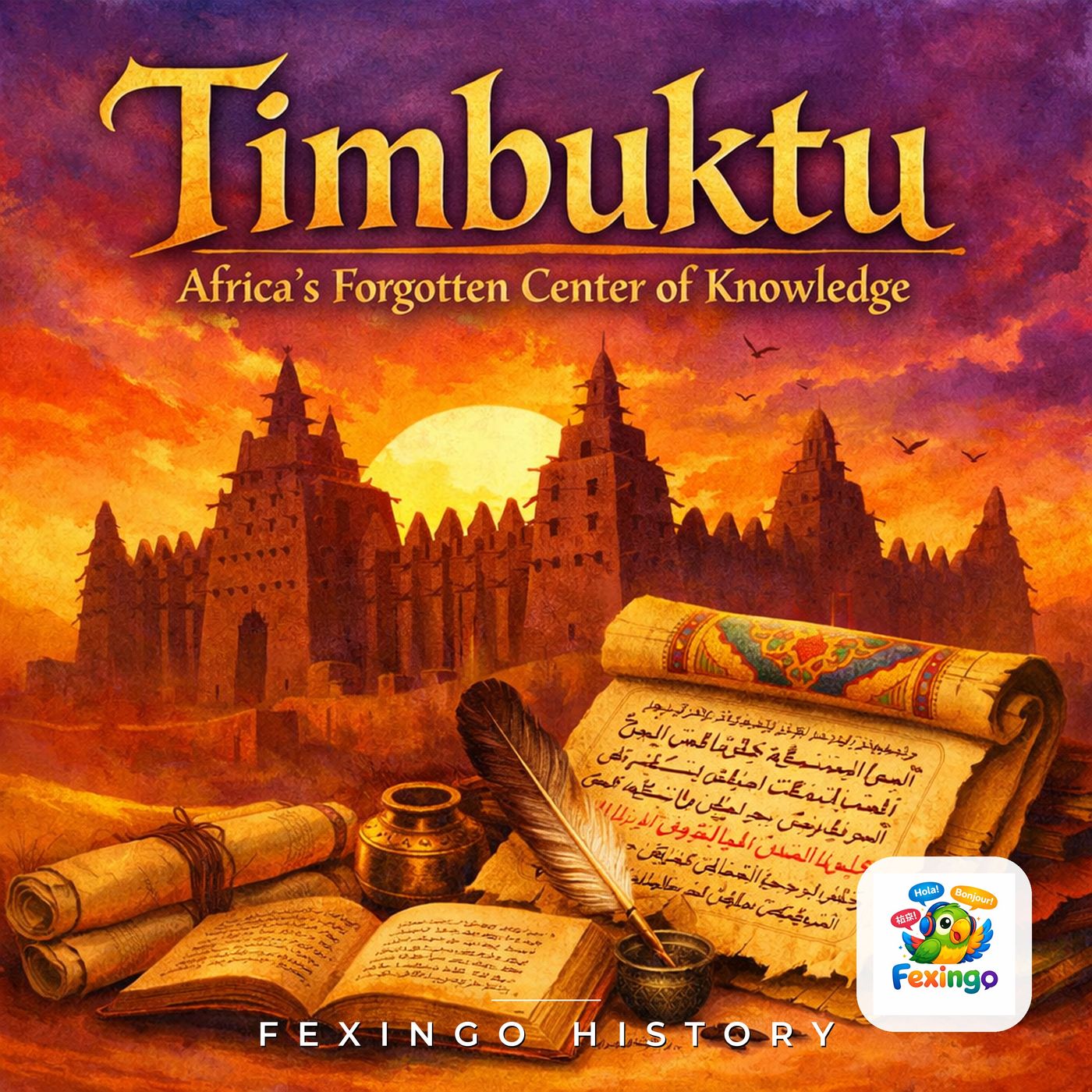
Timbuktu: Africa's Forgotten Center of Knowledge — Fexingo History
by Fexingo
Long before European universities dominated the intellectual world, Timbuktu was a beacon of learning, commerce, and culture. From the 13th to the 17th centuries, this city in present-day Mali drew scholars, traders, and travelers from across Africa, the Middle East, and Europe. Lucas and Luna explore Timbuktu's golden age under the Mali Empire and later the Songhai Empire, focusing on institutions like the University of Sankore and the legendary Djinguereber Mosque. They delve into the life of Mansa Musa, whose 1324 hajj put Timbuktu on the map, and the reign of Askia Muhammad, who fostered a renaissance of Islamic scholarship. The show examines the city's thriving manuscript trade—hundreds of thousands of texts covering astronomy, medicine, law, and poetry—and the devastating Moroccan invasion of 1591 that led to its decline. What was lost when Timbuktu's libraries were looted? What survives today, and what does its legacy mean for African identity and global history? This conversati
-
35
Timbuktu's Scribes: The Paper Economy of Knowledge
While earlier episodes explored the scholars and legal minds of Timbuktu, this episode uncovers the invisible infrastructure that made their scholarship possible: the paper trade. We follow the journey of raw cotton rag from Tlemcen in Algeria to the bustling markets of Timbuktu, examining how the warraq or paper merchants transformed a luxury import into the backbone of West African intellectual life. Lucas and Luna discuss the economics of the trans-Saharan trade, the specific techniques of watermarking manuscripts, and how the demand for paper actually shaped the political alliances between Songhai emperors and North African merchants. You will learn about Ahmad al-Maghirani’s role in regulating these trades and discover why the quality of one’s paper often dictated the perceived authority of one’s arguments in scholarly disputes. This is a deep dive into the material culture of knowledge, revealing that the ink on the page was only as powerful as the caravan that carried it across the desert. #TimbuktuHistory #WestAfrica #PaperTrade #Manuscripts #TransSaharanTrade #SonghaiEmpire #AhmadMaghirani #Warraq #Tlemcen #NorthAfrica #IslamicScholarship #MedievalEconomics #Bookbinding #HistoricalResearch #AfricanHistory #ManuscriptCulture #FexingoHistory #History Keep every episode free: buymeacoffee.com/fexingo
-
34
Timbuktu's Scribe Economy: Paper, Ink, and the Warraq Trade
While earlier episodes have explored Timbuktu’s legal minds and astronomical tables, Episode 251 turns to the material foundation of this intellectual empire: the paper trade. We trace the journey of raw materials from Fez and Tlemcen in North Africa through the Sahara to the scribes of the Niger Bend. The conversation focuses on the warraq, the specialized class of book dealers and paper merchants who controlled the flow of knowledge. We examine how the high demand for parchment and handmade paper drove economic policy, influenced diplomatic relations with the Songhai Empire, and created a unique market economy where books were currency. Lucas details the specific techniques of papermaking, the role of the qalam (pen) makers, and the intricate network of caravan routes that brought these essential supplies into the city. Luna questions the logistical challenges of transporting such heavy goods across desert dunes and the impact of European printing presses later on. This episode reveals that Timbuktu’s reputation as a center of learning was built not just on ideas, but on the physical infrastructure of ink, paper, and the merchants who traded them. #Timbuktu #WestAfricaHistory #SankoreMadrasah #Warraq #ManuscriptTrade #SonghaiEmpire #PaperMaking #IslamicScholarship #TransSaharanTrade #AhmadBaba #MahmudKati #Fez #Tlemcen #Qalam #Rasm #NigerBend #FexingoHistory #History Keep every episode free: buymeacoffee.com/fexingo
-
33
Timbuktu's Women Scholars and the Manuscript Tradition
While history often remembers Timbuktu through its male jurists and merchants, this episode explores the vital role of women in the city’s intellectual life. We look at figures like Amina Ould Baba and the broader tradition of female scholarship that flourished alongside the famous Sankore Madrasah. The conversation examines how women preserved knowledge not just as students, but as teachers, poets, and guardians of family libraries. We also discuss the specific genres they mastered, including poetry and genealogy, and how their work complemented the legal texts produced by their male counterparts. This is a look at the invisible hands that kept the manuscripts alive, offering a fresh perspective on West Africa’s golden age of learning beyond the standard narratives of trade and empire. #Timbuktu #WestAfricanHistory #Manuscripts #WomenInHistory #Sankore #IslamicScholarship #MaliEmpire #SonghaiEmpire #AminaOuldBaba #ManuscriptCulture #AfricanHistory #FemaleScholars #LiteraryTradition #FexingoHistory #HistoryPodcast #BookHistory #NorthAfrica #IntellectualHistory Keep every episode free: buymeacoffee.com/fexingo
-
32
Timbuktu's Shadow Scholars: The Kati Family Legacy
This episode explores the intellectual lineage of the Kati family, focusing on Mahmud Kati and his nephew Muhammad al-Kati. It examines how these scholars documented the Songhai Empire under Askia Muhammad, creating the Tarikh al-Sudan and Tarikh al-Fattash. We look at their role as qadis and advisors, their use of isnad for verification, and the specific legal and historical records they preserved. The discussion covers their interactions with the Saadi invasion and the preservation of Maliki jurisprudence in Timbuktu during a time of political upheaval. #Timbuktu #MahmudKati #MuhammadalKati #SonghaiEmpire #AskiaMuhammad #TarikhalSudan #TarikhalFattash #WestAfricanHistory #IslamicScholarship #MalikiJurisprudence #ManuscriptCulture #SankoreMadrasah #Isnad #Qadi #SaadiInvasion #FexingoHistory #HistoryPodcast #AfricanHistory Keep every episode free: buymeacoffee.com/fexingo
-
31
Timbuktu's Silk Road: The Manuscript Trade
While we often celebrate Timbuktu’s scholars and its libraries, the physical infrastructure that sustained this intellectual boom was a complex, high-stakes supply chain. In Episode 248, Lucas and Luna explore the warraq — the master scribes and paper traders who turned Timbuktu into Africa’s premier center for book production. We trace how imported paper from Tlemcen and Fez was transformed by local artisans into exquisite manuscripts, covering the economics of ink, the guilds of calligraphers, and the intense competition between families like the Kati and the Kunta. This episode moves beyond the content of the books to examine the material culture of knowledge itself, revealing how a city in the Sahel became a global hub for literacy through trade, craftsmanship, and an unyielding demand for written law and history. #Timbuktu #WestAfricaHistory #ManuscriptTrade #Warraq #SahelLiteracy #PaperIndustry #Tlemcen #FezMorocco #Calligraphy #IslamicScholarship #SonghaiEmpire #Bookbinding #InkCraft #MedievalTrade #AfricanHistory #FexingoHistory #HistoryPodcast #KnowledgeEconomy Keep every episode free: buymeacoffee.com/fexingo
-
30
Timbuktu's Invisible City: The Songhay Army
While Timbuktu is famous for its manuscripts and scholars, the city’s survival depended on a formidable military machine that few outside West Africa understand. This episode explores the Askia Dynasty’s standing army, the Gaoje, which served as both the empire’s shield and the city’s silent protector. We look at how Askia Muhammad reorganized warfare in the late 15th century, introducing gunpowder units and professional infantry that changed the balance of power in the Sahel. Lucas and Luna discuss the logistics of maintaining a standing force in a desert environment, the role of the Arma nobility in commanding troops, and the complex relationship between the scholarly elite and the warrior class. From the battlefields of Tondibi to the nightly patrols along the Niger Bend, we uncover how Timbuktu remained a center of peace not because it was isolated, but because it was fiercely defended by one of Africa’s most sophisticated pre-colonial militaries. #TimbuktuHistory #AskiaMuhammad #SonghaiEmpire #GaojeMilitary #WestAfricanHistory #SahelConflict #NigerBend #IslamicScholarsAfrica #PreColonialAfrica #GunpowderEmpires #ArmaNobility #BattleOfTondibi #MaliManuscripts #TimbuktuLibraries #AfricanMilitary #HistoryPodcast #FexingoHistory #WestAfrica Keep every episode free: buymeacoffee.com/fexingo
-
29
Timbuktu's Scribe Economy and Paper Trade
While we have explored the scholars and libraries of Timbuktu, this episode examines the material infrastructure that made such scholarship possible: the paper trade. Lucas and Luna discuss how North African and European paper entered the Sahel via the trans-Saharan caravan routes, transforming local intellectual life. They focus on the warraq, or paper merchants, who were not just traders but cultural intermediaries. The conversation details the economic value of paper in the sixteenth century, comparing it to gold dust, and explores how the influx of high-quality rag paper from Fez and Tlemcen allowed for the explosion of manuscript production seen in the era of Mahmud Kati and Ahmad Baba al-Timbukti. We also look at the specific tools of the trade, including the qalam reed pen and rasm calligraphic style, and how the standardization of paper sizes influenced the layout of legal and religious texts. #TimbuktuHistory #SaharanTradeRoutes #PaperTrade #Warraq #ManuscriptCulture #WestAfricanHistory #MahmudKati #AhmadBaba #IslamicScholarship #TransSaharanCaravans #FezPaper #Tlemcen #Qalam #Rasm #SankoreMadrasah #SahelHistory #BookHistory #FexingoHistory Keep every episode free: buymeacoffee.com/fexingo
-
28
Timbuktu's Lost Scribe Kings: The Kati Family Legacy
We often think of Timbuktu as a city of scholars, but it was equally a city of scribes. In this episode, Lucas and Luna explore the vital, often overlooked role of the warraq—the professional manuscript copyists who formed the backbone of Timbuktu’s intellectual economy. We trace how these artisans, many from humble backgrounds, transformed raw paper into priceless knowledge through rigorous apprenticeship and the sacred chain of transmission known as isnad. You will meet specific figures like Muhammad al-Kati and learn about the physical reality of the scriptorium: the grinding of ink, the stretching of parchment, and the intense discipline required to produce a single volume. This is a story about the labor behind the library, revealing how Timbuktu’s reputation for learning was built not just by thinkers, but by the hands that wrote their words down. #Timbuktu #WestAfricanHistory #ManuscriptCulture #Warraq #KatiFamily #MuhammadAlKati #SankoreMadrasah #IslamicScholarship #PaperTrade #Isnad #Scriptorium #InkMaking #ParchmentCraft #SonghaiEmpire #AhmadBaba #HistoricalPreservation #FexingoHistory #History Keep every episode free: buymeacoffee.com/fexingo
-
27
Timbuktu's Forgotten Ink: The Paper Trade That Built a Library
While we often hear about Timbuktu’s scholars and its mosques, the physical foundation of that intellectual empire was paper — not parchment, but high-quality paper made from cotton fibers imported from Egypt. This episode explores the intricate trade network that brought raw materials across the Sahara to Timbuktu’s workshops, where local artisans developed unique binding techniques and ink formulas suited to the Sahel’s dry climate. We meet the warraq, or paper merchants, who were as vital to the city’s economy as the salt traders of Taghaza. Through the lens of surviving manuscripts, we trace how the demand for books drove innovation in logistics, finance, and even early industrial production. From the import of Egyptian rags to the export of finished texts across West Africa, this is the story of the supply chain that made Timbuktu a center of knowledge. #Timbuktu #WestAfricaHistory #ManuscriptCulture #PaperTrade #SaharanCommerce #Warraq #CottonPaper #SonghaiEmpire #AhmadBaba #MahmudKati #IslamicScholarship #SankoreMadrasah #TransSaharanTrade #NigerBend #BookBinding #InkProduction #FexingoHistory #History Keep every episode free: buymeacoffee.com/fexingo
-
26
Timbuktu's Scribes and the Songhai Empire
In this episode of Fexingo History, we turn away from the famous libraries and scholars to examine the political engine that made Timbuktu’s intellectual golden age possible: the Songhai Empire under Askia Muhammad. While previous episodes have explored the manuscripts themselves and the families who preserved them, here we look at how Askia transformed a merchant city into an administrative capital through legal reform and state patronage. We discuss his controversial but effective use of Maliki jurisprudence to centralize power, the appointment of key figures like Mahmud Kati as qadi, and the complex relationship between religious authority and imperial rule. You will hear about the specific policies that protected trade routes, the role of the Gaoje in city defense, and how Askia’s own pilgrimage to Mecca reshaped his domestic policy. This conversation reveals the human cost and the bureaucratic reality behind the myth of Timbuktu as merely a retreat for scholars, showing it instead as a bustling center of statecraft where every manuscript was also a tax record or a legal decree. #SonghaiEmpire #AskiaMuhammad #TimbuktuHistory #WestAfricanHistory #MalikiJurisprudence #MahmudKati #QadiSystem #TransSaharanTrade #IslamicLaw #MaliEmpire #ManuscriptCulture #SankoreMadrasah #NorthAfricanHistory #AhmadBaba #DjinguereberMosque #NigerBend #HistoryPodcast #FexingoHistory Keep every episode free: buymeacoffee.com/fexingo
-
25
Timbuktu's Legal Mind: Ahmad al-Maghirani
We often talk about Timbuktu’s libraries and its astronomers, but rarely do we discuss the legal frameworks that kept the city functioning under extreme pressure. This episode focuses on Ahmad al-Maghirani, a qadi who served during the brutal Arma occupation in the early seventeenth century. While Judar Pasha’s soldiers were dismantling the scholarly elite, Maghirani was quietly negotiating the boundaries of Islamic law to protect civilian life and property rights. We explore his fatwas, his relationship with the Ottoman commanders, and how he used Maliki jurisprudence as a shield for the population. You will hear about specific disputes over inheritance, market regulations, and the complex dance of survival in the Pashalik of Timbuktu. It is a story of quiet resistance through bureaucratic precision, showing how one man’s legal mind helped preserve the social fabric when everything else was crumbling. #AhmadAlMaghirani #TimbuktuHistory #ArmaOccupation #MalikiJurisprudence #WestAfricanScholars #IslamicLaw #Qadi #OttomanEmpire #SahelHistory #17thCenturyAfrica #JudarPasha #Fatwa #SonghaiLegacy #NigerBend #LegalHistory #Manuscripts #FexingoHistory #History Keep every episode free: buymeacoffee.com/fexingo
-
24
Timbuktu's Golden Age of Scholarship
This episode explores the intellectual golden age of Timbuktu during the 15th and 16th centuries, focusing on the Songhai Empire's patronage of learning. We examine how Askia Muhammad transformed the city into a premier center for Islamic jurisprudence, astronomy, and trade law. The narrative highlights key figures like Mahmud Kati and Ahmad Baba al-Timbukti, whose manuscripts defined Maliki legal thought in West Africa. Through the lens of the Sankore Madrasah, we uncover how trans-Saharan trade routes funded a sophisticated academic ecosystem that rivaled contemporary European institutions. Listeners will learn about the specific curricula taught, the role of the warraq scribes, and the enduring legacy of these texts in modern African history. #Timbuktu #SonghaiEmpire #AskiaMuhammad #SankoreMadrasah #MahmudKati #AhmadBaba #MalikiJurisprudence #TransSaharanTrade #WestAfricanHistory #IslamicScholarship #ManuscriptCulture #NigerBend #AfricanIntellectualHistory #MedievalAfrica #WarraqScribes #FexingoHistory #HistoryPodcast #Education Keep every episode free: buymeacoffee.com/fexingo
-
23
Timbuktu's Great Flood of 1893
In 1893, the Niger River didn't just rise; it rewrote Timbuktu. This episode explores the catastrophic flood that submerged the city for months, destroying the physical infrastructure of the Sankore Madrasah and the Djinguereber Mosque while sparing the thousands of manuscripts hidden in family homes. We examine how this environmental disaster shifted the center of scholarly power from the public mosques to private libraries, accelerated the decline of the traditional qadi system, and forced families like the Kunta and the Kati to adapt their preservation methods. Lucas and Luna trace the water’s path through the desert streets, detailing the desperate repairs led by Ibrahim ibn al-Mukhtar and the long-term socio-economic consequences that reshaped West African intellectual history. #Timbuktu #WestAfrica #History #FexingoHistory #NigerRiver #GreatFloodOf1893 #SankoreMadrasah #DjinguereberMosque #IbrahimibnMukhtar #KuntiFamily #KatiFamily #ManuscriptPreservation #IslamicScholarship #ClimateHistory #MaliRegion #Sahel #QadiSystem #PrivateLibraries Keep every episode free: buymeacoffee.com/fexingo
-
22
Timbuktu's Great Flood of 1893: When Water Changed History
In 1893, the Niger River didn't just rise; it swallowed Timbuktu whole. This episode explores the catastrophic flooding that reshaped the city's geography, economy, and social hierarchy in a matter of weeks. We examine how the inundation destroyed the famous libraries of the Sankore district, forced the Kunta merchants to flee, and permanently altered the trade routes that had sustained West African scholarship for centuries. Lucas and Luna trace the journey from the monsoon rains in the highlands to the devastating breach of the dikes near Djinguereber mosque. You'll meet the local leaders who tried to organize relief amidst chaos, the European explorers who witnessed the aftermath with detached curiosity, and the long-term cultural impact on the surviving manuscript traditions. This isn't just a story about water damage; it's about how a single natural disaster accelerated the decline of Timbuktu as an independent intellectual center under rising French colonial pressure. Discover the specific dates, the names of the affected families, and the physical evidence left behind in the silt-choked ruins. #Timbuktu #WestAfrica #NigerRiver #GreatFlood1893 #Sankore #KuntaFamily #Djinguereber #Manuscripts #History #FexingoHistory #MaliEmpire #Songhai #Colonialism #ClimateHistory #Archives #Scholars #TradeRoutes #WaterManagement Keep every episode free: buymeacoffee.com/fexingo
-
21
The Mud Architecture of Timbuktu's Great Mosques
In this episode of Fexingo History, Lucas and Luna explore the architectural marvels of Timbuktu, focusing on the city's iconic mud-brick mosques. They discuss the legendary builder Abu Ishaq al-Sahili, who is credited with designing Djinguereber, a UNESCO World Heritage site, and the unique construction techniques that have allowed these structures to endure for centuries. The conversation covers the role of the annual festival of 'crépissage' (replastering), the social organization behind the maintenance of the mosques, and the challenges they face today, including climate change and preservation efforts. They also touch on the 2012 conflict and the role of local masons in safeguarding these cultural treasures. Join Lucas and Luna as they uncover the secrets of Timbuktu's remarkable mud architecture and its significance in the Sahel's cultural heritage. #Timbuktu #MudArchitecture #Djinguereber #Sankore #SidiYahya #AbuIshaqalSahili #Sahel #UNESCO #WorldHeritage #Mali #WestAfrica #IslamicHistory #Crepissage #Masons #Preservation #History #FexingoHistory #AfricanHeritage Keep every episode free: buymeacoffee.com/fexingo
-
20
Timbuktu's Water: The Wells, Rivers, and Climate That Made a City
Timbuktu sits on the edge of the Sahara, yet it became a city of scholars and traders. In this episode, Lucas and Luna explore the environmental foundation of Timbuktu's rise: the Niger River's annual flood, the man-made water tanks called 'fundi', and the deep wells that sustained a city of learning. They revisit the 1498 fire to see how water shaped rebuilding, and follow Ibn Battuta's account of a river journey that could take months. The episode also considers the dry years that hit the Sahel in the 1700s and how Timbuktu's libraries adapted to climate stress. A story of wells, rain, and resilience — the often-forgotten hydro-history of a desert city. #Timbuktu #NigerRiver #Sahel #IbnBattuta #Djinguereber #Sankore #WestAfrica #ClimateHistory #1498Fire #WaterHistory #DesertCity #TarikhAlSudan #MahmudKati #AhmadBaba #Songhai #SahelDrought #History #FexingoHistory Keep every episode free: buymeacoffee.com/fexingo
-
19
Timbuktu's 1324 Hajj: The Pilgrimage That Shook Cairo
In 1324, Mansa Musa of Mali set out on the hajj to Mecca with an entourage so vast it reportedly included eighty thousand people and a hundred camels carrying gold. His stop in Cairo created a monetary crisis that lasted over a decade, and his generosity was so legendary that even today his name conjures images of staggering wealth. But behind the glitter lies a more complex story—of diplomacy, religious devotion, and the political calculations that made Mali one of the greatest empires of the medieval world. In this episode, Lucas and Luna walk through Mansa Musa's journey step by step, from the gold mines of Wangara to the streets of Cairo, where he met the Mamluk sultan al-Malik al-Nasir, and on to Mecca, where his spending spree became the stuff of legend. They explore the historical sources, from the Arab chronicler al-Umari to the Tarikh al-Sudan, and separate fact from embellishment. Along the way, they consider what the pilgrimage tells us about Mansa Musa's authority, the economic ripple effects of his spending, and how his journey helped put West Africa on the map for the wider Islamic world. It's a tale of gold, faith, and the power of a single journey to change the course of history. #MansaMusa #Hajj1324 #MaliEmpire #Timbuktu #WestAfrica #GoldTrade #Cairo #Mecca #AlUmari #TarikhAlSudan #MedievalHistory #IslamicHistory #MamlukSultanate #Wangara #Sahel #WorldHistory #FexingoHistory #History Keep every episode free: buymeacoffee.com/fexingo
-
18
Timbuktu's Ecological Secrets: The Niger's Changing Course
In this episode, Lucas and Luna explore how the Niger River's shifting course shaped Timbuktu's rise and fall. They discuss the city's founding as a seasonal camp, the role of the Tuareg, the impact of climate shifts on trade, and the 1591 Saadian invasion that disrupted the waterways. They also examine the consequences of the river's movement, including the decline of Timbuktu's port and the rise of Djenné, and reflect on how environmental change, not just politics, altered the course of history. Using sources like the Tarikh al-Sudan, they highlight the river's centrality to scholarly and economic life, and consider what the past reveals about present-day challenges in the Sahel. #Timbuktu #NigerRiver #Sahel #WestAfrica #Mali #SonghaiEmpire #TarikhAlSudan #Tuareg #Djenné #EnvironmentalHistory #ClimateChange #TradeRoutes #Desertification #AfricanHistory #AhmadBaba #Kunta #History #FexingoHistory Keep every episode free: buymeacoffee.com/fexingo
-
17
Timbuktu's Great Mosque Builders: The Art of Djinguereber
In this episode of Fexingo History, Lucas and Luna explore the architectural marvels of Timbuktu, focusing on the Djinguereber Mosque and its legendary builder, Abu Ishaq al-Sahili. They discuss al-Sahili's journey from Granada to Mali, how he brought Andalusian and Egyptian techniques to the Sahel, and the distinctive mud-brick construction that still defines the city's skyline. The conversation also covers the role of the Sankore and Sidi Yahya mosques, the patronage of Mansa Musa, and the broader cultural exchange between North Africa and West Africa. The episode examines the practical challenges of building in the Sahel, the symbolic and spiritual significance of these structures, and how they became centers of learning and community. It also touches on modern preservation efforts and the 2012 crisis that threatened these UNESCO sites. Discover how Timbuktu's mosques are not just buildings but living testimonies to a golden age of knowledge and faith. #Timbuktu #Djinguereber #AbuIshaqAlSahili #MansaMusa #SahelArchitecture #MudBrick #SankoreMosque #SidiYahya #MaliEmpire #UNESCO #Granada #Andalusian #CulturalExchange #IslamicArchitecture #History #FexingoHistory #WestAfrica #MosqueBuilders Keep every episode free: buymeacoffee.com/fexingo
-
16
The Great Fire of Timbuktu 1498: A City Reborn
In this episode of Fexingo History, Lucas and Luna explore the devastating fire of 1498 that swept through Timbuktu's commercial district, threatening its famous libraries and scholarly community. They discuss how the city, then part of the Songhai Empire, rose from the ashes stronger than ever, rebuilding its mosques and strengthening its intellectual culture. The episode features the roles of Askia Muhammad, who was not yet emperor but a prominent general, and local scholars like Mahmud Kati, whose family library was nearly lost. Lucas unpacks the fire's causes, the immediate aftermath, and how it became a catalyst for architectural innovation and manuscript preservation, including the use of clay plaster and the establishment of fire-resistant storage. He also touches on the broader context of Timbuktu's golden age, its trade networks, and the resilience of its people. A nuanced look at a lesser-known chapter in the city's history, this episode reveals how catastrophe can lead to cultural renewal. #Timbuktu #Fire1498 #AskiaMuhammad #MahmudKati #SonghaiEmpire #SahelHistory #Manuscripts #Djinguereber #Sankore #UrbanResilience #WestAfrica #MedievalAfrica #Libraries #DisasterHistory #Rebuilding #History #FexingoHistory #AfricanHistory Keep every episode free: buymeacoffee.com/fexingo
-
15
Timbuktu's 1591 Book Rescue: The Family That Saved Its Library
In 1591, when Saadian forces sacked Timbuktu, a scholar named Ahmad Baba al-Timbukti was dragged off to Marrakech in chains. But his library — thousands of manuscripts — was saved by his students and family, who smuggled them into desert caves and village homes. This episode tells the story of that rescue, and how the same family, the Kunta, kept the books hidden through centuries of upheaval, from the Fulani jihad to French colonization. We explore the practical logistics: how books were wrapped, transported on camelback, and concealed in the Sahara's remote corners. And we follow the paper trail to the present, where modern preservationists are using satellite imaging to find forgotten caches. It's a story about what we choose to protect, and how knowledge survives when the world around it collapses. #Timbuktu #Manuscripts #AhmadBaba #Kunta #1591 #Saadian #Marrakech #Sahara #Libraries #BookRescue #Papyrus #Camels #Desert #Mali #History #FexingoHistory #Africa #Preservation Keep every episode free: buymeacoffee.com/fexingo
-
14
Timbuktu's Astronomical Legacy: The Sky of the Sahel
In this episode, Lucas and Luna explore the astronomical sciences of medieval Timbuktu, a city known for its scholars and manuscripts. They discuss the work of Ahmad al-Wangari, whose astrolabe-making skills were celebrated across the Sahara, and the influence of earlier Islamic astronomers like al-Battani and al-Zarqali. The episode highlights the practical uses of astronomy in the Sahel—for timekeeping, navigation, and the Islamic calendar—and reveals how Timbuktu's scholars engaged with the wider Islamic world's scientific heritage. Drawing on the Tarikh al-Sudan and surviving manuscripts, Lucas explains how astronomy was taught in the madrasas, the role of observatories, and the challenges of observing the sky from the desert. The conversation also touches on the decline of astronomical study after the Saadian invasion and the legacy preserved in Timbuktu's libraries today. This episode offers a fresh perspective on a lesser-known aspect of Timbuktu's scholarly golden age. #Timbuktu #HistoryOfAstronomy #AhmadAlWangari #Sankore #TarikhAlSudan #IslamicScience #Astrolabe #Sahel #MaliEmpire #SonghaiEmpire #MedievalAfrica #AlBattani #AlZarqali #TimbuktuManuscripts #DesertAstronomy #FexingoHistory #History #Africa Keep every episode free: buymeacoffee.com/fexingo
-
13
Timbuktu's Women Scholars: The Hidden Half of Learning
In this two-hundredth episode, Lucas and Luna explore the overlooked role of women in Timbuktu's scholarly tradition. From the early days of the city's founding to the height of the Songhai Empire, women were not just silent wives of scholars—they were teachers, poets, and patrons of learning in their own right. We meet figures like Aisha al-Ba'uniyya, a Sufi mystic whose poetry traveled across the Sahara, and Nana Asma'u, whose legacy reached beyond Timbuktu to the Sokoto Caliphate. We also uncover the biographies of lesser-known women preserved in the Tarikh al-Sudan and other chronicles, and we discuss how the Sankore Madrasa, though male-dominated, was sustained by women's endowments and family support. Through letters, legal documents, and waqf records, we piece together a richer picture of intellectual life in the Sahel—one that challenges the assumption that scholarship was exclusively a male domain. The episode also touches on the practicalities of women's education, their access to manuscripts, and the barriers they faced. This is a story of resilience, quiet influence, and the enduring power of knowledge across generations. #Timbuktu #WomenInHistory #AfricanHistory #AishaAlBauniyya #NanaAsmau #Sankore #SonghaiEmpire #Sahel #IslamicScholarship #TarikhAlSudan #Waqf #SufiWomen #MaliEmpire #FemaleScholars #MedievalAfrica #History #FexingoHistory #HiddenFigures Keep every episode free: buymeacoffee.com/fexingo
-
12
Timbuktu's Secret Archive: The Fondo Kati Library
In 1618, a Spanish-Moroccan captive named Mahmud Kati completed a chronicle that would become one of the most precious documents of the Sahel—the Tarikh al-Fattash. This episode follows Kati's extraordinary life: born in Timbuktu around 1468, he studied at Sankore, performed the hajj twice, and served as a close advisor to Askia Muhammad, the great Songhai ruler. But his true legacy lies in the Fondo Kati, a private library of manuscripts he assembled and annotated, now preserved by his descendants in Timbuktu. We explore how Kati's family survived the Saadian conquest of 1591, the scattering of scholars, and the centuries of neglect that could have destroyed these fragile pages. We also look at the controversies surrounding the library—questions of authenticity and dating that have sparked scholarly debate. And we see how the Fondo Kati became a symbol of resilience during the 2012 occupation, when librarians risked everything to spirit thousands of manuscripts to safety. Join Lucas and Luna for a story of survival, scholarship, and the threads that bind a family to a city and its memory. #Timbuktu #FondoKati #MahmudKati #TarikhAlFattash #Sankore #AskiaMuhammad #SonghaiEmpire #SaadianConquest #Manuscripts #WestAfricanHistory #MaliEmpire #SahelScholarship #MedievalAfrica #Archives #Resilience #History #FexingoHistory #Podcast Keep every episode free: buymeacoffee.com/fexingo
-
11
Timbuktu's Book Trade: How Manuscripts Shaped the Sahel
In this episode of Fexingo History, Lucas and Luna explore the bustling book trade of medieval Timbuktu, a city where manuscripts were as valuable as gold. Discover how books were made, sold, and treasured across the Sahara, from the markets of Sankore to the libraries of the Kunta clan. We follow the journey of a single manuscript, the Kitab al-Shifa, through the hands of copyists, illuminators, and scholars, and learn about the role of women like Nana Asma'u in preserving knowledge. We also examine how the trade fueled the city's scholarly reputation, attracted patrons from across the Muslim world, and survived the turmoil of the Saadian conquest and later jihads. Join us for a fresh look at Timbuktu's intellectual legacy through the lens of its vibrant book culture. #Timbuktu #BookTrade #Manuscripts #Sahel #Sankore #Kunta #NanaAsmau #SaharanTrade #IslamicateHistory #MedievalAfrica #KitabAlShifa #Copyist #Libraries #Scholarship #WestAfrica #History #FexingoHistory Keep every episode free: buymeacoffee.com/fexingo
-
10
Timbuktu's Intellectual Exodus: Scholars in Exile
After the Saadian conquest of Timbuktu in 1591, the city's scholars faced a crisis: collaborate with new rulers or flee into exile. This episode follows the journeys of Ahmad Baba al-Timbukti and other learned men who scattered across the Sahel and North Africa, carrying their manuscripts and knowledge with them. We explore the establishment of scholar communities in Katsina, Sokoto, and Walata, the role of the Kunta and Qadiriyya in preserving scholarship, and the long-term impact of this intellectual diaspora on West African Islamic culture. Through letters, chronicles, and the movement of books, we see how exile became a conduit for learning rather than its end. Join Lucas and Luna as they trace the paths of these displaced minds and the libraries they rebuilt. #Timbuktu #AhmadBaba #intellectualExile #SahelScholars #Kunta #Qadiriyya #SonghaiEmpire #Saadian #Katsina #Sokoto #Walata #manuscripts #TarikhAlSudan #1591 #WestAfrica #IslamicScholarship #FexingoHistory #History Keep every episode free: buymeacoffee.com/fexingo
-
9
The Fulani Jihad That Shook Timbuktu's Scholarly Peace
In this episode, Lucas and Luna explore the dramatic Fulani jihad led by Seku Amadu that swept through the Niger Bend in the early 19th century, shattering Timbuktu's centuries-old intellectual sanctuary. They trace Amadu's rise from a Sufi scholar to a military conqueror, his alliance with the Kunta clan, and the complex web of alliances that brought the Masina Empire to power. The conversation reveals how Timbuktu's scholars, led by figures like Ahmad al-Kunti, navigated the occupation, sometimes cooperating to preserve the city's manuscripts and other times resisting the new order. They also discuss the legacy of the jihad, including the burning of Sankore's library and the eventual decline of the Masina Empire under French colonial pressure. The episode culminates in a reflection on how this period of upheaval foreshadowed modern challenges to Timbuktu's heritage, drawing parallels to the 2012 manuscript rescue. The hosts also touch on the significance of the Qadiriyya Sufi order and the role of trans-Saharan networks in shaping the Sahel's political and religious landscape. #FulaniJihad #SekuAmadu #MasinaEmpire #TimbuktuHistory #SahelHistory #19thCenturyAfrica #Sufism #Qadiriyya #KuntaClan #AhmadAlKunti #Sankore #NigerBend #Scholarship #Manuscripts #History #FexingoHistory #WestAfrica #IslamicHistory Keep every episode free: buymeacoffee.com/fexingo
-
8
Timbuktu's Desert Diplomacy: Letters Across the Sahara
In the sixteenth century, Timbuktu wasn't just a center of scholarship and trade—it was a diplomatic crossroads where letters traveled thousands of miles across the Sahara. This episode follows the paper trail of the Songhai Empire's diplomatic correspondence, from the court of Askia Muhammad to the Saadian sultans of Morocco, revealing a world of alliances, espionage, and intrigue. We explore how Timbuktu's scholars, like Ahmad Baba al-Timbukti, served as intermediaries and advisors, their words carrying weight as far as Cairo and Istanbul. Through surviving letters, we piece together a network of communication that connected West Africa to the wider Muslim world, challenging the image of the Sahara as a barrier rather than a bridge. Join Lucas and Luna as they uncover the art of desert diplomacy and the fragile relationships that shaped the region's fate, long before the Saadian conquest of 1591. #Timbuktu #SonghaiEmpire #Sahara #Diplomacy #AhmadBaba #AskiaMuhammad #Saadian #Morocco #TarikhAlSudan #AfricanHistory #WestAfrica #PaperTrail #SixteenthCentury #MuslimWorld #Cairo #Istanbul #History #FexingoHistory Keep every episode free: buymeacoffee.com/fexingo
-
7
Timbuktu's Astrolabe Maker: Ahmad al-Wangari's Sky
In the fifteenth century, a scholar named Ahmad al-Wangari crafted an astrolabe in Timbuktu that survived to modern times. This episode traces his life, his travels from Walata to the Niger bend, and his scientific work at Sankore madrasa. We look at how he adapted the Islamic astrolabe to Sahelian skies, what his instrument reveals about trade in knowledge across the Sahara, and why his name appears in the Fondo Kati archive. Through his story, we see Timbuktu not as a remote outpost but as a node in a cosmopolitan network linking Cairo, Fez, and Granada. Al-Wangari's astrolabe, now in Bamako, offers a rare tangible link to the golden age of Sahelian science. We explore the debates around his origins, the accuracy of his instruments, and what his work meant for astronomy and timekeeping in the region. Join Lucas and Luna as they uncover the life of a man who measured the stars above the desert. #Timbuktu #AhmadAlWangari #Astrolabe #Sankore #Sahel #IslamicAstronomy #FondoKati #Walata #NigerBend #FexingoHistory #MedievalScience #WestAfrica #History #Astronomy #Manuscripts #Scholarship #Sahara #Mali Keep every episode free: buymeacoffee.com/fexingo
-
6
Timbuktu's Lost Library: The Fire and the Recovery
In 1591, the Saadian army of Judar Pasha crushed the Songhai Empire at Tondibi and marched into Timbuktu. What followed was a book burning so thorough that the city's scholarly tradition nearly vanished. But the manuscripts didn't all burn. This episode follows the fire's aftermath, the scholars who hid books in desert caves and family compounds, and the slow, painstaking recovery that turned a catastrophe into a testament of endurance. We trace the work of the Kunta clan, the rise of private libraries like the Mamma Haidara, and the 2012 rescue operation that smuggled hundreds of thousands of manuscripts to safety in Bamako. Lucas and Luna explore how a city's intellectual inheritance survived not in institutions, but in the hands of families who treated books as sacred trust. A story of loss, resilience, and the quiet heroism of librarians in the Sahel. #Timbuktu #Manuscripts #BookBurning #Sahel #SonghaiEmpire #JudarPasha #KuntaClan #MammaHaidara #AbdelKaderHaidara #AhmedBabaInstitute #TimbuktuLibraries #1591 #SaadianInvasion #Mali #WestAfrica #History #FexingoHistory #Resilience Keep every episode free: buymeacoffee.com/fexingo
-
5
Timbuktu's Fire: The 1591 Battle of Tondibi
In 1591, a Moroccan army crossed the Sahara to crush the Songhai Empire. This episode tells the story of the Battle of Tondibi, the decisive clash that ended Songhai rule and opened Timbuktu to Saadian conquest. We follow Judar Pasha, a eunuch general of Spanish origin, and Askia Ishaq II, the Songhai emperor who faced him with a vast but outdated army. The Songhai deployed cattle as a shock tactic, but Moroccan gunpowder and discipline prevailed. The aftermath saw Timbuktu's scholars, including Ahmad Baba, exiled to Marrakech, and the city's intellectual life scattered. Drawing on the Tarikh al-Sudan and European accounts, we examine how a single battle reshaped the Sahel, why the Songhai failed against firearms, and what the occupation meant for Timbuktu's libraries and legacy. This is the story of how the city of gold and learning fell to powder and steel. #Timbuktu #BattleOfTondibi #SonghaiEmpire #Saadian #JudarPasha #AskiaIshaqII #Sahara #NigerBend #Gunpowder #TarikhAlSudan #AhmadBaba #Marrakech #1591 #WestAfrica #AfricanHistory #History #FexingoHistory #Sahel Keep every episode free: buymeacoffee.com/fexingo
-
4
Mahmud Kati and the Hajj That Built Timbuktu's Library
This episode follows the extraordinary journey of Mahmud Kati, a 15th-century scholar from Timbuktu whose pilgrimage to Mecca transformed his city's intellectual life. We explore how Kati's hajj in the early 1500s led him to Cairo's Al-Azhar, where he studied theology, law, and astronomy before returning with hundreds of manuscripts. These texts formed the core of Timbuktu's famous libraries, including the Fondo Kati collection. The episode reveals the hajj as not just a religious duty but a crucial channel for the trans-Saharan exchange of ideas—connecting Timbuktu to the wider Islamic world and fueling its golden age of scholarship. #MahmudKati #Hajj #Timbuktu #TarikhAlFattash #Sankore #Djinguereber #TransSaharanTrade #ManuscriptCulture #AlAzhar #Cairo #IslamInAfrica #Scholarship #Sahel #NigerRiver #History #FexingoHistory #Pilgrimage #BookHistory Keep every episode free: buymeacoffee.com/fexingo
-
3
The Saadian Conquest of Timbuktu: How Songhai Fell
In 1591, the golden age of Timbuktu came to a violent end when a Moroccan army led by Judar Pasha crossed the Sahara to conquer the Songhai Empire. This episode explores the Battle of Tondibi, the fall of Askia Ishaq II, and the tragic looting of Timbuktu's libraries. We follow the story of Ahmad Baba al-Timbukti, the city's greatest scholar, who was captured and exiled to Marrakech. The conquest silenced much of Timbuktu's intellectual life for generations, yet the manuscripts survived, hidden in the desert. Discover how the Saadian invasion reshaped the Sahel and what remains of Timbuktu's legacy today. #Timbuktu #SaadianConquest #SonghaiEmpire #JudarPasha #BattleOfTondibi #AskiaIshaq #AhmadBaba #MoroccanInvasion #Tondibi #SahelHistory #WestAfrica #SaharaTrade #GunpowderEmpires #IntellectualDecline #Manuscripts #History #FexingoHistory #AfricaHistory Keep every episode free: buymeacoffee.com/fexingo
-
2
Timbuktu's Salt Caravans: White Gold of the Sahel
This episode of Fexingo History follows Lucas and Luna into the scorching Sahara to trace the salt caravans that made Timbuktu a center of learning. From the mines of Taghaza, where Ibn Battuta described houses built of salt, to the great trade routes linking the Niger Bend to North Africa, they explore how a simple mineral funded mosques, madrasas, and the world's most precious manuscripts. Lucas recounts the hazards of the journey—thirst, bandits, the crushing weight of salt slabs—and explains how salt functioned as currency, paying for the gold of Wangara and the scholarship of Sankore. Along the way, he unpacks the role of Tuareg middlemen, the Songhai state's attempts to control the trade, and the irony that Timbuktu's intellectual wealth rested on a substance everyone needed but few could produce. Luna asks how a city in the desert could become a library while its lifeblood was carried on camelback. The episode ends with a reflection on the fragility of knowledge built on commerce and the ghosts of caravans long gone. #Timbuktu #SaltTrade #Taghaza #Taoudenni #IbnBattuta #SonghaiEmpire #Tuareg #NigerBend #Sahel #Caravans #WhiteGold #Trans-Saharan #MaliEmpire #Sankore #MedievalAfrica #TradeRoutes #History #FexingoHistory Keep every episode free: buymeacoffee.com/fexingo
-
1
Timbuktu's Lost Jurists: Fatwas from the Sahel
Ahmad Baba al-Timbukti was one of the greatest legal minds of the Sahel, a jurist whose fatwas shaped Islamic law across West Africa. After the Saadian invasion of Songhai in 1591, he was taken captive to Marrakech, where he wrote a landmark legal opinion arguing that free Muslims could not be enslaved. This episode explores Timbuktu's rich tradition of Maliki jurisprudence, the role of qadis and muftis in the Niger Bend, and the intellectual networks that connected Timbuktu to Cairo, Fez, and Touat. We also meet earlier figures like the North African jurist al-Maghili, whose controversial rulings against the Jewish community of Touat sparked debate, and examine the famous Mi'yar of Ahmad Baba—a collection of fatwas that remains a reference for scholars today. Through these legal texts, we see a scholar city not just preserving knowledge, but actively applying it to the pressing questions of its time: war, slavery, trade, and religious tolerance. #Timbuktu #AhmadBaba #IslamicLaw #MalikiFiqh #Fatwa #Sahel #SonghaiEmpire #SankoreMadrasa #alMaghili #Mi'yar #SaadianInvasion #Slavery #TransSaharan #LegalHistory #AfricanScholars #WestAfricanHistory #FexingoHistory #History Keep every episode free: buymeacoffee.com/fexingo
-
0
Timbuktu's Gold Trade: The Wealth That Built a Scholarly City
Long before Timbuktu became synonymous with legendary libraries, it was a crossroads of the trans-Saharan gold trade. In this episode, Lucas and Luna trace the golden threads that wove through the city: the Wangara merchants who carried gold dust from the Bambuk and Bure mines, the silent barter system that mystified outsiders, and how the glitter of Timbuktu's market attracted both scholars and invaders. They explore how gold funded the construction of the Sankore and Djinguereber mosques, supported manuscript production, and made the city a target for the Saadian sultan Ahmad al-Mansur. Along the way, they unpack the myth of Mansa Musa's hajj and the reality of Timbuktu's role as a clearinghouse for West Africa's most precious commodity. A story of wealth, trade, and the complex interplay between commerce and culture in the Sahel. #GoldTrade #Wangara #TransSaharanTrade #BambukMines #BureMines #MansaMusa #AskiaMuhammad #SaadianInvasion #SilentTrade #GoldDust #MandeMerchants #Dyula #Sankore #Djinguereber #SahelEconomy #AfricanHistory #FexingoHistory #History Keep every episode free: buymeacoffee.com/fexingo
-
-1
The European Discovery of Timbuktu Myth and Reality
For centuries, Timbuktu was a fabled city of gold in the European imagination. But when explorers finally reached it in the 19th century, the reality was far more complex. This episode follows the perilous journeys of René Caillié, Alexander Gordon Laing, and Heinrich Barth — the first Europeans to see the legendary Saharan city and return to tell the tale. Caillié's 1828 arrival in disguise, Laing's tragic death, and Barth's meticulous scholarship reveal how Timbuktu's true legacy as a center of learning clashed with Western myths. We also explore the role of Tuareg guides, the Niger River trade, and the Société de Géographie's prize that spurred the race. A story of courage, deception, and the slow unraveling of a continent's secrets. #Timbuktu #RenéCaillié #EuropeanExploration #WestAfrica #Sahara #History #FexingoHistory #MythAndReality #AlexanderGordonLaing #HeinrichBarth #19thCentury #FrenchExploration #BritishExploration #GermanExploration #AfricanHistory #Sahel #NigerRiver #GeographicalDiscovery Keep every episode free: buymeacoffee.com/fexingo
-
-2
Ibn Battuta's Journey to Timbuktu
In 1352, the Moroccan scholar and world traveler Ibn Battuta crossed the Sahara to visit the Mali Empire. His detailed account offers a rare, firsthand glimpse into Timbuktu at the height of its early prosperity—decades before the city became a renowned center of learning. From the brutal salt mines of Taghaza to the bustling streets of Walata and the Niger River crossing, Battuta recorded everything: the customs of the court of Mansa Suleyman, the astonishing courtesy of the women, the food (millet and dried fish), and the legendary gold wealth. Yet he also noted tensions: the suspicion of strangers, the harsh climate, and the limits of royal power. This episode follows his entire West African leg, examining what Battuta's travelogue reveals about the Sahel in the 14th century—its trade networks, social hierarchies, and cultural practices. We also explore the controversies in his account and how modern historians piece together the Mali Empire from his words. A journey through sand, salt, and scholarship. #IbnBattuta #MaliEmpire #Timbuktu #MansaSuleyman #Taghaza #Walata #NigerRiver #SaharanTrade #Travelogue #WestAfrica #14thCentury #SaltMines #GoldTrade #AfricanHistory #MedievalTravel #Sahel #FexingoHistory #History Keep every episode free: buymeacoffee.com/fexingo
-
-3
Timbuktu's 19th-Century Ordeal: The Fulani Jihad and the Fall of a Scholarly City
When we think of Timbuktu, we picture its golden age under the Mali and Songhai empires, a beacon of scholarship and trade. But the city faced a devastating turning point in the 19th century, when the Fulani jihad led by Seku Amadu swept through the Sahel. In 1826, Seku Amadu's forces captured Timbuktu, imposing a strict interpretation of Islam that clashed with the city's scholarly traditions. This episode explores the ideological conflict between the Kunta Sufi leaders and the Fulani reformers, the destruction of manuscripts, the resistance of scholars like Ahmad al-Kunti, and the long decline that followed. We also touch on the legacy of these events for modern manuscript preservation efforts, including the work of Abdel Kader Haidara. Join Lucas and Luna as they uncover this lesser-known chapter of Timbuktu's story. #Timbuktu #FulaniJihad #SekuAmadu #MasinaEmpire #Kunta #AhmadLobbo #SahelHistory #19thCentury #ManuscriptPreservation #IslamicReform #WestAfrica #AhmadAlKunti #Tuareg #Sankore #Djinguereber #NigerBend #History #FexingoHistory Keep every episode free: buymeacoffee.com/fexingo
-
-4
Inside Sankore Timbuktu's Medieval University
This episode pulls back the curtain on the Sankore Madrasa, the intellectual heart of Timbuktu that flourished from the 14th to the 16th centuries. Lucas and Luna explore how Sankore functioned as a full-fledged university, long before similar institutions in Europe. They discuss the rigorous curriculum—spanning Maliki fiqh, Arabic grammar, astronomy, medicine, and logic—taught by renowned scholars like Ahmad Baba al-Timbukti. The conversation covers the ijaza degree system, the role of endowments (waqf) in supporting students and teachers, and the cosmopolitan atmosphere that drew scholars from across North Africa and the Middle East. The episode also examines the university's decline after the 1591 Saadian invasion and the scattering of its manuscript collections. Specific figures include the visiting jurist al-Maghili, the chronicler Abd al-Rahman al-Sadi of the Tarikh al-Sudan, and the poet-philosopher Ali ibn Ziyad al-Tunisi. Listeners will gain a vivid picture of an African center of learning that rivaled Cairo and Fez, and whose legacy is still preserved in the city's manuscript families. #Sankore #Timbuktu #MedievalUniversity #History #FexingoHistory #WestAfrica #MaliEmpire #Scholarship #Ijaza #AhmadBaba #TarikhAlSudan #Education #Sahel #Djinguereber #Songhai #Manuscripts #IslamicGoldenAge #AfricanHistory Keep every episode free: buymeacoffee.com/fexingo
-
-5
The Kunta Clan: Timbuktu's Sufi Power Brokers
Long before the great libraries heist of 2012, another clan quietly shaped Timbuktu's intellectual legacy. The Kunta, a Sufi dynasty of scholars and diplomats, controlled the Qadiriyya order across the Sahel for centuries. This episode follows Sidi al-Mukhtar al-Kunti, the 18th-century jurist whose library rivaled Sankore's, and his descendants who mediated conflicts between Tuareg nomads and Songhai farmers. We explore how the Kunta balanced scholarship with politics, preserved thousands of manuscripts during the Moroccan invasion, and kept Timbuktu's knowledge networks alive long after the gold trade faded. From the zawiya of Arouan to the Niger Bend, discover the lost story of Africa's Sufi power brokers. #Timbuktu #KuntaClan #Sidi_al-Mukhtar #Qadiriyya #Sufism #SahelHistory #Manuscripts #Sankore #Tuareg #Songhai #NigerBend #Arouan #IslamicScholarship #WestAfrica #MaliEmpire #Almoravids #History #FexingoHistory Keep every episode free: buymeacoffee.com/fexingo
-
-6
Timbuktu's Well: The Ancient Origins of a Scholarly City
Long before Timbuktu became a legendary center of learning, it was just a seasonal Tuareg camp built around a well called Buktu. In this episode, Lucas and Luna trace the city's early history: how Sanhaja Berber nomads used the Niger Bend's edge for grazing, how the well attracted traders and scholars, and how a tiny settlement grew into the intellectual powerhouse of the Sahel. They cover the traditional founding story from the Tarikh al-Sudan, the role of the Tuareg clans, the early religious teachers who set up schools under acacia trees, and the first permanent mud-brick structures that eventually became Sankore and Djinguereber. Along the way, they explore the geography of the Niger River, the salt-route that shaped Timbuktu's economy, and the quiet transformation from nomadic waystation to a city where manuscripts were worth more than gold. The episode closes on a reflective note about how fragile knowledge centers can be — and how a single well can hold the memory of an empire. #Timbuktu #WellOfBuktu #Tuareg #Sanhaja #SankoreMadrasa #Djinguereber #Sahel #NigerBend #TransSaharanTrade #BerberHistory #WestAfrica #TarikhAlSudan #IbnBattuta #MaliEmpire #History #FexingoHistory #Origins #Scholarship Keep every episode free: buymeacoffee.com/fexingo
-
-7
The Tarikh al-Sudan Chronicle That Preserved Timbuktu's Legacy
This episode explores the 'Tarikh al-Sudan', a 17th-century chronicle written by Abd al-Rahman al-Sadi that remains a cornerstone of West African historiography. We follow al-Sadi's life as a scholar in Timbuktu after the devastating Moroccan invasion of 1591, and how he compiled the history of the Songhai Empire, Mali, and the city's golden age. The chronicle survives in multiple manuscripts, offering details on rulers, scholars, and everyday life along the Niger Bend. We discuss how it was used by later historians, its biases, and why it's treasured today as a window into a lost world of African scholarship. #Tarikh al-Sudan #Abd al-Rahman al-Sadi #SonghaiEmpire #Timbuktu #Sahel #AfricanHistory #Historiography #Manuscripts #AhmadBaba #Sankore #Djinguereber #MaliEmpire #NigerBend #IslamicScholarship #WestAfrica #FexingoHistory #History #Chronicle Keep every episode free: buymeacoffee.com/fexingo
-
-8
The Timbuktu Astrolabe That Measured the Stars
In 15th-century Timbuktu, scholars used astrolabes and hand-crafted instruments to chart the heavens. This episode follows the story of a single brass astrolabe — likely brought from Muslim Spain — that ended up in the Sankore Madrasa library. We explore how Ahmad al-Wangari and other Sahelian astronomers calculated prayer times, predicted lunar eclipses, and navigated the Sahara by starlight. The episode also touches on the Fondo Kati manuscript collection, which preserves star catalogs from al-Suyuti and al-Battani. And we examine the debate: were these scholars merely copying Islamic science, or were they making their own observations under the Sahelian sky? Featuring the manazil al-qamar (lunar mansions) system, the Zij al-Sindhind astronomical tables, and the gnomon shadow technique used to measure the solstice in the middle of the Sahara. #Timbuktu #History #Astronomy #Sahel #SankoreMadrasa #Astrolabe #AhmadalWangari #ManazilalQamar #ZijalSindhind #FondoKati #AlBattani #AlSuyuti #SaharanNavigation #IslamicScience #WestAfrica #FexingoHistory #Technology #ScienceHistory Keep every episode free: buymeacoffee.com/fexingo
-
-9
Timbuktu's Lost Queens: The Women Who Ruled the Sahel
In the shadow of Timbuktu's great scholars and empires, a powerful lineage of women shaped the city's political and spiritual life. This episode explores the lives of Asma bint al-Hajj al-Kunti, a 16th-century scholar and merchant who controlled trade routes across the Sahara, and Amina of Zazzau, the warrior queen whose campaigns extended Hausa influence to the Niger Bend. We examine how these women navigated Islamic law, wielded economic power, and left their mark on the Tarikh al-Sudan and other chronicles. We also uncover the little-known story of the 'Sankore Queens' — female patrons of learning who funded manuscript production and endowed libraries. Drawing on recent scholarship and fragments from the Timbuktu manuscripts, we reconstruct a world where women were not silent but active participants in the city's golden age. This is a conversation about power, gender, and the hidden history of the Sahel. #Timbuktu #Sahel #WomenInHistory #SonghaiEmpire #MaliEmpire #AminaOfZazzau #AsmaBintAlHajj #SankoreQueens #TarikhAlSudan #WestAfrica #IslamicHistory #GenderHistory #Manuscripts #HausaKingdoms #Kunta #SaharaTrade #FexingoHistory #History Keep every episode free: buymeacoffee.com/fexingo
-
-10
Timbuktu's Slave Trade: The Sahel's Unspoken History
In this episode of Fexingo History, Lucas and Luna explore a difficult but essential chapter of Timbuktu's past: the trans-Saharan slave trade. For centuries, the city was a major hub for the trafficking of enslaved people from West Africa to North Africa and beyond. Lucas walks through the scale of the trade, the mechanisms that sustained it, and the role of elites, scholars, and merchants—including some of Timbuktu's most revered figures like Ahmad Baba al-Timbukti, who himself owned slaves but also wrote a famous fatwa critiquing enslavement of free Muslims. The conversation covers the networks stretching from the Niger Bend to the Maghreb, the impact of the Moroccan invasion of 1591, and how the trade shaped the economy and society of the Sahel. It's a nuanced look at a painful reality that challenges the romanticized image of Timbuktu as a purely intellectual paradise, while acknowledging the complexity of historical actors who both contributed to and sought to reform the system. #Timbuktu #TransSaharanSlaveTrade #AhmadBaba #Sahel #SlaveryInAfrica #SonghaiEmpire #MaliEmpire #MoroccanInvasion1591 #TarikhAlSudan #Gao #NigerBend #FexingoHistory #History #AfricanHistory #Slavery #WestAfrica #Sahara #SlaveTrade Keep every episode free: buymeacoffee.com/fexingo
-
-11
Timbuktu's Water Engineers: The Underground Canals of the Sahel
Long before the Sahel became synonymous with drought, the scholars and engineers of Timbuktu mastered a remarkable irrigation technology: the qanat, an underground canal system that channeled groundwater from distant aquifers to the city's gardens and mosques. In this episode, Lucas and Luna explore how this Persian-born innovation was adapted to the harsh Saharan environment, who built and maintained it, and why it fell into disrepair after the Moroccan invasion of 1591. Drawing on the Tarikh al-Sudan and descriptions from the Kunta clan's hydraulic treatises, they trace the qanats from the Niger River floodplain to the heart of the city, and discuss how the loss of this infrastructure contributed to Timbuktu's long decline. Along the way, they touch on the role of enslaved labor in construction, the engineering challenges of keeping tunnels open in sand, and recent efforts by Malian archaeologists to find and restore the remaining shafts. A story not just of water, but of a city's lifeblood. #Timbuktu #Qanat #Irrigation #Sahel #WestAfrica #HydraulicEngineering #TarikhAlSudan #Kunta #Sankore #Djinguereber #SonghaiEmpire #MaliEmpire #UndergroundCanals #MalianHistory #AfricanInnovation #WaterManagement #History #FexingoHistory Keep every episode free: buymeacoffee.com/fexingo
-
-12
The Timbuktu Manuscripts That Survived Jihad
In this episode, Lucas and Luna explore the dramatic rescue of Timbuktu's manuscripts during the 2012 occupation by Ansar Dine and al-Qaeda in the Islamic Maghreb. They focus on the little-known story of the Fondo Kati, a collection of over 7,000 manuscripts hidden by the Haidara family. Lucas recounts how Abdel Kader Haidara and his team smuggled the fragile documents out of the city on boats and donkey carts, evading jihadist checkpoints. The conversation touches on the role of the local population in protecting the manuscripts, the logistical challenges of transporting centuries-old texts across the Niger River, and the ongoing efforts to digitize and preserve the collection. Luna asks about the significance of the Fondo Kati, which includes works by the 16th-century scholar Mahmud Kati and his descendants. Lucas explains that these manuscripts reveal the intellectual networks connecting Timbuktu to the wider Islamic world, from Cairo to Baghdad. The episode ends with a reflection on what the rescue means for African cultural heritage and the resilience of knowledge in the face of destruction. #Timbuktu #Manuscripts #FondoKati #AbdelKaderHaidara #MammaHaidara #MahmudKati #AnsarDine #AQIM #2012Occupation #NigerRiver #Djenne #Bamako #Sahel #WestAfrica #CulturalHeritage #ManuscriptRescue #History #FexingoHistory Keep every episode free: buymeacoffee.com/fexingo
-
-13
Timbuktu's Lost Poet: The Song of the Sahel
In this episode, Lucas and Luna explore the life and work of Abd al-Rahman al-Suyuti al-Timbukti, a 16th-century poet and scholar whose verses survive in the Timbuktu manuscripts. They discuss the al-Suyuti family's migration from Egypt to the Niger Bend, the fusion of Arabic poetic forms with Sahelian themes, and how poetry served as a vehicle for legal commentary, religious devotion, and historical record. The episode touches on the Sankore curriculum's inclusion of adab (literature), the role of ijaza in transmitting poetic works, and the challenges of dating and attributing poems in the Tarikh al-Sudan. Listeners will learn about a specific poem praising Askia Muhammad's justice and another lamenting the decline of scholarship after the Saadian invasion. The conversation also reveals how these manuscripts were smuggled to safety during the 2012 occupation, preserving a literary tradition that challenges the perception of precolonial Africa as purely oral. #Timbuktu #AfricanPoetry #Abd al-Rahman al-Suyuti #Sahel #Sankore #Tarikh al-Sudan #Askia Muhammad #SaadianInvasion #Manuscripts #Adab #Ijaza #SonghaiEmpire #MaliEmpire #NigerBend #16thCentury #OralTradition #ArabicPoetry #FexingoHistory Keep every episode free: buymeacoffee.com/fexingo
-
-14
Timbuktu's Lost Astronomers: Stars Over the Sahel
Long before telescopes, scholars in Timbuktu charted the heavens with nothing but the naked eye and a deep knowledge of mathematics. In this episode, Lucas and Luna explore the astronomical traditions of the Sahel, focusing on the work of Ahmad al-Wangari, a 15th-century astronomer from Timbuktu who compiled star tables and wrote treatises on lunar mansions. They discuss how Sankore scholars used astrolabes and gnomons to calculate prayer times, predict eclipses, and navigate the Sahara. The conversation touches on the fusion of Islamic astronomical knowledge with local traditions, the loss of manuscripts during the Moroccan invasion, and the survival of star lore among Tuareg nomads. Along the way, they reflect on what it means to recover a scientific legacy that was nearly erased. #Timbuktu #Astronomy #AhmadAlWangari #Sankore #Sahel #IslamicScience #StarTables #LunarMansions #Astrolabe #Tuareg #Manuscripts #SaharanHistory #MaliEmpire #Songhai #History #FexingoHistory #WestAfrica #MedievalScience Keep every episode free: buymeacoffee.com/fexingo
We're indexing this podcast's transcripts for the first time — this can take a minute or two. We'll show results as soon as they're ready.
No matches for "" in this podcast's transcripts.
No topics indexed yet for this podcast.
Loading reviews...
ABOUT THIS SHOW
Long before European universities dominated the intellectual world, Timbuktu was a beacon of learning, commerce, and culture. From the 13th to the 17th centuries, this city in present-day Mali drew scholars, traders, and travelers from across Africa, the Middle East, and Europe. Lucas and Luna explore Timbuktu's golden age under the Mali Empire and later the Songhai Empire, focusing on institutions like the University of Sankore and the legendary Djinguereber Mosque. They delve into the life of Mansa Musa, whose 1324 hajj put Timbuktu on the map, and the reign of Askia Muhammad, who fostered a renaissance of Islamic scholarship. The show examines the city's thriving manuscript trade—hundreds of thousands of texts covering astronomy, medicine, law, and poetry—and the devastating Moroccan invasion of 1591 that led to its decline. What was lost when Timbuktu's libraries were looted? What survives today, and what does its legacy mean for African identity and global history? This conversati
HOSTED BY
Fexingo
Loading similar podcasts...
Frequently Asked Questions
How many episodes does Timbuktu: Africa's Forgotten Center of Knowledge — Fexingo History have?
Timbuktu: Africa's Forgotten Center of Knowledge — Fexingo History currently has 50 episodes available on PodParley. New episodes are automatically indexed when they're published to the podcast feed.
What is Timbuktu: Africa's Forgotten Center of Knowledge — Fexingo History about?
Long before European universities dominated the intellectual world, Timbuktu was a beacon of learning, commerce, and culture. From the 13th to the 17th centuries, this city in present-day Mali drew scholars, traders, and travelers from across Africa, the Middle East, and Europe. Lucas and Luna...
How often does Timbuktu: Africa's Forgotten Center of Knowledge — Fexingo History release new episodes?
Timbuktu: Africa's Forgotten Center of Knowledge — Fexingo History has 50 episodes. Check the episode list to see recent publication dates and frequency.
Where can I listen to Timbuktu: Africa's Forgotten Center of Knowledge — Fexingo History?
You can listen to Timbuktu: Africa's Forgotten Center of Knowledge — Fexingo History on PodParley by clicking any episode. We provide an embedded audio player for direct listening, and you can also subscribe via your preferred podcast app using the RSS feed.
Who hosts Timbuktu: Africa's Forgotten Center of Knowledge — Fexingo History?
Timbuktu: Africa's Forgotten Center of Knowledge — Fexingo History is created and hosted by Fexingo.
URL copied to clipboard!