
PODCAST · education
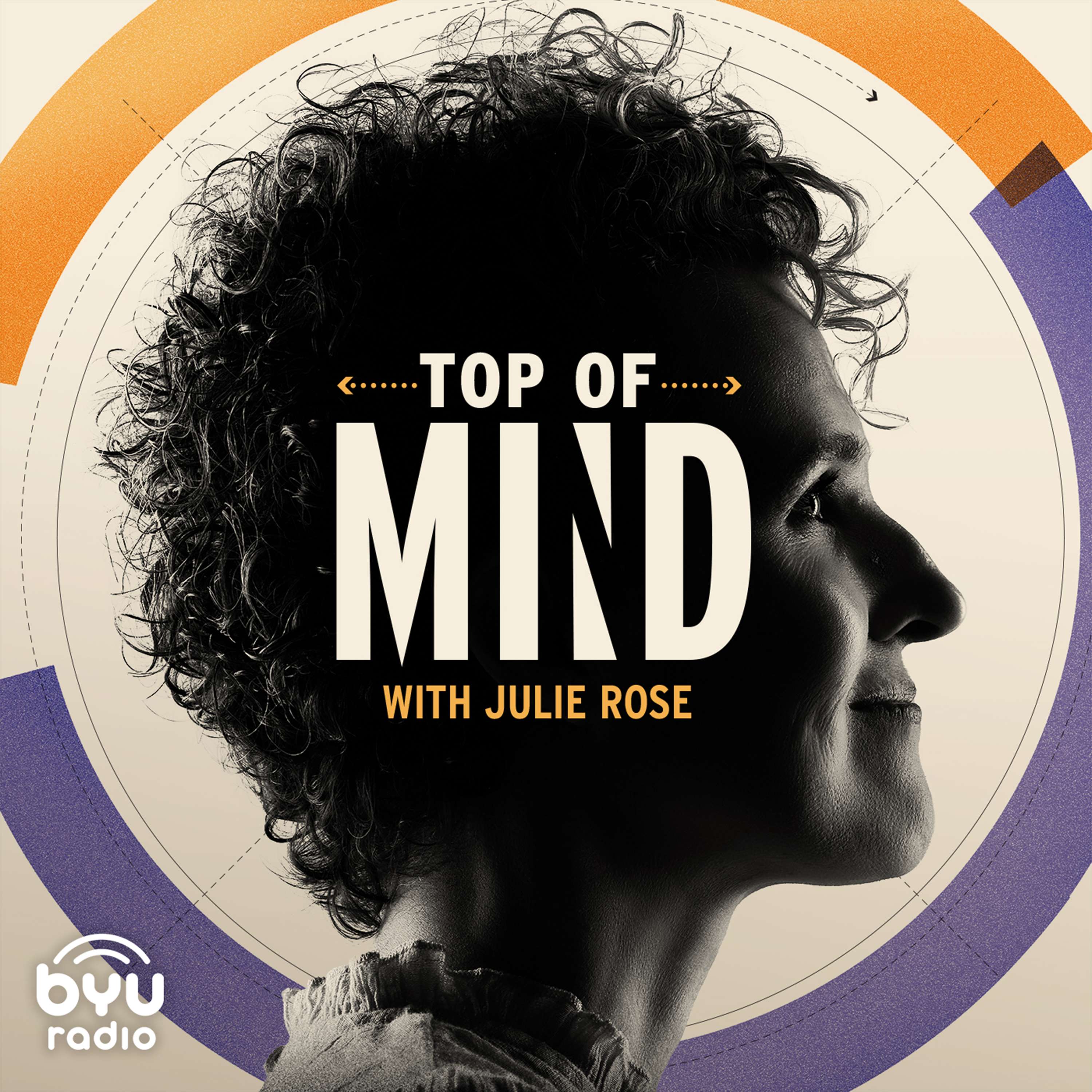
Top of Mind with Julie Rose
by BYUradio
Tackling tough topics in a way that will help you feel more empathy and empower you to become a better citizen, kinder neighbor, and more effective advocate. For people who are turned off by the divisive nature of the news, but still want to engage with important issues. Hosted by journalist Julie Rose, Top of Mind is a production of BYUradio.
-
161
Can You Joke About Anything? Where Funny Becomes Offensive
Can you joke about anything, or are some topics simply off limits? In this episode, we explore what makes something funny, why people disagree so deeply about what's offensive, and whether comedy has ethical limits. Through conversations with a stand-up comedian and two philosophers, we examine race, satire, intent, workplace humor, and the surprising ways laughter can strengthen or strain our relationships. GUESTS Isak Allen, stand-up comedian (https://www.drybarcomedy.com/isaka). Luvell Anderson, Professor of Philosophy, University of Illinois Urbana-Champaign; scholar of the ethics of racial humor (https://onlinelibrary.wiley.com/doi/full/10.1111/josp.12384). Mike Cundall, Professor of Philosophy, North Carolina A&T State University; founder of Mirth Management Consulting and author of “The Humor Hack” (https://www.mirthmanagement.co/). CHAPTERS (0:00) Introduction (1:09) Meet Comic Isak Allen (2:01) Race Jokes and Family History (5:59) Why Humor Matters (7:02) Comedy as Catharsis (8:39) Avoiding Hacky Stereotypes (9:18) Anything Off Limits (11:09) “Blaccent” and Obama Bit (16:37) Philosophers on Laughter (20:41) Race Satire and Colbert (25:03) Racially Insensitive Humor (31:31) Offense and Power (36:34) Workplace Humor Debate (49:09) Humor as Kindness
-
160
The One Thing That Makes Difficult Conversations Easier
Why do some difficult conversations leave us feeling understood while others leave us frustrated and further apart? In this episode, we explore a surprisingly powerful tool that can make even the hardest conversations easier: storytelling. You'll hear about groundbreaking research from BYU showing how personal stories can increase empathy between autistic and neurotypical individuals. You'll learn why vulnerability helps people connect across differences, how stories create understanding where facts and arguments often fail, and why some of the world's leading dialogue facilitators begin difficult conversations by asking people to share a personal story. GUESTS Garrett Cardon, cognitive neuroscientist, audiologist, and Professor in the Department of Communication Disorders at Brigham Young University (https://education.byu.edu/directory/view/garrett-cardon). Kennedy Kleinman, storytelling researcher, workshop facilitator, and master’s student in English at Brigham Young University (https://scholarsarchive.byu.edu/studentpub_uht/480/). John Sarrouf, Co-Executive Director of Essential Partners (https://whatisessential.org/). Story Slam participants – Zanza, Julie, Benjamin, Emma, and Natalie Top of Mind episode featuring the Abortion Talks - https://www.byuradio.org/top-of-mind-how-to-talk-about-abortion CHAPTERS (0:00) Introduction (1:44) The Double Empathy Problem (4:30) Storytelling Experiment Setup (9:52) Five Stories on Stage (15:52) Results Brain Sync and Takeaways (25:55) Transformative Story Framework (29:18) Workshop Steps (32:18) Storytelling Beyond Campus (35:09) Stories in Deep Divides (46:54) Asking for Stories (53:11) Conclusion
-
159
Are Juries America’s Best Defense Against Injustice?
Every year, millions of Americans receive a jury summons, but how many of us truly understand the responsibility that comes with deciding another person's fate? In this episode, we explore one of the foundations of American democracy: trial by jury. We’ll hear from a juror who struggled with the weight of a guilty verdict, a man who was wrongfully convicted and sent to death row, and a former felon who argues that America's jury system excludes crucial voices. GUESTS Kristin Campbell, Senior Fellow, Philanthropy for Active Civic Engagement (PACE) (https://www.pacefunders.org/). Herman Lindsey, Executive Director of Witness to Innocence and a former death row prisoner (https://www.witnesstoinnocence.org/). James Binnall, attorney, professor at California State University Long Beach, and author of “Twenty Million Angry Men: The Case for Including Convicted Felons in Our Jury System” (https://www.ucpress.edu/books/twenty-million-angry-men/paper). Valerie Hans, Professor of Law at Cornell University and one of the nation's leading jury researchers (https://www.lawschool.cornell.edu/faculty-research/faculty-directory/valerie-hans/). CHAPTERS (0:00) Introduction (1:05) Kristin Campbell Jury Shock (3:55) Who Counts as a Peer (5:42) Deliberating the Gun Charge (7:32) Verdict Weight and Aftermath (10:35) Defendant Perspective Herman Lindsey (16:57) How Juries Get Skewed (20:27) Felons Banned from Juries (25:32) Binnall Research on Inclusion (34:43) Host Jury Story and Fixes (49:47) Rebuilding Trust in Juries
-
158
Why Is Everyone Asking for a Tip Now?
Why does it feel like everyone is asking for a tip now? From coffee shops and takeout counters to self-checkout screens, tipping culture in America has changed fast, and many of us feel confused, pressured, or even guilty about it. In this episode of Top of Mind, we explore the hidden psychology of tipping, the history behind it, and what our tipping habits reveal about power, status, fairness, and human connection. Hear from customers who feel overwhelmed by “tip creep,” workers who rely on gratuities to survive, restaurant owners struggling to pay staff fairly, and one of the nation’s leading experts on tipping behavior. GUESTS Matt Johnson, Top of Mind listener from Texas Jaime Wilson, behind-the-counter worker, food blogger and self-employed baker (https://www.jaime-wilson.com/about). Mike Fadem, owner and founder of Ops and Leo, pizzerias in Brooklyn, New York and drummer for The Jealous Girlfriends (https://www.opsbk.com/). Michael Lynn, professor of consumer behavior and services marketing at the Cornell University School of Hotel Administration (http://www.tippingresearch.com/). CHAPTERS (0:00) Introduction (1:04) Why Tipping Feels Weird (6:24) Workers’ Side of the Counter (10:44) Tipping’s Dark History (17:04) Going Tip Free (19:44) Why Tip Free Failed (22:22) Pandemic Tip Shifts (25:51) Pooling Tips (28:03) Tip Creep Meets Tipflation (34:26) Digital Screens Pressure Us (39:36) Discrimination/Inequity (43:35) Why Ending Tipping Fails (46:44) A Better System (48:00) What Tipping Says About Us (52:17) Conclusion
-
157
Who Owns Culture? Museums, History, and the Stories We Tell
Who owns culture, and who gets to tell its stories? We explore the complex and often uncomfortable debate around cultural ownership, appropriation, and representation. You’ll hear how a hidden figure in a centuries-old painting forced museums to rethink history, why some argue artifacts should be returned to their communities, and how others worry that limiting who can tell cultural stories may actually close doors to understanding. We also explore stories of repatriation and healing, alongside questions about cultural appreciation vs. appropriation. GUESTS Marenka Thompson-Odlum, PhD, Research Curator, Pitt Rivers Museum at the University of Oxford (https://www.prm.ox.ac.uk/labelling-matters). Tiffany Jenkins, journalist and author of “Keeping Their Marbles: How the Treasures of the Past Ended Up in Museums and Why They Should Stay There” (https://tiffanyjenkinsinfo.com/). Ann E. Meilus Esq., President of the Barre Museum Association Manny Iron Hawk, member of the Lakota Nation; Spokesperson for HAWK (Heartbeat at Wounded Knee) 1890 Survivor Descendants society Renee Iron Hawk, member of the Lakota Nation; Secretary for HAWK 1890 Survivor Descendants society (https://nativenewsonline.net/sovereignty/we-re-going-to-make-a-way-wounded-knee-survivors-and-relatives-travel-to-new-england-to-ask-for-their-artifacts-back). Mia Moody-Ramirez, PhD Chair of Journalism, Public Relations & New Media, Baylor University College of Arts & Sciences (https://www.miamoody.org/). CHAPTERS (0:00) Introduction (0:57) Glasgow Portrait Revealed (2:58) Scotland and Slavery Links (4:48) Reframing Museum Labels (7:02) Inside Pitt Rivers Museum (9:57) Three Curator Questions (13:51) Shrunken Heads Removed (16:28) Who Owns the Past (21:17) Case Study Elgin Marbles (28:33) Wounded Knee Repatriation (39:02) Appreciation vs Appropriation (47:49) Navigating Gray Areas
-
156
Are America’s Kids Okay? How We Can Do Better
America’s kids are facing serious challenges, from rising anxiety and depression to falling behind in school and growing up in increasingly complex family situations. But there’s also hope. In this episode of Top of Mind, we’ll hear from educators, researchers, and policy experts tackling the biggest issues facing kids today: from teen mental health first aid in schools, to rethinking education after the pandemic, to addressing chronic absenteeism and supporting single mothers. GUESTS Jen Schnormeier, Instructional coach at Gilbert High School, lead trainer for Teen Mental Health First Aid (https://www.mentalhealthfirstaid.org/). Justin Reich, professor of digital media at MIT, Director of the Teaching Systems Lab, host of the Teach Lab podcast, author of “Failure to Disrupt” (https://www.teachlabpodcast.com/). Hedy Chang, founder and executive director of Attendance Works (https://www.attendanceworks.org/). Ronald Mincy, professor of Social Policy and Social Work Practice, Columbia University, co-founder of the Future Families and Child Wellbeing Study (https://www.researchgate.net/publication/300330248_Effect_of_Father_Engagement_on_Child_Behaviors). CHAPTERS (0:00) Teachers Unprepared (1:15) Mental Health First Aid (2:29) Why Kids Are Struggling (11:22) Handling Suicide Talk (17:19) Academic Crisis Pivot (18:43) Pandemic Lessons from Students (27:41) Chronic Absence Surge (29:50) Why Attendance Matters (31:25) Barriers Keeping Kids Home (36:52) Single Parenthood Spotlight (41:36) Reframing Nonresident Fathers
We're indexing this podcast's transcripts for the first time — this can take a minute or two. We'll show results as soon as they're ready.
No matches for "" in this podcast's transcripts.
No topics indexed yet for this podcast.
Loading reviews...
ABOUT THIS SHOW
Tackling tough topics in a way that will help you feel more empathy and empower you to become a better citizen, kinder neighbor, and more effective advocate. For people who are turned off by the divisive nature of the news, but still want to engage with important issues. Hosted by journalist Julie Rose, Top of Mind is a production of BYUradio.
HOSTED BY
BYUradio
CATEGORIES
Loading similar podcasts...
Frequently Asked Questions
How many episodes does Top of Mind with Julie Rose have?
Top of Mind with Julie Rose currently has 6 episodes available on PodParley. New episodes are automatically indexed when they're published to the podcast feed.
What is Top of Mind with Julie Rose about?
Tackling tough topics in a way that will help you feel more empathy and empower you to become a better citizen, kinder neighbor, and more effective advocate. For people who are turned off by the divisive nature of the news, but still want to engage with important issues. Hosted by journalist Julie...
How often does Top of Mind with Julie Rose release new episodes?
Top of Mind with Julie Rose has 6 episodes. Check the episode list to see recent publication dates and frequency.
Where can I listen to Top of Mind with Julie Rose?
You can listen to Top of Mind with Julie Rose on PodParley by clicking any episode. We provide an embedded audio player for direct listening, and you can also subscribe via your preferred podcast app using the RSS feed.
Who hosts Top of Mind with Julie Rose?
Top of Mind with Julie Rose is created and hosted by BYUradio.
URL copied to clipboard!