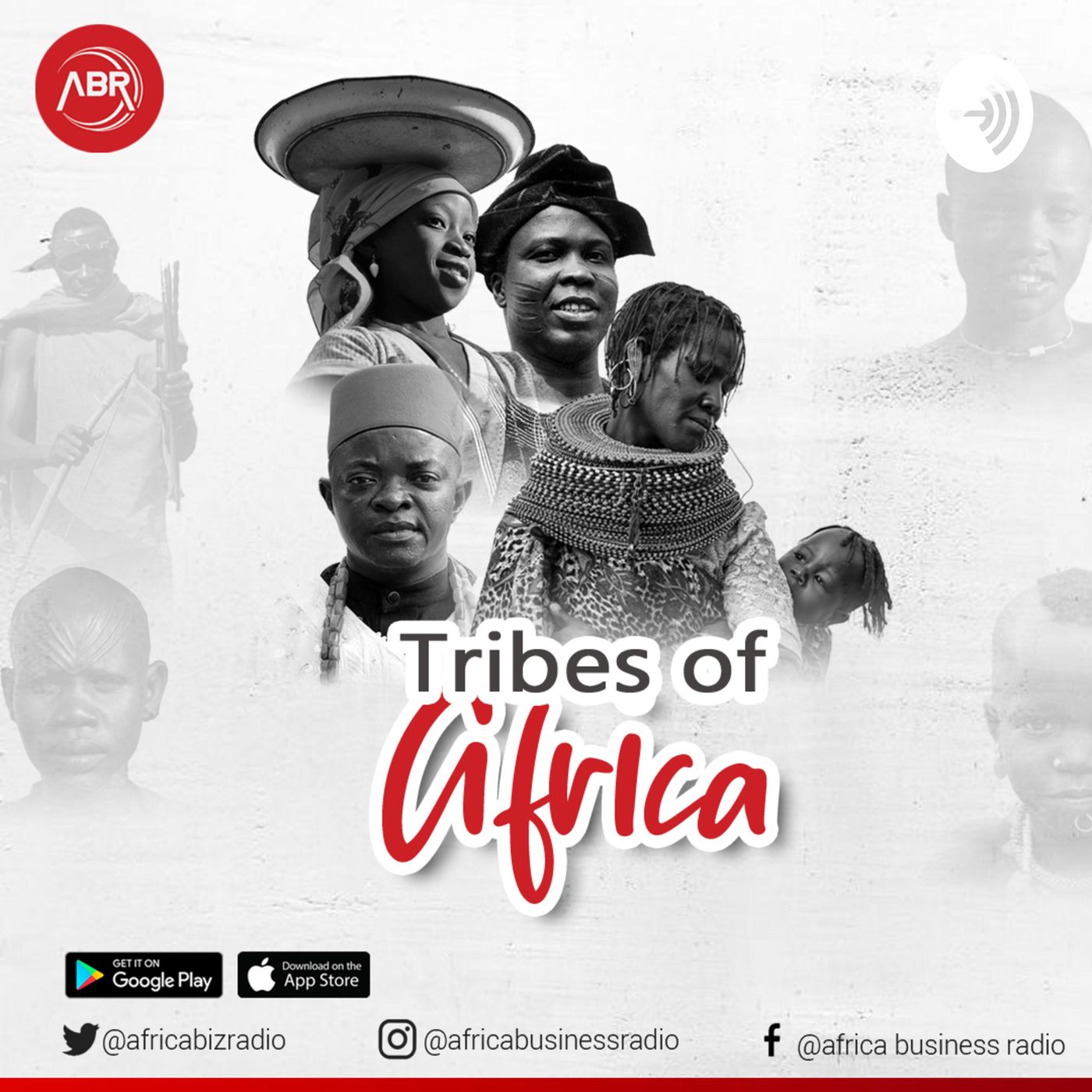
Tribes of Africa
by Africa Business Radio
They are from the second-largest and second-most-populous continent. 1 billion people; over 3,000 tribes; 54 sovereign states; One people. This is their story. These are the Tribes of Africa. This podcast summarises the story of each of the more than 3,000 tribes of Africa. It tells of their origins, culture, language and so much more. From Cairo to Cape Town, Tribes of Africa opens the window to the exciting world of the world's most diverse people and arguably the most misunderstood. Learn about their rich culture, their traditions, their beliefs, and their journey. Support this podcast: https://anchor.fm/tribesofafrica/support
Episodes
-
The Baganda Tribe
Baganda tribes are called as Kings Men because of the significant role of their king-the Kabaka in their political, social and cultural institution. The Kabaka ruled over a hierarchy of chiefs who collected taxes in the form of food and livestock. All of the portions received are distributed...
-
The Yako Tribe
Yakö, also spelled Yako or Yakurr, people of the Cross River region of eastern Nigeria; they speak Luko, a language of the Benue-Congo branch of the Niger-Congo family. The Yakö are mainly yam farmers; subsidiary crops include cocoyams (taro), corn (maize), okra, and pumpkin. The main cash crop…
more -
The Sukuma Tribe
Tanzania’s largest tribal group is the Sukuma, a Bantu group of around 5.5 million people that lives in the north of the country and around the southern shores of Lake Victoria. The name “Sukuma” actually means “north” and is used in reference to the “people of the north”. While the majority live...
-
The Mbembe Tribe
Mbembe, is a group of people living along the middle Cross River in Nigeria. Numbering about 100,000 in the late 20th century, they speak the language of the Benue-Congo branch of the Niger-Congo family. The Mbembe cultivate yams, rice, cocoyams (taro), and cassava. In modern times wage laborers...
-
The Iraqw Tribe
The Iraqw are a Cushitic-speaking (a branch of the Afroasiatic language family) tribal group that live in the Arusha and Manyara regions of Tanzania, just south of the famous Ngorongoro Crater. There are around 350,000 believed to be living within the country and they are renowned for their…
more -
The Ndebele Tribe
Ndebele, also called Transvaal Ndebele, any of several Bantu-speaking African peoples who live primarily in the Limpopo and Mpumalanga provinces in South Africa. The Ndebele are ancient offshoots of the main Nguni-speaking peoples and began migrations to the Transvaal region in the 17th century....
-
The Hadzabe Tribe
The Hadzabe are one of the last remaining hunter-gatherer tribes in the world, with just 1,200-1,300 believed to live in Tanzania today. Rather than keeping livestock and tending the land, they spend their days hunting and foraging for food, maintaining a simple diet that’s changed little...
-
The Damara Tribe
The Damara, also called Daman or Damaqua, are an ethnic group who make up 8.5% of Namibia's population. They speak the Khoekhoe language and the majority live in the northwestern regions of Namibia, however they are also found widely across the rest of the country. They have no known cultural...
-
The Himba Tribe
The first settlements of the Himba people can be traced back to the early 16th century when they crossed the Angolan border and chose Kaokoland (nowadays called Kunene region) as their new homeland. At that time, the word Himba did not exist because they had not yet separated themselves from the...
-
The Gomara Tribe
The Ghomara are a group of tribes in northern Morocco, living between the rivers Oued Laou and Ouringa, east of Chefchaouen and south of Tetouan, in the Western Rif. The river Tiguisas runs through their territory. Originally, Ghomaras was a Berber tribal group belonging to the Masmuda…
more -
The Bayankole Tribe
The Banyankole is located in south-western Uganda. The Mugabe [king] was an absolute ruler. He claimed all the cattle throughout the country as his own. Chiefs were ranked by the number of cattle they possessed.
-
The Tutsi Tribe
Tutsi, also called Batusi, Tussi, Watusi, or Watutsi, ethnic group of probable Nilotic origin, whose members live within Rwanda and Burundi. The Tutsi formed the traditional aristocratic minority in both countries, constituting about 9 percent and 14 percent of the population, respectively. The...
-
The Ijaw Tribe
The Ijaws are a collection of people that are indigenous to the Niger Delta in Nigeria. And owing to the affinity they have with water, a good number of them are found as migrant fishermen in camps as far west as Sierra Leone and as far east as Gabon. With a population of over fourteen million…
more -
The Igala Tribe
The Igala are one of the many ethnic groups attributed to Nigeria’s cultural diversity. They are the 7th largest ethnicity in Nigeria. The Igala Kingdom was so large, it expanded down to the Benue and Niger rivers. Today, the Igala are found in the present-day local governments of Dekina, Bassa,...
-
The Bekwarra Tribe
Bekwarra is a tribe of people domiciled in a 306 sq2 of land mass with unique and rich cultural practices like every other tribe in the paradise state. With a population of about 150,000 (2006 census), it boasts as one of the most populated local government area in the state. They have a unique...
-
The Afemai Tribe
The Afemai, also spelled Afenmai, are an ethnic group living in the northern part of Edo State south geopolitical zone of Nigeria. Afemai people occupy six local government areas of Edo state: Etsako West, with headquarters in Auchi, Etsako Central, Etsako East, Owan East, Owan West and Akoko…
more -
The Suri Tribe
The Suri are an Agro-pastoral people that inhabit part of the Suri woreda, West Omo Zone of the South Western Ethiopia peoples regional state in Ethiopia, while the other live partly in neighbouring South Sudan. Suri is a collective name for three groups of – Suri Chai, Timaga, and Suri Baale…
more -
The Hamar Tribe
Hamar people are a community inhabiting southwestern Ethiopia. They live in Hamer woreda a fertile part of the Omo River valley, in the Debub Omo Zone of the Southern Nations. They consist of over 46,532 people. They are largely pastoralists, so their culture places a high value on cattle.
-
The Kalabari Tribe
The Kalabari is a tribe of the Ijaw people of Rivers state living in the Niger Delta region of Nigeria. Kalabari people are ijaw speaking settlers who came from the Bini fringes of Ijaw land from the lineage of a man called Mein Owei.
-
The Afizere Tribe
The Afizere people are an ethnic group that occupy Jos East, Jos North, parts of Jos South Local Government Areas of Plateau State and parts of Toro and Tafewa Balewa local government Areas of Bauchi state, Nigeria. The Afizere are speakers of Izere Language. they are surrounded by the Berom to…
more -
The Andoni Tribe
Situated in the present day Rivers and Akwa Ibom state, the Adoni people are a part of the Ijaw tribe and known to be related to the Annang, Ibibio and Efik people of Akwa Ibom State and Cross River State in Nigeria. According to some historians, evidence of traditional history shows that the...
-
The Igede Tribe
The Igede culture is perhaps one of the most fascinating cultures in Nigeria. Exceptionally proud of their native heritage, the Igede people have preserved many of their ancestors' traditions, a number of them present in their a mixture of elaborate traditional tales, artistic expressions, music,...
-
The Ganda Tribe
anda, also called Baganda, or Waganda, people inhabiting the area north and northwest of Lake Victoria in south-central Uganda. They speak a Bantu language—called Ganda, or Luganda—of the Benue-Congo group. The Ganda are the most numerous people in Uganda and their territory the most productive…
more -
The Mpondo Tribe
Mpondo, also spelled Pondo, group of Nguni-speaking peoples who have for several centuries occupied the area between the Mtata and Mtamvuna rivers in Eastern province of South Africa. The Mpondo homeland formed one of the largest parts of the former Transkei (until 1994), an independent republic...
-
The Nuba Tribe
Nuba, inhabitants of the Nuba Hills in the Kordofan region of central-southern Sudan. This region is studded with rugged granite hills that rise sharply from a wide clay plain and vary considerably in size and content. The Nuba peoples live on or near the hills (the plains being mainly occupied…
more -
The Tonga Tribe
Unlike other Zambian tribes which claim to have descended from the Luba-Lunda Kingdom in present day Democratic Republic of Congo and Angola, the exact origin of the Tonga tribe is still unknown. Iron Age settlements from as early as the 7th century have been found in various parts of the…
more -
The Annang Tribe
The Annang people are a peculiar cultural group within the Akwa Ibom State of Nigeria. This tribe occupies some part of southwestern Cameroon, which used to be part of the present-day Akwa Ibom State and Cross River State.
-
The Etsako Tribe
Etsakọ people are the majority ethnic group in the northern region of Edo State, Nigeria. They are historically linked to the ancient Benin kingdom. Administratively, they presently occupy three local government areas of Edo State; these are Etsako East, Etsako West and Etsako Central, with...
-
The Zezuru Tribe
The social world of Zezuru, the Shona-speaking peoples who live in the Harare region of Zimbabwe, is divided into various categories. Mwari, or God, heads the whole world, which is then divided up into two elements: Shona, consisting of the various clans which are linked to the hero spirits and…
more -
The Hutu Tribe
The Hutu, also called Bahutu or Wahutu, Bantu-speaking people of Rwanda and Burundi. Numbering about 9,500,000 in the late 20th century, the Hutu comprise the vast majority in both countries but were traditionally subject to the Tutsi , warrior-pastoralists of Nilotic stock. When the Hutu first...
-
The Hambukushu Tribe
Hambukushu or the ‘rainmakers of Okavango’ (believed to perform rituals that make rainfall), whose language is called sembukushu, are a tribe found in the Okavango, which is in north-western parts of Botswana. Their origins are rooted in Angola and Namibia where there are some traces to date, but...
-
The Kalanga Tribe
The Kalanga or Bakalanga are a southern Bantu ethnic group mainly inhabiting Matebeleland in Zimbabwe, northeastern Botswana and Limpopo Province in South Africa. They are historically related to the Nambya, Karanga and Venda.
-
The Barsawa Tribe
Basarwa are the first and oldest inhabitants of southern Africa who have lived in Botswana for over 30 000 years. The name Basarwa has been used extensively by the Tswana to refer to the Bushmen. However, they are also called the Khoisan. They were initially hunter gatherers and have gradually...
-
The Luhya Tribe
The Luhya tribe, also known as Abaluhya, Baluhya, or Abaluyia, are a bantu tribe living in the agriculturally fertile Western region of Kenya. They are neighbors to some of the nilotic tribes including Luo, Kalenjin, Maasai and Teso (Iteso).
-
The Embu Tribe
The Aembu, are a Bantu tribe closely related to the Kikuyu and Meru. They majorly inhabit Kenya’s Embu district, which is a fertile agricultural region located at the foothills of Mount Kenya. They speak the Embu language.
-
The Akamba Tribe
The Kamba or Akamba people are a Bantu ethnic tribe or group who live in the semi-arid formerly Eastern Province of Kenya which stretches east from Nairobi to Tsavo and north up to Embu, Kenya. This land is called Ukambani which constitutes of Machakos County Makueni County and Kitui County.
-
The Kikuyu Tribe
The largest of Kenya’s tribes, the Kikuyu tribe live in area around Mount Kenya where, at the dawn the colonial era, they came into violent conflict with the European settlers, to whom large tracts of Kikuyu people homeland had been apportioned by the colonial government. They number more than...
-
The Mandinka Tribe
Mandinka, also called Maninka,Malinke, Mandingo, or Mandingo, a West African people occupying parts of Guinea, Ivory Coast, Mali, Senegal, The Gambia, and Guinea-Bissau. The make up the largest ethnic group in The Gambia and They speak a Mandekan language of the Mande branch of the Niger-Congo...
-
The Tumbuka Tribe
Tumbuka, also spelled Tumboka, also called Kamanga, orHenga, a people who live on the lightly wooded plateau between the northwestern shore of Lake Nyasa (Lake Malaŵi) and the Luangwa River valley of eastern Zambia. They speak a Bantu language closely related to those of their immediate…
more -
The Kavango Tribe
The Kavango people, also known as the vaKavango or haKavango, are a Bantu ethnic group that resides in the Kavango region of Northern Namibia on the Angolan border along the Kavango River, which is named after them. They are mainly riverine living people, but about 20% reside in the dry inland.…
more -
The Ovambo Tribe
The Ovambo people, also called Aawambo, are a Southern African tribal ethnic group. They are found in Namibia’s northern regions and more often called Ovambo. The Ovambo people are synonymous with Namibia and are the largest cultural sector found in this country, representing over a third of...
-
The Twa Tribe
Twa, also called Batwa, one of the best-known of the many Pygmy groups scattered across equatorial Africa. Like all other African Pygmies, the Twa, averaging about 5 feet (1.5 m) in height, are a people of mixed ancestry, probably descendants of the original inhabitants of the equatorial rainforest.
-
The Chewa Tribe
Chewa, Bantu-speaking people living in the extreme eastern zone of Zambia, northwestern Zimbabwe, Malawi, and Mozambique. They share many cultural features with their Bemba kinsmen to the west. Their language, Chewa, is also called Chichewa, Nyanja, or Chinyanja and is important in Malawi
-
The Mongo Tribe
Mongo, any of several peoples living in the African equatorial forest, south of the main Congo River bend and north of the Kasai and Sankuru rivers in Congo (Kinshasa). They include such ethnic groups as the Bokote, Ekonda, Bolia, Sengele, Ntomba, Ndengese, Songomeno, Mbole, Bongandu, Boyela,...
-
The Mursi Tribe of The Southwestern Ethiopia
The Mursi are an agro-pastoralist ethnic tribe living in southwestern Ethiopia, Africa. They inhabit the lower valley of the Omo River near the border of Ethiopia with South Sudan. Around 7,500 Mursi people live in the country according to the 2007 census in Ethiopia, with 92.25% of the…
more -
The Kuri Tribe
The Kuri's are known as stevedores and fishermen throughout the west coast of Africa and have established colonies in most ports from Dakar, Senegal to Douala, Cameroon. They occupy nearly one third of Liberia. They are about 24 sub groups with dialectal and culturally differences.
-
The Bodi Tribe
Ethiopia is a land of many cultures that have been preserved despite western civilization. Along the Lower Omo valley river in Southern Ethiopia resides one of these kinds: the Bodi Tribe. The Bodi people are neighbors to the Mursi Tribe. The Bodi people are agriculturalists who still engage in...
-
The Baka Tribe
The Baka people, known in the Congo as Bayaka (Bebayaka, Bebayaga, Bibaya),[1] are an ethnic group inhabiting the southeastern rain forests of Cameroon, northern Republic of the Congo, northern Gabon, and southwestern Central African Republic. They are sometimes called a subgroup of the Twa, but...
-
The Nubian tribe
Nubians are an ethno-linguistic group of people who are indigenous to the region which is now northern Sudan and southern Egypt. They originate from the early inhabitants of the central Nile valley, believed to be one of the earliest cradles of civilization. They speak Nubian languages, part of…
more -
The Songhai people
The Songhai people (also Ayneha, Songhay or Sonrai) are an ethnolinguistic group in West Africa who speak the various Songhai languages. Their history and lingua franca is linked to the Songhai Empire which dominated the western Sahel in the 15th and 16th century. Predominantly a Muslim…
more
About this show
They are from the second-largest and second-most-populous continent. 1 billion people; over 3,000 tribes; 54 sovereign states; One people. This is their story. These are the Tribes of Africa.
This podcast summarises the story of each of the more than 3,000 tribes of Africa. It tells of their origins, culture, language and so much more. From Cairo to Cape Town, Tribes of Africa opens the window to the exciting world of the world's most diverse people and arguably the most misunderstood. Learn about their rich culture, their traditions, their beliefs, and their journey. Support this podcast: https://anchor.fm/tribesofafrica/support
Hosted by
Africa Business Radio
Categories