
Episodes
-
How the Brain Adapts to Antidepressants: Receptors, Circuits, and Neuroplasticity
Antidepressants influence neurotransmission relatively quickly, yet meaningful clinical improvement often takes longer. This episode explores receptor signaling, neural adaptation, stress circuitry, and neuroplasticity in depression treatment. Discover why changes in brain function are more...
-
Psychosis From the Immune System: The Strange Case of Anti-NMDA Receptor Encephalitis
Imagine developing what appears to be schizophrenia almost overnight, only for doctors to discover that your immune system may be attacking receptors in your brain. Anti-NMDA receptor encephalitis provides one of medicine’s most remarkable examples of neurological disease presenting through...
-
Four Roads for One Molecule: Mapping the Brain's Dopamine Pathways
Dopamine doesn't run on a single track — it moves through four distinct pathways in the brain, and each one produces a very different story when its activity shifts. This episode breaks down the mesolimbic, mesocortical, nigrostriatal, and tuberoinfundibular pathways, connecting each to the...
-
Dopamine Isn’t Simply the Pleasure Chemical
Dopamine is routinely described as the brain’s “pleasure chemical,” but that description leaves out much of the story. Dopamine systems participate in motivation, learning, movement and the prediction of rewards. Researchers have shown that dopamine responses can shift from rewards themselves...
-
Why You Can Feel Someone Watching You—Even When You Never Saw Them
Have you ever suddenly looked across a room and discovered that someone was staring directly at you? It can feel almost supernatural, as though your brain somehow detected another person’s attention before you consciously saw them. But the explanation may have less to do with a mysterious sixth...
-
The Brain’s Traffic Controller: How We Turn Thought into Action and Habit
Hidden deep inside the head, a small cluster of control centers decides which of our physical movements and mental impulses actually happen. It acts like a built-in filter, pressing the gas pedal on useful actions while slamming the brakes on distractions. When this internal switchboard works...
-
The Brain’s Idle Engine: The Default Mode Network, Internal Narrative, and Network Switching
This episode examines the architecture and physiology of the default mode network (DMN), a large-scale neural network that activates during internally directed cognition and attenuates during externally focused tasks. It breaks down the functional interplay between its core anatomical hubs—the...
-
Where vs. What: The Parietal Lobe and the Temporal Lobe Are Not Interchangeable Real Estate
The parietal lobe maps the body and space; the temporal lobe maps sound, meaning, and memory. Confusing them is how people turn every MRI finding into a personality theory. This is a working distinction for clinicians, students, and anyone who wants the map before the metaphor.
-
Map of the Mind: What Each Brain Lobe Is Actually Doing
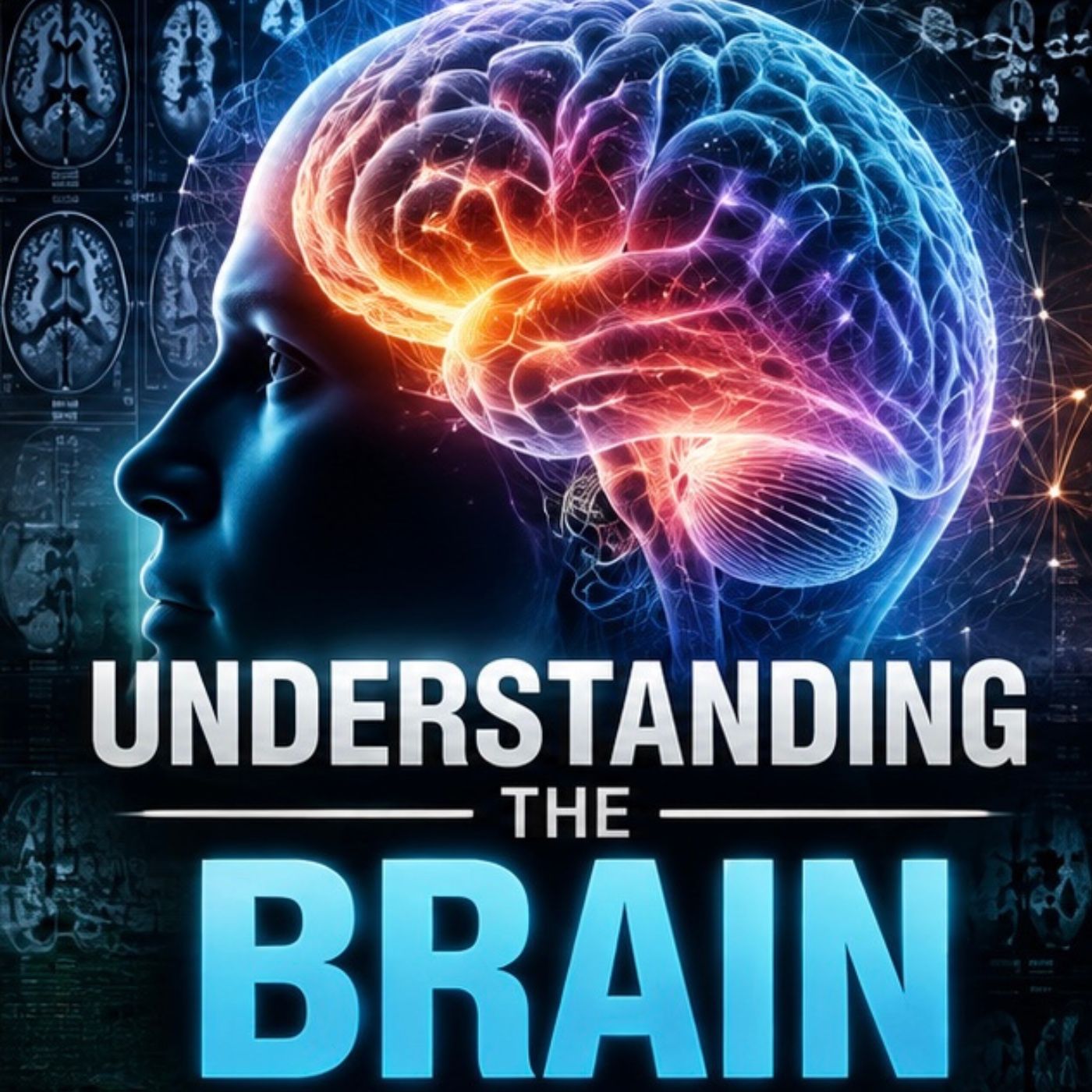
understanding the brain
We're indexing this podcast's transcripts for the first time — this can take a minute or two. We'll show results as soon as they're ready.
No matches for "" in this podcast's transcripts.
No topics indexed yet for this podcast.
Loading reviews...
Loading similar podcasts...
Frequently Asked Questions
How many episodes does Understanding the Brain have?
Understanding the Brain currently has 67 episodes available on PodParley. New episodes are automatically indexed when they're published to the podcast feed.
What is Understanding the Brain about?
Understanding the Brain is a podcast covering topics in health.
How often does Understanding the Brain release new episodes?
Understanding the Brain has 67 episodes. Check the episode list to see recent publication dates and frequency.
Where can I listen to Understanding the Brain?
You can listen to Understanding the Brain on PodParley by clicking any episode. We provide an embedded audio player for direct listening, and you can also subscribe via your preferred podcast app using the RSS feed.
Who hosts Understanding the Brain?
Understanding the Brain is created and hosted by Circle Of Insight Productions.
URL copied to clipboard!