
PODCAST · news
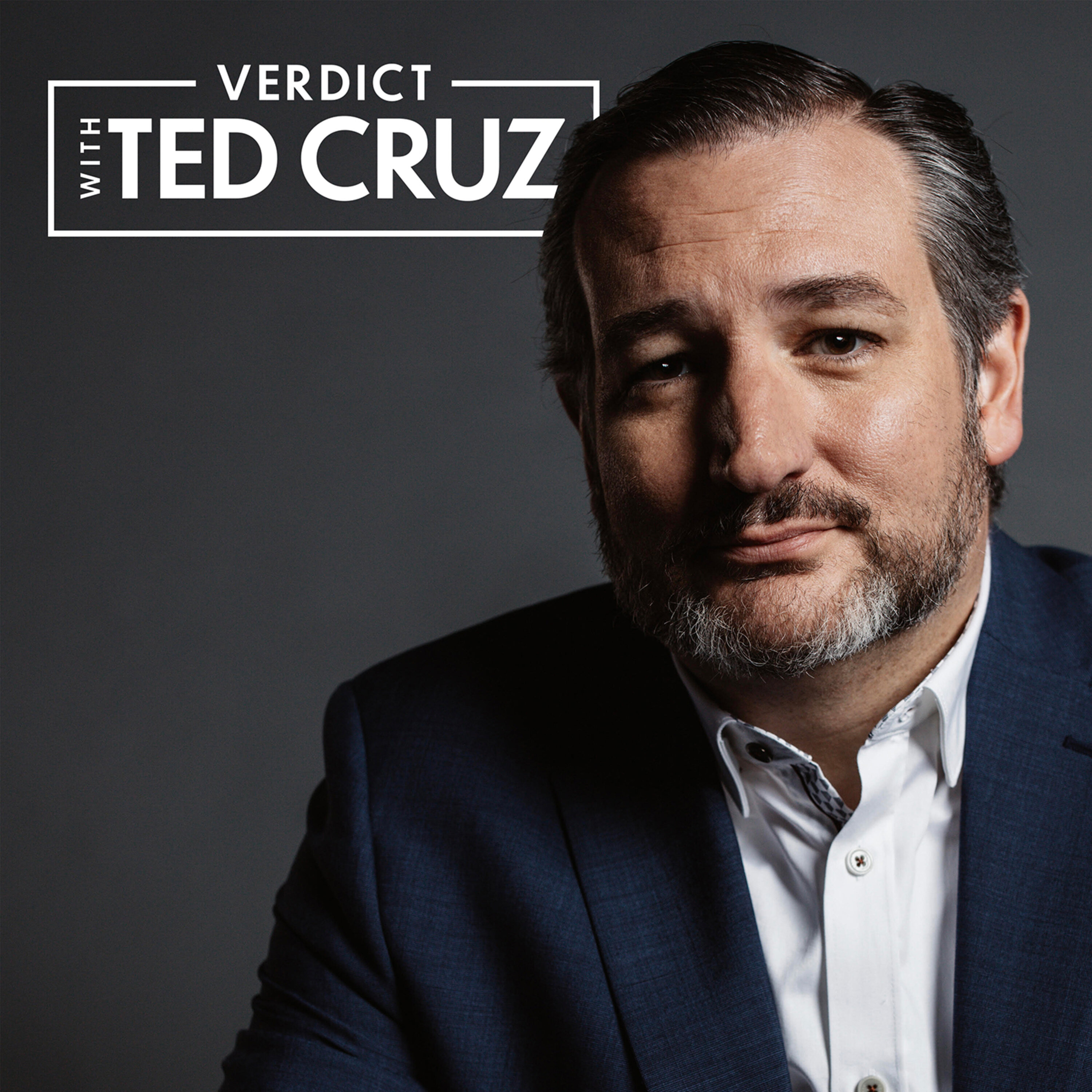
Verdict with Ted Cruz
by Premiere Networks
Join Senator Ted Cruz and co-host Ben Ferguson as they break down the most important news stories of the day and reveal what they mean for you. On "Verdict with Ted Cruz,” you will go behind the scenes of the political debates that define our country. "Verdict with Ted Cruz" is being brought to you by Jobs, Freedom, and Security PAC, a political action committee dedicated to supporting conservative causes, organizations, and candidates across the country. In 2022, Jobs, Freedom, and Security PAC plans to donate to conservative candidates running for Congress and help the Republican Party across the nation.
-
1000
MASSIVE Victory for Student-Athletes & Fans as 3/4 of the Senate Votes for the Protect College Sports Act
In this episode of Verdict with Ted Cruz, Senator Ted Cruz and Ben Ferguson discuss the Senate’s 74-vote bipartisan victory on the Protect College Sports Act, why Congress became involved in college athletics, and what reforms the legislation would implement. They examine transfer portal restrictions, eligibility limits, NIL revenue-sharing rules, spending caps, protections for women’s and Olympic sports, and the broader economic pressures facing universities. Cruz also explains the political strategy behind building a bipartisan coalition, the opposition to the bill, and the path forward as the legislation moves toward the House and potentially President Trump’s desk. The Senate has taken a major step toward reshaping college athletics. After years of debate, the Protect College Sports Act cleared a key Senate vote with broad bipartisan support, advancing legislation designed to address the transfer portal, NIL compensation, eligibility rules, and the future of college sports. Supporters argue the current system has created instability across college athletics, threatening scholarships, non-revenue sports, women’s programs, and the long-term viability of many universities. The bill aims to establish a national framework that supporters believe can bring order to what Senator Ted Cruz describes as a growing crisis. Topics Covered: Senate passage of a key procedural vote on the Protect College Sports Act New transfer portal rules and limits on athlete movement NIL compensation, revenue sharing, and proposed spending caps Eligibility standards, age limits, and enforcement of competitive rules Protections for women’s sports, Olympic sports, and scholarship opportunities The bill’s next steps in the House and the anticipated presidential signing process Please Hit Subscribe to this podcast Right Now. Also Please Subscribe to the 47 Morning Update with Ben Ferguson and The Ben Ferguson Show Podcast Wherever You get You're Podcasts. And don't forget to follow the show on Social Media so you never miss a moment! Thanks for Listening YouTube: https://www.youtube.com/@VerdictwithTedCruz/ Facebook: https://www.facebook.com/verdictwithtedcruz X: https://x.com/tedcruz X: https://x.com/benfergusonshowYouTube: https://www.youtube.com/@VerdictwithTedCruzSee omnystudio.com/listener for privacy information.
-
999
BONUS POD: The AI Cold War Has Begun—Can America Beat China without Beating America?
In this episode of the 47 Morning Update w Ben Ferguson, Ben argues that America is already engaged in an AI Cold War with Communist China and warns that slowing AI development could hand a strategic advantage to Beijing. He examines recent concerns over efforts to restrict or delay AI infrastructure projects and explains why those decisions could have far-reaching consequences for economic growth, national security, technological innovation, and global influence. Ferguson also discusses reports from OpenAI and X regarding alleged China-linked influence operations aimed at shaping public opinion around American AI infrastructure. According to the reports, foreign actors allegedly used AI-generated content and coordinated online activity to amplify concerns about data centers, energy usage, and electricity costs. While acknowledging that communities have legitimate questions about energy demand, infrastructure investment, and transparency, he argues that foreign interference in those conversations should raise serious concerns. The episode also explores the economic ripple effects of AI policy debates, including market reactions across semiconductor, technology, energy, and infrastructure sectors. Ferguson makes the case that AI leadership requires far more than advanced software, calling for expanded investment in semiconductors, power generation, transmission systems, skilled labor, and domestic manufacturing capacity. Artificial intelligence has become the defining technological competition of the 21st century, and the battle is no longer theoretical. As the United States and China race for dominance in AI, the debate is increasingly shifting from software to the infrastructure that powers it: microchips, data centers, electricity, and computing power. Topics Covered: The growing AI competition between the United States and China Why data centers, microchips, and electricity are central to AI leadership Alleged China-linked influence campaigns targeting AI infrastructure debates Market reactions across semiconductor and AI-related industries The connection between energy production and AI development National security implications of winning or losing the AI race Please Hit Subscribe to this podcast Right Now. Also Please Subscribe to the The Ben Ferguson Show Podcast and Verdict with Ted Cruz Wherever You get You're Podcasts. And don't forget to follow the show on Social Media so you never miss a moment! Thanks for Listening X: https://x.com/benfergusonshowYouTube: https://www.youtube.com/@VerdictwithTedCruzSee omnystudio.com/listener for privacy information.
-
998
BONUS POD: Zelensky Crowned the ‘Free World’ Leader as Democrats Ditch America
In this episode of the 47 Morning Update w Ben Ferguson, Ben discusses Chris Coons’ remarks about American leadership, debate the role of Volodymyr Zelensky on the world stage, examine Democratic positions on ICE and immigration enforcement, and analyze reports involving CARE Action, the Unity and Justice Fund, and support for candidates including Abdul El-Sayed. They also explore campaign fundraising, voter mobilization efforts, and what these developments could mean for the 2026 midterm elections. A clip from Chris Coons arguing that America is “no longer the leader of the free world” and pointing to Volodymyr Zelensky as a leading figure for freedom becomes the launching point for a broader discussion about Democratic messaging, immigration policy, and the political stakes of the 2026 election cycle.The conversation also examines comments from Chris Coons regarding ICE enforcement, government funding battles, and the role immigration policy is expected to play in upcoming campaigns. The hosts argue that these issues highlight a deeper divide over national identity, public safety, and voter priorities. Topics Covered: Chris Coons’ comments on whether America remains the leader of the free world. Debate over Volodymyr Zelensky’s role and international leadership during the war in Ukraine. ICE enforcement, immigration policy, and Senate funding disputes. CARE Action and the Unity and Justice Fund’s political organizing and fundraising efforts. Support for Abdul El-Sayed and the role of outside spending in Democratic primaries. The hosts’ assessment of the 2026 midterm landscape and voter turnout efforts Please Hit Subscribe to this podcast Right Now. Also Please Subscribe to the The Ben Ferguson Show Podcast and Verdict with Ted Cruz Wherever You get You're Podcasts. And don't forget to follow the show on Social Media so you never miss a moment! Thanks for Listening X: https://x.com/benfergusonshowYouTube: https://www.youtube.com/@VerdictwithTedCruzSee omnystudio.com/listener for privacy information.
-
997
BONUS POD: "Stay Home and We Lose" Trump’s Message to Republicans on November Showdown
A planned Republican midterm convention in Dallas, Texas, which Ben describes as a first-of-its-kind event intended to promote President Donald Trump's policies and encourage voter turnout ahead of the November elections. President Donald Trump's Labor Day message, in which Trump predicts significant Republican victories in the upcoming midterms and criticizes Democrats. The historical difficulty of a party controlling both the presidency and Congress retaining its majorities during midterm elections. The segment references examples from 2002 and 1934. Recent polling, including a Harvard-Harris poll showing a narrow Republican advantage among likely voters. The Texas Senate race between Ken Paxton and James Tallarico, presented as a key contest that could influence Senate control. Financial support from MAGA Inc., a Trump-aligned super PAC, which reportedly plans to spend $10 million promoting Ken Paxton and criticizing James Tallarico. Advertising messages focused largely on tax policy, with ads portraying Paxton as supporting tax reductions and criticizing Tallarico's voting record Please Hit Subscribe to this podcast Right Now. Also Please Subscribe to the The Ben Ferguson Show Podcast and Verdict with Ted Cruz Wherever You get You're Podcasts. And don't forget to follow the show on Social Media so you never miss a moment! Thanks for Listening X: https://x.com/benfergusonshowYouTube: https://www.youtube.com/@VerdictwithTedCruzSee omnystudio.com/listener for privacy information.
-
996
BONUS POD: Buyer’s Remorse? Carville Torches Hasan Piker as Dems Turn on Their Own
In this episode of 47 Morning Update w Ben Ferguson, Ben examines the escalating conflict between Democratic Party veterans and influential voices on the far left, focusing on James Carville’s criticism of Piker, the role of the Democratic Socialists of America, and what they argue are signs of growing tension within the party. They discuss ideological battles over socialism, party identity, economic policy, generational politics, and the potential electoral consequences of those divisions. A growing dispute inside the Democratic Party is drawing national attention as longtime Democratic strategist James Carville publicly denounces streamer and self-described socialist Hasan Piker, arguing that Democratic Socialists should stop using the Democratic label. The clash raises a larger question: is the party experiencing a genuine ideological divide, or simply confronting the consequences of empowering its progressive wing? The debate comes as Democratic Socialists, progressive activists, and party establishment figures argue over the future direction of the party ahead of a major election. Comments from Carville, responses from Piker, and broader concerns about socialism, party branding, and voter coalitions have intensified the conversation. Topics Covered: James Carville’s criticism of Piker and the Democratic Socialists of America Debate over whether progressive activists represent a faction of the Democratic Party or a separate movement Discussion of Abdul El-Sayed and progressive political organizing Arguments about socialism, government spending, inflation, and economic policy The role of education, media influence, and generational political change Questions about how ideological divisions could affect upcoming elections Please Hit Subscribe to this podcast Right Now. Also Please Subscribe to the The Ben Ferguson Show Podcast and Verdict with Ted Cruz Wherever You get You're Podcasts. And don't forget to follow the show on Social Media so you never miss a moment! Thanks for Listening X: https://x.com/benfergusonshowYouTube: https://www.youtube.com/@VerdictwithTedCruzSee omnystudio.com/listener for privacy information.
-
995
BONUS POD: Trump’s Massive Supreme Court Win Keeps The Cranes Keep Moving
In this episode of the 47 Morning Update w Ben Ferguson, Ben examines the Supreme Court's decision allowing work on the White House ballroom project to proceed despite ongoing litigation. They discuss the Court's analysis of standing, the debate over presidential authority, and what the ruling could mean for future legal challenges against executive actions. The conversation then turns to a newly announced Venezuela energy agreement that the administration describes as a historic opportunity for American energy access. Ben breaks down the reported structure of the deal, the role of private investment, the strategic implications for U.S. energy policy, and the administration's argument that greater access to Western Hemisphere energy resources could reduce dependence on hostile foreign suppliers. A 5-4 Supreme Court decision allows construction of the new White House ballroom and related complex to continue while legal challenges move forward. The ruling focuses on whether the groups bringing the lawsuit have standing to sue, a question that could have implications beyond this single project. At the same time, the Trump administration is highlighting a major energy agreement tied to Venezuelan oil reserves. Supporters argue the deal could strengthen long-term U.S. energy security, reshape geopolitical influence in the Western Hemisphere, and eventually affect energy markets. Topics Covered: Supreme Court's 5-4 ruling on the White House ballroom project Legal debate over standing and federal court challenges Ongoing litigation involving the National Trust for Historic Preservation Reported U.S. access to Venezuelan oil reserves and production rights Energy security, oil markets, and long-term supply strategy Geopolitical competition involving Venezuela, Russia, China, and the United States Please Hit Subscribe to this podcast Right Now. Also Please Subscribe to the The Ben Ferguson Show Podcast and Verdict with Ted Cruz Wherever You get You're Podcasts. And don't forget to follow the show on Social Media so you never miss a moment! Thanks for Listening X: https://x.com/benfergusonshowYouTube: https://www.youtube.com/@VerdictwithTedCruzSee omnystudio.com/listener for privacy information.
-
994
BONUS POD: Democrats say 'America Isn't #1 Anymore' plus El-Sayed's 'CARE'ing Political Rise
In this episode of the 47 Morning Update w Ben Ferguson, Ben discusses Chris Coons’ remarks about American leadership, debate the role of Volodymyr Zelensky on the world stage, examine Democratic positions on ICE and immigration enforcement, and analyze reports involving CARE Action, the Unity and Justice Fund, and support for candidates including Abdul El-Sayed. They also explore campaign fundraising, voter mobilization efforts, and what these developments could mean for the 2026 midterm elections. A clip from Chris Coons arguing that America is “no longer the leader of the free world” and pointing to Volodymyr Zelensky as a leading figure for freedom becomes the launching point for a broader discussion about Democratic messaging, immigration policy, and the political stakes of the 2026 election cycle.The conversation also examines comments from Chris Coons regarding ICE enforcement, government funding battles, and the role immigration policy is expected to play in upcoming campaigns. The hosts argue that these issues highlight a deeper divide over national identity, public safety, and voter priorities. Topics Covered: Chris Coons’ comments on whether America remains the leader of the free world. Debate over Volodymyr Zelensky’s role and international leadership during the war in Ukraine. ICE enforcement, immigration policy, and Senate funding disputes. CARE Action and the Unity and Justice Fund’s political organizing and fundraising efforts. Support for Abdul El-Sayed and the role of outside spending in Democratic primaries. The hosts’ assessment of the 2026 midterm landscape and voter turnout efforts Please Hit Subscribe to this podcast Right Now. Also Please Subscribe to the The Ben Ferguson Show Podcast and Verdict with Ted Cruz Wherever You get You're Podcasts. And don't forget to follow the show on Social Media so you never miss a moment! Thanks for Listening X: https://x.com/benfergusonshowYouTube: https://www.youtube.com/@VerdictwithTedCruzSee omnystudio.com/listener for privacy information.
-
993
BONUS POD: Economic D-Day Pushes Iran to the Brink
In this episode of the 47 Morning Update w Ben Ferguson Ben examines the Trump administration’s latest sanctions strategy against Iran, the significance of increased commercial traffic through the Strait of Hormuz, the impact of the ongoing naval blockade, and reports that the United Arab Emirates has suspended trade ties with Tehran. They discuss how economic pressure, regional diplomacy, and energy markets are shaping the next phase of the conflict and what these developments could mean for Iran’s leadership and broader Middle East stability. Iran is under mounting economic pressure as renewed U.S. sanctions, a naval blockade, and shifting regional alliances tighten the squeeze on Tehran. With shipping traffic reportedly increasing through the Strait of Hormuz while Iran’s oil exports fall, the debate is shifting from military confrontation to whether economic isolation can force the regime to change course. President Trump has announced what he calls the most aggressive economic campaign ever directed at a foreign government, arguing that Iran failed to take opportunities for negotiation and now faces unprecedented financial consequences. At the same time, reports of a collapsing currency, shrinking trade channels, and new restrictions from regional partners have fueled questions about the regime’s long-term stability. Topics Covered: President Trump’s “Economic D-Day” sanctions announcement Shipping traffic and security in the Strait of Hormuz The impact of the U.S. naval blockade on Iran’s economy The decline of Iran’s currency and growing inflation pressures The United Arab Emirates’ reported suspension of trade with Iran Global efforts to isolate Tehran through financial and commercial restrictions Please Hit Subscribe to this podcast Right Now. Also Please Subscribe to the The Ben Ferguson Show Podcast and Verdict with Ted Cruz Wherever You get You're Podcasts. And don't forget to follow the show on Social Media so you never miss a moment! Thanks for Listening X: https://x.com/benfergusonshowYouTube: https://www.youtube.com/@VerdictwithTedCruzSee omnystudio.com/listener for privacy information.
-
992
BONUS POD: Swalwell’s 'Devices' in Federal Trouble & Nike’s WOKE Market Meltdown
In this edition of the 47 Morning Update, Ben Ferguson examines two stories he argues are drawing significant public attention. First, he discusses reports that federal agents seized electronic devices belonging to former Congressman Eric Swalwell pursuant to search warrants connected to an investigation involving sexual misconduct allegations. Ferguson reviews publicly reported details, notes that Swalwell has denied the allegations, and emphasizes that no conviction has occurred. Former Congressman Eric Swalwell is facing renewed scrutiny after reports that the FBI seized electronic devices as part of an investigation tied to sexual misconduct allegations. At the same time, Nike’s long decline from its 2021 market peak is fueling another debate over brand strategy, consumer behavior, and corporate activism. The episode then turns to Nike’s stock performance and market value decline since its peak several years ago. Ferguson argues that a series of highly visible corporate and cultural decisions contributed to consumer backlash against the company. He connects Nike’s financial struggles to a broader debate over corporate activism, branding, and long-term customer loyalty. Topics Covered: Reports of FBI search warrants involving former Congressman Eric Swalwell Sexual misconduct allegations and Swalwell’s public denials The significance of electronic-device seizures in federal investigations Nike’s market value decline since its 2021 peak Consumer reactions to corporate activism and brand positioning The “go woke, go broke” argument and its impact on business debates Please Hit Subscribe to this podcast Right Now. Also Please Subscribe to the The Ben Ferguson Show Podcast and Verdict with Ted Cruz Wherever You get You're Podcasts. And don't forget to follow the show on Social Media so you never miss a moment! Thanks for Listening X: https://x.com/benfergusonshowYouTube: https://www.youtube.com/@VerdictwithTedCruzSee omnystudio.com/listener for privacy information.
-
991
BONUS POD: Heads in the Sand—The Unsustainable Numbers behind America’s $40 Trill Debt
In this episode of 47 Morning Update w Ben Ferguson, Ben examines America’s $40 trillion debt milestone, the Congressional Budget Office’s projections for future borrowing, and the rising cost of servicing the national debt. They discuss debt-to-GDP ratios, annual federal deficits, interest payments approaching $1 trillion per year, and the broader debate over whether Washington’s spending habits are creating risks for future generations. The United States has officially crossed a historic threshold: $40 trillion in gross federal debt. According to figures discussed in this episode, the debt burden is now roughly comparable to the size of the entire U.S. economy, raising concerns about long-term fiscal sustainability and the growing cost of interest payments.The discussion focuses on how federal spending continues to outpace revenue, the rapid growth of annual deficits, and projections that debt held by the public could exceed previous post-World War II records in the years ahead. Topics Covered: America surpasses $40 trillion in gross federal debt Federal spending exceeds revenue by nearly $2 trillion annually Congressional Budget Office projections for debt-to-GDP growth Rising federal interest costs and their budget impact Historical comparisons to post-World War II debt levels The political debate over government spending and fiscal responsibility Please Hit Subscribe to this podcast Right Now. Also Please Subscribe to the The Ben Ferguson Show Podcast and Verdict with Ted Cruz Wherever You get You're Podcasts. And don't forget to follow the show on Social Media so you never miss a moment! Thanks for Listening X: https://x.com/benfergusonshowYouTube: https://www.youtube.com/@VerdictwithTedCruzSee omnystudio.com/listener for privacy information.
-
990
BONUS POD: Iran Threatens Escalation plus China’s Education Infiltration
In this episode of the 47 Morning Update w Ben Ferguson, Ben discusses reports that Iran is threatening escalation as U.S. diplomacy remains stalled, including warnings involving the Strait of Hormuz and critical regional infrastructure. They also examine comments from Jack Keane regarding how Tehran may view upcoming U.S. elections and the strategic risks of prolonged instability. The conversation then shifts to a report on Chinese-backed educational exchange programs, including claims that dozens of schools and universities across the United States are participating in initiatives tied to organizations that promote Marxist-Leninist ideology, raising concerns about influence operations and educational transparency. Iran is signaling a more aggressive posture as diplomacy with the United States stalls, raising concerns about attacks on energy infrastructure, the Strait of Hormuz, and broader regional stability. At the same time, a new report alleges that Chinese government-backed exchange programs have expanded their reach into dozens of American schools and universities, prompting questions about foreign influence in education.The episode examines two major international challenges: escalating tensions with Iran and concerns over the influence of the Chinese Communist Party in American educational institutions. The discussion focuses on the potential political, economic, and security consequences of both developments. Topics Covered: Iran's threat to move toward a more offensive military posture as diplomacy with the United States stalls. Security concerns surrounding the Strait of Hormuz, energy infrastructure, and regional instability. Jack Keane's analysis of how Tehran may view upcoming U.S. midterm elections. Economic pressure inside Iran, including inflation, unemployment, and concerns about domestic unrest. A report alleging that Chinese government-backed exchange programs operate in dozens of U.S. schools and universities. Debate over foreign influence, educational partnerships, and transparency involving the Chinese Communist Party. Please Hit Subscribe to this podcast Right Now. Also Please Subscribe to the The Ben Ferguson Show Podcast and Verdict with Ted Cruz Wherever You get You're Podcasts. And don't forget to follow the show on Social Media so you never miss a moment! Thanks for Listening X: https://x.com/benfergusonshowYouTube: https://www.youtube.com/@VerdictwithTedCruzSee omnystudio.com/listener for privacy information.
-
989
WOW—Abdul El Sayed Killed Kittens & Puppies and Is Speaking alongside Islamist Cleric Advocating Pedophilia, plus Police Report Shows Maine Troy Jackson Slapped his Girlfriend
In this episode of Verdict with Ted Cruz, Senator Ted Cruz and Ben Ferguson examine newly reported details involving Abdul El-Sayed in Michigan and Troy Jackson in Maine, discuss media coverage of both races, review past records and public statements, and argue that these developments raise significant questions about the Democratic Party's Senate nominees in key states. New reporting on Abdul El-Sayed, the Democratic nominee for U.S. Senate in Michigan, drives this episode's discussion, as questions arise about an upcoming conference appearance, his past record in Detroit government, and the political implications for Democrats heading into the election cycle. The episode also examines new allegations involving Maine Senate candidate Troy Jackson and what the hosts argue these stories reveal about candidate vetting.The conversation centers on a series of reports involving Abdul El-Sayed, including his scheduled appearance at an event hosted by the Islamic Society of North America (ISNA), criticism surrounding other conference participants, and renewed attention on his tenure overseeing Detroit's health department and animal control operations. The hosts also discuss public statements made by members of his family and what they believe those statements indicate about broader political and ideological trends. Topics Covered: Abdul El-Sayed's planned appearance at an ISNA conference in Detroit Debate over conference participants and controversy surrounding public criticism of the event Review of Detroit animal control euthanasia statistics during El-Sayed's tenure in city government Discussion of public comments and activism associated with members of the El-Sayed family Reports and allegations involving Maine Senate candidate Troy Jackson The hosts' critique of Democratic candidate selection and vetting in Senate races Please Hit Subscribe to this podcast Right Now. Also Please Subscribe to the 47 Morning Update with Ben Ferguson and The Ben Ferguson Show Podcast Wherever You get You're Podcasts. And don't forget to follow the show on Social Media so you never miss a moment! Thanks for Listening YouTube: https://www.youtube.com/@VerdictwithTedCruz/ Facebook: https://www.facebook.com/verdictwithtedcruz X: https://x.com/tedcruz X: https://x.com/benfergusonshowYouTube: https://www.youtube.com/@VerdictwithTedCruzSee omnystudio.com/listener for privacy information.
-
988
Men Declare for the WNBA Draft, Democrats & DSA Pick a Fight w Football plus Liberals Win when They Deceive Week In Review
In this episode of Verdict with Ted Cruz, Senator Ted Cruz and Ben Ferguson discuss challenges to current gender policies in women's sports, reactions to recent WNBA-related controversies, comments from public figures on athletics and gender identity, and the broader political implications surrounding these debates. They also examine remarks from Democratic candidates and progressive political figures on masculinity, football, religion, and cultural issues as campaigns for future elections begin to take shape. The WNBA's policies on gender eligibility are facing new scrutiny after former NBA players announced plans to declare for future WNBA draft eligibility. The debate has reignited broader questions about fairness in women's sports, competitive balance, and how athletic organizations define eligibility standards.At the center of the discussion are public challenges involving professional women's basketball, reactions from athletes and commentators, and growing pressure on sports leagues to clarify their policies. The conversation also expands into larger cultural and political debates about gender, athletics, and public discourse. Topics Covered: Former NBA players Enes Freedom Kanter and Royce White announcing plans to pursue WNBA eligibility Debate over gender eligibility standards in women's professional sports Clay Travis's public challenge involving the WNBA and high school basketball teams Criticism of progressive views on masculinity and football from Democratic candidates Alexandria Ocasio-Cortez's positioning ahead of potential future national campaigns Religion, education, and faith-related comments by Democratic Senate candidates The Bottom Line: Senator Ted Cruz argues that current gender-identity policies in sports create conflicts that leagues will eventually be forced to address directly. He and Ben Ferguson also contend that several Democratic candidates are moderating or obscuring past positions as they seek broader electoral support Please Hit Subscribe to this podcast Right Now. Also Please Subscribe to the 47 Morning Update with Ben Ferguson and The Ben Ferguson Show Podcast Wherever You get You're Podcasts. And don't forget to follow the show on Social Media so you never miss a moment! Thanks for Listening YouTube: https://www.youtube.com/@VerdictwithTedCruz/ Facebook: https://www.facebook.com/verdictwithtedcruz X: https://x.com/tedcruz X: https://x.com/benfergusonshowYouTube: https://www.youtube.com/@VerdictwithTedCruzSee omnystudio.com/listener for privacy information.
-
987
Communists, Islamists & Transgender Zealots—The Most Radical Slate of Democrat Candidates ever Assembled
In this episode of Verdict with Ted Cruz, Senator Ted Cruz explains his decision to delete a prior episode after learning that an 82% miscarriage statistic tied to COVID vaccination claims was inaccurate. Ted and Ben discuss the underlying study, the subsequent correction, and their view that public officials should be held accountable for contradictory public and private statements. The discussion then turns to election integrity, voter registration policies in Minnesota, and a series of Democratic candidates running in Senate races across the country. The hosts examine positions on immigration, gender-related healthcare policies, abortion, religion, and campaign strategy, arguing that these races reveal significant ideological divisions heading into the election season. A correction to a widely discussed COVID vaccine statistic leads Ted Cruz to explain why a previous episode was removed and outlines the data issues behind a claim about miscarriage rates following vaccination during pregnancy. He argues that accuracy matters and walks listeners through the study, the criticism it received, and why the specific figure cited could not be supported.The conversation then shifts to the 2026 election landscape, with a focus on several Democratic Senate candidates and the policy positions that Ted Cruz and Ben Ferguson describe as part of a broader ideological shift within the Democratic Party. Topics Covered: Correction and removal of a previous episode citing an inaccurate COVID vaccine miscarriage statistic Debate over public and private statements from Anthony Fauci regarding pregnancy-related vaccine concerns Minnesota voter registration and voter-vouching policies discussed through undercover reporting by James O'Keefe Senate candidate debates involving immigration, healthcare, and gender-related medical policies Arguments surrounding late-term abortion legislation and public opinion on abortion policy Religion, faith, and political messaging in several high-profile Senate campaigns The Bottom Line: According to Ted Cruz, correcting factual errors is essential to maintaining credibility, even when the broader argument remains unchanged. He and Ben Ferguson also contend that several Democratic Senate candidates represent a significantly more progressive ideological direction ahead of the upcoming elections. Please Hit Subscribe to this podcast Right Now. Also Please Subscribe to the 47 Morning Update with Ben Ferguson and The Ben Ferguson Show Podcast Wherever You get You're Podcasts. And don't forget to follow the show on Social Media so you never miss a moment! Thanks for Listening YouTube: https://www.youtube.com/@VerdictwithTedCruz/ Facebook: https://www.facebook.com/verdictwithtedcruz X: https://x.com/tedcruz X: https://x.com/benfergusonshowYouTube: https://www.youtube.com/@VerdictwithTedCruzSee omnystudio.com/listener for privacy information.
-
986
BONUS POD: Trump Allies were Labeled ‘Russian Assets’ plus Can Iran Wait Out Trump?
In this episode of Verdict with Ted Cruz, Senator Ted Cruz and Ben Ferguson examine the allegations surrounding the reported “Round River” assessment, the FBI’s review of related activities, and broader concerns about transparency, accountability, and political bias within government institutions. They also shift to escalating tensions with Iran, discussing statements from a senior adviser to Iran’s Islamic Revolutionary Guard Corps suggesting Tehran could seek to prolong its confrontation with the United States in an effort to outlast President Donald Trump. The conversation explores U.S. pressure tactics against Iran, claims about economic strain on the regime, and reports of ongoing threats against the president. A newly disclosed report about an alleged FBI and intelligence operation called “Round River” is raising questions about how public figures were categorized during investigations tied to Russian disinformation and the Biden family Ukraine scandal. According to the report discussed in this episode, prominent Republicans and conservative organizations were allegedly labeled as “conduits” of disinformation, while leading Democrats were categorized as “targets.” The controversy centers on a spreadsheet reportedly recovered from U.S. intelligence files and released by the White House Government Transparency Task Force. The document has sparked debate over whether political affiliation influenced how individuals and organizations were treated by federal agencies. Topics Covered: The reported FBI and intelligence assessment known as “Round River” Allegations that public figures were categorized as “conduits” or “targets” of disinformation The White House Government Transparency Task Force document release FBI reviews involving the Foreign Influence Task Force Iran’s reported strategy to prolong confrontation with the United States President Trump’s pressure campaign, sanctions, and blockade strategy against Iran Please Hit Subscribe to this podcast Right Now. Also Please Subscribe to the The Ben Ferguson Show Podcast and Verdict with Ted Cruz Wherever You get You're Podcasts. And don't forget to follow the show on Social Media so you never miss a moment! Thanks for Listening X: https://x.com/benfergusonshowYouTube: https://www.youtube.com/@VerdictwithTedCruzSee omnystudio.com/listener for privacy information.
-
985
BONUS POD: Presidential Disappearing Act that Left Reporters Stunned Amid an Iranian Assassination Threat
A reported Iranian assassination threat against Donald Trump led to an extraordinary security operation following a NATO summit in Turkey, according to new reporting discussed in this episode. The account describes a complex deception involving multiple aircraft, a decoy Air Force One, and an effort to conceal the president’s actual movements from potential adversaries.The story has sparked debate over presidential security, government secrecy, and the seriousness of threats directed at the commander in chief. The hosts argue that the operation demonstrates the extent of the risks facing the president and highlights the challenges involved in protecting national leaders from foreign threats. In this episode Ben examines reporting from the Washington Post describing how security officials allegedly moved Donald Trump from a publicly observed aircraft to a separate military jet using an airport catering truck as part of a broader deception plan. They discuss the reported Iranian threat, media reaction to the operation, the role of secrecy in presidential protection, and the broader national security implications raised by the incident. Topics Covered: Reported Iranian assassination threat against Donald Trump Security operation following the NATO summit in Turkey Use of a decoy Air Force One aircraft and alternate transport methods Reporting from the Washington Post and coverage by CNN Debate over secrecy, deception, and presidential security protocols Broader concerns about Iran and U.S. national security The Bottom Line: Ben Ferguson argues that the reported operation demonstrates how seriously U.S. security officials viewed the threat environment surrounding Donald Trump and defends the use of secrecy and deception as necessary tools for presidential protectionPlease Hit Subscribe to this podcast Right Now. Also Please Subscribe to the The Ben Ferguson Show Podcast and Verdict with Ted Cruz Wherever You get You're Podcasts. And don't forget to follow the show on Social Media so you never miss a moment! Thanks for Listening X: https://x.com/benfergusonshowYouTube: https://www.youtube.com/@VerdictwithTedCruzSee omnystudio.com/listener for privacy information.
-
984
Barbarians at the Gate—the Deranged plans of the Marxists Taking over the Dems, plus What’s the “W” Stand for in WNBA?
In this episode of Verdict with Ted Cruz, Senator Ted Cruz and Ben Ferguson analyze the rise of democratic socialism within Democratic politics, debate anti-Israel activism on the left, examine comments from AOC and other progressive figures, and discuss the growing controversy over gender eligibility rules in women’s sports and the WNBA. The Democratic Socialists of America (DSA) and their growing influence inside the Democratic Party take center stage in this episode, alongside a heated debate over gender eligibility in women’s sports. Senator Ted Cruz and Ben Ferguson examine comments from a DSA leader on taxation, socialism, Israel, and the future direction of the political left. They discuss a recent interview with a DSA co-chair, focusing on the organization’s views on wealth, capitalism, and Israel. Cruz argues that the movement’s policies reflect a broader ideological shift within progressive politics and raises concerns about the DSA’s stance on the Israeli-Palestinian conflict. The conversation then turns to Representative Alexandria Ocasio-Cortez, progressive media figures, and the struggle for influence among younger voters inside the modern Democratic coalition. Cruz and Ferguson debate whether increasingly radical political rhetoric is becoming mainstream within parts of the left. The second half of the episode focuses on women’s sports and a new controversy involving former NBA players publicly declaring interest in WNBA eligibility under current gender identity policies. The hosts discuss fairness in competition, reactions from sports leaders, comments from President Donald Trump, and the broader national debate surrounding transgender participation in athletics. Topics Covered: Democratic Socialists of America (DSA) and its policy agenda Taxation, socialism, and critiques of capitalism Israel, Hamas, and debate over a one-state solution Alexandria Ocasio-Cortez and progressive political coalitions WNBA eligibility rules and transgender athlete controversies Clay Travis, Enes Freedom, and fairness in women’s sports The Bottom Line: Senator Cruz argues that the DSA represents a growing ideological force within the Democratic Party and contends that its positions on capitalism and Israel are increasingly influential. He and Ferguson also argue that women’s sports organizations will face mounting pressure to clarify eligibility standards as the transgender athlete debate continues. Please Hit Subscribe to this podcast Right Now. Also Please Subscribe to the 47 Morning Update with Ben Ferguson and The Ben Ferguson Show Podcast Wherever You get You're Podcasts. And don't forget to follow the show on Social Media so you never miss a moment! Thanks for Listening YouTube: https://www.youtube.com/@VerdictwithTedCruz/ Facebook: https://www.facebook.com/verdictwithtedcruz X: https://x.com/tedcruz X: https://x.com/benfergusonshowYouTube: https://www.youtube.com/@VerdictwithTedCruzSee omnystudio.com/listener for privacy information.
-
983
Forget Platner, Heeere's Jackson plus Mamdani's Government Groceries & the Lawsuits Were Loaded Before America Voted Week In Review
In this episode of Verdict with Ted Cruz, Senator Cruz and Ben break down the week's biggest political stories, assess debates shaping the Democratic Party, examine the controversy surrounding government-run grocery stores in New York City, and discuss reports that Democratic attorneys general coordinated legal challenges to Donald Trump before his return to office. A new Democratic Senate candidate in Maine, a proposal for government-run grocery stores in New York City, and newly reported coordination among Democratic attorneys general before the 2024 election are at the center of this Week in Review. Ted Cruz and Ben Ferguson revisit several of the stories that generated the most discussion during the week and explain why they believe those developments could have broader political consequences. The episode begins with the Maine Senate race, where Cruz and Ferguson argue that Democratic leaders replaced one controversial candidate with another who shares many of the same ideological positions. They discuss reactions from national Democratic figures and examine what those endorsements reveal about the direction of the party. The conversation then shifts to New York City mayoral candidate Zohran Mamdani's proposal for government-run grocery stores. Cruz and Ferguson review details from a public request-for-proposal document, debate the logistics of operating city-backed stores, and question whether the model could achieve its stated goals without creating new costs and complications. The episode also highlights commentary from figures including Bill Maher and Van Jones, whose recent remarks are presented as evidence of growing debate within Democratic circles about the party's future direction and messaging. In the final segment, Cruz and Ferguson discuss a report alleging that a coalition of Democratic attorneys general began preparing legal strategies against a potential second Trump administration months before the 2024 election. They examine the timeline, the lawsuits that followed, and what they believe it says about the political and legal battles surrounding President Donald Trump. Topics Covered: The Maine Senate race and Democratic candidate Troy Jackson National Democratic reactions to controversial candidates Zohran Mamdani's government-run grocery store proposal Public procurement and operational concerns in New York City Bill Maher and Van Jones on the future of the Democratic Party Reports of coordinated legal action by Democratic attorneys general against Donald Trump Please Hit Subscribe to this podcast Right Now. Also Please Subscribe to the 47 Morning Update with Ben Ferguson and The Ben Ferguson Show Podcast Wherever You get You're Podcasts. And don't forget to follow the show on Social Media so you never miss a moment! Thanks for Listening YouTube: https://www.youtube.com/@VerdictwithTedCruz/ Facebook: https://www.facebook.com/verdictwithtedcruz X: https://x.com/tedcruz X: https://x.com/benfergusonshowYouTube: https://www.youtube.com/@VerdictwithTedCruzSee omnystudio.com/listener for privacy information.
-
982
Muslim Brotherhood in America, Talarico Campaigns w Child Drag Queen & Dem AGs Conspire against Trump
In this episode of Verdict with Ted Cruz, Senator Cruz and Ben Ferguson discuss a Senate hearing focused on the Muslim Brotherhood, allegations of ties between certain advocacy organizations and Islamist movements, the Democratic primary victory of Abdul El-Sayed in Michigan, cultural controversies surrounding James Talarico's Texas Senate campaign, and reports that Democratic attorneys general coordinated legal strategies against Donald Trump before the 2024 election was decided. They examine the political implications of these developments and argue that each reflects larger battles over national security, cultural values, and the future direction of American politics. A Senate hearing on the Muslim Brotherhood and its alleged influence in the United States sparks controversy after Democratic members of the subcommittee decline to attend. The discussion raises questions about national security, political alliances, and how terrorism-related concerns are being debated in Washington. The episode also examines newly surfaced campaign footage involving James Talarico, the Democratic nominee for the U.S. Senate in Texas, and a broader debate over cultural issues, LGBTQ events, and the role of identity politics in modern campaigns. Finally, attention turns to documents reported to show coordination among Democratic state attorneys general to prepare legal challenges against Donald Trump prior to his return to office, raising questions about lawfare, federal authority, and the political use of litigation. Topics Covered: Senate hearing on the Muslim Brotherhood and Democratic boycott of the proceeding Testimony regarding CARE, the Holy Land Foundation, and terrorism-related allegations discussed at the hearing Michigan Democratic Senate candidate Abdul El-Sayed and concerns raised by hearing witnesses about organizational ties James Talarico's Texas Senate campaign and controversy surrounding participation in a Pride event Reports of coordinated litigation planning by Democratic attorneys general against Donald Trump Debate over national security, political coalitions, and the use of legal challenges in partisan conflicts Please Hit Subscribe to this podcast Right Now. Also Please Subscribe to the 47 Morning Update with Ben Ferguson and The Ben Ferguson Show Podcast Wherever You get You're Podcasts. And don't forget to follow the show on Social Media so you never miss a moment! Thanks for Listening YouTube: https://www.youtube.com/@VerdictwithTedCruz/ Facebook: https://www.facebook.com/verdictwithtedcruz X: https://x.com/tedcruz X: https://x.com/benfergusonshowYouTube: https://www.youtube.com/@VerdictwithTedCruzSee omnystudio.com/listener for privacy information.
-
981
BONUS POD: Poll Shows Americans want SAVE ACT NOW plus Abdul Mohamed El-Sayed Wins
New polling shows continued majority support for the SAVE Act, a proposal that would require proof of U.S. citizenship to register to vote in federal elections. Supporters argue the measure reflects broad public agreement that only citizens should vote, while critics continue to raise concerns about its impact and implementation. With the bill stalled in the Senate despite House approval, the debate is becoming a key issue ahead of future elections. The episode also examines a series of Democratic primary results in Michigan that Ben Ferguson argues signal a major ideological shift within the Democratic Party. He points to victories by candidates aligned with democratic socialist and progressive movements, despite significant spending and support from party establishment figures. In this episode of Verdict with Ted Cruz, Senator Ted Cruz and Ben Ferguson discuss new polling on the SAVE Act, the legislative battle over voter citizenship verification requirements, Senate Republican efforts to advance the bill, and what recent primary election outcomes could mean for the future direction of the Democratic Party. They analyze voter sentiment, campaign spending, establishment-versus-insurgent political battles, and the growing influence of democratic socialist candidates in key races. Topics Covered: New Rasmussen polling on voter support for the SAVE Act Senate gridlock over proof-of-citizenship voting legislation Voter attitudes toward election integrity and citizenship requirements Michigan Democratic primary results and establishment spending The victory of Abdul El-Sayed over Haley Stevens in Michigan The growing influence of Democratic Socialist-aligned candidates Please Hit Subscribe to this podcast Right Now. Also Please Subscribe to the The Ben Ferguson Show Podcast and Verdict with Ted Cruz Wherever You get You're Podcasts. And don't forget to follow the show on Social Media so you never miss a moment! Thanks for Listening X: https://x.com/benfergusonshowYouTube: https://www.youtube.com/@VerdictwithTedCruzSee omnystudio.com/listener for privacy information.
-
980
Communist Takeover of the Democrat party—What it Means for America
A Michigan Democratic Senate primary becomes the starting point for a broader conversation about the ideological direction of the Democratic Party and whether activist movements on the left are reshaping its future. In the aftermath of primary results, Ted Cruz and Ben Ferguson examine what they see as growing influence from democratic socialist and progressive candidates in key races around the country. The discussion expands beyond Michigan to races in New York, Colorado, and Wisconsin, where the hosts argue that emerging political figures and grassroots movements are challenging traditional Democratic Party leadership. They also debate how social media, younger voters, and changing political coalitions are affecting both major parties. In this episode of Verdict with Ted Cruz, Senator Ted Cruz and Ben Ferguson discuss the Michigan Senate primary featuring Abdul El-Sayed and Haley Stevens, analyze the rise of democratic socialist candidates in several states, react to comments from Van Jones about political change inside the Democratic Party, examine proposals for publicly supported grocery stores in New York City, and debate what these developments could mean for future elections and the broader American political landscape. Topics Covered: Michigan Democratic Senate primary and the contest between Abdul El-Sayed and Haley Stevens Democratic Socialist movement and its growing influence in Democratic politics New York City grocery store proposals and debates over government involvement in markets Van Jones’ comments on generational and organizational change inside the Democratic Party Wisconsin governor’s race and controversy surrounding Francesca Hong’s past remarks The hosts’ concerns about the future ideological direction of both major political parties Please Hit Subscribe to this podcast Right Now. Also Please Subscribe to the 47 Morning Update with Ben Ferguson and The Ben Ferguson Show Podcast Wherever You get You're Podcasts. And don't forget to follow the show on Social Media so you never miss a moment! Thanks for Listening YouTube: https://www.youtube.com/@VerdictwithTedCruz/ Facebook: https://www.facebook.com/verdictwithtedcruz X: https://x.com/tedcruz X: https://x.com/benfergusonshowYouTube: https://www.youtube.com/@VerdictwithTedCruzSee omnystudio.com/listener for privacy information.
-
979
Bonus: Daily Review with Clay and Buck - Aug 4 2026
Meet my friends, Clay Travis and Buck Sexton! If you love Verdict, the Clay Travis and Buck Sexton Show might also be in your audio wheelhouse. Politics, news analysis, and some pop culture and comedy thrown in too. Here’s a sample episode recapping four takeaways. Give the guys a listen and then follow and subscribe wherever you get your podcasts. Clay Travis and Buck Sexton talk about the Democratic Senate contest featuring Abdul El-Sayed and examining how the outcome could provide insight into the national appeal of progressive and socialist candidates beyond deeply blue cities such as New York and Los Angeles. They argue that Michigan and Wisconsin serve as political testing grounds for whether increasingly far-left Democratic candidates can succeed in competitive swing states. They also talk about how the Democratic Party is moving further toward socialist and identity-based politics. Clay and Buck analyzed several emerging Democratic candidates, including Michigan Senate hopeful Abdul El-Sayed and Wisconsin gubernatorial hopeful Francesca Hong, framing both as representative of the party’s progressive wing. They debated whether these candidates would strengthen Republican chances in key battleground states or whether they reflect a broader ideological shift within the Democratic electorate. The conversation repeatedly returned to the question of whether ideas that resonate in major urban centers can translate into statewide success in politically divided states. Clay and Buck discussed the ongoing controversy surrounding the WNBA, Sophie Cunningham, and transgender participation policies in women’s sports. Clay discussed growing attention surrounding his satirical proposal to launch the fictional “Nashville Balls” WNBA franchise, a team composed entirely of biological males identifying as women. The concept was referenced by multiple commentators and media personalities, including Megyn Kelly and others, who argued that the hypothetical scenario highlights concerns about fairness and competitive balance in women’s athletics. Clay and Buck described the proposal as a form of political and cultural satire designed to underscore what they view as contradictions in current sports policies. An extended interview featuring Texas Attorney General Ken Paxton, who discussed his Senate campaign, the state of the race, and his Democratic opponent, Texas State Representative James Talarico. Paxton addressed polling that suggests a competitive contest, argued that many Texans are still unfamiliar with Talarico’s policy positions, and contended that Democratic fundraising networks and out-of-state donors are heavily investing in the race in hopes of flipping a traditionally Republican Senate seat. Clay and Buck described what they called “race communism” as a driving force behind many modern progressive policy proposals. Throughout the hour, Clay and Buck discussed concepts such as systemic racism, criminal justice disparities, racial identity, and social justice activism, arguing that contemporary progressives increasingly analyze virtually every policy issue through race-based frameworks. Francesca Hong’s references to “proximity to whiteness” and racial identity politics received particular attention, with the hosts debating how those ideas resonate with voters in political battleground states such as Wisconsin. Make sure you never miss a second of the show by subscribing to the Clay Travis & Buck Sexton show podcast wherever you get your podcasts! ihr.fm/3InlkL8 For the latest updates from Clay and Buck: https://www.clayandbuck.com/ Connect with Clay Travis and Buck Sexton on Social Media: X - https://x.com/clayandbuck FB - https://www.facebook.com/ClayandBuck/ IG - https://www.instagram.com/clayandbuck/ YouTube - https://www.youtube.com/c/clayandbuck Rumble - https://rumble.com/c/ClayandBuck TikTok - https://www.tiktok.com/@clayandbuck YouTube: https://www.youtube.com/@VerdictwithTedCruzSee omnystudio.com/listener for privacy information.
-
978
BONUS POD: Trump Gives Iran One Last Shot Before he orders 'Bring the Rain'
In this episode of the Ben Ferguson podcast we examine President Trump’s latest comments on Iran, the competing public statements coming from Washington and Tehran, and what this renewed push for diplomacy could mean for stability in the Middle East. We discuss Trump’s claim that talks are already taking place, why he says Iran must never obtain a nuclear weapon, the role of regional partners including Saudi Arabia, the UAE, and Qatar, and how the threat of military action is being used alongside diplomatic pressure. President Donald Trump says negotiations with Iran are already underway and describes the current diplomatic effort as Tehran’s final opportunity to reach an agreement before facing possible military action. The stakes, according to the president, have rarely been higher. Trump argues that regional allies urged him to delay planned operations and give diplomacy one more chance. At the center of the discussions are Iran’s nuclear ambitions and the future of shipping through the Strait of Hormuz, one of the world’s most important waterways. Topics Covered: Trump’s claim that direct negotiations with Iran are currently underway The president’s warning that this is Iran’s “last chance” to reach an agreement The debate over Iran’s nuclear program and denuclearization Saudi Arabia, the UAE, and Qatar’s reported role in encouraging diplomacy The strategic importance of the Strait of Hormuz and global shipping access The possibility of military action if negotiations fail Please Hit Subscribe to this podcast Right Now. Also Please Subscribe to the The Ben Ferguson Show Podcast and Verdict with Ted Cruz Wherever You get You're Podcasts. And don't forget to follow the show on Social Media so you never miss a moment! Thanks for Listening X: https://x.com/benfergusonshowYouTube: https://www.youtube.com/@VerdictwithTedCruzSee omnystudio.com/listener for privacy information.
-
977
The DNC is Broke-the DSA is Not, Fauci Shuts Up & Spain gets Invaded Week In Review
In the opening segment, Ben and Ted discuss reports about the DNC’s finances and internal party tensions, including fundraising concerns and leadership challenges ahead of upcoming elections. The conversation focuses on what those developments could mean for Democratic political strategy and organization. Later, Cruz and Ferguson turn to newly discussed materials related to Anthony Fauci’s handling of COVID-19. They argue that diary entries, congressional testimony, school shutdown decisions, and debates over the origins of the coronavirus raise new questions about accountability, transparency, and public trust in government health officials. The episode concludes with a discussion about migration into Spain from Morocco. Cruz and Ferguson compare images from Spain to immigration challenges previously seen at the U.S. southern border and debate what those developments could mean for Europe and the United States. In this episode of Verdict with Ted Cruz, Senator Ted Cruz and Ben Ferguson review major political stories from the week, including the Democratic Party’s reported financial difficulties, ongoing debates surrounding Anthony Fauci’s COVID-era actions and testimony, and concerns about migration and border security in Spain and Europe. Topics Covered: Reports of financial strain and internal conflict within the Democratic National Committee DNC fundraising challenges and election-year political implications Anthony Fauci’s congressional testimony and newly discussed diary entries COVID-19 school shutdowns, public health decisions, and accountability debates Questions surrounding COVID-19 origins and gain-of-function research allegations Migration into Spain and comparisons to U.S. border security debates Ted Cruz and Ben Ferguson argue that financial instability within the Democratic Party, unresolved questions about COVID-era leadership, and migration pressures in Europe highlight broader concerns about government accountability and border security. The views and conclusions presented reflect the hosts’ analysis and commentary throughout the episode. Please Hit Subscribe to this podcast Right Now. Also Please Subscribe to the 47 Morning Update with Ben Ferguson and The Ben Ferguson Show Podcast Wherever You get You're Podcasts. And don't forget to follow the show on Social Media so you never miss a moment! Thanks for Listening YouTube: https://www.youtube.com/@VerdictwithTedCruz/ Facebook: https://www.facebook.com/verdictwithtedcruz X: https://x.com/tedcruz X: https://x.com/benfergusonshowYouTube: https://www.youtube.com/@VerdictwithTedCruzSee omnystudio.com/listener for privacy information.
-
976
Bonus: Daily Review with Clay and Buck - Jul 30 2026
Meet my friends, Clay Travis and Buck Sexton! If you love Verdict, the Clay Travis and Buck Sexton Show might also be in your audio wheelhouse. Politics, news analysis, and some pop culture and comedy thrown in too. Here’s a sample episode recapping four takeaways. Give the guys a listen and then follow and subscribe wherever you get your podcasts. Clay Travis and Buck Sexton discuss COVID-19 accountability, government decision-making, and the long-term historical assessment of public health leadership. Clay and Buck examined the extent of Fauci’s influence over national pandemic policy, arguing that state shutdowns, masking policies, and other mitigation measures reflected his recommendations. They contrasted Fauci’s approach with governors who resisted prolonged lockdowns, particularly Florida Governor Ron DeSantis, while also discussing how red-state leadership during the pandemic may be viewed by future historians. Senator Rand Paul’s years-long effort to investigate Fauci and challenge COVID-era narratives was also highlighted as a significant part of the conversation. An extended interview with U.S. Senator Eric Schmidt of Missouri. The interview began with discussion of the Sophie Cunningham controversy and broader questions surrounding women’s sports and public reaction to gender-related debates. Senator Schmidt criticized the treatment of young fans attending sporting events and suggested sports organizations should focus on growing and supporting their audiences rather than alienating them. The conversation then shifted to college sports and NIL reform, with Schmidt providing an update on ongoing negotiations surrounding proposed federal legislation affecting college athletics. Topics included Name, Image and Likeness (NIL) rules, transfer portal concerns, athlete eligibility, conference governance, revenue sharing, media rights, and efforts to bring greater stability to college football and college sports overall. Schmidt described conversations with leaders from the SEC, Big Ten, ACC, and Big 12 and discussed ongoing efforts to build consensus around a national framework for collegiate athletics. Clay and Buck continued discussing the controversy surrounding women’s sports and biological males competing in women’s athletics, revisiting arguments from earlier in the program. The hosts humorously speculated about a hypothetical basketball game featuring conservative media personalities competing against WNBA players and debated which well-known political and media figures would make up their roster. While presented largely as entertainment, the conversation tied back into their broader discussion about athletic competition, competitive fairness, and the ongoing national debate over gender and sports. Make sure you never miss a second of the show by subscribing to the Clay Travis & Buck Sexton show podcast wherever you get your podcasts! ihr.fm/3InlkL8 For the latest updates from Clay and Buck: https://www.clayandbuck.com/ Connect with Clay Travis and Buck Sexton on Social Media: X - https://x.com/clayandbuck FB - https://www.facebook.com/ClayandBuck/ IG - https://www.instagram.com/clayandbuck/ YouTube - https://www.youtube.com/c/clayandbuck Rumble - https://rumble.com/c/ClayandBuck TikTok - https://www.tiktok.com/@clayandbuck YouTube: https://www.youtube.com/@VerdictwithTedCruzSee omnystudio.com/listener for privacy information.
-
975
Spanish Invasion & Civilizational Suicide plus Fauci Invokes the Fifth—Why & What’s Next
The episode opens with a discussion of reports and images from Spain showing large numbers of migrants entering the country from Morocco. Sen. Cruz argues that Europe is facing the consequences of immigration policies similar to those previously debated in the United States, while Ben Ferguson compares the situation to past scenes at the U.S. southern border. The conversation then shifts to Anthony Fauci’s congressional appearance, where he repeatedly invoked his Fifth Amendment rights rather than answer questions from lawmakers. The hosts examine what legal protections a presidential pardon may or may not provide, debate the significance of congressional contempt proceedings, and revisit disputes over COVID-era policies, including school closures and pandemic messaging. Topics Covered: Migration from Morocco into Spain and the political response Comparisons between Spain’s migration challenges and the U.S. southern border Anthony Fauci’s Fifth Amendment invocation before Congress Congressional contempt proceedings and legal accountability debates COVID-19 school closures and public policy disputes Presidential pardons, immunity questions, and Department of Justice enforcement discussions According to Ted Cruz and Ben Ferguson, the immigration developments in Spain and Anthony Fauci’s congressional testimony reflect larger debates over government responsibility, transparency, and public trust. Their discussion centers on whether political leaders and public officials should face greater accountability for controversial decisions and policies. Please Hit Subscribe to this podcast Right Now. Also Please Subscribe to the 47 Morning Update with Ben Ferguson and The Ben Ferguson Show Podcast Wherever You get You're Podcasts. And don't forget to follow the show on Social Media so you never miss a moment! Thanks for Listening YouTube: https://www.youtube.com/@VerdictwithTedCruz/ Facebook: https://www.facebook.com/verdictwithtedcruz X: https://x.com/tedcruz X: https://x.com/benfergusonshowYouTube: https://www.youtube.com/@VerdictwithTedCruzSee omnystudio.com/listener for privacy information.
-
974
BONUS POD: After Years of Giving Orders, Fauci Refuses Questions
IN this episode Dr. Anthony Fauci’s appearance before a Senate hearing became the focus of intense scrutiny after he repeatedly invoked his Fifth Amendment rights rather than answer lawmakers’ questions about COVID-era policies, decision-making, and government transparency. The hearing also featured disputes between committee members, attorneys, and witnesses, highlighting the ongoing political and public debate surrounding the pandemic response.Supporters and critics viewed the proceedings through very different lenses. Some lawmakers argued that the hearing was a necessary examination of decisions that affected schools, businesses, churches, travel, and everyday life during the pandemic. Others characterized the hearing as politically motivated and defended Fauci’s public service record. Also in this Ben discusses exchanges with senators including Rand Paul, Rick Scott, Josh Hawley, Joni Ernst, Ashley Moody, and Bernie Moreno, and the broader debate over accountability, transparency, and the long-term consequences of COVID-19 policies. They also examine reactions from President Donald Trump, media commentary defending Fauci, and continuing disagreements over school closures, distancing guidelines, vaccine messaging, and government authority during public health emergencies.Topics Covered: Dr. Anthony Fauci repeatedly invoking the Fifth Amendment during Senate questioning Questions from senators regarding COVID-19 policies and government decision-making Debate over school closures, distancing guidelines, and public health restrictions Discussion of transparency, accountability, and congressional oversight Reactions from President Donald Trump and members of Congress Media coverage and competing interpretations of Fauci’s legacy Please Hit Subscribe to this podcast Right Now. Also Please Subscribe to the The Ben Ferguson Show Podcast and Verdict with Ted Cruz Wherever You get You're Podcasts. And don't forget to follow the show on Social Media so you never miss a moment! Thanks for Listening X: https://x.com/benfergusonshowYouTube: https://www.youtube.com/@VerdictwithTedCruzSee omnystudio.com/listener for privacy information.
-
973
Mamdani Doxxing New Yorkers & Destroying Bodegas, plus Fauci Caught Lying about Lockdowns & China
1. Zohran Mamdani and his New York City DSA Policies A city database published names and addresses of owners of certain high-value properties. The hosts characterize this as "doxxing" and argue it could expose property owners to harassment or threats. Mamdani's proposal for city-run grocery stores selling goods below typical market prices is criticized as a socialist or communist policy. Ted and Ben argue that government-run stores could: Undercut private grocery stores and bodegas. Reduce competition. Lead to shortages and inefficiencies. They expand into broader concerns about socialism, communism, and the direction of the Democratic Party. Political Analysis of the Democratic Party The influence of progressive and democratic socialist politicians. Figures such as Alexandria Ocasio-Cortez (AOC), Elizabeth Warren, Chuck Schumer, and Gavin Newsom. Predictions about future Democratic leadership and elections. Concerns that more progressive candidates could gain greater influence within the party. 2. Anthony Fauci and COVID-19 Fauci privately acknowledged influencing school closures and lockdown decisions during the COVID-19 pandemic. His private notes allegedly contradict some of his later public statements and congressional testimony. He knew early that the Wuhan seafood market might not have been the original source of COVID-19. He attempted to protect himself and his reputation regarding questions about: School closures. Lockdowns. The origins of COVID-19. Gain-of-function research. Ted and Bedn characterize Fauci as: A narcissist. Media-focused. Dishonest in his public communications during the pandemic. Please Hit Subscribe to this podcast Right Now. Also Please Subscribe to the 47 Morning Update with Ben Ferguson and The Ben Ferguson Show Podcast Wherever You get You're Podcasts. And don't forget to follow the show on Social Media so you never miss a moment! Thanks for Listening YouTube: https://www.youtube.com/@VerdictwithTedCruz/ Facebook: https://www.facebook.com/verdictwithtedcruz X: https://x.com/tedcruz X: https://x.com/benfergusonshowYouTube: https://www.youtube.com/@VerdictwithTedCruzSee omnystudio.com/listener for privacy information.
-
972
Bonus: Daily Review with Clay and Buck - Jul 28 2026
Meet my friends, Clay Travis and Buck Sexton! If you love Verdict, the Clay Travis and Buck Sexton Show might also be in your audio wheelhouse. Politics, news analysis, and some pop culture and comedy thrown in too. Here’s a sample episode recapping four takeaways. Give the guys a listen and then follow and subscribe wherever you get your podcasts. Clay Travis and Buck Sexton discuss the growing controversy surrounding newly released excerpts from Dr. Anthony Fauci’s personal diary ahead of a scheduled congressional appearance. Clay and Buck devoted extensive time to discussing revelations they believe contradict Fauci’s public statements during the COVID-19 pandemic. The hosts examined claims involving mask mandates, social distancing policies, natural immunity, COVID-19 vaccine effectiveness, transmission rates, and fatality estimates. They debated whether Fauci would invoke the Fifth Amendment during upcoming testimony before Congress and discussed the legal and reputational consequences he could face. The conversation also explored allegations that Fauci privately expressed concerns different from the positions he publicly promoted during the pandemic, leading the hosts to argue that the disclosures could significantly reshape public perceptions of the government’s COVID response and the media’s coverage of pandemic-era public health policies. Clay and Buck conduct an extended interview with journalist and author Alex Berenson, who discussed the contents of Fauci’s diary and its potential impact on the historical understanding of the COVID-19 pandemic. Berenson expressed surprise not only that Fauci maintained such extensive personal records but also that the material allegedly revealed a level of narcissism, self-importance, and hostility toward critics that surpassed even his expectations. The conversation examined claims that Fauci’s private writings contradicted several of his public positions on COVID-19, including discussions surrounding vaccine effectiveness, hospitalization rates, natural immunity, pandemic mitigation strategies, and the origins of the virus. Berenson argued that portions of the diary suggest Fauci privately recognized shortcomings in COVID vaccines and other public health claims while publicly maintaining different messaging. Clay and Buck also returned to the ongoing controversy surrounding Dr. Anthony Fauci’s 1,100-page diary and his scheduled congressional testimony before Senator Rand Paul’s committee. Clay and Buck previewed the upcoming hearing and debated whether Fauci would invoke the Fifth Amendment or aggressively defend his pandemic record. They argued that newly disclosed diary entries have intensified scrutiny over COVID-19 policies and placed renewed focus on inconsistencies between public statements and private assessments. The discussion repeatedly emphasized the broader themes of government accountability, pandemic transparency, and public trust in health institutions. An extended media analysis segment examined how news organizations covered Fauci during the height of the COVID-19 pandemic. The hosts played a montage of television personalities and journalists praising Fauci and portraying him as a trusted national figure. Clay and Buck argued that many media outlets acted more as advocates than skeptics during the pandemic and suggested that current revelations may force a reassessment of how journalists covered public health guidance, lockdown policies, vaccines, masking recommendations, and government decision-making during the COVID era. Make sure you never miss a second of the show by subscribing to the Clay Travis & Buck Sexton show podcast wherever you get your podcasts! ihr.fm/3InlkL8 For the latest updates from Clay and Buck: https://www.clayandbuck.com/ Connect with Clay Travis and Buck Sexton on Social Media: X - https://x.com/clayandbuck FB - https://www.facebook.com/ClayandBuck/ IG - https://www.instagram.com/clayandbuck/ YouTube - https://www.youtube.com/c/clayandbuck Rumble - https://rumble.com/c/ClayandBuck TikTok - https://www.tiktok.com/@clayandbuck YouTube: https://www.youtube.com/@VerdictwithTedCruzSee omnystudio.com/listener for privacy information.
-
971
BONUS POD: Explosive New Documents Put Jack Smith & Fauci Back in the Headlines
1: Jack Smith Investigation and Congressional Referral The first portion of our podcast focuses on a referral made by Jim Jordan, Chairman of the House Judiciary Committee, asking the Department of Justice to consider possible prosecution of former Special Counsel Jack Smith. The referral alleges Smith may have provided misleading testimony to Congress concerning records obtained during investigations related to former President Donald Trump. Key claims discussed include: Senate investigators allegedly uncovered evidence that communications involving 44 members of Congress were obtained during Trump-related investigations. The records were reportedly obtained through legal requests to the National Archives rather than directly from lawmakers' devices. Smith's legal team disputes allegations that he misled Congress, arguing his testimony accurately addressed specific types of records while other materials may have been obtained through separate legal authorities. The commentary raises questions about government transparency, prosecutorial authority, congressional oversight, and political accountability. 2: Anthony Fauci's COVID-Era Diary Entries The second of our pod shifts to newly released diary entries attributed to Anthony Fauci, released by Senator Rand Paul. These entries reportedly document Fauci's reflections on his growing public profile during the COVID-19 pandemic. Fauci's observations about increasing media attention and celebrity status during 2020. References to extensive press coverage and public recognition. An invitation to appear on "Dancing with the Stars" during the pandemic. Claims by Rand Paul that the diary portrays Fauci as overly focused on his public image during a national public-health crisis. Discussion of a forthcoming committee appearance where Fauci is expected to answer questions under subpoena. Please Hit Subscribe to this podcast Right Now. Also Please Subscribe to the 47 Morning Update with Ben Ferguson and Verdict with Ted Cruz Wherever You get You're Podcasts. And don't forget to follow the show on Social Media so you never miss a moment! Thanks for Listening X: https://x.com/benfergusonshowYouTube: https://www.youtube.com/@VerdictwithTedCruzSee omnystudio.com/listener for privacy information.
-
970
Bonus: Daily Review with Clay and Buck - Jul 23 2026
Meet my friends, Clay Travis and Buck Sexton! If you love Verdict, the Clay Travis and Buck Sexton Show might also be in your audio wheelhouse. Politics, news analysis, and some pop culture and comedy thrown in too. Here’s a sample episode recapping four takeaways. Give the guys a listen and then follow and subscribe wherever you get your podcasts. Buy Sophie Cunningham's Jersey! (HR 1, Seg 1) Bland white guy predictions (HR 1, Seg 2) Rut on the Truth about T and the military (HR 2, Seg 3) Steve Deace with Big Odyssey Thoughts (HR 3, Seg 3) Clay and Buck focused heavily on the growing cultural and political battle surrounding women's sports, transgender athlete participation, WNBA star Sophie Cunningham, and the future direction of the Democrat Party heading into the 2028 presidential election cycle. The hour opened with extensive discussion of Cunningham's comments defending the idea that biological males should not compete in women's sports. The hosts praised the WNBA player for refusing to backtrack under media pressure and highlighted her statements that women's athletic opportunities and protections under Title IX should be preserved. They contrasted Cunningham's position with arguments from progressive activists and former soccer star Megan Rapinoe, framing the debate as one of fairness, biological differences, women's rights, and the future of female athletics. The conversation also explored public reaction to Cunningham's comments, growing support from athletes and fans, and the broader cultural implications of high-profile female athletes speaking out on controversial issues. The hosts then turned to what they described as increasing political activism and ideological bias within the sports media. They criticized coverage surrounding Caitlin Clark, the WNBA, race, and identity politics, including commentary that linked Clark's popularity to broader social and racial debates. Clay and Buck argued that sports journalism has become increasingly politicized and used the discussion to examine how cultural issues influence public opinion and electoral politics. Throughout the segment, they emphasized the connection they see between winning cultural debates and winning elections, arguing that public support for figures like Sophie Cunningham reflects larger shifts in American opinion on gender, sports, and free expression. A major political segment focused on the Democratic Party's developing 2028 presidential primary landscape. Clay and Buck analyzed reports that Democratic leaders are debating whether South Carolina or Nevada should hold the first presidential contest, framing the dispute as a contest between key Democratic voting blocs, particularly Black and Hispanic voters. The hosts discussed how the primary calendar could shape potential candidacies from figures including Kamala Harris, Alexandria Ocasio-Cortez (AOC), Gavin Newsom, Mark Kelly, Andy Beshear, Pete Buttigieg, Wes Moore, Josh Shapiro, and others. They examined the strategic advantages different states could provide various candidates and debated whether Democratic leaders are trying to influence the nomination process through primary scheduling decisions. The guys speak with former Navy SEAL David Rutherford, host of The David Rutherford Show and a member of the Clay & Buck Podcast Network. Rutherford first shared stories from a recent African safari in South Africa, including close encounters with lions, buffalo, hippos, crocodiles, and other wildlife. The discussion covered the realities of safari tourism, animal behavior, and the expertise required to safely navigate the African wilderness. The interview then moved into military readiness, veteran health, and national security issues. Rutherford praised new Pentagon attention to what he described as "operator syndrome," a collection of physical and psychological health challenges experienced by military personnel exposed to years of combat deployments and high-intensity operations. He specifically discussed the Department of Defense’s growing focus on testosterone levels, endocrine health, hormone replacement therapy (TRT), mental health, sleep performance, and long-term care for active-duty service members and veterans. Rutherford argued that recognizing these issues could significantly improve military preparedness, recovery, and overall quality of life for warfighters. The hosts also examined escalating U.S.-Iran tensions, Middle East security concerns, military deployments, oil shipping routes, and potential military strategy. Rutherford discussed threats to American interests in the region, attacks on U.S. installations, instability surrounding the Strait of Hormuz, and the possibility of future ground operations in Iran. The conversation explored strategic military options, force deployment considerations, and the political implications of an expanded conflict as the country approaches the midterm election cycle. Clay and Buck also discussed how ongoing wars and overseas military engagements could influence voter attitudes and congressional races. Steve Deace joined the show to discuss Iowa politics, the state’s upcoming statewide elections, and the political environment heading into future campaign cycles. Deace analyzed the strength of Democratic candidates in Iowa, Republican prospects, voter registration trends, and the changing electoral landscape. The conversation then turned to entertainment and culture, focusing heavily on Christopher Nolan’s film adaptation of The Odyssey. Deace offered a sharply critical review of the movie, arguing that it deviates significantly from the original source material and reflects broader trends in Hollywood storytelling. The hosts discussed movie production, cultural messaging in entertainment, sound design issues in modern filmmaking, and the opportunity they believe exists for filmmakers to create stories aimed at mass audiences without overt political messaging. The discussion expanded into Hollywood, conservative media, independent filmmaking, storytelling, faith-based entertainment, cultural influence, and audience demand for non-political content. Deace argued that many successful modern films focus too heavily on ideological objectives rather than compelling storytelling. Clay and Buck agreed, suggesting that there is significant market demand for films that prioritize strong narratives over political agendas. They explored how storytelling shapes culture and the role entertainment can play in influencing public opinion. The hosts returned to the subject of Sophie Cunningham, Caitlin Clark, women’s sports, and transgender athlete policies, with Deace praising Cunningham’s refusal to retreat from her position. He argued that standing by one’s beliefs in the face of organized criticism is just as significant as the position itself. The group also analyzed Caitlin Clark’s unique impact on professional basketball, her historic popularity, and the complicated relationship between her fan base and portions of the sports media establishment. Make sure you never miss a second of the show by subscribing to the Clay Travis & Buck Sexton show podcast wherever you get your podcasts! ihr.fm/3InlkL8 For the latest updates from Clay and Buck: https://www.clayandbuck.com/ Connect with Clay Travis and Buck Sexton on Social Media: X - https://x.com/clayandbuck FB - https://www.facebook.com/ClayandBuck/ IG - https://www.instagram.com/clayandbuck/ YouTube - https://www.youtube.com/c/clayandbuck Rumble - https://rumble.com/c/ClayandBuck TikTok - https://www.tiktok.com/@clayandbuck YouTube: https://www.youtube.com/@VerdictwithTedCruzSee omnystudio.com/listener for privacy information.
-
969
BONUS POD: Mayor Forced to Abandon Netanyahu Arrest Pledge plus FINGER-POINTING Erupts Over NJ Voter Registration
1: New York City Mayor and Benjamin Netanyahu Key Points The mayor initially suggested that New York City might be able to arrest Netanyahu under an International Criminal Court (ICC) warrant. The mayor later stated that New York City lacks the legal authority to execute such an arrest. A lengthy excerpt of the mayor's remarks is included, in which: Netanyahu is accused of war crimes. The humanitarian situation in Gaza is discussed. Support is expressed for the ICC arrest warrant. The mayor calls on the U.S. federal government to take action instead. The mayor is misleading supporters and making promises he cannot legally fulfill. 2: New Jersey Non-Citizen Voter Registration Controversy Key Points The governor claimed that a software glitch resulted in hundreds or thousands of non-citizens being registered to vote. Some of those individuals allegedly cast ballots in elections. The software company (Idemia) disputes the governor's explanation. The company argues that: Its role is only to transmit voter registration information. State election officials are responsible for verifying voter eligibility. The commentator presents this as evidence that state officials are attempting to avoid responsibility. Please Hit Subscribe to this podcast Right Now. Also Please Subscribe to the The Ben Ferguson Show Podcast and Verdict with Ted Cruz Wherever You get You're Podcasts. And don't forget to follow the show on Social Media so you never miss a moment! Thanks for Listening X: https://x.com/benfergusonshowYouTube: https://www.youtube.com/@VerdictwithTedCruzSee omnystudio.com/listener for privacy information.
-
968
Bonus: Daily Review with Clay and Buck - Jul 21 2026
Meet my friends, Clay Travis and Buck Sexton! If you love Verdict, the Clay Travis and Buck Sexton Show might also be in your audio wheelhouse. Politics, news analysis, and some pop culture and comedy thrown in too. Here’s a sample episode recapping four takeaways. Give the guys a listen and then follow and subscribe wherever you get your podcasts. Clay Travis and Buck Sexton talk about how the Democratic Party is experiencing a demographic and ideological divide. They argued that the party’s most vocal socialist activists are disproportionately white, college-educated, and affluent, while many Black and Hispanic voters hold more practical and transactional political priorities centered on issues such as healthcare, affordability, public safety, and economic opportunity. The discussion explored whether the far left is merely influencing the party or has become an increasingly mainstream force within Democratic politics. The hosts tied this debate to broader national issues including immigration policy, open borders, Israel, transgender politics, and the rise of democratic socialism. They also briefly noted Arizona’s primary election and discussed its significance in the national political landscape, particularly regarding the future of Governor Katie Hobbs. Clay and Buck devoted considerable attention to the potential safety benefits of autonomous driving technology. They discussed the approximately 40,000 annual traffic fatalities in the United States and suggested that self-driving systems could dramatically reduce accidents caused by human error, particularly among young drivers. The hosts compared the coming transportation revolution to the transition from horses to automobiles in the early twentieth century, arguing that autonomous vehicles could become one of the most transformative technological developments of modern times. They also discussed how self-driving technology could eventually reduce teenage driving fatalities, improve traffic flow, lower insurance costs, and improve overall road safety. The conversation then expanded into a broader discussion about why Democrats lost recent elections and who may lead the party in the future. Clay argued that today’s Democratic Party has moved substantially leftward compared to the Democratic Party of Bill Clinton, Al Gore, or even Barack Obama. The hosts suggested that Democratic leaders continue to misdiagnose voter dissatisfaction by blaming messaging failures instead of addressing policy positions that many voters reject. They debated possible future Democratic presidential contenders, including Kamala Harris, Alexandria Ocasio-Cortez, and Kentucky Governor Andy Beshear, while emphasizing that they see the Democratic leadership vacuum as one of the most intriguing political stories heading toward the next presidential election cycle. An extensive interview with Treasury Secretary Scott Bessent, who discussed a number of major economic and policy initiatives. Bessent highlighted the administration’s “Trump Accounts” program, which provides investment opportunities for young Americans and newborn children. He explained how government-seeded investment accounts, combined with family contributions and private-sector philanthropy, could potentially grow into significant financial assets over time. The discussion focused on wealth building, financial literacy, investment growth, family savings strategies, and long-term economic opportunity for American children. Bessent also provided an update on the U.S. economy, discussing inflation, energy prices, tax relief measures, and working-family economic policies. He argued that inflation pressures caused during the Biden administration continue to affect household budgets but maintained that underlying economic conditions remain strong. He highlighted tax policies including no taxes on tips, no taxes on overtime pay, Social Security tax relief, and deductions tied to American-made vehicles. The secretary emphasized that many of these benefits are targeted toward middle-class and working-class Americans. Foreign policy and national security were another major theme of the interview. Bessent discussed efforts to track, freeze, and recover assets connected to Iran’s ruling regime and the Islamic Revolutionary Guard Corps. He described ongoing investigations into Iranian financial networks, frozen cryptocurrency wallets, luxury properties, and what he characterized as widespread corruption among Iranian leadership. The secretary argued that economic sanctions and financial pressure complement military actions against Iran and are designed to weaken the regime while preserving assets for the Iranian people. The conversation also touched on government efficiency, fraud prevention, and taxpayer protection. Bessent explained how enhanced coordination between federal payment systems and anti-fraud databases has helped the Treasury Department identify and block payments being sent to individuals who were deceased. He described efforts to modernize federal systems and reduce waste, fraud, and abuse in government spending programs, claiming that hundreds of millions of dollars in improper payments could ultimately be prevented. South Carolina politics briefly entered the discussion when Clay asked Bessent about the late Senator Lindsey Graham and speculation surrounding Graham’s sister as a potential candidate. Bessent praised Graham’s service, commented on the competitive Republican primary developing in South Carolina, and reiterated that he intends to remain focused on his current role as Treasury Secretary rather than pursuing elected office. The interview concluded with a lighthearted exchange about President Donald Trump’s late-night phone calls and work habits. Make sure you never miss a second of the show by subscribing to the Clay Travis & Buck Sexton show podcast wherever you get your podcasts! ihr.fm/3InlkL8 For the latest updates from Clay and Buck: https://www.clayandbuck.com/ Connect with Clay Travis and Buck Sexton on Social Media: X - https://x.com/clayandbuck FB - https://www.facebook.com/ClayandBuck/ IG - https://www.instagram.com/clayandbuck/ YouTube - https://www.youtube.com/c/clayandbuck Rumble - https://rumble.com/c/ClayandBuck TikTok - https://www.tiktok.com/@clayandbuck YouTube: https://www.youtube.com/@VerdictwithTedCruzSee omnystudio.com/listener for privacy information.
-
967
BONUS POD: Trump Drops 50% Tariff Hammer on Canada plus Treasury Unleashes IRS in Minnesota
1. Trump Administration's 50% Tariff on Canadian Goods Main points: The administration argues that Canada has unfairly discriminated against U.S. products, particularly: American automobiles Alcohol products Dairy exports The tariff is presented as a way to protect: American workers Manufacturers Farmers Domestic industries The policy reportedly uses Section 338 of the Tariff Act of 1930, a rarely used authority allowing tariffs on countries deemed to discriminate against U.S. commerce. Not all Canadian goods would be affected: Energy products Fish Critical minerals Other strategic goods are reportedly exempt. The commentary argues that Canada depends more on access to the U.S. market than vice versa and predicts Canada may eventually negotiate. 2. Minnesota Welfare Fraud and IRS Investigation Main points: Fraud could total in the billions of dollars The "Feeding Our Future" fraud scandal and broader allegations involving public benefits programs. Treasury Secretary Scott Bessent is said to have announced: IRS audits of financial institutions Investigations by FinCEN (Financial Crimes Enforcement Network) A federal task force to examine money laundering tied to the fraud Follow the path of funds after they were allegedly stolen and determine whether: Banks Money service businesses Financial intermediaries knowingly facilitated money laundering or ignored suspicious activity. Please Hit Subscribe to this podcast Right Now. Also Please Subscribe to the The Ben Ferguson Show Podcast and Verdict with Ted Cruz Wherever You get You're Podcasts. And don't forget to follow the show on Social Media so you never miss a moment! Thanks for Listening X: https://x.com/benfergusonshowYouTube: https://www.youtube.com/@VerdictwithTedCruzSee omnystudio.com/listener for privacy information.
-
966
BONUS POD: Trump Swaps Shipping Fees for Gulf Investment Bonanza
1. Strait of Hormuz and Iran Conflict Key points discussed include: Claims that military confrontations between the U.S. and Iran are ongoing. Concerns about threats to commercial shipping and global energy supplies. Discussion of a proposed U.S. transit fee for ships using the Strait of Hormuz, which the speaker says was later replaced with trade and investment agreements involving Gulf states. Assertions that the U.S. is maintaining a blockade on Iranian shipping while protecting international maritime traffic. Discussion of rising oil prices, shipping disruptions, and broader economic implications. U.S. actions are necessary to maintain freedom of navigation and prevent Iran from disrupting world trade and energy markets. 2. Inflation and the U.S. Economy Inflation has fallen significantly. Economic analysts and media outlets underestimated the improvement in inflation figures. Lower energy prices contributed heavily to the reported decline in inflation. The economic results support President Trump's policies and leadership. This is evidence that media organizations and economists have been overly pessimistic about the economy. Please Hit Subscribe to this podcast Right Now. Also Please Subscribe to the The Ben Ferguson Show Podcast and Verdict with Ted Cruz Wherever You get You're Podcasts. And don't forget to follow the show on Social Media so you never miss a moment! Thanks for Listening X: https://x.com/benfergusonshowYouTube: https://www.youtube.com/@VerdictwithTedCruzSee omnystudio.com/listener for privacy information.
-
965
Bonus: Daily Review with Clay and Buck - Jul 16 2026
Meet my friends, Clay Travis and Buck Sexton! If you love Verdict, the Clay Travis and Buck Sexton Show might also be in your audio wheelhouse. Politics, news analysis, and some pop culture and comedy thrown in too. Here’s a sample episode recapping four takeaways. Give the guys a listen and then follow and subscribe wherever you get your podcasts. Clay Travis and Buck Sexton discuss national policy and immigration enforcement, one of the dominant themes of Hour 1. Clay and Buck examined reports that ICE had briefly restricted certain traffic-stop enforcement tactics following recent confrontations involving illegal immigrants and federal agents. The hosts argued that such restrictions would undermine deportation efforts and create incentives for suspects to evade law enforcement. They praised President Donald Trump's decision to restore traffic-stop authority for immigration enforcement operations and discussed broader border security, deportation policy, illegal immigration, sanctuary politics, and growing tensions between federal immigration authorities and Democratic elected officials. The hosts also highlighted remarks from Border Czar Tom Homan, who warned that anti-ICE rhetoric could contribute to additional violence against federal agents. Tomi Lahren joins the program to discuss the growing political divide over masculinity, military readiness, and the Department of Defense's new testosterone screening initiative for service members. Lahren argued that Democrats continue to struggle connecting with male voters and discussed broader debates surrounding masculinity, cultural values, and political messaging. The discussion tied into ongoing conversations about military preparedness, physical fitness, and the role of strength and performance standards within the armed forces. Clay and Buck talk about White House Press Secretary Karoline Leavitt's return to the briefing room following maternity leave and her preview of President Donald Trump's highly anticipated primetime address. Clay and Buck analyzed Leavitt's comments suggesting the president would present significant evidence related to election security concerns and alleged foreign influence in previous elections. Both hosts argued that regardless of the evidence presented, major legacy media organizations would continue to dismiss or minimize Trump's claims due to longstanding opposition to the president. The discussion centered on media bias, election security, voter confidence, and the ongoing national debate surrounding election integrity reforms. A lengthy discussion examined the strategic dilemma facing the Trump administration regarding Iran. The hosts considered the effectiveness of sanctions, oil export restrictions, and military operations aimed at weakening the Iranian Revolutionary Guard Corps (IRGC). They debated whether military pressure alone can force regime change, how Iranian leadership calculates long-term risks differently than Western governments, and the limits of relying on internal uprisings to alter political outcomes. The conversation also touched on the role of Kurdish populations, the possibility of regional instability, and the geopolitical consequences of prolonged military confrontation in the Middle East. Make sure you never miss a second of the show by subscribing to the Clay Travis & Buck Sexton show podcast wherever you get your podcasts! ihr.fm/3InlkL8 For the latest updates from Clay and Buck: https://www.clayandbuck.com/ Connect with Clay Travis and Buck Sexton on Social Media: X - https://x.com/clayandbuck FB - https://www.facebook.com/ClayandBuck/ IG - https://www.instagram.com/clayandbuck/ YouTube - https://www.youtube.com/c/clayandbuck Rumble - https://rumble.com/c/ClayandBuck TikTok - https://www.tiktok.com/@clayandbuck YouTube: https://www.youtube.com/@VerdictwithTedCruzSee omnystudio.com/listener for privacy information.
-
964
BONUS POD: Look OUT Freedom...Here comes The DSA and their "Plan" for America
1. Democratic Socialists of America (DSA) and its policy platform: Socialist, communist, and Marxist in nature. A proposal to replace elements of the existing American constitutional system. An attempt to eliminate or weaken traditional checks and balances in government. 2. Government Restructuring DSA supports changes such as: Eliminating the Electoral College. Expanding the House of Representatives. Ending the Senate filibuster. Reducing the Supreme Court's power of judicial review. Moving toward a governmental structure centered on a single federal legislature. Abolishing the U.S. Senate. Implementing ranked-choice voting. 3. Economic and Social Vision Reduced work obligations. Universal access to housing. Elimination of debt. No need for private health insurance. Publicly funded retirement. Freedom from mortgages and landlords. 4. Immigration and Border Policies Ending immigration detention and deportation practices. Granting amnesty to undocumented immigrants. Reducing border enforcement measures. 5. Influence on the Democratic Party The DSA has become increasingly influential within Democratic politics. Establishment Democrats enabled the rise of socialist candidates. More Democratic candidates are receiving support from socialist organizations and winning elections. The DSA IS pushing the Democratic Party further left. Please Hit Subscribe to this podcast Right Now. Also Please Subscribe to the The Ben Ferguson Show Podcast and Verdict with Ted Cruz Wherever You get You're Podcasts. And don't forget to follow the show on Social Media so you never miss a moment! Thanks for Listening X: https://x.com/benfergusonshowYouTube: https://www.youtube.com/@VerdictwithTedCruzSee omnystudio.com/listener for privacy information.
-
963
Bonus: Daily Review with Clay and Buck - Jul 14 2026
Meet my friends, Clay Travis and Buck Sexton! If you love Verdict, the Clay Travis and Buck Sexton Show might also be in your audio wheelhouse. Politics, news analysis, and some pop culture and comedy thrown in too. Here’s a sample episode recapping four takeaways. Give the guys a listen and then follow and subscribe wherever you get your podcasts. Clay Travis and Buck Sexton discuss the rise of political violence and its impact on American institutions. Clay and Buck discussed threats against conservative politicians, judges, and public figures, including recent references to Charlie Kirk, the assassination attempts against President Donald Trump, past attacks on members of Congress, and threats directed at Supreme Court justices. The hosts examined the phenomenon of swatting, explaining how false emergency reports can create dangerous situations for both law enforcement and targeted individuals. They argued for stronger penalties against swatting incidents and emphasized the importance of expanded security protections for individuals serving in high-profile government positions. They pointed to the growing influence of independent creators and YouTube-based content, arguing that digital platforms are increasingly producing successful entertainment outside traditional Hollywood systems. According to the discussion, younger creators are finding cultural relevance and commercial success through online platforms while major studios continue to struggle with costly projects that fail to attract audiences. Clay and Buck suggested that audience demand is shifting toward more authentic storytelling and away from heavily marketed corporate entertainment products. Clay and Buck analyzed President Trump’s latest announcement regarding maritime security, sanctions, and shipping restrictions tied to Iranian cargo. The discussion explored how the administration is balancing pressure on Iran with broader efforts to keep global energy markets stable. The hosts examined Trump’s proposal to replace direct fees on shipping with increased investment commitments from Gulf nations including Saudi Arabia, the UAE, Qatar, Bahrain, and Kuwait. They argued that Iran’s leverage over global oil markets may gradually diminish as new pipeline and infrastructure projects reduce dependence on the Strait of Hormuz, potentially reshaping Middle East energy security and global oil transportation in the years ahead. Another significant topic during Hour 2 was the reported remake of Little House on the Prairie. The hosts examined early reactions to the new adaptation and contrasted it with the original series. Their discussion focused on family dynamics, parenting portrayals, and the role of fathers in popular culture. Clay and Buck argued that modern entertainment often minimizes or sidelines father figures, while many classic television programs emphasized strong family relationships and positive paternal role models. They contended that the portrayal of family structures in television and film can influence broader cultural attitudes toward parenting, masculinity, and social responsibility. Make sure you never miss a second of the show by subscribing to the Clay Travis & Buck Sexton show podcast wherever you get your podcasts! ihr.fm/3InlkL8 For the latest updates from Clay and Buck: https://www.clayandbuck.com/ Connect with Clay Travis and Buck Sexton on Social Media: X - https://x.com/clayandbuck FB - https://www.facebook.com/ClayandBuck/ IG - https://www.instagram.com/clayandbuck/ YouTube - https://www.youtube.com/c/clayandbuck Rumble - https://rumble.com/c/ClayandBuck TikTok - https://www.tiktok.com/@clayandbuck YouTube: https://www.youtube.com/@VerdictwithTedCruzSee omnystudio.com/listener for privacy information.
-
962
BONUS POD: Trump Vows Crushing Response to Iran plus Darline Graham Nordone Heads to the Senate
1. U.S.–Iran Conflict Escalation President Donald Trump announces a renewed blockade targeting Iranian shipping. The U.S. is described as assuming a guardian role over the Strait of Hormuz, a strategically important global shipping route. Trump is quoted as proposing a 20% security fee on cargo passing through the strait. There were planned military strikes against Iran and the U.S. military has significantly degraded Iranian capabilities. 2. Appointment of Darline Graham Nordone Senator Lindsey Graham passed away. South Carolina Governor Henry McMaster appoints Graham's sister, Darline Graham Nordone, as an interim senator. The appointment is both a tribute to Graham's legacy and a historically significant event because Darline Graham Nordone would become the first woman to represent South Carolina in the U.S. Senate. We discuss Graham's relationship with his sister and her role in preserving Republican representation in the Senate until a special election is held. Please Hit Subscribe to this podcast Right Now. Also Please Subscribe to the The Ben Ferguson Show Podcast and Verdict with Ted Cruz Wherever You get You're Podcasts. And don't forget to follow the show on Social Media so you never miss a moment! Thanks for Listening X: https://x.com/benfergusonshowYouTube: https://www.youtube.com/@VerdictwithTedCruzSee omnystudio.com/listener for privacy information.
-
961
BONUS POD: Trump's got Beef & Draws the Line—We're Done Dealing w Iran
1. Breakdown of the Ceasefire & U.S. Military Response President Trump considers the ceasefire with Iran finished, citing frustration toward Iranian leadership. Diplomatic efforts have effectively collapsed. Strikes on Iranian radar systems and anti-ship missile sites. Attacks against dozens of Iranian military targets. Efforts to reduce Iran's ability to threaten maritime traffic in the Strait of Hormuz. Warnings that additional strategic infrastructure could be targeted. 2. Iranian Retaliation Launching missiles at U.S. military installations in Bahrain and Kuwait. Threatening further retaliation. Rejecting what it describes as American "bullying and extortion." 3. NATO and Broader Foreign Policy Trump's participation in the NATO summit. Pressure on NATO allies to increase defense spending. Support for Ukraine through Patriot missile systems. Strategic discussions involving Turkey. Please Hit Subscribe to this podcast Right Now. Also Please Subscribe to the The Ben Ferguson Show Podcast and Verdict with Ted Cruz Wherever You get You're Podcasts. And don't forget to follow the show on Social Media so you never miss a moment! Thanks for Listening X: https://x.com/benfergusonshowYouTube: https://www.youtube.com/@VerdictwithTedCruzSee omnystudio.com/listener for privacy information.
-
960
BONUS POD: Rising Socialist Star One Day, Democrats Rush for the Exits the Next
Sexual Assault Allegation A former partner, Jenny Racicot, accused Platner of entering her home while intoxicated and forcing himself on her despite her objections. The allegation is being reported by Politico. Platner is said to have denied the accusation and described it as false and politically motivated. Previous Controversies Earlier controversies involving Platner, include allegations regarding his behavior toward women and claims regarding a tattoo associated with Nazi symbolism. The document argues that these warning signs were overlooked by Democratic leaders and supporters. Democratic Party Response Democratic officials who initially supported Platner are now withdrawing endorsements after the latest allegation became public. The speaker argues that party leaders acted out of political self-interest rather than principle. Claims of Double Standards Democrats apply different standards to members of their own party than to Republicans. The document claims that party leaders and some media organizations ignored earlier concerns until the candidate became a political liability. Election Strategy Maine election rules and the timing of calls for Platner to withdraw is linked to the party's ability to replace him before a deadline. This is a strategic political calculation rather than a response based on ethical concerns. Please Hit Subscribe to this podcast Right Now. Also Please Subscribe to the The Ben Ferguson Show Podcast and Verdict with Ted Cruz Wherever You get You're Podcasts. And don't forget to follow the show on Social Media so you never miss a moment! Thanks for Listening X: https://x.com/benfergusonshowYouTube: https://www.youtube.com/@VerdictwithTedCruzSee omnystudio.com/listener for privacy information.
-
959
Minnesota Fraud Whistleblowers Hunted, the Fight for the Future of College Athletics & Controversial DA Practices in PA Week In Review
1. Minnesota Fraud Investigation and Whistleblower Allegations Government fraud within Minnesota social service programs. Claims that Minnesota officials, including individuals within Governor Tim Walz's administration, suppressed or retaliated against whistleblowers. Reports that employees who raised fraud concerns were allegedly investigated, monitored, intimidated, or discouraged from reporting misconduct. The possibility of criminal and civil liability for officials if the allegations are proven true. 2. College Sports and NIL Reform The current challenges facing college athletics. Concerns about unrestricted player transfers, eligibility disputes, and escalating financial pressures on athletic programs. A proposed bipartisan congressional bill designed to stabilize college sports. Discussion of how football revenue supports many non-revenue sports such as tennis, track and field, and Olympic sports. The role sports scholarships play in helping students, especially those from lower-income backgrounds, access higher education. 3. Philadelphia District Attorney Larry Krasner Philadelphia District Attorney Larry Krasner. Claims that Krasner has improperly sought relief or new trials for convicted murderers. References to a Pennsylvania court opinion criticizing the District Attorney's office for alleged procedural misconduct and unreliable concessions in post-conviction cases. Broader criticism of criminal justice reform policies associated with progressive prosecutors and billionaire donor George Soros. Please Hit Subscribe to this podcast Right Now. Also Please Subscribe to the 47 Morning Update with Ben Ferguson and The Ben Ferguson Show Podcast Wherever You get You're Podcasts. And don't forget to follow the show on Social Media so you never miss a moment! Thanks for Listening YouTube: https://www.youtube.com/@VerdictwithTedCruz/ Facebook: https://www.facebook.com/verdictwithtedcruz X: https://x.com/tedcruz X: https://x.com/benfergusonshowYouTube: https://www.youtube.com/@VerdictwithTedCruzSee omnystudio.com/listener for privacy information.
-
958
Happy Birthday America: Celebrating What is Extraordinary about our Great Nation
1. Celebration of America's 250th Anniversary The courage of the 56 signers of the Declaration. The risks they took by declaring independence from Great Britain. The historical significance of America's founding principles. The importance of celebrating national milestones regardless of current political disagreements. 2. American Exceptionalism Rights come from God rather than government. Government exists to protect those rights. Sovereignty resides with the people ("We the People"). The constitutional system limits governmental power through separation of powers and federalism. 3. Civic Education and Family Values Spend time with their families during Independence Day celebrations. Teach children about American history. Discuss what it means to be an American citizen. Reflect on the freedoms and opportunities available in the United States. 4. National Pride Americans should be proud of their country. Patriotism should transcend party politics. National celebrations should not be tied to support or opposition to a specific political leader. 6. American Foreign Policy and Israel The U.S.-Israel relationship. Shared democratic values between the two nations. Support for Israel as a key American ally. 7. Sports and National Unity The FIFA World Cup. American support for the U.S. national team. Sports as a way to promote national unity and patriotism. Please Hit Subscribe to this podcast Right Now. Also Please Subscribe to the 47 Morning Update with Ben Ferguson and The Ben Ferguson Show Podcast Wherever You get You're Podcasts. And don't forget to follow the show on Social Media so you never miss a moment! Thanks for Listening YouTube: https://www.youtube.com/@VerdictwithTedCruz/ Facebook: https://www.facebook.com/verdictwithtedcruz X: https://x.com/tedcruz X: https://x.com/benfergusonshowYouTube: https://www.youtube.com/@VerdictwithTedCruzSee omnystudio.com/listener for privacy information.
-
957
BONUS POD: Democrats Double Down on Trans Athletes Ahead of Midterms
Supreme Court Ruling on Transgender Athletes SCOTUS's decision regarding transgender participation in women's sports. The ruling is protecting fairness for female athletes and preserving opportunities such as scholarships, championships, and athletic records. Democratic Response Illinois Governor J.B. Pritzker defended protections for transgender youth and arguing that the issue affects very few athletes compared with broader public policy concerns. The Democratic support for transgender athletes is evidence that the party intends to make the issue part of its midterm-election strategy. Legal Arguments Portions of oral arguments from a court cases show competing legal viewpoints: One side argues biological sex creates athletic advantages that justify separate female competitions. The other side argues that hormone treatment may mitigate those advantages and that blanket restrictions may unfairly discriminate against transgender athletes. Election Implications Transgender sports policies will likely remain a significant political issue, alongside topics such as the economy, immigration, and inflation, as both political parties view the issue as energizing their supporters. Please Hit Subscribe to this podcast Right Now. Also Please Subscribe to the The Ben Ferguson Show Podcast and Verdict with Ted Cruz Wherever You get You're Podcasts. And don't forget to follow the show on Social Media so you never miss a moment! Thanks for Listening X: https://x.com/benfergusonshowYouTube: https://www.youtube.com/@VerdictwithTedCruzSee omnystudio.com/listener for privacy information.
-
956
Bonus: Daily Review with Clay and Buck - Jun 30 2026
The Clay Travis and Buck Sexton Show delivers a wide-ranging, politically charged discussion centered on a major Supreme Court decision on birthright citizenship, which dominates the hour and drives broader debates on immigration policy, constitutional law, and American identity. Hosting solo, Buck Sexton frames the 6–3 ruling as one of the most consequential—and controversial—judicial decisions in modern history, emphasizing that the Court upheld the interpretation that anyone born on U.S. soil is a citizen (with limited exceptions such as diplomats), including children of undocumented immigrants and so-called “birth tourism.” The conversation repeatedly highlights concerns about immigration loopholes, anchor babies, and national security risks, arguing that the ruling could incentivize foreign nationals to exploit U.S. laws, particularly citing China as a geopolitical rival. Congressman Jim Jordan of Ohio calls in and analyzes dissenting opinions from Justices Alito, Thomas, and Gorsuch, portraying the ruling as an example of judicial overreach versus originalist constitutional interpretation, while also drawing comparisons to historically controversial Supreme Court cases like Dred Scott and Roe v. Wade. The discussion expands into immigration enforcement policy, including critiques of sanctuary cities, catch-and-release practices, and the broader political divide between Republicans and Democrats on border security. There is also a significant focus on how birthright citizenship could influence future political eligibility, chain migration, and even hypothetical national security threats, such as foreign-born individuals returning to the U.S. as citizens after being raised abroad. Buck welcomes guest Rafael Mangual, author of Criminal Injustice. This third hour emphasizes a deep dive into crime policy, policing debates, and the real-world consequences of progressive reforms, alongside culturally charged conversations about gender identity issues, free speech, and American political identity. Mangual’s expert analysis of criminal justice reform and the push for decarceration and depolicing, arguing that these policies—widely supported after the 2020 protests—have had harmful effects, particularly in urban communities and among Black Americans. The discussion frames rising crime trends and the subsequent reversal of some reforms as evidence that reduced policing and leniency in prosecution increased violence, with hosts emphasizing that effective policing historically correlates with lower homicide rates and improved public safety outcomes. Mangual underscores that incarceration serves a critical role in crime prevention through incapacitation, challenging progressive narratives that prioritize rehabilitation over deterrence. A major legal and political focus of Hour 3 is the Supreme Court ruling on birthright citizenship, sparking a detailed constitutional debate. Mangual aligns more closely with the dissenting justices, questioning whether the 14th Amendment’s original intent supports granting automatic citizenship to children of non-citizens or temporary visitors, including so-called “birth tourism” cases. The conversation highlights competing interpretations among justices such as Thomas, Alito, Gorsuch, and Kavanaugh, and critiques the use of executive action instead of legislative authority. The hosts and guest ultimately argue that any meaningful change would require congressional action or a constitutional amendment—an extremely unlikely outcome, reinforcing the political stalemate around immigration reform. Make sure you never miss a second of the show by subscribing to the Clay Travis & Buck Sexton show podcast wherever you get your podcasts! ihr.fm/3InlkL8 For the latest updates from Clay & Buck, visit our website https://www.clayandbuck.com/ Connect with Clay Travis and Buck Sexton: X - https://x.com/clayandbuck FB - https://www.facebook.com/ClayandBuck/ IG - https://www.instagram.com/clayandbuck/ YouTube - https://www.youtube.com/c/clayandbuck Rumble - https://rumble.com/c/ClayandBuck TikTok - https://www.tiktok.com/@clayandbuckYouTube: https://www.youtube.com/@VerdictwithTedCruzSee omnystudio.com/listener for privacy information.
-
955
BONUS POD—FREEDOM VS. MANDATES: The Fight Over Faith, Jobs and Vaccines
1. Religious Liberty Commission A commission formed in 2025 to evaluate threats to religious freedom. It conducted hearings and gathered testimony from over 100 witnesses. Its final report was delivered to President Trump, outlining proposed reforms. 2. Healthcare Sector Implications The report recommends expanded protections for healthcare workers (doctors, nurses, pharmacists, etc.) who object to certain medical procedures on religious or moral grounds. Proposed actions include: Strengthening enforcement of federal “conscience laws” Supporting specific legislation (e.g., Conscience Protection Act) Increasing investigation and legal defense of religious rights The debate: Supporters: Say workers should not have to choose between their beliefs and careers. Critics: Argue this could limit patient access to services. 3. Military Implications Focuses on service members who refused COVID-19 vaccines for religious reasons. Many were denied exemptions and suffered consequences (e.g., dismissal, lost benefits). Recommends: Improving the process for religious accommodations Offering stronger protections for service members’ beliefs 4. COVID-19 Vaccine Context The pandemic is a key example of government overreach. Religious exemption requests were often denied Individuals were forced to choose between compliance and employment However, the commission does not call for banning vaccine mandates, but rather for more meaningful accommodation processes. 5. Policy and Legal Proposals “Know Your Rights” campaigns Hotlines and reporting systems for violations Honors/awards for defending religious liberty These proposals could be implemented through: Executive action Congressional legislation Legal challenges Please Hit Subscribe to this podcast Right Now. Also Please Subscribe to the The Ben Ferguson Show Podcast and Verdict with Ted Cruz Wherever You get You're Podcasts. And don't forget to follow the show on Social Media so you never miss a moment! Thanks for Listening X: https://x.com/benfergusonshowYouTube: https://www.youtube.com/@VerdictwithTedCruzSee omnystudio.com/listener for privacy information.
-
954
BONUS POD: Billions Stolen, War Paused & a Communist Mayoral Candidate goes for DC
1. Healthcare Fraud Crackdown There has been a YUGE U.S. Department of Justice (DOJ) healthcare fraud bust. Claims include: 455 individuals charged across 45 states $6.5 billion in fraud schemes Fraud isn’t just financial—it costs lives. A tragic example is presented: An 18-year-old athlete died after allegedly receiving a faulty heart screening. A doctor reportedly cleared him in 11 seconds without proper review. 2. U.S.–Iran Conflict and Diplomatic Pause The text shifts to international news, describing: A temporary halt in military activity between the U.S. and Iran Plans for renewed diplomatic talks in Doha, Qatar The pause is fragile and not a peace agreement. Focus areas of negotiation: Shipping safety (especially the Strait of Hormuz) Sanctions Regional security Nuclear tensions Economic Importance: The Strait of Hormuz carries ~20% of the world’s oil supply, so stability affects: Gas prices Inflation Global markets 3. Trump and DC's mayoral candidate DC socialist mayoral candidate is as radical as they come: Supporting defunding police Promoting sanctuary policies Expanding bail reform George Soros and his political influence is fueling these candidates Key Claims: Over $100 million spent on midterm elections so far Funds routed through PACs and nonprofits Please Hit Subscribe to this podcast Right Now. Also Please Subscribe to the 47 Morning Update with Ben Ferguson and The Ben Ferguson Show Podcast Wherever You get You're Podcasts. And don't forget to follow the show on Social Media so you never miss a moment! Thanks for Listening YouTube: https://www.youtube.com/@VerdictwithTedCruz/ Facebook: https://www.facebook.com/verdictwithtedcruz X: https://x.com/tedcruz X: https://x.com/benfergusonshowYouTube: https://www.youtube.com/@VerdictwithTedCruzSee omnystudio.com/listener for privacy information.
-
953
Bonus: Daily Review with Clay and Buck - Jun 25 2026
Meet my friends, Clay Travis and Buck Sexton! If you love Verdict, the Clay Travis and Buck Sexton Show might also be in your audio wheelhouse. Politics, news analysis, and some pop culture and comedy thrown in too. Here’s a sample episode recapping four takeaways. Give the guys a listen and then follow and subscribe wherever you get your podcasts. Buck Sexton focuses heavily on Supreme Court decisions, especially a key case involving immigration and executive authority. Buck highlights a 6–3 ruling in Mullen v. Doe, emphasizing that the Court sided with the executive branch and reinforced presidential authority over immigration programs such as Temporary Protected Status (TPS). The discussion frames TPS as a humanitarian policy originally intended for individuals fleeing war or natural disasters, but now often extended far beyond its “temporary” purpose, sometimes lasting decades. Buck examines the aftermath of the New York City primary, questioning whether the relatively small turnout contests still signal a growing trend of far-left political momentum in urban Democratic districts. He frames the election results as part of a larger ideological shift within the Democratic Party, suggesting that even smaller races may offer insight into future national elections and Republican strategy heading into the midterms. A central theme throughout the hour is Buck’s contrast between conservative political philosophy—rooted in constitutionalism, optimism, and Trump-era governance—and progressive ideology, which he characterizes as driven by resentment, grievance, and opposition to success. He argues that conservative politics aim to improve America through stability, growth, and public safety, while criticizing progressive policies as being more focused on punishing perceived inequality than delivering effective outcomes. guest Ryan Girdusky, focusing on the rise of Democratic Socialists of America (DSA), New York City politics, voter turnout trends, and the broader ideological direction of the Democratic Party under President Donald Trump’s current administration. The hour centers on the aftermath of recent New York primary elections, spotlighting controversial progressive candidates such as Zohran Mamdani and Darializa Chevalier, while examining how socialist-aligned movements are reshaping Democratic coalitions at the local and national levels. A major theme of Hour 3 is the growing influence of the DSA in New York City politics, described as the “crown jewel” of the organization’s national network. Buck and Girdusky analyze how DSA candidates and aligned figures are leveraging the Democratic Party as a “ballot access vehicle,” pushing a more openly socialist agenda from within while viewing the traditional Democratic establishment as an obstacle. This strategy is portrayed as increasingly effective, particularly in affluent, college-educated, and heavily progressive neighborhoods referred to as the “comedy corridor”—a stretch of waterfront districts from Astoria in Queens down through Brooklyn, which has become a hub of far-left political activism and extremely high voter turnout. Buck speaks with guest Dan Mason, former CBS Radio CEO, who reflects on the evolution of radio, the enduring power of one-to-one audience connection, and the changing media landscape in the digital age. Mason emphasizes radio’s unique ability to build personal relationships with listeners, contrasting it with less intimate platforms like television, and highlights ongoing debates over public broadcasting, including NPR funding and perceived political bias. The hour concludes with a broader optimistic outlook on America under President Donald Trump, with Buck pushing back against pessimism from a caller and encouraging listeners to embrace patriotism, stability, and historical perspective heading into major national celebrations like Independence Day. He underscores that, despite political tensions and global concerns, the United States is not facing crises on the scale of war, economic collapse, or pandemic lockdowns, and remains in a strong position. Make sure you never miss a second of the show by subscribing to the Clay Travis & Buck Sexton show podcast wherever you get your podcasts! ihr.fm/3InlkL8 For the latest updates from Clay and Buck: https://www.clayandbuck.com/ Connect with Clay Travis and Buck Sexton on Social Media: X - https://x.com/clayandbuck FB - https://www.facebook.com/ClayandBuck/ IG - https://www.instagram.com/clayandbuck/ YouTube - https://www.youtube.com/c/clayandbuck Rumble - https://rumble.com/c/ClayandBuck TikTok - https://www.tiktok.com/@clayandbuck YouTube: https://www.youtube.com/@VerdictwithTedCruzSee omnystudio.com/listener for privacy information.
-
952
BONUS POD: Operation Riptide RIPS through Fraud plus No Media Attention to Gavin Newsom
1. FBI Operation Riptide & Law Enforcement Activity Crackdowns on cybercrime (credit card theft, ransomware, fraud schemes) Arrests and convictions for: Business email fraud ($25M) Large-scale bank and investment fraud COVID-19 relief fraud Seizures of: Firearms Drugs (including fentanyl) Prosecution of child exploitation cases This is evidence of effective law enforcement under current leadership and this reflects fulfillment of anti-corruption promises. Political Framing of Law Enforcement Earlier administrations misused the FBI for censorship or political purposes Current efforts are focused on “real crime” 2. Allegations Involving California Governor Gavin Newsom The DOJ, IRS, and FBI are investigating financial ties Investigations stem from whistleblower complaints A former chief of staff pleaded guilty to fraud and lying to the FBI Potential issues involving: Nonprofit funding Donations from companies lobbying the governor Failure to properly report millions in contributions This is a serious case being underreported by the media Newsom’s defense that it’s a 'political attack' is false & misleading Please Hit Subscribe to this podcast Right Now. Also Please Subscribe to the The Ben Ferguson Show Podcast and Verdict with Ted Cruz Wherever You get You're Podcasts. And don't forget to follow the show on Social Media so you never miss a moment! Thanks for Listening X: https://x.com/benfergusonshowYouTube: https://www.youtube.com/@VerdictwithTedCruzSee omnystudio.com/listener for privacy information.
-
951
Election Night: Socialists win in NYC, Conservatives win in SC & GA plus Radical Judge Bars Trump from Preventing Illegals from Voting
1. 🗳️ Election Results and Political Trends New York City: Victories by socialist or far-left candidates in Democratic primaries Evidence that the Democratic Party is becoming more progressive or radical Specific races and candidates are discussed as examples of this trend South Carolina and Georgia: Highlighted as having strong conservative (Republican) victories Ted Cruz discusses his own endorsements and involvement in these races These results are a counterbalance to the shifts in New York 2. 🔮 Political Predictions Predictions about future Democratic presidential candidates Claims that progressive figures may dominate future primaries Speculation about upcoming Senate races and political shifts 3. ⚖️ Federal Court Ruling on Election Database The judge blocked use of a federal system (“SAVE database”) The system was intended to verify eligibility and prevent non-citizens from voting The ruling argued that the system could: Misuse sensitive personal data Potentially harm eligible voters or violate privacy protections The Ted and Ben strongly criticize the ruling, describing it as: Judicial overreach Politically motivated Likely to be overturned on appeal Please Hit Subscribe to this podcast Right Now. Also Please Subscribe to the 47 Morning Update with Ben Ferguson and The Ben Ferguson Show Podcast Wherever You get You're Podcasts. And don't forget to follow the show on Social Media so you never miss a moment! Thanks for Listening YouTube: https://www.youtube.com/@VerdictwithTedCruz/ Facebook: https://www.facebook.com/verdictwithtedcruz X: https://x.com/tedcruz X: https://x.com/benfergusonshowYouTube: https://www.youtube.com/@VerdictwithTedCruzSee omnystudio.com/listener for privacy information.
We're indexing this podcast's transcripts for the first time — this can take a minute or two. We'll show results as soon as they're ready.
No matches for "" in this podcast's transcripts.
Loading reviews...
ABOUT THIS SHOW
Join Senator Ted Cruz and co-host Ben Ferguson as they break down the most important news stories of the day and reveal what they mean for you. On "Verdict with Ted Cruz,” you will go behind the scenes of the political debates that define our country. "Verdict with Ted Cruz" is being brought to you by Jobs, Freedom, and Security PAC, a political action committee dedicated to supporting conservative causes, organizations, and candidates across the country. In 2022, Jobs, Freedom, and Security PAC plans to donate to conservative candidates running for Congress and help the Republican Party across the nation.
HOSTED BY
Premiere Networks
CATEGORIES
Loading similar podcasts...
Frequently Asked Questions
How many episodes does Verdict with Ted Cruz have?
Verdict with Ted Cruz currently has 50 episodes available on PodParley. New episodes are automatically indexed when they're published to the podcast feed.
What is Verdict with Ted Cruz about?
Join Senator Ted Cruz and co-host Ben Ferguson as they break down the most important news stories of the day and reveal what they mean for you. On "Verdict with Ted Cruz,” you will go behind the scenes of the political debates that define our country. "Verdict with Ted Cruz" is being brought to you...
How often does Verdict with Ted Cruz release new episodes?
Verdict with Ted Cruz has 50 episodes. Check the episode list to see recent publication dates and frequency.
Where can I listen to Verdict with Ted Cruz?
You can listen to Verdict with Ted Cruz on PodParley by clicking any episode. We provide an embedded audio player for direct listening, and you can also subscribe via your preferred podcast app using the RSS feed.
Who hosts Verdict with Ted Cruz?
Verdict with Ted Cruz is created and hosted by Premiere Networks.
URL copied to clipboard!