
PODCAST · religion
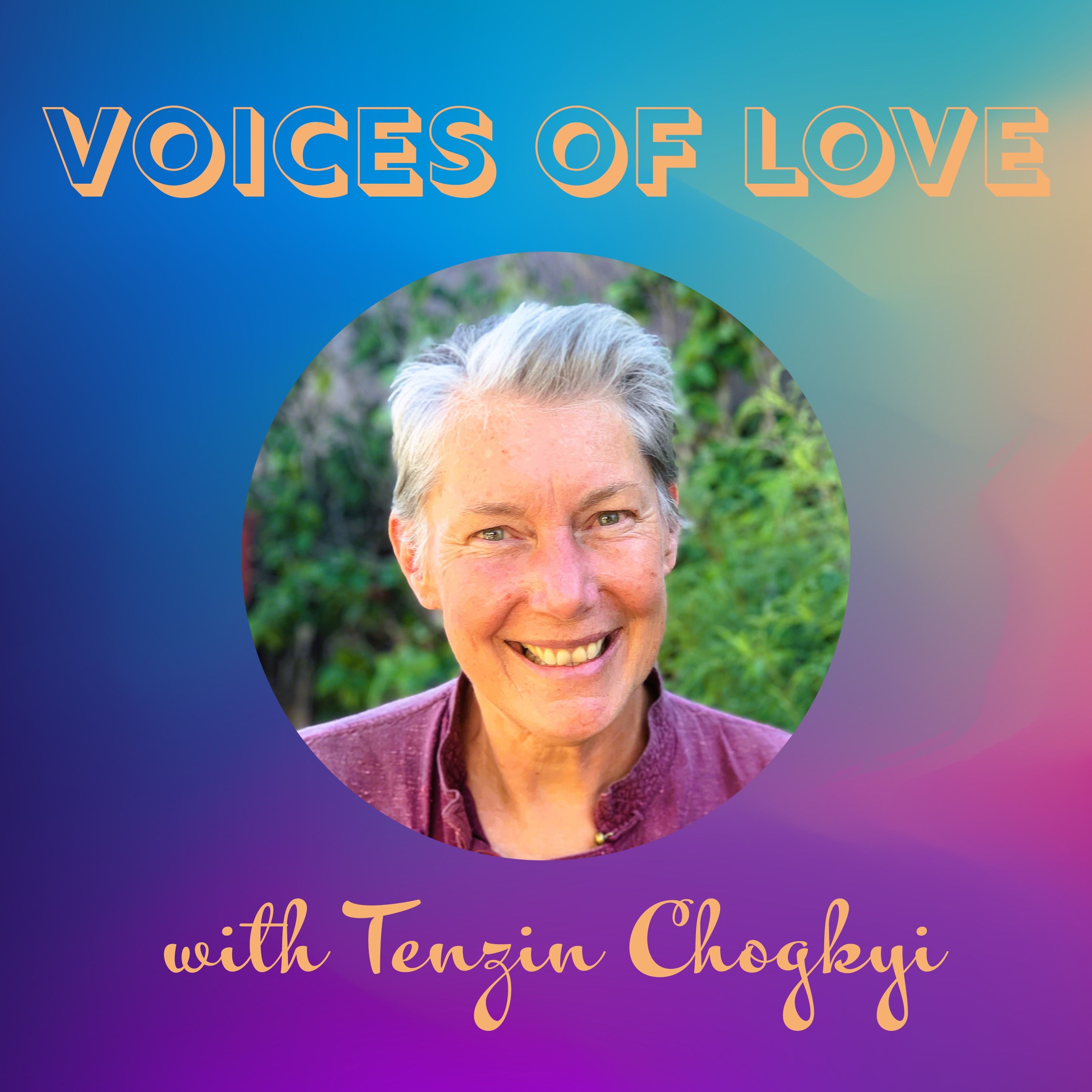
Voices of Love
by Tenzin Chogkyi
Voices of Love: Bridging Differences Through Compassionate ConversationsWe are living in a time of deep fragmentation. Communities and nations are increasingly divided along lines of political affiliation and ideology, race, class, religion, immigration status, language, and more. The public conversation often suggests there are only two sides: winners and losers, us and them.Voices of Love begins from a different premise. This series asks whether another way forward is possible—one grounded not in uniformity of belief, but in curiosity, empathy, and a willingness to truly listen to one another.When we perceive others’ beliefs and opinions as different from our own, it can feel difficult—sometimes even unsafe—to listen openly or ask why they see the world as they do. Yet, research in conflict and peacebuilding, as well as lived experience, suggest that our collective capacity to bridge divides is essential for any sustainable future. When we slow down enough to hear each other, we b
-
44
Co-exploring Emptiness and Peace: A Relational Path to Bridging Divides
Bio: Ørjan Bergan just completed writing his Master’s thesis at the Centre for Peace Studies (CPS) at the Arctic University of Tromsø (Norway). The title of the thesis is “Letting Go and Getting Closer: A Constructive Critical Study of the Experienced Application of Buddhist Understanding and Practice of Emptiness in Peace and Conflict Transformation Work.” Ørjan is a trained Gestalt therapist at the Norwegian Gestalt Institute College (2016-2020), and has a clinical practice. He plans to continue with the themes of his Master’s thesis in a PhD program. During his studies, he worked for the Norwegian Gestalt Institute College (NGI) as a research assistant. Ørjan has practiced meditation within the Rinzai and Soto traditions since 2002, and as a former residential practitioner at the San Francisco Zen Center (2014–2015), and has also participated in numerous longer meditation retreats, as well as having taught and led meditation sessions on several occasions since this stay. He has a bachelor's degree in political science from the University of Tromsø, a master's degree in sociology from the University of Chicago, and now a Master’s in peace and conflict studies from the Arctic University of Tromsø. LinkedIn page https://www.linkedin.com/in/oerjanbergan Email [email protected]
-
43
Where We All Belong
Santiago was born and raised in Bogotá, Colombia, and came to the United States in his teens with his mother and brother, first living in the Boston area and then moving to California. He became interested in Buddhism and served on the staff at Vajrapani Institute in Boulder Creek, and then was one of the stewards for a tour of Buddhist relics throughout Latin America in México, Trinidad & Tobago, Colombia, Uruguay, Chile and Argentina. For the last twelve years, he has been engaged in indigenous spiritual traditions, taking part in retreats and ceremonies guided by traditional wisdom keepers. He currently lives in the Bay Area and works as an engineering technologist and is teaching himself robotics to be implemented at his work in a Silicon Valley technology company.
-
42
Angry Long Enough with sujatha baliga
sujatha baliga’s work is characterized by an equal dedication to crime survivors and people who’ve caused harm. A former victim advocate and public defender, baliga was awarded a Soros Justice Fellowship in 2008 which she used to launch a now nation-wide restorative youth diversion program. For her decades of work in conflict transformation and restorative justice, she was named a 2019 MacArthur Fellow. During her many years as the Director of the Restorative Justice Project, sujatha helped communities across the nation implement restorative justice alternatives to juvenile detention and zero-tolerance school discipline policies. Today, she's dedicated to using this approach to end child sexual abuse and intimate partner violence. sujatha is a frequent guest lecturer at universities and conferences; she speaks publicly and inside prisons about her own experiences as a survivor of child sexual abuse and her path to forgiveness. She is working on her first book, Angry Long Enough, to be published by One World/Penguin Random House in 2026. sujatha earned her A.B. from Harvard and Radcliffe Colleges, her J.D. from the University of Pennsylvania, and has held two federal district court clerkships. Her personal and research interests include the forgiveness of seemingly unforgivable acts and Buddhist notions of conflict transformation. sujatha’s faith journey undergirds her justice work. A long-time Buddhist practitioner, she’s a lay member of the Gyuto Foundation, a Tibetan Buddhist Monastery in Richmond, CA, where she leads meditation on Monday nights. She makes her home in Berkeley, CA, with her partner of 28 years, Jason, and their 19-year-old child, Sathya. Links: sujatha’s website: https://www.sujathabaliga.com/ The upcoming Spiritual Fitness course: https://www.sujathabaliga.com/spiritual-fitness Interview with Ezra Klein in 2020: https://open.spotify.com/episode/1T4fC2pl0mCRPxIylK64an MacArthur Fellow information: https://www.macfound.org/fellows/class-of-2019/sujatha-baliga Gyuto Foundation: https://gyutofoundation.org/ Be Angry, by His Holiness the Dalai Lama
-
41
It's Time to Talk About Peace with Rabbi Paula Marcus
It’s Time to Talk About Peace with Rabbi Paula MarcusI met Rabbi Paula Marcus, senior rabbi of Temple Beth El in Aptos, CA, not long after returning to the Santa Cruz area in 2018. I was looking for ways to connect to interfaith social justice work in the area, and in every group I joined, Rabbi Paula was there! I remember our first meeting at an event organized by Partners in Caring, a project of the Hospice of Santa Cruz County to support faith leaders offering end-of-life care. It was like meeting an old friend, and I’ve treasured our connection and the meaningful interfaith events we’ve been part of together in the years since.In this conversation, Rabbi Paula speaks about her childhood and some important early influences in her life, her decision to move to Santa Cruz and become involved in the community here in various ways, and her lifelong commitment to social justice activism and its expression through music and creativity. We talk about our commitment to bridge building and peacemaking, even when progress is difficult to see, and what gives us hope to continue with this work.Rabbi Paula has been active for years (26 to be exact, as I learned during this conversation) in working for peace in Israel/Palestine. She has been leading pilgrimages in conjunction with a tour agency called MEJDI, (Arabic for “to honor”) and has been supporting the work of two peace activists, Palestinian Aziz Abu Sarah and Israeli Maoz Inon, who both lost family to the conflict. A book about their collaboration called The Future is Peace is forthcoming (see the links below for more information about Aziz and Maoz and peacebuilding organizations that Rabbi Paula is involved with).Rabbi Paula Marcus’s bio:Senior Rabbi Paula Marcus has served Temple Beth El since 1979, first as a teacher in the religious school and the preschool, then as a co-principal of the religious school, then as a congregational cantor, and as Rabbi beginning in May 2004, upon being ordained by the Academy for Jewish Religion in Los Angeles. She has apprenticed with cantors in the U.S. and Israel, and she received her BA in Judaic studies from SUNY at Binghamton. She also has a masters degree in Rabbinic studies from the Academy of Jewish Religion. Rabbi Marcus chairs the Ethics Committee of OHALAH-The Association of Rabbis for Jewish Renewal. She demonstrates her commitment to exploring spiituality and learning as rabbi, cantor, worship service leader, teacher, peacemaker and social justice activist.Please click here to read some of Rabbi Paula's sermons and writings.Links:Temple Beth El website:https://www.tbeaptos.org/clergy-and-staff.htmlRecent article by Rabbi Paula about her peace work:And links to some of the people and organizations mentioned in the podcast:Aziz Abu Sarah, who is Palestinian, is the co-owner of MEJDI, a tour company that hosts Rabbi Paula’s tours to Israel/Palestine.Aziz is also the co-director of InterAct. He and Maoz Inon are the co-directors. And a forthcoming book by Aziz and Maoz:The Future is Peace: A Shared Journey Across the Holy Land by Aziz Abu Sarah and Maoz Inon“It’s Time”is a coalition of over 60 peacebuilding and shared society organizations, working together with determination and courage to end the Israeli-Palestinian conflict through a political agreement that will ensure both peoples' right to self-determination and secure lives.The Parents Circle (people who have lost family members in the conflict)Combatants for PeaceStanding Together (they have chapters in the US and Europe)Introducing “Standing Together,” a new global youth anthem. The Jerusalem Youth Chorus and Uniting Voices Chicago teamed up with the grassroots movement Standing Together to share our stories, our visions, and our determination to build a better future - together.Standing Together | The Jerusalem Youth Chorus x Uniting Voices Chicago
-
40
Staying Curious, with Andrew Purchin
Andrew Purchin is a citizen artist whose practice is rooted in mixed media art, dance improvisation, film and psychotherapy. He graduated with a B.A in his own major, “The Arts and Social Action” from UC Santa Cruz in 1985 and a Masters Degree in Social Work from San Francisco State University in 1990. With his Creative Listening Project, Purchin paints, listens and encourages creativity at sites where there can be grief, discord and celebration. A creative listening internet friendship led Purchin to travel Pakistan to create and exhibit "Encounters on the Frontier” with artist Mohsin Shafi at the National College of Arts in Pakistan in 2014 and for Shafi to join Purchin to create and exhibit “Upsidedownland” at the Radius Gallery in Santa Cruz in 2015.Purchin collaborated with the public as they marked on The Curious Scroll at the Republican and Democratic National Conventions in 2016 and in Santa Cruz County before the 2018 election. Purchin received the 2020 Ron Kovic Peace Prize for his short documentary, The Curious Scroll. Purchin is a 2022 recipient of a Santa Cruz City Arts Recovery and Design Grant for his social practice and documentary project about our housing crisis, “What’s Home? Creative Listening Across Differences.” This project also garnered a grant from the Awesome Foundation of Santa Cruz in 2023. Links to Andrew’s projects:https://www.andrewpurchin.com/https://www.youtube.com/aPurchinhttps://www.instagram.com/apurchin/
-
39
Bridging and Belonging
Tenzin Chogkyi (she/her/hers) is a teacher of workshops and programs that bridge the worlds of Buddhist thought, contemplative practice, mental and emotional cultivation, and the latest research in the field of positive psychology.Tenzin is especially interested in bringing the wisdom of Buddhism into modern culture and into alignment with modern cultural values such as racial and gender justice and environmental awareness. She feels strongly that a genuine and meaningful spiritual path includes not only personal transformation, but social and cultural transformation as well. She has been exploring the presentation of traditional teachings using modern pedagogical methods such as experiential exercises, dialogue and small group interaction.Tenzin is a certified teacher of Compassion Cultivation Training, a secular compassion training program developed at Stanford University. She also teaches the Cultivating Emotional Balance program, a secular program using contemplative techniques drawn from Buddhism for managing emotions, developed at His Holiness the Dalai Lama’s request. Greg Morris (pronouns: any) is a student and practitioner of bhakti yoga and Advaita Vedanta, as well as a student and devotee of the Tao Te Ching and the four gospels of the New Testament. A lifelong peace advocate and bridge-builder with childhood grounding in Unitarianism, Greg offers their spiritual practice as the foundation of their work as a teacher, as a coach, and as a management consultant specializing in diversity, equity, inclusion, and belonging. Greg is grateful to be the recipient and beneficiary of several healing modalities, most notably Rosen Method (Marion Rosen, Robert Harry Rovin), Transformational Bodywork (Stephen Allario, Fred Mitouer), Holistic Sexuality (Marina Romero), Interpersonal Dynamics (David Bradford), and psychotherapy. Greg is a certified teacher of Compassion Cultivation Training (CCT™), a secular program developed by Stanford University’s Department of Neurosurgery under the guidance of Geshe Thupten Jinpa and at the request of His Holiness the 14th Dalai Lama.Mathew Divaris is a student of Buddhism who is deeply inspired by Tenzin's multidisciplinary approach of bringing the teachings to our troubled times in truly relevant, actionable ways. When not helping out with the Unlocking True Happiness project, Mathew works as a marketing consultant.
-
38
Spiritual Lessons after the Storm with Deborah Eden Tull
Tenzin and Eden spoke of a number of different resources in this episode which are listed below:Eden's website: https://www.deborahedentull.com/And the video of her home after the hurricane: https://www.youtube.com/watch?v=jH32y0ooVYQ&ab_channel=DeborahEdenTullThe GoFundMe page to help her after the disaster:https://www.gofundme.com/f/help-eden-and-mark-rebuild-after-heleneThe Othering and Belonging Institute: https://belonging.berkeley.edu/
-
37
Holding Space with Eden Tull
Back by popular demand, Deborah Eden Tull joins Tenzin for a timely conversation about how to hold space and stay present in deeply challenging times. Recorded at the beginning of the renewed conflict between Israel and Hamas, this episode shares deep insight on how we can navigate polarization and difficulty with compassion and engagement with our shared humanity.
-
36
Let's Play
We're often led to believe that our highly-structured, thinking-oriented sides are what make us human, that "hard work" is of value above all else, and that play is simply something that young children do. However, research shows that play has incredible power is developing social bonds, fostering creativity, sparking joy and even helping to make positive changes to our epigenetics. In this episode, Tenzin explores the many types of play, the positives benefits, and how we can bring a sense of play to our own spiritual practice to make it more joyful.
-
35
The Power of the Apology
No matter how mindful we are of our thoughts, speech and actions, being human means that we can sometimes act unwisely or hurt someone's feelings. Whether these mistakes are unintentional or not, they can lead to rifts in our relationships; and ultimately damage both our own contentment, as well as the cohesion of our community. In this episode, Tenzin shares the power of apologizing as a roadmap for forgiveness, healing and reconciliation; and then leads a reflection on the impact of both giving and receiving a wholehearted apology.
-
34
Finding Hope through Tending to Relationships
Nina Simons is the co-founder and Chief Relationship Officer at Bioneers, and leads its Everywoman’s Leadership program. Bioneers is a nonprofit that uses media, convening, and connecting to lift up visionary and practical solutions for many of our most pressing social and ecological challenges, revealing aregenerative and equitable future that’s within our reach today. Nina is a social entrepreneur who is passionate about reinventing leadership, restoring the feminine, andco-creating a healthy, peaceful,and equitable world for all. She speaks and teaches internationally at schools, conferences, and festivals, and co-facilitates transformative workshops and retreats for women that share practices for regenerative leadership through reclaiming wholeness and relational mindfulnessHer book Nature, Culture and the Sacred: A Woman Listens for Leadership offers inspiration for anyone who aspires to grow into or inhabit their own unique form of leadership with resilience and joy. The book draws on Simons’ own personal learning and extensive experience with women’s leadership development... to reconnect and defend people, nature and the land, both practically and spiritually.
-
33
Nature, Culture and the Sacred with special guest Nina Simons
Nina Simons is the co-founder and Chief Relationship Officer at Bioneers, and leads its Everywoman’s Leadership program. Bioneers is a nonprofit that uses media, convening, and connecting to lift up visionary and practical solutions for many of our most pressing social and ecological challenges, revealing aregenerative and equitable future that’s within our reach today. Nina is a social entrepreneur who is passionate about reinventing leadership, restoring the feminine, andco-creating a healthy, peaceful,and equitable world for all. She speaks and teaches internationally at schools, conferences, and festivals, and co-facilitates transformative workshops and retreats for women that share practices for regenerative leadership through reclaiming wholeness and relational mindfulnessHer book Nature, Culture and the Sacred: A Woman Listens for Leadership offers inspiration for anyone who aspires to grow into or inhabit their own unique form of leadership with resilience and joy. The book draws on Simons’ own personal learning and extensive experience with women’s leadership development... to reconnect and defend people, nature and the land, both practically and spiritually.
-
32
Gratitude's Gifts
In this episode, Tenzin explores the many gifts that gratitude can bring to our lives, helping to offset our natural negativity bias and bring more richness to our experiences and our relationships. She then shares some simple ideas on how we can cultivate our own practice of gratitude with an experiential meditation.
-
31
Luminous Darkness Part 2 with Deborah Eden Tull
Luminous Darkness: An Engaged Buddhist Approach to Embracing the Unknown by Deborah Eden Tull is a resonant call to explore the darkness in life, in nature, and in consciousness—including difficult emotions like uncertainty, grief, fear, and xenophobia—through teachings, embodied meditations, and mindful inquiry that provide us with a powerful path to healing.Darkness is deeply misunderstood in today’s world; yet it offers powerful medicine, serenity, strength, healing, and regeneration. All insight, vision, creativity, and revelation arise from darkness. It is through learning to stay present and meet the dark with curiosity rather than judgment that we connect to an unwavering light within. Welcoming darkness with curiosity, rather than fear or judgment, enables us to access our innate capacity for compassion and collective healing.Dharma teacher, shamanic practitioner, and deep ecologist Deborah Eden Tull addresses the spiritual, ecological, psychological, and interpersonal ramifications of our bias towards light.Tull explores the medicine of darkness for personal and collective healing, through topics such as:• Befriending the Night: The Radiant Teachings of Darkness• Honoring Our Pain for Our World• Seeing in the Dark: The Quiet Power of Receptivity• Dreams, Possibility, and Moral Imagination• Releasing Fear—Embracing EmergenceTull shows us how the labeling of darkness as “negative” becomes a collective excuse to justify avoiding everything that makes us uncomfortable: racism, spiritual bypass, environmental destruction. We can only find the radical path to wholeness by learning to embrace the interplayof both darkness and light.About the AuthorZen meditation and mindfulness teacher, author, activist, and sustainability educator. Eden teaches the integration of compassionate awareness into every aspect of our lives. She spent seven years training as a Buddhist monk at a silent Zen monastery and has been teaching dharma for 19 years. Eden has also been living in, and teaching about, sustainable communities for over 25 years.Her teaching style is grounded in compassionate awareness, experiential learning, inquiry, and an unwavering commitment to personal transformation. She teaches engaged awareness practice, which emphasizes the connection between personal awakening and global engagement. Eden draws upon teachings from the natural world and an embodied understanding of animism.She is author of “Relational Mindfulness: A Handbook for Deepening Our Connection with Our Self, Each Other, and Our Planet” (Wisdom 2018) and “The Natural Kitchen: Your Guide for the Sustainable Food Revolution.” Her work has been featured in The Los Angeles Times, Tricycle, Yogi Times, GOOP, Shambhala Times, and The Ecologist. She also teaches The Work That Reconnects, a program created by Buddhist scholar Joanna Macy, and teaches for UCLA’s Mindful Awareness Research Center. Eden offers retreats, online courses, and consultations internationally.Readers can connect with Deborah Eden Tull on Facebook, Instagram, and Goodreads.To learn more, go to DeborahEdenTull.com.
-
30
Making a Case for Compassion, with Special Guest Sara Schairer
Sara is a contributing author to the book The Neuroscience of Learning and Development: Enhancing Creativity, Compassion, Critical Thinking and Peace in Education, and writes for Deepak Chopra’s Center for Wellbeing website. Sara’s new book, A Case for Compassion: What Happens When We Prioritize People and the Planet, is available now.
-
29
Unlocking Compassion with Equanimity
Dr. Joey Weber, who was raised in a Buddhist community in northern England, noticed that the focus in popular mindfulness programs was on the attentional training, and not as much emphasis was given to the “non-judgmental” aspect of mindfulness. He was so intrigued by this that he completed a PhD program devoted to the study of equanimity, the non-judgmental stance of mindfulness. His book, Mindfulness is Not Enough: Unlocking Compassion with Equanimity, is based on his research, and he also developed a six-week training program called Equanimity-based Compassionate Action.Join us for our conversation with Dr. Weber, as we delve into the meaning of equanimity, what this quality can bring to our lives, and how it can inspire our own compassionate action.
-
28
The Unexpected Gifts of Groundlessness
The Buddhist teacher Pema Chodron says, in relation to contemplative practice, “We are being encouraged to remain open to the present groundless moment, to a direct, unarmored participation with our experience… How many of us feel ready to interrupt our habitual patterns, our almost instinctual ways of getting comfortable?” Many of us find the experience of groundlessness to be profoundly uncomfortable, and in the last few years we’ve experienced this feeling to an accelerated degree, with the changes brought about by the pandemic, the global financial crisis, political unrest, and so on. How do we remain open and view groundlessness as a gift, see the potential inherent in it, and embrace it? Join Tenzin Chogkyi and Mathew Divaris to explore the theme of groundlessness and how to bring it into the spiritual path.
-
27
Luminous Darkness - with special guest Deborah Eden Tull
This is the episode that was aired on KSQD.org. Checkout the full, 90 minute conversation in the next post.Luminous Darkness: An Engaged Buddhist Approach to Embracing the Unknown by Deborah Eden Tull is a resonant call to explore the darkness in life, in nature, and in consciousness—including difficult emotions like uncertainty, grief, fear, and xenophobia—through teachings, embodied meditations, and mindful inquiry that provide us with a powerful path to healing.Darkness is deeply misunderstood in today’s world; yet it offers powerful medicine, serenity, strength, healing, and regeneration. All insight, vision, creativity, and revelation arise from darkness. It is through learning to stay present and meet the dark with curiosity rather than judgment that we connect to an unwavering light within. Welcoming darkness with curiosity, rather than fear or judgment, enables us to access our innate capacity for compassion and collective healing.Dharma teacher, shamanic practitioner, and deep ecologist Deborah Eden Tull addresses the spiritual, ecological, psychological, and interpersonal ramifications of our bias towards light.Tull explores the medicine of darkness for personal and collective healing, through topics such as:• Befriending the Night: The Radiant Teachings of Darkness• Honoring Our Pain for Our World• Seeing in the Dark: The Quiet Power of Receptivity• Dreams, Possibility, and Moral Imagination• Releasing Fear—Embracing EmergenceTull shows us how the labeling of darkness as “negative” becomes a collective excuse to justify avoiding everything that makes us uncomfortable: racism, spiritual bypass, environmental destruction. We can only find the radical path to wholeness by learning to embrace the interplayof both darkness and light.About the AuthorZen meditation and mindfulness teacher, author, activist, and sustainability educator. Eden teaches the integration of compassionate awareness into every aspect of our lives. She spent seven years training as a Buddhist monk at a silent Zen monastery and has been teaching dharma for 19 years. Eden has also been living in, and teaching about, sustainable communities for over 25 years.Her teaching style is grounded in compassionate awareness, experiential learning, inquiry, and an unwavering commitment to personal transformation. She teaches engaged awareness practice, which emphasizes the connection between personal awakening and global engagement. Eden draws upon teachings from the natural world and an embodied understanding of animism.She is author of “Relational Mindfulness: A Handbook for Deepening Our Connection with Our Self, Each Other, and Our Planet” (Wisdom 2018) and “The Natural Kitchen: Your Guide for the Sustainable Food Revolution.” Her work has been featured in The Los Angeles Times, Tricycle, Yogi Times, GOOP, Shambhala Times, and The Ecologist. She also teaches The Work That Reconnects, a program created by Buddhist scholar Joanna Macy, and teaches for UCLA’s Mindful Awareness Research Center. Eden offers retreats, online courses, and consultations internationally.Readers can connect with Deborah Eden Tull on Facebook, Instagram, and Goodreads. To learn more, go to DeborahEdenTull.com.
-
26
Luminous Darkness: EXTENDED EPISODE
Luminous Darkness: An Engaged Buddhist Approach to Embracing the Unknown by Deborah Eden Tull is a resonant call to explore the darkness in life, in nature, and in consciousness—including difficult emotions like uncertainty, grief, fear, and xenophobia—through teachings, embodied meditations, and mindful inquiry that provide us with a powerful path to healing.Darkness is deeply misunderstood in today’s world; yet it offers powerful medicine, serenity, strength, healing, and regeneration. All insight, vision, creativity, and revelation arise from darkness. It is through learning to stay present and meet the dark with curiosity rather than judgment that we connect to an unwavering light within. Welcoming darkness with curiosity, rather than fear or judgment, enables us to access our innate capacity for compassion and collective healing.Dharma teacher, shamanic practitioner, and deep ecologist Deborah Eden Tull addresses the spiritual, ecological, psychological, and interpersonal ramifications of our bias towards light.Tull explores the medicine of darkness for personal and collective healing, through topics such as:• Befriending the Night: The Radiant Teachings of Darkness• Honoring Our Pain for Our World• Seeing in the Dark: The Quiet Power of Receptivity• Dreams, Possibility, and Moral Imagination• Releasing Fear—Embracing EmergenceTull shows us how the labeling of darkness as “negative” becomes a collective excuse to justify avoiding everything that makes us uncomfortable: racism, spiritual bypass, environmental destruction. We can only find the radical path to wholeness by learning to embrace the interplayof both darkness and light.About the AuthorZen meditation and mindfulness teacher, author, activist, and sustainability educator. Eden teaches the integration of compassionate awareness into every aspect of our lives. She spent seven years training as a Buddhist monk at a silent Zen monastery and has been teaching dharma for 19 years. Eden has also been living in, and teaching about, sustainable communities for over 25 years.Her teaching style is grounded in compassionate awareness, experiential learning, inquiry, and an unwavering commitment to personal transformation. She teaches engaged awareness practice, which emphasizes the connection between personal awakening and global engagement. Eden draws upon teachings from the natural world and an embodied understanding of animism.She is author of “Relational Mindfulness: A Handbook for Deepening Our Connection with Our Self, Each Other, and Our Planet” (Wisdom 2018) and “The Natural Kitchen: Your Guide for the Sustainable Food Revolution.” Her work has been featured in The Los Angeles Times, Tricycle, Yogi Times, GOOP, Shambhala Times, and The Ecologist. She also teaches The Work That Reconnects, a program created by Buddhist scholar Joanna Macy, and teaches for UCLA’s Mindful Awareness Research Center. Eden offers retreats, online courses, and consultations internationally.Readers can connect with Deborah Eden Tull on Facebook, Instagram, and Goodreads. To learn more, go to DeborahEdenTull.com.
-
25
Reclaiming Joy
What is the role of joy on the spiritual path? The bodhisattva path and the path of compassion require us to have an awareness of the suffering of beings – are joy and compassion contradictory? Or can joy be used to sustain our spiritual path and practice? Join us for an exploration of the theme of joy on the spiritual path with Tenzin Chogkyi, who will draw from sources as diverse as 8th Century Indian master Shantideva, research psychologist Jonathan Haidt, and poet Ross Gay.
-
24
Cultivating Emotional Balance with guest Dr. Eve Ekman
Our emotions bring us our greatest joys and our deepest sorrows. We wouldn't survive without them, and yet they can also cause us to harm others and ourselves. What is the purpose of emotions, and how can we cultivate more emotional balance? Join us for this conversation with well-known emotions researcher and educator, Dr. Eve Ekman, as we explore these questions. We will also discuss the role of contemplative practice, how our emotions are influenced by our position in the social hierarchy, and Dr. Ekman's "go-to" emotional regulation strategies.
-
23
The Case for American Pluralism
She also talks about an upcoming event "Let's Talk About It: Finding common threads through conversation" to be held at the MAH on Saturday, July 23, 2022 from 2:00 to 6:00 pm, which will be based on these principles and provide the opportunity for members of the public to have conversations with people representing misunderstood identities.Find out more here.
-
22
Acceptance is not Complacency
In these uncertain times, our roles as individuals in the sweeping events washing over the world stage can feel deeply unclear, sometimes frightening and frequently overwhelming. It is tempting to respond to these often painful situations by vacillating between anger and complacency. Buddhist teachings can offer insight into accepting “what is” while developing the capacity for equanimity and the courage for wise action. Join Ven Tenzin Chogkyi and Mathew Divaris in a lively conversation originally aired on KSQD Santa Cruz where we navigate the nuances of accepting where we are, while cultivating a wish for positive transformation and avoiding the traps of striving and complacency.
-
21
Words Matter: The Power of Skillful Speech
The concept of Right Speech (or "Skillful Speech") is core to many Buddhist teachings about how to live an ethical life and avoid causing harm. In our hyperconnected world, our ability to communicate beyond face-to-face has increased exponentially, and navigating our own speech (and written words) is important because of the wide-ranging ramifications that our words can have on others, as well as on our own minds. In this talk and meditation, Ven Tenzin takes us through the practical advice given in the traditional teachings so that we can exercise our communication with skill and compassion.
-
20
The Four Virtues of the Heart
This is borrowed from the Reflections on Buddhism show with Ven Tenzin Chogkyi that airs monthly at KSQD.org. Find past episodes at UnlockingTrueHappiness.org.
-
19
The Neuroplasticity of Perception
We’re raised to believe that our perceptions of the world around us has an objective quality, but both Buddhism and modern neuroscience agree that our perceptions can frequently be distorted, and these distortions can cause great suffering. This "naive realism” — the belief that the world exists in the way it appears to us — is so innate to many of us, yet our beliefs, past experiences and emotional states can dramatically alter how we perceive experiences. In this informative session, Ven Tenzin discusses the many ways that our minds can play tricks on us, particularly when it comes to the impact of experiences that we perceive as negative, and shares a simple practice that can help balance and enrich our minds by reinforcing the impact of positive experiences.
-
18
Mindfulness of Our Motivations
In this episode, Ven Tenzin explores the Eight Worldly Concerns, a set of four dyads that correspond to many of the deeply held hopes and fears that drive the actions of all beings. As we engage with the spiritual path, or even the mundane decisions of the day-to-day, a clear understanding of these forms of attachment and aversion can serve as a way to become mindful of our motivations and bring clarity and skillfulness to our actions. In this way, we can ultimately become free from the suffering that these unconscious, habitual ways of engaging with the world can bring.
-
17
The Path to Genuine Happiness
Capitalist consumer culture puts a huge emphasis on finding happiness in the external world. But, this hedonic happiness is shown, both in our experience and in the scientific experiments, to be fleeting. In this episode, Ven Tenzin speaks to a second, more durable type of happiness that is not nearly as predicated on external factors -- Eudaimonic happiness, which is derived from what we bring to the world.
-
16
Cultivating Courage
In popular culture, courage is often portrayed as loud and showy, and patience as passivity and inaction. Yet, in Buddhist philosophy, courage is a hallmark of patience, of facing life’s challenges with resilience and wise action. In this episode, Ven Tenzin speaks about the intrinsic link between patience and courage, and how we can build the courage to go outside of our own comfort zones and engage in meaningful action without losing our peace of mind.
-
15
The Perfection of Patience
Patience, or forbearance, is taught as one of the six perfections, the six main practices of a bodhisattva (a being who is dedicated to attaining full enlightenment for the sake of all living beings). In the well-known text, The Guide to the Bodhisattva’s Way of Life, the 8th Century Indian master Shantideva devotes the longest chapter to the practice of patience because of its importance. But what does this patience involve? Why is it so emphasized on the spiritual path? Join us for an exploration of the perfection of patience, which is needed so desperately now in our increasingly divisive age.
-
14
Living with Awareness:: The Four Foundations of Mindfulness
Mindfulness practice has become increasingly popular in recent years, and is being taught not only to Buddhist practitioners in meditation retreats but in every context, from maximum-security prisons to Silicon Valley boardrooms. But what did the Buddha teach about mindfulness, and why is this practice such a fundamental aspect of the path leading to awareness and awakening? The Four Foundations of Mindfulness, mindfulness of the body, the feelings, mind, and phenomena, was taught by the Buddha as a way to gain insight into the nature of reality. Join us for an exploration of this powerful foundational practice, and taste these insights for yourself!
-
13
The Art of Forgiveness
Many of us are drawn to the practices of compassion and loving-kindness, but we still struggle with forgiveness of those who have hurt us. What’s the difference between forgiveness and compassion? Why is forgiving so difficult? Does forgiving mean forgetting? Condoning the harmful action? Join us in this discussion of what forgiveness is, what it isn’t, and how to begin the process of forgiveness.
-
12
The Awe-Altruism Link
Awe is that sense of wonder felt in the presence of something vast that transcends one’s understanding of the world. People commonly experience it in nature but also in response to religion, art and music. But recent research shows a surprising fringe benefit to moments of awe. These studies show that inducing a sense of awe in people can promote altruistic, helpful and positive social behavior. Paul Piff, a psychologist who has designed some of these studies, says, “Our investigation indicates that awe, although often fleeting and hard to describe, serves a vital social function. By diminishing the emphasis on the individual self, awe may encourage people to forgo strict self-interest to improve the welfare of others.” The researchers said they believe that awe induces a feeling of being diminished in the presence of something greater than oneself. It is this reduced sense of self that sways focus away from an individual’s need and toward the greater good. In this episode, Ven. Tenzin talks about the link between awe and altruism, and explores strategies we can use to enhance our experiences of awe, not only leading to these moments of wonder and transcendence, but motivating altruistic actions and behaviors that benefit others.
-
11
In Search of Your Self
The Buddha famously taught the doctrine of selflessness. But what does this mean? Doesn’t modern psychology urge us to have a healthy sense of self? What part of “me” am I trying to give up? And who am I, anyway? Everyone has a natural tendency to focus on “me” – my body, my feelings, and my thoughts. This focus has played a critical role in keeping each of us safe, alive and fed… and in developing our ego construct – the story we tell ourselves about who we are. But there comes a time when this prioritization of “me” and limited view of “who I think I am” actually gets in the way of our personal and spiritual growth. Join Ven. Tenzin Chogkyi as she shares empowering, practical steps to identify and let go of the limited ego so we can make space for something much more expansive, loving and profound.
-
10
The Six Varieties of Love
Resource: https://www.yesmagazine.org/health-happiness/2013/12/28/the-ancient-greeks-6-words-for-love-and-why-knowing-them-can-change-your-life
-
9
The Magic of Interconnection (and How it Makes Us Happier)
Venerable Tenzin mentions some books during this episode:The Overstory by Richard PowersFinding the Mother Tree by Suzanne SimardBraiding Sweetgrass by Robin Wall KimmererBorn to Be Good by Dacher Keltner
-
8
What's Shame Got to Do with It? Exploring Shame, Contempt and Disgust through a Contemplative Lens with Dr. Eve Ekman
This interview was recorded in front of a live Zoom audience as part of the Healing the Body, Healing the Mind Online Conference in partnership with Jamyang Buddhist Center’s Science and Wisdom LIVE project.
-
7
Practicing Community Care
Ven Tenzin mentioned a number of links during this episode, and they're here for your convenience.https://www.flare.com/identity/self-care-new-zealand-muslim-attack/https://www.healthline.com/health/when-self-care-becomes-community-care#Were-responsible-for-each-otherhttps://www.ihollaback.org/bystanderintervention/
-
6
Testing the Waters of Love with Greg Morris
Ven. Tenzin and Greg are co-teaching the Compassion Cultivation Training beginning June 30, click here for more information.
-
5
Bringing Back the Wonder
Ven Tenzin mentioned some web links during this episode, which are listed below.https://onbeing.org/programs/ross-gay-tending-joy-and-practicing-delight/ https://www.npr.org/2021/02/18/969032187/the-gratitude-chain-a-j-jacobs https://www.youtube.com/watch?v=9aT0A28IW7E
-
4
Unpacking Anger with Dr. Eve Ekman
Dr Ekman mentions an upcoming summit in the podcast. If of interest, the link is below.Explore the Science, Wisdom, and Power of Emotionswith His Holiness the Dalai Lamaand over 30 Leading Scientists + World Renowned TeachersJoin this Special Free Global EventMay 2-5, 2021https://www.scienceandwisdomofemotions.com/
-
3
Self-Compassion
This episode explores self-compassion — what it is, what it's not and how it can make you happier. Put simply, self-compassion is simply treating yourself with the same kindness, concern, and support you'd show a good friend. So, why is it so difficult? What are some of the obstacles to self-compassion? Is there a way we can train ourselves in self-compassion? In this session, Ven. Tenzin discusses why it’s so difficult to give ourselves the same kindness and compassion that we would a friend, and will also introduce us to a short self-compassion practice that we can take into our daily lives to increase our happiness and well-being.
-
2
Recognizing our Common Humanity
Many of us feel that our social and political worlds are more divided than ever before, and are aware of the suffering this polarization causes. One of the key steps in contemplative compassion training is a recognition of our common humanity, that beneath all the superficial differences of religion, culture, race, ethnicity, political beliefs, etc., we all share the same basic human feelings and needs. In this episode, Ven. Tenzin introduces this topic and leads us through a brief guided practice.
-
1
Mindfully Managing Anger
Characteristics of Anger:Theme: Being thwarted in pursuit of goal that matters to youEffects: Anger controls, punishes and retaliatesDangerous effect: Anger calls forth more anger. It is difficult not to respond to anger with anger, especially when it appears unjustifiedWhy do people want to change anger?It is the dangerous emotion that can quickly hurt others, psychologically, and physicallyMany taught not to express anger -> guilt, shameFor some own anger can get out of control -> fearCommon Anger TriggersInterference and lack of efficacyDisrespectSomeone trying to hurt usAnother person’s angerInjustice: both societal and personal (not being given credit for work)Disappointment in how a person has actedBetrayal, abandonment, rejectionBeing falsely accusedBreaking a cultural ruleAnger AntidotesPut yourself in the other person’s shoesDon’t take it personally!Is the other person mirroring your own unwanted qualities?Do you have a need that is not being met?Check your expectation!Check for an underlying emotion (fear, hurt, vulnerability)Is there an important message?Keep a healthy distance from triggering objects!Cultivating loving-kindness and compassion
-
0
Friendship
Today's episode includes a couple of lists of qualities, which are jotted down here for your ease of reference.Qualities of a true friend, according to the Buddha.Is a help and supportIs the same in happiness and sorrowAdvises his friend for his welfareIs sympatheticVen Tenzin also mentions Jean Baker Miller's list of five phenomena of growth-enhancing relationships.Each person feels a great sense of zest (vitality).Each person feels more able to act, and does act.Each person has a more accurate picture of her/himself and the other person(s).Each person feels a greater sense of self-worth.Each person feels more connected to the other person(s) and greater motivation for connections with other people.
We're indexing this podcast's transcripts for the first time — this can take a minute or two. We'll show results as soon as they're ready.
No matches for "" in this podcast's transcripts.
No topics indexed yet for this podcast.
Loading reviews...
ABOUT THIS SHOW
Voices of Love: Bridging Differences Through Compassionate ConversationsWe are living in a time of deep fragmentation. Communities and nations are increasingly divided along lines of political affiliation and ideology, race, class, religion, immigration status, language, and more. The public conversation often suggests there are only two sides: winners and losers, us and them.Voices of Love begins from a different premise. This series asks whether another way forward is possible—one grounded not in uniformity of belief, but in curiosity, empathy, and a willingness to truly listen to one another.When we perceive others’ beliefs and opinions as different from our own, it can feel difficult—sometimes even unsafe—to listen openly or ask why they see the world as they do. Yet, research in conflict and peacebuilding, as well as lived experience, suggest that our collective capacity to bridge divides is essential for any sustainable future. When we slow down enough to hear each other, we b
HOSTED BY
Tenzin Chogkyi
CATEGORIES
Loading similar podcasts...
Frequently Asked Questions
How many episodes does Voices of Love have?
Voices of Love currently has 45 episodes available on PodParley. New episodes are automatically indexed when they're published to the podcast feed.
What is Voices of Love about?
Voices of Love: Bridging Differences Through Compassionate ConversationsWe are living in a time of deep fragmentation. Communities and nations are increasingly divided along lines of political affiliation and ideology, race, class, religion, immigration status, language, and more. The public...
How often does Voices of Love release new episodes?
Voices of Love has 45 episodes. Check the episode list to see recent publication dates and frequency.
Where can I listen to Voices of Love?
You can listen to Voices of Love on PodParley by clicking any episode. We provide an embedded audio player for direct listening, and you can also subscribe via your preferred podcast app using the RSS feed.
Who hosts Voices of Love?
Voices of Love is created and hosted by Tenzin Chogkyi.
URL copied to clipboard!