
PODCAST · health
When Words Don't Come Easy
by Justin and Roger Chlowitz
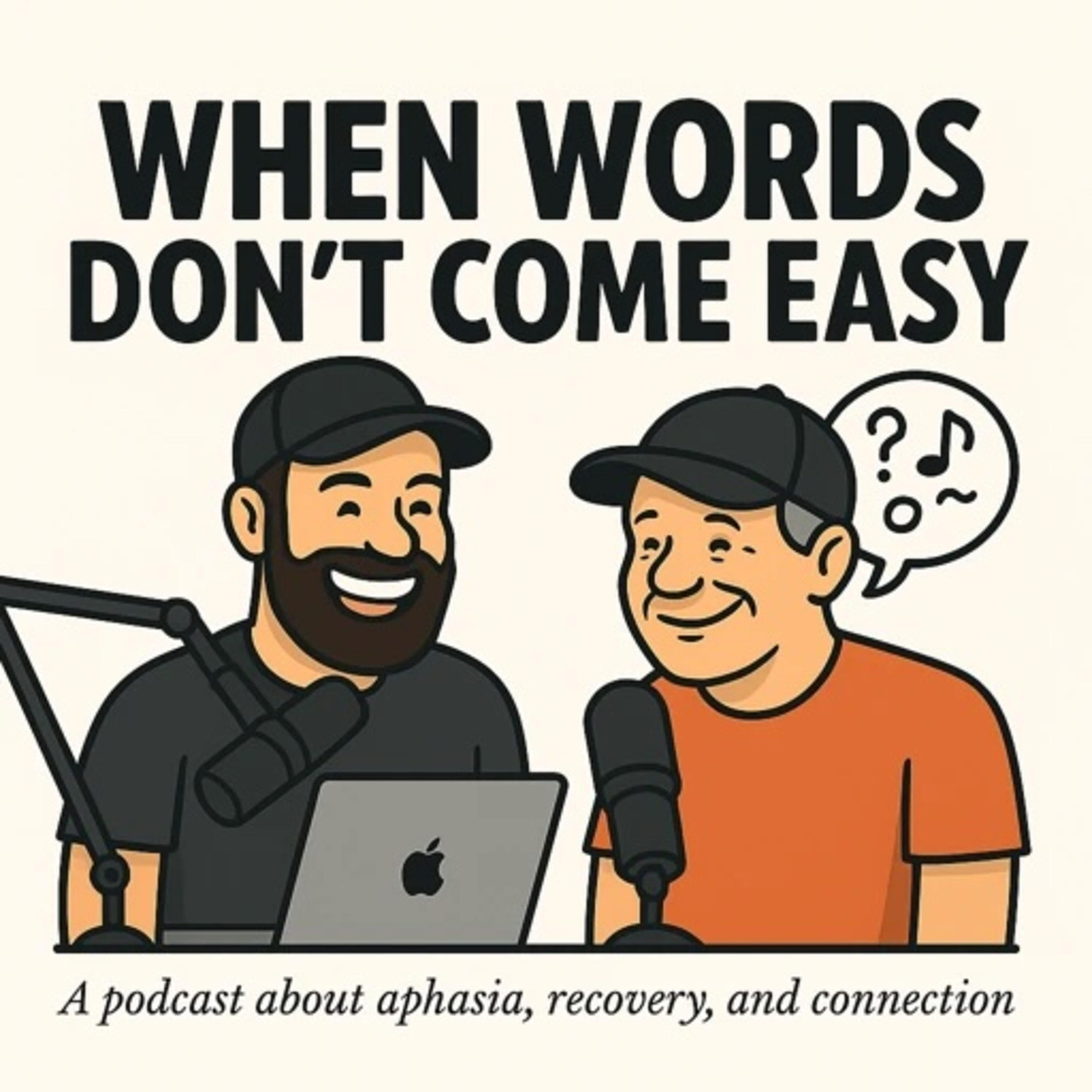
When Words Don’t Come Easy is a podcast about connection — even when communication gets hard.I’m Justin, and my dad Roger is recovering from a stroke that left him with aphasia.We talk. We struggle. We laugh. We guess the words.But this show isn’t just about us.It’s also about the people who’ve been there:Other stroke survivors. Families. Speech therapists. Doctors. Advocates.People who know what it’s like when the words won’t come — but the love is still loud.If you’ve ever felt alone in this journey, this podcast is for you.Subscribe and join the conversation.
Episodes
-
Ep. 38 Recovery Has No Finish Line: Steven L. Best on Life After Stroke
Steven Best joins When Words Don’t Come Easy to share his powerful journey as a stroke survivor, educator, and advocate for recovery. After experiencing a stroke at just 32, Steven faced the devastating challenges of aphasia, losing his ability to communicate as he once had, and rebuilding his...
-
Ep. 37 Never Stop Growing: Julian Reddish on Life After Stroke
Never Stop Growing: Accepting Life After a Stroke | Julian Reddish About This Episode What happens after surviving a stroke? The journey doesn't end with physical recovery. For many survivors, the emotional challenges, communication difficulties, and feelings of isolation can be just as difficult...
-
Ep. 36 More Than Survival: James Kirkwood’s Story
In this episode of "When Words Don’t Come Easy", James Kirkwood shares his powerful journey of recovery after suffering a severe stroke at just 20 years old. James opens up about the challenges he faced during recovery, particularly the impact of communication difficulties on his confidence,...
-
Ep. 35 When Conversation Becomes Connection | Janu Orrick & AphasiaPals
In this episode of When Words Don’t Come Easy, Justin and Roger sit down with Janu Orrick, founder of AphasiaPals, to talk about communication, connection, caregiving, and life after stroke. Janu shares the story behind AphasiaPals and how her experiences with her friend Demetrius helped inspire…
more -
Ep. 34 Straight Out of a Coma with Matthew Thomas
In this episode of 'When Words Don't Come Easy', hosts Justin and Roger speak with Matthew Thomas, a traumatic brain injury survivor who shares his incredible journey of resilience and recovery. After a devastating car accident left him with a severe brain injury and a prognosis of only 5% chance...
-
Ep. 33 Brain Healing Collective with Kerri Potthoff: Creating a New Life After Stroke
In this episode, Justin and Roger discuss the often-overlooked journey of recovery after a stroke or brain injury with Kerri Potthoff from the Brain Healing Collective. They explore the challenges faced by survivors and their families once traditional rehabilitation ends, the importance of...
-
Ep. 32 Don’t Let the Stroke Win: Steve Scharf on Recovery
In this powerful episode of When Words Don’t Come Easy, Justin and Roger sit down with stroke survivor and advocate Stephen Scharf for an honest and inspiring conversation about life after stroke. Stephen opens up about surviving two strokes, the unexpected challenges that followed, and what it…
more -
Ep. 31 Life After Stroke: Aphasia, Wheelchair Life & Finding Independence with Tina Orkin
What does life really look like after a stroke? In this episode of When Words Don’t Come Easy, Tina Orkin returns to the show for her second appearance for an honest and inspiring conversation about stroke recovery, aphasia, disability, and life in a wheelchair. Tina wanted to come back because...
-
Ep. 30 Everything Feels Impossible Until It’s Done
In this episode of When Words Don’t Come Easy, we sit down with Vincent Van den Broeck, author of Everything Feels Impossible Until It’s Done and a TBI survivor, for an honest conversation about rebuilding confidence, finding your identity again, and pushing forward when life suddenly feels...
-
Ep. 29 AphasiaGPT with Stephen Albright | AI, Stroke Recovery & Rebuilding Communication
What happens when a stroke survivor turns his own struggle with aphasia into an AI tool designed to help others communicate? In Episode 29 of When Words Don’t Come Easy, Justin and Roger sit down with Stephen Albright, a stroke survivor, entrepreneur, and creator of AphasiaGPT, an AI-powered...
-
Ep. 28 Trent Peterson: Stroke Recovery, Depression, Community & The Broken Road Project
In this episode of When Words Don’t Come Easy, Justin and Roger sit down with Trent Peterson, stroke survivor, advocate, podcast host, and co-founder of The Broken Road Project, a nonprofit focused on helping people navigate stroke, medical trauma, recovery, and life after a major medical event....
-
Ep. 27 Finding Purpose After Brain Injury | My Life Rewired | Brain Injury Recovery With Rob Baugh
Rob Baugh: Finding Purpose After Brain Injury | My Life Rewired | Brain Injury Recovery & Mental Health What happens when your entire life changes in an instant? In this powerful episode of When Words Don't Come Easy, we sit down with Rob Baugh, traumatic brain injury survivor, author, speaker…
more -
Ep. 26 Aphasia At Home W/ Laura Malis
In this episode of When Words Don't Come Easy, we sit down with Laura Malis, stroke survivor, aphasia advocate, and founder of Aphasia at Home. Learn more at www.aphasiaathome.com and follow Laura on Instagram @aphasiaathome for free resources that help people with aphasia improve their language,...
-
Ep. 25 Your Way to Say: Finding Your Voice After Aphasia W/ Mike Jankowski
Can you really stop recovering after one year? Stroke survivor Mike Jankowski says absolutely not. In this episode of When Words Don't Come Easy, we sit down with stroke survivor Mike Jankowski to discuss his journey through stroke recovery, living with aphasia, and why one of the most common...
-
Ep. 24 A Psychologist's Stroke Recovery | Matthew Liebman
What happens when a psychologist suddenly becomes the patient? In Episode 24 of When Words Don't Come Easy, Justin and Roger sit down with Matthew Liebman to discuss his stroke recovery, living with aphasia, and how his professional background gave him a unique perspective on healing. Matthew...
-
When Music Doesn't Sound the Same: Living with Amusia After Stroke
Most people have never heard of amusia. After his stroke, Matthew lost the ability to feel rhythm, find a beat, or sing along to music, even though his body works perfectly. Hear his incredible story this Sunday on When Words Don't Come Easy. You won't want to miss it.
-
“Aphasia Is More Than Word Finding” | Dr. Matthew Liebman on Identity After Stroke
🎙️ NEW EPISODE THIS SUNDAY Psychologist and stroke survivor Dr. Matthew Liebman joins When Words Don’t Come Easy for a powerful conversation about the experience of aphasia beyond “difficulty with word finding.” “Aphasia isn’t just struggling to find words. It’s worrying that everyone around you...
-
Ep. 23 Larrys Speakeasy
In this episode of When Words Don’t Come Easy, we sit down with Robert, the creator of LarrySpeakeasy, a new communication app inspired by his family’s experience with aphasia and stroke recovery. Robert shares how a simple idea grew into a tool that is already helping people reconnect through...
-
Ep. 22 Food, Recovery, and Connection After Stroke With Nicholas Kelly , RD
When Words Don't Come Easy welcomes Nicholas Kelly, a registered dietitian and cystic fibrosis advocate, for a conversation about the role nutrition plays in stroke and aphasia recovery. Nick shares practical tips for making mealtimes easier, managing dietary challenges after a stroke, and…
more -
Simple Nutrition Tips for Stroke Recovery
Registered dietitian Nicholas Kelly shares an easy nutrition tip: smoothies and meal replacement drinks can be a simple way to get healthy calories and nutrients when meals feel challenging. What simple nutrition tips have helped you or a loved one? #Aphasia #StrokeRecovery #StrokeSurvivor...
-
Stroke & Aphasia Diet Tips for Recovery
Our guest this week, Nicholas Kelly, Registered Dietitian and Cystic Fibrosis Advocate, shares stroke and aphasia diet tips, including why small meals, patience, and adapting to your new normal can play an important role in recovery. #Aphasia #StrokeRecovery #StrokeSurvivor #AphasiaAwareness...
-
Why Mealtimes Matter After Stroke
Don't miss this thoughtful discussion on the important role food and mealtimes can play in recovery and quality of life.
-
Ep. 21 Aphasia Relearned with Kent & Leah
In this inspiring episode of When Words Don't Come Easy, Justin and Roger sit down with Kent and Leah, the founders of Aphasia ReLearned, a nonprofit dedicated to helping stroke survivors and people with aphasia access life changing intensive therapy programs. Kent shares his remarkable recovery...
-
A Voice for Aphasia Recovery
Leah from Aphasia Relearned is passionate about making intensive aphasia therapy accessible to everyone. She wants more programs built across the country and hope to eventually bring the conversation to Congress. Because recovery shouldn't depend on your zip code. #Aphasia #StrokeRecovery...
-
From Saying Names to Relearning Life
Kent has attended the Michigan Intensive Aphasia Program 7 times and continues to improve. At first, he just wanted to say his kids’ names again.Now he’s relearning reading, writing, and math. Please check out Aphasia ReLearned to find resources on intensive, comprehensive aphasia programs....
-
Breaking Barriers to Aphasia Recovery - Aphasia Relearned
Meet Kent & Leah, founders of Aphasia Relearned. They created the program to help people with aphasia access intensive, specialized therapy that is often too expensive and rarely covered by insurance. Because everyone deserves a chance at recovery. #Aphasia #StrokeRecovery #AphasiaAwareness...
-
Ep. 20 Aphasia, Brain Health & Recovery with Professor Julius Fridriksson
This week on When Words Don’t Come Easy, we’re honored to welcome — one of the world’s leading researchers in aphasia and stroke recovery. Professor Julius Fridriksson serves as Vice President for Research at the University Of South Carolina and is the founder of the Aphasia Lab and the Center…
more -
“The Brain Finds New Roads” | Julius Fridriksson on Aphasia Recovery
Professor Julius Fridriksson explains aphasia recovery in a way that instantly makes sense. Sometimes the main highway is gone. Recovery means finding new roads. It may take longer. It may look different. But progress is still possible. One of our favorite moments from this conversation on “When...
-
Julius Fridriksson on Why Brain Health Matters in Stroke Recovery
Julius Fridriksson explains why brain health may be one of the most important factors in stroke and aphasia recovery. New research is changing how we understand recovery and challenging the idea that the brain and body should be treated separately. New Episode Sunday 5.24.26 #Aphasia...
-
The Biggest Myth About Aphasia Recovery With Professor Julius Fridriksson #aphasia
This week’s guest is Professor Julius Fridriksson, Vice President for Research at the University of South Carolina.For years, people believed aphasia therapy stopped working.But the issue wasn’t the therapy.It was how recovery was being measured.Aphasia recovery is rehabilitation.Long term.And…
more -
Ep. 19 On The Tip Of My Tongue with Jonathan Hirons
In this episode of When Words Don’t Come Easy, Justin and Roger sit down with Jonathan Hirons to talk about his life-changing stroke, the long road through aphasia recovery, and how he turned one of the hardest experiences of his life into a mission to help others feel understood. Jonathan shares...
-
Ep. 18 Julie’s Aphasia Recovery Story
In this episode of When Words Don’t Come Easy, Julie shares her honest and emotional journey through stroke recovery and living with aphasia. Joined by her husband, she opens up about the day everything changed, the challenges of communication, and the reality of rebuilding confidence after…
more -
Ep. 17 Comfortable Being Uncomfortable with Nicole Salzano
In Episode 17, we sit down with Nicole Salzano, a young stroke survivor and passionate advocate for aphasia awareness. Her story is especially powerful because her stroke happened while she was in college, completely changing the course of her life at a time when everything was just getting...
-
Ep. 16 What Actually Helps the Brain Heal With Anna Swindle
Here’s a clean, strong synopsis that actually sounds like a real episode, not a resume dump: We’re joined by Anna Swindle, a speech-language pathologist, board-certified swallowing specialist, and expert in neuroplasticity and aphasia recovery. Anna breaks down what aphasia really is, what it...
-
Ep. 15 Life Beyond Aphasia For Caregivers With Genevieve Richardson
Genevieve Richardson of Life Beyond Aphasia joins us to share a powerful, honest look at what life is really like for caregivers navigating aphasia. Drawing from her experience as a speech-language pathologist, she breaks down the emotional weight, identity shifts, and day-to-day challenges that...
-
Ep. 14 From Chaos To Comeback With Rich and Lizzie McMahon
Rich and Lizzie’s story is still very recent. Just five months ago, in October 2025, Rich had a stroke and was diagnosed with aphasia, instantly turning their world upside down. Even in that short time, he’s already made real progress through hard work and consistency. Lizzie has been all-in on…
more -
Ep. 13 From Stroke Survivor to Coach With Tristan Gibson
Tristan Gibson, also known as “Captain Orangutan,” is a stroke survivor, mindset leader, and coach who has completely redefined what recovery can look like. After experiencing a life-altering stroke at a young age, Tristan refused to accept limits. Instead of staying stuck in the question of “why...
-
Ep. 12 The Start of the Speech Recovery Journey With Susan Hakimi
In this episode, Justin and Roger are joined by Susan Hakimi, the head speech pathologist at Northridge Hospital Medical Center and the speech therapist who first worked with Roger during the earliest days of his recovery in the hospital. Susan shares how she got into speech pathology and…
more -
Ep. 11 When Words Don't Come Easy - Recovery Isn’t What People Think With Tina Orkin
In this episode we introduce Tina Orkin and learn about the life she built both before and after her stroke. Tina shares her journey into healthcare, becoming a nurse and working in OB-GYN, and talks about the work she was passionate about and the patients she cared for. She also opens up about…
more -
Ep. 10 The Speechless Language Of The Soul With Francis Muldowney
In this episode, we talk with Francis Muldowney, an Irish stroke survivor who rebuilt his life after aphasia took his speech but not his mind. At a time when little was understood about communication disorders, Francis was often underestimated. He began using impressions and character voices to...
-
Ep. 9 Building My Own Recovery With Eric Jackson
Fourteen years ago, Eric Jackson survived a stroke that changed the way he communicates and sees the world. When his insurance ran out early in his recovery, formal therapy stopped, but Eric didn’t. He built his own routine, practicing speech and physical exercises every day, reading anything he...
-
Ep. 8 What No One Told Me About Surviving a Stroke With Ralph Cortese
Ralph Cortese, host of Stroke Warrior Radio, joins us to share his story. From the shock of his stroke to the early hospital days where information felt incomplete and overwhelming, Ralph opens up about what he wishes someone had told him from the start.He talks candidly about the frustration and...
-
Ep.7 A Stroke Of Luck With Aithal
In this episode, we talk with Aithal, a stroke survivor and author of A Stroke of Luck. He shares what it was like to lose language, and still feel a deep need to tell his story. We talk about recovery, family across continents, and what it means to keep communicating when the words don’t always...
-
Ep.6 Finding Your Voice Again | Aphasia Phil
In this episode, we sit down with Aphasia Phil (Phil Oxendine), an aphasia advocate who turned a lack of representation into action. After his stroke, Phil noticed something missing. There were very few real, relatable aphasia voices on YouTube. So instead of waiting for someone else to tell…
more -
Ep.5 The Work No One Sees With Bonnie Chlowitz
In this episode, Bonnie shares her story as Roger’s wife and primary caregiver, beginning with the moment she discovered him during his stroke and the call to 911. She walks us through the shock and uncertainty of those early hospital days, learning on the fly, staying present, and making…
more -
Ep.4 Chasing My Voice With Annie Humling
In this episode, we sit down with Annie Humling, who had a stroke at just 20 years old—making her story unique and incredibly inspiring. Since then, she’s faced the daily challenge of finding her words, rebuilding her voice, and navigating life with aphasia. Annie shares the long, frustrating…
more -
Ep.3 Showing Up When Words Don't with Rick Partlow and Bruce
Rick Partlow lives with aphasia. His friend Bruce Fairbairn shows up. He goes to speech therapy with Rick, helps with the homework, and stays in it with him.Both come from the entertainment industry, where communication is everything. This episode is about what real support looks like and why...
-
Ep.2 Inside Aphasia Therapy
Join us as we explore the personal experiences of Roger, a stroke survivor, and his dedicated speech therapist, Carol Graiwer. Discover the challenges and triumphs of regaining communication skills, the importance of family support, and the relentless pursuit of progress. This episode sheds light...
-
Ep.1 Roger’s Stroke & Aphasia Story
In the debut episode of "When Words Don't Come Easy," Justin Chlowitz and Roger Chlowitz share the poignant journey of living with aphasia following a stroke. This episode delves into the challenges and triumphs of Roger's recovery, offering insights into the impact of aphasia on communication…
more
We're indexing this podcast's transcripts for the first time — this can take a minute or two. We'll show results as soon as they're ready.
No matches for "" in this podcast's transcripts.
No topics indexed yet for this podcast.
Loading reviews...
ABOUT THIS SHOW
When Words Don’t Come Easy is a podcast about connection — even when communication gets hard.I’m Justin, and my dad Roger is recovering from a stroke that left him with aphasia.We talk. We struggle. We laugh. We guess the words.But this show isn’t just about us.It’s also about the people who’ve been there:Other stroke survivors. Families. Speech therapists. Doctors. Advocates.People who know what it’s like when the words won’t come — but the love is still loud.If you’ve ever felt alone in this journey, this podcast is for you.Subscribe and join the conversation.
HOSTED BY
Justin and Roger Chlowitz
Loading similar podcasts...
Frequently Asked Questions
How many episodes does When Words Don't Come Easy have?
When Words Don't Come Easy currently has 49 episodes available on PodParley. New episodes are automatically indexed when they're published to the podcast feed.
What is When Words Don't Come Easy about?
When Words Don’t Come Easy is a podcast about connection — even when communication gets hard.I’m Justin, and my dad Roger is recovering from a stroke that left him with aphasia.We talk. We struggle. We laugh. We guess the words.But this show isn’t just about us.It’s also about the people who’ve...
How often does When Words Don't Come Easy release new episodes?
When Words Don't Come Easy has 49 episodes. Check the episode list to see recent publication dates and frequency.
Where can I listen to When Words Don't Come Easy?
You can listen to When Words Don't Come Easy on PodParley by clicking any episode. We provide an embedded audio player for direct listening, and you can also subscribe via your preferred podcast app using the RSS feed.
Who hosts When Words Don't Come Easy?
When Words Don't Come Easy is created and hosted by Justin and Roger Chlowitz.
URL copied to clipboard!