
PODCAST · society
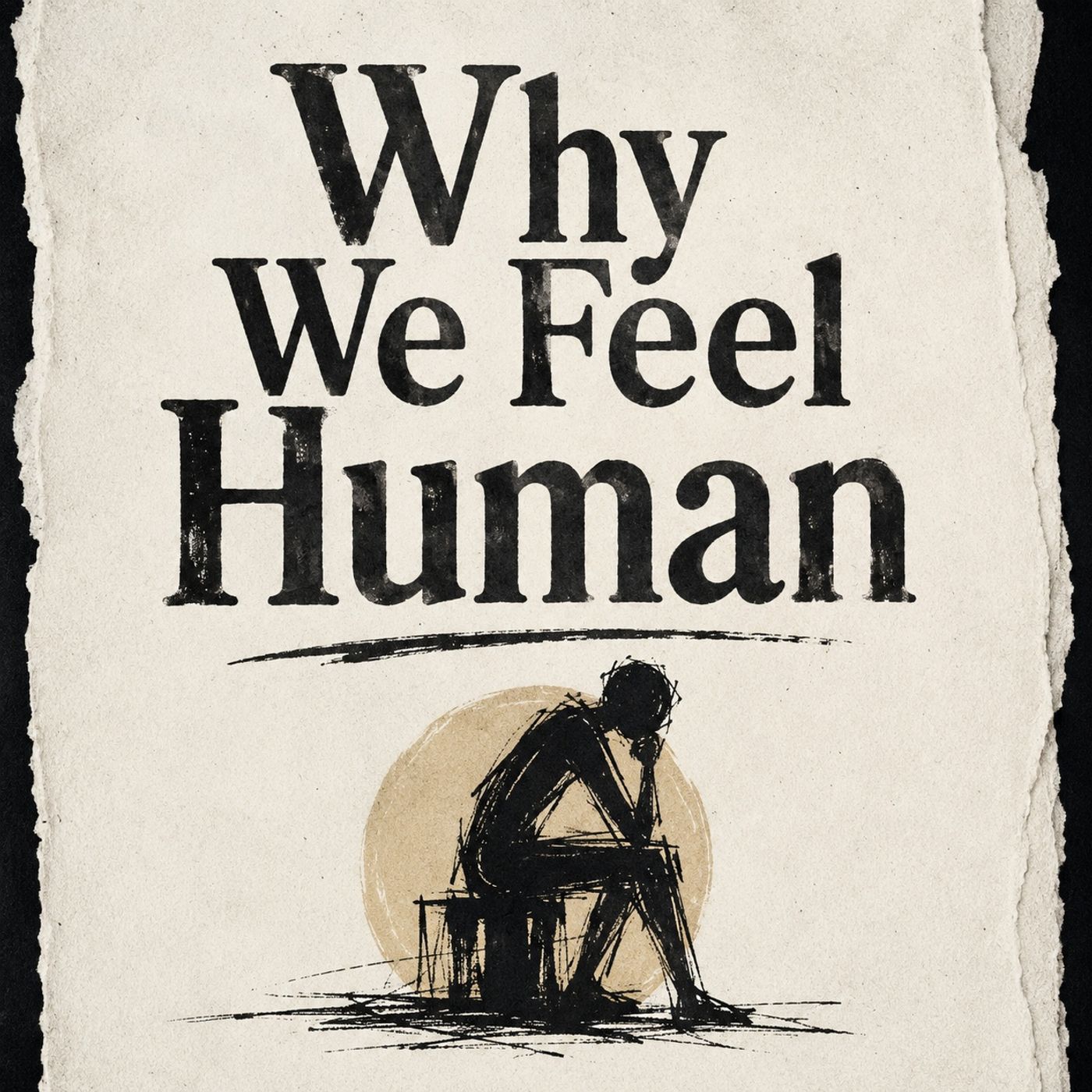
Why We Feel Human.
by Atiba Teslim Abayomi
Why We Feel Human is a podcast exploring the hidden patterns behind human thought, emotion, behavior, identity, and connection. Through deep conversations, reflective storytelling, and honest questions, the podcast creates space for people to better understand themselves and each other. Quietly introspective yet deeply relatable, it’s a place for conversations that stay with you long after they end.
-
1
Why Humans Stress Eat | The Psychology of Emotional Eating with Nifemi Bolarinde.
Why Humans Stress Eat: The Psychology of Emotional Eating with Nifemi BolarindeWhy do people often crave sugary snacks, fast food, or comfort meals during stressful moments? Is emotional eating simply a lack of self-control, or is there a deeper psychological and biological explanation behind it?In this episode of Why We Feel Human, food scientist, food safety advocate, and food policy professional Nifemi Bolarinde explores the fascinating relationship between emotions, stress, and food consumption. Drawing from her expertise in food systems and human behavior, Nifemi explains how stress influences eating patterns, why certain foods become more appealing during emotional challenges, and how individuals can build healthier habits without guilt or restriction.The conversation examines the science behind emotional eating, the role of hormones such as cortisol, the impact of modern lifestyles on food choices, and the growing importance of understanding the emotional side of nutrition.Listeners will gain practical insights into recognizing emotional hunger, distinguishing it from physical hunger, and developing sustainable approaches to healthier eating.This episode is valuable for anyone who has ever found themselves reaching for food during periods of anxiety, pressure, loneliness, boredom, or emotional overwhelm. It also offers a broader perspective on how food environments, public health awareness, and personal wellbeing intersect in today's world.In This Episode:- What emotional eating really means- Why stress changes eating behavior- The connection between emotions and food cravings- The science behind comfort foods- How cortisol affects appetite and food choices- Emotional hunger vs. physical hunger- Common triggers for stress eating- Practical strategies for building a healthier relationship with food- The role of food education and awareness in improving wellbeingGuest:Nifemi Bolarinde – Food Scientist, Food Safety Advocate, and Food Policy Professional dedicated to helping communities make informed food choices through education, research, and public engagement.Why We Feel Human explores the psychology, emotions, behaviors, and experiences that shape human life. Each episode features insightful conversations with experts, professionals, and thought leaders who help us better understand ourselves and the world around us.#WhyWeFeelHuman #EmotionalEating #StressEating #FoodPsychology #Nutrition #MentalHealth #FoodScience #HealthyEating #Wellness #FoodSafety #BehavioralScience #Podcast #HumanBehavior #NifemiBolarinde #FoodPolicyUnderstanding ourselves, one conversation at a time.
-
0
The Psychology of Overthinking | Understanding Why We Can't Stop Thinking
The Rest Is Overthinking | Why Your Mind Won't Let You RestWhy do humans replay conversations long after they've ended?Why do we imagine worst-case scenarios that never happen?Why does the mind keep searching for answers even when there are none?In this episode of Why We Feel Human, we explore the psychology of overthinking, rumination, anxiety, self-doubt, mental exhaustion, and the hidden emotional patterns that keep our minds trapped in endless loops.Overthinking is often mistaken for problem-solving. It feels productive. It feels responsible. It feels like preparation. But for many people, overthinking becomes something very different. Instead of helping us move forward, it keeps us stuck between possibilities, replaying the past, fearing the future, and questioning decisions that have already been made.Modern life has created the perfect environment for overthinking. We have unlimited information, constant comparison, endless opinions, social media pressure, and a culture that encourages us to analyze every choice, every mistake, and every version of ourselves.Why do some people struggle to switch their minds off?Why does uncertainty feel so uncomfortable?Why do intelligent, ambitious, and self-aware people often find themselves trapped in cycles of overanalysis?Through psychology, storytelling, philosophy, and real human experiences, this episode examines the emotional roots of overthinking and what it reveals about the human need for certainty, control, validation, and safety.We explore how anxiety fuels overthinking, how perfectionism keeps people stuck, and why fear of failure, rejection, embarrassment, and disappointment often hides beneath constant mental activity. We discuss the difference between healthy reflection and destructive rumination, and why the mind frequently confuses thinking more with solving more.This conversation also looks at the relationship between overthinking and modern culture. The pressure to make the right decisions. The fear of missing opportunities. The impact of social media comparison. The emotional weight of always feeling behind. And the silent exhaustion that comes from carrying hundreds of unfinished thoughts every day.We examine why overthinking affects relationships, confidence, ambition, creativity, productivity, and emotional well-being. We explore why people replay awkward moments from years ago, why they obsess over messages that haven't been answered, and why the search for certainty often creates even more uncertainty.Most importantly, this episode explores a truth many people rarely admit: overthinking is often not about thinking too much.It is about feeling too much.It is about trying to protect ourselves from pain before it happens.It is about trying to control outcomes we cannot control.It is about searching for emotional safety in a world filled with uncertainty.Whether you struggle with anxiety, self-doubt, perfectionism, indecision, people-pleasing, fear of failure, or simply an inability to quiet your thoughts, this conversation offers a deeper understanding of why the human mind works the way it does.This episode explores overthinking, anxiety, psychology, mental health, emotional intelligence, self-awareness, perfectionism, rumination, stress, confidence, relationships, decision-making, self-doubt, human behavior, mindset, emotional well-being, personal growth, modern life, and the psychology of being human.Because sometimes the mind is not searching for answers.Sometimes it is searching for peace.And perhaps the hardest thing for modern humans is learning that not every thought deserves our attention.The Psychology of Overthinking | Why We Can't Stop ThinkingUnderstanding ourselves, one conversation at a time.
-
-1
The Rest Is Validation - Why We Crave Attention, Approval & Being Seen.
The Rest Is Validation | Why We Crave Attention, Approval & Being SeenWhy do you think humans care so deeply about being noticed, chosen, liked, and validated?Why does rejection hurt so much? The episode is the first off the Why We Feel Human Original Episode Series.“The Rest Is…” is built around the quiet things humans carry but rarely explain out loud.The emotions behind the personality.The loneliness behind the confidence.The exhaustion behind ambition.The fear behind perfection.The silence behind “I’m fine.”Every episode begins with something people casually say:“The rest is complicated.”“The rest is history.”“The rest is personal.” But in this series, “The Rest Is…” becomes a deeper exploration of the hidden emotional realities of being human.The things people feel but struggle to describe.The emotional weight modern life quietly places on people.The thoughts humans experience alone at night, behind screens, inside relationships, during success, failure, isolation, and change.The series explores the idea that: sometimes the most important parts of human life are the parts nobody sees.Not the surface. Not the performance. Not the curated version online.The rest is... why we feel human.Understanding ourselves, one conversation at a time.
-
-2
Why we hide parts of ourselves | The architecture of the hidden Self.
Beneath every personality is a hidden architecture most people never see.In this deeply reflective episode of Why We Feel Human, we explore the architecture of the hidden self the invisible psychological world built from childhood experiences, emotional survival, trauma, memory, fear, identity, loneliness, desire, shame, and the masks we learn to wear in everyday life.Why do humans hide parts of themselves?Why do we perform versions of ourselves for society, relationships, social media, and even family?Who are we underneath the roles, expectations, and emotional defense mechanisms we’ve spent years building?This episode dives into the psychology of the hidden self, emotional conditioning, self-awareness, identity crisis, human behavior, vulnerability, emotional intelligence, and the silent tension between authenticity and protection. We discuss how past experiences shape personality, why people suppress emotions, and how the unconscious mind influences the way we connect, love, isolate, and survive.•Through storytelling and honest conversation, this episode examines:•The psychology behind masks and emotional walls•The difference between the public self and the private self•Trauma, memory, and personality formation•Self-sabotage, fear of vulnerability, and emotional detachment•Loneliness in the modern world•Human behavior, identity, and inner conflict•Why people crave connection while hiding their true selves•The search for authenticity in a performative societyIf you’ve ever felt emotionally disconnected, misunderstood, emotionally guarded, or trapped between who you are and who the world expects you to be, this conversation will resonate deeply.This is more than a podcast episode it’s an exploration of human psychology, emotion, identity, consciousness, and the hidden layers of what it truly means to be humanUnderstanding ourselves, one conversation at a time.
-
-3
Mourning friends who are still alive
There's a specific kind of grief nobody talks about the one that doesn't come with a funeral. No flowers. No condolences. No one checking on you. Just a slow, quiet ache for someone who is still breathing, still posting, still living their life just not with you in it.In this episode of Why We Feel Human, we go deep into one of the most unspoken emotional experiences of our generation: grieving friendships that didn't end, they just faded. We explore why losing a living friend can hurt more than losing someone to death, why closure is almost never available, and why we gaslight ourselves into thinking we're "overthinking it" when really we're mourning.We ask the hard questions: Why do we feel the loss of a friendship so physically? Why does seeing their name still spike your chest?Why do we rehearse conversations we'll never have? And most importantly what does it mean to love someone you've already lost while they're still here?This episode covers the psychology of friendship grief, the silence around platonic heartbreak, the guilt of moving on, and the strange loneliness of mourning someone the world doesn't recognize as gone. If you've ever scrolled past someone's story and felt something you couldn't name this episode names it for you.TOPICS COVERED IN THIS EPISODE:•What is friendship grief and why does it feel like a breakup•The psychology behind mourning living people•Why platonic heartbreak is never taken seriously•Signs you are grieving a friendship that slowly ended•How to cope with losing a best friend without closure•The difference between growing apart and being left behind•Why we stalk the social media of friends we've lost•Ambiguous loss and the pain of no goodbye•How to stop blaming yourself for a friendship that faded•Healing from one-sided friendships and emotional abandonment•What to do when your person becomes a stranger•The grief of realizing someone changed and so did youWHO THIS EPISODE IS FOR:This one is for anyone who has ever felt embarrassed for missing a friend who is still alive. For everyone who lost their person slowly not in one fight, not in one moment, but in a hundred small silences that added up to a stranger. For the ones who still save things to tell someone they no longer talk to. For the ones who are fine until a song comes on.KEYWORDS & SEARCH TAGS:friendship grief podcast mourning a living friend grieving friendships that ended platonic heartbreak losing a best friend podcast why do I miss someone who hurt me ambiguous loss friendship growing apart from friends one sided friendship pain friendship breakup no closure why we feel human podcast Too Pretty For Lies emotional healing podcast mental health and friendship friendship loss therapy why do friendships fade adult friendship breakup grieving someone who is still alive friendship grief psychology feeling lonely after losing a friend how to heal from losing a best friend platonic loss friendship ghosting emotional abandonment by friends coping with friendship loss self awareness podcast human emotions podcast introspective podcast Nigeria African storytelling podcast deep emotional podcast episodesUnderstanding ourselves, one conversation at a time.
We're indexing this podcast's transcripts for the first time — this can take a minute or two. We'll show results as soon as they're ready.
No matches for "" in this podcast's transcripts.
No topics indexed yet for this podcast.
Loading reviews...
ABOUT THIS SHOW
Why We Feel Human is a podcast exploring the hidden patterns behind human thought, emotion, behavior, identity, and connection. Through deep conversations, reflective storytelling, and honest questions, the podcast creates space for people to better understand themselves and each other. Quietly introspective yet deeply relatable, it’s a place for conversations that stay with you long after they end.
HOSTED BY
Atiba Teslim Abayomi
Loading similar podcasts...
Frequently Asked Questions
How many episodes does Why We Feel Human. have?
Why We Feel Human. currently has 5 episodes available on PodParley. New episodes are automatically indexed when they're published to the podcast feed.
What is Why We Feel Human. about?
Why We Feel Human is a podcast exploring the hidden patterns behind human thought, emotion, behavior, identity, and connection. Through deep conversations, reflective storytelling, and honest questions, the podcast creates space for people to better understand themselves and each other. Quietly...
How often does Why We Feel Human. release new episodes?
Why We Feel Human. has 5 episodes. Check the episode list to see recent publication dates and frequency.
Where can I listen to Why We Feel Human.?
You can listen to Why We Feel Human. on PodParley by clicking any episode. We provide an embedded audio player for direct listening, and you can also subscribe via your preferred podcast app using the RSS feed.
Who hosts Why We Feel Human.?
Why We Feel Human. is created and hosted by Atiba Teslim Abayomi.
URL copied to clipboard!