
PODCAST · education
Wilts & Berks Canal Trust
by Gary Kenyon
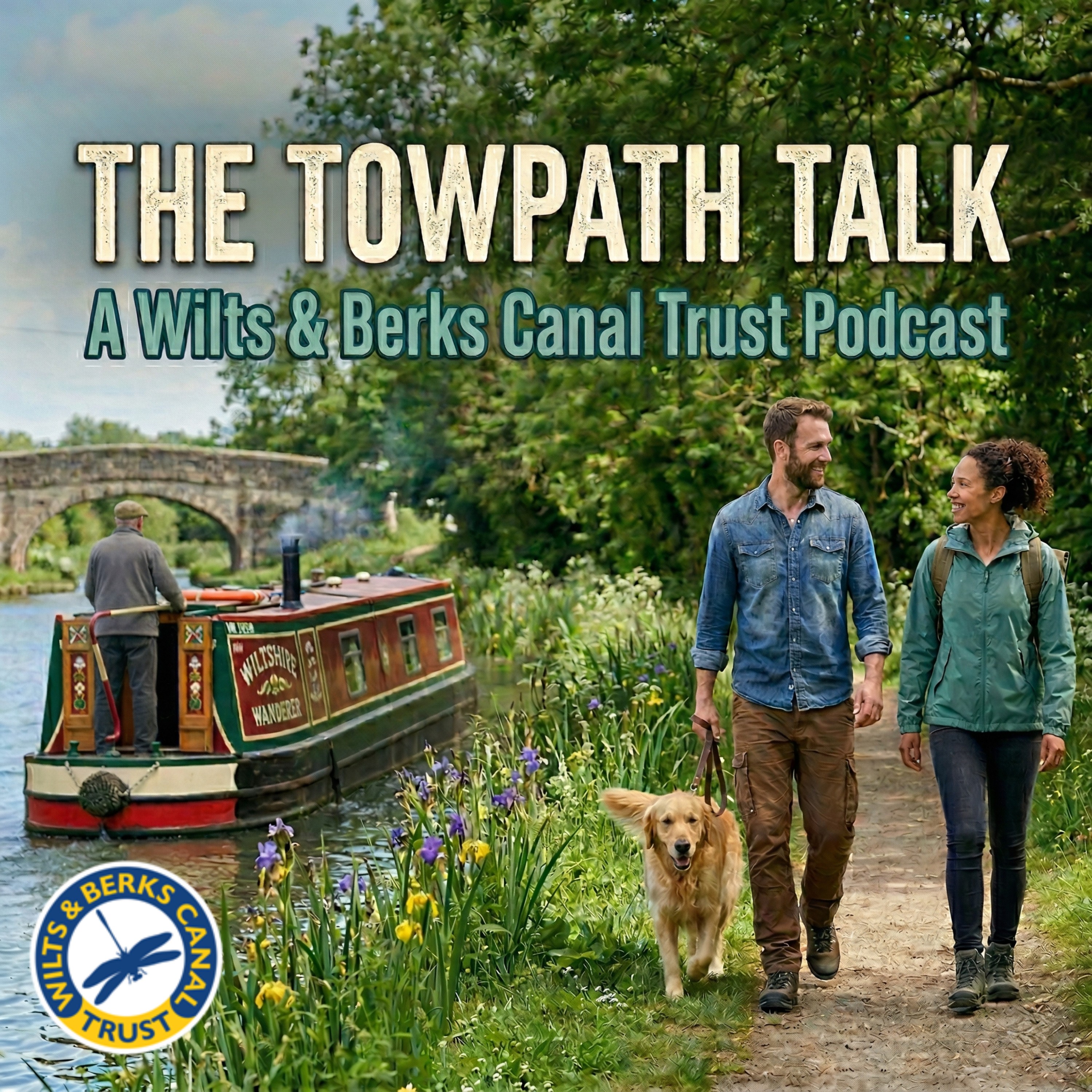
Follow the journey of one of the UK’s most ambitious restoration projects. The Wilts & Berks Canal Trust is bringing a historic waterway back to life, creating a 'blue-green corridor' for wildlife and people alike. Join us as we explore the forgotten history of the canal, talk to the volunteers getting their hands dirty, and share our vision for a connected future. From the Kennet and Avon Canal at Melksham, the River Thames at Abingdon and the Thames and Severn Canal at Cricklade—we’re digging deep into the stories that flow through our landscape.
-
20
Commentary of a Slide Show by Jack Dalby in 1987
Jack Dalby presented at the East Challow Scout Hall, details of the history of the Wilts & Berks Canal, which was created to improve regional access to coal and agricultural markets. The project struggled with high costs, railway competition, and water shortages, leading to its eventual decline and formal abandonment in 1914.
-
19
Jack Dalby: The Godfather of the Wilts & Berks Canal Restoration
Jack Dalby, widely considered the "Godfather" of the Wilts & Berks Canal restoration, was instrumental in reviving the abandoned waterway. After surveying the canal's remains in 1969, he authored a definitive historical book in 1971 that ignited interest in its preservation. His 1977 slide show sparked the creation of the Wilts & Berks Canal Amenity Group, where he served as its inaugural President. Known for his energetic personality, Dalby's legacy endures through a lock named in his honor and book royalties that continue to fund the Trust today.Journals/ Magazines | Illustrated History | Wilts & Berks Canal Trust
-
18
Dragonfly Magazine 176 - Spring 2026
Laura and Matthew’s podcast covers the Spring 2026 Dragonfly, framing restoration as "two steps forward, one step back." They celebrate successes like the Top Lock Bridge and Swindon’s Badgers Bridge, contrasted with funding delays at Bottom Lock. The episode highlights rare wildlife sightings, such as the water shrew, and the strategic threat the White Horse Reservoir poses to the Thames connection. They also explore Melksham’s hidden history and new AI-powered archives, concluding with community news and a call for volunteer mechanics at Pewsham.Journals/ Magazines | Illustrated History | Wilts & Berks Canal Trust
-
17
Dragonfly Magazine 175 - Winter 2025
This podcast highlights the Trust's 2025 "momentum," celebrating over 40,000 volunteer hours worth more than £1 million. Key milestones include the first complete clearing of Uffington Gorse in a century and new water-filled sections in Swindon. The hosts also address the SESRO reservoir threat, which risks £25 million in annual benefits, while championing the 70-mile "Blue-Green Corridor".Journals/ Magazines | Illustrated History | Wilts & Berks Canal Trust
-
16
The “Last Canal Manager” Interview
In this captivating re-enacted interview, William Ainsworth recounts his transition from a 15-year-old grocer's apprentice in 1870 to his challenging tenure as the Manager of the Wilts & Berks Canal starting in 1891. Ainsworth provides a firsthand account of his "spirited attempt" to resuscitate the decaying 68-mile waterway, detailing his efforts to combat mud, weeds, and vandalism while facing insurmountable competition from the Great Western Railway. Beyond the canal's eventual abandonment and his 1906 testimony to the Royal Commission, he discusses his diverse later career as an auctioneer, his service during World War I, and his eventual return to Bath. It is a poignant look at a life defined by professional resilience, religious faith, and a tireless commitment to public service.Journals/ Magazines | Illustrated History | Wilts & Berks Canal Trust
-
15
The "Last Canal Manager" hosted by Laura & Matthew
In this episode, your hosts Laura & Matthew explore the life of William J. Ainsworth, described as “The Last Canal Manager,” tracing his journey from a determined boy walking six miles to school, through his apprenticeship and rise into canal management, to the demanding role of overseeing the Wilts and Berks Canal during its long decline. Using archival details, this episode paints a vivid portrait of a man whose work blended physical stamina, practical management, legal disputes, and civic responsibility, while also revealing his wider life as a family man, entrepreneur, preacher, political activist, and volunteer. It’s a thoughtful and engaging look at endurance, change, and the human story behind the end of Britain’s canal age. Journals/ Magazines | Illustrated History | Wilts & Berks Canal Trust
-
14
The “Last Canal Manager”
In this episode, we explore the life of William J. Ainsworth, described as “The Last Canal Manager,” tracing his journey from a determined boy walking six miles to school, through his apprenticeship and rise into canal management, to the demanding role of overseeing the Wilts and Berks Canal during its long decline. Using archival details, this episode paints a vivid portrait of a man whose work blended physical stamina, practical management, legal disputes, and civic responsibility, while also revealing his wider life as a family man, entrepreneur, preacher, political activist, and volunteer. It’s a thoughtful and engaging look at endurance, change, and the human story behind the end of Britain’s canal age.Journals/ Magazines | Illustrated History | Wilts & Berks Canal Trust
-
13
The Thin Blue Line: Restoring the Wilts and Berks
This episode traces the modern history of the Wilts & Berks Canal restoration from the formation of the Wilts & Berks Canal Amenity Group in 1977 through to today's ambitious plans for a fully restored waterway. It explores how a handful of enthusiasts grew into the Wilts & Berks Canal Trust, now leading one of the UK's largest canal restoration projects.We follow early campaigners like Neil Rumbol and Jack Dalby as they set out the original aims in the first Dragonfly journal, look at landmark events including the 1991 "Big Dig", the opening of trailboat-ready sections at Templars Firs and Royal Wootton Bassett, and the creation of new connections such as Jubilee Junction on the Thames and the restored Double Bridge at Reybridge. Along the way, we highlight the role of volunteers, local councils and national partners in keeping the line protected through planning policy.In the final part of the episode we bring the story up to date: the Wichelstowe and Studley Grange re‑watered sections, the Melksham Link proposals, and the Wiltshire, Swindon & Oxfordshire Canal Partnership's long-term strategy. We also introduce some of the key figures and everyday volunteers who have turned "it would be nice" into real miles of restored canal, showing how the project delivers heritage, wildlife, leisure and economic benefits for communities along the route.Journals/ Magazines | Illustrated History | Wilts & Berks Canal Trust
-
12
Big Dig ’91: A Weekend That Changed the Wilts & Berks
In this episode, Matthew takes us back to October 1991 and the Waterway Recovery Group’s legendary “Big Dig” on the Wilts & Berks Canal near Wantage. Drawing on contemporary reports from Dragonfly magazine issue 44 and his own organiser’s-eye view, he tells the story of how more than 1,000 volunteer navvies descended on the Seven Mile Pound for a single, extraordinary weekend.We relive the build-up and nervous preparations, meet some of the key characters from WRG, the East Vale Branch, local councils and landowners, and walk the line from Stockham to Childrey as the scrub comes down, bonfires roar and the canal begins to re-emerge.Matthew reflects on what the Big Dig actually achieved on the ground—two miles of cleared canal, rewatering at Stockham, better access along the towpath—and, just as importantly, what it did for relationships with landowners, local authorities and partner organisations. He also shares some hard-earned lessons about publicity, logistics and working with nature, and asks what this kind of “all‑in” volunteer effort can still teach today’s restoration projects.Journals/ Magazines | Illustrated History | Wilts & Berks Canal Trust
-
11
2025 — Remarkable progress and the SESRO Reservoir challenge
In this episode, we reflect on a year of remarkable progress for the Wilts & Berks Canal Trust in 2025. Volunteers across the branches achieved historic restoration milestones—from clearing canals at Uffington Gorse and extending waterways at Wichelstowe to advancing biodiversity projects and improving towpaths. The Trust faced strategic challenges like the SESRO reservoir proposal but stood firm in advocacy and planning. We also celebrate the incredible dedication of thousands of volunteer hours recognized at the Tony Davy awards. Join us as we look ahead to a promising 2026 and the Trust’s 50th anniversary celebrations.Journals/ Magazines | Illustrated History | Wilts & Berks Canal Trust
-
10
2008 — The Mud, Cake and Triumphs
In 2008, the Wilts and Berks Canal Trust experienced a landmark year of restoration and community engagement. Despite facing extreme weather conditions and wildlife-related delays, dedicated volunteers achieved significant engineering milestones, including the completion of Lock 4, the Chaddington spillweir, and major progress on Steppingstone Lane Bridge. Furthermore, the opening of a highly successful Information Centre in Swindon dramatically increased public awareness and fundraising, demonstrating the unwavering community spirit driving the historic canal's revival.Journals/ Magazines | Illustrated History | Wilts & Berks Canal Trust
-
9
2007 — Mud, Triumph and Tea-Bag Tales
The Wilts & Berks Canal Trust's restoration efforts in 2007 demonstrated remarkable resilience and community spirit. Despite the major setback of losing a £12 million Big Lottery grant for the Cricklade Country Way, dedicated volunteers continued to push forward. They battled severe weather to rebuild locks, poured concrete for spillweirs, and engaged in creative local fundraising. Simultaneously, exciting new plans emerged to bring the historic canal route back through the heart of Swindon's town centre.Journals/ Magazines | Illustrated History | Wilts & Berks Canal Trust
-
8
2006 — The Hundredth magazine and Jubilee Junction Triumph
In 2006, the Wilts and Berks Canal Trust transitioned into a highly professional organization, marking the hundredth edition of its magazine. Guided by new leadership, volunteers achieved remarkable restoration milestones, most notably opening the Jubilee Junction to connect the canal to the River Thames. Through successful lottery bids, wildlife conservation, and extensive infrastructure rebuilding, the incredible dedication of these volunteers rapidly turned the once-impossible dream of a fully restored waterway into a tangible reality.Journals/ Magazines | Illustrated History | Wilts & Berks Canal Trust
-
7
2005 — Volunteers, Wildlife and Big Plans
Throughout 2005, the Wilts and Berks Canal Trust achieved significant restoration milestones driven by dedicated volunteers. Major accomplishments included rebuilding Chaddington Lock, restoring the River Key Aqueduct, and establishing a heritage museum at Lackham College. Looking ahead, the Trust launched an ambitious ten-year plan targeting 2014. To achieve this, they pursued massive funding applications, including a fifteen-million-pound Living Landmarks bid, aiming to reconnect the historic waterway to the national network while carefully preserving local wildlife habitats.Journals/ Magazines | Illustrated History | Wilts & Berks Canal Trust
-
6
2004 — A Muddy Year
In 2004, the Wilts & Berks Canal Trust experienced a pivotal year of transition and progress. Despite the tragic passing of Chairman Tony Davy, the Trust pushed forward, opening a new headquarters in Wootton Bassett and gaining crucial recognition as a Priority Two project in British Waterways' Vision 2025. Dedicated volunteers achieved major restoration milestones at sites like Chaddington Lock and the River Key Aqueduct, while also boosting community engagement and fundraising through numerous local festivals and events.Journals/ Magazines | Illustrated History | Wilts & Berks Canal Trust
-
5
2003 — The Year the Wilts & Berks Canal Trust Turned a Corner
During 2003, the Wilts & Berks Canal Trust made significant strides in their restoration efforts. Volunteers tackled dramatic physical challenges, most notably safely disposing of an unexploded World War Two bomb at the River Key aqueduct. The Trust also completed high-profile awareness events, including the historic voyage of a 104-year-old skiff to Westminster. Concurrently, vital engineering studies were commissioned across key towns, successfully safeguarding the canal's historic and future routes within local development plans.Journals/ Magazines | Illustrated History | Wilts & Berks Canal Trust
-
4
2002 — Mud, The Sweat, and The Waterways
In 2002, the Wilts and Berks Canal Trust celebrated its 25th anniversary, marking a year of significant progress. Volunteers dedicated thousands of hours to challenging restoration projects across the branches, overcoming muddy conditions, broken equipment, and unexpected wildlife. The Trust successfully hosted the spectacular Wiltshire Waterways Festival to raise crucial funds. Alongside physical groundwork, the organisation made major strategic advancements by securing vital funding, conducting essential engineering studies, and appointing its first-ever president.Journals/ Magazines | Illustrated History | Wilts & Berks Canal Trust
-
3
2001 — Foot-and-Mouth, Mud and Machinery
In 2001, the Wilts and Berks Canal Amenity Group faced major setbacks when the foot and mouth epidemic halted all restoration efforts. Unable to dig, dedicated volunteers shifted their focus to repairing machinery and strategic planning. Despite these rural restrictions, the year became a pivotal turning point. The organisation launched a powerful new Canal Partnership, officially rebranded as the Wilts and Berks Canal Trust, achieved crucial engineering milestones, and experienced a dramatic surge in overall public support and membership.Journals/ Magazines | Illustrated History | Wilts & Berks Canal Trust
-
2
2000 — Grants, Bridges and Chaos
In 2000, the Wilts & Berks Canal Amenity Group experienced a pivotal turning point in their restoration efforts. Boosted by major corporate funding and Landfill Tax Credits, volunteers successfully rebuilt historic structures like Beavens Bridge while navigating persistent equipment failures. They also battled invasive weeds and expanded their reach by forming the new Cricklade branch. Recognizing their growing professional scale, the organization hired a full-time project officer and began the official transition into a formal Trust.Journals/ Magazines | Illustrated History | Wilts & Berks Canal Trust
-
1
1999 — Wilts & Berks Canal at the Turn of the Millennium
Dedicated volunteers made significant strides in restoring the historic Wilts and Berks Canal. Relying on ingenuity, local branches floated heavy bridge beams into place and constructed makeshift water flow meters from scrap metal. To finance these efforts, the community engaged in robust fundraising by selling custom tea towels and professionally narrated videos. Balancing intense labor with environmental conservation, they protected local wildlife while simultaneously mourning the loss of legendary waterways champions.Journals/ Magazines | Illustrated History | Wilts & Berks Canal Trust
-
0
1998 — Watershed Year
1998 proved to be a transformative year for the Wilts & Berks Canal restoration efforts. A key feasibility study confirmed the project’s technical and economic viability, predicting significant tourism revenue and job creation. Major highlights included the successful National Trail-boat Festival and recognition of "The Dragonfly" magazine with the IWA Tom Rolt Award. Dedicated volunteers across various branches continued essential maintenance and infrastructure work, while the Group focused on reaching a membership goal of 2000 by the millennium.Journals/ Magazines | Illustrated History | Wilts & Berks Canal Trust
-
-1
1997 — The Wilts & Berks Canal Turning Point
1997 marked "the end of the beginning" for the Wilts & Berks Canal restoration. This pivotal year saw the official formation of the Canal Trust and the commissioning of a professional feasibility study. Significant financial boosts from the Landfill Tax Credit Scheme supported major works at Moredon Aqueduct and Shrivenham’s new pocket park. As membership reached record highs, the community prepared for the 1998 National Trailboat Festival, signaling the project's transition from a pipedream into practical politics.Journals/ Magazines | Illustrated History | Wilts & Berks Canal Trust
-
-2
1996 — Mud, Muddles and Momentum
During 1996, the Wilts & Berks Canal Amenity Group transitioned toward professional status by forming a Canal Trust to gain authority support. Key achievements included completing the Calne spillway, restoring Moredon Aqueduct, and launching a volunteer trip boat. High-profile events, like the Territorial Army's excavator rescue and celebrity-led jigsaw launches, boosted publicity. Despite bureaucratic hurdles and leadership changes, the group prioritized engineering feasibility studies and community engagement through rallies and walks to secure the waterway's future.Journals/ Magazines | Illustrated History | Wilts & Berks Canal Trust
-
-3
1995 — Bombs, Bottles, and Big Decisions
The Wilts & Berks Canal Amenity Group transitioned from a volunteer "mud-plugging" club into a professional organization. Led by Chairman Graham Johnson, the Group prioritised professional feasibility studies to secure political and financial support. Landmark achievements included re-watering the canal at Wootton Bassett during its bicentenary and gaining crucial backing from North Wiltshire District Council, which proposed forming a restoration Trust. Despite engineering hurdles in Swindon and navigating complex environmental issues, the Group’s strategic planning and dedicated volunteer efforts successfully revitalised the vision of a continuous navigable waterway.Journals/ Magazines | Illustrated History | Wilts & Berks Canal Trust
-
-4
1994 — Turning Muddy Ditches into the Wessex Waterway
During the early 1990s, the Wilts and Berks Canal Amenity Group evolved into a professional organization, marked by the appointment of its first Project Officer and the publication of the comprehensive Allen & Harris study. Despite consistent funding rejections from the Department of the Environment, the Group achieved significant milestones, including receiving a Queen’s Award and completing major re-watering projects at Elm Farm and Templars Firs. Local branches remained vital, balancing technical engineering challenges with community engagement through school programs, innovative fundraising, and a new audio-visual roadshow to advance the ambitious Wessex Waterway restoration.Journals/ Magazines | Illustrated History | Wilts & Berks Canal Trust
-
-5
1993 — Anniversaries, Mud, and Professional Milestones
In 1993, the Wilts & Berks Canal Amenity Group marked a historic turning point, celebrating the bicentenary of the waterway’s original conception. This landmark year featured a vibrant re-enactment of the canal company’s founding and the successful re-watering of the Templars Firs section. Despite logistical hurdles like the proposed Abingdon reservoir and complex Swindon road crossings, the group shifted toward a more professional organisation. By balancing strategic planning with tireless volunteer effort, the group transformed derelict "muddy ditches" into a growing community asset, ensuring the vision of a continuous navigable waterway moved closer to reality.Journals/ Magazines | Illustrated History | Wilts & Berks Canal Trust
-
-6
1992 — Newts, Rolls Royces, and the Rise of the Wilts & Berks Canal
In 1992, the Wilts & Berks Canal Amenity Group transitioned toward professional management, restructuring to address a critical shortage of administrative "pen-power". Key achievements included dredging at Wantage and Wootton Bassett, completing Foxham Top Lock, and acquiring the Group’s first owned canal section. Despite setbacks like Shrivenham’s "greensand," the Group ended the year strategically preparing for the canal's 1993 bicentenary.Journals/ Magazines | Illustrated History | Wilts & Berks Canal Trust
-
-7
1991 — The Big Dig & A New Era for the Wilts and Berks Canal
The Wilts & Berks Canal movement surged in 1991, highlighted by the historic Big Dig involving over a thousand volunteers. The Group expanded its reach by acquiring the Damsel-Fly boat and appointing its first full-time Project Officer. Key strategic efforts focused on negotiating with Thames Water over a proposed reservoir and securing a protected route through Swindon, all while debating a more professional organizational name to match its growth.Journals/ Magazines | Illustrated History | Wilts & Berks Canal Trust
-
-8
1990 — A Pivotal Year for the Wilts and Berks Canal
In 1990, the project transitioned from preservation to professional restoration. Loss of Jack Dalby, Peter Scatchard became Chairman, overseeing Calne’s award-winning wetland and Foxham’s massive 7,000-brick reconstruction. Swindon initiated high-tech satellite surveying and a 1,000-signature petition. Crucially, a partnership with Allen & Harris for a 22-mile engineering study signaled the group's arrival as a sophisticated restoration organization.Journals/ Magazines | Illustrated History | Wilts & Berks Canal Trust
-
-9
1989 — Renewal and Progress on the Wilts & Berks Canal
In this episode, Matthew narrates a landmark year for the Wilts & Berks Canal Amenity Group. The Group celebrated the official opening of Chaveywell Wharf, unveiling a restored and vibrant riverside site at Calne. Their transition to a Limited Company was finalized, strengthening organizational foundations and governance. The establishment of regional branches enhanced local restoration efforts, while a significant grant from Grove Parish Council supported ecological improvements at Elm Farm. Guided by a comprehensive restoration strategy, the Group balanced hands-on work with strategic planning and community engagement. Despite ongoing challenges, 1989 marked a year of resilience, collaboration, and hopeful strides toward reclaiming this historic waterway.Journals/ Magazines | Illustrated History | Wilts & Berks Canal Trust
-
-10
1988 — Transition and Triumph on the Wilts & Berks Canal
In this episode, we explore the pivotal year of 1988 for the Wilts & Berks Canal Amenity Group. The Group formalized its organization by initiating the transition to limited company status, marking a new chapter in restoration leadership. Volunteers celebrated the opening of the Moredon Canal, showcasing community collaboration and ecological restoration. Progress on the Seven Locks Heritage Trail brought industrial history to life, while the launch of the Elm Farm project demonstrated a vision for accessible recreation and wildlife conservation. Supported by a growing membership and strengthened publicity efforts, the Group faced challenges with renewed optimism and strategic focus. Join Matthew as he recounts a year of heritage, growth, and hopeful beginnings for Wiltshire’s treasured waterway.Journals/ Magazines | Illustrated History | Wilts & Berks Canal Trust
-
-11
1987 – A Decade of Dedication and New Beginnings
In this episode, we reflect on 1987 — a landmark year for the Wilts and Berks Canal Amenity Group. The Group took bold steps by initiating a transition to limited company status, strengthening its organizational foundation for future restoration. The year celebrated heritage with progress on the Seven Locks Heritage Trail and the opening of the Moredon Canal, bringing community and conservation together. Secretary Neil Rumbol offers a heartfelt reflection on ten years of challenges and triumphs. Join Matthew as he explores a year of resilience, growth, and hopes for the canal’s future.Journals/ Magazines | Illustrated History | Wilts & Berks Canal Trust
-
-12
1986 – Community Drive & Restoration Triumphs
Join Matthew as he explores 1986, a landmark year for the Wilts & Berks Canal Amenity Group. From the lively Foxham Canal Fun Day to raising over £10,000 through the Dauntsey Lock Appeal, the group’s efforts captured community spirit and dedication. Wiltshire County Council’s support grew, recognizing the canal’s heritage and environmental value. Marking a step forward in professionalism, the group planned its transition to Limited Company status. Amid restoration work and advocacy, 1986 was a year of progress, unity, and hope for the canal’s future.Journals/ Magazines | Illustrated History | Wilts & Berks Canal Trust
-
-13
1985 – Foundations and Ambitions
In this episode, we explore the Wilts and Berks Canal Amenity Group’s sixth year of campaigning and restoration. Marking its registration as a charity and celebrating new leadership with the appointment of its first President, 1985 saw important progress both on the ground and in strategic planning. The ambitious feasibility study to link the canal to the River Avon at Melksham pointed toward future navigation dreams. Meanwhile, the historic Shrivenham Bridge gained Grade II listed status, ensuring its protection. Community projects like the restoration efforts near Marden House in Calne also flourished. Join Matthew as he recounts a year of consolidation, vision, and hope for the future of this treasured waterway.Journals/ Magazines | Illustrated History | Wilts & Berks Canal Trust
-
-14
1984 – A Year of Vision and Progress
In this episode, we explore the Wilts and Berks Canal Amenity Group’s pivotal year of 1984. Marking over six years of campaigning and restoration, the group welcomed its first President, Jack Dalby, whose historical expertise lent new authority to the cause. The ambitious “Boats to Lacock” restoration plan was unveiled, inspiring volunteers and supporters alike. The launch of the Moredon Project brought community-driven conservation to the fore, while regular working parties at established sites pushed progress despite challenges. Thought-provoking articles by Michael Handford emphasized the complex politics behind canal restoration, reminding the group that success depends on more than bricks and boats. Join Matthew as he recounts a year of renewed energy and hopeful vision for the canal’s future.Journals/ Magazines | Illustrated History | Wilts & Berks Canal Trust
-
-15
1983 – Challenges, Community, and Progress
In this episode, we explore the Wilts and Berks Canal Amenity Group’s journey through 1983, a year marked by steady progress, growing community engagement, and ongoing challenges. Despite a nearly nine‑month gap in publishing their journal, the group continued vital work on sites like Kingshill and Shrivenham, strengthened its organizational foundations with new officers, and expanded public outreach through displays and events. The year also saw increased focus on industrial archaeology, with efforts to document and preserve the historic canal structures. Join Matthew as he tells the story of perseverance and cautious optimism that kept the canal’s dream alive during a year of both silence and steady activity.Journals/ Magazines | Illustrated History | Wilts & Berks Canal Trust
-
-16
1982 – Fragility and Resolve in the Wilts & Berks Canal Campaign
In this episode, we look back at 1982 as a testing time in the story of the Wilts & Berks Canal. Structural concerns, limited resources, and the sheer scale of the task made restoration feel fragile, yet the determination of those involved never quite went away. Through the challenges of that year, a deeper sense of purpose began to take shape. It is a reminder that canal restoration is not built in grand gestures alone, but in steady commitment, practical effort, and the belief that, despite setbacks, progress can still be made.Journals/ Magazines | Illustrated History | Wilts & Berks Canal Trust
-
-17
1981 – A Year of Breakthroughs & Growing Confidence in the Wilts & Berks Canal
In this episode, we revisit 1981, a year when the Wilts & Berks Canal restoration campaign began to gain real momentum. Official progress, practical restoration work, and growing public support all helped strengthen confidence that the canal’s revival could genuinely be achieved. We also look at how the movement balanced restoration with care for wildlife, landscape, and community benefit, while volunteers and supporters continued to push the project forward with steady determination. Together, these developments made 1981 an important year in turning ambition into something more credible and lasting.Journals/ Magazines | Illustrated History | Wilts & Berks Canal Trust
-
-18
1980 – The Wilts & Berks Canal Campaign Comes Into View
Hear how, in 1980, local volunteers, supporters, and communities helped give fresh momentum to the Wilts & Berks Canal campaign, turning shared concern for local heritage into practical action. Through persistence, public backing, and a growing sense of common purpose, more people became part of the restoration story and helped move the vision of a revived canal closer to reality. This episode highlights the collective effort behind the canal’s revival, showing how small acts of commitment and community involvement helped build lasting momentum for restoration.Journals/ Magazines | Illustrated History | Wilts & Berks Canal Trust
-
-19
1979 – The Wilts & Berks Canal Campaign Grows Up
Step back into 1979 and discover the year the Wilts & Berks Canal campaign really found its feet. What began as a determined restoration effort was becoming something much bigger — with new machinery, bigger ambitions, public challenges, and growing support from the community. In this episode, Matthew brings the story to life with a practical, warm look at how the campaign gathered momentum and why this period mattered so much to the canal’s future. Journals/ Magazines | Illustrated History | Wilts & Berks Canal Trust
-
-20
1978 – The First Full Year of Action
Listeners are taken back to 1978 – the first full year of what would become the Wilts & Berks Canal Trust. Drawing entirely on contemporary Dragonfly journals, he recounts how a small group of volunteers moved from talking about possibilities to taking real action on the ground: launching the I Walk sponsored trek along the entire canal line, opening the first practical worksite at Kingshill in Swindon, planning new work at Shrivenham, and holding their first AGM in Shrivenham Memorial Hall. Through vivid stories of nettle‑stung walkers, muddy working parties, cautious negotiations with landowners and parish councils, and quietly determined committee members, the episode shows how, with very little money but a great deal of stubborn optimism, the Wilts and Berks Canal Amenity Group proved three crucial things: the canal line still existed, people still cared about it, and with the right permissions, real physical change was possible.Journals/ Magazines | Illustrated History | Wilts & Berks Canal Trust
-
-21
1977 – The Birth of the Wilts & Berks Canal Amenity Group
Using the very first 1977 issue of Dragonfly as a guide, this episode traces how a handful of canal enthusiasts turned concern for a derelict waterway into the Wilts & Berks Canal Amenity Group. Matthew walks through the social and waterways context of the 1970s, the Group’s formal aims, and the stories behind its inaugural meeting in Swindon. Along the way he explores early projects, the role of national bodies like the Inland Waterways Association, and how those modest beginnings evolved into today’s restoration ambitions for the Wilts & Berks and North Wilts CanalsJournals/ Magazines | Illustrated History | Wilts & Berks Canal Trust
We're indexing this podcast's transcripts for the first time — this can take a minute or two. We'll show results as soon as they're ready.
No matches for "" in this podcast's transcripts.
No topics indexed yet for this podcast.
Loading reviews...
ABOUT THIS SHOW
Follow the journey of one of the UK’s most ambitious restoration projects. The Wilts & Berks Canal Trust is bringing a historic waterway back to life, creating a 'blue-green corridor' for wildlife and people alike. Join us as we explore the forgotten history of the canal, talk to the volunteers getting their hands dirty, and share our vision for a connected future. From the Kennet and Avon Canal at Melksham, the River Thames at Abingdon and the Thames and Severn Canal at Cricklade—we’re digging deep into the stories that flow through our landscape.
HOSTED BY
Gary Kenyon
CATEGORIES
Loading similar podcasts...
Frequently Asked Questions
How many episodes does Wilts & Berks Canal Trust have?
Wilts & Berks Canal Trust currently has 42 episodes available on PodParley. New episodes are automatically indexed when they're published to the podcast feed.
What is Wilts & Berks Canal Trust about?
Follow the journey of one of the UK’s most ambitious restoration projects. The Wilts & Berks Canal Trust is bringing a historic waterway back to life, creating a 'blue-green corridor' for wildlife and people alike. Join us as we explore the forgotten history of the canal, talk to the volunteers...
How often does Wilts & Berks Canal Trust release new episodes?
Wilts & Berks Canal Trust has 42 episodes. Check the episode list to see recent publication dates and frequency.
Where can I listen to Wilts & Berks Canal Trust?
You can listen to Wilts & Berks Canal Trust on PodParley by clicking any episode. We provide an embedded audio player for direct listening, and you can also subscribe via your preferred podcast app using the RSS feed.
Who hosts Wilts & Berks Canal Trust?
Wilts & Berks Canal Trust is created and hosted by Gary Kenyon.
URL copied to clipboard!