
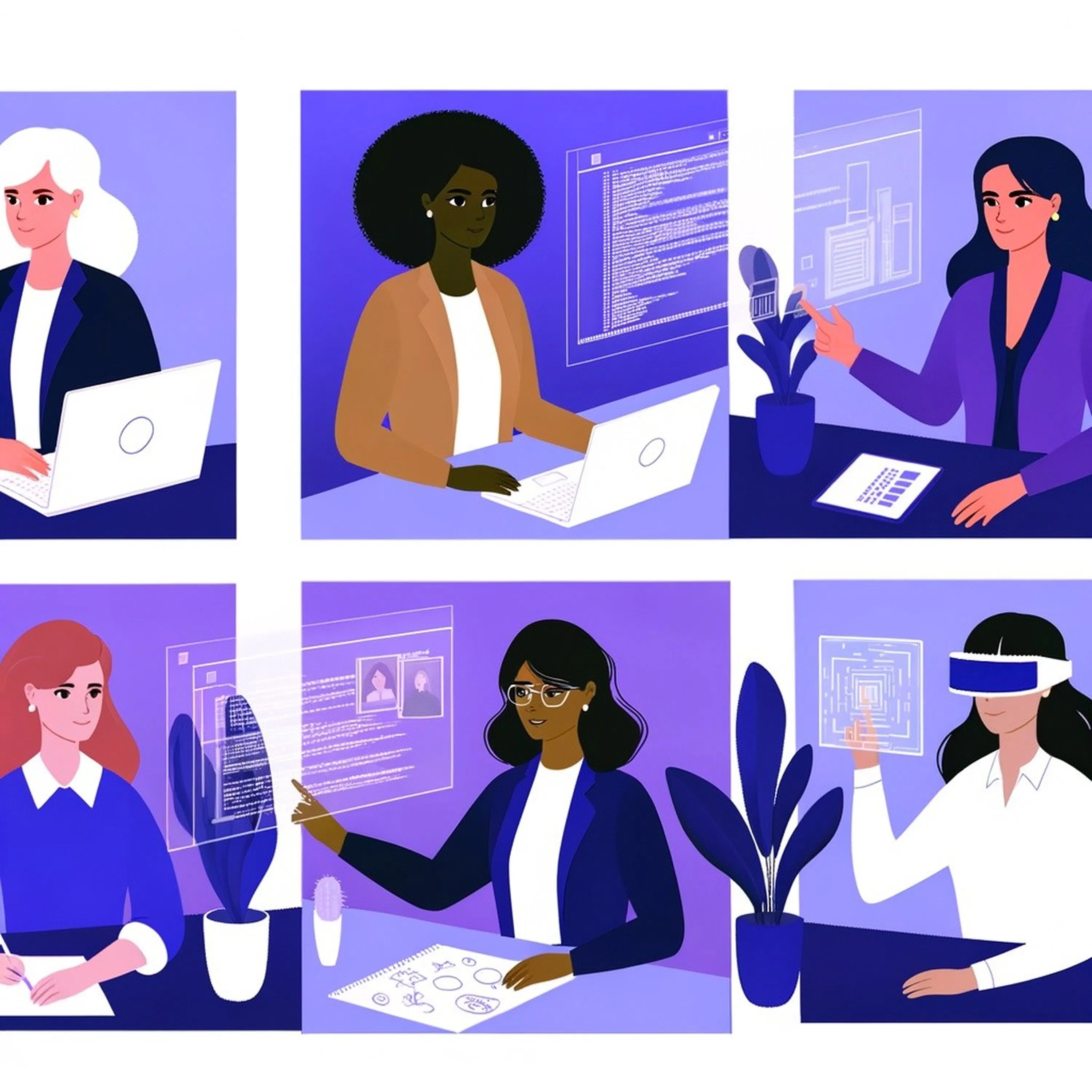
PODCAST · society
Women in Business
by Inception Point AI
This is your Women in Business podcast."Women in Business" is a compelling podcast dedicated to exploring the unique challenges and triumphs of women entrepreneurs and professionals. Tune in for inspiring stories, expert insights, and actionable advice designed to empower women in the business world, with a special focus on the tech industry. 1. Addressing Gender Disparities: How women in tech are overcoming barriers and achieving success in a traditionally male-dominated industry.2. The Role of Mentorship: Examining the impact of mentorship and networking opportunities on advancing women’s careers in tech.3. Balancing Innovation and Inclusion: Strategies for fostering inclusive work environments that encourage female innovation and leadership.4. Navigating Economic Challenges: Insights into how women tech leaders are adapting to economic shifts and emerging stronger.5. Future Trends: Exploring the future of women in tech and how current economic trends may shape opportunities an
-
238
Women in Tech: Turning Underfunded Into Overperforming in 2024's Economy
This is your Women in Business: Generate 5 discussion points for a podcast episode about women navigating the current economic landscape, focusing on the tech industry. podcast. You’re listening to Women in Business, and today we’re diving straight into how women are navigating the current economic landscape in the tech industry. Let’s start with the reality: according to McKinsey and Company, women now hold around a quarter of technical roles in major tech companies, and that share is slowly growing, even as the industry faces layoffs, tighter funding, and rapid AI disruption. At the same time, PitchBook reports that women‑founded startups still receive less than 3 percent of global venture capital, even though data from Boston Consulting Group shows that women‑led startups, on average, generate more revenue per dollar invested. That tension between underfunding and overperformance is shaping how women move through tech right now. The first big discussion point for us is power in uncertainty. As the global economy cools and tech companies from Meta to Google tighten budgets, women often bear the brunt of “last in, first out” restructuring. Yet Deloitte’s research shows that companies with more women in leadership are more resilient and innovative during downturns. So the question for listeners is: how do you turn economic instability into leverage? Think about building visible expertise, owning your impact with numbers, and being very intentional about negotiating role scope and not just salary. Our second point is the rise of women in AI and deep tech. Stanford’s Human‑Centered AI Institute reports that women are still underrepresented in AI research, but their numbers are climbing, especially in applied machine learning and ethics. Women like Fei‑Fei Li at Stanford University and Timnit Gebru at the Distributed AI Research Institute are shaping global conversations about responsible AI. For listeners in tech, this moment is not just about getting a seat at the table; it’s about helping design the table: policy, safety, data rights, and how AI impacts care work and service jobs where women are overrepresented. Third, we have the funding gap and new funding models. Crunchbase has tracked a decline in overall venture funding since the boom years, but it also highlights a rise in women‑focused funds like Female Founders Fund and All Raise. Angel networks such as Golden Seeds are channeling capital directly to women‑led tech startups. In this climate, women are diversifying their options: revenue‑based financing, crowdfunding platforms like Kickstarter, and strategic partnerships with corporates that offer both cash and distribution. Our fourth discussion point is the remote work reset. A report from LinkedIn shows that remote tech roles have declined since their peak, while hybrid work is stabilizing. For many women, especially caregivers, remote work opened doors that are now narrowing. The opportunity is in negotiating flexibility as a performance issue, not a personal favor. Companies like Salesforce, Microsoft, and Atlassian are publishing data that links flexibility to productivity and retention, giving women powerful evidence when they ask for hybrid structures that actually work. The fifth point is leadership and ownership in this new landscape. Ernst and Young reports that companies with more women on boards perform better on return on equity. In tech, we’re seeing more women move from employee to founder, or from founder to investor, like Aileen Lee at Cowboy Ventures or Arlan Hamilton at Backstage Capital. Economic uncertainty is pushing some women to say, “If I’m taking the risk anyway, I might as well own the upside.” To every listener navigating this moment: the landscape is tough, but you are not asking for a favor from this industry. You are bringing documented value into a space that needs you to innovate, to question, and to lead. Thank you for tuning in to Women in Business. Make sure you subscribe so you never miss an episode. This has been a quiet please production, for more check out quiet please dot ai. For more http://www.quietplease.ai Get the best deals https://amzn.to/3ODvOta
-
237
Women in Tech: Building Economic Armor When the Industry Cools Down
This is your Women in Business: Generate 5 discussion points for a podcast episode about women navigating the current economic landscape, focusing on the tech industry. podcast. Welcome back to Women in Business. I’m your host, and today we’re diving straight into how women are navigating the current economic landscape in the tech industry. Let’s start with what’s happening right now. According to McKinsey and Company, women still hold less than a third of tech roles, and yet tech is where some of the fastest-growing, highest-paying jobs are. When inflation is squeezing household budgets and funding is tighter, stepping back from tech isn’t an option for ambitious women, it’s a risk to long-term earning power. First discussion point: access to opportunity in a cooling economy. Layoffs at companies like Meta, Google, and Amazon hit technical and support roles hard. Reports from Layoffs.fyi show tens of thousands of tech jobs cut in the last couple of years. When a product team shrinks, women, especially women of color, are often overrepresented in roles considered “non-core,” like project management or operations. The empowering move is to double down on skills that are closest to revenue and core technology: data, AI, cybersecurity, cloud. Think of it as building economic armor. Second discussion point: remote work and flexibility as leverage, not a perk. A study from Stanford economist Nicholas Bloom shows hybrid work can increase productivity and retention. For women in tech, especially mothers or caregivers, remote-first companies like GitLab and Automattic prove that high-performance teams don’t need to share a zip code. But flexibility only empowers you if you use it strategically: ensuring you’re not invisible on Zoom, speaking up in standups, and getting your impact documented in performance reviews. Third discussion point: funding and the startup squeeze. PitchBook reports that women-only founding teams still receive less than 3 percent of venture capital funding, and in tighter markets investors tend to retreat to familiar — often male — networks. Yet we’re seeing powerful counter-moves: venture firms like Backstage Capital and Female Founders Fund specifically backing women and underrepresented founders. Women in tech are responding by mastering capital literacy: understanding term sheets, exploring revenue-based financing, and using platforms like Republic to tap alternative funding sources. Fourth discussion point: AI as both threat and accelerator. The World Economic Forum notes that roles in data and AI are among the most in-demand, yet women are underrepresented in those jobs. If generative AI can automate parts of coding, design, and marketing, the women who thrive will be the ones who learn to direct these tools, not fear them. Think of a product manager like Whitney Wolfe Herd building Bumble: she didn’t need to code every feature herself to lead a tech company. Today, learning prompt engineering, basic Python, or how to use tools like GitHub Copilot can multiply your output and your value. Fifth discussion point: networks, mentorship, and collective power. Research from LinkedIn shows that strong networks correlate with faster promotions and higher pay. Women-focused communities like Girls Who Code, Women Who Code, and All Raise are more than inspirational hashtags; they’re economic infrastructure. They connect software engineers to hiring managers at companies like Microsoft, pair first-time founders with seasoned CEOs, and create rooms where women set the agenda. As you listen, ask yourself: where in this economic moment can you claim more power — through skills, through flexibility, through capital, through technology, or through community? Because every shift in the economy is also a shift in who gets to lead. Thank you for tuning in to Women in Business. Be sure to subscribe so you don’t miss the next episode. This has been a quiet please production, for more check out quiet please dot ai. For more http://www.quietplease.ai Get the best deals https://amzn.to/3ODvOta
-
236
Women in Tech: Five Hard Truths About Money, Hiring, and Getting Heard in Today's Economy
This is your Women in Business: Generate 5 discussion points for a podcast episode about women navigating the current economic landscape, focusing on the tech industry. podcast. Welcome to Women in Business, where we spotlight the women shaping industries, leading change, and building opportunity in real time. Today, we are focusing on women navigating the current economic landscape in the tech industry, and the conversation starts with a clear truth: uncertainty has not slowed women down, but it has changed the questions they have to answer every day. According to Flowmesh, strong podcast scripting keeps the intro short, the transitions natural, and the main points focused, which is exactly how we are approaching this discussion[1]. First, let’s talk about access to capital. Women founders in tech still face tougher odds when it comes to funding, and that shapes everything from hiring to product development. One key discussion point is how women are finding creative ways to grow through bootstrapping, angel networks, and community-based support when traditional venture funding is harder to secure. This is not just a finance issue; it is a strategy issue, and it changes how women build companies from the start. Second, let’s look at hiring and retention in a market where budgets are tight. Tech companies are being asked to do more with less, and women leaders are often balancing efficiency with culture. That raises an important discussion point: how do women in leadership protect team morale, retain talent, and keep their businesses innovative while managing cost pressure? In a sector where speed matters, the ability to lead with both discipline and empathy becomes a competitive advantage. Third, we need to address the impact of artificial intelligence and automation. Women in tech are not only adapting to these shifts, they are helping define them. A strong discussion point for this episode is how women are positioning themselves and their teams to stay relevant as AI changes workflows, job descriptions, and customer expectations. The real question is not whether technology will keep evolving, but whether women will have equal opportunity to shape where it goes next. Fourth, there is the issue of confidence and visibility. Women in business podcasts like Doing Business Like a Woman and Badass Women in Business emphasize that women thrive when they claim space, speak clearly about their value, and share practical lessons from real experience[3][4][6][9]. That makes another discussion point especially powerful: how can women in tech make sure their expertise is seen, their ideas are heard, and their leadership is recognized in rooms where decisions are made? Visibility is not vanity; it is influence. Finally, the fifth discussion point is resilience. The current economic landscape rewards adaptability, and women in tech are proving that resilience is not passive endurance. It is strategic reinvention. Whether a woman is leading a startup in San Francisco, managing a product team in New York, or building a software company from a smaller market, the ability to adjust, learn, and keep moving is what turns pressure into progress. These five points give us a strong frame for the episode: access to capital, hiring and retention, artificial intelligence, visibility, and resilience. Thank you for tuning in, and please subscribe so you do not miss future conversations. This has been a quiet please production, for more check out quiet please dot ai. For more http://www.quietplease.ai Get the best deals https://amzn.to/3ODvOta
-
235
Women in Tech: Building Your Own Tailwinds in an Uncertain Economy
This is your Women in Business: Generate 5 discussion points for a podcast episode about women navigating the current economic landscape, focusing on the tech industry. podcast. Welcome back to Women in Business. I’m your host, and today we’re diving straight into how women are navigating the current economic landscape in the tech industry, from venture-backed startups in San Francisco to remote engineering teams in Bangalore and product leaders in Berlin. Let’s start with the big picture. The World Economic Forum reports that at the current pace, it could take more than a century to fully close the global gender gap in economic participation. Yet, at the same time, McKinsey & Company finds that companies in the top quartile for gender diversity are significantly more likely to financially outperform their peers. That means in a shaky economy, women in tech are not just a “nice to have,” they are a competitive advantage. But here’s the friction point: access to capital. PitchBook data shows that women-only founding teams still receive under 2 percent of global venture capital funding, even though First Round Capital found that startups with at least one female founder performed better on average than all-male founding teams. So discussion point one is how women are getting creative with capital: revenue-first models, crowdfunding, angel syndicates focused on female founders like All Raise, and alternative funding vehicles such as Clearco for e‑commerce and Pipe for recurring revenue. Many women are choosing sustainability over blitz-scaling, prioritizing profitable growth and control over their vision. Next, let’s talk about leadership and layoffs. In the current economic cycle, hiring freezes and restructuring have hit tech hard, and reports from LeanIn.Org and McKinsey’s Women in the Workplace study show that women, especially women of color, are still underrepresented in senior technical and C‑suite roles. Yet when the pandemic pushed remote and hybrid work into the mainstream, many women leaders drove flexible work policies that kept teams productive while reducing burnout. So discussion point two is how women in tech are leveraging this moment to negotiate for outcomes-based performance metrics, flexible schedules, and remote-first cultures that support both productivity and wellbeing. Another critical area is the skills and roles that remain resilient. According to LinkedIn’s Emerging Jobs reports and World Economic Forum’s Future of Jobs report, high-growth roles include data scientist, cybersecurity analyst, cloud architect, AI engineer, and product manager. Yet women remain underrepresented in these tracks. Discussion point three is the strategic reskilling play: women using platforms like Coursera, edX, and Google Career Certificates to move from support roles into higher-paying technical and product roles, and how companies like Microsoft and IBM have launched programs specifically aimed at bringing more women into AI, cloud, and cybersecurity. Then there’s entrepreneurship within big tech. Even inside companies like Google, Amazon, and Shopify, women are building internal ventures: new product lines, innovation labs, and cross-functional initiatives that create new revenue streams. According to research from Boston Consulting Group, companies with more diverse management teams have higher innovation revenue. Discussion point four is how women are using intrapreneurship to gain P&L responsibility, visibility, and negotiating power, even if they are not founding a startup. Finally, we need to look at networks and ecosystems. Studies from Harvard Business Review highlight that women with strong “inner circles” of other women are more likely to land high-authority roles. In the tech world, that looks like communities such as Tech Ladies, Girls in Tech, She Loves Tech, and Women Who Code. Discussion point five is how these ecosystems are becoming economic engines: connecting women to early customers, investors, executive sponsors, speaking opportunities, and cross-border collaborations that buffer against economic volatility. For every woman listening today, the message is this: the economic landscape may be uncertain, but women in tech are not waiting for perfect conditions. They are building flexible funding strategies, negotiating smarter roles, reskilling into resilient careers, innovating from the inside, and leveraging powerful networks to create their own tailwinds. Thank you for tuning in to Women in Business. Make sure you subscribe so you never miss an episode. This has been a quiet please production, for more check out quiet please dot ai. For more http://www.quietplease.ai Get the best deals https://amzn.to/3ODvOta
-
234
Women in Tech: Building Power When the Economy Shifts Around You
This is your Women in Business: Generate 5 discussion points for a podcast episode about women navigating the current economic landscape, focusing on the tech industry. podcast. Welcome to Women in Business, where we talk about ambition, resilience, and the real choices women make when the economy is changing around them. Today’s conversation is for the women building careers, leading teams, and launching ideas in tech, because in this industry, the landscape can shift fast, but opportunity is still there for those who know where to look. First, let’s talk about hiring and job security. According to Harvard Business Review, women at work often have to navigate workplace dynamics while also proving their value in environments that do not always feel equal. In the tech industry, that means staying visible, building strong networks, and making sure your skills are current in areas like data, product, cybersecurity, and artificial intelligence. The women who are thriving are not waiting to be noticed; they are making their impact impossible to ignore. Second, economic uncertainty is pushing many women in tech to think differently about income. Some are moving from one employer to another, while others are using their experience to consult, freelance, or start businesses of their own. Podcasts like Badass Women in Business highlight women who have built something meaningful by taking bold steps and making hard decisions. That spirit matters now, because the current economy rewards adaptability as much as technical talent. Third, access to capital still matters. Women founders in tech continue to face barriers when raising money, and that affects how fast a company can grow. This is where strategy becomes power. Building a strong pitch, knowing the numbers, and understanding legal basics such as entity selection and intellectual property protection can make a major difference. Foster Swift’s Businesswomen Talking Podcast has discussed those legal topics, and they are especially important for women trying to turn an idea into a durable company. Fourth, leadership in tech is not only about climbing higher; it is about changing the culture around you. Women in senior roles are shaping how teams communicate, how feedback is given, and how decisions are made. Harvard Business Review’s Women at Work has focused on workplace communication and feedback, showing that these issues are central to how women advance. In a tense economy, strong leadership helps teams stay steady, productive, and creative. Fifth, women navigating today’s tech economy need community as much as competence. The best opportunities often come through trusted relationships, mentoring, and honest conversations with other women who understand the pressure. Whether the conversation happens in San Francisco, New York, Austin, or remotely across time zones, connection can open doors that job boards never will. If you are listening today, remember this: the tech industry may be unpredictable, but your ability to learn, adapt, and lead is powerful. Thank you for tuning in, and please subscribe so you never miss an episode. This has been a quiet please production, for more check out quiet please dot ai. For more http://www.quietplease.ai Get the best deals https://amzn.to/3ODvOta
-
233
Women in Tech: Navigating Uncertainty, Building Equity, and Claiming Your Seat at the Table
This is your Women in Business: Generate 5 discussion points for a podcast episode about women navigating the current economic landscape, focusing on the tech industry. podcast. Welcome back to Women in Business. I’m your host, and today we’re diving straight into women navigating the current economic landscape in the tech industry. Right now, the tech world is experiencing hiring slowdowns, layoffs, and rapid shifts toward artificial intelligence and automation. According to McKinsey and Company, women already hold far fewer technical roles than men, especially in software engineering and cloud computing. At the same time, a report from Deloitte predicts that the percentage of women in large global tech companies is slowly, but steadily, rising. So the first big discussion point is this tension between risk and opportunity. Economic uncertainty is real, but so is the chance for women to step into roles in AI, cybersecurity, data science, and green tech where demand is still growing. The second discussion point is pay equity and promotion in a tighter economy. The World Economic Forum’s Global Gender Gap Report shows that at the current pace, economic parity between men and women is still decades away. In downturns, the pay gap can silently widen as women accept lower offers to secure stability. Yet companies like Salesforce and Adobe publicly audit and adjust pay to correct inequities. That tells us something powerful: transparency is not a luxury, it’s a strategy. For women in tech, knowing benchmark salaries and being willing to negotiate is no longer optional; it is part of navigating this landscape with confidence. Third, we need to talk about remote and hybrid work. Research from Stanford University and Microsoft’s Work Trend Index shows that remote work has been a double-edged sword for women. Flexibility has helped many women in tech stay in the workforce, especially caregivers, but it has also led to fewer promotions and less visibility when they are out of sight. For women in engineering or product roles, that means being intentional about visibility: turning your camera on when possible, speaking early in meetings, documenting your contributions, and building allies who will name your impact in the rooms you are not in. The fourth discussion point is entrepreneurship and side ventures. According to Crunchbase, the share of global venture capital going to all-women founding teams remains in the low single digits, even though women-led startups often deliver strong returns. Yet we are seeing powerful counterexamples: Whitney Wolfe Herd at Bumble, Anne Wojcicki at 23andMe, and Reshma Saujani with Girls Who Code and Moms First have all built tech-driven organizations that center women’s needs. In this economy, more women are launching bootstrapped ventures, niche software products, and consulting businesses while keeping a primary role. That diversification can be both a financial cushion and a leadership training ground. Finally, the fifth discussion point is community and sponsorship. The AnitaB.org community, Girls Who Code, Women Who Code, and Latinas in Tech all show that networks are not just nice to have; they are economic infrastructure. LinkedIn data consistently finds that referrals dramatically increase your chances of landing roles, especially in competitive tech fields. Sponsorship goes one step further than mentorship: sponsors like a senior engineering director or a product VP use their political capital to put your name forward for promotions, stretch projects, and board seats. For women navigating this landscape, intentionally cultivating these relationships can be the difference between surviving and advancing. To every woman listening who is in tech or trying to break into it: this economic moment is challenging, but it is also formative. The choices you make about skills, negotiation, visibility, entrepreneurship, and community now will shape not only your career, but the path for the women coming behind you. Thank you for tuning in to Women in Business. Make sure you subscribe so you never miss an episode focused on women’s empowerment in the world of work. This has been a quiet please production, for more check out quiet please dot ai. For more http://www.quietplease.ai Get the best deals https://amzn.to/3ODvOta
-
232
Women in Tech: Negotiating Power When the Money Gets Tight
This is your Women in Business: Generate 5 discussion points for a podcast episode about women navigating the current economic landscape, focusing on the tech industry. podcast. Welcome back to Women in Business, the podcast where we put women’s voices at the center of the global economy. I’m glad you’re here, because today we’re diving straight into what it really means to be a woman navigating the current economic landscape in the tech industry. Let’s start with the reality: tech is still male-dominated, especially in leadership and in funding. McKinsey and LeanIn.Org report that women continue to be underrepresented at every level of tech leadership, and Crunchbase has found that women-founded startups receive only a small single‑digit percentage of total venture capital. Yet at the same time, women are entering computer science, data science, and product management in growing numbers. That tension between underrepresentation and undeniable momentum is the backdrop for everything we’re talking about today. The first big discussion point is pay, promotion, and power in a cooling economy. As companies from Silicon Valley to Bangalore tighten budgets, layoffs and hiring freezes can hit women harder, particularly women of color. Research from the World Economic Forum shows the global gender pay gap is closing too slowly, and in tech, equity and stock options often hide even bigger disparities. For listeners, this is the moment to sharpen your negotiation skills, understand your market value with tools like Payscale and Glassdoor, and push for transparency in salary bands and promotion criteria. The second point is remote work, hybrid work, and the flexibility paradox. During and after the pandemic, companies like Microsoft, Shopify, and Salesforce expanded flexible policies. Many women in tech reported higher productivity and better work–life integration when they could work remotely. Yet Stanford economist Nicholas Bloom has highlighted a flexibility stigma: those who work remotely more often can be overlooked for promotions and high‑visibility projects. For women, especially caregivers, the challenge is to claim flexibility without becoming invisible by proactively seeking stretch projects, visible deliverables, and face time with decision‑makers. Our third point is skills, reskilling, and staying relevant. The acceleration of artificial intelligence, cybersecurity, and cloud computing means your skills can become outdated faster than ever. Reports from the World Economic Forum and LinkedIn show that roles in data science, machine learning, and cybersecurity are among the fastest‑growing, but women are still underrepresented in these specialties. This is where intentional upskilling matters: think of a software engineer pivoting into AI at Google, or a project manager training in cloud architecture with Amazon Web Services certifications. The women who win in this economy treat learning as a non‑negotiable part of their job. The fourth point is entrepreneurship and venture funding in a tighter capital market. As interest rates rise, venture capital firms from Sequoia Capital to Andreessen Horowitz have become more selective. That can make it even harder for women founders to break in. Yet we’re also seeing a rise in women‑focused funds like Female Founders Fund and Backstage Capital, and accelerators designed specifically for women in tech. The strategic move for women founders right now is to combine capital efficiency with community: think revenue earlier, diversify funding sources, and build networks with other women entrepreneurs on platforms like All Raise and Chief. Our fifth and final discussion point is about policy, inclusion, and using your collective voice. Organizations like AnitaB.org, Girls Who Code, and Women in Product have been pushing companies and governments to track and publish diversity data, implement paid family leave, and expand childcare support. When women in tech organize through employee resource groups at companies like Meta, Google, or Spotify, they gain leverage to shape policies that buffer the shocks of an uncertain economy. Your voice in surveys, town halls, and even on platforms like LinkedIn is part of that structural change. As you navigate this moment, remember: the economic landscape may be volatile, but women in tech have never been more connected, more informed, or more capable of reshaping the system itself. Your salary negotiations, your learning decisions, your startup pitch, your advocacy inside your company – they all add up. Thank you for tuning in to Women in Business. If this episode spoke to you, please subscribe, share it with another woman in tech who needs to hear it, and stay with us as we continue to amplify women’s voices in the global economy. This has been a quiet please production, for more check out quiet please dot ai. For more http://www.quietplease.ai Get the best deals https://amzn.to/3ODvOta
-
231
Women in Tech: Building Your Safety Net While Breaking Glass Ceilings
This is your Women in Business: Generate 5 discussion points for a podcast episode about women navigating the current economic landscape, focusing on the tech industry. podcast. Welcome back to Women in Business. I’m your host, and today we’re diving straight into how women are navigating this wild economic landscape in the tech industry. Let’s start with the reality check. According to McKinsey and LeanIn.org, women still hold less than a third of tech roles in major companies, and representation drops further for women of color. At the same time, the World Bank notes that digital jobs are growing faster than many traditional sectors. That means opportunity is exploding, but access is still unequal. So if you’re a woman in tech right now, you are operating in a space of both pressure and possibility. First discussion point: surviving and thriving through economic volatility. Big names like Meta, Google, and Amazon have all made headlines with layoffs, and women have often been hit hardest in non-technical and early-career roles. Yet research from the Boston Consulting Group shows that companies with more diverse leadership outperform on innovation revenue. So when you, as a woman, stay visible, keep your skills sharp in areas like artificial intelligence, cybersecurity, and cloud computing, you are not just protecting your career, you’re strengthening the companies you work for. Second discussion point: the funding gap for women in tech entrepreneurship. PitchBook and Crunchbase both report that women-founded startups still receive only a tiny slice of global venture capital, often under 3 percent. But here’s the twist: studies from First Round Capital and others have found that diverse founding teams frequently outperform homogenous ones on returns. That means the data is on your side. Women founders are increasingly turning to angel networks like Golden Seeds and accelerator programs like Y Combinator’s female-focused cohorts to bypass old gatekeepers and build their own tables. Third discussion point: remote work and hybrid work as a double-edged sword. Surveys from Deloitte and PwC show that many women in tech value flexibility because it lets them better manage caregiving, health, and personal priorities. But there’s also evidence that when women are remote more often than men, they risk being “out of sight, out of mind” for promotions and stretch assignments. That’s pushing women to be more intentional about visibility: booking regular one-on-ones with managers, speaking up in Zoom rooms, and taking lead roles in high-impact projects, even from home. Fourth discussion point: the skills that matter most now. LinkedIn and Coursera both highlight that the fastest-growing skills in tech include machine learning, data analysis, product management, and cybersecurity. But they also emphasize power skills: communication, negotiation, and leadership. Women who pair technical skills with strategic storytelling and confident negotiation are increasingly stepping into engineering leadership, product director, and founder roles, even in uncertain markets. Fifth discussion point: community as economic power. From Girls Who Code, to Women Who Code, to Black Girls Code, and communities like Elpha and Chief, women are leveraging networks to swap job leads, share salary data, and invest in each other’s companies. In a shaky economy, your network becomes an economic safety net and a launchpad. Thank you for tuning in to Women in Business. If this conversation resonated with you, make sure you subscribe so you never miss an episode. This has been a quiet please production, for more check out quiet please dot ai. For more http://www.quietplease.ai Get the best deals https://amzn.to/3ODvOta
-
230
Women in Tech: Your Next Skill Could Be Your Best Severance Insurance
This is your Women in Business: Generate 5 discussion points for a podcast episode about women navigating the current economic landscape, focusing on the tech industry. podcast. Welcome back to Women in Business. I’m your host, and today we’re diving straight into what it means to be a woman navigating this wild, shifting economic landscape in the tech industry. Let’s start with where we are right now. According to McKinsey and Company, women still hold less than a third of tech roles globally, even though tech is one of the fastest‑growing, highest‑paid sectors. At the same time, the World Economic Forum reports that automation and AI are transforming millions of jobs, with digital skills now a basic requirement rather than a bonus. That means women in tech are standing at a crossroads: this economy can either accelerate us forward or leave us further behind. The first big discussion point is access to opportunity in a tightening economy. When companies in places like Silicon Valley, Austin, or Bangalore start cutting costs, hiring freezes and layoffs often hit underrepresented groups hardest. Research highlighted by LeanIn.Org and McKinsey’s Women in the Workplace study shows that women, especially women of color, are more likely to be laid off from technical and early‑career roles. Yet those same reports show that diverse teams outperform financially. So the question for us is: how do women position ourselves as “must keep” talent when budgets get slashed? That leads into the second point: upskilling as economic armor. Coursera’s Global Skills Report notes that women are underrepresented in advanced tech courses like machine learning and cloud computing, but the women who do take them perform just as well as men. In a volatile economy, that extra certification in cybersecurity, data analytics, or product management becomes a shield. It gives you leverage for salary negotiations, remote‑work flexibility, and internal mobility when your company restructures. Third, we have to talk about funding and entrepreneurship. PitchBook data shows that women‑founded startups receive only a small single‑digit percentage of all venture capital funding, and that share shrank during recent economic uncertainty. Yet firms like First Round Capital have reported that companies with at least one female founder tend to outperform all‑male founding teams. That contradiction is a key conversation: how do women founders in tech navigate biased funding pipelines while exploring alternatives like revenue‑based financing, angel syndicates led by women, and government innovation grants? Our fourth point is the rise of remote and hybrid work as both a gift and a trap. Studies from organizations like Deloitte and Harvard Business Review describe how remote work has opened doors for women in tech who live outside major hubs like San Francisco, London, or Berlin, or who balance caregiving responsibilities. But those same studies warn about the “proximity penalty,” where the people in the office get more visibility, promotions, and stretch assignments. So how do women use this new flexibility without disappearing from the decision‑making table? That’s a critical economic question, because visibility often translates directly into compensation and equity. Finally, we need to examine leadership and pay equity in this new landscape. World Economic Forum reports show it could take more than a century to fully close the global gender pay gap at current rates. In tech, the gap remains stubborn, even after controlling for role and experience. But when women do reach leadership — think of figures like Safra Catz at Oracle, Ginni Rometty formerly at IBM, or Reshma Saujani building Girls Who Code — they change hiring practices, benefits, and promotion criteria in ways that benefit entire organizations. In a shaky economy, women leaders in tech are not just role models; they’re economic stabilizers for their teams and communities. As you listen to this episode, I invite you to reflect on where you are in this ecosystem: Are you protecting your role through new skills? Are you pushing your company on pay transparency? Are you building or funding the next wave of women‑led tech startups? The current economic landscape is tough, but it is also a once‑in‑a‑generation reset of who gets to shape the future. Thank you for tuning in to Women in Business. Make sure you subscribe so you never miss an episode. This has been a quiet please production, for more check out quiet please dot ai. For more http://www.quietplease.ai Get the best deals https://amzn.to/3ODvOta
-
229
Women in Tech: Navigating Layoffs, Pay Gaps, and AI While Building the Future Economy
This is your Women in Business: Generate 5 discussion points for a podcast episode about women navigating the current economic landscape, focusing on the tech industry. podcast. Welcome back to Women in Business, the podcast where we talk about what it really takes to lead, build, and thrive. I’m so glad you’re here, because today we’re diving straight into how women are navigating the current economic landscape in the tech industry. Let’s start with the big picture. The World Economic Forum reports that women still hold less than a third of roles in technology, even as tech continues to drive most of the high‑growth, high‑paying jobs in the global economy. At the same time, organizations like McKinsey and Deloitte keep finding that companies with more women in leadership are more profitable and more innovative. So when we talk about women in tech right now, we’re not just talking about fairness; we’re talking about economic strategy. First discussion point: access to opportunity in a cooling but still competitive tech market. After the hiring booms of 2020 and 2021, firms like Meta, Google, and Amazon have pulled back, and layoffs have hit everything from startups in San Francisco to giants in Seattle. Yet CompTIA and the U.S. Bureau of Labor Statistics still project long‑term growth in software development, cybersecurity, and data science. For women, that means navigating a strange paradox: fewer open roles in the short term, but increasing demand for skills like AI, cloud engineering, and product management over the next decade. Second, we need to talk about pay, equity, and negotiations. According to LeanIn.Org and McKinsey’s Women in the Workplace report, women in technical roles still earn less on average than men in the same jobs, and the gap widens for Black and Latina women. In an inflationary economy, that gap compounds over time. Women in tech today are sharpening their negotiation skills, benchmarking with salary data from sites like Levels.fyi and Glassdoor, and leveraging multiple offers in hubs like Austin, London, and Bangalore to close that gap. Third discussion point: funding and entrepreneurship. PitchBook and Crunchbase have both documented that women‑founded startups receive a small single‑digit percentage of total venture capital funding. Yet those same sources show that women‑led companies often generate better returns per dollar invested. In this economy, more women are turning to alternative paths: angel networks like Golden Seeds, crowdfunding platforms, and revenue‑based financing to launch AI tools, fintech platforms, and digital health startups outside traditional Silicon Valley circles. Fourth, remote and hybrid work are reshaping how women build careers in tech. Research from Stanford economist Nicholas Bloom shows remote work is here to stay, even as companies like Tesla and some teams at Apple push employees back to the office. For many women, especially caregivers, remote flexibility has been a game changer for staying and advancing in tech. But there’s a catch: studies from the Harvard Business School and the London School of Economics warn about “proximity bias” where the people physically in the office are more likely to get promoted. Women are countering this by being intentional about visibility: leading high‑impact projects, scheduling regular one‑on‑ones with leaders, and building cross‑functional relationships on Slack, Zoom, and in person when it matters. Fifth discussion point: upskilling for the age of artificial intelligence. Reports from Microsoft, OpenAI, and the World Economic Forum all point to generative AI transforming everything from software engineering to marketing analytics. Many routine tasks are being automated, but entirely new roles in AI safety, prompt engineering, and data governance are emerging. Women in tech are responding by taking advantage of programs from organizations like Girls Who Code, Women Who Code, and Rewriting the Code, as well as university certificates from places like MIT and Stanford, to stay not just employable, but indispensable. So as we move through this complex economic moment, women in tech are not just surviving; they’re building new models for how power, flexibility, and innovation can look in companies from Berlin to Bangalore, from early‑stage startups to giants like Microsoft and Nvidia. Thank you for tuning in to Women in Business, and if this conversation spoke to you, make sure you subscribe so you don’t miss the next episode. This has been a quiet please production, for more check out quiet please dot ai. For more http://www.quietplease.ai Get the best deals https://amzn.to/3ODvOta
-
228
Women in Tech: Building in a Downturn - Capital, Community, and Claiming Your Seat at the Table
This is your Women in Business: Generate 5 discussion points for a podcast episode about women navigating the current economic landscape, focusing on the tech industry. podcast. Welcome back to Women in Business. I’m your host, and today we’re diving straight into how women are navigating this wild economic moment in the tech industry. Let’s be honest: the tech landscape has shifted under our feet. Rising interest rates and tighter venture capital funding mean what worked for women founders five years ago doesn’t always work now. Reports from PitchBook and Crunchbase show that women-founded startups still receive less than 3 percent of global venture capital, and in a slower economy, that gap becomes even more obvious. Yet we are still building. Just look at founders like Whitney Wolfe Herd at Bumble or Reshma Saujani at Girls Who Code, who’ve proven that women-led tech can scale even in tough markets. So our first big conversation is about access to capital in this economic climate. How are women in tech getting funded when money is more cautious and biased patterns are more visible? According to McKinsey and Company, diverse leadership teams drive better financial performance, but many investors still default to familiar, male-dominated networks. That leads to a key question for this episode: how can women leverage alternative funding paths like revenue-based financing, angel syndicates such as Chloe Capital, or crowdfunding platforms like Republic to grow without waiting for traditional venture firms to “catch up”? From there, we move to the future of work in tech. Remote and hybrid work exploded during the pandemic and has become a double-edged sword for women. A study from the National Bureau of Economic Research suggests flexible work can help women stay and advance, yet data from organizations like LeanIn.Org and McKinsey’s Women in the Workplace report shows women are still being left out of stretch assignments and promotions, especially when they’re not physically in the office. So our second discussion point asks: how can women in tech use remote work strategically, negotiating visibility, pay, and promotion paths while still protecting their time and energy? Third, we need to talk about AI and automation as both a risk and an opportunity. Research from the World Economic Forum points out that many roles held by women are more vulnerable to automation, but the fastest-growing, highest-paid roles in AI and data science are still dominated by men. That raises a powerful question for us: how can women re-skill and up-skill into AI, cloud computing, cybersecurity, and product roles so we aren’t automated out, but instead leading the teams that design the next generation of technology? Our fourth discussion point is about leadership and representation in this economy. Deloitte and Accenture both report that women in tech leadership still hover well below parity, and economic uncertainty often pushes companies to retreat to “safe” choices, which usually means choosing people who look like past leaders. That means women, and especially women of color, get squeezed. So we’ll explore how leaders like Sheryl Sandberg, Safra Catz at Oracle, and Ginni Rometty formerly at IBM navigated downturns, and what practical strategies women can use right now to claim decision-making seats when companies are restructuring, merging, or cutting costs. Finally, we’ll look at community and ecosystems as an economic survival tool. Organizations like Women Who Code, Black Women Talk Tech, and All Raise show that when women share investor intel, salary data, and technical knowledge, outcomes change. In a tighter economy, having a network isn’t a nice-to-have; it’s economic armor. So our fifth big question is this: how can women in tech intentionally build ecosystems of support—through meetups, Slack communities, alumni groups, and cross-company alliances—that help us hire each other, fund each other, and advocate for policy changes like pay transparency and parental leave? If you’re listening right now from a co-working space in San Francisco, a home office in Lagos, or a startup hub in Berlin, remember this: you are part of a global wave of women shaping the future of technology in real time, even in a challenging economy. The landscape may be tough, but we are tougher, and together we can turn these headwinds into momentum. Thank you for tuning in to Women in Business. Make sure you subscribe so you never miss an episode. This has been a quiet please production, for more check out quiet please dot ai. For more http://www.quietplease.ai Get the best deals https://amzn.to/3ODvOta
-
227
Women in Tech: Your Economic Power Moves When the Valley Gets Shaky
This is your Women in Business: Generate 5 discussion points for a podcast episode about women navigating the current economic landscape, focusing on the tech industry. podcast. Welcome back to Women in Business. I’m so glad you’re here, because today we’re diving straight into how women are navigating this wild economic moment in the tech industry, and what it really takes not just to survive it, but to own it. Let’s start with where we actually stand. According to McKinsey and Lean In, women now make up roughly a third of tech employees in North America, but only a small fraction of C‑suite roles, and women of color hold just a slice of those leadership seats. At the same time, layoffs in Silicon Valley have hit women disproportionately hard, especially in roles like recruiting and marketing. That means the economic landscape is not neutral. When budgets tighten, women are often first out and last promoted back in. Knowing that truth isn’t discouraging; it’s clarifying. It tells us exactly where we need to push. So first, we talk about power in skills. In this economy, skills are currency. The World Economic Forum points to AI, data literacy, and cybersecurity as high-growth areas, yet women remain underrepresented in all three. If you’re in tech today, one of the most powerful economic moves you can make is to become “recession-resistant” through upskilling. That might look like a data analytics certificate from Coursera, a machine learning course from Stanford Online, or a product management program from General Assembly. The question becomes: how do I make my skill set so future-focused that economic cycles can slow me down, but not stop me? Next, we need to talk money, because compensation is strategy. PayScale and Glassdoor consistently report that women in tech still earn less than male peers in similar roles. In a tighter economy, companies count on people not negotiating. That’s exactly when women must negotiate the hardest. Using market data from sites like Levels.fyi and Blind, going in with a clear salary range, and being ready to walk away are not luxuries anymore; they’re survival strategies. This isn’t just about your paycheck today; it’s about compounding wealth over decades, from stock options and bonuses to retirement contributions. Another critical point is the rise of remote and hybrid work. After the pandemic, many tech companies from Meta to Google have experimented with pulling people back into offices. Research highlighted by Stanford economist Nicholas Bloom shows remote work can boost productivity and widen talent pools, but it can also create “proximity bias,” where the people in the room get the promotions. For women, especially caregivers, remote work can be a lifeline and a trap at the same time. So the economic question is: how do we negotiate flexibility without losing visibility? That might mean setting clear performance metrics, scheduling regular one-on-ones, and making your impact highly measurable and impossible to ignore. We also have to look at entrepreneurship as an economic path. PitchBook reports that women-founded startups still receive under 3 percent of total venture capital funding, yet we’re seeing powerful countercurrents: funds like All Raise, Female Founders Fund, and Backstage Capital are channeling money specifically to women and underrepresented founders. In an uncertain job market, some women are choosing to build instead of beg for a seat. That can mean a venture-backed startup, a consultancy, or a profitable solo business in product, UX, or engineering. The key is understanding access to capital: grants, angel investors, revenue-based financing, and not just traditional VC. Finally, community is economic infrastructure. According to Catalyst and the AnitaB.org institute, women in tech who have strong networks and mentorship are more likely to stay, to be promoted, and to move into leadership. Organizations like Girls Who Code, Women Who Code, and Latinas in Tech are not just feel-good communities; they are economic engines, connecting women to jobs, deals, and board seats. In a volatile economy, no one wins alone. Your network can be the difference between a layoff being a dead end and a temporary detour. As you’re listening, I want you to ask yourself: where is my leverage in this moment? Is it in the skills I’m building, the salary I’m negotiating, the business I’m launching, the flexibility I’m claiming, or the community I’m investing in? Because even in a tough economic climate, women in tech are not just passengers. We are drivers. Thank you for tuning in to Women in Business. If this episode resonated with you, please hit subscribe, share it with another woman in tech who needs to hear it, and stay with us for more conversations like this. This has been a quiet please production, for more check out quiet please dot ai. For more http://www.quietplease.ai Get the best deals https://amzn.to/3ODvOta
-
226
Women in Business: Rewriting Tech's Rules from Silicon Valley to Your Screen
This is your Women in Business: Generate 5 discussion points for a podcast episode about women navigating the current economic landscape, focusing on the tech industry. podcast. You’re listening to Women in Business, the podcast where we celebrate women rewriting the rules of work, wealth, and power. I’m so glad you’re here, because today we’re diving straight into what it really means to be a woman navigating this wild economic landscape in the tech industry. Let’s start with the reality: tech is still dominated by men, but women are not on the sidelines. According to McKinsey and Lean In, women now make up roughly a third of the tech workforce in many advanced economies, and the number of women-founded startups has been rising, even as venture capital pulls back. Yet, PitchBook reports that in recent years women-only founding teams have received less than 3 percent of total venture capital funding. That gap is not a reflection of our ideas; it’s a reflection of an old system that we are here to disrupt. The first big conversation we need to have is about resilience in a shaky economy. Inflation, layoffs, and rapid automation are reshaping tech. When companies like Meta, Google, and Amazon announce job cuts, women and underrepresented groups are often hit hardest. But I want listeners to hear this clearly: you are not powerless in this cycle. Women in tech are responding by upskilling into AI, data, and cybersecurity, building portable careers, and using platforms like Coursera and Udemy to stay ahead of the curve. Economic uncertainty becomes less terrifying when your skills are future-proof. That brings us to our second discussion point: women and AI. The World Economic Forum has highlighted AI and machine learning as some of the fastest-growing roles, yet women remain underrepresented in these jobs and in leadership at AI companies. This matters because algorithms shape hiring, lending, and even healthcare. When women are not at the table, bias gets baked into the code. Women like Fei-Fei Li at Stanford University and Timnit Gebru at the Distributed AI Research Institute are leading voices demanding responsible, inclusive AI. Their work shows that when women lead in tech, technology serves more of humanity. Our third point is money and power: funding and ownership. Reports from Crunchbase show that mixed-gender founding teams consistently outperform, yet still face funding bias. Across Silicon Valley, from San Francisco to Seattle, women founders are responding by building their own ecosystems: angel networks like All Raise, funds focused on women such as Female Founders Fund, and accelerator programs that center women-led startups. The message is clear: if the table is stacked, we build a new table. Fourth, we have to talk about the workplace itself. Hybrid work changed everything. Studies from organizations like Deloitte show that flexible work has helped many women in tech stay in the game, especially caregivers. But flexibility without inclusion is just a different kind of burnout. Women are still dealing with pay gaps, interrupted promotion paths, and being talked over in meetings from New York to London to Bangalore. The most powerful move here is collective action: women using employee resource groups, mentorship circles, and public platforms like LinkedIn to push for transparent pay bands, clear promotion criteria, and real accountability. Finally, let’s talk about defining success on our own terms. The new economic landscape is making more women question the old script of “climb the ladder at all costs.” We’re seeing women launch solo consulting practices, remote-first startups, and mission-driven tech companies that prioritize mental health and community impact. Podcasts like Badass Women in Business and Women at Work from Harvard Business Review highlight women who are choosing profit and purpose, scale and sanity. If you’re listening right now, I want you to walk away with this: the current economic landscape is not just something happening to you. It is a stage on which you get to decide how you will show up – as an employee, a founder, an investor, or a leader who opens doors for others. Thank you for tuning in to Women in Business. If this episode spoke to you, make sure you subscribe, share it with another woman in tech who needs to hear it, and stay with us as we keep telling the stories that shift the future. This has been a quiet please production, for more check out quiet please dot ai. For more http://www.quietplease.ai Get the best deals https://amzn.to/3ODvOta
-
225
Women in Tech: From Underfunded to Unstoppable in Today's Economy
This is your Women in Business: Generate 5 discussion points for a podcast episode about women navigating the current economic landscape, focusing on the tech industry. podcast. Welcome back to Women in Business. I’m your host, and today we’re diving straight into how women are navigating this wild economic landscape in the tech industry. Let’s start with the reality on the ground. Despite all the talk about progress, women still make up less than a third of the tech workforce, and women of color hold only a fraction of technical and leadership roles according to McKinsey and LeanIn. Yet at the same time, reports from PitchBook and Crunchbase show that women-led tech startups are growing faster than ever, even though they receive a much smaller slice of venture capital. That tension between underrepresentation and undeniable performance is shaping everything about how women move through today’s economy. The first big theme is resilience through volatility. In the last few years, the tech sector has seen mass layoffs from companies like Meta, Google, and Amazon, while still hiring aggressively in artificial intelligence, cybersecurity, and cloud computing. Women in tech are learning to treat job titles as temporary, and their skills as permanent assets. Many are doubling down on upskilling in areas like AI, data analytics, and product management through platforms such as Coursera and Udemy, not waiting for employers to offer formal training. The second theme is access to capital and ownership. According to Crunchbase, women-founded startups still receive under 3 percent of global venture funding, and the numbers are even lower for Black and Latina founders. In response, we’re seeing a surge in women-focused funds and angel networks, like All Raise, Female Founders Fund, and Backstage Capital. Women are not just pitching; they’re sitting on the other side of the table, writing checks, leading syndicates, and building their own ecosystems of financial power. Third, there’s the shift from purely technical roles to strategic leadership. Reports from Deloitte highlight that tech companies with more diverse leadership teams outperform on innovation and revenue. Women are leveraging that data to negotiate for C-suite roles, board seats, and equity, not just promotions in title. In companies from Salesforce to Microsoft, women leaders are using their influence to drive flexible work policies, parental support, and fair promotion practices that help other women stay and grow in the industry. The fourth discussion point is remote work and the hybrid revolution. Research from McKinsey and Gallup shows that women, especially caregivers, are more likely to value remote or hybrid options. Tech has become the testing ground for reimagining work: asynchronous teams, global hiring, and results-focused cultures. At the same time, there’s a real risk of women becoming “invisible” on promotion tracks if they’re not in the office as much. Women leaders are responding by pushing for transparent promotion criteria and data-driven evaluations that don’t reward face time over impact. Finally, there’s the rise of founder culture and side hustles as economic security. With economic uncertainty and layoffs still in the headlines, more women in tech are starting their own ventures: productized services, SaaS tools, no-code platforms, and content-driven brands. Communities like Women Who Code, Girlboss, and FemTech-focused networks are providing mentorship, templates, and hard-won advice so that no one has to build alone. The message is clear: in this economy, multiple income streams and ownership are not a luxury, they’re a strategy. As you listen to this, I want you to ask yourself: where in this landscape are you ready to claim more space? Is it learning a new skill, asking for equity, starting that product you keep sketching out, or joining a community that stretches your ambition? Thank you for tuning in to Women in Business. If this episode resonated with you, make sure you subscribe so you don’t miss what’s coming next. This has been a quiet please production, for more check out quiet please dot ai. For more http://www.quietplease.ai Get the best deals https://amzn.to/3ODvOta
-
224
Women in Tech: Building Career Armor When the Economy Shifts Under Your Feet
This is your Women in Business: Generate 5 discussion points for a podcast episode about women navigating the current economic landscape, focusing on the tech industry. podcast. Welcome back to Women in Business. Today we’re diving into what it really means to navigate the current economic landscape as a woman in tech, at a time when budgets are tightening, funding is shifting, and innovation is moving faster than ever. Let’s start with the most pressing question many of you are facing: how do you build and protect your career in tech when the economy feels uncertain? In the last few years, companies like Meta, Google, Microsoft, and Amazon have all announced layoffs, and data from organizations like Layoffs.fyi show that tens of thousands of tech jobs have been cut globally. But here’s the other side: the World Economic Forum and McKinsey both report that demand for skills in artificial intelligence, cybersecurity, cloud computing, and data science is still growing. So the strategy isn’t just “hold on to any job,” it’s “position yourself in the parts of tech that are still expanding.” That means continuously upskilling, asking your manager where the company is investing next, and seeking projects that touch AI, automation, or data. Economic uncertainty punishes stagnation, but it tends to reward adaptability. At the same time, we need to talk about negotiating pay and equity in this climate. Economic pressure can make women feel grateful just to have an offer, especially in big tech hubs like San Francisco, Seattle, Bangalore, London, or Berlin. But salary transparency laws in places like California and New York City are giving you more leverage than ever. Companies including Salesforce and Adobe now publish pay ranges and have made public commitments to reducing pay gaps. Use that. Go into negotiations with hard data from platforms like Levels.fyi and Glassdoor, and ask specifically about salary bands, equity refresh cycles, and promotion timelines. A tough economy doesn’t erase your value; it just makes it more important to quantify it and advocate for it clearly. Now, what if you’re not just working in tech, but building something in it? Women founders still receive a small share of venture capital, and reports from Crunchbase show that all-women founding teams get only a few percent of total VC funding. Yet women-led companies consistently show strong returns and capital efficiency. So in this environment, it’s critical to widen your funding strategy. That might mean looking beyond traditional Silicon Valley VC to revenue-based financing, angel syndicates that focus on women like Golden Seeds, or platforms that spotlight female founders. It also means building a data-driven story: clear unit economics, a realistic path to profitability, and evidence of customer traction. Investors may be more cautious right now, but they are still writing checks for resilient, well-run businesses. Another key piece of navigating this landscape is remote and hybrid work. Companies like GitLab, Atlassian, Shopify, and many startups have adopted flexible or distributed models that can be game-changing for women balancing caregiving, health, or other responsibilities. But flexibility can also come with visibility risk. To thrive, you need intentional presence: turning cameras on when you can, speaking up in meetings, documenting your wins, and scheduling recurring one-on-one time with decision-makers. Remote work is only empowering if your contributions are seen, remembered, and linked to business outcomes. Be explicit about your impact and make sure your name is attached to the results. Finally, no woman should be navigating this economic moment alone. Mentorship and sponsorship are not nice-to-haves; they are economic survival tools. Organizations like Women Who Code, Girls in Tech, AnitaB.org, and local meetups in cities from Toronto to Nairobi to Sydney are connecting women across roles and levels. The key difference is that mentors advise you, while sponsors actively open doors for you. In a volatile economy, you want both. Seek out leaders who are willing to attach their reputation to your potential, and be that person for someone coming up behind you. Collective power is one of the strongest buffers we have against a shaky market. As women in tech, we’re not just reacting to the economic landscape; we’re shaping it. By choosing growth areas, negotiating with data, diversifying how we fund and build, using remote work strategically, and leaning into mentorship and sponsorship, we turn uncertainty into opportunity. Thank you for tuning in to Women in Business. If this episode resonated with you, please subscribe, share it with another woman in tech who needs to hear it, and stay with us as we continue to explore the real stories behind women building the future. This has been a quiet please production, for more check out quiet please dot ai. For more http://www.quietplease.ai Get the best deals h…
We're indexing this podcast's transcripts for the first time — this can take a minute or two. We'll show results as soon as they're ready.
No matches for "" in this podcast's transcripts.
No topics indexed yet for this podcast.
Loading reviews...
ABOUT THIS SHOW
This is your Women in Business podcast."Women in Business" is a compelling podcast dedicated to exploring the unique challenges and triumphs of women entrepreneurs and professionals. Tune in for inspiring stories, expert insights, and actionable advice designed to empower women in the business world, with a special focus on the tech industry. 1. Addressing Gender Disparities: How women in tech are overcoming barriers and achieving success in a traditionally male-dominated industry.2. The Role of Mentorship: Examining the impact of mentorship and networking opportunities on advancing women’s careers in tech.3. Balancing Innovation and Inclusion: Strategies for fostering inclusive work environments that encourage female innovation and leadership.4. Navigating Economic Challenges: Insights into how women tech leaders are adapting to economic shifts and emerging stronger.5. Future Trends: Exploring the future of women in tech and how current economic trends may shape opportunities an
HOSTED BY
Inception Point AI
CATEGORIES
Loading similar podcasts...
Frequently Asked Questions
How many episodes does Women in Business have?
Women in Business currently has 15 episodes available on PodParley. New episodes are automatically indexed when they're published to the podcast feed.
What is Women in Business about?
This is your Women in Business podcast."Women in Business" is a compelling podcast dedicated to exploring the unique challenges and triumphs of women entrepreneurs and professionals. Tune in for inspiring stories, expert insights, and actionable advice designed to empower women in the business...
How often does Women in Business release new episodes?
Women in Business is no longer actively publishing new episodes, but the existing catalog remains available.
Where can I listen to Women in Business?
You can listen to Women in Business on PodParley by clicking any episode. We provide an embedded audio player for direct listening.
Who hosts Women in Business?
Women in Business is created and hosted by Inception Point AI.
URL copied to clipboard!