
PODCAST · society
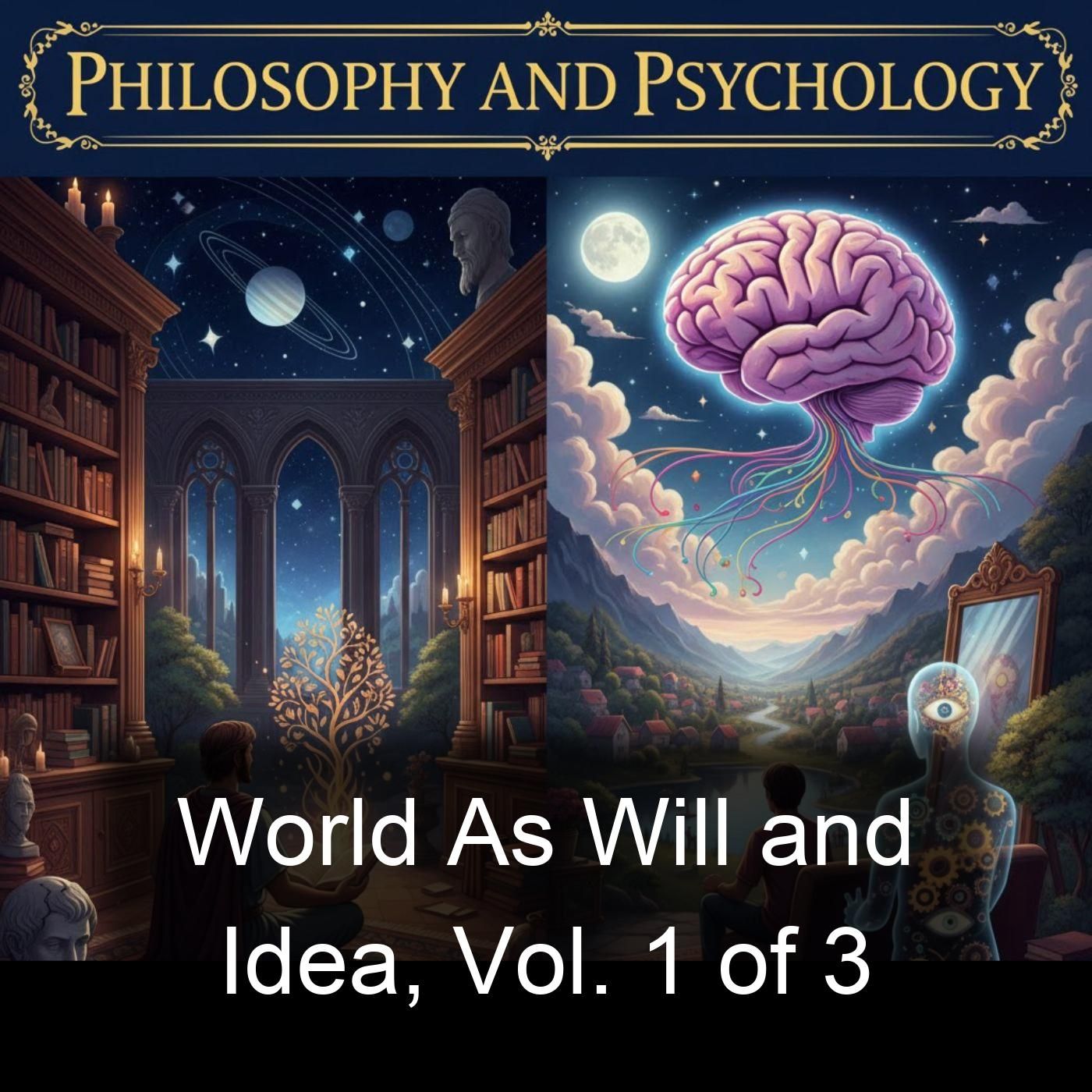
World As Will and Idea, Vol. 1 of 3
by Arthur Schopenhauer
In this profound exploration, Schopenhauer delves into his central thesis that beneath the reality we perceive lies an insatiable Will, eternally striving for satisfaction. Each human observer interacts with the world through this intrinsic Will, often blinded by the distractions of life and the superficial differences that obscure its essence. To truly grasp the underlying reality—the Thing-In-Itself—one must look beyond the principium individuationis, which is caught in the relentless cycle of cause and effect defined by the Principle of Sufficient Reason. Art serves as a powerful medium that reveals this essence, allowing us to transcend our individual desires and glimpse a shared reality. By recognizing the common Will that binds all humanity, we can cultivate an ego-less love grounded in our collective nature. While Schopenhauer confronts the fundamental suffering of existence, he is far more than a mere pessimist; his celebration of Art and Love offers a transformative vision tha
-
102
Poems-Elizabeth Stoddard
"Poems-Elizabeth Stoddard" presents a collection of evocative poetry that captures the essence of human experience through the lens of emotion and observation. Stoddard's work explores themes of love, nature, and the complexities of life, offering listeners a chance to reflect on their own journeys. The lyrical quality of her writing invites contemplation and resonates with the timeless struggles and joys that define our existence. As we navigate the modern world, her insights into the human condition remain profoundly relevant, reminding us of the enduring power of poetry to connect us across generations.
-
101
Selected Poems-Siegfried Sassoon
"Selected Poems-Siegfried Sassoon" presents a compelling collection of the poet's works, showcasing his profound exploration of the human experience through the lens of war, love, and loss. Sassoon's poignant verses resonate with themes of courage, vulnerability, and the search for meaning in tumultuous times, making his poetry enduringly relevant. His ability to articulate the complexities of emotion and the stark realities of conflict invites listeners to reflect on their own experiences and the world around them. This collection serves as a powerful reminder of the lasting impact of war and the universal quest for understanding and connection, echoing sentiments that continue to resonate today.
-
100
Five Years of My Life 1894-1899-Alfred Dreyfus
"Five Years of My Life 1894-1899" by Alfred Dreyfus offers a gripping firsthand account of the infamous Dreyfus Affair, which shook France and exposed deep societal divisions. This memoir reveals the profound personal and political turmoil Dreyfus faced as he was wrongfully convicted of treason, highlighting themes of injustice, anti-Semitism, and the struggle for truth. Hearing Dreyfus's story today resonates with ongoing discussions about prejudice and the importance of standing up against wrongful accusations. His unwavering spirit in the face of adversity serves as a timeless reminder of the fight for justice and human dignity, making this account both compelling and relevant.
-
99
Anonymous Story-Anton Chekhov
"Anonymous Story" by Anton Chekhov delves into the complexities of human nature and the often hidden aspects of life that shape our experiences. Chekhov's masterful storytelling invites listeners to reflect on the nuances of identity and the intricate tapestry of emotions that define our existence. The themes of anonymity and the search for meaning resonate deeply in today's world, where individuals often grapple with their own stories amidst societal expectations. This timeless narrative encourages introspection and empathy, making it a compelling listen for those seeking to understand the human condition and the silent struggles that connect us all. Chekhov's insights remain relevant, reminding us of the enduring power of storytelling.
-
98
Plea for Ragged Schools; or, Prevention Better than Cure-Thomas Guthrie
"Plea for Ragged Schools; or, Prevention Better than Cure" by Thomas Guthrie is a compelling argument for the establishment of ragged schools, emphasizing the importance of education as a preventive measure against poverty and societal decay. Guthrie passionately advocates for the care and upliftment of the underprivileged, making a case that investing in education can lead to a more equitable society. This work remains relevant today as it highlights the enduring themes of social responsibility and the transformative power of education, reminding us that proactive measures can create lasting change. Listening to Guthrie's insights offers a timeless perspective on the necessity of compassion and action in addressing societal challenges.
-
97
Battles for the Stars (Ed Reads Short Sci-fi, vol. III)-Various
"Battles for the Stars" is a captivating collection of short science fiction stories that delves into the timeless themes of conflict, exploration, and the human spirit's resilience in the face of the unknown. This volume showcases a variety of voices and perspectives, each contributing to a rich tapestry of imaginative narratives that challenge our understanding of what lies beyond our world. As listeners embark on these interstellar adventures, they will find echoes of contemporary struggles and aspirations, reminding us that the quest for knowledge and the fight for survival are as relevant today as they have ever been.
-
96
Introduction to the Birds of Pennsylvania-George Miksch Sutton
"Introduction to the Birds of Pennsylvania" by George Miksch Sutton offers a comprehensive exploration of the avian species found in Pennsylvania, showcasing the beauty and diversity of the state's birdlife. This insightful work serves as both a guide and a celebration of the natural world, inviting listeners to appreciate the intricate relationships between birds and their habitats. Its enduring themes of observation, appreciation of nature, and the importance of conservation resonate strongly today, reminding us of our connection to the environment and the vital role birds play in our ecosystems.
-
95
Celtic Twilight-William Butler Yeats
Celtic Twilight by William Butler Yeats invites listeners into a realm where the mystical and the everyday intertwine, capturing the essence of Irish folklore and spirituality. This collection reflects Yeats's deep appreciation for the rich tapestry of Celtic mythology, exploring themes of beauty, nature, and the supernatural that continue to resonate with audiences today. The lyrical quality of Yeats's prose not only enchants but also prompts reflection on the enduring power of myth and the human experience. Engaging with this work offers a timeless journey into the heart of cultural identity and the search for meaning in a world filled with wonder.
-
94
Brand-Henrik Ibsen
"Brand" by Henrik Ibsen is a powerful exploration of faith, morality, and the human condition, delving into the struggles of a man who seeks absolute truth and unwavering commitment to his ideals. As Brand confronts the complexities of life and the compromises that come with it, the themes of integrity and sacrifice resonate deeply, making this work timeless and relevant. Ibsen's incisive examination of individual conviction versus societal expectations invites listeners to reflect on their own beliefs and the cost of unwavering dedication. This audiobook offers a profound listening experience that encourages introspection and challenges the listener to consider the nature of their own convictions.
-
93
Sadhana, The Realisation of Life (Version 3)-Rabindranath Tagore
"Sadhana, The Realisation of Life" by Rabindranath Tagore invites listeners to explore the profound spiritual journey of self-discovery and the essence of existence. Tagore's reflections on the interconnectedness of life and the pursuit of true meaning resonate deeply, offering timeless insights into the human experience. As the world grapples with its complexities, the themes of inner awakening and the realization of one's purpose remain ever relevant. This work encourages a deeper understanding of our place in the universe, making it a compelling listen for anyone seeking wisdom and inspiration in today's fast-paced life. Embrace the enduring power of Tagore's words as they illuminate the path to self-realization.
-
92
Hundred Best English Poems-Various
"Hundred Best English Poems-Various" is a curated collection that showcases the richness and diversity of English poetry, featuring works from various poets across different eras. This anthology captures the essence of human experience through themes of love, nature, loss, and the quest for meaning, making it a timeless treasure for listeners. The beauty of language and the depth of emotion found in these poems resonate with audiences today, reminding us of our shared humanity and the power of expression. Engaging with these verses offers not only a moment of reflection but also an opportunity to connect with the thoughts and feelings that have shaped our culture throughout history.
-
91
Hermann and Dorothea-Johann Wolfgang von Goethe
"Hermann and Dorothea" by Johann Wolfgang von Goethe is a poignant exploration of love and the human experience set against the backdrop of societal change. This narrative captures the essence of personal devotion amidst the tumult of the world, making it a timeless reflection on the interplay between individual desires and communal responsibilities. Goethe's lyrical prose invites listeners to contemplate the enduring themes of love, duty, and the quest for meaning, which resonate just as powerfully today as they did in his time. Its rich characterizations and emotional depth make this work not only a cornerstone of German literature but also a universal story that speaks to the heart of what it means to be human.
-
90
Book of Monsters-David Fairchild, Marian Fairchild
"Book of Monsters" by David Fairchild and Marian Fairchild invites listeners into a captivating exploration of the mythical and the monstrous. This engaging narrative delves into the rich tapestry of folklore and the timeless tales that have shaped our understanding of fear and fascination. With themes that resonate through generations, the book encourages reflection on the nature of humanity and its relationship with the unknown. The enduring allure of monsters not only captivates the imagination but also serves as a mirror to our own fears and desires. Hearing this audiobook now offers a chance to reconnect with these age-old stories that continue to influence culture and art today.
-
89
Bay A Book of Poems-D. H. Lawrence
"Bay: A Book of Poems" by D. H. Lawrence is a collection that captures the essence of human emotion and the natural world through evocative verse. Lawrence's poetry delves into themes of love, nature, and the complexities of existence, making it a timeless exploration of the human condition. The vivid imagery and profound insights invite listeners to reflect on their own experiences and connections to the world around them. As relevant today as it was when first penned, this collection encourages a deeper appreciation for the beauty and intricacies of life, resonating with anyone seeking to understand their place within the larger tapestry of existence.
-
88
Audubon's Western Journal 1849-1850-John Woodhouse Audubon
Audubon's Western Journal 1849-1850 by John Woodhouse Audubon captures the essence of exploration and the natural world through the eyes of a dedicated naturalist. This journal offers a unique glimpse into Audubon's travels and observations as he navigates the breathtaking landscapes of the American West during a pivotal period in history. The themes of discovery, the appreciation of nature, and the pursuit of knowledge resonate powerfully today, reminding us of the importance of environmental stewardship and the beauty of the world around us. Audubon's vivid descriptions and passionate observations invite listeners to reflect on their own connection to nature and the ongoing journey of exploration that defines the human experience.
-
87
Ingersoll on ABRAHAM LINCOLN, from the Works of Robert G. Ingersoll, Volume 3, Lecture 3-Robert G. Ingersoll
Robert G. Ingersoll's "Ingersoll on ABRAHAM LINCOLN" offers a compelling lecture that delves into the life and legacy of one of America's most revered presidents. Ingersoll, known for his eloquent oratory and advocacy for reason and justice, presents a thoughtful examination of Lincoln's character, principles, and impact on the nation. This work remains relevant today as it touches on themes of leadership, integrity, and the enduring quest for equality and freedom. Listeners will find inspiration in Ingersoll's passionate tribute, which not only honors Lincoln's achievements but also serves as a reminder of the values that continue to shape our society.
-
86
Songs of Kabir-Kabir
"Songs of Kabir-Kabir" delves into the profound spiritual poetry of Kabir, a revered 15th-century mystic whose verses transcend cultural and religious boundaries. His work explores themes of love, devotion, and the search for truth, resonating deeply with seekers of wisdom across generations. The timeless nature of Kabir's messages invites listeners to reflect on their own beliefs and the essence of existence, making it a compelling experience for those yearning for deeper understanding in today's complex world. Engaging with Kabir's songs offers a unique opportunity to connect with universal truths that remain relevant, inspiring, and transformative.
-
85
Anne Severn and the Fieldings-May Sinclair
"Anne Severn and the Fieldings" by May Sinclair is a compelling exploration of the complexities of human relationships and the nuances of personal identity. This poignant narrative delves into the intricacies of love, societal expectations, and the quest for self-understanding, making it a timeless piece that resonates with listeners today. Sinclair's keen observations and rich character development invite reflection on the enduring themes of connection and individuality. As listeners engage with Anne's journey, they are reminded of the universal struggles that define the human experience, ensuring that this audiobook remains relevant and thought-provoking in contemporary discussions about relationships and self-discovery.
-
84
Poems 1817-John Keats
"Poems 1817" by John Keats showcases the early works of one of the most celebrated Romantic poets, capturing his profound exploration of beauty, nature, and human emotion. This collection offers listeners a chance to immerse themselves in Keats' lyrical language and vivid imagery, which continue to resonate with audiences today. The themes of love, mortality, and the quest for artistic expression remain timeless, inviting reflection on the human experience. Keats' ability to evoke deep feelings through his poetry makes this audiobook a compelling listen for anyone seeking inspiration and insight into the enduring power of words. Experience the essence of Romanticism through Keats' masterful verses that still inspire and move us.
-
83
Backwater (Pilgrimage, Vol. 2)-Dorothy Richardson
"Backwater," the second volume of Dorothy Richardson's "Pilgrimage," continues the exploration of inner consciousness and the complexities of human experience. Richardson's narrative delves into the subtleties of daily life, capturing the essence of personal growth and the intricacies of thought. This work remains relevant today as it invites listeners to reflect on their own journeys of self-discovery and the profound impact of seemingly mundane moments. With its lyrical prose and rich introspection, "Backwater" serves as a timeless reminder of the beauty found in the ordinary and the importance of understanding one's place in the world.
-
82
078 - Book IV The World As Will Second Aspect 71
In this profound exploration, Schopenhauer delves into his central thesis that beneath the reality we perceive lies an insatiable Will, eternally striving for satisfaction. Each human observer interacts with the world through this intrinsic Will, often blinded by the distractions of life and the superficial differences that obscure its essence. To truly grasp the underlying reality—the Thing-In-Itself—one must look beyond the principium individuationis, which is caught in the relentless cycle of cause and effect defined by the Principle of Sufficient Reason. Art serves as a powerful medium that reveals this essence, allowing us to transcend our individual desires and glimpse a shared reality. By recognizing the common Will that binds all humanity, we can cultivate an ego-less love grounded in our collective nature. While Schopenhauer confronts the fundamental suffering of existence, he is far more than a mere pessimist; his celebration of Art and Love offers a transformative vision that has profoundly influenced literary giants like Tolstoy. Ultimately, he advocates for the Way of Negation as a pathway to peace, suggesting that by silencing our Will and the myriad expressions of it in our lives, we can approach a state of ultimate tranquility akin to the annihilation espoused in the great Vedic philosophies of India, a tradition to which Schopenhauer acknowledges a deep indebtedness.
-
81
077 - Book IV The World As Will Second Aspect 70
In this profound exploration, Schopenhauer delves into his central thesis that beneath the reality we perceive lies an insatiable Will, eternally striving for satisfaction. Each human observer interacts with the world through this intrinsic Will, often blinded by the distractions of life and the superficial differences that obscure its essence. To truly grasp the underlying reality—the Thing-In-Itself—one must look beyond the principium individuationis, which is caught in the relentless cycle of cause and effect defined by the Principle of Sufficient Reason. Art serves as a powerful medium that reveals this essence, allowing us to transcend our individual desires and glimpse a shared reality. By recognizing the common Will that binds all humanity, we can cultivate an ego-less love grounded in our collective nature. While Schopenhauer confronts the fundamental suffering of existence, he is far more than a mere pessimist; his celebration of Art and Love offers a transformative vision that has profoundly influenced literary giants like Tolstoy. Ultimately, he advocates for the Way of Negation as a pathway to peace, suggesting that by silencing our Will and the myriad expressions of it in our lives, we can approach a state of ultimate tranquility akin to the annihilation espoused in the great Vedic philosophies of India, a tradition to which Schopenhauer acknowledges a deep indebtedness.
-
80
076 - Book IV The World As Will Second Aspect 69
In this profound exploration, Schopenhauer delves into his central thesis that beneath the reality we perceive lies an insatiable Will, eternally striving for satisfaction. Each human observer interacts with the world through this intrinsic Will, often blinded by the distractions of life and the superficial differences that obscure its essence. To truly grasp the underlying reality—the Thing-In-Itself—one must look beyond the principium individuationis, which is caught in the relentless cycle of cause and effect defined by the Principle of Sufficient Reason. Art serves as a powerful medium that reveals this essence, allowing us to transcend our individual desires and glimpse a shared reality. By recognizing the common Will that binds all humanity, we can cultivate an ego-less love grounded in our collective nature. While Schopenhauer confronts the fundamental suffering of existence, he is far more than a mere pessimist; his celebration of Art and Love offers a transformative vision that has profoundly influenced literary giants like Tolstoy. Ultimately, he advocates for the Way of Negation as a pathway to peace, suggesting that by silencing our Will and the myriad expressions of it in our lives, we can approach a state of ultimate tranquility akin to the annihilation espoused in the great Vedic philosophies of India, a tradition to which Schopenhauer acknowledges a deep indebtedness.
-
79
075 - Book IV The World As Will Second Aspect 68d
In this profound exploration, Schopenhauer delves into his central thesis that beneath the reality we perceive lies an insatiable Will, eternally striving for satisfaction. Each human observer interacts with the world through this intrinsic Will, often blinded by the distractions of life and the superficial differences that obscure its essence. To truly grasp the underlying reality—the Thing-In-Itself—one must look beyond the principium individuationis, which is caught in the relentless cycle of cause and effect defined by the Principle of Sufficient Reason. Art serves as a powerful medium that reveals this essence, allowing us to transcend our individual desires and glimpse a shared reality. By recognizing the common Will that binds all humanity, we can cultivate an ego-less love grounded in our collective nature. While Schopenhauer confronts the fundamental suffering of existence, he is far more than a mere pessimist; his celebration of Art and Love offers a transformative vision that has profoundly influenced literary giants like Tolstoy. Ultimately, he advocates for the Way of Negation as a pathway to peace, suggesting that by silencing our Will and the myriad expressions of it in our lives, we can approach a state of ultimate tranquility akin to the annihilation espoused in the great Vedic philosophies of India, a tradition to which Schopenhauer acknowledges a deep indebtedness.
-
78
074 - Book IV The World As Will Second Aspect 68c
In this profound exploration, Schopenhauer delves into his central thesis that beneath the reality we perceive lies an insatiable Will, eternally striving for satisfaction. Each human observer interacts with the world through this intrinsic Will, often blinded by the distractions of life and the superficial differences that obscure its essence. To truly grasp the underlying reality—the Thing-In-Itself—one must look beyond the principium individuationis, which is caught in the relentless cycle of cause and effect defined by the Principle of Sufficient Reason. Art serves as a powerful medium that reveals this essence, allowing us to transcend our individual desires and glimpse a shared reality. By recognizing the common Will that binds all humanity, we can cultivate an ego-less love grounded in our collective nature. While Schopenhauer confronts the fundamental suffering of existence, he is far more than a mere pessimist; his celebration of Art and Love offers a transformative vision that has profoundly influenced literary giants like Tolstoy. Ultimately, he advocates for the Way of Negation as a pathway to peace, suggesting that by silencing our Will and the myriad expressions of it in our lives, we can approach a state of ultimate tranquility akin to the annihilation espoused in the great Vedic philosophies of India, a tradition to which Schopenhauer acknowledges a deep indebtedness.
-
77
073 - Book IV The World As Will Second Aspect 68b
In this profound exploration, Schopenhauer delves into his central thesis that beneath the reality we perceive lies an insatiable Will, eternally striving for satisfaction. Each human observer interacts with the world through this intrinsic Will, often blinded by the distractions of life and the superficial differences that obscure its essence. To truly grasp the underlying reality—the Thing-In-Itself—one must look beyond the principium individuationis, which is caught in the relentless cycle of cause and effect defined by the Principle of Sufficient Reason. Art serves as a powerful medium that reveals this essence, allowing us to transcend our individual desires and glimpse a shared reality. By recognizing the common Will that binds all humanity, we can cultivate an ego-less love grounded in our collective nature. While Schopenhauer confronts the fundamental suffering of existence, he is far more than a mere pessimist; his celebration of Art and Love offers a transformative vision that has profoundly influenced literary giants like Tolstoy. Ultimately, he advocates for the Way of Negation as a pathway to peace, suggesting that by silencing our Will and the myriad expressions of it in our lives, we can approach a state of ultimate tranquility akin to the annihilation espoused in the great Vedic philosophies of India, a tradition to which Schopenhauer acknowledges a deep indebtedness.
-
76
072 - Book IV The World As Will Second Aspect 68a
In this profound exploration, Schopenhauer delves into his central thesis that beneath the reality we perceive lies an insatiable Will, eternally striving for satisfaction. Each human observer interacts with the world through this intrinsic Will, often blinded by the distractions of life and the superficial differences that obscure its essence. To truly grasp the underlying reality—the Thing-In-Itself—one must look beyond the principium individuationis, which is caught in the relentless cycle of cause and effect defined by the Principle of Sufficient Reason. Art serves as a powerful medium that reveals this essence, allowing us to transcend our individual desires and glimpse a shared reality. By recognizing the common Will that binds all humanity, we can cultivate an ego-less love grounded in our collective nature. While Schopenhauer confronts the fundamental suffering of existence, he is far more than a mere pessimist; his celebration of Art and Love offers a transformative vision that has profoundly influenced literary giants like Tolstoy. Ultimately, he advocates for the Way of Negation as a pathway to peace, suggesting that by silencing our Will and the myriad expressions of it in our lives, we can approach a state of ultimate tranquility akin to the annihilation espoused in the great Vedic philosophies of India, a tradition to which Schopenhauer acknowledges a deep indebtedness.
-
75
071 - Book IV The World As Will Second Aspect 67
In this profound exploration, Schopenhauer delves into his central thesis that beneath the reality we perceive lies an insatiable Will, eternally striving for satisfaction. Each human observer interacts with the world through this intrinsic Will, often blinded by the distractions of life and the superficial differences that obscure its essence. To truly grasp the underlying reality—the Thing-In-Itself—one must look beyond the principium individuationis, which is caught in the relentless cycle of cause and effect defined by the Principle of Sufficient Reason. Art serves as a powerful medium that reveals this essence, allowing us to transcend our individual desires and glimpse a shared reality. By recognizing the common Will that binds all humanity, we can cultivate an ego-less love grounded in our collective nature. While Schopenhauer confronts the fundamental suffering of existence, he is far more than a mere pessimist; his celebration of Art and Love offers a transformative vision that has profoundly influenced literary giants like Tolstoy. Ultimately, he advocates for the Way of Negation as a pathway to peace, suggesting that by silencing our Will and the myriad expressions of it in our lives, we can approach a state of ultimate tranquility akin to the annihilation espoused in the great Vedic philosophies of India, a tradition to which Schopenhauer acknowledges a deep indebtedness.
-
74
070 - Book IV The World As Will Second Aspect 66
In this profound exploration, Schopenhauer delves into his central thesis that beneath the reality we perceive lies an insatiable Will, eternally striving for satisfaction. Each human observer interacts with the world through this intrinsic Will, often blinded by the distractions of life and the superficial differences that obscure its essence. To truly grasp the underlying reality—the Thing-In-Itself—one must look beyond the principium individuationis, which is caught in the relentless cycle of cause and effect defined by the Principle of Sufficient Reason. Art serves as a powerful medium that reveals this essence, allowing us to transcend our individual desires and glimpse a shared reality. By recognizing the common Will that binds all humanity, we can cultivate an ego-less love grounded in our collective nature. While Schopenhauer confronts the fundamental suffering of existence, he is far more than a mere pessimist; his celebration of Art and Love offers a transformative vision that has profoundly influenced literary giants like Tolstoy. Ultimately, he advocates for the Way of Negation as a pathway to peace, suggesting that by silencing our Will and the myriad expressions of it in our lives, we can approach a state of ultimate tranquility akin to the annihilation espoused in the great Vedic philosophies of India, a tradition to which Schopenhauer acknowledges a deep indebtedness.
-
73
069 - Book IV The World As Will Second Aspect 65
In this profound exploration, Schopenhauer delves into his central thesis that beneath the reality we perceive lies an insatiable Will, eternally striving for satisfaction. Each human observer interacts with the world through this intrinsic Will, often blinded by the distractions of life and the superficial differences that obscure its essence. To truly grasp the underlying reality—the Thing-In-Itself—one must look beyond the principium individuationis, which is caught in the relentless cycle of cause and effect defined by the Principle of Sufficient Reason. Art serves as a powerful medium that reveals this essence, allowing us to transcend our individual desires and glimpse a shared reality. By recognizing the common Will that binds all humanity, we can cultivate an ego-less love grounded in our collective nature. While Schopenhauer confronts the fundamental suffering of existence, he is far more than a mere pessimist; his celebration of Art and Love offers a transformative vision that has profoundly influenced literary giants like Tolstoy. Ultimately, he advocates for the Way of Negation as a pathway to peace, suggesting that by silencing our Will and the myriad expressions of it in our lives, we can approach a state of ultimate tranquility akin to the annihilation espoused in the great Vedic philosophies of India, a tradition to which Schopenhauer acknowledges a deep indebtedness.
-
72
068 - Book IV The World As Will Second Aspect 64
In this profound exploration, Schopenhauer delves into his central thesis that beneath the reality we perceive lies an insatiable Will, eternally striving for satisfaction. Each human observer interacts with the world through this intrinsic Will, often blinded by the distractions of life and the superficial differences that obscure its essence. To truly grasp the underlying reality—the Thing-In-Itself—one must look beyond the principium individuationis, which is caught in the relentless cycle of cause and effect defined by the Principle of Sufficient Reason. Art serves as a powerful medium that reveals this essence, allowing us to transcend our individual desires and glimpse a shared reality. By recognizing the common Will that binds all humanity, we can cultivate an ego-less love grounded in our collective nature. While Schopenhauer confronts the fundamental suffering of existence, he is far more than a mere pessimist; his celebration of Art and Love offers a transformative vision that has profoundly influenced literary giants like Tolstoy. Ultimately, he advocates for the Way of Negation as a pathway to peace, suggesting that by silencing our Will and the myriad expressions of it in our lives, we can approach a state of ultimate tranquility akin to the annihilation espoused in the great Vedic philosophies of India, a tradition to which Schopenhauer acknowledges a deep indebtedness.
-
71
067 - Book IV The World As Will Second Aspect 63
In this profound exploration, Schopenhauer delves into his central thesis that beneath the reality we perceive lies an insatiable Will, eternally striving for satisfaction. Each human observer interacts with the world through this intrinsic Will, often blinded by the distractions of life and the superficial differences that obscure its essence. To truly grasp the underlying reality—the Thing-In-Itself—one must look beyond the principium individuationis, which is caught in the relentless cycle of cause and effect defined by the Principle of Sufficient Reason. Art serves as a powerful medium that reveals this essence, allowing us to transcend our individual desires and glimpse a shared reality. By recognizing the common Will that binds all humanity, we can cultivate an ego-less love grounded in our collective nature. While Schopenhauer confronts the fundamental suffering of existence, he is far more than a mere pessimist; his celebration of Art and Love offers a transformative vision that has profoundly influenced literary giants like Tolstoy. Ultimately, he advocates for the Way of Negation as a pathway to peace, suggesting that by silencing our Will and the myriad expressions of it in our lives, we can approach a state of ultimate tranquility akin to the annihilation espoused in the great Vedic philosophies of India, a tradition to which Schopenhauer acknowledges a deep indebtedness.
-
70
066 - Book IV The World As Will Second Aspect 62c
In this profound exploration, Schopenhauer delves into his central thesis that beneath the reality we perceive lies an insatiable Will, eternally striving for satisfaction. Each human observer interacts with the world through this intrinsic Will, often blinded by the distractions of life and the superficial differences that obscure its essence. To truly grasp the underlying reality—the Thing-In-Itself—one must look beyond the principium individuationis, which is caught in the relentless cycle of cause and effect defined by the Principle of Sufficient Reason. Art serves as a powerful medium that reveals this essence, allowing us to transcend our individual desires and glimpse a shared reality. By recognizing the common Will that binds all humanity, we can cultivate an ego-less love grounded in our collective nature. While Schopenhauer confronts the fundamental suffering of existence, he is far more than a mere pessimist; his celebration of Art and Love offers a transformative vision that has profoundly influenced literary giants like Tolstoy. Ultimately, he advocates for the Way of Negation as a pathway to peace, suggesting that by silencing our Will and the myriad expressions of it in our lives, we can approach a state of ultimate tranquility akin to the annihilation espoused in the great Vedic philosophies of India, a tradition to which Schopenhauer acknowledges a deep indebtedness.
-
69
065 - Book IV The World As Will Second Aspect 62b
In this profound exploration, Schopenhauer delves into his central thesis that beneath the reality we perceive lies an insatiable Will, eternally striving for satisfaction. Each human observer interacts with the world through this intrinsic Will, often blinded by the distractions of life and the superficial differences that obscure its essence. To truly grasp the underlying reality—the Thing-In-Itself—one must look beyond the principium individuationis, which is caught in the relentless cycle of cause and effect defined by the Principle of Sufficient Reason. Art serves as a powerful medium that reveals this essence, allowing us to transcend our individual desires and glimpse a shared reality. By recognizing the common Will that binds all humanity, we can cultivate an ego-less love grounded in our collective nature. While Schopenhauer confronts the fundamental suffering of existence, he is far more than a mere pessimist; his celebration of Art and Love offers a transformative vision that has profoundly influenced literary giants like Tolstoy. Ultimately, he advocates for the Way of Negation as a pathway to peace, suggesting that by silencing our Will and the myriad expressions of it in our lives, we can approach a state of ultimate tranquility akin to the annihilation espoused in the great Vedic philosophies of India, a tradition to which Schopenhauer acknowledges a deep indebtedness.
-
68
064 - Book IV The World As Will Second Aspect 62a
In this profound exploration, Schopenhauer delves into his central thesis that beneath the reality we perceive lies an insatiable Will, eternally striving for satisfaction. Each human observer interacts with the world through this intrinsic Will, often blinded by the distractions of life and the superficial differences that obscure its essence. To truly grasp the underlying reality—the Thing-In-Itself—one must look beyond the principium individuationis, which is caught in the relentless cycle of cause and effect defined by the Principle of Sufficient Reason. Art serves as a powerful medium that reveals this essence, allowing us to transcend our individual desires and glimpse a shared reality. By recognizing the common Will that binds all humanity, we can cultivate an ego-less love grounded in our collective nature. While Schopenhauer confronts the fundamental suffering of existence, he is far more than a mere pessimist; his celebration of Art and Love offers a transformative vision that has profoundly influenced literary giants like Tolstoy. Ultimately, he advocates for the Way of Negation as a pathway to peace, suggesting that by silencing our Will and the myriad expressions of it in our lives, we can approach a state of ultimate tranquility akin to the annihilation espoused in the great Vedic philosophies of India, a tradition to which Schopenhauer acknowledges a deep indebtedness.
-
67
063 - Book IV The World As Will Second Aspect 61
In this profound exploration, Schopenhauer delves into his central thesis that beneath the reality we perceive lies an insatiable Will, eternally striving for satisfaction. Each human observer interacts with the world through this intrinsic Will, often blinded by the distractions of life and the superficial differences that obscure its essence. To truly grasp the underlying reality—the Thing-In-Itself—one must look beyond the principium individuationis, which is caught in the relentless cycle of cause and effect defined by the Principle of Sufficient Reason. Art serves as a powerful medium that reveals this essence, allowing us to transcend our individual desires and glimpse a shared reality. By recognizing the common Will that binds all humanity, we can cultivate an ego-less love grounded in our collective nature. While Schopenhauer confronts the fundamental suffering of existence, he is far more than a mere pessimist; his celebration of Art and Love offers a transformative vision that has profoundly influenced literary giants like Tolstoy. Ultimately, he advocates for the Way of Negation as a pathway to peace, suggesting that by silencing our Will and the myriad expressions of it in our lives, we can approach a state of ultimate tranquility akin to the annihilation espoused in the great Vedic philosophies of India, a tradition to which Schopenhauer acknowledges a deep indebtedness.
-
66
062 - Book IV The World As Will Second Aspect 60
In this profound exploration, Schopenhauer delves into his central thesis that beneath the reality we perceive lies an insatiable Will, eternally striving for satisfaction. Each human observer interacts with the world through this intrinsic Will, often blinded by the distractions of life and the superficial differences that obscure its essence. To truly grasp the underlying reality—the Thing-In-Itself—one must look beyond the principium individuationis, which is caught in the relentless cycle of cause and effect defined by the Principle of Sufficient Reason. Art serves as a powerful medium that reveals this essence, allowing us to transcend our individual desires and glimpse a shared reality. By recognizing the common Will that binds all humanity, we can cultivate an ego-less love grounded in our collective nature. While Schopenhauer confronts the fundamental suffering of existence, he is far more than a mere pessimist; his celebration of Art and Love offers a transformative vision that has profoundly influenced literary giants like Tolstoy. Ultimately, he advocates for the Way of Negation as a pathway to peace, suggesting that by silencing our Will and the myriad expressions of it in our lives, we can approach a state of ultimate tranquility akin to the annihilation espoused in the great Vedic philosophies of India, a tradition to which Schopenhauer acknowledges a deep indebtedness.
-
65
061 - Book IV The World As Will Second Aspect 59
In this profound exploration, Schopenhauer delves into his central thesis that beneath the reality we perceive lies an insatiable Will, eternally striving for satisfaction. Each human observer interacts with the world through this intrinsic Will, often blinded by the distractions of life and the superficial differences that obscure its essence. To truly grasp the underlying reality—the Thing-In-Itself—one must look beyond the principium individuationis, which is caught in the relentless cycle of cause and effect defined by the Principle of Sufficient Reason. Art serves as a powerful medium that reveals this essence, allowing us to transcend our individual desires and glimpse a shared reality. By recognizing the common Will that binds all humanity, we can cultivate an ego-less love grounded in our collective nature. While Schopenhauer confronts the fundamental suffering of existence, he is far more than a mere pessimist; his celebration of Art and Love offers a transformative vision that has profoundly influenced literary giants like Tolstoy. Ultimately, he advocates for the Way of Negation as a pathway to peace, suggesting that by silencing our Will and the myriad expressions of it in our lives, we can approach a state of ultimate tranquility akin to the annihilation espoused in the great Vedic philosophies of India, a tradition to which Schopenhauer acknowledges a deep indebtedness.
-
64
060 - Book IV The World As Will Second Aspect 58
In this profound exploration, Schopenhauer delves into his central thesis that beneath the reality we perceive lies an insatiable Will, eternally striving for satisfaction. Each human observer interacts with the world through this intrinsic Will, often blinded by the distractions of life and the superficial differences that obscure its essence. To truly grasp the underlying reality—the Thing-In-Itself—one must look beyond the principium individuationis, which is caught in the relentless cycle of cause and effect defined by the Principle of Sufficient Reason. Art serves as a powerful medium that reveals this essence, allowing us to transcend our individual desires and glimpse a shared reality. By recognizing the common Will that binds all humanity, we can cultivate an ego-less love grounded in our collective nature. While Schopenhauer confronts the fundamental suffering of existence, he is far more than a mere pessimist; his celebration of Art and Love offers a transformative vision that has profoundly influenced literary giants like Tolstoy. Ultimately, he advocates for the Way of Negation as a pathway to peace, suggesting that by silencing our Will and the myriad expressions of it in our lives, we can approach a state of ultimate tranquility akin to the annihilation espoused in the great Vedic philosophies of India, a tradition to which Schopenhauer acknowledges a deep indebtedness.
-
63
059 - Book IV The World As Will Second Aspect 57
In this profound exploration, Schopenhauer delves into his central thesis that beneath the reality we perceive lies an insatiable Will, eternally striving for satisfaction. Each human observer interacts with the world through this intrinsic Will, often blinded by the distractions of life and the superficial differences that obscure its essence. To truly grasp the underlying reality—the Thing-In-Itself—one must look beyond the principium individuationis, which is caught in the relentless cycle of cause and effect defined by the Principle of Sufficient Reason. Art serves as a powerful medium that reveals this essence, allowing us to transcend our individual desires and glimpse a shared reality. By recognizing the common Will that binds all humanity, we can cultivate an ego-less love grounded in our collective nature. While Schopenhauer confronts the fundamental suffering of existence, he is far more than a mere pessimist; his celebration of Art and Love offers a transformative vision that has profoundly influenced literary giants like Tolstoy. Ultimately, he advocates for the Way of Negation as a pathway to peace, suggesting that by silencing our Will and the myriad expressions of it in our lives, we can approach a state of ultimate tranquility akin to the annihilation espoused in the great Vedic philosophies of India, a tradition to which Schopenhauer acknowledges a deep indebtedness.
-
62
058 - Book IV The World As Will Second Aspect 56
In this profound exploration, Schopenhauer delves into his central thesis that beneath the reality we perceive lies an insatiable Will, eternally striving for satisfaction. Each human observer interacts with the world through this intrinsic Will, often blinded by the distractions of life and the superficial differences that obscure its essence. To truly grasp the underlying reality—the Thing-In-Itself—one must look beyond the principium individuationis, which is caught in the relentless cycle of cause and effect defined by the Principle of Sufficient Reason. Art serves as a powerful medium that reveals this essence, allowing us to transcend our individual desires and glimpse a shared reality. By recognizing the common Will that binds all humanity, we can cultivate an ego-less love grounded in our collective nature. While Schopenhauer confronts the fundamental suffering of existence, he is far more than a mere pessimist; his celebration of Art and Love offers a transformative vision that has profoundly influenced literary giants like Tolstoy. Ultimately, he advocates for the Way of Negation as a pathway to peace, suggesting that by silencing our Will and the myriad expressions of it in our lives, we can approach a state of ultimate tranquility akin to the annihilation espoused in the great Vedic philosophies of India, a tradition to which Schopenhauer acknowledges a deep indebtedness.
-
61
057 - Book IV The World As Will Second Aspect 55c
In this profound exploration, Schopenhauer delves into his central thesis that beneath the reality we perceive lies an insatiable Will, eternally striving for satisfaction. Each human observer interacts with the world through this intrinsic Will, often blinded by the distractions of life and the superficial differences that obscure its essence. To truly grasp the underlying reality—the Thing-In-Itself—one must look beyond the principium individuationis, which is caught in the relentless cycle of cause and effect defined by the Principle of Sufficient Reason. Art serves as a powerful medium that reveals this essence, allowing us to transcend our individual desires and glimpse a shared reality. By recognizing the common Will that binds all humanity, we can cultivate an ego-less love grounded in our collective nature. While Schopenhauer confronts the fundamental suffering of existence, he is far more than a mere pessimist; his celebration of Art and Love offers a transformative vision that has profoundly influenced literary giants like Tolstoy. Ultimately, he advocates for the Way of Negation as a pathway to peace, suggesting that by silencing our Will and the myriad expressions of it in our lives, we can approach a state of ultimate tranquility akin to the annihilation espoused in the great Vedic philosophies of India, a tradition to which Schopenhauer acknowledges a deep indebtedness.
-
60
056 - Book IV The World As Will Second Aspect 55b
In this profound exploration, Schopenhauer delves into his central thesis that beneath the reality we perceive lies an insatiable Will, eternally striving for satisfaction. Each human observer interacts with the world through this intrinsic Will, often blinded by the distractions of life and the superficial differences that obscure its essence. To truly grasp the underlying reality—the Thing-In-Itself—one must look beyond the principium individuationis, which is caught in the relentless cycle of cause and effect defined by the Principle of Sufficient Reason. Art serves as a powerful medium that reveals this essence, allowing us to transcend our individual desires and glimpse a shared reality. By recognizing the common Will that binds all humanity, we can cultivate an ego-less love grounded in our collective nature. While Schopenhauer confronts the fundamental suffering of existence, he is far more than a mere pessimist; his celebration of Art and Love offers a transformative vision that has profoundly influenced literary giants like Tolstoy. Ultimately, he advocates for the Way of Negation as a pathway to peace, suggesting that by silencing our Will and the myriad expressions of it in our lives, we can approach a state of ultimate tranquility akin to the annihilation espoused in the great Vedic philosophies of India, a tradition to which Schopenhauer acknowledges a deep indebtedness.
-
59
055 - Book IV The World As Will Second Aspect 55a
In this profound exploration, Schopenhauer delves into his central thesis that beneath the reality we perceive lies an insatiable Will, eternally striving for satisfaction. Each human observer interacts with the world through this intrinsic Will, often blinded by the distractions of life and the superficial differences that obscure its essence. To truly grasp the underlying reality—the Thing-In-Itself—one must look beyond the principium individuationis, which is caught in the relentless cycle of cause and effect defined by the Principle of Sufficient Reason. Art serves as a powerful medium that reveals this essence, allowing us to transcend our individual desires and glimpse a shared reality. By recognizing the common Will that binds all humanity, we can cultivate an ego-less love grounded in our collective nature. While Schopenhauer confronts the fundamental suffering of existence, he is far more than a mere pessimist; his celebration of Art and Love offers a transformative vision that has profoundly influenced literary giants like Tolstoy. Ultimately, he advocates for the Way of Negation as a pathway to peace, suggesting that by silencing our Will and the myriad expressions of it in our lives, we can approach a state of ultimate tranquility akin to the annihilation espoused in the great Vedic philosophies of India, a tradition to which Schopenhauer acknowledges a deep indebtedness.
-
58
054 - Book IV The World As Will Second Aspect 54
In this profound exploration, Schopenhauer delves into his central thesis that beneath the reality we perceive lies an insatiable Will, eternally striving for satisfaction. Each human observer interacts with the world through this intrinsic Will, often blinded by the distractions of life and the superficial differences that obscure its essence. To truly grasp the underlying reality—the Thing-In-Itself—one must look beyond the principium individuationis, which is caught in the relentless cycle of cause and effect defined by the Principle of Sufficient Reason. Art serves as a powerful medium that reveals this essence, allowing us to transcend our individual desires and glimpse a shared reality. By recognizing the common Will that binds all humanity, we can cultivate an ego-less love grounded in our collective nature. While Schopenhauer confronts the fundamental suffering of existence, he is far more than a mere pessimist; his celebration of Art and Love offers a transformative vision that has profoundly influenced literary giants like Tolstoy. Ultimately, he advocates for the Way of Negation as a pathway to peace, suggesting that by silencing our Will and the myriad expressions of it in our lives, we can approach a state of ultimate tranquility akin to the annihilation espoused in the great Vedic philosophies of India, a tradition to which Schopenhauer acknowledges a deep indebtedness.
-
57
053 - Book IV The World As Will Second Aspect 53
In this profound exploration, Schopenhauer delves into his central thesis that beneath the reality we perceive lies an insatiable Will, eternally striving for satisfaction. Each human observer interacts with the world through this intrinsic Will, often blinded by the distractions of life and the superficial differences that obscure its essence. To truly grasp the underlying reality—the Thing-In-Itself—one must look beyond the principium individuationis, which is caught in the relentless cycle of cause and effect defined by the Principle of Sufficient Reason. Art serves as a powerful medium that reveals this essence, allowing us to transcend our individual desires and glimpse a shared reality. By recognizing the common Will that binds all humanity, we can cultivate an ego-less love grounded in our collective nature. While Schopenhauer confronts the fundamental suffering of existence, he is far more than a mere pessimist; his celebration of Art and Love offers a transformative vision that has profoundly influenced literary giants like Tolstoy. Ultimately, he advocates for the Way of Negation as a pathway to peace, suggesting that by silencing our Will and the myriad expressions of it in our lives, we can approach a state of ultimate tranquility akin to the annihilation espoused in the great Vedic philosophies of India, a tradition to which Schopenhauer acknowledges a deep indebtedness.
-
56
052 - Book III The World As Idea Second Aspect 52
In this profound exploration, Schopenhauer delves into his central thesis that beneath the reality we perceive lies an insatiable Will, eternally striving for satisfaction. Each human observer interacts with the world through this intrinsic Will, often blinded by the distractions of life and the superficial differences that obscure its essence. To truly grasp the underlying reality—the Thing-In-Itself—one must look beyond the principium individuationis, which is caught in the relentless cycle of cause and effect defined by the Principle of Sufficient Reason. Art serves as a powerful medium that reveals this essence, allowing us to transcend our individual desires and glimpse a shared reality. By recognizing the common Will that binds all humanity, we can cultivate an ego-less love grounded in our collective nature. While Schopenhauer confronts the fundamental suffering of existence, he is far more than a mere pessimist; his celebration of Art and Love offers a transformative vision that has profoundly influenced literary giants like Tolstoy. Ultimately, he advocates for the Way of Negation as a pathway to peace, suggesting that by silencing our Will and the myriad expressions of it in our lives, we can approach a state of ultimate tranquility akin to the annihilation espoused in the great Vedic philosophies of India, a tradition to which Schopenhauer acknowledges a deep indebtedness.
-
55
051 - Book III The World As Idea Second Aspect 51
In this profound exploration, Schopenhauer delves into his central thesis that beneath the reality we perceive lies an insatiable Will, eternally striving for satisfaction. Each human observer interacts with the world through this intrinsic Will, often blinded by the distractions of life and the superficial differences that obscure its essence. To truly grasp the underlying reality—the Thing-In-Itself—one must look beyond the principium individuationis, which is caught in the relentless cycle of cause and effect defined by the Principle of Sufficient Reason. Art serves as a powerful medium that reveals this essence, allowing us to transcend our individual desires and glimpse a shared reality. By recognizing the common Will that binds all humanity, we can cultivate an ego-less love grounded in our collective nature. While Schopenhauer confronts the fundamental suffering of existence, he is far more than a mere pessimist; his celebration of Art and Love offers a transformative vision that has profoundly influenced literary giants like Tolstoy. Ultimately, he advocates for the Way of Negation as a pathway to peace, suggesting that by silencing our Will and the myriad expressions of it in our lives, we can approach a state of ultimate tranquility akin to the annihilation espoused in the great Vedic philosophies of India, a tradition to which Schopenhauer acknowledges a deep indebtedness.
-
54
050 - Book III The World As Idea Second Aspect 50
In this profound exploration, Schopenhauer delves into his central thesis that beneath the reality we perceive lies an insatiable Will, eternally striving for satisfaction. Each human observer interacts with the world through this intrinsic Will, often blinded by the distractions of life and the superficial differences that obscure its essence. To truly grasp the underlying reality—the Thing-In-Itself—one must look beyond the principium individuationis, which is caught in the relentless cycle of cause and effect defined by the Principle of Sufficient Reason. Art serves as a powerful medium that reveals this essence, allowing us to transcend our individual desires and glimpse a shared reality. By recognizing the common Will that binds all humanity, we can cultivate an ego-less love grounded in our collective nature. While Schopenhauer confronts the fundamental suffering of existence, he is far more than a mere pessimist; his celebration of Art and Love offers a transformative vision that has profoundly influenced literary giants like Tolstoy. Ultimately, he advocates for the Way of Negation as a pathway to peace, suggesting that by silencing our Will and the myriad expressions of it in our lives, we can approach a state of ultimate tranquility akin to the annihilation espoused in the great Vedic philosophies of India, a tradition to which Schopenhauer acknowledges a deep indebtedness.
-
53
049 - Book III The World As Idea Second Aspect 49
In this profound exploration, Schopenhauer delves into his central thesis that beneath the reality we perceive lies an insatiable Will, eternally striving for satisfaction. Each human observer interacts with the world through this intrinsic Will, often blinded by the distractions of life and the superficial differences that obscure its essence. To truly grasp the underlying reality—the Thing-In-Itself—one must look beyond the principium individuationis, which is caught in the relentless cycle of cause and effect defined by the Principle of Sufficient Reason. Art serves as a powerful medium that reveals this essence, allowing us to transcend our individual desires and glimpse a shared reality. By recognizing the common Will that binds all humanity, we can cultivate an ego-less love grounded in our collective nature. While Schopenhauer confronts the fundamental suffering of existence, he is far more than a mere pessimist; his celebration of Art and Love offers a transformative vision that has profoundly influenced literary giants like Tolstoy. Ultimately, he advocates for the Way of Negation as a pathway to peace, suggesting that by silencing our Will and the myriad expressions of it in our lives, we can approach a state of ultimate tranquility akin to the annihilation espoused in the great Vedic philosophies of India, a tradition to which Schopenhauer acknowledges a deep indebtedness.
We're indexing this podcast's transcripts for the first time — this can take a minute or two. We'll show results as soon as they're ready.
No matches for "" in this podcast's transcripts.
No topics indexed yet for this podcast.
Loading reviews...
ABOUT THIS SHOW
In this profound exploration, Schopenhauer delves into his central thesis that beneath the reality we perceive lies an insatiable Will, eternally striving for satisfaction. Each human observer interacts with the world through this intrinsic Will, often blinded by the distractions of life and the superficial differences that obscure its essence. To truly grasp the underlying reality—the Thing-In-Itself—one must look beyond the principium individuationis, which is caught in the relentless cycle of cause and effect defined by the Principle of Sufficient Reason. Art serves as a powerful medium that reveals this essence, allowing us to transcend our individual desires and glimpse a shared reality. By recognizing the common Will that binds all humanity, we can cultivate an ego-less love grounded in our collective nature. While Schopenhauer confronts the fundamental suffering of existence, he is far more than a mere pessimist; his celebration of Art and Love offers a transformative vision tha
HOSTED BY
Arthur Schopenhauer
CATEGORIES
Loading similar podcasts...
Frequently Asked Questions
How many episodes does World As Will and Idea, Vol. 1 of 3 have?
World As Will and Idea, Vol. 1 of 3 currently has 50 episodes available on PodParley. New episodes are automatically indexed when they're published to the podcast feed.
What is World As Will and Idea, Vol. 1 of 3 about?
In this profound exploration, Schopenhauer delves into his central thesis that beneath the reality we perceive lies an insatiable Will, eternally striving for satisfaction. Each human observer interacts with the world through this intrinsic Will, often blinded by the distractions of life and the...
How often does World As Will and Idea, Vol. 1 of 3 release new episodes?
World As Will and Idea, Vol. 1 of 3 has 50 episodes. Check the episode list to see recent publication dates and frequency.
Where can I listen to World As Will and Idea, Vol. 1 of 3?
You can listen to World As Will and Idea, Vol. 1 of 3 on PodParley by clicking any episode. We provide an embedded audio player for direct listening, and you can also subscribe via your preferred podcast app using the RSS feed.
Who hosts World As Will and Idea, Vol. 1 of 3?
World As Will and Idea, Vol. 1 of 3 is created and hosted by Arthur Schopenhauer.
URL copied to clipboard!