
PODCAST · technology
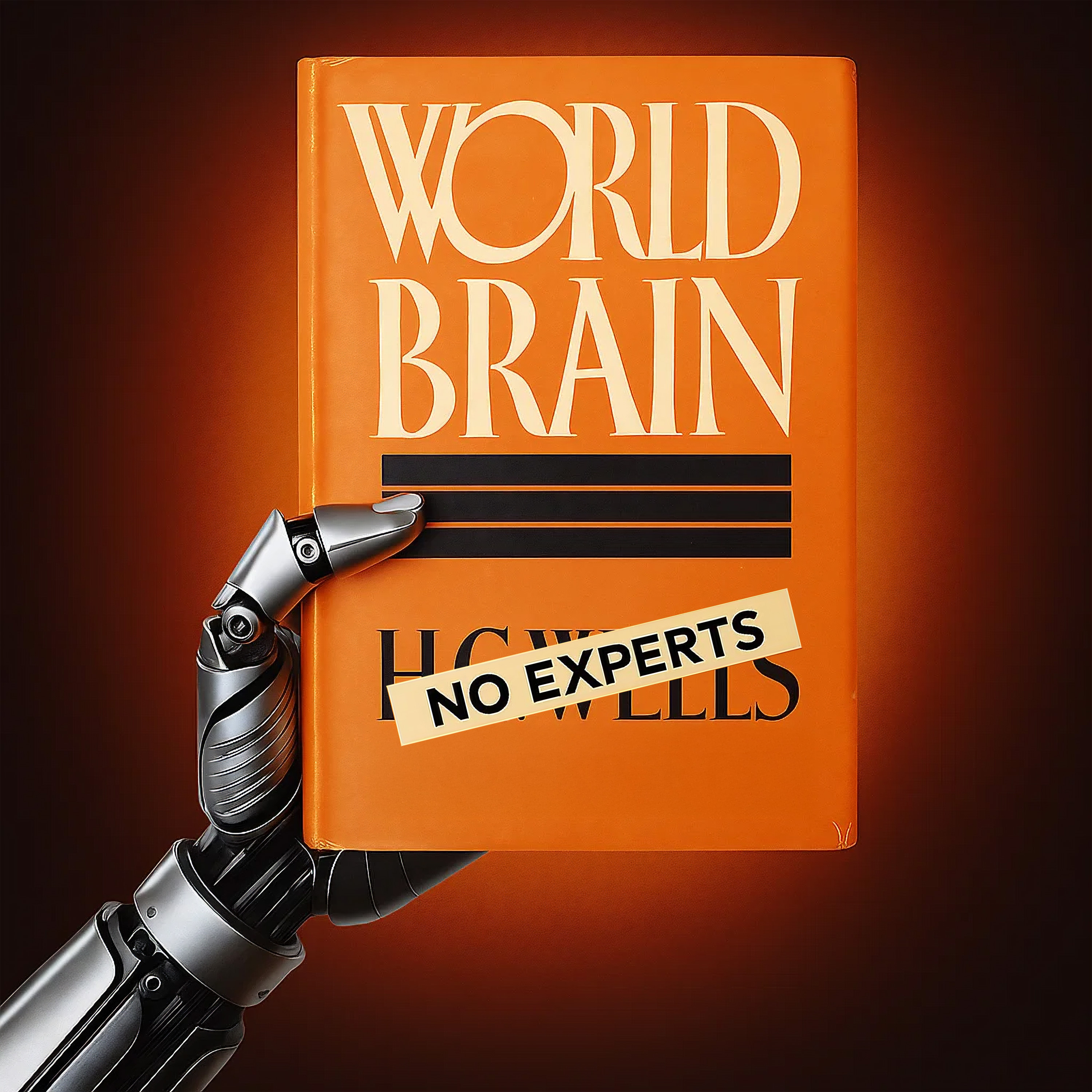
World Brain: No Experts
by Matt Brandabur, Yuri Marder
Taking the HG Wells essay collection as a departure point, this podcast asks the following questions of a range of people: What has been awakened? Rough beast? Benevolent angel? Boring super-appliance? Could we be less wrong about AI than those considered to be experts? Why "No Experts"? Is it possible that there really are any experts on this subject? Could a few relatively smart outsiders be less wrong about AI - what it is, what changes it's going to make to our lives - than the glory-drunk founders and their whorish enablers, or the terrifying doomsayers? Could we be any less wrong, for that matter, than Wells, who in 1938 brought out a collection of essays that imagined that a global encyclopedia would help bring about a permanent state of world peace? Finally, can an unstructured discussion between humans meaningfully enrich our understanding of the boundaries between us and what we've created?
Episodes
-
Ep 6: AI - Fears, Dreams, Experts with Kemi Olugemo and Barbara Salami from KAINDLY.AI
In what is easily our friendliest interview so far, Yuri and Matt engage with industry leaders Kemi Olugemo and Barbara Salami to consider how artificial intelligence is redefining the role of the expert, what it's like to try bridging socioeconomic and cultural divides, and how hopes and fears...
-
Ep 5: Beyond the Book - AI and Technical Documentation with Tom Johnson and Floyd Jones
Three tech writers and a photographer walk into a bar. The writers are mostly not writing for human readers directly anymore. How is this funny? Tom Johnson, a technical writer at Google and a publishes thoughts on trends in his work at idratherbewriting.com. Tom sat down with Yuri, Matt, and...
-
Ep 4: AI Will Write All the Code, Ready or Not (with Chris Fregly)
In this episode of World Brain: No Experts, Matt and Yuri interview technologist and author Chris Fregly about the accelerating integration of AI into software development and large-scale computing systems. Drawing on experience at companies like Netflix, AWS, and Databricks, Fregly argues that...
-
Ep 3: Can AI Understand Meaning? (with Jobst Landgrebe)
Jobst Landgrebe, co-author (with Barry Smith) of Why Machines Will Never Rule the World: Artificial Intelligence Without Fear, joins Matt and Yuri for a wide-ranging argument about what AI can and cannot do. Landgrebe claims that minds and living systems are complex systems shaped by history and...
-
Ep 1: Are There Any AI Experts? (Wells, Consciousness, and the End of Shared Truth)
In the first episode of World Brain: No Experts, Matt Brandabur and Yuri Marder use H. G. Wells’ 1938 World Brain essays as a starting point for an argument about artificial intelligence, expertise, and human identity. Yuri sees AI as a transformative force on the scale of language itself—while...
-
Ep 2: AI as a Rorschach Test (Tool, Mirror, or Mass Delusion?)
In this episode, Matt and Yuri treat AI less as a single “thing” and more as a cultural mirror—an unsettling Rorschach test that reveals what humans and institutions fear, desire, and project. Matt argues that the current frenzy resembles a mass hallucination driven by investor fantasies of...
We're indexing this podcast's transcripts for the first time — this can take a minute or two. We'll show results as soon as they're ready.
No matches for "" in this podcast's transcripts.
No topics indexed yet for this podcast.
Loading reviews...
ABOUT THIS SHOW
Taking the HG Wells essay collection as a departure point, this podcast asks the following questions of a range of people:
What has been awakened? Rough beast? Benevolent angel? Boring super-appliance?
Could we be less wrong about AI than those considered to be experts?
Why "No Experts"? Is it possible that there really are any experts on this subject?
Could a few relatively smart outsiders be less wrong about AI - what it is, what changes it's going to make to our lives - than the glory-drunk founders and their whorish enablers, or the terrifying doomsayers?
Could we be any less wrong, for that matter, than Wells, who in 1938 brought out a collection of essays that imagined that a global encyclopedia would help bring about a permanent state of world peace?
Finally, can an unstructured discussion between humans meaningfully enrich our understanding of the boundaries between us and what we've created?
HOSTED BY
Matt Brandabur, Yuri Marder
CATEGORIES
Loading similar podcasts...
Frequently Asked Questions
How many episodes does World Brain: No Experts have?
World Brain: No Experts currently has 6 episodes available on PodParley. New episodes are automatically indexed when they're published to the podcast feed.
What is World Brain: No Experts about?
Taking the HG Wells essay collection as a departure point, this podcast asks the following questions of a range of people: What has been awakened? Rough beast? Benevolent angel? Boring super-appliance? Could we be less wrong about AI than those considered to be experts? Why "No Experts"? Is it...
How often does World Brain: No Experts release new episodes?
World Brain: No Experts has 6 episodes. Check the episode list to see recent publication dates and frequency.
Where can I listen to World Brain: No Experts?
You can listen to World Brain: No Experts on PodParley by clicking any episode. We provide an embedded audio player for direct listening, and you can also subscribe via your preferred podcast app using the RSS feed.
Who hosts World Brain: No Experts?
World Brain: No Experts is created and hosted by Matt Brandabur, Yuri Marder.
URL copied to clipboard!