
PODCAST · technology
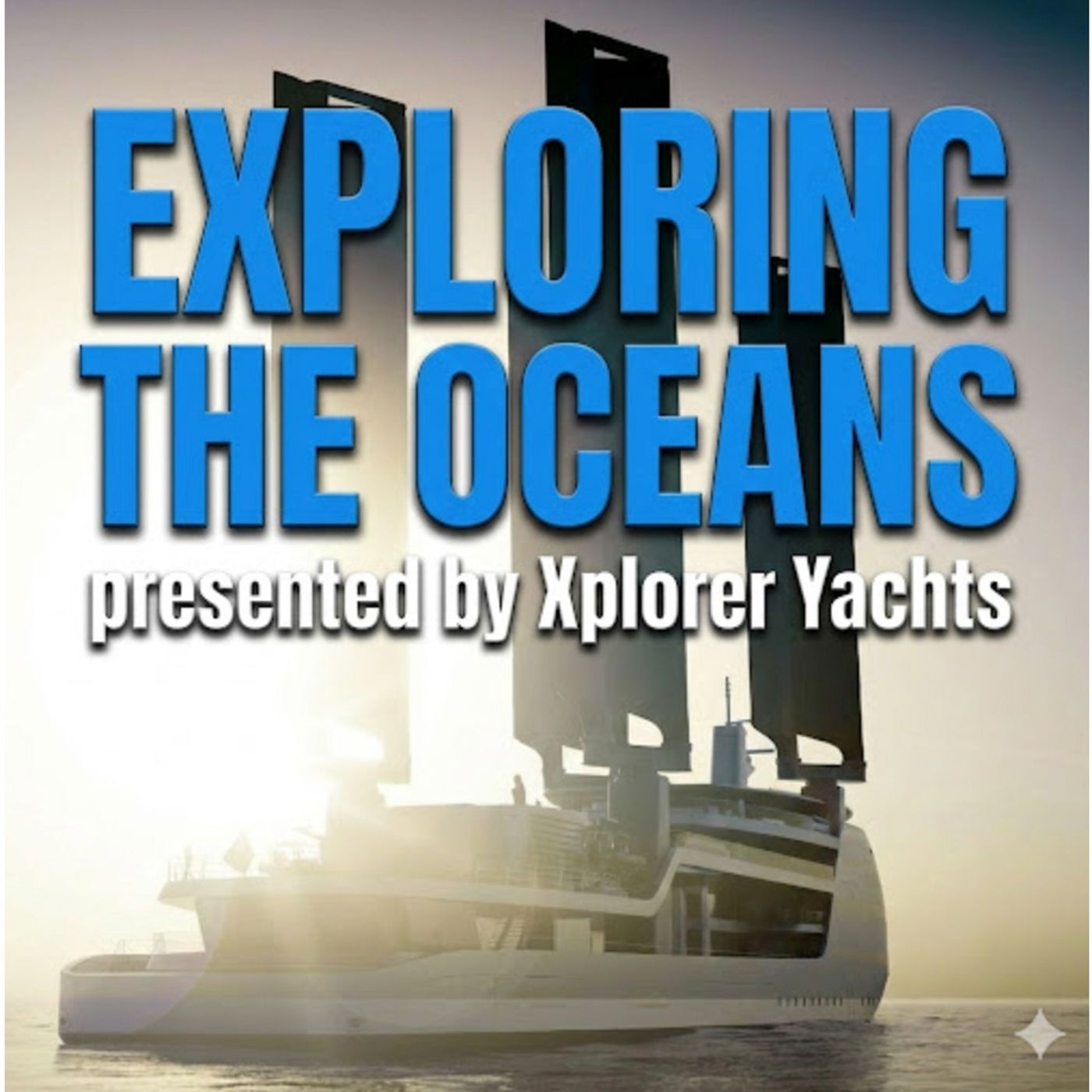
Xplorer Yachts | Expedition Yacht Design, Technology & Innovation
by Paul Madden
The expedition yachting podcast for owners, designers, builders, and maritime professionals. Host Paul Madden - a lifelong sailor and expedition yacht specialist - brings you inside the world of explorer vessels, superyacht conversions, wind-assisted propulsion, and cutting-edge maritime technology.From technical tours of standby vessels in Norway to conversations with the designers behind iconic superyachts like MALTESE FALCON and BLACK PEARL, each episode delivers insider access to the expedition yachting sector you won't find anywhere else.Topics include: expedition yacht design, wind-powered hybrid yachts, DynaRig and wingsail technology, hydro-generation, long-range global cruising, yacht conversions, shipyard tours, and the history of ocean exploration.New episodes weekly. Follow the show and leave a review to help other expedition yacht enthusiasts find us.
-
21
Ken Freivokh on Designing MALTESE FALCON & BLACK PEARL - DynaRig Superyacht Innovation
Maltese Falcon is a full-rigged ship using DynaRig technology, which was built by Perini Navi in Tuzla, İstanbul, and commissioned by her first owner, Tom Perkins. It is one of the world's most complex and largest sailing yachts at 88 m (289 ft), similar in size to the Athena and Eos. Sail plan: self-standing three-mast square rigg... Height: 58.20 m (191 ft) Yacht design: Dykstra Naval Architects Builder: Perini Navi, Tuzla, İstanbul Black Pearl is a sailing yacht launched in 2016, which is 106.7 meters (350.1 ft) in length. It has three DynaRig masts supporting a sail area of 2,900 square meters (31,215 sq ft). The yacht was known during its build process originally as Oceanco Y712 and thereafter as "Project Solar". Tonnage: 2,864 GT Capacity: 12 Launched: 2016 Beam: 15 m (49.2 ft) Designer Ken Freivokh Working from his studio based on the River Hamble on the south coast of the UK, superyacht designer Ken Freivokh actually started life as an architect. Raised in Los Angeles, he studied engineering and architecture in Peru before moving to the UK to study at the Royal College of Art, graduating in 1972 with a Masters in Design. It was while working as an architect that Freivokh first encountered yacht design, and as an experienced sailor it was when buying his own yacht – and asking for some changes to be made – that he started to make the transition. Since then, Freivokh and his team have created several stunning yacht exteriors and interiors, and the studio has become well known for its cutting edge and often futuristic concept designs. Notable yachts Perhaps most famously, Ken Freivokh design the exterior and interior of US venture capitalist Tom Perkins’ superyacht Maltese Falcon, at 88 metres notable for its innovative Dynarig and still one of the largest private sailing yachts in the world. That is set to change with the Freivokh-designed superyacht Dream Symphony, a striking 141 metre contemporary wooden schooner that is currently under construction at the Dream Ship Victory yard in Turkey.More info on XplorerYachts.com
-
20
The History of Expedition Yachts: From Magellan to Modern Explorer Vessels
This series looks at the first expeditions and the vessels chosen by Magellan, Darwin and Shackleton; examining Mission, Vessel and Outcome. Part 1 takes us from the 1500's to the late 20th Century and the advent of the Explorer Yachtsman and the first generation of converted commercial and research ships that became expedition yachts.
-
19
Inside an Ulstein 719-R Standby Vessel: Bridge & Engine Room Tour (Norway)
See Matterport 3D of bridge and engine room here: https://my.matterport.com/show/?m=jHXF2cpt4huMain Description Survivor Class........FSV Class ‘A’ ERRVYear Built/Converted..............1992/2014Place of Build............Brattvaag, NorwayPrincipal Dimensions Length o.a...........63.00m Length Capacities Freshwater...................329m3Cargo Deck Area..........................260m2Deck Cargo...........................350 tonneCargo Pumps Machinery and PropulsionMain Engines.....................2 x 1840 kw Total.....3680 kwMain Propulsion Type.....Bergen DieselPropellers..............2 x CPPAzimuth Thruster.............1 x 736 kwEmergency Generator..........1 x 30 KVAAux. el. Generator...............1 x 390 kwShaft Generator...............2 x 1800 KVADeck EquipmentHydr. Deck/Rescue Crane....1 x 3 tonne CableLifesaving and Rescue EquipmentDaughter Craft....................2 x MP 1000DC Davits............2 x Hydramarine G100 FRC...............................1 x MP Woodo FRCDavit.............1 x Hydramarine A 32Deck Rescue Crane...........1 x 3T @ 12mRescue AccommodationTotal beds..........18 Single Berth.................12 Twin Berth..Commercial vessels must navigate in all seas, in all weather conditions, year-round. They require proven systems with onboard redundancies in order to stay at sea and complete their mission. The most capable Expedition Yachts and Yacht Support Vessels are based on commercial hulls built by commercial shipyards. see more at Xplorer Yachts.com
-
18
Espen Oeino on ECO, OCTOPUS & REV Ocean - The Largest Expedition Superyachts
According to bolidt.com: "With an average of at least three to four 63 meter + sophisticated yachts in his name on a yearly basis, Espen Oeino is a legend in the world of yacht design. Who is this icon? For us personally, Espen Oeino is a bit of a secret legend. Most yacht designers have published biographies online stating their vision and proudly presenting their portfolio of stunning yachts. Espen Oeino is not one of them! Visit Espen Oeino International’s website online and the only information you will get are contact details. The more reason to find out who the man behind Espen Oeino International actually is. A Norwegian-born designer This Norwegian-born designer was a born designer! As a little kid he was always drawing boats, cars and busses. He drew his first boat when he was 2 years of age and has been obsessed with boat design ever since. As a young adult he completed his degree in naval architecture and offshore engineering in Scotland, after which he worked at Martin Francis’ design studio. During his time here he worked as a project manager on the legendary Eco project (now known as: Enigma). As it goes with legendary designers, Espen Oeino set up his own design studio, Espen Oeino International S.A.R.L., not long after. Since 1994 the technical and design studio has been specializing in naval architecture and engineering related disciplines. Up–to–date he has 44 superyachts on his name from all over the world! What makes designs by EOI so different? Every artist has its own signature and so does he: sketching. In an interview with Yachting, Espen Oeino emphasizes the importance of never using erasers when sketching. “You correct as you go, because this is not meant to be a presentation sketch- it’s really just exploring ideas.” Ideas evolve over time and so will the sketch. At EOI there is no specific style that can be detected. Yacht designs have ranged from fast and sleek to voluminous. The most important thing according to Mr. Oeino is to start every project with a fresh mind and collaborate with clients to design a yacht that exactly fits their needs. The more open-minded and creative the clients, the more room there is for Espen Oeino to work his magic."For more information regarding expedition yachts, go to http://XplorerYachts.com
-
17
Building the World's First Wind-Powered Hybrid Expedition Yacht
Xplorer Yachts™ is building the first wind-powered hybrid expedition yacht. This vessel is based upon an existing, ocean-proven wind-powered commercial vessel that has already achieved 30% fuel savings on Trans-Atlantic passages. It's class-approved OceanWing sail system is the top performing sail system currently being implemented on commercial ships. This hull platform can be built from 80m to 120m and be fitted out for 12-36 guests with a completely customized interior. Our time-tested business model utilizes commercial shipyards for the hull and systems build, while the interior fabrication and fit-out will take place in a yacht finishing facility.Our website: https://windvoyage.com
-
16
Wind Propulsion Tech for Expedition Yachts: Wingsails, Kites & Flettner Rotors
The International Maritime Organization has mandated that large ocean-going ships must cut their carbon emissions by 40% by the year 2030. As a result, the shipping industry is embracing wind-propulsion as the most viable near-term solution. They, along with government agencies, are financing the R&D and manufacturing of wind-propulsion solutions. Wind-assisted commercial shipping uses modern technologies like rotor sails, rigid wings (Wind Wings), and suction wings to harness wind power, significantly cutting fuel use and emissions (5-50%) by supplementing engine power, driven by strict regulations and economic benefits, with systems like Anemoi's rotor sails and Airseas' Seawings already deployed on cargo vessels. These systems offer a practical, cost-effective way for the industry to decarbonize, transforming old sailing concepts into high-tech solutions for a greener future. According to DNV: "Wind-assisted propulsion system (WAPS) technologies have gained significant attention in the shipping industry as a means of reducing fuel consumption and emissions. These technologies harness the power of wind to supplement the propulsion of a vessel by generation of aerodynamic forces. They have the potential to significantly improve the efficiency of shipping operations and make a meaningful contribution to the decarbonization of the industry, as wind is an inexhaustible, free, zero-carbon energy source. Sail systems Several different sailing technology concepts have been or are being developed, including rigid or soft wing sails, Flettner rotors and ventilated foils, or kites. Most modern systems now utilize state-of-the-art intelligent control and automation systems to operate in a safe manner and without the requirement for additional crew. A combination of advanced aerodynamics, automation, computer modelling and modern materials is unlocking a new generation of innovative sail systems for ocean-going ships." For our new build, we want a proven sail-assist technology that is readily adaptable for our specific mission and vessel profile. We need to consider, amongst many criteria - size and weight vs propulsion delivery, will the rig fold-down, is there a service and maintenance program from the manufacturer to support us. This video will shed some light on this highly important component of our new-build process, and maritime industry developments in general. For more information regarding expedition yachts, go to http://XplorerYachts.com
-
15
Next-Gen Wind-Powered Global Expedition Yachts: Design & Technology
Growing up sailing with my dad, he always referred to motor-boats as 'stink-pots'. Motor-boaters, I am told, refer to sailors as 'rag-baggers' due to their proclivity to bag their sails at the end of the day, often before even having cocktails(!) However, the time has come for everyone to take wind-power seriously, as perhaps the most viable solution for lessening carbon emissions of all ocean-going vessels, private and commercial. Wind-assisted propulsion system (WAPS) technologies have gained significant attention in the shipping industry as a means of reducing fuel consumption and emissions. These technologies harness the power of wind to supplement the propulsion of a vessel by generation of aerodynamic forces. And now there are several new sail-assist technologies that have been successfully deployed on large commercial vessels- achieving results in fuel efficiencies that are quantifiable. For our new build, we want a proven sail-assist technology that is readily adaptable for our specific mission and vessel profile. We need to consider, amongst many criteria - size and weight vs propulsion delivery, will the rig fold-down, can it be fully reefed in the event of a power failure without putting the crew at-risk, is there a service and maintenance program from the manufacturer to support us. Hopefully, this video will shed some light on this highly important component of our new-build process, and maritime industry developments in general.
-
14
Hydro-Generation for Expedition Yachts: Powering Long-Range Ocean Crossings
Since our wind-assisted expedition yacht will have the ability to operate solely with sail power in certain condition, which will deliver speeds in the 8-14 knot range; we also want to have the ability to generate electricity. The goal is to carry the hotel load under sail, and ideally, also put some 'juice' back into our batteries. We have not yet decided on a system for this, but we expect to settle on a plan in the next 2 months.More information at XplorerYachts.com
-
13
Technical Tour of legendary 172' ex-NOAA Research ship
Sadly, this vessel went to scrappers. U.S. - BUILT FOR U.S. Navy and NOAA, MNG Flattery is one of the finest ocean-going research ships in the world. The US Government built these ship's to the highest possible standards. ex NOAA David Starr Jordan, has been a work horse for NOAA and science. So far she has spent an estimated 8,949 days at sea and sailed more than 1.3 million miles. Researchers aboard the vessel measured and weighed 1,000 sea turtles, took 27,000 photographs using remotely operated vehicles (ROVS), and conducted 27,000 oceanographic sampling casts, 22,000 plankton tows and 4,700 fish trawls. The ship has participated in expeditions extending from ALASKA to Peru and the Galapagos Islands. Recently Ocean Starr was chartered to a private nonprofit studying the Pacific gyre (floating plastic), baselining and recording this danger to our oceans. OCEAN STARR should be seriously considered by the hard core adventurists. Commercial vessels must navigate in all seas, in all weather conditions, year-round. They require proven systems with onboard redundancies in order to stay at sea and complete their mission. The most capable Expedition Yachts and Yacht Support Vessels are based on commercial hulls built by commercial shipyards.More info at XplorerYachts.com
-
12
Serious Ice-Class Search & Rescue Vessel for Conversion
The 221' SNAPPER was built in Canada as a Lloyds Class 1 Search & Rescue vessel for Arctic Duty. With 7,200 hp she can ram through a meter of ice. She has a cruising endurance of more than 30 days with 39 persons on board. Having been refitted for seismic research, she now features a humongous garage/hangar which has a commercial heli-deck for a Bell 212 or Sikorsky. Her fuel capacity of 222,000 gallons assures her of an unmatched global cruising range. With a 46 ft beam her hull can easily be lengthened and still maintain her stability. This is a unique Expedition Yacht conversion opportunity.More info at XplorerYachts.com
-
11
63m /206ft Technical Tour of Norwegian Stand-By vessel on North Sea Duty
See Matterport 3D of bridge and engine room here: https://my.matterport.com/show/?m=jHXF2cpt4hu Main Description Survivor Class........FSV Class ‘A’ ERRV Year Built/Converted..............1992/2014 Place of Build............Brattvaag, Norway Principal Dimensions Length o.a...................63.00m Capacities Freshwater.................................329m3 Cargo Deck Area..........................260m2 Deck Cargo...........................350 tonne Cargo Pumps Machinery and Propulsion Main Engines......2 x 1840 kw Total......3680 kw Main Propulsion Type.....Bergen Diesel Propellers.....2 x CPP Azimuth Thruster.................1 x 736 kw Emergency Generator..........1 x 30 KVA Aux. el. Generator...............1 x 390 kw Shaft Generator...............2 x 1800 KVA Deck Equipment Hydr. Deck/Rescue Crane....1 x 3 tonne Cable Lifesaving and Rescue Equipment Daughter Craft....................2 x MP 1000 DC Davits............2 x Hydramarine G100 FRC...............................1 x MP Woodo FRC Davit.............1 x Hydramarine A 32 Deck Rescue Crane...........1 x 3T @ 12m Rescue Accommodation Total beds......18 Single Berth.......\......12 Twin Berth... An emergency response and rescue vessel (ERRV) needs combine good manoeuvrability, enhanced survivor reception and medical after-care facilities, state of art navigational/communications equipment and rescue craft capable of operating in severe weather. ERRVs are fitted with both daughter craft (DC) and fast rescue craft (FRC). In many respects the launch/recovery phases of both FRC and DC are limiting factors in respect of their use and especially the recovery operation requires a high degree of professionalism and teamwork between the craft’s crew and those operating the davit on board of the ERRV. In some cases the weather conditions are too severe to launch rescue craft, hence in such circumstances ERRVs with a mechanical recovery device are provided to recover survivors directly from the sea. The most common equipment is Dacon Scoop: a crane-operated rescue net for recovery of casualties directly from the water on board of a rescue vessel. This is Part 1 of a 2-part technical tour of a vessel. Part 2 deals with the engine room and the gigantic mud and cement tanks, that many of these vessels were built with when they operated as Offshore Supply Vessels (OSV's). The fast rescue vessels (Daughter Craft) website: https://maritime-partner.com/segments/boats Special thanks to: Master: Damien Reynolds Chief Officer Don Quinn and Atlantic Offshore (https://atlantic-offshore.no/)More info at XplorerYachts.com
-
10
Wealthy Americans Built the Largest Yachts in the World. Part 2 of The History of Expedition Yachts
In Part 2 of the series, Paul Madden shows how 1930 and 1931 saw more than a half-mile of new Expedition Yachts built by the world's wealthiest people at a cost in excess of $2 billion. Yachts ranging in size to over 400 ft, with steam-turbine electric propulsion delivering 20-knot speed; they offered luxurious accommodations coupled with global range and ocean-crossing capabilities. A generation of uber-wealthy yachtsmen who had naval experience from WWI and the ability to carry out scientific expeditions globally. Almost all of these vessels became warships in WWII and converted easily into gunships and fast U-Boat hunters. See more of the Vanderbilt videos here: https://www.youtube.com/c/VanderbiltmuseumOrgNY/videos
-
9
Best Conversions for the Expedition Mission
Paul Madden takes a step back to review what the expedition yacht mission is, and he examines which commercial vessels are most sought after for conversion to become global expedition yacht.
-
8
Converting an OSV into an Expedition Yacht
Paul Madden returns to Louisiana to delve more deeply into the conversion of OSV vessels into expedition yachts. He looks at 220 ft to 260 ft offshore supply vessels (OSV's) suitable for conversion into global expedition yacht.
-
7
207 ft Search & Rescue Ship is being Converted into Expedition Yacht Yacht
This yacht is currently finishing conversion. See upcoming tech tour.
-
6
DOOMSDAY YACHTS vs BUNKERS with Paul Madden at Xplorer Yachts (Extended Version)
The Doomsday Yacht offers: - Limitless Global Range from abundant and free Wind Energy - Generates electricity under sail - Unlimited Fresh Water with desalinisation and rain catch - Unlimited Food from the Sea - Extraordinary Defense Options - above and below water - can earn up to $1 million a week in charter when not saving lives We are the world leaders in wind-assisted global expedition yachts and the conversion of rugged, ocean-proven commercial vessels into global expedition yachts. We handle a project from 'the idea' and 'the mission', through design to delivery and setting up ongoing crewing and vessel management and charter program. For more information regarding Doomsday Yachts, go to http://DoomsdayYachts.com or contact Paul Madden [email protected]
-
5
Paul Madden discusses expedition yacht conversions with Chuck Levert of Edison Chouest at TampaShip
The Chouest family builds, owns and operates a global fleet of commercial ships and vessels. They also own Westport Yachts and the American Shipyard in Stuart, Fl. Chuck Levert is their yacht specialist who arranges for megayacht re-fits and also conversions of offshore vessels into expedition yachts at the Tampa facility. Paul Madden explores this fascinating, but little known, new entrant into the megayacht marketplace. Links: Tampa Bay Shipyard: http://www.tampabayship.com/ Expedition Yacht Conversion website: https://XplorerYachts,com The Yacht Channel is presented by Paul Madden who is a former shipyard representative for Blohm+Voss, CRN and other yacht builders. He is available to assist qualified yacht buyers and can be reached at [email protected]/ Mpre info at Xploreryachts.com
-
4
Wind-Powered Expedition Yacht Can Operate with Zero Emissions while Generating Electricity
Ocean Xplorer Wind-Powered Multi-Purpose Global Expedition Yacht Optimized Hull with Next Gen Low-emission to No-emission Integrated Hybrid Systems. Over 3,000 HP of equivalent engine power generated by a single standard 363 m² Oceanwing sail (33m high x 11m wide) Vastly Lower CO₂ emissions, and lower operating/engine costs Wingsail’s geometry (11m wide) offers a natural roll damping effect Fully electrical and low-maintenance, with an expected lifespan of 25 years Only 2.5 Sq M footprint for each sail Reduced Noise & Vibration - above and below waterline Generates positive thrust starting at 5° apparent wind angle OceanWings Software & Data Platform optimizes performance * Can be operated safely without the need for additional crew Wind is freely available across all oceans and in unlimited quantities. It was primary propulsion source for ships for over 2500 years, and is likely to be again. Wind drives the decarbonation of Vessels and new technologies allow a new generation of Yacht Owners to harness the power of wind. By adopting wind power, Owners can not only lower their CO₂ emissions, but also reduce operating costs with less fuel, less engine hours and longer periods between machinery overhauls. Owners will meet increasingly strict regulations in environmentally sensitive areas, and alter both the perception and reality of yachting. See more at WindVoyage.com
-
3
Wind is Back! World's First Wind-Assisted Diesel-Electric Expedition Yacht
Xplorer Yachts™ is building the first wind-assisted diesel-electric hybrid expedition yacht. This vessel is based upon an existing, ocean-proven wind-assisted commercial vessel that has already achieved 30% fuel savings on Trans-Atlantic passages. It's class-approved OceanWing sail system is the top performing sail system currently being implemented on commercial ships. This hull platform can be built from 95m to 105m / 295 ft to 345 ft and be fitted out for 12-36 guests with a completely customized interior. Our time-tested business model utilizes commercial shipyards for the hull and systems build, while the interior fabrication and fit-out will take place in a yacht finishing facility. Our website: https://windvoyage.com
-
2
Built during the Cold War, this 323' NOAA research ship appeared to have covert mission capabilities
Rumors swirl around the idea that this vessel was built at the height of the Cold War and its real mission was tracking Soviet Submarines. From Wikipedia: USC&GS Oceanographer (OSS 01) was commissioned as an "ocean survey ship" (OSS) with the U.S. Coast and Geodetic Survey at the Washington Navy Yard in Washington, D.C., on 13 July 1966[1] under the command of Captain Arthur L. Wardwell, USESSA.[2] With her home port at Seattle, Washington,[2] she was the second Coast and Geodetic Survey ship of the name, and served as flagship of the Survey's fleet. When the Coast and Geodetic Survey and other United States Government agencies combined to form NOAA on 3 October 1970, she became the research ship NOAAS Oceanographer (R 101), the first NOAA ship to bear the name, as well as flagship of the NOAA fleet. NOAAS Oceanographer during her historic visit to the People's Republic of China in 1980. During her 30 years of service, Oceanographer sailed over 2,000,000 nautical miles (3,700,000 km) in every major ocean. In 1967 she departed Jacksonville on 31 March on a "world science and ambassadorial cruise" which took her from the United States East Coast to the United States West Coast via the North Atlantic Ocean, Mediterranean Sea, Red Sea, Indian Ocean, and Pacific Ocean, making many good-will stops along the way before concluding the voyage by arriving at Seattle on 11 December.[3] In 1968, she supported Project Sea Use, a multi-party expedition to Cobb Seamount in the North Pacific Ocean which developed much of the initial scientific understanding of the seamount.[4] In 1969 she completed the circumnavigation of the globe she began in March 1967 when she returned to the U.S. East Coast. Other highlights of Oceanographer's career included participation in the first large-scale, coordinated international sea-air interaction survey, known as the BOMEX Study, in 1969, and environmental base-line studies on deep-ocean mining (DOMES). In 1980, Oceanographer became the first U.S. Government vessel allowed into a port of the People's Republic of China.[5] Oceanographer was placed in reserve in July 1981. She underwent a major refit in which she received an Alden weatherfax, a Sperry Mark 37 gyro, a Raytheon X-band Pathfinder radar, Inmarsat, an MX1102 Global Positioning System, a new salinometer, a Shipboard Environmental Acquisition System with expendable bathythermograph gear, a new meteorological station, and a Doppler current profiling system, and returned to service with this new equipment on 8 April 1986. Placed in reserve in 1989, she later returned to service again. The final owner was an Italian playboy who was converting it into a mega-yacht in Seattle when he died of a heart-attack during a car race in Europe. The ice-class US Research ship with diesel electric propulsion, 15,000 mile-range, can do over 20-knots. At 3,700+ Gross Tons, it was supposed to have 18 luxury suites, a full spa, screening room, onboard film/TV/recording studio, full gym, submarine launch through moonpool, multiple twin-turbine helicopters, etc., etc. After much litigation after his untimely death, the vessel was scrapped in Mexico.More vessels for purchase and conversion at XplorerYachts.com
-
1
The Bow Wars: X-Bow vs. Axe Bow
The Military, Commercial and Yacht Builders are all at work to create the perfect bow shape. Millions of dollars have been spent and several unique and innovative solutions have emerged. Damen Group in The Netherlands and Ulstein in Norway are at the forefront and both companies have very convincing arguments about why their bow is best. Paul Madden considers these new technologies, which may not be new at all, given the bow designs developed by the military more than a hundred years ago... Commercial vessels must navigate in all seas, in all weather conditions, year-round. They require proven systems with onboard redundancies in order to stay at sea and complete their mission. The most capable Expedition Yachts and Yacht Support Vessels are based on commercial hulls built by commercial shipyards. If your MISSION requires a rugged global expedition yacht, or a versatile multi-mission support vessel, then Xplorer Yachts will spec out the right vessel to meet your needs - either as a conversion or as a new-build. Xploreryachts.com
We're indexing this podcast's transcripts for the first time — this can take a minute or two. We'll show results as soon as they're ready.
No matches for "" in this podcast's transcripts.
No topics indexed yet for this podcast.
Loading reviews...
ABOUT THIS SHOW
The expedition yachting podcast for owners, designers, builders, and maritime professionals. Host Paul Madden - a lifelong sailor and expedition yacht specialist - brings you inside the world of explorer vessels, superyacht conversions, wind-assisted propulsion, and cutting-edge maritime technology.From technical tours of standby vessels in Norway to conversations with the designers behind iconic superyachts like MALTESE FALCON and BLACK PEARL, each episode delivers insider access to the expedition yachting sector you won't find anywhere else.Topics include: expedition yacht design, wind-powered hybrid yachts, DynaRig and wingsail technology, hydro-generation, long-range global cruising, yacht conversions, shipyard tours, and the history of ocean exploration.New episodes weekly. Follow the show and leave a review to help other expedition yacht enthusiasts find us.
HOSTED BY
Paul Madden
CATEGORIES
Loading similar podcasts...
Frequently Asked Questions
How many episodes does Xplorer Yachts | Expedition Yacht Design, Technology & Innovation have?
Xplorer Yachts | Expedition Yacht Design, Technology & Innovation currently has 21 episodes available on PodParley. New episodes are automatically indexed when they're published to the podcast feed.
What is Xplorer Yachts | Expedition Yacht Design, Technology & Innovation about?
The expedition yachting podcast for owners, designers, builders, and maritime professionals. Host Paul Madden - a lifelong sailor and expedition yacht specialist - brings you inside the world of explorer vessels, superyacht conversions, wind-assisted propulsion, and cutting-edge maritime...
How often does Xplorer Yachts | Expedition Yacht Design, Technology & Innovation release new episodes?
Xplorer Yachts | Expedition Yacht Design, Technology & Innovation has 21 episodes. Check the episode list to see recent publication dates and frequency.
Where can I listen to Xplorer Yachts | Expedition Yacht Design, Technology & Innovation?
You can listen to Xplorer Yachts | Expedition Yacht Design, Technology & Innovation on PodParley by clicking any episode. We provide an embedded audio player for direct listening, and you can also subscribe via your preferred podcast app using the RSS feed.
Who hosts Xplorer Yachts | Expedition Yacht Design, Technology & Innovation?
Xplorer Yachts | Expedition Yacht Design, Technology & Innovation is created and hosted by Paul Madden.
URL copied to clipboard!