
PODCAST · business
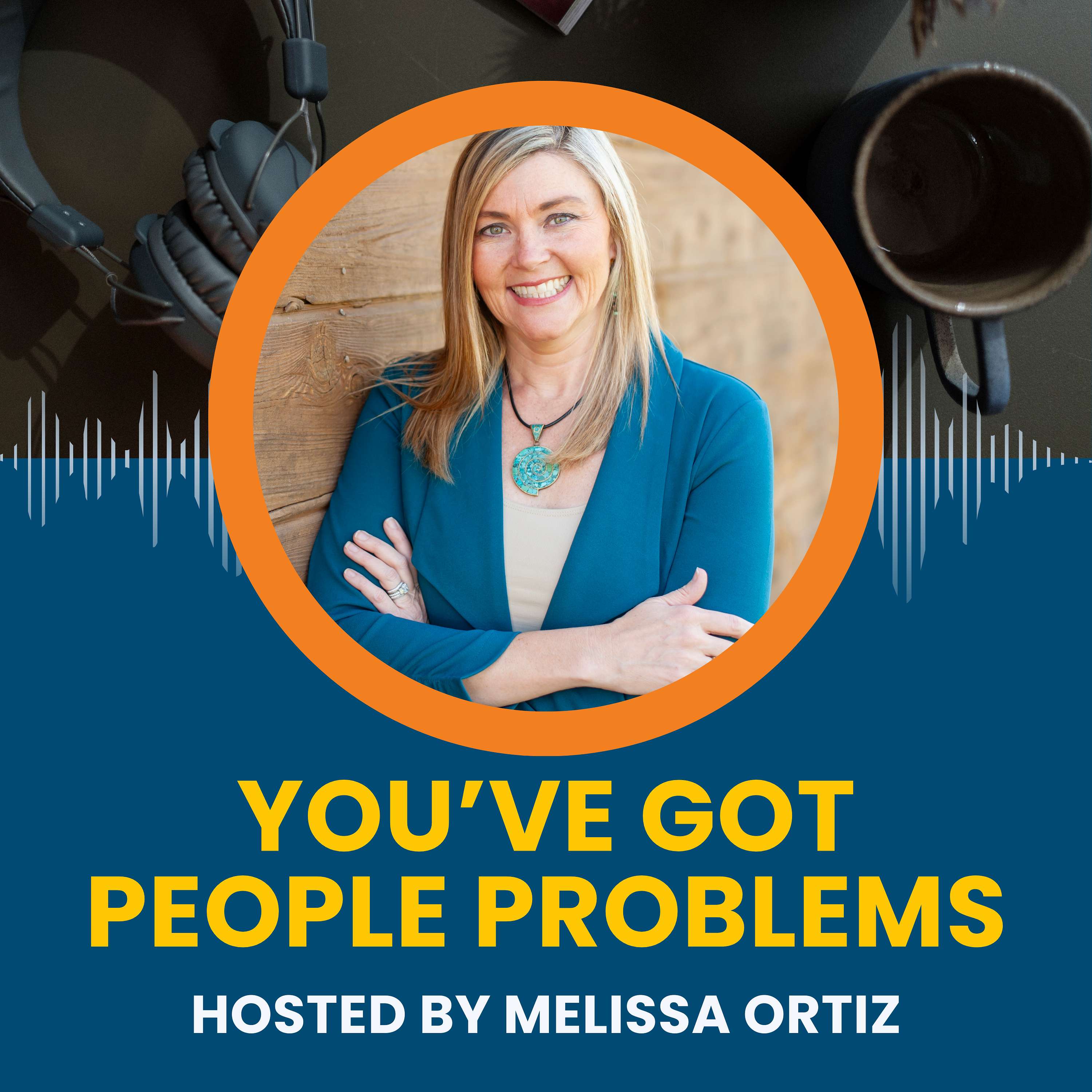
You've Got People Problems
by Melissa Ortiz, Talent Optimization Expert
Let’s be honest. People problems aren’t just HR problems. They’re business problems.They show up as missed goals, unclear accountability, hiring mistakes, disengaged teams, and leaders carrying more than they should. Over time, they slow growth, create frustration, and make running a business feel harder than it needs to be. And they aren’t solved by another policy, personality test, or quick fix.Business would be simple… if it weren’t for people.That’s the reality behind You’ve Got People Problems, a podcast focused on the human side of running a business. Each episode explores how leadership behavior, hiring decisions, role clarity, engagement, and organizational structure directly impact performance, culture, and results.Through honest conversations with business owners, operators, HR leaders, EOS Implementers, and consultants, the show tackles real issues leaders face every day: why the “right hire” still isn’t w
-
54
How To Protect Your Business From Costly Employee Lawsuits | Ep 54 | You've Got People Problems
This episode has a strong angle around employee terminations, performance issues, legal risk, role clarity, and how treating employees well throughout their employment can actually help protect the business. I kept the timestamps condensed and based them directly on the transcript you provided.In this episode of You’ve Got People Problems, Melissa Ortiz sits down with employment law attorney Susan Hatmaker to discuss a challenge nearly every business owner eventually faces: what do you do when an employee relationship is no longer working?With more than 30 years of experience in employment law, Susan shares how business owners can reduce legal risk by addressing employee issues long before termination is on the table. From setting clear expectations and documenting performance issues to handling difficult conversations and creating a respectful separation, Mel and Susan explore why good leadership practices and preventative employment practices often go hand in hand.Their conversation also digs into an important reality: sometimes the employee isn’t actually the problem. Unclear expectations, poor onboarding, the wrong role, inconsistent accountability, or a lack of manager communication can all contribute to performance issues. Before assuming someone needs to go, leaders need to understand what is really getting in the way.In this episode, you’ll learn:• Why clear expectations are critical from onboarding through termination• What employers should consider before terminating an employee• How role clarity can prevent performance problems from becoming people problems• Why the way managers document and communicate performance issues matters• How to approach difficult conversations with an employee’s growth in mind• What severance agreements can accomplish during an employee separation• Why consistency and clearly enforced workplace policies matter• How leaders can distinguish unacceptable behavior from behavior they simply don’t like• Whether core value misalignment can support a termination decision• Why respectful offboarding can protect relationships, reputation, and the businessThis episode is a must-listen for business owners, managers, and leaders who want to handle employee performance issues more effectively, create clearer expectations, and approach difficult employment decisions with greater confidence and care.Timestamps:00:00 – Introduction and Susan Hatmaker’s employment law background02:30 – What to do when an employee relationship isn’t working03:45 – Why unclear expectations create performance problems07:25 – Handling serious policy and safety violations11:30 – Severance agreements and reducing legal risk15:20 – Performance conversations: coaching vs. documenting to terminate21:00 – When clearer expectations lead employees to self-select out24:15 – Setting boundaries and addressing unacceptable workplace behavior30:30 – Hiring, temp-to-hire, and addressing poor fits early33:25 – Can you terminate someone for not living your core values?35:30 – Deciding whether an employee is saveable or it’s time to separate38:45 – How to connect with Susan and final thoughtsConnect with Melissa Ortiz:LinkedIn:https://www.linkedin.com/in/melissa-ortiz-talent-optimization-expert/Learn more about Activate Human Capital Group:https://www.activatehcg.com/
-
53
How To Turn Big Ideas Into Real Results | Ep 53 | You've Got People Problems
Why Visionary Leaders Need Integrators, Not Yes-MenIn this episode of You’ve Got People Problems, Mel Ortiz is joined by Stephany Day, fractional leadership expert and founder of Duke PCG, for a conversation about visionary leaders, the “Elon Musk archetype,” and the importance of having the right people around you to turn big ideas into sustainable growth.Visionary leaders bring creativity, urgency, and a willingness to take risks. These qualities can create incredible results, but they can also create challenges when teams struggle to keep up with constant change and new ideas.Mel and Stephany discuss how integrators help translate vision into execution by creating structure, accountability, and focus. They explore why many leadership challenges are not actually people problems, but instead issues with role clarity, expectations, and communication.Together, they discuss:The strengths and challenges of visionary leadershipWhy urgency and creativity can create team frictionHow integrators help leaders slow down to speed upThe difference between a people problem and a role clarity problemHow curiosity and accountability create stronger teamsWhy some employees labeled as “wrong fit” simply need the right seatHow leaders can balance innovation with consistency and executionThe importance of protecting culture, people, and personal prioritiesMel and Stephany also share examples of organizations where employees were initially viewed as performance problems, but after clarifying responsibilities, expectations, and resources, those same employees became successful contributors.This episode is a must-listen for entrepreneurs, executives, integrators, and leadership teams looking to improve communication, reduce turnover, and build organizations where both people and performance can thrive.Timestamps:00:00 – Introduction to Stephany Day and visionary leadership03:00 – Fractional leadership and working with visionaries06:00 – The strengths and challenges of the Elon Musk archetype09:00 – Where visionary leaders and teams experience friction12:00 – Why integrators are essential translators15:00 – Slowing down to speed up and building trust23:00 – When a people problem is actually a role clarity issue31:00 – Creating accountability without shame34:00 – Finding the right seat for the right person37:00 – The pros and cons of visionary thinking40:00 – Balancing ambition, culture, and personal prioritiesFollow Mel on LinkedIn: / melissa-ortiz-talent-optimization-expertVisit Activate Human Capital Group's Website: https://www.activatehcg.com/Learn more about Louisiana SPCA: https://www.laspca.org/Want to learn more? Email [email protected]
-
52
A Company That Can Operate Without You? | Ep 52 | You've Got People Problems
In this episode of You've Got People Problems, host Mel Ortiz is joined by Kristen McAllister, founder of Cerius Executives, to explore one of the biggest challenges business owners face: building a company that can operate and thrive without relying on the owner for every decision.Drawing on years of experience helping organizations build executive leadership teams through fractional, interim, and permanent executives, Kristen McAllister shares why many founders unknowingly become the biggest bottleneck in their businesses. Mel Ortiz and Kristen McAllister discuss how leadership clarity, strategic hiring, and aligning teams around measurable outcomes allow organizations to scale while giving owners back the freedom they originally envisioned.Their conversation dives into why so many companies hire for tasks instead of outcomes, how business owners can overcome the challenge of letting go, and why having the right leadership structure is essential for sustainable growth. Together, they also explore the growing role of fractional executives, leadership development, and creating organizations where accountability, focus, and clarity replace chaos.Key topics covered in this episode include:Why business owners become the biggest bottleneck in their organizationsHow to build a company that can operate without the founderThe value of fractional executives and when to bring them into a businessWhy hiring for outcomes is more effective than hiring for tasksThe importance of aligning leadership roles with business goalsHow clear expectations improve accountability and employee engagementWhy owners struggle to delegate decision-making to their leadership teamsThe difference between building a lifestyle business and a scalable enterpriseWhy finance is often the first executive function business owners should delegateHow operations leaders help organizations scale efficientlyThe importance of focus, priorities, and avoiding "shiny object syndrome"Why every leadership decision should begin by asking, "What problem are we solving?"This episode is a must-listen for business owners, entrepreneurs, executives, and leadership teams who want to scale their organizations, reduce founder dependency, improve leadership alignment, and build businesses that create both freedom and long-term value.
-
51
Being Direct Isn't Mean. It's Respectful Leadership | Ep 51 | You've Got People Problems
In this episode of You’ve Got People Problems, host Melissa Ortiz sits down with Anne Chapman, Chief People Officer at the Louisiana SPCA, for an engaging conversation about one of the most important and often misunderstood leadership skills: direct communication.Drawing from her experience leading people in a mission-driven organization that serves both animals and the community, Anne shares how directness is not about being harsh or confrontational. Instead, it is one of the greatest forms of respect leaders can offer their teams. Together, Melissa and Anne explore why so many leaders avoid difficult conversations, how indirect communication creates confusion and frustration, and what organizations can do to build cultures where honest feedback is welcomed rather than feared.Through practical stories, leadership lessons, and real-world examples from the Louisiana SPCA, this conversation highlights how direct communication strengthens trust, improves accountability, and helps organizations solve problems before they grow into larger issues. Anne also shares how her team uses Predictive Index, structured feedback conversations, and a culture of psychological safety to create stronger relationships and better outcomes.Key topics covered in this episode include:• Why being direct is one of the highest forms of respect in leadership• The difference between being kind and being vague• How indirect communication creates unnecessary conflict and frustration• Building a culture where feedback is expected, welcomed, and actionable• Why leaders must address issues early before they become larger problems• Practical techniques for giving difficult feedback with confidence and empathy• The role of Predictive Index and self-awareness in communication styles• How psychological safety and accountability can coexist in healthy cultures• Lessons from leading a mission-driven organization with employees, volunteers, and foster familiesWhether you are a CEO, manager, HR professional, or team leader, this episode offers practical insight into creating a workplace where people can have honest conversations, solve problems faster, and build stronger relationships through clear communication.If you've ever struggled with giving feedback, addressing performance concerns, or having difficult conversations, this episode provides a powerful reminder that being direct isn't mean—it's respectful leadership.
We're indexing this podcast's transcripts for the first time — this can take a minute or two. We'll show results as soon as they're ready.
No matches for "" in this podcast's transcripts.
No topics indexed yet for this podcast.
Loading reviews...
ABOUT THIS SHOW
Let’s be honest. People problems aren’t just HR problems. They’re business problems.They show up as missed goals, unclear accountability, hiring mistakes, disengaged teams, and leaders carrying more than they should. Over time, they slow growth, create frustration, and make running a business feel harder than it needs to be. And they aren’t solved by another policy, personality test, or quick fix.Business would be simple… if it weren’t for people.That’s the reality behind You’ve Got People Problems, a podcast focused on the human side of running a business. Each episode explores how leadership behavior, hiring decisions, role clarity, engagement, and organizational structure directly impact performance, culture, and results.Through honest conversations with business owners, operators, HR leaders, EOS Implementers, and consultants, the show tackles real issues leaders face every day: why the “right hire” still isn’t w
HOSTED BY
Melissa Ortiz, Talent Optimization Expert
CATEGORIES
Loading similar podcasts...
Frequently Asked Questions
How many episodes does You've Got People Problems have?
You've Got People Problems currently has 4 episodes available on PodParley. New episodes are automatically indexed when they're published to the podcast feed.
What is You've Got People Problems about?
Let’s be honest. People problems aren’t just HR problems. They’re business problems.They show up as missed goals, unclear accountability, hiring mistakes, disengaged teams, and leaders carrying more than they should. Over time, they slow growth, create frustration, and make running a business feel...
How often does You've Got People Problems release new episodes?
You've Got People Problems has 4 episodes. Check the episode list to see recent publication dates and frequency.
Where can I listen to You've Got People Problems?
You can listen to You've Got People Problems on PodParley by clicking any episode. We provide an embedded audio player for direct listening, and you can also subscribe via your preferred podcast app using the RSS feed.
Who hosts You've Got People Problems?
You've Got People Problems is created and hosted by Melissa Ortiz, Talent Optimization Expert.
URL copied to clipboard!