
EPISODE · May 31, 2022 · 7 MIN
A REMEMBRANCE OF HOUSEBOATS PAST
from Cintra Wilson Feels Your Pain · host Cintra Wilson
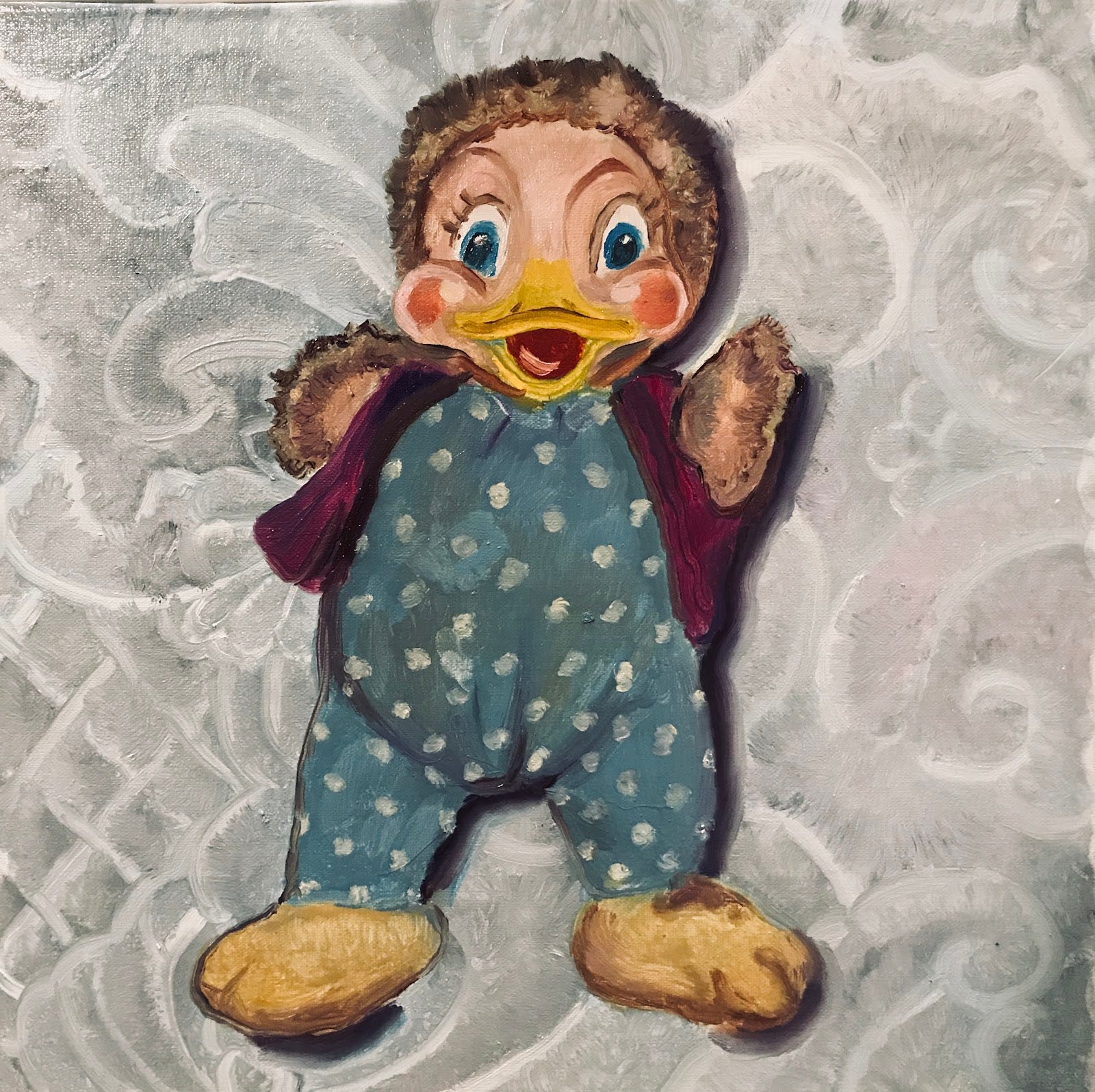
Growing up as a grade-school kid on the Sausalito houseboats in the 1970’s was interesting, particularly since nowadays the environment would probably be deemed unsuitable for children and the entire community probably would come under indictments for Conduct Unbecoming of Adults, mopery, or light hooliganism. Our houseboats were, at least, at Gate 6 ½, and not at Gate 5 a quarter mile down the road, where the residents (a much grittier, more hardcore group of hippies than on my dock — filthy men on rusty bicycles, kids running around the splintering, nail-filled docks in bare feet, everyone poaching electricity from a street-light in the parking lot with a thousand tangled extension cords) had been vigorously resisting gentrification by the City of Sausalito, and were engaging in daily riots — pregnant women were hitting police with boat oars and such. Residents were being teargassed, and their homes were being towed away by tugboats, never to return. The houseboats themselves weren’t terribly dangerous, contrary to what some parents of my school friends thought. I fell in the water once, and one of my parent’s friends lifted me out by my hair. I was wet and my fingers were bloody from scraping barnacles, but otherwise unharmed. The adults who lived on our dock were all friends. They were largely musicians, with a few architects and lawyers thrown in. There were often rowdy parties. The houseboats were right across the freeway from Marin City, the only black neighborhood in Marin County, where I went to school. My family’s houseboat was a cute little wooden shack on fiberglass pontoons. My father had built something like a breakfast nook that hung over the side of the house, flush with the roof of a miniature houseboat next door, where the man we called “Captain Rock n’ Roll” lived. He was, my mother explained, an “acid casualty” who wore Sergeant Pepper marching band jackets with no shirt underneath and dirty white jeans. He didn’t speak, generally, in anything but mumbles and animal whoops late into the night. Each morning, while eating my cereal, I would be treated to the vision of Captain Rock n’ Roll and his girlfriend du jour, sunbathing naked on his roof, about 14 feet from my actual 7 year old face. He and his girlfriends would wave at me. At the bus stop each morning, in front of the bait shop, I was greeted by the sight of what my mother called the “hitch-hookers” — heavily made up young women in rabbit fur jackets and short skirts who would hitchhike for johns. Occasionally one of the Gate 5 men would momentarily terrify me by pulling his car in front of me and handing me a Xeroxed magazine - the Gate 5 “Dream Journal,” where the dreams of Gate 5 residents were recorded for something like posterity. When the hitch-hookers weren’t around, a black van belonging to the COIT drapery service, used to stop and wait for me to get into the van, apparently thinking that I was part of the sex working organization, despite the fact that I was carrying a backpack and lunchbox and clearly a child. I would pretend the van wasn’t there, and ignore the honking, feeling weird. Finally after waiting a few minutes, the driver would peel away, clearly pissed off. Sometimes I walked to school, through a field a few blocks wide in Marin City. For a few months, a large, black, mentally retarded man with jagged teeth named Anthony would meet me at one end of the field and walk me across it to the school. He had the mind of a kid, and wanted to be friends. I thought he was probably harmless. Finally I told someone about Anthony, or some adult at the school saw me talking to him, and he vanished. Someone put the kibosh on his talking with little blonde girls in a field. It seemed kind of like overkill, but I was secretly glad. One of the women who lived on the houseboats was the president of some kind of local nudist coalition, and often hung around naked on her deck, or while hosting Ramos Gin Fizz parties on her deck. I attribute the fact that I hate taking my clothes off to the fact that I grew up at eye level with all of the pubic hair in Northern California. Since my mother was also a working musician and my father worked in Chico 4 days a week, I had a lot of babysitters. The French one with long blonde hair, who I really liked, walked away from the gig when in a fit of excessive affection, I bit her. My mother tried to use Suzy, the schizophrenic woman who lived in a floating trailer with two large black dogs, but she was loud and terrifying and ate all of the chocolate puddings in the six pack. Finally my mother recruited an eighth grade girl from my school. There was a costume party one night on the dock, when both of my parents were away. My babysitter and I, probably because we wanted to wear my mother’s garish “stage clothes,” decided to dress up as hitch-hookers, and walked several houseboats over to where the party was being held. The whole dock was there, including Suzy and Captain Rock n’ Roll. Everyone screamed when we walked in the door, they all found our outfits so hilarious. The babysitter and I hung around for a while. Several adults offered us joints, which we would politely decline. “No thank you, we are children,” we would say. We made it back to my home without incident. Which is not to say that there weren’t incidents. The entire community looked the other way when a beautiful 13-year old girl shacked up across the dock with one of the community handy-men, who was in his thirties. They lived together openly, and she eventually went to high school. The wife of a Vietnam vet once ran to our house naked and crying, saying that her husband, our neighbor, was beating her. The husband came over to our houseboat with a rifle, looking for her, and was shooed away by my grandfather. “I’m so sorry you have to see my like this!” The woman cried to me, wearing my mother’s bathrobe, tending to the bruises on her face. It seems like children are a lot more protected now, from everything but the internet, which has all of the garbage the world has to offer on blast-hose. I was, for a long time, horrified by the blasé, bohemian counter-culture of the houseboats, and the things I was exposed to. Now I regret the fact that there is no more blasé, bohemian culture anywhere to be found in the area. The houseboats are all worth real money now, so musicians can’t live there anymore. It wasn’t the greatest place for a kid growing up, but it was a last outpost of something like actual freedom, for a hot minute. Even Gate 5, which resisted gentrification for decades, has finally succumbed, and is now tidy and expensive. There is no more funk in that old trunk, but it would have been something sort of glorious, if you were a hip young adult of the Baby Boomer generation, once. Now it’s all tech goons and money feebs. The beat probably goes on, somewhere, but not there anymore. Contact: [email protected]: “Dirty White Blanket,” oil on linen, Cintra Wilson 2020. Get full access to Cintra Wilson Feels Your Pain at cintra.substack.com/subscribe
NOW PLAYING
A REMEMBRANCE OF HOUSEBOATS PAST
No transcript for this episode yet
Similar Episodes
Apr 22, 2026 ·87m
Apr 14, 2026 ·104m
Mar 17, 2026 ·83m
Mar 10, 2026 ·88m