
EPISODE · Jul 31, 2025 · 1H 4M
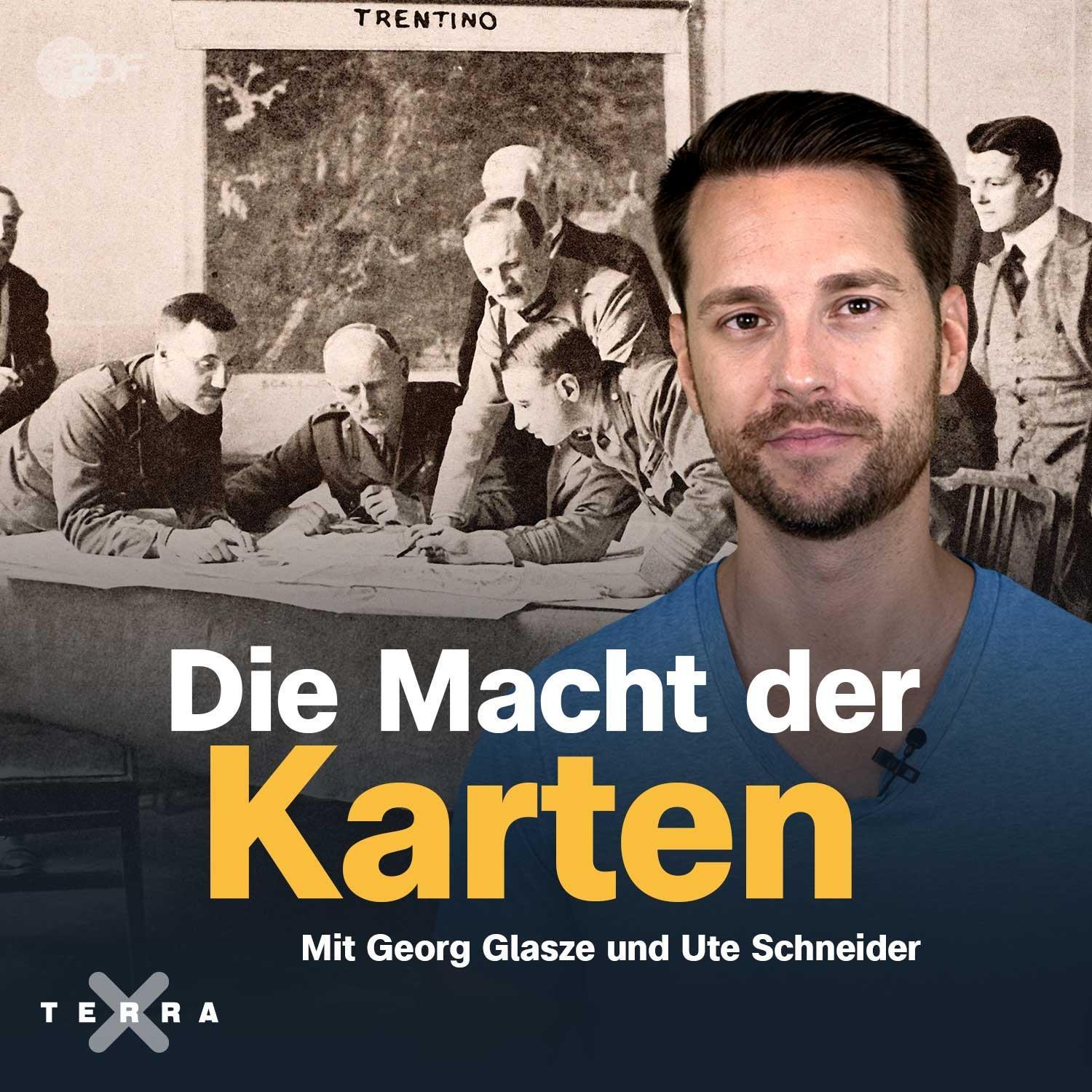
Die Macht der Karten
from Terra X History - Der Podcast
Wer schon mal eine Apfelsine geschält und dann versucht hat, die Schalen zu einem Rechteck zusammen zu legen, kennt das Problem: Irgendwo klafft immer eine Lücke. Und genau diese Frage beschäftigt Kartografen seit Anbeginn. Wie ist es möglich, die kugelige Erdgestalt auf eine platte Karte zu bringen? Generationen von Kartografen erfanden dafür so genannte Kartennetzentwürfe, die alle ihre Schwächen hatten: Mal verzerrten sie die Form, mal bildeten sie die Größenverhältnisse nicht richtig ab. Mal war die Lage vollkommen verkehrt. Mit der Entwicklung der Vermessungskunde wurden spätestens im 19. Jahrhundert die Kartengrundlagen immer besser, die Maßstäbe größer. Die Topographische Karte 1:25.000 wurde zum Inbegriff der Landkarte. Heute navigieren wir mit GPS sicher durch unsere Städte, liefern vielleicht selbst Geodaten für die Weltkarte für alle an das Community-Projekt OpenStreetMap oder zoomen uns per Satellitenbild-Viewer in den letzten Winkel der Erde. Ein Podcast über Pioniere der Kartografie, warum Karten in der Geschichte auch politische Macht bedeutet haben und die Frage: Was ist eigentlich „kartographisches Schweigen?“ Gesprächspartner*innen: Daniela Dueck Georg Glasze Frederick Ramm Ute Schneider Médard Thiry Literatur: Garfield, Simon (2014): Karten! Ein Buch über Entdecker, geniale Kartografen und Berge, die es nie gab. Hake, Günter et al. (2001): Kartographie: Visualisierung raum-zeitlicher Informationen. Hake, Günter (1984): Kartographie I (Allgemeines, Erfassung der Informationen, Netzentwürfe, Gestaltungsmerkmale, topographische Karten). Hake, Günter (1985): Kartographie II (Thematische Karten, Atlanten, kartenverwandte Darstellungen, Kartenredaktion und Kartentechnik, rechnergestützte Kartenherstellung, Kartenauswertung und Kartengestaltung) Kann, Oliver (2021): Gut Besser Vermesser, Professionalisierung militärisch-räumlichen Wissens am Beispiel der Königlich Preußischen Landesaufnahme. Kultur- und Stadthistorisches Museum der Stadt Duisburg (Hg) (2006): Die Welt des Gerhard Mercator. Karten, Atlanten und Globen aus Duisburg. Monmonier, Mark (1996): How to lie with maps. Monmonier, Mark (2004): Rhumb Lines and Map Wars. A social History of the Mercator Projection. Ramm, Frederik u. Jochen Topf (2010): OpenStreetMap: Die freie Weltkarte nutzen und mitgestalten. Schneider, Ute (2006): Die Macht der Karten. Eine Geschichte der Kartographie vom Mittelalter bis heute. Van den Broecke, Marcel (2015): Abraham Ortelius 1527-1598. Life, Works, Sources and Friends. Internetquellen: https://www.bosch.com/de/stories/eva-erstes-navigationssystem-von-bosch/ https://www.tandfonline.com/doi/full/10.1080/08873631.2018.1426953 https://psycnet.apa.org/doiLanding?doi=10.1037%2Fh0061626 https://pubs.geoscienceworld.org/hess/earth-sciences-history/article/11/1/9/615318/THE-TURIN-PAPYRUS-MAP-THE-OLDEST-KNOWN-MAP-WITH https://www.myoldmaps.com/maps-from-antiquity-6200-bc/109-herodotus/109-herodotus.pdf https://www.deutschlandfunk.de/als-eratosthenes-als-erster-den-umfang-der-erde-berechnete-100.html https://www.planet-wissen.de/gesellschaft/ordnungssysteme/kartografie_das_gesicht_der_erde/pwieeratosthenesgeniederantike100.html http://www.landschaftsmuseum.de/Seiten/Museen/Ebstorf.htm https://www.bezreg-koeln.nrw.de/geobasis-nrw/produkte-und-dienste/topographische-karten/historische-topographische-karten/1836-1850 https://www.bezreg-koeln.nrw.de/geobasis-nrw/produkte-und-dienste/topographische-karten/historische-topographische-karten/1891-1912 https://www.geotab.com/de/blog/gps-technologie/ Mehr zum Thema in der ZDF-Mediathek https://www.zdf.de/dokus/imperium-karten-der-macht-100 https://www.zdf.de/dokus/die-vermessung-der-erde-mit-harald-lesch-100 https://www.zdf.de/play/dokus/collection-index-page-artede-collection-artede-r
NOW PLAYING
Die Macht der Karten
No transcript for this episode yet
Similar Episodes
Mar 26, 2026 ·1m
Jan 2, 2026 ·47m
Dec 21, 2025 ·46m