
EPISODE · Jul 17, 2023 · 27 MIN
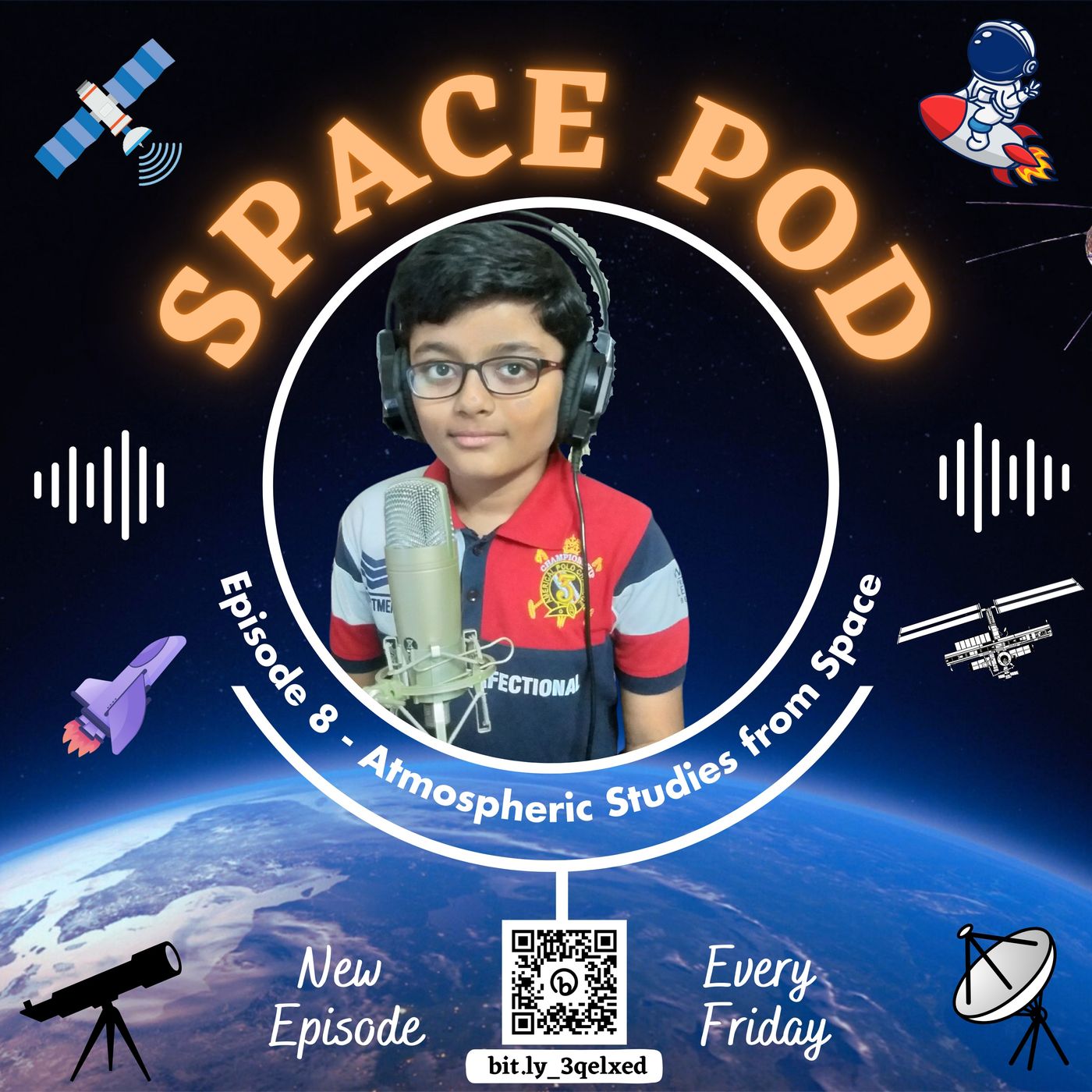
Episode 8 - Atmospheric Studies from Space
from Space POD (Space Technologies and Exploration) · host VENKAT RAMAN PATNAIK
Check out my latest episode!Atmospheric tracking from space involves the use of satellites and other space-based instruments to monitor and study Earth's atmosphere. It plays a crucial role in understanding and predicting weather patterns, climate change, air quality, and other atmospheric phenomena. Here's an overview of the key aspects of atmospheric tracking from space:Satellite Observations: Satellites equipped with various sensors and instruments are used to observe different aspects of the atmosphere. These satellites can measure parameters such as temperature, humidity, air pressure, wind speed and direction, cloud cover, aerosols, and trace gases. Advanced satellites, such as those in the geostationary orbit, provide continuous monitoring of specific regions, while polar-orbiting satellites cover the entire globe over a series of orbits.Remote Sensing Techniques: Remote sensing is a technique used to gather information about Earth's surface and atmosphere without direct physical contact. Satellites employ various remote sensing techniques to collect data. For example, passive remote sensing involves measuring the natural radiation emitted or reflected by the atmosphere, while active remote sensing involves sending out signals or pulses and measuring the responses. Remote sensing techniques are employed to obtain data on cloud properties, precipitation, atmospheric composition, and more.Weather Forecasting: Atmospheric tracking from space significantly contributes to weather forecasting capabilities. By continuously monitoring the atmosphere, satellites provide valuable data that is assimilated into numerical weather prediction models. These models use complex algorithms to simulate the atmosphere's behavior and predict future weather conditions. Satellite observations help initialize these models, improving their accuracy and lead times for forecasting severe weather events like hurricanes, storms, and heatwaves.Climate Monitoring: Long-term satellite observations are crucial for monitoring climate change. By tracking various atmospheric parameters over extended periods, scientists can detect trends and changes in the Earth's climate system. Satellites provide essential data for monitoring variables such as temperature patterns, sea surface temperatures, ice cover, precipitation, and greenhouse gas concentrations. This information helps assess the impact of human activities on the climate and develop mitigation strategies.Air Quality Monitoring: Satellites play a vital role in monitoring air quality and pollution levels on a global scale. They provide measurements of air pollutants, such as nitrogen dioxide, ozone, aerosols, and particulate matter, which are important for understanding air pollution sources, distribution, and transport. By combining satellite observations with ground-based monitoring networks, scientists can assess air quality, track pollution sources, and support decision-making processes related to public health and environmental policies.Disaster Response and Management: Atmospheric tracking from space is invaluable during natural disasters and emergencies. Satellites provide real-time information about extreme weather events, including hurricanes, cyclones, wildfires, and floods. This data aids in disaster response planning, early warning systems, and emergency management efforts. Additionally, satellite observations help assess the extent of damage caused by disasters and support relief operations.In summary, atmospheric tracking from space using satellites and remote sensing techniques has revolutionized our understanding of Earth's atmosphere. It enables us to monitor weather patterns, study climate change, assess air quality, and respond to natural disasters more effectively. The continuous stream of data from space-based platforms enhances our ability to predict and mitigate the impacts of atmospheric phenomena on our planet and society.
NOW PLAYING
Episode 8 - Atmospheric Studies from Space
No transcript for this episode yet
Similar Episodes
No similar episodes found.