
EPISODE · Apr 30, 2026
Hidden Ocean Life And Animal Migrations Expose New Pathways Of Global Carbon Flow
from NTA Video Stories · host NTA
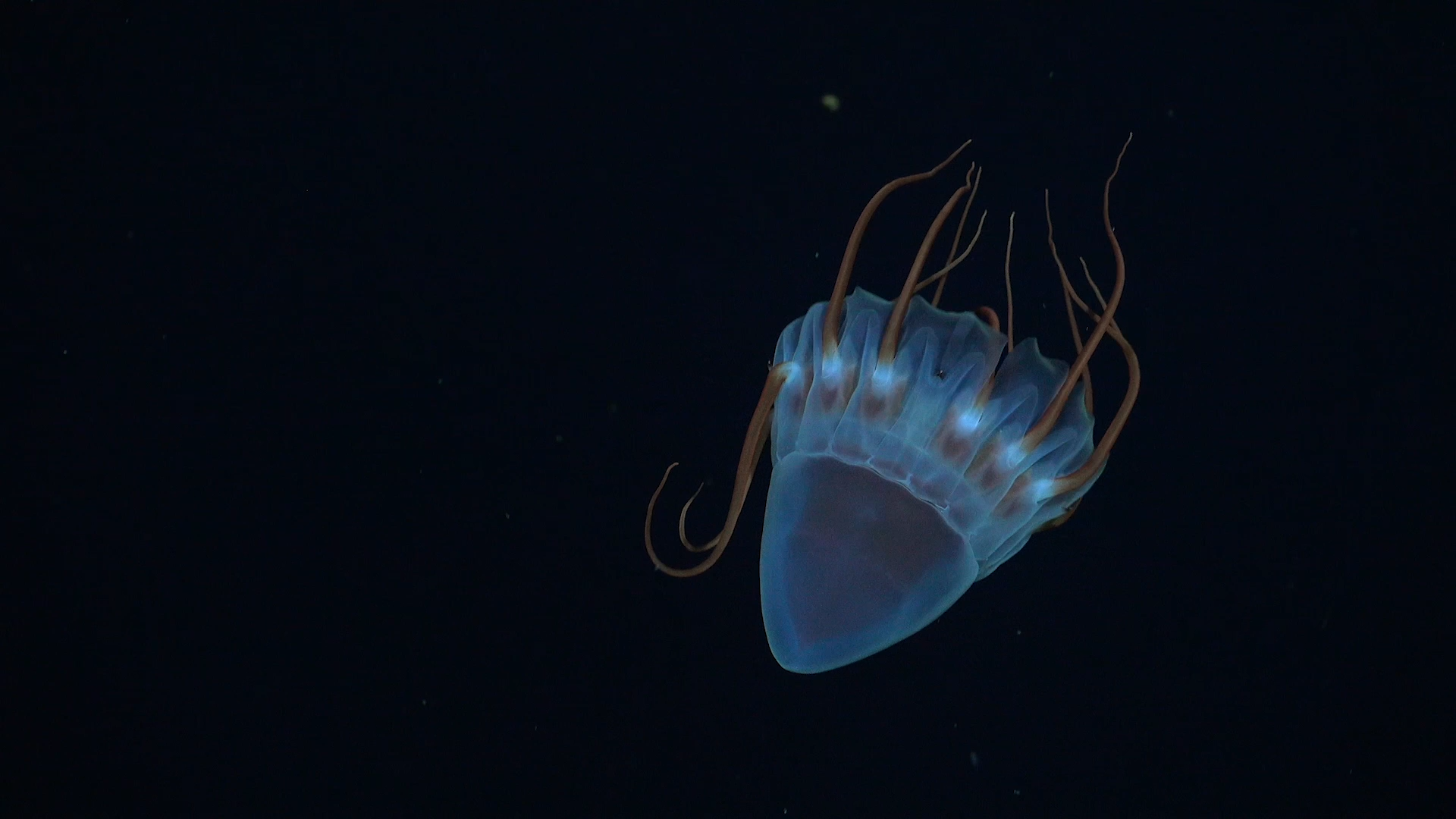
Rio de Janeiro, Brazil – Scientists have completed two major research expeditions in the Southwest Atlantic Ocean aimed at improving understanding of how carbon is transported from the ocean surface to the deep sea. The missions focused on the biological pump, a key process in climate regulation that moves carbon downward through ocean systems. The work was carried out between January and April aboard the research vessel Falkor (too), with support from Schmidt Ocean Institute and Schmidt Sciences’ Ocean Biogeochemistry Virtual Institute. The first expedition, known as Animals as Living Bioreactors, took place in January and February under the leadership of Dr. Anitra Ingalls of the University of Washington. Researchers studied waters between Argentina and Brazil, examining fish, jelly-like species, and other animals involved in the world’s largest daily vertical migration. These animals travel from deep waters to the surface at night to feed, then return to depths before daylight. Scientists estimate billions take part in this movement, but their role in carbon transport is still not fully understood. Dr. Ingalls explained that these animals consume surface carbon and then transport it to depths of up to 1,500 meters, where it is later released. She noted that they may represent a previously overlooked part of carbon delivery to the deep ocean. Researchers also collected biological samples for further study, including species not previously recorded in the South Atlantic and others that may be new to science. Some specimens will be placed in museum collections. The second expedition, SUBSEA, was conducted in March and April over 200 miles off the coast of Brazil, led by Dr. Matthew Church of the University of Montana. This study focused on microscopic algae known as phytoplankton living in the Southeastern Atlantic Gyre, a vast nutrient-poor ocean region. The team investigated how carbon and nutrients cycle at around 100 meters depth, where light levels decrease and satellite observation is not possible. They also observed the end stage of a large phytoplankton bloom that was breaking down. One hypothesis explored is that decaying surface plankton may act as a nutrient source for deeper communities. Researchers are still examining how essential nutrients such as iron, phosphorus, and nitrogen are supplied to sustain growth at depth. Dr. Church said many of the processes supporting subsurface phytoplankton remain unknown and that the findings will improve understanding of biological and chemical interactions in the upper ocean and their role in carbon export. Scientists emphasize that the ocean absorbs about one-third of human-produced carbon dioxide, making this research critical to understanding climate impacts.
NOW PLAYING
Hidden Ocean Life And Animal Migrations Expose New Pathways Of Global Carbon Flow
No transcript for this episode yet
Similar Episodes
Apr 21, 2026 ·13m
Apr 19, 2026 ·16m
Apr 17, 2026 ·13m
Apr 13, 2026 ·11m
Apr 11, 2026 ·16m