
EPISODE · Apr 3, 2018 · 32 MIN
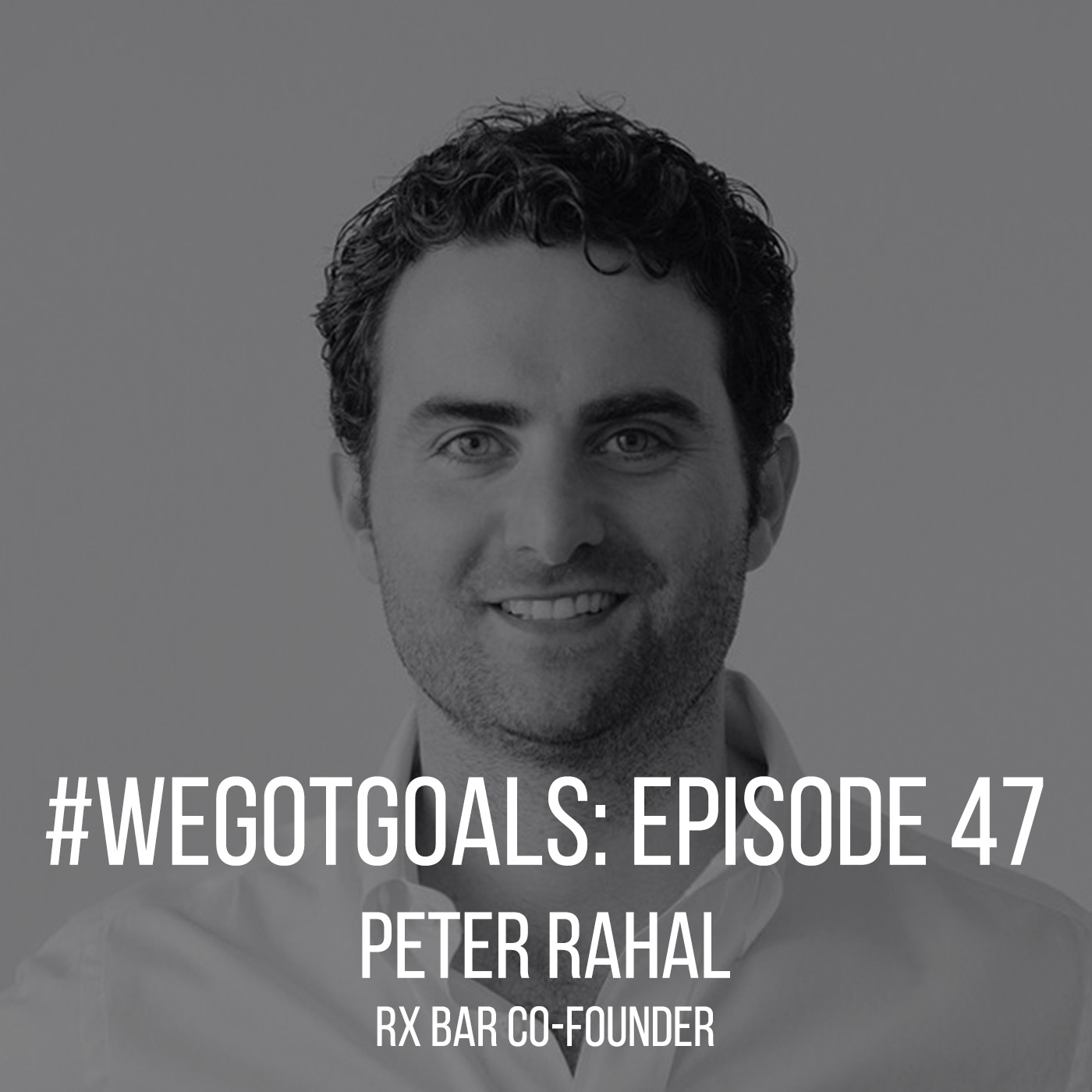
How RXBAR Co-Founder Peter Rahal Built a Food Movement from His Parents’ Basement
from #WeGotGoals by aSweatLife · host aSweatLife
(This episode has some explicit language) Peter Rahal, co-founder and CEO of RXBAR, didn’t set out to build a multi-million-dollar company. But he had goals, both large and small. Practically speaking, he wanted a clean, healthy protein bar to fuel his workouts. On a bigger scale, he sought freedom and fulfillment. “Prior to working at RXBAR, I'd always had a normal job. I felt really handcuffed and I wasn't in a position to be successful,” Rahal told me on this week’s episode of #WeGotGoals. “And so a goal for me early on was always to really flourish and have freedom and achieve success for myself.” Those dual quests took him and co-founder Jared Smith farther than they could have imagined. In 2012, they began pressing dates, almonds, and egg whites into bars in Rahal’s parents’ basement. From the beginning, they established high standards and lofty values. The product had to be excellent. The process, collaborative. And even as they glimpsed glimmers of progress, they stayed humble, knowing they didn’t have all the answers. Those years weren’t easy. In fact, the pair suffered. “It was miserable,” he says, “pressing bars with your thumbs in your parents’ basement when you’re 26 and while your friends are doing great things and having dinner in the city.” But Rahal likens the experience to a grueling fitness routine. “The hardest workouts are where you stimulate the most growth from,” he says. “And work is the same thing. The most discomfort you have, the harder it is, the more you grow.” And grow they did. Rahal remembers telling Smith early on that if they did things right, this could be a $10 million business. Last year, Kellogg bought RXBAR—which now sells 120 million bars per year—for $600 million. Rahal and Smith stayed on to lead what is now a standalone unit in the larger company, a critical component of the deal, he says. “We were looking for the right muscle, and to protect our people and our culture. So those are kind of two objectives or goals that we were looking for in a partner. Kellogg fit that perfectly and now we have resources to continue to achieve our business objectives.” Armed with Kellogg’s expertise in areas like international distribution, contract negotiation, and performance management, RXBAR will continue its ambitious quest to transform the way food is made and delivered. That starts with shifting the corporate approach, Rahal says. Even big companies can innovate and relentlessly drive to improve. Employees who are valued and respected can truly achieve their potential. Systems codify these values, ensuring businesses continue to serve the right people in the right way. For those of us not in the food industry, who just buy bars at the store or the gym—we’ll see the results on the shelves: “More access to food that’s better for you, that's delicious, that saves you time and that you can trust,” he says. And of course, as the RXBAR package famously proclaims, “No B.S.” And is Rahal now free? Well, yes and no, he says—in fact, he’s not quite sure of the answer. What he does know is that he’s found a deeper satisfaction and a whole new set of priorities, ones he feels he can pursue to truly leave a legacy. Listen to this week’s episode to hear more about what freedom means to Rahal, the reason his partnership with Smith works, and a little bit—but not TOO much—about what it takes to get hired as part of the RXBAR team. If you like what you hear, subscribe where ever you get your podcasts and leave us a rating or a review on Apple Podcasts. And if this post or anything else we’ve created impacted your life, please support our Kickstarter. --- Transcript: JAC: Hey, goal getters, it's Jeana Anderson Cohen from aSweatlife.com, and if you've been listening to #WeGotGoals over the last month, you know that we've been running our Kickstarter. And right now we have just five days to fund our big dream for $20,000 to help grow our ambassadorship to reach women across the country. We’re helping them set big, hairy audacious goals and form a network to achieve them. If you want to help out, check the link in our show notes or go to aSweatLife.com. Here's the episode. JAC: Welcome to #WeGot Goals, a podcast by aSweatlife.com on which we talk to high achievers about their goals. I'm Jeana Anderson Cohen; with me, I have Cindy Kuzma and Kristen Geil. CK: Good morning, Jeana. KG: Hi Jeana. JAC. Hi Ladies. So Cindy, this week you talk to Peter from RXBAR. CK: I did. I spoke with Peter Rahal. He is the co-founder and CEO of RXBAR and he is a very focused, intense, high achieving person and it was great to kind of crack his code just a little bit. JAC: One of the things that I found super interesting was sort of the driving force behind his goals: freedom. Can you talk to me a little bit about how freedom has shaped what he's done through his life and where it's taken him? CK: Yes. He started RXBAR, not necessarily because he wanted to be an entrepreneur, but because he saw a problem that needed to be solved and also because he felt trapped in a job he didn't love, under leadership he didn't respect and he just really wanted to break free. What was interesting, and you'll hear this toward the end of the interview, was kind of how that has played out for him. He doesn't necessarily feel free, but he maybe has a little bit of a new definition of freedom or a new thing that he's seeking in its place. So a pretty interesting to hear how that all unfolded. KG On the podcast recently we did a live recording with Julia and Lauren who are the co-founders of Stylisted. You spoke with Peter about his co-founder. Jared. One of the things I was interested to hear about was how these two different co-founders might approach goal setting similarly or differently. For example, Julia and Lauren spoke about the importance of having the same long-term vision and goals for the company, but at the same time celebrating the little wins and the small goals that you achieve along the way. Did Peter talk about how he and Jared have any approaches to setting goals as partners and working towards them together? CK: Yeah, so like Julia and Laura and Peter and Jared were friends first and Peter talks about how important it is to have that rapport with someone that you're starting a business with. That way you can kind of tell early on when something is amiss and you can take steps to work it out before it becomes an actual problem. He said they've also worked hard not to fight about things like titles or things that were insignificant. They kind of set their egos aside and really focused on what they thought was best for the business and yeah, in terms of setting goals for the business, it's interesting. They didn't really have specific goals in terms of the money that they wanted to make or units sold or anything like that. They really just looked at making the best product that they could to fill this hole in the market and then when they got to a bigger place, finding the best people to help support them in those goals. That's really what carried them to a level of success beyond what they even could have imagined. JAC: Well, I've certainly loved watching the story of RXBAR unfold and especially with this acquisition by Kellogg recently, so excited to hear this interview. So here is Cindy with Peter. CK: This is Cindy Kuzma and I'm here with Peter who is the CEO and the co-founder of RXBAR. Peter, thank you so much for joining us here today on the #WeGotGoals podcast. PR: Thank you, Cindy. I appreciate you coming to our office. CK: It's great to be here and great to see so many people working hard. I'm wondering, Peter, I want to ask about your goals, but I'd first love to hear a little bit about what your day to day is like here at RXBAR. PR: So my day to day first, I'm not like a routine person. I like to think of myself as highly adaptable and I always start each week with like what's the most important thing I need to accomplish. I'm really motivated by accomplishment, so like what I need to, what do I need to get done this week? So I really think about my year through weeks, everything's through weeks and I accomplish as much as possible in each week. So that's like the first half of the week, Monday, Tuesday, Wednesday is very structured in terms of like what am I looking at, what's important, regular information. And then Thursday, Friday is typically like, I like think of the Wild West where I tried to leave it open and react to and be able to get some work done. CK: I like that. It sounds like you have a nice blend of a very loose structure that you work within that helps you stay somewhat organized, but then you really leave room for creativity and inspiration and doing the work. PR: I think I’m very unorganized, but yet organized if that like there's a paradox or I don't know what the right word is, but … CK: Well, it seems to be working for you. You've accomplished some pretty big things in the past five years or so. Our big question on #WeGotGoals always is what is one big goal ...
NOW PLAYING
How RXBAR Co-Founder Peter Rahal Built a Food Movement from His Parents’ Basement
No transcript for this episode yet
Similar Episodes
Mar 26, 2026 ·1m
Jan 2, 2026 ·47m
Dec 21, 2025 ·46m