
EPISODE · Feb 8, 2026 · 36 MIN
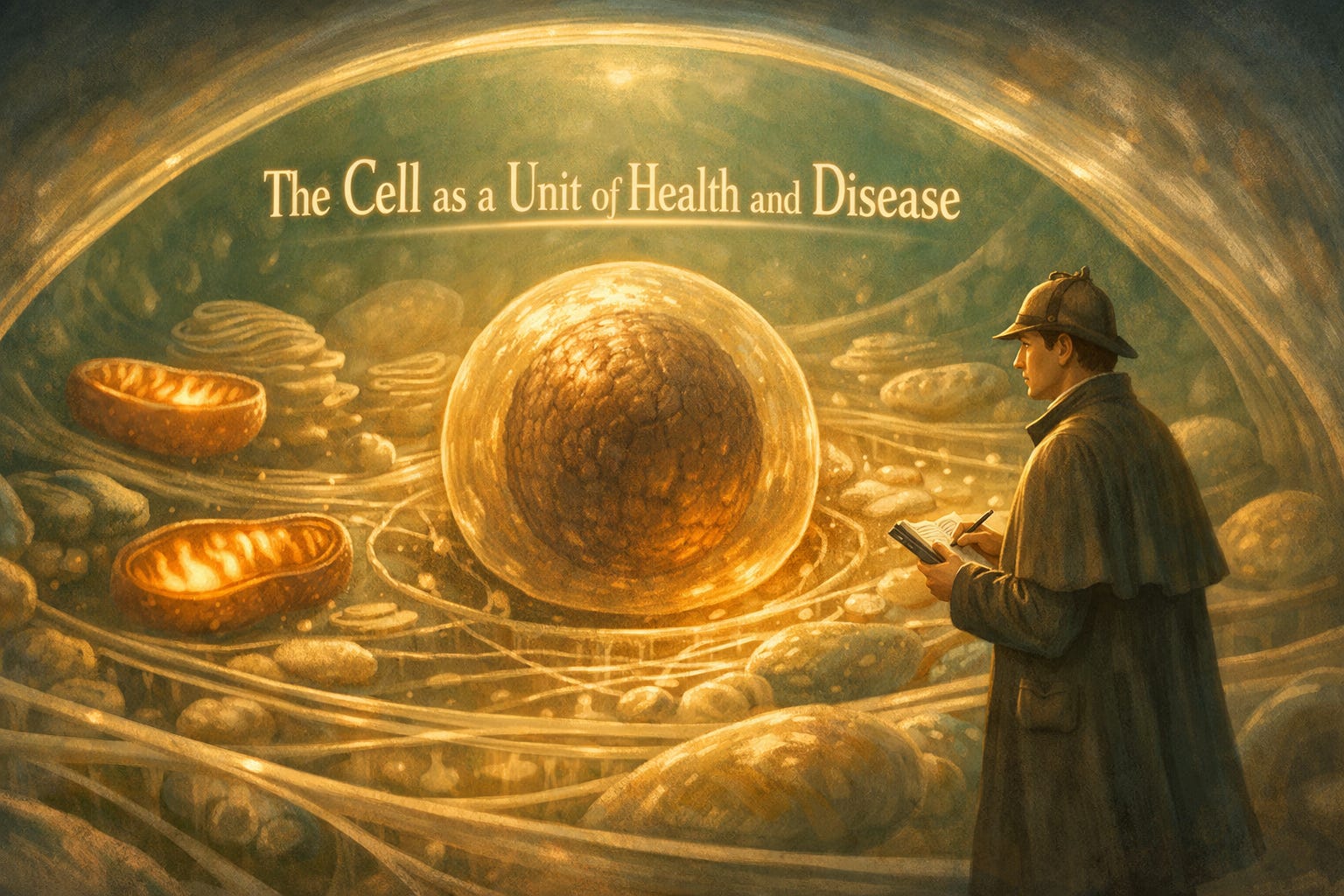
Patho 1: The Cell as a Unit of Health and Disease
from Clinical Deep Dives · host Dr Manaan Kar Ray
This opening episode lays the intellectual foundation for all of pathology by returning to its smallest but most decisive stage, the cell. Health and disease are not abstract states but consequences of how cells are built, how they communicate, and how they respond to stress. To understand pathology is to understand what happens when cellular order is strained, distorted, or lost.The episode begins by exploring the cell as an organised system rather than a collection of parts. Membranes define boundaries, organelles specialise function, and the cytoskeleton provides both structure and movement. These features are not decorative. They determine how cells exchange signals, manage energy, synthesise proteins, and maintain internal balance. Disease often emerges not from dramatic destruction but from subtle failures of these systems.We then examine the relationship between cellular structure and function. Normal histology is treated as a language rather than a checklist, teaching how tissue architecture reflects purpose. When this architecture changes, pathology leaves visible clues long before symptoms appear. Adaptation, vulnerability, and resilience are introduced as core cellular themes that echo throughout later disease processes.The episode also introduces key principles that will recur across the series. Pathology is probabilistic rather than absolute. Cells operate within ranges of tolerance. Injury occurs when demands exceed capacity or when adaptive responses become maladaptive. Understanding disease therefore requires attention to thresholds, timing, and context rather than isolated events.Finally, the episode frames pathology as a discipline that connects molecular mechanisms to clinical reality. Cellular injury, inflammation, neoplasia, degeneration, and repair are not separate topics but variations on how cells cope with challenge. This episode sets the conceptual lens through which every subsequent organ system will be interpreted.Key takeaways* Disease begins at the cellular level even when it presents at the organ or system level* Cellular structure and function are inseparable and must be understood together* Normal histology provides the reference point for recognising pathology* Pathological change often reflects failure of adaptation rather than sudden damage* Thresholds, timing, and context are central to understanding disease processes This is a public episode. If you'd like to discuss this with other subscribers or get access to bonus episodes, visit drmanaankarray.substack.com/subscribe
NOW PLAYING
Patho 1: The Cell as a Unit of Health and Disease
No transcript for this episode yet
Similar Episodes
Jun 4, 2025 ·9m
May 21, 2025 ·11m