
PODCAST · business
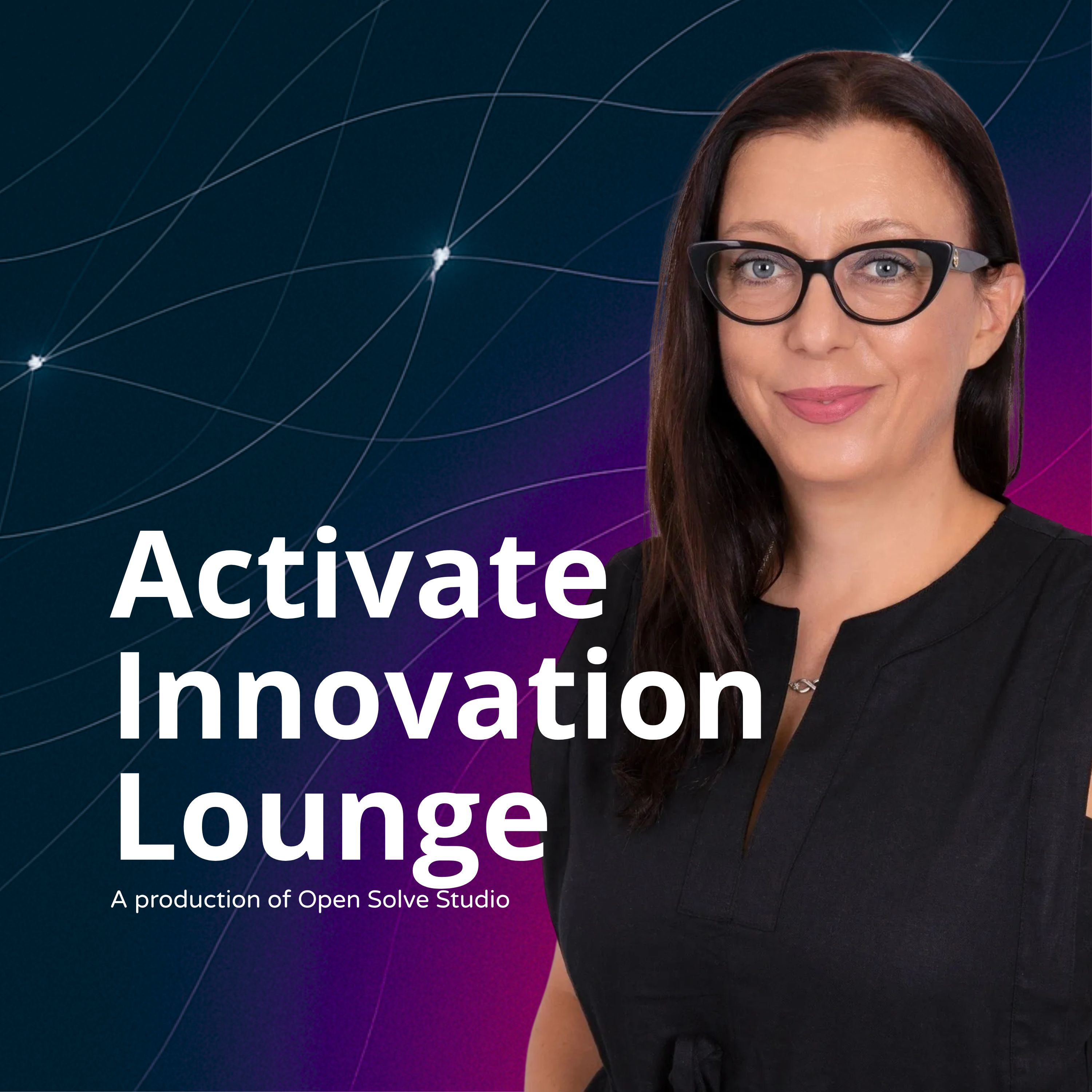
Activate Innovation Lounge
by Open Solve Studio LLC
Activate Innovation Lounge features real stories from leaders who activate innovators, innovation, and innovation culture within and beyond their organizations. Through conversations with innovation leaders, innovators, and entrepreneurs, we explore how organizations unlock the potential of their people, open up to outside ideas, and build cultures where innovation does not just happen once but keeps happening. Each episode shares wisdom about shaping the processes and structures that work, the challenges overcome, and the lessons learned to sustain innovation as a practice, not just a moment.
-
13
Episode 11: How leaders can (and should sustain) grassroots innovation
In the first part of this conversation, Alexis Samuel laid out what he calls the Baker's Dozen. Twelve building blocks for activating grassroots innovation in a large enterprise.From the CEO's call to innovate to psychological safety.From branding a program to measuring how it generates its return on investment.It was a masterclass in the architecture of innovation at scale. Especially for corporations.But who are the people, that is the employees, that respond to such calls? Why do they respond? Do they all engage with such initiatives?That is the human story inside the architecture. And that is what this second episode is about.Today, we move from strategy to people. From building the system to understanding what it feels like to be inside it.We talk about who the grassroots innovators really are, what activates their curiosity and drive to engage with innovation calls, and what makes them stop participating. I personally learned something new about this last one.Alexis Samuel spent 35 years in the corporate world ensuring excellent delivery of IT services. He never held innovation in his title. Yet he activated innovators throughout his career, and in his last chapter he shaped a program to activate grassroots innovators across a global company with over 250,000 employees.He is not your common go-to person when it comes to innovation. Yet his wisdom is priceless.I am your host Iliriana Kacaniku, an innovation strategist at heart, and this is the Activate Innovation Lounge, a podcast dedicated to all leaders with or without innovation in their title who want to activate innovators, innovation, and innovation culture in their organization.Chapters00:00 Understanding Grassroots Innovators07:12 Motivation and Engagement in Innovation12:36 Hackathons vs. Extended Innovation Challenges19:41 Setting the Stage for Successful Innovation25:35 The Role of AI in Innovation Processes36:19 Leveraging External Ecosystems for Innovation41:07 The Future of Innovation Programs46:43 Sustaining Innovation Through Leadership Changes53:10 Activating Grassroots Innovators55:18 The Future of Innovation Programs
-
12
Who knows best what needs to be solved?
There is a tension in how organizations think about activating employee innovators.Who knows best what needs to be solved?The leader who sees the business from the top? Or the employee who lives the friction every day?Alexis Samuel spent over 35 years ensuring excellent delivery of global IT services for large technology enterprises. He activated thousands of grassroots innovators without ever holding innovation in his title.His answer is clear: go to the people doing the work.Ask them what can be done better, what needs to drop, what can be automated, what can be eliminated. Simplify, combine, automate, eliminate. That backlog becomes your innovation agenda. And today, it also becomes your AI roadmap.The employees closest to the friction are the ones who know where it lives.Now a question for you as a leader:Have you ever watched your team solve the wrong problem brilliantly — because no one asked them which problem actually needed solving first?What does it take in your organization to surface the right problems before jumping to solutions?Drop your answer in the comments.In the next episode of the Activate Innovation Lounge, Alexis unpacks this and several other sharp ideas on activating grassroots innovators at scale — including how AI fits into every stage of the process.Part two goes live this Friday. Tune in wherever you get your podcasts.
-
11
Episode 10: Why should leaders activate grassroots innovators with Alexis Samuel
Why do most innovation programs generate excitement but deliver nothing? You collect hundreds of ideas. Award the best ones. Then watch them die in handoff limbo. Alexis Samuel has spent decades building grassroots innovation programs at scale in global services firms. He reveals who actually shows up to innovate, how to set transparent evaluation criteria, and how to build scaffolding that carries ideas from submission to implementation. You will learn why doers—not managers—drive the best innovations, how to use AI for screening without eliminating human judgment, and why innovation programs need to rebrand every three years. This episode is for leaders tired of innovation theater and ready to build systems where ideas actually ship. Key takeaways:Broadening the definition of innovation draws everyone in.CEO sponsorship and clear vision are critical for grassroots programs.Ring-fencing problems and setting measurable goals drive success.Training and continuous refreshment of skills are essential.Transparent metrics and psychological safety foster innovation.Chapters00:00 Introduction to Innovation Leadership03:21 The Role of Grassroots Innovation05:21 Defining Problems for Innovation09:14 Activating Grassroots Innovators14:13 Who should find the problem to solve?18:21 The Baker's Dozen framework 32:01 How to motivate managers and create psychological safety for engagement in innovation?37:02 How to manage reward and recognition for grassroots innovators?42:05 How to measure the Return on Investment of grassroots innovation campaigns?55:54 Success stories from grassroots innovation01:04 Key Takeaway
-
10
Episode 9: How can leaders measure the business value of innovation with Simon Hill
Innovation is inherently uncertain because it is about the future. That uncertainty is also the reason innovation gets cut first when budgets tighten. Most leaders cannot put a number on the value innovation creates, so when finance asks, the room goes quiet.Simon Hill has spent fifteen years building the tools to end that silence. He is the founder and CEO of Wazoku, the innovation delivery partner behind Total Innovation and the InnoCentive marketplace, and the author of Expected Value: The System to Align Innovation, Strategy, and Value Creation.In this conversation, Simon and Iliriana unpack:Why challenge-driven innovation is the most practical tool a leader has to activate innovators, internal or externalThe xV framework: the four components that let innovation teams, strategy, and finance finally speak the same languageWhy most innovation projects spend hundreds, sometimes thousands of dollars to generate one dollar of expected value, and what to do about itKill credits and zombie projects: why stopping bad investments is as valuable as launching good onesThe case for intentional deceleration in a culture obsessed with speedWhy the wall between internal and external innovators is smaller than most leaders thinkHow AI has collapsed the cost of feasibility to nearly zero, and what that means for the bottleneck of innovationWhy Simon believes innovation is not a job but a mindset and a systemThe first-time-public reveal of Wazoku's price point for the full open innovation stackSimon ends the conversation with a question for our audience, one he himself cannot answer cleanly: Why are so few organizations using open innovation when the cost of deploying it has dropped to almost zero, and the cost of not deploying it has never been higher?If you are a leader, with or without innovation in your title, working to activate innovators, build innovation programs, or measure what your innovation work is actually worth, this conversation is for you.About the guestSimon Hill is founder and CEO of Wazoku, an innovation platform serving NASA, HSBC, Novartis, Shell, the UK Ministry of Defence, and others. He is the author of Expected Value, shortlisted in the top five for Thinkers360 Author of the Year 2026. He is a five-time acquirer, a Founders Pledge member, and the Guardian SME Business Leader of the Year.About the hostIliriana Kacaniku is the founder of OpenSolve Studio and host of the Activate Innovation Lounge. She is an innovation strategist with over twenty years of experience helping organizations and their leaders activate innovators, build innovation programs, and create cultures where innovation becomes a practice, not just a moment.Connect with SimonLinkedIn: Simon Hill on LinkedInWazoku: wazoku.comBook: Expected Value: The System to Align Innovation, Strategy, and Value CreationConnect with IlirianaLinkedIn: Iliriana Kacaniku on LinkedInWebsite: OpenSolveStudio.comNewsletter: Activate Innovation NewsletterSubscribe to the Activate Innovation LoungeSpotify | Apple Podcasts | YouTube
-
9
Episode 8: How to build an innovation system that never stops with Dan Toma, Outcome
Innovation is not failing because organizations lack ideas. It is failing because the system that should turn ideas into outcomes was never built. And every year it stays broken, bad ideas keep dying slowly, at enormous cost, while good ones never make it through.Dan Toma has spent his career making that cost visible, and fixable. He is the co-founder of Outcome, a consultancy helping large organizations achieve repeatable, measurable, and sustainable innovation-led growth, and the author of three books on corporate innovation, including Innovation Accounting and his latest, Open Innovation Works.In this conversation, Dan and Iliriana unpack:Why the real cost of innovation is not the budget you allocate but the cost of a bad idea that spends three years dying inside your organizationWhy most organizations cannot answer the question: what does innovation mean here, and why that single gap breaks everything downstreamThe hybrid centralized and decentralized innovation structure that works in practice across multiple geographies, and when each model fitsWhat a venture board actually is, why its job is to evaluate evidence not judge ideas, and why most organizations get this wrongHow staged funding and pre-approved budgets remove the CFO bottleneck without removing financial disciplineWhy opening an idea inbox without a process behind it is more damaging to innovation culture than never asking for ideas at allThe story of three employees across three continents who independently submitted the same idea and were brought together to build itThe question Dan still cannot answer about risk tolerance, corporate culture, and what we are actually asking of the people we hireDan ends the conversation with a question for our audience, one he himself cannot resolve cleanly:Why are we expecting people inside corporations to be innovative, risk-taking, and experimental, when the reason many of them joined a corporation in the first place was for security, stability, and low risk?If you are a leader, with or without innovation in your title, working to build an innovation system that actually runs year after year and not just when someone is watching, this conversation is for you.Chapters:00:00 Introduction to Dan Toma and His Mission05:08 The Journey to Innovation Consulting07:34 Building an Innovation System12:34 Centralized vs. Decentralized Innovation18:22 Concrete Examples of Innovation Systems24:54 Best Practices in Collecting Employee Ideas31:14 The Importance of Actioning Employee Ideas34:20 The Importance of Employee Engagement in Innovation41:00 Building a Structured Innovation Process47:10 The Role of Decision Makers in Innovation52:49 Creating a Business Case for Innovation56:21 Integrating AI into the Innovation Process59:45 The Paradox of Risk in Corporate Innovation01:03:53 The Importance of a Shared Definition01:05:15 Creating a Supportive Process for Ideas01:06:29 The Challenge of Employee InnovationAbout the guest: Dan Toma is co-founder of Outcome, an innovation consultancy working with large organizations across banking, pharma, and energy sectors on multiple continents. He is the author of The Corporate Startup, Innovation Accounting, and Open Innovation Works. He came from the startup world, nearly quit his first corporate innovation role after three weeks, and spent the next decade building the systems that make innovation repeatable.About the host: Iliriana Kacaniku is the founder of OpenSolve Studio and host of the Activate Innovation Lounge. She is an innovation strategist with over twenty years of experience helping organizations and their leaders activate innovators, build innovation programs, and create cultures where innovation becomes a practice, not just a moment.
-
8
Episode 7: Why every organization, including yours, needs an innovation garage?
About this episode:Every organization should have its own garage. Not just a physical space, but a program that allocates resources and time for employees to tinker, experiment, and push their own boundaries by default, not by exception. That belief is what brought Ed Essey to the Activate Innovation Lounge.Ed has spent over a decade inside Microsoft Garage, one of the most recognizable internal innovation programs in the world, coaching employees from every function to turn their passion into real, deployed impact. With over 20,000 projects produced in a single event and innovations ranging from the Xbox Adaptive Controller to underwater data centers, the Garage is proof that when organizations invite employees to innovate rather than merely permit it, the results compound over time.In this conversation, Ed shares what it actually takes to activate innovators already among your employees, build the scaffolding to move ideas from concept to deployed solution, and nourish the culture so the innovation mindset outlasts any single program or event.If you are a leader trying to figure out how to make innovation a practice rather than a moment, this episode is your blueprint.Key takeaways:The best innovation crews are not assigned by leadership, they are chosen by the innovators themselves.Every innovation crew needs three makers: a change-maker to build it, a deal-maker to sell it, and a taste-maker to make it compelling.The two-sided marketplace, where leaders post challenges and employees respond with solutions, is what turns a program into an activation engine.The intrapreneur mindset in one line: find an idea big enough to matter and small enough to win.In an AI-accelerated world, the three innovation horizons are no longer time-based, and the structures leaders build today need to match that new reality.Chapters:00:00 Activating Innovators: The Microsoft Garage Journey09:42 The Impact of Microsoft Garage on Culture18:39 Innovators and Their Traits27:23 Pathways for Innovation: From Ideas to Products32:34 The Art of Hacking for Change34:56 Building Entrepreneurial Crews38:24 The Heist Movie Analogy for Innovation41:48 Activating Innovators in Established Companies48:17 AI's Impact on Innovation and Team Dynamics01:00:32 Vibe Coding: The New Language of Innovation01:06:04 Unlocking Innovation Through Positive Emotions01:07:32 The Role of Teams in Innovation01:08:54 The Challenge of Data in Innovation Projects
-
7
Episode 6: What does it take to design and run a successful innovation challenge with Elaine Chin
When Elaine Chin designs a challenge, she is not just writing a problem statement. She is translating years of internal work into a question the world can answer. In this episode of Activate Innovation Lounge, Elaine walks us through the art and science of challenge design, from identifying the right problem to sequencing solutions, setting prize incentives, and managing what happens after the award. She shares stories from her work at Innocentive, including a Habitat for Humanity challenge that reduced malaria exposure by 89% in Kenya and government challenges that hired solvers from countries no recruiter would have considered. If you are an innovation leader wondering whether challenges belong in your toolkit, this conversation will show you exactly how they work and why they matter. Listen now on Spotify, Apple Podcasts, and YouTube.
-
6
Episode 5: How to start asking better questions with Stephen Shapiro
What if the reason your innovation efforts keep failing is not because you lack ideas, but because you are asking less questions than you should? Stephen Shapiro, author and creator of a 20,000 person innovation practice at Accenture, joins the Activate Innovation Lounge to unpack why organizations default to suggestion boxes, how confirmation bias sabotages even the best solutions, and why the baggage claim story he has told for years still stops leaders in their tracks. This conversation digs into challenge-centered innovation, the role of middle managers as the permafrost of innovation, and how AI is reshaping not just the tools we use, but the questions we need to ask. If you are tired of spinning wheels on ideas that do not create value, this episode will change how you approach your next challenge. Listen now on the Activate Innovation Lounge. For those curious to learn more, take a look at the Invisible Solutions for 25 lenses to reframe your problem statement. Also, Stephen's new book You're Not Playing with a Full Deck: Why the Coworkers Who Drive You Crazy Are Your Unfair Advantage is coming on April 21, 2026 and a useful guide to driving innovation and collaboration for breakthrough results.
-
5
Episode 4: What if your organization is solving the wrong problem?
In this episode, I talk to Jon A. Fredrickson, pioneer in open innovation and founder of Einstein's 55, who’s dedicated most of his career to working Fortune 500 companies, government, and nonprofit organizations leverage open innovation challenges to source innovative solutions and innovators. In this episode, he reveals why most organizations misdiagnose their biggest challenges and how leaders can break through organizational antibodies, cultural resistance, and insular thinking to source breakthrough solutions from unexpected places. Jon shares the BOOM methodology, real stories from NASA to humanitarian organizations, and why getting the problem right matters more than having all the answers. If you're leading innovation and feel stuck, this conversation will change how you think about problems, solutions, and who gets to solve them. Jon is the founder and CEO of Einstein55.
-
4
Episode 3: On power of permission with Jan Fischer, Innosabi
In this conversation, Jan Fischer discusses the critical role of employee innovation in organizations and how to create a culture that fosters creativity and engagement. He emphasizes that innovation is not just the responsibility of a select few but should involve everyone in the organization. The discussion also covers the importance of overcoming barriers to innovation, the impact of AI on innovation management, and the challenges of measuring the ROI of innovation efforts. Jan shares real-world examples of successful employee-driven innovation initiatives and highlights the need for organizations to adapt and evolve their innovation strategies to remain competitive in the future.Jan Fischer is the founder and CEO of innosabi.TakeawaysInnovation is everyone's responsibility, not just a select few.Organizations often have more ideas than they can act upon.Lack of permission stifles innovation in organizations.Employee engagement is crucial for successful innovation.Creating a culture of innovation requires commitment from leadership.AI can enhance the role of innovation managers by automating repetitive tasks.Measuring the ROI of innovation is challenging but essential.Successful innovation requires quick feedback and support from management.Innovation should be seen as a continuous process, not a one-time event.Recognition and a culture of experimentation drive employee innovation.
-
3
Episode 2: Unlocking innovation and innovation leadership with Robyn Bolton
Leaders complain they don't have enough ideas. Yet every organization is full of people naturally full of ideas. So what's locking those ideas up?Robyn Bolton is Chief Navigator at MileZero and former innovation leader at Procter & Gamble and Innosight, Clayton Christensen's firm. She's discovered through her research that only 0.002% of ideas become million dollar businesses within a year of launch. That means you need 40,000 ideas to create a $1 million dollar product.In this conversation, you'll learn why successful organizations struggle most with innovation, how to create guardrails instead of rigid processes, and why leaders must fall in love with the problem before rushing to solutions.Robyn also shares the three resistance statements every innovation leader will face and exactly how to respond when someone says we tried that before.The conversation explores the critical role of leadership in innovation and the importance of creating a culture of idea sharing and activation. It delves into the challenges and considerations in open innovation, as well as the future of innovation and integration of internal and external ideas.She is the author of Unlocking Innovation and founder of MileZero through which she helps clients to use innovation, unlock their business’s potential and get real results. Chapters:00:00 The Role of Leadership in Innovation05:57 Creating a Culture of Idea Sharing11:56 The Evolution of Ideas into Million-Dollar Products17:49 Challenges and Considerations in Open Innovation31:15 The Importance of Loving the Problem37:19 Advice for New Innovation Leaders44:27 Managing Resistance to Innovation
-
2
Episode 1: Activating Innovation with Eugene Ivanov and the Power of Crowdsourcing
In this conversation, Iliriana Kaçaniku and Eugene Ivanov explore the evolution and significance of open innovation and crowdsourcing. They discuss the differences between co-creation and crowdsourcing, the importance of internal crowdsourcing, and the challenges faced by smaller organizations in adopting innovative practices. The role of AI in enhancing innovation processes is also examined, along with the necessity of defining problems effectively in crowdsourcing initiatives. The discussion concludes with reflections on the future of crowdsourcing and the importance of retaining solver loyalty in a competitive landscape. Key takeawaysOpen innovation is about bringing external knowledge into organizations.Crowdsourcing allows organizations to tap into a global pool of solvers.Internal crowdsourcing can create a common intellectual space within organizations.AI tools can significantly reduce the cost of innovation processes.Defining problems accurately is crucial for successful crowdsourcing.Organizations need to foster a culture of continuous innovation.Smaller organizations can leverage AI to enhance their innovation capabilities.The loyalty of solvers is essential for successful crowdsourcing platforms.Co-creation involves known partners, while crowdsourcing involves unknown solvers.Innovation is a necessity for survival in today's fast-paced environment.
-
1
Launching Activate Innovation Lounge
I launched Activate Innovation Lounge with a single mission: uncover how organizations create the conditions that unleash innovation talent already within their teams. In each episode, I sit down with leaders who are building the structures, processes, and incentives that turn latent potential into breakthrough solutions. We explore what worked, what backfired, and the specific conditions that made innovation possible, not the theory. Every conversation ends with an open question the guest is still wrestling with, creating true knowledge exchange across episodes. Whether you're leading innovation, working in L&D, or trying to unlock your organization's hidden potential, this podcast is built to be useful for leaders doing the hard work of activating innovation from within.
No matches for "" in this podcast's transcripts.
No topics indexed yet for this podcast.
Loading reviews...
ABOUT THIS SHOW
Activate Innovation Lounge features real stories from leaders who activate innovators, innovation, and innovation culture within and beyond their organizations. Through conversations with innovation leaders, innovators, and entrepreneurs, we explore how organizations unlock the potential of their people, open up to outside ideas, and build cultures where innovation does not just happen once but keeps happening. Each episode shares wisdom about shaping the processes and structures that work, the challenges overcome, and the lessons learned to sustain innovation as a practice, not just a moment.
HOSTED BY
Open Solve Studio LLC
CATEGORIES
Loading similar podcasts...
URL copied to clipboard!