
PODCAST · religion
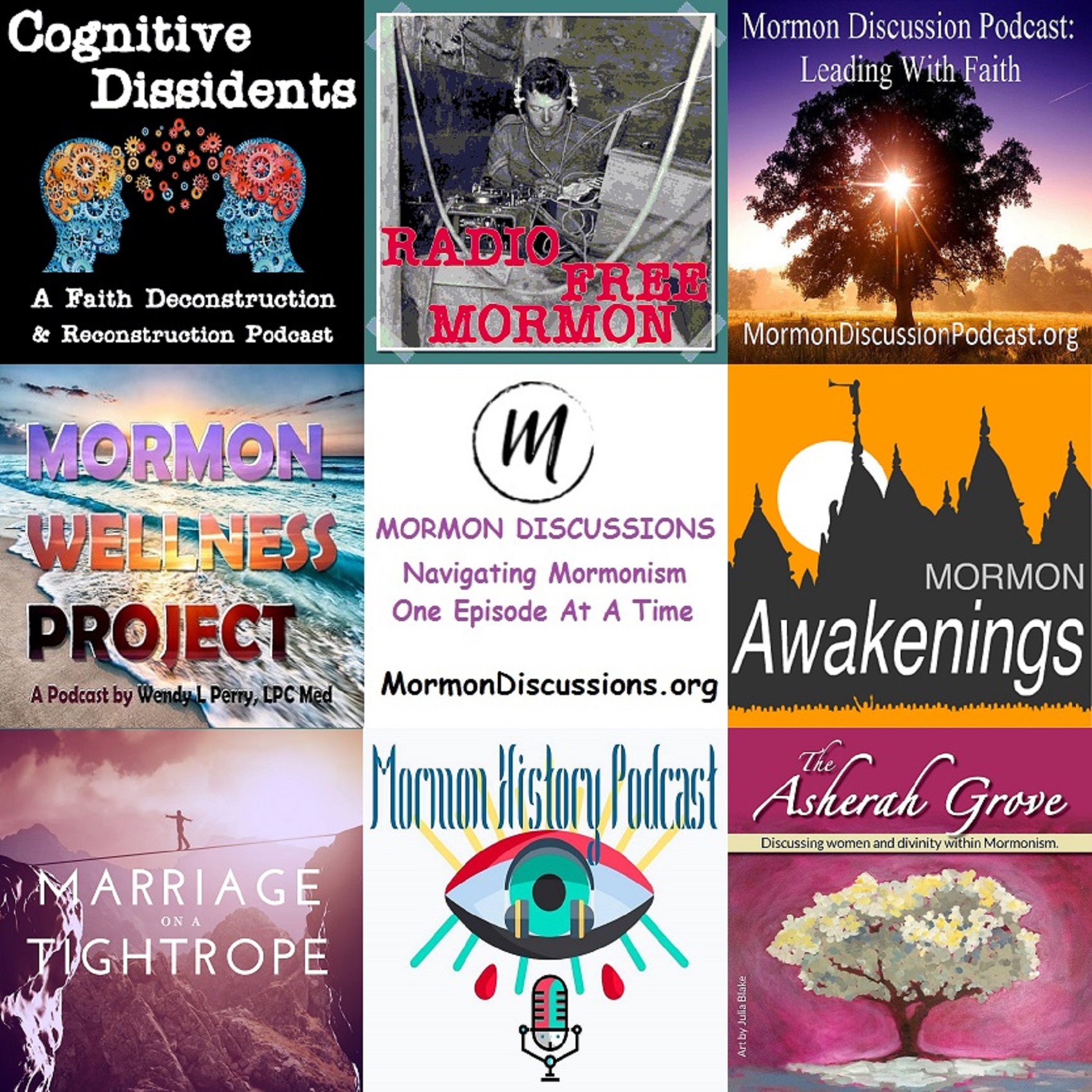
Almost Awakened Archives - Mormon Discussions Podcasts - Full Lineup
by Bill Reel
Navigating Mormonism One Episode At A Time
-
133
The Future Of The Almost Awakened Podcast: AA: 169
The Almost Awakened Podcast has some news to share and we wanted to tell our audience that news and how it will affect the show. And we have a short discussion on Trauma The post The Future Of The Almost Awakened Podcast: AA: 169 appeared first on Mormon Discussions Podcasts - Full Lineup.
-
132
Baring it All With The Naked Pastor: Almost Awakened: 158
In this enlightening episode, we delve deep into the life and philosophy of the Naked Pastor, a remarkable figure whose journey from the pulpit to the canvas has captivated hearts worldwide. Known for his candid approach to faith and art, the Naked Pastor offers a raw and authentic perspective on spirituality. Join us as we uncover the roots of his unique artistic expression and how it intertwines with his spiritual beliefs. From his early struggles with conventional religious norms to his breakthrough moment of creative liberation, every stroke of the canvas tells a story of transformation. Through thought-provoking anecdotes and heartfelt insights, the Naked Pastor shares how his work challenges dogma and invites others to explore their own paths to spiritual authenticity. Discover the profound connections between faith, vulnerability, and the artistic process, and gain a newfound appreciation for the power of creative expression in the realm of spirituality. Prepare to be inspired as we peel back the layers of the Naked Pastor’s artistic journey and reveal the beauty of baring one’s soul in the pursuit of a more genuine faith experience. This episode is a testament to the transformative potential that lies within each of us, waiting to be unveiled. Tune in to “Baring it All With The Naked Pastor” for an intimate conversation that will leave you with a fresh perspective on faith, art, and the boundless possibilities of self-expression. RESOURCES: https://thelastingsupper.com/ https://www.amazon.com/s?i=stripbooks&rh=p_27%3ADavid+Hayward&s=relevancerank&text=David+Hayward&ref=dp_byline_sr_book_1 https://nakedpastor.com/ The post Baring it All With The Naked Pastor: Almost Awakened: 158 appeared first on Mormon Discussions Podcasts - Full Lineup.
-
131
Christ, Krishna, & the Buddha – A Mystical Approach W/ Bob Peck: AA: 167
Christ, Krishna, and the Buddha with Bob Peck, Mystic Author Almost Awakened: 167 “Christ, Krishna, and the Buddha” is a exploration of the lives and teachings of three iconic spiritual figures who have left an indelible mark on the world. We sit down with mystic author Bob Peck delving into each of these spiritual figures investigating their timeless wisdom, remarkable stories, and enduring legacies of Jesus Christ, Lord Krishna, and Siddhartha Gautama, known as the Buddha. Bob Peck is a festival award-winning filmmaker, author, lawnmower, meditator, and a spiritual student of Christ, Krishna, the Buddha. With bachelor’s degrees in Religious Studies & Radio-TV-Film from the University of Texas, he has made ‘conscious films’—spiritual & advocacy documentaries—since graduating in 2011. He’s also a Kriya Yoga practitioner through KYI and a certified mindfulness & meditation teacher. His day job is centered around ads and mindfulness in Big Tech. A native Austinite, he lives with his wife and young son in Austin, Texas. “Original Sin Is A Lie” is his first book. RESOURCES: https://www.originalsinisalie.com/ https://www.amazon.com/Original-Sin-Lie-Spirituality-Reveals/dp/B0BCD1YBG8 https://www.audible.co.uk/pd/Original-Sin-Is-A-Lie-Audiobook/B0BF66JYY1 https://www.tiktok.com/@originalsinisalie The post Christ, Krishna, & the Buddha – A Mystical Approach W/ Bob Peck: AA: 167 appeared first on Mormon Discussions Podcasts - Full Lineup.
-
130
Barbie & the Heroine’s Journey: Almost Awakened: 166
Barbie & the Heroines Journey Bill and Britt outline the heroines journey and how it differs from the hero’s journey. RESOURCES: https://heroinejourneys.files.wordpress.com/2015/03/victoria-schmid.jpg Weird Barbie – https://creations.mattel.com/products/weird-barbie-barbie-the-movie-hyb84 https://heroinejourneys.com/heroines-journey/ https://maureenmurdock.com/articles/articles-the-heroines-journey/ https://en.wikipedia.org/wiki/Heroine’s_journey https://www.nytimes.com/2021/09/22/books/maria-tatar-heroine-with-1001-faces.html https://storygrid.com/heroines-journey/ https://mythcreants.com/blog/using-the-heroines-journey/ The post Barbie & the Heroine’s Journey: Almost Awakened: 166 appeared first on Mormon Discussions Podcasts - Full Lineup.
-
129
Vulnerability With The Other: Almost Awakened: 165
Brene Brown has said that, “practicing spirituality brings a sense of perspective, meaning, and purpose to our lives.” She defines spirituality in terms of connection to others and to a power greater than ourselves. For some, they call a greater power God. For others, they call it nature, or fishing. Whatever name we use for our greater power, there is one skill that is essential to connecting deeply to it and to other people in our lives, and that is vulnerability. Join us as we have a conversation about vulnerability with Maxine Hanks. Maxine is a trained chaplain and mediator who has studied conflict resolution extensively. She is also a religious studies scholar and practiced in interfaith ministry. We will talk about why spirituality and vulnerability are important to our well-being and also why they can be so difficult to access. Our guest today is Maxine Hanks – Chaplain, Mediator, studied Conflict Resolution, Religious Studies scholar, Interfaith Ministry The post Vulnerability With The Other: Almost Awakened: 165 appeared first on Mormon Discussions Podcasts - Full Lineup.
-
128
Celtic Spirituality: Almost Awakened: 164
Celtic Spirituality is not a church. It was never formed into a unified institution. So what is it? And how can learning about it help people dispossessed of their early religious formation continue to explore their spirituality? How does this tradition of “Insular Christianity” originating in the British Isles survive without a formal religious structure? This and more is what we hope to discover in a conversation with Father Scott Jenkins. Scott holds a Master of Divinity and is a trained pastor, chaplain, and spiritual director who has served in religious, spiritual, and service communities for nearly 40 years. He is the Creative Director of Celtic Way in Denver, which according to their website is “a collaboration of people moved to bring a fresh vision to the spiritual life by nurturing a vibrant, evolving and sustainable life with God in nature. RESOURCES: John O’Donohue — The Inner Landscape of Beauty https://www.stitcher.com/show/crossing-over-podcast/episode/celtic-christianity-with-father-scott-jenkins-48987580 The post Celtic Spirituality: Almost Awakened: 164 appeared first on Mormon Discussions Podcasts - Full Lineup.
-
127
Mysticism & Esoterica: Almost Awakened: 163
Delve into the intricate relationship between mysticism, religion, societal control, and progress in this thought-provoking podcast episode. Explore how mysticism, the pursuit of direct spiritual experience, weaves through diverse religious traditions, fostering inner transformation and unity with the divine. Uncover the “wounded healer” archetype, where personal suffering becomes a wellspring of wisdom, guiding others on their spiritual journeys. Discover the common themes linking esoteric practices across religions, from hidden knowledge to sacred symbolism. Investigate how esoterica can be both a source of empowerment and a means of reinforcing authority. Journey through history to understand how religion has been harnessed to shape societies, offering moral frameworks, social cohesion, and educational platforms. Examine its dual role in promoting progress while sometimes stifling scientific exploration. Navigate the intricate dance between religion’s capacity to inspire charitable acts and its potential to divide due to differing beliefs. Grasp the ways religion has molded cultures and traditions, fostering a sense of identity and belonging. Ultimately, this podcast illuminates how religion and mysticism, as forces of control and catalysts for advancement, coalesce in a complex tapestry that continues to shape human society in diverse and profound ways. The post Mysticism & Esoterica: Almost Awakened: 163 appeared first on Mormon Discussions Podcasts - Full Lineup.
-
126
Values, Perspectives, & Taking The Tie: AA: 162
In this podcast, we present six beautifully crafted parables, each designed to illuminate the significance of values and perspectives in resolving conflicts. Through these timeless tales, we celebrate the art of taking a tie – whether through compromise, agreeing to disagree, or fostering room for understanding. Join us on this insightful voyage as we reflect on the significance of values and perspectives in resolving conflicts, and how taking a tie can lead to profound understanding and unity. Let these enchanting parables inspire you to navigate life’s challenges with empathy, respect, and an open heart. Tune in to “Values, Perspectives, & Taking The Tie” for an enriching podcast experience that will leave you enlightened and motivated to embrace the beauty of diversity and harmony. The post Values, Perspectives, & Taking The Tie: AA: 162 appeared first on Mormon Discussions Podcasts - Full Lineup.
-
125
Controversial Conversations: Almost Awakened: 161
In this thought-provoking episode of The Almost Awakened Podcast, we courageously delve into the heart of some of the most contentious and divisive topics of our time. Guided by a commitment to open-mindedness, empathy, and enlightenment, we embark on a journey to explore the complexities of highly controversial conversation topic such as euthanasia, security vs. privacy, individualism vs. tribalism, self-reliance, and systemic issues such as racism. In this episode, we challenge each other and our listeners to engage in uncomfortable conversations, recognizing that true growth and understanding often arise from the friction of opposing ideas. Join us for this unmissable episode of The Almost Awakened Podcast as we push boundaries, illuminate perspectives, and together take bold steps toward a world that embraces the full spectrum of human experience. Remember, it is only through grappling with our controversies that we truly awaken to our shared humanity. The post Controversial Conversations: Almost Awakened: 161 appeared first on Mormon Discussions Podcasts - Full Lineup.
-
124
Internal Family Systems (IFS) – Unveiling the Layers of the Self: AA: 160
Internal Family Systems (IFS) – Unveiling the Layers of the Self: AA: 160 In this follow-up episode, we delve back into the Internal Family Systems (IFS) therapy, a groundbreaking modality that seeks to understand and heal the multiple facets of our inner selves. Jana ( and Bill are rejoined by Cory Reese (a professional therapist who utilizes IFS) together with experienced IFS practitioner Katrina Appiah, explore the core concepts of IFS, such as parts, self, and the role of the therapist. Listeners will gain valuable insights into how IFS can uncover and heal the layers of the self, leading to increased self-awareness, self-compassion, and personal growth. Stay tuned as we embark on a transformative journey through the intricate world of internal family systems. RESOURCES: https://www.psychologytoday.com/us/therapists/katrina-m-appiah-bountiful-ut/252906 https://ifs-institute.com/practitioners/all/98183 https://www.psychologytoday.com/us/therapists/cory-reese-saint-george-ut/912763 https://www.brightwaytherapy.com/ The post Internal Family Systems (IFS) – Unveiling the Layers of the Self: AA: 160 appeared first on Mormon Discussions Podcasts - Full Lineup.
-
123
An Introduction To Integral theory: AA: 159
In this Episode of Almost Awakened we take a look at Integral theory also known as Spiral Dynamics, a cognivitive development model made famous by Ken Wilber. We take a look a Introductory Look at this the through the lens of its facets of stages, states, lines of development, Types, and Quadrants RESOURCES: https://journals.sagepub.com/doi/full/10.1177/2164956120952733 https://spiraldynamicsintegral.nl/en/about-sdi/integral-theory/ https://integraleuropeanconference.com/integral-theory/ https://spiraldynamicsintegral.nl/en/about-sdi/integral-theory/ https://www.dailyevolver.com/theory/ https://integrallife.com/what-is-integral-approach/ https://www.audible.com/pd/Kosmic-Consciousness-Audiobook/B00JJS1LG6 https://www.soundstrue.com/products/kosmic-consciousness The post An Introduction To Integral theory: AA: 159 appeared first on Mormon Discussions Podcasts - Full Lineup.
-
122
Clinical Perspective On Spirituality & Psychedelics: AA
Today on the Almost Awakened Podcast Bill sits down with Licensed Professional Counselor and Author Sarah Westbrook to discuss the intersection of Psychedelics & Spirituality within therapy. RESOURCES: daisygirlcommunications.com https://unpackingmormonism.blogspot.com/ https://open.spotify.com/show/6KjeKzIAPLTzHxQIZIzHUJ https://www.facebook.com/groups/raisingcrazy/ Sarah’s Email – [email protected] The post Clinical Perspective On Spirituality & Psychedelics: AA appeared first on Mormon Discussions Podcasts - Full Lineup.
-
121
How to Stop People Pleasing with Sara Fisk: AA: 157
While being kind and thoughtful others are traits that are correlated with thriving relationships, when they dominate to the detriment of our own needs, wants, and feelings, relationships can suffer. Bill and Jana will be joined by seasoned coach, Sara Fisk, host of The Ex-Good Girl podcast, to explore how people pleasing shows up and how it damages connection to others and also to ourselves and what we can do about it. This and more on this week’s episode of Almost Awakened – https://almostawakened.org/ RESOURCES: The Ex-Good Girl Podcast on Apple Podcasts Sara Fisk Life Coach The post How to Stop People Pleasing with Sara Fisk: AA: 157 appeared first on Mormon Discussions Podcasts - Full Lineup.
-
120
Internal Family systems – Therapy Talking To Your Parts: Almost Awakened: 156
One of the big modalities currently in therapeutic practices is “Internal Family Systems” or “IFS” and the idea that the core you can learn to communicate with the parts that protect you and the parts of that have been exiled due to shame and fear. IFS is showing itself to be a deeply productive way to do inner work and today Bill is joined by LCSW Cory Reese and they set the ground work for what IFS is and how it works. The plan is to follow-up with another episode that models IFS conversations where one talks to their parts and our hope is that we can prompt you to get curious about this therapeutic modality and to learn more. RESOURCES: Finding an IFS therapist – https://ifs-institute.com/practitioners Cory Reese’s practice in Southern Utah – https://www.brightwaytherapy.com/ The book “No Bad Parts” – https://www.amazon.com/No-Bad-Parts-Restoring-Wholeness/dp/1683646681 IFS Institute – https://ifs-institute.com/about-us/richard-c-schwartz-phd The Multiplicity of the Mind: Dr. Richard Schwartz On A Systems Approach to Healing the Self – https://www.stitcher.com/show/the-rich-roll-podcast/episode/the-multiplicity-of-the-mind-dr-richard-schwartz-on-a-systems-approach-to-healing-the-self-304374502 IFS Podcast Conversation – https://gabbybernstein.com/podcast/ifs-therapy-changed-my-life/ The post Internal Family systems – Therapy Talking To Your Parts: Almost Awakened: 156 appeared first on Mormon Discussions Podcasts - Full Lineup.
-
119
7 Kinds of Atheism & 7 New Religions: AA: 153
What are the 7 variations of atheism and the 7 new religions on the rise. Based on two books – The Seven Types of Atheism by John Gray and Strange Rites: New Religions in a Godless World by Tara Burton The post 7 Kinds of Atheism & 7 New Religions: AA: 153 appeared first on Mormon Discussions Podcasts - Full Lineup.
-
118
Almost Awakened: 152: Transhumanism – A New Religion?
Hartley and Reel sit down with Lincoln Cannon to discuss Transhumanism and to evaluate if it could, in fact, become a new religion. RESOURCES: https://lincoln.metacannon.net/ The post Almost Awakened: 152: Transhumanism – A New Religion? appeared first on Mormon Discussions Podcasts - Full Lineup.
-
117
Nihilism, Anti-Natalism, and the Dark Arts w/ Matt Hershberger: Almost Awakened: 151
Today we talk with TikTok sensation Matt Hershberger, whose interests lie in Nihilism, Anti-Natalism, and the Dark Arts. resources: https://betterstrangers.substack.com/ https://www.tiktok.com/@betterstrangersbooks The post Nihilism, Anti-Natalism, and the Dark Arts w/ Matt Hershberger: Almost Awakened: 151 appeared first on Mormon Discussions Podcasts - Full Lineup.
-
116
Top 10 Changes That Lead To Better Human Societies: Almost Awakened: 150
Hundreds of thousands of years, maybe millions, and this is the furthest we have come in creating a healthy world of Humans. War, genocide, starvation, homelessness, Poor or non-existent healthcare, abuse, & trauma. Today we lay out and discuss 10 Changes that would elevate our human race to a healthier state of peace, health, and inner wellbeing. The New Ten Commandments – https://chat.openai.com/ Respect the dignity and worth of every human being. Practice empathy and compassion towards others. Treat others as you would like to be treated. Foster a sense of community and promote social responsibility. Promote equality and fairness for all individuals. Encourage honesty, integrity, and transparency in all dealings. Promote peaceful conflict resolution and nonviolence. Respect the environment and preserve natural resources for future generations. Encourage lifelong learning and personal growth. Promote the common good and work towards the betterment of society as a whole. These principles are not exhaustive, but they could form a foundation for a set of commandments that could guide individuals towards creating a better, kinder world. Ultimately, it is up to society as a whole to determine what values and principles are most important and how best to promote them. The post Top 10 Changes That Lead To Better Human Societies: Almost Awakened: 150 appeared first on Mormon Discussions Podcasts - Full Lineup.
-
115
How To Recognize Cult Mind Control: Almost Awakened: 149
We sit down with Jonathon Streeter, founder of the Blog and Youtube Channel “Thoughts On Things And Stuff” to discuss the manipulative tactics of High Demand Religions and how to spot them immediately. RESOURCES: https://thoughtsonthingsandstuff.com/ https://www.youtube.com/channel/UCVTCFh3uDMH0GZlwl1JOoHQ https://www.facebook.com/ThoughtsOnThingsAndStuff/ The post How To Recognize Cult Mind Control: Almost Awakened: 149 appeared first on Mormon Discussions Podcasts - Full Lineup.
-
114
Almost Awakened: 148: Sexual Abuse In The Zen Buddhist Community
In This Week’s episode of the Almost Awakened Podcast, Hartley and Reel peek behind the curtain of Zen Buddhism to discuss the rampant sexual misconduct happening there. We are so used to hearing about sexual abuse with Catholicism or Mormonism or the Jehovah’s Witnesses but while sort of unexpected, Buddhist circles are also deeply affected by these atrocious acts. We sit down with TikTok’r @LifeAfterZen to discuss this sensitive issue and to learn how we can better be aware of and address the such problems. RESOURCES: https://www.shilohproject.blog/sexual-misconduct-and-buddhism-centering-survivors/ https://www.youtube.com/watch?v=rzoMdW8GEVI&list=PLpxqAk60QqWrlqnlVVWr4IvLyv1GtBw5I&index=2 https://www.religionandsexualabuseproject.org/ https://tricycle.org/magazine/sexual-abuse-in-buddhism/ https://www.thedailybeast.com/the-shocking-scandal-at-the-heart-of-american-zen https://tricycle.org/magazine/sex-sangha-again/ https://www.lionsroar.com/openletteronabuse/ The post Almost Awakened: 148: Sexual Abuse In The Zen Buddhist Community appeared first on Mormon Discussions Podcasts - Full Lineup.
-
113
Almost Awakened: 147: Maslow’s Unpublished Work – Self Transcendence
Abraham Maslow’s pyramidal “Hierarchy of Needs” model is a highly-influential way of organizing human needs from the most “basic” to the most advanced. Maslow’s argument is that the most basic needs must be met before people can move “up” to the more advanced needs. Maslow’s hierarchy of needs is a motivational theory in psychology comprising a five-tier model of human needs, often depicted as hierarchical levels within a pyramid. From the bottom of the hierarchy upwards, the needs are: physiological (food and clothing), safety (job security), love and belonging needs (friendship), esteem, and self-actualization. Needs lower down in the hierarchy must be satisfied before individuals can attend to higher needs. What is not as commonly known about Maslow is that toward the end of his life, he began to have some doubts about this model and just prior to his death added a 6th stage at the top of the pyramid called “Self-Transcendence” and today we review the standard hierarchy and finish by discussing at length the missing piece, Self-Transcendence. RESOURCES: https://en.wikipedia.org/wiki/Maslow’s_hierarchy_of_needs https://www.wichita.edu/services/mrc/OIR/Pedagogy/Theories/maslow.php https://www.thecareerproject.org/blog/maslows-hierarchy-of-needs/ https://www.simplypsychology.org/maslow.html https://www.youtube.com/watch?v=xT6BpFhPsfY https://www.verywellmind.com/what-is-maslows-hierarchy-of-needs-4136760 https://www.thoughtco.com/maslows-hierarchy-of-needs-4582571 https://www.medicalnewstoday.com/articles/maslows-hierarchy-of-needs The post Almost Awakened: 147: Maslow’s Unpublished Work – Self Transcendence appeared first on Mormon Discussions Podcasts - Full Lineup.
-
112
Almost Awakened: 146: A Magical Conversation With An Atheist Witch
Hartley and Reel sit down TikTok Sensation Jordan The Grey Witch, an Atheist Witch to discuss what it even means in 2023 to be a witch and how being a witch plays out. https://www.tiktok.com/@jordanthegreywitch The post Almost Awakened: 146: A Magical Conversation With An Atheist Witch appeared first on Mormon Discussions Podcasts - Full Lineup.
-
111
Almost Awakened: 145: Lisa Miller: Spirituality and Awakeness
Today we sit down with Dr. Lisa Miller author of “The Awakened Brain” and “The Spiritual Child”. The discussion centers around spirituality and awakeness and what the science and research says about both. How can we humans be our best healthiest selves? How can we thrive while also progressing as a species to achieve our potential? Lisa Miller, Ph.D., is the New York Times bestselling author of The Spiritual Child and a professor in the clinical psychology program at Teachers College, Columbia University. She is the founder and director of the Spirituality Mind Body Institute, the first Ivy League graduate program in spirituality and psychology, and for over a decade has held joint appointments in the department of psychiatry at Columbia University medical school. Her innovative research has been published in more than one hundred empirical, peer-reviewed articles in leading journals, including Cerebral Cortex, The American Journal of Psychiatry, and the Journal of the American Academy of Child and Adolescent Psychiatry. She lives in Connecticut with her husband and three children. a.i. chat gpt was used to arrive at the following answers Some potential solutions for world peace may include: Building strong international partnerships: Countries can work together to establish partnerships and collaborations aimed at achieving common goals, such as reducing poverty, addressing climate change, and promoting human rights. Promoting diplomacy and conflict resolution: Diplomacy can play a critical role in resolving conflicts and preventing violence. International organizations, such as the United Nations, can facilitate diplomatic negotiations and promote peaceful solutions to disputes. Encouraging tolerance and understanding: Education and awareness-raising programs can help promote tolerance and understanding between different cultures and religions, reducing the risk of conflict. Investing in economic development: Economic development can promote stability and reduce the risk of conflict by creating job opportunities, improving infrastructure, and reducing poverty. Strengthening human rights protections: Protecting human rights can help prevent conflict by reducing inequality, promoting social justice, and ensuring that individuals are treated with dignity and respect. Ultimately, achieving world peace requires a sustained and coordinated effort from individuals, communities, and governments around the world. It is important to recognize that there is no easy solution or quick fix, but rather a long-term commitment to promoting peace and cooperation. Global climate change is a complex and urgent issue that requires a comprehensive approach at all levels of society. Here are some steps that can be taken to address and solve global climate change: Reduce greenhouse gas emissions: This can be achieved by transitioning to renewable energy sources, increasing energy efficiency, and reducing the use of fossil fuels. Implement carbon pricing: Implementing a carbon pricing system can help incentivize companies and individuals to reduce their carbon emissions. Increase investment in research and development: Developing new technologies and innovations, such as carbon capture and storage, can help reduce greenhouse gas emissions. Encourage sustainable agriculture and land use practices: Promoting sustainable agriculture practices and reducing deforestation can help mitigate the impact of climate change. Educate and raise awareness: Educating people about the causes and impacts of climate change can help build support for climate action and encourage individuals to take action in their own lives. Encourage international cooperation: Climate change is a global problem that requires a coordinated effort by all countries. Encouraging international cooperation and agreements, such as the Paris Agreement, can help ensure that all countries are working together towards a common goal. Addressing and solving global climate change will require significant effort and action from individuals, businesses, and governments around the world. The post Almost Awakened: 145: Lisa Miller: Spirituality and Awakeness appeared first on Mormon Discussions Podcasts - Full Lineup.
-
110
Almost Awakened: 144: Revisiting the Four Agreements For The Very First Time
Hartley and Reel take on a conversation around the book “The Four Agreements” by Miguel Ruiz. Reel has read the book 4 times but Hartley is tackling the content for the very first time. This will be the backdrop of this incredible conversation. “The Four Agreements” is a self-help book written by Don Miguel Ruiz. It offers a code of conduct based on ancient Toltec wisdom that can help transform one’s life by breaking free from self-limiting beliefs and behaviors. The book’s insights can be summarized in the following four agreements: Be impeccable with your word – Speak with integrity, say only what you mean, and avoid using your word to speak against yourself or others. Don’t take anything personally – What others say or do is a projection of their own reality and has nothing to do with you. Don’t take things personally or make assumptions about others’ motives. Don’t make assumptions – Avoid misunderstandings by asking questions and clarifying things. Don’t make assumptions about others’ thoughts, feelings, or intentions. Always do your best – Give your best effort in everything you do, regardless of the circumstances. Focus on the process, not the outcome. These agreements can help you improve your relationships with others, free yourself from limiting beliefs and self-judgment, and live a more authentic and fulfilling life. One of the deepest insights of the book is the idea that much of our suffering comes from our own thoughts and beliefs, which can be changed through conscious awareness and a commitment to personal growth. The book encourages readers to take responsibility for their own happiness and to create their own reality through their thoughts and actions. The post Almost Awakened: 144: Revisiting the Four Agreements For The Very First Time appeared first on Mormon Discussions Podcasts - Full Lineup.
-
109
Almost Awakened: 143: Religion – 10 Reasons to Leave & 10 Reasons To Stay
Brian McLaren has proposed 10 reasons to stay inside Religion and 10 reasons to leave Religion. Hartley and Reel dive into this list and share their thoughts and contemplate how much weight these reasons might have and what these reasons bring up within them. The post Almost Awakened: 143: Religion – 10 Reasons to Leave & 10 Reasons To Stay appeared first on Mormon Discussions Podcasts - Full Lineup.
-
108
Almost Awakened 142: Gen Z Spirituality Program – Modern Options For Teens
Britt runs solo this week exploring a course for Teens she has created. The conversation will delve into what that course looks like and who it is designed for and will share several facets of Gen Z Spirituality. The post Almost Awakened 142: Gen Z Spirituality Program – Modern Options For Teens appeared first on Mormon Discussions Podcasts - Full Lineup.
-
107
Almost Awakened: 141: How Consciousness Feels About Trauma
Bill will be flying solo today (Britt had step away from this week’s episode due to an unexpected event). and discussing a couple of thoughts he had this week and to discuss the mass exodus out of Christianity. The post Almost Awakened: 141: How Consciousness Feels About Trauma appeared first on Mormon Discussions Podcasts - Full Lineup.
-
106
Almost Awakened: 140: The 5 Big Personality Traits
The 5 Big Personality Traits are openness, conscientiousness, extraversion, agreeableness, and neuroticism. Everyone of us at any given moment fall somewhere on a spectrum within each of these traits. These traits affect our mood, our energy, our behavior, our ability to connect with others, how we disagree, and how we perceive our outer and inner world. Reel and Hartley not only explain each trait and how such affects our perception and behavior but also give a ton of examples and insights into how an awareness of these traits and how they play out in our lives can help us navigate these differences with less disruption and less negative impact on ourselves and others. RESOURCES: https://www.verywellmind.com/the-big-five-personality-dimensions-2795422 https://www.typematchapp.com/application-features/?forkey=Big%205%20Compatibility%20Dating%20-%20TypeMatch%20App https://www.psychologytoday.com/us/basics/big-5-personality-traits https://en.wikipedia.org/wiki/Big_Five_personality_traits https://www.simplypsychology.org/big-five-personality.html https://www.truity.com/test/big-five-personality-test https://psychcentral.com/lib/the-big-five-personality-traits https://positivepsychology.com/big-five-personality-theory/ https://www.mindbodygreen.com/articles/big-five-personality-traits https://www.bustle.com/p/what-is-self-distancing-this-practice-can-help-your-mental-health-relationships-17298648 https://effectiviology.com/self-distancing-rational-decisions/ http://selfcontrol.psych.lsa.umich.edu/wp-content/uploads/2016/12/1-s2.0-S0065260116300338-main-2.pdf https://en.wikipedia.org//wiki/Distancing_(psychology) https://positivepsychology.com/psychological-distancing/ https://www.vice.com/en/article/k7a3mm/why-you-should-talk-to-yourself-in-the-third-person-inner-monologue Aphantasia: The inability to visualize images (medicalnewstoday.com) The post Almost Awakened: 140: The 5 Big Personality Traits appeared first on Mormon Discussions Podcasts - Full Lineup.
-
105
Almost Awakened: 139: Beyond God and Religion
Hartley and Reel sit down with “Faith Transition Coach” Kyle Bishop to discuss the process of deconstruction and what lies beyond God and Religion? RESOURCES: https://www.beyondgodandreligion.com/ The post Almost Awakened: 139: Beyond God and Religion appeared first on Mormon Discussions Podcasts - Full Lineup.
-
104
Almost Awakened: 138: Thoughts on The Psychology Of Stutz
Hartley and Reel welcome back Jana Spangler as their guest to discuss the Netflix Program “Stutz”. Stutz features Jonah Hill’s conversation with his friend and therapist, Phil Stutz as they try to present Phil’s unique, visual model of therapy To come to the conversation prepared, please take the opportunity to watch Stutz on Netflix. RESOURCES: https://www.netflix.com/title/81387962 https://www.thetoolsbook.com/tools/insecurity The post Almost Awakened: 138: Thoughts on The Psychology Of Stutz appeared first on Mormon Discussions Podcasts - Full Lineup.
-
103
Almost Awakened: 137: “Isms” – What Isms Make Sense to You?
An ISM is defined as “a distinctive doctrine, cause, or theory”. And in this week’s episode we explore just that. Everything from Theism to Nihilism to Absurdism and everything in between. What Ism’s do you ascribe to and how useful are the labels known as Isms. Isms – Is there a God? Theism, Deism, Atheism, Agnosticism Theism – Belief in a supreme being, especially a belief in one supreme entity as a creator of the universe intervening intentionally and having a personal relationship with humans. Three Abrahamic religions Judaism, Christianity, and Islam Bill: – A Need to explain the three questions (Where did we come from, why are we here, where are going) while also dealing with our sentient consciousness Deism – Popular in the 17th and 18th century, deists insisted that religious truth should be subject to the authority of human rather than divine revelation. Rejected the Bible as the word of God, rejected supernaturalism and superstition like miracles and prophesy. For Deists, God was a benevolent, and distant, creator whose revelation was nature and human reason. Bill: – Omnipresent, Omnipotent, Omniscient – When we boil God down to this base level of agreement of what God is such easily fits within the atheist view of the universe. (Analogy – blood cell in the body) John Adams, Thomas Jefferson, Thomas Paine Thomas Jefferson: “Question with boldness even the existence of a God; because, if there be one, he must more approve of the homage of reason, than that of blind-folded fear.” You can be a Christian deist and believe in the moral teachings but not divinity of Jesus. You can be A-deist which is that you don’t believe in a creator of any kind. Atheism – Not a belief structure, simply is familiar with the arguments of theism and is not convinced. Agnosticism – Agnosticism in our culture kind of means I just don’t know, but from a philosophical definition kind of place its the idea that we can’t know. Some people say that agnostics are then by definition atheists because they are not convinced by the theist and just say we can’t know, but that is a semantic argument that is up for debate. Picture 1 – There is a scale of agnosticism. Agnostic Atheist – doesn’t believe in God but also doesn’t claim to know there is no God. Agostic theist, believes a god exists but doesnt claim to know the belief is true Gnostic atheist – does not believe any god exists and knows that. Gnostic theist believes a god exists and claims to know. Picture 2 – Scale of theistic probability which is in The God Delusion by Richard Dawkins 1 – Strong theist 100% probability of God. I do not believe, I know. 2 – De facto theist very high probability but short of 100%. “I dont know for certain but I strongly believe in God and live my life on the assumption that he is there.” 3 – Leaning towards theism. Higher than 50%, I am very certain but I am inclined to believe in God.” 4 – Completely impartial. Exactly 50% Gods existence and non existence are e ually probable. 5 – Leaning towards atheism, more than 50% believe there is no God. “I do not know whether God exists but I’m inclined to be skeptical.” 6 – De facto atheist. Very low probability but short of zero. “I don’t know for certain but I think God is very improbably, and I live my life on the assumption that he is not there.” 7 – Strong atheist. “I know there is no God.” Dawkins argues that while there appear to be plenty of individuals that would place themselves as “1” due to the strictness of religious doctrine against doubt, most atheists do not consider themselves “7” because atheism arises from a lack of evidence and evidence can always change a thinking person’s mind. In print, Dawkins self-identified as a “6”, though when interviewed by Bill Maher he suggested “6.9” to be more accurate. “Once you assume a creator and a plan, it makes us objects in a cruel experiment whereby we are created sick and commanded to be well, and over us to supervise this is installed a celestial dictatorship. A kind of divine North Korea.” – Chris Hitchens We will include quiz in the show notes https://bigthink.com/articles/atheism-easter-atheister/ What Kind of God? – Monotheism, Polytheism, Henotheism, Pantheism, Panentheism, Animism Monotheism – Belief in one God Is Christianity tritheistic? Polytheism – Belief in many Gods Bill: Allows us to separate good and bad, various skills, different and contradicting but also important values Tribal religions in Africa, some folk religions in China Henotheism – Worship one god but recognize many Gods Most forms of Hinduism for example, are not polytheistic where there’s a bunch of Gods like in Greece, these are all manifestations of the same God that they worship. There are very few Hindu atheists and I think that’s because there’s just a high level of choice. One worships the god that one chooses. There are no rules in this regard. All gods yield the desired fruit, if properly worshiped. There are some guidelines in the form of class or sex or if you’re a leader or king but these are all manifestations of the same God that people come to know by different names. Is Mormonism technically henotheism? Eugene England thinks so. Bill: Allows some individualism as we select the God we want to emphasize Pantheism – Everything shares the same spiritual essence and individuals do not have distinct spirits or souls. Its the idea that God is one and its the collective consciousness of all living creatures. Richard Dawkins says pantheism is sexed up atheism. So there is a rejection of God but there’s still some romanticism around the universe or life or the earth enough so to still call it God. Mushrooms? Bill: touch on again a connected universe and creative energy Panentheism – Picture 3 Pantheism is that God is the universe, they are identical, Theism is that God created the universe, and Panentheism is that there is a God, but God is a part of the universe. So you can still get the everything is divine or spirit, but there is also a God, and God is a co-creator or a part of the universe. The shocking thing is that Mormonism now is God to prophet direct line and just be obedient, but early Mormonism from the Pratts and from Joseph’s King Follett Discourse God was very much a co-creator. God didn’t create the universe from nothing. He awoke and Jesus awoke and they made plans to help others awake but God can’t make all the rules because God didn’t create the universe out of nothing. So one way that Mormonism was interesting at the time is that when everyone else in this second great awakening in America were fighting about the extent of God’s power and the fall, Joseph has a unique answer to that. He doesn’t believe in the Fall, he doesn’t believe God is just a distant spirit, and he puts everything on a path of eternal progression, even apple trees and animals. So everything is spirit and can progress and is part of the universe. Its one of the most interesting things about Mormonism, but its been entirely lost in the bureaucracy which if you want to learn more about that transition please see all of Bills other podcasts. Animism – The attribution of a soul to plants, inanimate objects, and natural phenomena and the belief in a supernatural power that organizes and animates the material universe. Science that our organs have their own consciousness, Mushrooms, Twins. Philosophies – Humanism, Nihilism, Absurdism, Existentialism Nihilism – Life is meaningless and to pursue meaning is pointless. You can get there with depression, you can get there with philosophy, you can get there just by thinking about how in the time span of 1,000,000,000 years nothing anyone does matters, or you can get there when you lose God. Philosophers call this place the void and I’ve talked about this on the podcast before because its something I struggled with and reached out to my own spiritual directors for help. It’s a black hole where you can’t make any decisions and its dangerous to individuals because its related to suicide. Its a hatred of being itself which we find in the Columbine killers if you ever read their journals. So you’re not just like there’s not God you’re just unimpressed with life itself. Bill: If the only meaning is the meaning you make up in your head what does such mean How important is any of us – Analogy with Presidents (zachary taylor, benjamin harrison, james buchanon, james polk), a speck of dust flying through the universe and some day humans won’t exist, and some day all life on earth won’t exist, and some day this galaxy won’t exist. None of it really matters and in the effort to help life on earth within my realm of influence to have their trauma reduced and for life to have more pleasant moments and less unpleasant moments collectively, this very moment means everything.. Active nihilism – Blow up the matrix so that you and other people could construct their own narratives and meanings. Nietszche wants us to erect our own values. Bill: If the last 3 minutes of one’s life hurts beyond comprehension will it matter all the good they experienced prior? Will that life have been worth living? Passive nihilism – There will never be any meaning in the world so best you can do is separate yourself from your desires and reduce suffering where you can. You stay within the matrix of traditional values, but you have severe doubts about those values. Absurdism – Like the nihilism believes that the universe is absurd, but it embraces the absurdity and is open to the possibility of creating meaning, or enjoyment. Its like sunny nihilism. You want to spend your life surfing? Great life is absurd might as well. Want to collect cat posters? Cool why not? Embrace the absurdity and be free to do whatever you want to do with life as long as it doesn’t hurt others. So Absurdism is not about finding a meaning to life but about rebelling against the absurdity of life, it’s about standing aloof of the demand to find a meaning, rebelling against the absurd game itself and affirming life for what it is. Albert Camus 3 choices when you face nihilism Suicide but you add more absurdity to life so you become the thing you hate, and your life was a miracle to begin with Philosophical Suicide where you take a leap of faith and pretend there’s a higher power that gives our life meaning Embrace the Absurd and realize that we’re truly free. From there, we’re free to pursue anything we want and try to embrace what life has to offer. Bill: I try to intentionally choose (No, I don’t believe in free will) 3 everyday. Existentialism – Existentialists also doesn’t believe that the universe has intrinsic meaning but insists we have free will, awareness, and personal responsibility to become everything we can be and create subjective meaning. No one else is responsible for meaning except us and it is created through our existence and the choices we make. So Kierkegaard who was the first existentialist philosopher believed that each individual is tasked with giving meaning to life. He was also Christian so there’s room to work within religion here if you think the best expression of yourself is on a religious path. Humanism – Rejection of the divine and putting prime importance on human matters. Ten Commandments of Humanism: Promote the greater good Be curious Harm to your fellow human is harm to humanity. Do no kill, rape, rob, or victimize anyone. Treat all humans as equals Use reason as your guide. Science, knowledge, observation, and rational analysis are the best ways to determine any course of action Do not force your beliefs onto others or insist that yours is the only way to live happily Govern with reason not superstition, religions should have no place in any government Act for the betterment of your fellow humans ans be altruistic in your deeds Be good to the earth and its bounties for without it humankind is lost Impart your knowledge and wisdom gained in your lifetime to the next generation so that with each passing century, humanity will grow wise and more humane. Secular Humanism – Rejection of all supernatural, most popular form of humanism. Religious Humanism – Atheist but finds value in congregational rites and community activities. Self-described religious humanists differ from secular humanists mainly in that they regard the non-theistic humanist life stance as their religion while organizing with a congregational model. Religious humanism is sometimes referred to as non-theistic religion or congregational humanism. Difference between empiricism and rationalism for Atheists Rationalism – knowledge comes from reason and logic Empiricism – knowledge comes from experience and experimentation The best example I’ve ever heard of this is that an empiricist would say that it would be valuable for the President of the United States once a week to walk up to a statue of George Washington and tell George what you did that week for the country. A rationalist would say George Washington is dead and there’s no reason this. But an empiricist says true but there’s something valuable in the experience. So Richard Dawkins is a rationalist, he read Alain de Botton’s Religion for Atheists and thought it was stupid. Steven Fry is an empiricist, he’s an atheist the problem of evil doesn’t make sense to him but he loves story and allegory and myth and symbolism and sees something valuable in those things on the level of experience. A few last isms that come up in modern conversations there’s hundreds of isms but some ones that are interesting: Panpsychism is all the rage right now. Anciently it is an old idea from early Greek philosophers that there was an element of mind to everything that is physical. We would instead use the word consciousness today instead of mind. This theory says that consciousness does not emerge from matter, which is the hard problem of consciousness, but is a fundamental character of the universe. So the lights are on for everything. You’ll hear Sam Harris and especially his wife Annaka Harris discuss the possibility of panpsychism. The problem is we can’t test for it. If the universe was alive, if the sun was alive, everything would act how it acts now so its not currently falsifiable. But one way to solve the consciousness problem is that maybe everything is conscious. Bill: It is this battle of whether Consciousness can only be born of itself or could it have been created for the first time out of a universe that is unconscious (And happy a billion times in a billion places in the universe) Daoism – Daoism sometimes its pronounced Daoism or Toaism it depends when you’re translating from Chinese, but its become an increasingly popular ism because of Star Wars. The easiest way to describe it is that yoda is a taoist. Daoism is a Chinese philosophy of living simply, honestly, and in harmony with nature and with the flow of life. In balance with the flo of life. So when Luke is teaching ray about the force, this is what she says and its so close to Daoist scripture its unbelievable. Luke Skywalker: What do you see? Rey: The island. Life. Death and decay, that feeds new life. Warmth. Cold. Peace. Violence. Luke Skywalker: And between it all? Rey: Balance and energy. A Force. Luke Skywalker: And inside you? Rey: Inside me, that same Force. The yin yang symbol which is popular enough in America that you see it everywhere has its roots in Daoism. Its this balance. In Star Wars you would say its a balance of the force, but in Daoism you would say the balance of the Dao. The yin, which is the dark swirl, is associated with shadows, the feminine, chaos, creativity…and the yang is the light swirl which is masculinity, passion, growth, strength. So even if you go down to your local yoga studio there is yin yoga which is softer and more flow and easier, and there is yang yoga which is like we’re going to kick your ass yoga. The purpose of daoism is to recognize opposing forces and recognize which side of the coin is needed in that moment and flowing with that energy so to speak. Doaism through Star Wars became so popular that in 2015 Jediism was recongized as an official religion by the US government. These are people from what I understand who know that Star Wars isnt real but find the life of a jedi and the meditation and balance of the force and simple life of service to be a moral life worth living and they take it to heart. 5 last isms that come up in popular culture Asceticism – Severe self discipline and avoidance of all forms of indulgence. This happens in America mostly in the exercise world. Christian asceticism is not as common because right now in American history you’re more likely to get prosperity gospel Christianity which is the opposite of asceticism. But if you know someone who does long periods of fasting, limits social media, very strict diet, never any sugar or alcohol, takes cold showers, exercises obsessively, its kind of like a religion because it puts aside pleasure in order to strengthen your discipline and its a way to a kind of enlightenment or self transcendence. Sometimes it mixes with religion directly, like this link here: https://exodus90.com/how-it-works/ Or in certain cults like this new cult movie I saw on HBO The Way Down where it was a whole cult that was Christian but also a weight loss club where you give up all your temptations for Jesus. Buddha started out as an ascetic just long time fasts he was skin and bone, but then the story goes he heard someone playing music and the string was strung so tight that the string broke so walked away from that life and developed “The Middle Path” that wasnt so extreme. Bill: I find the juxtaposition between indulgence and restraint deeply interesting. Hedonism – The ethical theory that pleasure and satisfying desire is the proper aim of human life. What do you think? Charles Darwin was a fan of motivational hedonism which is that our behavior is founded on avoiding pain and pursuing pleasure and we should build lives that intentionally increase pleasure. Pleasure not just as sex and heroin but actually looking at ok what seems to be a life that has the most pleasure? It seems like being married gives you a built in safety net, my husband took care of me all week with my knee surgery, being 600 pounds doesnt look pleasurable so I’ll eat as pleasurable as I can while remaining relatively healthy, having friends both extends life and improves pleasure in life, so its building up a life of pleasure intentionally not because its the right the to do but because that’s what we are as creatures and you can study the science of happiness and pleasure and build your life on it to enjoy life as much as possible. Philosophical weakness – people who choose more suffering in their life for more meaning Bill: I am drawn to the ying/yang of the two extremes and finding balance and a middle way. Not forcing indulgence but allowing oneself to enjoy the good that comes one way and to allow and be present with the things that hurt or are uncomfortable. Materialism – Nothing exists except matter and its movements, everything is matter. Richard Dawkins is a materialist. He argued that human beings are nothing apart from a body and physical matter consisting of atoms. He denied the existence of both a soul and the idea of consciousness. Dawkins also claimed that we are each the total sum of our DNA. Bill: Consciousness is an illusion? Determinism – The idea that all events, including human action, are ultimately determined by causes external to the will. Some philosophers have taken determinism to imply that individual human beings have no free will and cannot be held morally responsible for their actions. Stoicism – The Daily Stoic is a very popular influencer on Instagram and stoicism is very popular right now as an ism. Its a 3rd century philosophy made popular by Marcus Aurelius, we should review his book Meditations a lot of the people we listen to really are inspired by his book Meditations. There are four virtues in stoicism Courage, temperance, justice, wisdom. Stoics live by the phrase memento mori, remember that you will die, which I love, and that remembering that because you will die focus on what you can become. And stoics are very suspicious of emotions. Just notice the emotion, decide what you want to do with it, make a correct choice, and move on. So in popular culture if someone says that person is very stoic, its kind of come to mean that person isnt very emotional. A Stoic lives well through having a good character, and death is the final test of it. While every death will be a bit different, the Roman Stoics believed that a good death would be characterized by mental tranquility, a lack of complaining, and gratitude for the life we’ve been given. Marcus Aurelius. “You have power over your mind – not outside events. Realize this, and you will find strength.” Tom Brady, Tim Ferriss, Anna Kendrick, Arnold Schwarzennegar, Bill Belechick, are modern stoics George Washington inspired by stoics, Thomas Jefferson had a bust of Seneca on his nightstand, Transhumanism – a philosophical and scientific movement that advocates the use of current and emerging technologies—such as genetic engineering, cryonics, artificial intelligence (AI), and nanotechnology—to augment human capabilities and improve the human condition. Basically they are on board with the idea that we can become Gods, but what’s going to get us there is technology. Surprisingly enough, many man post Mormons find themself in this ism because its there’s a lot of still talk about progression and progression as a human society, but its not through temple ordinances its done through genetic engineering and curing cancer and living 500 years. Should we associate with isms? “Not that I condone fascism, or any -ism for that matter. -Ism’s in my opinion are not good. A person should not believe in an -ism, he should believe in himself. I quote John Lennon, “I don’t believe in Beatles, I just believe in me.” Good point there. After all, he was the walrus. I could be the walrus.” Ferris Bueller What’s your ism? Bill: I deeply relate to or even believe or subscribe to most of these even as I recognize they sort of contradict each other The post Almost Awakened: 137: “Isms” – What Isms Make Sense to You? appeared first on Mormon Discussions Podcasts - Full Lineup.
-
102
Almost Awakened: 135: Do We have Free Will with David Lawrence
Hartley and Reel sit down with Author David Lawrence to explore Free Will. Do we have Free Will? Are we the one’s in control of our choices? David seeks to offer a counterpoint to Sam Harris’ argument that there is in fact no Free Will and this conversation is one you won’t want to miss! RESOURCES: https://smile.amazon.com/Are-We-Really-Biochemical-Robots/dp/B09WHPYX3Y/ https://www.youtube.com/watch?v=TComkS60UU8 https://www.youtube.com/watch?v=vCGtkDzELAI https://www.youtube.com/watch?v=pCofmZlC72g https://www.youtube.com/watch?v=u45SP7Xv_oU https://www.youtube.com/watch?v=_J_9DKIAn48 https://www.youtube.com/watch?v=3O61I0pNPg8 https://www.youtube.com/watch?v=RI3JCq9-bbM https://www.youtube.com/watch?v=2_BTVN68-ZA The post Almost Awakened: 135: Do We have Free Will with David Lawrence appeared first on Mormon Discussions Podcasts - Full Lineup.
-
101
Almost Awakened: 134: Conscious Stories With Andrew Newman
Hartley & Reel sit down with renowned children’s author Andrew Newman to discuss his series “Conscious Stories” Each book seeks to help children grasp the practice of meditation, helping them begin to comprehend complex emotions, exercises to regulating one’s feelings, and helping them develop tools on the way to healthy adulthood. RESOURCES: Andrews Author Profile on Amazon (Amazon Smile) – https://smile.amazon.com/stores/Andrew-Newman/author/B00L5OEAI8?ref=ap_rdr&store_ref=ap_rdr&isDramIntegrated=true&shoppingPortalEnabled=true Andrew Newman’s Website – https://consciousstories.com/ Conscious Stories Facebook Page – https://www.facebook.com/ConsciousBedtimeStories/ The post Almost Awakened: 134: Conscious Stories With Andrew Newman appeared first on Mormon Discussions Podcasts - Full Lineup.
-
100
Almost Awakened: 133: Faith After Doubt Part 3
Hartley and Reel once again invite Jana Spangler and Anthony Miller on to dive deep into the idea of Doubt. This is the Third and Final part using Brian McLaren’s book “Faith After Doubt” as the framing for this conversation. And along the way they hope to address how to move away from right belief in to encompassing Love and how to hold people as they are while make a big box for other’s humanity to fit in. RESOURCES: https://upliftkids.org/ https://www.youtube.com/@UCtQo1nPDdzxeLFq021DMmTA The post Almost Awakened: 133: Faith After Doubt Part 3 appeared first on Mormon Discussions Podcasts - Full Lineup.
-
99
Almost Awakened: 132: Sound Therapy with Jess Foutz
Today Bill sits down with his good friend and past guest Jess Foutz to discuss her work in Sound Therapy. Sound therapy is the practice of using beautiful sounding instruments to help you be both present and to go deep within yourself to process things in your past or present life. Jess gives us the example of multiple instruments that she owns and plays and around these instruments we engage in a deep conversation around music and sound. RESOURCES:Grow With Soul Website – https://www.growwithsoul.com/ Shamanic Sound Healings – https://www.growwithsoul.com/shamanicsoundhealings What there is to know about Sound Healing – https://www.mindbodygreen.com/articles/sound-healing The post Almost Awakened: 132: Sound Therapy with Jess Foutz appeared first on Mormon Discussions Podcasts - Full Lineup.
-
98
Almost Awakened: 131: Jesus As A Wisdom Teacher – Christmas Special
Hartley and Reel decide to celebrate the Christmas Season by diving into their favorite stories that surround Christ. In spite of not holding a literal view of the Christ figure of the New Testament they still find a way to draw out modern spirituality through the stories attributed to the Christ figure! The post Almost Awakened: 131: Jesus As A Wisdom Teacher – Christmas Special appeared first on Mormon Discussions Podcasts - Full Lineup.
-
97
Almost Awakened: 130: Spiritual Atheism with Nick Jankel
Spiritual Atheist is a ground-breaking ‘philosophical memoir’ that draws on the author’s knowledge of cutting-edge neuroscience, physics, and psychology; his insights into wisdom traditions like Taoism, Kabbalah, Advaita Vedanta, Buddhism, Zen, and Sufism; and twenty years experience leading hundreds of major organizations, and tens of thousands of individuals, to transform themselves. Unable to find lasting happiness with religion, reason, pills, therapy, partying, wealth, success, or entrepreneurship, the author discovered the life-changing and heart-expanding benefits of ‘spiritual’ enlightenment. But not satisfied with New Age ideology, he spent years meticulously joining the dots between science and spirituality to form a rigorous philosophy for the ‘spiritual but not religious’ who want to flourish in their inner lives, relationships, and careers. RESOURCES: https://switchonnow.com/ https://smile.amazon.com/Nick-Seneca-Jankel/e/B00L115YX0 https://www.linkedin.com/in/nickjankel The post Almost Awakened: 130: Spiritual Atheism with Nick Jankel appeared first on Mormon Discussions Podcasts - Full Lineup.
-
96
Almost Awakened: 129: Faith After Doubt Part 2
Britt & Bill once again invite Jana Spangler and Anthony Miller on to dive deep into the idea of Doubt. This is the second of three parts using Brian McLaren’s book “Faith After Doubt” as the framing for this conversation. And along the way they hope to address the following. Doubt as Descent Doubt as Dissent Doubt as Love Doubt as a Human Problem Faith, Beliefs, and Revolutionary Love RESOURCES: Part 1 – https://youtu.be/3iFBEtHQZqIJon Paulien Stages of Faith – http://www.thebattleofarmageddon.com/stages_of_faith.pdfPerry’s Stage of Cognitive Development – https://mormondiscussionpodcast.org/wp-content/uploads/sites/2/2016/12/Perry-Scheme.pdf The post Almost Awakened: 129: Faith After Doubt Part 2 appeared first on Mormon Discussions Podcasts - Full Lineup.
-
95
Almost Awakened: 128: Human Biases
Most of us believe inside our mind that we are being objective, fair, and reasonable. And at the same time we sort of grasp we are not and that our mind leans towards beliefs, conclusions, and taking sides on various issues. Today we discuss biases and how they affect us and how we can best avoid them which in turn helps us be more present in reality. RESOURCES: Brian McLaren on biases – https://podcasts.apple.com/us/podcast/learning-how-to-see-with-brian-mclaren/id1532685433 wiki List of cognitive biases – https://en.wikipedia.org/wiki/List_of_cognitive_biases Another list of Biases – https://thedecisionlab.com/biases Three Ways To Avoid Bias In Decision-Making – https://www.forbes.com/sites/jarretjackson/2020/08/26/three-ways-to-avoid-bias-in-decision-making/?sh=5a7fe890a715 MindTools How Avoid Biases – https://www.mindtools.com/a0ozgex/cognitive-bias Outsmart your own Biases – https://hbr.org/2015/05/outsmart-your-own-biases The post Almost Awakened: 128: Human Biases appeared first on Mormon Discussions Podcasts - Full Lineup.
-
94
Almost Awakened: 127: Chiron and the Wounded Healer
A dive into Greek Mythology and archetype for this episode. Chiron was the wisest of all centaurs, who can teach a lot about our wounds. It is in our wounds that we are healed. The post Almost Awakened: 127: Chiron and the Wounded Healer appeared first on Mormon Discussions Podcasts - Full Lineup.
-
93
Almost Awakened: 126: Thomas Jay Oord – Open & Relational Theology – A Modern View Of God
Hartley and Reel sit down with Theologian and Philosopher Thomas Jay Oord to discuss Theology. Namely how Religion helps us connect with our inner and outer world. How humans are social creature who crave connection and whose minds seeks meaning constantly. Oord, Hartley, and Reel facilitate a conversation where we look into the Idea of GOD and if can can create a framing for God that allows us to dismiss the unhealthy facets of belief and religion. And if we take out all the unhealthy, if there is anything left of GOD worthy of continued belief. Thomas Jay Oord is a theologian, philosopher, and multidisciplinary scholar who directs a doctoral program at Northwind Theological Seminary and the Center for Open and Relational Theology. He formerly taught for sixteen years as a tenured professor at Northwest Nazarene University in Nampa, Idaho and before that a philosophy professor at Eastern Nazarene College. Oord is the author or editor of more than thirty books and hundreds of articles. He is known for his contributions to research on love, open theism, process theism, open and relational theology, postmodernism, the relationship between religion and science, Wesleyan, holiness, Nazarene theology. Oord is consistently ranked among the most influential academic theologians of our time. (Wikipedia) The post Almost Awakened: 126: Thomas Jay Oord – Open & Relational Theology – A Modern View Of God appeared first on Mormon Discussions Podcasts - Full Lineup.
-
92
Almost Awakened: 125: Faith After Doubt Part 1
Britt & Bill once again invite Jana Spangler and Anthony Miller on to dive deep into the idea of Doubt. Using Brian McLaren’s book “Faith After Doubt” as the framing for this conversation. And along the way they hope to address the following. * Doubt as Loss – How did you experience doubt as a loss? * Doubt as Loneliness – How did doubt bring loneliness? * Doubt as Crisis -How did doubt bring crisis? * Doubt as Doorway – What did doubt open up for you? * Doubt as Growth – What growth did you experience because of doubt? https://www.amazon.com/Faith-After-Doubt-Beliefs-Stopped/dp/1250828376 Resources: Introduction to Stages of Faith – https://christoffaith.org/2018/04/7386/ Jon Paulien Stags of Faith – http://www.thebattleofarmageddon.com/stages_of_faith.pdf Ages & Stages: Robert Keeley – https://faithformationlearningexchange.net/uploads/5/2/4/6/5246709/faith_development__faith_formation_-_keeley.pdf Ken Wilber: Spiral Dynamics – https://mormondiscussions.org/discussion/wp-content/uploads/sites/2/2016/12/IntegralMapBest.jpg Perry’s Scheme of Cognitive Development – https://mormondiscussions.org/discussion/wp-content/uploads/sites/2/2016/12/Perry-Scheme.pdf Fowler’s Stages of Faith – https://psychologycharts.com/james-fowler-stages-of-faith.html The post Almost Awakened: 125: Faith After Doubt Part 1 appeared first on Mormon Discussions Podcasts - Full Lineup.
-
91
Almost Awakened: 124: Navigating Difficult Conversations
On this weeks episode Bill and Britt discuss How to have “Difficult Conversations”. When a Hard Disagreement occurs, often our Egos get in the way of having hard conversations where both sides feel heard and understood. Often even small conversations with nothing at stake can have us misunderstanding each other. So today Bill & Britt share their insights into how to navigate difficult conversations. Resources For Hard Conversations: https://www.hrmorning.com/articles/difficult-conversations/ https://au.reachout.com/articles/6-steps-to-help-you-tackle-difficult-conversations https://www.judyringer.com/resources/articles/we-have-to-talk-a-stepbystep-checklist-for-difficult-conversations.php https://hbr.org/2017/05/how-to-have-difficult-conversations-when-you-dont-like-conflict https://www.betterup.com/blog/how-to-have-difficult-conversations The post Almost Awakened: 124: Navigating Difficult Conversations appeared first on Mormon Discussions Podcasts - Full Lineup.
-
90
Almost Awakened: 123: The B.I.T.E. Model – How Mind Control Works
Often when we hear “Brainwashing” or “Mind Control” it feels weird or a little science fiction to us. In reality, mind control refers to a specific set of methods and everyday normal appearing techniques that influence how a person thinks, feels, and acts. Our minds can easily be influenced… simply notice the billions spent in advertising. So in today’s episode Britt & Bill discuss Steven Hassan’s work with the B.I.T.E. Model which is the manipulation of (B)ehavior, (I)nformation, (T)hought,and (E)motion in order to maintain control over a person or group of people. The post Almost Awakened: 123: The B.I.T.E. Model – How Mind Control Works appeared first on Mormon Discussions Podcasts - Full Lineup.
-
89
Almost Awakened: 122: Privilege & Broken Systems – And The Invitation to Wake Up
Bill runs solo today and decides to talk about Privilege. How privilege permits a person or group of people to redistribute negatively felt experiences or trauma and allowing others or imposing others take that additional trauma or negative experience on. He then talks about who were the system makers. Why did we choose them to be our voice? To make our systems? To create our rules? Bill points out that even when someone comes along such as Jesus to help us deconstruct the system and hold system leaders accountable, notice how the message is twisted and sabotaged so that the privileged remain at the top and now manage the message of the the one who came to disrupt the system. Bill wraps up the episode inviting us to see through all that clutter and to take our lives back by leaning into awareness, being present, and showing up in our life with focus and intention that allows you to have greater capacity to be a good actor in the world around you. The post Almost Awakened: 122: Privilege & Broken Systems – And The Invitation to Wake Up appeared first on Mormon Discussions Podcasts - Full Lineup.
-
88
Almost Awakened: 121: Dangerous Ideas
Britt and Bill explore the concept of “Dangerous Ideas”. Ideas that have the potential to turn our world upside down or to cause disruption to current systems, the outside world, or chaos to the inner mind. QUESTIONS DISCUSSED Sending signals into space to contact extraterrestrial life Is not having a concept of Free Will dangerous Believing jesus will return and set everything straight Love your enemy Having a worldwide basic living income Capitalism for prisons Humans came into the world rather than from it – not fleshed out enough in my mind Evolution controls us Transhumanism – allowing people to live longer may in fact slowdown progress and the implementation of new ideas If we can create consciousness should we Louis CK Pedophile doll Should we bring children into the world, should secular people have more children Mouse embryos with no sperm or eggs – possibilities for LGBT children Teach history of religion in schools Allow religions to exist for the masses Differences between races Transgender folks allowed in gendered sports? Social Darwinism Should men and women orgasm equally? The post Almost Awakened: 121: Dangerous Ideas appeared first on Mormon Discussions Podcasts - Full Lineup.
-
87
Almost Awakened: 120: Who is Gen Z
This Week Britt & Bill take a look as various data including the Pew Research Data and try to extrapolate some of the shifts away and beyond from past generations, that Generation Z is making. How are they different from their parents and Grandparents and how healthy or unhealthy might these shifts be. And where do they fall in their trust and loyalty to religious systems and systems generally. SLIDE SHOW SLIDE 1 Who is Gen Z Generation X is anyone born from 1965 to 1980. Baby boomers are anyone born from 1946 to 1964. Millennials are anyone born from 1981 to 1996. Generation Z is anyone born from 1997 to 2012. Born 1997-2012 SLIDE 2 Sexually Fluid Racially Diverse 25% of the population Biblically Illiterate Dreams to: Become Financially independent Follow their dreams Enjoy life and travel Learn who they are Internet 57% use their phones more than four hours a day, with phones being on their person close to 100% of the day. Their worldview, overall, is highly inclusive and individualistic based on the time that they spend hearing the stories and experiencing the lives of thousands of others online. While this can turn into a kind of moral relativism, it is based on the idea that other people’s experiences are valid. Their perspective includes the entire world all the time in the palms of their hands. “As the most racially, religiously, and sexually diverse generation in American history, Gen Z expects people to have different beliefs and experiences, and they seem to have a greater appreciation for social inclusiveness.” Family is not important to sense of self (Safer to Individuate) Another defining characteristic is that although they admire their relationships with their parents with more than half saying that they parents are their primary role model, “most don’t feel family relationships are central to their sense of self – a major departure from other generations.” Wide variety of friends (Safer to be Accepting and Inclusive) Almost half of them are friends with those who are vastly different from them, as opposed to their grandparents who rarely had to rub elbows with people who had life experiences that would cause cognitive dissonance or pushback to their own beliefs. Their access to the variety of human experience is wider than any previous generation can fathom, making them less dependent on their family or tribe for their way of life. High Anxiety Underneath this expansive worldview lies insecurities as well. There is pressure to find themselves as people and become financially successful. Gen Z has come of age in a post-9/11 nation reeling from the 2008 recession, and many teens are anxious about their future. Their goals revolve around professional success and financial security, and a majority says their ultimate aim is “to be happy” – which a plurality defines as financial success. It is very important for this generation to carve out their unique, financially secure, and authentic space in a very confusing and shifting world. Social media allows them to create networked communities where they actively take part in self-expression and identity formation. However, there is a cost. The pressure of matching their real life to what others post online can exacerbate loneliness, depression, fear of missing out, anxiety, and especially body image issues for young women. Insecure, young brains seeking identity and meaning in a secular, materialistic, perfect looking online world is going to be the challenge they have to overcome. According to psychology professor Jean Twenge, “this generation is on the verge of the greatest mental health crisis in decades.”Beneath the online veneer of happiness lies deep loneliness, anxiety, and stress. How are Gen Z different than other generations? Gen Z and Religion Gen Z is Leaving Organized Religion SLIDE 3 A variety of studies report that 50 to 70 percent of young Christians walk away from the church by the time they are in their college years 79% of young people say that when they stop believing, it was during their teen years SLIDE 4 4% of Gen Z have a Biblical Worldview (They sense the absurdity of that view and don’t give it the time of day or are not raised with it imposed on them) James White, in his groundbreaking book Meet Generation Z, notes the most defining mark of members of Generation Z, in terms of their spiritual lives, is their spiritual illiteracy…They do not know what the Bible says. They do not know the basics of Christian belief or theology. They do not what the cross is all about. They do not know what it means to worship. This isn’t a generation that is contained by holy writ, dependent on an interventionist God, or interested in classical forms of worship that focus on hoops to jump through towards salvation. Why do they leave? SLIDE 5 Researchers have been asking young ex-Christians why they leave the church, and their answers are worth consideration. Here are some of the most popular responses based from four different studies: Some stuff is too far-fetched for me to believe (Notice the increased degree of critical thinking skills likely due to technology and the ease of accessing information) Too many questions can’t be answered I believe in science and not miracles I realized the story was like Santa or the Easter Bunny I have a hard time believing that a good God would allow so much evil or suffering in the world I had a bad experience at church I don’t see women, people of color, and LGBTQ people treated kindly at Church. 59% of Gen Z’ers report that the Church is not relevant to me personally 61% of Gen Z Christians also report that they find God elsewhere It is important to note that the majority of even Christian Gen Z teens walk into church and cannot find God there more than they can outside of the church. But when asked about specific beliefs around God or Jesus, they are more likely than not (although less than other generations) to hold to Christian teachings about God and Jesus. (They see value beyond the myth having to be understood literally) 60% of Gen Z youth believe that Jesus was a real person who was actually raised from the dead and 70% believe that Jesus is the Son of God. This is surprising considering that only 25% believe that the Bible is accurate in all of the principles it teaches. So while belief in the literal truth of the Bible, church attendance, or that there is “only one true way” is too difficult a belief to maintain in light of modern science, technology, and multiculturalism, it seems that Gen Z has not thrown God and Jesus out with the bathwater. SLIDE 6 – NON CHRISTIANS BARRIERS TO FAITH SLIDE 7 Rise of the Nones American religion is experiencing its own unique flock away from the Pews. In 1986, 10% of young adults gave the answer to “none” when responding to a survey about religious affiliation. By 2016, that figure had shot up to 40%. (Due to their answers in the last section, it seems they are insisting that the Church doesn’t match their values and expectations and have looked for connection and awe in other places) For the first time in American history, Protestant Christianity does not represent that majority of Americans. In 2009 51% of U.S. adults identified with Protestantism, whereas only 43% currently identify The pace of this decline will only quicken in the years ahead now that Generation Z has established itself as the most non-Christian in US history. While not all “nones” are atheists, 13 percent of Generation Z clearly identify as atheists compared to 4 percent of boomers. SLIDE 8 Politics Affects Religion in the 1990’s Young Liberal Christians break from Christian right in the early 1990’s after a decade of observing its powerful role in conservative politics According to Christian Smith, sociology and religion progressor at Notre Dame, the story of the rise of the religious right begins in the 1970s. With the rise of secular culture in the 1960s, the Roe vs. Wade decision, no fault divorce laws, universities losing tax-exempt status over their ban on interracial dating, and the sexual revolution Christians felt threatened and became more politically active. The Republican Party welcomed this white, wealthy, conservative group as its base. Within a decade, the religious right had become the major fundraisers for the Republican Party. By 1980, the GOP social platform represented conservative Christian views on sex, families, abortion, school prayer, evolution, and other issues where Christians had a dog in the fight. Not all countries have an Atheist Left and a Christian Right, Christianity has both Left and Right Values, but that is how it developed in America. Another reason for the shift – after 9/11, the enemy wasn’t the Godless communists of the USSR, it was Religious radicals, so “nones” could come out of the closet without sounding like Soviets During George W. Bush’s presidency, Christianity’s association with unpopular Republican policies and an unpopular war drove young liberals and moderates away from the Church. What we begin to see is a gap between liberals and conservatives in religious affiliation. Although it would be wrong to call Democrats a secular party, the left now has a higher share of religiously unaffiliated voters than any time in modern history. David Campbell, professor and chair of the University of Notre Dame’s political science department has said that a reason for religious decline is an “allergic reaction to the religious right.” The result is that the mixture of politics and Christianity threatens the long-term sustainability of religion in America. SLIDE 9 Distrust of Authority (Religion depends on you trusting the outer authorities of your tribe and to devalue the merit of views from authorities outside your tribe. But in an information age, with ease of access people are giving weight to merit over loyalty) This group has significant trust issues when it comes to formal religious institutions. Asked to rate their trust of organized religion on a 10-point scale, 63% of young people answered 5 or below, including 52% of those who say they’re affiliated with a religious tradition. SLIDE 10 Affect of Covid on Gen Z Pew Research Center also reports that three in ten U.S. Adults say the outbreak has boosted their faith, the highest of any industrialized nation, with four in ten saying that it tightened their family bonds. It is common that during times of calamity there is an uptick of religious observance. What makes this a unique calamity is that instead of gathering with friends, family, and faith community, the pandemic required separation. After 9/11, there was a great deal of evidence that immediately after the attack there was a surge in houses of worship being filled to capacity. But one year later, the statistics returned to what they were before. This emergency is different, churches closed and teens got used to not attending a house of worship. Early surverys show this increases Gen Z leaving the Pews specifically. SLIDE 11 Covid affected family ties, youth more likely to say it increased family bonds SLIDE 12 Gen Z – Reject that there is one way, religion is not important “Gen Z has rejected the way religion has sought to shape their forms of gender and sexual identity and expression,” Hedstrom said. “If the religion of my parents tells me there is a certain ‘right’ way to be a woman, or to be a sexual person, and I reject that one ‘right’ way, then I might very well also reject the religion that promoted it, and seek alternative religious, spiritual, or secular ways of being and belonging.” According to Pew Research Center data, more than 50 percent of teens in the United States ages 13 to 17 identify with the religion—or lack of religious affiliation—of their parents, yet there’s a marked difference between the age groups when it comes to whether they consider religion important in their lives: 24 percent of teens say it’s very important while 43 percent of their parents described it that way. (As Importance is diminished, folks will feel safe to explore other sources of truth, spirituality, awe, wisdom, etc…) SLIDE 13 Do not rely on tradition for rituals Though 75% of Gen Zers surveyed in 2019 said they have a religious background, only 18% said they planned to observe formal religious traditions at their wedding, while nearly 87% saw themselves making their own traditions (They no longer value its authority. These rituals are no longer “The Way”) Gen Z resists being called to fall in line (Feel empowered to dissent – their inner authority is stronger than their parents, grandparents) For some, the path is set and it is only the job of Gen Z to fall in line, such as what we find in this quote from Jody Tadros who developed a Gen Z curriculum of discipleship: “What distinguishes pastors is that God commissions them to teach His truth to His people, the church. They are the voice of absolute truth in a world that is contrary to it. Gen Z is a generation living in a world that pushes God away, making them thing that God is an option rather than the only way, the truth, and the life. It is for this reason, the church, especially pastors and teachers of the word of God are key in denouncing these heretic beliefs in a world going further away from the Biblical truth of Jesus Christ.” SLIDE 14 Gen Z in need of leadership Though they may not be turning to churches as often, young people still need adults in their lives, including pastors, to guide them during challenging and uncertain times. In last year’s State of Religion and Young People 2020, Springtide found that as the number of trusted adults in a young people’s life increased, the level of loneliness and purposeless they feel decreased. While 24% of young people with no adult mentors say they never feel their life has meaning and purpose, with just one adult mentor, this number dropped to 6%. A similar trend held true for loneliness — while 58% of those with no adult mentors say they sometimes or always have no one to talk to, this number dropped to 48% with just one adult mentor. How does Gen Z find adult mentors they can trust? (You have to place yourself in spaces where such voices are) End of Slides Gen Z Values Generation Z, currently between the ages of nine and 24, is leading the fight against racial injustice, bringing about climate change awareness and legislation, and dismantling the systems that perpetuate historical disadvantages. By no means are we the pioneers of religious taste-testing—sampling, as many of us do, a wide variety of religions and spiritual practices—but we are certainly unafraid to vocalize our deconstruction of religious principles, hold them up to the light, and distance ourselves from the teachings that misalign with our values. 4 major values Diversity Pastor Zach Lambert, of Restore Austin, a nondenominational church, reports that since the pandemic began youth engagement was highest when a Black staff member hosted a Zoom discussion about racial bias. “We had a ton of young folks on that call,” Lambert says. “That was really their main church participation since COVID hit.” Imagine Christian churches in the 1950’s hosting a Black member of the congregation speaking to the community about their experience. It’s almost unheard of, and that deserves to be noted. When it comes to who sits with the marginalized, outcasts, sex workers, and second-class citizens as Jesus did, it is Gen Z that is the hero. They are the most willing to sit with someone, hear their story, mourn with those that mourn, carry people’s crosses, and stand against injustice. What is merely lacking here is the trepidation from Christians to call their social justice projects and protests “Christian,” when indeed it is. Right Wing Politics driving Youth away from Christianity Openness Gen Z do not debate Bible verses or lose their faith doing deep dives into philosophy and theology. They don’t have the same theological baggage. They are open to redefining Christianity and religion without requiring much work to get there. (One way or another they are able to avoid or push back against the pressure of these systems to gain loyalty and obedience.) Empathy Empathy is sometimes viewed from older adults as being overly sensitive or “politically correct.” However, treading lightly on people’s experiences, giving space for other’s spiritual journeys, and being compassionate to someone’s unique way of life is a strength. The old generation of leadership never sees Gen Z as the Good Samaritan, leading the way. They are always calling them back to the church and the old ways of life. Relationships The last resonance worth mentioning is relationships. While some churches may say “people over principle,” it is Gen Z that seems to most live by it. Generation Z values authenticity, vulnerability, and true connection over slick marketing and overly structured programming. They won’t be drawn into churches by graphic design, lighting and set production, or even by a young, hipster pastor. Like most everyone, they will come to a church where they have been invited by friends and where there are people that look like them on stage and on staff. Moreover, doctrine and religious rules won’t mean anything to them if it excludes their friends, including those in the LGBTQ community. Gen Z – Interested in Tarot and Horoscope Pew data released recently showed that 51% of young people of various faith identities engage in tarot cards or other fortune telling practices. Divination practices are most popular among young people who identify as Russian or Greek Orthodox (78.1%), Mormon (69.4%) or Jewish (62.1%). Atheists had the lowest interest in metaphysical-adjacent practices at 34.4%, followed closely by those identifying with no particular faith tradition. A new survey released by Springtide Research Institute confirms what metaphysical store owners and veteran tarot readers have known since the term Gen Z was invented: Younger Americans, known for fashioning their own spirituality the way they curate their social media feeds, do so using well-established alternative practices. “Our generation has already been distancing ourselves from a lot of institutions,” wrote Zaina Qureshi, a 16-year-old who identifies as both Muslim and spiritual. “The main three Abrahamic religions leave little to our own interpretation of Scripture.” With tarot and similar practices, Qureshi said, “we’re open to interpret what we want to think (for) ourselves and make our own guidelines when it comes to spirituality, which is why I think a lot of young people resonate with it.” Mathew Blasio, a 22-year-old who is religiously unaffiliated and also works with crystals, told Springtide: “I think crystals are like ‘saints’ for young people and spirituals. Sometimes you just need something or someone that is rooted in courage.” Members of Gen Z, whom Packard describes as “spiritual explorers,” are seeking to enrich and personalize their religious experience through various metaphysical practices “Gen Z is very curious and engaged with the world around them. Increasingly, their interests in spiritual and religious concerns explore spaces outside of traditional institutional boundaries,” Packard said. “While the findings about tarot might be new, they are not surprising in this larger context of Unbundled Faith that we use to characterize Gen Z.” . Gen Z Returning Paganism In the early 2000s, over 40 percent of Americans answered with an emphatic “yes” when Gallup asked them if “a profound religious experience or awakening” had redirected their lives; that number had doubled since the 1960s, when institutional religion was more vigorous. A recent Pew survey on secularization likewise found increases in the share of Americans who have regular feelings of “spiritual peace and well-being.” Beginning a post-Christian future for America, and paganism is on the rise A fascinating version of this argument is put forward by Steven D. Smith, a law professor at the University of San Diego, Smith argues that much of what we understand as the march of secularism is something of an illusion, and that behind the scenes what’s actually happening in the modern culture war is the return of a pagan religious conception, which was half-buried (though never fully so) by the rise of Christianity. While only about 1 million US adults identify as pagan or Wiccan, a staggering six in 10 Americans ascribe to at least one “New Age” belief, including astrology, psychics, or that objects like crystals contain spiritual energy, according to the Pew Research Center. Tarot gives one a sense of control in a political climate where things feel hopeless Big Business has taken notice. Urban Outfitters carries several different varieties of crystals and tarot cards, including an on-trend millennial-pink deck, and $32 “ritual kits” of sage, incense, and of course, more crystals. Acolytes of Gwyneth Paltrow and her upscale lifestyle brand, Goop, can pony up $84 for a sleek glass water bottle encircled around a pillar of amethyst, ideal for infusing one’s beverage “with the power of crystals,” according to Goop’s website. For those eager to look the part of a modern mystic, Smashbox Cosmetics offers a line of makeup in collaboration with “witch influencer” Bri Luna, known as The Hoodwitch on Instagram, where she posts horoscopes and #witchtips for her 443,000 followers. Gen Z – Interested in Political Causes Burlap, a church assisting organization that exists to help churches reach Millennials and Gen Z, proclaims this: “In terms of living out the gospel principles of caring for the least of these, loving your neighbor as yourself, and laying down your life for the sake of your friends, Generation Z is leading the way. They are at the forefront of Black Lives Matter protests, human rights activism, gun control reform, and environmental protection. To them, social justice and equality for all are more than mere catchphrases; they are ways of life. While they may not be able to recite the books of the Bible, they are indeed modeling Christlikeness daily More than half of Gen Zers (58%) have engaged in acts of protest as a religious or spiritual practice. These acts of protest are most popular among those who say they’re very religious or very spiritual. Indeed, we continue to find that majorities of Gen Z perceive themselves to be religious (71%) or spiritual (78%) and frequently integrate their beliefs into other areas of life. As Jewish theologian Abraham Herschel – It is customary to blame secular science and anti-religious philosophy for the eclipse of religion in modern society. It would be more honest to blame religion for its own defeats. Religion declined not because it was refuted, but because it became irrelevant, dull, oppressive, insipid. When faith is completely replaced by creed, worship by discipline, love by habit; when the crisis of today is ignored because of the splendor of the past; when faith becomes an heirloom rather than a living fountain; when religion speaks only in the name of authority rather than with the voice of compassion–its message becomes meaningless. Religion’s message is becoming increasingly irrelevant for Gen Z. They will never worship like their ancestors did. The internet changed too much. But they are still seeking. They still mostly believe in God, even Jesus. They are seeking to find themselves, to find peace, to find meaning, and it’s a situation where the religious leadership can’t reach them in their own language so they are figuring out Tarot cards on Tik Tok together. What will Gen Z do as they become adults? The future has The occult New paganism Political movements Distrust of institutions Belief in higher power still active Lack of trustworthy adults as mentors Anxiety about future of our world and humanity Daniel Dennet religion change more over the past 100 years than two millenia Will change more over the next 20 years than in the past 20 years The post Almost Awakened: 120: Who is Gen Z appeared first on Mormon Discussions Podcasts - Full Lineup.
-
86
Almost Awakened: 119: Contemplation Tree
The Tree of Contemplative Practices illustrates some of the many contemplative practices used in education and secular organizations. In this Episode Britt & Bill walk us through this graphic discussing its meaning and usefulness. On the Tree of Contemplative Practices, the roots symbolize the two intentions that are the foundation of all contemplative practices: cultivating awareness and developing a stronger connection to God, the Divine, or inner wisdom. The roots of the tree encompass and transcend differences in the religious traditions from which many of the practices originated, and allow room for the inclusion of new practices that are being created in secular contexts. The branches represent the different groupings of practices. For example, Stillness Practices focus on quieting the mind and body in order to develop calmness and focus. Generative Practices come in many different forms (i.e. prayers, visualizations, chanting) but share the common intent of generating thoughts and feelings of devotion and compassion, rather than calming and quieting the mind. Please note that these classifications are not definitive. For example, mantra repetition could be considered a Stillness Practice rather than a Generative one. RESOURCES: Britt Hartley also offers various courses to assist you in spiritual development which are available for purchase here – https://www.nononsensespirituality.com/projects-8 Contemplation Tree – https://www.contemplativemind.org/practices/tree On Being’s Contemplative Tree – https://onbeing.org/blog/the-tree-of-contemplative-practices/ Another discussion on the tree – https://maiaduerr.com/tree-of-contemplative-practices/ The post Almost Awakened: 119: Contemplation Tree appeared first on Mormon Discussions Podcasts - Full Lineup.
-
85
Almost Awakened: 118: Attachment Styles
Bill and Britt Discuss the four Attachment styles. What are the Attachment Styles. What leads to someone displaying said style. What is healthy and unhealthy about each. And what can be done if anything to move towards a secure attachment style. RESOURCES: https://www.attachmentproject.com/blog/four-attachment-styles/#:~:text=There%20are%20four%20adult%20attachment,Secure https://www.attachmentproject.com/blog/anxious-attachment/ https://www.attachmentproject.com/blog/avoidant-attachment-style/ https://www.attachmentproject.com/blog/disorganized-attachment/ https://www.attachmentproject.com/blog/secure-attachment/ https://podcasts.apple.com/us/podcast/starting-with-the-basics-attachment-theory/id1488275879?i=1000548791151&fbclid=IwAR3k7n25dN_ij1X41qlByqH7gU_2HsYlOhtv_wlK5qLkGAsik2CAQcIABCs The post Almost Awakened: 118: Attachment Styles appeared first on Mormon Discussions Podcasts - Full Lineup.
-
84
Almost Awakened: 117: Jared Anderson – What is Religious Humanism
Religious Humanism seeks to heal the world through religion done better. It uses the cultural technology of religion to foster individual and collective thriving, and aims this uniquely motivating force at the urgent problems that confront us today. We sit down with Humanist Chaplain Jared Anderson to discuss Religious Humanism is and how its approach plays out in the world. RESOURCES: Jared’s 4 Meditation Points as a mystic – Integrity, Expedience, Life, Elegance 6 words to live by: Compassionate, Curious, Acceptance, Clear, Gentle, Firm Jared’s Youtube Channel “The Life Devoted” – https://www.youtube.com/channel/UCZ0MypZizDzeWcPCDRWXfvw Jared’s website: http://religioushumanism.org/ Engaging Gospel Doctrine Podcast: https://engaginggospeldoctrine.org/ The post Almost Awakened: 117: Jared Anderson – What is Religious Humanism appeared first on Mormon Discussions Podcasts - Full Lineup.
We're indexing this podcast's transcripts for the first time — this can take a minute or two. We'll show results as soon as they're ready.
No matches for "" in this podcast's transcripts.
No topics indexed yet for this podcast.
Loading reviews...
ABOUT THIS SHOW
Navigating Mormonism One Episode At A Time
HOSTED BY
Bill Reel
CATEGORIES
Loading similar podcasts...
URL copied to clipboard!