
PODCAST · health
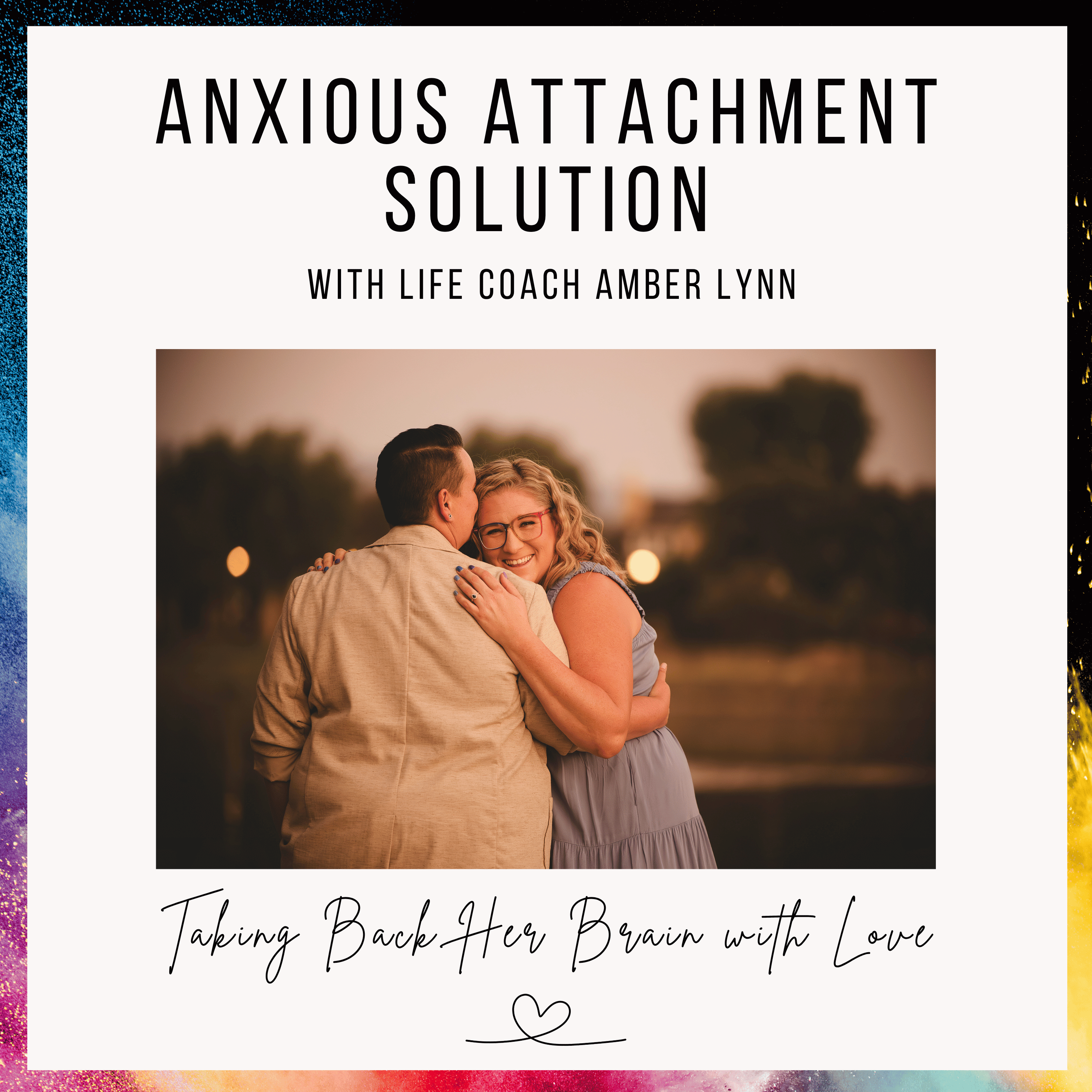
Anxious Attachment Solution: Taking Back Her Brain with Love Life Coach Amber Lynn
by Amber Self | Certified Life Coach
I am Life Coach Amber Lynn and I help women understand their anxious attachment and stop it's cycle so that they can take back control over their life. In my podcast I talk about how I use self coaching, and Life Coaching tools to understand, soothe and manage my anxious attachment so that you can use these tools too.
-
63
“The Mean Girl in Your Mind Is Running Your Life” | Anxious Attachment
In this episode, I share one of the most transformative parts of my personal growth journey: learning how to quiet the harsh inner critic—the “mean girl” in my mind. For years, this voice convinced me that perfection was the only path to safety, constantly pushing me to overwork, people-please, and abandon my true feelings in the name of protection.I break down how our brains are wired to avoid pain, seek pleasure, and conserve energy—which is why change feels so hard. Even when we want more for our lives, our mind resists, feeding us limiting beliefs like “you’ll never change” or “this is just who you are.” But these thoughts aren’t truth—they’re fear.This episode explores how unchecked thoughts shape our emotions, actions, and ultimately our results. When we don’t learn to supervise our minds, we stay stuck in cycles of self-doubt, anxiety, and disempowerment. I share how my own inner dialogue once kept me trapped in unhealthy relationships, burnout, and low self-worth—and how everything shifted when I started doing thought work.Through coaching tools, self-awareness, and intentional thinking, I learned to challenge those automatic beliefs, detach my worth from others, and create a new internal narrative rooted in self-compassion and empowerment. I also talk about the importance of giving yourself grace, redefining what it means to be “good,” and allowing yourself to be human.If you’ve ever felt stuck in your thoughts, overwhelmed by self-criticism, or like you’re holding yourself back from the life you want—this episode will show you that change is possible. It starts with learning to manage your mind.📩 Work With MeJoin my waitlist for Anxious Attachment Boot Camp: Wait list for the Anxious Attachment Boot CampYou don’t have to do this work alone! ✨ Schedule a FREE 1-hour consultation → [email protected] ✨ Join my 3 Month coaching program to stop your anxious attachment cycle, build confidence, and finally feel secure in your relationships and life.Let’s Connect:Join our Free Podcast Community on Facebook: Anxious Attachment Solution CommunityFollow me on instagram: @anxiousattachmentsolutionEmail me at [email protected] for a free one hour consultation
-
62
Learning How to Be Okay No Matter What! | Anxious Attachment
Wait list for the Anxious Attachment Boot CampIn this episode of The Anxious Attachment Solution, Amber Lynn introduces a powerful concept that can transform how you respond to anxious attachment triggers: having your own back.Before the episode begins, Amber invites listeners to join the Free Anxious Attachment Boot Camp happening April 6–8 at 10 AM PST. This live 3-day experience will teach you how to overcome the four biggest obstacles of anxious attachment, rewrite the painful stories driving your anxiety, and learn how to feel emotionally safe and okay—no matter what life throws at you.During the episode, Amber explores one of the most important skills for healing anxious attachment: learning to stop abandoning yourself.Many people with anxious attachment developed deep fears of abandonment because their needs were not consistently met growing up. Over time, this often leads to a painful pattern of mentally and emotionally abandoning ourselves through harsh self-criticism, self-doubt, and believing painful thoughts like “I’m not enough” or “I’m unlovable.”Amber explains that the brain’s biggest fear is not actually abandonment by others—it’s the fear of how harshly we treat ourselves when something goes wrong.When we let our inner critic run unchecked, we intensify anxiety and keep our nervous system stuck in survival mode. But healing begins when we learn to supervise our thoughts, challenge the anxious stories, and speak to ourselves with compassion instead of criticism.In this episode you’ll learn: • What it really means to “have your own back” • How harsh self-talk fuels the anxious attachment spiral • Why self-compassion creates nervous system safety • How to calm your brain and bring your prefrontal cortex back online • Simple mindset shifts that help you take back control of anxious thoughtsThe foundation of healing anxious attachment is building self-trust, emotional resilience, and the belief that you will always show up for yourself—no matter what happens.You are not your anxious attachment. With awareness, practice, and compassion, it is possible to rewire your mind, regulate your emotions, and create the secure love and inner peace you desire.📩 Work With MeJoin my waitlist for Anxious Attachment Boot Camp: Wait list for the Anxious Attachment Boot CampYou don’t have to do this work alone! ✨ Schedule a FREE 1-hour consultation → [email protected] ✨ Join my 3 Month coaching program to stop your anxious attachment cycle, build confidence, and finally feel secure in your relationships and life.Let’s Connect:Join our Free Podcast Community on Facebook: Anxious Attachment Solution CommunityFollow me on instagram: @anxiousattachmentsolutionEmail me at [email protected] for a free one hour consultation
-
61
How can Anxious Attachment be helpful? Let me tell you!
Welcome to The Anxious Attachment Solution. In today’s episode, we’re exploring how to extract wisdom from your anxious attachment triggers — and how doing so helps you take your power back.We often see anxious attachment as a curse. We label ourselves broken. We replay stories about how it’s ruined relationships or made us “too much.” But what if your anxious attachment isn’t pointless pain? What if it’s a teacher?A mentor once told me she refuses to go through pain without gaining something from it. She always looks for the gold. That mindset shifted everything for me. Instead of hating my anxious attachment — which only deepened my suffering — I began asking: What is this here to teach me?When we stay in a victim story (“Life isn’t fair,” “I’ll always be this way,” “Nothing ever works for me”), we give our power away. Our brain prefers familiar pain over unfamiliar growth. That’s why change feels harder than staying stuck. But just because a thought is automatic doesn’t mean it’s true.Anxious attachment has taught me: • How my nervous system responds to fear • How to regulate and create safety • How to communicate my needs • How to separate thoughts from facts • How to take responsibility for my healing • How to love myselfIt showed me the little girl inside who needed validation and care — and that I can give that to her now. It taught me that I’m not broken. I’m wired for connection. And I can learn security.When I stopped resenting my anxious attachment, I stopped fighting myself. I started extracting wisdom instead of just pain. I began asking powerful questions: What is this teaching me? What strength is this building? What belief needs updating?The greatest gift anxious attachment gave me was learning how to love myself — which finally allowed me to receive love fully in my marriage.Your triggers aren’t pointless. They’re information. They’re invitations. What if you decided to find the gold?If you’re ready to break the anxious cycle and build secure love, email me for a free one-hour consultation and let’s begin.📩 Work With MeYou don’t have to do this work alone! ✨ Schedule a FREE 1-hour consultation → [email protected] ✨ Join my 12-week coaching program to stop your anxious attachment cycle, build confidence, and finally feel secure in your relationships and life.Let’s Connect:Join our Free Podcast Community on Facebook: Anxious Attachment Solution CommunityFollow me on instagram: @anxiousattachmentsolutionEmail me at [email protected] for a free one hour consultation
-
60
Why you can’t stop spiraling out of control, No matter what you do?| Anxious Attachment
Welcome back to The Anxious Attachment Solution.Today we’re talking about one of the biggest obstacles that keeps you from calming down when you feel completely out of control.You know logically that your reaction isn’t aligned with who you want to be. You can see yourself over-texting, over-calling, getting defensive, blaming. You know it’s not helping — and yet you can’t stop. The feelings are overwhelming. The behaviors follow. And often the other person pulls away, shuts down, or ghosts — which only reinforces the fear.If you’re here, it’s because you want this pattern to change.Everything I share comes from love and lived experience. I believe you can rewire your brain, soothe your anxious attachment, and build a secure base within yourself. But first, we must address the biggest block:The belief that you cannot change.When you believe:“I can’t control this.”“This is just how I am.”“They made me feel this way.”“If they would just do x, y, z, I’d be okay.”You hand your power away.Yes, the trigger feels real. But what’s actually happening is this: something activates an old wound. That wound activates fear. Fear activates urgency. Urgency activates the spiral.Your brain plays a soundtrack: “They don’t love me.” “I’m not important.” “They’re going to leave.” “I’m too much.”In that moment, you believe the story. That’s why you can’t stop the spiral — because it feels true.But if the problem were truly the other person, the pattern would have resolved by now. The repeated cycle tells us something deeper is happening.You cannot reason with a dysregulated nervous system.So the work is not convincing someone else to change. The work is learning to regulate yourself.Responsibility is not shame. Responsibility is the ability to respond.You stop the spiral by:Becoming aware of your trigger thoughts.Questioning the story your brain is telling.Creating safety in your body before trying to fix the situation.Practicing compassion instead of self-attack.Urgency is your cue for compassion.Pause. Hand on heart. Breathe. “My anxious attachment is triggered. I am safe. My brain is not a reliable narrator right now.”Feel the emotion in your body. Label it. Allow it. Most emotions move through when we stop resisting them. You don’t have to believe the fear to process the feeling.You are not broken. This is not your fault. But it is your responsibility if you want it to change.You are capable of building emotional resilience. You are capable of responding differently. You are capable of creating safety within yourself.📩 Work With MeYou don’t have to do this work alone! ✨ Schedule a FREE 1-hour consultation → [email protected] ✨ Join my 12-week coaching program to stop your anxious attachment cycle, build confidence, and finally feel secure in your relationships and life.Let’s Connect:Join our Free Podcast Community on Facebook: Anxious Attachment Solution CommunityFollow me on instagram: @anxiousattachmentsolutionEmail me at [email protected] for a free one hour consultation
-
59
Anxious Attachment Stories & How they are freaking you out | Anxious Attachment Solution
In today’s episode, we explore how anxious attachment pulls us out of the present moment and into powerful emotional stories rooted in the past. When something in our current relationship feels uncertain—like a delayed text, a shift in mood, or a moment of conflict—our nervous system can interpret it as danger. Instead of looking at the real facts in front of us, our brain searches for familiar, fear-based narratives: I’m not enough. They’re going to leave. Something is wrong. I did something bad. These stories feel true because they are wired to old emotional wounds, but they often have little to do with what is actually happening right now.We also look at how conflict in relationships can quickly become proof of unlovability for someone with anxious attachment. A simple conversation or misunderstanding can trigger defensiveness, shutdown, over-explaining, or an urgent need for reassurance. These reactions may bring temporary relief, but they keep us stuck in what we call “anxious attachment land”—a place of panic, overthinking, and emotional disconnection where real problem-solving and intimacy cannot happen.Through a personal story, this episode highlights how unexamined attachment fears can block curiosity, compassion, and healthy communication. When feedback feels like a threat instead of information, we lose the ability to stay present with the person we love. Healing begins with awareness: noticing the trigger, calming the nervous system, and choosing a new response rooted in safety rather than fear. This means validating emotions, listening before defending, and reminding ourselves that love is not fragile just because imperfection exists.We also discuss how anxious attachment shows up in dating—shaping how we present ourselves, what behavior we tolerate, and how we measure our worth. Rewriting these inner stories requires self-compassion, challenging negative self-talk, and slowly practicing more supportive beliefs about lovability and enoughness.This episode is an invitation to step out of survival mode, question the stories your mind tells, and begin creating relationships grounded in security, honesty, and true emotional connection.📩 Work With MeYou don’t have to do this work alone! ✨ Schedule a FREE 1-hour consultation → [email protected] ✨ Join my 12-week coaching program to stop your anxious attachment cycle, build confidence, and finally feel secure in your relationships and life.Links and Resources:Get my free Guide: Calming Your Anxious AttachmentLinktree to all things happening now: https://linktr.ee/takingbackherbrainLet’s Connect:Join our Free Podcast Community on Facebook: Anxious Attachment Solution CommunityFollow me on instagram: @anxiousattachmentsolutionFollow me on Facebook: Anxious Attachment Solution Life Coach AmberFollow me on substack: @takingbacherbraincoachingEmail me at [email protected] for a free one hour consultation
-
58
Why Is Rejection So Hard? | The Anxious Attachment Solution
Why does rejection hurt so deeply—and why does it seem to linger longer for those of us with anxious attachment?In today’s episode of The Anxious Attachment Solution, I’m diving into why rejection feels so devastating, how our brain and nervous system respond to it, and what actually keeps us stuck in pain long after the rejection happens.This year, rejection became deeply personal for me when my sister did not attend my wedding because I am gay. While whether someone agrees with her beliefs isn’t the point of this episode, the experience opened my eyes to a type of rejection we rarely talk about: family and friendship rejection. The kind of rejection layered with history, shared memories, love, and grief.We often focus on rejection in romantic relationships and breakups, but we don’t talk enough about the grief that comes with being rejected by people who were once our safe place. Underneath the anger, confusion, and rumination is often unprocessed grief—and our brain works overtime to avoid feeling it.In this episode, we explore:Why the anxious attachment brain gets stuck in confusion, anger, and ruminationHow resisting reality keeps us trapped in emotional sufferingWhy trying to earn, prove, or convince someone to choose us causes more painHow rejection activates deep wounds around worth, lovability, and abandonmentThe difference between grief and the stories we tell ourselves about rejectionWhy ghosting, silence, and lack of closure are so dysregulating for anxious attachmentHow our nervous system uses relationships to regulate self-worth—and what happens when they endI also walk you through how to begin creating safety within yourself instead of outsourcing it to other people. You’ll learn how to calm your nervous system, supervise unhelpful thoughts, and process rejection without making it mean something is wrong with you.Rejection hurts. Grief hurts. Heartbreak hurts. But we don’t have to abandon ourselves or attack our worth in the middle of it.This episode is an invitation to stop resisting your feelings, build emotional resilience, and learn how to hold yourself with compassion through loss—so you can heal without losing yourself in the process.You don’t have to do this alone. And you are not broken for hurting.📩 Work With MeYou don’t have to do this work alone! ✨ Schedule a FREE 1-hour consultation → [email protected] ✨ Join my 12-week coaching program to stop your anxious attachment cycle, build confidence, and finally feel secure in your relationships and life.Links and Resources:Get my free Guide: Calming Your Anxious AttachmentLinktree to all things happening now: https://linktr.ee/takingbackherbrainLet’s Connect:Join our Free Podcast Community on Facebook: Anxious Attachment Solution CommunityFollow me on instagram: @anxiousattachmentsolutionFollow me on Facebook: Anxious Attachment Solution Life Coach AmberFollow me on substack: @takingbacherbraincoachingEmail me at [email protected] for a free one hour consultation
-
57
The Girl Who Just Wanted to Be Loved: An Anxious Attachment Healing Story
This episode is about connection, trust, and sharing the heart behind The Anxious Attachment Solution. When you listen, share, or join coaching, you are trusting me with your deepest fears, heartbreaks, and hopes. So today, I share my story.Growing up, I never felt like I fit in. In high school I was the “good girl,” the old soul, the teacher’s pet, the one hiding in classrooms and libraries. I wasn’t popular, but I desperately wanted to be liked, chosen, and loved. I dreamed of romance, marriage, and a soulmate, yet I kept chasing people who were emotionally unavailable.In college and adulthood, my anxious attachment showed up as:Wanting to be chosen at any costSettling for scraps of attentionConfusing being needed with being lovedPutting others’ needs before my ownBelieving I had to earn love through approval, caretaking, and perfectionFeeling “too much” and “not enough” at the same timeLearning to:Separate thoughts from feelingsQuestion the stories about worth and lovabilityRegulate my nervous system instead of chasing reassuranceStop abandoning myself to earn loveDevelop secure self-worth and unconditional self-love…changed everything.This healing journey led me to life coaching, to understanding the brain, emotions, and attachment, and ultimately to creating this podcast and my coaching program. Today I am in a deeply loving, secure marriage—not because I became perfect, but because I learned how to be safe with myself, how to manage my mind, and how to show up without letting fear run the relationship.My mission is to help women with anxious attachment:Understand their brain and nervous systemHeal self-doubt and fear of abandonmentDevelop secure self-worth and self-trustCreate healthy, emotionally safe relationshipsStop believing they are brokenLearn that love does not have to be earnedIf you don’t love and trust yourself, it’s almost impossible to believe someone else can truly love you. This work is about breaking that cycle and becoming the safe place you’ve always been searching for.You are not alone. I’ve been where you are. And healing is possible.📩 Work With MeYou don’t have to do this work alone! ✨ Schedule a FREE 1-hour consultation → [email protected] ✨ Join my 12-week coaching program to stop your anxious attachment cycle, build confidence, and finally feel secure in your relationships and life.Links and Resources:Get my free Guide: Calming Your Anxious AttachmentLinktree to all things happening now: https://linktr.ee/takingbackherbrainLet’s Connect:Join my Free Facebook Pop Up Coaching GroupFollow me on instagram: @anxiousattachmentsolutionFollow me on Facebook: Anxious Attachment Solution Life Coach AmberFollow me on substack: @takingbacherbraincoachingEmail me at [email protected] for a free one hour consultation
-
56
The Need to Be Liked & Anxious Attachment
In this episode, we explore how the deep desire to be “liked” and “accepted” can keep anxiously attached people stuck in self-abandonment, people-pleasing, and low self-worth.Wanting to be liked often shows up as:Fear of disagreement, criticism, or doing something “wrong”Staying quiet instead of sharing opinions, needs, or truthAvoiding visibility and purpose out of fear of rejectionChoosing comfort and approval over authenticity and alignmentThis pattern isn’t about weakness—it’s about a nervous system wired for safety through approval. The brain believes: If everyone likes me, I won’t be abandoned. But the cost is high.The need to be liked leads to:Silencing yourselfLosing touch with who you areDoubting your experiences and expertiseTaking responsibility for other people’s emotionsWeak boundaries in family, friendships, dating, parenting, and workLiving in a role instead of living in truthIronically, trying to avoid rejection by abandoning yourself creates the very feelings you fear most: loneliness, anxiety, disconnection, and unworthiness. When you reject who you are, you teach your brain that you are the problem. Over time, this becomes the belief: “I am too much. I am not enough. I am unlovable unless I change.”This creates an internal battle between:Who you truly areWho you think you must be to be lovedSelf-abandonment leads to self-rejection, and when you don’t believe you are lovable, it becomes impossible to feel truly loved—even when love is offered.True healing begins when you question the story: “What if I don’t need to be different to be loved?” “What if being myself is safer than constantly performing?” “What if the people meant for me will stay when I am real?”Not everyone will like you—and they never were meant to. The people who are for you will be the ones who can know the real you. Secure self-worth and unconditional self-love are built by:Regulating the nervous systemManaging the mindRewriting beliefs about worth, safety, and rejectionLearning to show up without abandoning yourselfWhen you stop living to be liked and start living in alignment, you no longer chase safety—you become it.📩 Work With MeYou don’t have to do this work alone! ✨ Schedule a FREE 1-hour consultation → [email protected] ✨ Join my 12-week coaching program to stop your anxious attachment cycle, build confidence, and finally feel secure in your relationships and life.Links and Resources:Get my free Guide: Calming Your Anxious AttachmentLinktree to all things happening now: https://linktr.ee/takingbackherbrainLet’s Connect:Join my Free Facebook Pop Up Coaching GroupFollow me on instagram: @anxiousattachmentsolutionFollow me on Facebook: Anxious Attachment Solution Life Coach AmberFollow me on substack: @takingbacherbraincoachingEmail me at [email protected] for a free one hour consultation
-
55
The Inner Child Behind the Anxiety: Meet Her, Give Her What She Needs
In today’s episode, we explore how unmet childhood needs shape the beliefs and nervous system patterns that still influence our adult relationships—especially for those with anxious attachment. I break down how these early experiences create hypervigilance, people-pleasing, emotional overwhelm, and a chronic sense of needing to earn love, and how we can begin to rewire these patterns with compassion and consistency.As children, many of us adapted to unpredictable environments by scanning for danger, managing the emotions of others, and becoming “what was needed” to stay connected. This created a foundation of beliefs like love comes and goes, I’m too much, I have to be perfect, and connection is fragile. Our nervous system learned to brace for abandonment, silence emotions, or cling for safety. These patterns now show up as overthinking, strong emotional reactions, fear of conflict, and choosing familiar but emotionally inconsistent partners.Healing begins with meeting the inner child within us—the part of us still seeking safety, attunement, and unconditional love. We learn to show up for ourselves with curiosity instead of judgment, compassion instead of shame. We begin practicing new beliefs like: Love can stay. My emotions make sense. I am safe. I do not have to earn love. As we rebuild self-trust and develop emotional attunement with ourselves first, our nervous system slowly learns that discomfort doesn’t equal danger.We also talk about the need for safety before independence: many anxiously attached adults were never consistently soothed as children, so self-regulation feels overwhelming. By offering ourselves reassurance and grounding first, we teach the body that emotions are safe to feel—and possible to regulate.If you’re in a healthy relationship, your partner can support this healing by offering simple reassurance during conflict, understanding that your reactions come from old patterns rather than current reality, and giving you space to regulate without interpreting it as withdrawal.Ultimately, anxious attachment patterns are not character flaws—they’re survival strategies your younger self learned. With consistency, emotional attunement, and new supportive beliefs, you can rewire these patterns and create secure, enduring love within yourself and in your relationships.📩 Work With MeYou don’t have to do this work alone! ✨ Schedule a FREE 1-hour consultation → [email protected] ✨ Join my 12-week coaching program to stop your anxious attachment cycle, build confidence, and finally feel secure in your relationships and life.Links and Resources:Get my free Guide: Calming Your Anxious AttachmentLinktree to all things happening now: https://linktr.ee/takingbackherbrainLet’s Connect:Join my Free Facebook Pop Up Coaching GroupFollow me on instagram: @anxiousattachmentsolutionFollow me on Facebook: Anxious Attachment Solution Life Coach AmberFollow me on substack: @takingbacherbraincoachingEmail me at [email protected] for a free one hour consultation
-
54
Anxious Attachment Sabotage: How Attachment Shapes the Way You Connect
Hello — I’m Amber Lynn, host of The Anxious Attachment Solution. I help women calm their nervous systems, rewire anxious patterns, stop overthinking, and build secure habits using my Secure Method. Today we’re unpacking how anxious attachment is shaped by the beliefs we hold about love — and how those beliefs keep us stuck.Beliefs form when we repeat thoughts until they feel true. If you grew up with inconsistent or emotionally immature caregivers, you learned survival beliefs: “I must be perfect to be loved,” “Love is conditional,” “People can’t be trusted.” Those beliefs create feelings (unworthy, fearful, anxious) that hijack your nervous system and drive survival behaviors: clinging, panic in conflict, people-pleasing, and chronic self-doubt. The result? Relationships that feel intense, uncertain, and conditional — even when your partner says they love you.Examples: if you believe you’re “hard to love,” a simple request from a partner can trigger catastrophic meaning-making — overthinking, emotional flooding, and a big reaction that doesn’t match the situation. That’s your nervous system protecting the child version of you who learned love had to be earned.The good news: beliefs are just practiced thoughts. You can intentionally choose new thoughts that build safety. Practice noticing the old belief, pausing, and asking: What would I think if I believed love was unconditional, reliable, or easy? Write those new thoughts down and repeat them on purpose.Reflection prompts: • What belief about love is driving my biggest reactions? • How would I show up differently if I felt love was safe and unconditional? • What new thought can I practice today to build a new belief?You can retrain your mind: pause, process emotions, and choose thoughts that create safety. You deserve unconditional love — starting with the way you treat yourself.📩 Work With MeYou don’t have to do this work alone! ✨ Schedule a FREE 1-hour consultation → [email protected] ✨ Join my 12-week coaching program to stop your anxious attachment cycle, build confidence, and finally feel secure in your relationships and life.Links and Resources:Get my free Guide: Calming Your Anxious AttachmentLinktree to all things happening now: https://linktr.ee/takingbackherbrainLet’s Connect:Follow me on instagram: @anxiousattachmentsolutionFollow me on Facebook: Anxious Attachment Solution Life Coach AmberFollow me on substack: @takingbacherbraincoachingEmail me at [email protected] for a free one hour consultation
-
53
How to stop the “Anxiety Spiral” in Dating & Relationships
Stop the Spiral: Rewiring the Anxious Attachment Mind💬 Episode Notes:In this week’s episode of The Anxious Attachment Solution, I’m diving into how to stop your anxiety spiral—the loop of thoughts, panic, and reactivity that keeps you stuck in your anxious attachment cycle.If you’ve ever found yourself overthinking, spiraling after a text, or needing constant reassurance, this episode will help you understand why it happens and how to start changing it.You’ll learn:How your brain’s survival wiring (fight, flight, or freeze) fuels anxious attachment.Why your triggers feel like danger, even when they’re not.How your beliefs about worthiness, love, and trust shape your reactions.The power of awareness—the first step in my Secure Method—to rewire your mind for calm and security.How to create new, believable thoughts that help you develop secure self-worth—one thought at a time.This episode will help you start identifying the stories your brain has been telling you for years—and give you the tools to begin rewriting them.Because when you learn to pause, question your thoughts, and self-soothe, you stop fueling the spiral and start becoming your most secure self.✨ Listen now to learn how awareness and intentional thought work can help you stop your anxious spiral and create the love and stability you’ve always wanted.📩 Work With MeYou don’t have to do this work alone! ✨ Schedule a FREE 1-hour consultation → [email protected] ✨ Join my 12-week coaching program to stop your anxious attachment cycle, build confidence, and finally feel secure in your relationships and life.Links and Resources:Get my free Guide: Calming Your Anxious AttachmentLinktree to all things happening now: https://linktr.ee/takingbackherbrainLet’s Connect:Follow me on instagram: @anxiousattachmentsolutionFollow me on Facebook: Anxious Attachment Solution Life Coach AmberFollow me on substack: @takingbacherbraincoachingEmail me at [email protected] for a free one hour consultation
-
52
How to Communicate when Triggered
Hello and welcome to The Anxious Attachment Solution — I’m Amber Lynn. In this episode I walk you through what happens inside your brain when anxious attachment is activated, how that creates reactive patterns, and (most importantly) a simple, repeatable framework to communicate clearly so you don’t add fuel to the fire.What we coverWhy triggers turn into survival mode (fight/flight/freeze/fawn) and how that creates drama, blame, and miscommunication.The difference between reality and the story your anxious brain makes up about your partner.A practical, step-by-step practice: PAUSE → REFLECT → REGULATE → RECONNECT → REPAIR (how to actually use it in the moment).Exact words and short scripts you can say to your partner when you notice a big reaction — examples you can personalize.How to rebuild trust with yourself (so you rely less on your partner to soothe you) and speed up repair when you do react.Key takeawaysAwareness is the first act of power: name the trigger before you act.Your partner is not responsible for fixing your inner story — you are.Ask for space without abandoning the conversation: explain you’ll step away to process and come back.Practice short regulating tools (walk, cold water, journal, breath) to calm your nervous system.Reconnect quickly with repair: apology, physical affection, and clarifying the real problem.Scripts you can use“I’m getting really overwhelmed right now. I need a few minutes to calm down so I don’t react. I’ll come back and talk.”“My anxious attachment is triggered — I’m going to pause and process this so I can be present with you.”After: “I’m sorry I got reactive. Here’s what I was feeling and what I learned about my reaction…”Who this episode is for Anyone who wants to stop the same fights from repeating, learn how to self-regulate, and show up as their most connected self in relationship.If you found this helpful, please subscribe, leave a review, and share with a friend who needs this reminder: you can learn to pause, not panic. Want the worksheet for PAUSE → REFLECT → REGULATE → RECONNECT → REPAIR? DM me or visit my link in the show notes.Links and Resources:Get my free Guide: Calming Your Anxious AttachmentLinktree to all things happening now: https://linktr.ee/takingbackherbrainLet’s Connect:Follow me on instagram: @anxiousattachmentsolutionFollow me on Facebook: Anxious Attachment Solution Life Coach AmberFollow me on substack: @takingbacherbraincoachingEmail me at [email protected] for a free one hour consultation
-
51
Your Partner doesn't have to get on the Rollercoaster, to love you
Welcome back to The Anxious Attachment Solution. I’m your host, Life Coach Amber Lynn.In this episode, I want to expand on something I said before—you don’t need your partner to ride the emotional roller coaster with you. I want to be clear: my work is for those in relationships with partners who care, show up, and want to build something healthy with you. Never use my podcast to justify staying in unhealthy or harmful relationships.So many of us with anxious attachment never stopped to question what love really means to us. We inherited stories about love—from family, society, or rom-coms—without consciously deciding if we even like those stories. These invisible “manuals” often tell us love means our partner should know how we feel, should make us feel better, and should anticipate our needs without us communicating them.But these “shoulds” are clues from our anxious brain. It tells us:“If they really cared, they’d know.”“If they loved me, they’d never upset me.”“If they cared, they’d fix my feelings.”These thoughts create unhuman expectations—for them and for us. When they can’t meet them, our brain makes it mean we’re unloved or unsafe. But the truth is, love and safety come from within us. No one can make us believe we’re loved until we’ve healed the fear of abandonment that distorts how we see love.When I look back, I see how my anxious brain made small things into big problems. I overgave, overanalyzed, and took every critique as rejection. I didn’t realize my reactions came from what my brain made things mean—not what my partner actually did.Now I understand the brain: when our amygdala (the reactive part) takes over, our thinking brain goes offline. We enter fight, flight, freeze, or fawn. The work is learning to calm the amygdala, bring our prefrontal cortex back online, and regulate ourselves.You are responsible for your emotions and your partner is responsible for theirs. They don’t have to go on your emotional roller coaster. They can love you without having to fix your triggers. The more you learn to self-soothe, the less pressure there is on your relationship.When you process your triggers and offer yourself compassion, you stop needing constant reassurance. You become your own secure base—your own source of validation and calm.Remember: you are worthy, you are lovable, and your relationship doesn’t have to be perfect to be healthy. Love is not about perfection—it’s about two humans growing, healing, and choosing love on purpose.Links and Resources:Get my free Guide: Calming Your Anxious AttachmentLinktree to all things happening now: https://linktr.ee/takingbackherbrainLet’s Connect:Follow me on instagram: @anxiousattachmentsolutionFollow me on Facebook: Anxious Attachment Solution Life Coach AmberFollow me on substack: @takingbacherbraincoachingEmail me at [email protected] for a free one hour consultation
-
50
Your Partner Doesn't Have to be on the Roller Coaster with You to Love You
Welcome back to The Anxious Attachment Solution. I’m your host, Life Coach Amber Lynn.In this episode, I want to expand on something I said before—you don’t need your partner to ride the emotional roller coaster with you. I want to be clear: my work is for those in relationships with partners who care, show up, and want to build something healthy with you. Never use my podcast to justify staying in unhealthy or harmful relationships.So many of us with anxious attachment never stopped to question what love really means to us. We inherited stories about love—from family, society, or rom-coms—without consciously deciding if we even like those stories. These invisible “manuals” often tell us love means our partner should know how we feel, should make us feel better, and should anticipate our needs without us communicating them.But these “shoulds” are clues from our anxious brain. It tells us:“If they really cared, they’d know.”“If they loved me, they’d never upset me.”“If they cared, they’d fix my feelings.”These thoughts create unhuman expectations—for them and for us. When they can’t meet them, our brain makes it mean we’re unloved or unsafe. But the truth is, love and safety come from within us. No one can make us believe we’re loved until we’ve healed the fear of abandonment that distorts how we see love.When I look back, I see how my anxious brain made small things into big problems. I overgave, overanalyzed, and took every critique as rejection. I didn’t realize my reactions came from what my brain made things mean—not what my partner actually did.Now I understand the brain: when our amygdala (the reactive part) takes over, our thinking brain goes offline. We enter fight, flight, freeze, or fawn. The work is learning to calm the amygdala, bring our prefrontal cortex back online, and regulate ourselves.You are responsible for your emotions and your partner is responsible for theirs. They don’t have to go on your emotional roller coaster. They can love you without having to fix your triggers. The more you learn to self-soothe, the less pressure there is on your relationship.When you process your triggers and offer yourself compassion, you stop needing constant reassurance. You become your own secure base—your own source of validation and calm.Remember: you are worthy, you are lovable, and your relationship doesn’t have to be perfect to be healthy. Love is not about perfection—it’s about two humans growing, healing, and choosing love on purpose.📩 Work With MeYou don’t have to do this work alone! ✨ Schedule a FREE 1-hour consultation → [email protected] ✨ Join my 12-week coaching program to stop your anxious attachment cycle, build confidence, and finally feel secure in your relationships and life.Links and Resources:Get my free Guide: Calming Your Anxious AttachmentLinktree to all things happening now: https://linktr.ee/takingbackherbrainLet’s Connect:Follow me on instagram: @anxiousattachmentsolutionFollow me on Facebook: Anxious Attachment Solution Life Coach AmberFollow me on substack: @takingbacherbraincoachingEmail me at [email protected] for a free one hour consultation
-
49
Self Soothing 101: The Importance of Self Regulation: Do this BEFORE you Text them
When your anxious attachment is triggered, your body panics and your brain spins stories like, “They’re going to leave” or “I’m not enough.” It feels real, but it’s not a real threat — it’s your nervous system asking for regulation.Self-regulation means calming your body before reacting, before texting, before spiraling. When you pause, breathe, and comfort yourself first, your brain learns that emotions are safe to feel. The goal isn’t to stop feeling — it’s to stop believing every anxious thought.Your panic is the cue to pause, not act. Ask yourself: – Am I in the present or in a story from the past? – What am I making this mean? – What do I need to feel safe right now?Regulate your body — breathe, splash cold water, journal, walk, or wrap yourself in a blanket. Then talk to yourself kindly: “It’s okay that I feel this way. My brain is just triggered. I can feel this and still be safe.”This work isn’t about becoming hyper-independent — it’s about self-trust. When you soothe yourself first, you show your brain you’re capable of handling discomfort without needing immediate validation.Remember: Trigger → Big Emotion → Pause → Self-Regulate → Self-Compassion → Thought Work → ReconnectYou don’t need to act on panic to feel secure. You can hold space for your feelings, regulate your nervous system, and choose peace before you text them.“The power is in the pause — regulate before you react, because your safety starts with you.”📩 Work With MeYou don’t have to do this work alone! ✨ Schedule a FREE 1-hour consultation → [email protected] ✨ Join my 12-week coaching program to stop your anxious attachment cycle, build confidence, and finally feel secure in your relationships and life.Links and Resources:Get my free Guide: Calming Your Anxious AttachmentLinktree to all things happening now: https://linktr.ee/takingbackherbrainLet’s Connect:Follow me on instagram: @anxiousattachmentsolutionFollow me on Facebook: Anxious Attachment Solution Life Coach AmberFollow me on substack: @takingbacherbraincoachingEmail me at [email protected] for a free one hour consultation
-
48
Why You’re Not “Too Much”: The Truth About Anxious Attachment
If you’ve ever been told you’re “too much”—too needy, too emotional, too sensitive—this episode is for you. In today’s episode, I’m breaking down the real reason you feel too much and believe it, why this belief keeps you stuck in the anxious attachment cycle, and how you can finally change it.We’ll explore how this “too much” belief shows up in dating, relationships, and everyday life—often leading to overthinking, people-pleasing, defensiveness, or shutting down. And I’ll teach you the first step in rewiring your brain so you can calm your nervous system, trust yourself, and confidently show up as the person you want to be.Key TakeawaysYou are not too much — you just have an unmanaged anxious attachment cycle.Feeling “too much” is learned from past experiences and repeated thoughts that became a belief.This belief fuels fear, self-doubt, people-pleasing, emotional reactivity, and low self-worth.Your thoughts create your feelings → your feelings drive your actions → your actions create your results.You can interrupt this cycle by using The Secure Method:🧠 Thought Work in ActionTo rewire your brain, start with thought ladders:Current thought: “I am too much.”Bridge thoughts to practice:“I am not too much for my people.”“Some people will love me for who I am.”“I have anxious attachment and I am enough.”Secure thought to aim for: “I am enough. I am worthy.”Practice these thoughts daily—on sticky notes, alarms, or journaling—to build new beliefs over time.🛠️ Practical Steps to TryNotice & Name Your Cycle:What triggers you?What anxious thoughts come up?How do they make you feel?What actions do you take (or avoid)?What result does this create?Pause Before Reacting: Validate your feelings, offer yourself kindness, and ask:“What do I need right now to feel safe?”Practice Secure Thoughts: Use thought ladders to slowly teach your brain new beliefs.❤️ RememberYou are NOT your anxious attachment.You are not “too much.”You can rewire your brain and create secure, healthy habits in relationships.You are worthy, lovable, and enough—exactly as you are.📩 Work With MeYou don’t have to do this work alone! ✨ Schedule a FREE 1-hour consultation → [email protected] ✨ Join my 12-week coaching program to stop your anxious attachment cycle, build confidence, and finally feel secure in your relationships and life.Links and Resources:Get my free Guide: Calming Your Anxious AttachmentLinktree to all things happening now: https://linktr.ee/takingbackherbrainLet’s Connect:Follow me on instagram: @anxiousattachmentsolutionFollow me on Facebook: Anxious Attachment Solution Life Coach AmberFollow me on substack: @takingbacherbraincoachingEmail me at [email protected] for a free one hour consultation
-
47
Do I have Anxious Attachment? 10 Signs to know Part 2
Welcome to the Anxious Attachment Solution Podcast with Life Coach Amber Lynn If you’ve ever wondered “Do I really have anxious attachment?”—this series is for you. Today I’m diving into part two of 10 signs you might have anxious attachment and what you can do to break free from these patterns.✨ In this episode you’ll learn:Why anxious attachment makes you feel like you can never rest (hypervigilance)How people-pleasing and taking everything personally keeps you stuckThe truth about self-worth, low self-esteem, and rewriting the story your brain tells youWhy avoiding conflict creates more conflict and resentment—and how to handle it differentlyWhat to do when you feel like you’re “too much” or “not enough” in relationshipsHow to stop riding the emotional rollercoaster and start regulating your nervous systemThe difference between reality and the “stories” your anxious brain makes up during conflictHow to begin building self-trust and trust in relationships💡 Key Takeaways:Hypervigilance doesn’t protect you—it keeps you disconnected from the present moment.People-pleasing is actually self-protection, but it costs you your authenticity.Self-worth isn’t fixed; it’s built thought by thought.Conflict doesn’t mean danger—it’s an opportunity for growth when handled with awareness.Your anxious attachment is not you—it’s a set of habits you can rewire.📌 Try This:Next time you catch yourself scanning for signs something is “wrong,” pause and ask: “Am I future-tripping or am I present?”When facing conflict, ask yourself: “What is my brain making this mean? What is my partner actually saying?”Start practicing new thoughts on purpose to create secure self-worth.✨ Remember: You are inherently worthy. You are not too much. You are not your anxious attachment.📩 Want to go deeper? I offer a 12-week 1:1 coaching program designed to help you rewire your brain, calm your nervous system, and create the secure relationships you deserve. Schedule a free 1-hour consultation—whether you’re curious about coaching or just want a sample session.👉 Email me at [email protected] with your questions or topics you’d love to hear covered on the podcast.Links and Resources:Get my free Guide: Calming Your Anxious Attachment Free 4 day video Training Being YOU doesn’t have to be scaryLinktree to all things happening now: https://linktr.ee/takingbackherbrainLet’s Connect:Follow me on instagram: @anxiousattachmentsolutionFollow me on Facebook: Anxious Attachment Solution Life Coach AmberFollow me on substack: @takingbacherbraincoachingShare your thoughts and experiences with the hashtag #anxiousattachmentsolution and tag @anxiousattachmentsolutionEmail me at [email protected] for a free one hour consultation
-
46
Do I Have Anxious Attachment? 10 Signs to Know For Sure Part 1
This is part one of a two-part series where I share 10 signs of anxious attachment and what you can do to start creating more secure relationships.✨ In this episode, we’ll cover:The fear of abandonment—why it feels so real and how to pause before panic takes overOverthinking—why replaying conversations and “what-ifs” keeps you stuck in anxietyConstant reassurance seeking—how it sabotages trust in yourself and your relationshipsThe hidden beliefs behind these patterns (not being good enough, being “too much”)Tools to calm your nervous system when your anxious attachment is triggeredHow to begin rewriting your self-worth and love narratives so you can feel safe in relationships💡 Key Takeaways:Your brain is wired to tell stories rooted in fear—but you can learn to separate facts from anxious thoughts.Seeking reassurance may feel soothing, but it weakens self-trust. True safety comes from learning to regulate yourself.Overthinking and perfectionism are not signs of unworthiness—they’re signals that your anxious attachment is in the driver’s seat.With awareness and practice, you can teach your brain and body to become a safe place for all of your emotions.📌 Try This:Next time you feel fear of abandonment or panic: pause, take a sip of cold water, and label the sensation in your body before reacting.Write down your thoughts (a thought download) and separate facts from the “story” your brain is making up.Practice new self-talk: instead of “I’m not enough”, try “I feel fear AND I am capable of holding it. My worth is inherent.”✨ Remember: You are not broken. You are not too much. You are not stuck in anxious attachment forever. With the right tools, you can rewire your brain and create secure, loving relationships.📩 Work with Me: I offer a 12-week 1:1 coaching program using my Secure Method, where I help you calm your nervous system, rewire your thoughts, and step into healthier relationship habits.👉 Schedule a free 1-hour consultation—whether you want to explore coaching or just experience a sample session. 📧 Email me at [email protected] with your questions or podcast topic requests.Links and Resources:Get my free Guide: Calming Your Anxious Attachment Free 4 day video Training Being YOU doesn’t have to be scaryLinktree to all things happening now: https://linktr.ee/takingbackherbrainLet’s Connect:Follow me on instagram: @anxiousattachmentsolutionFollow me on Facebook: Anxious Attachment Solution Life Coach AmberFollow me on substack: @takingbacherbraincoachingShare your thoughts and experiences with the hashtag #anxiousattachmentsolution and tag @anxiousattachmentsolutionEmail me at [email protected] for a free one hour consultation
-
45
From Anxious to Aware: Welcome to Anxious Attachment Solution – Your Healing Starts Here
Hello and Welcome to Anxious Attachment Solution Your Healing Starts Here. I am your host Life Coach Amber Lynn. Today I am beginning a Series on Anxious to Aware. In this series my goal is to help you build awareness around your anxious attachment so that you can heal, repair, and move forward with a new mindset and new habits.For those of you who are new to the show, welcome. I am life coach Amber Lynn- I have dealt with Anxious Attachment the majority of my life before I even knew what to call it. I just knew that I had a hard time in relationships, I had big emotions, I wanted to communicate well, but no matter what I did I didn’t feel good enough AND I felt like I was too much. I learned about codependency and attachment styles and became a certified Life Coach through the Life Coach School and now I used the understanding of the brain, our thoughts, emotions- to relate it to anxious attachment. I created this podcast to share my journey of using thought work and mindset work to heal my anxious attachment. On this podcast I share my personal journey and the journey I have supported clients on. I use this podcast as a way to teach about our brain, emotions and human responses in regard to people with anxious attachment. So if you are going through something personally and you want help- send me an email, I will reply. I might even create a podcast to share how I would support myself through the journey, challenge or obstacle you are facing. My email again is [email protected] work with clients who are not even sure if I have anxious attachment or if this work is for me. So I tell them if any of the following applies to you and your life, I can help you: Do you have fear of Abandonment, overthink, have a constant need for reassurance, always looking for red flags, never feel good enough, always people please before asking for what you want, feel like you are on an emotional rollercoaster, have a hard time trusting people, feel like you are too much or too needy, sometimes confuse anxiety with feelings of love then this podcast is for you:From Anxious to Aware- I teach my clients how awareness is the foundation to any change. If any of this resonates with you and you want to make a change then you are in the right place. First thing you have to do before you can get to the “HOW do I change it, WHAT do I do”- You have to know what an anxious attachment cycle or trigger looks like for you. What does it sound like for you? When does it show up for you?
-
44
Why Is This So Hard?! Things Anxiously Attached People Struggle With"
We have to learn to simultaneously talk back to our brain to tell it to hush and listen to what the other person is saying. Recognize the feelings that start to come up.If you need time to process what was said because your emotions are too high- ask for some time to think about what they said. Questions to ask yourself“Why is what they are saying making me feel ( judged, criticized, or not good enough) ?”“What is my brain making this mean?”This is a story my brain is telling me- but is it actual fact? Is this what they are actually saying? Most likely it is not. Do a thought download - write it all outThey said words, these words made me feel, I feel this way because This will reveal to you the story that your brain is telling you- this will reveal the real reason why you feel an urgency, or a panic, or defensive, or whatever uncomfortable emotion it may be for youListening is often hard for us with anxious attachment because we put so much pressure on ourselves to be perfect in a relationship so hearing anything short of Positive, Affirmations- cause our brain to panic and look for red flags- aka hypervigilance. Our brain has been wired to scanning for danger “emotional dangers” - scan, scan, scan for any potential problem- this is the problem because it often makes problems where there are not. Since we have this deep rooted fear of abandonment or rejection it is beneath it all. We have to practice grounded ourselves in the moments and not in the “potential fears” of anxious attachment.When we are constantly putting pressure on ourselves to do everything right and be hyper-attuned to other’s needs in relationships it keeps our nervous system in a constant state of survival and over functioning. Causing us to have a hard time with clear and transparent communication, causing us to overthink, be anxious and always on edge. This will probably end up being an entirely separate podcast because the pressure to be perfect and anticipate others needs is another habit that actually causes strain on our relationships.Our brain learned to do this when we were younger as a means for survival. This used to be a very helpful thing to us and now we are growing up and want to do more than just survive. We want to live and be present in our relationships with other people.So when you discover what your brain is making their words mean- this is not the time to beat yourself up more for being a person with anxious attachment or for being “broken” this is the time to show yourself compassion and really validate your feelings.You can validate your fears without believing them, You can validate your pressure without believing the story your brain is telling you. You can show yourself compassion and you can even allow yourself to be frustrated that listening is so hard right now. I want you to know listening and communicating will get better, it will get easier. When you learn how to stop putting so much pressure on yourself, when you learn how to talk back to your brain, and calm your nervous system so that it stops scanning for dangers- it does get easier. You will be able to listen.When my brain wants to start making my wife’s words mean something- I now say can we listen to her words first before you tell me what you think about it. I remind myself that I am safe to hear words. I am safe to hear her words. I am capable of hearing what she has to say. I don’t have to make it mean more than what she says. You will be able to develop listening skills. You will be able to hear words that make you feel like you are the problem and then you will be able to turn it around and really hear what the other person is saying- it just takes awareness and practice, practice.
-
43
Yes, You REALLY Can Rewire Your Anxious Attachment!
The difference between therapy and life coaching to me is that Life Coaching helps you with your current thoughts and beliefs and helps you in a different way than therapy. Life Coaching is future focused and helps a lot with processing emotions while teaching in the moment strategy for what to do when your anxious attachment is triggered. I do believe Life Coaches who have experienced Anxious Attachment can help support you in getting the results that you want in your life if they too have done the work and are able to share with you actual steps to get you where you want to go.I also do believe that if someone is trying to sell you quick fixes, that it is a problem. I do not believe there are any magic tricks or quick “healing” that can magically rid your nervous system of its triggers or reprogram your responses to those triggers. However, I do believe that small and quick strategies can start changing things right away. I do believe Life Coaching offers you understanding, strategy and real life skills that help you start implementing things right away. When we do the work of Self Awareness, Thoughtwork and we practice new reactions and coping mechanisms on purpose we accelerate our transformation, we accelerate our development of new habits, new coping strategies, and we begin to feel more secure.I am here to tell you that thoughtwork is not a magic pill but it is a skill that will get you so much closer to where you want to be in life and in relationships. I see thought work as the strategy or the skill I used to develop mental and emotional health, mental and emotional balance, the strategy I use to sooth and calm my anxious attachment when it is triggered. I created this podcast as a person with Anxious attachment who uses Life Coaching Skills and tools, like thoughtwork and the anxious attachment cycle to soothe my anxious attachment and create new habits with purpose and intention and to show you all how I do this, so that you too can do the same. So my answer is Yes I do believe you can really rewire your anxious attachment, I really do believe that you can create new habits when your anxious attachment is triggered. I do not believe that we have to be forever a victim to our anxious attachment. I do not believe anyone is too far gone, too anxiously attached, too broken, too anything to do this work. I believe that every person who wants to do this work, who has the smallest desire to make a change, who has the “want” to change their habits and their thought patterns is capable of doing it. I believe that every human is capable of the change they wish to see in themselves. That is why I do this podcast, that is why I started a coaching program- because I remember not believing in myself. I remember thinking it is always going to be like this. I remember not believing that I could change.What is holding you back right now is simple, it is the thoughts you are currently thinking. It is the “story” you keep telling yourself. I also will be hosting a 5 day Anxious Attachment Boot Camp in June. June 24 through June 28th. I will be going live on zoom, teaching and coaching about Anxious Attachment and how to rewire your brain to get the relationship you want. My live coaching will be at 10:00 am pacific standard time, I would love for you to joining and come LIVE. Trust me- YOU do not want to miss this free boot camp. Email me at Amber Lynn @takingbackherbrain.com Anxious Attachment Boot Camp, follow me on Instagram at anxious attachment solution and DM me Boot Camp- to get on the wait list now. You will not want to miss this opportunity. Thank you so much for joining me on today's Podcast. Go do the work, it is with you. I believe in YOU!
-
42
Stop Seeking Validation from other People: Obstacle 4 of Anxious Attachment
Before we jump to the practicing new thoughts: We have to do phase 1 self awareness- you first have to know the thoughts that you have now about yourself and love, your self and reassurance, your thoughts about conditional love. So get a piece of paper write it downWhat are all the thoughts I think about me and my ability to be loved? What are all of my thoughts about love and my self worth? Why am I not worthy of love? Now Why am I worthy of love?When you get these thoughts down write a T next to each thought you find bring up BIG feelings, next to that thought write F: how does this feeling make you feel? Write that feelingWhat feeling do you notice the most in this narrative? Now what do you do when you feel this feeling?Now phase 2:What feeling do you want to feel when it comes to relationships? What would you have to believe to feel that way? What would you have to think to believe that? What feeling do you want to have about your selfworth? What would you have to believe to feel that way? What would you have to think to believe that?From thoughtwork to strategyWhen you are in the moment and you are not sure if you are seeking validation- ask yourself why am I doing this? What am I trying to get out of this? Is that what I actually need? What if I could get this from myself what would that look like?Often times we need validation in the middle of an argument, or in the middle of “something” that has triggered our anxious attachment, we have been programmed to believe that we need someone or something outside of ourselves to feel better. I teach my clients how to do this for themselves.How to ask ourselves what do we really need? How can I get this from me? Am I trying to prove my worth? Am I trying to prove something? Am I seeking comfort outside of myself because my brain is telling me I can’t hand these uncomfortable emotions or possible fear?This is why us with anxious attachment really need to go listen to feeling uncomfortable feelings episode again- because I am TELLING YOU even though it terrifies you. Our work is in the ability to feel safe with our emotions. Feeling secure no matter what emotions we have. If we can grow our capacity to feel uncomfortable emotions we would find ourselves less inclined to seek external validation. If we could comfort ourselves, create security and safety within ourselves we would be able to decrease our dependency on other people for our emotional regulation. If you want help doing this work email me at [email protected] and schedule your free one hour consultation.if you have questions, email me, I will answer your questions when I can. If you know you are ready to do this work, then what are you waiting for? Email me, Right now in April I have 6 open spots for my 1:1 coaching program- so don’t wait.If you are not yet on my email list email me or find my instagram at Anxious Attachment solution and get on my email list.In June I am going to be doing an Anxious Attachment Bootcamp Facebook pop up group where I will be meeting with you for an hour every day for 5 days to help you kick your anxious attachment habits to the curb.Go get on my email list, you don’t want to miss the things I am going to be doing this summer. Also if you listen to my podcast and you are enjoying it or learning something from it can you please like it, and rate it- it helps get my podcast out to more women.
-
41
4 Obstacles of Anxious Attachment: Fear of Abandonment- Don't let fear control you
Hello and Welcome to Anxious Attachment Solution! On today's podcast I am going to be continuing a series on breaking down the 4 obstacles of Anxious Attachment with obstacle number 3, the Fear of AbandonmentIn the last episode, episode 40, I taught Obstacle 2 Uncomfortable Emotions. I taught about why learning how to feel hard emotions is the key to soothing our anxious attachment triggers, and how having a small capacity to feel uncomfortable emotions leads us to such BIG reactions when our feelings feel out of control or overwhelming. So if you didn’t get a chance to hear it go check it out. If you missed Episode 39, Obstacle 1: Overthinking, then you definitely need to go back and listen to that one too, because I help you understand what overthinking looks like with anxious attachment and how to stop it.Today I am going to be talking about Obstacle number 3 of Anxious Attachment: The deep rooted fear of Abandonment. I am going to be talking about how this fear is created and why understanding how this fear works will change your life.Before we begin I do a lot of brain management work with the concept that my thoughts create my feelings, so as I share these teachings remember that this concept is the lens through which I teach.If you want to learn more about how you can overcome these four obstacles of anxious attachment sign up for a free one hour consultation call with me. If you have been following me for a while now and you are ready to get started with my 1:1 coaching program so that we can help you rewrite your narrative and develop your skill to feel uncomfortable emotions without overreacting then email me at [email protected] and let’s get started, I can’t wait to see how much this work will change your life.If you haven’t yet please like and subscribe to the podcast it really helps my podcast reach more women. If you could rate this podcast on apple and spotify I would truly appreciate it as that too helps expand its reach. Thank you so much for listening to my podcast and I want you to know your future self is thanking you for taking the time in your busy life to do this work because they know how important it is for your future and for your relationships in your life. If you haven’t already, follow me on instagram at anxiousattachmentsolution! Can’t wait to see you over there. Now go feel uncomfortable emotions and message me on IG and tell me about your experience doing this work. I would love to support you through this process while creating a community of women who are doing this work.
-
40
The 4 Obstacles of Anxious Attachment: Uncomfortable Emotions
Hello and Welcome! On today's podcast I am going to be continuing a series on breaking down the 4 obstacles of Anxious Attachment: Overthinking, Feeling Uncomfortable Emotions, Fear of Abandonment and Seeking Validation Last episode 39 was about overthinking so if you didn’t get a chance to hear it go check it out.Today I want to talk about Uncomfortable emotions and why they trigger us with anxious attachment so much and how understanding the impact of uncomfortable emotions will help you take care of your anxious attachment and soothe your nervous system.When I use the term uncomfortable emotions: I refer to rejection, fear of not being liked, fear of rejection, fear of abandonment, disappointment, any feeling that you can not sit with, without taking action or without shutting down. I also use uncomfortable emotions to refer to the feeling of urgency- that we feel when we are consumed by a lot of negative emotions- urgency is often felt when our anxious attachment is triggered and we feel the primal panic of we have to hurry and do something now. For example most of us right now are not able to sit with the feeling of urgency and do nothing, most of us can not stand to feel any form of rejection without trying to do something to “prove our worth” or seek out validation or connection, most of us can not just process and sit with anxiety, we either take action to feel better or we shut down and shut people out.Processing your emotions allows you to experience different situations without so much fear, anxiety, it allows you to slow down and stop being so reactive. Learning how to feel and handle hard emotions allows you to comfort yourself and stop needing to reach out to others for comfort, validation or approval.Since we do not have the skill to sit with these uncomfortable feelings because they activate our anxious attachment cycle- and sometimes activate our primal panic we feel that we have to hurry up and do something now because our brain has told us that we are in danger and it feels like we are going to die (even though we know we won’t die our brain is receiving all of these alerts like hey hey we are in danger do something now) so we have gotten into the habit of hurry up through emotions and taking actions without sitting with emotions and seeing where they are coming from.We feel anxiety, we feel panic, we feel fear and our brain is like Oh Shit… get us out of here right now! (Literally freaks the f out) So we reach out to our partner,our ex, our friend, our coworker, we seek validation, we seek connection, or instead we shut down and close people off because we think that by doing this we will protect ourselves from further pain.
-
39
The 4 Obstacles of Anxious Attachment: Overthinking
On today's podcast I am going to be introducing a three week series on breaking down the 4 obstacles of Anxious Attachment. In these episodes I am going to talk about the 4 major obstacles I have noticed that people with anxious attachment have and how to overcome them using thoughtwork and learning how to develop the skill of feeling hard emotions. As I really reflect on my life with anxious attachment I see these 4 obstacles over and over again. They are what keep coming up,they are why I am so thankful for the tools I have learned to manage my mind and be aware of my thoughts. They are what I need to know how to process and manage because if I don’t they can make little problems in relationships into big problems.The first obstacle that occurs often when my anxious attachment is activated is overthinking of anxious filled thoughts, obsessive thoughts, that are most often are negative creating a lot of uncomfortable emotions. The second obstacle is the inability to feel the uncomfortable feelings these thoughts produce, such as fear of rejection or abandonment, overwhelm, and stress. Bringing me to the third obstacle our deep fear of abandonment, the fear that someone is going to leave, or reject us. Our fear of not being loveable and being left, is such a deep fear for people with anxious attachment that when we feel these emotions we don’t feel safe, our brain tells us that we are not emotionally safe and have to take action now to ensure that we stay safe. This inability to feel intense uncomfortable emotions often creates an urgency to hurry up and react to a situation. Which leads us to the final obstacle, the need for external validation, the need for other’s approval or praise to feel good enough, to feel loved, to feel secure, to feel seen or valued. So to recap, the 4 main obstacles people with anxious attachment encounter are overthinking, inability to feel uncomfortable emotions without taking action, fear of abandonment, and seeking external validation. This is why it is so important for us with anxious attachment to know what our brain is telling us, why self awareness isn’t optional it is imperative. We have to be aware of what our brain is telling us because these thoughts will run or ruin our relationships if they cause all these emotions undetected. Lack of self awareness is not a luxury we are entitled to.If we do not know what our anxious attachment cycle looks like. If we do not know that it is our thoughts that are creating these intense emotions and fears. If we are not aware of our thoughts- we will think it is the triggering event that is causing the problem. We will think our partner is the problem. We will put blame in the wrong place and we will not problem solve for the effective solution.If I was not aware of my anxious attachment cycle, if I was not aware that my thoughts create my feelings, If I was not aware of all of my anxious thoughts if I was not able to know the difference between what thoughts are true and what thoughts my brain just likes to tell me when these events happen. I would have blamed my feelings on my partner communicating her feelings. I would have made this misunderstanding about her not understanding me, and either made her reaction to what happened the problem or made me the problem by in agreeing with all the mean thoughts my brain is telling me. To put it simply- when we don’t understand our anxious attachment cycle, when we are not aware of our thoughts- we make problems bigger than they are- we place blame where it doesn’t belong and we justify or get defensive instead of getting curious.
-
38
Anxious Attachment Doing Things Differently
People ask me Amber what is life coaching? I think of it as mental and emotional maintenance, where you learn mental and emotional tools and strategies to transform your life. its learning and unlearning thought patterns that are keeping you stuck, so that you can get unstuck and get the life that you want. It’s learning how to feel and process uncomfortable emotions so that your emotions don’t control you but you control them. People ask me what do you get from life coaching? Why should I pay money and join your program? I tell them they should only join my program if they are ready to do the work, only if they are ready for their life to change from the inside out, only if they want to do the work to get emotional and mental freedom.I share my personal experience, I tell them learning life coaching skills and concepts, being coached and really understanding my brain patterns and the emotions they caused changed my life, saved my life- and it can do the same for them. The value of life coaching to me as someone with anxious attachment, anxiety, and depression is higher quality of life - mentally and emotionally. The value is being able to live in a body that can grow its capacity to feel hard emotions without being reactive or demanding. The value of life coaching is learning that even though my brain tells me one thing, doesn’t make it true. The value of life coaching is learning to choose your life, choosing how you want to show up in it, learning what that looks like in real time. Learning about the brain, self regulation, understanding my emotional reaction, being aware of inner thoughts and dialogue that are creating your current life.Amber you don’t understand I am so busy. Aren’t we all? For me it is worth making the time in my busy schedule to be coached, to listen to podcasts and to join coaching programs. The time I spend in those spaces reduces the time spent in mental and emotional overwhelm and stress. The skills that I have learned have helped me manage all of the things that life throws at you, while already dealing with so much internally: anxiety, depression, low self esteem. To me, learning the ability to manage my thoughts in the moment so that I can turn the turmoil into peace, turn the chaos into understanding, is worth the time and the financial investment.I come from a family where mental health challenges are frequent and can become severe and truly impact the quality of life so I wanted to make sure that I took care of my mental health. I wanted to do the work to heal, to understand why I do the things I do, why emotions are so hard, why I never felt good enough, why after all I have done and did I still couldn’t just love myself- and I found life coaching and it was the mental and emotional freedom train I was looking for. Doing the hard and good work changed my life and I know it can change yours too.What if you are busy AND you can make time for something that will change your life? What if you are busy AND one hour of your life a week can truly change it?What if it does cost money AND the money spent is an investment into your future self who is able to handle her emotions, who is able to stop her over thinking, who is able to truly believe she is lovable? Who would you be if you were able to process your emotions? Stop your overthinking? Stop people pleasing? And truly believe you are worthy?
-
37
Anxious Attachment Urgency to do Something Now.
During these situations - I believed my feelings were true, If I have this feeling it must be true, it must mean I have to reach out- I must have to connect with them- I must really really love them. I really won’t be able to live without them. The hard part about “trusting our gut or our feelings” as anxiously attached people- is that we have to clarify is this my gut, my intuition or is this fear because of my anxious attachment?You see our anxious attachment can be triggered or activated in situations where we think something is going wrong, where we think people are going to reject us or abandon us or not like us- and especially during breakups. And definitely a breakup because it is our brain's biggest fear coming true - someone is actually rejecting us and leaving us. Here is the tricky part- we don’t always hear our brain going to this worst case scenario sometimes they are just covered up by thoughts like: “ they don’t like me” “I am not good enough” “ See I knew I was too much” I am too needy” - however these thoughts all lead to our biggest fear thoughts: They won’t stay, they are going to leave. They don’t love me- When I am working with women who experience this primal panic- this urgency to do something now- they tell me I want to just not reach out, I want to not feel crazy when I don’t reach out-So what I hear them saying is they feel crazy when their emotions are high, and their brain is consumed with anxious thoughts that make them want to reach out. They don’t want to reach out in a “needy” way.Before I teach you these concepts I want you to keep in mind as I teach these concepts separately they are simultaneously happening at once. So much is happening at one time inside of our body when we feel this intense urge to do something- half why we feel crazy is because so much input into our brain and nervous system at one time.I will do my best to break it down- but know when our anxious attachment is triggered we have a lot of things happening at once: So I teach them a few concepts:I teach them about this intense feeling called Primal Panic and where it comes from.I teach them that all feelings are true but the thoughts creating them are not always true.I teach them about their thought cycle- and how the thoughts they are thinking right now, are creating more fear on top of their primal panicI teach them about the Urge Cycle and how our brain is seeking immediate relief.
-
36
Anxious Attachment Game Changer
So to recapWhen you get triggered- when you start to have a big emotional reaction- because of someone’s thoughts or behavior write it outWhat happened?What am I making it mean- about me, about my relationship?How does that make me feel?Is it true? Is it reality?Other tools and strategies:A thought download- write all your unfiltered thoughts down for 2-3 minutes. What happened, write it all down. Pull out one thought, how does that thought make you feel? What does it make you want to do? If you do that, what result will you get? Ask yourself, is this thought serving me? Is this belief serving me? If not, what am I getting when I choose to believe it? Thank you for listening. Please remember to share this podcast with your friend. If you found it useful or helpful in any way, I would truly appreciate it if you could like and rate it- this helps it get out to more women who could benefit from the information of this podcast. I want to offer you to come and do this work with me in my one on one coaching program. If you are interested or have any questions please email me at [email protected] you can also find me on instagram @anxiousattachmentsolution I look forward to hearing from you.
-
35
Creating the Belief that You Are Lovable
To summarize- The thoughts we think often become beliefs. The thoughts we think also create our feelings. We have thoughts in our head that create our self concept and our belief of our lovability. Right now those thoughts could be telling us that we are not very lovable. So in order to stop believing that we have to create new thoughts on purpose and practice them in order to create new self beliefs, the belief you are lovable. Our brain does something called confirmation bias- where it looks for evidence to prove our thoughts true, so if you believe you are unloveable your brain will look for all the evidence to prove that you are unloveable. If you believe that you are lovable your brain will look for evidence to prove that you are loveable. That is why the questions we ask ourselves are powerful, because our brain is a problem solving machine and will offer us answers to the questions we present to it. Homework:Your anxious thoughts may be different from mine. So do a thought download. What are all the thoughts that come up for why you are not lovable? Write them down. What are all the thoughts about how lovable you are, write them down. What new thoughts do you want to believe? Write them down. Now pick two or three to practice this week. Each week add a new thought to your practice list. If you want help creating lovability, or you want to learn how to do thought work come work with me, have questions email me at [email protected] and set up a consultation call or dm me at TakingBackHerBrain
-
34
All Progress is not lost... combatting a mean brain
I realized today that my brain has been extra mean to me lately and I have been less proactive in thinking thoughts about myself on purpose to neutralize my mean brain. The volume of my negative self thoughts had been getting louder and coming more often, worse I could see myself start to believe them again. My insecurities started getting louder- and I started getting quieter- I let my brain talk to me and I stopped talking back to my brain. My brain whispered “you aren’t good enough, you won’t reach that goal, it won’t last, you’re too much, that isn’t for you, you will never get out of debt, you will never have enough money”... such scarcity, such fear… such sadness followed these thoughts.Then I got angry with myself. I realized I felt shame and guilt and frustration for this experience- for believing my old thoughts- for allowing them to come on in again and stay for so long- I have worked so hard to develop a secure self worth, to increase my self confidence- and here it is just gone. My brain wanted to tell me that all my progress was gone, and that I was turning back into my past self.But I wasn’t.I can never go back to the person who didn’t know what I know now. Negative thought loops, negative self talk, and moments of regression can not take away the years of knowledge, wisdom, self compassion, self grace, and self development that I had created. I realized the thought “It’s happening again. You haven’t made any progress” Was a lie…It simply means I am still a human with a brain and a brain with anxious attachment. It simply means that I need to get back to managing my mind and creating thoughts on purpose. (See past me didn’t know what I know now) It simply meant that I had to also celebrate myself at this very moment. You see past me would have not known what to do, past self would have fallen deeper into depression and withdrawn instead of being aware of all the progress we have made and all that we now know- it would have just been consumed by these thoughts and feelings and let them take the wheel.Instead I realized I had stopped using my thoughtwork tools, I had stopped my brain maintenance, I had gotten so busy being busy that I had stopped doing the inner intentional work to build my self concept and neutralize my mean brain. So I just want to offer that if your brain is telling you that you have lost all your progress because some old thoughts have crept back in, or you are having more anxious attachment triggers, or anxiety is high, or depression is low, or life is life-ing, or you are just experiencing a human experience- remember that you can not go back to the person before-it is impossible- two steps backwards is not all progress lost- never is all progress lost.So back to the basics-If you want help getting back on track, or you want to learn how to do thought work email me at [email protected] and set up a consultation call or dm me at TakingBackHerBrain
-
33
5 Simple Steps to Stopping your Anxious Attachment Cycle
5 Steps to stop this cycle You have to become an observer of your thoughts and feelings. What thoughts are you thinking, how do they make you feel?You have to grow your capacity to feel the intense emotions without taking action. This looks like naming the feeling in your body, where does it sit, how does it feel, while acknowledging how uncomfortable it is to sit with these feelings.You have to grow your capacity to feel the urgency to react and know that you are already safe and you can process these emotions before you react. This looks like practicing thoughts of “I am safe right now, my anxious attachment is triggered but I am safe, I feel the urgency and I do not have to do anything yet”You have to learn how to feel urgency and decide to pauseYou have to learn to give yourself compassion and love in this exact moment. This looks like acknowledging your anxious attachment has been triggered, validating your feelings because they are real for you right now in this moment and still deciding to pause and feel them. Creating safety with yourself. Letting yourself know that you are capable of feeling these overwhelming emotions and creating trust with yourself.
-
32
Success and Celebrations in turning 37
Do I still have goals and dreams I am working to achieve yes. Have a achieved them all-no, and to be honest I never will because I am a Life Long learner and doer, I will be forever making goals and accomplishing them, or changing paths- and I have come to love my rhythm. So I hope this podcast is a reminder to you that internal successes and celebrations ALSO Count. No one gets to decide what “Made it” - looks like, or sounds like except for you! You get to create your life. You get to define what MADE it looks like and sounds like. That is the best thing about thought work and life coaching- the worldly definitions, standards, expectations can all be DROPPED if you want them and you give yourself the space to CREATE the definitions YOU want, the standards you crave and the expectations you desire.This life is yours, you get to drop these timelines- these definitions of success and create your own. So what does it look like to you? What can you celebrate today? I urge you to practice celebrating yourself because I guarantee you don’t do it enough- and your brain train needs new rails to ride! Success train here we go! So go celebrate you!
-
31
The Cost of Dreams, Desires and Goals is FEAR...
Our brain likes things that are familiar, that “Feel” safe- things that it already knows. So no matter what your goal, or dream is- if it is something “new” or “different” your brain is going to have a hard time adapting to it and it is NORMAL. Do not take this resistance as a signal to stop or that this is not for you- take this brain resistance as part of the process of doing and learning new things. Even things that aren’t necessarily good for us- but are familiar our brian will prefer- which shows you that not all fear is logical- not all fear is in our best interest. Fear of a bear is important, fear that rises from within late at night as you walk- these could be helpful fear that “keep you safe”But fear of failure, fear of being seen, and fear of rejection, fear that really comes from a place of insecurity and doubt- these fears are not fears that should stop you or hold you back. These fears need to be questioned and challenged.These fears are just brain wirings that need to be rewired, these fears are where are brain needs to grow in its capacity to feel hard and uncomfortable feelings and most importantly our brain needs to learn that even though we feel this way WE are still going to show up, and go after our dreams and our goals.Remember that it is a decision, we get to decide what we do when we feel this fear. Do we listen to it and decide to buffer through it and not show up. Do we ignore it and decide to make it mean that these dreams/goals are not for us. Or do we decide that we want these goals, dreams AND we comfort our body and these fears come up. These fears are going to come up because these insecure thoughts and doubts are going to come up.Just because these fears are here does not mean that your insecurities or doubts are FACT. aka true… it just means your brain already processed those thoughts and now you have these feelings.It is learning to challenge and question these doubts and insecurities instead of believing them. It is deciding to believe in yourself on purpose over and over again. It is believing that starting over again and again still gets you closer to success than giving up. It is knowing that this process, this journey is not going to be easy and without fear. It is truly knowing that giving into fear will keep you stuck. Giving into fear will keep you from all the things that you want in life. Giving into your insecurities will keep you small and safe, but at the cost of your dreams, your desires.So we get to decide if the cost is worth the prize/consolation. Is showing up when you are fearful over and over again worth getting your dream or accomplishing that goal? If you KNEW without a doubt that your dream was on the other side of this fear would you give into the fear and believe your doubts or would you walk with the fear and question your doubts?
-
30
Mental Health Matters
Go sign up www.shadowsideleadershipsummit.com
-
29
The Art of Emotional Freedom: Secure Self Worth
I teach my clients how their thoughts create their feelings and I teach them how to take back their power and control. Do you find that you take everything personally? With relationships? Friendships? Siblings? That text from a partner, from a friend, that conversation with that other human ? Do you find yourself comparing yourself to other women, comparing yourself to other mothers? Comparing your looks? Your body? Your life? Your parenting?Do you find yourself working tirelessly trying to get it all done- do ALL the things and then have nothing left for you, your family or your hobbies?Do you take other people’s behavior, your child’s success or failures and make it mean something about you as a person? Do you take it personally and make it mean you aren’t good enough? You aren’t doing enoughThen this podcast is for you, better yet come work with me so that I can help you stop taking it all personally and stop allowing outside circumstances affect your Self Worth. Let me teach you how to live in this world and still feel good enough. You can find me on IG at Takingbackherbrain or email me at [email protected] On today's Episode I am going to be talking about one of the Core Components of Emotional Freedom. Developing a Secure Self Worth: I define a Secure Self Worth as: internally knowing that you are inherently worthy regardless of what happens outside of you or what your brain tells you. A Secure Self Worth does not let situations, people or anything outside of you determine whether You are good enough. I teach my clients how to develop a SECURE SELF WORTH so that nothing outside of them can take away their feeling of being good enough. I use the word SECURE self worth because if you are anything like I used to be, your self worth and your feeling of good enough fluctuated through different events, different interactions with other humans. So I teach my clients how to always maintain their self worth and the feeling of good enough. I teach my clients how to Untying their self worth from all the things outside of them, I teach them how to develop self confidence, and develop unconditional self love and self acceptance. So they can handle any emotion, manage their overwhelm and stress, while maintaining their self worth.I know there is a LOT and I mean A LOT that is out of our control as humans navigating this world. We are consistently interacting with other humans that don’t operate using our preferred manual. BUT there is definitely one thing that no one can take away from us and that is our thoughts and our feelings. Once you learn your power, the power you have over your emotions, and once you learn that emotions are just sensations in your body, you learn that you are really capable of processing and handling any emotion AND you don’t have to make things mean anything about your worthiness your life will be forever changed. SO the first component I teach is how to develop a Secure Self Worth. A secure Self Worth is the understanding that no one can give you ‘good enoughness’ title- it can’t be earned, bought, sold or given to you from other people or situations. You just are worthy. It is the understanding that You decide that you are worthy, you believe that you are of value, and that you ARE ENOUGH.That is it- Your job, your success, your accomplishments- DO NOT give you worthiness, they do not give you the title of GOOD ENOUGH.
-
28
The Art of Emotional Freedom
Hello Everyone thank you for joining me today on Episode 28 Taking Back Her Brain with Love: The Art of Emotional Freedom. I am Life Coach Amber Lynn, I teach women the Art of Emotional Freedom through taking back their brain from social constructs, from their harsh inner voice, from anything that is holding them back from living the life they want. Through The Art of Emotional Freedom my clients learn how to develop self belief, self confidence, genuine self love and genuine self acceptance. They learn how to stop seeking outside validation, outside approval and how to stop seeking worthiness outside of themselves. They learn to stop giving away their power. They learn how to obtain emotional freedom, and to stop being controlled by their emotions. My clients learn how to talk back to their brain, to transform their belief in themselves and propel them forward.First, what is emotional freedom? I define emotional freedom as the ability to have, process and feel any emotion, while not taking on the emotional responsibility of others around us.We all have a human brain that has a story about who we are, what we are capable of doing, and our limitations. Our brain is designed to "protect" us from social rejection, social humiliation, and death, So our brain has decided for us what is "safe" and what is not safe for us to encounter. Our brain has decided in advance that feeling any uncomfortable feeling is not safe. This means that oftentimes our brain tells us untrue thoughts, that keep us "safe", unseen, unheard as a survival technique. Just because your brain gives you thoughts about yourself, does not mean they are true.The most powerful thing we can learn is that We can intentionally, consciously rewire our brain to think new thoughts, to create new beliefs about who we are, what we are capable of doing and determine new capacities instead of limitations.Most of us have brains that are wired to show us everything negative about ourselves, as a result of these thoughts on automatic repeat in our head, we have low self esteem, low self confidence and a really harsh inner critic that is constantly telling us all the ways we are never measuring up. So what? Well our thoughts create our emotions, our emotions drive the actions we take and the actions we take produce the results we have in our life. Low self confidence? Low self esteem? Always trying to prove your worth? ARE ALL CREATED by your thoughts.So the thoughts we constantly think about ourselves- create emotions towards ourselves- driving us to buffer out of our feelings, because our feelings consist of "should-ing" ourselves, shaming ourselves, or just literally leaving us feeling shitty about ourselves. ULTIMATELY leaving us NEVER feeling good enough.If we want to start feeling good enough, if we want self confidence, if we want to feel secure and adequate then we have to practice thoughts on purpose to believe new thoughts about ourselves.
-
27
The Power of Feeling Good Enough
Learning to accept all of you. Learning to recognize that your brain patterns (depression, anxious attachment are not your personality, they are a brain response)
-
26
Taking Back Her Brain from Mental Chaos
Rule # 1 for having a managed mindSo I had two rules tied for number one, and I still can’t figure out which comes first, so they are tiedAll Circumstances are neutral AND You have to Feel Your FeelingsRule # 2 Our thoughts create our emotionsRule # 3 Our Feelings Drive our actionsRule #4 Our thoughts create our resultsRule #5 Other people’s opinions/ thoughts of us don’t matterRule #6 Knowing you can feel any emotionRule # 7 Life is 50/50 Accepting the feelings you feelRule #8 Holding Space for other people to be who they areRule # 9 Holding Space for Someone’s Reactions to youRule #10 Acknowledging and Accepting Other people don’t cause your feelingsRule #11 Knowing your nervous response: Fight, Flight, Freeze and how it shows up in your daily reactions, and how it feels in your bodyRule #12 Knowing your brain is not a reliable sourceRule #13 Talking back to your brainRule #14 Our brain just wants to only have one thing be true but what if contradicting things could also be trueRule #15 Making a decision and having your own back no matter how it turns outRule # 16 Knowing that any thought you want to think is available to you nowRule #17 Knowing that any feeling you want to create is available to you right nowRule #18 Most everything can be develop with a change/ shift in MindsetRule #19 Any belief you want to have about yourself is available to you right nowRule #20 You are inherently worthy regardless of anything you doSo rule number 1 all circumstances are neutral:Circumstances are anything that happens outside of you. Something someone says. An event that happened. A situation that took place.You see, when we can metacognitively understand that all circumstances are neutral- which simply means think about our thoughts- and accept that all circumstances are neutral we take our power and control back. Things are no longer out of our control, things are no longer “happeing to us”. We are no longer victims in our own life. We learned that we get to decide what we want to make any circumstance mean to us. When we decide to objectively look at a circumstance and decide what we want it to mean, and not just take things our brain automatically offers, we gain power. You see when we experience circumstances that don’t feel good our brain typically offers us similar negative self talk like:see you were never good enough, they don’t like you, they don’t care about you, you aren’t smart enough, you aren’t pretty enough, see they never thought you were capable, see you are inadequate.But when we see a circumstance as neutral we get to ask ourselves Why are we choosing that thought, why are we choosing to believe this thought that our brain just likes to throw at us hoping we believe it, what if that wasn’t the real story? What if the thoughts it throws at us are not actually facts. Or truth.If every circumstance is neutral- We learn how to manage our mind around it- we learn that we get to choose what we decide to believe.You have to Feel Your Feelings do
-
25
Feeling Fear without Making it Mean Something
Episode 25Not making our feelings mean somethingHello There and Thank you for joining me today on Episode 25! Today we are going to be talking about the importance of feeling our emotions AND not making them mean something that just isn’t true. Oftentimes our brain has programmed us that if we feel fear, failure, or hesitation it is a “sign” that we are making the wrong decision.This could be anything, it could be about ending a relationship, changing careers, telling someone no, doing anything that is out of our typical behavior or off our current path. It could be about making investments in yourself.This could be anything that you choose to do and after you feel a feeling. For me it was my decision to change careers from being a Teacher to being a Life Coach. I had so much fear around am I making the right decision, will I make enough money, and if I have fear it must be because I am making the wrong decision. But guess what that just isn’t true.We often take feelings as a “sign” - a sign if we are doing something right or wrong, if we made the right choice or not- We put all this weight on feelings and give them so much power. Instead of taking feelings to mean that we just had a thought. Feelings are a sign that we had a thought.Our brain oftentimes gives us thoughts that 1) are not true 2) that are not helpful 3) that are just automatic.So we have to start to learn to pay attention to when we are giving our feelings more power and less review, we need to review our feelings and see what thought caused these feelings. Instead of just believing our feelings to be true.What if you feel fear, because you are doing something new- does that fear always mean that you are doing something wrong or that you made the wrong choice? No fear is just a sensation in your body letting you know you had a thought.What if the ultimate goal was to learn to feel fear, instead of taking action out of fear and away from something new? What if the ultimate goal was to go toward something new AND feel the fear at the same time.What if fear was just a sensation in our body and it didn’t mean anything has actually gone wrong. What if it was our job to learn to feel our feelings of fear and manage our thoughts about our fear AND go toward our goals.What if fear of failure was okay. What if you could have the fear of failure AND still take scary steps towards becoming successful. What if the only path to success was cemented with failure and it was our job to learn to feel the sensations of failure without making it mean we weren’t good enough or we weren’t doing it right?what if fear wasn’t a signal that something has gone wrong, but just a signal that you had a thought that needs some investigation.What if feeling fear during uncertainty was okay AND you didn’t need to make uncertainty mean that you are making the wrong decision.What if all this fear - is just your brain's way of keeping you safe from uncomfortable emotions that come with letting go, moving forward or moving on? What if you learned to feel fear and let it be a normal human emotion that you sometimes feel.Our feelings are created by our thoughts. So go and check your thoughts. Ask yourself, is this thought even true? What if this thought wasn’t true?Managing our mind and our life comes with learning how to feel any feeling as sensations in our body and not making it mean anything about our value, our worth or our potential. Feelings are just sensations in our body, they are just a signal that we had a thought.It’s your job to go look over that thought with curiosity and ask how is this thought serving me? Is it keeping me quote “safe” is it keeping my brain safe by keeping me in old patterns?
-
24
Fake it til you make it
On the way to work and wanted to share some road thoughts!
-
23
Holding Space for our Kids
Learning to hold space for our kids. Learning that kids are allowed to feel their feelings, learning that their feelings are okay. Teaching our kids how to feel their emotions.When we learn to hold space for ourselves as parents, we soon learn how to hold space for our children to have emotions and feelings.The more our children learn to feel their emotions, the more their brain learns that these negative emotions are not a threat, the more that the brain learns they are not a threat the less impulsive they become, and same for parents and the more they learn to feel their feelings.
-
22
Holding Space for Other People
In today's podcast we are learning what it means to hold space for other people. Lately a common theme I see with my clients is this sense of needing to make other people feel better. So often we take on the responsibility to make other people feel a certain way… Sometimes this comes from a place of love (we just want them to not feel the way they feel)Sometimes this comes from a place of control (it makes us feel so uncomfortable when they feel this way so we need to make it stop)Sometimes this comes from a place of selfishness ( we want to feel better about something so we need them to feel better)So I want to teach you all a few things People are allowed to feel their feelingsPeople are allowed all the time they want not just need but want to take to process their feelingsPeople are allowed to not always be happy, joyous, content, etc it's actually normal and apart of the human experiencePeople are allowed to have their thoughts about your actions even if you didn’t do whatever the thing is on purpose, it is their thoughts that create their feelings, and they are allowed those, it is not your job to control or change their thoughtsOf course you can apologize when you “hurt” someone’s feelings or cause negative emotions, but you have to be doing it for yourself- not for them to change how they are feeling because you are not in control of themI also want to take about what I learned from my Teacher’s Brooke Castillo and Kara Loewentheil- they taught me the concept of the Manual When we have a miscommunication with someone- we hurt their feelings or they quote hurt ours we have an internal manual that states what the other person should doThey should forgive me right away or they should change how they feel immediatelyThey should “know where we are coming from”Whenever we are “shoulding” someone else we need to take a look at our thoughtsWhy is it so important that they change the way they feel right away? What are we making their feelings mean about us? What are we making it all mean? What we have to learn to do is hold space for other people, their thoughts, their feelings and their opinions:What this looks like is creating space outside of us. Picture yourself with a belt on with water bottle holders, and inside each of those water bottles is the space for someone else.
-
21
Be and Example of What is Possible!
They said it is your turn to be an example of what is possible.So in order for me to become an example of what is possible “I had to trust myself, trust the process, and decide to have my own back NO Matter how my decision turned out. Within a week of being home from Mastermind, I had decided to request a shared contract for the year 2022-2023, where I will have the opportunity to continue teaching 50% of the time and then I will have the other 50% of the time to create the solid foundation of my business.I decided to go ALL in on me, on MY DREAMS, and on my clients. I decided that it was time to be an example of what is possible. Am I scared, sure! Am I 100% sure I am making the "right" choice, NOPE but I am 100% sure that I am making the "right" choice for me, at this time in my life. I am 100% sure that I will have my own back no matter what, and I will do whatever it takes to get to where I am headed.During this process I realized that Accomplishing Goals is a mindset. It is not the action that we take, it is a shift in mindset and beliefAccomplishing goals is learning to create thoughts on purpose. Owning your own life. Keeping promises to yourself. Creating your plan. Your schedule and following it no matter what. Accomplishing goals mindset means planning ahead of time what I am going to do when I don’t want to do the thing that will help me accomplish my goal. It’s learning to feel uncomfortable emotions, its learning to follow through with promises that I make to myself. It’s learning to say no to things that are no longer serving me. Accomplishing Goals and Going towards your dream. Building something from your brain, is a mindset of belief: My Life Coach Stacy Bohoem has thing thing called three stages of belief. And they are all thoughts: thoughts about where you are now, thoughts about where you want to be and thoughts about how where you want to be is inevitable. belief that you can do it, belief that it is possible, and then the confidence that it is inevitable. .Taking action towards your goals, even especially uncomfortable actions, takes a shift in mindset. It takes learning to trust yourself, learning to own your life with authority, and taking consistent action towards your goals regardless of what you’d rather be doing instead.It's learning how to use your higher brain, it's choosing consciously to plan ahead and follow your plan, to meet your goals.It’s learning how to stop the buffering and numbing out of uncomfortable emotions.It’s learning how to stop indulging in false pleasures that keep you numb and in the same place, even when you’d rather be closer to your dreams and taking actions towards them.It’s learning how to hear what your brain is saying, it’s negative chatter without listening to it and caving into his primitive requests to buffer, over indulge in any activity that takes you away from making progress towards your goal.So if you have dreams, if you have goals you have been putting off, here is your sign to go be an example of WHAT IS POSSIBLE, even when it's a little scary, even when you don't know THE “how”, but you know it is what you really want!If you want to learn how to be able to show up like this for yourself, to set goals and go after them. If you want to learn how accomplishing goals is a mindset then you need to set up a consultation and start my 8 week program, where it is tailored to your desired result, where I teach you step by step how to create a goal mindset learning to challenge your doubts and create self belief.. You can also email me: at [email protected] and say add me to your email list, I want a consult.
-
20
LCS Mastermind 2022 Takeaways: Sisters
It is their love for me, their belief in me, that helps me talk back to my brain when it whispers all my self doubt. It is their support for me that allows me to have the determination to keep pushing through my brain's insecure chatter.Before thought work, finding self coaching, and hiring my own Life Coach. I knew my sisters "supported me" BUT I thought they were "judging" me way more than supporting me. I always had these thoughts about how they “didn’t approve of me/ my choices” “That I wasn’t good enough” ( which is a common thought error my brain continues to whisper to me, but now I call my brain out!).I was so worried about how my sisters, my parents, my family saw me and what they thought about my choices. My brain always generously gave me thoughts like “They are better than you are.” “They are perfect” “They make better choices than you do “ …. Basically they were everything I wasn’t.Now I know, I was projecting my insecure thoughts and self criticism back onto me, but saying "they were doing it" when really it was my insecure. critical thoughts I had about myself.Thanks to life coaching, and awareness of my own brain, its thought patterns, and the errors it wants to feed me. I finally have the relationships that I have always wanted with my sisters, because I can now manage my mind, own my thoughts and own my feelings. Thought work has brought me emotionally, and mentally closer to my sisters, and for that I will forever be grateful.I now have the capacity: mentally and emotionally to hold space for my sisters to have their thoughts and feelings, and not make it mean anything about me. While also holding space for myself for when my brain wants to feed me unhelpful thoughts, I can talk back to my brain and really get to the bottom of it without all the mental drama, without arguing and fighting, without hurt feelings that lasted months and sometimes years. I have learned how to manage my mind Own my thoughts and my feelings, and I have learned how to let other people do the same.Thought work has given me the opportunity to be closer to the most important people in my life, without all the anxiety, overwhelm and drama. Yes it still happens, but it happens less often and with less intensity.It allowed me to see that what I thought other people were "thinking about me" or how they were "judging me" was really how I was judging myself. It has allowed me to take ownership for my thoughts and my feelings, and allowed me to be more open and honest in my relationships with family and friends. Giving me space to really see how much they really love and believe in me. Giving me space to see that my brain was what was holding me back and creating so much self doubt, in the disguise of "other people's thoughts and opinions of me".If you want to learn how to be able to show up like this for yourself, and learn how to manage your mind around family members. Then you need to set up a consultation and start my 8 week program, where it is tailored to your desired result, where I teach you step by step how to create emotionally healthy relationships with less anxiety and overwhelm. You can also email me: at [email protected] and say add me to your email list, I want a consult. Hey and don’t forget to join my free facebook group!
-
19
Taking Back Her Brain Insecure Attachment: What We think is happening vs What is really happening
What we think is happening versus what is actually happening. What we think we should do and what we actually need to do.We think we this is what is happening:Experience a circumstanceAttachment System TriggeredTake ActionWhat is actually happening:Experience a circumstanceWe have a thoughta. I'm not good enough/ they don't love me/ they are going to leave meAttachment System TriggeredWe have an uncomfortable emotionThen we take action to FEEL BETTERBUT WHAT WE NEED TO DO Experience a circumstanceWe have a thoughta. I'm not good enough/ they don't love me/ they are going to leave meAttachment System TriggeredWe have an uncomfortable emotionSTOP . PAUSE . Show yourself compassionOf course this is what is happening, our brain is giving us a lot of negative thoughts creating lots of negative emotions,Now pause... feel your emotion... label it ... label how does it feel, what vibrations do you feel in your body... NOW feel it, allow yourself to just sit with the fear/ rejection/ overwhelmThese are just negative emotions, nothing has really gone wrong our brain is just feeding us a lot of negative thoughts creating a lot of uncomfortable emotions.
-
18
Taking Back Her Brain from the Feel Good Always Myth
This thought error leads us to indulging in false pleasures, taking action to feel better, to get out of the feeling which is only temporary. We stop going towards our dreams or our goals because it doesn’t always feel good, so if it doesn’t always feel good I am doing something wrong, which leads to us not taking the action that needs to be taken to reach our goal. When this feel good myth appears in our family dynamics, our work environment, our friendships or relationships, and we feel entitled to always feeling good and then we feel an uncomfortable emotion of: shame, rejection, judgment, failure then we think something has gone wrong, something isn't’ working or the relationship isn’t working, and we may start avoiding the people, blaming them, reacting to them. Instead of asking ourselves why are these feelings a problem? Instead of realizing that life is 50/50. 50% comfortable emotions and 50% uncomfortable emotions, and really seeing what is happening, we become reactive and impulsive, because our brain so badly wants to get out of these uncomfortable feelings. We stop showing up the way we want toWe blame others for how we are feelingWe avoid our feelings so we don’t learn to feel all of the feelingsWe don’t get to live the entire human experienceWe don’t self reflectThose of us with anxious attachment have a hard time processing when things quote go wrong or don’t feel secure. Our nervous response system really triggers and our amygdala gets activated and our prefrontal cortex goes offline, and it's so important that we notice this about ourselves. So that we can jump in, especially when things pop up in relationships that we perceive as problematic. Learning to know that it’s okay not to always feel “excited and immense happiness inside a relationship” and feeling sadness or uncomfortable feeling is part of the process. This thought error is also seen when we are are trying to reach a new goal, or develop a new habit or routine, then something makes us feel not happy, not motivated,we didn’t follow the plan or our schedule, we got off track so this must mean “I don’t really want it” “I am not supposed to do it, maybe it's just not for me”We give up when we feel an uncomfortable emotion of: shame, rejection, judgment, failure, then we think something has gone wrong, or the goal/ routine isn’t working. Instead of asking ourselves why are these feelings a problem? Why is it a problem that our brain is not motivated? Instead of learning that feeling unmotivated isn’t a problem and its only our brain's way of conserving energy, and increasing pleasure. Why is it a problem that we don’t want to do something new? What if us not wanting to do it was part of the process but didn’t mean that we didn’t have to do the thing that is new, hard and challenging and makes us feel all the feelings that we never want to feel? Instead realizing that life is 50/50. 50% comfortable emotions and 50% uncomfortable emotions. We learn how to show up the way we want toWe stop blaming others, or blaming our circumstancesWe understand how learning to feel all of our feelings actually gets us closer to our goal AND is part of the processWe learn not to resist reality, we learn not to buffer and numb which then allows us to feel the uncomfortable emotions BUT also allows us to feel the depth of comfortable emotions allowing us to live the entire human experienceWe become self reflect and push ourselves to feel these emotions AND take action anyways because we planned ahead of time that we were going to.Thoughts that my be helpful:We can feel UNCOMFORTABLE emotions AND STILL take the action we decided to take.
-
17
Taking Back Her Brain from Self Criticism & Goals
hat if, instead of shaming ourselves for not following our diet plan, for missing that exercise appointment, for not painting with our children or for not doing that 'pinterest' thing we wanted to do with our kids, we got curious and asked ourselves why. We didn't follow our plan? Why didn't we follow our schedule? How could we show up for ourselves with love and compassion when we are NOT perfect, but we still want to meet our goals, or be that person we want to become? We have to learn to get curious instead of criticizing. Criticizing does not get us closer to our goals. Curiosity allows us to show ourselves compassion while truly trying to understand what happened in our brain.I used to shame myself non stop, and saying things like "I'm just not a consistent person" "I'm not someone who could follow a plan" "If I really wanted it, I would have done it" "I must not really want it" "If really wanted it I would feel motivated and I would feel good about it all the time and it wouldn't be so hard"All of which were lies my brain was telling me to keep me in my comfort zone. To keep me stuck, keep me in my negative thoughts and create more negative emotions, which would not drive me to take the action required to meet my goals.So I had to learn to get curious, instead of criticizing myself. I had to learn to look at my thoughts and the emotions they were creating. I had to learn to feel the urge to NOT do the thing and DO the thing anyways. I had to learn that the URGE to NOT do the THING was normal and it didn’t mean that I couldn’t or didn’t want to meet my goal, it was my brain's way of conserving energy and INDULGING in pleasure. I had to teach my brain that we are not becoming someone who feels our URGES but does not indulge in them."Brain this is who we are becoming! We got this" We can feel the urge to not do this and do it anyway.” “ We can feel the urge to not want to do the thing and not make it mean anything negative about us or about us reaching our goal.If you have goals that you want to learn how to reach, if you have goals that you need help developing beliefs around then my eight week 1:1 coaching program is for you!We work on our thoughts and our beliefs around our goals and around who we 'believe' we are, and how sometimes those beliefs are actually holding us back.If you have goals that you want to learn how to reach, but you have anxiety around failure and not doing it "perfectly" and you need help developing beliefs around the truth that you can cope with failure AND accomplish your goals, then my eight week 1:1 coaching program is for you!We work on our thoughts and our beliefs around failure, around being perfect and doing it perfectly. We work on what it actually means to make progress, and what progress actually feels like. We uncover the "feel good myth" about our goals and how those beliefs actually hold us back.If you are ready to make a change in your mindset and accomplish the goals you want in life: Register for my 8 week program AND sign up for a consultation. Let's get started!
-
16
Taking Back Her Brain from Perfectionism
When our focus is being perfect, we no longer leave room for risk even “calculated risks” so we stop ourselves from reaching our potential. We may not even attempt to set goals, or we start goals but never see them through because they didn’t go quote as planned.Not only does it hold us back from setting, and reaching our goals, it also stops us from being able to have a genuine loving relationship with ourselves and others.We don’t allow ourselves to be human, we beat ourselves up for “not being productive” for feeling “unmotivated”, “lonely”, “weak”, “unhappy”, “depressed”, “anxious” the list goes on and on. When we don’t allow ourselves room to feel emotions while criticizing ourselves we start resisting our emotions, when we start resisting our emotions we begin the long cycle of buffering, and numbing out of our feelings. Then we become so detached from our body, that we no longer are able to connect to how we are feeling, because we spent so much of our life trying not to feel. The thing about feelings though is one way or another they demand to be felt, either in small increments as they arrive or a volcano of emotion after time of being suppressed, not one easier to feel than the other, however one is easier to manage.Why do we need to feel our feelings? IF we spend so much time numbing the uncomfortable emotions, we don’t realize it but we slowly begin to make it harder to feel the good and exciting emotions. We end up dialing down all of our emotions.What if we get to decide that we don’t have to be perfect, what if we get to decide that we would rather live a full life and go after our dreams and goals. What if we weren’t scared of who we really were, because who we really are is amazing and is worthy just as we are. What would you try to do or goal would you attempt if you thought “It might be possible, AND you didn’t have to do it perfectly?”What relationships would you learn to say no to?What friendships would you allow yourself to set boundaries?How would you show up for yourself and others if you didn’t feel the need to control everyone’s feelings? What pressure would be taken off of your shoulders? Because remember, YOU do NOT control other people’s thoughts and feelings, I know this is hard for perfectionists and quote “people pleasers” YOU CAN NOT CONTROL OTHER PEOPLE'S FEELINGS, THOUGHTS, or BEHAVIORS.What would you do differently if you allowed other people to be responsible for their own thoughts and feelings and you allowed yourself to ONLY be responsible for your thoughts and feelings?I know that if I never found thought work, if I never found coaching my inner self would still be knocking to come out, and I would still be doing everything to keep her quiet and in the closet. No pun intended. I know now that I am worthy, and who I am is beautiful, and I have so much to offer this world that I wouldn’t be able to give if I was who I thought everyone else wanted me to be. I would be a totally different person that I am not too, because who I was back then, was a person created from fear, self criticism and constant comparison. So I hope this podcast helps you to learn to love yourself, exactly as you are, or who you are meant to be. May you learn to observe your thoughts, and feel your feelings, and be in awareness of why you do what you do. If you want to dig deeper and learn how to do this work, this deep work of undoing the learning of being a perfectionist or a people pleaser than my 8 week 1:1 coaching program is for you. I tailor the program to your needs, so that you can get the result that you want. So go over to IG, add me Taking Back Her Brain and dm me your email address, or go to the link in my Instagram bio and set up a consultation call. I can’t wait to work with you and do this deep work in learning to love you and show the world exactly who you were meant to be.
-
15
Taking Back Her Brain from Defensive Listening
Remember when emotions are high, our intelligence is low. What that means is when emotions are high our primitive brain has been activated and our higher brain has LITERALLY been taken off line. So if we choose to immediately respond our response will not be using our higher brain and we may not show up the way we want to for ourselves or our partner. So I always believe in asking for processing time, and honoring someone else when they ask for processing time.When we have and allow processing time we are giving both parties the time to CHOOSE how they want to respond and how they really want to show up for each other and for their higher self. When we practice feeling uncomfortable emotions while we hear what someone has to say about us or an experience they had with us, we are teaching our brain that its okay, and that we are going to be there for it no matter what, that we are not going to make judgemental statements back to ourselves, we are not going to go on the negative train ride, we are going to allow negative emotions without making it mean anything about us. Someone can have thoughts and feelings about us and we do not have to make it mean something morally wrong. We can take the pressure off.
-
14
Taking Back Her Brain From a Break Up
Full PDF of PodcastNow onto the confirmation basis- those internal beliefs that we have deep down that are normally triggered by circumstances that challenge our value or worthYou are going to be alone foreverWe both know you won’t be alone forever, if you put in the work to heal, to date again, and be open to the opportunity to find love and be open to the opportunity of someone loving you, you will find it.You will be single for the rest of your lifeAgain, you will only be single for the rest of your life if you keep fighting the reality that your relationship is over and that your ex has moved on, when we reject or resist our reality it keeps us from moving forward to the life that we deserve. So I will practice the thought: I am open to the reality that my ex has moved on, I accept the reality that I am single, I am open to the reality that I will find someone who is open to love me and whom I am open to loveIn the beginning I try to make this personal narratives as open/ kinda neutral - so that I make sure it is something that I truly do believe is possible, because a thought is not helpful if we can’t believe it.Love is hard for you Love is not hard for you, letting go and moving on is hard for you, accepting reality is hard on you, love is actually really easy for you. You love love and you love being in love. I am open to accepting my reality and not resisting my path that I deserve.You can’t ever find a partner who stays. So, what if you haven’t found a partner that stays? Would you want to be with the wrong partner? Just because you have not found a partner that stays or that you have not had a relationship not end doesn’t mean anything about you or about your future relationships. I am open to finding a partner on purpose, I am open to finding and developing healthy relationships in hopes that it will be a lasting relationship.You are not enough for a partner. So what if you have not been ‘enough’ or been the ‘right’ partner for your past partners? This doesn’t mean that you won't be enough or won’t be right for a future partner. Remember your value is not tied to your relationship status. Your value is in your soul and you have unconditional love and value. You are enough for yourself and when the partner that is meant for you arrives you will be enough for them.We are rewiring our brains, we are taking them back from the break up, we are no longer going to resist reality. We are going to feel each feeling that comes with accepting the reality, the sadness, the rejection, the disappointment, the fear, and we are not going to make it mean anything about us or who we are. We are going to remind our brain that this is when it is hard, this is when negative emotions are hard to feel, and that they are heavy, but it won’t last forever and nothing has gone wrong with us. We can feel all of these emotions and know they are just sensations in our bodies, they can’t harm us, only if we try to resist them does it harm us as it continues to take us away from the present moment.So we are going to feel our feelings with love and understanding. We are going to take back our brain with compassion, by accepting reality for what it is and being open to what the future holds all the while remembering that nothing has gone wrong, you are loveable, you are worthy, you are of great value, and you are open to the opportunity of having the relationship that you desire.
No matches for "" in this podcast's transcripts.
No topics indexed yet for this podcast.
Loading reviews...
ABOUT THIS SHOW
I am Life Coach Amber Lynn and I help women understand their anxious attachment and stop it's cycle so that they can take back control over their life. In my podcast I talk about how I use self coaching, and Life Coaching tools to understand, soothe and manage my anxious attachment so that you can use these tools too.
HOSTED BY
Amber Self | Certified Life Coach
Loading similar podcasts...
URL copied to clipboard!