
PODCAST · sports
Budo Insights
by Michael Iversen
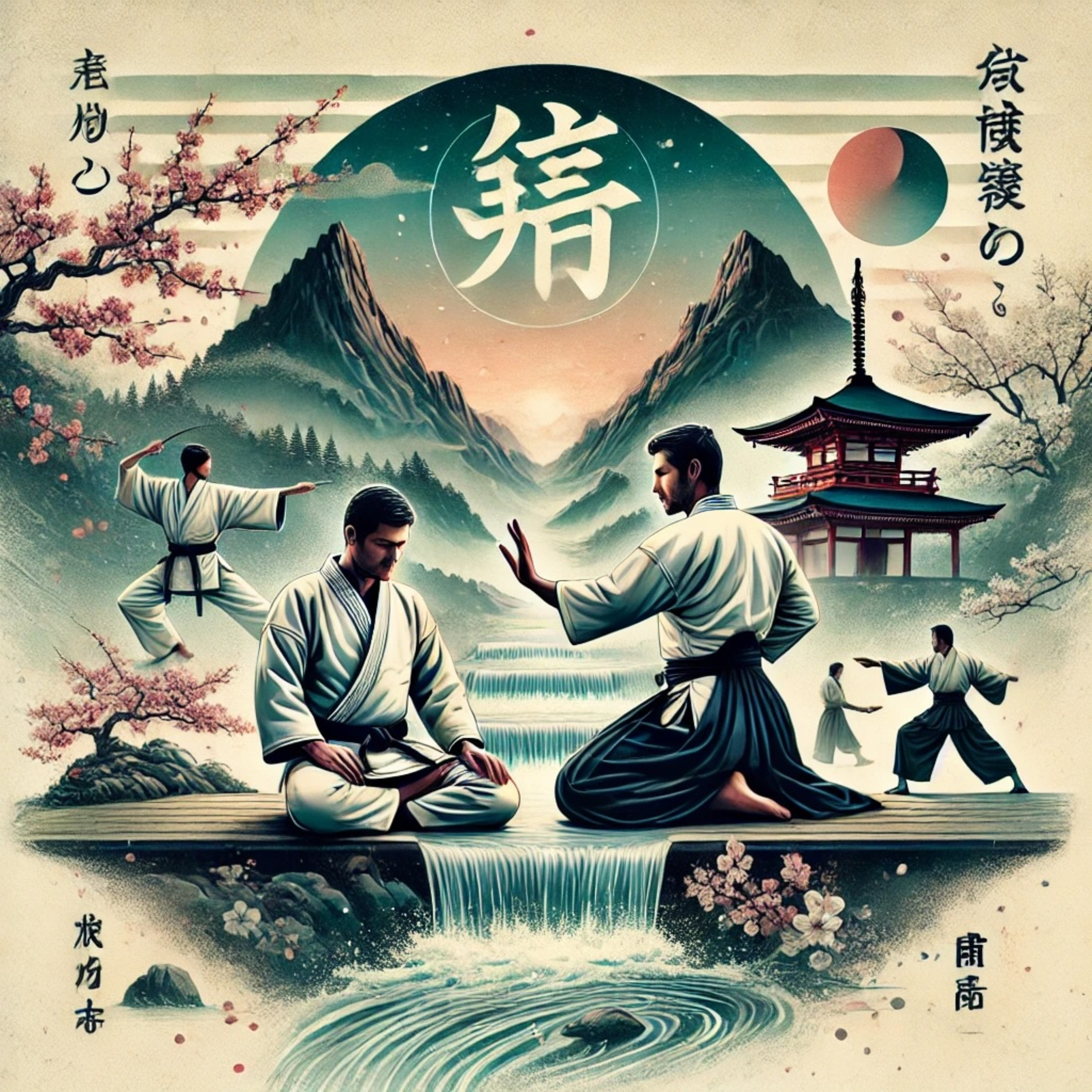
Welcome to Budo Insights, the podcast that delves deep into the world of martial arts. Whether you're a seasoned black belt or just beginning your journey, we bring you expert interviews, discussions on technique, philosophy, and the history behind the disciplines. Each episode is crafted by Michael Iversen from BudoWarrior.com in collaboration with an AI assistant, offering you valuable insights from masters, coaches, and martial artists who have dedicated their lives to the way of the warrior.
-
99
Taekgyeon and Taekwondo: Roots, Techniques, and Origins
The episode provides an extensive comparative overview of two Korean martial arts, Taekgyeon and Taekwondo, examining their distinct roots, techniques, philosophies, and historical development. It establishes that Taekgyeon is an ancient, traditional folk art characterized by fluid, dance-like movements and a focus on harmony and community, which narrowly survived the Japanese colonial period and is now recognized as UNESCO intangible cultural heritage. In contrast, the episode explains that Taekwondo is a modern global sport that emerged post-World War II; historians largely agree its technical foundation originates primarily from Japanese Karate, despite being renamed to associate it with the older Taekgyeon for nationalistic reasons. The detailed comparison highlights the contrast between Taekgyeon's soft, circular movements and low sweeps versus Taekwondo's hard, linear strikes, high-powered kicking, and formal competition structure.
-
98
Japanese Bows: Eshaku, Keirei, Saikeirei
This episode explains the Japanese custom of ojigi, or bowing, which is a vital form of non-verbal communication expressing deference and social standing. It outlines three primary types of bows, each varying in their degree of formality, angle, and appropriate use: Eshaku is the most casual bow at about 15 degrees for informal greetings. The more formal Keirei involves a 30-degree bend and is frequently used in professional environments or when addressing superiors. Finally, Saikeirei is the deepest and most respectful bow, exceeding 45 degrees, reserved for profound apologies or showing the utmost respect. Proper bowing etiquette also dictates maintaining a straight back, avoiding direct eye contact, and specific hand placement depending on gender.
-
97
Martial Arts as a Path to Personal Development and Self-Insight
The episode provides an extensive overview of martial arts, arguing that disciplines like karate, judo, and MMA function primarily as a pathway to personal development and self-insight, moving beyond mere physical combat. The episode explains how various aspects of training cultivate essential life skills, including discipline, self-control, and perseverance, which extend into daily life. Furthermore, it details how martial arts confront the ego by instilling humility and serve as a safe arena to manage fear and build courage. Finally, the analysis connects the physical training to mental benefits, highlighting the meditative focus, mindfulness, and Eastern philosophical roots (such as Zen and Taoism) that drive a lifelong journey toward self-mastery and inner peace.
-
96
Budo's Three Pillars: Fudoshin, Zanshin, Mushin
The episode outlines the three core psychological pillars of Japanese Budo philosophy: Fudoshin, Zanshin, and Mushin, which collectively represent ideals for mental training and conduct. Fudoshin is defined as the "unmoving mind," a state of inner stability where one remains calm and clear despite fear or chaos, a principle historically vital for the samurai. Zanshin, or "continuing attention," emphasizes sustained awareness that must be maintained even after a specific action is completed, ensuring constant vigilance. Finally, Mushin translates to "no-mind" and describes a state of total mental freedom and non-attachment, allowing for spontaneous action without the interference of thought or ego. The source establishes these concepts, rooted in Zen Buddhism and Daoism, as fundamental guidelines for achieving human strength, clarity, and freedom in both combat and daily life.
-
95
Taekwondo's Genesis: Kwans and Korean Unification
The provided episode offer a comprehensive historical account of Taekwondo's development, beginning with its origins in post-colonial Korea driven by a desire for cultural reassertion. They detail the establishment and evolution of the "Kwans," independent martial arts schools that formed the foundation of Taekwondo, including the initial five (Song Moo Kwan, Chung Do Kwan, Moo Duk Kwan, Ji Do Kwan, and Chang Moo Kwan) and their expansion. The episode explain the diverse martial arts influences on these early Kwans, ranging from Japanese Karate to Chinese Kung Fu and traditional Korean forms. Furthermore, the episode discuss the complex unification process that led to the official adoption of the name "Taekwondo" and the formation of organizations like the Korea Taekwondo Association (KTA), while also acknowledging persisting divisions that resulted in multiple Taekwondo branches, such as World Taekwondo (WT) and the International Taekwon-Do Federation (ITF). Ultimately, the episode highlight Taekwondo's transformation into a globally recognized sport and a symbol of Korean identity.
-
94
Moo Duk Kwan: Techniques, Principles, and Concepts
This episode offers a comprehensive analysis of Moo Duk Kwan, a distinctive Korean martial art founded by Grandmaster Hwang Kee, setting it apart from mainstream Taekwondo. It details Moo Duk Kwan's historical evolution, emphasizing Hwang Kee's diverse martial arts background and his principled decision to resist unification into Taekwondo, aiming to preserve its focus on personal growth over sport. The episode further explores the art's unique technical characteristics, including its blend of "hard" and "soft" techniques, diverse stances, and emphasis on practical self-defense. Finally, it highlights the profound philosophical underpinnings of Moo Duk Kwan, outlining the five Moo Do values and eight key concepts that guide practitioners toward holistic personal development, symbolized by the "midnight blue belt" representing continuous learning.
-
93
Martial Arts Mastery: Body and Teacher Essential
This episode "Mastering Martial Arts: Body and Teacher Essential," emphasizes that the physical body is the most crucial teacher in learning martial arts, asserting that true understanding and skill are achieved through physical practice and sensory experience, rather than theoretical knowledge alone. It highlights the development of muscle memory, body awareness, and proprioception as essential for instinctive and effective reactions. Furthermore, the text argues that while online resources like YouTube can be informative, an experienced, in-person teacher is indispensable for personalized feedback, understanding techniques through resistance and timing, and transmitting the "silent knowledge" and traditions that are vital to the art. Ultimately, it suggests that combining physical learning with expert guidance unlocks the body's full potential and fosters a deep mind-body connection in martial arts.
-
92
Bujinkan Dan Ranks: A Samurai Progression
This episode, "Bujinkan Dan Ranks: A Samurai Age Progression," explains the philosophical foundation of the Bujinkan Dōjō's 15-dan ranking system. It draws a direct parallel between the progression through these ranks and the historical samurai tradition of a boy reaching adulthood at age 15, symbolized by replacing wooden practice swords with live steel blades. Sôke Hatsumi conceptualized the 15th dan not as mastery, but as a "coming of age" within Budō study, analogous to the 15-year-old samurai boy gaining the right to wield a real sword and face life's challenges. The author suggests viewing the Bujinkan ranking system through the lens of a practitioner's life progression, rather than solely martial arts achievement. This is further illustrated by relating various dan ranks to life stages, from conception (Shodan) to mature adulthood (Dai Shihan) and ultimately the essence of nothingness (Soke).
-
91
Sōji: Cleaning as Martial Arts Path
This episode collectively explore the practice of sōji, which translates to "cleaning," as an integral part of Japanese martial arts. They trace the historical origins of sōji from Buddhist temples and early dōjō (training halls), highlighting its development alongside the evolution of martial arts from military techniques (jutsu) to philosophical paths (dō) during the Edo period. The episode emphasize the connection between sōji and Bushidō, outlining how it embodies principles of discipline, humility, respect for the training space, and mental clarity. The sources then detail how sōji is incorporated into various martial arts like Judo, Karate-dō, Aikidō, and Kendō, illustrating its continued relevance in fostering character development and community among practitioners.
-
90
The Learning Body
This episode highlights the importance of practical application over theoretical understanding. It emphasizes that true learning occurs through direct engagement and physical action, positioning a training environment, like a dojo, as a space for experiential learning rather than academic contemplation. The core message is that physical activity and hands-on practice are the essential methods for acquiring knowledge and skill.
-
89
The Spirit of the Dojo
The episode emphasizes that authentic martial arts training is a demanding path that goes beyond merely learning techniques. It stresses the importance of embracing physical and mental challenges, viewing pain and hardship as integral to the learning process. The author argues that modern students often lack the necessary preparation and willingness to endure discomfort, which is fundamental to the dojo's purpose. Respect for the instructor and strict adherence to etiquette (reishiki) are highlighted as non-negotiable aspects, emphasizing that the teacher guides the student's growth rather than catering to their comfort. Ultimately, the text portrays true budo as a forge for both character and spirit, requiring commitment, humility, and trust.
-
88
Xinyiquan: Cultivating Internal Power Through Dantian Gong
This episode introduces Xinyiquan's method for cultivating inner strength, emphasizing the importance of focusing the mind on the Dantian, a specific area in the lower abdomen. It details various understandings of what and where the Dantian is, highlighting the Qihai acupoint as the primary focus in this martial art. The source provides a step-by-step guide to nine distinct exercises designed to develop and circulate qi (vital energy) within the Dantian. These practices range from static postures and focused breathing to dynamic movements and specific hand techniques aimed at energizing this core area. Finally, the text describes the purported effects of consistent Dantian Gong practice, including sensations of heat and qi flow, improved meridian circulation, enhanced physical capabilities, and even heightened sensory perception at advanced levels.
-
87
The Profound Bond: Teacher and Student
This episode emphasizes that the teacher-student bond is a deep connection transcending a simple exchange. It highlights three crucial aspects for this relationship: verbal instruction, physical guidance, and spiritual connection. True students must demonstrate receptivity, dedication, and the right attitude, making sacrifices for their training. The episode underscores that this significant transfer of knowledge and experience requires earning the teacher's recognition through commitment rather than monetary payment.
-
86
Geido: The Artistic Way of Japanese Martial Arts
The provided episode explores Geido, a Japanese concept where the practice of martial arts is seen as an artistic path to personal development. It traces the historical roots of Geido, showing its connection to Zen Buddhism and the samurai's ideal of unifying martial skill with artistic cultivation. The episode then examines kendo, karate, and aikido as modern examples of Geido, highlighting the emphasis on discipline, ethics, and the integration of mind and body. Finally, it offers historical and contemporary examples of Geido in practice, illustrating its profound impact on individuals' lives beyond mere combat.
-
85
Budo Taijutsu: Ancient Martial Arts of Japan
Budo Taijutsu, meaning "the art of the body of the way of war," is a term encompassing ancient Japanese martial arts. Unlike modern martial arts with "-do" suffixes, Taijutsu refers to older fighting forms. The Bujinkan system incorporates nine ancient schools, including those focused on Koshijutsu, Koppojutsu, Jutaijutsu, Dakentaijutsu, and Ninpo Taijutsu. Some schools trace their origins back to the 1100s. These schools are documented in the Bugei Ryuha Daijiten, a record of pre-Meiji era Japanese martial traditions. This highlights the historical significance and depth of Budo Taijutsu.
-
84
Samurai Death Poems: Honor, Acceptance, and Legacy
Samurai warriors composed jisei no ku, or death poems, before combat to face mortality with honor and resolve. These poems, influenced by Zen Buddhism, acknowledge life's impermanence. They reinforced a warrior's commitment to upholding their honor. The act of writing them aided warriors in achieving mental clarity and solidifying their sense of purpose. The poems served as a way to leave behind a legacy of honor.
-
83
Evolution of Ed Parker's Kenpo Forms
The episode examines the evolution of Kenpo forms, detailing Ed Parker's shifting philosophies and influences. Initially rooted in Japanese techniques, Parker's Kenpo transitioned towards Chinese arts under Grandmaster Ark Wong. Commercial and tournament pressures later shaped the forms, leading to competition-driven sets. The episode provides an outside martial artist's perspective, drawing parallels between Kenpo and Taekwondo's development and struggles with cultural identity. It highlights the organic growth of Kenpo's forms compared to the systematic development of Taekwondo's patterns, pointing out how external forces affect martial arts evolution.
-
82
The History of Taekwondo Poomsae
This episode details the history of Taekwondo Poomsae (forms), highlighting the transition from Karate-influenced styles to distinctly Korean movements. It explains the creation of both the Palgwae and Taekeuk Poomsae sets, emphasizing the role of the Korean Ministry of Education in popularizing Taekeuk despite its arguably lower technical quality compared to Palgwae. The episode notes the challenges in completely separating Taekwondo forms from their Karate origins and suggests this remains an ongoing issue. The episode concludes with reflections on the importance of organizational backing in disseminating Poomsae.
-
81
Ma-ai and Yoyuu in Budo
The episode excerpt discusses the significance of ma-ai, or proper distance, in martial arts, specifically highlighting the Japanese concept of yoyuu. Yoyuu refers to the crucial mental and physical space needed for effective technique execution. Maintaining this space allows for sufficient time, composure, and physical room to react, ultimately connecting to broader concepts of awareness and adaptability within Budo. The episode emphasizes that without ma-ai, effective combat is severely hindered.
-
80
Bushinden Dojo: Admissions and Expectations
This episode outlines the expectations for prospective students of the Bushinden Tasmania Dōjō, emphasizing that joining a martial arts dojo is a serious commitment requiring respect and self-control. The dojo prioritizes character and mental discipline above mere fighting skills, making a strong first impression crucial for acceptance. Prospective students are advised to treat their initial contact as a job interview, demonstrating politeness and articulate communication. The author stresses that consistent self-control is a prerequisite for training, highlighting the dojo's focus on personal development alongside martial arts instruction. The text is signed by the Dojo-cho, Duncan Stewart.
-
79
The Martial Artist's Molting Period
Hatsumi's describes the inevitable frustrations encountered during martial arts training. He likens this period of struggle to a snake shedding its skin, a necessary process for growth. This "molting period," however, can tempt practitioners to abandon their current system for seemingly more appealing alternatives. He cautions against this distraction, emphasizing the importance of perseverance through challenges to achieve advancement. The text uses a metaphor of a child being attracted to another's toys to highlight the temptation to switch training methods during periods of difficulty. Ultimately, the passage stresses the significance of patience and commitment to one's chosen path.
-
78
Gikan Ryu: History and Lineage
The episode details the history of the Gikan Ryū, a Japanese martial arts school. Its origins trace back to Uryu Hangan Gikanbo, a Daimyō who possessed exceptional martial skills. The school's history includes connections to other schools, notably Kukishin Ryū, and its transmission involved several key figures including Akimoto Fumio Sensei before ultimately reaching Hatsumi Sensei. The episode notes the school's secretive nature, evidenced by its concise scrolls and oral transmission of techniques. Despite challenges such as wartime destruction and the death of key instructors, the Gikan Ryū's lineage continues to the present day.
-
77
Young Samurai Training in Feudal Japan
Munyaradzi Chitsa's writing explores the rigorous training young samurai underwent in feudal Japan. This education encompassed intensive martial arts, including swordsmanship and archery, alongside rigorous academic studies in literature and philosophy. Spiritual development, often through Zen Buddhism, was also crucial. Daily routines combined physical and mental disciplines, reflecting the samurai ideal of combining warrior skills with cultural refinement and inner peace. The episode details the demanding schedule and the holistic approach to shaping the next generation of elite warriors.
-
76
Kûkan: Utilizing Space in the Martial Arts
Masaaki Hatsumi, in the provided excerpt, suggests that releasing the concepts of strength and speed is crucial for accessing and utilizing kûkan (space). This implies a shift in perspective, away from forceful exertion and towards a more subtle understanding and manipulation of space. The statement advocates for a different approach to movement and action, prioritizing a mindful connection with the environment. It hints at a philosophy emphasizing finesse and awareness over brute force. The focus is on internal transformation to improve external effectiveness.
-
75
Samurai and Bushi: Japanese Warriors
The episode explains the historical terms Samurai, Bushi, Ronin, and Hatamoto within the context of feudal Japan. Samurai, deriving from the verb "to serve," initially denoted a servant of a higher-ranking individual. Bushi, meaning "gentleman of war," was the earlier term for Japanese warriors, distinguishing them from later Samurai by social standing. A masterless Samurai was known as a Ronin, while a Samurai directly serving the Shogun was called a Hatamoto. The passage clarifies the distinctions and historical evolution of these warrior classes.
-
74
Gyokko Ryu Ninjutsu: Weapon Arts & Philosophy
Gyokko Ryu Ninjutsu, a comprehensive martial art, encompasses various weapon-based disciplines including kosshijutsu, progressing from forms practice to real-world applications. Unlike competitive martial arts, kosshijutsu emphasizes self-defense and avoidance of conflict, prioritizing non-lethal techniques. The art's philosophy stresses restraint, aiming to win without violence and to avoid killing, even when forced to defend oneself. Mastering Gyokko Ryu involves proficiency in multiple weapon systems, culminating in the ability to effectively use any tool in self-defense. This approach reflects a deep respect for life and a commitment to responsible martial arts practice.
-
73
Hatsumi on Survival
Masaaki Hatsumi's statement prioritizes survival above all else, arguing that the effectiveness or style of a technique is secondary to staying alive. His focus is on practicality and the ultimate goal of self-preservation. The emphasis is not on aesthetics or personal preference in choosing a method, but rather on achieving the most crucial outcome: survival. This highlights a pragmatic approach to self-defense, where success is measured by one's ability to endure, regardless of the methods employed. The quote underscores the fundamental importance of survival in any potentially life-threatening situation.
-
72
The Karate-do Code
This episode presents a quote from Gichin Funakoshi, a renowned Karate master. The episode emphasizes the importance of humility and kindness in the practice of Karate. However, it also stresses the necessity of courageous action in the face of adversity when defending justice. Funakoshi's words highlight a balance between peaceful character and resolute action. The episode offers insight into the philosophical principles underpinning Karate training.
-
71
Takeda, Ueshiba, and the Birth of Aikido
Sokaku Takeda, a master of the Daito-Ryu martial art, famously defeated bandits in 1914, showcasing his skill in evasion and using his opponents' weapons against them. His later instruction of Morihei Ueshiba, a pivotal figure in the development of Aikido, significantly impacted the art's philosophy. Aikido, influenced by Daito-Ryu techniques, uniquely incorporates the concept of "ki," or life energy, to achieve harmony and non-violent self-defense. This fusion of styles resulted in Aikido's distinctive approach to martial arts, emphasizing self-improvement alongside combat skills. The episode highlights the lineage and key influences shaping the development of Aikido.
-
70
Wing Tsun: History and Origins
Wing Tsun, a Chinese self-defense system originating in southern China around the 18th century, is not a sport but a practical system for everyday use. Its development was influenced by Bai He and Snake styles and likely arose from local kung fu families adapting techniques to their environment and historical context, particularly the Manchu Dynasty's oppression. While various origin stories exist, including one involving a nun and her student, and another linking it to the Southern Shaolin Temple, its evolution appears to have been a gradual process. The system's core principles are rooted in practical self-defense, drawing upon and refining elements from earlier martial art styles.
-
69
The Warrior's Path
Masaaki Hatsumi's quote emphasizes that skill acquisition is a beginning, not an endpoint. It suggests that mastering a technique only reveals the next stage of learning. The statement highlights the ongoing, iterative nature of expertise. True mastery requires continuous growth beyond initial proficiency.
-
68
Karate Dojo Etiquette and Protocol
Karate etiquette and dojo protocol are emphasized, covering aspects like proper attire and grooming, respectful behavior towards instructors and fellow students, orderly use of equipment, and maintaining a clean and respectful training environment. The episode details specific actions, such as how to enter and exit the dojo, appropriate seating arrangements, and the importance of silence and observation during training. Humility and prioritizing the well-being of others are stressed, contrasting with Western educational norms. Finally, the episode concludes with the post-training meditation ritual (mokuso) and final greetings.
-
67
Isao Obata: A Life in Shotokan Karate
Isao Obata, a prominent figure in Shotokan karate, is the subject of this biographical episode. His life is chronicled, from his early training under Gichin Funakoshi to his pivotal role in establishing the Japan Karate Association (JKA) and his later disillusionment with the organization's direction. The episode details his contributions to spreading karate in the United States, his time in Manchuria, and his continued dedication to teaching even in his later years. His career highlights both his mastery of karate and his personal life, including his family and other interests like kyudo.
-
66
Matsukaze no Kon: Shotokan Bo Kata
The episode details the history of Matsukaze no Kon, a bo (staff) kata in Shotokan karate. It highlights the role of Master Shinken Taira in standardizing Kobudo (Okinawan weapons training) and emphasizes the kata's creation by Yoshitaka Funakoshi and Tomosaburo Okano to bridge Shotokan basics with traditional bo techniques. The kata's incorporation of fundamental Shotokan stances and a concluding jump are noted. The episode also mentions the post-war discontinuation of weapons training in Shotokan to avoid misinterpretations.
-
65
Shugyō: The Path to Mastery
Shugyō, a concept originating in Zen and samurai traditions, is a demanding path of self-improvement. This transformative process involves rigorous physical and mental discipline, pushing practitioners to their limits. It blends Buddhist principles of focused attention with the practical application of skills, particularly evident in the historical practice of musha-shugyō among samurai. Ultimately, shugyō is a pursuit of mastery and enlightenment, recognizing the inherent impossibility of achieving perfect flawlessne
-
64
The Life and Legacy of Masutatsu Oyama
Masutatsu Oyama (1923-1994) was a highly influential Japanese karate master renowned for his exceptional skills and the founding of the Kyokushin karate organization. His life was dedicated to martial arts, characterized by rigorous training and a commitment to spreading his teachings. Key achievements included a legendary 300-man kumite and a famous bull fight, showcasing his incredible strength and skill. Oyama's philosophy stressed hard training, discipline, and self-control for holistic development, impacting martial arts globally. His legacy continues to inspire martial artists through the enduring Kyokushin organization.
-
63
Naginata: History, Techniques, and Characteristics
The edisode describes the naginata, a traditional Japanese weapon resembling a long stick with a curved blade. Key features include its length (2-3 meters), weight (600-800 grams), and materials (wood, bamboo, and metal). Naginatajutsu, the martial art employing the naginata, uses various techniques such as rotating, slicing, stabbing, cutting, and defensive maneuvers. The weapon's history traces back to its use by samurai and ninja in the 14th century and its continued popularity through the Edo period. Essentially, the episode provides a comprehensive overview of the naginata's physical characteristics, fighting techniques, and historical significance.
-
62
Samurai Armor: 10 Fascinating Facts
The episode details ten fascinating facts about Japanese samurai armor, highlighting its evolution from personalized, elaborate designs to more practical styles. It emphasizes the craftsmanship and symbolism inherent in the armor, showcasing its role as both protective gear and a reflection of the wearer's status and identity. The episode also explores the influence of warfare and cultural shifts on armor design and its significance throughout Japanese history. From components like the kabuto helmet and menpo mask to the use of various materials and colors, the text offers a comprehensive overview of samurai armor.
-
61
Grasping the Bird's Tail: Taijiquan's Foundational Movement
The episode describes "Grasp the Bird’s Tail" (or "Grasp the Sparrow’s Tail"), a fundamental Tai Chi Chuan movement sequence. This sequence, also known as Lǎn Qùe Wěi, is composed of four essential parts: Ward Off (Peng), Roll Back (Lü), Press (Ji), and Push (An). Each part involves specific energy manipulation, transitioning from defensive yielding to offensive redirection and ultimately controlling the opponent's balance. Mastering this sequence provides a foundation for understanding key Tai Chi principles, such as using the waist and legs, and is considered crucial for learning more advanced techniques. Its importance is highlighted by its presence in various Tai Chi forms, even constituting entire shorter forms in some cases.
-
60
Kihon: Karate’s Essential Roots
The episode emphasizes the importance of Kihon, the foundational training in karate, for developing technical skill and martial spirit. It highlights Kihon's role in building a strong technical base, improving physical and mental attributes, and preparing practitioners for advanced techniques like Kata and Kumite. While acknowledging potential drawbacks like repetitiveness and a need for contextualization, the text advocates for integrating biomechanics, visualization, and varied practice methods to maximize Kihon's benefits. Ultimately, the text connects Kihon to the holistic Shingitai concept, emphasizing the harmony of spirit, technique, and body in karate development.
-
59
The Teacher and the Student
This episode from Muramoto's writing on Takeuchi Ryu Jujutsu emphasizes the importance of self-reliance in learning. A good teacher fosters independent learning rather than creating dependence, encouraging students to become their own sources of knowledge. The episode argues that continued dependence on the teacher hinders a student's growth and reveals the teacher's insecurity. Ultimately, it promotes the value of self-directed learning and overcoming challenges independently.
-
58
A History of Samurai Rule in Japan
The episode provides a comprehensive history of the samurai in Japan, starting with their early influence during the Heian period and continuing through their eventual abolition in 1876. It details key periods of samurai dominance, including the Kamakura and Tokugawa shogunates, highlighting significant events and influential figures like Minamoto no Yoritomo and Tokugawa Ieyasu. The episode also examines the impact of samurai culture, including the Bushido code, on Japanese society and its lasting legacy into the 20th century. Finally, it clarifies key samurai terminology and their societal roles within the feudal system.
-
57
Taekwondo Seniority: Respect, Discipline, and Tradition
Taekwondo's emphasis on seniority is explored, highlighting its role in fostering respect, discipline, and mentorship within the dojang (training hall) and beyond. Seniority, defined by rank and experience, creates a structured learning environment and shapes practitioners' character. Respecting seniors is viewed as crucial for maintaining the integrity of Taekwondo and its traditions, while disrespect is seen as undermining the art's core values and community. The text emphasizes that adhering to this principle is vital for personal growth and the continuation of Taekwondo's legacy. Ultimately, respecting seniority reflects one's commitment to the art's principles and ethical foundation.
-
56
Black Belt Philosophy: Life Principles and Martial Arts
The episode outlines the philosophy of a black belt in martial arts, emphasizing core values like discipline, patience, and loyalty. It further details life principles centered on self-mastery, perseverance, and respect. The episode also highlights a martial arts philosophy that prioritizes self-improvement over victory, suggesting that true success lies in character development and self-control. This philosophy emphasizes inner strength and a commitment to continuous learning, even in defeat. Ultimately, the episode presents a holistic approach to martial arts, connecting physical training with personal growth and ethical conduct.
-
55
Ego, Humility, and Character in Martial Arts
The episode is a reflection on the importance of humility, self-improvement, and ethical conduct in martial arts. It emphasizes that true mastery transcends mere rank or technical skill, prioritizing character development and service to others over external validation. The episode highlights the need for continuous self-reflection and ego management as crucial components of genuine progress in martial arts training. This perspective aligns with traditional martial arts philosophies emphasizing personal growth and a commitment to ethical behavior.
-
54
47 Ronin: Samurai Loyalty and the Bushido Code
The episode recounts the tale of the 47 Ronin, masterless samurai who avenged their lord's wrongful death. Their actions exemplify the concept of chūgi, unwavering loyalty in the samurai code of Bushido. The story highlights the extreme lengths to which samurai were expected to uphold their honor and loyalty, even unto death. The Ronin's ultimate act of seppuku cemented their place in Japanese culture as a powerful symbol of this devotion. The narrative emphasizes the importance of loyalty and honor in the Bushido code, transcending even self-preservation.
-
53
Traditional vs. Modern Karate
The episode contrasts traditional Japanese karate with modern karate, highlighting key differences in training methods and philosophies. Traditional karate emphasizes fundamental techniques, mental discipline, and spiritual development rooted in Bushido, with less focus on competition. In contrast, modern karate prioritizes speed, power, and competitive success, incorporating technology and diverse training methods. Technical differences are illustrated through contrasting punching and kicking styles. Finally, the episode provides examples of styles representing both traditions. These distinctions, however, are not universally rigid.
-
52
Samurai: History, Values, and Legacy
The episode offers a comprehensive overview of the samurai, elite Japanese warriors who flourished from the 12th to 19th centuries. It explores their historical evolution, from imperial bodyguards to a rigidly defined social class, detailing their core values embodied in Bushido, and their proficiency in various weaponry and martial arts. The episode also highlights influential samurai figures and their lasting impact on Japanese culture, military strategy, philosophy, and tourism. Key sources cited include writings by prominent samurai and scholarly historical works.
-
51
Sun Tzu's Art of War: Ten Key Lessons
Sun Tzu's The Art of War is explored, outlining ten key strategic principles. These principles, applicable beyond military contexts, emphasize self-awareness, strategic planning, adaptability, deception, calculated engagement, strong leadership, terrain utilization, discipline, conflict minimization, and the importance of information. The episode highlights the enduring relevance of Sun Tzu's strategic thinking across various fields and time periods. Ultimately, the episode provides a summary and interpretation of core concepts within this influential work.
-
50
The Daisho: Samurai Swords
Daisho refers to the paired swords, a long sword (daito) and a short sword (shoto), traditionally worn by samurai. While the katana and wakizashi were most common, variations existed. Daisho became fashionable late in the Muromachi period and were mandated for official samurai duties. Although samurai typically fought with only one sword at a time, dual-sword techniques also developed. Finally, specific display conventions exist, primarily focused on ensuring the maker's mark (mei) is visible.
We're indexing this podcast's transcripts for the first time — this can take a minute or two. We'll show results as soon as they're ready.
No matches for "" in this podcast's transcripts.
No topics indexed yet for this podcast.
Loading reviews...
ABOUT THIS SHOW
Welcome to Budo Insights, the podcast that delves deep into the world of martial arts. Whether you're a seasoned black belt or just beginning your journey, we bring you expert interviews, discussions on technique, philosophy, and the history behind the disciplines. Each episode is crafted by Michael Iversen from BudoWarrior.com in collaboration with an AI assistant, offering you valuable insights from masters, coaches, and martial artists who have dedicated their lives to the way of the warrior.
HOSTED BY
Michael Iversen
CATEGORIES
Loading similar podcasts...
Frequently Asked Questions
How many episodes does Budo Insights have?
Budo Insights currently has 50 episodes available on PodParley. New episodes are automatically indexed when they're published to the podcast feed.
What is Budo Insights about?
Welcome to Budo Insights, the podcast that delves deep into the world of martial arts. Whether you're a seasoned black belt or just beginning your journey, we bring you expert interviews, discussions on technique, philosophy, and the history behind the disciplines. Each episode is crafted by...
How often does Budo Insights release new episodes?
Budo Insights has 50 episodes. Check the episode list to see recent publication dates and frequency.
Where can I listen to Budo Insights?
You can listen to Budo Insights on PodParley by clicking any episode. We provide an embedded audio player for direct listening, and you can also subscribe via your preferred podcast app using the RSS feed.
Who hosts Budo Insights?
Budo Insights is created and hosted by Michael Iversen.
URL copied to clipboard!