
PODCAST · health
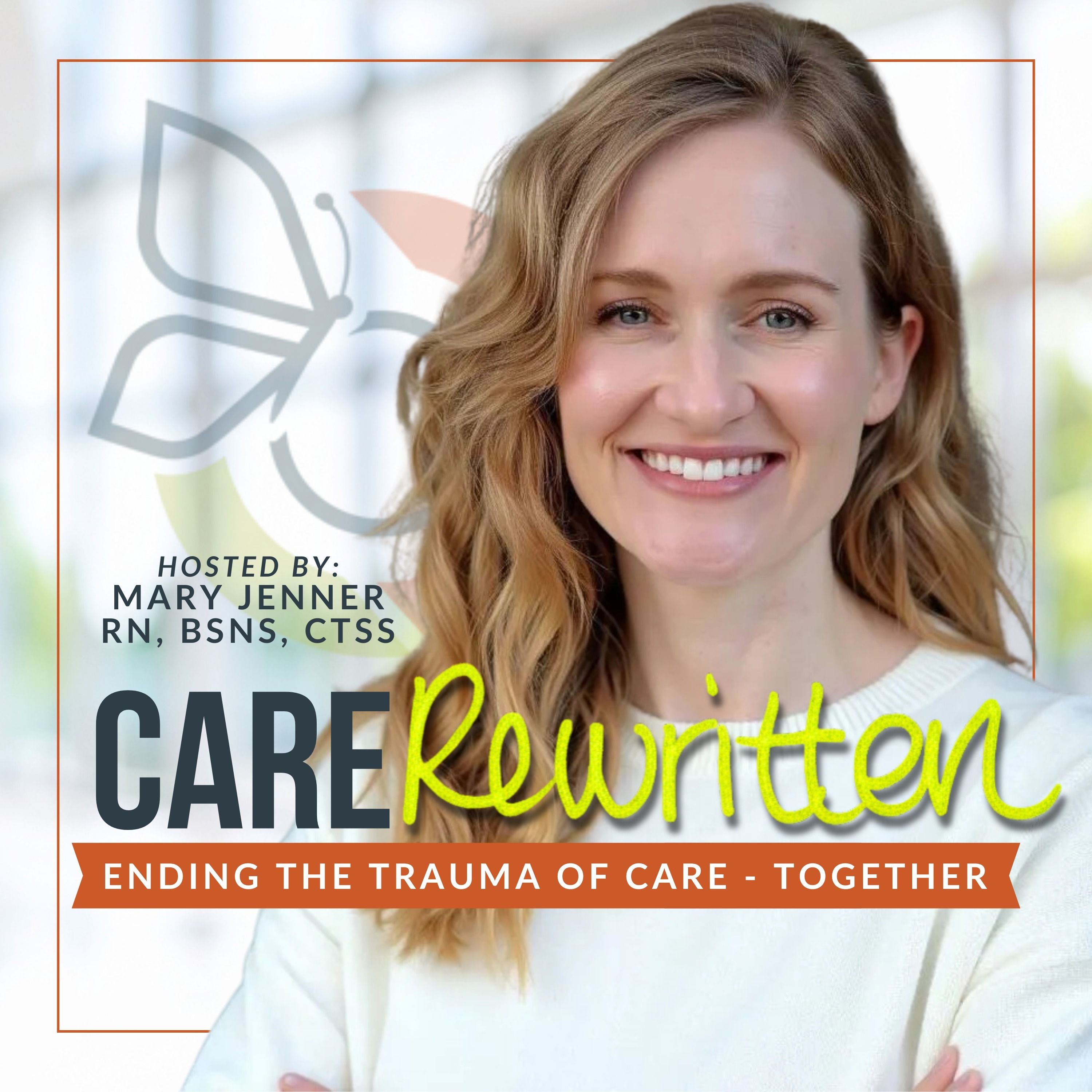
Care Rewritten | Ending the Trauma of Care Together
by Mary Jenner
The trauma of healthcare isn't a compassion problem. It's a systems problem. This podcast is for those that know good people are working inside broken systems, and are tired of pretending that emotional harm, burnout, and moral injury are just "part of the job."Hosted by a former pediatric oncology nurse and founder of The Butterfly Pig and Innovative Care Institute, Mary Jenner explores how we can reduce medical trauma. We discuss emotionally safe practice, patient and family empowerment, quality improvement, and how small shifts can change everything.
-
16
QI Projects : How to Bridge Frontline and Leadership
Quality improvement project is a term commonly thrown around in the hospital setting. It's often viewed as a checkbox to climb the clinical ladder or something to pad a resume. But what if I told you that QI projects are actually the most misunderstood, and most strategic, tools you have? They aren't just about compliance or accreditation. They are the bridge between the innovation you’re already doing at the bedside and the institutional scaling your organization needs. That's why we’re reframing the "busy work" of QI into a mechanism for frontline advocacy. We’re talking about how to translate nursing intuition into the data-driven language leadership actually speaks, so your solutions finally get the investment they deserve. Press play to learn how to turn your "small" bedside ideas into systemic shifts that make it impossible for leadership to look away. PS. Stop reinventing the wheel in your own team 👉 Join the THRIVE Network to see what’s already been done, access our QI masterclass, and start measuring the outcomes that actually move the needle.
-
15
The Power of Pause in Healthcare
When a procedure begins to escalate, our natural instinct is to "just get it done." But forcing care in a room with a rising emotional temperature doesn't save time… it creates secondary trauma for the patient, the parent, and the clinician. That’s why we are exploring a structured clinical intervention designed to downshift the nervous system and move a team out of survival mode. An intentional pause allows for better preparation, nervous system regulation, and ultimately, safer and more efficient clinical outcomes. Press play to learn how to move from "forcing care" to "structured resets" that protect your staff and your patients. P.S. Ready to pilot the Pause Protocol in your unit? CLICK HERE to access the QI Project Starter Kit, including the measurable dot phrase and family-facing pamphlets.
-
14
Medical Play as Infrastructure in Care
What if rushing through procedures to "save time” actually created the resistance and trauma we are trying to avoid? Slowing down to integrate medical play isn't an indulgence… it’s evidence-based infrastructure. New data from a multi-hospital study reveals the impact that just one interaction can have on patient anxiety and cooperation. When we move play out of the "optional" category and into the system itself, we reduce the need for sedation, lower procedural time, and transform parents from helpless observers into powerful partners in care. Press play to see how shifting your unit’s "emotional temperature" through play is the ultimate efficiency strategy. P.S. Want to see the data for yourself? CLICK HERE to access the multi-hospital study on the measurable impact of medical play tools in clinical settings.
-
13
Micro Moments: Frontline Innovation in Healthcare
Innovation is often romanticized as breakthrough technology, but in healthcare, it usually begins with a clinician quietly solving a problem. When we rely on individual workarounds and "jerry-rigged" solutions to get through a shift, we unknowingly increase cognitive load and clinical risk. It is time to look inward at where your team is currently "making do" and turn those micro-decisions into sustainable, scalable products and frameworks. Moving away from survival mode and toward proactive, trauma-informed design reduces mental load and prevents the compounding effects of healthcare-induced trauma. For those of you with busy scheduled, this Micro Moments episode will show you how to identify the innovation gaps in your unit and stop reinventing the wheel. P.S. Ready to elevate the conversation in your organization? TAKE THE PLEDGE and access actionable insights for frontline innovators.
-
12
Teamwork that is Structural, Not Relational in Nursing
Why do pizza parties and bowling nights fail to fix nurse burnout? Because there is a critical difference between relational teamwork and structural teamwork... Relying on personal friendships for psychological safety is a dangerous strategy for patient safety and nurse retention. So we are breaking down some real world examples to help your team learn how to build operationalized help seeking into your unit’s daily workflow - moving from "who you know" to "how we work". Press play to see which tools can help you lower the psychological cost of asking for help. P.S. Interested in examining your own organization through this lens? CLICK HERE to see where teamwork can be amplified in your world.
-
11
Child Life Team Development: Relationship & Collaboration
Child Life is not just "the iPad and toy department." When we relegate emotional safety to a single role, we set the entire system up for failure. It’s important that we redefine the Child Life Specialist as the "Lead Architect" of a hospital's emotional culture. Listen in to tackle the "invisible time sinks" that occur when we don't utilize Child Life at the top of their scope and see why it’s time to move them from the sidelines to the center of every clinical round. P.S. Start the conversation with your leadership team around making care human again 🦋👉 DOWNLOAD THE SPEAKING KIT
-
10
Nursing Leadership: Staffing Solutions & Communication
Adding more bodies to a broken system just creates more chaos with more people inside it. Every nurse wants better staffing, but the real crisis is a lack of "mechanisms," not just people. We’re pulling back the curtain to take a bold look at how we distribute the emotional load of a shift. We’re calling out the "paperclip appreciation" culture and looking at the real-world tools that ACTUALLY prevent burnout. Press play to see how you can keep your nurses at the bedside without asking them to override their own biology. P.S. You don’t have to choose between surviving your shift and being proud of how care felt 🦋👉 DOWNLOAD THE SLIDE DECK that will start conversations about trauma informed care in your organization.
-
9
Public Perception of the Brand: How to Become a Healthcare Center of Emotional Excellence
Trust is the ultimate market differentiator. In an era of healthcare choice, patients aren't just looking for the best surgeons - they’re looking for the safest environment. That’s why we are talking about the power of "Micro-Moments" and how a single eye-contact connection can change a patient’s life forever. Press play to start “leading the herd” by becoming centers of emotional excellence. Let’s rewrite care together. P.S. TAKE THE PLEDGE to join the movement and get actionable tips on how to elevate your organization in this world.
-
8
Patient Experience and Quality : How to Move Beyond Scores to "Felt Safety"
You can’t manage what you don’t measure. Hospitals track falls, medication errors, and infections… but where is the dashboard for emotional harm? If you’re a Quality and Safety Leader for your organization, this episode is for you. We’re moving beyond "Patient Experience" scores and into the neuroscience of felt safety. Press play to see how to operationalize nervous system logic to create a center of excellence that patients - and staff - will never want to leave. P.S. Join the THRIVE NETWORK and see how your team can operationalize emotional safety 🧸🩺
-
7
CFO: The Cost of Medical Trauma
Survival mode is the most expensive line item on your balance sheet. Medical trauma isn't "fluffy"... it’s costing the healthcare system billions in nurse turnover, failed procedures, and late-stage diagnoses. We’re doing the math and breaking down the ROI of emotional safety - like how saving five minutes per procedure compounds into 750 hours of reclaimed labor per year. Press play to see why the most successful children's hospitals in the world treat emotional health as an essential investment, not a luxury. P.S. DOWNLOAD THIS SPREADHEET to start making micro-shifts in your organization that will make preventative care effective and more affordable 🧸🏥
-
6
Emotional Safety is Everyone’s Job
If a child is held down, the system has already failed. We often say emotional safety is the job of the "specialist," but what happens when the specialist isn't in the room? We’re looking at why we suspend compassion to complete a task and how that one moment of "autopilot" can create a lifetime of medical avoidance. It’s time to stop treating emotional harm as an outlier and start recognizing it as a shared clinical responsibility for every person in a white coat or a set of scrubs. P.S. Get ideas to bring more joy and fun to your littlest patients 🦋👉 DOWNLOAD THE PLAYFUL PRESCRIPTIONS APP
-
5
The Innovative Care Institute : How We Are Prioritizing Emotional Safety
The truth is, standardized care is failing our children's nervous systems... We’ve built hospitals that are masterpieces of physical engineering, but what about the emotional architecture? We are pulling back the curtain on the Innovative Care Institute - the "Think Tank" designed to bridge the gap between clinical efficiency and felt safety. This goes beyond “nice ideas” into the mechanics behind the future of pediatric medicine. Press play to start operationalizing empathy and measuring what has historically been invisible. P.S. Is your organization dedicated to prioritizing emotional safety too? 🦋👉 TAKE THE PLEDGE
-
4
Parents and Patients : The CORE of the Care Team
Advocate like a child… because your life, and their trust, depends on it. Why do we teach children to be quiet for the comfort of adults, especially when they are in pain? As a parent, there is nothing harder than being on the wrong side of a locked NICU door. That’s why we’re deconstructing the "hierarchy of silence" and uncovering why the most essential member of the care team is the one holding the child’s hand. Press play to learn why "patient-centered care" is a hollow phrase until parents are empowered to borrow their child's calm and speak up when the system tries to shut them out. P.S. Start empowering your family’s voice in the medical system 🦋👉 WATCH THE VIDEO
-
3
Trauma Informed Care for Nurses
Shame is a paralyzing clinical error. No one goes into pediatric nursing wanting to restrain a child, yet thousands of nurses leave their shifts feeling a deep, moral ache. Consider this episode is a sanctuary for the clinician in survival mode. Press play to redesign the “path” of your unit so that the most humane action is also the easiest one to take. This isn’t about doing more, it’s about being supported to do what you were called to do. P.S. Take the pledge and join the THRIVE NETWORK here 🦋
-
2
Care Rewritten : The Origin Story
The medical world sees a diagnosis. A child sees a matching toy. What happens when a pediatric oncology nurse realizes the system she loves is unintentionally breaking the spirits of the children she serves? We’re going back to the hospital room where a simple toy flipped the script on a traumatic blood draw and sparked a global movement. Press play to go behind the scenes and see how one small spark of play can dismantle a mountain of medical fear. P.S. Make care human again and start your journey toward trauma-informed advocacy 🦋👉 WATCH THE VIDEO
No matches for "" in this podcast's transcripts.
No topics indexed yet for this podcast.
Loading reviews...
ABOUT THIS SHOW
The trauma of healthcare isn't a compassion problem. It's a systems problem. This podcast is for those that know good people are working inside broken systems, and are tired of pretending that emotional harm, burnout, and moral injury are just "part of the job."Hosted by a former pediatric oncology nurse and founder of The Butterfly Pig and Innovative Care Institute, Mary Jenner explores how we can reduce medical trauma. We discuss emotionally safe practice, patient and family empowerment, quality improvement, and how small shifts can change everything.
HOSTED BY
Mary Jenner
Loading similar podcasts...
URL copied to clipboard!