
PODCAST · history
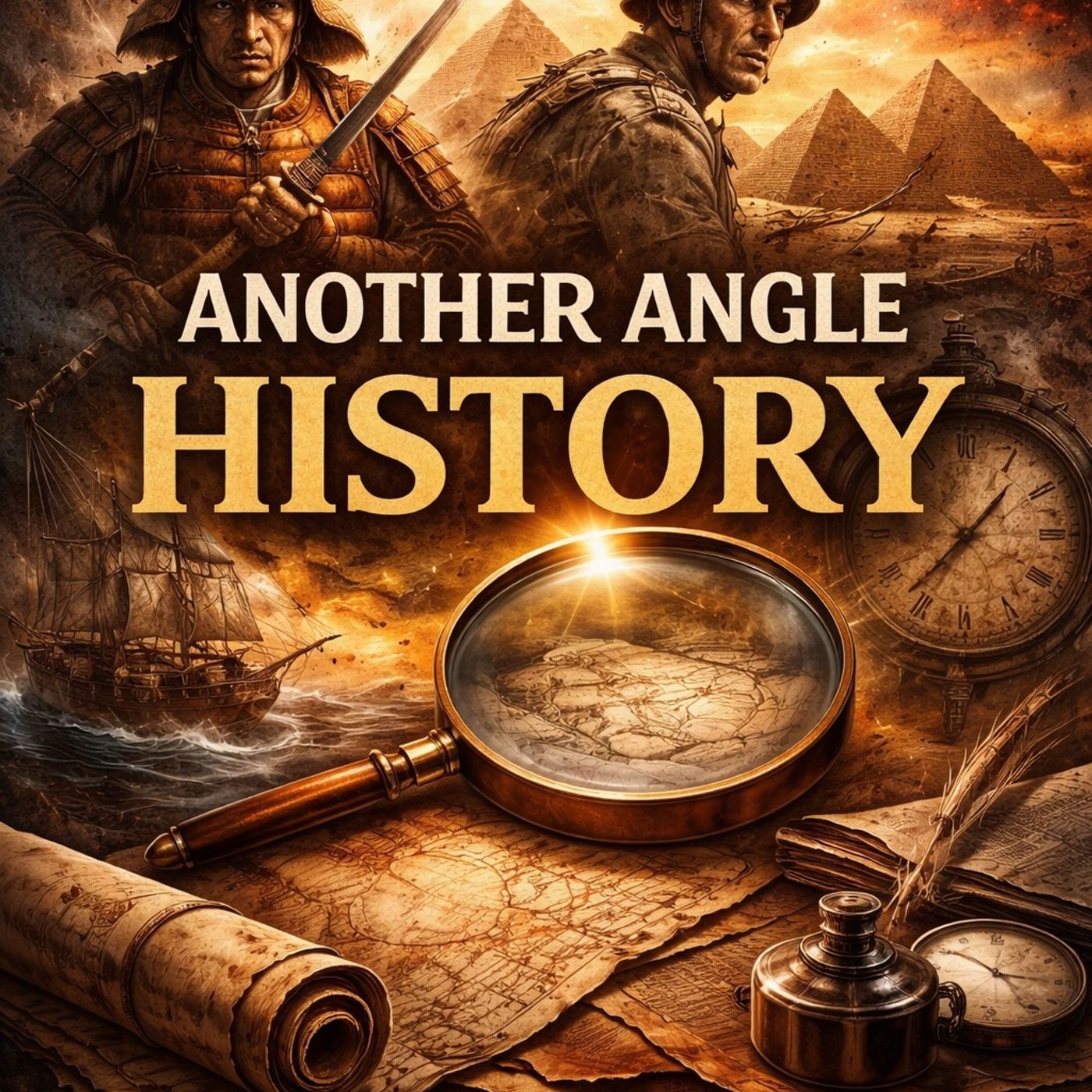
Another Angle of History
by Another Angle Project
Behind every war, empire, and turning point in history, there are voices, wounds, and perspectives that rarely make it into the spotlight. Another Angle: History looks beyond the dates and into the deeper story.
-
5
Blood for the Sun The Truth Behind Aztec Flower Wars
This episode explores the practice of human sacrifice in Aztec (Mexica) civilization through both historical and scientific perspectives. The first source explains the history of the Flower Wars, a ritual form of warfare designed to capture prisoners who would later be offered to the god Huitzilopochtli. It shows how this tradition strengthened imperial power, but also eventually provoked resistance from the subjugated peoples. Meanwhile, the second source is a bioarchaeological study that analyzes oxygen isotopes from the skeletal remains of sacrificial victims found at Templo Mayor and Tlatelolco. The research demonstrates that these victims came from highly diverse geographic backgrounds, including both local inhabitants and people from distant regions. Taken together, these texts reveal that human sacrifice was a complex religious and geopolitical system involving individuals from a wide range of social statuses and linguistic origins.This episode includes AI-generated content.
-
4
The Danse Macabre Perspectives on Life, Death, and History
This episode explores how people in the Middle Ages understood life, death, guilt, illness, and even childhood in ways that now feel both disturbing and deeply revealing. From trial by ordeal, where fire and water were seen as instruments of divine judgment, to medieval medicine shaped by the theory of bodily humors and extreme treatments, the episode uncovers a world where fear, faith, and survival were tightly intertwined. It also looks at how children were often treated as miniature adults rather than as individuals in a distinct stage of life. Finally, the discussion connects these medieval ideas to the modern world through the macabre, showing how even today, dark humor can become a way of confronting mortality. At its core, this episode is about how human beings across time have tried to make sense of suffering, judgment, and the certainty of death.This episode includes AI-generated content.
-
3
The Architecture of the Unseen Origins of Mystical Belief
This discussion explores how oral tradition, religious syncretism, and mystical belief have shaped cultural identity and the social order of human societies. Oral tradition functioned as humanity’s earliest communication technology, preserving history, law, and collective values through stories that continuously evolved within shared memory. Meanwhile, religious syncretism reveals how belief systems merged and adapted through cultural contact, migration, and historical conquest. The text also examines the psychological roots of superstition and ritual, showing how they emerged as human responses to uncertainty and the unpredictability of the surrounding world. Taken together, these symbolic practices are presented not merely as relics of the past, but as enduring foundations that continue to sustain modern societies. Indigenous knowledge and folklore, in particular, remain powerful instruments for preserving national identity in the face of assimilation, domination, or colonial pressure.This episode includes AI-generated content.
-
2
Reading the Sky How Humans Found Their Way
This discussion explores the history and techniques of ancient navigation developed by various civilizations before the invention of modern instruments. The Polynesians mastered wayfinding through the observation of stars, wave patterns, and bird behavior, while Arab sailors created the kamal to measure latitude quantitatively. In the northern regions, the Vikings used shadow boards and sunstones to determine direction even under cloudy skies. As trade expanded, portolan charts emerged in the Mediterranean, offering highly detailed and visually accurate representations of coastlines. Overall, these texts highlight the transition from empirical, nature-based knowledge to the use of more complex technical instruments. This narrative underscores human ingenuity in using the sky and the sea as guides for exploring the vast oceansThis episode includes AI-generated content.
-
1
The Geopolitical Weaponization of Nanjing
This discussion examines the tragedy of the Nanjing Massacre and how the event has shaped collective memory as well as diplomatic relations between China and Japan. Through a sociological perspective, it explains that the concept of “face” became a source of modern tension because of Japan’s failure to offer a genuinely sincere apology. Meanwhile, the analysis of education policy highlights the role of the Japanese government in censoring textbooks to downplay wartime atrocities in order to foster nationalism. This controversy has sparked broad historiographical debates at the international level regarding the number of victims and the authenticity of historical facts. As a tribute to humanity, the John Rabe Memorial Hall was also established to honor the German figure who saved thousands of refugees during that period of terror. Overall, these texts explore the conflict between national identity, moral responsibility, and the preservation of honest history.This episode includes AI-generated content.
No matches for "" in this podcast's transcripts.
No topics indexed yet for this podcast.
Loading reviews...
ABOUT THIS SHOW
Behind every war, empire, and turning point in history, there are voices, wounds, and perspectives that rarely make it into the spotlight. Another Angle: History looks beyond the dates and into the deeper story.
HOSTED BY
Another Angle Project
CATEGORIES
Loading similar podcasts...
URL copied to clipboard!