
PODCAST · health
Ascetic Echoes
by The Ladder
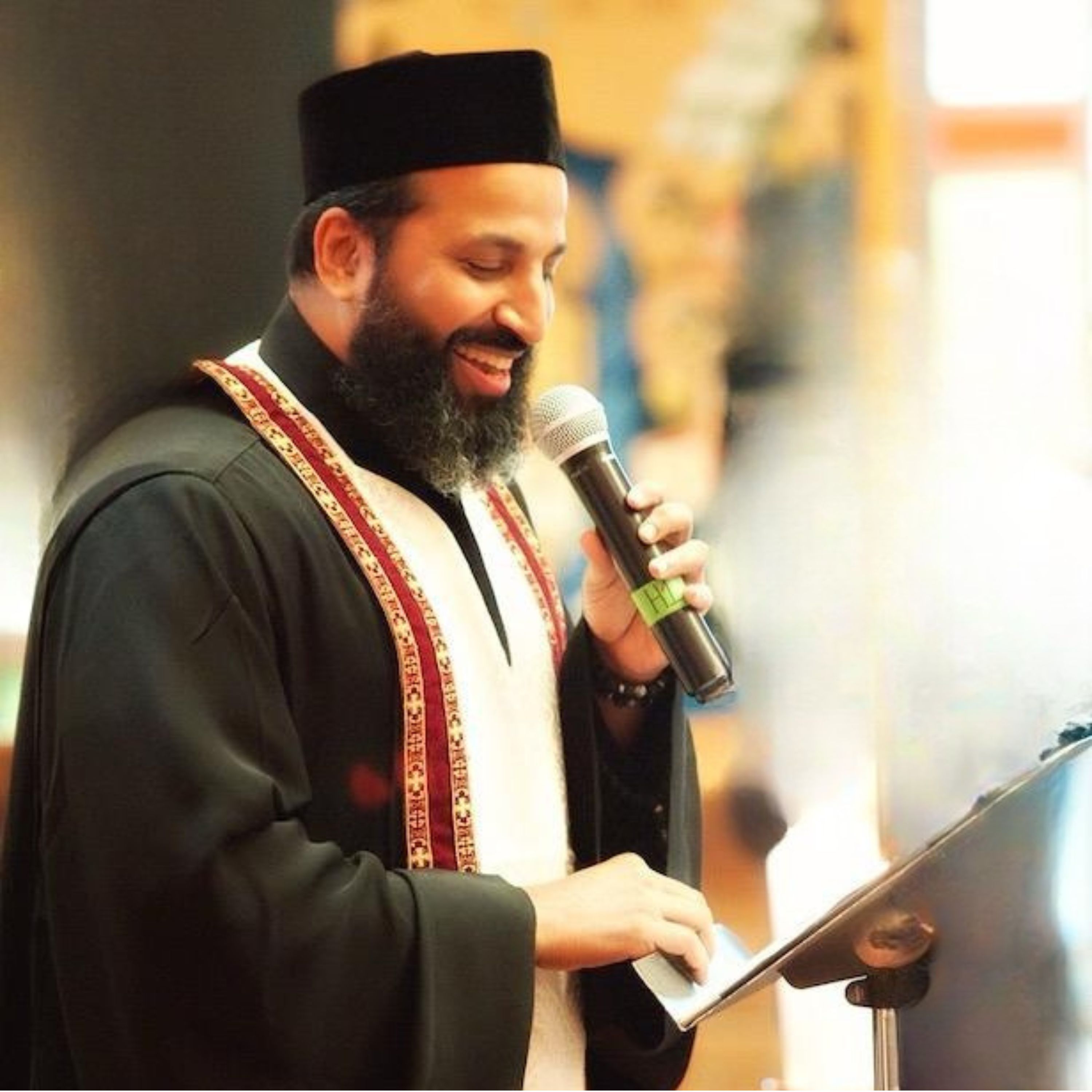
Ascetic Echoes offers short, prayerful meditations to accompany the fasting seasons of the Malankara Orthodox Church. In each episode, Rev. Fr. Dr. Timothy (Tenny) Thomas shares reflections in English and Malayalam that draw listeners into the quiet work of repentance, prayer, and inner preparation.Rooted in Scripture, the life of the Church, and the wisdom of the saints, these meditations help us prepare the heart—the hidden chamber where Christ desires to dwell. Whether you are observing the fast closely or simply seeking a daily moment of stillness, Ascetic Echoes invites you to listen attentively as the ancient ascetic life of the Church echoes into today.Perfect for morning prayer, a daily pause, or evening reflection.
-
78
Great Lent 2026 - Day 50
“Christ is risen from the dead, trampling down death by death, and upon those in the tombs bestowing life!”The Paschal (Easter) homily of Saint John Chrysostom calls out to us: the doors are open—come in. “Let all partake of the feast of faith. Let all receive the riches of goodness.” Pascha (Easter) is not a reward for the perfect. It is a gift for the weary, the broken, and the hungry. Whether we have struggled from the beginning or are only now turning back, Christ receives us the same.This is the mercy of God.We often carry burdens—guilt, fear, a sense that we are not worthy. But the Resurrection speaks gently to the heart: you do not earn this feast—you are invited into it. As Saint Gregory of Nazianzus teaches, “Yesterday I was buried with Him; today I rise with Him.” The Resurrection is not far away. It is meant to be lived now, in the depths of our hearts. And the Church proclaims with boldness: “O death, where is your sting? O Hades, where is your victory?” This is not just words—it is truth. Death has been defeated. Fear has lost its power. A new life has begun. So today, do not remain outside. Come as we are. Bring our weakness. Bring our longing. Enter into the joy of the risen Christ. For there is a place prepared for us— and in Him, a new beginning awaits. Christ is Risen! Indeed He is Risen!
-
77
Great Lent 2026 - Day 49
“Then they took the body of Jesus Christ and bound it in strips of linen with spices.” — Saint John 19:40The burial of Christ is not the end of the story—it is the hidden beginning of life. After the Cross, there is silence. The body of the Lord is taken down, wrapped in linen, and laid in a tomb. To the world, it appears as defeat. Hope seems buried. The stone is rolled into place. But the Church calls this burial life-giving. Why?Because Christ enters even into death—not as a victim, but as a conqueror. He fills the tomb with His presence, transforming it from a place of decay into a womb of resurrection. The grave becomes the place where death itself begins to die. As Saint Ephrem the Syrian writes, “The grave became a treasury of life when Life Himself entered it.” What was once the end is now the beginning. This mystery speaks directly to our lives.We all experience moments of “burial”: seasons of silence, loss and grief, waiting without answers. These moments feel like endings. But in Christ, they are not empty—they are filled with unseen work. God often does His deepest work in hidden places. Today, if we find ourselves in a tomb-like season, do not lose hope.Christ has already been there. And because He entered the grave, no darkness is without His presence, and no ending is without the promise of new life. For in Him, even burial becomes glorious, life-giving, and full of resurrection.
-
76
Great Lent 2026 - Day 48
“He humbled Himself and became obedient to the point of death, even the death on the cross.” — Philippians 2:8On Holy Friday, the Church does not simply remember the Cross—we enter into it. In Orthodox worship, our bodies are not spectators; they are participants. Nowhere is this more powerful than in prostration. When we prostrate, the head goes below the heart. The body descends. And only then do we rise and make the Sign of the Cross. This movement is the Gospel in action.In Scripture, when humanity encounters God, it falls down. Prostration becomes the body’s confession: “I am dust, and God is everything.” But we do not remain there. We rise and trace the Cross, proclaiming what Jesus Christ has done—lifting us from sin into life.Our descent mirrors Christ’s humility. Our rising declares His victory. As Saint Isaac of Nineveh writes, “Humility is the garment of God; whoever is clothed in it truly lives.” The Cross reveals that true glory comes through surrender.Prostration quiets the mind, softens the heart, and aligns the body with prayer. It breaks pride—the deepest wound of the soul—and opens us to grace. And this is not only for church—it is for life. Every day invites the same movement: Lower ourselves—release pride, pause, surrender. Then rise—act with faith, love, and courage marked by the Cross. For in bowing down, we do not lose ourselves— we are lifted into the life of God.
-
75
Great Lent 2026 - Day 47
“This is My body which is given for you; do this in remembrance of Me” — Saint Luke 22:19When Jesus Christ commands, “Do this in remembrance of Me,” He is not asking us to recall something distant. In the language of the Church, remembrance is not memory—it is mystery.Remembrance is presence, not absence.In the Holy Eucharist, Christ is not far away, waiting to be remembered. He is here, offering Himself again—not as repetition, but as eternal reality breaking into time. The Cross, the Resurrection, the love of God—made present.Remembrance is participation, not observation.We are not spectators at a past event. We are drawn into it. We stand at the Cross. We enter the Upper Room. We receive what the disciples received—not symbolically, but sacramentally. The mystery includes us.Remembrance is transformation, not routine.If we approach casually, it becomes habit. But if we approach with faith, it becomes life. The Eucharist does not simply remind us of Christ—it unites us to Him.As Saint Cyril of Jerusalem teaches, “Since He Himself has declared and said of the bread, ‘This is My Body,’ who shall dare to doubt?” What we receive is not ordinary—it is divine life given to us.Today, ask ourselves: Do we come to remember—or to encounter? Do we observe—or do we participate? For in this holy remembrance, Christ is not recalled—He is received. And in receiving Him, we are changed.
-
74
Great Lent 2026 - Day 46
“Therefore I say to you, her sins, which are many, are forgiven, for she loved much.” — Saint Luke 7:47On Holy Wednesday, the Church places before us the image of a sinful woman who comes before Jesus Christ with tears, oil, and brokenness. She does not speak many words. She does not defend herself. She simply comes, weeps, anoints, and surrenders.This moment becomes the foundation of the sacrament of Holy Unction—the mystery of healing for both body and soul.The oil she pours is not just fragrance—it is repentance made visible. Her tears cleanse. Her touch becomes a prayer. And Christ responds not with condemnation, but with forgiveness and restoration.Holy Unction continues this same grace. We come carrying wounds: physical pain, emotional scars, hidden sins. And through the anointing, God does not merely treat symptoms—He heals the whole person. As Saint Ephrem the Syrian writes, “The oil is the companion of mercy; it seals the wounds and pours in the love of God.” The oil is not magic—it is the touch of divine compassion.But healing requires something of us: like the woman, we must come honestly, humbly, and openly. Today, ask ourselves: What wounds am I hiding? What needs healing within us? Holy Wednesday reminds us: no sin is too great, no wound too deep. When we come with love and repentance, Christ receives us, forgives us, and restores us. For where there is true surrender, there the healing of God begins.
-
73
Great Lent 2026 - Day 45
“Let no one eat fruit from you ever again.” — Saint Mark 11:14On Holy Week, Jesus Christ approaches a fig tree full of leaves—but finds no fruit. In response, He curses it. At first, this seems surprising. Why would Christ judge a tree? Because the fig tree is not just a tree—it is a mirror of the soul. It had the appearance of life, but not the substance. It looked fruitful, but was empty within.This is a warning for us. We, too, can have “leaves”: outward religion, visible activity, words of faith. But beneath it all, there may be little fruit—no repentance, no love, no transformation. Holy Week calls us to examine not how we appear, but what we truly bear.As Saint Cyril of Alexandria writes, “God seeks not the show of virtue, but the fruit of a transformed life.” Christ is not satisfied with appearances—He desires a living, fruitful heart. The fig tree reminds us: it is possible to be close to Christ, to look alive, and yet be spiritually barren. Today, ask ourselves: What fruit is my life producing? Is my faith visible only in leaves, or in love, patience, mercy, and truth?The good news is this—Christ does not come only to judge, but to restore. Even now, He invites us to deepen our roots and bear fruit. For in the end, it is not the leaves that matter— but the fruit that reveals a life truly alive in God.
-
72
Great Lent 2026 - Day 44
“Five of them were wise, and five were foolish” — Saint Matthew 25:2On this Monday of Holy Week, the Church places before us the parable of the ten bridesmaids. All ten were invited. All ten belonged. All ten had lamps. All ten were meant to carry light into the darkness. And yet—only some truly shone. The difference was not calling, but preparedness. Not invitation, but interior readiness. Some carried oil. Others did not. This is the quiet warning of spiritual life: it is possible to be near the Kingdom, to look the part, to carry the lamp—and still lack the inner fire. The oil represents what is hidden: prayer when no one sees, faithfulness in small things, a heart watchful for God. Without this, the lamp grows dim.As Saint Gregory of Nyssa writes, “The lamp shines outwardly, but its life is fed from within.” The light we show the world must be sustained by a living relationship with God. Holy Week reminds us: it is not enough to belong—we must be awake. Today, ask ourselves: Is my lamp burning, or merely present? Am I living from inner devotion, or outward appearance? The Bridegroom is coming. And when He arrives, it will not matter how close we stood, but whether our light was alive. For we are all called to carry the light—but only those who tend the flame will enter into the joy of His presence.
-
71
Great Lent 2026 - Day 43
“Hosanna! ‘Blessed is He who comes in the name of the Lord!’” — Saint Mark 11:9The entry of Jesus Christ into Jerusalem—what we call Palm Sunday—is filled with joy, praise, and celebration. Crowds gather, palm branches are lifted, and voices cry out “Hosanna!” It looks like a moment of triumph. But hidden within this celebration is a deeper truth. Christ does not enter on a war horse, but on a donkey. He does not come to conquer kingdoms, but to surrender Himself. The same voices that shout “Hosanna” will soon fall silent—and some will even cry, “Crucify Him.”Palm Sunday reveals the tension of the human heart. We welcome Christ when He fits our expectations—when He blesses, heals, and comforts. But when He calls us to sacrifice, humility, and transformation, our praise can fade.As Saint Andrew of Crete writes, “Let us not only spread branches before Christ, but also spread our lives before Him.” The true offering is not palms—it is the heart. Today, we are invited to ask: Do we welcome Christ only in moments of joy? Or do we follow Him even on the road to the Cross?Palm Sunday is not just a celebration—it is a decision. Will we follow Christ only when it is easy, or will we walk with Him through the week that leads to sacrifice and resurrection? For the same King who enters in humility calls us to follow Him with faithfulness.Let our “Hosanna” today become a lifelong “yes”— not just in words, but in the way we live.
-
70
Great Lent 2026 - Day 42
“Lazarus, come forth!” — Saint John 11:43The raising of Lazarus is not only a miracle—it is a mirror. If we truly look at our lives, we begin to see traces of death everywhere: in broken relationships, in wounds and betrayals, in fear, anger, and resentment, in addictions, in quiet despair, and even in our endless busyness and pursuit of success. These things wrap around us slowly, like grave cloths, binding the heart until it can no longer breathe freely.Like Lazarus, we may still be alive—but not fully living. And sometimes, like the tomb, there is a stench we try to hide: regret, guilt, or the weight of things done and left undone. But into this reality steps Jesus Christ. He does not avoid the tomb. He stands before it. He calls life out of death. “Lazarus, come forth.”This is the voice that still speaks into our lives today. As Saint Ephrem the Syrian writes, “The voice that called Lazarus from the grave calls every soul from the death of sin.” Christ does not merely comfort us—He awakens us. And note: Lazarus still comes out bound. The miracle begins with resurrection, but it continues with unbinding. “Loose him, and let him go.” Today, Christ is calling us—not just to survive, but to live. Bring Him our dead places. Let Him speak into our darkness. For no matter how strong the stench of death may seem, the fragrance of His life is always greater.
-
69
Great Lent 2026 - Day 41
“Then Jesus Christ was led up by the Spirit into the wilderness to be tempted by the devil.” — Saint Matthew 4:1Temptation is not a sign of failure—it is part of the journey of salvation. Even Christ entered the wilderness and faced temptation. The struggle itself is not the problem. The deeper issue is what happens within us during that struggle. Most temptations are not dramatic battles with the world. They are quiet, hidden conflicts within our own hearts—a tension between who we are called to be and what we choose in the moment.In truth, every temptation is an invitation: Will I remain faithful to who God created me to be, or will I betray that identity? When we fall, we often think we have failed God or others. But first, we have betrayed ourselves—the person God is shaping within us. We step away from our true self, the self rooted in Christ.This is why the spiritual life requires vigilance. Temptation is subtle. It whispers, justifies, and convinces us that small compromises do not matter. But every choice shapes the soul.As Saint Isaac of Nineveh writes, “Without trials, no one draws near to God.” Temptations reveal us. They expose our weakness, but also offer us the chance to grow stronger in faith. Today, do not fear temptation—but face it with awareness. Pause before we act. Listen to our conscience. Remember who we are in Christ. For victory in temptation is not just resisting sin— it is remaining faithful to our true self in God.
-
68
Great Lent 2026 - Day 40
“Count it all joy when you fall into various trials, knowing that the testing of your faith produces patience.” — Saint James 1:2–3There is a story about Abba John the Dwarf. A young monk once prayed that God would take away all his temptations. For a time, he felt peace—but soon he became restless, empty, and spiritually stagnant. When he returned to Abba John, the elder told him, “Go and pray that your struggles return, for through them the soul makes progress.”This is a difficult truth: temptation is not always a setback—it is often the path forward. We naturally want ease in our spiritual life. We want prayer without distraction, peace without struggle, growth without effort. But without resistance, there is no strengthening. Without testing, there is no depth. Temptations reveal what is hidden in us. They expose our weaknesses, but they also train our hearts to depend on God. Every struggle becomes an opportunity to choose Christ again.As Saint Ephrem the Syrian writes, “The crown is woven from trials patiently endured.” Spiritual maturity is not formed in comfort, but in perseverance. When we face temptation, do not be discouraged. Do not assume we are failing. Instead, see it as an invitation—to pray more deeply, to trust more fully, to stand more firmly.Ask ourselves: What is this struggle teaching us? How can this draw us closer to God? For the soul does not grow in the absence of battle—it grows by remaining faithful within it.
-
67
Great Lent 2026 - Day 39
“Behold the maidservant of the Lord! Let it be to me according to your word.” — Saint Luke 1:38Today is the Feast of Annunciation! God did not choose the Virgin Mary because she held power, influence, or position. He chose her because her heart was empty enough to be filled, humble enough to receive, and faithful enough to say yes. In a world that values strength and self-sufficiency, this truth feels upside down. We try to prove ourselves, to be worthy, to be “enough.” But the mystery of God’s work is this: He fills what is open, not what is full.The Virgin Mary’s greatness was not in what she had—but in what she surrendered. She did not control the plan; she entrusted herself to it. Her “yes” was not a moment of convenience, but a lifelong offering. As Saint Gregory of Nazianzus writes, “What is not assumed is not healed.” The Virgin Mary offered her whole being, and through her, Christ entered the world to heal it.This is the invitation for us. God is still seeking hearts like the Virgin Mary’s: hearts that are quiet enough to listen, humble enough to receive, and courageous enough to obey. Often, we are too full—full of pride, fear, plans, and distractions. And so there is little room left for God to work.Today, ask ourselves: What do we need to empty? What are we holding onto that prevents us from saying “yes”? For God does not force His way into our lives. He waits for our surrender. And when we say “yes,” He fills our ordinary lives with His extraordinary presence.
-
66
Great Lent 2026 - Day 38
For where your treasure is, there your heart will be also.” — Saint Matthew 6:21There is a story from the Desert Fathers about Abba Macarius of Egypt. As he once walked through a cemetery, he began to speak insults to the dead. Receiving no response, he then praised them—but again, there was silence. Later, he told his disciples, “Become like the dead—neither offended by insults nor moved by praise.” This is the heart of detachment.We often live our lives deeply affected by what others say or think. Praise lifts us; criticism wounds us. We become controlled by opinions, emotions, and the need for approval. But this keeps our hearts restless and divided. Abba Macarius points us to a deeper freedom: a heart rooted not in human voices, but in God alone. Detachment does not mean becoming cold or indifferent. It means becoming anchored. It is the quiet strength of a soul that is no longer shaken by every passing word, but rests securely in God’s love.As Saint Isaac of Nineveh teaches, “The one who has found God is no longer troubled by the praise or blame of men.” When we detach from the need to be seen, praised, or justified, we make space for something greater—peace. Today, ask ourselves: What words control our heart? What opinions shape our peace? True freedom begins when we learn to stand before God alone. For when the heart belongs fully to Him, nothing else has the power to disturb it.
-
65
Great Lent 2026 - Day 37
“I had heard of You by the hearing of the ear, but now my eye sees You. Therefore I abhor myself, and repent in dust and ashes.” — Job 42:5–6At the end of his long suffering, Job finally speaks—not with arguments, not with questions, but with repentance. After all the pain, confusion, and searching, he arrives at a deeper place: not just knowing about God, but truly encountering Him. This is the journey of Lent.Like Job, we often begin with partial understanding. We know prayers, we know traditions, we know truths about God. But suffering, silence, and struggle reveal something deeper—they expose the limits of our understanding and the need for a change of heart. Job’s repentance is not because he lived a sinful life in the obvious sense, but because he now sees God more clearly. And in that light, he sees himself more truthfully.Lent invites us into this same movement—from knowledge to encounter, from words to vision, from outward practice to inward transformation. As Saint Ephrem the Syrian writes, “The one who truly sees God sees himself as he is.” True repentance is born not from fear, but from revelation. And what follows repentance is restoration.God does not leave Job in ashes. He restores him—not only outwardly, but inwardly, giving him a deeper peace and relationship. This is the promise of Lent.When we humble ourselves, when we turn back, when we allow God to reveal our hearts, we are not diminished—we are renewed. For repentance is not the end of the journey— it is the doorway to seeing God more clearly and living more fully in Him.
-
64
Great Lent 2026 - Day 36
“One thing I know: that though I was blind, now I see.” — Saint John 9:25In the Gospel of Saint John chapter 9, a man born blind encounters Jesus Christ and receives his sight. Yet the miracle goes far beyond physical healing—it reveals the difference between true vision and true blindness. The blind man begins in darkness, but he is open. He listens, obeys, and washes as Christ commands. Step by step, not only his eyes are opened, but his heart. By the end of the passage, he not only sees Jesus—he worships Him.The Pharisees, however, present a different kind of blindness. They see physically, they know the law, they question and analyze—but they do not recognize God standing before them. Their knowledge becomes a barrier. Their certainty closes their hearts. This is the warning of the Gospel: it is possible to see, yet not perceive; to know, yet not believe.True vision is not merely the ability to observe—it is the ability to recognize God’s presence, to respond in humility, and to grow in faith. It begins with openness.As Saint Ephrem the Syrian beautifully writes, “The eye of faith sees what the eye of the body cannot.” Spiritual sight is a gift, but it is also a response.Today, we must ask ourselves: Where am I blind? What is God trying to show me that I am resisting? The journey of faith is a movement from darkness to light. And like the man once blind, if we remain open to Christ, we too will be able to say with confidence: “I was blind, but now I see.”
-
63
Great Lent 2026 - Day 35
“Then many warned him to be quiet; but he cried out all the more, ‘Son of David, have mercy on me!’” — Saint Mark 10:48On the road to Jericho, a blind man named Bartimaeus sits by the roadside, crying out to Jesus Christ for mercy. But what stands out in this moment is not only his faith—it is the indifference of the crowd. They hear his cry, yet they silence him. They see his need, yet they ignore him. Even those closest to Christ fail to reflect His compassion.Indifference is one of the quiet tragedies of spiritual life. It is not loud like anger or obvious like sin. It is subtle. It appears as distraction, as busyness, as “not my concern.” It allows suffering to exist right beside us, while we continue on our way unchanged. The crowd did not hate Bartimaeus—they simply did not care enough.And this is often where we struggle. We may pray, fast, and worship, yet remain unmoved by the pain of others. We pass by people who are crying out—perhaps not with words, but through loneliness, silence, or hidden suffering. But Christ does something different. He stops. He listens. He calls the man forward.As Saint John Chrysostom writes, “Nothing so pleases God as a heart that is attentive to another’s suffering.” Bartimaeus received his sight not only because he cried out—but because Christ refused to be indifferent. Today, ask ourselves: Whose voice am I ignoring? Whose pain have I overlooked? Spiritual life is not only about reaching God—it is about becoming like Him. And the heart of Christ is never indifferent.
-
62
Great Lent 2026 - Day 34
“Hear my prayer, O Lord, And give ear to my cry; Do not be silent at my tears; For I am a stranger with You, A sojourner, as all my fathers were.” - Psalm 39:12Tears are often misunderstood. We hide them, resist them, or see them as weakness. Yet in spiritual life, tears can be among the deepest gifts God gives the human soul. There are tears that come from pain, loss, and disappointment. But there are also tears that rise from something deeper—a longing for God, a quiet awareness of our distance from Him, and a desire to return. These are the tears of contrition, and they carry within them healing.The Fathers teach that tears are not merely emotional—they are spiritual. They reveal that the heart is alive, sensitive, and responsive to God’s presence. When the soul begins to soften, tears flow naturally, like water breaking through hardened ground. As Saint Isaac of Nineveh writes, “Tears are given to man as a second baptism.” Through them, the heart is cleansed, renewed, and restored.Truly, tears wash the windows of the soul. They clear away the dust of pride, the heaviness of sin, and the numbness of indifference. They allow us to see God more clearly and to see ourselves more truthfully. In a world that encourages constant control, tears remind us to surrender.Do not be afraid of them. If they come in prayer, receive them. If they come in repentance, cherish them. If they come in longing, follow where they lead. For tears offered to Christ are never wasted. They are seeds planted in the heart—and in time, they will blossom into joy, healing, and a deeper union with Him.
-
61
Great Lent 2026 - Day 33
“Return to Me with all your heart, with fasting, with weeping, and with mourning.” — Joel 2:12Great Lent is not merely a season on the calendar—it is a school of repentance. Each year, the Church invites us back into this sacred classroom, not because we have failed, but because we have forgotten. Forgotten who God is. Forgotten who we are. Forgotten the depth and beauty of our faith.Repentance is not punishment—it is relearning how to live. In this school, fasting teaches us that we are more than our appetites. Prayer teaches us to listen again for the voice of God. Silence reveals the noise within us. And acts of mercy remind us that faith is not theory, but love in action.Like any student, we return year after year. Not because we are incapable of learning, but because the lessons of the heart must be renewed constantly. The soul, like a garden, must be tended again and again.As Saint John Chrysostom writes, “Repentance is the medicine that destroys sin.” It is not a one-time act, but a way of life—a continual turning back to God. Lent sharpens our spiritual vision. It reminds us what truly matters and gently removes what distracts us. It brings us back to simplicity, to humility, to truth.Do not rush through this season.Enter the school.Sit with the lessons.Allow our hearts to be reshaped.For those who embrace this journey, discover something beautiful: repentance is not sorrow alone—it is the path back to joy.
-
60
Great Lent 2026 - Day 32
“Pray without ceasing.” — 1 Thessalonians 5:17There is a longing deep within every soul—a desire for stillness, for peace, for nearness to God. Yet our hearts are often restless, scattered by thoughts, anxieties, and endless distractions. We search for silence, but do not know how to enter it. The Church offers a simple yet profound path: “Lord Jesus Christ, have mercy on me.”This prayer is not merely words—it is a way of life. When this prayer becomes united with our breathing, something begins to change. As we inhale, we receive the presence of Christ. As we exhale, we surrender our burdens into His mercy. Slowly, gently, the mind descends into the heart, and the heart becomes still.At first, it may feel mechanical. Our thoughts may wander. But with patience, the prayer begins to take root. It moves from our lips to our mind, and from our mind into our heart. There it begins to pray within us, even without effort. As Saint Gregory of Nazianzus taught, “Remember God more often than you breathe.” When prayer becomes as natural as breathing, the soul begins to live in constant awareness of God.This is not achieved in a moment, but through faithfulness. A few quiet minutes each day can open the door. Stillness is not the absence of noise—it is the presence of Christ. Let the Name of Jesus dwell within us. And in time, our restless heart will become His dwelling place.
-
59
Great Lent 2026 - Day 31
“Though he fall, he shall not be utterly cast down; for the Lord upholds him with His hand” — Psalm 37:24Every life, at some point, bears the marks of what feels like terrible damage. A broken relationship, the ache of loss, the weight of depression, financial collapse, illness, betrayal, or the quiet erosion of dignity—these moments can leave us feeling like a tree scorched by fire. From the outside, it may seem as though everything is ruined. And yet, the mystery of God’s grace is this: the tree does not die.Beneath the visible damage, something unseen remains alive—the roots. Hidden deep within the soul is a vitality placed there by God Himself, a life that suffering cannot fully destroy. Though branches are broken and bark is charred, the roots continue to draw from the living water of God’s presence.In time, something unexpected happens. From what seemed lifeless, new growth begins. Small at first—barely noticeable—but real. What was once wounded begins to bloom again, often in ways deeper and more compassionate than before.As Saint Isaac of Nineveh writes, “Out of the depths of affliction, the soul learns the sweetness of God.” Pain, though never desired, can become the place where we encounter God most intimately. This does not mean the damage was good, but it means God is greater than the damage. If our life feels like a burnt tree, do not despair. Stay rooted in Christ. Hidden life is still working within us. And in time, by His grace, even the charred places of our story will give birth to new and unexpected blooms.
-
58
Great Lent 2026 - Day 30
“…that Christ may dwell in your hearts through faith; that you, being rooted and grounded in love,...to know the love of Christ which passes knowledge; that you may be filled with all the fullness of God” - Ephesians 3:17-19Faith is often compared to a tree. We see the branches—the visible parts: our prayers, our actions, our service, our words. But what truly determines the strength of a tree is not what is seen above the ground, but what lies hidden beneath it: the roots. Roots do two essential things. They anchor the tree so it can stand firm when storms come. And they draw nourishment, feeding the tree with what it needs to live and grow.We are the same. If our roots are shallow—if our faith is only occasional, emotional, or dependent on circumstances—then when the storms of life come, we are shaken easily. Anxiety, disappointment, failure, and suffering can uproot us. But when our roots go deep into Christ, we become steady.Lent is a sacred season where God strengthens our roots. Through fasting, prayer, repentance, and silence, we are not merely “doing religious things.” We are going deeper. We are allowing our faith to be anchored in something stronger than our emotions—in the love of God Himself.As Saint Ephrem the Syrian writes, “Plant your root in humility, and it will bear the fruit of life.” A deep root in humility and prayer becomes a source of strength. Storms will come—this is certain. But a tree deeply rooted does not fear the wind. This Lent, do not focus only on the branches of our faith. Go deeper. Strengthen the roots—and we will stand.
-
57
Great Lent 2026 - Day 29
“Woman, you are loosed from your infirmity.” — Saint Luke 13:12For eighteen years she lived bent over, unable to stand upright. Day after day she saw only the ground before her feet. Yet she still came to the synagogue. She came to worship, even when life had pressed her down. Then Jesus Christ saw her.Notice something beautiful in this moment: the woman does not ask for healing. She does not cry out. Christ notices her suffering before she speaks. He calls her forward and says, “You are loosed from your infirmity.” With His touch she stands upright for the first time in nearly two decades and begins to glorify God.This miracle reveals something about our own lives. Many of us walk spiritually bent over. The weight of worries, regrets, disappointments, and hidden struggles presses our souls downward. Instead of looking toward heaven, we stare at the dust of our problems. Yet Christ still sees us.The Gospel reminds us that healing begins when we allow Christ to lift what life has bent. Sometimes the miracle is sudden; sometimes it is gradual. But the invitation is always the same: come into the presence of God even when we feel burdened. As John Chrysostom writes, “Christ did not merely raise her body; He restored the dignity of a soul bowed by suffering.”Today, bring our bent places to Christ. The One who straightened her back is still lifting hearts—teaching us again to stand upright in hope and praise.
-
56
Great Lent 2026 - Day 28
“Which of these three, do you think, proved to be a neighbor to the man who fell among robbers?” — Saint Luke 10:36When a lawyer asked Jesus Christ, “Who is my neighbor?” he expected a simple definition—perhaps someone from the same faith, the same people, or the same community. Instead, Jesus answered with a story. A wounded traveler lies half dead on the road. A priest passes by. A Levite walks past. Both see the suffering, yet continue on their way. Then a Samaritan—a stranger, even an enemy in the eyes of many—stops. He binds the wounds, pours oil and wine, lifts the man onto his animal, and pays for his care.The question Jesus asks at the end changes everything. He does not ask, “Who was the wounded man’s neighbor?” He asks, “Who became the neighbor?” Neighbor is not a category. It is a choice. We often look for reasons to limit compassion: this person is too different, too inconvenient, too difficult, too far outside our circle. But the Samaritan shows that mercy crosses boundaries. Compassion does not ask first about identity; it responds to suffering.As Saint John Chrysostom writes, “Do not ask who your neighbor is; become a neighbor to the one who needs you.” Every day, wounded travelers lie along the roads of our lives—someone burdened by loneliness, pain, or quiet despair. To follow Christ is to slow down, see them, and respond with mercy. The world asks, “Who deserves my help?” The Gospel asks, “Will you become a neighbor today?”
-
55
Great Lent 2026 - Day 27
“Search me, O God, and know my heart; try me and know my thoughts.” — Psalm 139:23The Irish poet W. B. Yeats once wrote that it takes more courage to examine the dark corners of one’s own soul than it does for a soldier to fight on a battlefield. His words echo a profound spiritual truth: the hardest battles are often the ones fought within.It is easier to see the faults of others than to face the hidden shadows of our own hearts. Pride hides behind our achievements. Anger disguises itself as righteousness. Envy quietly grows where gratitude should live. The soul has many corners where unexamined thoughts and desires take refuge.Yet the spiritual life invites us to a brave and honest question: What is the state of my heart today? True repentance begins not with blaming the world but with turning inward and standing honestly before God. In that sacred moment we discover that the heart is both a battlefield and a sanctuary. It is where our struggles rage, but also where grace quietly works.As Saint Isaac of Nineveh taught, “Enter eagerly into the treasure house within you, and you will see the treasure house of heaven.” When we courageously enter the depths of our own hearts, we begin to encounter God’s transforming light. The purpose of examining the soul is not self-condemnation but healing. When we allow Christ to illuminate our hidden places, the darkness loses its power. The bravest journey a person can take is not across mountains or battlefields—but into the depths of the heart where God waits to restore us.
-
54
Great Lent 2026 - Day 26
“And I, when I am lifted up from the earth, will draw all people to Myself” — Saint John 12:32In the sacred journey of the Fast, when the faithful have already walked many days through prayer, fasting, and repentance, the Holy Church places the precious and life-giving Cross in our midst. At the very center of the Lenten pilgrimage, the Cross is lifted before the eyes of the faithful like a beacon in the wilderness. For as the days of the Fast unfold, many begin to feel the weight of the spiritual desert. The struggle of the heart becomes clearer; our weakness appears more plainly before us. Like Israel journeying through the barren wilderness, we grow weary and our gaze easily falls toward the dust of our burdens.Therefore the Church, in her motherly wisdom, raises before us the Cross of our Lord—not merely as a sign of suffering, but as the fountain of healing and the banner of victory. In the wilderness of this life, the direction of our gaze is everything. When pain visits us, we naturally look downward: toward our wounds, our failures, and the anxieties that surround us. Yet the Cross calls us to lift our eyes upward. There we behold the boundless love of Jesus Christ stretched out for the life of the world. What appears to be defeat becomes the throne of divine triumph.As Gregory of Nyssa proclaims, “The Cross is both a trophy raised against the demons and a healing for the wounds of humanity.” Thus the Cross stands in the midst of Lent like the Tree of Life planted in the desert. And when we lift our eyes to Christ, hope takes root within the wilderness of our hearts and leads us toward the joy of the Resurrection.
-
53
Great Lent 2026 - Day 25
“But far be it from me to boast except in the cross of our Lord Jesus Christ.” — Galatians 6:14The Roman cross was the cruelest instrument of humiliation and torture in the ancient world. It represented shame, defeat, and public suffering. Yet when Jesus Christ stretched out His arms upon it, the meaning of the cross changed forever. What was once a sign of death became the greatest sign of love. What was once humiliation became victory. The cross turned poison into healing. This mystery speaks directly to our lives.The experiences we wish had never happened—the betrayal, the failures, the seasons of deep pain—often feel like venom in our souls. But God has a redeeming power that we cannot imagine. The very place of our deepest wound can become the place where grace flows outward to others.Our worst experience can become our greatest testimony. Our failures can become wisdom for someone else. Our suffering can grow compassion that heals another heart. As Saint John Chrysostom exhorts, “The Cross has become for us the fountain of countless blessings.” God does not waste pain. In His hands, even the darkest chapter can be transformed into a story of redemption.
-
52
Great Lent 2026 - Day 24
“And as Moses lifted up the serpent in the wilderness, so must the Son of Man be lifted up” — Saint John 3:14In the wilderness, the people of Israel were bitten by fiery serpents. Fear spread through the camp. Pain filled their bodies. Complaints filled their mouths. Their instinct was natural: they stared at the wound, at the serpents, at the danger surrounding them.But God gave an unexpected command. Through Moses He lifted a bronze serpent on a pole and said that whoever looked up would live (Numbers 21). The serpents were still there. The desert was still harsh. Yet healing came when their gaze changed.Our lives often feel like that wilderness. Anxiety bites. Betrayal stings. Failure burns. When pain strikes, our instinct is to stare at the wound—to replay the hurt, rehearse the problem, magnify the fear. But the Gospel invites a different movement: look up to the Cross. The Cross does not deny suffering; it redeems it. When our eyes rise to Christ, our wounds stop defining us. Hope enters where despair once ruled.As Saint Ephrem the Syrian exhorts, “The Cross is the medicine of life set before the eyes of the world.” What poisoned humanity becomes the place where healing flows. Today, resist the temptation to live looking downward. Do not let problems become the center of our vision. Lift our eyes to Christ. The wilderness may remain for a time—but those who look to the Cross learn that even in the desert, life can be restored.
-
51
Great Lent 2026 - Day 23
“And looking up to heaven, He sighed and said to him, ‘Ephphatha,’ that is, ‘Be opened’” — Saint Mark 7:34In the Gospel of Saint Mark, chapter 7, people bring to Jesus a man who cannot hear and can barely speak. He lives in a world half-closed—unable to fully receive words and unable to fully express himself. But Jesus does something intimate and unusual. He takes the man aside from the crowd, touches his ears, touches his tongue, and then looks to heaven and sighs before saying, “Ephphatha—Be opened.”Christ does not shout from a distance. He draws near. The healing begins with personal attention. The sigh of Jesus reveals the sorrow of God over the brokenness of creation. Deafness, silence, suffering—these are not how the world was meant to be. Yet with one word, the barrier breaks. The ears open. The tongue loosens. A life once closed begins to participate again in the music of the world.This miracle speaks to more than physical healing. Many of us live with spiritual deafness. We hear the noise of the world but struggle to hear the voice of God. Our tongues are quick with opinions but slow with praise, kindness, and truth. Christ still speaks “Be opened.” As Saint John Chrysostom teaches, “Christ opened the ears of the body to show that He also opens the ears of the heart.” When the heart opens, we begin to hear grace and speak mercy. Today, let Christ touch the places that are closed. Let Him open our ears to His word and loosen our tongue to speak life.
-
50
Great Lent 2026 - Day 22
“O woman, great is your faith! Let it be done for you as you desire” — Saint Matthew 15:28A Canaanite mother comes to Jesus carrying a desperate burden—her daughter is tormented. She cries out, but at first there is silence. Then comes resistance. Even the disciples urge Jesus to send her away. Yet she does not leave. Faith often begins where comfort ends. The woman refuses to interpret silence as rejection. She refuses to allow obstacles to silence her love. Every word that seems to close a door only deepens her determination to stay near Christ.When Jesus speaks of the children’s bread not being given to little dogs, she answers with stunning humility: “Yes, Lord, yet even the little dogs eat the crumbs that fall from their masters’ table.” She does not argue her worth. She simply trusts His mercy. And that is the turning point. Faith does not demand; it persists. Faith does not rely on entitlement; it rests in mercy.As Saint John Chrysostom teaches, “Her humility opened the door that seemed closed.” What resistance could not overcome, humility dissolved. How often do we abandon prayer when the answer is delayed? Yet this mother teaches us that faith sometimes grows strongest in the waiting.Today, bring our burdens again to Christ. Do not measure His love by the speed of the answer. Remain at the table. Even crumbs from His grace are powerful enough to heal. Persistent faith always finds mercy waiting on the other side of perseverance.
-
49
Great Lent 2026 - Day 21
“I will give you a new heart and put a new spirit within you; I will take the heart of stone out of your flesh and give you a heart of flesh” - Ezekiel 36:26Fasting is often seen in what we refuse to eat. But the deepest fast takes place in the heart. The heart is the hidden center of our life—the place where thoughts begin, where desires grow, where choices are born. If the heart remains unchanged, outward fasting becomes only a temporary discipline.So the true fast says: my heart must also fast. The heart fasts from anger that hardens it against others. It fasts from lust that turns people into objects instead of sacred persons. It fasts from greed that constantly demands more and is never satisfied. These passions crowd the inner chamber of the soul. When they fill the heart, there is little room left for God.But when the heart fasts from these things, it becomes something sacred: a seat for God’s breath, a resting place for the Divine Spirit. Just as the lungs receive air, the heart is meant to receive the life of God. As Saint Ephrem the Syrian writes, “Blessed is the heart that has become a dwelling place for the Spirit.” The Spirit rests where the heart is cleansed and made gentle.Each day, we must guard this inner sanctuary. When anger rises, release it. When desire distorts love, redirect it. When greed whispers, practice gratitude. The heart that fasts becomes light, spacious, and peaceful. And in that quiet space, God begins to dwell.
-
48
Great Lent 2026 - Day 20
“And everyone who competes for the prize is temperate in all things. Now they do it to obtain a perishable crown, but we for an imperishable crown” — 1 Corinthians 9:25Our bodies are not obstacles to our faith; they are the very means by which we live it. We bow, we fast, we kneel, we make the sign of the cross. Faith is not only believed—it is embodied. Like an athlete training for a race, the Christian disciplines the body so that every action reflects the life of Christ within.Among the disciplines of the body is the discipline of touch.Our hands can grasp, control, and possess. They can reach for what is not ours, or use others to satisfy our own desires. When our touch is undisciplined, it becomes a way of taking.But in a true fast, our touch also fasts.It fasts from grabbing, from selfish desire, from turning people into objects for our own satisfaction. Instead, we vow that our hands will become instruments of comfort. A hand that once grasped now blesses. A touch that once demanded, now consoles.Think of the touch of Christ. He touched the leper, the blind, the broken, and His touch healed. As Saint Isaac of Nineveh writes, “Let your hands be stretched out not to take, but to give.” When the hands learn generosity, the heart learns mercy. Like an athlete who trains every movement, we train our bodies to serve love. Our hands lift the fallen, comfort the grieving, and serve the needy. When the body is disciplined by grace, even our touch becomes a quiet sermon of Christ’s compassion.
-
47
Great Lent 2026 - Day 19
“Let no corrupting talk come out of your mouths, but only such as is good for building up” — Ephesians 4:29Our bodies are not separate from our faith; they are the instruments through which faith becomes visible. The way we listen, speak, and respond reveals the condition of our hearts. That is why fasting is not only about food and drink. True fasting travels inward and touches every sense.Let the ears fast.Our ears often feast on what harms the soul—gossip, harsh criticism, endless noise. When the ears fast, we refuse to absorb what poisons the heart. Instead, we vow to listen beautifully: patiently, attentively, and compassionately. Listening becomes an act of love. Sometimes the most Christ-like thing we can do is simply hear someone without interruption or judgment.Let the tongue fast.The tongue is small, yet powerful. Words can wound deeply or heal gently. Fasting with the tongue means refusing gossip, bitterness, and careless speech. It is choosing restraint when anger rises. It is deciding that every word spoken should leave another person more encouraged, not diminished.As Saint Isaac of Nineveh writes, “Guard your tongue from evil and your lips from deceit, and peace will dwell in your heart.” When speech is purified, the heart follows. This season, let our fast be embodied. Let our ears listen with grace. Let our tongue speak with tenderness. When our bodies join our prayers, faith becomes living mercy—and the love of Christ is heard as well as seen.
-
46
Great Lent 2026 - Day 18
“Do you not know that your body is a temple of the Holy Spirit within you?” — 1 Corinthians 6:19Our bodies are not obstacles to faith; they are instruments of it. Through our hands we serve, through our lips we bless, through our knees we kneel, through our eyes we behold. The body is the living altar where devotion becomes visible. When we fast from food and drink, we discipline appetite. But true fasting must also move inward. It is possible to deny the stomach while still feeding pride, lust, anger, and judgment. The deeper fast calls every sense into surrender.Let the eyes fast. Let them fast from glancing at what diminishes the soul. Let them turn away from comparison, envy, impurity, and indifference. And more than abstaining, let them learn compassion. Every glance can either reduce a person to an object or honor them as an image-bearer of God. To fast with the eyes is to look slowly, gently, mercifully. It is to see pain and not look away. It is to notice the overlooked.As Saint Ephrem the Syrian writes, “Make my senses gates of righteousness, O Lord, that no unclean thing may enter.” The senses are gates; what we allow through them shapes the heart within.This season, do not fast outwardly alone. Invite our eyes, our thoughts, our reactions into the discipline. When the body aligns with the Spirit, faith becomes embodied love. And when even our glances are purified, the world begins to look different—because we are seeing it through Christ.
-
45
Great Lent 2026 - Day 17
“Be still, and know that I am God.” — Psalm 46:10Busyness is the disease we rarely diagnose. It hides behind productivity, responsibility, and even ministry. It fills our calendars but empties our souls. We move quickly, answer constantly, achieve endlessly—yet somewhere along the way, we forget how to be still. The danger of busyness is not simply that we have too much to do. It is that we begin to measure our worth by what we accomplish. Activity becomes identity. Noise replaces intimacy. We speak to God in passing but seldom remain long enough to hear Him speak back. Even holy work can become a shield from holy presence.Jesus Himself withdrew to lonely places to pray. If the Son of God made room for silence, how much more must we? Stillness is not laziness; it is alignment. It reminds us that God is God—and we are not. As Isaac of Nineveh writes, “The soul that loves God loves stillness.” In stillness, the soul breathes again. In quiet, priorities are reordered. In rest, trust is restored.Ask ourselves: What is driving our pace—peace or pressure? Are we building a life with God at the center, or squeezing Him into the margins? Today, resist the disease of endless doing. Turn off the noise. Step away from the rush. Sit in His presence. For it is not in frantic movement, but in surrendered stillness, that we remember who we are—and whose we are.
-
44
Great Lent 2026 - Day 16
“And many were gathered together, so that there was no more room, not even at the door” — Saint Mark 2:2In Saint Mark 2:1–12, the house is full. Jesus is teaching. The atmosphere is charged. Every seat is taken. Every ear is attentive. It looks like revival. Yet a paralyzed man cannot get in. The crowd is so focused on Jesus—and perhaps on their own needs—that they become an obstacle to the very mercy He embodies. They do not reject Christ. They simply forget the suffering man at the door. It is possible to be near Jesus and still block someone from reaching Him.We become obstacles when comfort matters more than compassion. When routine matters more than rescue. When we guard our place instead of making space. The crowd likely did not intend harm. But indifference can wound as deeply as opposition. The paralytic is saved not by the crowd, but in spite of it—because four friends refuse to let barriers have the final word.As Saint Isaac of Nineveh writes, “Let your heart burn with love for the whole creation.” A heart burning with love always notices the one left outside. Today, ask ourselves: Are we drawing people closer to Christ—or standing in the doorway? Does our attitudes, preferences, or judgments make it harder for someone wounded to enter?
-
43
Great Lent 2026 - Day 15
“When Jesus saw their faith, He said to the paralytic, ‘Son, your sins are forgiven you’” — Saint Mark 2:5In Saint Mark 2:1–12, a paralyzed man cannot reach Jesus on his own. The house is crowded. The doorway is blocked. But he has four friends—and that makes all the difference. These four reveal what the Church is meant to be and what every believer must become.First, they are compassionate. They see his suffering and refuse indifference. The Church must feel before it fixes. Second, they are unified. No one carries a corner alone. They move together. Division would have dropped the stretcher. Unity carries the broken safely. Third, they are persistent. The crowd blocks the entrance, but they do not retreat. They climb, dig, and lower. True faith finds a way when obstacles appear. Fourth, they are selfless. The miracle happens for the man on the mat, not for them. They are content to remain unnamed while another stands restored.This is what every believer must become: compassionate in heart, united in spirit, persistent in faith, and selfless in service. Notice that Scripture says Jesus saw their faith. Sometimes the faith of a community carries someone who cannot believe for himself. As Ephrem the Syrian wrote, “Blessed are they who bear the weak, for they bear Christ Himself.” When we carry one another, we participate in God’s mercy.Be a corner-holder. Lift someone. Lower someone to Jesus. And watch forgiveness and healing unfold where love makes a way.
-
42
Great Lent 2026 - Day 14
“God was in Christ reconciling the world to Himself.” — 2 Corinthians 5:19The work of grace is always return—return to God, return to one another, return to communion. Sin scatters. Pride divides. Fear isolates. But the heart of the Gospel is rebuilding what was broken.Lent is not a season of punishment; it is a season of making room. We do not fast to harm ourselves. We fast to heal space within ourselves. We remove what fills us so that God may fill us again. Fasting loosens the grip of excess, distraction, resentment, and noise. It creates room—room for God’s voice and room for one another’s presence.Too often we ask during Lent, “What am I allowed to eat? What am I allowed to do?” But the better question is: What does love require of me?Love may require forgiveness.Love may require restraint.Love may require generosity.Love may require silence.As Isaac of Nineveh writes, “Fasting is the beginning of the healing of the soul.” Healing begins when we stop feeding what divides us and start nourishing what unites us.The true fast restores communion. It softens sharp words. It reconciles strained relationships. It rebuilds trust stone by stone.When we make room for God, we discover space for mercy. When mercy grows, communion is rebuilt.This Lent, do not measure our devotion by restriction alone. Measure it by love. Fast from whatever hardens our heart. Feast on what restores relationship.For the work of grace is always return—and love is the road home.
-
41
Great Lent 2026 - Day 13
“God, be merciful to me, a sinner.” — Saint Luke 18:13In the parable of the Pharisee and the tax collector (Luke 18:9–14), two men stand in the same temple, but only one truly encounters God. The Pharisee suffers from a peculiar spiritual blindness. He is not immoral, not dishonest, not outwardly corrupt. In fact, he is disciplined, generous, and religious. Yet he is so busy cataloging his virtues that he has lost sight of God. He thanks God—but listens closely and you will hear that he is really admiring himself.His prayer is full of “I.”“I fast.”“I give.”“I am not like others.”He stands in the temple, but the altar of his heart is occupied by his own reflection. The tax collector, by contrast, cannot even lift his eyes. He brings no résumé, no comparison, no defense. Only a plea: “God, be merciful to me, a sinner.” And Jesus says it is this man who goes home justified.As Saint Ephrem the Syrian writes, “The proud man’s righteousness is a veil over his eyes, but the humble man’s tears wash his sight.” Humility restores vision. Spiritual blindness is subtle. It grows when we measure ourselves against others instead of against God’s holiness. It thrives when gratitude turns into self-congratulation.Today, examine our prayers. Are they centered on God’s mercy—or our merit? Lay down the list. Lift up our needs. In humility, we finally see clearly—and in seeing clearly, we are truly justified.
-
40
Great Lent 2026 - Day 12
“You are a letter from Christ… written not with ink but with the Spirit of the living God” — 2 Corinthians 3:3The Apostle Paul tells the believers that they themselves are Christ’s letter. Not parchment. Not ink. Not carved stone. But living, breathing testimony. A letter carries a message from someone absent. It reflects the sender’s heart, character, and intent. If we are letters from Christ, then the world reads Him through us. Our reactions, our words, our integrity, our mercy—these form the sentences people encounter daily.But Saint Paul makes something clear: this letter is not self-written. It is “written… with the Spirit of the living God.” We do not author ourselves into holiness. We are inscribed by grace. Too often we try to edit the message—presenting selective obedience, convenient kindness, partial surrender. Yet the Spirit writes deeply, sometimes through pressure, sometimes through pain. As Ephrem the Syrian wrote, “The Spirit engraved the image of Christ upon the heart, that the heart might become a tablet of life.” The engraving is inward before it is outward. Ask ourselves: What is the world reading in me? Bitterness or forgiveness? Anxiety or trust? Pride or humility?Every conversation is a line written. Every choice is a phrase formed. Every act of love is a bold declaration of the Sender. Today, yield our hearts again to the Spirit’s hand. Let Him write clearly. For we are Christ’s letter—meant to be read, known, and recognized as His.
-
39
Great Lent 2026 - Day 11
“This kind can come out by nothing but prayer and fasting” — Saint Mark 9:29In Mark 9:14–29, a desperate father brings his tormented son to the disciples—but they cannot cast the spirit out. When Jesus arrives, deliverance comes swiftly. Later, in private, the disciples ask why they failed. His answer is piercing: “This kind can come out by nothing but prayer and fasting.”The problem was not technique. It was order. Prayer and fasting reorder the heart before they confront the demon. They realign the soul before they address the storm. Fasting dethrones self-reliance. Prayer enthrones dependence. Together, they shift us from noise to surrender, from striving to abiding.The father in the story models this reordering when he cries, “I believe; help my unbelief!” He brings both faith and weakness. That honesty is itself a form of surrender. We often want power without preparation, authority without intimacy, victory without surrender. But Jesus teaches that some battles are won long before they appear—won in hidden places where appetite is disciplined and the heart is humbled.As Isaac of Nineveh wrote, “Fasting is the weapon established by God… through it the demons are defeated.” Fasting empties us of ourselves so we may be filled with God. When the heart is reordered through prayer and fasting, faith is strengthened. When faith is strengthened, authority follows. And when authority flows from intimacy with Christ, strongholds fall. Before confronting what binds others, let God confront what binds us. Victory begins in reordered devotion.
-
38
Great Lent 2026 - Day 10
“Lord, if You are willing, You can make me clean” — Luke 5:12Before the miracle, there is a posture. The leper does something astonishing—he falls on his face before Jesus. He worships first. Before asking for healing, before explaining his pain, before pleading his case, he bows. His body touches the dust in surrender before his mouth forms a request. This is the reordering of the heart.So often we rush into God’s presence with demands. We present our needs first and offer worship later—if the answer satisfies us. But the leper reverses that pattern. Worship comes before the miracle. Surrender comes before the solution. Then he says: “If You are willing…” His request reveals a second reordering—his faith. He does not question Christ’s power; he entrusts himself to Christ’s will. Faith is not control; it is confidence wrapped in surrender.When the heart is reordered in worship, and faith is reordered in trust, life is reordered by grace. Jesus answers, “I will; be clean.” The man rises not only healed in body, but restored in community, worship, and dignity. As Ephrem the Syrian wrote, “The Lord touched him to show that His mercy is not defiled, but that defilement is cleansed by His mercy.”Today, bow first. Worship before we ask. Trust before we see. When our heart kneels, our faith aligns—and when faith aligns, our life follows.
-
37
Great Lent 2026 - Day 9
“That they all may be one, as You, Father, are in Me, and I in You” - John 17:21As we walk the ascetical path of Great Lent, the journey of our spiritual transformation now leads us to its sixth stage: Union with God. Awakening stirred our hearts. Repentance turned us. Purification cleansed us. Renewal strengthened us. Illumination enlightened us. Now, transformation leads us to its true goal — communion with God.Union is not absorption or loss of self; it is loving participation in the life of Christ. As iron placed in fire becomes radiant without ceasing to be iron, so the soul united to God becomes filled with divine light while remaining fully human. St. Ephrem the Syrian writes: “The Most High came down and dwelt in the lowly, that He might raise the lowly to the heights.” This is the heart of Orthodox spirituality — theosis, living in an active relationship with the Lord.Union is deeply practical. Pray throughout the day, not only at set times. Whisper the Jesus Prayer while walking, working, or waiting. Receive the services of the Church with attention. Forgive quickly, for division clouds communion. Today, seek nearness. Speak to Christ and offer Him your thoughts before they become actions. Transformation is not self-improvement — it is divine intimacy. In union, the soul rests in God, and God lives within the soul.
-
36
Great Lent 2026 - Day 8
“For God, who commanded the light to shine out of darkness, has shone in our hearts to give the light of the knowledge of the glory of God” - 2 Corinthians 4:6As we enter into the second week of the Great Lent, our journey of transformation advances to the fifth step: Illumination. After Awakening, Repentance, Purification, and Renewal, something begins to change within us. The heart grows quieter. The mind becomes clearer. We begin to see — not only our weaknesses — but God’s presence in all things. Illumination is not a dramatic vision; it is the gentle light of Christ steadily brightening the inner life.St. Gregory teaches: “The light of the Lord is not a symbol, but a real participation in divine life.” As we fast and pray, distractions lose their grip. Scripture speaks more personally. We notice subtle temptations sooner. We respond with greater discernment. This is the light of grace working within.Begin the day with the Gospel before any other voice. Pause before reacting. Ask, “Lord, enlighten my darkness.” Guard the peace we are beginning to taste. Today, seek clarity rather than noise, depth rather than speed. Through illumination, transformation becomes radiant — and the soul begins to reflect the light of Christ to the world.
-
35
Great Lent 2026 - Day 7
“Therefore, if anyone is in Christ, he is a new creation; old things have passed away; behold, all things have become new” - 2 Corinthians 5:17Our journey of transformation continues during this Great Lent. After Awakening, Repentance, and Purification, we arrive at the fourth step: Renewal.Renewal is more than removing sin; it is receiving new life. When a field is cleared of weeds, it must be planted with good seed. When the heart is cleansed, it must be filled with Christ. Lent is not simply subtraction — it is a holy replacement.St. Symeon the New Theologian writes: “Do not say that it is impossible to receive the Spirit of God; rather, believe that you can be renewed.” Replace hurried prayer with attentive prayer. Replace idle scrolling with Scripture. Replace resentment with intercession. Begin small but begin consistently. Transformation grows through faithful repetition.Notice the quiet shifts: greater patience in conversation, gentler responses under stress, deeper awareness in prayer. These are signs of renewal — evidence that grace is reshaping us from within. Today, ask the Lord not only to cleanse our heart, but to rebuild it. Invite Him to plant new desires, holy thoughts, and steadfast hope. Through renewal, transformation becomes visible — and the new creation begins to emerge.
-
34
Great Lent 2026 - Day 6
“Create in me a clean heart, O God, and renew a right spirit within me.” (Psalm 51:10)During the Great Lent, we continue the journey of transformation. After Awakening and Repentance, today we embrace the third step: Purification.Repentance turns us toward God; purification clears away what still clings to the soul. Just as gold is refined by fire, the heart is cleansed through prayer, fasting, watchfulness, and humility. Lent is not only about saying “I am sorry,” but about allowing God to wash, heal, and reorder our inner life.As Ephrem the Syrian teaches: “Let tears wash away the stains of the heart, that the Spirit may dwell there in purity.”Purification is practical. Guard your thoughts. Limit distractions. Fast not only from food, but from gossip, harsh words, and unnecessary noise. Replace complaint with gratitude. Replace irritation with patience. When impure thoughts arise, do not entertain them — gently return to the Jesus Prayer.This step requires effort, but it brings freedom. As the heart becomes lighter, prayer becomes clearer and love becomes easier.Today, choose one area of your life to simplify or cleanse. Offer it to Christ. Through purification, transformation deepens — and the soul begins to reflect the light of God more clearly.
-
33
Great Lent 2026 - Day 5
“Repent, for the kingdom of heaven is at hand” - Matthew 4:17As we continue this holy path of inner renewal, yesterday our hearts were stirred from spiritual sleep; today we take the next step — the step of repentance, turning deliberately back toward God. Repentance is not shame. It is not despair. It is the courageous decision to turn — to change direction — to realign the heart with God. The Greek word metanoia means a change of mind, a reorientation of our entire being. Without repentance, transformation cannot begin; with it, everything becomes possible.St. Isaac the Syrian teaches: “This life has been given to you for repentance; do not waste it in vain pursuits.” Repentance is practical. It means examining our thoughts honestly. It means asking forgiveness quickly. It means loosening our attachment to habits that darken the soul. In fasting, we repent of indulgence. In prayer, we repent of forgetfulness. In almsgiving, we repent of self-centeredness.Do not be afraid of this step. God does not expose our wounds to condemn us, but to heal us. Repentance is the doorway through which grace enters. Today, choose one concrete act: confess a fault, reconcile with someone, or offer a sincere prayer of contrition. Through repentance, transformation moves from intention to reality.
-
32
Great Lent 2026 - Day 4
“Be transformed by the renewing of your mind” - Romans 12:2During the Great Lent, the Church calls us into a holy journey of transformation — not instant change, but a gradual reshaping of the heart by God’s grace. True transformation unfolds in six sacred steps:Awakening — recognizing our need for changeRepentance — turning away from sinPurification — cleansing thoughts and habitsRenewal — forming new Christ-centered patternsIllumination — gaining spiritual insight and wisdomUnion — growing into deeper communion with GodLet today be the first step: Awakening. Ask ourselves honestly: Where do we need to change? What in us resists God’s will?Transformation begins when we stop defending our weaknesses and start offering them to Christ. Lent is not about self-punishment; it is about becoming new — allowing God to remake us into His likeness through prayer, fasting, almsgiving, and humility.St. Gregory of Nyssa teaches: “The goal of a virtuous life is to become like God.” Today, awaken our hearts. Listen more closely. Pray more sincerely. Notice what needs healing. Even the smallest awareness can become the doorway to profound change. May this Lent transform us — step by step — from who we are into who God calls us to be.
-
31
Great Lent 2026 - Day 3
“Is this not the fast that I have chosen: to loose the bonds of wickedness, to undo the heavy burdens, to let the oppressed go free, and that you break every yoke? Is it not to share your bread with the hungry, and that you bring to your house the poor who are cast out; when you see the naked, that you cover him, and not hide yourself from your own flesh?” — Isaiah 58:6–7On this third day of the holy Fast, the Church does not burden us with rules; she illumines the path of return. She reveals that fasting, prayer, and almsgiving are not three separate labors, but one single ascent of the heart toward God — one movement of repentance, one offering of love.Fasting is not merely abstinence from food; it is the crucifixion of disordered desire. It is the repenting from our indulgences. We begin to see how swiftly the heart seeks comfort in pleasure, distraction, or indulgence whenever it encounters restlessness or sorrow. Fasting interrupts this hidden slavery. It gently teaches the soul obedience. Through restraint, desire is purified; through hunger, the heart learns longing for God.Prayer is the healing and repentance of our forgetfulness. How easily the soul drifts into spiritual amnesia, living as though God were distant, responding to life with anxiety and haste. Prayer restores remembrance. It gathers the scattered mind, stills the inner noise, and plants us once more in the awareness that we live and move in the presence of the Living God. Prayer is not information spoken toward heaven; it is communion that awakens the heart.Almsgiving is the repentance of our self-centeredness, the widening of love. It breaks the illusion that life revolves around the self. When we give — quietly, freely, without display — we participate in the generosity of Christ Himself. As St. Basil the Great teaches: “The bread you keep belongs to the hungry; the coat you guard belongs to the naked.” In giving, the heart becomes spacious, capable of grace.Thus Lent is not deprivation but deliverance. As indulgence loosens, remembrance deepens, and generosity expands, the soul grows light and free. And in that freedom, Christ is formed within us.
-
30
Great Lent 2026 - Day 2
“For if you forgive men their trespasses, your heavenly Father will also forgive you” - Saint Matthew 6:14In the Orthodox Church, after the noon prayer of the first Monday of Great Lent, there is the service of reconciliation and forgiveness — Shubqono. The Church begins the fast not with rules, but with restored relationships.This is no accident. Forgiveness stands at the very center of Christian faith and Christian life. Before we abstain from food, we must abstain from resentment. Before we discipline the body, we must soften the heart. St. Isaac the Syrian writes: “Be at peace with your own soul, and heaven and earth will be at peace with you.”Shubqono reminds us that Lent is not a private spiritual project. It is a communal journey. We bow before one another and say, “Forgive me,” because pride cannot travel the narrow path of repentance. Practically, today we examine our hearts. Is there someone we avoid, resent, or silently judge? Take one step — a message, a prayer, a release of bitterness. Even if reconciliation is not immediately possible, forgiveness can begin within us.Lent truly begins when walls fall. In forgiving and being forgiven, we make space for God’s grace to transform us.
-
29
Great Lent 2026 - Day 1
“Everyone serves the good wine first… but you have kept the good wine until now” - Saint John 2:10As we embark on this great pilgrimage - the Great Lent, the Church invites us into transformation, and wine offers a powerful image of what God desires to do within us.Wine begins as simple grapes — ordinary, fragile, and easily bruised. Through crushing, fermentation, patience, and time, the grapes are transformed into something deeper, richer, and life-giving. So it is with the soul in Lent. Through fasting, prayer, repentance, and self-restraint, God turns our raw impulses into spiritual maturity, our weakness into wisdom, and our brokenness into grace.At Cana, Christ transforms water into wine — revealing that He does not merely improve our lives; He transforms our nature. We bring Him our ordinary “water”: distracted prayer, imperfect discipline, tired faith. If we surrender it, He can make it new wine — joy refined by humility, love strengthened by sacrifice, and peace born from obedience.St. John Chrysostom reminds us: “Lent is the springtime of the soul.” Today, begin simply and faithfully. Fast with intention. Pray with honesty. Forgive quickly. Trust the slow, holy process — because God is aging our soul into something beautiful. May this Lent turn our water into wine.A man once complained to a monk, “I keep trying to change during Lent, but I feel the same every year.” The monk led him to a vineyard and handed him a grape. “This,” he said, “could remain sweet and ordinary. Or it can become wine.”The monk explained: grapes must be crushed, left in darkness, and given time before they become something deeper, richer, and able to bring joy. If they refuse the crushing, they never transform. “Lent,” the monk said, “is your vineyard season. The fasting that humbles you, the prayers that stretch you, the repentance that stings — these are not meant to break you. They are meant to ferment your soul into wisdom, compassion, and holiness.”Years later, the man realized his trials had slowly changed him — his anger softened, his faith deepened, his heart grew gentle. Lent is not about staying the same with religious effort. It is about allowing God to turn our ordinary life into sacred wine — through surrender, patience, and grace. A blessed Lent to all of you.
We're indexing this podcast's transcripts for the first time — this can take a minute or two. We'll show results as soon as they're ready.
No matches for "" in this podcast's transcripts.
No topics indexed yet for this podcast.
Loading reviews...
ABOUT THIS SHOW
Ascetic Echoes offers short, prayerful meditations to accompany the fasting seasons of the Malankara Orthodox Church. In each episode, Rev. Fr. Dr. Timothy (Tenny) Thomas shares reflections in English and Malayalam that draw listeners into the quiet work of repentance, prayer, and inner preparation.Rooted in Scripture, the life of the Church, and the wisdom of the saints, these meditations help us prepare the heart—the hidden chamber where Christ desires to dwell. Whether you are observing the fast closely or simply seeking a daily moment of stillness, Ascetic Echoes invites you to listen attentively as the ancient ascetic life of the Church echoes into today.Perfect for morning prayer, a daily pause, or evening reflection.
HOSTED BY
The Ladder
CATEGORIES
Loading similar podcasts...
URL copied to clipboard!