
PODCAST · religion
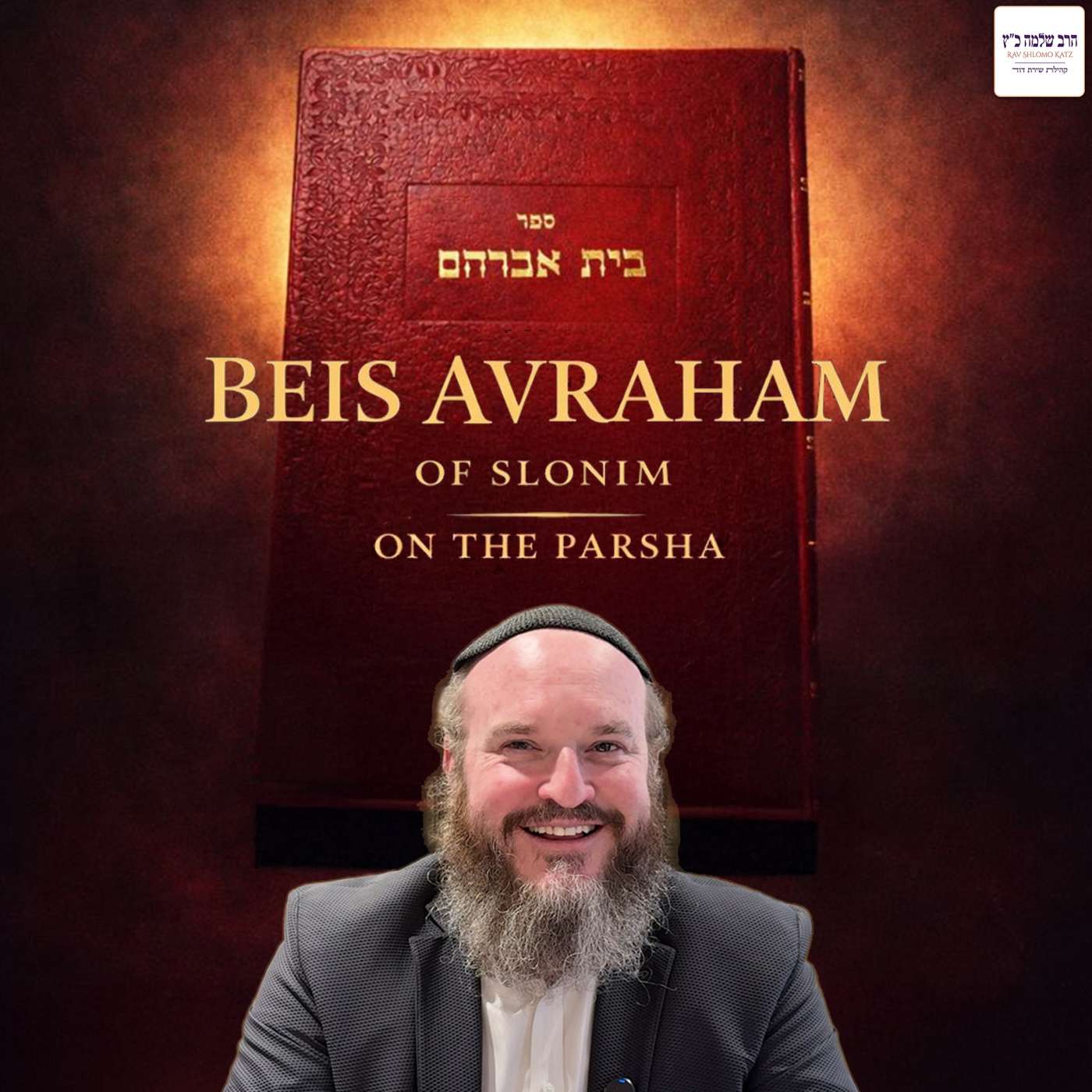
Beis Avraham of Slonim on the Parsha with Rav Shlomo Katz
by Rav Shlomo Katz
In this series, Rav Shlomo Katz learns the weekly Parsha through the teachings of the Beis Avraham of Slonim, uncovering the inner avodah hidden within the Torah’s stories and mitzvos.Drawing on the Slonimer Rebbe’s deep emphasis on sincerity, inner truth, and real spiritual work, these shiurim explore how the Parsha speaks directly to the struggles, questions, and growth of our own lives.
-
21
Va'Etchanan/Nachamu: Seemingly Unanswered Prayers
How do we find comfort (Nachamu) when it feels like our prayers are hitting a wall?In this powerful session for Shabbat Nachamu and parshat Va'Etchanan, Rav Shlomo Katz opens the Beis Avraham of Slonim to address the most painful question of faith: Why was Moshe Rabbeinu, who prayed 515 times, seemingly rejected? We explore the concept that a prayer not answered is not a prayer wasted. Rav Shlomo explains that Moshe's prayers created a spiritual "imprint" (Roshem) that became Torah itself. Drawing on the distinction between a "Minister" and a "Servant" found in the Gemara regarding Rabbi Yochanan ben Zakkai and Rabbi Chanina ben Dosa, we learn why sometimes knowing less about how God runs the world allows us to receive more. This episode is a guide to praying like a "destitute tree in the desert"—asking not with the logic of a minister, but with the desperate simplicity of a servant who just needs his King. -------------------------------------------------------------------------------- For more Shuirim and Music from Rav Shlomo Katz, visit: https://ravshlomokatz.comJoin Rav Shlomo Katz's WhatsApp Community: https://chat.whatsapp.com/KHKOhhPaeHx5Kb74WL9L9a?mode=ems_copy_t
-
20
Matot/Masei: Hiding with God
We often feel the urge to run away from the confusion of the world, and sometimes, even from God Himself.In this poignant session on Parshat Matot/Masei, Rav Shlomo Katz opens the Beis Avraham of Slonim to offer a new perspective on the "Cities of Refuge." We learn that the ultimate refuge isn't a physical place, but the six words of the Shema, which serve as a sanctuary for our minds when we feel pursued by guilt and anxiety.Rav Shlomo discusses the spiritual opportunity of the "Three Weeks" (Bein HaMetzarim). Rather than a time of mere sadness, it is described as a time when the King is "homeless" and wandering in the field, making Him accessible to anyone who simply wants to be close. We explore the Slonimer teaching that in our generation, we don't need massive acts of penance to fix our "bundles of sins"; we simply need to jump into "bundles of love" and Torah to find safety. -------------------------------------------------------------------------------- For more Shuirim and Music from Rav Shlomo Katz, visit: https://ravshlomokatz.comJoin Rav Shlomo Katz's WhatsApp Community: https://chat.whatsapp.com/KHKOhhPaeHx5Kb74WL9L9a?mode=ems_copy_t
-
19
Pinchas: Those That Know You Aren't Fazed
How can we ask a "God of Vengeance" to draw down kindness?In this deep shiur, Rav Shlomo Katz analyzes the liturgy of Friday night davening through the lens of the Beis Avraham of Slonim. We explore the concept that Hashem sometimes "disguises" Himself in garments of harshness or zealotry to test who truly knows the King and who only knows His clothes. Rav Shlomo connects this to the tragedy in Meron and the incredible faith of the parents who refused to let the darkness cloud their relationship with Hashem. By looking at the "Zealotry" of Pinchas, we learn that true spiritual vision means looking into the eye of the storm and recognizing that the Compassionate One is hiding right there.This episode is a manual for finding the "pearls hidden in rags" — the light hidden within the darkness of the Three Weeks. -------------------------------------------------------------------------------- For more Shuirim and Music from Rav Shlomo Katz, visit: https://ravshlomokatz.comJoin Rav Shlomo Katz's WhatsApp Community: https://chat.whatsapp.com/KHKOhhPaeHx5Kb74WL9L9a?mode=ems_copy_t
-
18
Shlach: Where Do You Hide Humility?
Why were Kalev and Yehoshua the only spies who survived the mission?Rav Shlomo Katz explores the trait of Anava (Humility) as the secret weapon for connecting to the Land of Israel, drawing on the Beis Avraham of Slonim and Rav Kook. We discuss why Kalev went to pray at the graves of the Patriarchs and how viewing oneself as the "heel" (Akev) protects a person from the ego that distorts reality. Rav Shlomo shares a profound parable about "hiding the diamond in the rags"—explaining why some Tzaddikim appear royal or confident on the outside to hide their extreme humility on the inside. This episode challenges us to reframe our understanding of humility not as weakness, but as the rock-solid foundation that allows us to experience the holiness of Shabbat and the Land of Israel as if it were the very first time. -------------------------------------------------------------------------------- For more Shuirim and Music from Rav Shlomo Katz, visit: https://ravshlomokatz.comJoin Rav Shlomo Katz's WhatsApp Community: https://chat.whatsapp.com/KHKOhhPaeHx5Kb74WL9L9a?mode=ems_copy_t
-
17
Beha'alotcha: In The Beginning, It May Not Taste So Sweet
We live in a world of instant gratification, but does real spiritual growth happen overnight?Rav Shlomo Katz explores the lighting of the Menorah through the lens of the Beis Avraham of Slonim. We learn that the seven branches represent the seven emotional attributes (Middot), and the work of refining them is often heavy and tasteless at the beginning. Rav Shlomo explains that Aharon HaKohen did not look for "shortcuts" (Gedolot), but worked step-by-step to build a foundation. This episode challenges the social media mindset of needing to feel "high" instantly, teaching us that the sweetness of the "Yoke of Heaven" only comes after we are willing to carry the burden without tasting the reward. -------------------------------------------------------------------------------- For more Shuirim and Music from Rav Shlomo Katz, visit: https://ravshlomokatz.comJoin Rav Shlomo Katz's WhatsApp Community: https://chat.whatsapp.com/KHKOhhPaeHx5Kb74WL9L9a?mode=ems_copy_t
-
16
Kedoshim: Choosing Life, Choosing Holiness
The command "You shall be holy" can feel intimidating, but is it a demand or a promise?In this heart-opening shiur on Parshat Kedoshim (recorded during the Sefirat HaOmer period), Rav Shlomo Katz shares a transformative teaching from the Beis Avraham of Slonim. We explore the idea that "Kedoshim Tihiyu" is written in the future tense, implying a Divine guarantee: "If you stay close to Me, you will end up holy."Rav Shlomo connects this to the concept of "Choosing Life"—not just biologically surviving, but choosing to feel alive and worthy despite our failures. We learn that the repetition of the command to be holy at the end of the Parsha comes to teach us that even if we have fallen into the deepest impurities, the door to holiness remains open.This episode is a call to stop viewing holiness as a burden and start viewing it as our inevitable destiny. -------------------------------------------------------------------------------- For more Shuirim and Music from Rav Shlomo Katz, visit: https://ravshlomokatz.comJoin Rav Shlomo Katz's WhatsApp Community: https://chat.whatsapp.com/KHKOhhPaeHx5Kb74WL9L9a?mode=ems_copy_t
-
15
Shmini: To Come Close And Slaughter Away Everything Not Important
What is the difference between "surviving" and truly "living"?In this heart-wrenching and uplifting shiur recorded on Yom HaShoah, Rav Shlomo Katz opens the Beis Avraham of Slonim to understand the deeper meaning of bringing a sacrifice. We explore the distinction between "Coming Close" (Vayikrev) and "Doing" (Vaya'as), learning that the preparation of the heart is often more powerful than the act itself.Rav Shlomo shares a chilling story involving Rebbe Aharon of Karlin about a sinner whose only path to atonement was the willingness to be "slaughtered," teaching us that God values our willingness to give up everything more than the physical offering. Drawing also on the Noam Elimelech, this episode challenges us to use the memory of the Six Million not just to mourn, but to live our lives with the same absolute Mesirat Nefesh (self-sacrifice) that they had in their death. -------------------------------------------------------------------------------- For more Shuirim and Music from Rav Shlomo Katz, visit: https://ravshlomokatz.comJoin Rav Shlomo Katz's WhatsApp Community: https://chat.whatsapp.com/KHKOhhPaeHx5Kb74WL9L9a?mode=ems_copy_t
-
14
Tzav: How Do I Make My Korban Go Up to Heaven?
With Pesach approaching, there is often an unspoken pressure to feel a specific type of freedom.In this pre-Pesach shiur, Rav Shlomo Katz opens the Beis Avraham of Slonim on Parshat Tzav to explore the deep spiritual work of the Korban Ola (Burnt Offering). Since the Ola is fully consumed on the altar, we learn the profound level of doing a Mitzvah Kulo L'Hashem—performing a holy act as if no one in the world knows about it, even if done in public.Rav Shlomo discusses how to navigate the "Night" periods of our lives—times of darkness and contractive mindset (Mochin de'Katnut)—by activating Mesirat Nefesh (self-sacrifice),. Finally, we analyze the command of "Tzav" as a call for Zerizut (alacrity). We learn that over-meditating on a Mitzvah can be a trap of the Yetzer Hara; true holiness often requires us to stop thinking and start doing immediately to prevent our service from becoming "cold". -------------------------------------------------------------------------------- For more Shuirim and Music from Rav Shlomo Katz, visit: https://ravshlomokatz.comJoin Rav Shlomo Katz's WhatsApp Community: https://chat.whatsapp.com/KHKOhhPaeHx5Kb74WL9L9a?mode=ems_copy_t
-
13
Ki Tisa: The Shabbos Before I Sin, The Shabbos After I Sin
How did the Jewish people fall from the heights of Sinai to the depths of the Golden Calf so quickly? Rav Shlomo Katz shares a powerful insight from the Beis Avraham regarding the nature of the Erev Rav (Mixed Multitude) and why Moshe Rabbeinu felt compelled to break the Tablets. We discover that there are two types of Shabbat: the "Shabbat of the Soul" (before sin) and the "Shabbat of Action" (after sin). Rav Shlomo explains that Moshe broke the first tablets because they represented a level of perfection that was no longer relevant to a people who needed to know how to do Teshuvah. This shiur is a comforting embrace for anyone who feels they have lost their spiritual level, reminding us that the "Second Tablets" give us the power to find Hashem even in the messiness of a post-sin world. -------------------------------------------------------------------------------- For more Shuirim and Music from Rav Shlomo Katz, visit: https://ravshlomokatz.comJoin Rav Shlomo Katz's WhatsApp Community: https://chat.whatsapp.com/KHKOhhPaeHx5Kb74WL9L9a?mode=ems_copy_t
-
12
Terumah: How Do I Make Something that is Mamesh about God?
We all want to do things "Lishmah" (for the sake of Heaven), but what does that actually mean? Rav Shlomo Katz delves into the Beis Avraham's radical definition of prayer and giving. We learn that true prayer isn't asking God to save me, but asking God to save the "Godly spark" that is suffering within me. Drawing on the confrontation between Yehuda and Yosef, Rav Shlomo explains that Yehuda's plea worked because he wasn't asking for himself—he was asking "Bi Adoni," knowing that the Divine presence was within the ruler. This episode challenges us to shift our perspective from "God, help me with my problems" to "God, surely it hurts You to see Your child in this state—save Yourself."--------------------------------------------------------------------------------For more Shuirim and Music from Rav Shlomo Katz, visit: https://ravshlomokatz.comJoin Rav Shlomo Katz's WhatsApp Community: https://chat.whatsapp.com/KHKOhhPaeHx5Kb74WL9L9a?mode=ems_copy_t
-
11
Mishpatim: How High Are You When You're Low?
Why does the Torah follow the spiritual fireworks of Mount Sinai with a list of civil laws and mundane details in Parshat Mishpatim?Rav Shlomo Katz shares a foundational teaching from the Beis Avraham and Reb Shlomo Carlebach: It's not about how high you get; it's about how much you can bring that high down into the low. We explore the concept of the "Altar of Earth"—Hashem's desire for us to serve Him not in the heavens, but in our eating, sleeping, and business dealings. Rav Shlomo challenges us to stop chasing the fleeting "fairground" of spiritual highs and instead build a solid home for Hashem in the reality of our daily lives, transforming our "smallness" (Katnut) into the ultimate vessel for holiness. -------------------------------------------------------------------------------- For more Shuirim and Music from Rav Shlomo Katz, visit: https://ravshlomokatz.comJoin Rav Shlomo Katz's WhatsApp Community: https://chat.whatsapp.com/KHKOhhPaeHx5Kb74WL9L9a?mode=ems_copy_t
-
10
Yitro: Running to the Tzaddik
Why is the portion of the Torah's reception named after Yitro, a man who felt "extra" in the world?Rav Shlomo Katz explores the Beis Avraham's insight into Yitro's psyche — a man who had tasted every worldly pleasure and realized he was still unfulfilled and "unneeded." We discuss the two things Yitro heard, the Splitting of the Sea and the War of Amalek, and why the combination stirred him to conversion. Rav Shlomo explains that Amalek represents the "Cooling Off" factor that attacks immediately after a spiritual high. Yitro realized that to survive the cynicism that follows miracles, he had to run to the Tzaddik (Moshe). This episode is a call to anyone feeling "unneeded" or "cooled off," teaching us that our place in the Torah is secured when we refuse to let the fire die.--------------------------------------------------------------------------------For more Shuirim and Music from Rav Shlomo Katz, visit: https://ravshlomokatz.comJoin Rav Shlomo Katz's WhatsApp Community: https://chat.whatsapp.com/KHKOhhPaeHx5Kb74WL9L9a?mode=ems_copy_t
-
9
Beshalach: Crossing the Red Sea Today
There is a time for prayer, and there is a time for movement.In this dynamic shiur, Rav Shlomo Katz explores the shift from "Awakening from Above" to "Awakening from Below" based on the Noam Elimelech. We analyze Hashem's command to Moshe: "Why do you cry to Me? Speak to the Children of Israel and let them travel."Rav Shlomo explains that while the Exodus from Egypt was a free gift, the crossing of the Sea required Mesirat Nefesh (self-sacrifice)—an active participation in our own destiny.Whether it is jumping into the "Sea of Torah" or dedicating one's life to the love of Israel, this episode teaches that we enable the redemption not by waiting for miracles, but by throwing ourselves into the mission even when the waters haven't split yet.--------------------------------------------------------------------------------For more Shuirim and Music from Rav Shlomo Katz, visit: https://ravshlomokatz.comJoin Rav Shlomo Katz's WhatsApp Community: https://chat.whatsapp.com/KHKOhhPaeHx5Kb74WL9L9a?mode=ems_copy_t
-
8
Bo: Coming To Pharoah vs Going to Pharoah
Why does Hashem say "Come to Pharaoh" instead of "Go to Pharaoh"? In this session dedicated to the memory of Bracha Schwartz z"l, Rav Shlomo Katz shares a deep psychological insight from the Beis Avraham of Slonim. We learn that "Pharaoh" shares the same letters as Oref (the back of the neck) — the place where the blood boils, and stubbornness resides. Rav Shlomo explains the spiritual anatomy of decision-making: the intellect (Da'at) must travel through the neck to cool the "boiling blood" of lust before it reaches the heart. We also explore the concept of "Hardening the Heart," teaching us that when obstacles and guilt appear right when we want to do a Mitzvah, it is actually Hashem inviting us to smash through the illusion and find the pearl hidden beneath the rock. -------------------------------------------------------------------------------- For more Shuirim and Music from Rav Shlomo Katz, visit: https://ravshlomokatz.comJoin Rav Shlomo Katz's WhatsApp Community: https://chat.whatsapp.com/KHKOhhPaeHx5Kb74WL9L9a?mode=ems_copy_t
-
7
Vayishlach: Save Me From What?
We know we need to be saved from our sins, but do we realize we need to be saved from our "holiness"? In this penetrating shiur, Rav Shlomo Katz opens the Beis Avraham of Slonim to discuss the terrifying nature of Esau and Amalek: the "Holy Pride." We explore how Esau disguises himself not as a sinner, but as a righteous man, causing us to fall into Gaavah (arrogance) specifically through our spiritual successes. Rav Shlomo explains that while Hashem dwells with us amidst our regular impurities, He cannot dwell with arrogance. Drawing on the Maggid of Mezeritch and Rebbe Natan of Breslov, we learn that the only tactic against this spiritual trap is the prayer of Yaakov Avinu: Hatzileini Na—"Please save me." This is a manual for recognizing when our religious achievements are actually pushing us away from Hashem and how to beg for the compassion to remain truly humble. -------------------------------------------------------------------------------- For more Shuirim and Music from Rav Shlomo Katz, visit: https://ravshlomokatz.comJoin Rav Shlomo Katz's WhatsApp Community: https://chat.whatsapp.com/KHKOhhPaeHx5Kb74WL9L9a?mode=ems_copy_t
-
6
Vayetze: When Shabbos Is In You
Can you learn Torah without a book open?In this shiur, Rav Shlomo Katz shares a classic story about the Lechovitcher Rebbe (grandfather of the Slonim dynasty) who refused to say a Dvar Torah on Parshas Vayetse. Why? Because this is the Parsha of "doing."Drawing from the Slonimer Rebbe (Beit Avraham), we learn that Yaakov's holiness wasn't found in a study hall, but in his business dealings, his marriage, and raising children.This episode is a powerful reminder that if "Shabbos is in you," then every mundane action of the week—from diapers to business deals—becomes a holy text that you are writing with your life. -------------------------------------------------------------------------------- For more Shuirim and Music from Rav Shlomo Katz, visit: https://ravshlomokatz.comJoin Rav Shlomo Katz's WhatsApp Community: https://chat.whatsapp.com/KHKOhhPaeHx5Kb74WL9L9a?mode=ems_copy_t
-
5
Chayei Sara: The Art of Genuine Satisfaction
Is it possible to be truly satisfied in a world that constantly screams "More"?In this tribute to Rabbi Jonathan Sacks zt"l, Rav Shlomo Katz explores the life of Sarah Imeinu through the Beis Avraham of Slonim. We analyze the verse "And Sarah was 100 years, and 20 years, and 7 years," uncovering the secret of carrying the purity of childhood and the passion of youth into old age. Rav Shlomo discusses the difference between being "Sameach B'Chelko" (happy with one's lot) and being fully "Savua" (satisfied). We learn that Sarah attained the level of the name Shakkai—the ability to say "Enough" and find the Infinite within the finite.This shiur is a guide to aging with grace, teaching that true youthfulness is a state of spirit, not a number. -------------------------------------------------------------------------------- For more Shuirim and Music from Rav Shlomo Katz, visit: https://ravshlomokatz.comJoin Rav Shlomo Katz's WhatsApp Community: https://chat.whatsapp.com/KHKOhhPaeHx5Kb74WL9L9a?mode=ems_copy_t
-
4
Vayera: Who Was Your Gate Opener?
What does it mean to be a "Gate Opener"?Rav Shlomo Katz explores the essence of Avraham Avinu through the lens of the Beis Avraham. We visualize Avraham sitting at the "Entrance of the Tent" not just as a physical location, but a spiritual state of constantly opening gates for those who are lost, for potential converts, and for those who have fallen into despair.Rav Shlomo discusses the significance of Avraham being 99 years old, yet "walking before God" as if starting from scratch. We learn the difference between a "Slave" (bound by yesterday's limitations) and a "King" (who breaks boundaries and expands territory), urging us to let go of our past and open a new gate for ourselves and our children today. -------------------------------------------------------------------------------- For more Shuirim and Music from Rav Shlomo Katz, visit: https://ravshlomokatz.comJoin Rav Shlomo Katz's WhatsApp Community: https://chat.whatsapp.com/KHKOhhPaeHx5Kb74WL9L9a?mode=ems_copy_t
-
3
Lech Lecha: Becoming Greater with Avraham Avinu
When we look at the world, do we see a palace filled with light or a palace consumed by flames?In this striking session, Rav Shlomo Katz explores the Beis Avraham's interpretation of Avraham Avinu's "awakening." Drawing on the famous Midrash and the insights of Abraham Joshua Heschel, we discuss the courage to ask "Is there no master?" in a world that looks chaotic.Rav Shlomo explains that God revealed Himself to Avraham specifically because he dared to be bothered by the contradiction of the world.This episode is a call to stop ignoring the "flames" of suffering and confusion, and instead let our heartbreak over the state of the world become the very vessel through which Hashem reveals Himself to us.--------------------------------------------------------------------------------For more Shuirim and Music from Rav Shlomo Katz, visit: https://ravshlomokatz.comJoin Rav Shlomo Katz's WhatsApp Community: https://chat.whatsapp.com/KHKOhhPaeHx5Kb74WL9L9a?mode=ems_copy_t
-
2
Noach: Believing Makes It Happen
Rashi famously comments that Noach was a "believer and not a believer" regarding the coming Flood. But how can the man the Torah calls a Tzadik Tamim (Perfectly Righteous) lack faith?In this profound session, Rav Shlomo Katz opens the Beis Avraham of Slonim to redefine the mechanics of Emunah (Faith). We learn that true Emunah isn't just intellectual assent; it is a spiritual force that draws reality down into the world. The Beis Avraham teaches that Noach knew if he fully believed in the Flood, his faith would actually cause it to happen. Rav Shlomo explains that Noach's hesitation was actually an act of desperate mercy — trying to prevent the destruction by withholding his belief. We also explore the power of looking at others with "believing eyes," teaching us that when we believe in the good in people, we make that goodness real. -------------------------------------------------------------------------------- For more Shuirim and Music from Rav Shlomo Katz, visit: https://ravshlomokatz.comJoin Rav Shlomo Katz's WhatsApp Community: https://chat.whatsapp.com/KHKOhhPaeHx5Kb74WL9L9a?mode=ems_copy_t
-
1
Bereshit: A Narrow Bridge of Truth
In this introductory shiur for Bereishis, Rav Shlomo Katz explains the unique fire of the Slonimer dynasty — Torah meant not just to inform the mind, but to "storm the heart" and defeat the inner enemy.Rav Shlomo analyzes the first and last verses of Creation, revealing that both the beginning and the end are sealed with the seal of Emet (Truth). Life, then, is the "Narrow Bridge" between birth and death, where our only job is to hold onto that Truth amidst the confusion.In a world that feels increasingly chaotic, this episode is a call to find your own note in the symphony of Creation and to cling to the Emet that connects your origin to your destiny. -------------------------------------------------------------------------------- For more Shuirim and Music from Rav Shlomo Katz, visit: https://ravshlomokatz.comJoin Rav Shlomo Katz's WhatsApp Community: https://chat.whatsapp.com/KHKOhhPaeHx5Kb74WL9L9a?mode=ems_copy_t
We're indexing this podcast's transcripts for the first time — this can take a minute or two. We'll show results as soon as they're ready.
No matches for "" in this podcast's transcripts.
No topics indexed yet for this podcast.
Loading reviews...
ABOUT THIS SHOW
In this series, Rav Shlomo Katz learns the weekly Parsha through the teachings of the Beis Avraham of Slonim, uncovering the inner avodah hidden within the Torah’s stories and mitzvos.Drawing on the Slonimer Rebbe’s deep emphasis on sincerity, inner truth, and real spiritual work, these shiurim explore how the Parsha speaks directly to the struggles, questions, and growth of our own lives.
HOSTED BY
Rav Shlomo Katz
CATEGORIES
Loading similar podcasts...
Frequently Asked Questions
How many episodes does Beis Avraham of Slonim on the Parsha with Rav Shlomo Katz have?
Beis Avraham of Slonim on the Parsha with Rav Shlomo Katz currently has 21 episodes available on PodParley. New episodes are automatically indexed when they're published to the podcast feed.
What is Beis Avraham of Slonim on the Parsha with Rav Shlomo Katz about?
In this series, Rav Shlomo Katz learns the weekly Parsha through the teachings of the Beis Avraham of Slonim, uncovering the inner avodah hidden within the Torah’s stories and mitzvos.Drawing on the Slonimer Rebbe’s deep emphasis on sincerity, inner truth, and real spiritual work, these shiurim...
How often does Beis Avraham of Slonim on the Parsha with Rav Shlomo Katz release new episodes?
Beis Avraham of Slonim on the Parsha with Rav Shlomo Katz has 21 episodes. Check the episode list to see recent publication dates and frequency.
Where can I listen to Beis Avraham of Slonim on the Parsha with Rav Shlomo Katz?
You can listen to Beis Avraham of Slonim on the Parsha with Rav Shlomo Katz on PodParley by clicking any episode. We provide an embedded audio player for direct listening, and you can also subscribe via your preferred podcast app using the RSS feed.
Who hosts Beis Avraham of Slonim on the Parsha with Rav Shlomo Katz?
Beis Avraham of Slonim on the Parsha with Rav Shlomo Katz is created and hosted by Rav Shlomo Katz.
URL copied to clipboard!