
PODCAST · health
Breaking Up With Toxicity
by Maria Shkreli
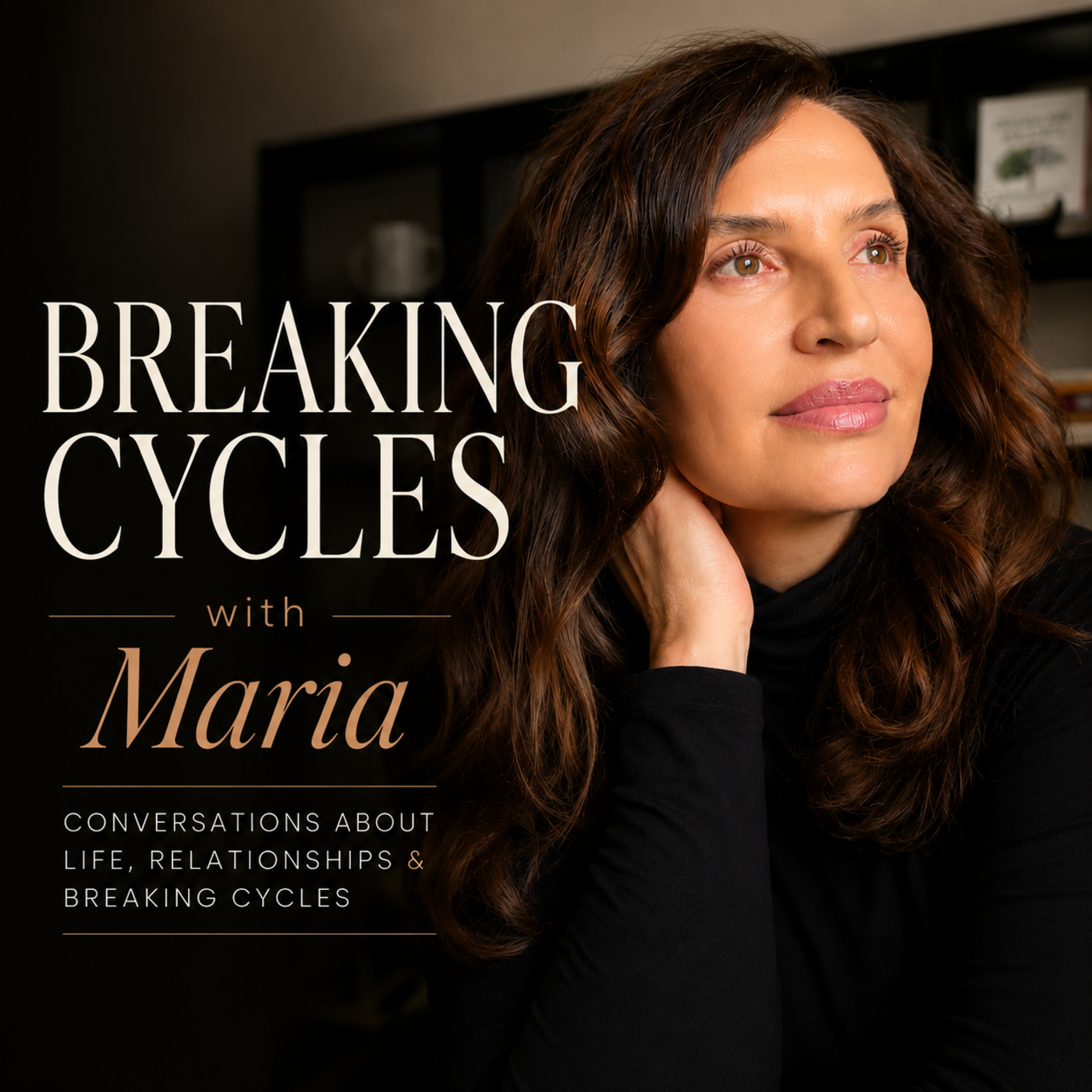
Breaking Cycles with Maria is an honest and relatable podcast about relationships, emotional patterns, self-awareness, anxiety, attachment, dysfunctional dynamics, and the things we normalize without even realizing it.Hosted by Maria Shkreli, LMHC, author of Breaking Cycles and Breaking Up with Toxicity, the podcast explores the messy, complicated, and very human side of life — from unhealthy relationship patterns and family dynamics to workplace stress, life transitions, emotional reactions, and the cycles that quietly shape us.Some episodes are educational. Some are conversational. Some may challenge the way you see yourself, your relationships, or the people around you.Because the truth is… we all have patterns.Some help us grow.Some quietly keep us stuck.Through real conversations, psychological insight, personal reflection, and a little bit of spice, Maria helps listeners better understand the patterns they repeat, the emotional experiences they normalize, and how to navigat
-
29
EP 27: Part 2 of the Narcissistic Mother Blueprint Series
Part 2 — Mother–Daughter Dynamics | Narcissistic Mother Blueprint SeriesThis episode is Part 2 of the Narcissistic Mother Blueprint Series on Breaking Up with Toxicity, where we explore how narcissistic parenting dynamics, dysfunctional family systems, and early attachment patterns shape identity, boundaries, and adult relationships.In this episode, we focus specifically on mother–daughter dynamics, examining how subtle competition, approval tied to performance or appearance, emotional withdrawal, criticism disguised as guidance, and identity mirroring can quietly shape daughters’ self-concept, emotional development, and relational expectations across childhood, adolescence, and adulthood.We discuss how these patterns often intensify during the teenage years — when identity formation, independence, and social visibility naturally increase — and how many daughters begin learning that independence may trigger guilt, comparison, or emotional disconnection within the family system. Over time, these experiences can contribute to adult patterns such as people-pleasing, perfectionism, overthinking, fear of disapproval, difficulty setting boundaries, approval-seeking, and anxiety around visibility or independence.This conversation is not about blaming mothers. It is about understanding narcissistic family dynamics, enmeshment, emotional conditioning, trauma patterns, attachment styles, and relational blueprints so individuals can recognize patterns and begin building relationships based on reciprocity, emotional safety, and differentiation rather than emotional monitoring.If you’ve ever found yourself over-explaining, second-guessing your decisions, feeling responsible for others’ emotional reactions, or struggling with the tension between authenticity and acceptance, this episode will help you understand where those patterns may have formed — and how awareness becomes the first step toward breaking them.Listen to Part 1 of the Narcissistic Mother Blueprint Series to understand the foundational dynamics that shape daughters and sons differently, and stay tuned for upcoming episodes exploring mother–son dynamics, adult relationship carryover, guilt-based loyalty patterns, and boundary transformation.Breaking the blueprint begins with understanding it.
-
28
EP 26: Part 1 of the Narcissistic Mother Blueprint Series
In this episode of Breaking Up with Toxicity, Maria Shkreli, LMHC, begins the Narcissistic Mother Blueprint Series, a multi-part series exploring how narcissistic maternal dynamics shape emotional development, family roles, identity formation, attachment patterns, and adult relationship experiences.Drawing from attachment theory, developmental psychology, trauma research, and decades of clinical work on narcissistic personality structures — including the foundational contributions of Otto Kernberg and contemporary clinical education from Ramani Durvasula — this episode explains how early emotional environments create relational blueprints that often continue influencing boundaries, communication patterns, and emotional decision-making long into adulthood.Topics explored include:narcissistic parenting and maternal narcissismemotional enmeshment and approval-based family systemsattachment styles and developmental traumaintergenerational transmission of relational patternsthe difference between narcissistic traits and Narcissistic Personality Disorder (NPD)how early emotional environments shape long-term relationship patternsThis is Part 1 of a multi-episode series. In the upcoming episodes, we move deeper into the mother–daughter and mother–son relational dynamics, examining how these early patterns show up in adult relationships and what begins to help individuals break long-standing relational cycles.If you’ve ever wondered why certain emotional patterns repeat across relationships, this series provides the psychological framework to begin understanding — and changing — those cycles.Disclaimer:This podcast is for educational and informational purposes only and is not intended to replace therapy, diagnosis, or professional mental health treatment. Content discussed does not constitute clinical assessment or diagnosis of any individual. Listeners are encouraged to seek professional support for their own circumstances.
-
27
EP 25: When Healing Feels Like Grief: The Part No One Warns You About
When Healing Feels Like Grief: The Part No One Warns You AboutHealing is supposed to feel empowering… right?So why does it sometimes feel lonely, heavy, or heartbreaking instead?In this episode of Breaking Up With Toxicity, Maria Shkreli, LMHC talks about the part of healing no one prepares you for—the grief that comes with growth. The grief of outgrowing relationships that can’t come with you. The grief of letting go of survival patterns that once kept you safe. The grief of realizing how much you adapted, endured, or went without.This episode explores why healthy change can feel painful, isolating, and confusing—even when you’re finally doing the “right” things. We talk about mourning old versions of yourself, releasing fantasies about people changing, navigating quieter phones and shifting relationships, and why sadness during healing is not a sign of failure—but a sign of honesty.If you’ve ever wondered:Why setting boundaries hurts more than staying the sameWhy healing feels lonely before it feels freeingWhy growth brings sadness, not instant reliefOr why you miss people you know weren’t good for youThis episode is for you.Healing doesn’t always feel good—but it feels true.And if healing feels like grief, you’re not broken. You’re processing.You’re not alone in this part of the journey.Disclaimer: This podcast is for educational and informational purposes only and is not intended to replace therapy, diagnosis, or professional mental health treatment. Content discussed does not constitute clinical assessment or diagnosis of any individual. Listeners are encouraged to seek professional support for their own circumstances.
-
26
EP 24: Not Everyone Is a Narcissist: Personality Traits Are Not Diagnoses
Narcissist.Borderline.Toxic.But here’s the problem—personality traits are being confused with personality disorders, and that confusion is costing people clarity, peace, and the ability to respond accurately in their relationships.In this episode of Breaking Up With Toxicity, licensed mental health counselor Maria Shkreli breaks down the real difference between personality traits and personality disorders, using clear, real-life examples from romantic relationships, families, and everyday interactions.You’ll learn:What personality traits actually are and how they show up under stressWhat makes a personality disorder fundamentally differentWhy clinically diagnosed personality disorders are far less common than social media suggestsHow mislabeling people can keep you stuck—or push you to leave too fastThe key question that helps you tell the difference between discomfort and dangerThis episode isn’t about diagnosing anyone. It’s about discernment, nuance, and understanding what you’re actually dealing with—so you stop outsourcing clarity to the internet.If you’ve ever wondered whether you’re overreacting, minimizing something serious, or trying to fix something that was never flexible to begin with, this episode is for you.Disclaimer:This podcast is for educational and informational purposes only and is not intended to replace therapy, diagnosis, or professional mental health treatment. Content discussed does not constitute clinical assessment or diagnosis of any individual. Listeners are encouraged to seek professional support for their own circumstances.
-
25
EP 23: Social Media Has Created a New Kind of Abuse
What actually qualifies as abuse?When does abuse become domestic violence?And how did social media turn these life-saving terms into weapons of confusion?In this episode of Breaking Up with Toxicity, Maria Shkreli, LMHC breaks down the critical differences between dysfunction, toxicity, abuse, and domestic violence—and explains why misusing these terms can cause real harm.As a society, we’ve evolved. Behaviors that were once normalized—like yelling, explosive tempers, and emotional volatility—are now being questioned. That progress matters.But somewhere along the way, context and nuance were replaced with certainty and fear.Today, social media, influencers, and non-professionals are shaping how people understand abuse—often without training, assessment, or accountability. Complex mental-health and safety issues are reduced to viral sound bites, leading people to label discomfort as danger and conflict as violence.In this episode, Maria also challenges a harder truth:Social media has created a new kind of abuse—one rooted in misinformation, fear-based advice, and unqualified authority.When people are told what to think instead of how to think, autonomy erodes, discernment disappears, and real victims are drowned out.You’ll learn:What domestic violence actually is—and what it isn’tHow abuse and domestic violence are related but not the sameWhy DV does not require physical violence to existHow insecurity and low self-esteem can look like DV without coercive controlHow online misinformation creates psychological harmWhy precision and context are essential when safety is involvedThis conversation isn’t about minimizing harm.It’s about protecting the meaning of words meant to save lives.Because when everything is called abuse, no one is safe.Disclaimer:This podcast is for educational and informational purposes only and is not intended to replace therapy, diagnosis, or professional mental health treatment. Content discussed does not constitute clinical assessment or diagnosis of any individual. Listeners are encouraged to seek professional support for their own circumstances.
-
24
EP 22: Pulled Apart: How Parental Alienation Breaks Families
Parental alienation is one of the most misunderstood and emotionally charged dynamics in family systems—and when it’s oversimplified, it can cause real harm.In this episode of Breaking Up With Toxicity, Maria Shkreli, LMHC, breaks down what parental alienation actually is, how it develops, why it happens, and what it looks like in real families—without blame, labels, or sound-bite psychology.This conversation explores:What parental alienation is—and what it is notHow children become caught in adult pain and loyalty conflictsThe emotional and psychological patterns that drive alienationDifferent types of parents who may alienate a child (without diagnosing)Real-world examples involving children, teens, and adult childrenThe long-term impact of alienation on identity, relationships, and trustHow healing begins for parents and adult children alikeThis episode is not about choosing sides or dismissing real abuse.It’s about understanding patterns, protecting children, and breaking cycles of emotional harm.Disclaimer:This podcast is for educational and informational purposes only and is not intended to replace therapy, diagnosis, or professional mental health treatment. Content discussed does not constitute clinical assessment or diagnosis of any individual. Listeners are encouraged to seek professional support for their own circumstances.
-
23
EP 21: Estrangement: Healing, Harm — or Something In Between?
Estrangement isn’t just “cutting people off.”It can be protection… and it can also be avoidance disguised as healing.In this episode, Maria Shkreli, LMHC breaks down the truth behind estrangement — what it actually is, the different types, and why it’s far more complex than social media makes it seem.We explore how trauma, family dynamics, and unresolved attachment wounds can lead to distance — but also how trend-driven messages, including the popular “Let Them” narrative popularized by Mel Robbins, can quietly push people toward isolation without reflection, context, or accountability.In this episode, we talk about:• the five main types of estrangement, with real-life examples• when distance is necessary and protective vs. when it becomes harmful and avoidant• how trauma and emotional regulation influence estrangement decisions• how “cut them off” culture can damage vulnerable people• why the “Let Them” theory can backfire when misunderstood or misapplied• the questions to ask before making permanent relational decisionsThis episode challenges viral narratives and invites deeper reflection — so your choices come from clarity, not impulsive pain.Estrangement isn’t a trend.It deserves wisdom, thoughtfulness, and compassion.If this episode resonates, share it with someone who needs it — and don’t forget to follow the show.
-
22
EP 20: They’re Not Defiant — They’re Insecure (Parents, You’re Missing the Signs)
What if the behavior you’re calling defiance isn’t defiance at all?In this episode of Breaking Up With Toxicity, licensed mental health counselor Maria Shkreli breaks down one of the most misunderstood dynamics in parenting: the difference between true defiance and deep insecurity in kids and teens.You’ll learn why so many children are punished for fear, shame, and overwhelm — and how mislabeling insecurity as defiance quietly damages trust, communication, and emotional safety. Maria explains what defiance actually is, what insecurity looks like at different developmental stages, how behavior changes from childhood into adolescence, and why teens often mask fear with anger, attitude, or withdrawal.With real-life examples straight from clinical work, this episode challenges common parenting myths and offers a clearer lens for understanding difficult behavior without excusing it. If you’ve ever felt stuck in power struggles, confused by your child’s reactions, or unsure whether discipline is helping or hurting, this episode is for you.Because not every child who pushes back is defiant — sometimes they’re just afraid and don’t know how to say it.Awareness is where change begins.View the pdf here: "They're Not Defiant" pdf. Disclaimer:This podcast is for educational and informational purposes only and is not a substitute for therapy, diagnosis, or individualized mental health treatment. Listening does not establish a therapist–client relationship. Examples discussed are illustrative and not diagnostic. If you have concerns about a child’s behavior or emotional wellbeing, consult a qualified mental health professional.
-
21
EP 19: When Empathy Meets Attachment: Why You Misread People Even When You Think You Understand Them
Ever wonder why your partner’s “help” feels cold… why their silence triggers panic… or why you keep having the same arguments even when you both mean well?In this episode, Maria Shkreli, breaks down the powerful intersection between your attachment style and your empathy style — the two systems that secretly shape how you love, comfort, react, and communicate.You’ll learn why:• Anxious attachers crave emotional empathy• Avoidant attachers default to logical empathy• Secure attachers offer balanced, compassionate empathy• Disorganized attachers switch their empathy based on fear and overwhelmThrough real, relatable scenarios — the unread text, the “we need to talk,” the shutdown, the emotional whiplash — Maria shows how love gets misinterpreted simply because you and your partner speak different emotional languages.If you’ve ever felt misunderstood, unseen, or confused by someone’s reactions, this episode finally connects the dots.
-
20
EP 18: Attachment Styles: The Silent Saboteurs — How They Screw Up Your Relationships (and How They Can Save Them)
Your reactions aren’t random — they’re wired.Your fears aren’t “too much” — they’re patterns.And your relationship struggles aren’t failures — they’re attachment styles playing out in real time.In this episode of Breaking Up With Toxicity, Maria Shkreli, LMHC exposes how your attachment style was shaped long before you ever dated anyone… and how it still dictates the way you love, fight, connect, shut down, panic, or pull away today.Maria breaks down the four attachment styles — Secure, Anxious, Avoidant, and Disorganized — using real, relatable everyday scenarios: the unread text that sends you spiraling, the partner who shuts down when you want to talk, the sudden panic when things get “too close,” the push-pull dynamic that feels like emotional whiplash.You’ll learn:• Why anxious attachers overthink and fear abandonment• Why avoidant partners pull back when emotions get intense• Why disorganized attachers crave connection but fear it at the same time• How secure partners can stabilize — or unintentionally trigger — other styles• Which pairings create healing… and which create chaos without awarenessThis episode gives you the emotional clarity you’ve been missing — the “Oh… THAT’S why I do that” moment your relationships have been waiting for.And stay tuned: next week we bring this full circle with“Empathy Meets Attachment: Why You Misread People Even When You Think You Understand Them.”
-
19
EP 17: You Think You’re Empathetic… But You’re Probably Not: The Three Empathies You Never Learned
Most people walk around proudly believing they’re “empathetic.”But here’s the truth: you probably only have **one** of the three empathies — and the misalignment between what you think you’re giving and what others actually need is quietly blowing up your relationships.In this episode, Maria Shkreli breaks down the REAL psychology of empathy:Cognitive, Emotional, and Compassionate.What they are, how they develop, why most people only master one, and how these mismatches create conflict, resentment, emotional distance, and constant misunderstandings.You’ll hear:• The full explanation of each empathy type• Why empathy exists on a spectrum — not a personality trait• Six real-life scenarios that expose how misalignment shows up in partners, friends, parents, and coworkers• Why you keep expecting people to show up emotionally in ways they are literally not wired or trained to do• And the twist that makes all of this even more complicated: **your attachment style**By the end of this episode, you’ll finally understand why you feel misunderstood, why others seem insensitive or “too emotional,” and why some people are amazing in crisis but terrible at comfort.This is the episode that will make you see yourself — and everyone around you — differently.Next week:When Empathy Meets Attachment: Why You Misread People Even When You Think You Understand Them.
-
18
EP 16: It’s Not Your Anger — It’s Your Relationship With It
Anger isn’t the problem — it’s how we use it. In this raw and eye-opening episode, Maria Shkreli, LMHC, breaks down anger, the three faces of toxic rage — Intermittent Explosive Disorder, Splitting, and Narcissistic Rage — the enabler, and how they destroy connection, trust, and peace.You’ll learn how these emotional explosions start, what fuels them, and why they’re more about fear and control than strength. Maria shares powerful examples of what this looks and sounds like in real life — from the partner who screams to feel seen, to the parent who weaponizes silence, to the coworker who burns bridges to protect their ego.Most importantly, you’ll learn how to recognize, stop enabling, and start healing from the rage that runs deep in dysfunctional systems. Because you can’t call it passion when it’s really pain.Listen if you’ve ever:Walked on eggshells around someone’s temperConfused chaos with loveFelt guilty for setting boundariesOr realized your anger has been running the show It’s time to face the fire without letting it burn you.
-
17
EP 15: When the Narcissist Is a Woman: The Silent Storm No One Talks About
We talk endlessly about narcissistic men — but what happens when the narcissist is a woman?In this episode, Maria Shkreli, LMHC, breaks down why narcissistic women are often harder to recognize, confront, and recover from — whether she’s your mother, your partner, or your boss. You’ll learn how manipulation hides beneath care, how control disguises itself as love, and how living with this dynamic rewires your entire sense of self.Many of these women grew up watching their mothers destroy men — and swore they’d never do the same.But unhealed daughters don’t break cycles; they repeat them.Maria explores the silent epidemic of women raised by narcissistic mothers — women who tear down the kind men who love them, twist truth into victimhood, and still get celebrated for being “strong.” It’s time to talk about the men who were silenced, shamed, and finally set free.Tune in for a raw, unapologetic conversation about female narcissism — the unspoken power dynamic that leaves no visible bruises but deeply scars the soul.Real love doesn’t require control — it requires accountability.
-
16
EP 14: Stop Chasing the Insanity: You Can’t Fix Every Problem
In this raw and unapologetically honest episode, Maria Shkreli, LMHC, breaks down why you keep trying to fix everyone’s problems — and why it’s driving you insane.From rescuing friends and managing your partner’s emotions to cleaning up everyone’s chaos at work and home — this “fixer” pattern isn’t compassion, it’s control in disguise.Maria calls out how unrealistic expectations, distorted thinking, and anxious attachment keep you stuck in cycles of burnout, resentment, and emotional chaos. You’ll learn:Why your need to “fix things” is really about calming your own anxietyHow black-and-white thinking, personalization, and catastrophizing keep you spiralingThe difference between helping out of love vs. helping out of fearAnd the truth about why peace feels so uncomfortable when you’re used to dysfunctionIt’s not about becoming cold — it’s about reclaiming your sanity.So, before you rush to fix someone else’s mess, pause and ask: “Is this really mine to solve?”Because healing isn’t about control — it’s about letting go.Listen now to learn how to stop chasing problems and start choosing peace.
-
15
EP 13: Maria & Madge: Reconnecting – Episode 2: Let’s Talk About Our Forgiveness and Understanding
Last week, we started closing the 19-year gap in our friendship. The conversation went deep—maybe a little off track—but it took us exactly where we needed to go.This week, we’re circling back to some of those moments that needed more space… the ones that deserve understanding, forgiveness, and maybe even a little closure. We also cleared the air about something that hurt both of us in the past—because real friendship means being honest, even when it’s uncomfortable.And no, we still didn’t make it to The Cheesecake Factory this time either… so I guess that dinner has officially become our cliffhanger. Join us as we keep it real—talking friendship, healing, and what it means to truly reconnect after years apart.
-
14
EP 12: Reconnecting Chapters: Maria & Madge – 19 Years Apart. One Dinner. Endless Stories.
After 19 years on separate paths, lifelong friends Maria and Madge finally reconnected in late August. What was meant to be a simple dinner turned into something much deeper—laughter, nostalgia, unexpected truths, and conversations that touched a nerve. I felt that in our first episode, it touched on some wounds we needed to understand so we could move ahead.This first episode is just the beginning. We only scratched the surface, yet even the little we shared reminded us how distance and time never erase the bond of real friendship.In this series, we’ll open up about the lives we’ve built apart: the lessons, the struggles, the wins, and the surprises that shaped us. From memories of our early years to realizations in adulthood, each conversation is a chance to explore how friendships grow, stretch, and still hold strong.Join us as we continue these honest, heartfelt talks—because reconnecting isn’t just about looking back. It’s about seeing each other clearly now, growing together, and celebrating the journey that still lies ahead.
-
13
EP 11: Rosa’s Story: Healing, Patterns, and Parenting Through Depression
Rosa came to talk about her adult child’s depression — but what unfolded was way bigger. The deeper we went, the more it became clear: her own upbringing, family patterns, and old wounds were shaping today’s struggles in ways she hadn’t realized.This episode pulls back the curtain on the invisible ties between parents and children — the unspoken rules, the pressure to keep the peace, and the cycle of dysfunction that sneaks in when no one is looking.It’s raw. It’s honest. It will make you ask yourself: Am I repeating cycles I swore I’d never repeat?We talk about depression, yes — but also about generational patterns, mother-daughter dynamics, and what it really takes to stop carrying pain that was never yours in the first place.If you’re a parent, a child, or simply someone trying to rewrite your story, this one will hit home.
-
12
EP 10: The Comeback: It’s a Reset.
I’m back — returning with clarity, reflection, and a renewed sense of purpose. After over a year away, navigating a life-changing health journey, I’m here, I’m ready, and I can’t wait to continue this journey with you.Life reset me: a stroke, two brain aneurysms, and surgeries that made me rethink everything. This comeback episode isn’t just an update — it’s proof that healing, balance, and self-reflection are possible, even in the face of the unexpected. I’m ready to rediscover the direction of Breaking Up with Toxicity and bring this space back to life.Hosted by me, Maria Shkreli, LMHC, this podcast is a place for honest, thoughtful conversations about toxic patterns, dysfunctional family dynamics, anxiety, ADHD, boundaries, problematic communication, avoidant and anxious attachment challenges, and all the other in-betweens of life that happen.It’s about learning, growing, and breaking unhealthy cycles — together. Let’s get real, get messy, and start rewriting the way we live and love.
-
11
EP 9: John Participates in the “bubble challenge.” I can tell your attachment style and irrational thought pattern
In today's show, Maria continued her talk with John as he embarks on his personal journey of self-discovery; he finds himself at a crossroads, questioning the authenticity of the choices he's been making. Determined to unravel the complexities of his identity, he courageously takes on the challenge presented by "How You Sit Your Bubble," recognizing it as an opportunity to delve deeper into understanding who he is. There are many questions about whether we are breaking cycles or maintaining more of the unhealthy behaviors because they are normalized.
-
10
EP 8: A Man's Journey Discovering Authenticity; Boundaries, Enmeshed Families, Breaking Traditional Family Cycles - Part 2
In today's show, Maria continues her talk with John, and they discussed thoughts about the previous episode. John stated he was “stuck” for a week because he had no definite answer about why he paid for that meal. The conversation today is turning into a journey for John as the show becomes a place where John is learning and exploring his true authenticity, his attachment style, what is generational trauma, boundaries, and what an enmeshed family is. Thoughts and experiences are shared, and John continues to explore his personal experiences as his self-exploration is turning out to be a learning experience for him.
-
9
EP 7: A Man's Perspective: Dating Apps, Social Media, Breaking Traditional Family Cycles - Part 1
In today's show, Maria talks with John about what it’s like to use dating apps, social media's impact on people's expectations, and how double standards have challenged roles and authenticity. The conversation opens up questions about John's experiences of breaking family expectations when families had more influence or control over the dating process. John pursued relationships independently and took hold of his life working through unforeseen challenges that arose during the episode.
-
8
EP 6: Aspects of Borderline Personality Disorder, Part 2: Men, women, children, and misdiagnoses in men
In today's show, Maria picks up from Episode 5 and provides a breakdown comparison discussion on the often overlooked aspects of borderline personality disorder, specifically in men and women, highlighting the differences in their experiences and the challenges they face. She also emphasizes the misdiagnosis issue, particularly how it can disproportionately affect men and lead to serious consequences such as incarceration. Furthermore, she delves into the crucial topic of children growing up in households affected by borderline personality traits and how these experiences can shape their lives well into adulthood.These conversations are significant in raising awareness, offering insight, and encouraging discussions about the multifaceted impact of mental health conditions on individuals and their families.If you’d like a topic or question explored, email [email protected] REMINDER: This podcast should not be used as a substitute for medical or mental health advice. If you or someone you know is experiencing symptoms associated with BPD or any mental health condition, it's highly advisable to seek professional help promptly. Mental health professionals can provide the appropriate assessment, support, and treatment options to address these challenges and promote overall well-being.
-
7
EP 5: Toxic People Versus Toxic Behaviors: Are We All Toxic? - Part 1
Maria will be diving into the topic of toxic people and unhealthy toxic behaviors in the dynamics of relationships. In her exploration of the "toxic person," she will raise critical points about the complexities and potential pitfalls associated with labeling individuals in this way.Furthermore, Maria will introduce the concept of borderline personality and engage listeners in exercises to recognize patterns in their lives; by encouraging self-reflection and awareness of recurring patterns, she aims to empower listeners to understand their own experiences better and potentially navigate challenging dynamics more effectively.If you’d like a topic or question explored, email at info.mariashkreli.com.A REMINDER: This podcast should not be used as a substitute for medical or mental health advice. If you or someone you know is experiencing symptoms associated with BPD or any mental health condition, it's highly advisable to seek professional help promptly. Mental health professionals can provide the appropriate assessment, support, and treatment options to address these challenges and promote overall well-being.
-
6
EP 4: Breaking the Mold, Finding Authenticity, and Addressing Mental Abuse
In a heartfelt conversation, Diana and Lena delve into the intricate dynamics of traditional gender roles and the relentless pursuit of authenticity. As they reflect on their journeys, both women share the pivotal moments when they realized these roles didn't define them and that there was more to their identities than society had prescribed. They share their stories of grappling with expectations, the ongoing challenge of breaking free from unhealthy behaviors, and the quest to balance their authentic selves with the responsibilities of creating a nurturing and open environment for their children while confronting the expectations that still exist, both within and outside their families.
-
5
EP 3: Roles and Expectations: Diana and Lena Unravel the Layers
Diana and Lena talk about how past and present roles and expectations have played out in their lives. They also discuss the ability of individuals to evolve sooner rather than later, which was misunderstood because most people did not, and those who had this ability were often shunned. Something as innocent as having an opinion was deemed disrespectful and frowned upon. The women pondered over thoughts about the challenges of unhealthy behavior and whether it should be excused.
-
4
EP 2: Growing up Albanian in America
Maria speaks with Diana and Leana about what it was like growing up as 1st generation Albanian in America.Maria opens the discussion with the women and invites them to go back in time and share their experiences of their family's challenges assimilating to the American culture and trying to adapt to a very different culture. The women also talk about their own challenges of the traditions their families maintained and expected of them while these women themselves were trying to assimilate into the American culture.
-
3
EP 1: I am ready to learn about myself and those around me.
Welcome to the first episode of Breaking Up with Toxicity. Maria talks about the podcast goals and how we will learn about the layers and roles that make you who you are and, at times, learn to understand those around you. We will begin to explore how and what diagnoses are about to work through life changes and stop the continuation of an unhealthy self. Let's start and create a new you by creating a new healthy you. If you’d like a topic or question explored, email at info.mariashkreli.com.A REMINDER: This podcast should not be used as a substitute for medical or mental health advice. If you or someone you know is experiencing symptoms associated with any mental health condition, it's highly advisable to seek professional help promptly. Mental health professionals can provide the appropriate assessment, support, and treatment options to address these challenges and promote overall well-being.
-
2
Welcome to Breaking Up With Toxicity
Hi everyone! My name is Maria Shkreli, and I am a licensed mental health therapist and author. I specialize in personality disorders and other various diagnoses. I'm excited for you to join me each week as we break down who you are and challenge whatever you feel you may need to work on. Be sure to listen to Breaking Up With Toxicity when it premieres on October 17, and don't forget to subscribe so you can be ready to join us as we navigate this life. This account is run by a licensed clinician and is used only for information and educational purposes. The uses of this podcast or materials linked from this podcast or website are at the user's risk. Any summarized information relating to mental health is not intended to replace medical advice and should not be used to supplement mental health care. All efforts have been made to ensure the accuracy of the information provided. Both clinician and author disclaim any liability for any methods applied or suggested in this account. Always seek therapeutic services of any kind from a licensed clinician in your residing state.
We're indexing this podcast's transcripts for the first time — this can take a minute or two. We'll show results as soon as they're ready.
No matches for "" in this podcast's transcripts.
No topics indexed yet for this podcast.
Loading reviews...
ABOUT THIS SHOW
Breaking Cycles with Maria is an honest and relatable podcast about relationships, emotional patterns, self-awareness, anxiety, attachment, dysfunctional dynamics, and the things we normalize without even realizing it.Hosted by Maria Shkreli, LMHC, author of Breaking Cycles and Breaking Up with Toxicity, the podcast explores the messy, complicated, and very human side of life — from unhealthy relationship patterns and family dynamics to workplace stress, life transitions, emotional reactions, and the cycles that quietly shape us.Some episodes are educational. Some are conversational. Some may challenge the way you see yourself, your relationships, or the people around you.Because the truth is… we all have patterns.Some help us grow.Some quietly keep us stuck.Through real conversations, psychological insight, personal reflection, and a little bit of spice, Maria helps listeners better understand the patterns they repeat, the emotional experiences they normalize, and how to navigat
HOSTED BY
Maria Shkreli
Loading similar podcasts...
URL copied to clipboard!