
PODCAST · business
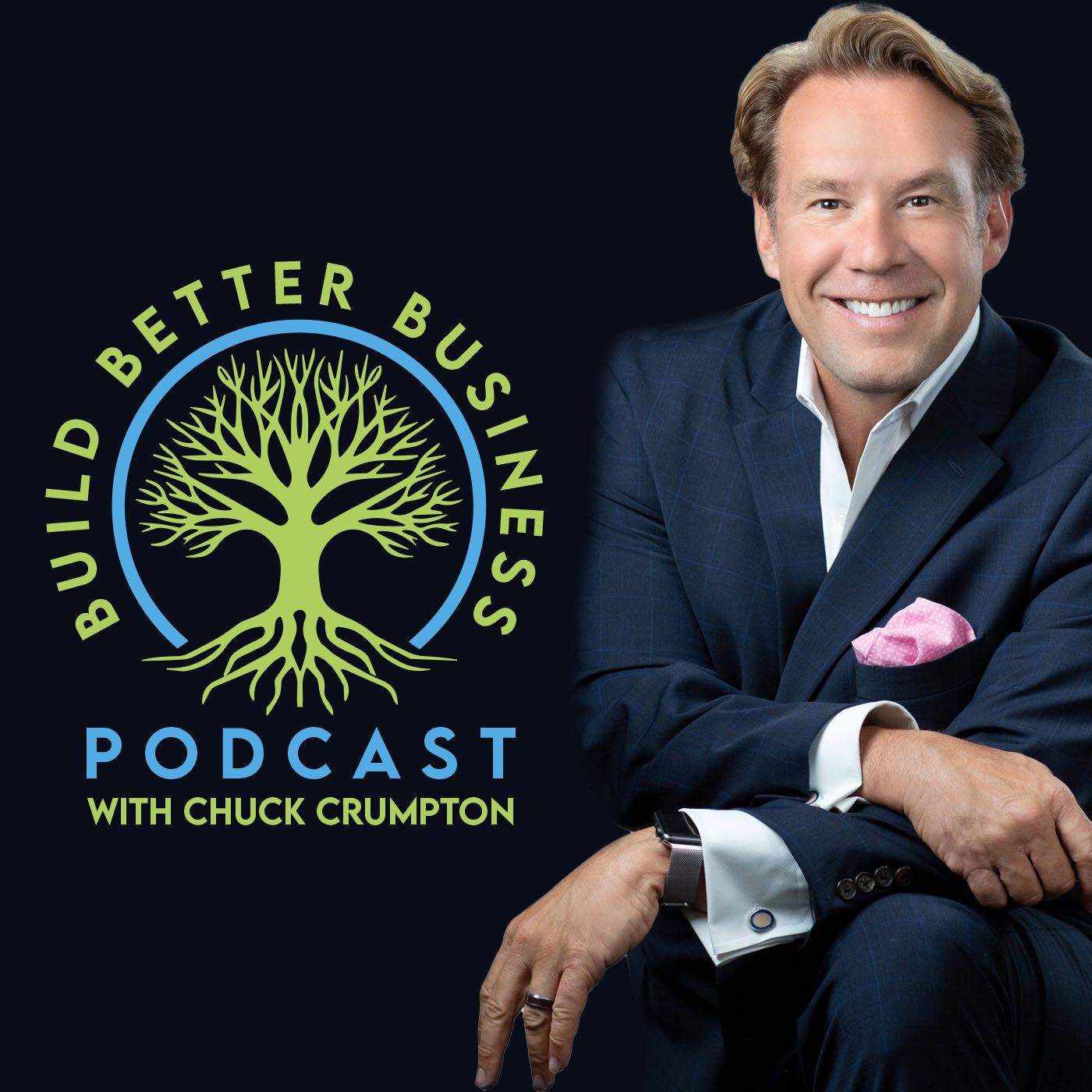
Build Better Business Podcast with Chuck Crumpton
by Chuck Crumpton
The Build Better Business Podcast, hosted by Chuck Crumpton, is a podcast by business leaders for business leaders. We have great guests every week discussing all areas of business from growth to possible exits. Entertaining and packed with great value. Enjoy the show!StrategicAdvisoryForum.com
-
33
"Perfection erodes trust" - Actress and CEO Kelly Hadous
Kelly has an impressive background - she's originally from New York City with undergraduate and master's degrees from NYU, plus post-graduate work at Harvard and Columbia. She is a classically trained actor who performed mainly on stage. I'm honored to call her my friend.Kelly founded Win the Room (WTR) at a crossroads in her career, not wanting to return to acting or Wall Street. She began helping people with investor pitches, public speaking, sales, and leadership. . The company naturally evolved from combining her business experience with her acting background and understanding of audience psychology. She emphasizes that vulnerability is "everything" in communication - being willing to show up without certainty of outcome, acknowledging what you don't know, and not being perfect. She notes that perfection gets in the way of creating rapport, trust, connection, and engagement. She emphasizes that audiences want to know "what's in it for me" (WIFM) For executives moving into higher roles requiring more communication skills, Kelly explains that effective public speaking is "a heightened form of communication" requiring significant practice. She cites Steve Jobs practicing daily for 3-4 weeks for a 30-minute presentation. The key is developing both the science (technical structure) and art (connecting with audience) of communication .Kelly's company Win the Room specializes in working with growth companies, combining business strategy with performance and audience connection skills. She can be reached at WinTheRoom.comIf I can help you buy or sell a business, please let me know. I've had the privilege of building and selling 3 of my own companies over the past 30 years. Feel free to reach out to me at 864-915-0066.Thanks...Chuck. Enjoy the show!
-
32
Successful negotiation is a process not an event - CEO Andres Lares joins Chuck
Andres has an MSA and MBA from Ohio University and wrote a book called "Persuade: The Four Step Process to Influence People and Decisions"The most critical element in negotiation is thorough preparation, which not only provides information but builds confidence. Andres emphasizes that "nothing convinces like conviction" and proper preparation creates the confidence needed for effective negotiation.There's an important distinction between waiting to speak and truly listening.A fundamental principle is that "negotiation is a process, not an event" Andres references Albert Mehrabian's research showing that 93% of communication is non-verbal (tone and body language), with only 7% being the actual words spoken. The overarching philosophy, derived from Ron Shapiro's "Power of Nice" approach, is to "maximize your objectives while satisfying the other side". This win-win approach builds long-term reputation and relationships. He recommends asking employees directly about their motivations and "love language" to better understand what drives them beyond just compensation.We help business leaders buy and sell great companies. Let me know how I can help you.Chuck [email protected]
-
31
Former food CEO Harry T. Jones hired folks no one else would hire.
At SAF, we help folks buy and sell great companies and build in the process. Most see a 5-7x ROI because of the work we do. Let's set up a call to discuss.Enjoy my conversation with Harry!Harry T. Jones describes himself as "living a life of second and third chances" - he's in his third career and second marriage. He spent over 20 years in food manufacturing as a CEO and emphasizes that "the most difficult times in my life have proven to be the richest". His second business, Blackberry Patch, focused on food manufacturing where they hired people "that nobody else would hire" . A key principle Jones applies is defining your niche: "What can your business do better than any company in the marketplace and be rewarded for it"Harry now helps business founders through "breakthrough groups" with succession planning. His goal is to help 100 founders execute succession plans over 10 years, with 18 already completed or in process. His breakthrough groups provide a confidential environment where "CEOs can come to a group and let their hair down and share some of their vulnerabilities". He concludes with his business philosophy: "We must make a profit in order to bless the communities we serve and advance our purpose".
-
30
Top auctioneer Leland Little gives us a unique inside peek into auctions, life, and leadership.
In addition to being one hell of a business leader, Leland is a husband, father, and my friend. I highly recommend you visit his very impressive gallery in Hillsborough, NC. LelandLittle.comThe auction business has undergone significant transformation over Little's 35-year career. Market preferences have shifted from 18th and 19th century antiques (popular in the 1980s-1990s) to mid-century modern and contemporary pieces produced after 1970. The business has evolved from manual processes with hand-clerked tickets to fully digital operations. Leland emphasizes that their competition isn't just other auction houses, but cultural expectations for convenience, citing Amazon's next-day delivery and instant payment systems as benchmarks. The company aims to make auction participation as easy as "going to Starbucks". Little emphasizes that trust is "critical" in an industry dealing with fakes, forgeries, and condition issues. The company maintains credibility through long-term employees (about half of their 40-person team are career professionals) who have specialized expertise in various departments. Leland advocates for daily attention to details, continuous coaching through programs, and maintaining strong cash flow with minimal debt. He emphasizes the importance of personal development, particularly maintaining strong home relationships, as foundational to business success. His advice to struggling business owners focuses on three priorities... Listen and enjoy!I help business leaders buy and sell great companies. Let me know how I can help you.Chuck [email protected]
-
29
Chief Pilot and former POW Mike Penn - an incredible true story of survival, life, & overcoming
Captain Mike Penn flew 87 combat missions until he was shot down and had to eject at 500 miles per hour.From being a POW at the "Hanoi Hilton" in Vietnam, to becoming the Chief Pilot at Southwest Airlines, to battling addiction, Mike shares his incredible life story. This episode moved me like few have.You will be drawn to his transparency, humility, candor, and demeanor. Please enjoy and let me know your [email protected] help business owners buy and sell great companies. Let me know if I can help you.
-
28
John Sterling enjoyed a $200 million-dollar exit - now he helps others reach success!
John Sterling is a Citadel University graduate (BA in Political Science, 1983) who led Datastream to a $200 million exit. He currently serves as CEO of Sterling Ventures Group, which "buys and grows B2B SaaS companies quietly and intentionally". His portfolio includes Sterling Sales (sales coaching and training). John's sales training approach addresses multiple components beyond just training salespeople, including lead generation, pricing correction, and most importantly, developing the right "avatar" or ideal salesperson profile. Sterling openly discussed his journey with alcohol addiction, describing how he initially justified his drinking because he was successful professionally. With the help of a therapist he's been seeing for six years, he eventually stopped drinking and found life "10 times better without it". John advocates talking to advisors quarterly and working on business value even if an exit is 10 years away. He recommends maintaining realistic optimism, expecting good things while accepting that "out of 10 great things, one of them going to go sideways".If you like the content on this podcast, you may want to look into our 6-month Leadership Lab (virtual mastermind) Sales Track course that can definitely help you grow the sales arm of your business. Call me and let's discuss it. Enjoy the conversation!Chuck Crumpton 864.915.0066
-
27
What is my business truly worth? Valuation expert Scott Gabehart unpacks it all.
Most of my clients have a HUGE question for me - What is my business worth? Scott, a subject matter expert in valuations, sheds some interesting light on the topic.If I can help you get some real numbers on your business, let me know. It's a big deal.Scott emphasizes that business valuation is both a science based on accepted principles and an art involving numerous assumptions. He notes that five different appraisers could provide the same dataset and produce different valuations ranging from $1.8 million to $2.2 million due to varying assumptions. Value also changes over time and depends on the purpose of the valuation.Key valuation methods discussed include:Income approach methods like discounted cash flow and multiples of discretionary earnings.Market approach methods including comparable sales and guideline public company methods.Asset approach for companies with minimal revenues or profits Main street companies typically sell for 2-3 times discretionary earnings, while middle market manufacturing companies sell for 4-8 times adjusted EBITDA, and public companies trade at 25+ times after-tax profits according to Scott.Let me know how I can assist your business in growth and preparing for exit. Enjoy the [email protected]
-
26
Moving from the Golden Rule to the Platinum Rule...with Karl Hebensteit
Karl emphasizes that leaders often assume everyone thinks and is motivated the same way they are, which he describes as the "human condition". He advocates moving from the "golden rule" (treat others as you want to be treated) to the "platinum rule" (understanding what motivates each individual).When asked about the biggest organizational breakdown, he identifies trust as the primary issue. Karl notes problems when leadership teams don't trust each other or when employees fear bringing their authentic selves and real organizational challenges to leadership due to uncertainty about consequences.I help business owners 2x their company's value before exiting. Let's talk.Chuck 864.915.0066Thanks for listening. Enjoy the show!
-
25
"Be the change, not the boss" - my riveting conversation with CEO Todd Dewett
Todd emphasizes the importance of authenticity in leadership and speaking, sharing that he strives to be genuine rather than polished, making fun of himself and discussing failures rather than just successes. Todd also vulnerably shares that his wife died five months ago, describing how he relied on his team during this difficult period. 3 big takeaways from his book "Dancing with Monsters"Fear drives growth when you choose to believe it - Todd explains that facing fears and inadequacies can become a catalyst for improvement, using public speaking as an example of how confronting fear can transform it into usable energy.Talent matters, but chemistry matters more - He argues that communication skills and teamwork often outperform pure intelligence, citing an example of a brilliant nuclear engineering student who struggled in MBA group work.Leaders help teams discover greatness - This involves building relationships, mentoring, and finding ways to validate team members rather than just managing expectations. More info in the conversation...enjoy :)Let me know how we can help your business. 2x your company's value.ChuckStrategicAdvisoryForum.com
-
24
"Get lean, get liquid, and get out" - Chris Miles is an "anti-financial advisor"
The pivotal moment came when Chris analyzed his father's retirement situation in 2005. Despite his father doing "everything right" - contributing to his 401k, paying off all debt including his house, and being completely debt-free at 61 - Chris calculated that his father would run out of money in 5-6 years if he retired. This realization led Chris to question the traditional financial advice he was giving clients.The Work Optional Blueprint:Chris strongly believes a major market correction is inevitable, not just probable. He points to historically high valuations, with companies requiring 25 years to pay back investments, and notes that Warren Buffett has been selling stocks and holding over $381 billion in cash. He unpacks his approach in this interesting conversation with me.Please let me know how I can help you and your business. We help companies 2x their value. Ask me how.Chuck StrategicAdvisoryForum.com
-
23
"You don't have a business until it can run without you!" - Eric Gall joins the podcast with Chuck
Trust you will enjoy my conversation with Eric. If you're thinking about selling your business in the next 10 years, we should talk. Why leave money on the table? Let's talk:Talk to ChuckKey Success Factors for selling a business:Gaul emphasizes two critical elements for business owners preparing to sell:Clean Books: Clean financial records "de-risk the business" because buyers and banks perceive less risk, leading to better prices. Personal expenses run through the business or questionable items can cause banks to reject add-backs for loan support.Sticky Customers: Repeat customers and recurring revenue are highly valued by private equity groups because they reduce risk and lower customer acquisition costs. Gaul notes there's "never really a bad time to sell a business". "Nine times out of 10, the CPA doesn't know what they're talking about" regarding business valuations . He gives examples. The conversation highlights the reality of "deal fatigue" during the due diligence process, which becomes a "second full-time job" lasting 90 days to nine months. Quick document turnaround is crucial, as delays can kill deals. AI IntegrationGaul views AI as a supplement rather than a threat, using it extensively for buyer identification and creating more sophisticated confidential information memorandums.Eric Gaul can be reached through Edison Business Advisors at www.edisonba.com, by phone at (239) 738-6227, or email at [email protected].
-
22
Frank Candy turned his life around to create the "Playbook for Life"
The discussion extensively covers organizational culture, with Frank defining it as "creating systems that develop trust, communication, organizational skills, the ability to operate efficiently so that you can innovate, orchestrate, and quantify and improve". He uses Disney as a prime example, where he worked during their four-year streak as America's best company to work for. Disney's philosophy was taking care of cast members so they would take care of guests.The Playbook ConceptFrank introduces his "Playbook for Life," originating from his middle school experience maintaining football playbooks. His current playbook is a three-ring binder containing goals, gratitude lists, inspiration, and comprehensive life planning. He uses this for daily positive self-talk and organization.Leadership AdviceFor struggling business leaders, Frank recommends conducting a "vision check" to ensure alignment between personal, company, family, and health visions. He emphasizes tenacity as his key to success, defining it as "the quality of being persistent, determined, and stubbornly resolute in pursuing a goal despite challenges or setbacks".You will like Frank's story. Listen and enjoy!We help business owners build and sell remarkable companies. Let me know how we can help your company.Thanks...ChuckStrategicAdvisoryForum.com
-
21
Do you maximize taxable income before selling? Owen Nieberg breaks it down.
Owen emphasizes that around 80-85% of companies are not ready to go to market. Before deciding to sell, business owners need to understand the listing price and how it was determined, identify what they want in a buyer, understand the 6-12 month process timeline, and maintain business performance throughout.Common Valuation Misconceptions:A major misconception involves confusion between two different types of multiples - EBITDA and seller discretionary earnings - where business owners often apply the wrong multiple to the wrong number, leading to false valuations.Preparation Recommendations:Owen suggests several key preparation steps: building a strong management team so the owner isn't central to daily operations; maximizing taxable income in the final two years before sale rather than minimizing taxes, as every dollar increase in earnings typically translates to 2.5-3 times that amount in sale price; and maintaining clean, consistent bookkeeping records.Killing Factors:The biggest factor that derails transactions is loss of trust, often when sellers try to hide business issues rather than being transparent upfront. Owen shares an example where a $5 million deal nearly failed over a $50 discrepancy because trust was broken. Another major issue is using attorneys or bankers without M&A experience, which can kill deals through inexperienced contract negotiations.If my team can help you answer questions leading up to your potential sale, please let me know.Chuck CrumptonStrategicAdvisoryForum.com
-
20
Are "mission-based" companies more successful? Acquirer Andrew Heintzman speaks openly.
Andrew explains that Vestigo focuses on "mission-based businesses", believing that companies with missions beyond financial objectives often become stronger businesses. The firm receives approximately one deal per day as inbound opportunities and completes roughly 5-6 deals per year on average. They evaluate companies based on both financial metrics and impact criteria, looking for businesses that make positive contributions to the world. He believes consumers will continue becoming more informed and making choices based on broader values including human health and environmental considerations. For entrepreneurs seeking funding, Andrew gives key advice...Listen and enjoy. Let us know your feedback.At SAF, we help business owners thrive and 2x their value. Let us know if we can help you.Chuck CrumptonStrategicAdvisoryForum.com
-
19
Rich Galgano lost everything to a gambling addiction & later sold his $500 million-dollar company!
Rich describes himself as "unfiltered, transparent, and pretty damn open". He lost everything to gambling and "didn't have a penny to my name" when he entered Gamblers Anonymous.Rich emphasizes that "picking a partner is like picking your wife" and stresses the importance of aligned interests. As a buyer, Rich looks for "people, the owner, the management, the market, the product". He believes that "if you're going to cheat on your wife, you're probably going to cheat your business partners".Rich wrote "Down to The Wire: The Outlandish Tale of How I Quit Gambling to Win Big" after his father's death in 2018, wanting to leave a legacy for his children. The book became a #1 bestselling nonfiction book and received endorsements from celebrities including Paul Stanley of Kiss and Toby Keith.So much more in this conversation...Enjoy! Let me know your thoughts.Chuck CrumptonStrategicAdvisoryForum.com
-
18
Former Global Head at Nike Greg Merrill discusses technology and the importance of "people".
Trust you will enjoy the conversation between myself and Greg. If I can help you or your business in anyway, please let me know.ChuckStrategicAdvisoryForum.comGreg Merrill is a strategic growth and transformation executive from San Antonio, Texas and former global head of Digital Transformation for Nike. Merrill holds an MBA from Johns Hopkins University. He emphasizes that successful business leaders must be risk tolerant individuals who can handle ambiguity and pain, citing Michael Jordan's quote about missing 100% of shots you don't take. He discusses his experience working across company sizes, from small startups where he and a few colleagues hired their first full-time employee, to Nike with 80,000 direct employees and a million people globally when including contract manufacturers. Merrill advocates for empathy-based leadership, noting that employees have options and can easily move to other opportunities. He emphasizes servant leadership that removes obstacles for employees rather than taking a "my way or the highway" attitude. He stresses that humans are creatures of habit who resist change, making the human element crucial for successful transformation. Two key examples he provides are:Having a clear, compelling business strategy that every employee can articulate consistently in 10 seconds or less. Leveraging data effectively - he gives an example of a 20-year plumbing company owner who had never considered using business data for decision-making.Advice for Struggling Leaders: Merrill concludes with two-part advice for leaders facing broken business environments.
-
17
Marc Adams developed stage 4 cancer and it completely changed his M&A perspective.
Marc shares his profound personal story that transformed his business approach to deal making. In 2020, during the COVID pandemic, he received a stage four cancer diagnosis with six months to live.While recovering from surgery and battling COVID contracted in the hospital, his 10-year-old son Tommy made a pivotal observation. When Adams explained that nine out of ten companies they evaluate don't get bought and owners must continue working into their seventies, Tommy asked who would care for their families if the parents died from COVID. This question forced Adams to reconsider his private equity approach of prioritizing profit over people. Let me know your thoughts on the episode. Enjoy!Chuck CrumptonChuck@StrategicAdvisoryForum.comStrategicAdvisoryForum.com
-
16
Do partnerships work? Ryan Atkinson recently sold his business for a 6x multiple.
In my opinon, partnerships are like marriages without love.Ryan challenged my view. He has had two successful exits - first with Redwood Global (sold in 2014) and most recently with Core Resources (sold in February 2025 for over 6x EBITDA multiple) Both companies operated in the staffing/human capital space, with Core Resources focusing on IT professionals for banks and financial institutions. Partnership Success Story - Ryan's partnership with Keith at Core Resources exemplifies how partnerships can work when done right.Ryan learned from partnership challenges in his first venture and applied those lessons to create a much smoother relationship the second time around. Ryan emphasized the importance of:Clean financial records to minimize due diligence issues Strong CPA involvement for tax planning and working capital negotiations Understanding true net proceeds after taxes, fees, and employee bonuses Key Advice for Entrepreneurs.Ryan's message to business owners: "Enjoy the journey of building and running your business" He emphasized that the struggles and challenges help shape character and resilience, and entrepreneurs will look back on their journey with pride and joy.If I can help you or your business, let me know. Enjoy the episode.Chuck CrumptonStrategicAdvisoryForum.com
-
15
M&A Attorney Hal Cobb talks about critical elements to consider when selling your business!
These are a few of the points Hal and I discussed during our conversation. Reach out to us to help you scale your business before exiting;Chuck Crumpton864.915.0066Strategic Advisory Forum, LLCMajor Pitfalls Before SellingOwner dependency: Many businesses are built around the owner rather than being sustainable operationsLack of preparation: Business owners often too busy working "in" the business to prepare for exitValuation misconceptions: Not understanding true company value vs. owner valuePoor record keeping: Inadequate documentation and financial systemsCritical Process Elements Early Steps:Non-disclosure agreements are essential before sharing sensitive informationLetter of Intent (LOI) should be carefully drafted with legal inputTeam approach is crucial - attorney, CPA, advisor, and potentially brokerPrice vs. Terms:Terms matter more than price in the long runBeware of "your price, my terms" scenariosSeller financing arrangements can become problematicPayment structure significantly impacts actual value receivedDue Diligence Process Financial Documentation Required:3-5 years of tax returns and financial statementsCurrent P&L and balance sheetCash flow analysis and working capital needsAccount receivables/payables agingAdditional Documentation:Loan agreements and banking relationshipsReal estate leases and property documentsEmployee agreements and HR issuesLitigation history and pending legal mattersEnvironmental assessments (if applicable)Key Advice for Business OwnersPrepare early - Begin with the end in mind, even if selling is years awayBuild a sustainable business that doesn't depend entirely on the ownerMaintain clean records and organized documentationEngage legal counsel early in the processDon't count on the deal until it closes - have a Plan BFocus on living your life during the process rather than waiting for the outcomePost-Exit ConsiderationsMany successful entrepreneurs struggle with retirement/inactivityHaving a plan for "what's next" is crucialAvoid making hasty reinvestment decisions due to urgency to get back in the gameBottom Line: "Time kills deals" - being prepared and organized significantly increases the probability of a successful transaction. Selling a business requires a village of professionals and that business owners shouldn't attempt to navigate the complex legal and financial aspects alone.
-
14
Frank Cottle has acquired more than 44 companies...this is his journey.
Frank Cottle is the founder and CEO of Alliance Virtual Offices with over 50 years of M&A experience. He has been involved in numerous transactions on both buy and sell sides, including acquiring 44 companies in a 3-year period while working with Deloitte in the late 1990s.He challenges the traditional "win-win" approach, arguing that successful deals require each party to believe they got the better side of the transaction. This creates stronger commitment from both parties, even though deals are rarely perfectly balanced. When evaluating acquisitions, Cottle focuses on three fundamental questions:How big is the addressable market?Where does the company sit in the marketplace pecking order?How good is the management team?He emphasizes that the business model comes before profitability - if the model is sound, profits can usually be optimized later.Frank CottleChairman, CEO & FounderChairman, CEO & FounderAlliance Virtual OfficesPlease let me know how I can help your business. Thanks for listening!Chuck CrumptonStrategicAdvisoryForum.com
-
13
Hampus Jakobsson's $150 million-dollar exit to Blackberry
Capitivating conversation with Hampus. You're gonna like this guy and his story! Some of the episode details are below.Let me know if we can help your business grow and get ready for an exit like he enjoyed.StrategicAdvisoryForum.comKey Takeaways:Founder alignment is crucial - invest in structured communication processesFocus on strategic value, not just financial metricsBuild relationships with potential acquirers as future partnersHold your ground in negotiations, even under pressureConsider acquisition as career opportunity, not just financial exitMission and vision matter more than just financial incentives for retentionThe conversation showcases how a well-prepared team with strong internal alignment can successfully navigate a complex acquisition with a much larger company while maintaining their values and securing excellent outcomes for all stakeholders.Why Blackberry Paid Premium:Strategic necessity: Blackberry had publicly demoed a product they couldn't actually buildMarket monopoly: Every major phone manufacturer (Nokia, Samsung, Motorola) told Blackberry they used TAT for similar projectsTalent scarcity: Building a 200-300 person team with TAT's expertise would take yearsRevenue multiple: Deal was structured at ~4x annual revenue rather than traditional EBITDA multipleSmart Negotiation Tactics:Limited founder presence at legal negotiations to avoid divide-and-conquer tacticsHigh-level focus: Hampus stayed out of legal details, focused on big-picture issuesHolding ground under pressure: When Blackberry tried last-minute changes with 180 employees waiting for announcement, Hampus calmly delayed the meetingRelationship building: Focused on future working relationships, not just the transaction
-
12
Shark Tank guest & inventor David Frankel shares his journey through the patent process!
This conversation between Chuck and David Frankel, founder of Perky LLC, focusing on entrepreneurship, product development, and the challenges faced by inventors. David shared his entrepreneurial journey, emphasizing the significance of trust. David highlighted the low success rate of patented products reaching the market, attributing this to inventors' hesitance to face rejection and their lack of marketing resources. He discussed the importance of developing prototypes and taking proactive steps to promote inventions. Chuck contributed a personal anecdote about a syringe prototype that, despite positive feedback, never made it to market, illustrating the common struggles innovators face in transitioning from concept to execution. This segment underscored the critical challenges inventors encounter in bringing their ideas to fruition.The discussion also covered David's experience with the audition process for Shark Tank, where he advanced through multiple rounds, showcasing the rigorous vetting process of the show. He shared the inspiration behind his product, the perky collar, which emerged from a personal frustration with traditional dress shirt collars. David explained how he refined the design and sourced materials, leading to the successful launch of one of his nine inventions in the clothing space. This narrative highlighted the importance of identifying market needs and the iterative nature of product development. David provided insights into effective marketing strategies, emphasizing the necessity of a strong social media presence and the potential benefits of hiring marketing experts. He advised focusing on a single product idea to avoid financial strain and maintaining good credit to support business operations. Additionally, he discussed the financial implications of acquiring patents and trademarks, stressing the importance of strategic timing in pursuing international protections. The conversation concluded with a focus on community involvement and the value of support networks for entrepreneurs, as exemplified by David's initiatives in the Charlotte Entrepreneur Think Tank.If I can be of help to you and your business, please let me [email protected] you for your 5-star review!
-
11
4x UK Business Mentor of the Year - Christine Nicholson talks about the 7 inches between the ears
This is a conversation between Chuck Crumpton (host) and Christine Nicholson, a UK-based business mentor who has been voted UK Business Mentor four times and is based in the London area. Key Topics Discussed The Ripple Effect of Small Business. Christine emphasizes that small business owners are the backbone of society, creating economic benefits that extend far beyond their immediate operations:Impact on customers, suppliers, employees, and their familiesCommunity effects (she shares an example of a pub closing when a local factory shut down)Small businesses keep economies and communities alive at the core levelThe Dangers of Role Identity. Both speakers share personal experiences about becoming too attached to their businesses:Christine's story: Experienced mental burnout and took a "gap year" to recover after becoming overly fused with her business identityChuck's journey: Left a high-paying corporate job in 1997 to start his own business, eventually learning to delegate and let his team flourishLeadership vs. Ownership Christine distinguishes between:Business owners: Work in their business daily, often become bottlenecksEntrepreneurs: Have multiple interests and can step backBusiness leaders: Focus on developing others and creating systemsThe Stalagmite vs. Stalactite Metaphor. Christine uses a powerful metaphor to describe two leadership styles:Stalactite organizations: Everyone hangs off the leader, pulling the business downStalagmite organizations: Team members push the leader up, elevating the entire businessKey Takeaway: Christine's closing advice: "Plan your exit" - whether you're just starting, been in business for years, or considering entrepreneurship. If you don't plan your exit, someone else will plan it for you, and they'll be the ones who benefit most. The conversation emphasizes the importance of building sustainable businesses that can thrive without the founder's constant involvement, both for personal well-being and business success.Let me know if I can help you in anyway. Thanks for [email protected]
-
10
CEO Jeff DeGarmo sold his digital marketing agency for more than 5x multiple EBITDA
Jeff DeGarmo from Tulsa, Oklahoma joined the podcast to share his entrepreneurial journey. He's a USC and University of Colorado graduate with degrees in aerospace technology, Navy veteran, father of five children (ages 13-30), and triathlon enthusiast who accidentally discovered the sport through friends. Career Transition Jeff made an interesting pivot from a highly technical aerospace background to digital marketing. While serving in the Navy at Tinker Air Force Base, he taught himself web development during the early internet boom (mid-1990s). He left the military in October 2001 (just weeks after 9/11) to join an advertising agency as a web developer, though his initial contract was cut short due to the economic downturn. Building the Business Starting in 2003 with five partners (later reduced to four), Jeff and his team built a digital marketing agency that evolved from 90% web development into a full-service agency specializing in destination marketing, placemaking, and travel/tourism. The partnership worked because each partner had distinct roles:Jeff: Technology, finance, accounting, HR, payrollPresident: Business development and networkingChief Creative Officer: Creative output oversightFourth Partner: Messaging, strategy, and content developmentThe Exit Process Key Achievement: 5X+ EBITDA Multiple. The company was sold for over 5 times EBITDA - significantly above the typical 3-4X average for most businesses. Timeline & Process:Initial Goal: Find an investor to grow from 20 to 50 employeesMarket Process: 7 months from engagement to LOITotal Timeline: 10 months from broker engagement to closingFinal Offers: Two LOIs - one partial buyout (retaining 5%) and one full acquisition by a public companyDeal Structure50/50 split: Cash upfront and earnout over 3 yearsEmployment agreements: 3-year terms for all four partnersProtection clause: If terminated, partners still received 50% of earnout paymentsGraduated earnouts: Based on KPIs with upside potentialKey Lessons & Advice On PartnershipsFour equal partners can be challenging but worked due to complementary skillsSuccess required shared values and ability to "leave egos at the door"Clear role definition prevented conflicts over decision-makingOn Using BrokersHighly recommended but emphasized being selectiveBrokers provide valuable market reality checks on business valuationNegotiate broker agreement terms carefullyLook for brokers with "heart of a teacher" to guide through unknownsOn Due DiligencePublic company acquisitions involve extensive due diligence (internal and external accountants, attorneys)Communication strategy is crucial: Plan how to tell employees, vendors, and customersContract review essential: Ensure customer agreements have transfer clausesTransparency helped: Took entire team to meet potential buyerPersonal Outcome Jeff left after 9 months (rather than completing the 3-year employment agreement) due to role redundancy and cultural differences, but his protection clauses ensured he still received earnout payments. He noted this timing was fortunate given COVID's impact on the business in years 2-3.Current Activities. Jeff now works in business brokerage, helping other entrepreneurs prepare for and execute exits. He emphasizes that businesses should be "prepared to exit from day one" and does volunteer work helping veterans acquire existing businesses through the ETA (Entrepreneurship Through Acquisition) space. Key Takeaway: The most impactful moment was the sense of relief on closing day - not just from personal financial security, but from the responsibility of providing jobs for 20 families, highlighting the weight successful business owners carry for their employees' livelihoods.If we can help you build your business before the sale, let me [email protected] for listening!
-
9
CEO Meighan Newhouse still believes that humans are any organization’s greatest asset.
In this episode of the Build Better Business Podcast, host Chuck Crumpton speaks with Meg Newhouse about leadership, culture, and preparing organizations for long-term success. Meg shares her expertise on engaging teams, building resilience, and aligning purpose with performance. Listeners will gain practical strategies for cultivating strong workplace cultures, leading through change, and creating lasting business value. This conversation offers valuable insights for business owners who want to grow and sustain remarkable companies.Let my team at SAF know how we can help your company 2x your [email protected]
-
8
Jason Swenk talks life after his exit...and how he found purpose beyond the paycheck.
If you're a business owner—especially in the service or agency world—this episode is a masterclass in scaling, selling, and stepping back. Jason Swenk built and sold his digital agency for millions, and in this conversation, he shares the exact strategies that helped him do it.You'll learn:🔑 How to grow an agency that doesn’t rely on you💰 The real metrics buyers look for in service-based businesses🧠 What not to do when preparing for a sale🚀 Why clarity and systems are the foundation of freedom🎯 How to spot red flags in your company culture or operations before a buyer doesJason also talks candidly about life after the exit—and how to find purpose beyond the paycheck.Whether you're scaling to sell or just want more freedom from your business, this episode delivers both practical takeaways and mindset shifts from someone who’s been in the trenches.Please give me your feedback on the podcast, we're trying to make it better for [email protected]
-
7
$10 million-dollar deal man and author John Rood talks exit and what came next!
John scaled the business to nearly $10 million in revenue, with impressive EBITDA margins of 20–40%, before selling to a private equity firm executing a roll-up in the test prep space.While the sale was a financial success, the emotional aftermath caught John off guard. Post-exit, he found himself unanchored and questioning what came next. Curious whether other founders shared the same experience, he began interviewing entrepreneurs who had also sold their companies. That research evolved into his book, Beyond the Exit. John shares how he transformed a service-based business into a scalable product company—and what he’s learned from talking with 71 exited founders about what life is really like after the deal is done.Order John's book, Beyond the ExitIf you have any questions about business, please feel free to reach out to [email protected]
-
6
From the mind of an acquirer... with radio mogul Jon Pole, President of MBC.
Jon Pole is the President and Co-Founder of My Broadcasting Corporation (MBC) headquartered in Toronto. He and his team have acquired over 20 radio stations and is currently one of the fastest growing companies in Canada. This is a great episode because Jon unpacks his growth model in an "unsexy" industry and gives us his unique perspective from the "mind of an acquirer". You'll love his philosophy and appreciate the enormous impact they are making on the media industry, communities, and even the country. Please enjoy the episode and let me know your [email protected]
-
5
AI/ChatGPT expert John Waddy, COO gives practical tips on this powerful tool.
ChatGPT is shaping the future of how we work, think, and communicate—and the Forum Formula podcast lets you explore that world through stories, strategies, and real-world use cases. Why listen:1. Unlock Practical ApplicationsLearn how others are using ChatGPT for marketing, sales, writing, coding, customer service, and more.Hear real examples of businesses saving time, cutting costs, or scaling content with AI. 2. Stay Ahead of the CurveAI is evolving fast. A podcast gives you bite-sized, accessible updates on new features, tools, and trends—without reading every tech blog. 3. Learn from Experts & Innovators 4. Get Inspired CreativelyHear how writers, educators, and artists are using AI to spark new ideas, co-create content, or enhance their workflows.FORUM members get the full video presentation. More details can be found at StrategicAdvisoryForum.comPlease enjoy the episode!
-
4
Kimmy Powell, Owner of Woodhouse Day Spa, talks about her incredible journey in business.
You are going to love Kimmy! She is a powerhouse entrepreneur, visionary leader, and strategic thinker who has redefined success on her own terms. As the owner of Woodhouse Day Spa, she built her business from the ground up, transforming a bold idea into a thriving, multi-million-dollar enterprise.What began as a passion project quickly evolved into a nationally recognized brand, known for its innovation, purpose-driven approach, and unwavering commitment to excellence. With a sharp business acumen and a heart for community, Kimmy has scaled her company while maintaining a deep focus on culture, leadership, and impact.Please enjoy the show! Help us out with feedback:[email protected]
-
3
South Carolina Lt. Governor Pam Evette talks candidly about business & politics
We don't normally talk politics or religion on the show, but this was a very interesting conversation between Chuck Crumpton and Lt. Governor Pam Evette. Pam shares insights on how the State of SC operates, particularly how it functions in a business climate. She also unpacks her very successful exit with the company her and her husband David recently sold. The conversation moves along nicely and you'll be encouraged by the dialogue. Please enjoy the show and let me know what you think. Thanks.Chuck [email protected]
-
2
Against all odds - John Sterling interviews Chuck Crumpton, President of Bull Street Forum.
John Sterling, software industry executive, business owner, and host of Noob School Podcast interviews Chuck Crumpton, President of Bull Street Forum. Chuck shares some very imtimate moments about starting 2 of his own companies and the challenges he faced against all odds. Chuck offers practical advice for entrepreneurs—from boosting business value to nailing a successful sale. You’ll leave with real insights and plenty of inspiration from a seasoned dealmaker.The Bull Street Forum team highly recommends Noob School Podcast to all current and future business leaders.
-
1
Justin Goodbread went from being broke to worth over $10 million...this is his story.
At age 28, despite being millionaires and debt-free, Justin's life "falls apart" during what he calls "seven years of tribulation". The family faced multiple devastating challenges: a lawsuit that almost broke them, three third-trimester miscarriages, five members of their wedding party either died or committed suicide, and his father's unexpected death. This is his story, from riches to rags to riches...and it's incredible. Enjoy and please let me know if I can help you or your business. I have built and sold 3 of my own successful companies with plently of mistakes along the way. Perhaps my journey can save you time, pain, and money.Thanks...Chuck Schedule a conversationStrategicAdvisoryForum.com
We're indexing this podcast's transcripts for the first time — this can take a minute or two. We'll show results as soon as they're ready.
No matches for "" in this podcast's transcripts.
No topics indexed yet for this podcast.
Loading reviews...
ABOUT THIS SHOW
The Build Better Business Podcast, hosted by Chuck Crumpton, is a podcast by business leaders for business leaders. We have great guests every week discussing all areas of business from growth to possible exits. Entertaining and packed with great value. Enjoy the show!StrategicAdvisoryForum.com
HOSTED BY
Chuck Crumpton
CATEGORIES
Loading similar podcasts...
Frequently Asked Questions
How many episodes does Build Better Business Podcast with Chuck Crumpton have?
Build Better Business Podcast with Chuck Crumpton currently has 33 episodes available on PodParley. New episodes are automatically indexed when they're published to the podcast feed.
What is Build Better Business Podcast with Chuck Crumpton about?
The Build Better Business Podcast, hosted by Chuck Crumpton, is a podcast by business leaders for business leaders. We have great guests every week discussing all areas of business from growth to possible exits. Entertaining and packed with great value. Enjoy the show!StrategicAdvisoryForum.com
How often does Build Better Business Podcast with Chuck Crumpton release new episodes?
Build Better Business Podcast with Chuck Crumpton has 33 episodes. Check the episode list to see recent publication dates and frequency.
Where can I listen to Build Better Business Podcast with Chuck Crumpton?
You can listen to Build Better Business Podcast with Chuck Crumpton on PodParley by clicking any episode. We provide an embedded audio player for direct listening, and you can also subscribe via your preferred podcast app using the RSS feed.
Who hosts Build Better Business Podcast with Chuck Crumpton?
Build Better Business Podcast with Chuck Crumpton is created and hosted by Chuck Crumpton.
URL copied to clipboard!