
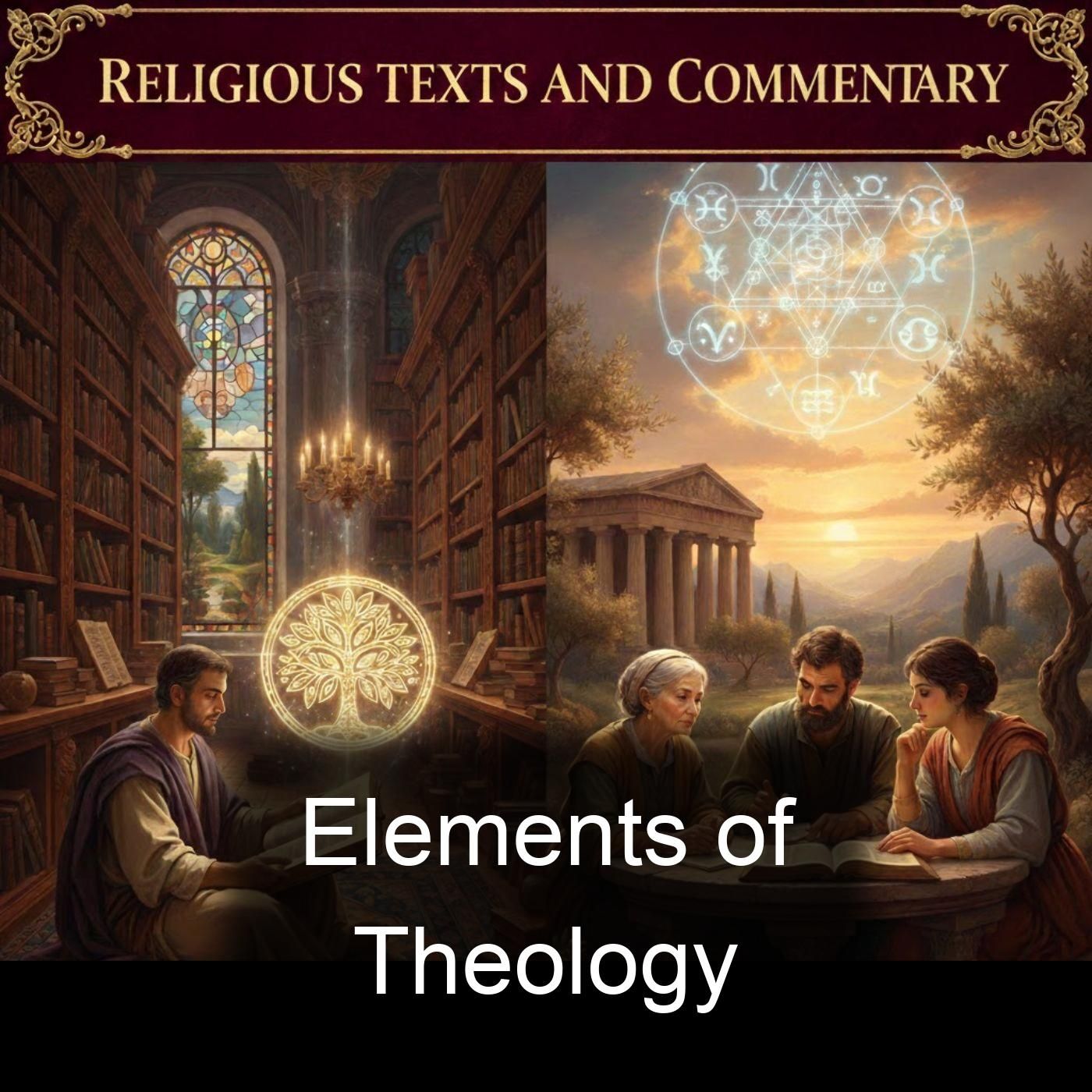
PODCAST · religion
Elements of Theology
by Proclus
Dive into the profound insights of The Elements of Theology (ΣΤΟΙΧΕΙΩΣΙΣ ΘΕΟΛΟΓΙΚΗ), crafted by the renowned Greek Neoplatonist philosopher Proclus (ΠΡΟΚΛΟΣ) and brilliantly translated by Thomas Taylor, who honored his youngest son with the name Thomas Proclus Taylor. This remarkable work comprises 211 thought-provoking propositions, each accompanied by a rigorous proof, beginning with the foundational concept of the One (divine Unity) and culminating in the exploration of individual souls descent into the material realm. Notably, Saint Thomas Aquinas acknowledged that the Liber de Causis (Book of Causes), once attributed to Aristotle, is actually a concise summary of the Elements of Theology, likely penned by an Arabic interpreter. - Summary adapted from Wikipedia by Geoffrey Edwards
-
18
018 - Extract from Commentaries of Proclus on the Timaeus
Dive into the profound insights of The Elements of Theology (ΣΤΟΙΧΕΙΩΣΙΣ ΘΕΟΛΟΓΙΚΗ), crafted by the renowned Greek Neoplatonist philosopher Proclus (ΠΡΟΚΛΟΣ) and brilliantly translated by Thomas Taylor, who honored his youngest son with the name Thomas Proclus Taylor. This remarkable work comprises 211 thought-provoking propositions, each accompanied by a rigorous proof, beginning with the foundational concept of the One (divine Unity) and culminating in the exploration of individual souls descent into the material realm. Notably, Saint Thomas Aquinas acknowledged that the Liber de Causis (Book of Causes), once attributed to Aristotle, is actually a concise summary of the Elements of Theology, likely penned by an Arabic interpreter. - Summary adapted from Wikipedia by Geoffrey Edwards
-
17
017 - Extracts from On the Subsistence of Evil
Dive into the profound insights of The Elements of Theology (ΣΤΟΙΧΕΙΩΣΙΣ ΘΕΟΛΟΓΙΚΗ), crafted by the renowned Greek Neoplatonist philosopher Proclus (ΠΡΟΚΛΟΣ) and brilliantly translated by Thomas Taylor, who honored his youngest son with the name Thomas Proclus Taylor. This remarkable work comprises 211 thought-provoking propositions, each accompanied by a rigorous proof, beginning with the foundational concept of the One (divine Unity) and culminating in the exploration of individual souls descent into the material realm. Notably, Saint Thomas Aquinas acknowledged that the Liber de Causis (Book of Causes), once attributed to Aristotle, is actually a concise summary of the Elements of Theology, likely penned by an Arabic interpreter. - Summary adapted from Wikipedia by Geoffrey Edwards
-
16
016 - Extracts from Ten Doubts Concerning Providence Commentary on the Parmenides
Dive into the profound insights of The Elements of Theology (ΣΤΟΙΧΕΙΩΣΙΣ ΘΕΟΛΟΓΙΚΗ), crafted by the renowned Greek Neoplatonist philosopher Proclus (ΠΡΟΚΛΟΣ) and brilliantly translated by Thomas Taylor, who honored his youngest son with the name Thomas Proclus Taylor. This remarkable work comprises 211 thought-provoking propositions, each accompanied by a rigorous proof, beginning with the foundational concept of the One (divine Unity) and culminating in the exploration of individual souls descent into the material realm. Notably, Saint Thomas Aquinas acknowledged that the Liber de Causis (Book of Causes), once attributed to Aristotle, is actually a concise summary of the Elements of Theology, likely penned by an Arabic interpreter. - Summary adapted from Wikipedia by Geoffrey Edwards
-
15
015 - On Providence and Fate 38 to 52
Dive into the profound insights of The Elements of Theology (ΣΤΟΙΧΕΙΩΣΙΣ ΘΕΟΛΟΓΙΚΗ), crafted by the renowned Greek Neoplatonist philosopher Proclus (ΠΡΟΚΛΟΣ) and brilliantly translated by Thomas Taylor, who honored his youngest son with the name Thomas Proclus Taylor. This remarkable work comprises 211 thought-provoking propositions, each accompanied by a rigorous proof, beginning with the foundational concept of the One (divine Unity) and culminating in the exploration of individual souls descent into the material realm. Notably, Saint Thomas Aquinas acknowledged that the Liber de Causis (Book of Causes), once attributed to Aristotle, is actually a concise summary of the Elements of Theology, likely penned by an Arabic interpreter. - Summary adapted from Wikipedia by Geoffrey Edwards
-
14
014 - On Providence and Fate 25 to 37
Dive into the profound insights of The Elements of Theology (ΣΤΟΙΧΕΙΩΣΙΣ ΘΕΟΛΟΓΙΚΗ), crafted by the renowned Greek Neoplatonist philosopher Proclus (ΠΡΟΚΛΟΣ) and brilliantly translated by Thomas Taylor, who honored his youngest son with the name Thomas Proclus Taylor. This remarkable work comprises 211 thought-provoking propositions, each accompanied by a rigorous proof, beginning with the foundational concept of the One (divine Unity) and culminating in the exploration of individual souls descent into the material realm. Notably, Saint Thomas Aquinas acknowledged that the Liber de Causis (Book of Causes), once attributed to Aristotle, is actually a concise summary of the Elements of Theology, likely penned by an Arabic interpreter. - Summary adapted from Wikipedia by Geoffrey Edwards
-
13
013 - On Providence and Fate 10 to 24
Dive into the profound insights of The Elements of Theology (ΣΤΟΙΧΕΙΩΣΙΣ ΘΕΟΛΟΓΙΚΗ), crafted by the renowned Greek Neoplatonist philosopher Proclus (ΠΡΟΚΛΟΣ) and brilliantly translated by Thomas Taylor, who honored his youngest son with the name Thomas Proclus Taylor. This remarkable work comprises 211 thought-provoking propositions, each accompanied by a rigorous proof, beginning with the foundational concept of the One (divine Unity) and culminating in the exploration of individual souls descent into the material realm. Notably, Saint Thomas Aquinas acknowledged that the Liber de Causis (Book of Causes), once attributed to Aristotle, is actually a concise summary of the Elements of Theology, likely penned by an Arabic interpreter. - Summary adapted from Wikipedia by Geoffrey Edwards
-
12
012 - On Providence and Fate 1 to 9
Dive into the profound insights of The Elements of Theology (ΣΤΟΙΧΕΙΩΣΙΣ ΘΕΟΛΟΓΙΚΗ), crafted by the renowned Greek Neoplatonist philosopher Proclus (ΠΡΟΚΛΟΣ) and brilliantly translated by Thomas Taylor, who honored his youngest son with the name Thomas Proclus Taylor. This remarkable work comprises 211 thought-provoking propositions, each accompanied by a rigorous proof, beginning with the foundational concept of the One (divine Unity) and culminating in the exploration of individual souls descent into the material realm. Notably, Saint Thomas Aquinas acknowledged that the Liber de Causis (Book of Causes), once attributed to Aristotle, is actually a concise summary of the Elements of Theology, likely penned by an Arabic interpreter. - Summary adapted from Wikipedia by Geoffrey Edwards
-
11
011 - Propositions 200 to 211
Dive into the profound insights of The Elements of Theology (ΣΤΟΙΧΕΙΩΣΙΣ ΘΕΟΛΟΓΙΚΗ), crafted by the renowned Greek Neoplatonist philosopher Proclus (ΠΡΟΚΛΟΣ) and brilliantly translated by Thomas Taylor, who honored his youngest son with the name Thomas Proclus Taylor. This remarkable work comprises 211 thought-provoking propositions, each accompanied by a rigorous proof, beginning with the foundational concept of the One (divine Unity) and culminating in the exploration of individual souls descent into the material realm. Notably, Saint Thomas Aquinas acknowledged that the Liber de Causis (Book of Causes), once attributed to Aristotle, is actually a concise summary of the Elements of Theology, likely penned by an Arabic interpreter. - Summary adapted from Wikipedia by Geoffrey Edwards
-
10
010 - Propositions 180 to 199
Dive into the profound insights of The Elements of Theology (ΣΤΟΙΧΕΙΩΣΙΣ ΘΕΟΛΟΓΙΚΗ), crafted by the renowned Greek Neoplatonist philosopher Proclus (ΠΡΟΚΛΟΣ) and brilliantly translated by Thomas Taylor, who honored his youngest son with the name Thomas Proclus Taylor. This remarkable work comprises 211 thought-provoking propositions, each accompanied by a rigorous proof, beginning with the foundational concept of the One (divine Unity) and culminating in the exploration of individual souls descent into the material realm. Notably, Saint Thomas Aquinas acknowledged that the Liber de Causis (Book of Causes), once attributed to Aristotle, is actually a concise summary of the Elements of Theology, likely penned by an Arabic interpreter. - Summary adapted from Wikipedia by Geoffrey Edwards
-
9
009 - Propositions 160 to 179
Dive into the profound insights of The Elements of Theology (ΣΤΟΙΧΕΙΩΣΙΣ ΘΕΟΛΟΓΙΚΗ), crafted by the renowned Greek Neoplatonist philosopher Proclus (ΠΡΟΚΛΟΣ) and brilliantly translated by Thomas Taylor, who honored his youngest son with the name Thomas Proclus Taylor. This remarkable work comprises 211 thought-provoking propositions, each accompanied by a rigorous proof, beginning with the foundational concept of the One (divine Unity) and culminating in the exploration of individual souls descent into the material realm. Notably, Saint Thomas Aquinas acknowledged that the Liber de Causis (Book of Causes), once attributed to Aristotle, is actually a concise summary of the Elements of Theology, likely penned by an Arabic interpreter. - Summary adapted from Wikipedia by Geoffrey Edwards
-
8
008 - Propositions 140 to 159
Dive into the profound insights of The Elements of Theology (ΣΤΟΙΧΕΙΩΣΙΣ ΘΕΟΛΟΓΙΚΗ), crafted by the renowned Greek Neoplatonist philosopher Proclus (ΠΡΟΚΛΟΣ) and brilliantly translated by Thomas Taylor, who honored his youngest son with the name Thomas Proclus Taylor. This remarkable work comprises 211 thought-provoking propositions, each accompanied by a rigorous proof, beginning with the foundational concept of the One (divine Unity) and culminating in the exploration of individual souls descent into the material realm. Notably, Saint Thomas Aquinas acknowledged that the Liber de Causis (Book of Causes), once attributed to Aristotle, is actually a concise summary of the Elements of Theology, likely penned by an Arabic interpreter. - Summary adapted from Wikipedia by Geoffrey Edwards
-
7
007 - Propositions 120 to 139
Dive into the profound insights of The Elements of Theology (ΣΤΟΙΧΕΙΩΣΙΣ ΘΕΟΛΟΓΙΚΗ), crafted by the renowned Greek Neoplatonist philosopher Proclus (ΠΡΟΚΛΟΣ) and brilliantly translated by Thomas Taylor, who honored his youngest son with the name Thomas Proclus Taylor. This remarkable work comprises 211 thought-provoking propositions, each accompanied by a rigorous proof, beginning with the foundational concept of the One (divine Unity) and culminating in the exploration of individual souls descent into the material realm. Notably, Saint Thomas Aquinas acknowledged that the Liber de Causis (Book of Causes), once attributed to Aristotle, is actually a concise summary of the Elements of Theology, likely penned by an Arabic interpreter. - Summary adapted from Wikipedia by Geoffrey Edwards
-
6
006 - Propositions 100 to 119
Dive into the profound insights of The Elements of Theology (ΣΤΟΙΧΕΙΩΣΙΣ ΘΕΟΛΟΓΙΚΗ), crafted by the renowned Greek Neoplatonist philosopher Proclus (ΠΡΟΚΛΟΣ) and brilliantly translated by Thomas Taylor, who honored his youngest son with the name Thomas Proclus Taylor. This remarkable work comprises 211 thought-provoking propositions, each accompanied by a rigorous proof, beginning with the foundational concept of the One (divine Unity) and culminating in the exploration of individual souls descent into the material realm. Notably, Saint Thomas Aquinas acknowledged that the Liber de Causis (Book of Causes), once attributed to Aristotle, is actually a concise summary of the Elements of Theology, likely penned by an Arabic interpreter. - Summary adapted from Wikipedia by Geoffrey Edwards
-
5
005 - Propositions 80 to 99
Dive into the profound insights of The Elements of Theology (ΣΤΟΙΧΕΙΩΣΙΣ ΘΕΟΛΟΓΙΚΗ), crafted by the renowned Greek Neoplatonist philosopher Proclus (ΠΡΟΚΛΟΣ) and brilliantly translated by Thomas Taylor, who honored his youngest son with the name Thomas Proclus Taylor. This remarkable work comprises 211 thought-provoking propositions, each accompanied by a rigorous proof, beginning with the foundational concept of the One (divine Unity) and culminating in the exploration of individual souls descent into the material realm. Notably, Saint Thomas Aquinas acknowledged that the Liber de Causis (Book of Causes), once attributed to Aristotle, is actually a concise summary of the Elements of Theology, likely penned by an Arabic interpreter. - Summary adapted from Wikipedia by Geoffrey Edwards
-
4
004 - Propositions 60 to 79
Dive into the profound insights of The Elements of Theology (ΣΤΟΙΧΕΙΩΣΙΣ ΘΕΟΛΟΓΙΚΗ), crafted by the renowned Greek Neoplatonist philosopher Proclus (ΠΡΟΚΛΟΣ) and brilliantly translated by Thomas Taylor, who honored his youngest son with the name Thomas Proclus Taylor. This remarkable work comprises 211 thought-provoking propositions, each accompanied by a rigorous proof, beginning with the foundational concept of the One (divine Unity) and culminating in the exploration of individual souls descent into the material realm. Notably, Saint Thomas Aquinas acknowledged that the Liber de Causis (Book of Causes), once attributed to Aristotle, is actually a concise summary of the Elements of Theology, likely penned by an Arabic interpreter. - Summary adapted from Wikipedia by Geoffrey Edwards
-
3
003 - Propositions 40 to 59
Dive into the profound insights of The Elements of Theology (ΣΤΟΙΧΕΙΩΣΙΣ ΘΕΟΛΟΓΙΚΗ), crafted by the renowned Greek Neoplatonist philosopher Proclus (ΠΡΟΚΛΟΣ) and brilliantly translated by Thomas Taylor, who honored his youngest son with the name Thomas Proclus Taylor. This remarkable work comprises 211 thought-provoking propositions, each accompanied by a rigorous proof, beginning with the foundational concept of the One (divine Unity) and culminating in the exploration of individual souls descent into the material realm. Notably, Saint Thomas Aquinas acknowledged that the Liber de Causis (Book of Causes), once attributed to Aristotle, is actually a concise summary of the Elements of Theology, likely penned by an Arabic interpreter. - Summary adapted from Wikipedia by Geoffrey Edwards
-
2
002 - Propositions 20 to 39
Dive into the profound insights of The Elements of Theology (ΣΤΟΙΧΕΙΩΣΙΣ ΘΕΟΛΟΓΙΚΗ), crafted by the renowned Greek Neoplatonist philosopher Proclus (ΠΡΟΚΛΟΣ) and brilliantly translated by Thomas Taylor, who honored his youngest son with the name Thomas Proclus Taylor. This remarkable work comprises 211 thought-provoking propositions, each accompanied by a rigorous proof, beginning with the foundational concept of the One (divine Unity) and culminating in the exploration of individual souls descent into the material realm. Notably, Saint Thomas Aquinas acknowledged that the Liber de Causis (Book of Causes), once attributed to Aristotle, is actually a concise summary of the Elements of Theology, likely penned by an Arabic interpreter. - Summary adapted from Wikipedia by Geoffrey Edwards
-
1
001 - Propositions 1 to 19
Dive into the profound insights of The Elements of Theology (ΣΤΟΙΧΕΙΩΣΙΣ ΘΕΟΛΟΓΙΚΗ), crafted by the renowned Greek Neoplatonist philosopher Proclus (ΠΡΟΚΛΟΣ) and brilliantly translated by Thomas Taylor, who honored his youngest son with the name Thomas Proclus Taylor. This remarkable work comprises 211 thought-provoking propositions, each accompanied by a rigorous proof, beginning with the foundational concept of the One (divine Unity) and culminating in the exploration of individual souls descent into the material realm. Notably, Saint Thomas Aquinas acknowledged that the Liber de Causis (Book of Causes), once attributed to Aristotle, is actually a concise summary of the Elements of Theology, likely penned by an Arabic interpreter. - Summary adapted from Wikipedia by Geoffrey Edwards
We're indexing this podcast's transcripts for the first time — this can take a minute or two. We'll show results as soon as they're ready.
No matches for "" in this podcast's transcripts.
No topics indexed yet for this podcast.
Loading reviews...
ABOUT THIS SHOW
Dive into the profound insights of The Elements of Theology (ΣΤΟΙΧΕΙΩΣΙΣ ΘΕΟΛΟΓΙΚΗ), crafted by the renowned Greek Neoplatonist philosopher Proclus (ΠΡΟΚΛΟΣ) and brilliantly translated by Thomas Taylor, who honored his youngest son with the name Thomas Proclus Taylor. This remarkable work comprises 211 thought-provoking propositions, each accompanied by a rigorous proof, beginning with the foundational concept of the One (divine Unity) and culminating in the exploration of individual souls descent into the material realm. Notably, Saint Thomas Aquinas acknowledged that the Liber de Causis (Book of Causes), once attributed to Aristotle, is actually a concise summary of the Elements of Theology, likely penned by an Arabic interpreter. - Summary adapted from Wikipedia by Geoffrey Edwards
HOSTED BY
Proclus
CATEGORIES
Loading similar podcasts...
Frequently Asked Questions
How many episodes does Elements of Theology have?
Elements of Theology currently has 18 episodes available on PodParley. New episodes are automatically indexed when they're published to the podcast feed.
What is Elements of Theology about?
Dive into the profound insights of The Elements of Theology (ΣΤΟΙΧΕΙΩΣΙΣ ΘΕΟΛΟΓΙΚΗ), crafted by the renowned Greek Neoplatonist philosopher Proclus (ΠΡΟΚΛΟΣ) and brilliantly translated by Thomas Taylor, who honored his youngest son with the name Thomas Proclus Taylor. This remarkable work comprises...
How often does Elements of Theology release new episodes?
Elements of Theology has 18 episodes. Check the episode list to see recent publication dates and frequency.
Where can I listen to Elements of Theology?
You can listen to Elements of Theology on PodParley by clicking any episode. We provide an embedded audio player for direct listening, and you can also subscribe via your preferred podcast app using the RSS feed.
Who hosts Elements of Theology?
Elements of Theology is created and hosted by Proclus.
URL copied to clipboard!