
PODCAST · religion
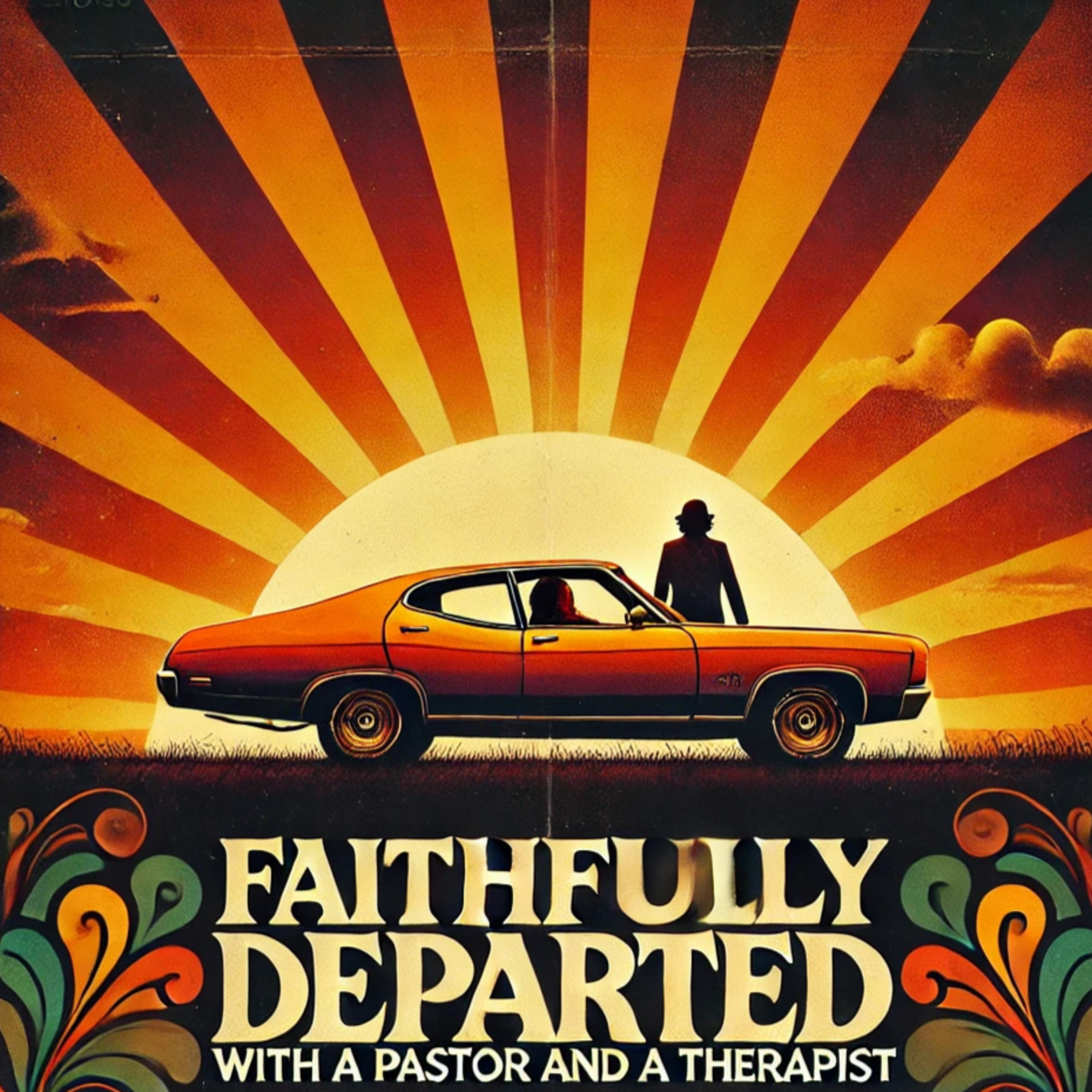
Faithfully Departed: transforming life's wounds into wisdom with a pastor and a therapist
by David Profitt & Sophie Murphy
Pastor David Profitt & Therapist Sophie Murphy explore the sacred tension of deconstructing toxic structures within Christianity — leaving behind what no longer serves, without losing the heart of the faith itself.
-
14
Deconstructing Spiritual Growth
In this episode of Faithfully Departed, Pastor David Profit and therapist Sophie Murphy explore the intersection of theology and psychology to redefine what it truly means to flourish. Moving away from traditional, performance-based models of spiritual growth, David and Sophie discuss a more holistic approach to human development that integrates the mind, body, and soul.The AI Model of Growth: David introduces a simple yet profound framework for flourishing based on Awareness and Intention.The Three Pillars of Awareness:Self-Awareness: Understanding one's inner world, emotions, and past traumas.Spirit Awareness: Discerning the movement and specific guidance of the Spirit in the present season.Space Awareness: Being attuned to one's environment and the needs and experiences of others.Moving Beyond "Checklist" Spirituality: The hosts challenge the "hamster wheel" of religious performance, suggesting that true growth often begins with addressing deep-seated issues like depression and shame rather than simply gaining biblical knowledge.The Power of Abiding: Sophie shares her perspective on the "John 15 model," emphasizing that spiritual vitality comes from "abiding" in the sense of being beloved, rather than striving for approval.Redeeming Shame: A look at how shame can block spiritual progress and why self-acceptance is a necessary component of coming fully alive."Don’t ask what the world needs; ask what makes you come alive, because what the world needs is people who have come alive."
-
13
Deconstructing Trash Talk
In this episode, David and Sophie unpack "trash talk" and the negativity that often shows up online and on social media. It can also surface closer to home such as during a family dinner over the holidays. They explore what may lie behind the impulse to troll others, but they focus even more on how we respond. How do we make sense of it. How do we engage without being pulled into retaliation. And how do we navigate negative people in our lives with wisdom and restraint.
-
12
Deconstructing the Ritual of Meeting
In this episode, David and Sophie explore the ritual of “meeting” in church life: why many people miss it after deconstruction, what made it vital in the early church, and why today’s gatherings can feel either lifeless or full of energy. Drawing on the Book of Acts and the diversity of the early church, they contrast the predictability of pews and bulletins with the spontaneity of table-centered community.They discuss a movement called “Fresh Expressions" which uses unconventional spaces like a tattoo-parlor church or “Bibles & Burritos,” to build around three core elements: doing something you love, with others, around Jesus. David introduces the concept of finding a “person of peace” and shares a hybrid experiment from their community, a Friendsgiving for LGBTQIA+ people and allies hosted at their church.David and Sophie go on to identify what makes gatherings go stale, such as rote obligation, low engagement, and surface-level conversation, and what brings them to life: shared vulnerability, meaningful participation, and structure infused with spirit. They use images from ballet and music to show how form requires energy, borrowing from a poem which says, "education is not a bucket to fill but a fire to be lit."
-
11
Deconstructing Toxic Empathy
In this episode, David and Sophie unpack a troubling trend within conservative Evangelical Christianity: the idea of “toxic empathy.” We explore this concept and remind ourselves that empathy, along with its close companions sympathy and compassion, was one of Jesus’ greatest strengths. The gospels repeatedly describe him as being “moved with compassion.” Why then do some feel the need to contaminate this word?When compassion, empathy, and love of neighbor are rebranded as weaknesses or dangers, the result is not wisdom but a distorted version of Christianity that causes deep harm. To call empathy “toxic” is not to protect people but to poison the very goodness that Jesus embodied. It teaches us to view Christlike love as something suspect rather than sacred.Join us as we work to reclaim the qualities that made Jesus’ life and ministry so powerful.
-
10
Deconstructing Power in the Church
In this episode David and Sophie discuss the dynamics of power in the modern church from celebrity and CEO pastors to donor-driven boards and the ways systems protect institutions over people. Drawing from personal experience, we explore why so many are disillusioned and leaving church communities, and what it means to “change the game” rather than keep playing by the world’s rules.
-
9
Deconstructing "The Bible says it, I believe it, that settles it."
In this episode, David and Sophie deconstruct the popular phrase “The Bible says it, I believe it, that settles it.” At first glance, it sounds like a statement of faith. But what’s really behind this instinct? Is it a desire for certainty, a need for control, or even a way of using Scripture as a weapon?We talk honestly about the harm this phrase can cause. When Scripture is wielded as a weapon, it can leave people wounded, silenced, and driven away from faith. We explore our own experience around that as well as talk about what it's like to sit with those who have been hurt and hear their stories of harm.We also dive into Jesus’ words in John 5:39–40, where He challenges His listeners: “You search the Scriptures because you think that in them you have life, but they testify about me.” Together, we explore what it means to read Scripture not as an endpoint, but as a witness that points us to Christ.Along the way, we look at how Jesus Himself engaged with Scripture in his resistance to Satan’s misuse of it in the wilderness, how he confronted the Pharisees’ weaponization of it, and how his deepening of the Torah brought healing, mercy, and life.
-
8
Deconstructing love the sinner hate the sinner
In this episode, David and Sophie tackle one of the most popular religious slogans: “Love the sinner, hate the sin.” Sounds simple and noble right? But what if the very thing others label as "sin" holds the key to our freedom and growth. What if “sinner” was more about social labels and power dynamics than moral reality? And what if Jesus’ willingness to be labeled a sinner himself was the very heart of the good news?Join us as we deconstruct this phrase, rethink how we think about sin and sinners, and discover a Jesus who isn’t in the business of labeling people, but of restoring them.
-
7
Jeremy Steele, the skeptical pastor
In this episode, David and Sophie welcome Jeremy Steele, a pastor of the unchurched and host of the Unbelief podcast. Jeremy opens up about what it’s like to be a skeptical pastor and shares his perspective on deconstruction, faith and community.https://jeremy-steele.com/https://unbeliefpodcast.com/
-
6
Deconstructing Queerphobia
David and Sophie explore the origins of queerphobia with stories from their own lives.
-
5
Deconstructing Discipleship
David and Sophie explore the topic of discipleship.
-
4
Deconstructing Prayer
David and Sophie explore the topic of prayer and recognize that many of us carry ideas about it that can feel more like personal projections than genuine spiritual practice. How is our understanding of communicating with God affected by our culture and family of origin? Is praying to God any more meaningful or effective than praying to a jug of milk?
-
3
The slippery slope
David and Sophie explore how conservative Christians often invoke the fear of a 'slippery slope' as a way to resist change, protect certainty, and avoid confronting deeper truths. Through honest conversation, they deconstruct how this fear can block personal and spiritual growth.
-
2
On the other side
In this episode, David & Sophie discuss what it's been like to faithfully leave the Evangelical church and what it's been like on the other side.
-
1
How therapy saved my soul
In this episode, David shares his story of how therapy provided many of the things he missed growing up in a rigid church environment. David & Sophie also discuss how AI can be a wonderful tool for spiritual growth and development.
We're indexing this podcast's transcripts for the first time — this can take a minute or two. We'll show results as soon as they're ready.
No matches for "" in this podcast's transcripts.
No topics indexed yet for this podcast.
Loading reviews...
ABOUT THIS SHOW
Pastor David Profitt & Therapist Sophie Murphy explore the sacred tension of deconstructing toxic structures within Christianity — leaving behind what no longer serves, without losing the heart of the faith itself.
HOSTED BY
David Profitt & Sophie Murphy
CATEGORIES
Loading similar podcasts...
Frequently Asked Questions
How many episodes does Faithfully Departed: transforming life's wounds into wisdom with a pastor and a therapist have?
Faithfully Departed: transforming life's wounds into wisdom with a pastor and a therapist currently has 14 episodes available on PodParley. New episodes are automatically indexed when they're published to the podcast feed.
What is Faithfully Departed: transforming life's wounds into wisdom with a pastor and a therapist about?
Pastor David Profitt & Therapist Sophie Murphy explore the sacred tension of deconstructing toxic structures within Christianity — leaving behind what no longer serves, without losing the heart of the faith itself.
How often does Faithfully Departed: transforming life's wounds into wisdom with a pastor and a therapist release new episodes?
Faithfully Departed: transforming life's wounds into wisdom with a pastor and a therapist has 14 episodes. Check the episode list to see recent publication dates and frequency.
Where can I listen to Faithfully Departed: transforming life's wounds into wisdom with a pastor and a therapist?
You can listen to Faithfully Departed: transforming life's wounds into wisdom with a pastor and a therapist on PodParley by clicking any episode. We provide an embedded audio player for direct listening, and you can also subscribe via your preferred podcast app using the RSS feed.
Who hosts Faithfully Departed: transforming life's wounds into wisdom with a pastor and a therapist?
Faithfully Departed: transforming life's wounds into wisdom with a pastor and a therapist is created and hosted by David Profitt & Sophie Murphy.
URL copied to clipboard!