
PODCAST · education
Fluent and Fearless
by Katherine Arthur
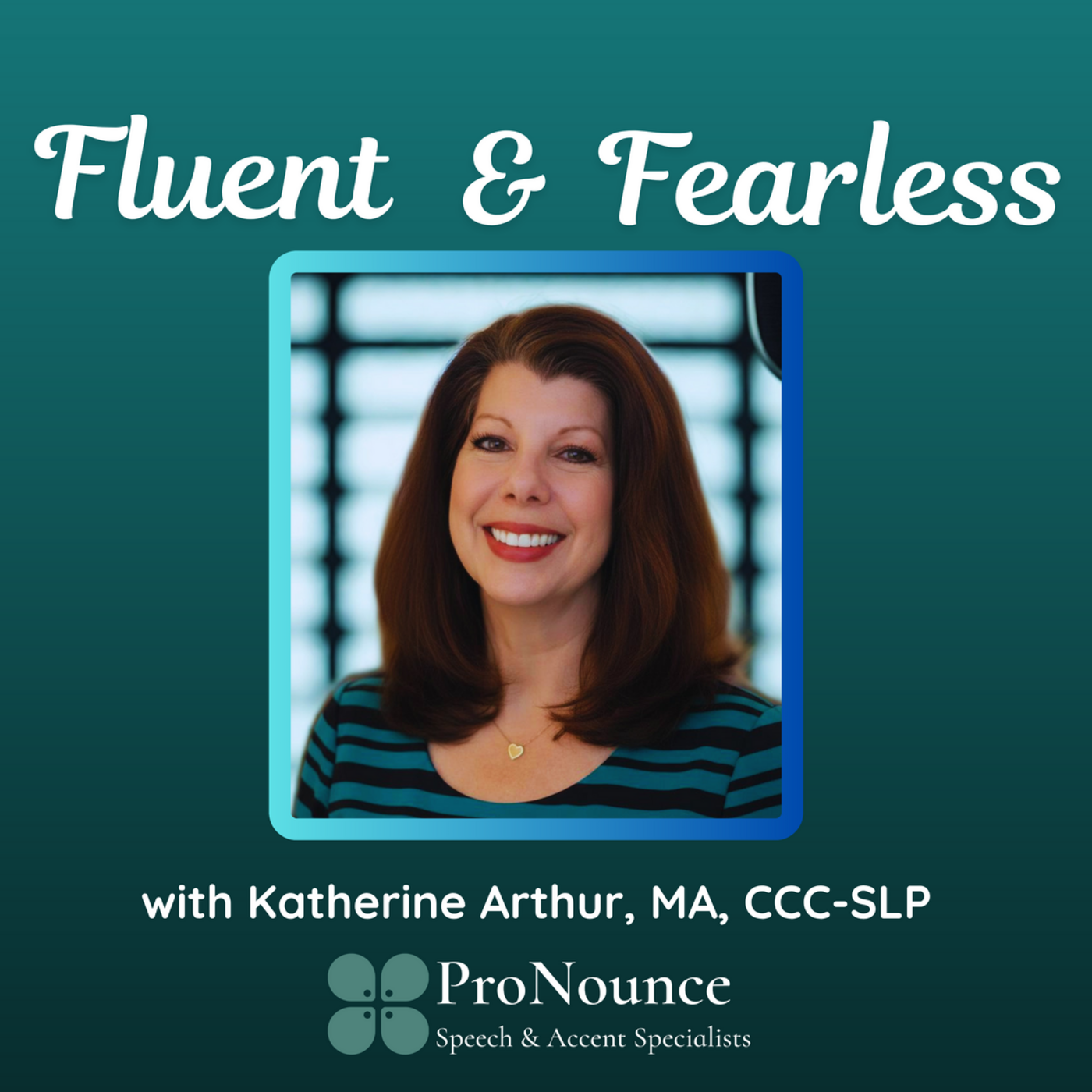
Turn your spark into a flame! We've all got a fire inside of us, just waiting to be ignited. Taking your communication skills to the next level might be just what you need to get that blaze started. Join host Katherine Arthur of ProNounce Speech and Accent Specialists as she shows you how to be fluent and fearless in any situation.
-
21
Fluent & Fearless: Why You Go Silent When Speaking English at Work (and How to Fix It)”
On this episode of Fluent & Fearless, host Katherine Arthur talks about something that sounds helpful… but actually holds a lot of ESL speakers back: Trying to speak English perfectly. Now, on the surface, that sounds like a good goal, right? But the more someone tries to be perfect…the less they actually speak. And over time, they find themselves trapped in a cycle of silence. "Cycle of Silence?" Sounds like a scary movie. Well, trying to be perfect is scary. Katherine is here to help you overcome that.
-
20
Fluent and Fatigued: The Hidden Cost of Speaking All Day
We tend to think about our voices only when something goes wrong--when speaking feels strained, when our throat is tired at the end of the day, or when others start asking us to repeat ourselves. But our voice is working for us constantly. It carries our thoughts, our personality, our professionalism, and our presence in the world. And like anything we use daily, it needs to be taken care of. Host Katherine Arthur will show you how to do that. It’s easier than you think.
-
19
Fluent & Fearless: Robots Have No Rhythm
In this episode, we’re going to unlock one of the biggest secrets to sounding natural in American English. It's not vocabulary, and it's not grammar. It’s really not even pronunciation…although all of those things are important. It is rhythm. Specifically, syllable stress. You can pronounce every sound correctly and use perfect grammar, but still sound unnatural, if the rhythm of the language, isn’t quite right. If you think you sound like a robot when speaking American English, host Katherine Arthur has some simple advice to help you fix that.
-
18
Fluent & Fearless: Why Smart ESL Speakers Still Feel Insecure When They Speak
Many ESL speakers are highly educated. Successful in their careers. Excellent at what they do. And yet when they speak English — especially in important moments — they still hesitate. They second-guess themselves. They overthink. They feel self-conscious. They worry about how they sound. They wonder if they came across the way they intended to. And sometimes that experience can feel really confusing. Because on the inside, they know: They’re actually a very capable person. But when speaking doesn’t reflect that…it can feel frustrating, discouraging, and honestly, sometimes even a little painful. If you’ve ever felt that disconnect, this episode is for you. Host Katherine Arthur examines why this happens, why it’s actually much more common than people realize, and most importantly — what you can do to start building more confidence when you speak American English.
-
17
Fluent & Fearless: Reinventing Your Voice Without Losing Your True Self
In this episode of Fluent & Fearless, host Katherine Arthur answers this question: “If I change the way I speak, am I reinventing myself?” That question can feel surprisingly emotional. Because your voice is personal. The way you speak is tied to where you come from, who raised you, what languages shaped you, and how you’ve moved through the world. So it makes sense that working on your accent can stir up deeper thoughts than most people expect. And honestly? Yes — in some ways, accent modification can feel like reinvention. But that doesn’t automatically make it fake, shallow, or wrong. In fact, sometimes reinvention is exactly what growth looks like. https://www.pronouncespeech.com/
-
16
Healthcare Recruiters: How to Be Understood the First Time
Healthcare recruiters can face many communication obstacles when speaking English as a second language. They work in a fast-paced, phone-intensive career field. Repeating themselves all day to job candidates can be exhausting. So what can they do to communicate more effectively? Join Katherine Arthur as she has the answers for you. Believe it or not, the goal is not perfection, or sounding “more American,” or changing who you are. It's about something much more practical: How to make sure people understand you the first time.
-
15
Fluent & Fearless: The Pain of Being Misunderstood
On this episode, host Katherine Arthur from ProNounce Speech and Accent Specialists talks about something deeper than pronunciation or speech. Why all of do all of us want to be understood so badly? Learn why that feeling is not just about language. It’s about being human. pronouncespeech.com
-
14
Fluent & Fearless: Clear Communication in Healthcare Recruiting
Healthcare recruiting is a fascinating and demanding profession. You’re connecting hospitals with physicians, nurses, and other medical specialists. You’re coordinating interviews, explaining opportunities, and often guiding candidates through major career decisions. That means communication is at the center of everything you do. And when English isn’t your first language, even very small pronunciation challenges can sometimes create unexpected obstacles. Join host Katherine Arthur as she explores these challenges, and gives you valuable advice on how to fix them.
-
13
Fluent & Fearless: How ESL Speakers Can Feel More Confident in the Workplace
If English is not your first language and you work in a professional setting, today’s episode is especially for you. I’m Katherine Arthur from ProNounce Speech and Accent Specialists, and today I'm talking about something I hear in coaching all the time. This is what some of my clients tell me: that they know they’re good at their job, but they don’t feel confident when they speak English at work. And they worry that this lack of confidence is affecting their career. The good news is this: Confidence is not a personality trait. It’s a communication pattern. And patterns can be changed. In this episode, I'll show you how.
-
12
Fluent & Fearless: Why Virtual Meetings are Harder for ESL Speakers
In our last episode, host Katherine Arthur talked about how Zoom and virtual meetings have changed the way all of us use our voice, and why so many people experience what’s often called Zoom fatigue or Zoom voice. Today’s episode is a follow-up, and it’s an important one. Because if you’re a professional who speaks English as a second language, virtual meetings don’t just feel tiring—they can feel extra demanding. You may notice your voice feels tighter. You may feel more self-conscious about your pronunciation or communication skills. And you might leave meetings thinking, “Why is this so much harder online than in person?” If that sounds familiar, you’re not alone—and there’s nothing “wrong” with your voice. In this episode of Fluent & Fearless, Katherine talks about: Why Zoom affects ESL professionals differently What Zoom voice can look like for non-native speakers And most importantly, practical, realistic ways to sound clearer, stronger, and more confident in virtual meetings. Find out how remote video calls change the way your voice sounds and feels...and how you can get your natural voice back.
-
11
Fluent and Fearless: Is Zoom Fatigue Wearing You Out?
Have you ever finished a Zoom meeting and thought, “Why does my voice feel tired?” Or maybe you’ve noticed your voice sounds flatter, tighter, or less confident online, than it does in person. If so, you’re not imagining it. In this episode, host Katherine Arthur discusses how Zoom and virtual meetings have changed the way we use our voices, and why so many professionals are experiencing what’s often called Zoom fatigue. Learn how research shows that remote video calls can change the way your voice sounds and feels, and find out how you can regain your natural clarity, projection, and presence, on screen and face to face.
-
10
Analysis Paralysis – When Your Brain Won’t Let Your English Out
Join host Katherine Arthur, MA, CCC-SLP as she talks about something that affects a lot of smart, capable, high-achieving people—especially professionals—and especially professionals who speak English as a second language. We’re talking about analysis paralysis. What it is. Why it happens. How it shows up in professional communication. And yes—how it can quietly stop ESL speakers from seeking accent modification or communication coaching, even when they know it could help.
-
9
Fluent and Fearless: Identity & Redefining the Script
Join host Katherine Arthur as she welcomes Dr. Aubrey Snyder, who is definitely a clear and confident communicator, and someone who is absolutely fluent and fearless. Dr. Snyder's work is transforming the way women connect, heal, and see themselves. She’s the founder of Her Circle: The Friendship Hub, a growing community designed to help women build genuine friendships, reclaim their identity beyond traditional roles, and create space where they can show up exactly as they are. Dr. Snyder is passionate about helping women untangle who they are from who they’ve been told to be, helping women navigate rest without guilt, and helping women find belonging in a world that often leaves them feeling isolated or overwhelmed. Find out more about Her Circle here: https://hercircle-thefriendshiphub.com/ Find out more about ProNounce Speech and Accent Specialists here: https://www.pronouncespeech.com/
-
8
Small Talk in Healthcare: Building Trust, One Conversation at a Time
If English is your second language and you work in healthcare, whether you’re a nurse, physician, therapist, technician, or support staff, small talk can feel awkward or unnecessary. You might think, “I don't have time to talk. I just want to focus on patient care.” But here's what you need to know: in healthcare, small talk helps build trust, teamwork, and psychological safety, with patients and colleagues. Join Fluent and Fearless host Katherine Arthur as she walks you through five strategies to help you feel more empowered and confident using small talk in clinical and workplace settings. Katherine will also teach you a mini practice exercise you can start using immediately. Take that small spark of self-improvement that you have hidden inside of you, and turn it into a flame. Be a small talk superstar!
-
7
Small Talk, Big Impact: Casual Conversation Matters More Than You Think
Today we’re tackling a topic that many people who speak English as a second language secretly dread… small talk. Our last two episodes talked about the number one fear of many people, and that’s public speaking in front of a group. But, small talk and speaking one on one with someone you don’t know well can be just as intimidating. If English is not your first language, small talk can feel confusing, unnecessary, or even exhausting. You might think, “Why am I talking about the weather with this person when there’s real work to do?” Well, here’s the answer: small talk isn’t small at all. It’s a social bridge—and learning how to cross it can completely change how confident and connected you feel with native English speakers.
-
6
Clinical Confidence: How ESL Medical Professionals Cure Public Speaking Anxiety
Presenting to a group of your medical peers is nerve-wracking enough, and if you speak English as a second language, that adds a whole new challenge. If this describes you, I’ve got advice that will help you meet that challenge, and overcome it. You’ve got the potential to become fluent and fearless. So let’s do this.
-
5
How to Sound Confident When Your Brain Hits the Panic Button
If you’ve ever felt your heart race, your mouth go dry, or your mind go blank right before a presentation at work… you are not alone. Even highly skilled professionals experience these symptoms when it’s public speaking time. It's called stage fright, performance anxiety, or microphone phobia. However you frame it, this pre-show panic attack is not a lot of fun! But, here’s the good news: this nervousness is not a flaw. When you learn how to manage it, something interesting happens. You don’t just feel calmer, you actually become a better speaker. Join Katherine Arthur as she shares 10 practical, realistic tips to help you reduce stage fright during workplace presentations, and use that nervous energy to your advantage.
-
4
Fluent and Fearless. Your Brain Isn't Broken. It's Trying to Protect You.
In episode 2 of our podcast, we answer these questions: What is almost every human being's number one fear? And how can you conquer it? Join Katherine Arthur as she talks about something scary that nearly everyone experiences, whether they admit it or not: the fear of public speaking. Learn about how your logical brain battles your emotional brain in public speaking situations, why most people avoid public speaking, and how you can calm yourself when it's your turn to speak. It can be done. Katherine will show you how! Want to know how you can improve your speaking abilities? Visit the Pronounce Speech and Accent Specialists website at pronouncespeech.com. And if you're curious improving your pronunciation of American English, you can get started for free! Visit our website for details.
-
3
Fluent & Fearless
Turn your spark into a flame! We've all got a fire inside of us, just waiting to be ignited. Taking your communication skills to the next level might be just what you need to get that blaze started. Join host Katherine Arthur of ProNounce Speech and Accent Specialists as she shows you how to be fluent and fearless in any situation.
We're indexing this podcast's transcripts for the first time — this can take a minute or two. We'll show results as soon as they're ready.
No matches for "" in this podcast's transcripts.
No topics indexed yet for this podcast.
Loading reviews...
ABOUT THIS SHOW
Turn your spark into a flame! We've all got a fire inside of us, just waiting to be ignited. Taking your communication skills to the next level might be just what you need to get that blaze started. Join host Katherine Arthur of ProNounce Speech and Accent Specialists as she shows you how to be fluent and fearless in any situation.
HOSTED BY
Katherine Arthur
CATEGORIES
Loading similar podcasts...
URL copied to clipboard!